OPINION: Reko Diq and the New Imperial Loot of Balochistan

-Arun Anand

Pakistan wants to earn billions with its ‘rare earth treasure’ while walking US-China tightrope

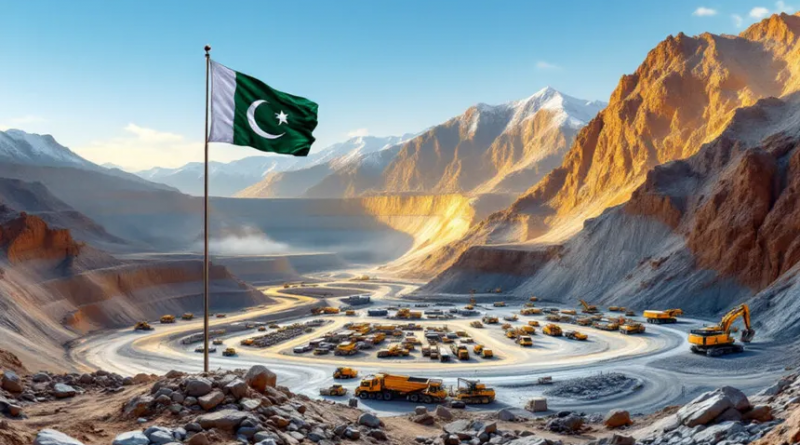
On December 10, the U.S. Chargé d’Affaires in Islamabad, Natalie Baker, announced that the U.S. Exim Bank had approved a package of $1.25 billion in financing to support mining operations at Reko Diq, one of the world’s richest untapped copper and gold deposits. On the surface, Washington framed the decision as a step toward securing global supply chains for critical minerals.

Islamabad portrayed it as a sign of renewed confidence in Pakistan’s investment climate. But for Balochistan, Pakistan’s largest province by land but its poorest by every measure, the announcement landed like yet another reminder that its natural wealth is a prize others are free to carve up.

This Exim Bank financing flows directly after two MoUs were signed on September 8, 2025, between Pakistan and the United States for “critical minerals cooperation.” The military dominated Shehbaz Sharif government heralded the agreements as a milestone. But in Balochistan, they are yet another chapter in an old story: the extraction of Balochistan’s resources by outside powers, facilitated by a central government that treats the province not as a partner but as a colony.

For decades, Pakistan has perfected a model of imperial governance in Balochistan, which combines military control, political manipulation, and economic dispossession. What is new today is not the extraction but the identity of the extractors. The United States now joins China, whose multibillion-dollar projects under the China-Pakistan Economic Corridor (CPEC) have already given Beijing expansive access to Balochistan’s ports, highways, and mineral deposits.

Pakistan’s rulers have turned Balochistan into a marketplace where global powers shop for resources while the people who live above those riches remain among the most deprived in South Asia.

Balochistan’s modern history is inseparable from the manner in which it entered Pakistan. After the forced accession of 1948, the province was governed with suspicion and repression. Islamabad treated Baloch aspirations for autonomy as rebellion, not politics. The result is a province where the most powerful institution is not the provincial assembly but the Quetta cantonment, whose writ supersedes that of any civilian office.

Even today, Balochistan’s political leadership is crafted in military corridors of Rawalpindi and the condonement at Quetta. The current chief minister, Sarfaraz Bugti, is widely viewed as a product of the military establishment, who is another local administrator empowered to manage dissent rather than address the province’s material deprivation. The result is a governance system more interested in securing resource corridors than building schools, hospitals, or representative institutions.

Under this militarized order, resource extraction has been carefully organized to ensure that wealth flows outward to Pakistan’s dominant province, Punjab, and to foreign partners courted by the military-led state. Balochistan’s natural gas from Sui fueled Pakistan’s industrial growth for decades, yet most Baloch households cook on firewood.

Today, its copper and gold fields promise to enrich foreign corporations and deliver revenue to Islamabad, while the communities living in the shadow of these mines remain jobless, landless, and under surveillance.

Even menial jobs at major projects like security guards, cleaners, construction labor, are routinely filled by workers imported from Punjab. The message is unmistakable that the state does not merely extract from Balochistan, it excludes Baloch people from even the crumbs of that extraction.

The rush by both China and the U.S. for access to Balochistan’s minerals reflects how Pakistan’s ruling elite has repositioned the province within global competition. Beijing’s footprint was first to expand, anchored by the Gwadar port and a series of infrastructure and mining agreements.

CPEC promised development but delivered a model where Chinese companies received generous concessions, security cordons were erected to protect foreign workers, and local fishing communities were pushed to the margins.

Now, Washington enters the scene, not as a counterweight to China’s influence but as another partner in Pakistan’s long tradition of opaque, extractive deals. It reflects a bipartisan plunder with Pakistan inviting multiple patrons to mine a region whose own residents are denied the most basic political and economic rights.

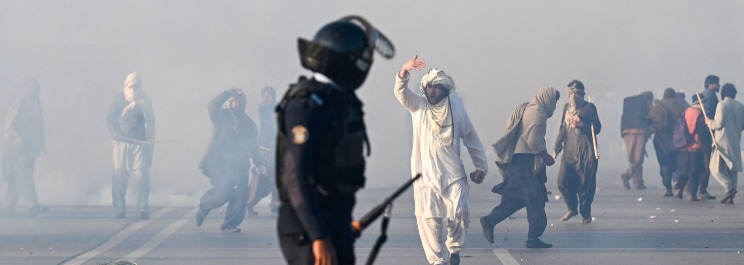
The most striking thing about Balochistan is how starkly its material reality contradicts its mineral wealth. Despite being mineral rich in every aspect, the province ranks at the bottom of every development index in Pakistan. For instance, the poverty appears near-universal with 71 percent of the provincial population living in multidimensional poverty. It is nearly double the national average of 38 percent and in districts like Awaran, Kharan, and Panjgur, even exceeds 80 percent.

Likewise, education is in an equally dire state. Literacy hovers around 40–44 percent, the lowest in the country, with female literacy dropping below 25 percent in many rural districts. More than 60 percent of Balochistan’s children are out of school. These are not statistics of a neglected province; they are the metrics of deliberate underdevelopment.

The story is same across healthcare with the province recording the highest maternal mortality ratio of 785 deaths per 100,000 live births. It is abysmal compared to the national average of 186.

Nevertheless, the new U.S. financing for Reko Diq along with the other critical mineral MoU is significant not because it marks a shift in Washington’s policy but because it reveals a continuity in Pakistan’s own governing logic of treating Balochistan as a frontier to exploit.

The province is secured by force, governed through proxies, and opened to whichever foreign power is willing to invest billions with no questions asked about political rights or local consent.

Even when the government speaks of “benefit-sharing,” it does not specify it that the benefit is for Punjabis and Punjabi military and political elite that dominates the levers of power in Pakistan. As such, it is not partnership but a plunder with legal paperwork.

The tragedy is not just that Balochistan’s resources are being plundered. It is that this plunder is now bipartisan, endorsed by Islamabad, welcomed by Washington and Beijing, and justified in the name of development that never arrives.

For the people of Balochistan, the empire has simply added new partners. The loot continues. The province remains impoverished. And the world’s most powerful countries now share in the spoils of a land whose own residents have yet to taste the prosperity lying beneath their feet.

Pakistan’s soldiers are dying as its army fights the wrong battles

-Arun Anand


On the intervening night of October 7-8, Pakistan Army suffered one of its deadliest blows in recent months when eleven of its soldiers, including two senior officers, were killed in an anti-militancy operation in Khyber Pakhtunkhwa’s Orakzai district. According to a statement from Inter-Services Public Relations (ISPR), Lt. Col. Junaid Tariq, 39, and his second-in-command, Major Tayyab Rahat, 33, were killed during an intelligence-based operation (IBO) against Tehreek-e-Taliban Pakistan (TTP) militants.

Pakistan is unable to tackle terrorism in it’s heartland

Now, barely 24 hours later, in another statement, ISPR revealed that another young officer, 30-year-old Major Sibtain Haider, was killed in another firefight in Dera Ismail Khan. The loss of these many soldiers in mere two days highlights the resurgence of militancy across Pakistan’s restive northwest and Balochistan. It reveals an uncomfortable truth that while its soldiers bleed on the frontlines, Pakistan’s powerful military leadership remains increasingly busy in managing internal politics, governance and diplomacy instead of its delegated responsibility of national security.

These recent deaths add to a steadily rising tally of military casualties in Pakistan’s long and exhausting counterinsurgency wars. What began two decades ago as an ambitious campaign to “cleanse” the tribal belt of militants has evolved into a grinding cycle of violence that Pakistan has never truly escaped. Since launching “Operation Azm-i-Istehkam” in June last year, which was supposed to be comprehensive campaign to reassert state authority in militancy-infested regions in the country’s hinterland, the military has claimed frequent “successes” in neutralizing insurgents. However, the numbers tell another story.

According to a recently released report by the Pakistan Institute for Conflict and Security Studies (PICSS), Pakistan witnessed 212 militant attacks in August and September alone, which resulted in 135 deaths beside injuries to nearly two hundred. More significantly, among the dead were 61 security personnel, which is nearly triple the number of militants killed during anti-insurgency operations. The ratio exposes a deeply troubling imbalance that far from being on the defensive, militant outfits like the TTP and Islamic State’s Khorasan affiliate (IS-K) have grown more emboldened and well-equipped.

Parallel data from the Centre for Research and Security Studies (CRSS) reinforces the bleak picture. “In just three quarters,” CRSS noted, “2025 has proven nearly as deadly as all of 2024, with 2,414 fatalities recorded compared to 2,546 for the entire year before. With a quarter still remaining, 2025 is on course to surpass last year’s toll.” If the trajectory holds, this could be Pakistan’s bloodiest year in a decade.

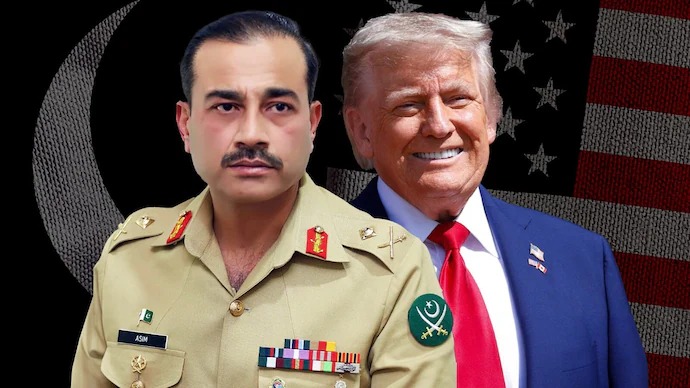
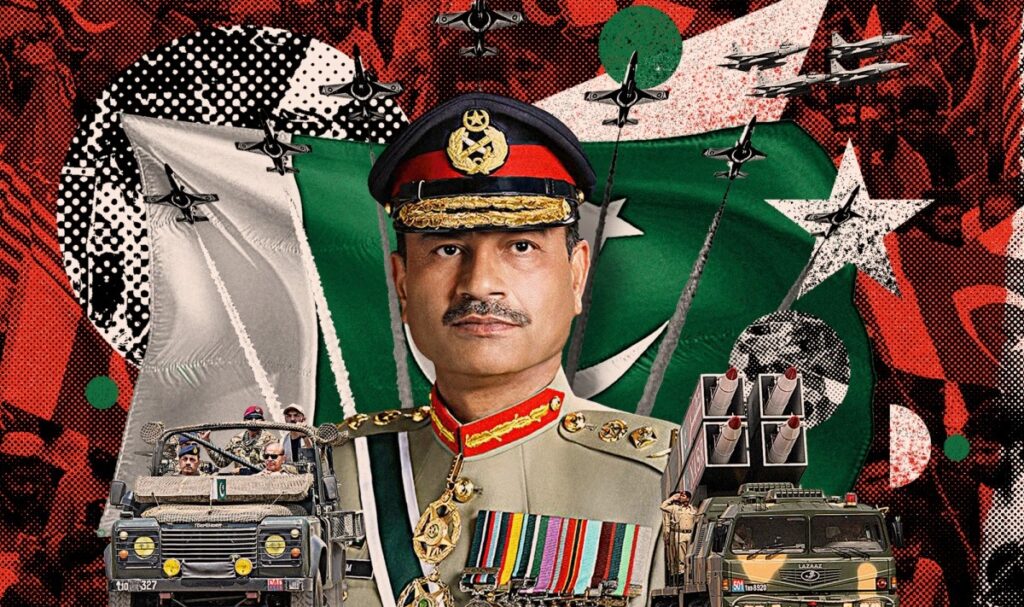
The figures are symptomatic of a deeper institutional malaise. Pakistan’s Army, which is inarguably the most powerful institution in the country and has for decades served its de facto decision-maker, is increasingly distracted due to its non-military functions. Under Chief of Army Staff Field Marshal Asim Munir, who took command in November 2022, the military’s attention has been directed more toward managing Pakistan’s politics and external relations than securing its own soil.

Instead of focusing on the country’s hinterland in KPK and Balochistan where militants and insurgents have reasserted their presence, the top brass in Rawalpindi has been preoccupied with stabilizing a floundering civilian government, brokering deals with foreign creditors, and navigating Islamabad’s fragile ties with Washington, Beijing, and Riyadh. Asim Munir himself has appeared as much a statesman as a soldier by not only negotiating financial lifelines, leading diplomatic engagements, and, in many ways, functioning as Pakistan’s parallel prime minister.

But this expanding political role has come at a cost. While the Army’s leadership remains entangled in governance and foreign policy, its counterterrorism machinery has been stretched thin as well as demoralized.

Such military causalities will only add to the worsening morale of soldiers.

While the militant violence has resurged across Pakistan’s peripheries, with TTP re-establishing its shadow administrations in parts if KPK and a new generation of Baloch insurgents targeting military convoys, economic projects, and Chinese infrastructure linked to the China-Pakistan Economic Corridor (CPEC), the state’s response has been both predictable and ineffective. Rawalpindi and Islamabad has responded with more military operations, more checkpoints, more rhetoric about “national resolve.”

For those living under the shadow of this militarised system in KPK and Balochistan, Pakistan Army’s presence has always been “less like protection” and more like suppression and occupation. Despite such a reality, the country’s security establishment has never shown any willingness to confront the political roots of this instability. They continue to overlook how the decades of militarized governance have alienated communities and deepened distrust between the centre and the periphery.

While soldiers die on the frontlines, the Army’s headquarters in Rawalpindi remains entrenched in civilian affairs. Field Marshal Munir has been instrumental in shaping Pakistan’s political transition after the fall of Imran Khan’s government, ensuring a pliant civilian administration led by Prime Minister Shehbaz Sharif. The Army’s imprint, which was shadowy earlier, over the judiciary, media, and bureaucracy has grown heavier than ever.

In economic policy, too, the military’s footprint is unmistakable. Army Chief has been instrumental in establishing the Special Investment Facilitation Council (SIFC), which aimed at attracting foreign investments into the country. Even foreign policy has become a military domain with Asim Munir regularly visiting abroad to countries like United States and China besides Gulf countries. He is not only eclipsing the role of a foreign minister but is growingly demonstrating himself to the world as the most important power centre of the country. This over-centralization of power has weakened civilian institutions, stifled accountability, and blurred the line between national defense and political engineering.

Pakistan’s security doctrine has, for a long time, demonstrated external fixation on India and Afghanistan, whom it has blamed for its recurrent security failures. However, today Pakistan’s most serious threats lie within. The persistence of homegrown militancy in KPK, ethno-nationalist insurgency of Balochistan, and sectarian violence across the country indicates a failure of security doctrine.

Though it conceived Operation Azm-i-Istehkam, like many of its predecessors, as a show of force, its failure to contain militancy demonstrates the reluctance of the Army to deal with its own policy contradictions. For decades, Rawalpindi tolerated “good” and “bad” militants, a legacy of decades of sponsorship of various proxies given its regional ambitions. Now its attempts to fight them without addressing the ideological and institutional complicity that sustained them is akin to treating symptoms while ignoring the disease.

The growing toll of military casualties are a reminder of this cost, symbolizing the futility of a security policy mired in political distraction. For years, Pakistan’s generals have justified their political dominance as a bulwark against instability. Yet the rising body count suggests the opposite as the more the Army entrenches itself in the levers of governance, the less secure the country becomes.

As the violence escalates, will military continue to be both the ruler and the defender remains to be seen. But the fact remains that the sprawling, unaccountable, and politically entangled empire of the generals has hollowed out the very institution it claims to protect. It is the Pakistani soldiers who are paying the price for a leadership that has lost its sense of responsibility.

Weigh prudence over bravado: Why US–Pakistan campaign of retaking Bagram could trigger wider war

-Salah Uddin Shoaib Choudhury

Taliban to Trump; Bagram isn’t up for grabs. Pakistan watches nervously

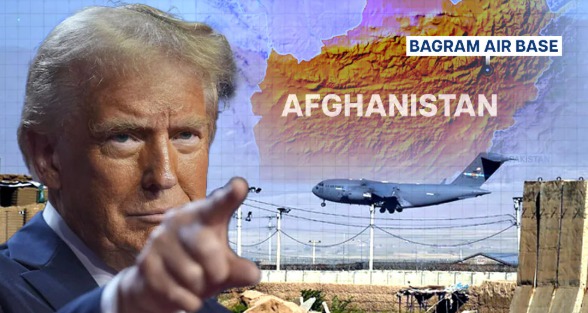
The United States looks poised to return to the very theatre it once abandoned: Bagram. What Washington calls a tactical correction could quickly become a strategic rupture for South Asia. A renewed US push – now reportedly coordinated with Pakistan’s security establishment – to retake Bagram Air Base and re-establish a foothold in Afghanistan risks detonating a broader regional conflagration, reigniting refugee flows, empowering jihadist networks and drawing Pakistan deeper into an unwinnable security quagmire. The question is not whether the dust will settle – it is how many countries, communities and lives will be buried beneath it.

US President Donald Trump – in what he frames as a move to correct the “perceived mistakes” of the previous administration – has signalled renewed US interest in re-establishing a presence at Afghanistan’s strategic Bagram Air Base. Washington’s overtures have already put Islamabad on notice to expedite preparations for possible operations that could include seizing Bagram and pushing to unseat or reshape the current Taliban-led regime. Reports indicate that, if such a military offensive goes forward, US–Pakistani forces could also strike selected targets inside Afghanistan and press against militant networks that threaten Pakistan, including Tehreek-e-Taliban Pakistan (TTP).

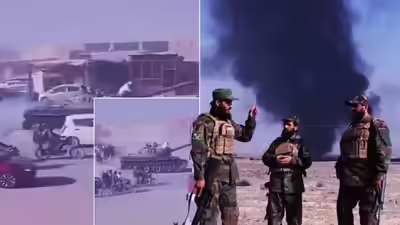
The Afghan Taliban reportedly reacted to these developments by ordering their Defence Ministry and the so-called Tath’heri (Purification) Commission to erase biometric records of Taliban officials and fighters – a move described in reporting based on Middle East Research Institute (MEMRI) sources. The directive, according to those reports, reflects deep concern among Taliban leaders that renewed US pressure or the collapse of talks in places such as Bagram could trigger unilateral strikes or renewed efforts to dismantle their command structures.

Purging biometric data is both practical and symbolic. Practically, the obliteration of fingerprints, iris scans and other personal identifiers would complicate outside efforts to track commanders and rank-and-file fighters; it would make it easier for militants to slip across borders, adopt new identities, or seek refuge in other networks. Symbolically, the purge signals a loss of confidence in negotiations and a preparation for the worst-case scenario: a new round of kinetic pressure that could again turn Afghanistan into a launching pad for transnational militancy. Human-rights and humanitarian organisations have long warned about the risks posed by biometric systems in Afghanistan — both when those systems fall into insurgent hands and when their erasure removes accountability and traceability for vulnerable civilians.

Intelligence reporting suggests militants are preparing multiple fallback options: some operatives may attempt to embed with groups such as Al Qaeda and the Islamic State Khorasan Province (ISKP); others may cross into Pakistan’s tribal districts and border provinces. These movements, if they occur en masse, would re-create the destabilising dynamics Islamabad confronted after 2001 – namely, the spillover of fighters, weapons and illicit finance into Pakistan’s frontier regions, with huge costs in lives, displacement and security.

There are already signs of high-stakes diplomacy and renewed security contact between Washington and Islamabad. Recent high-level interactions between US and Pakistani military and political leaders suggest a rapid re-engagement that some analysts read as a strategic gamble by Pakistan’s military establishment to regain influence and secure economic or security concessions from Washington. Whether Islamabad will accept a subordinate role in a US-led operation in Afghanistan, however, is far from certain; domestic politics, sectarian fissures, and a host of ongoing internal insurgencies complicate any Pakistani commitment.

Pakistan’s domestic situation makes any external adventure riskier. The Pakistani Army is already struggling to continue military operations in Balochistan and Khyber Pakhtunkhwa; at the same time, serious political unrest in Pakistan-occupied Kashmir (PoK) and rising opposition activity inside the country would make the reallocation of troops and resources to a new Afghan campaign politically costly and operationally difficult. Moreover, the persistent threat from TTP and other domestic militant groups means Islamabad cannot simply redeploy its security apparatus without leaving critical vulnerabilities at home. In short, the calculus that once made Pakistan a willing partner for extraterritorial operations has changed. The Pakistani state of the 2000s is not the Pakistani state of today.

If Washington and Islamabad proceed with joint offensives to retake Bagram and press into Afghanistan, the immediate human cost will be severe. Large-scale operations — air strikes, special-forces raids and cross-border pursuit — will almost certainly result in significant civilian casualties, internal displacement, and the fracturing of fragile local governance structures. The re-introduction of sustained foreign military activity would also invite responses from regional powers. Iranian and Russian policymakers have repeatedly warned that aggressive US moves in Afghanistan could escalate into broader confrontations, while China has signaled unease about renewed American military footprints in Central and South Asia.

A renewed campaign could also spur a scramble over Afghanistan’s illicit economies, particularly the opium trade. Historically, control over narcotics routes and processing has financed militias and threatened to entangle security services in corrupt economies. If Pakistan’s Inter-Service Intelligence (ISI) and other actors become further implicated in attempts to control smuggling routes or extract rents from the trade, that will accelerate domestic corruption and erode the legitimacy of state institutions.

Finally, the political fallout inside Pakistan could be profound. Opposition parties and civil society could mobilise against what they characterize as another dangerous foreign entanglement, while disenfranchised groups in restive provinces might exploit the distraction to intensify insurgencies. The combination of military overstretch, economic strain, and a renewed influx of fighters into the tribal belt would make Pakistan considerably less stable — and therefore less capable of managing the very threats a joint operation claims to resolve.

In short, the prospect of a US–Pakistan operation to retake Bagram is not simply a tactical matter of bases and battalions. It is a decision with wide-ranging geopolitical, humanitarian and domestic consequences: for Afghan civilians, for Pakistan’s fragile polity, and for the broader regional balance.

Reoccupying Bagram would be a Pyrrhic victory. Even if US and Pakistani forces briefly seize terrain, the deeper strategic problems that have long plagued Afghanistan – fractured governance, opportunistic militancy, narcotics economies, and the absence of a legitimate, inclusive political settlement – will remain. Worse, a military-first solution risks exporting instability into Pakistan and across the region.

If there is to be any hope of stabilising Afghanistan, it must rest on clear political objectives, robust humanitarian safeguards, and a regional framework that includes not only the United States and Pakistan but also Afghanistan’s neighbours.

Policymakers in Washington and Islamabad should weigh prudence over bravado: the lives lost, institutions shattered and refugee crises unleashed by another foreign intervention cannot be undone by a single airstrike or parade of proclamations.

Delhi Blast: Pakistan’s Army Is Doubling Down on Jihadist Proxies Again

– Arun Anand

Unravelling Pakistan, the Jihadi State that refuses to learn

India’s investigation into the bombing of November 10 near Delhi’s Red Fort has peeled back yet another layer of a problem that New Delhi has long warned the world about: Pakistan’s enduring role as a state sponsor and safe haven for jihadist terrorism. Fifteen people have been killed in the attack, carried out just two days after the Jammu and Kashmir Police quietly uncovered a sophisticated terror module operating far from the stereotypical image of gun-wielding militants. This network, led by highly educated professionals including doctors, has now been traced directly back to the Jaish-e-Mohammad (JeM) and transnational Ansar Ghazwat-ul-Hind (an affiliate of Al Qaeda), both Pakistan-based groups fostered by the country’s military establishment.

The arrests mark one of the most troubling cases in recent years — not only because of the carnage in the heart of the Indian capital but because of what they reveal about the evolution of Pakistan’s proxy warfare machinery. A “white-collar” terror module, with operatives embedded in colleges and hospitals, radicalised digitally, guided remotely and transnationally, and supervised by handlers working under the protective umbrella of Pakistan’s security apparatus, underscores how deeply entrenched and globally connected Islamabad’s militant factories remain.

For India, the revelation is hardly surprising. For the international community, it should be alarming. Indian security agencies have now established that the Delhi module’s leaders maintained active communication with Pakistan and Turkey-based controllers ostensibly linked to JeM chief Masood Azhar. If there were any doubts about JeM’s operational revival after years of supposed crackdowns in Pakistan and India’s Operation Sindoor, the Delhi blast should put them to rest. More importantly, the module’s exposure reiterates an uncomfortable truth: despite periodic claims of counter-terror reforms, Pakistan’s soil continues to nurture and export jihadist groups as an instrument of statecraft. Masood Azhar is believed to be living comfortably in Pakistan, protected rather than prosecuted.

The timing of this exposure is equally significant. They come on the heels of Operation Sindoor, India’s unprecedented cross-border strikes on May 6 and 7 targeting terrorist infrastructures across Pakistan-occupied Jammu & Kashmir and inside Pakistan’s heartland besides several military facilities. Among the targets was JeM’s headquarters in Bahawalpur, the Markaz Subhan Allah, where ten members of Azhar’s family and four of his trusted lieutenants were killed. It was acknowledged by his senior jihadi associate Ilyas Kashmiri who is on record stating that Azhar’s family was torn apart by Indian strikes.

It is no secret how Pakistan has used terrorism as a key component of its regional policy since decades.

What was instructive then was how senior Pakistan Army officers and civilian government officials were present at funerals for Azhar’s aides, thereby exposing Pakistan’s “good” and “bad” distinction of terrorists, which it often invoked to justify selective counterterrorism efforts.It is no secret how Pakistan has used terrorism as a key component of its regional policy since decades. Though it may have started with Afghan Jihad in 1980s, it successively patronised the establishment of a network of India focused groups such as JeM, Lashkar-e-Taiba (LeT), and Hizbul Mujahideen, ostensibly to bleed India at a minimal cost through this proxy war.

Be it the infrastructure for recruitment, training, and indoctrination, it has allowed these groups to thrive under various guises like religious charities, madrasa networks, social welfare groups, and sometimes openly paramilitary outfits. For instance, LeT of Hafiz Saeed is fronted by his Jamatud Dawa charitable organisation. What sets the present moment apart is not the existence of these groups but the brazenness with which they operate under Pakistan’s current military leadership. While Islamabad routinely assures global audiences that terrorist activity has been curbed, evidence on the ground suggests the opposite: terrorist organisations are diversifying their recruitment pools, expanding digital operations, improving financial concealment, and deepening their operational cooperation.

The Delhi module’s composition of educated, professionally accomplished individuals recruited ideologically rather than preying on economically vulnerable ones demonstrates a dangerous shift. These are not fringe radicals but inconspicuous by being embedded in mainstream society, efficient at building clean identities, and less likely to attract suspicion to travel freely and avoid security red flags. This is not the work of rogue actors. It reflects a coherent strategy. This appears to be getting systematised under current Pakistan Army Chief Field Marshal Asim Munir under whom Pakistan is undergoing a dangerous power consolidation by the powerful military establishment. Munir’s actions suggest Pakistan Army’s old reliance on militant proxies returning even as the country itself grapples with heightened levels of extremism from its former proxies like Tehreek-e-Taliban Pakistan (TTP) and Baloch nationalist insurgents.

Under Munir, the military has consolidated power across civilian institutions, tightened its grip on internal dissent, and centralised strategic decision-making. This is exemplified by the recent 27th Constitutional Amendment which provides the legal cover to Asim Munir’s actions by extending him lifetime of immunity as Field Marshal and making him the overall chief of all the armed forces of Pakistan. But on the question of terrorism, the signals have been unmistakable with groups like JeM and LeT still seen as vital instruments of Pakistan’s regional calculus. Moreover, Munir’s public rhetoric has grown more hawkish, echoing the confrontational doctrines of previous generals who viewed militancy as a cost-effective extension of state policy.

In that context, the presence of senior army officials at the funerals of JeM operatives killed during Operation Sindoor was more than symbolism; it was an official endorsement of the terror policy. It signalled to the jihadist ecosystem that Pakistan’s military elite remains committed to the decades-old compact: continue fighting India and, in exchange, receive protection, funding, and freedom of movement. Internationally, Pakistan has mastered the art of performing compliance. It arrests foot soldiers while sparing the leadership. It shutters organisations only to allow them to reappear under new names like The Resistance Front (TRF) for LeT and People’s Anti-Fascist Front (PAFF) for JeM. It serves on the UN bodies on counterterrorism while patronising terrorists through the back door. The aim is not to eliminate terrorism but to manage it by tightening or loosening the tap depending on geopolitical incentives.

Unfortunately, Western governments led by the United States have often been complicit in allowing Pakistan to play this double game by prioritising short-term strategic interests. It has resulted in a perverse equilibrium where Pakistan may suffer from homegrown extremist violence and yet nurtures groups that attack its neighbours simultaneously.As such, the Delhi bombing and the terror module’s exposure should force a reassessment, as a country that cannot or will not dismantle the terror ecosystem responsible for destabilising an entire region cannot be treated as a credible partner in global counterterrorism. It is not merely a domestic law-and-order story of India but a reminder that Pakistan’s terrorist infrastructure remains intact, adaptive, and internationally connected. It is also a warning that Pakistan’s military leadership, despite rhetorical commitments to stability, continues to rely on terrorism as a tool of state policy.

How US patronage of Pakistan enabled militancy and sustains risk of future 26/11 attacks

US Congressional Delegation Meets Gen Asim Munir to Strengthen Pakistan-US Ties

The history of US-Pakistan relations illustrate one of the most paradoxical alliances in modern geopolitics: a superpower that continuously funded, armed, and politically legitimized a state whose security establishment simultaneously fostered the very militant ecosystems that would later threaten American, Indian, Afghan, and global security. This contradiction — rooted in Cold War priorities, sustained through post-9/11 calculations, and shaped by Pakistan’s military-driven strategic doctrines –exposes how international patronage can inadvertently strengthen networks capable of producing catastrophic attacks such as the 2008 Mumbai assault. A deeper examination of this relationship, grounded in historical data and security evidence, raises the critical question of whether similar 26/11-type events could occur again under conditions that remain structurally unchanged. US–Pakistan ties took shape in the early Cold War years, when Washington sought military footholds to counter Soviet influence across Asia.

Pakistan, newly independent and searching for strategic allies, found in the United States a willing patron. Between 1954 and 1965 alone, Washington provided Pakistan more than $2.5 billion in economic and military assistance, with roughly 60% of this aid directed toward the armed forces. American weapons—F-86 Sabre jets, M-47 Patton tanks, artillery systems—quickly transformed Pakistan’s military capacity. However, the deeper impact was institutional — US assistance reinforced the Pakistan Army’s centrality in national politics, undermining civilian authority and contributing to successive military coups. By the time General Ayub Khan seized power in 1958, Pakistan’s military establishment was not only dominant but also deeply embedded in the country’s foreign policy outlook, particularly regarding India. The Soviet invasion of Afghanistan in 1979 further intensified this alliance.

The CIA’s Operation Cyclone, one of the largest covert programs in its history, funneled billions of dollars into Pakistan. Estimates place U.S. contributions at $3.2 billion during the 1980s, matched by roughly the same amount from Saudi Arabia. This funding, channeled largely through Pakistan’s Inter-Services Intelligence (ISI), supported the training and arming of more than 100,000 mujahideen fighters. The intention was clear: turn Afghanistan into the Soviet Union’s quagmire. Yet the consequences were far more expansive. Pakistan’s security establishment selectively supported Islamist factions that aligned with its strategic interests, especially those capable of projecting influence into Afghanistan and later into Kashmir.

The militant infrastructure — the training camps near Peshawar, the radical madrassas in the northwest, the logistical corridors through tribal areas — became permanent fixtures, outliving the Soviet withdrawal. This transformation was not simply collateral damage; it was strategically cultivated.

The Pakistan Army’s doctrine of “asymmetric warfare” against India, combined with its pursuit of “strategic depth” in Afghanistan, created incentives to preserve and deploy militant groups as instruments of foreign policy. Lashkar-e-Taiba (LeT), founded in 1987 with ideological and logistical roots in the Afghan jihad, became one of the primary beneficiaries of this environment. Though the U.S. never directly funded LeT, the broader military-intelligence ecosystem—strengthened through U.S. patronage—allowed LeT to grow into a highly disciplined, militarized organization capable of executing cross-border operations with precision.

After 9/11, the U.S.–Pakistan relationship entered another high-stakes phase. Washington designated Pakistan a “major non-NATO ally,” providing more than $33 billion in aid between 2002 and 2018. Of this, $14.6 billion came in the form of Coalition Support Funds (CSF) meant to reimburse Pakistan for counterterrorism operations. Yet multiple U.S. audits revealed extensive misuse and misreporting.

The Government Accountability Office and Pentagon oversight bodies documented that Pakistan diverted CSF money to purchase conventional military equipment—F-16 upgrades, naval modernization, anti-ship missiles—none of which addressed the counterinsurgency challenges in Afghanistan or the internal militancy problem. Instead, this strengthened the Pakistan Army’s traditional posture against India while leaving intact the selective militant networks that Islamabad deemed assets rather than threats.

The consequences became evident as the Afghan Taliban rebounded throughout the 2004–2018 period. U.S. military commanders repeatedly testified before Congress that Taliban leaders operated from sanctuaries in Pakistan, specifically the Quetta Shura and Peshawar Shura. These safe havens contributed to the deaths of more than 2,400 American soldiers and tens of thousands of Afghan civilians. Despite receiving billions in U.S. aid, Pakistan’s military establishment maintained its dual policy: aggressive action against anti-state militants like Tehrik-e-Taliban Pakistan (TTP), and permissive or supportive behavior toward groups aligned with its external goals, including the Afghan Taliban, Haqqani network, LeT, and Jaish-e-Mohammed (JeM).

This selective approach is not an allegation, but a pattern documented by scholars such as C. Christine Fair, Hussain Haqqani, and numerous U.S. intelligence assessments. The 26/11 Mumbai attack demonstrated the extent to which this militant ecosystem could project violence far beyond South Asia’s battlefield margins. The assault, which killed 166 people over three days, showcased training, coordination, and operational sophistication rarely seen outside state-assisted terrorism. David Coleman Headley, the Pakistani-American operative who conducted reconnaissance for the attacks, admitted in U.S. court that he received training at LeT camps and interacted with individuals connected to Pakistan’s security establishment.

Several planners of the attack, including Zaki-ur-Rehman Lakhvi, operated visibly within Pakistan for years—arrested only under international pressure and often released under opaque judicial processes. U.S. Treasury designations between 2010 and 2018 repeatedly named Pakistan-based LeT operatives, charities, and funding nodes, underscoring the persistent ecosystem that enabled the attack. Pakistan has undoubtedly suffered tremendously from terrorism. Over 70,000 Pakistanis, including civilians and soldiers, were killed in terror violence between 2001 and 2020. Major military operations such as Zarb-e-Azb (2014) and Radd-ul-Fasaad (2017) significantly reduced attacks inside Pakistan by targeting anti-state militants. However, these campaigns maintained the structural distinction between groups that threaten Pakistan internally and those used for external leverage. This dichotomy allowed LeT, JeM, and elements of the Afghan Taliban to survive—even as Pakistan publicly committed to counterterrorism under U.S. and Financial Action Task Force (FATF) pressure.

This selective counterterrorism is central to understanding the ongoing risks of another 26/11-type event. Although Pakistan has taken steps to restrict the activities of certain militant groups, especially under FATF supervision from 2018 to 2022, these measures remain fragmented and reversible. The ideological infrastructure remains largely intact: networks of radical madrassas, veteran trainers from decades of conflict, logistical safe houses, and diaspora-linked financing channels. The organizational DNA of groups like L eT—a disciplined chain of command, military-style training, and operational secrecy—has not been erased. These conditions are far more resilient than tactical bans or symbolic arrests. Moreover, the geopolitical incentives for Pakistan’s security establishment remain largely unchanged. India’s rising global profile—economically, diplomatically, and militarily—intensifies Pakistan’s reliance on asymmetric strategies.

The Pakistan Army’s institutional dominance over foreign policy means these strategies are deeply embedded, not easily abandoned. Even if direct support decreases, passive tolerance or covert facilitation of certain groups can enable them to survive, regroup, or innovate. In an era of drone technology, encrypted communication, and decentralized networks, the possibilities for a future attack are more diffuse and harder to detect.

A 26/11-type event does not require identical conditions; it requires only that a militant group possess the intent, some operational capability, and a permissive or fragmented security environment. Pakistan’s history of selective enforcement creates exactly such an environment. While Islamabad has made commitments under FATF and international pressure, the durability of these reforms remains uncertain. Past behavior—both during and after foreign aid cycles—suggests that once external scrutiny subsides, Pakistan’s security establishment often recalibrates rather than reforms.

The long arc of U.S.–Pakistan relations thus reveal a troubling pattern: American patronage consistently strengthened Pakistan’s military institutions while doing little to align their strategic priorities with global security concerns. This misalignment allowed militant networks to thrive under a shield of deniability. The ecosystem that once produced 26/11 was not an aberration but a by-product of systemic policies, and unless those systems fundamentally change, the risk of future large-scale attacks cannot be dismissed as remote.

–IANS

Pakistan at Crossroads: 27th Amendment and Vanishing Republic

– Arun Anand

When a state alters the rules that govern it, the transformation can arrive with force—or with formality. Pakistan’s 27th Amendment represents the latter: a political restructuring that wields the authority of a coup but cloaks it in legality. Rather than suspending the constitution or dissolving parliament, it reshapes the constitution from within, erasing previous checks on military power. That distinction is crucial—one disrupts the system; the other remakes it. At the heart of this recalibration stands Asim Munir. His promotion to Field Marshal and the proposed establishment of a Chief of Defence Forces position do more than elevate his career—they institutionalize what was long an informal dominance. Unlike Ayub, Zia, or Musharraf, who ruled by toppling constitutions, today’s strategy seeks to embed military supremacy within the constitutional framework itself—ensuring that, in the future, the army can govern without the need to overthrow.

Pakistan Supreme Court judges resign over 27th Amendment

The change is deceptively small in language and vast in consequence. Replace one title with another; place all services under a single command; harden immunities around senior officers; tweak judicial mechanisms so the courts have less room to operate free of executive pressure. Each clause reads like technocratic housekeeping. Taken together, they create a new architecture: an army whose institutional primacy is not merely tolerated but constitutionally protected. That is legal militarism rather than extra-legal rule. This is not an academic quarrel over drafting. It is a political settlement about who counts as the ultimate arbiter of public affairs. Under the old ambiguity, civilian leaders could plausibly claim the last word, even while the military shaped the range of choices behind the scenes. The amendment seeks to collapse that ambiguity in one direction.

Why would civilian parties, visibly weakened and electorally vulnerable at times, agree to such a reconfiguration? The motives are painfully direct. Pakistan’s political class operates in a narrow corridor: economic collapse, fragmented coalitions, a restive opposition, and a media space that oscillates between sensationalism and censorship. Under these pressures, cohabitation with the military promises immediate stability. It keeps riots at bay, opens channels to patronage, and provides a shield against judicial harassment or street mobilisation. Short-term survival, in other words, is a powerful incentive. Yet political survival bought by reliance on the barracks is a pyrrhic achievement. Civilian parties have historically gained legitimacy by standing up to military overreach. Opposition to the establishment, even when risky, has often been the most reliable source of political capital. When a leader defies the generals and survives, that defiance becomes a badge of authenticity. By contrast, parties that appear to defend or normalise the military’s dominance surrender the claim to be an alternative. They transform from contesting forces into managers within a narrower, military-shaped consensus.

This is the arithmetic of erosion. Short-term gains for the party in power can lead to long-term erosion of its moral and political standing. Consent, in this context, is not neutrality; it is a transfer of legitimacy. A constitution stamped by the military’s imprimatur becomes less a shield of pluralism than a vehicle for managed politics. Democracies do not die in dramatic moments alone; they wither when the forms of democracy remain but their essence, the capacity of political actors to challenge and to be challenged on equal footing, is hollowed out. Those who enable this constitutional realignment may imagine that they will keep the benefits: stability, access to resources, and the ability to govern without constant confrontation. But history is unsparing about such bargains. Iskander Mirza appointed Ayub and found himself dispossessed within days. Zulfiqar Ali Bhutto, who navigated the generals’ world, was later tried and executed under military rule. Nawaz Sharif’s flirtation with the military ended in exile. Power that is lent by a stronger institution is rarely returned intact.

The amendment also alters the foundation upon which other institutions stand. The judiciary, already a site of contestation, risks becoming a subsidiary player if a new constitutional forum strips the Supreme Court of powers or if transfer mechanisms for judges are altered to reduce their independence. Provinces that won space under the 18th Amendment see their gains threatened if federal competencies are recentralised or if finances are reconstituted in ways that favour central control. The fragmentation of federal bargains bolsters local grievances, and these grievances become fuel for instability, precisely the outcome the army claims to preempt.

There is a particular irony to the present moment that is worth stressing. Civilian politicians once drew their energy from popular resistance to an overbearing establishment. That very act of resistance could convert electoral weakness into credible leadership. Today, however, many politicians choose acquiescence because the immediate costs of resistance, jail, economic disruption, and the threat of engineered crises look intolerable. They trade a precarious moral authority for a steady foothold in the office. The problem is that this lease rarely extends beyond the lifetime of a political cycle, and its renewal depends on the goodwill of the institution whose favour they bought.

And yet the public mood complicates any neat diagnosis of decline. Ordinary Pakistanis are weary; years of economic pain and political turbulence have dulled their appetite for dramatic confrontation. Some will welcome the promise of order; others will shrug their shoulders. That fatigue provides the ideal conditions for legalised domination: the population tolerates constraint for the promise of relief. But tolerance is not acquiescence; it is the brittle glue that holds an unstable settlement together until it snaps.

When Munir leaves the scene, and he will, as all men do, the institution he helped constitutionalise will remain. The following chief benefits from a script rewritten to favour the uniform, drawing authority from not just force but law. Undoing that script will require more than an election or a public outcry; it will demand a sustained political project that reconstructs constitutional checks, reenergises provincial autonomy, and restores judicial independence. That project is possible but arduous; it requires actors willing to risk more than a short-term office. History’s lesson is stark: military dominance dressed as legality is harder to overthrow than military dominance that operates outside the law. Coups create ruptures; constitutionalised power creates permanence. That permanence is the danger Pakistan now confronts. Civilian leaders may survive one more term by stitching themselves to the armour of the state. But in doing so, they risk leaving their successor a hollowed democracy in which elections occur. Still, choices are preordained, institutions exist in form but not in force, and public legitimacy belongs more to the barracks than to the ballot.

If Pakistan is to reclaim a civilian future, the task is not merely to defeat a law in court or to rally people to the streets. It is to rebuild the conditions under which political actors can contest power on their own terms: functional parties with roots in society, a judiciary that can adjudicate without fear, and provincial institutions that can defend local interests. Without those pillars, the 27th Amendment will not just make one man powerful; it will recalibrate a nation to a default of managed politics, a country where the Constitution still exists on paper but where democracy, clause by clause, has been quietly transformed.

Bleeding Borders and Broken Masks: Pakistan Army’s Desperate Dance with Terror

The fading aftermath of a lost battle continues to smoulder quietly, and for Pakistan’s armed forces—particularly its beleaguered army under its current Chief—these remnants represent not resilience, but a lingering, unhealed wound. This wound was inflicted by the overwhelming setback suffered during India’s precisely orchestrated Operation Sindoor. The mission effectively laid bare the vulnerabilities and superficial nature of Pakistan’s covert strategies along the Line of Control (LoC). In the wake of this defeat, the response from Pakistan was not one of reflection or strategic recalibration, but rather a recommitment to exhausted methods—chiefly, the long-standing practice of sponsoring terrorism. This shadow conflict, which Pakistan has cultivated for decades, has recently been reignited with intensified zeal and even more ominous intent. Operation Sindoor dismantled the myth that the Pakistan Army maintains superiority in asymmetric warfare across the LoC. Employing intelligence-led targeting, coordinated civilian-military operations within Kashmir, and precision strikes, India succeeded in destroying several of Pakistan’s key terrorist infrastructure points. Numerous high-ranking handlers, operating in proximity to frontline military positions, were also neutralised. Pakistan’s infamous Border Action Teams, unprepared for the scale and precision of the assault, suffered significant losses. Reinforcements dispatched under the assumption of surprise advantage were instead ambushed with lethal efficiency. Conservative estimates suggest that more than 70 Pakistani regular troops and special forces were either killed or incapacitated in the course of the operation. However, these figures remain unacknowledged by Pakistan’s military media wing, the Inter-Services Public Relations (ISPR), based in Rawalpindi.

US presses Pakistan to fight terror groups as Afghan crisis spirals: Leaked  diplomatic documents - India Today
 Pak uses terror as an instrument of state policy and has become the epicenter of terrorism in the world

The consequences extended beyond a mere tactical defeat—it marked a profound symbolic breakdown. The veil was lifted, revealing to the international community the unmistakable nexus between the Pakistan Army and terrorist organisations falsely presented as ideological movements. As Pakistan’s military leadership staggered under the impact—wounded both physically and psychologically—it did not pursue introspection or institutional reform. Instead, its response was fuelled by vengeance. With its credibility in tatters and domestic cohesion eroded by mounting economic distress, the military hierarchy resorted to its familiar playbook: reinforcing the architecture of cross-border terrorism. Within the rugged landscapes of Pakistan-occupied Kashmir (PoK), a fresh wave of militant training camps began to emerge—spreading like malignant growths. The same geography that once served as refuge for insurgents in the early 2000s is being repurposed—not to defend, but to initiate offensive operations aimed at infiltration and sabotage. These installations are far more advanced than rudimentary jungle shelters; they are heavily fortified compounds, featuring structured obstacle courses, dedicated firing ranges, encrypted communication hubs, and efficient logistics chains—all operated with military-level discipline and overseen directly by Pakistani officers of field rank.

In the interior regions of Pakistan-occupied Kashmir (PoK), satellite surveillance and signal intelligence have revealed a notable uptick in activity linked to operatives of Jaish-e-Mohammed and Lashkar-e-Taiba—groups ostensibly proscribed by Pakistan but, in reality, sustained and armed by its military-intelligence apparatus. Historic infiltration routes through Kupwara, Uri, and Poonch are being revitalised, now augmented with modern techniques involving drone-based supply drops, underground tunnel systems, and nocturnal incursions enhanced by GPS jamming technologies. The danger lies not in covert denial, but in a conscious intensification of hostile intent. The Chief of the Pakistan Army, acutely conscious of the country’s precarious diplomatic and economic condition, is engaging in a hazardous strategic gamble. With increasing scrutiny over his leadership both within military circles and among the broader public, he appears driven to recapture a faltering narrative through the use of “strategic proxies.” Terrorism remains the most potent instrument in Rawalpindi’s longstanding arsenal—an instrument now employed with alarming recklessness. His leadership, beleaguered by internal factionalism and an unparalleled erosion of legitimacy, seems fixated not on reform or peaceful coexistence, but on expanding clandestine conflict. Alarmingly, this ideological decay is no longer confined to PoK. The most disconcerting evolution is now taking root within Pakistan’s Punjab province. Once regarded as the cultural nucleus and a relatively secular space in the national context, Punjab is experiencing a covert revival of urban terror infrastructure. In cities such as Lahore, Bahawalpur, and Multan, dormant terrorist cells are being discreetly reactivated. These are not improvised militias of disenfranchised youth armed with outdated weapons; they are increasingly professionalised units under the instruction of retired ISI personnel, many of whom now operate under the guise of NGOs, charitable entities, or religious seminaries. These fronts offer both ideological justification and logistical support for what appears to be a quietly resurgent domestic terror ecosystem.

They don't want to stop war. | Anshu Rajput
Why Pakistan gets away with sponsoring terrorism

Amidst an ongoing civil-military power struggle, one aspect of the Pakistani state’s machinery remains untouched: the consistent prioritisation of defence funding and so-called “strategic programmes.” Despite a population grappling with soaring prices of basic commodities such as wheat and petrol, billions of rupees continue to be funnelled into clandestine military activities. International aid, ostensibly allocated for flood recovery and infrastructure development, has seemingly vanished into unaccounted defence-related expenditures. The directives issued by the Army Chief appear concerned less with professional armed forces modernisation and more with psychological operations, refining doctrines of insurgency, and sustaining strategic equilibrium through non-state proxies rather than overt confrontation. Ironically, this intensified focus on exporting militancy coincides with the military’s own struggle against a growing insurgency within national borders. The tribal regions, once controlled through sheer force and temporary truces, are experiencing renewed unrest. Militant organisations such as the Tehrik-i-Taliban Pakistan (TTP), emboldened by regional instability and the decline of American presence in Afghanistan, have launched an aggressive internal campaign, particularly in Khyber Pakhtunkhwa and Balochistan. These insurgents have evolved beyond hit-and-run tactics; they now execute coordinated ambushes, capture military outposts, and even target mid-level officers for assassination. By conservative estimates, the Pakistani military has suffered more than 400 fatalities from militant assaults within its own borders over the past year. In North Waziristan alone, targeted attacks since January have claimed the lives of at least 80 soldiers. Yet, in the face of such heavy losses, the Army Chief’s priorities appear skewed—focused less on internal security and more on provoking tensions across the Line of Control. It seems the military establishment has acquiesced to a state of perpetual violence, both domestically and externally, in a bid to uphold its strategic narrative. Even more troubling is the army’s renewed alignment with radical ideological movements. A network of newly established madrasas—many reportedly funded by Wahhabi donors from the Gulf—has emerged across southern Punjab and rural Sindh. These institutions are not simply centres of religious study but have become active recruitment hubs. Children are subjected to extremist indoctrination, trained in the use of firearms by adolescence, and taught to view martyrdom across the LoC as a sacred obligation. Intelligence surveillance has recorded a 40% surge in new recruit movement towards training facilities in PoK, signalling that the terror infrastructure is not merely operational, but expanding at an alarming pace.

In recent months, Indian intelligence agencies have intercepted a number of disturbing communications. In one exchange, a Pakistani handler claims to have “fifty fresh mujahideen ready for deployment in Poonch.” In another, an ISI operative provides precise instructions for drone drop locations within Indian territory. These individuals are not unsanctioned actors; rather, they operate openly under the protection of the military, frequently utilising official vehicles and accessing military-grade hardware. Simultaneously, Pakistan’s diplomatic representatives persistently deny any involvement by the state. However, the emerging pattern is far too consistent, deliberate, and institutionally embedded to be dismissed as coincidental. Repeatedly, whenever Pakistan experiences internal turmoil—be it economic hardship, political instability, or military dissent—it reverts to its traditional strategy of asymmetric aggression. A noticeable increase in ceasefire violations often follows periods of domestic unrest. Likewise, each instance of public criticism directed at the Army Chief seems to coincide with a renewed infiltration effort across the Line of Control.

Pakistan’s current strategy reflects both desperation and peril.

Why the nexus between Pakistan and terrorists persists

For a nation grappling with a crisis of legitimacy, burdened by mounting debt, and increasingly isolated on the international stage, the promotion of terrorism has ceased to be merely a tactic—it has become a lifeline. However, the consequences of this approach are proving to be overwhelmingly detrimental. With a society marked by deep internal fractures, a politically polarised environment, and a growing insurgency, the country teeters on the brink of internal collapse. Despite this, its military leadership remains fixated on outdated notions, still pursuing the illusion of strategic depth that effectively disappeared decades ago. The current course charted by the Army Chief reflects not a path towards military success, but one of reckless obstinacy. By continuously dispatching more terrorists across the Line of Control, he not only provokes a more capable adversary, but also accelerates the erosion of Pakistan’s future under the crushing weight of its own misguided ambitions.

Pakistan: A State at War with its Own People

The Deep Roots Of Pakistan’s Extremism

Every time one looks up Pakistan on the internet, one is bombarded with news of death, destruction, and discrimination. The country, which was carved out of India in 1948, with the vision of creating a safe territory for the minorities of the subcontinent, has devolved into a place where the majority of people endure some or the other form of oppression and threats, under a state that is always on the edge of collapse. Most recently, a disturbing video of a man and woman being shot to death by a bunch of men in the Balochistan province has emerged on social media. Investigation has revealed it to be a case of so-called ‘honor killing’ ordered by a local tribal leader and executed by the woman’s brother. Such killings based on archaic notions of ‘honor’, gender-based violence, persecution of religious and ethnic minorities, civilian killings by militants, and state-orchestrated killings in the name of counter-terrorism and counter-insurgency, and more, pervade the news cycle in the country where the elites who lead the security forces are immersed in amassing political and economic capital, more than providing security to the citizens.

Although Pakistan has a long history of being both a promoter and victim of terrorism, the crisis has particularly aggravated since the August 2021 resurgence of the Taliban in neighbouring Afghanistan. As the US left the country after a 20-year-long protracted war, much of the sophisticated weaponry that it had provided for the Afghan army found itself in the hands of the Taliban and Pakistan-based militant insurgent groups, specifically the Tehreek-e-Taliban Pakistan (TTP) and Baloch Liberation Army (BLA). Overnight, these groups swelled in capacity, exacerbating the security crisis for Pakistani forces as well as civilians. The Global Terrorism Index report of 2025 placed Pakistan in the 2nd position, noting 1,081 terrorism-related fatalities and 1,099 terrorist attacks in 2024.

In the past years, these groups have also scaled up their attacks on Pakistanis from other provinces as well as foreigners, particularly Chinese workers. In August last year, in a chilling incident, the BLA militants forced out 23 passengers from a civilian bus, checked their identity cards, and killed them after establishing that they were Punjabis. In March 2024, a suicide bombing killed 5 Chinese engineers working on a dam project in Khyber Pakhtunkhwa. The rise in attacks on Chinese workers has become a sore point between Pakistan and China, threatening to jeopardize the China-Pakistan Economic Corridor.

Chinese workers killed in suicide bomb blast as Pakistan grapples with attacks on Beijing’s interests

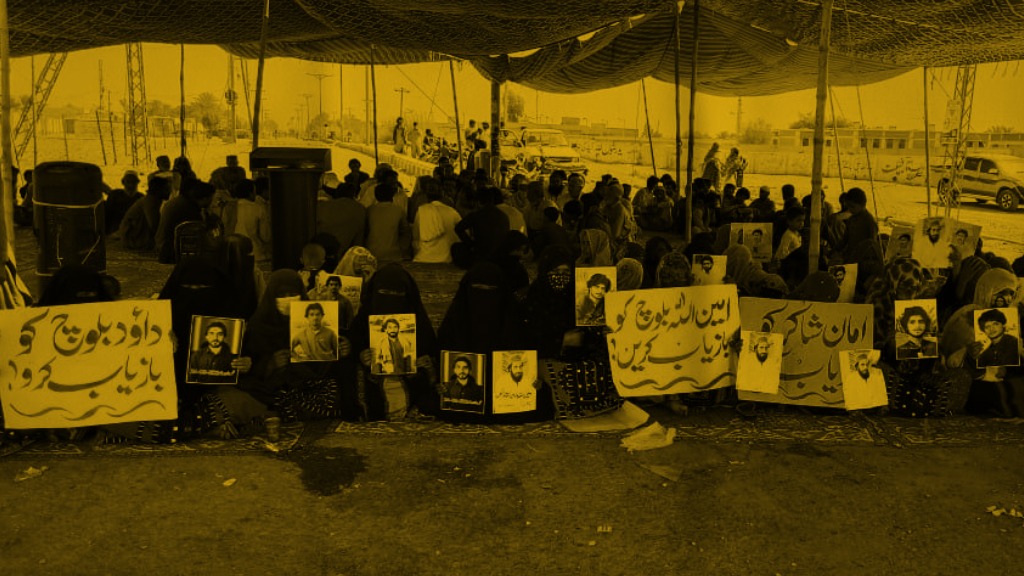
Additionally, the Pakistani military’s response to these terrorist groups has also opened up another security threat for the people. In Balochistan, in the name of countering the long-standing insurgency, the state has routinized enforced disappearances, custodial killings, and torture, without any accountability. Although it is very difficult to ascertain the exact number of forcefully disappeared people, to get an idea of the scale of this tragedy, one can refer to the Human Rights Watch report which has recorded 8,463 cases of missing persons between 2011 and January 2024 or the Pakistan Commission of Inquiry on Enforced Disappearances (COIED) which registered 10,078 cases. A civil resistance movement led by women has also emerged in the past couple of years, demanding accountability from the state for its excesses in Balochistan. However, it has been violently quelled, with its leaders incarcerated.

Since the founding of Pakistan on religious lines, there has been a concerted effort by the state to marginalize and erase its religious minorities, most prominently Hindus, Christians, and Sikhs. Besides systemic discrimination, cultural marginalization, and destruction of places of worship, religious minorities constantly face the threat of violence, ostracization, and forced conversions. Around 20-25 Hindu girls are estimated to be kidnapped and converted in Sindh every month. The police and judiciary often exempt the perpetrators who often enjoy social influence and support for ‘scoring’ a conversion to Islam. The draconian blasphemy law is another tool with which religious and sectarian minorities (Shias and Ahmadis) are persecuted. More disturbingly, when someone weaponizes the blasphemy accusation, often the cases do not even reach the courts as the enraged public murders the accused by themselves. At least 70 people have been reportedly murdered over blasphemy accusations since 1990. This figure includes the notorious killing of the Sri Lankan Christian worker Priyantha Kumara. The discourse around the law is so charged that anyone who dares to oppose it faces the same threat of being lynched. Prominent political figures such as the former governor of Punjab Salman Taseer and former Federal Minister for Minorites Shahbaz Bhatti have been assassinated for opposing the law, and judges who either convict vigilantes or acquit the falsely accused have to flee the country to save their lives.

When it comes to women, regressive social attitudes and a decrepit administration have led to a scenario where crimes like harassment are only routine but normalized. According to a Women Safety Audit undertaken by UN Women in 2020, over 80% women reported facing harassment in public places. Women are also the overwhelming targets of so-called honour killings- the Human Rights Commission of the country registered 405 cases in 2024 alone, most of them against women. As per data by the Sustainable Social Development Organization, only one of the 32 cases reported in the Balochistan province this year has led to a conviction, pointing to the dire situation where state neglect has emboldened criminals and proliferated such a heinous crime.

Despite the terrifying picture that the above instances and analyses paint about Pakistan, it is still only scratching the surface. In a country beset with administrative disrepair, state-supported religious extremism, ethnic violence, systemic impunity, suppression of dissent, and economic crisis, one can only imagine the daily struggle for survival that people are subjected to. Pakistan urgently requires a radical overhaul of state identity, civil-military relations, and state-society relations. However, given the status quo of absolute state complacency and elite capture, the future of the citizens of the country appears distressingly grim.


Legalizing Repression: How Balochistan’s Anti-Terror Law Risks Fuelling the Fire

The Balochistan province of Pakistan represents a long-standing festering wound- one that the state, instead of healing, is bent on continually aggravating. The largest, resource-abundant, yet poorest province of the country, Balochistan has been reeling in the crossfire of a chronic armed insurgency and a disproportionate state response, in addition to systemic political and economic marginalization. Even as Pakistan was recently engaged in military confrontations with India- the most severe since the Kargil conflict of 1999, the Baloch insurgents kept intensifying their operations. Now, in the name of more effective counter-terrorism, the government has passed another legislation that threatens to worsen the situation by legitimizing state excesses in the province.

A demonstration by the Voice of Baloch Missing Persons (VBMP); Courtesy: Somaiyah Hafeez

Amid vehement opposition by legal experts, human rights groups, and civil society, the Balochistan Assembly passed the Counter-terrorism (Balochistan Amendment) Act 2025 on June 4. The legislation, which makes new inclusions into the 1997 Anti-terrorism Act, authorizes armed forces, civil armed forces, and intelligence agencies to preventively detain a person for up to three months without any charges or trial. Eliminating judicial oversight, joint investigation teams can now issue detention orders, seize property or other possessions, and conduct ideological or psychological profiling of the detainees, all on their own accord. The Act has been put in place for 6 years, after which it can be extended for a period of 2 years if the provincial government thus notifies.

Collective suppression under the garb of combating insurgency and terrorism is far from new in Balochistan. Particularly since the mid-2000s, the Pakistani state has notoriously enacted a ‘kill and dump’ policy and forged an atmosphere where the threat as well as execution of enforced disappearances, custodial torture and killings, fake encounters, and arbitrary detention is part of daily life. This month itself, Pakistan based human rights organisation, the Baloch Yakjehti Committee (BYC), in its bi-annual human rights report, revealed that 752 people were forcibly disappeared from January to June 2025, out of which 181 were later released and 25 died in custody. The report also registered 117 extrajudicial killings in the same period, with most of the victims reportedly being students and young political activists.

Even when the Act was a proposed bill in the provincial assembly, human rights groups, including Amnesty International and the Human Rights Commission of Pakistan (HRCP), had staunchly opposed its passage over concerns that it would legalize state instrumentalization of enforced disappearances and arbitrary detention. After it was adopted, the HRCP condemned the “sweeping powers of preventive detention” outlined by the Act, which undermine civilian law enforcement domain by involving military personnel in the oversight boards, and contravene the country’s constitutional obligations under Article 10 (legal safeguards for those arrested or detained) as well as its commitments under the International Covenant on Civil and Political Rights. The BYC, too, released a strongly-worded statement, decrying the Act’s “grave violation of fundamental rights, including personal liberty, due process, and protection from arbitrary detention.”

HRCP warns of ‘grave’ human rights crisis in Balochistan

Meanwhile, Pakistani government is projecting the Act as a decisive framework against terrorist forces and something that will help end the issue of missing persons. Balochistan Chief Minister Sarfaraz Bugti described it as a milestone which, according to him, will counter the “organised conspiracy” and “false allegations against state institutions” regarding enforced disappearances. Bugti also claimed that the insurgency in the province is a “foreign intelligence agency driven war” against Pakistan, a narrative that has been parroted for a long time by the Pakistani establishment. This absolute denial and deflection by the authorities point to their utter unwillingness to acknowledge, address, and resolve the plight of the Baloch people, further alienating them and fueling the militancy.

The Baloch people are already subjected to an extremely stifled environment, wherein demands of accountability from the state are constantly misconstrued as separatism, justifying excessive crackdown and harassment. The BYC-led peaceful Baloch civil resistance movement, which has emerged as a resilient force in the past couple of years, has had to face constant vilification, disruptions, harassment, and violent crackdown by the state, with its leaders, including Mahrang Baloch, incarcerated. Rather than taking advantage of a peaceful civilian platform that works towards state accountability and political reconciliation within the federal framework, the heavy-handed response of the Pakistani state creates conditions where peaceful political activism loses relevance and the people, particularly the youth, increasingly view armed insurgency as the only alternative.

Within the context of an ever-ascending insurgency, progressively alienated people, rising attacks on CPEC workers and projects as well as Punjabi migrants, the newly passed amendment act will certainly estrange the Baloch people further. The ensuing state excesses, which will now take on a robe of legal legitimacy, will exacerbate the security crisis in the province. At a point when the Pakistani state must proactively prioritize meaningful political engagement with Baloch grievances, demonstrate accountability and willingness towards politico-economic inclusion and justice for Balochistan, it is almost a suicide run to introduce a blatantly exploitative and tyrannical legislation. By legalizing repression in a province which already represents an existential landmine, Pakistan has truly set in motion its own unravelling.

Pakistan’s Uniformed Democracy: Asim Munir’s Rise and the Civilian Surrender

In Pakistan’s fraught political landscape, where military dominance has often operated behind a veil of civilian rule if not outrightly seizing power, a new chapter is being written. Analysts and experts describe the country’s current governance framework as a ‘hybrid system’ wherein military exerts control over the civilian executive. But, instead of resisting such entrenchment in the executive affairs of Pakistan, the country’s political class is openly celebrating the system and its own active complicitly. Its latest manifestation was witnessed in the aftermath of Pakistan Army Chief General Asim Munir’s June 2025 Washington luncheon with the US President Donald Trump where he was accorded an honour typically reserved for heads of state. Defence Minister Khawaja Asif in a recent social media post on X (formerly Twitter) hailed the so-called “hybrid model” of governance as the secret to Pakistan’s recent successes.

Pakistan’s defense minister says hybrid model ‘doing wonders’

Asif’s post was unambiguous, stating, “The revival of the economy, the defeat of India, the glorious and highly successful improvement in relations with the US” were all, according to him, made possible not by democratic governance or parliamentary mandate, but by “excellent relations between Islamabad and Rawalpindi.” This was the highest form of from the current political elite referring to not only the civilian government’s alignment with the military high command but its subservience to it.

Far from being a gaffe or one-off comment, Asif’s post was emblematic of a broader trend, which is the normalization, and even celebration, of military dominance in Pakistan’s political system under the tenure of current Chief of Army Staff.

Field Marshal Asim Munir, who assumed command of Pakistan’s powerful military in November 2022, has swiftly moved to expand the influence of military establishment far beyond traditional defence and security matters. During these years, Pakistani Army has reasserted itself as the ultimate arbiter of political legitimacy, economic policy, foreign affairs, and even media narratives, something that is not lost in the currently in Pakistani information space.

Munir’s model of control is less about martial law and more about managed democracy, which is a façade of civilian rule where real power resides in the barracks of Rawalpindi. In contrast to some of his predecessors like General Qamar Javed Bajwa and Raheel Sharif who preferred to operate in the shadows, Munir’s approach is increasingly overt. Whether through the military’s economic arm, the ever-growing surveillance state, or the selective engineering of elections and political alliances, his footprint has growingly become unmistakable.

Munir’s Controversial Rise and Pakistan’s Drift to a ‘Hard State’

This has been demonstrated by the much controversial 2024 general elections through brazen manipulation of the system to ensure the current government under Shehbaz Sharif takes shape. It included the use of all arms of the state, be it the election commission or judiciary, the military establishment ensured that the Pakistan Tehreek-e-Insaaf (PTI) party was restrained from partaking in elections and denying its nominees a unified platform to contest besides scores others imprisoned, disqualified on technicalities, or marginalized through media blackouts.

Nevertheless, what makes this moment particularly alarming is not just the military’s overreach and dominance over civilian executive, but the political class’s enthusiastic submission to it. Instead of resisting authoritarian drift, Pakistan’s major political parties, led by ruling Pakistan Muslim League-Nawaz (PML-N), along with Pakistan People’s Party (PPP), have largely embraced it for seeking favour with the military brass in the hopes of electoral blessings or protection from legal troubles.

As such, once symbols of democratic resistance, the silence of these political parties on issues of censorship, enforced disappearances, political victimization, and military trials of civilians speaks volumes. They are increasingly toeing the establishment’s line and facilitating its power grab by enabling legislative amendments. Under this arrangement, Pakistan Military (Army, Air Force and Navy) Acts have been amended to increase powers of the armed forces along with increasing the tenures of service chiefs, besides 26th constitutional amendment to undermine the country’s judiciary by tweaking the judicial appointments procedure and weaking the powers of Chief Justice of Pakistan.

The most revealing indicator of this alliance is the mainstreaming of “hybrid regime”, once a derided term used by analysts and civil society to describe the country’s militarized democracy. It is now worn as a badge of honour by ruling politicians, as Khwaja Asif’s adoration highlights. That a sitting defence minister could proudly glorify military dominance over civilian executive, without fear of political backlash, signals how far democratic norms have eroded. It also glosses over the fact that Pakistan all kinds of ills, ranging from economic woes, security unravelling, and political instability, are all because of the very military establishment’s Machiavellian overreach beyond their constitutional mandate.

Under Asim Munir’s command, the military has expanded its grip on key civilian institutions, including the judiciary, the Election Commission, the media, and even elements of the economic policy machinery. It can be safely argued that this so-called “hybrid model” is little more than a euphemism for authoritarianism in civilian clothes as Pakistani judiciary is being either co-opted or cowed into silence, while journalists face harassment, detention, or worse for merely questioning the prevailing order. In such a system, the military does not need to seize power as it already exercises it, via the institutions it controls.

For decades, Pakistan has oscillated between overt military dictatorships and fragile democratic transitions. Each time democracy has been restored, there was hope, however faint, that the balance of power might tilt in favour of civilian supremacy. Under Field Marshal Munir, that hope appears to be vanishing fast. What distinguishes the present era is not just the military’s ambition, but the political elite’s abdication of responsibility.

By cheerleading military dominance, political leaders are not just compromising democratic norms, they are legitimizing authoritarianism. And in doing so, they are narrowing the space for dissent, weakening civilian institutions, and undermining public trust in electoral processes, which are all basic indicators of a democracy.

The consequences are profound. Pakistan’s economy, already struggling under the weight of inflation, debt, and a collapsing rupee, cannot recover without institutional accountability. Foreign policy, especially relations with neighbours like India and Afghanistan, requires democratic consensus, not militarized doctrine. And internal security, increasingly threatened by extremism and separatism, as evidenced by raging Baloch insurgency and Islamist extremism, cannot be addressed through brute force alone.

For Pakistan to reclaim its democratic identity, it must begin with a clear-eyed recognition of where it stands today. The so-called hybrid system is not a strength, but a symptom of institutional decay. Political leaders must stop outsourcing legitimacy to the military and instead invest in rebuilding the public’s faith in democratic governance.

Asim Munir’s consolidation of power may serve the short-term interests of a few, but it comes at the cost of Pakistan’s democratic soul. If left unchallenged, the current trajectory will lead not to national revival, but to a more entrenched and unaccountable authoritarianism. And history has shown, time and again, that such regimes do not end in glory, but in collapse.

Strategic Illusions: The Fragile Recalibration of US-Pakistan Relations

U.S. President Donald J. Trump is expected to arrive in Pakistan on September 18 for a one-day official visit.

The relationship between the United States and Pakistan has long been defined by convenience rather than conviction, punctuated by moments of intense cooperation followed by spells of deep mistrust. As recent developments begin to raise eyebrows, it is becoming increasingly evident that a new chapter may be unfolding—one marked not by a sincere partnership but by calculated strategic necessity. US President Donald Trump’s reported upcoming visit to Pakistan and the high-profile visit of Pakistan’s Army Chief Field Marshal Asim Munir to Washington have sent clear signals that both sides are once again exploring a tighter embrace. But what lies beneath these gestures? Is this an authentic shift or merely a transactional dance, choreographed by geopolitical compulsions? History casts a long shadow on the US-Pakistan relationship. For decades, their engagement has followed a familiar script: Washington courts Islamabad in times of need, showering it with aid and promises, only to withdraw affection when priorities shift or Pakistan’s duplicity becomes too glaring to ignore. From the Cold War to the post-9/11 era, the partnership has rarely transcended its opportunistic core. Every time the United States found itself in a regional quandary—whether it was countering Soviet expansion or hunting terrorists in Afghanistan—Pakistan presented itself as an indispensable ally. But once the urgency faded, so did the illusion of camaraderie.

The present moment bears the unmistakable scent of déjà vu. The United States, preoccupied with China’s growing footprint and an increasingly complex Indo-Pacific matrix, sees value in reactivating its lines to Islamabad. Pakistan, battered economically and diplomatically isolated, is desperate to regain relevance and secure strategic patronage. It is a classic case of mutual convenience masquerading as renewed friendship. The question is not whether both countries need each other—clearly, they do—but whether this need is rooted in sustainable goals or another fleeting convergence of interests. Pakistan’s military establishment, the true power center of the country, has always been adept at selling its strategic geography. Wedged between Iran, Afghanistan, India, and China, Pakistan offers prime real estate on the geopolitical chessboard. But that geography comes with a price—one that Washington has paid before. Decades of American military and economic assistance have yielded little in terms of lasting reform or ideological alignment. Instead, the US often found itself underwriting a security apparatus that played both sides—hunting terrorists with one hand while harboring them with the other.

Consider the bitter legacy of Afghanistan. While publicly siding with the US in its war on terror, Pakistan simultaneously gave sanctuary to the Taliban and other extremist elements. Osama bin Laden was discovered not in a remote cave but in Abbottabad, a stone’s throw from a Pakistani military academy. Billions in aid could not buy loyalty; it merely sustained a regime skilled in hedging its bets. The withdrawal from Afghanistan in 2021, with its chaotic final days, was a stark reminder of the cost of trusting Islamabad too easily. Now, as the Biden administration recalibrates its foreign policy priorities, and with Donald Trump potentially re-entering the global stage, the temptation to revive a working relationship with Pakistan is palpable. Trump’s anticipated visit may be billed as a diplomatic outreach, but it is likely a signal to Beijing, Delhi, and even Riyadh that Washington still sees value in Islamabad. In return, Pakistan hopes to leverage this attention to escape its pariah status and secure economic lifelines.

But such maneuvering is dangerous. It rewards ambiguity and penalizes clarity. While India—America’s primary partner in the region—remains firmly in the camp of democratic values and open markets, Pakistan continues to operate in murky waters. The same military establishment now reaching out to Washington is also clamping down on democratic dissent at home. Political opponents are jailed, press freedom is strangled, and civil society remains under siege. How does the United States reconcile these facts with its professed commitment to liberal values?

Furthermore, the strategic rationale is itself questionable. If the idea is to counterbalance China’s growing influence in South Asia, relying on Pakistan is a paradox. Islamabad is deeply enmeshed in Beijing’s orbit through the China-Pakistan Economic Corridor (CPEC), a flagship component of the Belt and Road Initiative. Chinese investments have tied Pakistan’s infrastructure, telecom, and energy sectors to its northern neighbor. Any US hope of peeling Pakistan away from China is not just naïve—it borders on delusional. This is not to say that engagement with Pakistan is futile. Dialogue is necessary, especially with a nuclear-armed state teetering on the edge of political and economic collapse. But engagement must be disciplined, not desperate. The US cannot afford to repeat the mistakes of the past, offering carrots without demands for real change. If Pakistan seeks legitimacy, it must earn it—not merely by allowing high-level visits or agreeing to intelligence sharing, but by taking concrete steps to dismantle extremist networks, uphold human rights, and shift its foreign policy posture from duplicity to transparency.

Chief of Army Staff (COAS) Field Marshal Asim Munir termed his second visit to the United States in just 1.5 months

Field Marshal Asim Munir’s visit to Washington may be seen as an opening salvo, a signal of Pakistan’s willingness to reset. But it is vital to remember that such resets have occurred before—with limited results. From Musharraf to Kayani, from Raheel Sharif to Bajwa, every military leader has spoken the language of reform and cooperation, only to revert to old habits once the checks cleared. There is no evidence yet that Munir represents a meaningful break from this tradition. His public statements may emphasize development and diplomacy, but Pakistan’s internal dynamics suggest otherwise. Ultimately, what makes this moment perilous is the global context. The United States is no longer operating in a unipolar world. Russia is resurgent, China is emboldened, and the Middle East is in flux. In such an environment, the margin for error is razor-thin. A misstep in Pakistan could alienate India, embolden militants, or simply waste resources in a dead-end alliance. Realism demands cold calculations—not nostalgia for a partnership that never truly was.

The US must resist the lure of tactical engagement without strategic depth. It must demand accountability, not mere access. And it must remember that short-term alliances built on necessity are seldom sustainable. For Pakistan, the message should be equally clear: the era of exploiting geography for aid is over. If it wishes to be seen as a credible partner, it must act like one. So, are the US and Pakistan recalibrating ties for strategic convenience? Undoubtedly. But convenience is not conviction. And until both sides confront the ghosts of their past dealings, this reset risks becoming just another rerun in a long history of missed opportunities, broken promises, and dangerous illusions.

Pakistan’s Real Power Centre: Asim Munir’s Military Rule in Civilians’ Clothing
As Field Marshal Asim Munir wrapped up yet another high-profile visit to China this time, Pakistan’s indispensable “iron brother”, it carries an explicit message for both domestic and external audiences that Pakistan’s top general is not just the chief of army staff. He is the country’s de facto head of state, foreign minister, and economic strategist rolled into one uniformed figure.

Chinese nationals attacked in Pakistan, Beijing puts touring Asim Munir in a spot over security lapses

From Beijing to Washington, Asim Munir has emerged as Pakistan’s most visible face on the international stage. In a telling departure from past norms, where foreign policy and diplomacy were handled by civilian leaders, Munir now routinely engages heads of state and top ministers of the world’s major powers. In June, he was received in Washington with a protocol typically reserved for presidents, wherein he was hosted for a formal luncheon by President Donald Trump. His July 25 visit to Beijing was similarly instructive. He met with China’s Vice President Han Zheng, Foreign Minister Wang Yi, and the top brass of the People’s Liberation Army, covering everything from regional security to the future of the China-Pakistan Economic Corridor (CPEC), as per the statement issued by Pakistan Army’s Inter-Services Public Relations (ISPR).

This outreach to Washington and Beijing, Pakistan’s most significant external “allies”, seems to have effectively supplanted the civilian government of Shehbaz Sharif in both style and substance. In both capitals, Munir is treated as the true interlocutor, highlighting how far Pakistan’s military has overreached into domains traditionally managed by elected representatives.

Asim Munir’s aggressive diplomacy abroad is only one facet of a broader power consolidation at home that has pushed Pakistan into what can only be described as a military-led “hybrid authoritarianism”. Behind the civilian façade, the military establishment has pulled all institutional levers to dominate the judiciary, the economy, and the legislative process.

A glaring example is the military’s grabbing of vast tracts of agricultural land in Punjab and Sindh under the guise of “national development” in 2023. Under Munir’s watch, thousands of acres of government land have been allotted to serving and retired officers for agricultural purposes, all in the name of so-called food security of the country. This wholesale land grab, facilitated by pliant bureaucracies and rubber-stamp judicial processes, is in addition to over 12 million acres of land already in the possession of armed forces.

Meanwhile, the economic crisis that grips Pakistan has not spared the foreign exchange reserves, yet the military’s own financial apparatus remains untouched. The military-run business conglomerates, run under Fauji Foundation, Shaheen Foundation, Bahria Foundation and Army Welfare Trust (AWT), continue to thrive tax-free and without government oversight.

Boycott Campaign of Army business products have trended in Pakistan following the Islamabad Massacre

At the same time, there has been a steep rise in the government defence budgetary allocations, with a 20 per cent hike in 2025, as announced in June. This has come even as social sectors like health and education face severe cuts in their annual allocations, all in the name of austerity.

All of this is made possible by legal tweaks and constitutional manipulation. Laws such as Pakistan Army Act and the Official Secrets Act have been weaponized through amendments to stifle dissent. This has allowed the government to try hundreds of civilians, including opposition activists and journalists, by military courts in the aftermath of May 9, 2023, violent anti-government protests.

Moreover, Asim Munir has furthered the strategic parachuting of military officers in the civilian institutions like Water and Power Development Authority (WAPDA) and National Database and Registration Agency (NADRA), among dozens of others. Such encroachment in civilian affairs ensures that the military establishment influences every lever of the country’s governance structure. This increasing opacity and unchecked power have real-world consequences.

Perhaps the most damning indictment of Asim Munir’s tenure is not just the scope of his ambition, it is the cost at which it has come. Munir may go down in history as the army chief who has lost hundreds of soldiers to insurgent attacks in merely two years of his tenure. From Balochistan to the tribal hinterland of Khyber Pakhtunkhwa (KPK), Pakistani troops have come under relentless assault from a rejuvenated insurgency, especially by groups like Balochistan Liberation Army (BLA) and Tehreek-e-Taliban Pakistan (TTP). In June, over a dozen soldiers were killed in a single attack in North Waziristan, with TTP claiming responsibility. The environment in Pakistan has been made such that no one dares to raise the questions over why the army was caught so off guard as the answer lies in the misplaced priorities of its leadership. As such, intelligence failures and overstretched resources diverted toward political engineering have left the national security more and more vulnerable.

Munir’s focus has clearly shifted from commanding the army to controlling the country. His preoccupation with political micromanagement, from managing elections, orchestrating defections, and installing compliant judges, has allowed militant groups to regroup and strike with impunity.

The consequences of this military overreach are not abstract. Pakistan today finds itself mired in economic stagnation, political instability, and social repression. The elected government of Shehbaz Sharif of Pakistan Muslim League-Nawaz (PML-N) serves little purpose beyond legitimizing decisions made in Rawalpindi. Even the civilian cabinet has admitted, as evidenced by Defence Minister Khwaja Asif’s recent statements, that policy decisions are taken in consultation with the military establishment.

Pakistan Army faces unprecedented internal and external pressures

This is not new in Pakistan, where the military has always been a shadow power. But under Asim Munir, the shadow has become the spotlight. Unlike his predecessors like General Qamar Bajwa, who preferred to rule from behind the scenes, Field Marshal Munir appears unashamed of his centrality. He has no qualms about attending investment conferences, briefing envoys, or commenting on fiscal policy, which are all duties that fall well outside the remit of a military officer.

This overt control is compounded by an ecosystem of surveillance, censorship, and intimidation. Herein media channels have been taken off air for airing dissenting views, with scores of journalists arrested or forced into exile in the last two years.

Asim Munir’s Pakistan is one where the constitution is interpreted through camouflage, where democracy is performed but not practiced, and where the price of questioning the army is, quite literally, one’s freedom. The military establishment’s institutional interests have expanded from national defense to national domination, and Munir is their most visible symbol. The erosion of civil institutions, the suppression of dissent, and the neglect of core military duties are not just signs of overreach, but that of a rot.

And as Pakistan’s soldiers continue to fall in the country’s hinterlands of Balochistan and KPK while their chief chases diplomatic photo-ops, the question must be asked: Who really rules Pakistan? And for how long can a country survive when its generals stop guarding the borders and start governing the state?

« 1 2 3 4 5 »