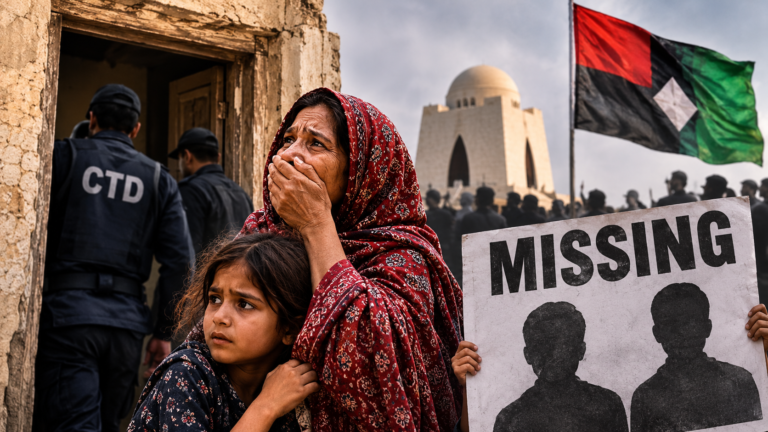

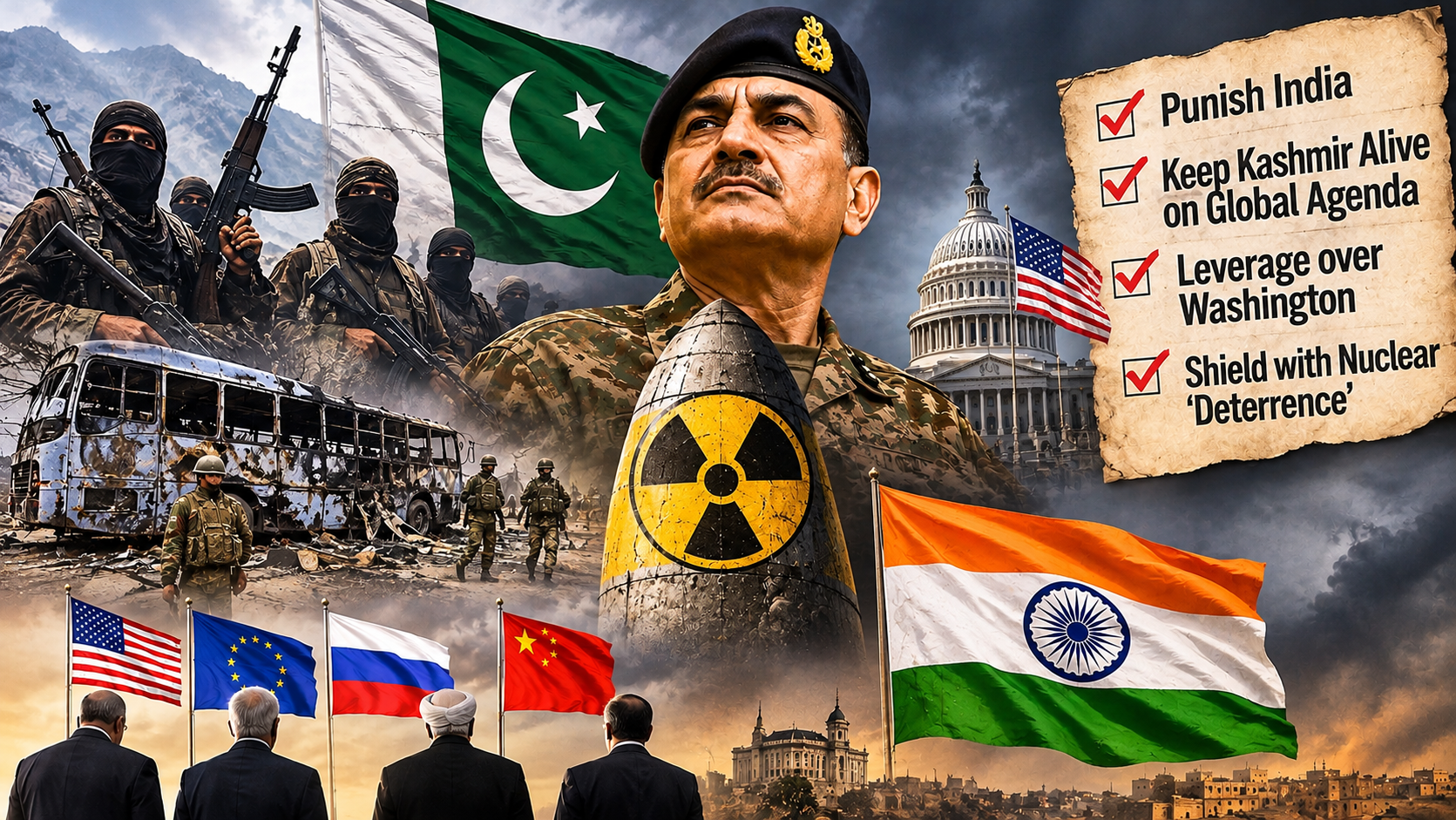
Carl von Clausewitz described war as the continuation of politics by other means. In Pakistan’s case, terrorism has served much the same purpose for over four decades, and it would be a mistake to read each attack as the work of rogue elements or as an isolated tragedy. The American strategist Thomas Schelling argued that the power to hurt is itself bargaining power, and the generals in Rawalpindi appear to have learnt this lesson well. In their hands terror has been a coercive tool, used to punish India whenever it tried to move on, to remind Washington of what Pakistan can switch on and off in Afghanistan, and to keep Kashmir on the international agenda when the world would rather forget it. The pattern is visible in when the attacks come, in what shields Pakistan from paying the full price, and in what it has managed to extract in return.
Terror on cue
The timing of the major attacks tells its own story. In February 1999, nine months after both countries had tested nuclear weapons, Atal Bihari Vajpayee took the bus to Lahore and signed the Lahore Declaration with Nawaz Sharif, and within three months Pakistani troops dressed as mujahideen were found on the heights of Kargil. Twenty-five years later Sharif himself admitted that Pakistan had violated that agreement and that “it was our fault”. On the eve of Bill Clinton’s state visit in March 2000, gunmen later linked to Lashkar-e-Taiba killed 35 Sikh villagers at Chittisinghpura. The Agra summit of July 2001 was followed by the Jaish-e-Mohammed attacks on the Jammu and Kashmir assembly in October and on Parliament in December.
The pattern did not change with time. When Lashkar’s gunmen struck Mumbai in November 2008, Pakistan’s Foreign Minister Shah Mahmood Qureshi was visiting India. Narendra Modi’s surprise stopover in Lahore on Christmas Day 2015 was answered, eight days later, by the attack on the Pathankot airbase. Pahalgam came five days after General Asim Munir called Kashmir Pakistan’s “jugular vein”, and while US Vice President JD Vance was in India. As Harsh V. Pant noted, Pakistan wanted Washington to hear that Kashmir was still an issue. Each time, the message to New Delhi was that peace would come on Rawalpindi’s terms or not at all.
The nuclear shield
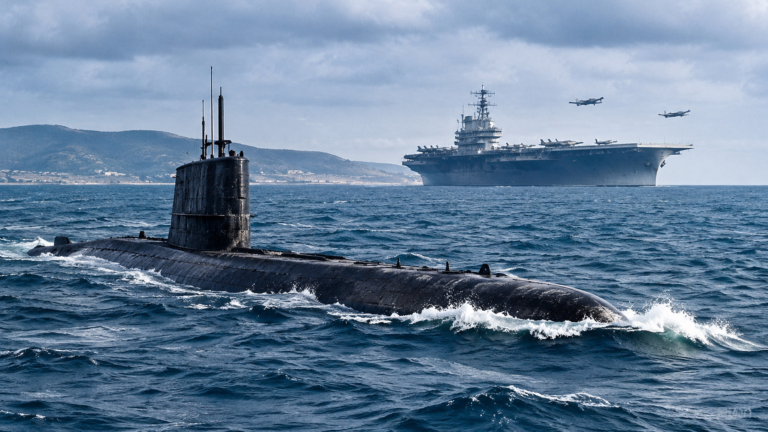
What keeps Pakistan going is the bomb. Strategists describe it as the stability-instability paradox—the notion that nuclear weapons make total war less likely, which in turn makes smaller conflicts more appealing. S. Paul Kapur has suggested that in South Asia, the threat of nuclear war has actually emboldened Pakistani actions rather than held them back. is not a coincidence that Kargil came barely a year after the Chagai tests. The logic is simple enough: if India answers terror with conventional force, Pakistan raises the spectre of a nuclear war, and the world rushes to calm India down. One American analysis described this as Pakistan making the paradox “go one way”. Rawalpindi has gone further still. When India responded to the crises of 2001 and 2008 by drawing up a doctrine for swift, limited conventional strikes, known as Cold Start, Pakistan answered with the Nasr, a 60-kilometre battlefield nuclear missile first tested in April 2011, and Khalid Kidwai, the long-time head of its Strategic Plans Division, said its purpose was to “pour cold water on Cold Start”. In effect, the bomb was shrunk to cover the very space in which India might punish terror.
The crisis of May 2025 showed the same reflex. After India’s strikes under Operation Sindoor, Pakistan’s military announced that the Prime Minister had called a meeting of the National Command Authority, the body that oversees its nuclear arsenal, only for Khawaja Asif to deny within hours that any such meeting had been scheduled. A week earlier, Vance had said Washington hoped India’s response would not lead to a broader regional conflict. Whether bluff or signal, the nuclear card does its job, which is to make punishing terror look more dangerous than tolerating it.
Leverage over Washington
The same tool has been used, more quietly, on the United States. After 2001 Pakistan presented itself as a frontline ally in the war on terror while the Afghan Taliban leadership regrouped on its soil, and Washington kept paying. By January 2018 Donald Trump was complaining that the US had given Pakistan $33 billion over 15 years and received only “lies & deceit” in return, while the terrorists America hunted in Afghanistan found safe haven across the border. Pakistan’s answer was not to close that sanctuary but to sell access to it. In October 2018 it released the Taliban co-founder Mullah Abdul Ghani Baradar, by the US envoy Zalmay Khalilzad’s own account at his request, which made Islamabad indispensable to the talks that ended with America’s exit. Hamid Gul, a former ISI chief, had predicted in 2014 that history would record that the ISI defeated the Soviet Union with American help, and then defeated America with American help. When Kabul fell in August 2021, Prime Minister Imran Khan said that the Afghans had “broken the shackles of slavery”.
What terror has bought
There has been diplomatic victories apart from entrenching terror structures that Pakistan has got through it. Because every crisis puts Kashmir back on the world’s agenda. A day after the May 2025 ceasefire, Trump offered to work with both countries on a Kashmir “solution”, which Pakistan welcomed and India, which has always treated Kashmir as a bilateral matter, did not. In June he hosted Munir for lunch at the White House after the field marshal had called for him to be nominated for the Nobel Peace Prize, and said he wanted to thank him for not going to war. Two months after Pahalgam, the general who had called Kashmir Pakistan’s jugular vein was being received in Washington as a peacemaker. It also tells a lot about US’s South Asia policy where Pakistan’s blackmail and deceit is rewarded for more betrayals to come.
What now?
While Pakistan’s capability of using terrorism as a state’s ability against its neighbours, particularly India and Afghanistan, and bigger powers such as the erstwhile Soviet Union and then the USA works in its favour, there is a bigger cost paid by the people of Pakistan. It enables the clutches of the military so entrenched that the nation’s democracy has never been able to thrive. The youth of the nation are so fed up that they don’t want to fight but to leave the country at the first chance they get. But the most serious peril comes from an unholy alliance of Islamic militias, the military, and mullahs, and their controlled instability consumes the nation from within, and the example of constant terrorist attacks of its own making. The international community needs to understand that while engagement with the state is done on the basis of realist principles and Pakistan may be important geographically and strategically, the same state also needs to understand that states have a monopoly over legitimate violence, and when that legitimacy gets exported to terrorists, it can become a hydra so big that it can even acquire the atom bomb Pakistan is so proud of. Then there will be no grey zone to manage things from Washington, Moscow, Delhi and Beijing. So this nature and pattern of Pakistan must be identified and called out before anything notorious and perilous happens.