
Balochistan, the largest and most resource-abundant province of Pakistan, continues to face persistent unrest—an occupied territory enduring a systematic campaign of military dominance, economic exploitation, and cultural suppression. Since its forcible annexation by Pakistan in March 1948, Balochistan has experienced repeated uprisings, each met with severe state-led repression. Despite enduring decades of marginalisation, the Baloch people’s call for self-determination remains undiminished. The origins of this enduring conflict lie in the coerced incorporation of the Baloch princely state of Kalat into Pakistan. On 15 August 1947, Kalat proclaimed its independence, and its elected parliament subsequently voted against joining Pakistan. Nevertheless, under military duress, the Khan of Kalat was compelled to sign an instrument of accession in March 1948. This act, widely viewed as illegitimate, sparked the first of five major Baloch rebellions—occurring in 1948, 1958, 1962, 1973, and the most protracted uprising, which began in 2004 and persists to this day.
Balochistan constitutes 44% of Pakistan’s total land area, yet it remains the most underdeveloped region in the country. Although the province accounts for 36% of Pakistan’s natural gas production, a mere 10% of its residents have access to piped gas. Sui, where natural gas was first discovered in 1952, ironically still lacks basic amenities such as electricity and clean drinking water. According to the Pakistan Economic Survey 2024–25, Balochistan’s literacy rate is a mere 42.01%, markedly lower than Punjab’s 66.25%. Despite its wealth in minerals, fossil fuels, and a strategically vital coastline, its inhabitants remain among the most impoverished in the nation. These disparities are not coincidental—they are structurally imposed. The China-Pakistan Economic Corridor (CPEC), a $62 billion infrastructure initiative, has exacerbated the economic subjugation of Balochistan. Gwadar Port, the flagship project of CPEC, has effectively become a Chinese-dominated zone from which the indigenous Baloch have been displaced. Traditional fishing communities have been denied access to ancestral coastal areas, while development zones enclosed by fencing, constant paramilitary presence, and checkpoints have proliferated—vastly outnumbering educational and healthcare facilities. Rather than fostering development, Gwadar has transformed into a heavily securitised zone.
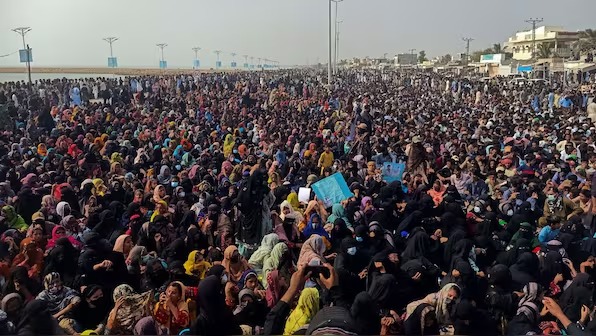
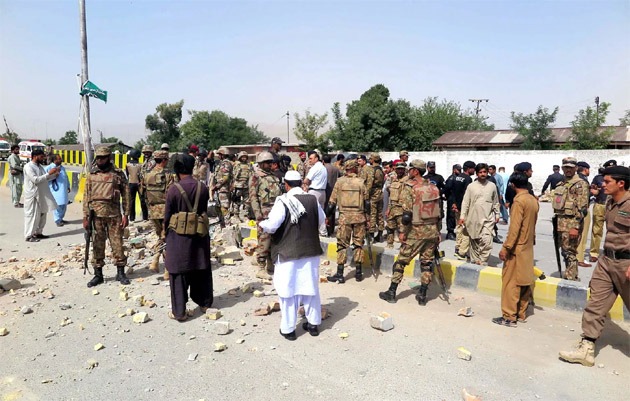
Although Pakistan presents CPEC as a transformative initiative, it has instead become a focal point of resistance. Widespread protests erupted in 2024 and continued into early 2025, driven by grievances related to displacement, joblessness, and denial of fundamental rights. The state’s response was marked by repression. In July 2024, peaceful protestors in Gwadar were subjected to violence and arbitrary detention, while internet services were suspended. Human Rights Watch and Amnesty International denounced the use of excessive force and unlawful detentions. The situation further deteriorated in 2024–2025 with a sharp rise in enforced disappearances. Pakistan’s own Commission of Inquiry on Enforced Disappearances (COIED) has acknowledged that more than 10,000 individuals have disappeared since 2011—2,752 of whom are from Balochistan. Amnesty International’s January 2024 report documented an additional 379 cases in that year alone. Abductions carried out by intelligence agencies and paramilitary forces have become a systematic means of stifling dissent.
One of the most harrowing incidents occurred in July 2024, when Hayat Sabzal Baloch was abducted in Turbat; his mutilated body was discovered in February 2025, discarded without dignity. In January 2025, a 15-year-old student, Anas Ahmed, was forcibly disappeared in Karachi. These instances reflect a broader systemic pattern in which the state metes out collective punishment by targeting children, youth, and activists. The abductions of Baloch women have also escalated. On 27 May 2025, 24-year-old Mahjabeen Baloch was taken from Quetta Civil Hospital by plainclothes security personnel. Her only offence was the organisation of peaceful student demonstrations. She now joins a growing list of women subjected to enforced disappearance—signalling a disturbing evolution in Pakistan’s counterinsurgency tactics.
Protests have persisted despite widespread repression. In March 2025, nationwide demonstrations erupted following a BLA-orchestrated hijacking of the Jaffar Express in the Bolan Pass, resulting in 64 fatalities, including 18 soldiers and 33 militants. In response, Pakistani forces launched “Operation Green Bolan.” Although the state proclaimed success, numerous civilians were either killed or forcibly disappeared. The victims’ families organised sit-ins in Quetta, demanding the return of their missing relatives. Their peaceful appeals were met with rubber bullets and mass detentions. Central to this nonviolent resistance is Mahrang Baloch, a young physician and human rights advocate. As the founder of the Baloch Yakjehti Committee (BYC), she has emerged as the voice of thousands of families of the disappeared. In March 2025, she was arrested and imprisoned in Hudda Jail—the same prison where her father was once held before his disappearance. Despite being denied a fair trial or presentation of evidence; she continues to draw international attention. TIME magazine named her among its TIME100 Next list in 2025. PEN Norway, UN Working Groups, and Malala Yousafzai have all called for her release. Her words, “To demand justice is not terrorism,” have become a defining slogan.
Nevertheless, the state continues to criminalise dissent. Peaceful demonstrators are branded as terrorists; journalists reporting on enforced disappearances face harassment; and human rights advocates are accused of advancing foreign agendas. Pakistan’s official discourse dismisses all Baloch grievances as “Indian-backed separatism,” overlooking decades of systemic violence and legitimate political aspirations. Violence in the region is not solely perpetuated by the state—militancy has also escalated. In August 2024, the Baloch Liberation Army’s Operation Herof resulted in the deaths of 14 security personnel and over 60 civilians in a coordinated assault. In November 2024, a suicide bombing at Quetta Railway Station killed 32 people. The BLA claimed responsibility, citing the attack as retaliation for state atrocities. These recurring cycles of violence and reprisal have increasingly radicalised the socio-political environment, severely narrowing the space for peaceful resolution.
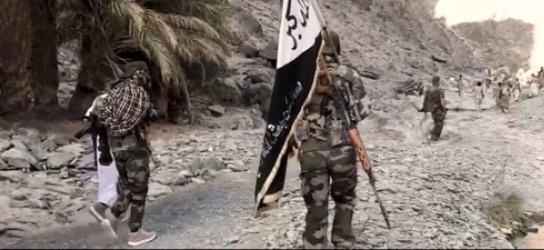
Compounding the anguish, prominent figures such as national racer Tariq Baloch were assassinated in May 2025. Activists have described it as a “kill-and-dump” operation—where individuals are executed by state agents and their bodies discarded to serve as a deterrent. Domestic media frequently fall silent under state pressure, while international journalists are denied access. This sustained information blackout has rendered Balochistan one of the most poorly reported conflict zones globally. Cultural repression further deepens this siege. The Balochi language is scarcely taught in schools, while textbooks systematically omit Baloch history and identity. Cultural figures such as Professor Saba Dashtiyari, a staunch advocate for linguistic and cultural rights, have been assassinated. Today, artists and poets continue their work either in exile or in secrecy, preserving the spirit of resistance through music, literature, and oral storytelling.
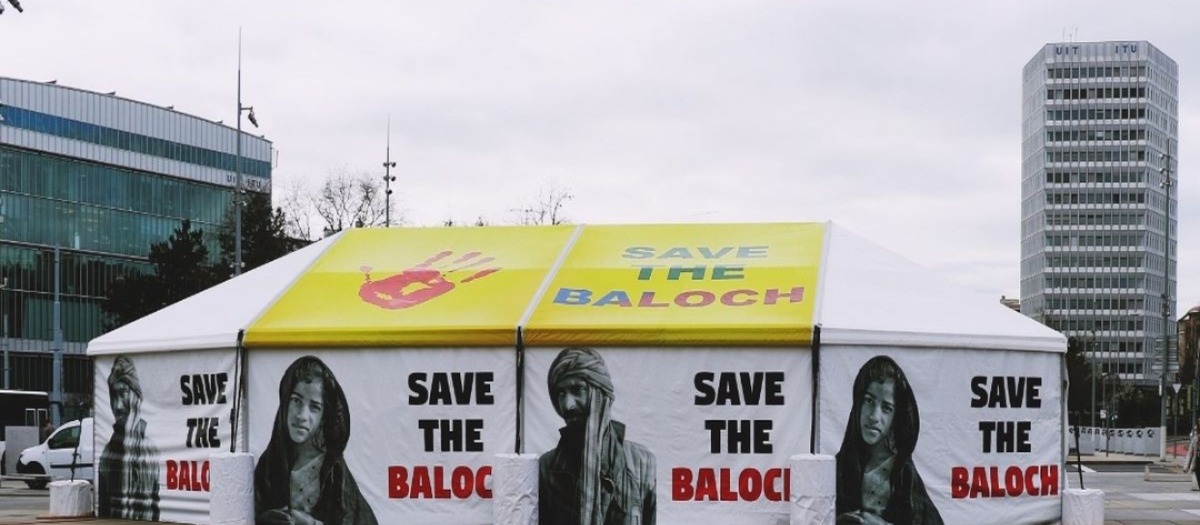
Balochistan’s demographic landscape is also being intentionally reshaped. A process of settler colonialism is underway, with non-Baloch communities incentivised to settle in strategic districts. Electoral boundaries are manipulated to dilute indigenous political influence, resulting in further marginalisation and disenfranchisement. Nevertheless, the Baloch people persist in their resistance. From guerrilla fighters in the rugged mountains to student demonstrators in urban centres, and activists within the diaspora in Europe and North America, the will to defy remains resolute. Each martyr’s funeral becomes a site of protest. Every name of the disappeared is transformed into a slogan. Each expression of resistance—be it a poem, mural, or sit-in—resonates across generations with undiminished force.
Pakistan’s GDP increased by 2.5% in 2024 and is forecasted to grow by 2.6% in 2025, according to the Ministry of Finance. Yet this economic growth has failed to benefit Balochistan in any meaningful way. While Pakistan’s per capita income stands at $1,824, Balochistan’s figure remains significantly lower, with widespread unemployment and malnutrition. In the 2023–24 provincial budget, Rs 750 billion was allocated, yet sectors such as health, education, and infrastructure remain severely neglected. Funds earmarked for “security” rarely reach the public. The global community remains largely indifferent. No United Nations fact-finding mission has ever visited Balochistan. Western nations, including the United States and China, continue to prioritise strategic relations with Pakistan over addressing human rights concerns. Although international organisations publish reports, diplomatic pressure remains negligible. The conflict receives scant media coverage, surfacing only when violence reaches major cities.
Balochistan is not merely a tale of insurgency—it is the narrative of a nation resisting erasure. A people denied the right to live with dignity continue to choose defiance. The state may resort to killing, abduction, and censorship—but it cannot extinguish the resolve of a people who steadfastly remember their history, uphold their identity, and dream of freedom. The assault on Balochistan transcends military action—it is an existential struggle. Yet in the face of oppression, a young woman imprisoned, a mother clutching a photograph of her missing son, and a protestor inscribing slogans on a wall all convey a unified message: We exist. We resist. And we shall not be silenced.