Bangladesh: NCP setting preconditions for Feb election exposes growing insecurity

Bangladesh’s student led NCP setting preconditions for Feb election exposes growing insecurity
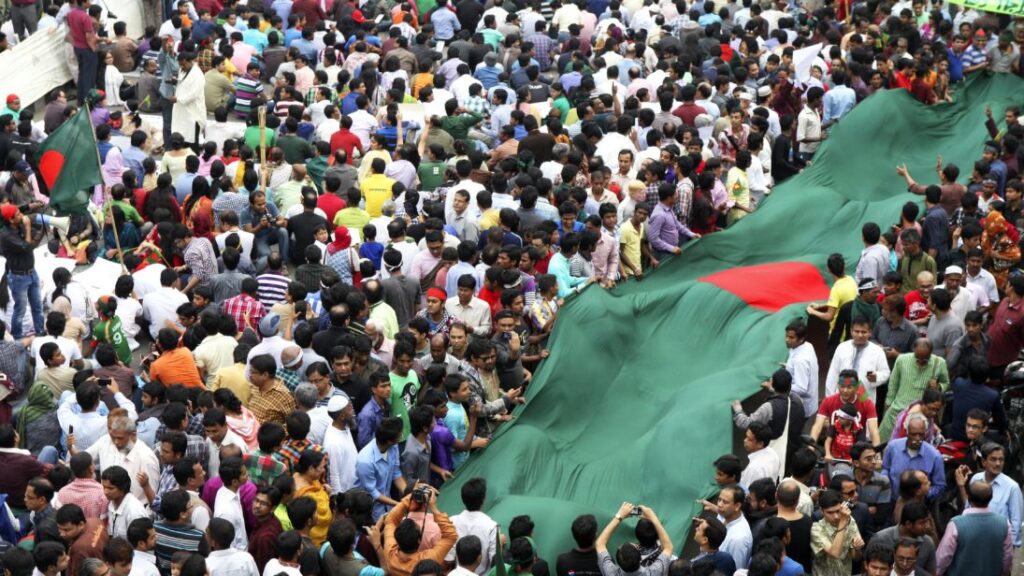
With Bangladesh’s national election scheduled for February 2026, the National Citizen Party (NCP) has displayed its unwillingness for polls without securing complete impunity for its political coup during last year’s July uprising. The actions and remarks of leaders in the NCP exposed the party’s growing insecurity in the political game.

Its consistent demand for electoral reform — to have national elections based on proportional representation (also favoured by Islamist parties) — reflect its awareness of lack of popular support.

The optimism of the July Uprising quickly faded as witnessed in the growing political chaos following the exit of former Bangladesh’s Prime Minister Sheikh Hasina which revealed the country’s democracy deficit.

Now with the Bangladesh Election Commission (EC) denying the ‘shapla’ symbol to NCP, the party’s ego is shattered, as members are threatening to delay the election if they are denied its electoral symbol. NCP is now open to both the Bangladesh Nationalist Party (BNP) and the radical Islamist party Jamaat-e-Islami for political alliances, notwithstanding the war of words it has been engaging in with both and presenting itself before Bangladesh as the ‘new’ alternative. Truly, NCP’s ‘revolutionary’ emergence has been short-lived and is perhaps now reaching its endgame.

Bangladesh’s new party is eyeing for coalition to live up to its promise.

Given the political vacuum as a result of Hasina’s ousting and political ostracisation of Awami League – that remains as Bangladesh’s largest political party – the country witnessed two political developments. This includes the resurgence of Islamists on the political stage and the growing fissures between former allies BNP and Jamaat.

A new political platform was established in September last year known as the Jatiyo Nagorik Committee (National Student Committee), by prominent student leaders of the July Uprising. The intent behind the formation of this platform was to replace the ‘existing fascist political settlement’ with a ‘democratic one’ and become the ideological vanguard of the July Uprising.

The committee felt that only through the establishment of a new political party, the political aspiration of the July Uprising can be achieved. This paved the way for the establishment of a student-led political party — Jatiyo Nagorik Party (National Citizen Party) — that announced its formation on February 28, 2025 with a centrist and pluralist ideological approach that aims to establish a “second republic” in Bangladesh. It also announced its expectation to contest for all 300 seats in the national (Jatiya Sangsad) election.

Just six months within this year, a total of 32 NCP leaders resigned from the party citing internal conflict, misconduct and dissatisfaction with leadership. Moreover, its NCP’s student wing — Bangladesh Gonotantrik Chhatra Sangsad (BGCS) — faced heavy defeats and failed to secure central posts in recent student union elections of Dhaka, Jahangirnagar, Chattogram and Rajshahi University. The surveys on voter preference since early this year also denote the same trend.

A nationwide survey by Innovision Consulting held this March reported that despite appeal among young voters, the voters’ preference for NCP stands at an overall five per cent. Another survey by the BRAC Institute of Governance and Development (BIGD) in July showed only a marginal 2.8 per cent increase from two. The latest People’s Election Pulse Survey in September, preference for NCP stands at 4.9 per cent. Surprisingly, NCP’s main rival, Awami League, despite the ban, continues to enjoy a higher voters’ preference percentage than the NCP as per these surveys.

NCP drew controversies even before its launch. The selection of the initial 10 core members of the NCP was criticised for its lack of inclusivity and lacking a democratic process. Moreover, the inclusion of leaders from the Jatiyo Nagorik Committee having past ties with Jamaat’s student wing Islami Chhatra Shibir in the party created another round of uproar, leading to their voluntary withdrawal. Another controversy followed when a recognised activist of LGBTQ community was reported to secure a position in the party’s central committee, sparking debate and dissatisfaction even among NCP leaders, eventually leading to the member’s exclusion. Quite early on, the new party’s approach to present an alternative as the most inclusive party and its own internal contradictions reflected NCP’s own ideological challenges.

Led by students under the banner of Students Against Discrimination (SAD), the 2024 July Uprising was popularised as Bangladesh’s ‘second liberation’. The movement — largely composed of anti-Hasina forces — championed for an inclusive, plural, just and democratic Bangladesh. Thus, Bangladesh’s political landscape not only changed after August 5 2024, but also initiated a new debate on which direction the country’s politics should head.

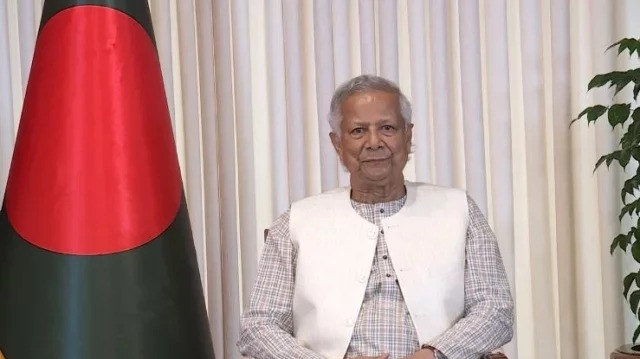
The interim government was established on August 8, just days after Hasina fled the country. The main coordinators of the Students Against Discrimination (SAD) invited Muhammad Yunus to head the interim government as the Chief Advisor. Three prominent leaders of SAD — Nahid Islam, Mahfuj Alam and Asif Muhammad — also became advisors in the interim government representing students. Thus, SAD played a significant role in legitimising Yunus’ administration, installing it the responsibility of implementing reforms and conducting a free and fair election.

Amidst anticipation of who will be part of the NCP’s central leadership, Nahid Islam resigned from its advisory position in the Ministry of Information and Broadcasting to become the chief convenor of the party. Islam’s joining the NCP was not viewed favourably by other political parties who accused the interim government of helping for the establishment of a ‘King’s Party’ under its schemes of endless reforms rather than announcing a clear election roadmap. NCP’s formation and the Chief Advisor Yunus’s soft spot for the student political party, also put its own neutrality in question. Political parties like Gono Odhikar Forum and the BNP strongly demanded for resignation of student advisors Mahfuj Alam and Asif Muhammad alleging them as NCP loyalists.

Bangladesh’s political culture rooted violence, corruption and extortion soon caught up to the nation’s newest political alternative. In April, its joint member secretary, Gazi Salauddin Tanvir, was accused of involvement in corruption and misconduct over the appointment of Deputy Commissioners, leading to his removal from NCP. The party’s ‘March to build the country’ rally in July took a violent turn in Gopalganj district when party leaders revealed their real intent — bury Mujibism along with 1972 ‘Mujibbadi’ Constitution.

NCP’s rally in Gopalganj, the birthplace of Sheikh Mujibur Rahman where Awami League continues to maintain a stronghold despite ban, was perceived as a provocative act by locals as words spread the party’s intention to desecrate Mujib’s graveyard leading to a violent clash. The following month, NCP joint coordinator of Chattogram city branch Nizam Uddin’s video of his involvement in extortion to suppress a port-related protest became viral, leading to his suspension. Indeed, the apple didn’t fall far from the tree.

The interim government’s political bias towards NCP became more visible when, following NCP-led street protests in May, it announced a ban on the Awami League thus leading to its registration suspension as a political party in the Election Commission. Before NCP’s protest, the interim government had maintained that it was for ‘Awami League to decide if it wants to participate in the election’, indicating it had no plan to ban the party earlier. It is not just Awami League’s ban, but also attempts at complete historical revisionism — removing public holidays dedicated to Sheikh Mujibur Rahman, excluding his title as the ‘Father of the Nation’ by revising the Liberation War Act and removing his picture by redesigning currency notes and portraits from public offices, to name a few — are all calculative steps taken under the strong demands of the NCP.

–IANS

Analysing Bangladesh’s new anti-India political landscape

The July 2024 Uprising constituted a watershed moment in the political history of Bangladesh, precipitating significant transformations in both leadership and governance structures. In the aftermath, established political parties, along with newly emergent entities, have asserted themselves actively as opposition forces, predominantly targeting the Awami League. This development has underscored the emergence of a “new Bangladesh,” characterised by its explicit recognition and promotion of individuals and groups that have vigorously opposed the previous ruling party and its associated legacy.

A salient illustration of this shift is observable in the interim government’s concerted efforts to reconfigure collective historical memory regarding the 1971 Liberation War. These initiatives have sought to reconstruct historical narratives in a manner that tends to marginalise or omit the contributions of the Awami League—most notably those of Sheikh Mujibur Rahman, who is widely recognised as Bangladesh’s founding father and principal architect of its independence.

With respect to Sheikh Hasina, whose tenure concluded with her removal from office in August 2024, opposition rhetoric has advanced the prevailing assertion that her sustained electoral success was attributable to her close association with India. Immediately following the 2024 electoral outcome, a movement akin to the Maldives’ “India Out” campaign emerged within Bangladesh, advocating for a boycott of Indian commodities and alleging that India had exerted undue influence on Bangladesh’s domestic political processes to sustain Hasina’s prolonged incumbency. Her subsequent exile in New Delhi has further substantiated this discourse, lending greater credence to these claims among her critics.

‘India Out’ campaign in Bangladesh, February 2024

In the run-up to the forthcoming 13th national election, Bangladesh’s political milieu appears increasingly permeated by anti-India sentiment. Notably, this disposition is manifest not only within opposition parties but is also discernible in the interim government’s policy orientations and public actions.

Following the collapse of Hasina’s administration, the dynamics of India-Bangladesh relations have undergone notable changes. The newly installed interim leadership has adopted a divergent foreign policy trajectory, deliberately creating distance from India. This realignment is exemplified by the imposition of trade restrictions on imports from India. Conversely, the interim administration has deepened its engagement with Pakistan, a state from which Bangladesh achieved independence through the violent conflict of 1971. While some Bangladeshi commentators characterise this rapprochement as a calculated diplomatic manoeuvre, they frequently overlook the fact that substantive shifts in foreign policy have largely been confined to relations with India.

Domestic foreign policy experts have critiqued India’s previous strategy, contending that it disproportionately prioritised relations with the Awami League, thereby “placing all its eggs in one basket.” However, this argument tends to neglect the profound historical and cultural ties between the two nations. India was the second country after Bhutan, to recognise Bangladesh’s sovereignty in 1971, and both states retain strong affinities rooted in common histories, languages, and cultures as former territories of British India. Although it is accurate that India maintained closer relations with the Awami League-led government relative to the BNP coalition—which adopted a more adversarial stance towards India—this does not imply that bilateral relations are determined solely by partisan considerations.

The two countries also share an extensive and porous frontier, which has historically given rise to challenges such as unauthorised migration, cross-border smuggling, and sporadic border disputes—issues that persist in the contemporary context. Following Sheikh Hasina’s departure from Dhaka, Bangladesh experienced significant upheaval, marked by violence against minority populations and a deterioration of law and order. Coverage of these events provoked concern in India, which recalled the influx of millions of refugees during the 1971 conflict. Nevertheless, attempts by Indian authorities to voice their apprehensions were routinely dismissed by the interim government as “fabrications” or “politically motivated narratives.”

People unite to defend minorities in Bangladesh

Rather than accepting responsibility for shortcomings in maintaining law and order, the interim administration has persistently sought to attribute blame to India. For instance, when the historic Dhanmondi 32 residence of Sheikh Mujibur Rahman was subjected to vandalism in February, the authorities, instead of acknowledging deficiencies in their security apparatus, alleged that India was enabling Sheikh Hasina to disseminate her messages from exile. India issued a strong diplomatic protest in response to these assertions, yet the interim leadership in Dhaka continued to evade accountability.

The chief advisor to the interim government has frequently alluded to “external actors” fomenting instability in Bangladesh—implicitly referring to India—while refraining from acknowledging his own administration’s role in the prevailing disorder. This narrative strategy serves to deflect scrutiny from the government’s administrative failures and simultaneously consolidates its anti-India credentials among certain domestic constituencies.

Simultaneously, various political parties, including Islamist factions, have adopted similar anti-India rhetoric in an effort to harness popular support. Islamist groups, some of which were previously marginalised or proscribed, are now openly advocating for the establishment of a Sharia-based constitution and mounting attacks on the country’s secular foundations. The interim government’s persistent silence regarding these developments has allowed such groups to consolidate their influence and propagate their ideological agenda largely unimpeded.

Among the most prominent actors in this landscape is Jamaat-e-Islami, which is currently attempting to present itself as a progressive entity. Nevertheless, it continues to evade responsibility for its contentious role during the 1971 war. This organisation, along with emerging groups such as the National Citizenry Party (NCP), is actively seeking to reinterpret the narrative of the Liberation War. They propagate the erroneous claim that India’s involvement constituted interference in what was an internal Pakistani matter, and suggest that Indian intervention was the primary catalyst for the partition in 1971. Such assertions are not only historically inaccurate but also deeply disrespectful to those who sacrificed their lives for Bangladesh’s independence.

Recently, the NCP attributed responsibility for the Gopalganj unrest to so-called “pro-India” factions with links to the Awami League. This incident exemplifies how anti-India rhetoric is being employed for political advantage. However, such narratives provoke a fundamental question: What incentive would India have to promote instability or disorder in Bangladesh? Given the significant security challenges India already confronts emanating from its western neighbour, Pakistan, it has little desire to see turmoil on its eastern frontier.

Bangladesh Youth Rally Turns Violent at Gopalganj, CAB Yunus Blames Awami League

Rather than assigning culpability to India, Bangladeshi political leaders ought to address the internal issues that frequently stem from their own policies and decisions. Utilising India as a scapegoat for political expediency may offer short-term benefits in electoral terms, but ultimately proves detrimental to the nation’s long-term interests. The premise that India is behind every crisis in Bangladesh is not only unsubstantiated but also poses potential risks.

India, on its part, continues to express its aspiration for a peaceful, democratic, and secular Bangladesh, and remains prepared to engage with any administration that upholds mutual values and interests. However, substantive cooperation cannot occur if India is persistently perceived solely as an adversary or rival.

As the forthcoming election approaches, Bangladesh faces a decisive juncture. The nation must determine whether it wishes to forge a future founded on truth, collaboration, and democratic values, or remain encumbered by a cycle of scapegoating and historical distortion. A stable and prosperous Bangladesh is in the best interests not only of its own populace, but also of the entire region—including India.

Talibanisation of Bangladesh?

With the ouster of Sheikh Hasina, Bangladesh has witnessed a disquieting transformation that has sent ripples of concern across its socio-political and cultural landscape. Images and videos of the student-led July uprising—once hailed as a breath of fresh air—now stand juxtaposed against the vandalism of murals and statues of Sheikh Mujibur Rahman, the Father of the Nation. Religious sites and properties belonging to minorities have come under attack, raising an alarming question: Is Bangladesh facing a Taliban-like takeover, akin to what Afghanistan endured?

Will the Yunus led administration write country’s future into a new Islamist Republic!

Initially, such concerns were dismissed—often mocked—as exaggerated alarmism by optimistic observers who celebrated the so-called ‘second liberation’. Yet, nearly ten months into this ‘new Bangladesh’, the unfolding reality on the ground increasingly vindicates those early apprehensions. The promise of the July uprising, which inspired a youthful generation eager for a free, democratic, just, and pluralistic nation, now seems betrayed by a rapid and disconcerting political and cultural regression. How did Bangladesh veer so sharply from those aspirations after 5 August? The answer lies in the silent complicity of the interim government, which has chosen the path of the Quiet Game.

The Quiet Game: Enabling a Rise of Fundamentalism

Two recent incidents illustrate the creeping fundamentalism taking root. In Tangail, the screening of a movie was cancelled following protests from local Islamic groups. In Sylhet and Tangail, tourists celebrating Eid faced disruptions by similar groups. The charges leveled? Alleged promotion of obscenity and vulgarity during the sacred Eid week. These examples, seemingly minor, hint at a larger, more troubling pattern—where Islamic fundamentalist forces are increasingly policing public morality and curtailing freedoms.

This resurgence of religious fundamentalism is not spontaneous; it has been growing steadily since the formation of the interim government tasked with reforms after the removal of Sheikh Hasina’s government. The period has opened up spaces for extremist ideologies, endangering the secular and pluralistic fabric painstakingly woven into Bangladesh’s national identity.

Bangladesh in flames:Where is Democracy Heading?

Historical Context: The Roots of Bangladesh’s Secular Identity

Bangladesh’s pluralism and secularism are neither accidental nor superficial constructs. They are deeply rooted in history—particularly the 1971 Liberation War, which was fought to safeguard the Bengali language, culture, and identity against the repressive West Pakistan regime. The war was also a battle against religious fanaticism, symbolized by groups like Jamaat-e-Islami and their armed auxiliaries, who violently opposed Bengali nationalism and targeted the cultural ethos perceived as ‘un-Islamic’.

For Bangladeshis, pride in their unique identity remains paramount—a nation born out of sacrifice to protect its linguistic and cultural heritage. This historic legacy makes the current surge of Islamic fundamentalism not only a political threat but a direct challenge to the very essence of Bangladesh’s founding ethos.

Exploiting the Power Vacuum: Fundamentalists on the March

The political upheaval created by Sheikh Hasina’s ouster has emboldened Islamic fundamentalist groups, most notably Hizb-ut-Tahrir—a banned organisation during the previous government’s tenure. Seizing the opportunity, Hizb-ut-Tahrir has reemerged, publicly demanding the establishment of an Islamic Caliphate in Bangladesh. Islamic political parties are actively negotiating with the interim government to replace the secular 1972 Constitution with Islamic sharia law, effectively turning Bangladesh into an Islamic state.

This agenda is no secret. The hardline groups have taken to the streets with alarming zeal, targeting cultural and social events under the guise of eradicating ‘un-Islamic’ activities. The name “Towhidi Janata” has become synonymous with this wave of moral vigilantism—ubiquitous at festivals, cultural celebrations, and public gatherings, their mission is clear: to suppress cultural expressions that do not conform to their stringent interpretation of Islam.

The Assault on Culture: A War on Pluralism

One cannot overlook the symbolic significance of the cancellations and disruptions. The Lalon Mela—an annual festival honouring Lalon Fakir, a mystic poet who represents the core values of tolerance and cultural diversity—was forcibly cancelled in Narayanganj after threats from Islamic groups. Similarly, festivals celebrating tolerance and pluralism have been obstructed by Hefazat-e-Islam and other hardliners, who denounce the festival’s philosophies as ‘contradictory to Islam.’

The famed Basanta Utsav (Spring Festival) too suffered a similar fate, canceled amid threats. These cancellations are unprecedented in Bangladesh’s history and serve as a stark warning sign for the nation’s cultural health. The Amar Ekushey book fair, an iconic annual literary event commemorating the Language Movement martyrs, faced protests led by Towhidi Janata when a stall displayed books by Taslima Nasrin—a writer demonized by Islamist hardliners for her outspoken secularism and criticism of religious orthodoxy. The ensuing altercation and forced closure of the stall revealed how freedom of expression, especially dissenting voices, might be strangled under an increasingly Islamist regime.

Even Pohela Baishakh, the Bengali New Year and Bangladesh’s largest cultural festival, came under attack. Hardliners branded it as an ‘India-imposed Hindu festival’ and pressured organizers to rename the event from Mangal Shobhajatra to Barshabaran Ananda Shobhajatra, diluting its cultural resonance. Attacks on the Dhaka Eid procession, accusing it of featuring ‘idol-like’ symbols, illustrate an unwillingness to embrace the syncretic nature of Bengali Islamic culture—a culture shared and celebrated by both Muslims and non-Muslims alike.

The hardliners’ ideological narrowness was further exposed during Ramzan, when Jamaat-e-Islami led protests enforcing a daytime shutdown of eateries, disregarding Islamic allowances for exemptions to fasting. Such actions betray an agenda more political than religious, seeking to control social life and suppress diversity.

Gender and Moral Policing: A Targeted Attack on Women

The rise of Islamist fundamentalism is also marked by an intensification of anti-women ideologies. Women’s football tournaments have been vandalized, canceled under threats citing Islamic values. Towhidi Janata has opposed women’s public presence in social venues, harassed women for dress codes, and openly engaged in moral policing. Physical assaults on women for perceived ‘immodesty’ have become disturbingly commonplace, often with implicit or explicit backing from Islamist factions.

Even women’s rights institutions have come under fire, with Islamic parties vocally opposing reports highlighting gender inequalities. This reflects the deep-seated misogyny embedded in the Islamist vision for Bangladesh, which stands in stark contrast to the country’s progressive strides in women’s empowerment over past decades.

Moral policing of women: From the streets to social media

The Role of the Interim Government: Silent Enabler

What is most troubling is the interim government’s near-complete silence in the face of these alarming developments. The government has chosen passivity—akin to children playing the ‘Quiet Game’—allowing Islamist hardliners to expand their influence unchecked. Law enforcement agencies have largely failed to intervene, sending a signal of tacit approval or, at best, unwillingness to confront fundamentalist violence.The Yunus-led interim administration’s removal of ‘secularism,’ ‘nationalism,’ and ‘socialism’ from the new state principles marks a deliberate ideological shift. This removal is not merely symbolic; it clears the constitutional path for the ascendancy of Islamic law and governance. Combined with the government’s inaction against fundamentalist incursions into public life, this new political reality is steering Bangladesh toward a Talibanisation under the guise of a ‘second liberation.’

The Cost of ‘Second Liberation’

This ‘second liberation,’ far from delivering freedom and justice, risks enslaving Bangladesh to a form of Islamist authoritarianism reminiscent of Taliban rule in Afghanistan. It threatens to erode the hard-won freedoms of speech, religious tolerance, gender equality, and cultural pluralism that define Bangladesh’s unique identity. If unchecked, this Islamist resurgence will not only undermine the nation’s secular foundation but also reverse decades of social progress and democratic development. The tragedy is that the youthful energy and hopes that fuelled the July uprising may soon be crushed under the boots of religious extremism, and the ideals of the Liberation War may be relegated to distant memory.

Conclusion: A Call to Vigilance and Resistance

The Talibanisation of Bangladesh is neither inevitable nor irreversible. It is a product of political choices, social complacency, and ideological neglect. For Bangladesh to reclaim its pluralistic and democratic future, decisive action must be taken to curb the rise of fundamentalism, protect secularism, and uphold constitutional principles that guarantee freedom for all citizens.

The interim government must abandon its passive stance and actively enforce laws against extremist groups, protect cultural expressions, safeguard women’s rights, and restore the foundational ideals of the nation. Civil society, the youth, and international partners also have critical roles to play in resisting the creeping shadow of Talibanisation and ensuring that Bangladesh’s second liberation truly embodies liberation for all its people, not just a select few.


Holding onto Chair: The many tactics of Muhammad Yunus

Muhammad Yunus’s popularity is waning as the interim government faces a series of crises, with Bangladesh’s political landscape becoming increasingly complex. This month marks the tenth month since Yunus assumed leadership of the country’s state machinery as the chief advisor of the interim government—formed through the consensus of political parties, civil society, and the military following the ousting of Sheikh Hasina. It was widely expected that the interim government would serve a brief term, similar to previous caretaker administrations, with its primary responsibilities being a) the efficient management of state affairs and b) the facilitation of free and fair elections. In practice, however, the Yunus administration has failed to achieve either objective and has instead undertaken the broader task of state reform through the creation of various reform commissions. Meanwhile, Yunus’s policies and decisions have only exacerbated the challenges faced by the interim government amidst the chaotic conditions that have gripped the nation since 5 August last year. Despite this, Yunus appears to be navigating against the current of the country’s political will. This raises a pertinent question—why is Muhammad Yunus still holding onto office?

Yunus Forced to Use Back Entrance at Chatham House Amid Fierce Protests by Bangladeshis

Several key developments support this assertion. One such example is the enactment of unconstitutional amendments through the passing of ordinances such as the Cyber Protection Ordinance, amendments to the International Crimes (Tribunals) Act, the Anti-Terrorism Act, and the Enforced Law Ordinance. These ordinances were criticised for being passed unilaterally without any public consultation. More critically, these legislative moves reflect Yunus’s apparent political vendetta—namely, the marginalisation of the Awami League. Two significant developments further reinforce this view: firstly, the deteriorating state of press freedom in Bangladesh, and secondly, the imposed ban on the Awami League.

The Cyber Protection Ordinance, which replaced the stringent Cyber Security Act, was introduced by the interim government with the stated aim of strengthening cyber security. This move followed a period during which press freedom in Bangladesh had been severely eroded under the previous deposed administration. However, the new ordinance has demonstrated a similar tendency to suppress press freedom, as evidenced by the condemnation from rights groups over the revocation of press accreditation for journalists. The retaliatory targeting of journalists critical of Muhammad Yunus and the interim government, documented by the Rights and Risk Analysis Group (RRAG), presents an alarming picture—approximately 640 journalists have been targeted over the past eight months, with 91 reportedly harassed or assaulted in May alone. The charging of journalists with terrorism and other criminal offences—mainly in connection with the July uprising and their alleged ties to the former regime—has been widely criticised as a deliberate effort by the interim government to stifle press freedom. Contrary to the expectations of restored free speech following the July uprising, press freedom remains a critical concern, as highlighted by the latest global ranking from international human rights group Article 19, which categorised Bangladesh as a ‘crisis’ country for freedom of expression.

The amendment to the Anti-Terrorism Act, approved on 11 May, introduced a provision enabling the prohibition of terrorism-related activities by individuals and ‘entities’. Concerns had already emerged that this ordinance would empower the interim government with unchecked authority to suppress political activity, especially given its move to ban the ‘activities’ of the Awami League under pressure from certain political parties. Merely a day after the ordinance’s enactment, the Awami League was officially dissolved—another unilateral measure implemented without public consultation. Though welcomed by parties that had mobilised on the streets demanding this outcome, Yunus’s decision provoked strong international criticism and deepened domestic political divisions, with many viewing it as a violation of democratic norms carried out without due process. The politically driven violence targeting League supporters since Hasina’s departure is well documented, and the ban is seen as a further escalation of such acts under a veil of impunity. These unconstitutional legal interventions have been justifiably identified as the interim government’s erosion of the country’s core human rights and freedoms.

Muhammad Yunus’s proposal in April to establish a humanitarian corridor connecting to Myanmar’s Rakhine region marks the latest instance of his administration’s misjudgement. What distinguishes this issue from previous ones is the rare, unified protest and criticism it drew from all political parties—both established and emerging—arguably the first instance of such consensus since Hasina’s removal.

Bangladesh struggles on front line of Rohingya crisis

On one hand, concerns were raised about the geopolitical risks this corridor posed to Bangladesh’s territorial integrity; on the other, questions were directed at the interim government’s unilateral move to propose such an initiative—despite lacking the mandate—without consulting political parties. The proposal also fuelled suspicions that Yunus was favouring the interests of foreign powers at the expense of national sovereignty. Not only political parties, but even the Bangladesh Army expressed disapproval, further highlighting widening tensions with the interim government. The Army Chief firmly rejected the idea of any such “bloody corridor” and instructed Yunus to hold elections by December, prompting the interim government to ultimately withdraw the proposal.

The issue of elections has emerged as the most prominent point of contention against the Yunus administration. The intentional postponement of the national election has not only fuelled divisions among political parties but also hindered meaningful progress in the statebuilding process. Although the interim government initially announced national polls could be held by December 2025, the subsequent extension of the timeline to June 2026 has sparked suspicions and fears that Yunus is deliberately attempting to cling to power. The absence of a clear electoral roadmap—despite repeated requests from political parties—has intensified concerns that the interim government may further delay elections until the following winter. The political impartiality of the interim administration is increasingly under scrutiny, with many viewing Yunus as favouring the newly formed National Citizen’s Party (NCP), and suspecting that the postponement of the elections is a calculated strategy to give the NCP a strategic advantage in the forthcoming vote.

However, the broad consensus among political parties on the urgency of holding early elections—despite their ideological differences—signals a notable shift in the political landscape: time appears to be running out for Muhammad Yunus. The current political climate stands in stark contrast to last August, when Yunus was invited to lead the interim government. The people of Bangladesh are now demanding elections, seeking to exercise their democratic rights and facilitate a smooth political transition. It seems the chief advisor may have grown too accustomed to the power he holds and is now making desperate efforts to remain in office.

A shadow of disapproval on the interim government

The interim government has now been in power for nine months, yet Bangladesh remains trapped in a cycle of political turmoil and uncertainty. On one side, political parties are more fragmented than ever before, while on the other, the interim administration continues to struggle with addressing the country’s persistent socio-economic and political challenges.

New Gazette, New Rules—Will online freedom survive the firewall?

Although interim government  was established with broad consensus among civil society, political leaders, and the military following the mass uprising of 2024, the interim government under Dr Yunus has faced considerable difficulties since its formation. Indeed, much of the disorder that has engulfed the nation since last August can be attributed to the Yunus administration. While there was initial enthusiasm for a reformed Bangladesh, free from its authoritarian legacy, the interim government has largely proven to be a passive administration, repeatedly mired in controversy.

It could be argued that the criticisms directed at the Yunus administration originate from remnants of the deposed Hasina regime. Dr Yunus has secured considerable support from global leaders, thereby legitimising the interim government and receiving strong endorsement primarily from Western countries in its pursuit of reforms and conduct of elections. Nonetheless, domestically, the legislative initiatives intended to implement reforms have encountered opposition not only from some of the very factions that contributed to the establishment of the interim government but also from international human rights organisations. Key legislative measures include the Cyber Protection Ordinance, amendments to the International Crimes (Tribunals) Act, and the Anti-Terrorism Act.

Bangladesh’s cyber frontier gets a rulebook. But who’s watching the watchers?

The state of media freedom in Bangladesh remains deeply concerning, with numerous reports of violence, harassment, censorship, and prosecution of journalists and media outlets. Often these outlets are being accused by the interim government as collaborators with the Awami League—contradicting its commitment to uphold press freedom. The introduction of the Cyber Protection Ordinance, which replaced the contentious Cyber Security Act (CSA), quickly sparked apprehension regarding the government’s surveillance practices under the guise of enhancing cyber security. Organisations such as Transparency International Bangladesh (TIB) criticised the ordinance for being approved without adequate public consultation and for retaining CSA’s surveillance provisions, thereby posing a potential threat to media freedom in the future. This development coincided with the interim government’s cancellation of press accreditation for 167 journalists and the filing of charges of “crimes against humanity” against 25 journalists due to their alleged links with the Awami League government, provoking condemnation from human rights groups. Media freedom remains a critical concern, exhibiting patterns reminiscent of the previous administration. The most recent report by the Rights and Risk Analysis Group (RRAG), published on World Press Freedom Day 2025—when Bangladesh ranked 149th out of 180 countries—revealed that in the eight months under Dr Yunus’s interim government, 640 journalists were targeted. The administration’s efforts to suppress media critical of Yunus have involved not only branding them as pro-Awami League  but also revoking press accreditations, resorting to violence, and levying criminal charges including money laundering, criminal offences, and terrorism. Consequently, urgent media reforms demand serious and immediate attention.

The amendment of the International Crimes (Tribunals) Act through an ordinance extended the powers of investigative offices to conduct searches and seize evidence without prior approval from the tribunal. Additionally, the new ordinance authorised the tribunal to freeze and confiscate the assets of the accused. More recently, a second amendment introduced provisions allowing the trial and punishment of ‘organisations’ for crimes within the tribunal’s jurisdiction. In essence, these amendments enhanced the tribunal’s authority to ban organisations, confiscate their properties, and suspend their registration if found guilty of crimes against humanity. Initially, political parties were included in the ordinance, but this was subsequently removed to avoid political controversy. Nonetheless, these amendments—particularly the second—have attracted significant criticism from human rights organisations such as Human Rights Watch (HRW), which argue that they undermine fundamental human rights. Concerns have been raised that these changes could be exploited as tools for political repression of opposition groups, lacking adequate accountability, thus posing a threat to democratic principles. The ban on the Awami League has only reinforced this scepticism.

Cyber law or digital leash? A fine line that Bangladesh must walk carefully.

On the 11th of this month, the interim government approved the draft ordinance of the Anti-Terrorism (Amendment) Act, introducing a new provision to prohibit activities of individuals or ‘entities’ involved in terrorism, thereby granting the government extensive powers to regulate political activities. Just one day earlier, the interim government imposed a ban on the “activities” of the Awami League amid increasing pressure from the Nationalist Communist Party (NCP) and Islamic parties. The ordinance, approved overnight, revised the existing Anti-Terrorism Act of 2009 and was subsequently used on 12 May to officially disband the Awami League, providing a clear indication of arbitrary targeting and suppression without accountability. This action provoked widespread condemnation from foreign governments, international human rights organisations, as well as domestic political leaders and analysts. The systematic targeting of Awami League leaders, activists, and supporters—who have faced mob violence over the past nine months—has sparked concern and criticism over the interim government’s failure to prevent the country’s descent into lawlessness. Instead, through the launch of Operation Devil Hunt aimed at curbing mob attacks, the interim government appeared to be settling political scores by arresting a disproportionate number of League sympathisers. The banning of a political party mirrored the authoritarian tactics of the deposed government, now widely labelled ‘fascist’, fuelling fears of a further erosion of democratic space. Moreover, the interim government’s ordinance on enforced disappearance has also faced criticism for lacking public consultation, accountability measures, and failing to address past abuses.

The interim government’s recent legislative initiatives, presented as reforms, amount to little more than old wine in new bottles. While political parties in Bangladesh remain divided on the issue, international human rights organisations have been unequivocal in their criticism—these measures pose a significant threat to fundamental human freedoms. The interim government’s political vendetta has become increasingly apparent, as has the growing shadow of disapproval cast over the Yunus administration.

« 1 2