Bangladesh set to become launchpad for jihadist expansion across South Asia: Report

World’s most densely populated nation at risk of slide into jihadist chaos

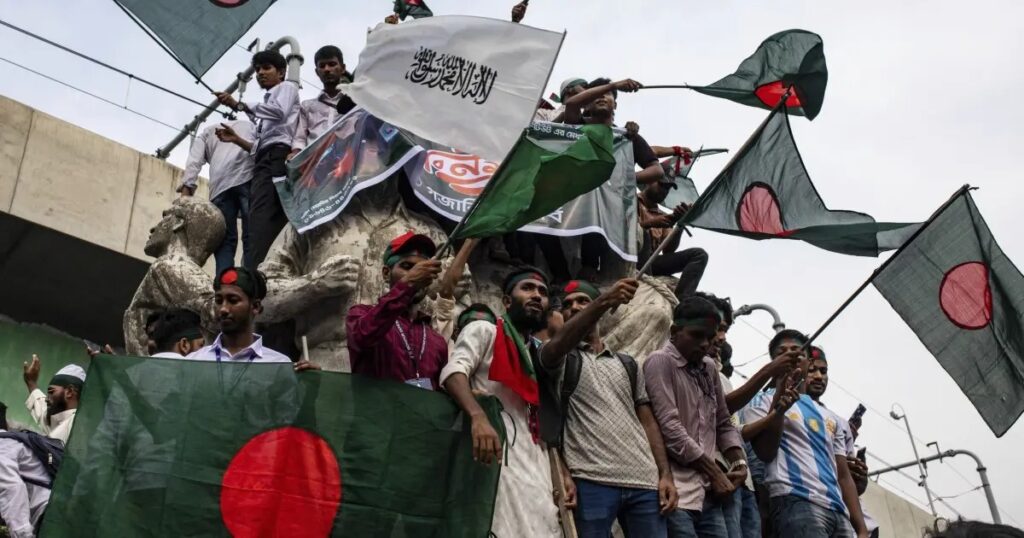
Bangladesh’s ultimate goal of forming an Islamic Revolutionary Army goes beyond internal consolidation and aims to position the country as a strategic outpost for transnational jihadist operations – serving Pakistan’s geopolitical interests and silencing secular voices, a report cited on Wednesday. It mentioned that by forging alliances with Islamist elements and portraying them as “grassroots defenders”, the regime led by Muhammad Yunus seeks to weaken the Bangladesh Army – the last standing national institution capable of resisting radical influence.

“A grave and coordinated conspiracy is unfolding within Bangladesh. Behind the façade of political rhetoric and ‘anti-discrimination’ activism, the regime of Muhammad Yunus has embarked on a project that could ignite the most serious security crisis in South Asia since the rise of the Taliban,” a report in leading Bangladeshi outlet ‘Blitz’ has detailed. Citing multiple sources – including regime insiders, social media disclosures, and intelligence leaks- the report indicated that an Islamic Revolutionary Army (IRA) is being formed to supplant the Bangladesh Army with an ideologically driven militia loyal to Yunus and his Islamist allies.

“This so-called ‘Islamic Revolutionary Army’ is not a mere political stunt or student enthusiasm. It represents a dangerous convergence of radical Islamism, foreign intelligence collusion, and calculated efforts to militarise civilian networks. The consequences, if unchecked, could transform Bangladesh from a moderate Muslim democracy into a launchpad for jihadist expansion across South Asia,” it stressed. According to the report, in a stunning revelation on his social media platform earlier this week, Asif Mahmud Shojib Bhuyain – “an influential as well as controversial” advisor to the Yunus regime – publicly announced the recruitment and training of 8,850 individuals across seven training centres in Bangladesh.

He outlined the programme, stating that trainees would undergo martial arts, judo, taekwondo, and firearms instruction. Hours after the post, the screenshots went viral before disappearing. Citing sources within Dhaka, the report confirmed that this marked only the first phase of a larger plan with five successive batches of 8,850 recruits each set to complete training by January 2026. “The recruitment process reportedly includes written, viva, and physical tests — all overseen by retired Bangladeshi officers with strong pro-Pakistan leanings, alongside covert representatives of Pakistan’s Inter-Services Intelligence (ISI) and Turkey’s Milli İstihbarat Teskilati (MIT),” it highlighted.

“Bangladesh’s civil society, its remaining independent journalists, and the patriotic factions within the military must act before it is too late. Once a revolutionary army rooted in ideology replaces a professional army bound by the constitution, Bangladesh will no longer be a sovereign republic – it will be a caliphate in disguise,” the report noted.

–IANS

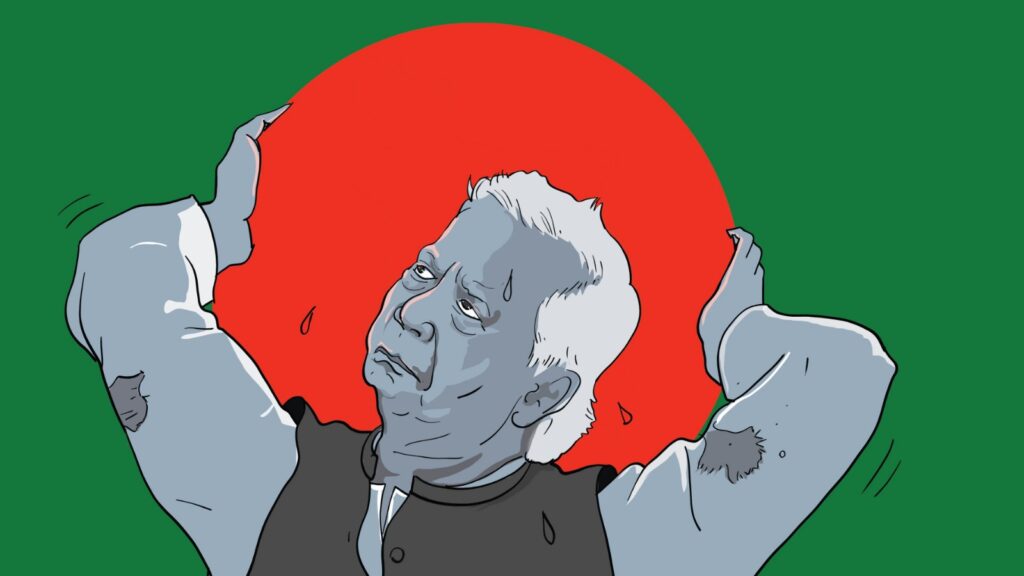
How the Yunus government in Bangladesh is reversing democratic progress

– Arun Anand

Bangladeshi nationals protest against Muhammad Yunus over attacks on Hindus

The interim government, which has been in power for over a year, is now grappling with a credibility crisis as political parties question its neutrality and its ability to ensure free and fair elections in the upcoming national polls scheduled for February.

Formed under the leadership of Muhammad Yunus following Sheikh Hasina’s ouster last year, the interim administration was projected as a corrective force meant to dismantle the remnants of authoritarianism in the country. Its key responsibilities were to restore stability, implement crucial reforms, and oversee a transparent democratic transition. Yet, it has failed on all these fronts. The initial perception of the interim government as a righteous alternative has eroded, exposing an even deeper democratic deficit than before.

Recently, six international human rights organisations have addressed a letter to Muhammad Yunus, the interim government’s chief advisor, urging his government to take concrete measures to prevent further human rights violations and to advance reforms process to uphold the country’s human rights. Two pressing issues addressed in the letter deserve our attention, for these highlight the failures of the interim government—the arbitrary arrests and detentions of journalists and politically motivated attacks on Awami League members.

Press freedom has been a longstanding concern in Bangladesh, partly due to the country being under prolonged military rule and the failure to reforming media even after restoration of civilian government in 1990. It is well established that press faced unprecedented censorship previously whereby any criticism against the government in power has been stifled. While the media in Bangladesh hoped to see a new dawn of freedom after 2024 July Uprising, the reality, however, remains concerning. In an eerily similar way like its predecessor, the interim government continues to target journalists in Bangladesh, via harassment, intimidation, physical attack (including murder) and detention.

Labelling any voice of dissent and criticism as “collaborators of fascist Awami League government” has become the interim government’s most used tool of repressing media freedom. The mob attack on speakers inside Dhaka Reporters’ Unity, and detention of 16, including journalist Monjurul Alam Panna under anti-Terrorism Act has been widely criticised as Bangladesh’s growing culture of intimidation and impunity since the past year.

According to the World Freedom Index, Bangladesh’s press freedom was classified as “very serious”, noting that over 130 journalists have been subjected to ‘unfounded judicial proceedings’, especially on charges of ‘crimes against humanity’ and ‘murder’. As per Rights and Risks Analysis Group (RRAG) report, in the first eight months of Yunus-led interim government, about 640 journalists have been targeted, which includes 182 journalists being filed under criminal cases, 206 journalists being filed under acts of violence,  and cancellation of press accreditation of 167 journalists.

The first half of this year witnessed 266 journalists being implicated in cases related to July Uprising, and about 50 media organisations in the country being impacted on the same accusation.  Dhaka-based Human Rights Support Society (HRSS) also reported the ‘alarming’ human rights situation in Bangladesh, noting that 340 journalists have been victims of murder.  Human Rights Watch in its October report, too, accused the interim government of abusing recent amended Anti-Terrorism Act to target political opponents, including academics and journalists, and stuff them in prisons.

Despite Yunus govt promises on press freedom, Bangladesh journalists face reporting minefields

Bangladeshi Journalists in International Media (BJIM) also claimed that attacks on journalists reported in different districts allegedly involve local miscreants and even law enforcement agencies while the administration has taken no visible steps yet. The declining state of press freedom in Bangladesh remains a challenge to the country’s democratic transition.

For the interim government, the journalists are not the only opponents slapped with terrorism charges. The main target of its wrath has been members and loyalists of the Awami League.

Post-Hasina Bangladesh witnessed a paradigm shift of its historical narrative—from Sheikh Mujibur Rahman’s legacy to the history of Liberation War itself. Moreover, moments after Hasina fled Bangladesh, the country succumbed to a compromised law and order situation, where mobocracy emerged as new normal. Instead of restoring stability, the interim government exhausted all its efforts in ostracizing Awami League. From army, judiciary and police force, educational institutions, all League loyalists were first replaced or forced to resign.

The government also became a bystander to the surge in mob attacks on those alleged to be League loyalists (including, the religious minorities), justifying these attacks as “political”. Every act of vandalism, including the despicable demolition of 32 Dhanmondi, was also labelled as “act of provocation” by outsiders. Instead of arresting the perpetrators, the interim government launched Operation Devil Hunt, arresting as many as 18,384 people across Bangladesh, mostly those affiliated with the Awami League and Chhatra and Jubo League.

This witch-hunt started much before Awami League was officially banned this May following the amendment of Anti-Terrorism Law. The ban received criticisms from international rights organisations—Human Rights Watch, United Nations and Amnesty International—as a partisan act that risk repressing political pluralism which also undermine the country’s reform process.

The Human Rights Watch deputy Asia director accused the interim government of being more stuck on juggling an unreformed security sector, violent religious hardliners and political groups seeking vengeance on Hasina supporters than protecting the rights of Bangladeshis. The report also noted the interim government’s pattern of mass arrests and arbitrary detention of hundreds of League supporters misusing its amended Anti-Terrorism Law, slapping them with baseless charges and denying the detainees with proper medical care and bail.

The Freedom House reported that while the interim government lifted restrictions on major political parties that opposed the Awami League, restrictions increased on former ruling party. Leaders of Awami League were arrested on alleged crimes based on skewed evidence. The ban on the party, the cancellation of its party registration at the Election Commission along with the continues witch-hunting on League and its allies via amendment of legislative measures have not only hindered the activities of Awami League but also identified as the interim government undermining fundamental freedoms.

Notwithstanding Yunus and his other adviser’s persistent denial of worrying human rights track, rights organisations—both national as well as international—have been noting the hypocrisy of following the same ‘fascist’ path against which it was established in the first place. It is now evident that Muhammad Yunus is only using its political powers to seek political vendetta against Awami League and Sheikh Hasina, his old opponents.

Now with just the players change, democracy is taking a backseat, while mobocracy, culture of extortion, religious extremism and political violence—all sustained via the interim government’s human rights violations—are ruling Bangladesh’s political culture. Amidst this, the chances of a free and fair election, a just and inclusive democratic transition feel slim.

India-Bangladesh tug-of-war surrounding Sheikh Hasina

India Bangladesh Extradition Row; Dhaka Seeks Hasina Return

The partition of India has been described by historians as a great misfortune of human civilization. In his book ‘Guilty Man of Partition of India’, Dr. Ram Manohar Lohia argues that the leaders responsible for the partition of India were arrogant, conceited and ambitious. South Asia is still reeling from the aftermath of partition. Bengali Muslims, who accepted Pakistan as Muslims, launched a revolution under the leadership of Sheikh Mujibur Rahman to create Bangladesh for their language, culture and identity. At that time, Pakistan was widely supported and assisted by America and China. India, which was defeated by China in 1962, was isolated from China and America after defeating Pakistan in 1965. Pakistan’s military rulers did not spare any brutality to suppress the movement led by Sheikh Mujibur Rahman. Three million Bengalis were martyred in the eight-month movement. Pakistani soldiers raped three hundred thousand Bengali women to change the Bengali language.

In the history of human civilization, no military force in the world has shown such ruthlessness and brutality. Due to the growing movement, India was forced to feed the Bengali refugees. In the 70s, India received the excellent leadership of Indira Gandhi. Indira Gandhi was a skilled player in diplomacy. She mobilized the Indian army to support the Mukti Bahini soldiers. At that difficult juncture in history, America and China did not hesitate to threaten India.

US President Nixon did not just advocate for Pakistan but also sent a warship with nuclear capabilities to the Bay of Bengal. Similarly, China also used the word war to invade India from the Himalayan region. That was a difficult situation for Indira Gandhi. She traveled to the Soviet Union and succeeded in signing a peace treaty with the Soviet Union in 1971. According to the terms of the treaty, the clause on the invasion of India stated that Soviet Russia would fight alongside India. Due to the aftermath of the peace treaty with Soviet Russia, American pressure and Chinese threats became self-evident. In other words, Indira Gandhi succeeded in becoming the midwife of Bangladesh. Bangladesh was born on the basis of culture. The song written by Rabindranath Tagore became the national anthem of Bangladesh.

In Bangladesh, which was built on the concept of a secular and inclusive society, Sheikh Mujibur Rahman was martyred along with his family in 1975 after being targeted by extremists. Sheikh Hasina was able to save her life because she was in Germany. Over time, she took refuge in India. After 1975, it seems that the rule was in the hands of extremists for a long time. Bangladeshi society is divided into two parts, the Ashraf and the Atarf. The Ashraf community has a large population and this community seems to support inclusiveness and secularism, while the Atarf seems to stand in favor of Islamization and Sharia law. After 1975, the Jamdani rebellion was again in favor of secularism in 1989. In other words, Bengali nationalism seems to have become strong again and managed to hold power for a long time. However, from 2001 to 2006, extremist forces like the BNP and Jamaat-e-Islami succeeded in making Bangladesh a victim of backwardness.

From 2006 to 2008, the nationalist movement in Bangladesh, especially under the leadership of Sheikh Hasina’s party, became successful. Bangladesh began to draw up a roadmap for modernization. In 2012, the movement took shape, taking the decision to transform Bangladesh’s economy under the leadership of Sheikh Hasina. With the arrival of Sheikh Hasina, there was a major change in foreign policy. Resolving the border issue with India was a major success of Bangladesh’s foreign policy. Due to Sheikh Hasina’s strong leadership, Bangladesh became one of the fastest growing economies in South Asia. By importing raw materials from India, Bangladesh succeeded in making a leap in the textile sector in Europe and America.

Bangladesh was able to benefit more from the heat and heat of globalization and open economy. Bangladesh’s modernization journey was not digestible even by America. Due to the geopolitical structure of Bangladesh, America wanted to keep its footprint in Bangladesh, Saint Martin Island. The American base campus on Saint Martin Island was sponsored by the American goal of observing Chinese activities in Myanmar. Sheikh Hasina did not have American conditions. Against this background, an uprising began in Bangladesh with the alliance of America and Pakistan and the goodwill of China. This uprising turned into an explosion. Sheikh Hasina’s working style was also different. Hasina also abused her power to rein in the radicals and suppress the opposition. On August 5, 2024, Sheikh Hasina managed to escape from Bangladesh and took refuge in India.

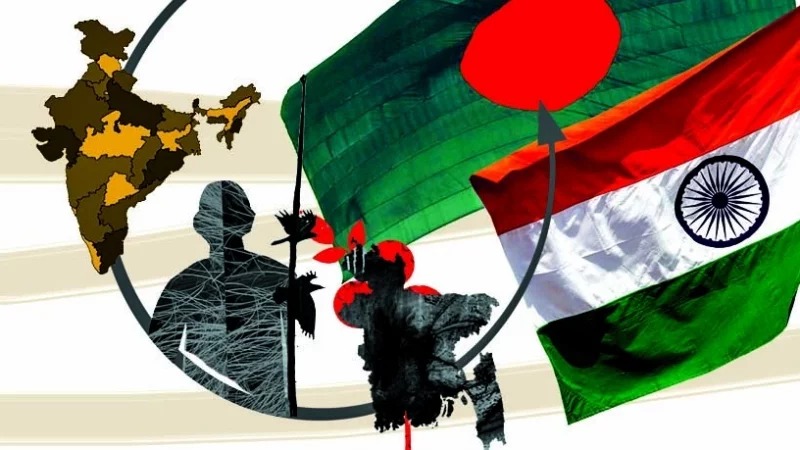
Bangladesh-India Relations caught in a downward spiral since Sheikh Hasina’s ouster

During this long period, the Hindu community of Bangladesh became a scapegoat. The Hindu community had the largest investment in Bangladesh’s textiles. After the Hindu community became the target of radicalism, the textile system was completely destroyed. During the leadership of Bangladesh under Nobel Prize winner Mohammad Yunus, the alliance between Bangladesh and Pakistan seems to have fully increased. Recently, a Bangladeshi court has sentenced Sheikh Hasina to death, and Bangladesh seems to have started diplomatic efforts to pressure India to extradite Sheikh Hasina, who has taken refuge in India.

Bangladesh’s security advisor, who is visiting India, has placed Indian security advisor Ajit Doval in Bangladesh’s favor. Although there is an extradition treaty between India and Bangladesh, its articles 6 and 7 state that the extradition treaty will not be applicable to political charges. Despite the deep influence of the Awami League in Bangladesh, there is silence in civil society due to the rampant extremism. Experts believe that the Hindu community will again be targeted by terrorists in the region where Sheikh Hasina was installed as the protector of the one crore Hindu community, which has had a great impact on the lives of the people of Bangladesh. Experts believe that Bangladesh may become like Afghanistan in the region where the chemistry between Bangladesh and Pakistan has dissolved.

In this sense, international powers and human rights activists have appealed to India not to extradite Sheikh Hasina. It does not seem appropriate to extradite Sheikh Hasina on the basis of democratic values. Since Bengali society is strong in terms of civilization, culture and literature, Bangladeshi society has the ability to defeat extremism. It can be estimated that the Awami League will regain power in the region where democracy is established in Bangladesh. In this sense, it does not seem appropriate to stand under any diplomatic pressure, keeping in mind the broader interests of South Asia. Modi should consider the example of Indira Gandhi and pursue a strategic policy with Bangladesh.

Did Muhammad Yunus hijack famed microcredit model? Decades-old documents raise many questions

Questions emerge about the true origins of Grameen-style lending.

Muhammad Yunus, widely recognised as the founder of Bangladesh’s conglomerate Grameen Bank is set to come under the cloud, over ‘revelations’ of decades-old documents by a former intelligence officer, which claims that the microcredit model was actually a university research program and it was subsequently hijacked by the Nobel Laureate and “projected as his own”.

Ex-Bangladeshi intel officer Aminul Hoque Polash claims to have unearthed a series of archival documents from 1976-1983 that fundamentally challenge Muhammad Yunus’s credentials of being the founder of the Grameen Bank, the institution that was instrumental in winning him the Nobel Peace Prize in 2006.

Aminul Hoque Polash served ten years in the National Security Intelligence (NSI) and later as a diplomat, and is currently living in exile. He claims that he was forced to leave the country because of was singled out and targeted for persecution by the Yunus regime.

The documents, he claims, show that the microcredit model was actually a university research project created by junior researchers, and Yunus later hijacked it, and the papers also have his signature.

Notably, the model of Grameen Bank, under which small loans (micro-credit) are disbursed to impoverished families without any collateral, became so popular that it was replicated the world over, including some cities in the US and Europe.

The documents accessed by IANS show that the microcredit project originated at Chittagong University, where Muhammad Yunus served as a professor.

“The Rural Economics Programme (REP) was launched in 1976 with a Ford Foundation grant, and the first micro-lending experiment in Jobra village was an action-research project run by research scholars named Shapan Adnan, Nasiruddin and H.I. Latifee. Yunus was only assigned the task of deep tubewell cooperative management,” it said.

It further claims that the Bangladesh Bank adopted the microfinance model and planned a nationwide rollout before Yunus joined.

Another letter dated June 6, 1983, shows the Ford Foundation writing to Chittagong University Vice-Chancellor, approving grants to the varsity for supporting its rural finance program.

The microcredit model, which initially started as a University program in 1976, eventually turned into a national scheme after being authorised by government ordinance to work as an independent bank.

Yunus became its Project Director and, after the 1983 Grameen Bank Ordinance, assumed the role of Managing Director. By the 1990s, he acquired full control over the institution, which was allegedly developed with public funds.

The former intelligence officer, unrelenting in his attack on the Yunus regime, also goes on to claim that Bangladesh is witnessing a redux of what it saw during the 1970s.

Polash claims that the man who hijacked the famed microfinance model is now trying to usurp the state machinery, after taking over power illegally in 2024, and using it to erase obstacles, reward loyalists, and enrich his network.

“The same man who stole a rural research project now governs an entire country with the same appetite for capture,” he says with an alarming tone.

Citing multiple incidents of impropriety and misconduct, he claimed that prison sentences of criminals are being overturned, corruption cases are being withdrawn, and undue financial benefits are being extended to Grameen companies.

He also holds the Yunus regime accountable for aggressive nepotism in governance, disbursal of licences to his enterprises, tax exemption and other favours being extended to Grameen Bank.

“The same man who stole a rural research project now governs an entire country with the same appetite for capture,” he says in an alarming tone.

–IANS

Bangladesh: Yunus’s ‘Grameen’ network has links with financiers of Al-Qaeda, says Report

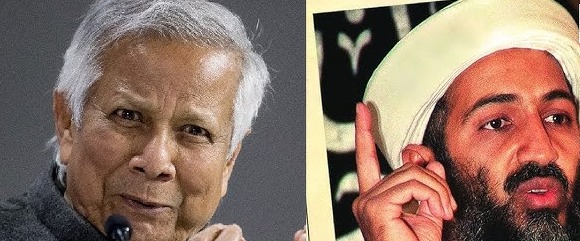
An investigative report published by Blitz, a leading Bangladesh weekly, has alleged that Nobel laureate Muhammad Yunus’s global ‘Grameen’ network has long-standing connections with individuals identified by Western intelligence agencies as financiers of Osama bin Laden and the Al Qaeda network. The report, authored by Blitz editor Salah Uddin Shoaib Choudhury, has called for an international inquiry into Yunus’s transnational financial partnerships.


Questions rise over Prof Yunus’s Grameen’s links to extremist networks.

According to the report, “For years, Nobel laureate Muhammad Yunus has been celebrated across the world as a pioneer of microfinance and a champion of the poor. Yet behind this carefully polished global image lies a far darker reality — a web of connections linking Yunus’s sprawling ‘Grameen’ empire to individuals named by Western intelligence agencies as financiers of Osama bin Laden and Al Qaeda.”

The report further adds, “In March 2003, The Wall Street Journal published a list of Al Qaeda donors based on CIA information, where the name of Mohammed Abdul Latif Jameel — a Saudi businessman and board member of Grameen-Jameel Microfinance — appeared prominently. The report noted that Jameel was one of the key funders of Osama bin Laden, the notorious mastermind behind the September 11 terrorist attacks.”

Online corporate records describe ‘Grameen-Jameel’ as a social business established in 2007 as a joint venture between the Grameen Foundation and Grow Well Limited, a subsidiary of the Abdul Latif Jameel Group. According to these records, the company’s mission is to “alleviate poverty in the Arab world” through partnerships with microfinance institutions, providing technical and financial support.”

It further adds, “On its LinkedIn page, Grameen-Jameel states that it was established in 2003 and incorporated in 2007 as a joint venture between Grameen Foundation and ALJ Foundation, a subsidiary of the Abdul Latif Jameel Group.”

“The company claims to be the first social business in the Middle East, North Africa (MENA), and Turkey devoted to expanding microfinance. As of December 2013, it facilitated more than USD 65 million in financing, reaching over 2.2 million clients through partner institutions across 10 countries in the MENA region and Turkey.”

According to the report, the company is incorporated in Cyprus and headquartered in Dubai’s International Humanitarian City. Its website is currently inactive, and its Facebook page has been suspiciously deactivated.

“Further strengthening the Grameen-Jameel connection is Zaher Al Munajjed, the Chairman of Grameen-Jameel Microfinance Ltd. Al Munajjed also serves as a senior advisor to Mohammed Abdul Latif Jameel, President of the ALJ Group in Saudi Arabia. With more than 25 years of international business experience, he has played a key role in developing vocational training and microfinance programs. A Harvard Business School alumnus and holder of a Master’s degree in French International Law, Al Munajjed is widely regarded as a major architect of microfinance expansion in the MENA and Turkish regions,” says the Blitz report.

The Jameel family’s controversial past

According to the Blitz report, Yousef Jameel — another prominent figure from the Jameel dynasty — was once notorious in London’s casino circles in the 1980s. According to the Daily Mail, he was widely known as a playboy, later becoming entangled in an international child abduction case.

Adding to the controversies, his name appears in Jeffrey Epstein’s notorious ‘Black Book’, which exposed networks tied to child exploitation and human trafficking. On July 21, 2004, Jameel and others filed an appeal with the British Court of Appeal following the publication of a Sunday Times report titled ‘Car tycoon ‘linked’ to Bin Laden’ on June 8, 2003. The report claimed that Jameel had been sued by the families of the victims of the 9/11 attacks.

On February 3, 2005, Dow Jones & Co., the parent of The Wall Street Journal, filed its own appeal against Yousef Abdul Latif Jameel.

In a landmark ruling on October 11, 2006, the highest court in Britain sided with The Wall Street Journal, affirming the importance of investigative journalism. The ruling highlighted that the article was published as part of a legitimate public-interest inquiry into terror financing.

The court record stated:

“Above the article and headline were photographs of the claimant, Mr Jameel, his company Hartwell PLC, and the Twin Towers burning on 11 September 2001, with the following words: ‘Accused: Yousef Jameel’s family firm bought the British car dealer Hartwell in 1990. Now he is alleged to have helped fund training for the terrorists who carried out the September 11 attacks’.”

Despite these allegations, Jameel has long been regarded as a successful entrepreneur and “generous philanthropist”. He has contributed significant funding to programs at MIT aimed at reducing poverty and improving water and food security. For his philanthropic commitments and contributions to arts and culture in the United Kingdom, Mohammed Abdul Latif Jameel received an honorary knighthood from Queen Elizabeth II. The honour was announced by the British Embassy in Riyadh,” says the Blitz report.

“However, The Guardian later reported that a group of wealthy Saudi businessmen — including individuals close to Jameel — were suing for libel in the High Court over allegations that they may have financed Osama bin Laden’s Al Qaeda network. They chose London because of its reputation as a claimant-friendly environment for defamation cases,” mentions the Blitz report.

Suspicious connections of Grameen

The Blitz report has also mentioned the allegations linking Grameen entities to the Muslim Brotherhood, raising further concerns about Yunus’s global partnerships.

“Even more disturbing are reports indicating sinister links between Grameen Bank and illegal human organ traders. Individuals unable to repay their loans were allegedly coerced into selling their organs to settle debts,” says the Blitz report.

–IANS

Bangladesh: Battling crisis at home, Yunus govt continues to weaponize hate against India

Anti-India Sentiment Grows In Bangladesh, Protests Against Indian Goods Intensify By B’deshi Leaders

The 2024 July Uprising that ended Sheikh Hasina’s 15-year political tenure transformed Bangladesh’s political landscape. With anti-Hasina forces grabbing power, the political culture shifted and Bangladesh’s foreign policy took a spin as its old friend India came to be seen as an enemy overnight.

Anti-India sentiment was present in Bangladesh even during Hasina’s tenure, especially nurtured by radical Islamists and Pakistan apologists. The reason was heightened bilateral ties reached between India and Bangladesh on multifaceted areas — from cultural diplomacy to reaching understanding on water and land sharing, to new connectivity projects – port, buses and railway – for economic cooperation to greater border security, thanks to joint counter-terrorism measures.

It was also the time Bangladesh’s relations with Pakistan witnessed a thaw as under International Crimes Tribunal, war criminals mostly belonging to Jamaat-e-Islami who collaborated with Pakistan Army during 1971 Liberation War, were given death sentences and life imprisonment on charges of war crimes.

In the domestic sphere, Hasina’s hard dealing of new terrorist offshoots, witnessed during 2013-17, aggravated radical Islamists who openly advocated against Bangladesh being a constitutionally secular state (an ideological stand of Awami League party). All these factors culminated in shaping a new narrative — Hasina “selling” Bangladesh’s democracy to New Delhi.

Soon after the January 2024 election where Sheikh Hasina faced a decisive win, her political opponents doubled down on anti-India propaganda. First, they criticised New Delhi for congratulating Hasina at a time western countries raised concern over Bangladesh’s free and fair election. Then they blamed New Delhi for meddling in Dhaka’s internal affairs, alleging Narendra Modi government to have had a hand behind Hasina’s victory in 12th parliamentary election. All these because New Delhi maintained a non-interventionist approach to any country’s domestic politics, national election being one of them. Thus started the ‘India Out’ campaign in Bangladesh, mirroring Maldives’ drive earlier in 2023. Nevertheless, this did not affect bilateral ties in any way and the campaign soon died because of low popularity.

After Hasina’s deposition, the interim government’s foreign policy recalibration underwent a paradigm shift — moving closer to erstwhile coloniser Pakistan while maintaining a cold distance with New Delhi. The Chief Advisor Muhammad Yunus himself drew attention on many occasions for his provocative speeches antagonising New Delhi — from calling Bangladesh as the only guardian of Bay of Bengal for India’s “landlocked” northeast states during his China visit in March to claiming that New Delhi “disliked” or “disapproved” of student protest in Bangladesh that ousted Hasina and insisting at the UNGA in September that SAARC is nearly defunct because of “politics of one country” (indirectly referring to India).

In this blame game, Yunus conveniently avoided the core issue of SAARC being defunct — the Pakistan-sponsored terrorist attack in India’s Uri that undermined regional cooperation and led to cancellation of 19th SAARC Summit in Islamabad and boycott by neighbouring countries.

India, during the July Uprising, maintained diplomatic communication with Dhaka where it “observed developments closely”. Moreover, New Delhi’s focus during the unrest was to ensure security of Indian nationals, especially students, in Bangladesh and taking measures to avoid any breaches of border security.

It is common knowledge how post-Hasina, Bangladesh splurged into a deep law and order crisis, as violence of all kinds — gender, communal, ethnic, political — engulfed the country.

The consistent security lapse has created deep public distrust towards Bangladesh’s law enforcement forces. The rise in mob violence and rampant acts of vandalism of Sheikh Mujibur Rahman’s murals went unchecked and unnoticed by the interim government. The demolition of Mujib’s private residence -32 Dhanmondi – in February, however, pulled widespread criticism from both within and outside Bangladesh.

Instead of taking accountability for its lacklustre attitude towards restoring law and order, the interim government pointed the finger at New Delhi, for “giving platform” to Sheikh Hasina to give speeches. In fact, this has been the persistent narrative of the interim government, every time it was questioned of lawlessness within the country, from violence in Gopalganj to Chittagong Hill Tract. The justification was always the same — Sheikh Hasina attempting to destabilise Bangladesh “with foreign help”, hinting at New Delhi.

Recently, Bangladesh registered a protest against India for Hasina’s interviews published in Indian and foreign news outlets, alleging India to allow Hasina to make “hate speeches” that risk destabilising Bangladesh. India has reiterated that Hasina’s speeches are not New Delhi’s diplomatic position but one made in her personal capacity. This is because India is a democracy where the press is not controlled, unlike Bangladesh that is going through a democracy deficit.

Moreover, Dhaka foreign advisor recently called India Foreign Secretary’s remarks on hoping to see a “free, fair and inclusive election” in Bangladesh as “completely unwarranted”, claiming the national election as Dhaka’s “internal matter” and hence “not Delhi’s concern”. Bizarrely, Dhaka has been appreciative of Western countries who too expressed hope to see a free and fair election in Bangladesh. The political climate in Bangladesh has turned more volatile because it has banned Awami League from contesting elections, triggering counter protests by party activists and supporters in the nation. The usual jibe of “foreign force destabilising Bangladesh” continues.

Bilateral ties between India and Bangladesh strained not because New Delhi turned its back but because Dhaka, under the interim government, has been weaponizing anti-India sentiment to hide its inefficiency.

In a recent attack on Awami League office in Gulistan, the video of miscreants vandalising a sculpture depicting Pakistan’s surrender to India during 1971 Liberation War became viral. It showed a man saying that if the image remained intact, League’s allies “might return and claim their roles”. Much like Pakistan, the interim government’s attempt at historical revisionism, especially of India’s role in the 1971 Liberation War, through textbook revision is no secret now.

Bangladesh: NCP setting preconditions for Feb election exposes growing insecurity

Bangladesh’s student led NCP setting preconditions for Feb election exposes growing insecurity

With Bangladesh’s national election scheduled for February 2026, the National Citizen Party (NCP) has displayed its unwillingness for polls without securing complete impunity for its political coup during last year’s July uprising. The actions and remarks of leaders in the NCP exposed the party’s growing insecurity in the political game.

Its consistent demand for electoral reform — to have national elections based on proportional representation (also favoured by Islamist parties) — reflect its awareness of lack of popular support.

The optimism of the July Uprising quickly faded as witnessed in the growing political chaos following the exit of former Bangladesh’s Prime Minister Sheikh Hasina which revealed the country’s democracy deficit.

Now with the Bangladesh Election Commission (EC) denying the ‘shapla’ symbol to NCP, the party’s ego is shattered, as members are threatening to delay the election if they are denied its electoral symbol. NCP is now open to both the Bangladesh Nationalist Party (BNP) and the radical Islamist party Jamaat-e-Islami for political alliances, notwithstanding the war of words it has been engaging in with both and presenting itself before Bangladesh as the ‘new’ alternative. Truly, NCP’s ‘revolutionary’ emergence has been short-lived and is perhaps now reaching its endgame.

Bangladesh’s new party is eyeing for coalition to live up to its promise.

Given the political vacuum as a result of Hasina’s ousting and political ostracisation of Awami League – that remains as Bangladesh’s largest political party – the country witnessed two political developments. This includes the resurgence of Islamists on the political stage and the growing fissures between former allies BNP and Jamaat.

A new political platform was established in September last year known as the Jatiyo Nagorik Committee (National Student Committee), by prominent student leaders of the July Uprising. The intent behind the formation of this platform was to replace the ‘existing fascist political settlement’ with a ‘democratic one’ and become the ideological vanguard of the July Uprising.

The committee felt that only through the establishment of a new political party, the political aspiration of the July Uprising can be achieved. This paved the way for the establishment of a student-led political party — Jatiyo Nagorik Party (National Citizen Party) — that announced its formation on February 28, 2025 with a centrist and pluralist ideological approach that aims to establish a “second republic” in Bangladesh. It also announced its expectation to contest for all 300 seats in the national (Jatiya Sangsad) election.

Just six months within this year, a total of 32 NCP leaders resigned from the party citing internal conflict, misconduct and dissatisfaction with leadership. Moreover, its NCP’s student wing — Bangladesh Gonotantrik Chhatra Sangsad (BGCS) — faced heavy defeats and failed to secure central posts in recent student union elections of Dhaka, Jahangirnagar, Chattogram and Rajshahi University. The surveys on voter preference since early this year also denote the same trend.

A nationwide survey by Innovision Consulting held this March reported that despite appeal among young voters, the voters’ preference for NCP stands at an overall five per cent. Another survey by the BRAC Institute of Governance and Development (BIGD) in July showed only a marginal 2.8 per cent increase from two. The latest People’s Election Pulse Survey in September, preference for NCP stands at 4.9 per cent. Surprisingly, NCP’s main rival, Awami League, despite the ban, continues to enjoy a higher voters’ preference percentage than the NCP as per these surveys.

NCP drew controversies even before its launch. The selection of the initial 10 core members of the NCP was criticised for its lack of inclusivity and lacking a democratic process. Moreover, the inclusion of leaders from the Jatiyo Nagorik Committee having past ties with Jamaat’s student wing Islami Chhatra Shibir in the party created another round of uproar, leading to their voluntary withdrawal. Another controversy followed when a recognised activist of LGBTQ community was reported to secure a position in the party’s central committee, sparking debate and dissatisfaction even among NCP leaders, eventually leading to the member’s exclusion. Quite early on, the new party’s approach to present an alternative as the most inclusive party and its own internal contradictions reflected NCP’s own ideological challenges.

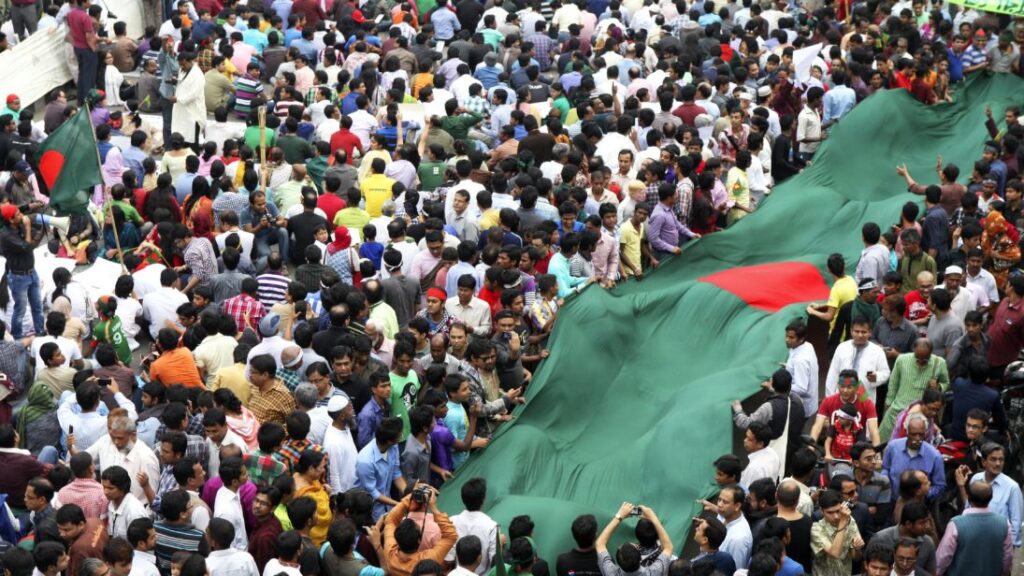
Led by students under the banner of Students Against Discrimination (SAD), the 2024 July Uprising was popularised as Bangladesh’s ‘second liberation’. The movement — largely composed of anti-Hasina forces — championed for an inclusive, plural, just and democratic Bangladesh. Thus, Bangladesh’s political landscape not only changed after August 5 2024, but also initiated a new debate on which direction the country’s politics should head.

The interim government was established on August 8, just days after Hasina fled the country. The main coordinators of the Students Against Discrimination (SAD) invited Muhammad Yunus to head the interim government as the Chief Advisor. Three prominent leaders of SAD — Nahid Islam, Mahfuj Alam and Asif Muhammad — also became advisors in the interim government representing students. Thus, SAD played a significant role in legitimising Yunus’ administration, installing it the responsibility of implementing reforms and conducting a free and fair election.

Amidst anticipation of who will be part of the NCP’s central leadership, Nahid Islam resigned from its advisory position in the Ministry of Information and Broadcasting to become the chief convenor of the party. Islam’s joining the NCP was not viewed favourably by other political parties who accused the interim government of helping for the establishment of a ‘King’s Party’ under its schemes of endless reforms rather than announcing a clear election roadmap. NCP’s formation and the Chief Advisor Yunus’s soft spot for the student political party, also put its own neutrality in question. Political parties like Gono Odhikar Forum and the BNP strongly demanded for resignation of student advisors Mahfuj Alam and Asif Muhammad alleging them as NCP loyalists.

Bangladesh’s political culture rooted violence, corruption and extortion soon caught up to the nation’s newest political alternative. In April, its joint member secretary, Gazi Salauddin Tanvir, was accused of involvement in corruption and misconduct over the appointment of Deputy Commissioners, leading to his removal from NCP. The party’s ‘March to build the country’ rally in July took a violent turn in Gopalganj district when party leaders revealed their real intent — bury Mujibism along with 1972 ‘Mujibbadi’ Constitution.

NCP’s rally in Gopalganj, the birthplace of Sheikh Mujibur Rahman where Awami League continues to maintain a stronghold despite ban, was perceived as a provocative act by locals as words spread the party’s intention to desecrate Mujib’s graveyard leading to a violent clash. The following month, NCP joint coordinator of Chattogram city branch Nizam Uddin’s video of his involvement in extortion to suppress a port-related protest became viral, leading to his suspension. Indeed, the apple didn’t fall far from the tree.

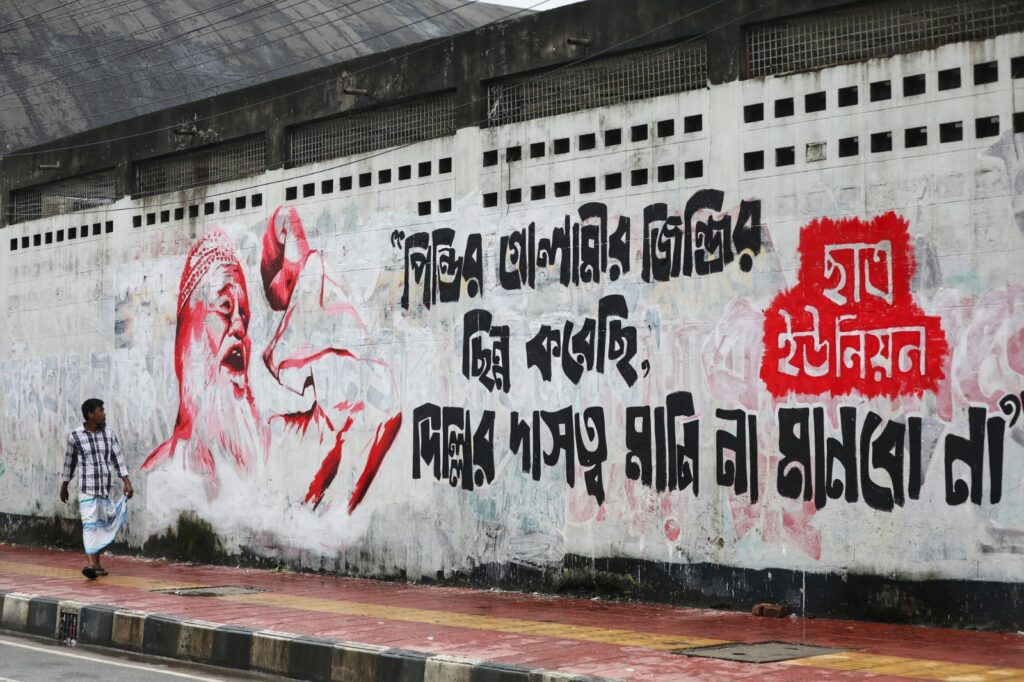
The interim government’s political bias towards NCP became more visible when, following NCP-led street protests in May, it announced a ban on the Awami League thus leading to its registration suspension as a political party in the Election Commission. Before NCP’s protest, the interim government had maintained that it was for ‘Awami League to decide if it wants to participate in the election’, indicating it had no plan to ban the party earlier. It is not just Awami League’s ban, but also attempts at complete historical revisionism — removing public holidays dedicated to Sheikh Mujibur Rahman, excluding his title as the ‘Father of the Nation’ by revising the Liberation War Act and removing his picture by redesigning currency notes and portraits from public offices, to name a few — are all calculative steps taken under the strong demands of the NCP.

–IANS

Analysing Bangladesh’s new anti-India political landscape

The July 2024 Uprising constituted a watershed moment in the political history of Bangladesh, precipitating significant transformations in both leadership and governance structures. In the aftermath, established political parties, along with newly emergent entities, have asserted themselves actively as opposition forces, predominantly targeting the Awami League. This development has underscored the emergence of a “new Bangladesh,” characterised by its explicit recognition and promotion of individuals and groups that have vigorously opposed the previous ruling party and its associated legacy.

A salient illustration of this shift is observable in the interim government’s concerted efforts to reconfigure collective historical memory regarding the 1971 Liberation War. These initiatives have sought to reconstruct historical narratives in a manner that tends to marginalise or omit the contributions of the Awami League—most notably those of Sheikh Mujibur Rahman, who is widely recognised as Bangladesh’s founding father and principal architect of its independence.

With respect to Sheikh Hasina, whose tenure concluded with her removal from office in August 2024, opposition rhetoric has advanced the prevailing assertion that her sustained electoral success was attributable to her close association with India. Immediately following the 2024 electoral outcome, a movement akin to the Maldives’ “India Out” campaign emerged within Bangladesh, advocating for a boycott of Indian commodities and alleging that India had exerted undue influence on Bangladesh’s domestic political processes to sustain Hasina’s prolonged incumbency. Her subsequent exile in New Delhi has further substantiated this discourse, lending greater credence to these claims among her critics.

‘India Out’ campaign in Bangladesh, February 2024

In the run-up to the forthcoming 13th national election, Bangladesh’s political milieu appears increasingly permeated by anti-India sentiment. Notably, this disposition is manifest not only within opposition parties but is also discernible in the interim government’s policy orientations and public actions.

Following the collapse of Hasina’s administration, the dynamics of India-Bangladesh relations have undergone notable changes. The newly installed interim leadership has adopted a divergent foreign policy trajectory, deliberately creating distance from India. This realignment is exemplified by the imposition of trade restrictions on imports from India. Conversely, the interim administration has deepened its engagement with Pakistan, a state from which Bangladesh achieved independence through the violent conflict of 1971. While some Bangladeshi commentators characterise this rapprochement as a calculated diplomatic manoeuvre, they frequently overlook the fact that substantive shifts in foreign policy have largely been confined to relations with India.

Domestic foreign policy experts have critiqued India’s previous strategy, contending that it disproportionately prioritised relations with the Awami League, thereby “placing all its eggs in one basket.” However, this argument tends to neglect the profound historical and cultural ties between the two nations. India was the second country after Bhutan, to recognise Bangladesh’s sovereignty in 1971, and both states retain strong affinities rooted in common histories, languages, and cultures as former territories of British India. Although it is accurate that India maintained closer relations with the Awami League-led government relative to the BNP coalition—which adopted a more adversarial stance towards India—this does not imply that bilateral relations are determined solely by partisan considerations.

The two countries also share an extensive and porous frontier, which has historically given rise to challenges such as unauthorised migration, cross-border smuggling, and sporadic border disputes—issues that persist in the contemporary context. Following Sheikh Hasina’s departure from Dhaka, Bangladesh experienced significant upheaval, marked by violence against minority populations and a deterioration of law and order. Coverage of these events provoked concern in India, which recalled the influx of millions of refugees during the 1971 conflict. Nevertheless, attempts by Indian authorities to voice their apprehensions were routinely dismissed by the interim government as “fabrications” or “politically motivated narratives.”

People unite to defend minorities in Bangladesh

Rather than accepting responsibility for shortcomings in maintaining law and order, the interim administration has persistently sought to attribute blame to India. For instance, when the historic Dhanmondi 32 residence of Sheikh Mujibur Rahman was subjected to vandalism in February, the authorities, instead of acknowledging deficiencies in their security apparatus, alleged that India was enabling Sheikh Hasina to disseminate her messages from exile. India issued a strong diplomatic protest in response to these assertions, yet the interim leadership in Dhaka continued to evade accountability.

The chief advisor to the interim government has frequently alluded to “external actors” fomenting instability in Bangladesh—implicitly referring to India—while refraining from acknowledging his own administration’s role in the prevailing disorder. This narrative strategy serves to deflect scrutiny from the government’s administrative failures and simultaneously consolidates its anti-India credentials among certain domestic constituencies.

Simultaneously, various political parties, including Islamist factions, have adopted similar anti-India rhetoric in an effort to harness popular support. Islamist groups, some of which were previously marginalised or proscribed, are now openly advocating for the establishment of a Sharia-based constitution and mounting attacks on the country’s secular foundations. The interim government’s persistent silence regarding these developments has allowed such groups to consolidate their influence and propagate their ideological agenda largely unimpeded.

Among the most prominent actors in this landscape is Jamaat-e-Islami, which is currently attempting to present itself as a progressive entity. Nevertheless, it continues to evade responsibility for its contentious role during the 1971 war. This organisation, along with emerging groups such as the National Citizenry Party (NCP), is actively seeking to reinterpret the narrative of the Liberation War. They propagate the erroneous claim that India’s involvement constituted interference in what was an internal Pakistani matter, and suggest that Indian intervention was the primary catalyst for the partition in 1971. Such assertions are not only historically inaccurate but also deeply disrespectful to those who sacrificed their lives for Bangladesh’s independence.

Recently, the NCP attributed responsibility for the Gopalganj unrest to so-called “pro-India” factions with links to the Awami League. This incident exemplifies how anti-India rhetoric is being employed for political advantage. However, such narratives provoke a fundamental question: What incentive would India have to promote instability or disorder in Bangladesh? Given the significant security challenges India already confronts emanating from its western neighbour, Pakistan, it has little desire to see turmoil on its eastern frontier.

Bangladesh Youth Rally Turns Violent at Gopalganj, CAB Yunus Blames Awami League

Rather than assigning culpability to India, Bangladeshi political leaders ought to address the internal issues that frequently stem from their own policies and decisions. Utilising India as a scapegoat for political expediency may offer short-term benefits in electoral terms, but ultimately proves detrimental to the nation’s long-term interests. The premise that India is behind every crisis in Bangladesh is not only unsubstantiated but also poses potential risks.

India, on its part, continues to express its aspiration for a peaceful, democratic, and secular Bangladesh, and remains prepared to engage with any administration that upholds mutual values and interests. However, substantive cooperation cannot occur if India is persistently perceived solely as an adversary or rival.

As the forthcoming election approaches, Bangladesh faces a decisive juncture. The nation must determine whether it wishes to forge a future founded on truth, collaboration, and democratic values, or remain encumbered by a cycle of scapegoating and historical distortion. A stable and prosperous Bangladesh is in the best interests not only of its own populace, but also of the entire region—including India.

The Trilateral Trap: China’s Debt Leverage, Pakistan’s Proxy Terror, and Bangladesh’s Strategic Crossroads

Debt is diplomacy. Terror is strategy. And Bangladesh is the collateral.

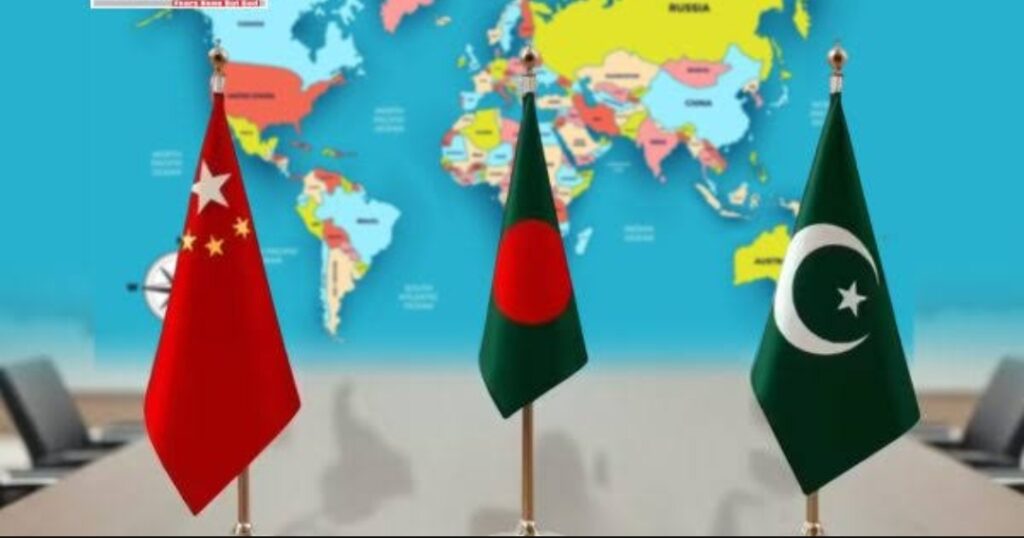
Since the displacement of Bangladesh’s long-standing Prime Minister Sheikh Hasina in August 2024, the geopolitical landscape of South Asia has undergone significant transformation. Hasina, who previously served as a strategic ally to India while simultaneously managing diplomatic engagement with China, departed from office leaving a nation grappling with economic adversity and political fragmentation. This context appears to have instigated a reassessment of core tenets of her foreign policy legacy. The trilateral summit held on 19 June in Kunming, China—involving representatives from Pakistan, Bangladesh, and China—has precipitated renewed scrutiny of shifting regional alliances and their ramifications for both regional stability and security, as well as for India’s strategic position. Nevertheless, amid optimistic assessments foregrounding the consolidation of cooperation among these three actors, several pivotal concerns remain under-examined. Notably, these include China’s ostensibly benign yet strategically motivated economic diplomacy and the persistence of proxy terrorism sustained through the China-Pakistan nexus, both of which warrant critical scholarly attention.

The Kunming trilateral discussions, convened in conjunction with the 9th China–South Asia Exposition and the 6th China–South Asia Cooperation Forum, saw the participation of Chinese Vice Minister of Foreign Affairs Sun Weidong, Pakistani Additional Secretary (Asia-Pacific) Imran Ahmed Siddiqui—with Foreign Secretary Amna Baloch attending virtually—and Bangladeshi Foreign Secretary Md. Ruhul Alam Siddique. The meeting resulted in a joint commitment to advance cooperation in several critical sectors, including industrial and commercial development, maritime affairs, water resource management and climate adaptation, agricultural innovation, and youth engagement. The Chinese delegation’s official statement underscored the guiding principles of “good-neighbourliness, reciprocal trust, equality, openness, inclusivity, and shared progress” as central to the evolving partnership.

Both Pakistan and Bangladesh have increasingly embraced China’s Belt and Road Initiative (BRI), widely interpreted as a strategy by Beijing to establish a strategic perimeter around India. Over the past decade, China has become a leading development partner for Bangladesh, channelling substantial investments into a diverse portfolio of infrastructure projects, encompassing port facilities, power generation, and connectivity enhancements such as highways, bridges, and tunnels. Notable examples include the Padma Bridge Rail Link, the Karnaphuli River Tunnel, the Payra Port Development, and the Dhaka Elevated Expressway. To date, Bangladesh has maintained a cautious stance, avoiding excessive dependence on the People’s Republic of China and thereby sidestepping the so-called ‘debt-trap diplomacy’ that has ensnared countries like Sri Lanka. Nevertheless, under the new leadership, there are indications of a shift away from the previous prioritisation of India in strategic matters, as historically advocated by Hasina and the Awami League, and towards a more receptive posture regarding Chinese involvement. In March of this year, Muhammad Yunus, Chief Adviser to the Interim Government, signalled openness to Chinese participation in the Teesta River Comprehensive Management and Restoration Project. Additionally, both nations are reportedly negotiating collaboration on the Lalmonirhat Airbase, situated less than 150 kilometres from the Siliguri Corridor. Such developments not only heighten India’s security concerns but also, given the new administration’s strategic miscalculations, risk compromising Bangladesh’s sovereignty—a pattern consistent with established Chinese foreign policy tactics.

Three flags. One crisis. Bangladesh must choose: sovereignty or servitude.

Pakistan’s persistent instrumentalisation of proxy militant networks for strategic objectives is well-documented. Prior to Bangladeshi independence in 1971, Pakistan facilitated the sheltering, training, and arming of insurgent factions operating in India’s northeast from East Pakistani (now Bangladeshi) territory. Under Sheikh Hasina’s leadership, Bangladesh implemented decisive counter-terrorism measures, dismantling such groups operating within its borders and extraditing numerous militant leaders to India. Presently, China—as the primary supplier of military equipment to both Pakistan and Bangladesh, while also providing critical economic support to Pakistan—has emerged as an essential enabler for Pakistan’s sustained proxy-terror infrastructure. Documented instances exist where Chinese telecommunications equipment, ostensibly designated for Pakistani military use, has been confiscated from terrorists in Jammu and Kashmir. This empirical evidence underscores a concerning China-Pakistan nexus actively contributing to regional destabilisation through asymmetric warfare tactics.

India’s cautious monitoring of Bangladesh’s diplomatic realignment is contextually justified, given their shared 4,000-kilometre border—the world’s fifth-longest terrestrial boundary—and critical bilateral economic and security interdependencies. This vigilance intensifies as Bangladesh cultivates warmer relations with India’s strategic adversaries, Pakistan and China, particularly following India’s recent experience of another significant terrorist attack in Kashmir with established Pakistani linkages. Bangladesh’s deepening alignment with actors demonstrably associated with economic entrapment strategies or the facilitation of proxy terrorism for geopolitical objectives presents legitimate concerns. Such developments jeopardise not only India’s security calculus but also the broader regional stability and security architecture.

While the evolving regional dynamics warrant close observation, Bangladesh continues to acknowledge the significance of India for its economic, political, and strategic interests. Notably, when China and Pakistan suggested the formation of a trilateral working group, Bangladesh opted to reject the proposal. Moreover, the country’s foreign affairs adviser clarified, a week after the Kunming meeting, that the gathering did not signify an alliance and was not directed against any third party—a statement made in response to queries concerning India. This underscores that, despite the cooling of relations with India since Sheikh Hasina’s removal, Bangladesh remains acutely aware of its profound reliance on its neighbour. In this context, although the trilateral engagement with China and Pakistan marks a shift in diplomatic posture, Bangladesh’s restrained approach indicates that it is not prepared to relinquish its foundational relationship with India. The coming months will prove crucial in determining whether such balancing endures or gives way to a realignment that could potentially alter South Asia’s strategic landscape.

How not to deal with the Rohingya issue: Lessons from Bangladesh’s interim government

As the international community marked World Refugee Day on 20 June, the spotlight once again turned to the festering Rohingya crisis—a painful reminder of Bangladesh’s humanitarian generosity now burdened by geopolitical consequences. Since Myanmar’s brutal military crackdown in 2017, nearly 600,000 Rohingyas escaped the carnage in Rakhine and found refuge across the border in Bangladesh.

New corridor at Bangladesh and Myanmar border, ‘dangerous plan’ in name of Rohingya Muslims

Fast forward seven years, and over 1.2 million Rohingya refugees are crammed into makeshift shelters in Cox’s Bazar, still yearning to return to their homeland with dignity and security—an aspiration that remains elusive.

What began as a noble act of compassion by the former government has morphed into a strategic nightmare. Bangladesh, already stretched thin economically, took the Rohingyas in under humanitarian grounds, building the world’s largest refugee settlement in Cox’s Bazar. But the generosity came with a price. Dhaka’s persistent call for repatriation was meant to be a long-term fix to a short-term crisis. Yet, repatriation remains a diplomatic mirage, complicated further by Myanmar’s internal chaos and the lack of sustained international pressure on Naypyidaw.

The cost of hosting over a million displaced people has proved to be far more than just financial. Bangladesh’s social fabric, national security, and local economies are all feeling the heat. The unceasing flow of refugees has strained border security, while the camps themselves have become breeding grounds for illicit activity. Radical networks have infiltrated the refugee settlements, luring disenfranchised Rohingya youth into drug trafficking, human smuggling, and armed violence. In the past two years alone, nearly 150 violent incidents have been reported within these camps—grim testimony to a growing lawlessness that local authorities are ill-equipped to contain.

Crisis Mounts for Rohingya Refugees in Bangladesh

The security lapse extends beyond the refugee camps. Bangladesh’s border dynamics have undergone a worrying transformation. The Arakan Army—a powerful ethnic rebel group fighting Myanmar’s junta—has made significant inroads in Rakhine. With the civil war now reaching the doorstep of Bangladesh, the implications are severe. The renewed fighting in Rakhine has triggered a fresh wave of displacement, with over 120,000 more Rohingyas reportedly crossing into Bangladesh in the last 18 months alone.

This comes at a time when donor fatigue has set in. International aid for Rohingya refugees is dwindling, putting immense pressure on Bangladesh’s limited resources. Moreover, the Arakan Army’s aggressive posturing has not spared Bangladesh either. Incidents of Bangladeshi fishermen being abducted near Cox’s Bazar by the Arakan Army have sparked serious concerns about the integrity of Bangladesh’s already porous borders.

In the face of this multifaceted crisis, the current interim administration led by Dr. Muhammad Yunus has taken centre stage. Since assuming office, Yunus has prioritised the Rohingya issue, intensifying diplomatic overtures to garner international backing for repatriation. In February, Yunus addressed a letter to UN Secretary-General Antonio Guterres, detailing the worsening humanitarian situation and Myanmar’s deteriorating internal order. The UN chief responded with diplomatic optimism, promising support to secure unimpeded humanitarian access in Rakhine and beyond.

The high point of this engagement came in March, when Guterres visited the refugee camps in Cox’s Bazar. During the visit, Yunus and the UN Secretary-General jointly pledged to begin repatriation by the next Eid (this June). It was at this juncture that the idea of a “humanitarian corridor” was floated—allegedly a UN-brokered channel linking Cox’s Bazar to Rakhine to facilitate aid delivery and eventual refugee return.

Talibanisation of Bangladesh?

With the ouster of Sheikh Hasina, Bangladesh has witnessed a disquieting transformation that has sent ripples of concern across its socio-political and cultural landscape. Images and videos of the student-led July uprising—once hailed as a breath of fresh air—now stand juxtaposed against the vandalism of murals and statues of Sheikh Mujibur Rahman, the Father of the Nation. Religious sites and properties belonging to minorities have come under attack, raising an alarming question: Is Bangladesh facing a Taliban-like takeover, akin to what Afghanistan endured?

Will the Yunus led administration write country’s future into a new Islamist Republic!

Initially, such concerns were dismissed—often mocked—as exaggerated alarmism by optimistic observers who celebrated the so-called ‘second liberation’. Yet, nearly ten months into this ‘new Bangladesh’, the unfolding reality on the ground increasingly vindicates those early apprehensions. The promise of the July uprising, which inspired a youthful generation eager for a free, democratic, just, and pluralistic nation, now seems betrayed by a rapid and disconcerting political and cultural regression. How did Bangladesh veer so sharply from those aspirations after 5 August? The answer lies in the silent complicity of the interim government, which has chosen the path of the Quiet Game.

The Quiet Game: Enabling a Rise of Fundamentalism

Two recent incidents illustrate the creeping fundamentalism taking root. In Tangail, the screening of a movie was cancelled following protests from local Islamic groups. In Sylhet and Tangail, tourists celebrating Eid faced disruptions by similar groups. The charges leveled? Alleged promotion of obscenity and vulgarity during the sacred Eid week. These examples, seemingly minor, hint at a larger, more troubling pattern—where Islamic fundamentalist forces are increasingly policing public morality and curtailing freedoms.

This resurgence of religious fundamentalism is not spontaneous; it has been growing steadily since the formation of the interim government tasked with reforms after the removal of Sheikh Hasina’s government. The period has opened up spaces for extremist ideologies, endangering the secular and pluralistic fabric painstakingly woven into Bangladesh’s national identity.

Bangladesh in flames:Where is Democracy Heading?

Historical Context: The Roots of Bangladesh’s Secular Identity

Bangladesh’s pluralism and secularism are neither accidental nor superficial constructs. They are deeply rooted in history—particularly the 1971 Liberation War, which was fought to safeguard the Bengali language, culture, and identity against the repressive West Pakistan regime. The war was also a battle against religious fanaticism, symbolized by groups like Jamaat-e-Islami and their armed auxiliaries, who violently opposed Bengali nationalism and targeted the cultural ethos perceived as ‘un-Islamic’.

For Bangladeshis, pride in their unique identity remains paramount—a nation born out of sacrifice to protect its linguistic and cultural heritage. This historic legacy makes the current surge of Islamic fundamentalism not only a political threat but a direct challenge to the very essence of Bangladesh’s founding ethos.

Exploiting the Power Vacuum: Fundamentalists on the March

The political upheaval created by Sheikh Hasina’s ouster has emboldened Islamic fundamentalist groups, most notably Hizb-ut-Tahrir—a banned organisation during the previous government’s tenure. Seizing the opportunity, Hizb-ut-Tahrir has reemerged, publicly demanding the establishment of an Islamic Caliphate in Bangladesh. Islamic political parties are actively negotiating with the interim government to replace the secular 1972 Constitution with Islamic sharia law, effectively turning Bangladesh into an Islamic state.

This agenda is no secret. The hardline groups have taken to the streets with alarming zeal, targeting cultural and social events under the guise of eradicating ‘un-Islamic’ activities. The name “Towhidi Janata” has become synonymous with this wave of moral vigilantism—ubiquitous at festivals, cultural celebrations, and public gatherings, their mission is clear: to suppress cultural expressions that do not conform to their stringent interpretation of Islam.

The Assault on Culture: A War on Pluralism

One cannot overlook the symbolic significance of the cancellations and disruptions. The Lalon Mela—an annual festival honouring Lalon Fakir, a mystic poet who represents the core values of tolerance and cultural diversity—was forcibly cancelled in Narayanganj after threats from Islamic groups. Similarly, festivals celebrating tolerance and pluralism have been obstructed by Hefazat-e-Islam and other hardliners, who denounce the festival’s philosophies as ‘contradictory to Islam.’

The famed Basanta Utsav (Spring Festival) too suffered a similar fate, canceled amid threats. These cancellations are unprecedented in Bangladesh’s history and serve as a stark warning sign for the nation’s cultural health. The Amar Ekushey book fair, an iconic annual literary event commemorating the Language Movement martyrs, faced protests led by Towhidi Janata when a stall displayed books by Taslima Nasrin—a writer demonized by Islamist hardliners for her outspoken secularism and criticism of religious orthodoxy. The ensuing altercation and forced closure of the stall revealed how freedom of expression, especially dissenting voices, might be strangled under an increasingly Islamist regime.

Even Pohela Baishakh, the Bengali New Year and Bangladesh’s largest cultural festival, came under attack. Hardliners branded it as an ‘India-imposed Hindu festival’ and pressured organizers to rename the event from Mangal Shobhajatra to Barshabaran Ananda Shobhajatra, diluting its cultural resonance. Attacks on the Dhaka Eid procession, accusing it of featuring ‘idol-like’ symbols, illustrate an unwillingness to embrace the syncretic nature of Bengali Islamic culture—a culture shared and celebrated by both Muslims and non-Muslims alike.

The hardliners’ ideological narrowness was further exposed during Ramzan, when Jamaat-e-Islami led protests enforcing a daytime shutdown of eateries, disregarding Islamic allowances for exemptions to fasting. Such actions betray an agenda more political than religious, seeking to control social life and suppress diversity.

Gender and Moral Policing: A Targeted Attack on Women

The rise of Islamist fundamentalism is also marked by an intensification of anti-women ideologies. Women’s football tournaments have been vandalized, canceled under threats citing Islamic values. Towhidi Janata has opposed women’s public presence in social venues, harassed women for dress codes, and openly engaged in moral policing. Physical assaults on women for perceived ‘immodesty’ have become disturbingly commonplace, often with implicit or explicit backing from Islamist factions.

Even women’s rights institutions have come under fire, with Islamic parties vocally opposing reports highlighting gender inequalities. This reflects the deep-seated misogyny embedded in the Islamist vision for Bangladesh, which stands in stark contrast to the country’s progressive strides in women’s empowerment over past decades.

Moral policing of women: From the streets to social media

The Role of the Interim Government: Silent Enabler

What is most troubling is the interim government’s near-complete silence in the face of these alarming developments. The government has chosen passivity—akin to children playing the ‘Quiet Game’—allowing Islamist hardliners to expand their influence unchecked. Law enforcement agencies have largely failed to intervene, sending a signal of tacit approval or, at best, unwillingness to confront fundamentalist violence.The Yunus-led interim administration’s removal of ‘secularism,’ ‘nationalism,’ and ‘socialism’ from the new state principles marks a deliberate ideological shift. This removal is not merely symbolic; it clears the constitutional path for the ascendancy of Islamic law and governance. Combined with the government’s inaction against fundamentalist incursions into public life, this new political reality is steering Bangladesh toward a Talibanisation under the guise of a ‘second liberation.’

The Cost of ‘Second Liberation’

This ‘second liberation,’ far from delivering freedom and justice, risks enslaving Bangladesh to a form of Islamist authoritarianism reminiscent of Taliban rule in Afghanistan. It threatens to erode the hard-won freedoms of speech, religious tolerance, gender equality, and cultural pluralism that define Bangladesh’s unique identity. If unchecked, this Islamist resurgence will not only undermine the nation’s secular foundation but also reverse decades of social progress and democratic development. The tragedy is that the youthful energy and hopes that fuelled the July uprising may soon be crushed under the boots of religious extremism, and the ideals of the Liberation War may be relegated to distant memory.

Conclusion: A Call to Vigilance and Resistance

The Talibanisation of Bangladesh is neither inevitable nor irreversible. It is a product of political choices, social complacency, and ideological neglect. For Bangladesh to reclaim its pluralistic and democratic future, decisive action must be taken to curb the rise of fundamentalism, protect secularism, and uphold constitutional principles that guarantee freedom for all citizens.

The interim government must abandon its passive stance and actively enforce laws against extremist groups, protect cultural expressions, safeguard women’s rights, and restore the foundational ideals of the nation. Civil society, the youth, and international partners also have critical roles to play in resisting the creeping shadow of Talibanisation and ensuring that Bangladesh’s second liberation truly embodies liberation for all its people, not just a select few.


A shadow of disapproval on the interim government

The interim government has now been in power for nine months, yet Bangladesh remains trapped in a cycle of political turmoil and uncertainty. On one side, political parties are more fragmented than ever before, while on the other, the interim administration continues to struggle with addressing the country’s persistent socio-economic and political challenges.

New Gazette, New Rules—Will online freedom survive the firewall?

Although interim government  was established with broad consensus among civil society, political leaders, and the military following the mass uprising of 2024, the interim government under Dr Yunus has faced considerable difficulties since its formation. Indeed, much of the disorder that has engulfed the nation since last August can be attributed to the Yunus administration. While there was initial enthusiasm for a reformed Bangladesh, free from its authoritarian legacy, the interim government has largely proven to be a passive administration, repeatedly mired in controversy.

It could be argued that the criticisms directed at the Yunus administration originate from remnants of the deposed Hasina regime. Dr Yunus has secured considerable support from global leaders, thereby legitimising the interim government and receiving strong endorsement primarily from Western countries in its pursuit of reforms and conduct of elections. Nonetheless, domestically, the legislative initiatives intended to implement reforms have encountered opposition not only from some of the very factions that contributed to the establishment of the interim government but also from international human rights organisations. Key legislative measures include the Cyber Protection Ordinance, amendments to the International Crimes (Tribunals) Act, and the Anti-Terrorism Act.

Bangladesh’s cyber frontier gets a rulebook. But who’s watching the watchers?

The state of media freedom in Bangladesh remains deeply concerning, with numerous reports of violence, harassment, censorship, and prosecution of journalists and media outlets. Often these outlets are being accused by the interim government as collaborators with the Awami League—contradicting its commitment to uphold press freedom. The introduction of the Cyber Protection Ordinance, which replaced the contentious Cyber Security Act (CSA), quickly sparked apprehension regarding the government’s surveillance practices under the guise of enhancing cyber security. Organisations such as Transparency International Bangladesh (TIB) criticised the ordinance for being approved without adequate public consultation and for retaining CSA’s surveillance provisions, thereby posing a potential threat to media freedom in the future. This development coincided with the interim government’s cancellation of press accreditation for 167 journalists and the filing of charges of “crimes against humanity” against 25 journalists due to their alleged links with the Awami League government, provoking condemnation from human rights groups. Media freedom remains a critical concern, exhibiting patterns reminiscent of the previous administration. The most recent report by the Rights and Risk Analysis Group (RRAG), published on World Press Freedom Day 2025—when Bangladesh ranked 149th out of 180 countries—revealed that in the eight months under Dr Yunus’s interim government, 640 journalists were targeted. The administration’s efforts to suppress media critical of Yunus have involved not only branding them as pro-Awami League  but also revoking press accreditations, resorting to violence, and levying criminal charges including money laundering, criminal offences, and terrorism. Consequently, urgent media reforms demand serious and immediate attention.

The amendment of the International Crimes (Tribunals) Act through an ordinance extended the powers of investigative offices to conduct searches and seize evidence without prior approval from the tribunal. Additionally, the new ordinance authorised the tribunal to freeze and confiscate the assets of the accused. More recently, a second amendment introduced provisions allowing the trial and punishment of ‘organisations’ for crimes within the tribunal’s jurisdiction. In essence, these amendments enhanced the tribunal’s authority to ban organisations, confiscate their properties, and suspend their registration if found guilty of crimes against humanity. Initially, political parties were included in the ordinance, but this was subsequently removed to avoid political controversy. Nonetheless, these amendments—particularly the second—have attracted significant criticism from human rights organisations such as Human Rights Watch (HRW), which argue that they undermine fundamental human rights. Concerns have been raised that these changes could be exploited as tools for political repression of opposition groups, lacking adequate accountability, thus posing a threat to democratic principles. The ban on the Awami League has only reinforced this scepticism.

Cyber law or digital leash? A fine line that Bangladesh must walk carefully.

On the 11th of this month, the interim government approved the draft ordinance of the Anti-Terrorism (Amendment) Act, introducing a new provision to prohibit activities of individuals or ‘entities’ involved in terrorism, thereby granting the government extensive powers to regulate political activities. Just one day earlier, the interim government imposed a ban on the “activities” of the Awami League amid increasing pressure from the Nationalist Communist Party (NCP) and Islamic parties. The ordinance, approved overnight, revised the existing Anti-Terrorism Act of 2009 and was subsequently used on 12 May to officially disband the Awami League, providing a clear indication of arbitrary targeting and suppression without accountability. This action provoked widespread condemnation from foreign governments, international human rights organisations, as well as domestic political leaders and analysts. The systematic targeting of Awami League leaders, activists, and supporters—who have faced mob violence over the past nine months—has sparked concern and criticism over the interim government’s failure to prevent the country’s descent into lawlessness. Instead, through the launch of Operation Devil Hunt aimed at curbing mob attacks, the interim government appeared to be settling political scores by arresting a disproportionate number of League sympathisers. The banning of a political party mirrored the authoritarian tactics of the deposed government, now widely labelled ‘fascist’, fuelling fears of a further erosion of democratic space. Moreover, the interim government’s ordinance on enforced disappearance has also faced criticism for lacking public consultation, accountability measures, and failing to address past abuses.

The interim government’s recent legislative initiatives, presented as reforms, amount to little more than old wine in new bottles. While political parties in Bangladesh remain divided on the issue, international human rights organisations have been unequivocal in their criticism—these measures pose a significant threat to fundamental human freedoms. The interim government’s political vendetta has become increasingly apparent, as has the growing shadow of disapproval cast over the Yunus administration.

« 1 2 3 »