Repression as Governance: Pakistan’s Violent Grip Over Balochistan

The Role of the Diaspora: Amplifying the Baloch Voice

When Pakistan experienced the hijacking of the Jaffar Express by Baloch insurgents last month, it triggered a renewed wave of public concern regarding the likely methods of state retaliation. These fears were neither new nor unjustified; instead, they were firmly grounded in decades of securitised repression in the region, where the Pakistani state has historically operated as a regime of punitive authoritarianism, characterised by systemic violence, extrajudicial reprisals, and the delegitimisation of ethno-nationalist opposition.

What proved particularly troubling, however, was the state’s broadening punitive reach beyond alleged insurgent actors, extending into civil society and non-combatant political opposition. The arrest of Dr. Mahrang Baloch, along with several members of the Baloch Yakjehti Committee (BYC), marked a decisive shift towards the criminalisation of rights advocacy and calls for institutional accountability. These actions have refocused attention on the ongoing decline of human rights protections in Balochistan, highlighting the persistent impunity with which the Pakistan Army operates, subjecting the region’s marginalised communities to systemic dispossession and militarised governance.


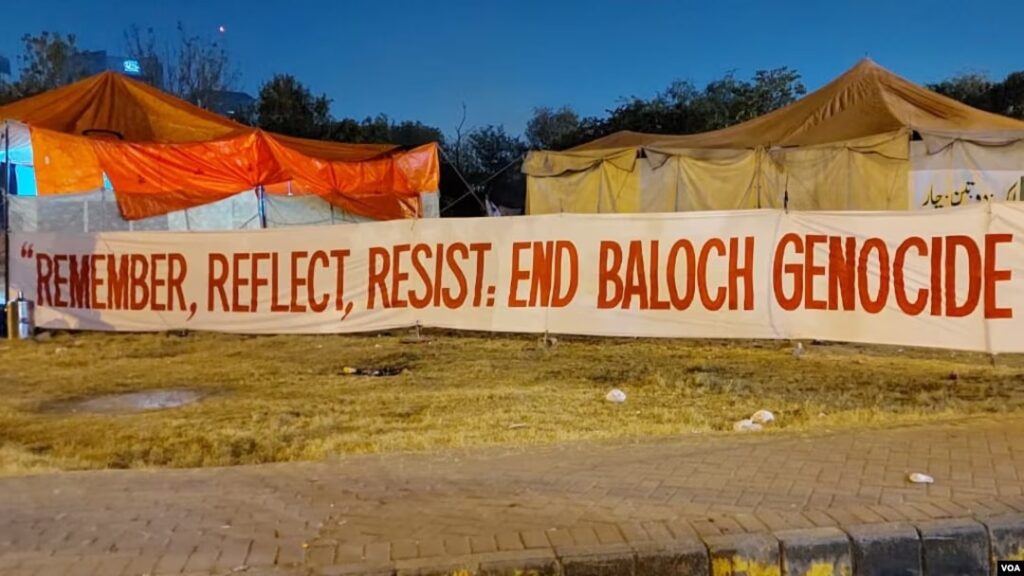
‘Hands off Balochistan’: Baloch, Sindhi activists stage protest against Pak

In the aftermath of the Jaffar Express incident, which highlighted a significant intelligence failure within the Pakistan Army-led security apparatus, the state, adhering to its entrenched model of militarised governance in Balochistan, launched a series of ostensibly “counter-insurgency operations” across the province. In keeping with its historical approach to coercive statecraft, these operations were accompanied by widespread reports of staged “encounters,” a term now widely understood as a euphemism for extrajudicial executions, during which dozens of Baloch men were summarily killed.

The region has long been a site of thousands of cases of enforced disappearances, where Baloch men have been abducted by security forces, many of whom have either been extrajudicially executed or remain missing to this day. For example, the Voice for Missing Baloch Persons (VMBP) has documented over 7,000 cases of enforced disappearances in the province since 2004. Even reports from the Pakistani government, such as the Commission of Inquiry on Enforced Disappearances (COIED), have recorded over 2,700 such cases in the region. Pakistani forces have been accused of executing many of these individuals, with the recovery of mutilated bodies across the province being a recurring phenomenon. For instance, local news reports indicate that between April 5th and 6th alone—within a span of just 48 hours—twelve bodies of recently disappeared Baloch individuals were recovered from various areas of the province, including Barkhan, Khuzdar, Mashkay, and Buleda. These findings have been unequivocally condemned as extrajudicial killings, further solidifying long-standing allegations about the secretive and violent methods employed by Pakistan’s security establishment in its control of Balochistan.

Alongside these lethal operations, the state intensified its crackdown on civil society actors, particularly human rights organisations, which it has controversially sought to equate with insurgent networks. This strategic obfuscation and conflation serve a dual purpose: they delegitimise grassroots human rights efforts while simultaneously justifying state-sanctioned violence as a necessary counter-insurgency measure to the wider Pakistani public, especially in other provinces. Organisations such as the Baloch Yakjehti Committee (BYC), led by Dr. Mahrang Baloch, have consistently challenged the state’s fabricated narratives, exposed the performative nature of alleged “encounters,” and highlighted the ongoing continuity of repression that has characterised Pakistan’s approach to the region for decades. It is within this broader context of securitised silencing and pervasive violence that the recent arrests of rights defenders must be critically understood—not as isolated instances of executive overreach, but as integral components of a deeply entrenched regime of disciplinary statecraft aimed at eradicating dissent and reinforcing an exclusionary national identity.

Protestors held placards and banners with slogans like ‘Stop your terrorism in the state of Balochistan.

It is important to note that Dr. Mahrang Baloch was arrested by the Pakistani state on March 22 while she was leading a peaceful sit-in protest against the extrajudicial killing of three Baloch men by state police forces the day before. The alleged crime of these three young men was their mere participation in anti-government protests condemning the unlawful detention of several Baloch Yakjehti Committee (BYC) members, including prominent activists Bebarg Zehri and Saeeda Baloch, who had been arrested by Pakistani forces on March 20 and March 21, respectively.

Nonetheless, the broader implications of these punitive actions seem to be not only significant but also structurally unsettling. They expose the Pakistani state’s entrenched tendency to use coercive violence as part of its colonial approach to Balochistan, where any demands for justice and democratic participation are not simply suppressed but actively framed as existential threats to state sovereignty. This is accomplished by labelling political dissent as “sedition” and systematically eroding any counter-narrative that challenges the state’s militarised orthodoxy.

Consequently, the current situation in Balochistan can no longer be simplified as a case of developmental neglect or peripheral instability. It must instead be understood as a manifestation of a deliberate and ongoing dismantling of civic space, the judicial denial of ethnic rights, and the institutionalisation of structural violence under the ideological guise of counterterrorism. What is unfolding in Balochistan seems to be a clear example of necropolitical governance, where the very existence of Baloch bodies—whether mobilised, defiant, or passively situated—becomes a source of intense anxiety for the state and, consequently, a target for its systemic violence.

Thus, these actions represent a deliberate attempt to delegitimise, criminalise, and ultimately eliminate dissenting discourse, particularly those expressions that challenge the entrenched impunity of military operations or call for the institutionalisation of structural accountability within the federal framework. By employing such repressive measures, the Pakistani state appears determined to systematically close off what remains of civil and political space that could otherwise enable critique, deliberation, or resistance to its militarised governance in Balochistan.

This strategic repression goes beyond mere authoritarian excess; it embodies a malicious form of statecraft aimed at provoking the radicalisation of the last remaining peaceful political dissent, thereby making armed insurgency the only viable form of opposition. This trajectory is neither incidental nor accidental but is instead intentionally cultivated to squeeze non-violent political channels, thereby creating a self-fulfilling narrative of insurgency that could serve to legitimise the state’s repressive apparatus.

In effect, this strategy is perceived as a means to absolve the state from the need to justify its actions within constitutional or democratic frameworks, if such frameworks exist at all, thereby enabling the entrenchment of its colonial control over Balochistan through the normalisation of extreme violence. As repression in Balochistan becomes increasingly institutionalised, the international community must recognise the epistemic violence being carried out under the guise of state security and advocate for accountability within the country, including an immediate halt to this unchecked violence.

Is the Pakistan Army crumbling?

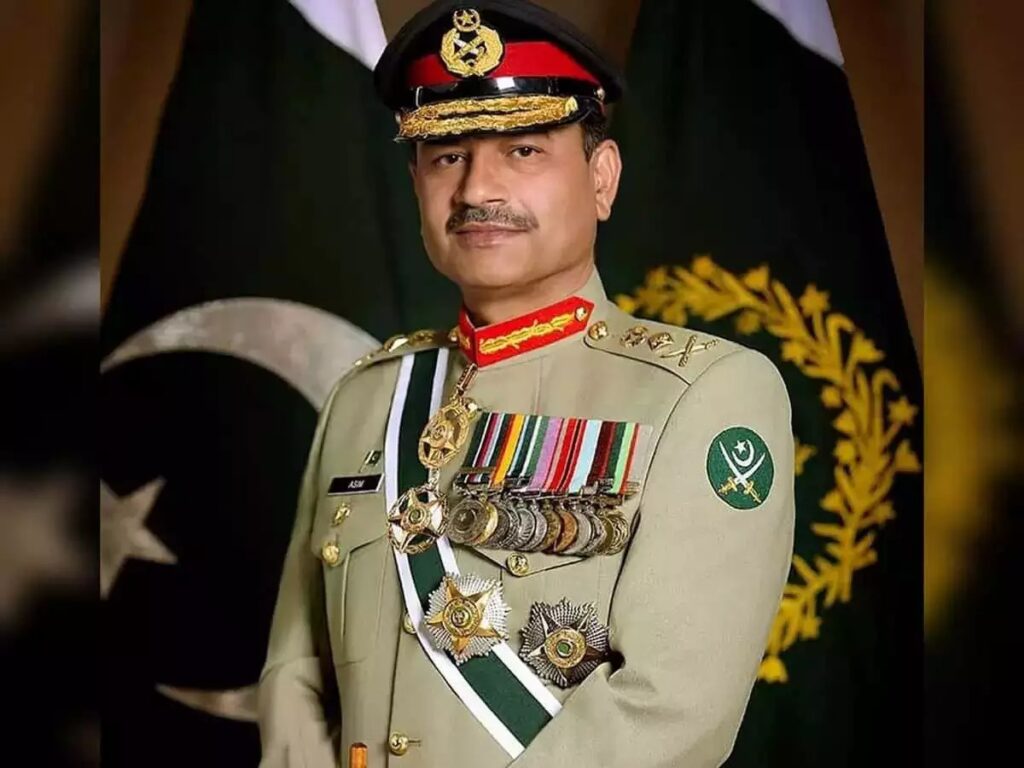
The Pakistan Army, once a formidable force that determined the nation’s destiny with authority, is now deteriorating under the burden of corruption, incompetence, and internal conflict. General Asim Munir, who currently leads the institution, has steered it towards a state of disgrace, turning what was once Pakistan’s most powerful entity into a divided, despised, and faltering power structure. The divisions are deepening, the foundations are weakening, and Munir’s leadership appears to be on the brink of collapse.

In an unprecedented display of defiance, junior officers have turned against their own commander, presenting a letter that reads more like an ultimatum than a request. Colonels, majors, captains, and soldiers have come together in their outrage, demanding that Munir resign immediately or face repercussions that could destabilize the military. Their language is harsh and resolute. “This is your 1971, General,” the letter states, referencing the humiliating defeat that led to the creation of Bangladesh. The officers accuse Munir of tarnishing the army’s legacy, using its power against the very citizens it was meant to protect, and employing the military as a blunt tool to suppress political adversaries and undermine democracy.

The military’s grip weakens as protests erupt over political repression

What was once the ultimate arbiter of Pakistan’s future has now become an institution mired in disgrace. Munir has transformed GHQ into a personal fiefdom, where military power is used not against external threats but against journalists, students, activists, and political opponents. The ousting of Imran Khan and the blatant manipulation of the February 8, 2024, elections have only reinforced what the world had already anticipated: the Pakistan Army is no longer a defender of national security; it has become an instrument of repression, a junta posing as a military, and a remnant of dictatorship desperately clinging to power.

Public anger has reached a critical level. The military, once held in high esteem, is now the subject of overt resistance. Soldiers, once respected, are now pelted with stones by children in the streets. Military convoys, once feared, are now greeted with mockery and abuse. Munir’s leadership has tarnished the army’s credibility, transforming it from the nation’s protector into its most reviled oppressor. The bitterness is profound, and the resentment simmers like an unhealed wound.

As the country descends further into economic turmoil, Munir and his generals continue to prosper. The army’s unchecked dominance over business empires, land acquisitions, and financial institutions has enabled them to accumulate vast wealth while the average Pakistani faces starvation. Palatial homes rise behind fortified barriers while entire families beg for food on the streets. The letter from the rebellious officers is filled with disdain, accusing Munir of being little more than a petty tyrant who has extended his tenure to 2027 not out of obligation but driven by insatiable greed. “The economy is a decaying corpse, and yet you parade in GHQ like a pathetic dictator while we starve,” the letter asserts. The anger now extends beyond the streets—it is rising within the ranks, signaling the onset of a revolt unlike anything the military has ever experienced.

Security forces surround the Jaffar Express after a tense hijacking incident

Munir’s failures extend beyond politics and economics. His incompetence has rendered the army ineffective on the battlefield, where insurgents now openly mock its weakness. The hijacking of the Jaffar Express by the Balochistan Liberation Army (BLA) was a moment of profound humiliation—a flagrant demonstration of how Pakistan’s adversaries no longer fear its military. Armed militants took control of an entire train, held hostages, and departed unscathed. The army’s response? Empty rhetoric and futile threats. The officers’ letter is laden with disdain: “The BLA’s taunts resonate more strongly than your hollow ISPR press releases, and the soldiers who once stood tall now hang their heads in shame.”

This is not merely a crisis of leadership; it is a moment of existential reckoning. The officers who have spoken out are not issuing idle threats—they are signaling the presence of a force ready to act. Should Munir refuse to resign, the army itself may soon turn against him. A coup from within is no longer an unimaginable scenario. The chain of command is weakening, discipline is deteriorating, and the storm is on the horizon. Whispers are circulating in the barracks, unrest is brewing among the ranks, and a spirit of defiance is spreading among those who once unquestioningly obeyed orders.

Pakistan stands on the brink of turmoil. The army’s long-unquestioned dominance, once tolerated by the populace, is now encountering resistance from within its own ranks. Munir’s grip on power is loosening, his credibility is in ruins, and his prospects are grim. Will he heed the warnings and step down, or will his obstinate arrogance drag both the army and Pakistan into a profound internal crisis?

The world is closely watching. Both Pakistan’s allies and adversaries are observing the gradual disintegration of a military once regarded as untouchable. The United States, China, and Saudi Arabia—countries that once viewed Pakistan’s army as a vital stabilizing force—are now cautious of its instability. A divided and rebellious military spells disaster for the region, where existing instability has already provided fertile ground for extremism and disorder. Should the army persist along its current trajectory, Pakistan risks becoming a failed state, a theater for proxy wars, and a nation devoid of sovereignty, its future shaped by foreign powers.

One fact is undeniable: the era of the Pakistan Army’s unquestioned dominance is coming to an end. The wave of rebellion is growing, and Munir’s name is destined to be recorded not in triumph, but among Pakistan’s greatest failures. The only path forward for Pakistan is to restore power to its rightful source—the people. For far too long, the army has usurped the nation’s future, subverting democracy and ruling through force and intimidation. The time has come to break this military stranglehold. Pakistan must rise, reclaim its sovereignty, and bring an end to the army’s tyranny once and for all.

How Weak the Mighty State: Mahrang Baloch’s Arrest Exposes the Cowardice of the Pakistani State

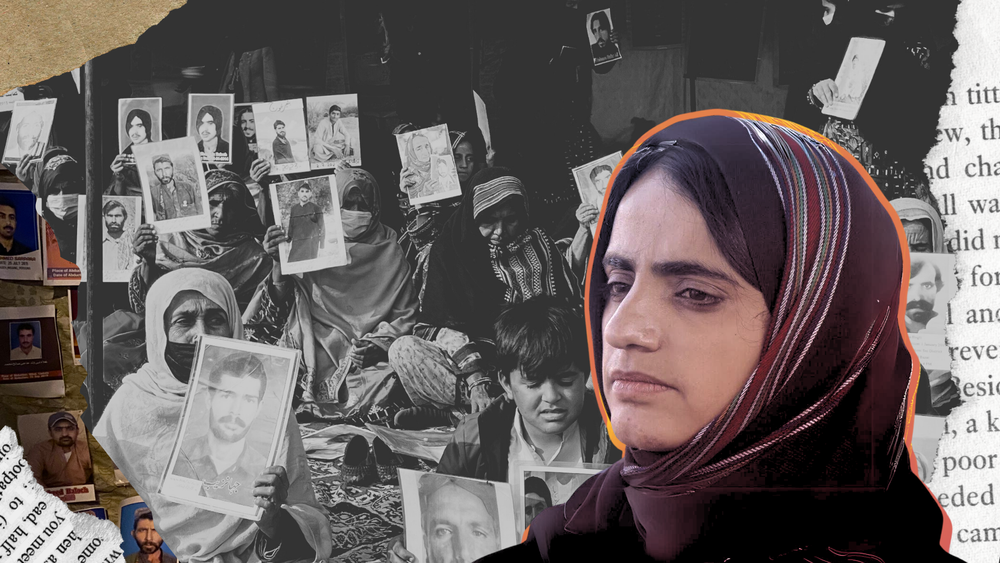
Members of “Baloch Yakjehti Committee” hold the portraits of a Baloch human right activist Mahrang Baloch during a protest demanding to release Mahrang

Dr. Mahrang Baloch, the charismatic and fearless leader of the peaceful Baloch civil resistance, has been detained by Pakistani authorities alongside 16 other activists for protesting against the ongoing enforced disappearances in the province. As a key organiser of the Baloch Yakjehti Committee, an organisation that has played a significant role in galvanising grassroots mobilisations demanding state accountability, Baloch faces charges including directing terrorist activities, sedition, and rioting. Despite triggering widespread domestic and international condemnation, the Pakistani authorities remain largely unperturbed in their authoritarian suppression of peaceful Baloch demonstrations. In light of the recent escalation in insurgent attacks within the province, the latest wave of arrests and violent repression of protests can be seen as a deliberate attempt to divert attention from the state’s own failures and shortcomings.

Although the Pakistani state has escalated its efforts to silence Baloch this time, she has been under scrutiny for some time. A surgeon by profession, she has played a pivotal role in fostering the peaceful Baloch movement within a highly perilous environment. At just 32 years old, she has witnessed firsthand the severe abuses that the Pakistani state inflicts upon the Baloch people. In 2009, at the age of 16, her father, Abdul Ghaffar Lango, a labourer and political activist with the Balochistan National Party (BNP), was forcibly disappeared. Two years later, his mutilated body was discovered, showing signs of torture and gunshot wounds. In 2017, Baloch’s brother was also forcibly disappeared. Although he was released three months later following Baloch’s vocal opposition to the authorities, her anger and activism endured, and she has since become the voice of many others who continue to suffer similar fates.

Mahrang Baloch gained widespread recognition during the Baloch Yakjehti Committee’s (BYC) ‘March against Baloch Genocide’ from Turbat to Quetta (the provincial capital) and ultimately to Islamabad, held between December 2023 and January 2024. The catalyst for this long march was the November 2023 killing of 24-year-old tailor Balach Mola Baksh by the Counter Terrorism Department, which falsely characterised the incident as an encounter. His family, claiming he was in state custody at the time of his death, protested at Fida Ahmed Chowk in Turbat with his body for a week, but their efforts yielded no results.

Mahrang Baloch’s arrest opens Pandora’s box in Pakistan

The BYC had originally emerged from the Bramsh Yakjehti Committee, formed in solidarity with and to seek justice for Bramsh, the 4-year-old daughter of Malik Naz, who was allegedly killed by state-backed death squads in May 2020. In response to the ongoing state abuses, including enforced disappearances, fabricated encounters, extrajudicial killings, and torture, the leadership of the Bramsh Yakjehti Committee chose to broaden its scope to address the broader plight of the Baloch people, renaming the organisation as the Baloch Yakjehti Committee. The movement is spearheaded by the mothers, sisters, daughters, and half-widows of those who have fallen victim to these brutal state actions, without any accountability. The BYC has since organised a number of significant demonstrations, mobilising people on an unprecedented scale in the history of the province, including the ‘Baloch Raaji Muchi’ in Gwadar in July 2024 and the ‘Baloch Genocide Remembrance Day’ in Dalbandin in January 2025.

In response to the rise of peaceful civil resistance by the Baloch people, the Pakistani establishment, rather than addressing the long-standing grievances of the populace, has resorted to its usual tactics of obstructing, discrediting, and silencing the movement. The protests have continued despite state-enforced internet and network blackouts, arbitrary detentions, the use of water cannons, tear gas, and even live ammunition. Additionally, the state has launched an extensive disinformation campaign against the movement. The mainstream media, traditionally aligned with state narratives, has been complicit in linking the activists to insurgents, alleging that they are supported or manipulated by foreign entities. Dr Mahrang Baloch herself has been targeted by malicious digital propaganda, with false claims that her father and brother were associated with insurgents. Furthermore, an image of her with a Norwegian journalist who interviewed her was circulated, suggesting foreign involvement in the movement. A fabricated audio recording was also spread, falsely claiming that Baloch was attempting to secure foreign funds for the Gwadar protest. A recurring element of the disinformation campaign involves misrepresenting the missing persons, whom the movement advocates for, as separatist militants. In one instance, a photograph of Baloch at a protest was altered to distort an image of a missing person on a poster behind her, replacing the image of Rafique Oman with that of Rafiq Bizenjo, a suicide bomber allegedly claimed by the Balochistan Liberation Army (BLA).

The province of Balochistan has endured immense deprivation and suffering due to the ongoing conflict between the Pakistani state and the long-standing armed insurgency. In addition to the systemic discrimination and exploitation imposed by the federal government, the Baloch people have faced relentless human rights violations by the state under the guise of counter-insurgency measures. The recent train hijacking and Noshki attack on security personnel by the Balochistan Liberation Army (BLA) highlight the complete failure of Pakistan’s policies to address the insurgency and safeguard the Baloch population. Rather than confronting the fundamental issues surrounding its approach, the establishment has reverted to its familiar and convenient tactic of suppressing peaceful dissent to avoid addressing difficult questions.

Dr Mahrang Baloch is currently being held in Quetta District Jail without any legal proceedings, denied access to her lawyer and family. Her cousin, Asma Baloch, has reported that the authorities are even preventing her family from delivering food and other necessary items to her. International human rights organisations, including Amnesty International and Front Line Defenders, have raised concerns about this situation and called for her immediate release. It is evident that the state’s attempt to silence a prominent figure of the peaceful Baloch resistance has backfired, drawing greater attention to the plight of the Baloch people. It is crucial that the establishment reassesses its approach and puts an end to the egregious practices that have fuelled the insurgency and caused immense suffering to the Baloch population.

« 1 2