
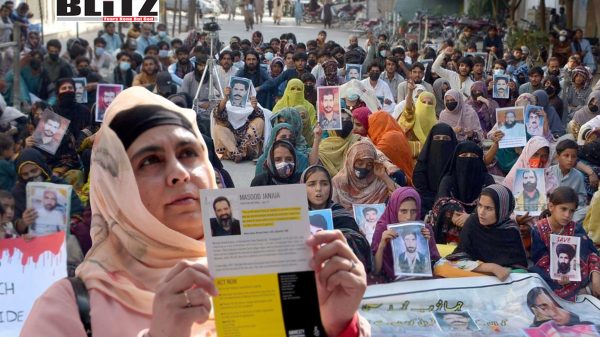
What was intended to be a forum for peace and dialogue in Pakistan’s restive northwest has instead highlighted the country’s deepening human rights crisis, after two university students reportedly disappeared following their participation in a peace jirga in Peshawar. The “grand peace jirga,” held on November 12 in Peshawar, was organised by the Khyber Pakhtunkhwa chapter of Pakistan Tehreek-e-Insaf (PTI) and attended by tribal elders, religious scholars, civil society representatives, activists and students. The gathering aimed to discuss the worsening security situation in the region, particularly in the context of rising violence and strained relations with Afghanistan. However, shortly after the event concluded, Khubaib Wazir and Adnan Wazir, members of the Waziristan Students’ Society, reportedly went missing under circumstances that rights groups describe as deeply troubling. According to eyewitness accounts, the two students were intercepted by unidentified men in plain clothes while returning from the jirga to their hostels. Since then, their whereabouts remain unknown. No arrest records, charges or official statements have been issued by police or security agencies, leaving their families and fellow students in a state of anguish and uncertainty. Human rights advocates say the incident reflects a broader pattern in Pakistan where individuals who engage in peaceful political or civic activity — particularly from tribal regions — are treated as security risks rather than citizens exercising their rights. In the aftermath of the disappearance, some pro-state voices have attempted to associate the students with the Pashtun Tahafuz Movement (PTM), a non-violent rights movement that has frequently criticised the conduct of security forces in former tribal areas. PTM leaders have repeatedly denied any links to militancy, maintaining that their demands centre on constitutional rights, accountability and an end to extrajudicial practices. The case has reignited debate around enforced disappearances, a long-standing and contentious issue in Pakistan. Rights organisations estimate that thousands of people — including students, activists, journalists and political workers — have disappeared over the past decade, particularly in Khyber Pakhtunkhwa and Balochistan. Families often report being denied information, legal recourse or even acknowledgement from authorities. Despite the existence of official inquiry commissions, critics argue that accountability remains elusive, with very few cases resulting in prosecutions or clear explanations. The continued silence surrounding recent disappearances has further eroded public confidence in state institutions and the rule of law. Civil society groups warn that such incidents send a chilling message to young Pakistanis: that even peaceful participation in dialogue or advocacy can invite severe consequences. As calls grow for the safe recovery of the missing students, rights defenders stress that genuine stability cannot be achieved through fear, secrecy and repression. For now, the disappearance of Khubaib Wazir and Adnan Wazir stands as a stark symbol of a shrinking civic space in Pakistan — where seeking peace and accountability increasingly comes at a personal cost.
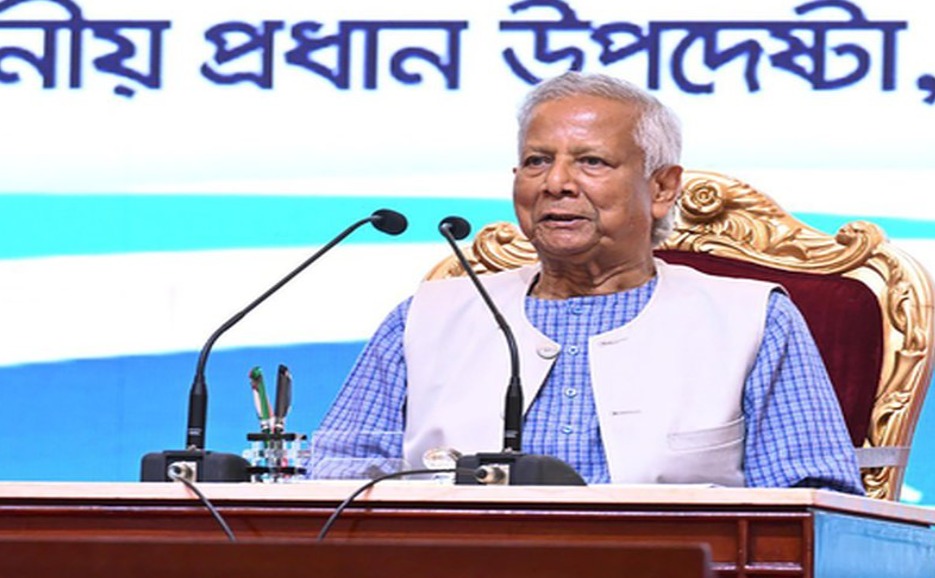
What began as a hopeful chapter for free expression in Bangladesh has turned into a growing crisis for journalists and independent media, according to analysts, human rights groups, and press organisations. When Nobel Laureate Dr. Muhammad Yunus assumed leadership of Bangladesh’s interim government in August 2024 following the fall of the Sheikh Hasina administration, many inside and outside the country saw it as a potential reset for democratic freedoms—particularly for a media landscape long constrained by legal and political pressures. However, in the 16 months since, journalists report that those early expectations have largely given way to disillusionment. Rather than broadening space for dissenting voices, critics say the government has presided over increasing intimidation, legal harassment, and violent actions against the press. Escalating Risks for Journalists A report released on World Press Freedom Day 2025 painted a stark picture of deteriorating conditions: within eight months of Yunus taking office, at least 640 journalists were targeted, including assaults, fabricated criminal charges, and financial scrutiny—particularly through state agencies. Independent press organisations say the situation continues to worsen as Bangladesh approaches its February 2026 national elections. Journalists in Dhaka and beyond now describe death threats, online surveillance, and stalking as the “new normal” for reporters covering politics and governance. Compounding these concerns, a U.S. press freedom group formally urged Yunus’s government to release journalists imprisoned on questionable murder charges, noting that some detained reporters are held in harsh conditions without credible evidence of wrongdoing. Attacks on Media Outlets and Impunity Beyond individual threats, media institutions themselves have faced violence and destruction. In December, offices of major newspapers—including Prothom Alo and The Daily Star—were vandalised and set alight in mob attacks. Leaders of the Bangladesh Editors’ Council said some elements within the interim government appeared to have allowed or failed to prevent these attacks. These incidents have sown fear among journalists and civil society activists, many of whom say state forces have been slow or unwilling to protect media workers during outbreaks of mob violence. Legal Tools and Structural Pressures Analysts note that draconian legal instruments, including laws framed around “digital safety,” remain in force and are used to muzzle critical reporting—a stark contrast with earlier promises by Yunus to reform such measures. Observers point to a broader pattern in which courts and administrative bodies have become avenues for silencing dissent, with journalists facing lengthy investigations, travel bans, frozen bank accounts, and professional blacklisting. Prospects for Reform Despite these troubling trends, civil society groups continue to push for meaningful media reform and stronger protections for journalists. Advocates say that safeguarding free expression will be essential not just for press freedom, but for the credibility of Bangladesh’s democratic process as the country heads toward a pivotal election.
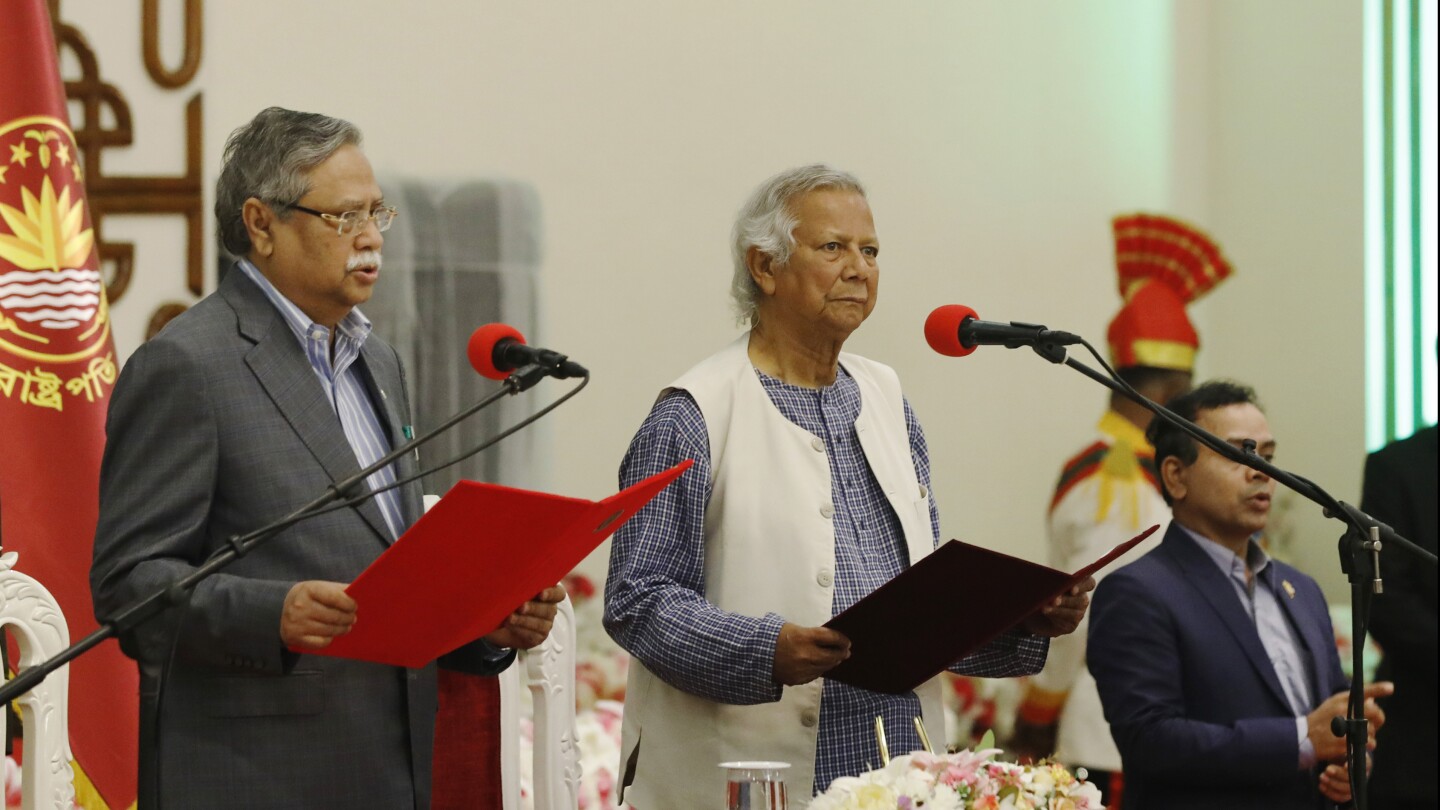
A former Bangladeshi intelligence officer has made sharp allegations against Nobel Peace Prize laureate Muhammad Yunus, claiming that the globally admired figure operates within — and benefits from — a deeply entrenched network of power inside Bangladesh. The remarks have reignited debate over governance, legitimacy, and influence under the country’s interim administration. Speaking in an interview, the retired official said that while Yunus is widely viewed internationally as a humanitarian and reformer, sections within Bangladesh’s security and political establishment perceived him as the centre of a powerful “system” that quietly shaped state decisions. Rise to Power Amid Political Upheaval Yunus assumed charge as Chief Adviser of Bangladesh’s interim government in August 2024 after mass protests led to the fall of long-serving Prime Minister Sheikh Hasina. His appointment was welcomed by many foreign governments and international observers who saw him as a stabilising figure capable of steering the country toward democratic elections. However, at home, criticism has grown. The former intelligence officer alleged that Yunus’s influence extended well beyond his constitutional role, affecting appointments, policy direction, and institutional functioning in ways that resembled a parallel power structure. Allegations of a ‘Shadow State’ According to the ex-officer, individuals and institutions closely associated with Yunus formed a tightly knit network that exercised influence without public accountability. He claimed this structure blurred the lines between civil society, governance, and state authority, raising concerns about transparency and democratic norms. Critics have also pointed to appointments of individuals perceived to be close to Yunus, arguing that such decisions reinforce the idea of an elite circle guiding governance behind the scenes. Supporters reject this view, saying experienced and credible individuals were brought in to stabilise a fragile state. Unrest and Law-and-Order Concerns The allegations come at a time of continued political tension and sporadic violence across Bangladesh. The killing of a youth activist earlier this year triggered protests and intensified accusations that the interim government has struggled to maintain law and order. Former Prime Minister Sheikh Hasina, now living abroad, has accused the Yunus-led administration of allowing instability to spread and failing to protect vulnerable communities. The interim government has denied these charges, stating that investigations into incidents of violence are ongoing and that restoring security remains a priority. Debate Over Legitimacy and Power A key point of criticism from Yunus’s opponents is the absence of an electoral mandate. They argue that his international stature gives him disproportionate influence within the country, creating an imbalance between global perception and domestic accountability. Supporters counter that Yunus was brought in during an extraordinary crisis and that his role is temporary, focused solely on reforms and preparing the ground for free and fair elections. Looking Ahead As Bangladesh moves toward national elections expected in early 2026, debate over the nature of power within the interim government is likely to intensify. The former intelligence officer’s comments have added fuel to an already polarised political environment, highlighting the sharp divide between international admiration for Yunus and domestic skepticism among his critics. The interim government maintains that its only objective is to stabilise the country and ensure a credible democratic transition. Whether it can bridge the growing trust gap at home remains a central question in the months ahead.
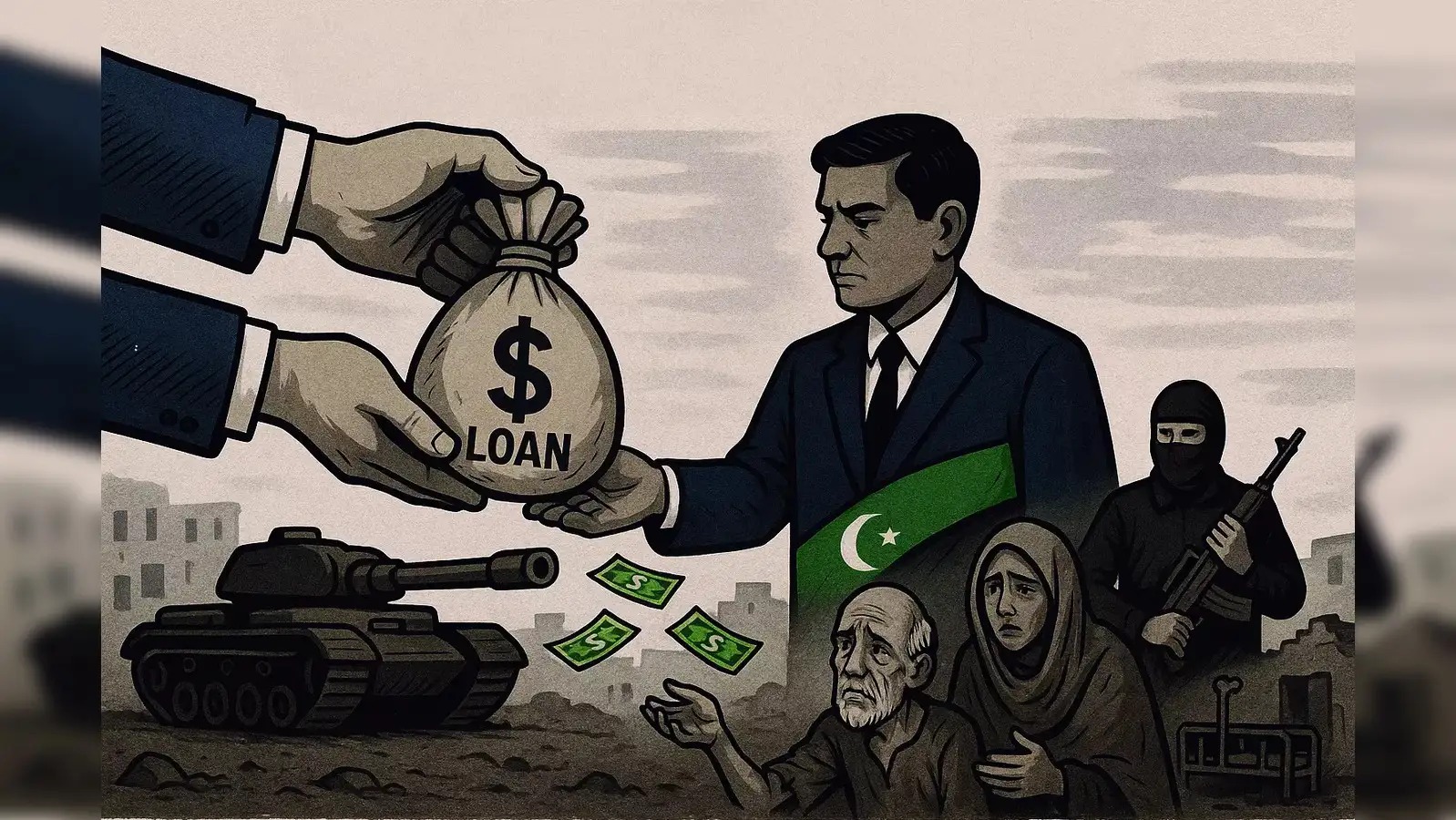
In the aftermath of the Pahalgam massacre, the fingerprints of Pakistan’s proxy militant infrastructure were all but unmistakable. For decades, the military establishment in Rawalpindi has relied on asymmetric warfare through its proxy militant networks to provoke India while shielding itself behind the veneer of plausible deniability. The latest attack in Jammu and Kashmir’s Pahalgam on April 22, killing 26 civilians, followed a familiar script—designed not only to stir unrest in the region but also to bait an Indian response that could be leveraged for domestic political consolidation. But this time, the playbook seems to be unravelling. The Pakistan Army, under the leadership of General Asim Munir, seemed to have calculated an anticipated Indian retaliation with such a provocation that could be choreographed into a nationalistic rallying cry in its aftermath. Such manufactured moments of crisis have historically served the military’s purpose of reasserting its primacy in the country’s political and national security discourse. However, the sociopolitical terrain of Pakistan today is no longer the same as it was during previous confrontations. India did respond to the Pahalgam attack with a calibrated military operation. On the night of May 7, under Operation SINDOOR, Indian armed forces targeted the infrastructure of long-operating terrorist groups, including Lashkar-e-Taiba (LeT), Jaish-e-Mohammed (JeM), and Hizbul Mujahideen (HM), across nine places in Punjab and Pakistan-occupied Jammu and Kashmir (PoJK). It was precise, strategic, and aimed at sending a clear signal: India will not tolerate cross-border terrorism and retains the right to act pre-emptively against threats originating from Pakistani soil. Far from uniting Pakistan behind its army, the attack and subsequent Indian response have only magnified the deep fractures that lie within the country. While the government attempted to stage a performative show of national unity, the absence of solidarity from Pakistan’s historically marginalized ethnic groups has been glaring. Neither the Baloch nor the Pashtun communities—both of whom have long endured the brunt of the military’s repression and counterinsurgency operations—showed any overt inclination to stand with the state or the generals now appealing for unity. Instead, a suicide blast killed seven Pakistan Army soldiers in Balochistan on the very day of Op Sindoor. At a time when Pakistan has effectively become a ‘Punjabistan’, given the dominant control that Punjab exerts over key state institutions, including the military, as well as disproportionate hold over to national resources, this raises a stark question: in the event of an escalated military confrontation with India, who will fight for Pakistan? The Limits of the “External Enemy” Narrative The Pakistan Army has always thrived on the construction of an “external enemy,” most prominently India, to maintain its unrivalled influence over national affairs. Whether in times of political upheaval or economic crises, the spectre of Indian aggression has been cynically deployed to suppress dissent, justify military budgets, and delegitimize civilian political actors. But the effectiveness of this narrative is fading, especially when the legitimacy of the military itself is in question. The ongoing human rights violations, extrajudicial killings and state-enforced disappearances in Khyber Pakhtunkhwa and Balochistan have damaging the trust people had towards the army. The Baloch insurgency continues to simmer, with growing calls for outright independence, something that was earlier limited to internal autonomy. The Pashtun Tahafuz Movement (PTM) has exposed the military’s brutal tactics in tribal regions, and although the movement is often silenced through intimidation and arrests, its underlying grievances remain potent. Alongside this, the Tehreek-e-Taliban Pakistan (TTP) has also increased the intensity of their armed insurgency, with hundreds of attacks in the last few years. In such a climate, the attempt to whip up nationalist fervour around an India-Pakistan confrontation appears hollow and self-defeating. The ethnic periphery, long disenfranchised and suppressed, sees little reason to rally behind a state apparatus that has never treated them as equal stakeholders in the Pakistani project. A Calculated Indian Doctrine India, for its part, has signalled a significant shift in its approach to cross-border terrorism. “While earlier responses were largely diplomatic or defensive, India’s actions following the 2016 Uri attack, culminating in the 2019 Balakot airstrikes, marked a shift toward a more proactive and pre-emptive counterterrorism strategy. Now the post-Pahalgam strike under Op SINDOOR is different in both scale and message. New Delhi’s intent is now unambiguous: there will be no tolerance for Pakistani state-sponsored terrorism, and any provocation will invite proportionate, and possibly pre-emptive, military action. By targeting terror infrastructure and avoiding civilian casualties, India walked a fine line, reflective of its doctrine of minimising collateral damage, to ensure on its part that this response does not spiral into a full-blown war. This strategic restraint while establishing its deterrence arc is designed as a demonstration of maturity and not as a sign of weakness. What complicates matters for Pakistan is that this shift in Indian posture arrives at a moment of acute internal fragility. Its economy is in tatters, inflation is high, and the IMF continues to hover over its fiscal policy decisions. Politically, the country remains in turmoil following a deeply controversial general election, widely seen as manipulated by the military establishment to sideline populist leader Imran Khan, who remains jailed since 2023. Protests, arrests, and media censorship have become routine. Interestingly when on a day India undertook its cross-border strikes on terror assets, Pakistan Army secured a Supreme Court adjudication that allows it to try the civilians in military courts. In this context, a military misadventure with India risks not only a humiliating defeat but also a domestic backlash that could irreparably damage the army’s authority. Escalation Without Strategy The temptation for Rawalpindi to escalate, either through additional proxy attacks or border skirmishes, remains high. While it has increased its cross-border shelling targeting civilians, which has killed over a dozen border residents of Jammu and Kashmir, a move of direction escalation would be nothing but deeply unwise. “By now, it should be clear to Pakistan just how vulnerable it remains, especially after India followed up with a coordinated drone strike across nearly nine cities, including the neutralization of an