

-Arun Anand
Myanmar (formerly Burma) sits at a critical crossroads in Asia, both geographically and geopolitically. The country’s location – bordering China, India, Bangladesh, Thailand, and Laos, with a long coastline on the Bay of Bengal and Andaman Sea – makes it a bridge between South Asia and Southeast Asia. In fact, Myanmar is often described as the “main connecting hub” linking East, South, and Southeast Asia. Its shores provide access to the Indian Ocean’s major shipping lanes, which has long attracted great power interest. In short, Myanmar’s geostrategic location grants it outsized importance: it is the only Southeast Asian nation sharing borders with both India and China, and it offers a land gateway from the Bay of Bengal into the heart of Asia.
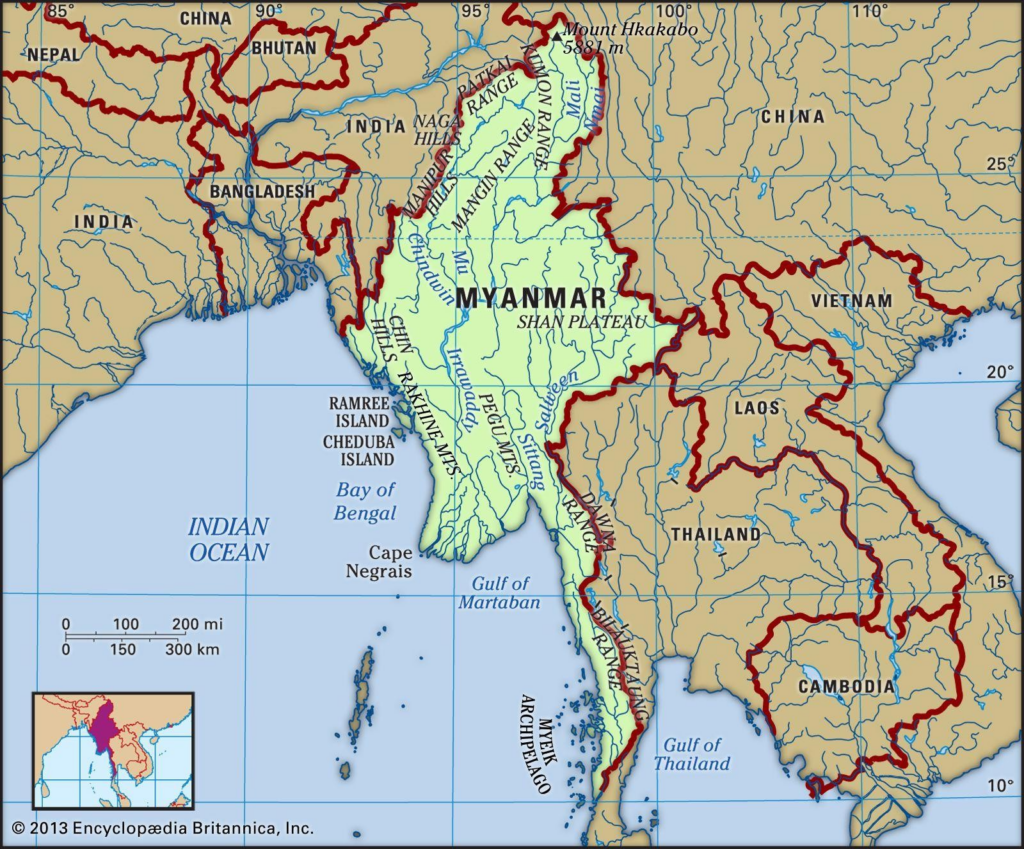
Myanmar Geographical Location
Strategic Geographical Importance
Myanmar’s geography confers strategic advantages that neighbouring powers eagerly seek to leverage. To its west lies the Bay of Bengal (part of the Indian Ocean), positioning Myanmar near vital maritime routes between Asia, the Middle East, and Europe. Historically, even a branch of the ancient Silk Road ran from Myanmar’s shores to China’s Yunnan province, underlining its role as a natural corridor. Today, both China and India view Myanmar as pivotal to their regional aspirations.
In summary, Myanmar’s position at the junction of Asia’s sub-regions lends it significant strategic importance. Geography is the reason a country of 55 million people commands so much attention from global and regional powers. Myanmar is effectively a land bridge and a maritime gateway, one that both China and the West recognise as key to influencing the wider region.
China’s Deepening Influence in Myanmar
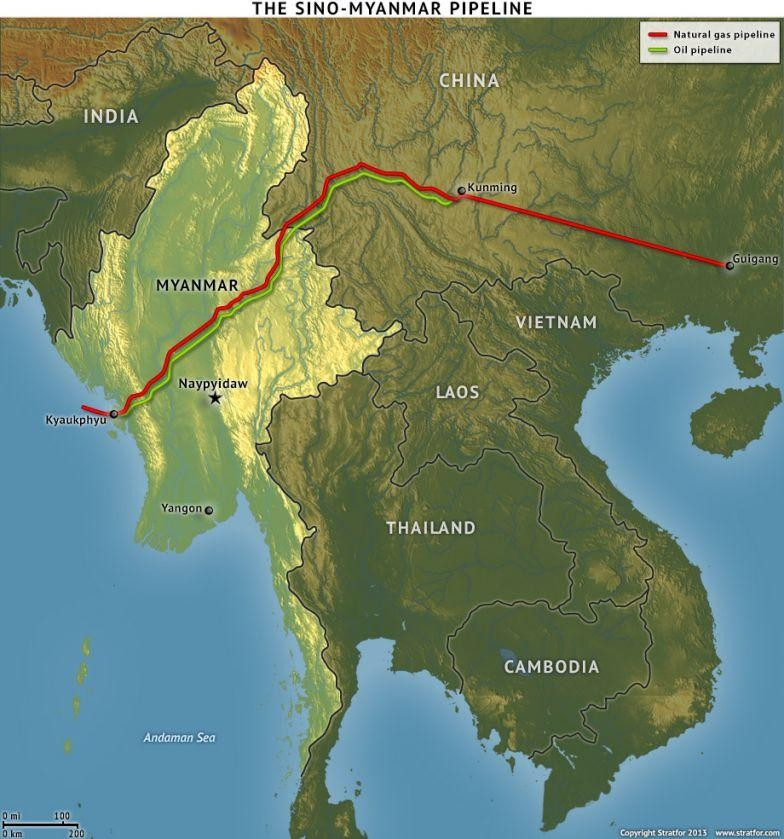
China has emerged as Myanmar’s most influential foreign player, especially in the past decade. Geopolitically, Beijing views Myanmar as crucial to its own strategic objectives. China’s southwestern provinces are landlocked, and Myanmar offers a coveted route to the sea. Through its ambitious Belt and Road Initiative (BRI), China has invested heavily in Myanmar’s infrastructure – from ports to pipelines – to secure that route. For instance, China helped build a deep-water port at Kyaukpyu in Myanmar’s Rakhine State, which serves as the starting point for twin oil and gas pipelines running north into China’s Yunnan Province. These pipelines, completed in the 2010s, allow China to import Middle Eastern oil and gas via Myanmar, bypassing the Malacca Strait – a narrow maritime chokepoint that China views as a strategic vulnerability. By using Myanmar as an overland energy corridor, Beijing reduces its dependence on long sea voyages through congested or potentially hostile waters.
China’s influence in Myanmar extends beyond infrastructure to encompass political and military aspects. During decades when Myanmar was under Western sanctions (due to the former junta’s human rights abuses), China became Myanmar’s closest partner by default. Beijing supplied arms, invested in mining and hydropower, and shielded Myanmar diplomatically at the UN. Even after Myanmar’s brief experiment with democracy, China maintained strong ties with the powerful military (the Tatmadaw). Notably, when the Myanmar army seized power in the February 2021 coup, China reacted with cautious support. Beijing pointedly referred to the coup as a “major reshuffle”, downplaying the overthrow of elected leaders. It continued business as usual – providing weapons to the junta and pushing to continue BRI infrastructure projects – even as much of the world condemned the coup. At the same time, China hedged its bets: it never formally endorsed the military regime and, for a long while, did not allow Myanmar’s coup leader, Senior General Min Aung Hlaing, an official state visit to China. (Beijing even curiously allowed Myanmar’s ousted civilian ambassador to continue occupying Myanmar’s seat at the United Nations, signalling that China hadn’t completely written off the previous government.) This reflected China’s pragmatic approach – engaging the junta to protect its interests, but not fully legitimising it internationally.
However, as Myanmar’s post-coup conflict ground on, China’s stance evolved. By late 2022 and 2023, Myanmar’s internal war was intensifying: ethnic armed groups and new pro- democracy militias were seizing territory, even threatening areas near China’s border. Beijing grew increasingly concerned that Myanmar could descend into chaos – jeopardizing Chinese investments and creating instability on China’s southwestern flank. China’s frustration with Gen. Min Aung Hlaing also mounted, as the junta’s offensives failed to restore order and even hindered Chinese projects (for example, fighting in border regions and a boom in criminal networks there became a headache for Beijing). Fearing a potential collapse of the Myanmar military regime, China decided to double down in support. In late 2023 and 2024, Beijing took a series of assertive steps: it dispatched high-level envoys (including Foreign Minister Wang Yi) to meet the junta, pledged full backing for the junta’s planned 2025 election, and reportedly even helped bolster the Myanmar military’s capabilities (for instance, supplying drone technology). Chinese officials also leaned on various ethnic rebel groups – many of which have enjoyed Chinese cross-border ties – to pause their assaults and cut deals with the military. In November 2023, General Min Aung Hlaing was finally invited to Beijing, signaling China’s renewed embrace of the embattled regime.
It might seem ironic that China, a one-party state, is encouraging Myanmar’s generals to hold an election. But Beijing’s motive is not to foster democracy; rather, China hopes a managed election could “dilute [Min Aung Hlaing’s] power” or produce a more stable, cooperative leadership in Naypyidaw. Analysts note that China dislikes Min Aung Hlaing personally (viewing him as unpredictable and ineffective), so it sees an election as a way to legitimize the junta under fresh faces that might be more amenable to Chinese interests. In other words, China wants a stable partner in Myanmar – it cares less about who wins an election (certainly not pushing for Aung San Suu Kyi’s return, for example) than about ensuring Myanmar doesn’t align with the West or descend into anarchy.
Today, China is arguably the Myanmar junta’s most important patron. It provides economic lifelines (such as trade, investment, and energy revenue) and international cover (for instance, China has vetoed or softened UN resolutions critical of Myanmar). In return, Beijing gains considerable leverage: ongoing access to Myanmar’s resources (like jade, gas, and timber) and strategic infrastructure. If the military regime survives – especially with Beijing’s help – China stands to solidify a “strategic toehold” extending to the Indian Ocean. A friendly Myanmar could host more Chinese projects (such as ports, railways, or even listening posts) that project Chinese influence into South Asia and maritime Asia. This prospect alarms Western strategists, as it would extend China’s reach in a region long dominated by India and watched by the U.S.
In summary, China’s influence in Myanmar is at an all-time high: it has deftly positioned itself as the junta’s indispensable ally, all while framing its involvement as respect for Myanmar’s “sovereignty and stability.”
Western Interests and Involvement
Western nations, notably the United States and its European allies have a significantly different history with Myanmar. During the long years of military dictatorship (from 1962 up until the early 2010s), the West largely treated Myanmar as a pariah state due to its human rights abuses and suppression of democracy. The U.S. and EU imposed tough sanctions for decades, isolating Myanmar’s generals. There was a brief thaw in the 2010s when Myanmar’s military initiated political reforms: the release of Aung San Suu Kyi, elections in 2015, and a quasi-civilian government. At that time, Washington and European capitals rolled back many sanctions and engaged Myanmar with aid and diplomacy, hoping to nurture its transition to democracy – and perhaps to loosen China’s grip by bringing Myanmar into a more liberal, rules-based fold. President Barack Obama even visited Myanmar twice, a symbolic end to its isolation.
That hopeful period did not last. Western relations crashed back down after two events: first, the Myanmar army’s brutal crackdown on the Rohingya Muslim minority in 2017 (which the U.N. later described as “genocidal”), and then the February 2021 coup that ousted the elected government. In response to the coup, the U.S., EU, UK, Canada, Australia and others swiftly re-imposed sanctions on Myanmar’s junta. Within 10 days of the coup, Washington announced a new sanctions regime targeting the generals. Over the next three years, the U.S. piled on nearly 20 rounds of sanctions, hitting top military leaders, their business conglomerates, state- owned oil and gas enterprises (a key revenue source for the regime), and arms brokers. The European Union and Britain similarly enacted multiple waves of asset freezes and travel bans, coordinating to pressure the junta. The intent of these sanctions has been to economically squeeze the military and signal that its illegitimate power grab has severe consequences. Western countries also cut off most development aid and urged foreign companies to divest from Myanmar.
These punitive measures, however, have had limited success in changing the junta’s behaviour. One issue is that Myanmar’s generals are not completely isolated they can still turn to supportive neighbours and great powers to offset Western pressure. China and Russia have provided diplomatic cover (for example, vetoing UN Security Council actions) and continue to trade arms and resources with Myanmar. Neighbouring countries like Thailand and India have also maintained ties with the regime out of pragmatic self-interest. This means Western sanctions, while impactful, cannot totally choke the junta’s lifelines. As one analysis noted, the “junta is far from friendless”: Beijing remains Myanmar’s biggest investor and trade partner, Moscow its arms supplier, and regional governments often prefer engagement over isolation. Hence the generals have (so far) weathered Western sanctions, declaring that they can “handle” international pressure and continuing their brutal crackdowns regardless. Western policymakers themselves acknowledge that, absent more unified global action, sanctions alone are unlikely to force Myanmar’s military to reverse course. Nonetheless, the U.S. and EU see sanctions as a necessary moral stance and a way to deny resources that fuel the junta’s repression (for example, trying to block aviation fuel to hinder the military’s frequent airstrikes on civilian areas).
Strategically, the United States views Myanmar through the lens of its Indo-Pacific competition with China. A Myanmar firmly under Chinese influence (or hosting Chinese bases) would be a setback for the U.S.’s broader regional aims. Thus, even as Washington condemns the coup and human rights abuses, it is also mindful that losing Myanmar entirely to China would harm U.S. interests in the long run. American analysts have warned that if the West remains hands- off, Myanmar could “fall into a protracted state of conflict and fragmentation, supported and dominated by China.” In other words, inaction might cede Myanmar to Beijing’s orbit. This strategic concern is pushing the U.S. to explore creative ways to engage or influence the situation, short of direct military intervention. The U.S. has ramped up humanitarian aid to Myanmar’s refugees and border communities, voiced support for the democratic opposition (the exiled National Unity Government, or NUG), and worked with ASEAN neighbors to push for a peace process. Western countries have also refused to recognize the junta’s planned election, and they continue to call for an inclusive dialogue that involves Suu Kyi and all parties, a call the junta has flatly rejected.
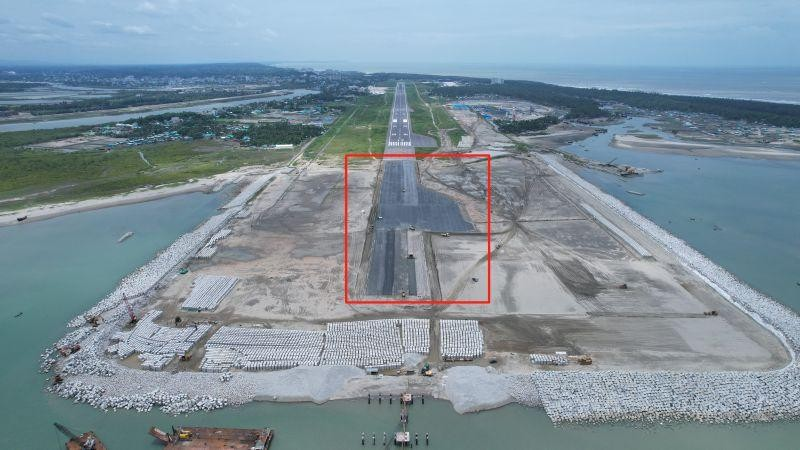
One of the more clandestine efforts attributed to the U.S. and its partners involves Myanmar’s western border. Bangladesh, which shares a border with Myanmar’s tumultuous Rakhine State, has been drawn into the crisis primarily due to the Rohingya refugee exodus. Recently, there has been talk of establishing a “humanitarian corridor” from Bangladesh into Myanmar – ostensibly to deliver aid and possibly facilitate the return of Rohingya refugees. However, reports suggest this corridor concept may double as a channel for Western-aligned support to anti-junta forces. In 2025, investigative reports indicated that the U.S. was quietly working with Bangladesh’s security forces on a plan to support Myanmar’s ethnic rebels in Rakhine State. Under this reported plan, Bangladesh’s army would provide logistical support (but not direct combat troops) to a coalition of anti-junta fighters, including the Arakan Army (an ethnic Rakhine force opposing the Myanmar military). A large supply depot was allegedly being built near Teknaf (Bangladesh’s southern tip) to funnel provisions across the border, effectively
creating a U.S.-backed lifeline into Myanmar. The expansion of Cox’s Bazar airport in Bangladesh was said to be part of this strategy – with the runway extended to accommodate drones, possibly Turkish-made UAVs, that could assist the rebels in Rakhine. All of this was to be done under the guise of an “aid corridor,” separating it from overt military intervention. In fact, Bangladeshi and U.S. officials discussed using the corridor for humanitarian goals, such as returning around 80,000 Rohingya refugees to their homes in Rakhine if the area could be secured by the rebel coalition. On the surface, it sounds like a humanitarian mission – but clearly it has strategic underpinnings, essentially a proxy effort to weaken Myanmar’s junta from the western front.
This so-called Rakhine corridor plan demonstrates the lengths to which Western actors might go to alter the situation in Myanmar without direct intervention. It also puts Bangladesh in a delicate spot: Dhaka is wary of being caught in a great-power proxy war on its border, even as it is under pressure to help resolve the Rohingya crisis. Bangladesh’s government initially gave mixed signals about the corridor, publicly entertaining the idea in early 2025, then voicing caution about being drawn into Myanmar’s civil war. The situation is evolving, but it underscores that Western intervention in Myanmar is no longer limited to speeches and sanctions – there are active efforts to forge new pressure points against the junta, even if under humanitarian auspices. The United States’ overarching goal is to check the Myanmar military’s excesses and prevent China from completely dominating the outcome. Unlike China’s overt state-to- state support of the junta, Western support for Myanmar’s opposition is more covert and framed around democracy and human rights. Nonetheless, both superpowers are now deeply entangled in Myanmar’s crisis, each backing different sides – a classic proxy dynamic that Myanmar’s people ultimately have to bear.
A Turbulent Election and Its Impact
Amid this geopolitical tug-of-war, Myanmar’s internal situation remains explosive, and it is about to reach another critical juncture: a planned national election. The military junta has promised to hold a general election to cement its rule – the first such poll since it grabbed power in 2021. Originally the generals hinted at an election by 2023, but escalating conflict forced repeated delays. As of early 2025, Senior General Min Aung Hlaing extended the country’s state of emergency yet again (citing “security” needs) and indicated an election would occur once “stability and peace” are restored. Observers now expect the junta to attempt a nationwide vote in late 2025. The regime has been feverishly preparing for this faux-democratic exercise: it conducted a census in late 2024 to update voter rolls (an effort that met fierce resistance and violence in rebel-held areas), and it has enacted strict rules to micromanage the election.
However, few believe that what the military calls an election will be anything more than a sham. All credible opposition has been effectively excluded. The junta has dissolved dozens of political parties – including Aung San Suu Kyi’s National League for Democracy (NLD), which overwhelmingly won the last real elections in 2015 and 2020. (In those 2020 polls, the NLD won 82% of the contested seats, a landslide that the generals refused to accept. The military’s justification for the coup was unproven allegations of voter fraud by the NLD.) Suu Kyi herself remains in prison with 33-year sentence, alongside many of her party’s leaders. Independent media is muzzled, and pro- democracy activists are in hiding or exile.
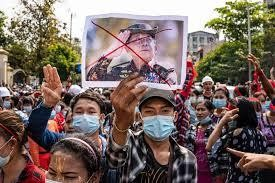
In essence, the junta is arranging an election where the playing field is utterly one-sided – likely handing victory to the military’s proxy party (the USDP) or a slate of military-approved candidates. For Myanmar’s many opposition groups, this vote is nothing but a ploy: “merely an attempt to legitimise the illegitimate regime” that seized power by force. As one spokesperson for the NUG (the opposition government) put it bluntly, “The election will be a sham, it will just be for show.” The military hopes that installing a civilian façade through a controlled election might ease international pressure or domestic dissent. But most Myanmar people are not buying it – and neither are Western governments, which have already declared any junta-run polls to be void of legitimacy.
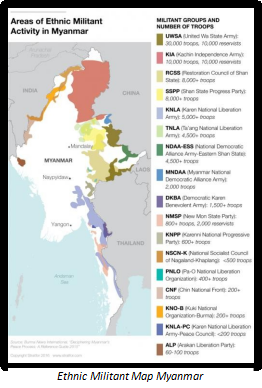
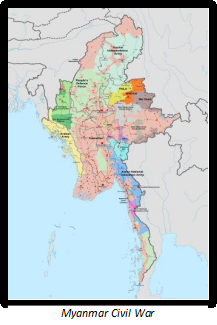
The practical realities on the ground make a free or fair nationwide election impossible at present. Myanmar is in the throes of a civil war; large swathes of the country are not under military control. By the regime’s own admission, voting might be feasible in less than half of Myanmar’s townships. (Some estimates say the junta securely controls only 17% of all village tracts in the country – the rest are contested or held by resistance forces.) In many ethnic minority regions, powerful armies like the Kachin, Karen, and Rakhine’s Arakan Army not only oppose the junta but govern their areas de facto. These groups, along with the NUG’s People’s Defense Forces (PDF militias) across the country, have vowed to disrupt any junta-run election. They see it as a rubber stamp for military rule and have threatened to attack polling stations or convoys. Tragically, this means any election attempt will likely be accompanied by violence and intimidation – and indeed, we have already seen signs of that. During the junta’s census-taking in late 2024 (a dry-run for the voter list), resistance fighters ambushed census workers guarded by soldiers, killing several. The atmosphere is one of fear and defiance; many citizens have said they will boycott the polls if they occur. As one activist observed, it is a “bizarre exercise” to talk of voting while the country is literally at war with itself.
Far from bringing peace, a sham election risks inflaming Myanmar’s conflict even further. The NUG and ethnic rebels have made it clear that they will not recognize the results. Any regime that emerges from this vote will lack credibility in the eyes of a majority of the population, potentially fueling even more resistance. “This election will not lead to stability. It will lead to more instability and more violence,” warned the NUG spokesperson Zaw Kyaw. Unfortunately, that is a very plausible outcome: the act of voting could become yet another flashpoint for clashes, and a new “elected” government dominated by the military might entrench the divide, convincing the opposition that only armed revolution will bring change. In essence, the polls could slam the door on any negotiated solution, hardening the resolve of anti-junta forces to topple the regime by force. Already, since the coup, Myanmar’s conflict has reached “unprecedented” intensity – by 2024 the military was losing territory and seeing record defections. If the junta uses an election to declare itself legitimate, the opposition is likely to double down on the fighting.
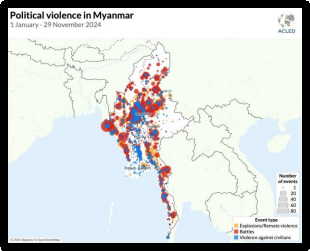
The international response to the planned election is also telling. China, despite having no love for democracy, is paradoxically pushing the junta to hold the vote – but for its own ends. Beijing hopes a new government (even a rigged one) might sideline the obstinate Min Aung Hlaing and install more competent leadership that can stabilize the country (and get Chinese projects back on track). In contrast, Western nations and Myanmar’s neighbors in ASEAN largely view the timing of this election as counterproductive. In January 2025, ASEAN – which usually avoids commenting on members’ internal affairs – urged the junta to prioritize peace over elections, implicitly warning that a vote amid civil war would only make things worse. Western officials have already labeled the planned polls a “sham” and promised to reject the outcome, reinforcing that sanctions will remain or even tighten if the junta proceeds. Thus, rather than opening a path to normalization, the junta’s election could deepen its international isolation (at least with the West), while giving China and a few others an excuse to continue engaging Myanmar on their terms.
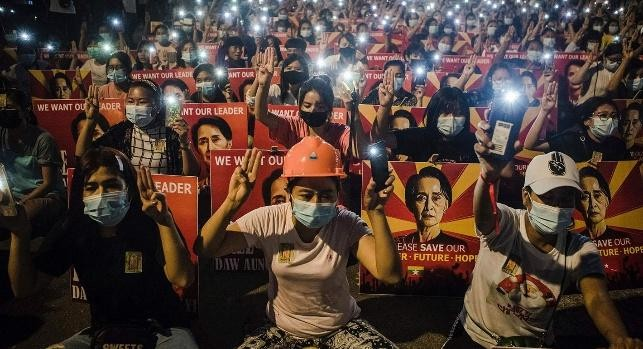
For the people of Myanmar, the immediate impact of these “polls” is unfortunately dire. Many citizens feel disenfranchised – their votes and voices effectively meaningless if the process is fixed. Pro-military factions might use the campaign period to stoke ultranationalism or hatred against minorities (as has happened in past elections), worsening social fractures. Violence is expected to spike around election activities, which could displace even more civilians or result in harsh crackdowns in urban areas. Humanitarian needs – already enormous, with over 3 million internally displaced and half the population in poverty may grow as instability spreads. An illegitimate election also postpones any hope of genuine dialogue between the military and opposition groups, meaning Myanmar’s humanitarian and economic crises will likely grind on.
Outlook: A Nation Caught in Contest
Myanmar’s predicament today is the result of converging pressures: a power-hungry military clinging to control, a determined popular resistance, and competing external powers each trying to secure their interests. The country’s geostrategic position ensures that what happens in Myanmar reverberates beyond its borders – drawing in China’s ambitions, India’s security concerns, Bangladesh’s refugee burdens, ASEAN’s stability worries, and the U.S.’s democratic ideals and Indo-Pacific strategy. This once-isolated nation has become a stage for 21st-century great power rivalry as much as for a people’s struggle for freedom.
In the near term, all eyes are on the junta’s planned election and its aftermath. A forced election could mark a new phase of turbulence. If the military regime manages to hold onto power through brute force and a staged vote, Myanmar may settle into a grim status quo: a fragmented country under a sanctioned dictatorship, increasingly reliant on China and Russia for economic survival and military hardware. Beijing, in that scenario, would likely deepen its footprint –securing its projects and perhaps even gaining a strategic ally on the Bay of Bengal, which would extend China’s influence toward the Indian Ocean in a significant way. Such an outcome would strengthen China’s hand in the region, albeit at the cost of Myanmar’s sovereignty being heavily constrained by Chinese interests. Western countries would probably continue a policy of isolation and pressure, leaving Myanmar largely cut off from global markets and institutions (apart from those aligned with China). The Myanmar people would remain caught in the middle – suffering repression at home and deprived of full engagement with the world.
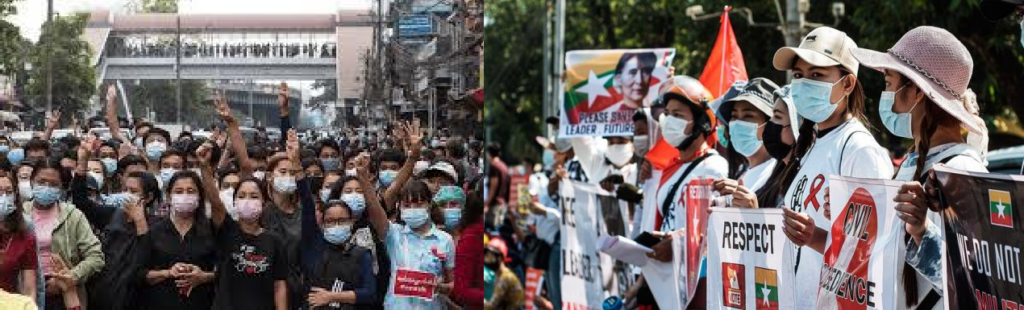
On the other hand, if resistance forces continue to chip away at the military’s control – as they have since 2021 – Myanmar could see a gradual power shift on the ground. Some analysts even suggest the regime’s hold is weakening to the point that a collapse is conceivable if momentum sustains. In that case, the post-election period might bring even more upheaval as the junta struggles to govern and insurgents move in. It’s a dangerous vacuum that could intensify humanitarian suffering, but it might also create openings for a negotiated solution if international mediators step up. The role of outside powers will remain pivotal: China could broker truces (as it did briefly on the China-Myanmar border in late 2023 or conversely ramp up support to prevent its favored side from losing. The U.S. and regional players might increase backing to the opposition in hopes of forcing the military to the table. Bangladesh and India will be carefully watching Rakhine and the north, respectively, to prevent spillover of violence. ASEAN might eventually push harder on its peace plan, especially if the election proves obviously futile in resolving the crisis.
In any scenario, it’s clear that Myanmar’s fate is of global consequence. For the average Myanmar citizen, these geopolitical games mean little if they cannot attain peace and the right to choose their leaders. The promise of Myanmar’s geostrategic potential – as a thriving crossroads of trade between India, China, and ASEAN – will remain unrealized until the political turmoil is resolved. A stable, democratic Myanmar could indeed be a linchpin of regional connectivity and development, benefiting all players. But as of now, that vision is distant. Instead, the country is embattled and divided, a place where outside powers deliver aid or arms to their preferred side while an elected leader languishes in jail. Myanmar is a nation with a prized location and many powerful suitors, yet it is tormented by internal strife and power struggles. China’s influence is strong and growing, as it stakes a claim to a strategic corridor through Myanmar to the Indian Ocean. The United States and Western allies, not wanting Myanmar to become a Chinese client state, are trying to intervene via sanctions and subtle support to the opposition – even exploring bold moves like a Bangladesh- Myanmar aid corridor. And amid all this, Myanmar’s military is pressing ahead with an election that almost no one believes is real, hoping it can entrench itself in power. The likely impact of these polls is not peace, but more conflict – at least in the short term – because the fundamental political disputes in Myanmar remain unresolved.
For now, Myanmar’s people face an uncertain future: will their country remain a pawn in a geopolitical chess match, or can it regain its sovereignty and unity on their terms? The coming year, with its turbulent “election” and international maneuvers, may provide some answers. What is certain is that Myanmar’s geostrategic importance guarantees the world will be watching closely – and both East and West will continue vying for influence – as this drama unfolds. The hope among many Myanmar citizens and friends abroad is that eventually a genuine political solution will emerge, so that this strategically located nation can escape its cycle of turmoil and realize its potential as a prosperous crossroads, rather than a battleground for proxy wars and power plays.
Sources:
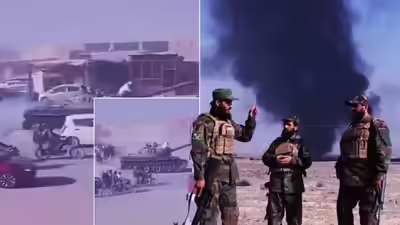
-Arun Anand
On the intervening night of October 7-8, Pakistan Army suffered one of its deadliest blows in recent months when eleven of its soldiers, including two senior officers, were killed in an anti-militancy operation in Khyber Pakhtunkhwa’s Orakzai district. According to a statement from Inter-Services Public Relations (ISPR), Lt. Col. Junaid Tariq, 39, and his second-in-command, Major Tayyab Rahat, 33, were killed during an intelligence-based operation (IBO) against Tehreek-e-Taliban Pakistan (TTP) militants.
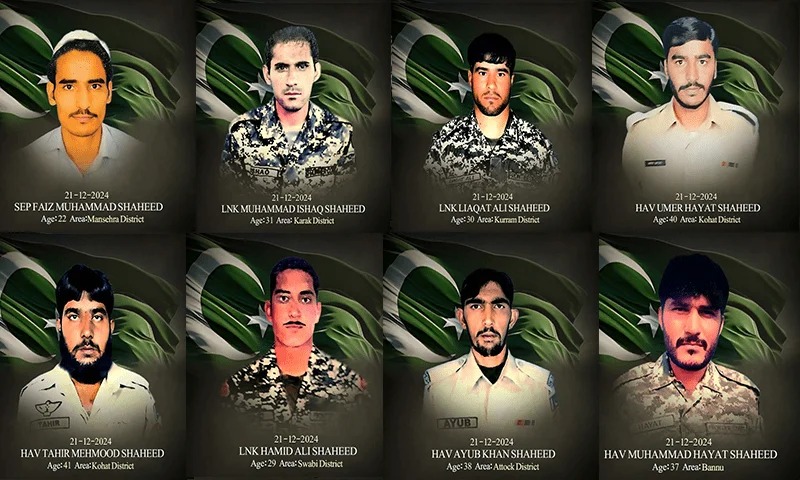
Now, barely 24 hours later, in another statement, ISPR revealed that another young officer, 30-year-old Major Sibtain Haider, was killed in another firefight in Dera Ismail Khan. The loss of these many soldiers in mere two days highlights the resurgence of militancy across Pakistan’s restive northwest and Balochistan. It reveals an uncomfortable truth that while its soldiers bleed on the frontlines, Pakistan’s powerful military leadership remains increasingly busy in managing internal politics, governance and diplomacy instead of its delegated responsibility of national security.
These recent deaths add to a steadily rising tally of military casualties in Pakistan’s long and exhausting counterinsurgency wars. What began two decades ago as an ambitious campaign to “cleanse” the tribal belt of militants has evolved into a grinding cycle of violence that Pakistan has never truly escaped. Since launching “Operation Azm-i-Istehkam” in June last year, which was supposed to be comprehensive campaign to reassert state authority in militancy-infested regions in the country’s hinterland, the military has claimed frequent “successes” in neutralizing insurgents. However, the numbers tell another story.
According to a recently released report by the Pakistan Institute for Conflict and Security Studies (PICSS), Pakistan witnessed 212 militant attacks in August and September alone, which resulted in 135 deaths beside injuries to nearly two hundred. More significantly, among the dead were 61 security personnel, which is nearly triple the number of militants killed during anti-insurgency operations. The ratio exposes a deeply troubling imbalance that far from being on the defensive, militant outfits like the TTP and Islamic State’s Khorasan affiliate (IS-K) have grown more emboldened and well-equipped.
Parallel data from the Centre for Research and Security Studies (CRSS) reinforces the bleak picture. “In just three quarters,” CRSS noted, “2025 has proven nearly as deadly as all of 2024, with 2,414 fatalities recorded compared to 2,546 for the entire year before. With a quarter still remaining, 2025 is on course to surpass last year’s toll.” If the trajectory holds, this could be Pakistan’s bloodiest year in a decade.
The figures are symptomatic of a deeper institutional malaise. Pakistan’s Army, which is inarguably the most powerful institution in the country and has for decades served its de facto decision-maker, is increasingly distracted due to its non-military functions. Under Chief of Army Staff Field Marshal Asim Munir, who took command in November 2022, the military’s attention has been directed more toward managing Pakistan’s politics and external relations than securing its own soil.
Instead of focusing on the country’s hinterland in KPK and Balochistan where militants and insurgents have reasserted their presence, the top brass in Rawalpindi has been preoccupied with stabilizing a floundering civilian government, brokering deals with foreign creditors, and navigating Islamabad’s fragile ties with Washington, Beijing, and Riyadh. Asim Munir himself has appeared as much a statesman as a soldier by not only negotiating financial lifelines, leading diplomatic engagements, and, in many ways, functioning as Pakistan’s parallel prime minister.
But this expanding political role has come at a cost. While the Army’s leadership remains entangled in governance and foreign policy, its counterterrorism machinery has been stretched thin as well as demoralized.
Such military causalities will only add to the worsening morale of soldiers.
While the militant violence has resurged across Pakistan’s peripheries, with TTP re-establishing its shadow administrations in parts if KPK and a new generation of Baloch insurgents targeting military convoys, economic projects, and Chinese infrastructure linked to the China-Pakistan Economic Corridor (CPEC), the state’s response has been both predictable and ineffective. Rawalpindi and Islamabad has responded with more military operations, more checkpoints, more rhetoric about “national resolve.”
For those living under the shadow of this militarised system in KPK and Balochistan, Pakistan Army’s presence has always been “less like protection” and more like suppression and occupation. Despite such a reality, the country’s security establishment has never shown any willingness to confront the political roots of this instability. They continue to overlook how the decades of militarized governance have alienated communities and deepened distrust between the centre and the periphery.
While soldiers die on the frontlines, the Army’s headquarters in Rawalpindi remains entrenched in civilian affairs. Field Marshal Munir has been instrumental in shaping Pakistan’s political transition after the fall of Imran Khan’s government, ensuring a pliant civilian administration led by Prime Minister Shehbaz Sharif. The Army’s imprint, which was shadowy earlier, over the judiciary, media, and bureaucracy has grown heavier than ever.
In economic policy, too, the military’s footprint is unmistakable. Army Chief has been instrumental in establishing the Special Investment Facilitation Council (SIFC), which aimed at attracting foreign investments into the country. Even foreign policy has become a military domain with Asim Munir regularly visiting abroad to countries like United States and China besides Gulf countries. He is not only eclipsing the role of a foreign minister but is growingly demonstrating himself to the world as the most important power centre of the country. This over-centralization of power has weakened civilian institutions, stifled accountability, and blurred the line between national defense and political engineering.
Pakistan’s security doctrine has, for a long time, demonstrated external fixation on India and Afghanistan, whom it has blamed for its recurrent security failures. However, today Pakistan’s most serious threats lie within. The persistence of homegrown militancy in KPK, ethno-nationalist insurgency of Balochistan, and sectarian violence across the country indicates a failure of security doctrine.
Though it conceived Operation Azm-i-Istehkam, like many of its predecessors, as a show of force, its failure to contain militancy demonstrates the reluctance of the Army to deal with its own policy contradictions. For decades, Rawalpindi tolerated “good” and “bad” militants, a legacy of decades of sponsorship of various proxies given its regional ambitions. Now its attempts to fight them without addressing the ideological and institutional complicity that sustained them is akin to treating symptoms while ignoring the disease.
The growing toll of military casualties are a reminder of this cost, symbolizing the futility of a security policy mired in political distraction. For years, Pakistan’s generals have justified their political dominance as a bulwark against instability. Yet the rising body count suggests the opposite as the more the Army entrenches itself in the levers of governance, the less secure the country becomes.
As the violence escalates, will military continue to be both the ruler and the defender remains to be seen. But the fact remains that the sprawling, unaccountable, and politically entangled empire of the generals has hollowed out the very institution it claims to protect. It is the Pakistani soldiers who are paying the price for a leadership that has lost its sense of responsibility.
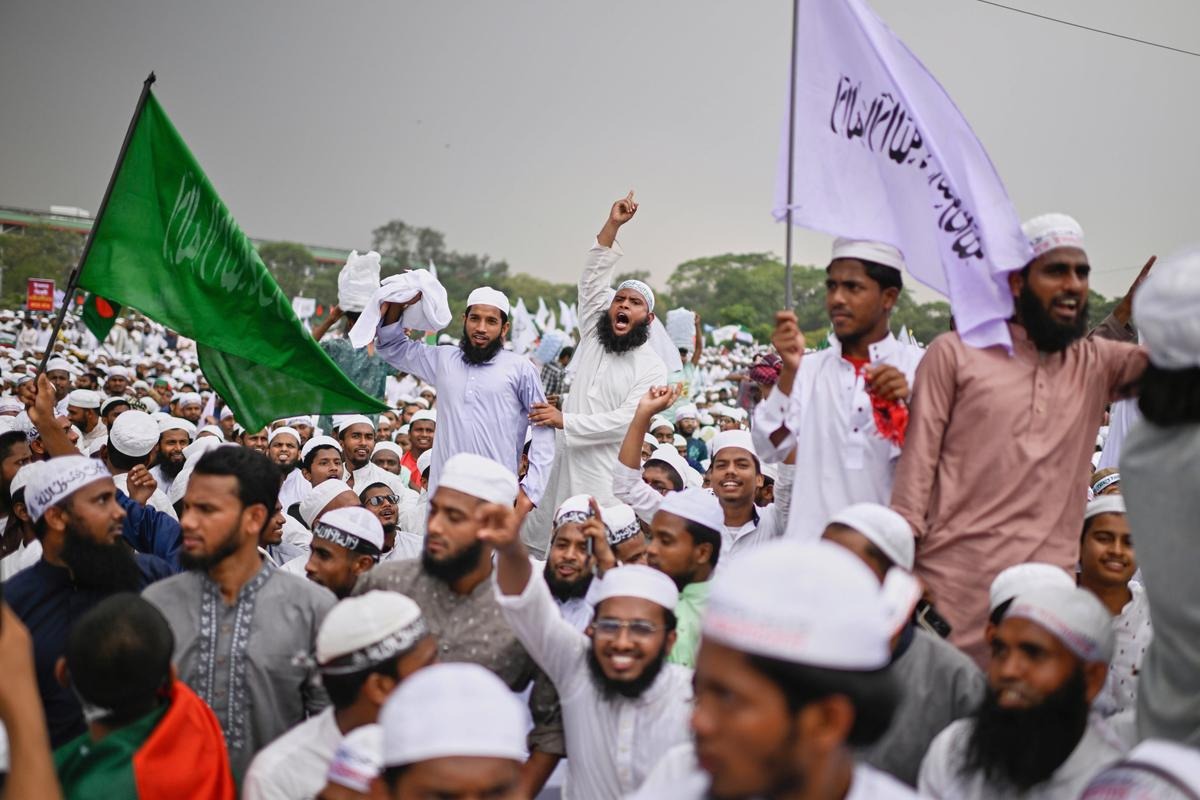
Amidst the developments in Bangladesh’s political trajectory, the resurgence of Islamists has been the one catching everyone’s attention. A country with about 90 per cent Muslim population, this surely is not supposed to be alarming. But Bangladesh is no Middle East or Central Asia — wherein religion profoundly shaped their political systems. Religion, albeit a strong influence, has more cultural and symbolic presence than a political one — whereby Bangladesh’s political establishment is influenced by principles of nationalism, socialism, secularism and democracy. Here, cultural and ethnolinguistic identity have historically taken precedence over religious one.
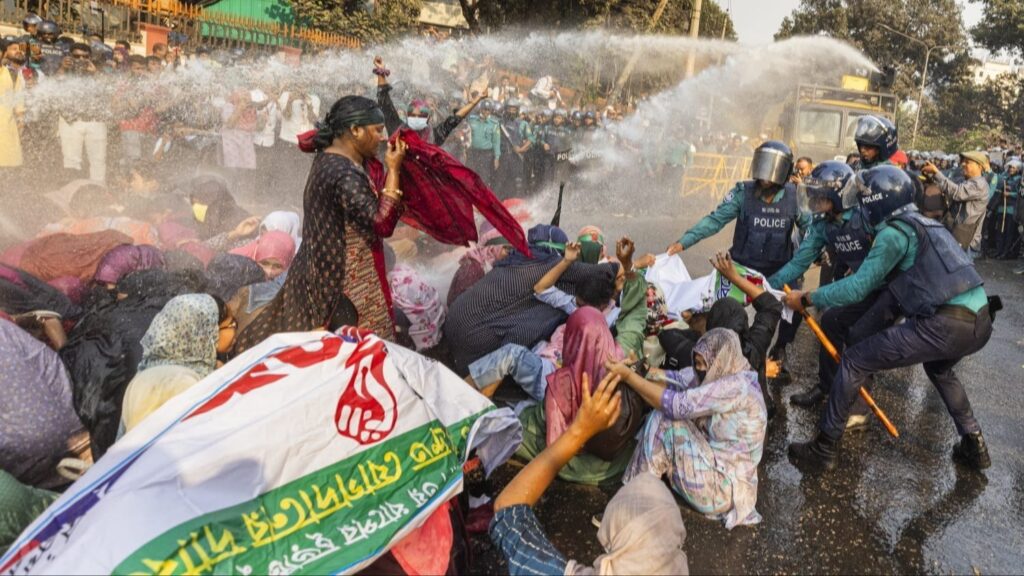
Islamists in Bangladesh seek a complete overhaul of the socio-political-legal system rooted in Islamic values and principles, contrary to the present establishment in Bangladesh. However, Islamists do not comprise a homogenous group, as they take their ideological orientation from different Islamic schools of thought, namely, Hanafi, Deobandi, Barelvi, Salafi and Sufi. Among these, Hanafi and Deobandi exert the most socio-political influence. The Islamists, initially marginalised post Bangladesh’s independence, were rehabilitated under military rule. After restoration of democracy and civilian government in 1990, some created formal political alliances while maintaining grassroot mobilisation in religious institutions and madrasas and entered the electoral field. Others took the path of militancy, launched a series of terror attacks in Bangladesh and re-configured into newer factions after facing state crackdowns and bans, especially under the Awami League government.
The recent unofficial visit of seven Islamic scholars to Afghanistan on Taliban’s invitation needs a careful assessment. The meeting was framed as seven Bangladeshi Islamic scholars observing human rights and women’s rights situation in Afghanistan in face of backlash from the West. However, one cannot overlook the heavy political intent as the meeting also prioritised strengthening ties between Islamic scholars of the two countries, to enhance diplomatic relations in future, beside cooperating on areas like trade, education and healthcare.
Following the Taliban takeover of Afghanistan in 2021, Bangladesh government (now dismantled), maintained its distance and refused to give Taliban any diplomatic recognition. Rather, it exercised caution — monitoring and countering the celebratory reactions of Islamists on social media who hailed it as a ‘triumph of Islam’. Even before the takeover, many Bangladeshi Islamist radicals were arrested by security authorities who were caught attempting to join the Taliban in Afghanistan by crossing India.
Why were Bangladesh’s Islamist influenced youth attracted to the Taliban? Because of Bangladesh’s own home-grown extremist groups that emerged in the 1980s-90s, notable being Harkat-ul Jihad Al Islami Bangladesh (HuJIB), and Jamaat-ul-Mujahedeen Bangladesh (JMB), established by fighters who joined the Taliban during Afghan jihad’s fight against Soviet invasion of Afghanistan. After these fighters returned to Bangladesh, they sought to bring the Taliban’s envision into reality—to establish an Islamic rule in Bangladesh, based on Shaira jurisprudence. These groups are also reported to have links with transnational terrorist organisations like al-Qaeda, al-Mujahideen and even Lashkar-e-Taiba (LeT). The early to mid 2000s was a period of rampant Islamic terror attacks by these groups, primary targets being NGOs and secular and cultural events that they deemed to be ‘un-Islamic’. However, most extremist organisations were checked via strict counterterrorism measures by 2007, although another wave of terrorist attacks surfaced between the period of 2013-2016.
The seven Islamic scholars who attended the meeting with Taliban included Khelafat Majlis chief Mamunul Haque, Nayeb-e-Amir (Pir of Madhupur) of Hefazat-e-Islam Bangladesh Abdul Hamid, Abdul Awal, Abdul Haque, Habibullah Mahmud Qasemi, Monir Hossain Qasemi and Mahbubur Rahman. Both Hefazat and Khelafat belong to the same Deobandi tradition and predominantly trained in Qawmi madrasas, that emphasises in Islamic scholarship independent of state regulated Alia system. In terms of core ideological beliefs, both lay strict emphasis on scriptural orthodoxy, rejection of Barelvi tradition, Sufi practices and Ahmadiya’s inclusion as Muslims and opposition to Western influences, especially on culture and education. In effect, both champions complete Islamisation of socio-cultural life.
Khelafat Majlis, founded in late 1989, emerged during the Bangladesh anti-Ershad movement. An Islamist political party, Khelafat, stated its goal of creating a national governance framework that is based on Qura, Sunnah and early Islamic Caliphates. Therefore, the party’s main target of mobilisation were Islamic scholars and aimed at creating a larger unity between these scholars and general Muslims against the secular system of governance who would push for Khelafat’s Political Islam. Its activities largely confined to anti-secular and blasphemy protests—be it organising a large mass demonstration from Dhaka to Ayodhya demanding for Babri Masjid restoration that was demolished in 1993, protest against installation of “Eternal Flame” at Suhrawardy Udyan, the anti-Taslima movement that led to her exile, the 2017 anti-Statue protest against the installation of the statue of Lady Justice from the Supreme Court premises in Dhaka.
In electoral politics, it had a minimal presence, entering into coalition with both BNP (that it opted out in 2021). Although not involved in overt terror activities, Khelafat’s hardline stance coupled with ideological leniency towards the Taliban were deemed threatening to Bangladesh’s secular principles. Its leaders, including chief Mamunul Haque, were arrested under Digital Security Act and Anti-Terrorism Act under the Awami League government for their participation in protests in anti-secular, anti-blasphemy protests, in alliance with Hefazat-e-Islam.
Unlike Khelafat Majlis, Hefazat-e-Islam is not a political party but an Islamist organisation, drawing on the same ideology and traditions like Khelafat. A coalition of more than 25,000 Qawmi madrasas across Bangladesh, Hefazat emerged in 2010 as a reaction to Awami League government’s Women Development Policy (2009) draft giving women equal inheritance rights. In 2013, Hefazat held a massive rally by blocking roads, commerce and regular activities. Known as the Shapla Chattar siege in Dhaka, Hefazat presented its 13-point demands that included introduction of blasphemy laws, gender segregation in public, declaring Ahmadiyyas as non-Muslims, and curbing every un-Islamic activity, to state a few.
Following Jamaat’s decline in Bangladesh under Awami League’s government, Hefazat’s emergence was seen as the rise of a new radical Islam in Bangladesh and this 2013 siege, a pivotal moment of radical Islamists urban mobilizational efforts directly challenging the secular state authority. Other notable protests are the anti-statue protest of 2017, anti-Modi protest in 2021, the latter turning violent and the death of 17 people. The leaders of Hefazat-e-Islam were meted the same treatment as its ally Khelafat, who provided logistical and ideological support to Hefazat’s programmes.
Following the July Uprising and the establishment of an interim government, both Hefazat-e-Islam and Khelafat Majlis regained their position and marked its active presence in the country. Detained leaders, including Hefazat chief were released, seen as part of the interim government’s reconciliation. However, thanks to both, and its allied Islamic parties, Bangladesh has also been witnessing a series of attacks, especially on the freedom of cultural expression.
Towhidi Janata, a loosely organised group of ‘agitated Muslims’ has been notorious to wreak havoc on events like Book Fair, Lalon Fakir Mela, Basant Utsav and women’s football match. Needless to say, Hefazat and Khelafat provide backing to Towhidi that has also been making headlines recently for increasing attacks on shrines, including the exhumation and burning of body of Nurul Pagla. While these Islamic scholars were in Kabul to meet the Taliban, its leaders and activities back home organised street rallies demanding for implementation of the July Charter and declaring Ahmadiyas to be non-Muslims and a Constitutional reform that is based on Sharia.
Khelafat and Hefazat, although not a terrorist organisation, are ideologically extremist whose beliefs go against Bangladesh’s core national principles. The Taliban meeting surely is their symbolic assertion — of Bangladesh’s Islamists envision of Talibanising the country. This meeting with the Taliban also points to a future normalisation of diplomatic relations between Bangladesh and Taliban’s Afghanistan, as the interim government seems to not object to such an informal meeting. A radicalised Bangladesh under the garb of Islamists pose a serious problem for South Asian neighbours, given these factions’ ideological links not just with Taliban, but also with Pakistan. The Global South, therefore, needs to keep an open eye to such ‘harmless’ meetings.
–IANS
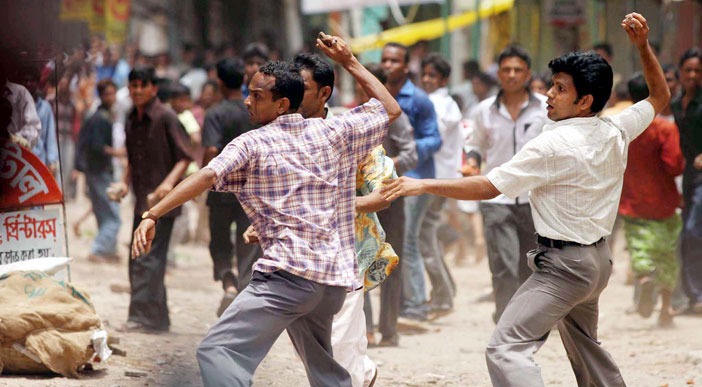
Pakistan’s geopolitics seem to have reached a full circle with the continuous terror of Tehrik-e-Taliban Pakistan (TTP).Founded in 2007, the TTP is a jihadist militant organisation whose prime target is the Pakistani military. The extremist group envisions creating an Islamic caliphate state based on the Deobandi tradition in Pakistan. Besides, the TTP supported the Taliban’s efforts in Afghanistan. Banned by Pakistan in 2008, TTP is believed to have strong ties with al-Qaeda and Taliban in Afghanistan, and its militant attacks are mostly concentrated in Pakistan’s Federally Administered Tribal Areas (FATA) and Khyber Pakhtunkhwa, bordering Afghanistan.
Following the Taliban’s takeover of Afghanistan in 2021, TTP’s activities resumed, and attacks intensified, adding to Pakistan’s own internal terror attacks. At the same time, Pakistan’s state-sponsored terror groups continue their cross-border terrorism, especially in India. The recent military operation by Pakistan in Khyber Pakhtunkhwa that killed 17 TTP militants disclosed a shocking report: one of the militants killed has been identified as a Bangladeshi national. Bangladesh media reported that the slain militant’s family had no idea of his militant background, who claimed to have moved to Dubai to earn a living. However, as per police intelligence, the Bangladeshi militant moved to Afghanistan.
Pakistani authorities reported to have hounded two or three Bangladeshi militants in their earlier operations, while these men allegedly went to Afghanistan on the pretext of religious work, where they later joined an extremist terrorist organisation. This is, however, not a lone case. In April, a 23-year-old Bangladeshi national, Ahmed Zubair, reported to be a member of Tehreek-e-Taliban, was among the 54 militants killed by Pakistan’s military forces. At least eight Bangladeshi nationals were also reported to have migrated to Afghanistan to join the TTP. The Bangladeshi digital platform also stated that Bangladesh’s own security intelligence remains oblivious to TTP’s outreach in Bangladesh, and if any camps are operating inside the country presently. Again, two individuals—33-year-old Ahmed Faisal and 49-year-old Shamin Mahfuz—were arrested in Bangladesh in July for their alleged TTP links.
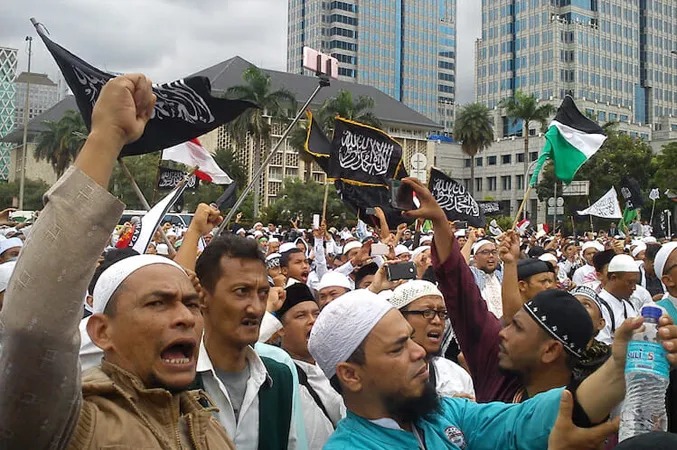
It should be noted that Mahfuz is a former leader of Jamaat-ul-Mujahedeen Bangladesh (JMB), and later founded Jama’atul Ansar Fil Hindal Sharqiya in 2019. Both individuals were also previously detained on multiple terrorism charges. From Faisal’s confession, it came to light that most of these Bangladeshi-national militants have moved to Afghanistan either via Saudi Arabia or via Pakistan to join the TTP. Mostly youth, these militants seek to establish an Islamic caliphate worldwide based on the Sharia. During this arrest, it was also learned that four Bangladeshi nationals who joined the TTP were killed on the Afghan-Pakistan border, while 25 more were preparing to leave Bangladesh to join jihad.
The confession also shed light on one Imran Haider, a senior TTP figure, as being the central figure behind the online indoctrination of Bangladeshi youth to recruit them to the TTP. Around the same time, 36 Bangladeshi nationals were reportedly detained in Malaysia for their alleged involvement in a “radical militant movement”. However, Bangladesh’s home advisor downplayed this and denied their extremist links. Since last year, South Asian geopolitics has gone through an unpredictable arc with the fall of Sheikh Hasina in Bangladesh following the July Uprising. On one hand, the interim government in Bangladesh pivoted to Pakistan, boosting bilateral ties—including trade, education, defence and intelligence sharing, while maintaining a deliberate distance with India, Bangladesh’s oldest and long-standing regional partner.
On the other hand, Bangladesh witnessed a rapid surge of Islamist groups, so long sidelined and suppressed via counterterrorism efforts of the Awami League government. Transnational extremist groups like Hizb-ut Tahrir (banned in 2009) made their presence felt in the country, notably for allegedly organising a procession by students in Dhaka under the banner of ‘Conscious Teachers and Students’, demanding the establishment of an Islamic Caliphate system in Bangladesh in October last year and the ‘March to Khilafat’ rally this March. Muhammad Yunus has also appointed individuals associated with Hizb-ut Tahrir in his interim government, sparking controversy in the political scenario.
Moreover, leaders and associates of groups like Hefazat-e-Islam, Ansarulla Bangla Team and Khelafat Majlis—arrested for their extremist links were also released under the interim government, who have now resumed their hate propaganda, to push for the creation of an Islamic state in Bangladesh based on Sharia law. These developments raise concerns about the resurrection of Islamist extremism in Bangladesh, given its history. Those from Bangladesh joined the Taliban to fight against the Soviet Union in Afghanistan, returned to their homeland in the 1980s and 90s and established extremist organisations, such as Harkat-ul Jihad Al Islami Bangladesh (HuJIB), and Jamaat-ul-Mujahedeen Bangladesh (JMB).
Needless to say, these groups not only had ideological links with the Taliban but also received logistical support and training from al-Qaeda and Pakistan-based Laskhar-e-Taiba (LeT), and their terror operations in Bangladesh were aimed at creating a Taliban-like establishment in the country. While their activities were crippled due to counterterrorism measures by 2007, Bangladesh remained under periodic terror attacks, witnessing a surge from 2013-2016. The political changes in Bangladesh following Hasina’s deposition further strengthen concerns of Islamist extremists’ comeback in the country, as evident from the above-stated reports.
The recent visit of seven Islamic clerics, including the Khelafat Majlis chief and Nayeb-e-Amir (Pir of Madhupur) of Hefazat-e-Islam, to Afghanistan on the invitation of the Taliban should be viewed with the same caution as the rising trend of militancy in Bangladesh. These groups share the same ideological orientation—Deobandi school of Islam—as that of the Taliban and hailed the Taliban takeover of Afghanistan as a “triumph of Islam”. While not extremist groups themselves, these parties’ ideological inclination to the Taliban and their own hardline stance on socio-cultural-political life signal a possible convergence of interests between these organisations and foreign-linked militant ones. Nevertheless, Bangladesh’s Anti-Terrorism Unit’s additional inspector general claims that there is no militant activity in Bangladesh while simultaneously stating that future militant activity cannot be ruled out either. With the election around the corner and Bangladesh’s fragile state of democracy, this rise of militancy in Bangladesh now poses the greatest security risk, not just for Dhaka but also for South Asia as a whole.One can only hope that Bangladesh’s law enforcement forces to deal with militant trends seriously without having to resort to denial. Otherwise, it would not be long before Bangladesh becomes the second Pakistan.
–IANS
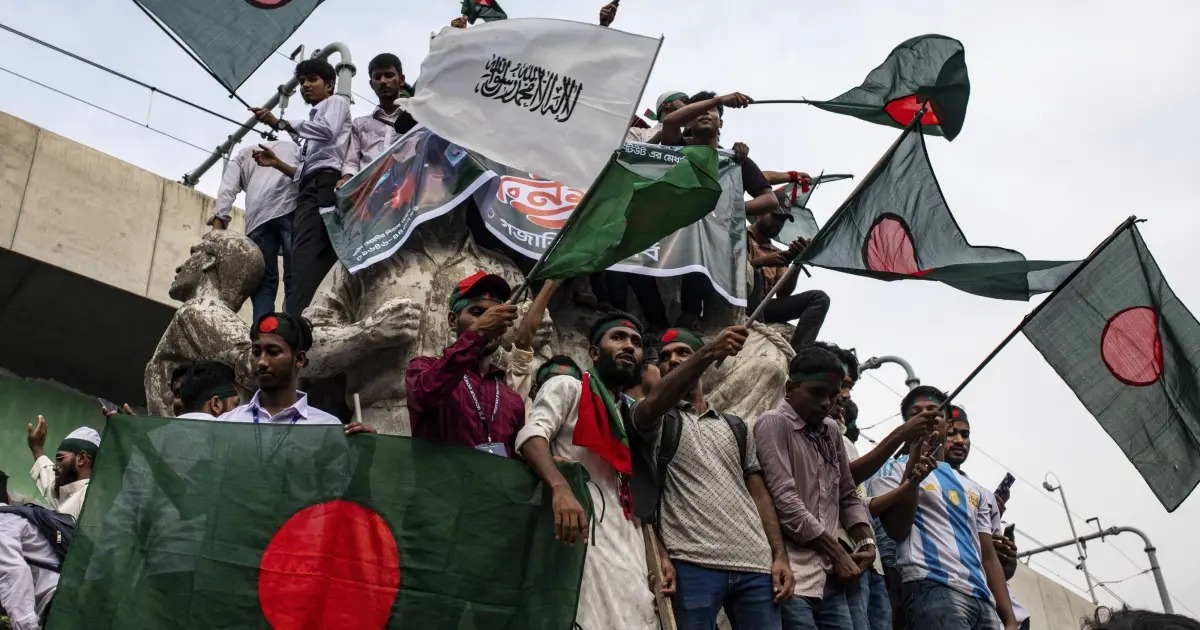
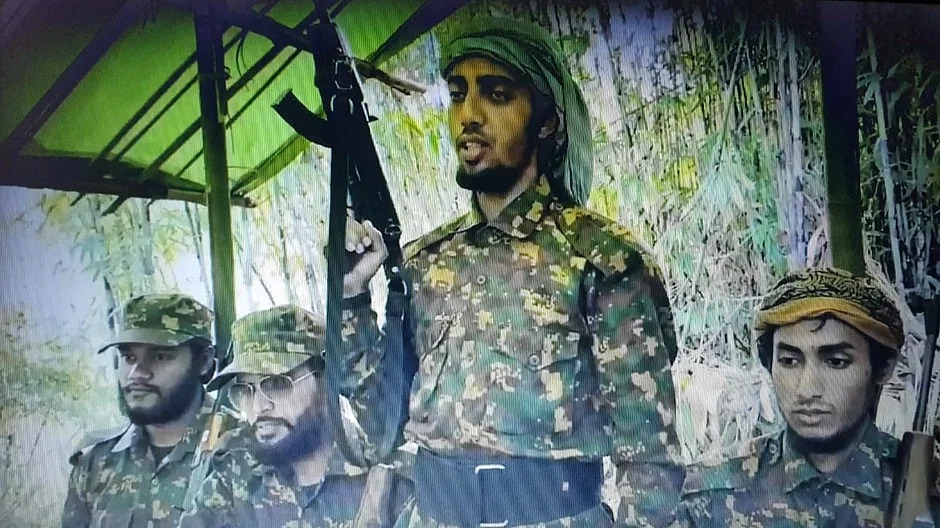
Bangladesh’s ultimate goal of forming an Islamic Revolutionary Army goes beyond internal consolidation and aims to position the country as a strategic outpost for transnational jihadist operations – serving Pakistan’s geopolitical interests and silencing secular voices, a report cited on Wednesday. It mentioned that by forging alliances with Islamist elements and portraying them as “grassroots defenders”, the regime led by Muhammad Yunus seeks to weaken the Bangladesh Army – the last standing national institution capable of resisting radical influence.
“A grave and coordinated conspiracy is unfolding within Bangladesh. Behind the façade of political rhetoric and ‘anti-discrimination’ activism, the regime of Muhammad Yunus has embarked on a project that could ignite the most serious security crisis in South Asia since the rise of the Taliban,” a report in leading Bangladeshi outlet ‘Blitz’ has detailed. Citing multiple sources – including regime insiders, social media disclosures, and intelligence leaks- the report indicated that an Islamic Revolutionary Army (IRA) is being formed to supplant the Bangladesh Army with an ideologically driven militia loyal to Yunus and his Islamist allies.
“This so-called ‘Islamic Revolutionary Army’ is not a mere political stunt or student enthusiasm. It represents a dangerous convergence of radical Islamism, foreign intelligence collusion, and calculated efforts to militarise civilian networks. The consequences, if unchecked, could transform Bangladesh from a moderate Muslim democracy into a launchpad for jihadist expansion across South Asia,” it stressed. According to the report, in a stunning revelation on his social media platform earlier this week, Asif Mahmud Shojib Bhuyain – “an influential as well as controversial” advisor to the Yunus regime – publicly announced the recruitment and training of 8,850 individuals across seven training centres in Bangladesh.
He outlined the programme, stating that trainees would undergo martial arts, judo, taekwondo, and firearms instruction. Hours after the post, the screenshots went viral before disappearing. Citing sources within Dhaka, the report confirmed that this marked only the first phase of a larger plan with five successive batches of 8,850 recruits each set to complete training by January 2026. “The recruitment process reportedly includes written, viva, and physical tests — all overseen by retired Bangladeshi officers with strong pro-Pakistan leanings, alongside covert representatives of Pakistan’s Inter-Services Intelligence (ISI) and Turkey’s Milli İstihbarat Teskilati (MIT),” it highlighted.
“Bangladesh’s civil society, its remaining independent journalists, and the patriotic factions within the military must act before it is too late. Once a revolutionary army rooted in ideology replaces a professional army bound by the constitution, Bangladesh will no longer be a sovereign republic – it will be a caliphate in disguise,” the report noted.
–IANS
– Arun Anand
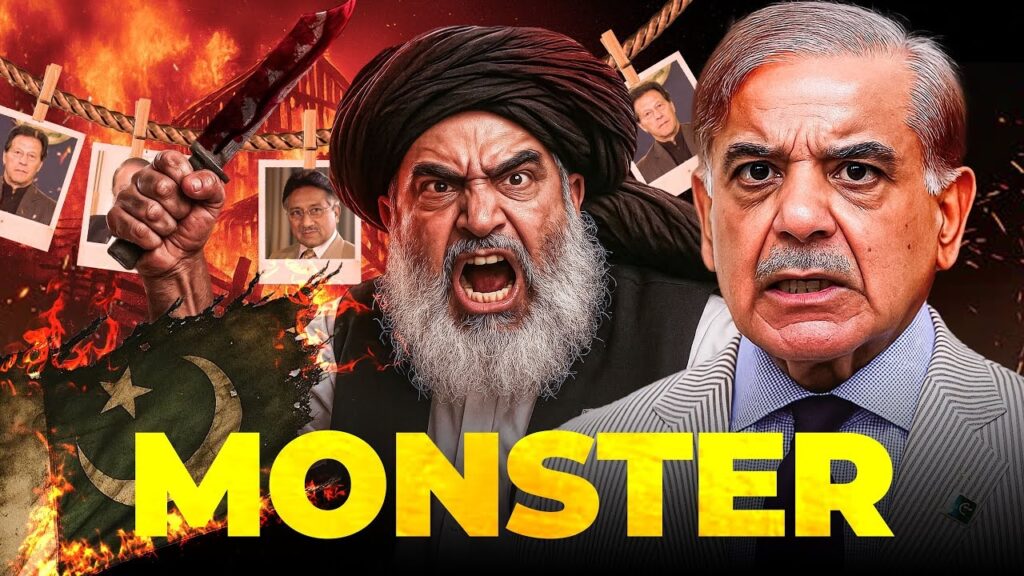
There is a dark irony unfolding in South Asia: Pakistan, long accused of nurturing militant groups as tools of regional influence, is now locked in open conflict with Afghanistan over the very monsters it helped create. The war Islamabad now wages on Afghan soil, under the pretext of destroying the Tehreek-e-Taliban Pakistan (TTP), is in many ways a war against its own reflection. For decades, Pakistan cultivated militant networks for strategic depth, funded radical religious infrastructure, and tolerated extremist ideologies under its nose. Now, those networks have turned inward, destabilizing its own borders and forcing it into the position of aggressor, violating Afghanistan’s territorial integrity and further endangering a region already trembling under the weight of instability. The roots of this crisis reach back to the 1980s, when Pakistan became the staging ground for the anti-Soviet jihad in Afghanistan. With U.S. and Saudi funding, the Pakistani military and its intelligence arm, the Inter-Services Intelligence (ISI), trained tens of thousands of fighters, funneled weapons through the tribal areas, and radicalized a generation in the name of religion and nationalism. This vast militant infrastructure did not disappear after the Soviet withdrawal—it metastasized. By the 1990s, Pakistan supported the rise of the Afghan Taliban, viewing them as a proxy to ensure a friendly regime in Kabul and to deny India any foothold. That same policy of weaponizing extremism spilled back into Pakistan’s own territory, where groups that once served Islamabad’s ambitions turned rogue, seeking to impose their own version of Islam by force.
The TTP emerged in 2007 as a coalition of various Pakistani militant factions. Its founding leader, Baitullah Mehsud, was a product of the tribal belt in Waziristan, trained in the same jihadist ecosystem Pakistan had helped sustain for decades. Initially tolerated as a buffer against local insurgencies, the TTP began to challenge the Pakistani state directly, attacking military convoys, police installations, and schools. From 2007 to 2024, TTP attacks have killed more than 85,000 Pakistanis, including civilians and soldiers, according to Pakistan’s own counterterrorism statistics. Yet the irony is inescapable: the group’s ideology, recruitment networks, and funding channels are all descendants of the very militant infrastructure that Pakistan’s military establishment built, nurtured, and exploited.
In recent years, Islamabad has sought to portray itself as the victim of cross-border terrorism, arguing that the TTP now operates from sanctuaries in Afghanistan. There is truth in the claim that many TTP fighters fled across the Durand Line after Pakistan’s military offensives in 2014 and 2017. But the more fundamental truth is that these sanctuaries exist only because Pakistan drove them there after years of manipulation and failed peace deals. Now, when the TTP stages attacks on Pakistani soil, Islamabad responds with airstrikes and artillery fire across the border, violating Afghan sovereignty and causing civilian casualties. In March 2025 alone, more than 40 civilians were reported killed in air raids in Khost and Paktika provinces. In September, Pakistani strikes near Nangarhar and Kunar killed at least 60 people, including women and children, according to Afghan local authorities. The toll is rising monthly, and the conflict risks spiraling into a wider confrontation between two nuclear-armed neighbors. The cost to human life is staggering. Since August 2021, when the Taliban regained power in Kabul, more than 1,200 people have died in Pakistan-Afghanistan border clashes, including 380 civilians.
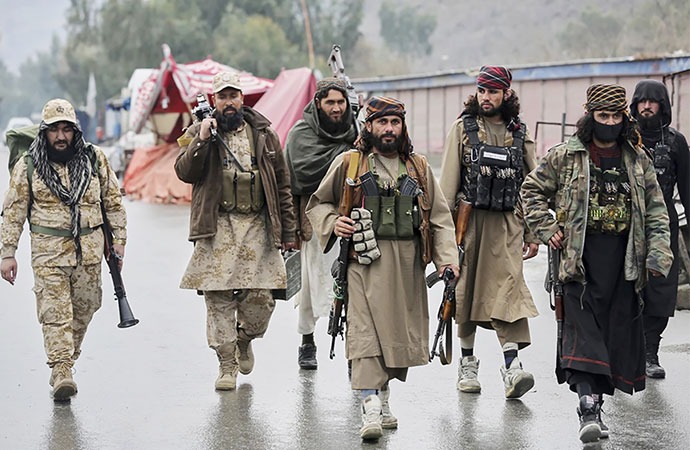
Over 600,000 Afghans have been displaced from eastern provinces due to Pakistani bombardment, while thousands of Pakistani civilians living in frontier districts have fled their homes because of TTP incursions. Trade routes between Torkham and Spin Boldak have been repeatedly closed, crippling the livelihoods of thousands of traders. The border, once porous but functional, has turned into a militarized zone of suspicion and fear. Afghan officials accuse Pakistan of acting like an occupying power, while Islamabad justifies its actions as “preventive counterterrorism.” But there is nothing preventive about indiscriminate bombing. Every missile that lands on Afghan soil deepens the resentment of ordinary Afghans and fuels the anti-Pakistan sentiment that militants thrive upon. At the core of this escalation is Pakistan’s refusal to confront its own culpability. The TTP was not born in a vacuum; it was engineered by decades of policy that saw militant groups as assets. Pakistan’s military establishment has long differentiated between the “good Taliban,” who operate in Afghanistan and serve Islamabad’s regional interests, and the “bad Taliban,” who attack within Pakistan. This cynical dichotomy has collapsed.
Fighters once trained for operations in Afghanistan have turned their guns inward, angry at Pakistan’s cooperation with the United States and its repression of Islamist networks. The same madrassas that produced Taliban ideologues in the 1990s continue to churn out young men steeped in extremist ideology. The result is a conveyor belt of radicalization that Pakistan itself struggles to turn off. Economically, the blowback has been disastrous. The war on terror, combined with Pakistan’s internal insurgency, has cost the country over $150 billion in lost GDP since 2001. Foreign investment has fled. Security spending consumes nearly 20% of Pakistan’s federal budget, leaving little for education, health, or infrastructure. Inflation has soared, unemployment is at record levels, and public trust in the military—the country’s most powerful institution—is crumbling. For ordinary Pakistanis, the state’s obsession with controlling Afghanistan through militant proxies has produced nothing but perpetual insecurity and poverty. The narrative that Pakistan is itself a victim of terrorism rings hollow when one remembers that it was Pakistan’s own state machinery that created, sheltered, and armed the very groups now tearing it apart.
Afghanistan, meanwhile, suffers the consequences of Pakistan’s militarism. Its fragile economy, already devastated by sanctions and international isolation, is further strangled by border closures and bombings. Afghan villages in Khost, Paktia, and Kandahar have been hit multiple times by Pakistani airstrikes that claim to target TTP hideouts but often strike homes and mosques. The death toll in Afghanistan since Pakistan began its cross-border operations in 2022 has surpassed 2,000, including hundreds of women and children. Each attack drives a deeper wedge between the two nations and pushes Afghanistan closer to resentment, revenge, and radicalization. In the absence of legitimate international mediation, these tit-for-tat escalations could ignite a full-blown war, one that would destabilize the entire region. The implications for South Asia’s peace are dire. With India and Pakistan already locked in a frozen hostility, any further militarization of the Pakistan-Afghanistan border threatens to open another front in the regional security crisis. The influx of refugees, cross-border militant flows, and smuggling networks will exacerbate tensions across Central Asia. China, which has invested billions in the China-Pakistan Economic Corridor, faces growing insecurity in its western projects. Iran, too, fears the spillover of militancy into its eastern provinces. South Asia’s peace, already hanging by a thread, could unravel completely if Pakistan continues to externalize the consequences of its own policies.
The argument that Pakistan is the epicenter of global militancy is not mere rhetoric—it is borne out by data. Of the world’s twenty most active terrorist groups identified by international monitoring agencies in 2024, at least six originated or operate primarily from Pakistani soil. Pakistan remains the only country where three distinct Taliban movements—Afghan Taliban, Pakistani Taliban, and various splinters—coexist, often with overlapping logistics and ideological networks. From Lashkar-e-Taiba and Jaish-e-Mohammed to the Haqqani Network and TTP, these groups share the same genealogical tree: nurtured by Pakistan’s security apparatus under the illusion of strategic control. The result is a self-perpetuating cycle of violence that has not only consumed Pakistan but also undermined peace from Kabul to Kashmir.
Pakistan’s strategy of plausible deniability—funding, training, or tolerating militants and then denying responsibility—has reached its end. The international community increasingly sees Pakistan not as a victim of terrorism but as a hub of it. Its actions in Afghanistan—airstrikes, cross-border raids, violations of sovereignty—expose its desperation to contain a monster that no longer obeys. The TTP’s resurgence is the final proof that Pakistan’s policy of using terrorism as an instrument of statecraft has imploded. The creator has lost control of its creation.
The tragedy is that ordinary Pakistanis and Afghans pay the price. In both countries, generations have known nothing but war, displacement, and loss. The children of the madrassas and refugee camps, born into poverty and indoctrination, become the cannon fodder for wars they never chose. Every time a bomb falls, another cycle of vengeance begins. The only way to end this is for Pakistan to dismantle the infrastructure of extremism it has built—its militant networks, ideological nurseries, and covert funding chains—and to accept that peace cannot be achieved through manipulation or force. The conflict between Pakistan and Afghanistan is thus not just a border dispute or a counterterrorism campaign. It is the culmination of decades of duplicity—a nation at war with the ghosts it raised. Pakistan created the monastery of militancy, nourished it with ideology and money, and now finds itself devoured by its own creation. The flames burning along the Durand Line are not just consuming Afghan villages—they are consuming Pakistan’s own moral legitimacy, its economy, and its future. Until Pakistan confronts this truth, peace in South Asia will remain a mirage, forever out of reach, flickering behind the smoke of wars that never end.

– Arun Anand
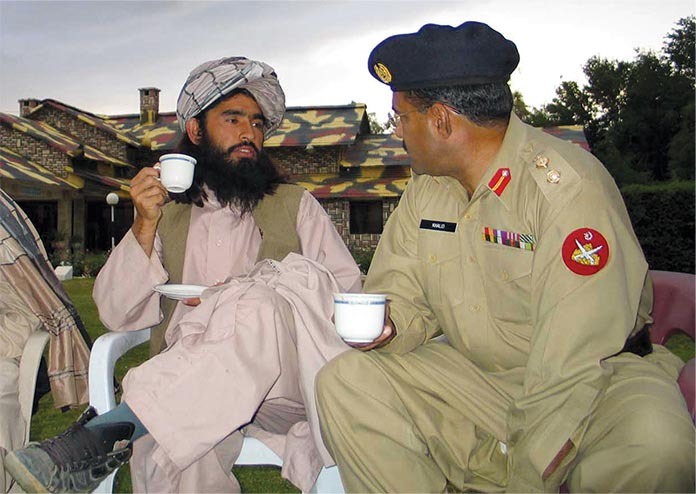
India’s investigation into the bombing of November 10 near Delhi’s Red Fort has peeled back yet another layer of a problem that New Delhi has long warned the world about: Pakistan’s enduring role as a state sponsor and safe haven for jihadist terrorism. Fifteen people have been killed in the attack, carried out just two days after the Jammu and Kashmir Police quietly uncovered a sophisticated terror module operating far from the stereotypical image of gun-wielding militants. This network, led by highly educated professionals including doctors, has now been traced directly back to the Jaish-e-Mohammad (JeM) and transnational Ansar Ghazwat-ul-Hind (an affiliate of Al Qaeda), both Pakistan-based groups fostered by the country’s military establishment.
The arrests mark one of the most troubling cases in recent years — not only because of the carnage in the heart of the Indian capital but because of what they reveal about the evolution of Pakistan’s proxy warfare machinery. A “white-collar” terror module, with operatives embedded in colleges and hospitals, radicalised digitally, guided remotely and transnationally, and supervised by handlers working under the protective umbrella of Pakistan’s security apparatus, underscores how deeply entrenched and globally connected Islamabad’s militant factories remain.
For India, the revelation is hardly surprising. For the international community, it should be alarming. Indian security agencies have now established that the Delhi module’s leaders maintained active communication with Pakistan and Turkey-based controllers ostensibly linked to JeM chief Masood Azhar. If there were any doubts about JeM’s operational revival after years of supposed crackdowns in Pakistan and India’s Operation Sindoor, the Delhi blast should put them to rest. More importantly, the module’s exposure reiterates an uncomfortable truth: despite periodic claims of counter-terror reforms, Pakistan’s soil continues to nurture and export jihadist groups as an instrument of statecraft. Masood Azhar is believed to be living comfortably in Pakistan, protected rather than prosecuted.
The timing of this exposure is equally significant. They come on the heels of Operation Sindoor, India’s unprecedented cross-border strikes on May 6 and 7 targeting terrorist infrastructures across Pakistan-occupied Jammu & Kashmir and inside Pakistan’s heartland besides several military facilities. Among the targets was JeM’s headquarters in Bahawalpur, the Markaz Subhan Allah, where ten members of Azhar’s family and four of his trusted lieutenants were killed. It was acknowledged by his senior jihadi associate Ilyas Kashmiri who is on record stating that Azhar’s family was torn apart by Indian strikes.

What was instructive then was how senior Pakistan Army officers and civilian government officials were present at funerals for Azhar’s aides, thereby exposing Pakistan’s “good” and “bad” distinction of terrorists, which it often invoked to justify selective counterterrorism efforts.It is no secret how Pakistan has used terrorism as a key component of its regional policy since decades. Though it may have started with Afghan Jihad in 1980s, it successively patronised the establishment of a network of India focused groups such as JeM, Lashkar-e-Taiba (LeT), and Hizbul Mujahideen, ostensibly to bleed India at a minimal cost through this proxy war.
Be it the infrastructure for recruitment, training, and indoctrination, it has allowed these groups to thrive under various guises like religious charities, madrasa networks, social welfare groups, and sometimes openly paramilitary outfits. For instance, LeT of Hafiz Saeed is fronted by his Jamatud Dawa charitable organisation. What sets the present moment apart is not the existence of these groups but the brazenness with which they operate under Pakistan’s current military leadership. While Islamabad routinely assures global audiences that terrorist activity has been curbed, evidence on the ground suggests the opposite: terrorist organisations are diversifying their recruitment pools, expanding digital operations, improving financial concealment, and deepening their operational cooperation.
The Delhi module’s composition of educated, professionally accomplished individuals recruited ideologically rather than preying on economically vulnerable ones demonstrates a dangerous shift. These are not fringe radicals but inconspicuous by being embedded in mainstream society, efficient at building clean identities, and less likely to attract suspicion to travel freely and avoid security red flags. This is not the work of rogue actors. It reflects a coherent strategy. This appears to be getting systematised under current Pakistan Army Chief Field Marshal Asim Munir under whom Pakistan is undergoing a dangerous power consolidation by the powerful military establishment. Munir’s actions suggest Pakistan Army’s old reliance on militant proxies returning even as the country itself grapples with heightened levels of extremism from its former proxies like Tehreek-e-Taliban Pakistan (TTP) and Baloch nationalist insurgents.
Under Munir, the military has consolidated power across civilian institutions, tightened its grip on internal dissent, and centralised strategic decision-making. This is exemplified by the recent 27th Constitutional Amendment which provides the legal cover to Asim Munir’s actions by extending him lifetime of immunity as Field Marshal and making him the overall chief of all the armed forces of Pakistan. But on the question of terrorism, the signals have been unmistakable with groups like JeM and LeT still seen as vital instruments of Pakistan’s regional calculus. Moreover, Munir’s public rhetoric has grown more hawkish, echoing the confrontational doctrines of previous generals who viewed militancy as a cost-effective extension of state policy.
In that context, the presence of senior army officials at the funerals of JeM operatives killed during Operation Sindoor was more than symbolism; it was an official endorsement of the terror policy. It signalled to the jihadist ecosystem that Pakistan’s military elite remains committed to the decades-old compact: continue fighting India and, in exchange, receive protection, funding, and freedom of movement. Internationally, Pakistan has mastered the art of performing compliance. It arrests foot soldiers while sparing the leadership. It shutters organisations only to allow them to reappear under new names like The Resistance Front (TRF) for LeT and People’s Anti-Fascist Front (PAFF) for JeM. It serves on the UN bodies on counterterrorism while patronising terrorists through the back door. The aim is not to eliminate terrorism but to manage it by tightening or loosening the tap depending on geopolitical incentives.
Unfortunately, Western governments led by the United States have often been complicit in allowing Pakistan to play this double game by prioritising short-term strategic interests. It has resulted in a perverse equilibrium where Pakistan may suffer from homegrown extremist violence and yet nurtures groups that attack its neighbours simultaneously.As such, the Delhi bombing and the terror module’s exposure should force a reassessment, as a country that cannot or will not dismantle the terror ecosystem responsible for destabilising an entire region cannot be treated as a credible partner in global counterterrorism. It is not merely a domestic law-and-order story of India but a reminder that Pakistan’s terrorist infrastructure remains intact, adaptive, and internationally connected. It is also a warning that Pakistan’s military leadership, despite rhetorical commitments to stability, continues to rely on terrorism as a tool of state policy.
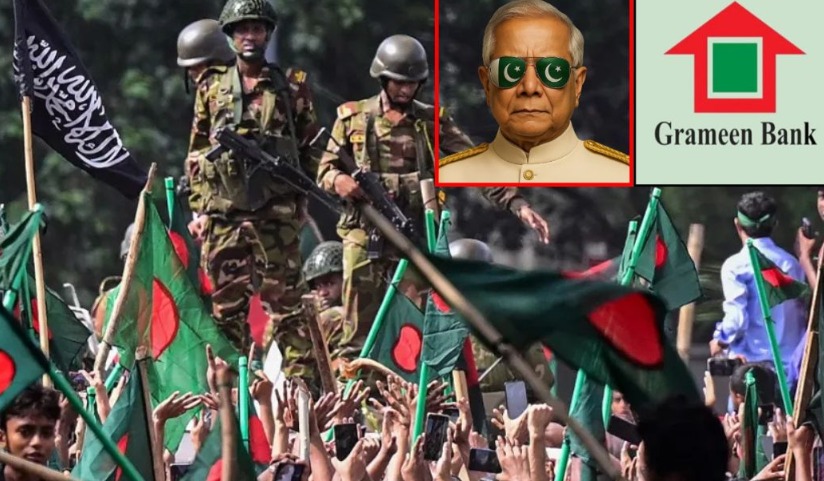
Muhammad Yunus, widely recognised as the founder of Bangladesh’s conglomerate Grameen Bank is set to come under the cloud, over ‘revelations’ of decades-old documents by a former intelligence officer, which claims that the microcredit model was actually a university research program and it was subsequently hijacked by the Nobel Laureate and “projected as his own”.
Ex-Bangladeshi intel officer Aminul Hoque Polash claims to have unearthed a series of archival documents from 1976-1983 that fundamentally challenge Muhammad Yunus’s credentials of being the founder of the Grameen Bank, the institution that was instrumental in winning him the Nobel Peace Prize in 2006.
Aminul Hoque Polash served ten years in the National Security Intelligence (NSI) and later as a diplomat, and is currently living in exile. He claims that he was forced to leave the country because of was singled out and targeted for persecution by the Yunus regime.
The documents, he claims, show that the microcredit model was actually a university research project created by junior researchers, and Yunus later hijacked it, and the papers also have his signature.
Notably, the model of Grameen Bank, under which small loans (micro-credit) are disbursed to impoverished families without any collateral, became so popular that it was replicated the world over, including some cities in the US and Europe.
The documents accessed by IANS show that the microcredit project originated at Chittagong University, where Muhammad Yunus served as a professor.
“The Rural Economics Programme (REP) was launched in 1976 with a Ford Foundation grant, and the first micro-lending experiment in Jobra village was an action-research project run by research scholars named Shapan Adnan, Nasiruddin and H.I. Latifee. Yunus was only assigned the task of deep tubewell cooperative management,” it said.
It further claims that the Bangladesh Bank adopted the microfinance model and planned a nationwide rollout before Yunus joined.
Another letter dated June 6, 1983, shows the Ford Foundation writing to Chittagong University Vice-Chancellor, approving grants to the varsity for supporting its rural finance program.
The microcredit model, which initially started as a University program in 1976, eventually turned into a national scheme after being authorised by government ordinance to work as an independent bank.
Yunus became its Project Director and, after the 1983 Grameen Bank Ordinance, assumed the role of Managing Director. By the 1990s, he acquired full control over the institution, which was allegedly developed with public funds.
The former intelligence officer, unrelenting in his attack on the Yunus regime, also goes on to claim that Bangladesh is witnessing a redux of what it saw during the 1970s.
Polash claims that the man who hijacked the famed microfinance model is now trying to usurp the state machinery, after taking over power illegally in 2024, and using it to erase obstacles, reward loyalists, and enrich his network.
“The same man who stole a rural research project now governs an entire country with the same appetite for capture,” he says with an alarming tone.
Citing multiple incidents of impropriety and misconduct, he claimed that prison sentences of criminals are being overturned, corruption cases are being withdrawn, and undue financial benefits are being extended to Grameen companies.
He also holds the Yunus regime accountable for aggressive nepotism in governance, disbursal of licences to his enterprises, tax exemption and other favours being extended to Grameen Bank.
“The same man who stole a rural research project now governs an entire country with the same appetite for capture,” he says in an alarming tone.
–IANS
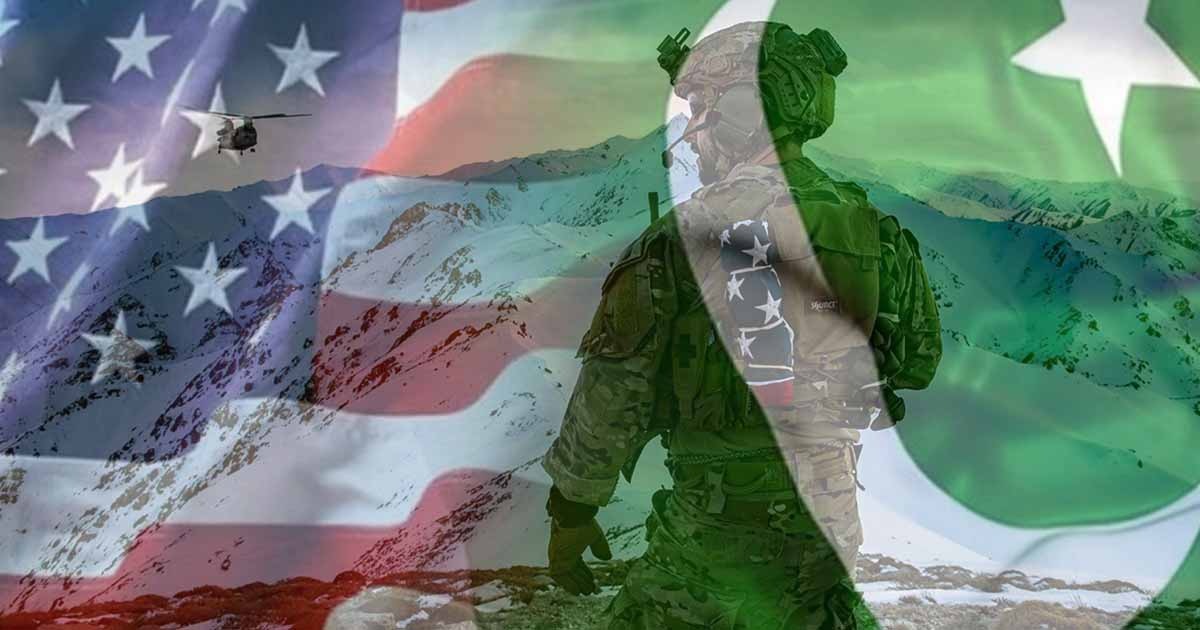
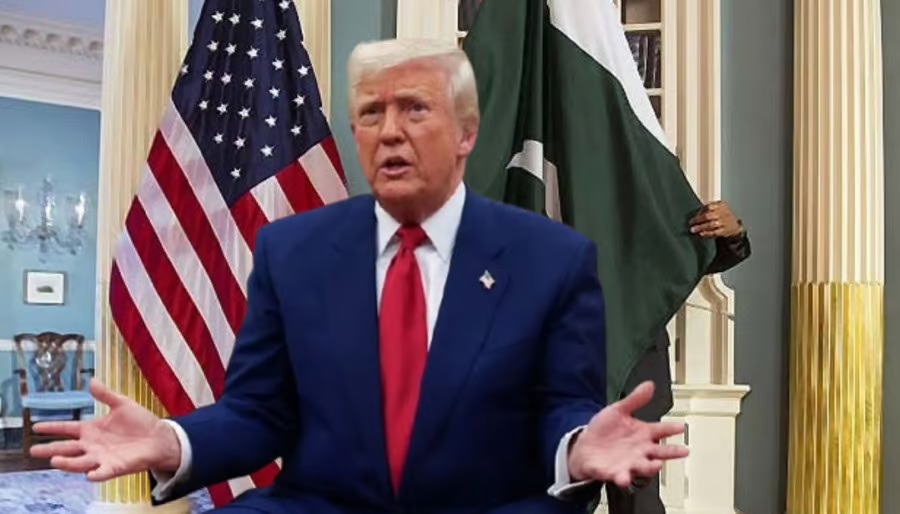
The relationship between the United States and Pakistan has long been defined by convenience rather than conviction, punctuated by moments of intense cooperation followed by spells of deep mistrust. As recent developments begin to raise eyebrows, it is becoming increasingly evident that a new chapter may be unfolding—one marked not by a sincere partnership but by calculated strategic necessity. US President Donald Trump’s reported upcoming visit to Pakistan and the high-profile visit of Pakistan’s Army Chief Field Marshal Asim Munir to Washington have sent clear signals that both sides are once again exploring a tighter embrace. But what lies beneath these gestures? Is this an authentic shift or merely a transactional dance, choreographed by geopolitical compulsions? History casts a long shadow on the US-Pakistan relationship. For decades, their engagement has followed a familiar script: Washington courts Islamabad in times of need, showering it with aid and promises, only to withdraw affection when priorities shift or Pakistan’s duplicity becomes too glaring to ignore. From the Cold War to the post-9/11 era, the partnership has rarely transcended its opportunistic core. Every time the United States found itself in a regional quandary—whether it was countering Soviet expansion or hunting terrorists in Afghanistan—Pakistan presented itself as an indispensable ally. But once the urgency faded, so did the illusion of camaraderie.
The present moment bears the unmistakable scent of déjà vu. The United States, preoccupied with China’s growing footprint and an increasingly complex Indo-Pacific matrix, sees value in reactivating its lines to Islamabad. Pakistan, battered economically and diplomatically isolated, is desperate to regain relevance and secure strategic patronage. It is a classic case of mutual convenience masquerading as renewed friendship. The question is not whether both countries need each other—clearly, they do—but whether this need is rooted in sustainable goals or another fleeting convergence of interests. Pakistan’s military establishment, the true power center of the country, has always been adept at selling its strategic geography. Wedged between Iran, Afghanistan, India, and China, Pakistan offers prime real estate on the geopolitical chessboard. But that geography comes with a price—one that Washington has paid before. Decades of American military and economic assistance have yielded little in terms of lasting reform or ideological alignment. Instead, the US often found itself underwriting a security apparatus that played both sides—hunting terrorists with one hand while harboring them with the other.
Consider the bitter legacy of Afghanistan. While publicly siding with the US in its war on terror, Pakistan simultaneously gave sanctuary to the Taliban and other extremist elements. Osama bin Laden was discovered not in a remote cave but in Abbottabad, a stone’s throw from a Pakistani military academy. Billions in aid could not buy loyalty; it merely sustained a regime skilled in hedging its bets. The withdrawal from Afghanistan in 2021, with its chaotic final days, was a stark reminder of the cost of trusting Islamabad too easily. Now, as the Biden administration recalibrates its foreign policy priorities, and with Donald Trump potentially re-entering the global stage, the temptation to revive a working relationship with Pakistan is palpable. Trump’s anticipated visit may be billed as a diplomatic outreach, but it is likely a signal to Beijing, Delhi, and even Riyadh that Washington still sees value in Islamabad. In return, Pakistan hopes to leverage this attention to escape its pariah status and secure economic lifelines.
But such maneuvering is dangerous. It rewards ambiguity and penalizes clarity. While India—America’s primary partner in the region—remains firmly in the camp of democratic values and open markets, Pakistan continues to operate in murky waters. The same military establishment now reaching out to Washington is also clamping down on democratic dissent at home. Political opponents are jailed, press freedom is strangled, and civil society remains under siege. How does the United States reconcile these facts with its professed commitment to liberal values?
Furthermore, the strategic rationale is itself questionable. If the idea is to counterbalance China’s growing influence in South Asia, relying on Pakistan is a paradox. Islamabad is deeply enmeshed in Beijing’s orbit through the China-Pakistan Economic Corridor (CPEC), a flagship component of the Belt and Road Initiative. Chinese investments have tied Pakistan’s infrastructure, telecom, and energy sectors to its northern neighbor. Any US hope of peeling Pakistan away from China is not just naïve—it borders on delusional. This is not to say that engagement with Pakistan is futile. Dialogue is necessary, especially with a nuclear-armed state teetering on the edge of political and economic collapse. But engagement must be disciplined, not desperate. The US cannot afford to repeat the mistakes of the past, offering carrots without demands for real change. If Pakistan seeks legitimacy, it must earn it—not merely by allowing high-level visits or agreeing to intelligence sharing, but by taking concrete steps to dismantle extremist networks, uphold human rights, and shift its foreign policy posture from duplicity to transparency.

Field Marshal Asim Munir’s visit to Washington may be seen as an opening salvo, a signal of Pakistan’s willingness to reset. But it is vital to remember that such resets have occurred before—with limited results. From Musharraf to Kayani, from Raheel Sharif to Bajwa, every military leader has spoken the language of reform and cooperation, only to revert to old habits once the checks cleared. There is no evidence yet that Munir represents a meaningful break from this tradition. His public statements may emphasize development and diplomacy, but Pakistan’s internal dynamics suggest otherwise. Ultimately, what makes this moment perilous is the global context. The United States is no longer operating in a unipolar world. Russia is resurgent, China is emboldened, and the Middle East is in flux. In such an environment, the margin for error is razor-thin. A misstep in Pakistan could alienate India, embolden militants, or simply waste resources in a dead-end alliance. Realism demands cold calculations—not nostalgia for a partnership that never truly was.
The US must resist the lure of tactical engagement without strategic depth. It must demand accountability, not mere access. And it must remember that short-term alliances built on necessity are seldom sustainable. For Pakistan, the message should be equally clear: the era of exploiting geography for aid is over. If it wishes to be seen as a credible partner, it must act like one. So, are the US and Pakistan recalibrating ties for strategic convenience? Undoubtedly. But convenience is not conviction. And until both sides confront the ghosts of their past dealings, this reset risks becoming just another rerun in a long history of missed opportunities, broken promises, and dangerous illusions.