
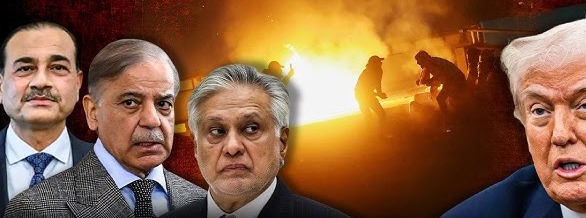
Pakistan’s claims of neutrality in the Middle East mask a deeper alignment with US strategic interests and regional power politics. Behind narratives of victimhood and sovereignty lies a pattern of dependency, propaganda, and calculated geopolitical positioning
Pakistan often portrays itself as a nation caught in the crosshairs of regional rivalries, claiming that it could be the “next target” after Iran in the Middle East. Recently, Pakistan’s Defence Minister, Khawaja Asif, publicly warned of what he described as a coordinated regional design, alleging that India, Afghanistan, and Israel could align against Pakistan in the event of regime change in Tehran and framing the evolving situation as part of a broader hostile agenda encircling Pakistan and turning it into a vassal state. This narrative, however, is misleading and does not reflect the ground realities.
In reality, Pakistan is firmly aligned with the United States and Israel.
Its foreign policy has historically been shaped by its dependency on American support, often receiving substantial financial aid in return for participating in Washington’s regional objectives. Khawaja Asif himself acknowledged that Pakistan has consistently been used as a “toilet paper” by the US—a tool for executing policies in Afghanistan and beyond. Despite this, Pakistani leadership continues to portray itself as innocent, a victim of regional dynamics, and a target of potential aggression from its neighbors.
Manufactured Victimhood and the “War on Terror” Narrative
Pakistan’s narrative of victimhood also extends to its domestic and regional security challenges. When confronted over sponsoring terror against its neighbors, it frequently claims to have suffered enormous losses—more than 90,000 people—during the “War on Terror,” blaming the United States for its misfortunes. While the human cost is real, Pakistan’s government conveniently ignores its own agency in allowing extremist groups to operate and using them strategically against neighboring countries, from Kashmir to Kandahar. It even brainwashed and radicalized the whole Afghan population through madrasa and clerics’ networks; now most of them speak Urdu, which isn’t their mother tongue—such is the level of brainwashing. This narrative serves to absolve Pakistan of responsibility while portraying it as a passive player in global politics.
Pakistan’s structural economic weaknesses exacerbate its reliance on external powers. Dollar inflows from the United States are critical for sustaining its economy. As Moeed Yusuf, Pakistan’s former National Security Adviser, openly acknowledged, “Pakistan does not have financial independence and… its foreign policy is still not free from US influence,” adding that “when you procure loans, your economic sovereignty is compromised,” which in turn shapes foreign policy choices. Similarly, Rabia Akhtar, Dean of Social Sciences at the University of Lahore, has argued that Pakistan’s economic trajectory has long been tied to leveraging its geostrategic importance to attract foreign assistance rather than building sustainable internal economic strength.
As a result, Islamabad has a clear incentive to remain in Washington’s favour. Moreover, in periods without regional crises, Pakistan has historically manufactured or amplified situations—such as highlighting terrorist threats in Afghanistan, projecting the expansion of ISIS in the region, or emphasizing instability elsewhere—to draw US attention and aid. Maintaining relevance in American eyes is a central pillar of Pakistan’s foreign policy.
Another driver of Pakistan’s regional behavior is its strategic rivalry with India. India’s growing partnership with the US in the Indo-Pacific frustrates Islamabad, prompting it to strengthen its ties with Washington to maintain parity in strategic attention. Pakistan’s obsession with “keeping up” with India often leads it to overplay its role in regional crises, creating narratives designed more for domestic and US audiences than for the truth.
The Middle East Dynamics and Contradictions
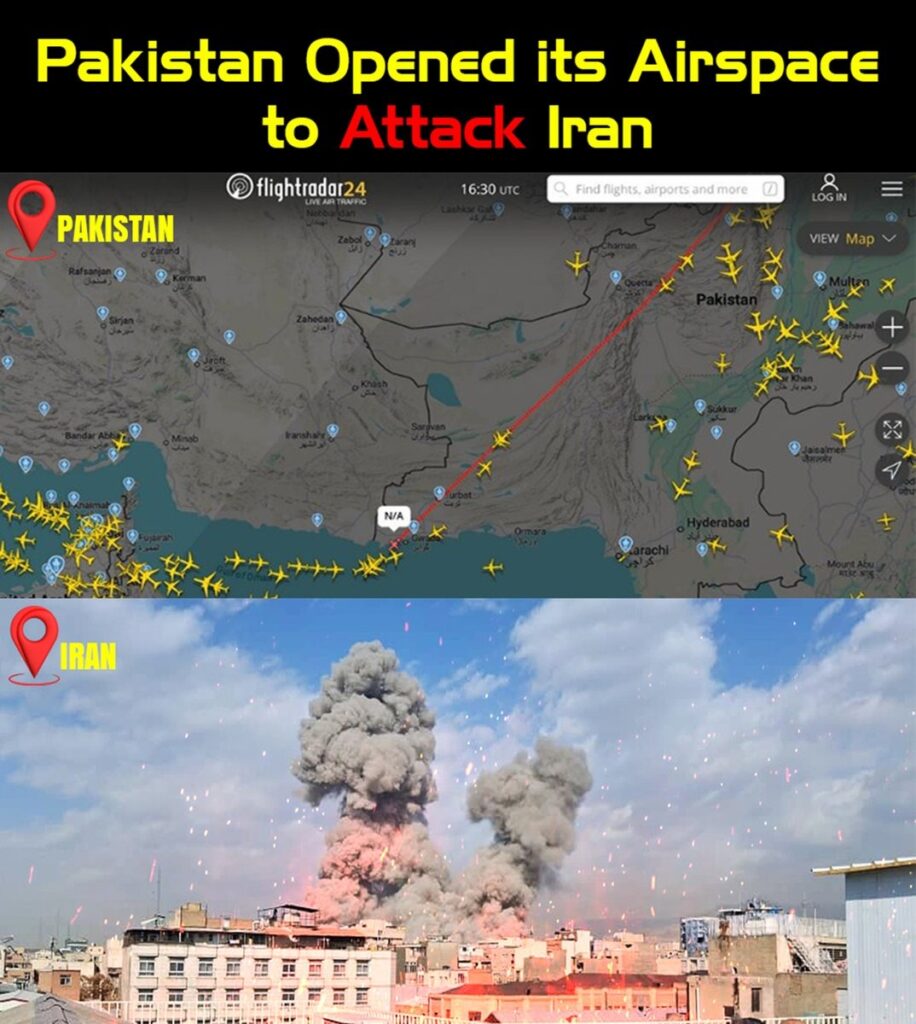
The ongoing Middle East conflict illustrates Pakistan’s duplicity. On the one hand, it assures Iran; on the other hand, it stands with the opposite camp. Pakistan recently signed a mutual defense pact with Saudi Arabia and reinforced these commitments, as its senior leaders, including Deputy Prime Minister and Foreign Minister Ishaq Dar, publicly warned that if Iran were to attack Saudi Arabia, Pakistan would stand by Riyadh under its defense obligations. Such statements make Islamabad’s claims of neutrality increasingly unconvincing. At the same time, narratives circulated by Pakistani sources claimed that Israeli and US fighter jets were approaching Pakistani airspace and warned that Pakistan would attack if they crossed it, projecting an image of vigilance and defiance. Yet parallel reports—including claims by elements within Islamic Revolutionary Guard Corps (IRGC) that Pakistan had facilitated US or Israeli operations—indicate complicity and affirmed the speculation that American forces may have been using Pakistani airspace in the broader confrontation with Iran. By amplifying warnings about potential Israeli aggression while downplaying its own strategic alignments, Pakistan appears intent on masking the extent of its cooperation with Washington and maintaining a veneer of independence for domestic and regional audiences.
Moreover, timing is crucial in geopolitics, and Pakistan has frequently used diversionary tactics. For instance, recent escalations and attacks on Afghanistan appeared to be coordinated to distract Iran from Israeli and US attacks and to weaken the Taliban so that it could help Trump in acquiring Bagram Airbase in Afghanistan, signaling Islamabad’s collaboration with the broader objectives of Washington. Meanwhile, Pakistani media and social networks amplify propaganda, portraying Pakistan as neutral or even aligned with Iran, while its defense minister openly admits long-term subservience to US interests.
Proxy Geopolitics and the Illusion of Neutrality
Pakistan has consistently acted as a “bad boy” for the US in the region, from facilitating operations in Afghanistan to serving as a key partner during the “War on Terror,” creating regional instability. Its government, including Prime Minister Shehbaz Sharif, has even nominated President Donald Trump for the Nobel Peace Prize repeatedly and left no stone unturned to praise his global leadership, and one should not forget that Pakistan is an important member of the Board of Peace and will work under the US and Israel in the international stabilization force to disarm Hamas. This highlights Pakistan’s attempts to maintain visibility and favor with American political leadership. Such actions underscore Pakistan’s longstanding strategy: prioritizing US alignment, leveraging crises for attention and aid, and manufacturing narratives that obscure its role in regional instability.
Pakistan’s claims of neutrality, victimhood, or potential targeting by Iran are largely propaganda. Its strategic choices are dictated by dependency on the US, rivalry with India, and obligations under regional defense pacts, particularly with Saudi Arabia. While Islamabad portrays itself as a victim, its leadership has repeatedly acknowledged, implicitly or explicitly, that Pakistan has been a tool of US policy. In short, Pakistan is not neutral—it remains a key US and Israeli proxy in the region, using propaganda to mislead its own people and obscure its role in shaping regional crises.
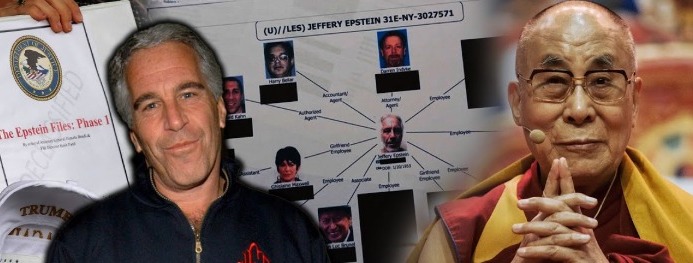
China has recently launched a new smear campaign against His Holiness the Dalai Lama.
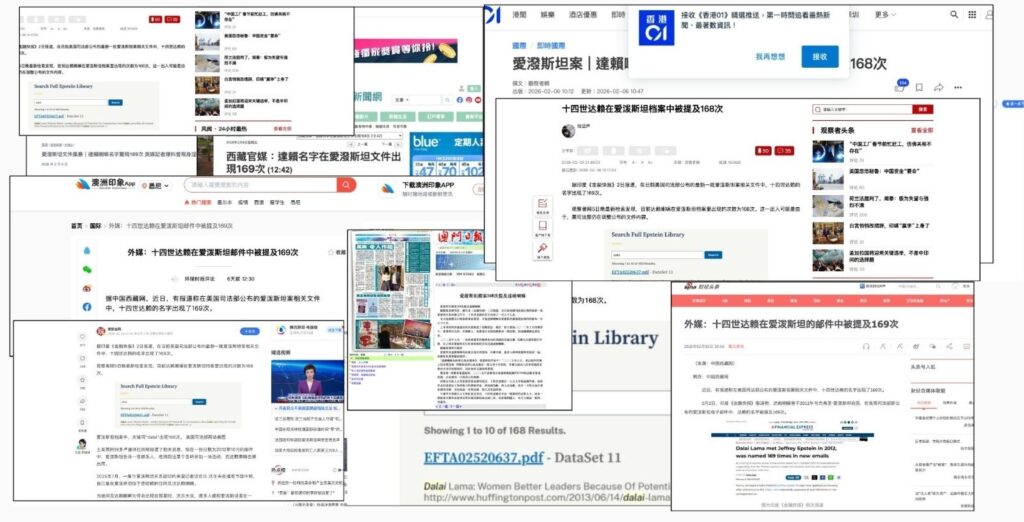
The Chinese media has highlighted that his name has been found in the Epstein files. The fact of the matter is that these files are available in the public domain, and there is no mention whatsoever of any meeting between the Dalai Lama and Epstein.
China has been consistently running a misinformation campaign against the Dalai Lama, who is not only a great spiritual master but also the global face of Tibet’s struggle against Chinese occupation. One may recall that earlier, Chinese media had mischievously portrayed the Dalai Lama’s innocent act of affection towards children as an undesirable gesture.
The release of the Epstein files has provided the Chinese propaganda machinery with another opportunity to build a narrative against the Dalai Lama. In response to the Chinese allegations, the office of His Holiness has provided a detailed explanation that should be sufficient for any rational person.
The question is: what will China gain from this latest misinformation campaign? China wants to challenge the moral authority of the Dalai Lama, who is living in exile. His country, Tibet, if independent, would be the 10th-largest state in terms of geographical area in the world.
As an exiled leader, the Dalai Lama has led by example throughout his life. He commands not just moral authority but also significant spiritual space. His followers include a large number of Westerners as well, and this has helped to create a strong constituency for Tibet’s freedom struggle.
By running such smear campaigns, China wants to erode the moral authority of the Dalai Lama and question the legitimacy of Tibet’s freedom struggle.
This is not new but a tried-and-tested pattern of the Chinese regime. During Mao’s era and the heyday of communism in the Global South, when China first attacked Tibet in 1950, it justified its aggression in the name of “peaceful liberation from feudalism”. Communist propaganda portrayed the Tibetan theocracy — led by the Dalai Lama and monastic elites — as an oppressive regime of “serfs and slaves” that needed to be overthrown to modernise the region. The result of this Machiavellian plan was a 17-point agreement, which China first imposed on Tibet. But China itself did not honour this agreement and attacked Tibet nine years later. In the aftermath of this attack, the Dalai Lama had to escape to India and, since then, he has remained there.
Coming back to the Epstein files, the Epstein archive provides fertile terrain for such narrative opportunism. Epstein’s name is widely associated with moral transgression, secrecy and misconduct by elites. Even technically correct statements, such as pointing out that the Dalai Lama’s name appears in document listings, can be framed suggestively in this emotionally charged setting. It can be difficult for the general public to distinguish between “mention” and “connection”. This strategy is similar to more general trends seen in state and non-state disinformation campaigns, where facts are selectively emphasised to suggest narratives that are not supported by the evidence.
Crucially, it seems that the messaging is appropriate for a variety of audiences. On a global scale, it coincides with a rise in mistrust of public leaders and elite institutions. Stories that suggest that “even moral icons are compromised” resonate with cynicism at a time when an increasing number of people have started distrusting moral authority. For such framing to work, it does not need to be widely accepted. It works by subtly undermining admiration and certainty.
This latest episode of Chinese propaganda reinforces traditional depictions of the Dalai Lama in China. Historically, he has been described as a political separatist rather than a purely spiritual leader in Chinese public discourse. The purpose of stories that allude to moral contradiction is to reinforce this anti-Tibet narrative. Thus, information has been weaponised and facts have been manipulated to serve the ideological agenda of the Chinese Communist Party (CCP).
The Chinese campaign should also be viewed against the backdrop of geopolitical sensitivities surrounding the succession of the Dalai Lama, who will turn 91 this year. Beijing has stated unequivocally that it intends to take the lead in identifying any reincarnations of the Dalai Lama in the future. On the other hand, the Dalai Lama has proposed alternative systems that might circumvent Chinese government regulation. Even a slight deterioration of moral authority gains strategic significance in such a high-stakes battle.
Today’s delegitimisation efforts could shape the contours of tomorrow’s “acceptance” landscape. This episode also highlights the growing use of media as an instrument of geopolitical signalling. State-linked media platforms are increasingly active in transnational narrative spaces, producing stories intended for both global audiences and domestic viewers. The goal is seldom limited to persuasion. More often, it is about “narrative disruption”, making it harder for actors whose legitimacy rests on moral or symbolic capital to preserve their standing.
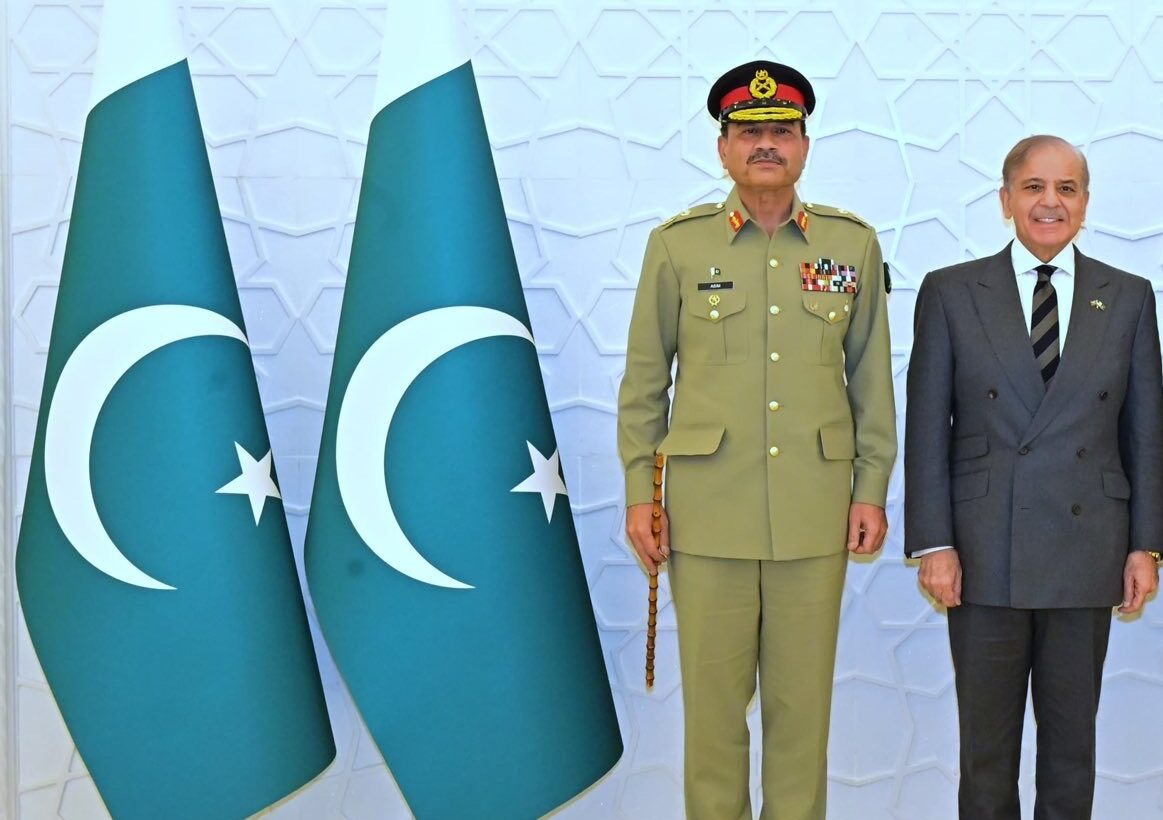
Pakistan is a state whose economy is fragile and dependent on International Monetary Fund (IMF) funds. It survives on repeated bailouts, emergency loans, and financial lifelines from friendly nations. Saudi Arabia has stepped in more than once to keep Islamabad afloat. China has long been presented as Pakistan’s “all weather friend” and economic backbone, though many now describe that relationship less as partnership and more as a debt trap. Yet in spite of all this dependency, Pakistan wants the world to believe a different story. It wants to appear economically strong, militarily confident, and financially independent. What Pakistan is doing today is not economic reform. It is rhetoric. It is showing the outside world that it is signing defence deals, selling aircraft, and exporting weapons, trying to prove that its economy is steady and its future secure. But this is an image, not a reality. The strength being displayed is performative. The weakness is simply hidden behind uniforms, fighter jets, and loud announcements.
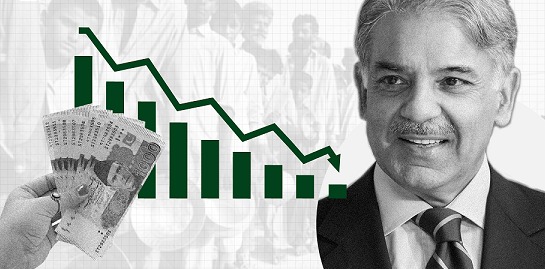
Pakistan is not fixing its economy. It is disguising its vulnerability with military symbolism. The louder Pakistan speaks about defence exports, the quieter it becomes about its real economy. Inflation, unemployment, energy shortages, and debt dominate the lives of ordinary people, yet these issues vanish from official speeches. Instead, fighter jets and arms deals take centre stage. When Pakistani leaders claim that arms exports could replace IMF assistance, it sounds inspiring. But inspiration does not pay debts. A few billion dollars in defence contracts cannot rescue an economy that bleeds far more every year through mismanagement and corruption.These statements are not financial strategies. They are emotional distractions. For a struggling population, this messaging is powerful. It tells them: we are not weak, we are respected, the world is buying from us. It is national pride used as economic anesthesia. The pain is real, but the narrative numbs it. The arms industry becomes a showcase, not because it is saving Pakistan, but because it is one of the few areas where Pakistan can still claim competence. And so, it is inflated, glorified, and sold as proof of national revival.
The JF-17 fighter jet has become the symbol of Pakistan’s supposed rise. It is constantly described as “combat-proven” and “battle-tested,” especially in relation to India. But the aircraft itself is not extraordinary. It is affordable, basic, and politically convenient. Its
value lies in accessibility, not superiority. Yet Pakistan markets it as if it were a technological triumph. Conflict is used as certification. War is turned into advertising. The message is simple: we fight, therefore we are strong. This logic is dangerous and dishonest. It transforms instability into pride and tension into marketing. It ignores the aircraft’s limitations, past safety concerns, and modest capabilities. But in Pakistan’s narrative, facts matter less than perception. The jet is no longer just a machine. It is a storytelling tool. It allows Pakistan to say: We are not just borrowers. We are sellers. We are not desperate. We are capable. The tragedy is that this confidence exists mostly in speeches.
Look at where Pakistan is selling its weapons. Libya. Sudan. Regions torn apart by civil war and instability. These are not healthy markets. They are survival markets. Pakistan is not exporting to strong economies. It is exporting to broken states. This reveals the real nature of its defence trade. It is not a mark of global trust. It is a sign of opportunism in chaos. Pakistan is positioning itself as a supplier to conflict, not stability. And then there is Bangladesh. Any military cooperation here is less about commerce and more about politics. It is aimed directly at India. It is meant to disturb regional equations and reopen old wounds. Even a small deal carries massive symbolic weight. Against India, Pakistan’s defence exports become a narrative weapon. Not a military one, but a psychological one. They are meant to say: we still matter, we still challenge, we still shape the region. The problem is that symbolism is replacing substance.
In Pakistan, only one institution truly thrives: the army. It is the strongest, richest, and most powerful organization in the country. Defence exports do not uplift the people. They strengthen the military’s grip on the economy and politics. Factories, real estate,
business empires, and now arms exports all sit within the military’s shadow. The army prospers while civilians struggle. Soldiers are celebrated while workers search for bread. Jets are showcased while hospitals crumble. This is not national development. It is institutional enrichment. Pakistan’s arms-export story is less about economic independence and more about military dominance over national narrative. The country’s future is being narrated through the language of weapons, not welfare. Pakistan wants to look powerful. It wants to be feared, respected, and acknowledged. But power without stability is just performance. Selling weapons while begging for loans is contradiction dressed as confidence. The IMF keeps Pakistan alive. Saudi Arabia keeps it solvent. China keeps it afloat. And the army keeps it loud. This is not sovereignty. It is dependency with better branding. The world is not witnessing Pakistan’s economic breakthrough. It is witnessing Pakistan’s rhetorical survival strategy. When reform is too difficult, image becomes the alternative. When prosperity is unreachable, pride becomes the substitute. Pakistan is not exporting recovery. It is exporting reassurance. Pakistan has always shown the world that it is strong, disciplined, and unbreakable. But behind that image, its people struggle with poverty, inflation, and hopelessness. The economy remains wounded and dependent, while only the army grows richer and more powerful. Fighter jets rise into the sky, but ordinary Pakistanis remain grounded in hardship. The nation looks powerful from the outside, but inside, its strength is uneven, fragile, and painfully selective.
-Arun Anand
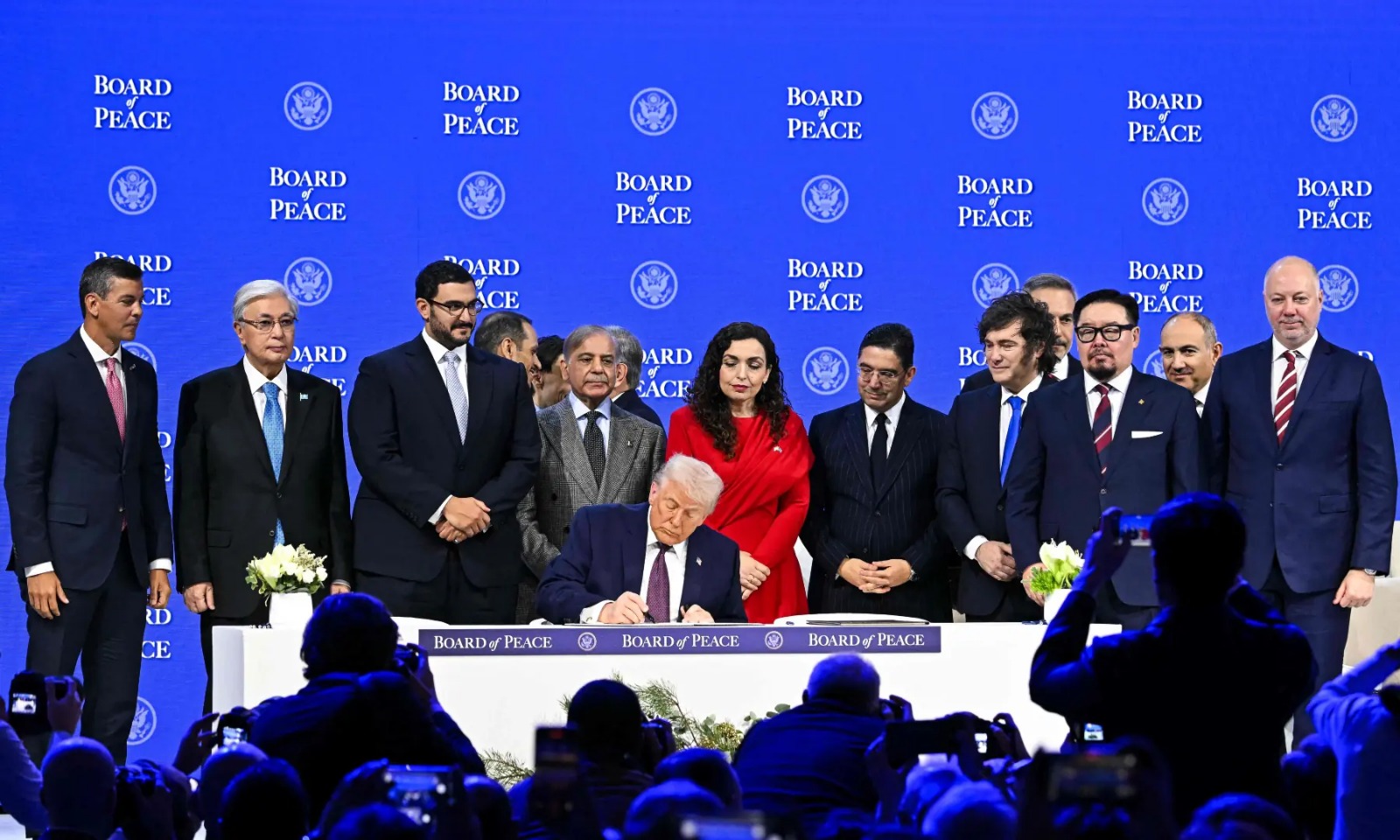
The irony of being Pakistan is that it had to pay one billion US dollars for Donald Trump’s Board of Peace seat while it seeks 2.2 billion US dollars in UAE aid. Pakistan is reeling under impoverishment, yet it spends like a country swimming in surplus. It is as if the nation is borrowing oxygen while promising to plant forests abroad. That single contradiction captures the state of affairs in Pakistan today.
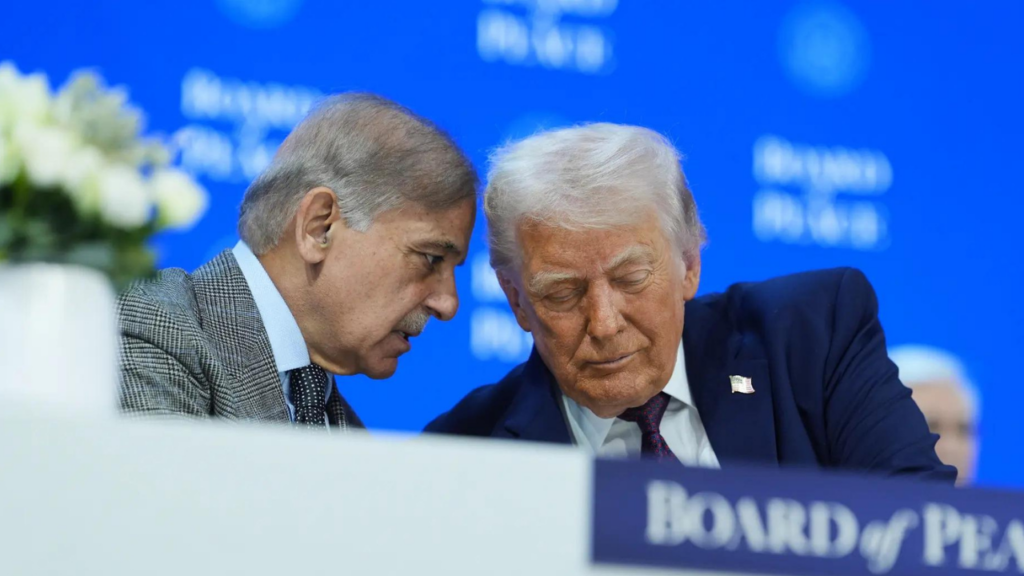
It is not anger alone, and it is not confusion alone. It is disbelief mixed with exhaustion. How does a country negotiating loan rollovers, begging for IMF relief, and struggling to keep its foreign reserves afloat suddenly find room for billion-dollar diplomacy? How does a state that asks its people to tighten their belts behave as though its own belt has no limits? The handout photograph from the Pakistan Military Academy at Kakul tells a different story. Prime Minister Shehbaz Sharif stands beside Field Marshal Asim Munir, watching young cadets march in perfect rhythm. Their boots strike the ground with discipline, their posture straight, their future seemingly secure. The image is meant to convey strength, order, and control. It is meant to say the state is steady and confident. But outside that parade ground, Pakistan feels anything but steady. It feels fragile. It feels tired. And tired nations cannot afford grand performances.
Pakistan’s external debt has crossed 125 billion dollars. More than half of the government’s annual revenue now goes into servicing loans. In 2024 alone, the country paid over 24 billion dollars just to keep creditors satisfied. That amount is larger than what Pakistan spends on education and health combined. Foreign reserves hover between 8 and 10 billion dollars, barely enough to cover two months of imports. This is not financial comfort. This is emergency breathing space. This is a nation living month to month, negotiating survival in instalments. At the same time, Pakistan remains tied to a 7-billion-dollar IMF program that dictates its electricity prices, fuel costs, and fiscal discipline. Interest rates are still painfully high, close to 20 percent, choking businesses and discouraging investment. Electricity tariffs are among the highest in South Asia, forcing families to choose between cooling their homes and feeding their children. Fuel prices shape food inflation, and food inflation shapes despair. Development spending continues to shrink, not because it is unnecessary, but because debt leaves little room for growth. And yet, in the middle of this financial suffocation, Pakistan has found roughly one billion dollars to become a permanent member of US President Donald Trump’s newly formed “Board of Peace,” a diplomatic initiative aimed at advancing a lasting ceasefire and reconstruction in Gaza. For oil-rich nations and financially stable economies, a billion dollars is a strategic investment. For Pakistan, it is borrowed confidence. It is a promise made on credit.
The government presents this as moral leadership. It says Pakistan is standing with Gaza and asserting its diplomatic relevance. Morally, the intention is difficult to oppose. Pakistan has always supported the Palestinian cause, and public sentiment overwhelmingly favors justice and peace for Gaza. But morality without economic realism becomes dangerous. A country drowning in debt cannot pretend to be a lifeboat for the world. Compassion does not disappear when finances are tight, but responsibility must grow sharper. This is where the contradiction becomes painfully human. Over forty percent of Pakistan’s population now lives near or below the poverty line. International estimates show that more than twelve million Pakistanis slipped into poverty during recent inflation shocks. Food inflation once crossed forty-five percent, and although official numbers show moderation, market prices remain stubbornly high. Ask any household, and they will tell you that groceries still cost more than they can comfortably afford. Cooking oil, flour, rice, pulses, and vegetables have all become careful calculations rather than casual purchases. Electricity bills now swallow entire salaries. Gas shortages in winter push families back to burning wood and coal. Healthcare costs delay treatment, turning small illnesses into lifelong burdens. Education expenses force parents to choose which child can continue studying and which must stay home. Youth unemployment remains underreported, and graduates increasingly view migration as the only exit from economic suffocation. This is not laziness. This is survival instinct. Child malnutrition remains alarmingly high, hovering near thirty-eight percent. Millions of children remain out of school. Clean drinking water remains inaccessible to tens of millions. These are not abstract figures. These are silent emergencies unfolding in homes where hope has become fragile. In this reality, a billion-dollar diplomatic seat feels distant and disconnected. It feels like a luxury bought with borrowed money while the kitchen remains empty.
People are not rejecting peace. They are rejecting hypocrisy. They are asking how a state that cannot stabilize electricity bills can stabilize international conflict. They are asking how a government that struggles to subsidize flour can afford to subsidize diplomacy. They are asking why their suffering must become the financial foundation for elite prestige. This is not selfishness. It is fatigue. It is the tiredness of people who have been asked to sacrifice for decades while seeing little improvement in return. Foreign Minister Ishaq Dar has defended the move, saying Pakistan’s membership aligns with its support for the Gaza Peace Plan and may help translate hope into concrete steps toward a permanent ceasefire. The language is noble, but the economic reality remains brutal. A country that cannot control its own inflation, debt, and unemployment cannot project sustainable influence abroad. Influence does not come from paying to sit at tables. It comes from stability that others respect.
There is also a quieter irony embedded in this decision. Pakistan is seeking financial relief from the UAE while joining a board that includes the UAE as a fellow member. It sits at the same table as both borrower and partner. That dynamic matters. It shapes who speaks confidently and who speaks cautiously. Pakistan enters not as an equal power but as a financially dependent participant seeking validation. That weakens its position rather than strengthening it. This is why the decision feels more like performance than policy. It is diplomacy designed to appear bold rather than diplomacy grounded in capacity. Pakistan is trying to look influential while financially vulnerable. That contradiction is visible to the world and painfully felt at home.
The danger lies not only in this decision but in the precedent it sets. If Pakistan pays to belong today, it will be expected to pay tomorrow. If prestige becomes something that must be purchased, then foreign policy becomes a marketplace. And Pakistan, operating on loans and rollovers, cannot afford to shop for recognition. This is how debt becomes policy, and policy becomes hostage to creditors.
Support for Gaza could have been delivered through humanitarian aid, diplomatic advocacy, political lobbying, and moral alignment. These actions require far fewer resources and carry genuine moral weight. A billion-dollar permanent membership feels excessive, especially for a country still recovering from the brink of default. It feels less like peace-building and more like prestige-buying. Prestige, for a poor nation, is the most expensive addiction.
The photograph from Kakul remains striking. It shows discipline, youth, and national pride. But strength today is not measured by how polished a parade looks. It is measured by fiscal discipline, economic credibility, and public trust. A parade cannot hide unpaid bills. A uniform cannot cancel inflation. A ceremony cannot replace stability. Pakistan does not lack compassion. Its people donate generously during floods and disasters. They stand with Gaza emotionally and politically. They carry deep empathy for suffering beyond their borders. What they cannot accept is being asked to fund international symbolism while their own lives grow smaller. They want dignity at home before prestige abroad.
This decision feels like a country trying to sound powerful while negotiating survival in private. It feels like borrowed confidence. It feels like standing tall on financial tiptoe. The tragedy is not that Pakistan wants peace. The tragedy is that it is trying to buy relevance instead of building stability. Stability is the only form of power that lasts. Everything else is temporary.
Leadership is not just about showing up internationally. It is about protecting your people domestically. When a government can control inflation, create jobs, stabilize energy prices, strengthen schools, and support hospitals, then its voice abroad carries authority. Until then, diplomacy risks becoming theatre. Peace is priceless. Gaza deserves justice, dignity, and reconstruction. But a nation drowning in debt cannot pretend to be a global rescuer. You cannot pour from an empty cup. You cannot save the world while starving at home. You cannot borrow for survival and spend for prestige without consequences. Pakistan stands today between symbolism and survival. The government has chosen symbolism. The people are choosing endurance. History will decide whether this moment was courage or miscalculation. For now, it feels like a fragile economy carrying a heavy costume, trying to perform strength while quietly asking for breath.
-Arun Anand
The American-led post-World War II order has been built upon the sustained rhetoric of normativity, which includes democracy, governance, and human rights, but it practises geopolitics in a far older language: utility. Nowhere is this dissonance more visible than in the contrast between how the West treats Venezuela and how it engages Pakistan.
Both countries are repeatedly invoked in the US and Western security calculus, are associated with illicit networks, and sit uneasily with liberal democratic norms. Yet one is publicly disciplined as a democratic deviant, while the other is quietly accommodated as a strategic necessity. This asymmetry is not accidental. It reflects how democracy has become a selective instrument rather than a consistent universal principle of Western foreign policy.
Venezuela’s position in the Western imagination is shaped more by its symbolism than by its material power. Over the past decade, it has been framed as a cautionary tale of democratic backsliding, economic mismanagement, and narco-state behaviour. Western governments have been vocal in condemning electoral irregularities, restrictions on opposition parties, and the concentration of power in the executive’s hands. Sanctions regimes have followed, justified as necessary pressure to restore democratic order.
There is, of course, substance to these concerns. Venezuela has become a significant transit corridor for cocaine flowing from Colombia to Europe and West Africa. According to the UN Office on Drugs and Crime, routes passing through Venezuela expanded sharply after 2015, aided by weak state institutions and collusion at lower administrative levels. The US Drug Enforcement Administration has repeatedly flagged the role of Venezuelan territory in cocaine trafficking networks linked to Latin American cartels. These activities have destabilised neighbouring states and fuelled organised crime beyond the region.
Yet it is also essential to keep the scale of this threat in perspective. Venezuela is a transit state, not the global centre of the narcotics economy. It neither produces cocaine nor controls the principal distribution networks that feed North American and European markets, unlike other Latin American countries. Its capacity to project narcotics as an instrument of state power is unfounded, and its political instability, while devastating domestically, does not fundamentally alter the balance of power in any major theatre. This distance allows Western capitals to treat Venezuela as a manageable problem, one that can be addressed through sanctions, rhetoric, and diplomatic isolation without incurring high strategic costs.
Pakistan occupies a very different category. It is not merely a troubled democracy or an authoritarian-leaning state. It is a nuclear-armed country of over 240 million people, embedded in one of the world’s most volatile regions, and historically enmeshed in conflicts that have directly affected global security. Unlike Venezuela, Pakistan’s internal political arrangements are not a distant normative concern. They are intimately linked to patterns of violence, militancy, and instability that have spilled across borders for decades.
The erosion of civilian authority in Pakistan is no longer subtle. Over the years, the military has evolved from an arbiter to a manager and, finally, to a de facto ruler of the political system. Elections continue to be held, but their outcomes are carefully shaped. Political leaders who challenge the military’s primacy find themselves marginalised, imprisoned, or disqualified. Media outlets operate under pervasive pressure, and the judiciary oscillates between moments of resistance and strategic compliance. What remains is not a functioning civilian democracy but a controlled political space designed to preserve military dominance. Western governments are not unaware of this transformation.
The reason lies in the magnitude of the security risks associated with Pakistan. Unlike Venezuela, Pakistan has a long and well-documented relationship with terrorist organisations that operate transnationally. Pakistan’s neighbour India, and at times the United States Congress itself, have accused it of pursuing a state-sponsored terror policy. Groups such as Lashkar-e-Taiba and Jaish-e-Mohammed, designated terrorist organisations by multiple Western governments, have operated with varying degrees of tolerance within Pakistan’s security ecosystem. The Financial Action Task Force placed Pakistan on its grey list from 2018 to 2022 precisely because of persistent deficiencies in curbing terror financing and money laundering. These were not symbolic concerns; they reflected systemic weaknesses in controlling financial flows linked to violent extremism.
The human cost of this ecosystem has been substantial. The Global Terrorism Index has consistently ranked Pakistan among the countries most affected by terrorism over the past two decades. More importantly for Western interests, terror networks nurtured or tolerated within Pakistan have been implicated in attacks beyond its borders, from Afghanistan to India, and have maintained ideological and logistical linkages with global jihadist movements. These are not marginal threats. They sit at the core of post-9/11 security anxieties.
And yet, it is precisely this dangerous profile that has insulated Pakistan from democratic scrutiny. Western policymakers have long operated on the assumption that the Pakistani military, for all its flaws, is the only institution capable of maintaining a semblance of order over a deeply fragmented society and a sprawling security apparatus. Civilian politics are viewed as destabilising, prone to populism, and insufficiently reliable on issues of counter-terrorism and nuclear security. Military dominance, by contrast, offers predictability.
This logic reached its peak during the war in Afghanistan. Pakistan was repeatedly described as indispensable, even as evidence mounted of its selective cooperation and strategic hedging. The language of partnership persisted because alternatives were deemed worse. That mindset has not disappeared with the withdrawal from Kabul. It has merely been repurposed within a broader calculus shaped by China, regional stability, and nuclear risk management.
However, since Pakistan’s inception, there have been no sustained efforts whatsoever from the West to hold it accountable in this light. This is precisely why democratic leaders in Pakistan are jailed, exiled, or worse, killed if they do not work in tandem with military apparatchiks.
Here lies the core contradiction. If Venezuela is castigated for enabling narcotics flows that undermine governance and security, Pakistan’s far more consequential role in sustaining terror infrastructures should attract even greater concern. The difference is not in severity, but in inconvenience. Pressuring Pakistan on democracy risks alienating an actor whose cooperation, however ambivalent, is still considered necessary. Venezuela offers no such dilemma.
This selective morality carries long-term costs. By normalising military rule in Pakistan, the West is not neutral; it is actively shaping incentives. It signals to Pakistan’s generals that political engineering carries few international penalties as long as strategic commitments are upheld. It weakens civilian actors by depriving them of external support precisely when internal checks are being dismantled. And it reinforces a governance model that has repeatedly failed to deliver stability, economic growth, or social cohesion.
There is also a broader credibility problem. When democracy is defended loudly in some cases and softly sidelined in others, it ceases to function as a normative anchor. It becomes a tool of convenience, deployed where costs are low and withdrawn where stakes are high. This erosion is not lost on other authoritarian regimes, nor on societies living under constrained political conditions. It fosters cynicism about Western intentions and strengthens the argument that values are merely a rhetorical cover for power politics.
The irony is that this approach may ultimately undermine the very stability it seeks to preserve. Pakistan’s repeated cycles of military dominance have not resolved its structural crises. They have deepened economic fragility, intensified centre–periphery tensions, and eroded public trust. Suppressing political competition does not eliminate dissent; it displaces it into more volatile forms. In a nuclear-armed state with a history of militant spillovers, this is not a risk that can be indefinitely managed.
The comparison with Venezuela, then, is not about absolving one or condemning the other. It is about recognising how selectively applied principles distort policy outcomes and loosen moral footing. Venezuela’s problems are real, but their global impact is limited. Pakistan’s internal authoritarianism, by contrast, intersects directly with some of the most persistent security challenges facing South Asia and beyond. Treating the former as a democratic emergency and the latter as a tolerable anomaly reveals not moral clarity but strategic myopia.
If the West wishes to reclaim credibility in its democracy agenda, it must confront this imbalance honestly. That does not mean identical policies for vastly different contexts. It does mean acknowledging that democracy cannot be championed only when it is cost-free. Otherwise, the language of values will continue to ring hollow, and the structures of instability that selective silence enables will remain firmly in place. Ultimately, the question is not whether the West can afford to pressure Pakistan on democratic norms. It is whether it can afford not to.
-Arun Anand
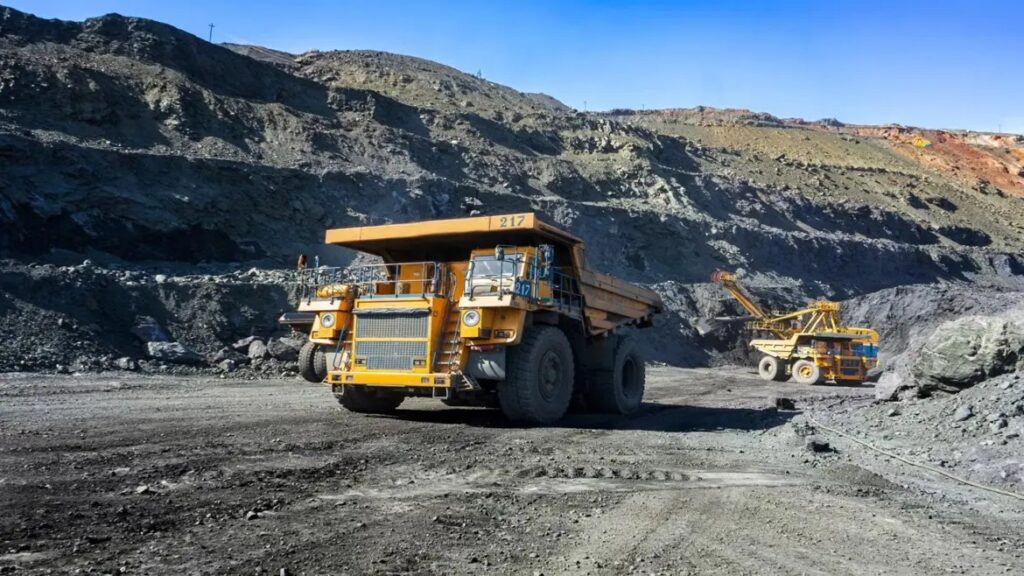
On December 10, the U.S. Chargé d’Affaires in Islamabad, Natalie Baker, announced that the U.S. Exim Bank had approved a package of $1.25 billion in financing to support mining operations at Reko Diq, one of the world’s richest untapped copper and gold deposits. On the surface, Washington framed the decision as a step toward securing global supply chains for critical minerals.
Islamabad portrayed it as a sign of renewed confidence in Pakistan’s investment climate. But for Balochistan, Pakistan’s largest province by land but its poorest by every measure, the announcement landed like yet another reminder that its natural wealth is a prize others are free to carve up.
This Exim Bank financing flows directly after two MoUs were signed on September 8, 2025, between Pakistan and the United States for “critical minerals cooperation.” The military dominated Shehbaz Sharif government heralded the agreements as a milestone. But in Balochistan, they are yet another chapter in an old story: the extraction of Balochistan’s resources by outside powers, facilitated by a central government that treats the province not as a partner but as a colony.
For decades, Pakistan has perfected a model of imperial governance in Balochistan, which combines military control, political manipulation, and economic dispossession. What is new today is not the extraction but the identity of the extractors. The United States now joins China, whose multibillion-dollar projects under the China-Pakistan Economic Corridor (CPEC) have already given Beijing expansive access to Balochistan’s ports, highways, and mineral deposits.
Pakistan’s rulers have turned Balochistan into a marketplace where global powers shop for resources while the people who live above those riches remain among the most deprived in South Asia.
Balochistan’s modern history is inseparable from the manner in which it entered Pakistan. After the forced accession of 1948, the province was governed with suspicion and repression. Islamabad treated Baloch aspirations for autonomy as rebellion, not politics. The result is a province where the most powerful institution is not the provincial assembly but the Quetta cantonment, whose writ supersedes that of any civilian office.
Even today, Balochistan’s political leadership is crafted in military corridors of Rawalpindi and the condonement at Quetta. The current chief minister, Sarfaraz Bugti, is widely viewed as a product of the military establishment, who is another local administrator empowered to manage dissent rather than address the province’s material deprivation. The result is a governance system more interested in securing resource corridors than building schools, hospitals, or representative institutions.
Under this militarized order, resource extraction has been carefully organized to ensure that wealth flows outward to Pakistan’s dominant province, Punjab, and to foreign partners courted by the military-led state. Balochistan’s natural gas from Sui fueled Pakistan’s industrial growth for decades, yet most Baloch households cook on firewood.
Today, its copper and gold fields promise to enrich foreign corporations and deliver revenue to Islamabad, while the communities living in the shadow of these mines remain jobless, landless, and under surveillance.
Even menial jobs at major projects like security guards, cleaners, construction labor, are routinely filled by workers imported from Punjab. The message is unmistakable that the state does not merely extract from Balochistan, it excludes Baloch people from even the crumbs of that extraction.
The rush by both China and the U.S. for access to Balochistan’s minerals reflects how Pakistan’s ruling elite has repositioned the province within global competition. Beijing’s footprint was first to expand, anchored by the Gwadar port and a series of infrastructure and mining agreements.
CPEC promised development but delivered a model where Chinese companies received generous concessions, security cordons were erected to protect foreign workers, and local fishing communities were pushed to the margins.
Now, Washington enters the scene, not as a counterweight to China’s influence but as another partner in Pakistan’s long tradition of opaque, extractive deals. It reflects a bipartisan plunder with Pakistan inviting multiple patrons to mine a region whose own residents are denied the most basic political and economic rights.
The most striking thing about Balochistan is how starkly its material reality contradicts its mineral wealth. Despite being mineral rich in every aspect, the province ranks at the bottom of every development index in Pakistan. For instance, the poverty appears near-universal with 71 percent of the provincial population living in multidimensional poverty. It is nearly double the national average of 38 percent and in districts like Awaran, Kharan, and Panjgur, even exceeds 80 percent.
Likewise, education is in an equally dire state. Literacy hovers around 40–44 percent, the lowest in the country, with female literacy dropping below 25 percent in many rural districts. More than 60 percent of Balochistan’s children are out of school. These are not statistics of a neglected province; they are the metrics of deliberate underdevelopment.
The story is same across healthcare with the province recording the highest maternal mortality ratio of 785 deaths per 100,000 live births. It is abysmal compared to the national average of 186.
Nevertheless, the new U.S. financing for Reko Diq along with the other critical mineral MoU is significant not because it marks a shift in Washington’s policy but because it reveals a continuity in Pakistan’s own governing logic of treating Balochistan as a frontier to exploit.
The province is secured by force, governed through proxies, and opened to whichever foreign power is willing to invest billions with no questions asked about political rights or local consent.
Even when the government speaks of “benefit-sharing,” it does not specify it that the benefit is for Punjabis and Punjabi military and political elite that dominates the levers of power in Pakistan. As such, it is not partnership but a plunder with legal paperwork.
The tragedy is not just that Balochistan’s resources are being plundered. It is that this plunder is now bipartisan, endorsed by Islamabad, welcomed by Washington and Beijing, and justified in the name of development that never arrives.
For the people of Balochistan, the empire has simply added new partners. The loot continues. The province remains impoverished. And the world’s most powerful countries now share in the spoils of a land whose own residents have yet to taste the prosperity lying beneath their feet.
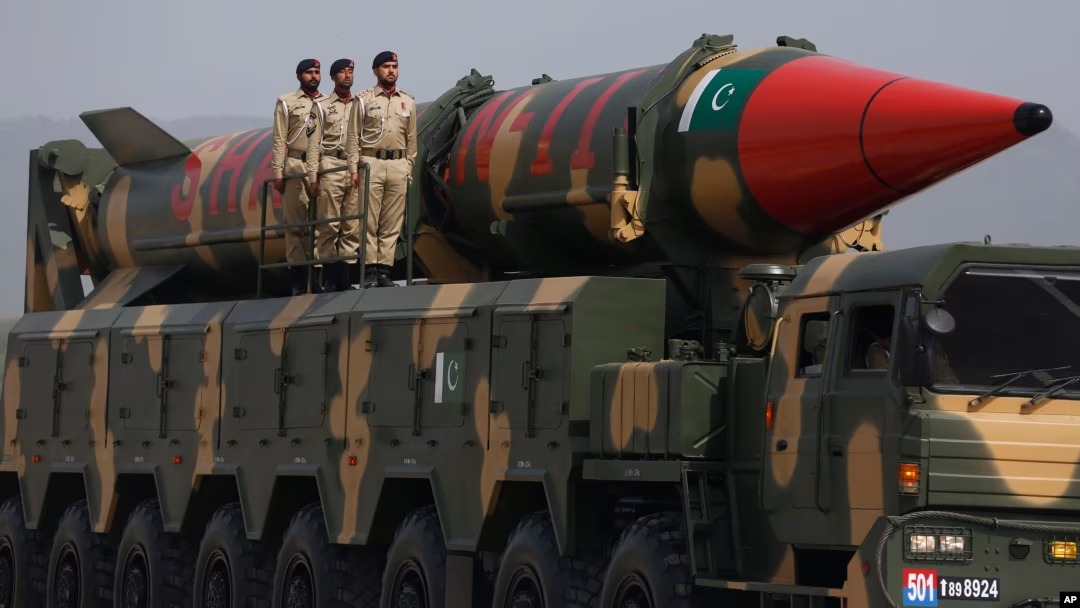
In a move that could recalibrate the fragile balance of power in South Asia, the United States has added Pakistan to its list of buyers for the AIM-120 Advanced Medium-Range Air-to-Air Missile (AMRAAM). This modification to an existing US arms contract with Raytheon represents more than just a defence transaction — it signals a potential rearmament of Pakistan’s air power at a time when the region’s security situation remains precarious.
Pakistan’s inclusion in the programme, valued at over $2.5 billion, revives a defence partnership that had largely stagnated following years of strained relations with Washington. For Pakistan, whose air force still relies heavily on its fleet of American F-16 fighter jets, the acquisition of these advanced BVR (beyond-visual-range) missiles marks a major technological enhancement. For the region, however, it raises troubling questions about stability, deterrence, and the risk of escalation between nuclear-armed rivals.
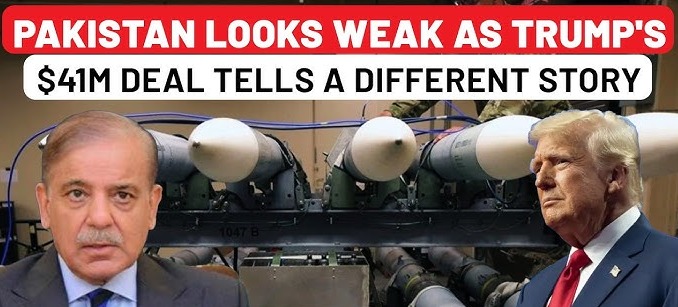
The AMRAAM, capable of engaging targets at distances beyond 150 kilometres, offers precision, speed, and a “fire-and-forget” capability that allows pilots to disengage immediately after launch. In purely technical terms, it’s a formidable addition to any air force. But in Pakistan’s context, such a system has far-reaching strategic implications.
The country’s military establishment has long pursued parity with India, despite a stark economic gap and persistent domestic crisis. Its historical record of aggressive posturing, coupled with its military’s disproportionate influence over foreign policy, makes the AMRAAM deal far more than a routine upgrade. What appears to be an innocuous arms agreement could, in reality, alter the regional deterrence equation.
South Asia’s air domain has always been sensitive — each technological advance on one side compels a countermeasure from the other.
When India demonstrated its indigenous Astra BVR missile system, it underscored its growing self-reliance and capability to defend its airspace. Pakistan’s response, however, has been to seek external suppliers to maintain parity rather than pursue domestic innovation. The AMRAAM deal thus reflects a continuation of dependence — and a willingness by Washington to overlook the destabilising consequences of arming a military whose strategic ambitions have often undermined peace.
This renewed US–Pakistan engagement also revives old anxieties about the nature of their security relationship.
Historically, American arms transfers to Pakistan have been justified on counterterrorism or defence cooperation grounds, only for those weapons to later be used to posture against India. The F-16 fleet itself, originally supplied under similar premises, became a central tool of Pakistan’s conventional deterrent against its eastern neighbour. The reintroduction of the AMRAAM into this equation risks encouraging the same behaviour — a renewed confidence in coercive diplomacy backed by advanced weaponry.
The timing of this deal is particularly concerning. Pakistan faces one of the most severe economic crisis in its history, coupled with a volatile political environment and a military establishment struggling to maintain control over internal security. Rather than focusing on domestic reform and stability, the country’s leadership appears intent on modernising its military arsenal. This suggests a misalignment of priorities — a pattern familiar to observers of Pakistan’s civil-military dynamics, where the pursuit of military parity often overrides social and economic needs. From a regional security perspective, this missile deal could reintroduce an element of uncertainty into South Asia’s deterrence environment.
India and Pakistan have fought multiple wars, experienced countless border skirmishes, and nearly stumbled into escalation after the Balakot air strikes in 2019 — an episode where Pakistan’s F-16s, armed with earlier versions of the AMRAAM, were already involved. The introduction of more advanced missile variants, such as the C8 and D3, only increases the lethality of potential confrontations.
Critics of the deal in policy circles argue that the US risks repeating historical mistakes. For decades, American support for Pakistan’s military has produced short-term tactical cooperation but long-term instability. Each wave of arms assistance has strengthened the military’s hand internally, often at the expense of democratic governance. It also emboldens the institution to act as an independent power centre — one that wields foreign policy and national security decisions without civilian oversight.
By rearming Pakistan under the guise of modernization, Washington may inadvertently empower an institution that has repeatedly destabilized both its own society and the broader region. For India, the development underscores the enduring asymmetry of US policy in South Asia.
While Washington describes New Delhi as a “strategic partner”, the continuation of military aid to Pakistan introduces contradictions into that narrative. It complicates India’s strategic calculus, forcing it to divert resources toward countering Pakistan’s enhanced air capabilities even as it focuses on its maritime and northern borders. The US, in attempting to maintain influence over both South Asian powers, risks playing both sides — a balancing act that history suggests is unsustainable.
Beyond the India–Pakistan dynamic, the broader concern lies in the precedent this sets. If Pakistan’s procurement of advanced missiles is seen as a reward for engagement with Washington, it could encourage other regional actors to pursue similar deals to maintain balance. This could accelerate an arms race in one of the world’s most militarized regions. At a time when global powers are emphasizing restraint and dialogue in conflict-prone zones, the decision to expand missile sales in South Asia sends the opposite signal.
There’s also the issue of technology security. Pakistan’s track record in protecting advanced military systems has been questioned repeatedly, with concerns about unauthorized access and proliferation. Given the country’s history of nuclear proliferation through networks linked to A Q Khan, Western analysts have often urged caution in transferring sensitive defence technologies. The AMRAAM deal, despite its conventional nature, revives those anxieties — particularly as Pakistan continues to cultivate military partnerships with China and Turkey.
If history is any guide, such arms transfers rarely deliver stability. Instead, they create new dependencies and embolden military adventurism. Pakistan’s leadership has frequently leveraged its geostrategic location to secure Western military aid, only to later pursue policies contrary to US interests. Whether during the Cold War, the Afghan jihad, or the post-9/11 era, the pattern has been consistent: tactical alignment followed by strategic divergence. The AMRAAM deal risks perpetuating that cycle under a new label of “modernization”.
The ultimate casualty of this arrangement could be peace itself. South Asia remains a nuclear flashpoint, with a long history of crisis triggered by miscalculation. In such an environment, the infusion of more advanced air-to-air missiles doesn’t enhance deterrence — it compresses decision times and raises the risks of escalation. Each side, perceiving the other as emboldened, responds with heightened alertness and counter-measures. In that sense, the AMRAAM sale isn’t merely an arms deal; it’s a strategic signal that could unravel years of cautious restraint.
Washington’s rationale may be to preserve leverage in Islamabad, but the cost could be high. By reinforcing the Pakistani military’s capabilities at a moment of internal weakness, the US risks enabling a security apparatus that has historically prioritized confrontation over cooperation. The world has seen how easily tactical weapons superiority can morph into strategic recklessness — and in a region where two nuclear-armed neighbours share a disputed border, that is a gamble no one can afford.
Ultimately, the AMRAAM deal represents a missed opportunity. Instead of encouraging Pakistan to invest in stability, reform, and regional confidence-building, it reinforces old patterns of militarization. For a country that has yet to reconcile its internal political divides or economic fragility, the pursuit of cutting-edge missiles is not a symbol of strength but of misplaced priorities.
As South Asia stands on the edge of renewed tension, the world must recognise that peace cannot be built on firepower. True stability will only come when states are disincentivized from pursuing weapons superiority and are encouraged to pursue transparency, restraint, and dialogue. The AMRAAM sale to Pakistan does the opposite — it arms a volatile region and emboldens the very forces that thrive on instability. And in doing so, it risks turning South Asia once again into one of the most dangerous theatres of modern geopolitics.
–IANS
-Salah Uddin Shoaib Choudhury

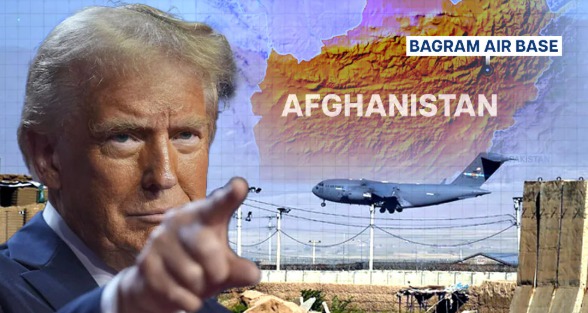
The United States looks poised to return to the very theatre it once abandoned: Bagram. What Washington calls a tactical correction could quickly become a strategic rupture for South Asia. A renewed US push – now reportedly coordinated with Pakistan’s security establishment – to retake Bagram Air Base and re-establish a foothold in Afghanistan risks detonating a broader regional conflagration, reigniting refugee flows, empowering jihadist networks and drawing Pakistan deeper into an unwinnable security quagmire. The question is not whether the dust will settle – it is how many countries, communities and lives will be buried beneath it.
US President Donald Trump – in what he frames as a move to correct the “perceived mistakes” of the previous administration – has signalled renewed US interest in re-establishing a presence at Afghanistan’s strategic Bagram Air Base. Washington’s overtures have already put Islamabad on notice to expedite preparations for possible operations that could include seizing Bagram and pushing to unseat or reshape the current Taliban-led regime. Reports indicate that, if such a military offensive goes forward, US–Pakistani forces could also strike selected targets inside Afghanistan and press against militant networks that threaten Pakistan, including Tehreek-e-Taliban Pakistan (TTP).
The Afghan Taliban reportedly reacted to these developments by ordering their Defence Ministry and the so-called Tath’heri (Purification) Commission to erase biometric records of Taliban officials and fighters – a move described in reporting based on Middle East Research Institute (MEMRI) sources. The directive, according to those reports, reflects deep concern among Taliban leaders that renewed US pressure or the collapse of talks in places such as Bagram could trigger unilateral strikes or renewed efforts to dismantle their command structures.
Purging biometric data is both practical and symbolic. Practically, the obliteration of fingerprints, iris scans and other personal identifiers would complicate outside efforts to track commanders and rank-and-file fighters; it would make it easier for militants to slip across borders, adopt new identities, or seek refuge in other networks. Symbolically, the purge signals a loss of confidence in negotiations and a preparation for the worst-case scenario: a new round of kinetic pressure that could again turn Afghanistan into a launching pad for transnational militancy. Human-rights and humanitarian organisations have long warned about the risks posed by biometric systems in Afghanistan — both when those systems fall into insurgent hands and when their erasure removes accountability and traceability for vulnerable civilians.
Intelligence reporting suggests militants are preparing multiple fallback options: some operatives may attempt to embed with groups such as Al Qaeda and the Islamic State Khorasan Province (ISKP); others may cross into Pakistan’s tribal districts and border provinces. These movements, if they occur en masse, would re-create the destabilising dynamics Islamabad confronted after 2001 – namely, the spillover of fighters, weapons and illicit finance into Pakistan’s frontier regions, with huge costs in lives, displacement and security.
There are already signs of high-stakes diplomacy and renewed security contact between Washington and Islamabad. Recent high-level interactions between US and Pakistani military and political leaders suggest a rapid re-engagement that some analysts read as a strategic gamble by Pakistan’s military establishment to regain influence and secure economic or security concessions from Washington. Whether Islamabad will accept a subordinate role in a US-led operation in Afghanistan, however, is far from certain; domestic politics, sectarian fissures, and a host of ongoing internal insurgencies complicate any Pakistani commitment.
Pakistan’s domestic situation makes any external adventure riskier. The Pakistani Army is already struggling to continue military operations in Balochistan and Khyber Pakhtunkhwa; at the same time, serious political unrest in Pakistan-occupied Kashmir (PoK) and rising opposition activity inside the country would make the reallocation of troops and resources to a new Afghan campaign politically costly and operationally difficult. Moreover, the persistent threat from TTP and other domestic militant groups means Islamabad cannot simply redeploy its security apparatus without leaving critical vulnerabilities at home. In short, the calculus that once made Pakistan a willing partner for extraterritorial operations has changed. The Pakistani state of the 2000s is not the Pakistani state of today.
If Washington and Islamabad proceed with joint offensives to retake Bagram and press into Afghanistan, the immediate human cost will be severe. Large-scale operations — air strikes, special-forces raids and cross-border pursuit — will almost certainly result in significant civilian casualties, internal displacement, and the fracturing of fragile local governance structures. The re-introduction of sustained foreign military activity would also invite responses from regional powers. Iranian and Russian policymakers have repeatedly warned that aggressive US moves in Afghanistan could escalate into broader confrontations, while China has signaled unease about renewed American military footprints in Central and South Asia.
A renewed campaign could also spur a scramble over Afghanistan’s illicit economies, particularly the opium trade. Historically, control over narcotics routes and processing has financed militias and threatened to entangle security services in corrupt economies. If Pakistan’s Inter-Service Intelligence (ISI) and other actors become further implicated in attempts to control smuggling routes or extract rents from the trade, that will accelerate domestic corruption and erode the legitimacy of state institutions.
Finally, the political fallout inside Pakistan could be profound. Opposition parties and civil society could mobilise against what they characterize as another dangerous foreign entanglement, while disenfranchised groups in restive provinces might exploit the distraction to intensify insurgencies. The combination of military overstretch, economic strain, and a renewed influx of fighters into the tribal belt would make Pakistan considerably less stable — and therefore less capable of managing the very threats a joint operation claims to resolve.
In short, the prospect of a US–Pakistan operation to retake Bagram is not simply a tactical matter of bases and battalions. It is a decision with wide-ranging geopolitical, humanitarian and domestic consequences: for Afghan civilians, for Pakistan’s fragile polity, and for the broader regional balance.
Reoccupying Bagram would be a Pyrrhic victory. Even if US and Pakistani forces briefly seize terrain, the deeper strategic problems that have long plagued Afghanistan – fractured governance, opportunistic militancy, narcotics economies, and the absence of a legitimate, inclusive political settlement – will remain. Worse, a military-first solution risks exporting instability into Pakistan and across the region.
If there is to be any hope of stabilising Afghanistan, it must rest on clear political objectives, robust humanitarian safeguards, and a regional framework that includes not only the United States and Pakistan but also Afghanistan’s neighbours.
Policymakers in Washington and Islamabad should weigh prudence over bravado: the lives lost, institutions shattered and refugee crises unleashed by another foreign intervention cannot be undone by a single airstrike or parade of proclamations.
– Arun Anand
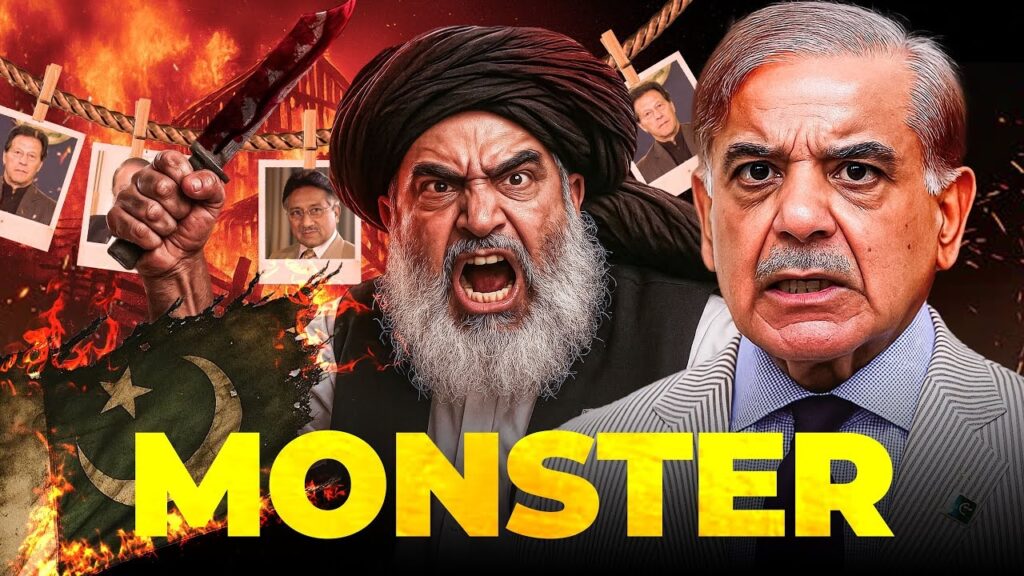
There is a dark irony unfolding in South Asia: Pakistan, long accused of nurturing militant groups as tools of regional influence, is now locked in open conflict with Afghanistan over the very monsters it helped create. The war Islamabad now wages on Afghan soil, under the pretext of destroying the Tehreek-e-Taliban Pakistan (TTP), is in many ways a war against its own reflection. For decades, Pakistan cultivated militant networks for strategic depth, funded radical religious infrastructure, and tolerated extremist ideologies under its nose. Now, those networks have turned inward, destabilizing its own borders and forcing it into the position of aggressor, violating Afghanistan’s territorial integrity and further endangering a region already trembling under the weight of instability. The roots of this crisis reach back to the 1980s, when Pakistan became the staging ground for the anti-Soviet jihad in Afghanistan. With U.S. and Saudi funding, the Pakistani military and its intelligence arm, the Inter-Services Intelligence (ISI), trained tens of thousands of fighters, funneled weapons through the tribal areas, and radicalized a generation in the name of religion and nationalism. This vast militant infrastructure did not disappear after the Soviet withdrawal—it metastasized. By the 1990s, Pakistan supported the rise of the Afghan Taliban, viewing them as a proxy to ensure a friendly regime in Kabul and to deny India any foothold. That same policy of weaponizing extremism spilled back into Pakistan’s own territory, where groups that once served Islamabad’s ambitions turned rogue, seeking to impose their own version of Islam by force.
The TTP emerged in 2007 as a coalition of various Pakistani militant factions. Its founding leader, Baitullah Mehsud, was a product of the tribal belt in Waziristan, trained in the same jihadist ecosystem Pakistan had helped sustain for decades. Initially tolerated as a buffer against local insurgencies, the TTP began to challenge the Pakistani state directly, attacking military convoys, police installations, and schools. From 2007 to 2024, TTP attacks have killed more than 85,000 Pakistanis, including civilians and soldiers, according to Pakistan’s own counterterrorism statistics. Yet the irony is inescapable: the group’s ideology, recruitment networks, and funding channels are all descendants of the very militant infrastructure that Pakistan’s military establishment built, nurtured, and exploited.
In recent years, Islamabad has sought to portray itself as the victim of cross-border terrorism, arguing that the TTP now operates from sanctuaries in Afghanistan. There is truth in the claim that many TTP fighters fled across the Durand Line after Pakistan’s military offensives in 2014 and 2017. But the more fundamental truth is that these sanctuaries exist only because Pakistan drove them there after years of manipulation and failed peace deals. Now, when the TTP stages attacks on Pakistani soil, Islamabad responds with airstrikes and artillery fire across the border, violating Afghan sovereignty and causing civilian casualties. In March 2025 alone, more than 40 civilians were reported killed in air raids in Khost and Paktika provinces. In September, Pakistani strikes near Nangarhar and Kunar killed at least 60 people, including women and children, according to Afghan local authorities. The toll is rising monthly, and the conflict risks spiraling into a wider confrontation between two nuclear-armed neighbors. The cost to human life is staggering. Since August 2021, when the Taliban regained power in Kabul, more than 1,200 people have died in Pakistan-Afghanistan border clashes, including 380 civilians.
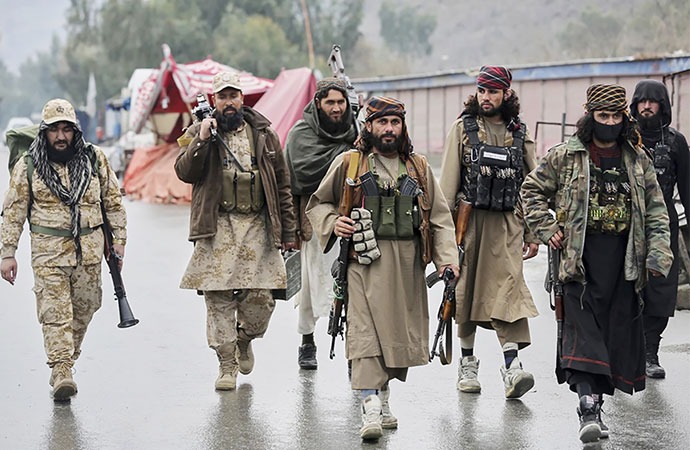
Over 600,000 Afghans have been displaced from eastern provinces due to Pakistani bombardment, while thousands of Pakistani civilians living in frontier districts have fled their homes because of TTP incursions. Trade routes between Torkham and Spin Boldak have been repeatedly closed, crippling the livelihoods of thousands of traders. The border, once porous but functional, has turned into a militarized zone of suspicion and fear. Afghan officials accuse Pakistan of acting like an occupying power, while Islamabad justifies its actions as “preventive counterterrorism.” But there is nothing preventive about indiscriminate bombing. Every missile that lands on Afghan soil deepens the resentment of ordinary Afghans and fuels the anti-Pakistan sentiment that militants thrive upon. At the core of this escalation is Pakistan’s refusal to confront its own culpability. The TTP was not born in a vacuum; it was engineered by decades of policy that saw militant groups as assets. Pakistan’s military establishment has long differentiated between the “good Taliban,” who operate in Afghanistan and serve Islamabad’s regional interests, and the “bad Taliban,” who attack within Pakistan. This cynical dichotomy has collapsed.
Fighters once trained for operations in Afghanistan have turned their guns inward, angry at Pakistan’s cooperation with the United States and its repression of Islamist networks. The same madrassas that produced Taliban ideologues in the 1990s continue to churn out young men steeped in extremist ideology. The result is a conveyor belt of radicalization that Pakistan itself struggles to turn off. Economically, the blowback has been disastrous. The war on terror, combined with Pakistan’s internal insurgency, has cost the country over $150 billion in lost GDP since 2001. Foreign investment has fled. Security spending consumes nearly 20% of Pakistan’s federal budget, leaving little for education, health, or infrastructure. Inflation has soared, unemployment is at record levels, and public trust in the military—the country’s most powerful institution—is crumbling. For ordinary Pakistanis, the state’s obsession with controlling Afghanistan through militant proxies has produced nothing but perpetual insecurity and poverty. The narrative that Pakistan is itself a victim of terrorism rings hollow when one remembers that it was Pakistan’s own state machinery that created, sheltered, and armed the very groups now tearing it apart.
Afghanistan, meanwhile, suffers the consequences of Pakistan’s militarism. Its fragile economy, already devastated by sanctions and international isolation, is further strangled by border closures and bombings. Afghan villages in Khost, Paktia, and Kandahar have been hit multiple times by Pakistani airstrikes that claim to target TTP hideouts but often strike homes and mosques. The death toll in Afghanistan since Pakistan began its cross-border operations in 2022 has surpassed 2,000, including hundreds of women and children. Each attack drives a deeper wedge between the two nations and pushes Afghanistan closer to resentment, revenge, and radicalization. In the absence of legitimate international mediation, these tit-for-tat escalations could ignite a full-blown war, one that would destabilize the entire region. The implications for South Asia’s peace are dire. With India and Pakistan already locked in a frozen hostility, any further militarization of the Pakistan-Afghanistan border threatens to open another front in the regional security crisis. The influx of refugees, cross-border militant flows, and smuggling networks will exacerbate tensions across Central Asia. China, which has invested billions in the China-Pakistan Economic Corridor, faces growing insecurity in its western projects. Iran, too, fears the spillover of militancy into its eastern provinces. South Asia’s peace, already hanging by a thread, could unravel completely if Pakistan continues to externalize the consequences of its own policies.
The argument that Pakistan is the epicenter of global militancy is not mere rhetoric—it is borne out by data. Of the world’s twenty most active terrorist groups identified by international monitoring agencies in 2024, at least six originated or operate primarily from Pakistani soil. Pakistan remains the only country where three distinct Taliban movements—Afghan Taliban, Pakistani Taliban, and various splinters—coexist, often with overlapping logistics and ideological networks. From Lashkar-e-Taiba and Jaish-e-Mohammed to the Haqqani Network and TTP, these groups share the same genealogical tree: nurtured by Pakistan’s security apparatus under the illusion of strategic control. The result is a self-perpetuating cycle of violence that has not only consumed Pakistan but also undermined peace from Kabul to Kashmir.
Pakistan’s strategy of plausible deniability—funding, training, or tolerating militants and then denying responsibility—has reached its end. The international community increasingly sees Pakistan not as a victim of terrorism but as a hub of it. Its actions in Afghanistan—airstrikes, cross-border raids, violations of sovereignty—expose its desperation to contain a monster that no longer obeys. The TTP’s resurgence is the final proof that Pakistan’s policy of using terrorism as an instrument of statecraft has imploded. The creator has lost control of its creation.
The tragedy is that ordinary Pakistanis and Afghans pay the price. In both countries, generations have known nothing but war, displacement, and loss. The children of the madrassas and refugee camps, born into poverty and indoctrination, become the cannon fodder for wars they never chose. Every time a bomb falls, another cycle of vengeance begins. The only way to end this is for Pakistan to dismantle the infrastructure of extremism it has built—its militant networks, ideological nurseries, and covert funding chains—and to accept that peace cannot be achieved through manipulation or force. The conflict between Pakistan and Afghanistan is thus not just a border dispute or a counterterrorism campaign. It is the culmination of decades of duplicity—a nation at war with the ghosts it raised. Pakistan created the monastery of militancy, nourished it with ideology and money, and now finds itself devoured by its own creation. The flames burning along the Durand Line are not just consuming Afghan villages—they are consuming Pakistan’s own moral legitimacy, its economy, and its future. Until Pakistan confronts this truth, peace in South Asia will remain a mirage, forever out of reach, flickering behind the smoke of wars that never end.
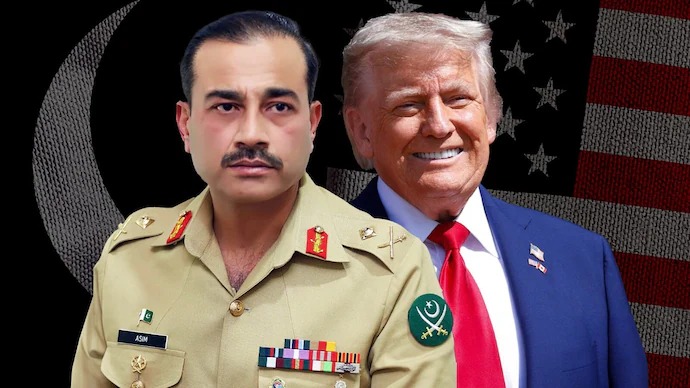
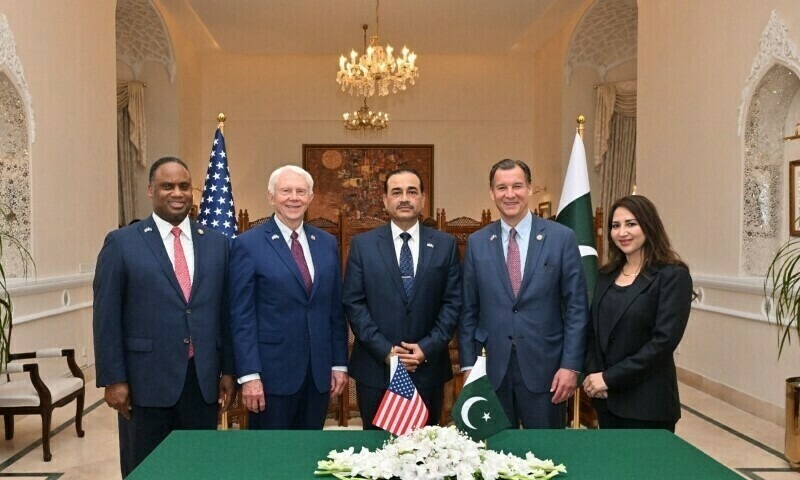
The history of US-Pakistan relations illustrate one of the most paradoxical alliances in modern geopolitics: a superpower that continuously funded, armed, and politically legitimized a state whose security establishment simultaneously fostered the very militant ecosystems that would later threaten American, Indian, Afghan, and global security. This contradiction — rooted in Cold War priorities, sustained through post-9/11 calculations, and shaped by Pakistan’s military-driven strategic doctrines –exposes how international patronage can inadvertently strengthen networks capable of producing catastrophic attacks such as the 2008 Mumbai assault. A deeper examination of this relationship, grounded in historical data and security evidence, raises the critical question of whether similar 26/11-type events could occur again under conditions that remain structurally unchanged. US–Pakistan ties took shape in the early Cold War years, when Washington sought military footholds to counter Soviet influence across Asia.
Pakistan, newly independent and searching for strategic allies, found in the United States a willing patron. Between 1954 and 1965 alone, Washington provided Pakistan more than $2.5 billion in economic and military assistance, with roughly 60% of this aid directed toward the armed forces. American weapons—F-86 Sabre jets, M-47 Patton tanks, artillery systems—quickly transformed Pakistan’s military capacity. However, the deeper impact was institutional — US assistance reinforced the Pakistan Army’s centrality in national politics, undermining civilian authority and contributing to successive military coups. By the time General Ayub Khan seized power in 1958, Pakistan’s military establishment was not only dominant but also deeply embedded in the country’s foreign policy outlook, particularly regarding India. The Soviet invasion of Afghanistan in 1979 further intensified this alliance.
The CIA’s Operation Cyclone, one of the largest covert programs in its history, funneled billions of dollars into Pakistan. Estimates place U.S. contributions at $3.2 billion during the 1980s, matched by roughly the same amount from Saudi Arabia. This funding, channeled largely through Pakistan’s Inter-Services Intelligence (ISI), supported the training and arming of more than 100,000 mujahideen fighters. The intention was clear: turn Afghanistan into the Soviet Union’s quagmire. Yet the consequences were far more expansive. Pakistan’s security establishment selectively supported Islamist factions that aligned with its strategic interests, especially those capable of projecting influence into Afghanistan and later into Kashmir.
The militant infrastructure — the training camps near Peshawar, the radical madrassas in the northwest, the logistical corridors through tribal areas — became permanent fixtures, outliving the Soviet withdrawal. This transformation was not simply collateral damage; it was strategically cultivated.
The Pakistan Army’s doctrine of “asymmetric warfare” against India, combined with its pursuit of “strategic depth” in Afghanistan, created incentives to preserve and deploy militant groups as instruments of foreign policy. Lashkar-e-Taiba (LeT), founded in 1987 with ideological and logistical roots in the Afghan jihad, became one of the primary beneficiaries of this environment. Though the U.S. never directly funded LeT, the broader military-intelligence ecosystem—strengthened through U.S. patronage—allowed LeT to grow into a highly disciplined, militarized organization capable of executing cross-border operations with precision.
After 9/11, the U.S.–Pakistan relationship entered another high-stakes phase. Washington designated Pakistan a “major non-NATO ally,” providing more than $33 billion in aid between 2002 and 2018. Of this, $14.6 billion came in the form of Coalition Support Funds (CSF) meant to reimburse Pakistan for counterterrorism operations. Yet multiple U.S. audits revealed extensive misuse and misreporting.
The Government Accountability Office and Pentagon oversight bodies documented that Pakistan diverted CSF money to purchase conventional military equipment—F-16 upgrades, naval modernization, anti-ship missiles—none of which addressed the counterinsurgency challenges in Afghanistan or the internal militancy problem. Instead, this strengthened the Pakistan Army’s traditional posture against India while leaving intact the selective militant networks that Islamabad deemed assets rather than threats.
The consequences became evident as the Afghan Taliban rebounded throughout the 2004–2018 period. U.S. military commanders repeatedly testified before Congress that Taliban leaders operated from sanctuaries in Pakistan, specifically the Quetta Shura and Peshawar Shura. These safe havens contributed to the deaths of more than 2,400 American soldiers and tens of thousands of Afghan civilians. Despite receiving billions in U.S. aid, Pakistan’s military establishment maintained its dual policy: aggressive action against anti-state militants like Tehrik-e-Taliban Pakistan (TTP), and permissive or supportive behavior toward groups aligned with its external goals, including the Afghan Taliban, Haqqani network, LeT, and Jaish-e-Mohammed (JeM).
This selective approach is not an allegation, but a pattern documented by scholars such as C. Christine Fair, Hussain Haqqani, and numerous U.S. intelligence assessments. The 26/11 Mumbai attack demonstrated the extent to which this militant ecosystem could project violence far beyond South Asia’s battlefield margins. The assault, which killed 166 people over three days, showcased training, coordination, and operational sophistication rarely seen outside state-assisted terrorism. David Coleman Headley, the Pakistani-American operative who conducted reconnaissance for the attacks, admitted in U.S. court that he received training at LeT camps and interacted with individuals connected to Pakistan’s security establishment.
Several planners of the attack, including Zaki-ur-Rehman Lakhvi, operated visibly within Pakistan for years—arrested only under international pressure and often released under opaque judicial processes. U.S. Treasury designations between 2010 and 2018 repeatedly named Pakistan-based LeT operatives, charities, and funding nodes, underscoring the persistent ecosystem that enabled the attack. Pakistan has undoubtedly suffered tremendously from terrorism. Over 70,000 Pakistanis, including civilians and soldiers, were killed in terror violence between 2001 and 2020. Major military operations such as Zarb-e-Azb (2014) and Radd-ul-Fasaad (2017) significantly reduced attacks inside Pakistan by targeting anti-state militants. However, these campaigns maintained the structural distinction between groups that threaten Pakistan internally and those used for external leverage. This dichotomy allowed LeT, JeM, and elements of the Afghan Taliban to survive—even as Pakistan publicly committed to counterterrorism under U.S. and Financial Action Task Force (FATF) pressure.
This selective counterterrorism is central to understanding the ongoing risks of another 26/11-type event. Although Pakistan has taken steps to restrict the activities of certain militant groups, especially under FATF supervision from 2018 to 2022, these measures remain fragmented and reversible. The ideological infrastructure remains largely intact: networks of radical madrassas, veteran trainers from decades of conflict, logistical safe houses, and diaspora-linked financing channels. The organizational DNA of groups like L eT—a disciplined chain of command, military-style training, and operational secrecy—has not been erased. These conditions are far more resilient than tactical bans or symbolic arrests. Moreover, the geopolitical incentives for Pakistan’s security establishment remain largely unchanged. India’s rising global profile—economically, diplomatically, and militarily—intensifies Pakistan’s reliance on asymmetric strategies.
The Pakistan Army’s institutional dominance over foreign policy means these strategies are deeply embedded, not easily abandoned. Even if direct support decreases, passive tolerance or covert facilitation of certain groups can enable them to survive, regroup, or innovate. In an era of drone technology, encrypted communication, and decentralized networks, the possibilities for a future attack are more diffuse and harder to detect.
A 26/11-type event does not require identical conditions; it requires only that a militant group possess the intent, some operational capability, and a permissive or fragmented security environment. Pakistan’s history of selective enforcement creates exactly such an environment. While Islamabad has made commitments under FATF and international pressure, the durability of these reforms remains uncertain. Past behavior—both during and after foreign aid cycles—suggests that once external scrutiny subsides, Pakistan’s security establishment often recalibrates rather than reforms.
The long arc of U.S.–Pakistan relations thus reveal a troubling pattern: American patronage consistently strengthened Pakistan’s military institutions while doing little to align their strategic priorities with global security concerns. This misalignment allowed militant networks to thrive under a shield of deniability. The ecosystem that once produced 26/11 was not an aberration but a by-product of systemic policies, and unless those systems fundamentally change, the risk of future large-scale attacks cannot be dismissed as remote.
–IANS
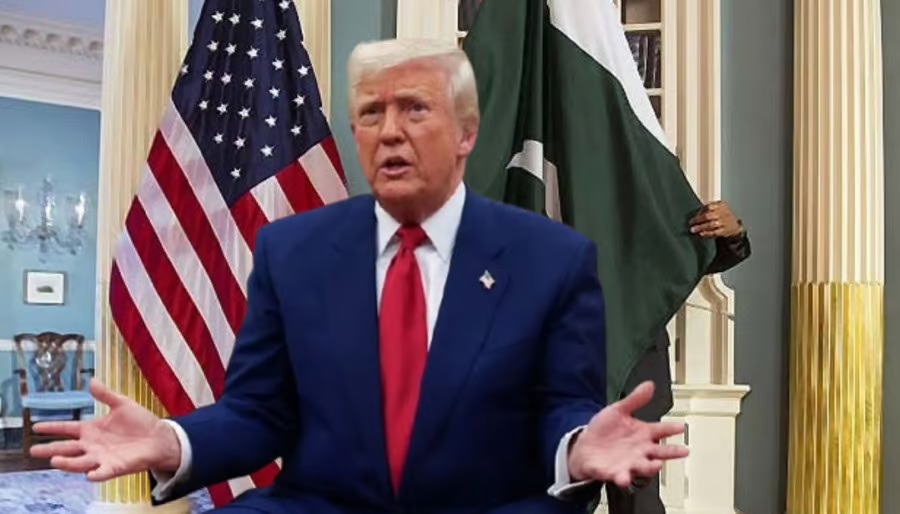
The relationship between the United States and Pakistan has long been defined by convenience rather than conviction, punctuated by moments of intense cooperation followed by spells of deep mistrust. As recent developments begin to raise eyebrows, it is becoming increasingly evident that a new chapter may be unfolding—one marked not by a sincere partnership but by calculated strategic necessity. US President Donald Trump’s reported upcoming visit to Pakistan and the high-profile visit of Pakistan’s Army Chief Field Marshal Asim Munir to Washington have sent clear signals that both sides are once again exploring a tighter embrace. But what lies beneath these gestures? Is this an authentic shift or merely a transactional dance, choreographed by geopolitical compulsions? History casts a long shadow on the US-Pakistan relationship. For decades, their engagement has followed a familiar script: Washington courts Islamabad in times of need, showering it with aid and promises, only to withdraw affection when priorities shift or Pakistan’s duplicity becomes too glaring to ignore. From the Cold War to the post-9/11 era, the partnership has rarely transcended its opportunistic core. Every time the United States found itself in a regional quandary—whether it was countering Soviet expansion or hunting terrorists in Afghanistan—Pakistan presented itself as an indispensable ally. But once the urgency faded, so did the illusion of camaraderie.
The present moment bears the unmistakable scent of déjà vu. The United States, preoccupied with China’s growing footprint and an increasingly complex Indo-Pacific matrix, sees value in reactivating its lines to Islamabad. Pakistan, battered economically and diplomatically isolated, is desperate to regain relevance and secure strategic patronage. It is a classic case of mutual convenience masquerading as renewed friendship. The question is not whether both countries need each other—clearly, they do—but whether this need is rooted in sustainable goals or another fleeting convergence of interests. Pakistan’s military establishment, the true power center of the country, has always been adept at selling its strategic geography. Wedged between Iran, Afghanistan, India, and China, Pakistan offers prime real estate on the geopolitical chessboard. But that geography comes with a price—one that Washington has paid before. Decades of American military and economic assistance have yielded little in terms of lasting reform or ideological alignment. Instead, the US often found itself underwriting a security apparatus that played both sides—hunting terrorists with one hand while harboring them with the other.
Consider the bitter legacy of Afghanistan. While publicly siding with the US in its war on terror, Pakistan simultaneously gave sanctuary to the Taliban and other extremist elements. Osama bin Laden was discovered not in a remote cave but in Abbottabad, a stone’s throw from a Pakistani military academy. Billions in aid could not buy loyalty; it merely sustained a regime skilled in hedging its bets. The withdrawal from Afghanistan in 2021, with its chaotic final days, was a stark reminder of the cost of trusting Islamabad too easily. Now, as the Biden administration recalibrates its foreign policy priorities, and with Donald Trump potentially re-entering the global stage, the temptation to revive a working relationship with Pakistan is palpable. Trump’s anticipated visit may be billed as a diplomatic outreach, but it is likely a signal to Beijing, Delhi, and even Riyadh that Washington still sees value in Islamabad. In return, Pakistan hopes to leverage this attention to escape its pariah status and secure economic lifelines.
But such maneuvering is dangerous. It rewards ambiguity and penalizes clarity. While India—America’s primary partner in the region—remains firmly in the camp of democratic values and open markets, Pakistan continues to operate in murky waters. The same military establishment now reaching out to Washington is also clamping down on democratic dissent at home. Political opponents are jailed, press freedom is strangled, and civil society remains under siege. How does the United States reconcile these facts with its professed commitment to liberal values?
Furthermore, the strategic rationale is itself questionable. If the idea is to counterbalance China’s growing influence in South Asia, relying on Pakistan is a paradox. Islamabad is deeply enmeshed in Beijing’s orbit through the China-Pakistan Economic Corridor (CPEC), a flagship component of the Belt and Road Initiative. Chinese investments have tied Pakistan’s infrastructure, telecom, and energy sectors to its northern neighbor. Any US hope of peeling Pakistan away from China is not just naïve—it borders on delusional. This is not to say that engagement with Pakistan is futile. Dialogue is necessary, especially with a nuclear-armed state teetering on the edge of political and economic collapse. But engagement must be disciplined, not desperate. The US cannot afford to repeat the mistakes of the past, offering carrots without demands for real change. If Pakistan seeks legitimacy, it must earn it—not merely by allowing high-level visits or agreeing to intelligence sharing, but by taking concrete steps to dismantle extremist networks, uphold human rights, and shift its foreign policy posture from duplicity to transparency.
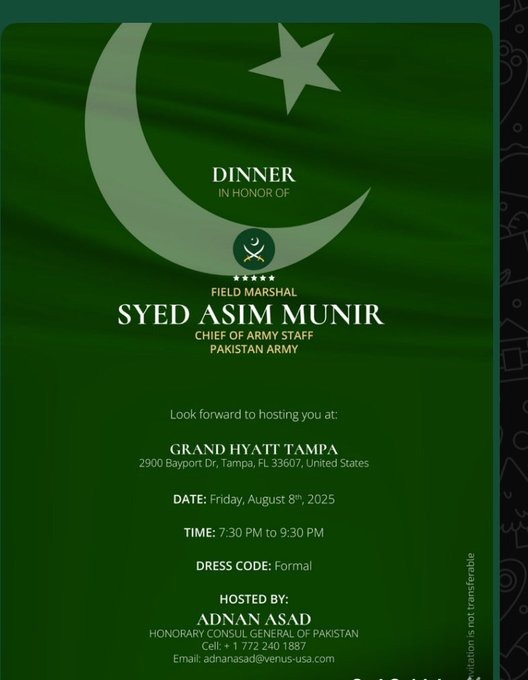
Field Marshal Asim Munir’s visit to Washington may be seen as an opening salvo, a signal of Pakistan’s willingness to reset. But it is vital to remember that such resets have occurred before—with limited results. From Musharraf to Kayani, from Raheel Sharif to Bajwa, every military leader has spoken the language of reform and cooperation, only to revert to old habits once the checks cleared. There is no evidence yet that Munir represents a meaningful break from this tradition. His public statements may emphasize development and diplomacy, but Pakistan’s internal dynamics suggest otherwise. Ultimately, what makes this moment perilous is the global context. The United States is no longer operating in a unipolar world. Russia is resurgent, China is emboldened, and the Middle East is in flux. In such an environment, the margin for error is razor-thin. A misstep in Pakistan could alienate India, embolden militants, or simply waste resources in a dead-end alliance. Realism demands cold calculations—not nostalgia for a partnership that never truly was.
The US must resist the lure of tactical engagement without strategic depth. It must demand accountability, not mere access. And it must remember that short-term alliances built on necessity are seldom sustainable. For Pakistan, the message should be equally clear: the era of exploiting geography for aid is over. If it wishes to be seen as a credible partner, it must act like one. So, are the US and Pakistan recalibrating ties for strategic convenience? Undoubtedly. But convenience is not conviction. And until both sides confront the ghosts of their past dealings, this reset risks becoming just another rerun in a long history of missed opportunities, broken promises, and dangerous illusions.

In a blow to Pakistan’s policy of employing terror as a tool of its regional policy for decades, the United States State Department on 18 July officially designated The Resistance Front (TRF) as a Foreign Terrorist Organization (FTO) and Specially Designated Global Terrorist (SDGT).
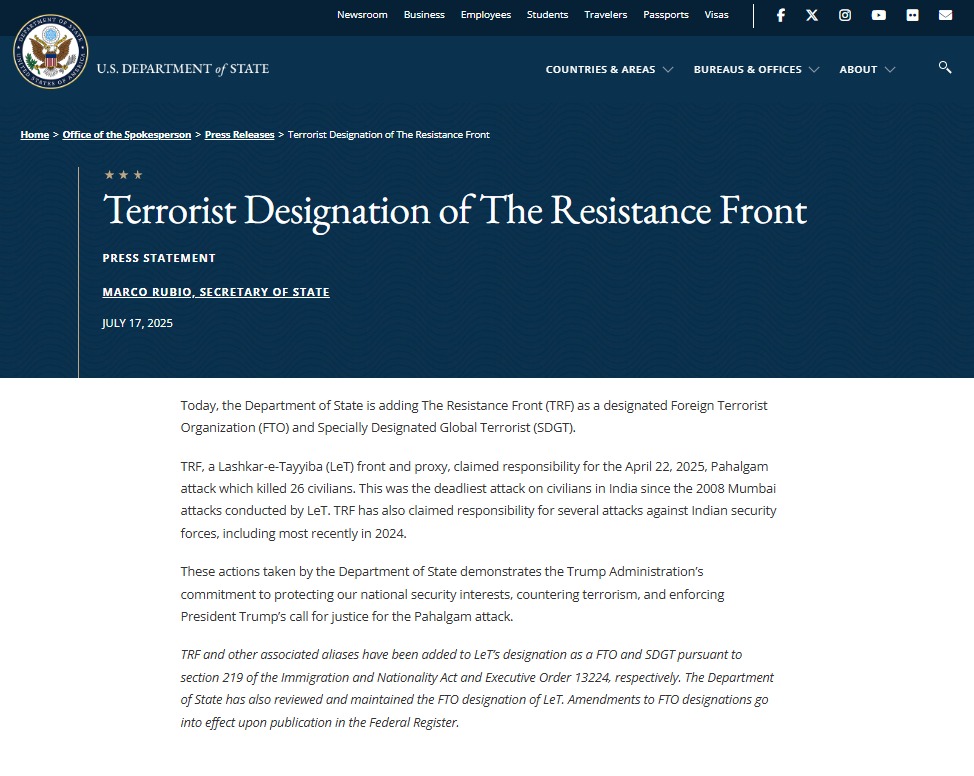
This decision validates what India has long claimed that TRF is not an indigenous militant group, but a proxy for the Pakistan-based jihadi organization Lashkar-e-Toiba (LeT), which was established to cover up Pakistan’s continued patronisation of terrorism in Jammu and Kashmir.
The US designation follows the ghastly April 22, 2025, Pahalgam attack in which 26 Hindu pilgrims were massacred following religio-based segregation by the terrorists. It was the worst attack on Indian civilians since the 2008 Mumbai attacks, incidentally also mounted by LeT under the broader tutelage of Pakistan’s Inter-Services Intelligence (ISI), as growing body of evidence has substantiated since. When the TRF claimed responsibility for the Pahalgam massacre, it was a grim reminder of Islamabad’s unaltered terror playbook of decades that has seen it patronise groups to mount asymmetric proxy war in Kashmir.
India welcomed the U.S. move, calling it “a timely and important step reflecting the deep cooperation between India and the United States on counter-terrorism.” In a statement, the Ministry of External Affairs emphasized that “India remains committed to a policy of zero tolerance towards terrorism and will continue to work closely with its international partners to ensure that terrorist organizations and their proxies are held accountable.”
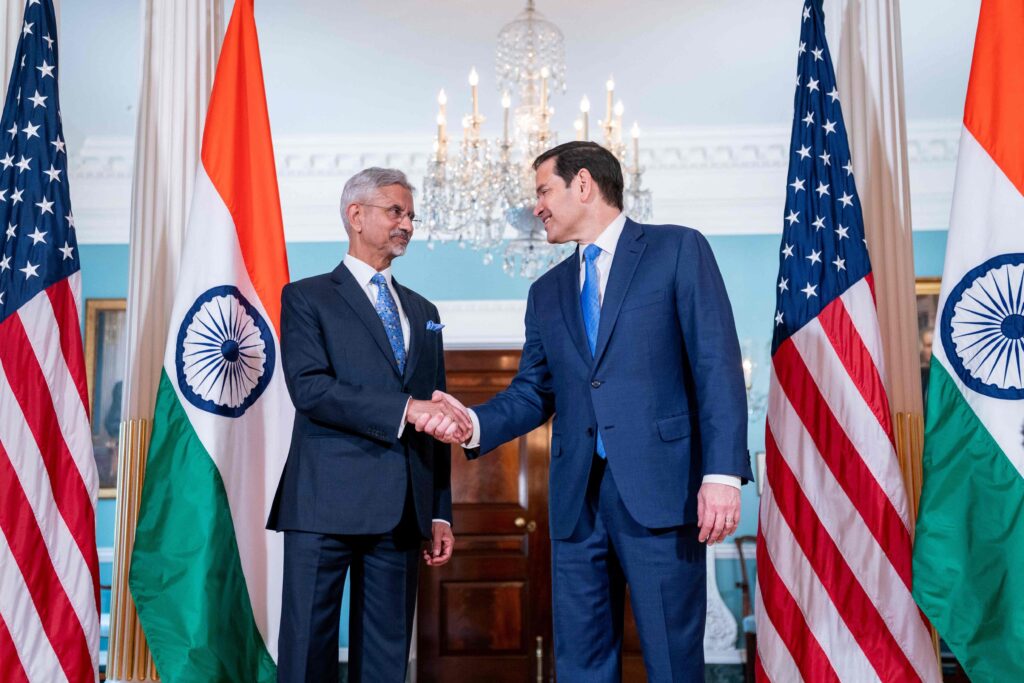
A Proxy by Design
The Resistance Front is not a spontaneous insurgent movement. It is a repackaged extension of LeT, launched in 2019 as global scrutiny tightened around Pakistan’s state-sponsored terror ecosystem. The Financial Action Task Force (FATF) had grey-listed Islamabad in 2018, citing its failure to clamp down on financing for groups like LeT and Jaish-e-Mohammad. Under international pressure, Pakistan sought to cloak its support to jihadist organizations in a local garb. Thus, TRF was born as the latest attempt to give LeT’s radical Islamist violence a territorial and “indigenous” facelift. Likewise, JeM also rechristened itself and created its own proxy called People’s Anti-Fascist Front (PAAF), which has also engaged in dozens of terrorist acts across Jammu and Kashmir.
TRF’s rhetoric attempted to depart from the overtly Islamist discourse of LeT, presenting instead a façade of Kashmiri nationalism. But this branding exercise was superficial. Intelligence reports have consistently revealed that TRF receives logistical, operational, and financial backing from LeT leadership operating freely in Pakistan, under the tacit protection of the Pakistani state.
From coordinated attacks on Indian security personnel to targeted killings of civilians, including the June 9, 2024, assault on a bus carrying Hindu pilgrims in Reasi district, TRF has steadily built a grisly record of violence across the Union Territory of J&K. Each of its violent acts have borne the unmistakable imprint of LeT’s operational style, which have been coordinated, brutal, and designed to provoke communal polarization and unrest in the region.
A Victory for Indian Diplomacy
That TRF’s designation as a global terrorist group has occurred even as Islamabad has been actively lobbying Washington for renewed military and financial cooperation is no coincidence. It is the result of sustained Indian diplomacy of years, particularly after the Pahalgam massacre. In its the immediate aftermath, India has undertaken a full-spectrum offensive against terrorism originating from Pakistan which includes both diplomatic, and military.
On the military front, Operation Sindoor was launched on May 6/7 targeting and destroying terror launchpads and logistical hubs across the Line of Control (LoC) in Pakistan Occupied Jammu and Kashmir (POJK) and mainland Pakistan through calibrated cross-border strikes. Simultaneously, India mobilized its diplomatic repertoire to expose the role of Pakistan’s deep state in grooming and guiding terror outfits, not just in Kashmir but across the broader South Asian region. Under this, over half a dozen delegations of Members of Parliament and diplomats visited 33 countries providing irrefutable evidence of Islamabad’s culpability, including communications intercepts and intelligence dossiers, that linked TRF attacks directly to handlers based in Pakistan.
The campaign specifically also targeted the members of United Nations Security Council members, both permanent and non-permanent, excluding China, which has emerged as a major shield for Pakistan at global forums over the last decade. With this decision from Washington, New Delhi has succeeded in reframing discourse on how Pakistan’s state-backed terrorist infrastructure threatens regional and global peace.
Pakistan’s Duplicity Exposed
Pakistan’s strategy of using jihadist groups as “strategic assets” while maintaining a veneer of plausible deniability is no longer tenable. By operating through proxy outfits like TRF and PAFF, Islamabad hoped to evade global scrutiny while continuing its decades-long covert war in Kashmir. But the U.S. designation cuts through that obfuscation.
“The TRF is a Lashkar-e-Toiba front and proxy,” Secretary Rubio’s statement declared unequivocally, removing any diplomatic ambiguity. The move also comes at a time when Pakistan’s military establishment has been aggressively attempting to reset ties with Washington, offering its resources and positioning its strategic geography as a potential gateway for U.S. re-engagement in Afghanistan and Central Asia, as well as contain Iran. But the TRF designation puts Pakistan on the backfoot, reaffirming that no strategic calculus can be allowed to eclipse the imperative of countering terrorism.
A Message to the Global South
The U.S. move also carries implications beyond South Asia. For years, New Delhi has struggled to persuade many Global South countries, who see Pakistan as a fellow victim of terrorism, of the duplicity of its neighbour’s approach. The designation of TRF by the United States, after painstaking efforts by Indian diplomats, should mark an end to this duplicity, as this decision lends credence to New Delhi’s repeated assertions that terrorism must be addressed uniformly, not selectively. The strong condemnation of the Pahalgam massacre by BRICS a few weeks ago, where even traditionally Pakistan-friendly nations refrained from shielding it, reflects this slow but steady shift in sentiment.
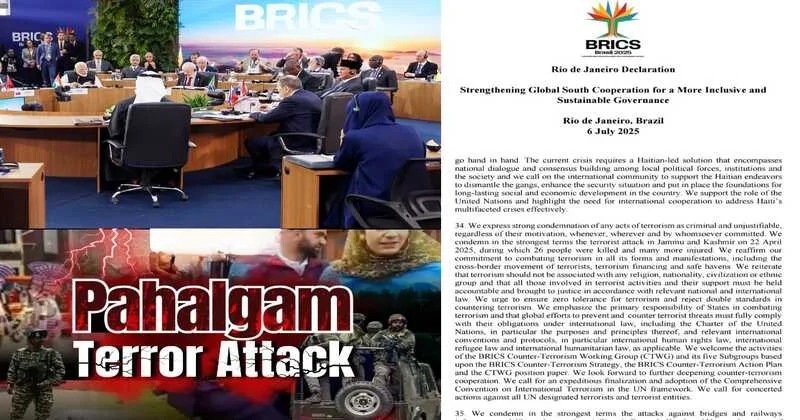
India has long advocated for a “no distinction” policy when it comes to terrorism, which is a stance undermined by the geopolitical calculations of major powers. But the TRF episode proves that, with the right strategy, facts on the ground can overcome narratives built on denial and deflection.
Toward Accountability
India’s challenge now lies in sustaining the momentum. Designation is one step; dismantling the financial and logistical architecture that sustains such groups is another. India has pushed for the enforcement of UN Security Council Resolution 1373, which mandates state accountability in curbing terrorism financing. The hope is that the TRF’s designation will compel financial institutions, regional bodies, and multilateral platforms to act decisively against those who shelter, fund, or excuse such entities.
Therefore, as India inches closer to its goal of internationalising the campaign against Pakistan’s proxy war, the TRF designation is more than a symbolic gesture. It should be seen as a diplomatic and strategic success, one that not only exposes Pakistan’s two-faced approach but also signals that the world is seeing through its “terror by proxy” strategy.