
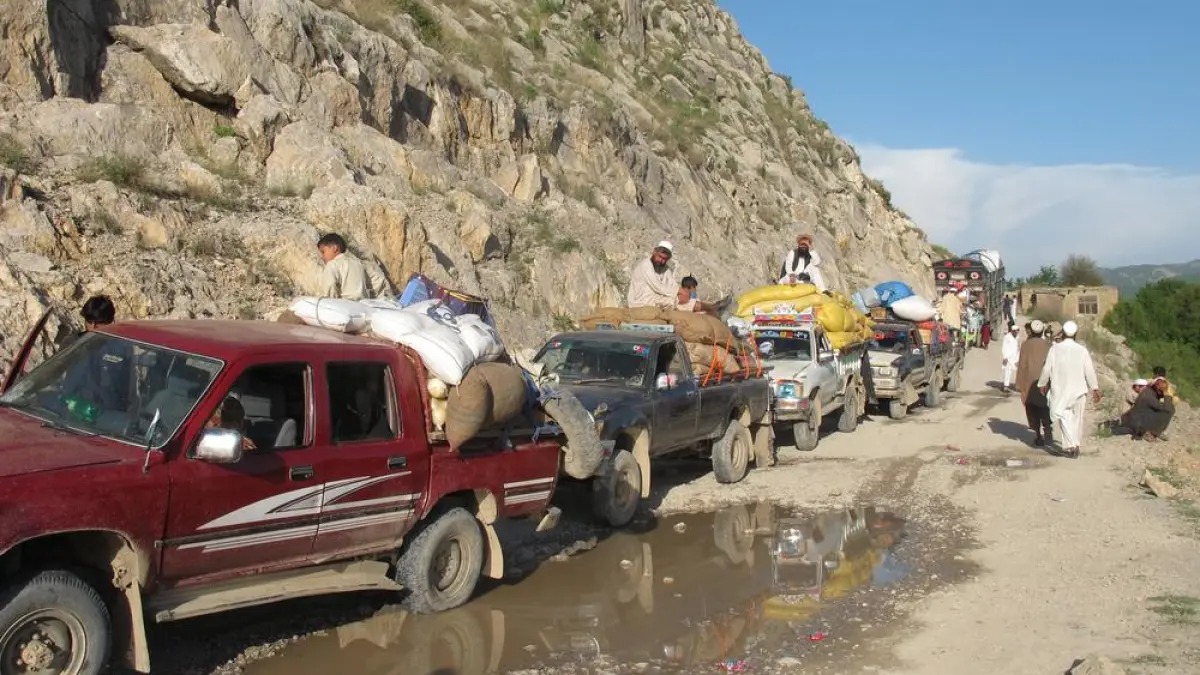
Pakistan is a state that is killing its own people. In October, Pakistani state carried out attacks in Khyber Pakhtunkhwa, where at least 23 civilians, including women and children, were killed.
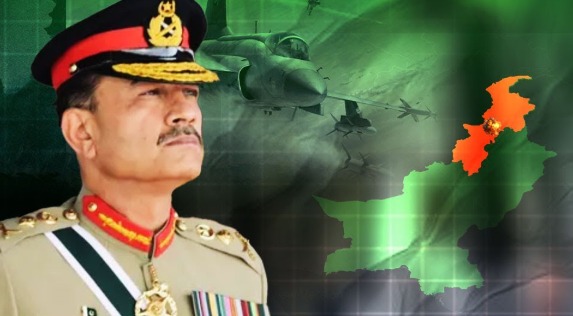
The Pakistani Airforce bombed residential homes in Tirah Valley; four houses were obliterated in the attack, leaving families buried under rubble. While the military has refused to acknowledge responsibility, local officials have confirmed that the assault was carried out under the pretext of striking Taliban hideouts. In reality, it was innocent civilians who paid the price.
Pakistan Tehreek-e-Insaf leader Iqbal Afridi has accused the army of launching “an attack on unarmed civilians,” making it clear that this was not crossfire, but a deliberate strike. This is not the first time Khyber Pakhtunkhwa has been forced to bleed for Islamabad’s wars. The region has been turned into a battlefield for decades, starting with Pakistan’s decision in 1979 to use the tribal belt as a staging ground for anti-Soviet jihad.
Funded by billions of US and Saudi dollars and guided by the ISI, militant groups were trained and sheltered in the same mountains that are now being bombed. When the Soviets withdrew in 1988, these groups did not dissolve; they entrenched themselves deeper. Following the US invasion of Afghanistan in 2001, waves of fighters crossed into Pakistan, bringing instability and bloodshed. By the late 2000s, the Tehreek-e-Taliban Pakistan had formed, headquartered in precisely the same districts now devastated by airstrikes. Islamabad claims these operations are meant to fight terrorism, but the evidence shows otherwise.
Human Rights Watch and Amnesty International have repeatedly documented how Pakistan’s campaigns in the tribal belt rely on indiscriminate bombardment, extrajudicial killings, and collective punishment. In 2009, the military’s offensive in South Waziristan displaced over half a million people. In 2014, the so-called Operation Zarb-e-Azb uprooted nearly a million more. In both cases, airstrikes leveled entire villages. The Bureau of Investigative Journalism, tracking drone strikes and Pakistani air raids, has estimated that thousands of civilians—including women and children—were killed in Pakistan’s tribal belt between 2004 and 2018 alone. Yet official records often describe these deaths simply as “terrorist casualties,” erasing the reality of who was actually killed.
The humanitarian toll is staggering. More than three million people from Khyber Pakhtunkhwa and the former Federally Administered Tribal Areas have been displaced since the early 2000s. Camps remain overcrowded, underfunded, and neglected, with families living without basic healthcare, schooling, or clean water. Entire generations of Pashtun children are growing up under the shadow of fighter jets and drones. For them, the Pakistani flag does not symbolize protection but fear. Every bombing plants deeper resentment, feeding the very militancy Islamabad claims to be fighting. Studies by conflict-monitoring groups confirm that civilian killings by state forces correlate with higher rates of insurgent recruitment.
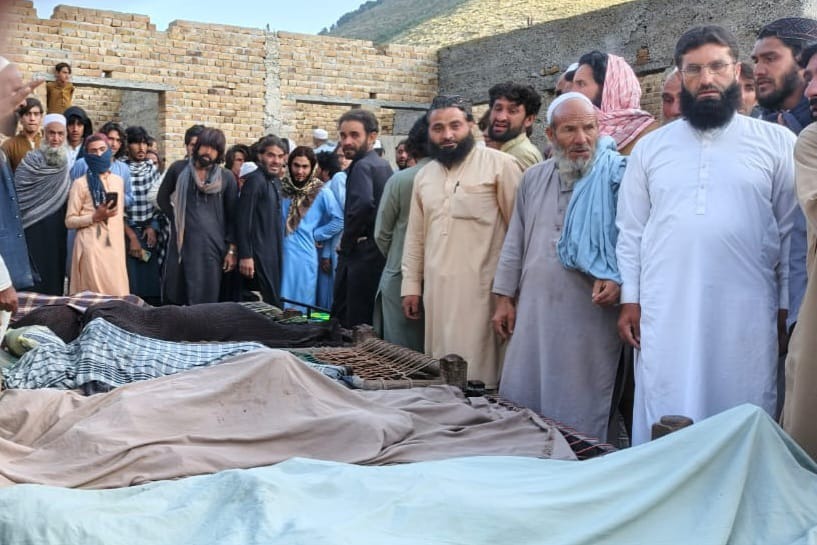
Put simply, Pakistan is manufacturing the enemies it then claims to battle. The silence from Islamabad is perhaps the most damning evidence of impunity. After the Tirah Valley strike, no government minister stepped forward with an explanation. No inquiry was announced. No reparations were promised to families who had lost their homes and loved ones.
This pattern is consistent: when the Pakistan Air Force bombed villages in North Waziristan in 2014, killing scores of civilians, no independent investigation followed. When artillery fire hit refugee camps in Kurram Agency in 2008, Islamabad dismissed reports as “enemy propaganda”. Each massacre disappears from public record, erased by the military’s tight control of media narratives. The ethnic dimension cannot be ignored. Most victims of these operations are Pashtuns, a community that has long been treated as second-class within Pakistan.
The Pashtun Tahafuz Movement (PTM) has consistently raised its voice against extrajudicial killings, enforced disappearances, and indiscriminate airstrikes, but its leaders are harassed, arrested, and silenced. The military’s branding of entire Pashtun populations as “terrorist sympathizers” has created a system where civilian lives are seen as expendable. When bombs fall on Pashtun villages, Islamabad’s ruling elite in Lahore and Islamabad barely notice. What makes this even more hypocritical is Pakistan’s double game with militancy. For decades, Islamabad sheltered groups like the Afghan Taliban and the Haqqani Network, providing them safe havens while cracking down on local Pashtuns under the banner of counter-terrorism. Even today, international analysts point out that Pakistan differentiates between “good Taliban,” who serve its strategic goals, and “bad Taliban,” who challenge its authority.
This cynical distinction means that the full weight of military power is directed not against insurgents but against civilians caught in the middle. The result is what we saw in Tirah Valley: dead women, dead children, and a government that pretends nothing happened. The cost of Pakistan’s militarized policies is not limited to its borders. Every time Islamabad bombs its own civilians, it destabilizes the wider region. Refugees flee into Afghanistan, straining already fragile systems there. Cross-border violence escalates, feeding cycles of retribution. International jihadist networks use these massacres as propaganda, pointing to them as proof of state brutality.
Pakistan’s actions, instead of containing militancy, export it across South and Central Asia. International silence only deepens the tragedy. Western governments that routinely criticize human rights violations in other countries remain muted when Islamabad bombs its own villages. Pakistan markets itself as an indispensable ally in the “war on terror,” but the reality is darker. This is the same state that nurtured militant networks for strategic depth, the same military that sheltered the Afghan Taliban leadership, and the same intelligence apparatus that played a double game for decades. Today, it justifies civilian massacres under the cover of counterterrorism while demanding international aid and legitimacy.
The 23 killed in Tirah Valley are not collateral damage. They are the latest victims of a system that views its own people as targets. From Waziristan to Swat, from Bajaur to Khyber, the pattern is the same: bomb first, deny responsibility, and move on without accountability. The cycle will continue until Pakistan dismantles its militarised policies, ends indiscriminate air campaigns, and begins treating the people of Khyber Pakhtunkhwa as citizens instead of enemies. The families who lost everything in a single airstrike do not need more empty rhetoric about security. They need justice, acknowledgement, and the right to live without fear of their own army. And until that happens, the truth remains stark and unavoidable: Pakistan is a state that is killing its own people.
–IANS
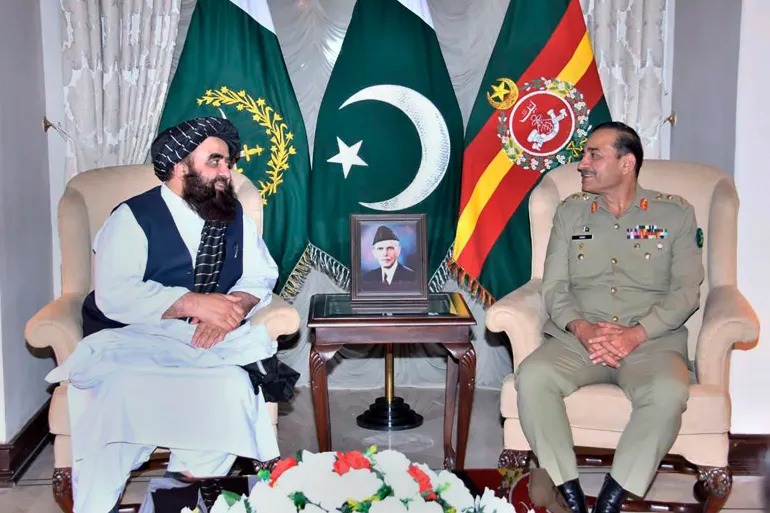
The Tehrik-i-Taliban Pakistan (TTP) today epitomises the unintended consequences of Pakistan’s own strategic miscalculations — a Frankenstein’s monster birthed by the very establishment that once nurtured it as a supposed asset. For years, the Pakistani military establishment has engaged in the perilous tactic of fostering militant proxies, under the mistaken belief that such forces could be wielded with precision and control.
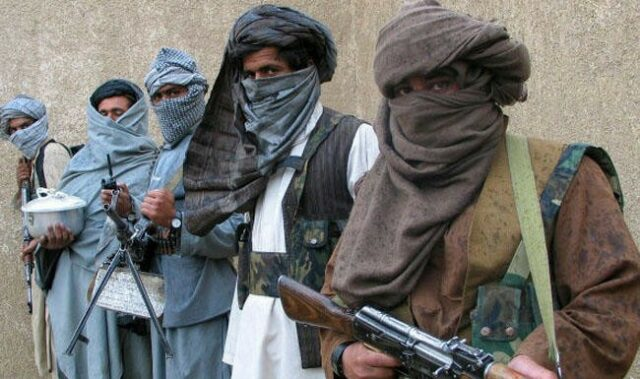
The TTP is a direct outcome of this approach — conceived within the shadows of domestic power plays and geopolitical strategies, only to evolve into a force that now torments its originators. This is not a narrative shaped by external actors or foreign agendas, but one firmly grounded in Pakistan’s internal policies, particularly the militarisation of the Khyber Pakhtunkhwa (KPK) province and the consistent marginalisation of the Pashtun community. At the core of this destructive trajectory lies the military’s entrenched reliance on coercion over governance in managing the tribal regions. In the wake of 9/11 and Pakistan’s alignment with the United States in the war on terror, the tribal belt — especially South and North Waziristan — became a battleground of competing interests. The Pakistani military, balancing international expectations with domestic imperatives, initiated a series of operations across the tribal zones. What started as a mission to eliminate foreign militants rapidly expanded to include local tribes, most notably the Mehsud — the very community from which the TTP would ultimately arise.
The military’s strategy was blunt and indiscriminate. Entire villages were displaced, with little distinction made between suspected militants and civilians, as the region underwent intense militarisation. Daily life for the Pashtun population became dominated by curfews, checkpoints, and constant surveillance. The Mehsud tribe, in particular, bore the brunt of these operations, enduring severe hardship and loss. The military’s incursion into their lands, homes, and way of life sowed deep-seated resentment. Within this climate of humiliation and forced displacement, the TTP found both a steady stream of recruits and a rationale for its existence. It presented itself as a guardian of Pashtun honour, even as it perpetrated horrific acts of violence against both civilians and the state. A significant parallel in this pattern of radicalisation was the 2007 Lal Masjid incident in Islamabad. What began as a confrontation between the state and a radical Islamist faction escalated into a full-scale military operation, resulting in the deaths of numerous students, including young girls. The operation’s brutality, widely broadcast and sensationalised, had a profound impact across conservative and tribal areas of Pakistan, intensifying anti-state feelings. For many, especially among the Pashtun population, it exemplified the duplicity of a state that had long enabled religious extremism when advantageous, only to crush it with force once it posed a threat to the capital’s stability. This contradictory stance further entrenched the perception that the Pakistani state regarded its peripheral regions — particularly Pashtun communities — as disposable.
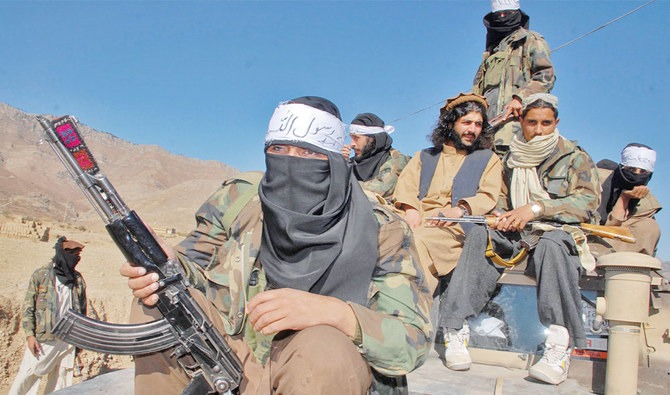
Complex Calculations Shape Pakistan-TTP Negotiations
The treatment of the large-scale displacement of Pashtuns during and after military operations starkly illustrates the state’s profound indifference towards the community. Millions were uprooted from the Federally Administered Tribal Areas (FATA) and surrounding regions, only to encounter neglect and suspicion in urban centres such as Peshawar and Karachi. Refugee camps were overcrowded, underfunded, and lacked even basic provisions. The displaced were frequently regarded as second-class citizens. Rather than support and reintegration, they were met with poverty, constant surveillance, and routine profiling by police and intelligence agencies. For many young Pashtuns — already suffering from trauma and anger — the TTP offered not just vengeance, but a sense of identity and belonging. This systemic exclusion was not merely a bureaucratic failure, but a manifestation of deeper cultural and political biases. For decades, dominant national narratives — largely shaped by Punjab-centric perspectives — have stereotyped Pashtuns as primitive, uncivilised, and innately violent. Such dehumanisation served dual aims: it legitimised the aggressive militarisation of Pashtun regions and deflected attention from their political demands. In textbooks, mainstream media, and public discourse, Pashtuns were seldom depicted as integral contributors to the nation — instead, they were constructed as ‘others’, romanticised as valiant fighters when useful, and vilified as security threats when expedient.
This cultural mischaracterisation has carried significant political ramifications. It fostered a deep distrust between the Pashtun population and the state — a void the TTP was quick to exploit. By presenting itself as the champion of the oppressed and the avenger of injustices, it garnered sympathy and support from a community that felt consistently marginalised and mistreated. The state’s unwillingness to engage with genuine Pashtun concerns — including demands for political inclusion, equitable resource distribution, and fundamental rights — only widened the divide. The rise of movements such as the Pashtun Tahafuz Movement (PTM) is a clear manifestation of this estrangement, as is the state’s heavy-handed repression of it. Ironically, despite PTM’s emphasis on nonviolence and democratic reform, the state has often regarded it with greater suspicion than the TTP — revealing its confused and contradictory approach to Pashtun dissent. The TTP, in many respects, represents the consequence of the establishment’s flawed policy of distinguishing between “good Taliban” and “bad Taliban” — a dichotomy more relevant in strategic deliberations than in real-world outcomes. During the early phases of Pakistan’s involvement in the Afghan jihad, military and intelligence agencies provided support to militant actors, including those from the tribal belt, in efforts to project influence into Afghanistan and counter India. This patronage persisted beyond 9/11, with certain factions shielded or permitted to operate in anticipation that they could still serve strategic objectives. However, these entities — particularly the TTP — soon evolved independent agendas, shaped by radical ideology, tribal traditions, and a desire for retribution. The creation had developed a mind of its own.
Today, the TTP has redirected its violence inward, targeting the very military convoys that may once have harboured its founders. It assaults outposts, police stations, and civilian targets across Khyber Pakhtunkhwa and beyond. Despite repeated declarations of its defeat, the group has consistently demonstrated a disturbing ability to regroup — not solely due to external sanctuaries, but because the domestic conditions that facilitated its rise remain unresolved. Each failed operation, each instance of extrajudicial killing, each displaced household — these are not mere incidental costs; they are the fertile ground from which insurgency resurfaces. There is a bitter irony in observing the Pakistani military — long regarded as the state’s most dominant institution — struggle against a creation of its own making. Ordinary citizens — particularly Pashtuns — find themselves caught between state oppression and militant brutality. This tragedy is further exacerbated by the enduring lack of critical reflection within the establishment. The prevailing discourse remains fixated on external threats, cross-border terrorism, and international conspiracies — all deflecting attention from the internal policies that have continually backfired. The TTP cannot simply be eradicated through military force, for it represents more than a security challenge; it is a manifestation of political and societal failure. Its existence is entrenched in decades of marginalisation, distortion, and abuse. Lasting peace will not be achieved through violence alone; it requires genuine justice, inclusive representation, and a confronting of historical wrongs. Until the state acknowledges the humanity, rights, and legitimate grievances of the Pashtun population — and abandons the militarised lens through which dissent is seen as betrayal — the cycle of violence will persist. Pakistan’s establishment now faces an uncomfortable reality: it cannot indefinitely wield fire without suffering the consequences. The TTP is no longer just an insurgency; it is a violent reflection of the state’s own enduring failures. The Frankenstein is no longer shackled — it roams freely across the mountains and valleys of Khyber Pakhtunkhwa, a chilling testament to the fact that once unleashed, such monsters do not fade quietly.