
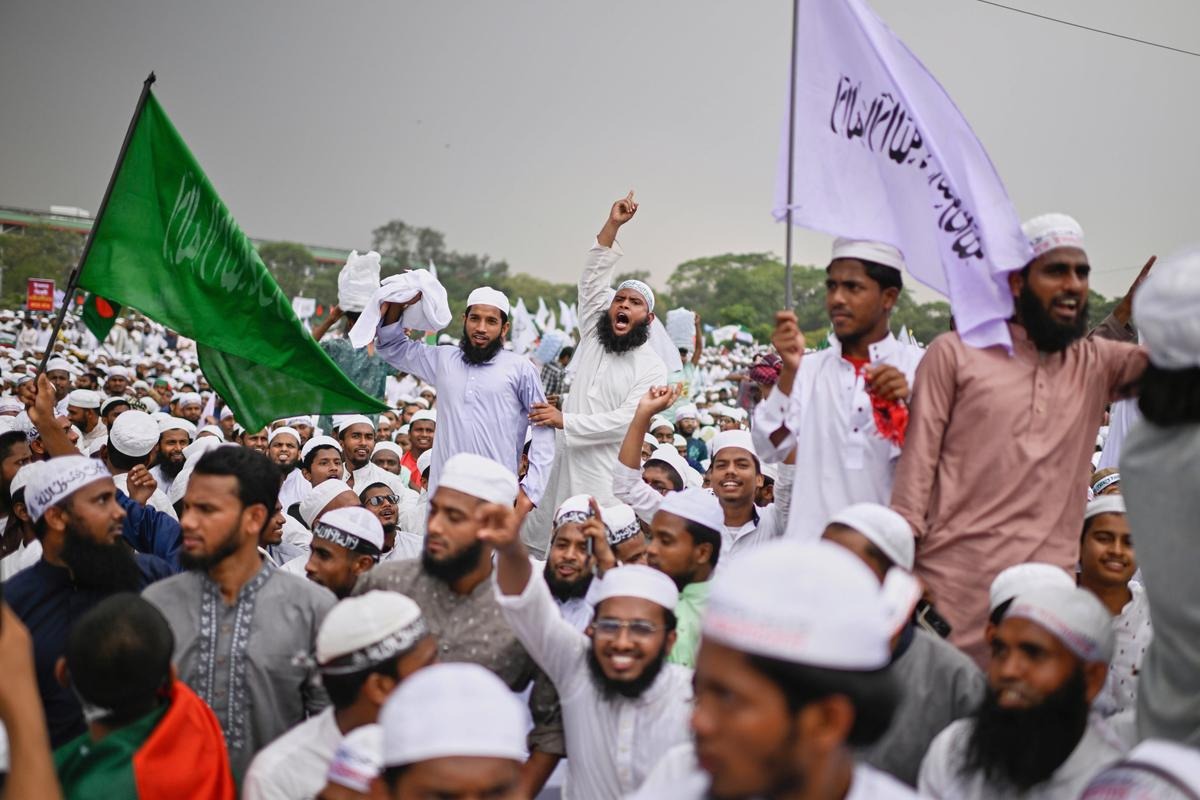
Amidst the developments in Bangladesh’s political trajectory, the resurgence of Islamists has been the one catching everyone’s attention. A country with about 90 per cent Muslim population, this surely is not supposed to be alarming. But Bangladesh is no Middle East or Central Asia — wherein religion profoundly shaped their political systems. Religion, albeit a strong influence, has more cultural and symbolic presence than a political one — whereby Bangladesh’s political establishment is influenced by principles of nationalism, socialism, secularism and democracy. Here, cultural and ethnolinguistic identity have historically taken precedence over religious one.
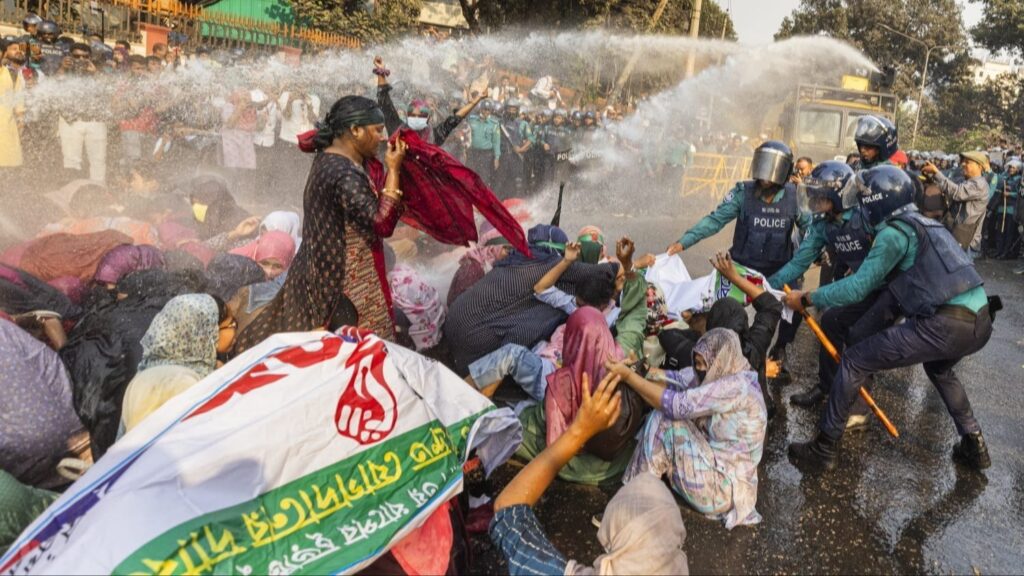
Islamists in Bangladesh seek a complete overhaul of the socio-political-legal system rooted in Islamic values and principles, contrary to the present establishment in Bangladesh. However, Islamists do not comprise a homogenous group, as they take their ideological orientation from different Islamic schools of thought, namely, Hanafi, Deobandi, Barelvi, Salafi and Sufi. Among these, Hanafi and Deobandi exert the most socio-political influence. The Islamists, initially marginalised post Bangladesh’s independence, were rehabilitated under military rule. After restoration of democracy and civilian government in 1990, some created formal political alliances while maintaining grassroot mobilisation in religious institutions and madrasas and entered the electoral field. Others took the path of militancy, launched a series of terror attacks in Bangladesh and re-configured into newer factions after facing state crackdowns and bans, especially under the Awami League government.
The recent unofficial visit of seven Islamic scholars to Afghanistan on Taliban’s invitation needs a careful assessment. The meeting was framed as seven Bangladeshi Islamic scholars observing human rights and women’s rights situation in Afghanistan in face of backlash from the West. However, one cannot overlook the heavy political intent as the meeting also prioritised strengthening ties between Islamic scholars of the two countries, to enhance diplomatic relations in future, beside cooperating on areas like trade, education and healthcare.
Following the Taliban takeover of Afghanistan in 2021, Bangladesh government (now dismantled), maintained its distance and refused to give Taliban any diplomatic recognition. Rather, it exercised caution — monitoring and countering the celebratory reactions of Islamists on social media who hailed it as a ‘triumph of Islam’. Even before the takeover, many Bangladeshi Islamist radicals were arrested by security authorities who were caught attempting to join the Taliban in Afghanistan by crossing India.
Why were Bangladesh’s Islamist influenced youth attracted to the Taliban? Because of Bangladesh’s own home-grown extremist groups that emerged in the 1980s-90s, notable being Harkat-ul Jihad Al Islami Bangladesh (HuJIB), and Jamaat-ul-Mujahedeen Bangladesh (JMB), established by fighters who joined the Taliban during Afghan jihad’s fight against Soviet invasion of Afghanistan. After these fighters returned to Bangladesh, they sought to bring the Taliban’s envision into reality—to establish an Islamic rule in Bangladesh, based on Shaira jurisprudence. These groups are also reported to have links with transnational terrorist organisations like al-Qaeda, al-Mujahideen and even Lashkar-e-Taiba (LeT). The early to mid 2000s was a period of rampant Islamic terror attacks by these groups, primary targets being NGOs and secular and cultural events that they deemed to be ‘un-Islamic’. However, most extremist organisations were checked via strict counterterrorism measures by 2007, although another wave of terrorist attacks surfaced between the period of 2013-2016.
The seven Islamic scholars who attended the meeting with Taliban included Khelafat Majlis chief Mamunul Haque, Nayeb-e-Amir (Pir of Madhupur) of Hefazat-e-Islam Bangladesh Abdul Hamid, Abdul Awal, Abdul Haque, Habibullah Mahmud Qasemi, Monir Hossain Qasemi and Mahbubur Rahman. Both Hefazat and Khelafat belong to the same Deobandi tradition and predominantly trained in Qawmi madrasas, that emphasises in Islamic scholarship independent of state regulated Alia system. In terms of core ideological beliefs, both lay strict emphasis on scriptural orthodoxy, rejection of Barelvi tradition, Sufi practices and Ahmadiya’s inclusion as Muslims and opposition to Western influences, especially on culture and education. In effect, both champions complete Islamisation of socio-cultural life.
Khelafat Majlis, founded in late 1989, emerged during the Bangladesh anti-Ershad movement. An Islamist political party, Khelafat, stated its goal of creating a national governance framework that is based on Qura, Sunnah and early Islamic Caliphates. Therefore, the party’s main target of mobilisation were Islamic scholars and aimed at creating a larger unity between these scholars and general Muslims against the secular system of governance who would push for Khelafat’s Political Islam. Its activities largely confined to anti-secular and blasphemy protests—be it organising a large mass demonstration from Dhaka to Ayodhya demanding for Babri Masjid restoration that was demolished in 1993, protest against installation of “Eternal Flame” at Suhrawardy Udyan, the anti-Taslima movement that led to her exile, the 2017 anti-Statue protest against the installation of the statue of Lady Justice from the Supreme Court premises in Dhaka.
In electoral politics, it had a minimal presence, entering into coalition with both BNP (that it opted out in 2021). Although not involved in overt terror activities, Khelafat’s hardline stance coupled with ideological leniency towards the Taliban were deemed threatening to Bangladesh’s secular principles. Its leaders, including chief Mamunul Haque, were arrested under Digital Security Act and Anti-Terrorism Act under the Awami League government for their participation in protests in anti-secular, anti-blasphemy protests, in alliance with Hefazat-e-Islam.
Unlike Khelafat Majlis, Hefazat-e-Islam is not a political party but an Islamist organisation, drawing on the same ideology and traditions like Khelafat. A coalition of more than 25,000 Qawmi madrasas across Bangladesh, Hefazat emerged in 2010 as a reaction to Awami League government’s Women Development Policy (2009) draft giving women equal inheritance rights. In 2013, Hefazat held a massive rally by blocking roads, commerce and regular activities. Known as the Shapla Chattar siege in Dhaka, Hefazat presented its 13-point demands that included introduction of blasphemy laws, gender segregation in public, declaring Ahmadiyyas as non-Muslims, and curbing every un-Islamic activity, to state a few.
Following Jamaat’s decline in Bangladesh under Awami League’s government, Hefazat’s emergence was seen as the rise of a new radical Islam in Bangladesh and this 2013 siege, a pivotal moment of radical Islamists urban mobilizational efforts directly challenging the secular state authority. Other notable protests are the anti-statue protest of 2017, anti-Modi protest in 2021, the latter turning violent and the death of 17 people. The leaders of Hefazat-e-Islam were meted the same treatment as its ally Khelafat, who provided logistical and ideological support to Hefazat’s programmes.
Following the July Uprising and the establishment of an interim government, both Hefazat-e-Islam and Khelafat Majlis regained their position and marked its active presence in the country. Detained leaders, including Hefazat chief were released, seen as part of the interim government’s reconciliation. However, thanks to both, and its allied Islamic parties, Bangladesh has also been witnessing a series of attacks, especially on the freedom of cultural expression.
Towhidi Janata, a loosely organised group of ‘agitated Muslims’ has been notorious to wreak havoc on events like Book Fair, Lalon Fakir Mela, Basant Utsav and women’s football match. Needless to say, Hefazat and Khelafat provide backing to Towhidi that has also been making headlines recently for increasing attacks on shrines, including the exhumation and burning of body of Nurul Pagla. While these Islamic scholars were in Kabul to meet the Taliban, its leaders and activities back home organised street rallies demanding for implementation of the July Charter and declaring Ahmadiyas to be non-Muslims and a Constitutional reform that is based on Sharia.
Khelafat and Hefazat, although not a terrorist organisation, are ideologically extremist whose beliefs go against Bangladesh’s core national principles. The Taliban meeting surely is their symbolic assertion — of Bangladesh’s Islamists envision of Talibanising the country. This meeting with the Taliban also points to a future normalisation of diplomatic relations between Bangladesh and Taliban’s Afghanistan, as the interim government seems to not object to such an informal meeting. A radicalised Bangladesh under the garb of Islamists pose a serious problem for South Asian neighbours, given these factions’ ideological links not just with Taliban, but also with Pakistan. The Global South, therefore, needs to keep an open eye to such ‘harmless’ meetings.
–IANS
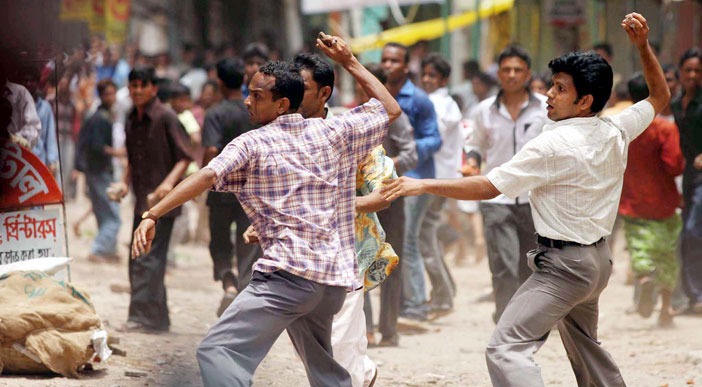
Pakistan’s geopolitics seem to have reached a full circle with the continuous terror of Tehrik-e-Taliban Pakistan (TTP).Founded in 2007, the TTP is a jihadist militant organisation whose prime target is the Pakistani military. The extremist group envisions creating an Islamic caliphate state based on the Deobandi tradition in Pakistan. Besides, the TTP supported the Taliban’s efforts in Afghanistan. Banned by Pakistan in 2008, TTP is believed to have strong ties with al-Qaeda and Taliban in Afghanistan, and its militant attacks are mostly concentrated in Pakistan’s Federally Administered Tribal Areas (FATA) and Khyber Pakhtunkhwa, bordering Afghanistan.
Following the Taliban’s takeover of Afghanistan in 2021, TTP’s activities resumed, and attacks intensified, adding to Pakistan’s own internal terror attacks. At the same time, Pakistan’s state-sponsored terror groups continue their cross-border terrorism, especially in India. The recent military operation by Pakistan in Khyber Pakhtunkhwa that killed 17 TTP militants disclosed a shocking report: one of the militants killed has been identified as a Bangladeshi national. Bangladesh media reported that the slain militant’s family had no idea of his militant background, who claimed to have moved to Dubai to earn a living. However, as per police intelligence, the Bangladeshi militant moved to Afghanistan.
Pakistani authorities reported to have hounded two or three Bangladeshi militants in their earlier operations, while these men allegedly went to Afghanistan on the pretext of religious work, where they later joined an extremist terrorist organisation. This is, however, not a lone case. In April, a 23-year-old Bangladeshi national, Ahmed Zubair, reported to be a member of Tehreek-e-Taliban, was among the 54 militants killed by Pakistan’s military forces. At least eight Bangladeshi nationals were also reported to have migrated to Afghanistan to join the TTP. The Bangladeshi digital platform also stated that Bangladesh’s own security intelligence remains oblivious to TTP’s outreach in Bangladesh, and if any camps are operating inside the country presently. Again, two individuals—33-year-old Ahmed Faisal and 49-year-old Shamin Mahfuz—were arrested in Bangladesh in July for their alleged TTP links.
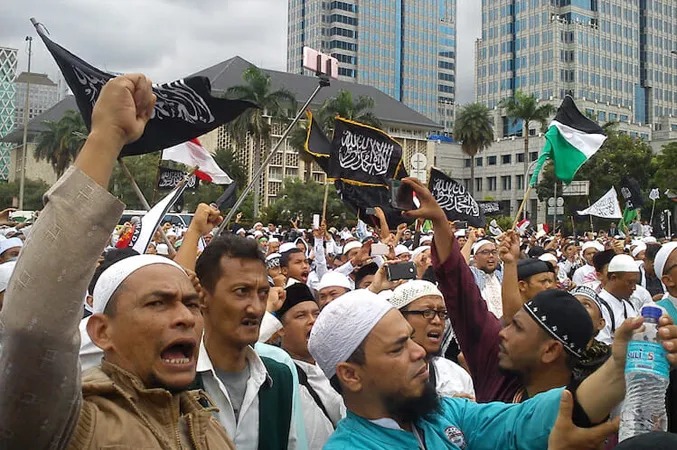
It should be noted that Mahfuz is a former leader of Jamaat-ul-Mujahedeen Bangladesh (JMB), and later founded Jama’atul Ansar Fil Hindal Sharqiya in 2019. Both individuals were also previously detained on multiple terrorism charges. From Faisal’s confession, it came to light that most of these Bangladeshi-national militants have moved to Afghanistan either via Saudi Arabia or via Pakistan to join the TTP. Mostly youth, these militants seek to establish an Islamic caliphate worldwide based on the Sharia. During this arrest, it was also learned that four Bangladeshi nationals who joined the TTP were killed on the Afghan-Pakistan border, while 25 more were preparing to leave Bangladesh to join jihad.
The confession also shed light on one Imran Haider, a senior TTP figure, as being the central figure behind the online indoctrination of Bangladeshi youth to recruit them to the TTP. Around the same time, 36 Bangladeshi nationals were reportedly detained in Malaysia for their alleged involvement in a “radical militant movement”. However, Bangladesh’s home advisor downplayed this and denied their extremist links. Since last year, South Asian geopolitics has gone through an unpredictable arc with the fall of Sheikh Hasina in Bangladesh following the July Uprising. On one hand, the interim government in Bangladesh pivoted to Pakistan, boosting bilateral ties—including trade, education, defence and intelligence sharing, while maintaining a deliberate distance with India, Bangladesh’s oldest and long-standing regional partner.
On the other hand, Bangladesh witnessed a rapid surge of Islamist groups, so long sidelined and suppressed via counterterrorism efforts of the Awami League government. Transnational extremist groups like Hizb-ut Tahrir (banned in 2009) made their presence felt in the country, notably for allegedly organising a procession by students in Dhaka under the banner of ‘Conscious Teachers and Students’, demanding the establishment of an Islamic Caliphate system in Bangladesh in October last year and the ‘March to Khilafat’ rally this March. Muhammad Yunus has also appointed individuals associated with Hizb-ut Tahrir in his interim government, sparking controversy in the political scenario.
Moreover, leaders and associates of groups like Hefazat-e-Islam, Ansarulla Bangla Team and Khelafat Majlis—arrested for their extremist links were also released under the interim government, who have now resumed their hate propaganda, to push for the creation of an Islamic state in Bangladesh based on Sharia law. These developments raise concerns about the resurrection of Islamist extremism in Bangladesh, given its history. Those from Bangladesh joined the Taliban to fight against the Soviet Union in Afghanistan, returned to their homeland in the 1980s and 90s and established extremist organisations, such as Harkat-ul Jihad Al Islami Bangladesh (HuJIB), and Jamaat-ul-Mujahedeen Bangladesh (JMB).
Needless to say, these groups not only had ideological links with the Taliban but also received logistical support and training from al-Qaeda and Pakistan-based Laskhar-e-Taiba (LeT), and their terror operations in Bangladesh were aimed at creating a Taliban-like establishment in the country. While their activities were crippled due to counterterrorism measures by 2007, Bangladesh remained under periodic terror attacks, witnessing a surge from 2013-2016. The political changes in Bangladesh following Hasina’s deposition further strengthen concerns of Islamist extremists’ comeback in the country, as evident from the above-stated reports.
The recent visit of seven Islamic clerics, including the Khelafat Majlis chief and Nayeb-e-Amir (Pir of Madhupur) of Hefazat-e-Islam, to Afghanistan on the invitation of the Taliban should be viewed with the same caution as the rising trend of militancy in Bangladesh. These groups share the same ideological orientation—Deobandi school of Islam—as that of the Taliban and hailed the Taliban takeover of Afghanistan as a “triumph of Islam”. While not extremist groups themselves, these parties’ ideological inclination to the Taliban and their own hardline stance on socio-cultural-political life signal a possible convergence of interests between these organisations and foreign-linked militant ones. Nevertheless, Bangladesh’s Anti-Terrorism Unit’s additional inspector general claims that there is no militant activity in Bangladesh while simultaneously stating that future militant activity cannot be ruled out either. With the election around the corner and Bangladesh’s fragile state of democracy, this rise of militancy in Bangladesh now poses the greatest security risk, not just for Dhaka but also for South Asia as a whole.One can only hope that Bangladesh’s law enforcement forces to deal with militant trends seriously without having to resort to denial. Otherwise, it would not be long before Bangladesh becomes the second Pakistan.
–IANS
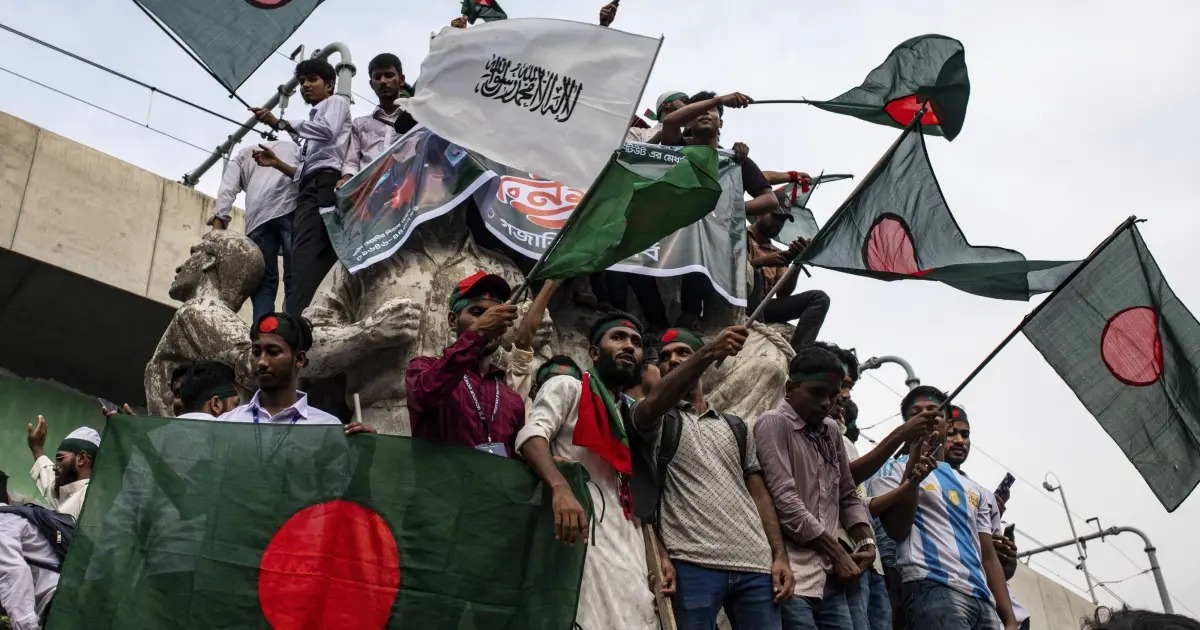
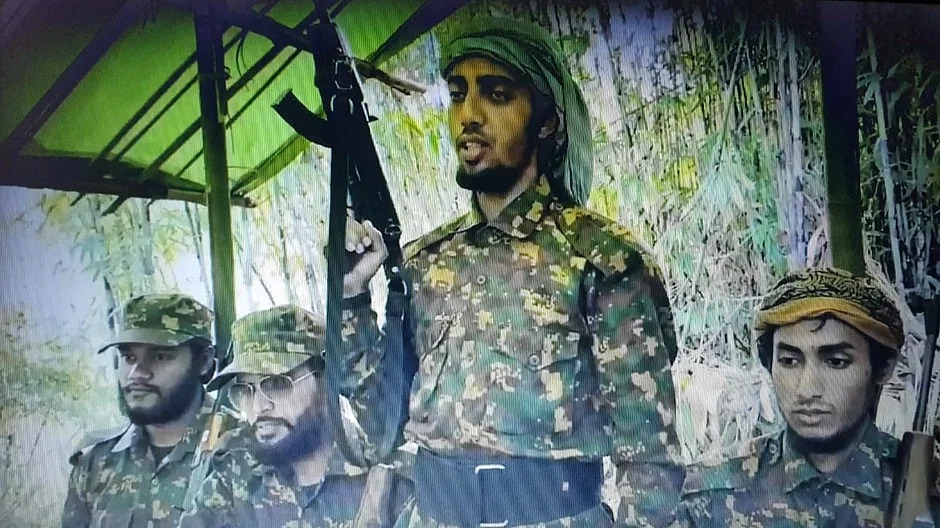
Bangladesh’s ultimate goal of forming an Islamic Revolutionary Army goes beyond internal consolidation and aims to position the country as a strategic outpost for transnational jihadist operations – serving Pakistan’s geopolitical interests and silencing secular voices, a report cited on Wednesday. It mentioned that by forging alliances with Islamist elements and portraying them as “grassroots defenders”, the regime led by Muhammad Yunus seeks to weaken the Bangladesh Army – the last standing national institution capable of resisting radical influence.
“A grave and coordinated conspiracy is unfolding within Bangladesh. Behind the façade of political rhetoric and ‘anti-discrimination’ activism, the regime of Muhammad Yunus has embarked on a project that could ignite the most serious security crisis in South Asia since the rise of the Taliban,” a report in leading Bangladeshi outlet ‘Blitz’ has detailed. Citing multiple sources – including regime insiders, social media disclosures, and intelligence leaks- the report indicated that an Islamic Revolutionary Army (IRA) is being formed to supplant the Bangladesh Army with an ideologically driven militia loyal to Yunus and his Islamist allies.
“This so-called ‘Islamic Revolutionary Army’ is not a mere political stunt or student enthusiasm. It represents a dangerous convergence of radical Islamism, foreign intelligence collusion, and calculated efforts to militarise civilian networks. The consequences, if unchecked, could transform Bangladesh from a moderate Muslim democracy into a launchpad for jihadist expansion across South Asia,” it stressed. According to the report, in a stunning revelation on his social media platform earlier this week, Asif Mahmud Shojib Bhuyain – “an influential as well as controversial” advisor to the Yunus regime – publicly announced the recruitment and training of 8,850 individuals across seven training centres in Bangladesh.
He outlined the programme, stating that trainees would undergo martial arts, judo, taekwondo, and firearms instruction. Hours after the post, the screenshots went viral before disappearing. Citing sources within Dhaka, the report confirmed that this marked only the first phase of a larger plan with five successive batches of 8,850 recruits each set to complete training by January 2026. “The recruitment process reportedly includes written, viva, and physical tests — all overseen by retired Bangladeshi officers with strong pro-Pakistan leanings, alongside covert representatives of Pakistan’s Inter-Services Intelligence (ISI) and Turkey’s Milli İstihbarat Teskilati (MIT),” it highlighted.
“Bangladesh’s civil society, its remaining independent journalists, and the patriotic factions within the military must act before it is too late. Once a revolutionary army rooted in ideology replaces a professional army bound by the constitution, Bangladesh will no longer be a sovereign republic – it will be a caliphate in disguise,” the report noted.
–IANS
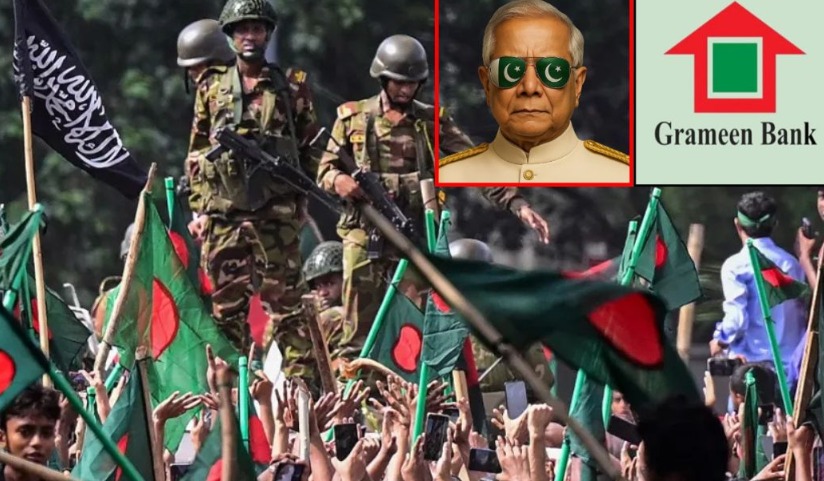
Muhammad Yunus, widely recognised as the founder of Bangladesh’s conglomerate Grameen Bank is set to come under the cloud, over ‘revelations’ of decades-old documents by a former intelligence officer, which claims that the microcredit model was actually a university research program and it was subsequently hijacked by the Nobel Laureate and “projected as his own”.
Ex-Bangladeshi intel officer Aminul Hoque Polash claims to have unearthed a series of archival documents from 1976-1983 that fundamentally challenge Muhammad Yunus’s credentials of being the founder of the Grameen Bank, the institution that was instrumental in winning him the Nobel Peace Prize in 2006.
Aminul Hoque Polash served ten years in the National Security Intelligence (NSI) and later as a diplomat, and is currently living in exile. He claims that he was forced to leave the country because of was singled out and targeted for persecution by the Yunus regime.
The documents, he claims, show that the microcredit model was actually a university research project created by junior researchers, and Yunus later hijacked it, and the papers also have his signature.
Notably, the model of Grameen Bank, under which small loans (micro-credit) are disbursed to impoverished families without any collateral, became so popular that it was replicated the world over, including some cities in the US and Europe.
The documents accessed by IANS show that the microcredit project originated at Chittagong University, where Muhammad Yunus served as a professor.
“The Rural Economics Programme (REP) was launched in 1976 with a Ford Foundation grant, and the first micro-lending experiment in Jobra village was an action-research project run by research scholars named Shapan Adnan, Nasiruddin and H.I. Latifee. Yunus was only assigned the task of deep tubewell cooperative management,” it said.
It further claims that the Bangladesh Bank adopted the microfinance model and planned a nationwide rollout before Yunus joined.
Another letter dated June 6, 1983, shows the Ford Foundation writing to Chittagong University Vice-Chancellor, approving grants to the varsity for supporting its rural finance program.
The microcredit model, which initially started as a University program in 1976, eventually turned into a national scheme after being authorised by government ordinance to work as an independent bank.
Yunus became its Project Director and, after the 1983 Grameen Bank Ordinance, assumed the role of Managing Director. By the 1990s, he acquired full control over the institution, which was allegedly developed with public funds.
The former intelligence officer, unrelenting in his attack on the Yunus regime, also goes on to claim that Bangladesh is witnessing a redux of what it saw during the 1970s.
Polash claims that the man who hijacked the famed microfinance model is now trying to usurp the state machinery, after taking over power illegally in 2024, and using it to erase obstacles, reward loyalists, and enrich his network.
“The same man who stole a rural research project now governs an entire country with the same appetite for capture,” he says with an alarming tone.
Citing multiple incidents of impropriety and misconduct, he claimed that prison sentences of criminals are being overturned, corruption cases are being withdrawn, and undue financial benefits are being extended to Grameen companies.
He also holds the Yunus regime accountable for aggressive nepotism in governance, disbursal of licences to his enterprises, tax exemption and other favours being extended to Grameen Bank.
“The same man who stole a rural research project now governs an entire country with the same appetite for capture,” he says in an alarming tone.
–IANS
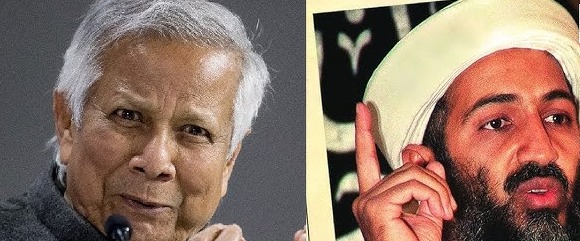
An investigative report published by Blitz, a leading Bangladesh weekly, has alleged that Nobel laureate Muhammad Yunus’s global ‘Grameen’ network has long-standing connections with individuals identified by Western intelligence agencies as financiers of Osama bin Laden and the Al Qaeda network. The report, authored by Blitz editor Salah Uddin Shoaib Choudhury, has called for an international inquiry into Yunus’s transnational financial partnerships.
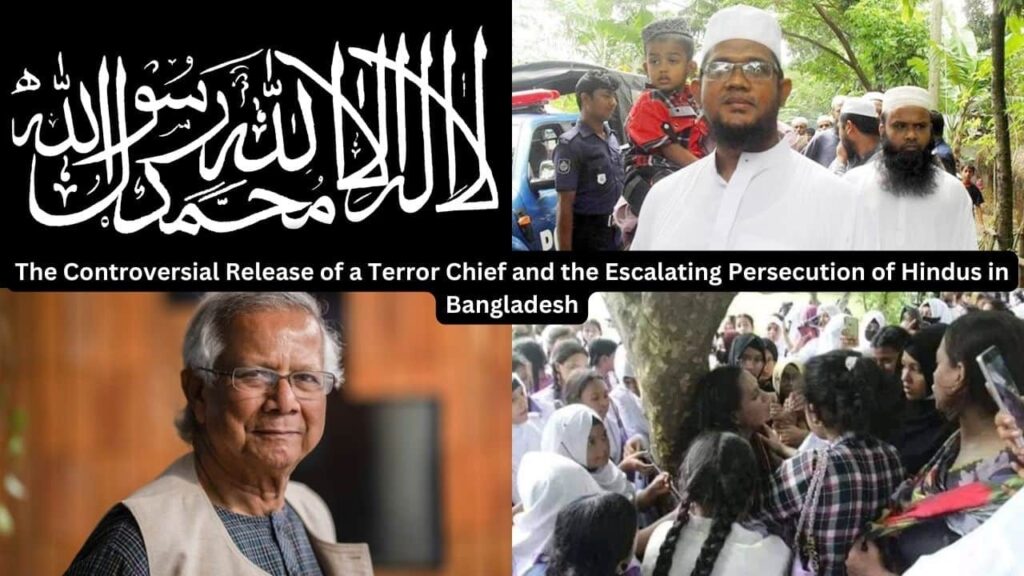
According to the report, “For years, Nobel laureate Muhammad Yunus has been celebrated across the world as a pioneer of microfinance and a champion of the poor. Yet behind this carefully polished global image lies a far darker reality — a web of connections linking Yunus’s sprawling ‘Grameen’ empire to individuals named by Western intelligence agencies as financiers of Osama bin Laden and Al Qaeda.”
The report further adds, “In March 2003, The Wall Street Journal published a list of Al Qaeda donors based on CIA information, where the name of Mohammed Abdul Latif Jameel — a Saudi businessman and board member of Grameen-Jameel Microfinance — appeared prominently. The report noted that Jameel was one of the key funders of Osama bin Laden, the notorious mastermind behind the September 11 terrorist attacks.”
Online corporate records describe ‘Grameen-Jameel’ as a social business established in 2007 as a joint venture between the Grameen Foundation and Grow Well Limited, a subsidiary of the Abdul Latif Jameel Group. According to these records, the company’s mission is to “alleviate poverty in the Arab world” through partnerships with microfinance institutions, providing technical and financial support.”
It further adds, “On its LinkedIn page, Grameen-Jameel states that it was established in 2003 and incorporated in 2007 as a joint venture between Grameen Foundation and ALJ Foundation, a subsidiary of the Abdul Latif Jameel Group.”
“The company claims to be the first social business in the Middle East, North Africa (MENA), and Turkey devoted to expanding microfinance. As of December 2013, it facilitated more than USD 65 million in financing, reaching over 2.2 million clients through partner institutions across 10 countries in the MENA region and Turkey.”
According to the report, the company is incorporated in Cyprus and headquartered in Dubai’s International Humanitarian City. Its website is currently inactive, and its Facebook page has been suspiciously deactivated.
“Further strengthening the Grameen-Jameel connection is Zaher Al Munajjed, the Chairman of Grameen-Jameel Microfinance Ltd. Al Munajjed also serves as a senior advisor to Mohammed Abdul Latif Jameel, President of the ALJ Group in Saudi Arabia. With more than 25 years of international business experience, he has played a key role in developing vocational training and microfinance programs. A Harvard Business School alumnus and holder of a Master’s degree in French International Law, Al Munajjed is widely regarded as a major architect of microfinance expansion in the MENA and Turkish regions,” says the Blitz report.
The Jameel family’s controversial past
According to the Blitz report, Yousef Jameel — another prominent figure from the Jameel dynasty — was once notorious in London’s casino circles in the 1980s. According to the Daily Mail, he was widely known as a playboy, later becoming entangled in an international child abduction case.
Adding to the controversies, his name appears in Jeffrey Epstein’s notorious ‘Black Book’, which exposed networks tied to child exploitation and human trafficking. On July 21, 2004, Jameel and others filed an appeal with the British Court of Appeal following the publication of a Sunday Times report titled ‘Car tycoon ‘linked’ to Bin Laden’ on June 8, 2003. The report claimed that Jameel had been sued by the families of the victims of the 9/11 attacks.
On February 3, 2005, Dow Jones & Co., the parent of The Wall Street Journal, filed its own appeal against Yousef Abdul Latif Jameel.
In a landmark ruling on October 11, 2006, the highest court in Britain sided with The Wall Street Journal, affirming the importance of investigative journalism. The ruling highlighted that the article was published as part of a legitimate public-interest inquiry into terror financing.
The court record stated:
“Above the article and headline were photographs of the claimant, Mr Jameel, his company Hartwell PLC, and the Twin Towers burning on 11 September 2001, with the following words: ‘Accused: Yousef Jameel’s family firm bought the British car dealer Hartwell in 1990. Now he is alleged to have helped fund training for the terrorists who carried out the September 11 attacks’.”
Despite these allegations, Jameel has long been regarded as a successful entrepreneur and “generous philanthropist”. He has contributed significant funding to programs at MIT aimed at reducing poverty and improving water and food security. For his philanthropic commitments and contributions to arts and culture in the United Kingdom, Mohammed Abdul Latif Jameel received an honorary knighthood from Queen Elizabeth II. The honour was announced by the British Embassy in Riyadh,” says the Blitz report.
“However, The Guardian later reported that a group of wealthy Saudi businessmen — including individuals close to Jameel — were suing for libel in the High Court over allegations that they may have financed Osama bin Laden’s Al Qaeda network. They chose London because of its reputation as a claimant-friendly environment for defamation cases,” mentions the Blitz report.
Suspicious connections of Grameen
The Blitz report has also mentioned the allegations linking Grameen entities to the Muslim Brotherhood, raising further concerns about Yunus’s global partnerships.
“Even more disturbing are reports indicating sinister links between Grameen Bank and illegal human organ traders. Individuals unable to repay their loans were allegedly coerced into selling their organs to settle debts,” says the Blitz report.
–IANS