
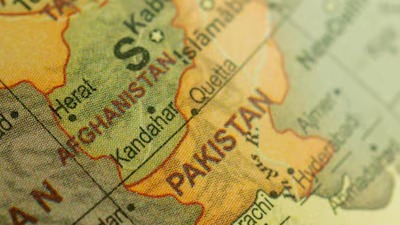
Pakistan is confronting rising blowback from its long‑standing strategy toward Afghanistan as militant violence, diplomatic strain and security concerns escalate along the shared border, analysts say. What was once viewed in Islamabad as a way to secure influence over its western neighbour has increasingly become a source of internal instability, critics argue.
After the Taliban’s return to power in Kabul in 2021, Pakistan sought a strategic relationship with the new regime, expecting that ideological ties and historical cooperation would translate into shared action against cross‑border threats. However, that calculus has faltered, and Islamabad’s efforts to manage the region’s security landscape have increasingly met with challenges that analysts describe as policy blowback.
Security officials in Pakistan point to a steady rise in militant attacks along the Afghan border, with insurgent groups like the Tehreek‑e‑Taliban Pakistan (TTP) blamed for deadly violence in provinces such as Khyber Pakhtunkhwa and Balochistan. A recent ambush in Karak district in which suspected militants killed police officers highlighted the persistent threat and intensifying danger posed by such groups.
Despite Islamabad’s longstanding view of the Taliban as a strategic partner, militants linked to the TTP and other organisations continue to operate, sometimes staging attacks inside Pakistan after crossing from Afghan territory. Pakistani officials say this reflects a failure by Kabul’s authorities to curb groups that threaten Islamabad’s security — a central grievance in bilateral relations.
In 2025, high‑stakes peace talks between Pakistan and the Afghan Taliban regime repeatedly broke down, even after initial ceasefires had been negotiated. Pakistani authorities pressed the Afghan leadership to take concrete action against the TTP and other militants believed to use Afghan soil as a safe haven. However, Kabul refrained from committing to written guarantees, a sticking point that ultimately stalled negotiations.
Defence officials in Pakistan publicly warned that continued attacks originating from across the border could trigger stronger responses, underscoring Islamabad’s growing frustration with what it deems ineffective diplomatic engagement.
For decades, Pakistan’s policy toward Afghanistan was shaped by a “strategic depth” doctrine — the idea that friendly governance in Kabul would provide Islamabad with influence and leverage in regional geopolitics. But many analysts now describe this strategy as backfiring, with militant networks once tolerated or indirectly supported resurfacing as destabilising forces that undermine Pakistan’s own security.
This reversal has prompted criticism from political commentators in Pakistan, who argue that Islamabad misjudged the evolving priorities of the Afghan Taliban and overestimated its ability to control outcomes through ideological affinity. The Taliban leadership, experts note, has diversified its foreign relations and is increasingly resistant to external pressure, including from Pakistan.
The domestic response to these developments reflects deep concern across Pakistan. Some political figures have criticised the military leadership’s handling of foreign policy, pointing to inconsistencies and perceived double standards in how Islamabad addresses cross‑border militancy while decrying external threats from regional rivals.
Security analysts stress that the rebound of militant violence not only jeopardises border areas but also strains Pakistan’s broader diplomatic standing. Without effective cooperation from Kabul, Pakistan may be compelled to adopt a more hard‑nosed approach, including stricter border controls and intensified counterterrorism operations.
The ongoing tensions between Pakistan and Afghanistan — fuelled by mutual distrust and unresolved security grievances — have broader implications for South Asian stability. Militancy spillover, failed diplomatic efforts, and deteriorating bilateral ties risk undermining peace in a region already beset by geopolitical competition and internal conflicts.
Observers caution that unless both Islamabad and Kabul find a mutually acceptable framework to address cross‑border terrorism, the cycle of conflict and retaliation could intensify, with repercussions not just for the two neighbours but for wider regional security.
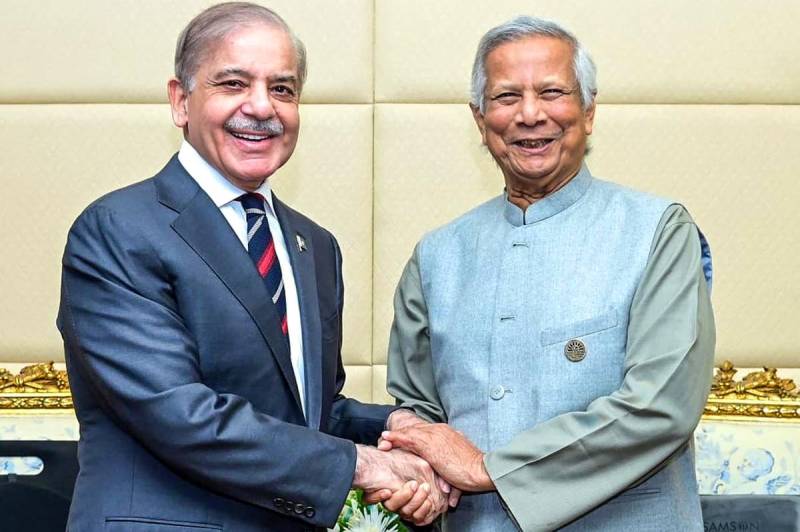
India’s strategic community is sounding alarm bells over a noticeable uptick in security and defence cooperation between Pakistan and Bangladesh, interpreting the warmer ties as a potential challenge to New Delhi’s influence in South Asia and a shift in regional alignments.
Since former Nobel laureate Muhammad Yunus assumed leadership of Bangladesh’s interim government after the political upheavals of 2024, Dhaka has embarked on a diplomatic reset, engaging more actively with Islamabad and other regional players. High‑level military exchanges, increased defence dialogue and new trade and logistics initiatives have sparked debate in New Delhi about the implications of this shift for India’s eastern flank and overall national security calculus.
Recent years have seen Bangladesh and Pakistan strengthen military and security cooperation—with frequent reciprocal visits by senior army officers, discussions on intelligence sharing and signals of future joint training and exercises. These developments represent a departure from Dhaka’s historically India‑centric security partnerships that dominated under the ousted Sheikh Hasina era.
In response to these engagements, Indian analysts argue that the relationship goes beyond routine defence diplomacy, potentially reflecting a strategic realignment that could affect New Delhi’s traditional role as Bangladesh’s principal security partner. There are concerns that collaborative defence initiatives could lead to a deeper presence of Pakistani and allied intelligence assets near India’s vulnerable eastern border region.
Alongside defence cooperation, Pakistan has extended economic overtures to Bangladesh, including proposals for access to Karachi Port and eased trade logistics that could integrate Bangladeshi supply routes with Pakistani trade corridors. Analysts view such economic cooperation not simply as commerce but as part of a broader attempt to embed Islamabad into Dhaka’s strategic outlook, potentially undermining India’s influence in South Asia’s economic and logistical networks.
The combination of these steps—military exchanges and logistical links—feeds Indian apprehension about a nascent Islamabad–Dhaka–Beijing triangle, where Bangladesh pivots towards partners historically antagonistic to India.
India’s strategic concerns are amplified by the porous 4,000‑kilometre Indo‑Bangladesh border, which has historically been susceptible to illegal crossings, smuggling and insurgent movement. Enhanced military ties between Dhaka and Islamabad could, according to some Indian security analysts, provide opportunities for proxy networks or extremist elements to exploit weakened Indian influence, particularly in the northeastern states.
Reports from independent security observers also suggest that Pakistan’s intelligence agencies have been attempting to leverage evolving political currents in Bangladesh to re‑establish networks that pre‑date the 1971 Liberation War, using porous borders and political realignments to advance strategic objectives.
Historical memory adds another layer of complexity. Many in Bangladesh still recall the brutal 1971 Liberation War and harbour deep scepticism toward Pakistan’s intentions. Polling within strategic circles in Bangladesh highlights public unease with closer ties to Islamabad, seen by some as inconsistent with national dignity and historical truth.
This sentiment, however, contrasts with the interim government’s pragmatic diplomacy, which seeks to diversify alliances and counterbalance what it perceives as over‑dependence on any single partner. Dhaka insists that its engagements are aimed at safeguarding national interests and expanding regional connectivity rather than aligning against any neighbour.
New Delhi has taken note of these shifts with caution. Officials and strategic analysts emphasise the need to reaffirm India’s longstanding security and economic partnership with Bangladesh, especially in areas like counterterrorism, border management and regional connectivity. India remains Dhaka’s largest trading partner and principal source of military training and development assistance—a relationship it aims to preserve amid changing geopolitical undercurrents.
Security think tanks in India are urging heightened diplomatic engagement and enhanced intelligence cooperation to ensure that evolving dynamics do not translate into vulnerabilities along India’s eastern borders or erode its influence in a key regional partner.
As Bangladesh navigates its foreign policy post‑Hasina, the recalibration towards Pakistan comes at a delicate moment for South Asian geopolitics. Analysts in New Delhi and across the region caution that while sovereign states have the right to diversify partnerships, careful balancing and transparent diplomacy will be essential to avoid exacerbating tensions in an already volatile neighbourhood.
Whether deeper ties between Dhaka and Islamabad will evolve into enduring strategic realignments or remain limited to issue‑specific cooperation remains a subject of ongoing debate among policymakers and regional experts.
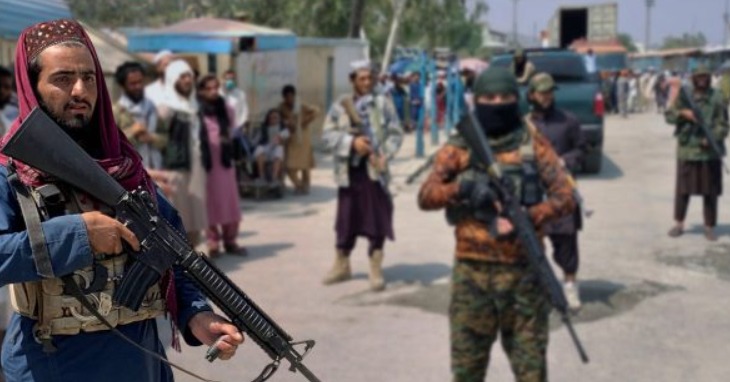
Pakistan’s relationship with the Afghan Taliban‑led government has reached one of its most strained phases in years, with recent public ultimatums from Pakistan’s military leadership underscoring deep frustration over cross‑border militancy and stalled diplomacy. Observers say this shift reflects a broader crisis in Islamabad’s approach: turning to threats over negotiation after years of failed engagement on security issues. In early December, Field Marshal Asim Munir, Pakistan’s Chief of Defence Staff and Army Chief, openly warned the Afghan Taliban that Islamabad may reconsider bilateral ties unless Kabul acts against militants of the Tehreek‑e‑Taliban Pakistan (TTP) said to be operating from Afghan territory. The statement, delivered at a national religious gathering, was unusually blunt in tone and deviated from Pakistan’s traditional mix of quiet diplomacy and indirect pressure.
For more than three years since the Taliban returned to power in Kabul in 2021, Pakistan pursued various methods to influence Afghan policy on Pakistan’s security threats, including back‑channel talks, intelligence coordination and limited military actions. But analysts say these efforts have largely failed to persuade Afghan leaders to take decisive action against TTP fighters.
Instead of quiet negotiation, Islamabad’s recent rhetoric pairs public warnings with appeals to domestic religious authorities — a sign that Pakistan’s security establishment believes traditional channels have lost effectiveness. Making such ultimata before religious leaders was seen as both a symbolic message to internal audiences and a signal that Islamabad feels increasingly isolated in managing cross‑border insurgency threats.
The Taliban that returned to Afghan leadership in August 2021 differs from the group that Pakistan once helped cultivate. Analysts note the movement now seeks broader international legitimacy, economic ties and diversified alliances, including with China, Iran and even India, reducing Pakistan’s leverage. Rather than acting as a strategic proxy, the Afghan administration has insisted that Pakistan’s internal insurgency issues — including the TTP — are Islamabad’s concern and not a matter for Kabul to police.
This stance clashes with Pakistan’s expectation that historical ties and ideological affinity would translate into cooperation against militant groups. Critics argue that Islamabad’s assumption of leverage overlooked evolving Afghan priorities and the Taliban leadership’s desire for autonomy and regional recognition.
The Pakistani Taliban (TTP) remains a significant security challenge inside Pakistan, responsible for deadly attacks across the northwest and border regions. Islamabad’s repeated counterterror operations have at times disrupted militant networks but failed to eliminate the threat, and some measures have drawn criticism for displacing civilians and fueling local grievances, which insurgent groups exploit to recruit and regroup.
Analysts stress that framing the TTP issue solely as an external problem enabled by Afghanistan overlooks the domestic roots of radicalisation and the unintended consequences of past policies that tolerated certain militant factions as strategic assets. This legacy complicates Pakistan’s current security discourse and limits the effectiveness of purely coercive approaches.
Pakistan’s recent shift toward public ultimatums and threats — rather than sustained quiet diplomacy — underscores the broader strategic frustration in Islamabad. Observers caution that while such rhetoric may resonate domestically, it is unlikely to compel a change in Afghan policy and may instead further weaken bilateral trust.
To effectively address the TTP threat, analysts suggest Pakistan may need to balance security operations with political reforms in restive regions, improved governance and renewed diplomatic engagement that acknowledges changing regional dynamics and Afghanistan’s broader international priorities.