
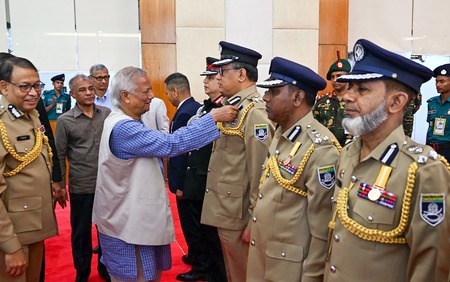
Bangladesh today stands on the brink of an unprecedented national catastrophe. Under the guise of reform and accountability, the pro-Islamist regime of Muhammad Yunus has begun dismantling the nation’s most vital institutions – the Armed Forces and the Directorate General of Forces Intelligence (DGFI). What appears to be a judicial process is, in reality, a political purge aimed at replacing the patriotic guardians of Bangladesh’s sovereignty with a militant, ideologically driven “Islamic Revolutionary Army”. In doing so, the Yunus regime risks transforming Bangladesh from a moderate Muslim democracy into a jihadist state – a South Asian version of Iran or Afghanistan.
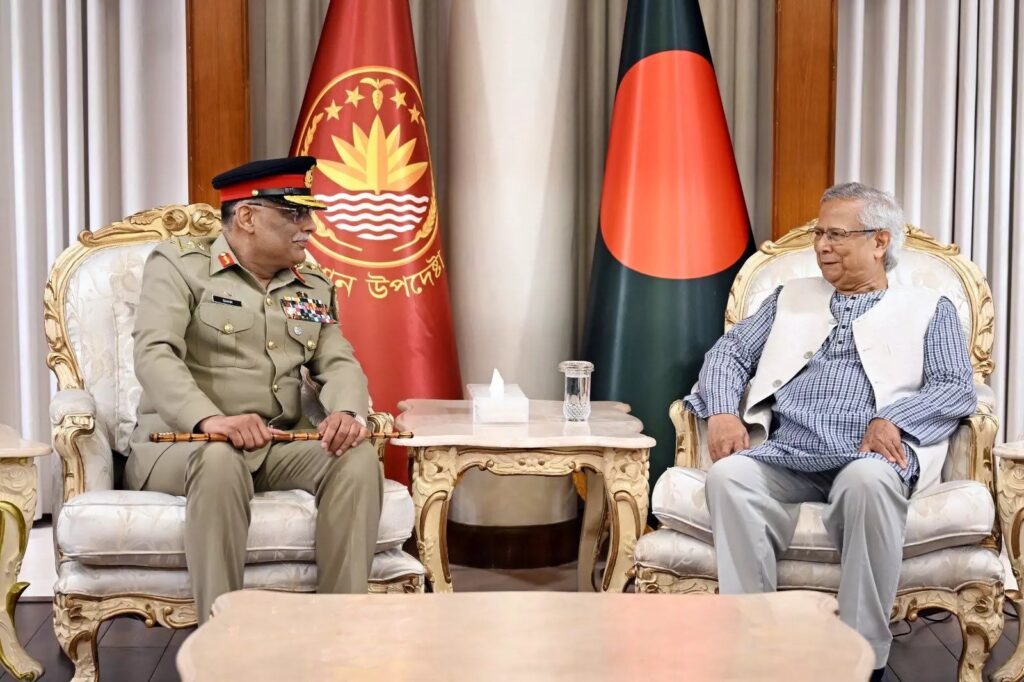
As anticipated, the regime in Dhaka, led by Muhammad Yunus has begun implementing its blueprint to create an Islamic Revolutionary Army (IRA) by disbanding the Bangladesh Armed Forces and the country’s primary intelligence agency, the Directorate General of Forces Intelligence (DGFI).
According to credible media reports, investigators have submitted a chargesheet against 11 army officers, including eight Generals, accusing them of committing “crimes against humanity” – offences carrying the death penalty. The charge sheet also names former Prime Minister Sheikh Hasina as the principal accused. Simultaneously, the regime has launched legal measures to permanently outlaw the Awami League, Bangladesh’s oldest and largest political party, in a move clearly engineered to eliminate any chance of an inclusive national election, which Yunus intends to stage in February 2026 under his absolute control.
The accused listed in the chargesheet include: former Prime Minister Sheikh Hasina, former National Security Advisor Tarique Ahmed Siddique, former DGFI Director General Lt. Gen. (retd) Mohammad Akbar Hossain, former DG Major General (retd) Saiful Abedin, Lt. Gen. (retd) Md Saiful Alam, former DG Lt. Gen. Tabrez Shams Chowdhury, former DG Major General (retd) Hamidul Haque, Major General Towhidul Islam, Major General Sarwar Hossain, Major General Kabir Ahmed, Brigadier General Mahbubur Rahman Siddique, Brigadier General Ahmed Tanvir Majhar Siddique, and Lt. Col. (retd) Makhsurul Haque.
Among them, four are currently in active service. However, under the amended International Crimes Tribunal Act, serving officers accused in such cases are suspended from holding official positions, according to Chief Prosecutor Tajul Islam.
The entire case behind this chargesheet accusing senior military officers originates from a dramatized “documentary film” funded by the National Endowment for Democracy (NED) – an organisation that has, for several years, played an active role in defaming the Bangladesh Army and DGFI.
Unfortunately, during this massive propaganda campaign, both institutions failed to mount an effective counter-narrative. Even after Sheikh Hasina’s ouster, when Yunus and his allies intensified their attacks on DGFI — particularly through claims of detentions inside “Aynaghar”, an imaginary facility invented by a NED-funded, overseas-based media outlet – the disinformation continued unchecked. The so-called “documentary” presented fabricated testimonies from alleged victims, serving as the foundation for the current legal onslaught.
Most importantly, the Bangladesh Armed Forces and DGFI had played a crucial role in the 2024 anti-Hasina protests, which ultimately enabled the US Deep State’s regime-change operation to succeed. More than 14 months after Sheikh Hasina’s removal and the installation of the Yunus regime – a transition initially supported by segments of the military – it has become evident that the ultimate goal of Yunus and his foreign backers is to completely dismantle Bangladesh’s Armed Forces and counterterrorism institutions to pave the way for transforming the country into an Islamist Caliphate.
It was earlier reported that Pakistan’s Army Chief General Asim Munir has been orchestrating this plot to dismantle the Bangladesh Army and DGFI, working in concert with key figures of Jamaat-e-Islami, Ansar Al-Islam (the local franchise of Al-Qaeda), and several high-ranking members of the Yunus regime. Although the current chargesheet targets former DGFI chiefs and counterterrorism officials, credible intelligence sources suggest Islamabad’s ultimate goal is to implicate Army Chief General Waker Uz Zaman, accusing him of “enforced disappearances and unlawful detentions”.
Muhammad Yunus and at least two of his close foreign-linked advisors are believed to be quietly assisting this effort, providing legal and diplomatic cover to neutralise Bangladesh’s last line of defence against Islamist expansionism.
Commenting on this alarming development, noted military analyst M A Hossain stated, “This is possibly the first-ever case in any country where top officials of a national intelligence agency have been prosecuted for defending their nation from terrorism. It defies logic. How can a judiciary target its own security defenders in a case clearly masterminded by Pakistan’s military establishment and its local proxies? The next step, inevitably, will be implicating Army Chief General Waker Uz Zaman – the ultimate command authority – to decapitate the Armed Forces entirely”.
Defence expert Damsana Ranadhiran, a special contributor to Bangladesh’s Blitz media outlet, warned: “This legal ambush targetting Bangladeshi Generals will have dire consequences. It will weaken the military’s command structure and open the door for Pakistan-backed officers to take charge. This is a textbook ISI strategy – a blend of legal warfare, psychological manipulation, and political subversion – identical to what Pakistan executed in Afghanistan and Kashmir”.
Ranadhiran further cautioned that Bangladesh’s sovereignty and regional stability are now at stake.
“Bangladesh did not endure the genocide of 1971 only to be subdued again by Pakistan’s puppeteers and Islamist collaborators. If Pakistan’s designs are not countered immediately through diplomatic, military, and legal means, South Asia may descend into chaos – a region overrun by proxy wars, terror networks, and narcotics-driven insurgencies”.
These fabricated charges against senior military officers are designed to discredit and paralyse the Armed Forces, paving the way for Yunus to replace them with a new paramilitary militia modelled after Iran’s Islamic Revolutionary Guard Corps (IRGC). The envisioned Islamic Revolutionary Army (IRA) will be ideologically loyal to the regime rather than to the nation – a hallmark of theocratic authoritarianism.
The motive behind Yunus’s hostility toward the military lies in its potential to resist his project of selling out Bangladesh’s sovereignty for personal and foreign gain. Much like his political idol Hamid Karzai, Yunus seeks to maintain power through foreign patronage rather than public legitimacy.
Analysts estimate his genuine domestic support at no more than five per cent. His crusade against the Awami League, with its 45 million supporters, is part of a larger design to eliminate all political opposition. After banning the Awami League, the regime now aims to suppress smaller parties such as the Jatiya Party and left-leaning groups to cement a one-man rule under the pretext of “national reform”.
Alongside institutional purges, Yunus has unleashed a campaign of terror against journalists, intellectuals, and dissenters. Hundreds have been imprisoned, and at least 266 journalists face fabricated murder charges – making Yunus arguably an even greater oppressor of the press than Turkey’s President Recep Tayyip Erdogan.
Meanwhile, the regime is rapidly replacing the national police with an “Auxiliary Police” modeled on Iran’s morality police. Recruited from Hizb ut-Tahrir, Hefazat-e-Islam, and Ansar Al-Islam, this force enforces Taliban-style dress codes and harasses women in traditional Bengali attire. Reports of hijab-clad patrols intimidating citizens are becoming alarmingly common.
For decades, DGFI played a pivotal role in fighting terrorism and militancy, dismantling insurgent networks, and shutting down foreign-backed terrorist training camps – including those of India’s United Liberation Front of Assam (ULFA). Its success in keeping Bangladesh free of transnational terrorism made it a target of Islamist extremists and the Pakistani ISI, who now see an opportunity for revenge under the Yunus administration.
Since last year’s Jihadist Coup, Bangladesh has been slipping rapidly toward Islamist rule. Top jihadists – including Ansar Al-Islam leader Jashimuddin Rahmani – were released from prison and now allowed to operate freely. Rahmani has publicly vowed to attack secular voices and bloggers, branding them as “enemies of Islam”. Shockingly, the regime has made no effort to re-arrest such fugitives or curb their militant propaganda.
If this trajectory continues unchecked, Bangladesh may soon cease to exist as the secular republic envisioned by the martyrs of 1971. The systematic destruction of the Armed Forces, intelligence services, and democratic institutions is not merely a domestic tragedy – it is a regional security crisis. South Asia cannot afford another failed state governed by zealots and manipulated by Pakistan’s ISI. The international community, especially India and democratic allies, must recognise that defending Bangladesh’s Armed Forces today is equivalent to defending the last line of resistance against the spread of militant Islamism in South Asia. Silence is complicity – and complicity, in this case, could be catastrophic.
–IANS

Pakistan’s enduring economic difficulties are well recognised globally. In recent years, the nation has experienced alarming inflation, an ongoing crisis in foreign exchange reserves, and an overwhelming debt burden. These issues have led to widespread unemployment, increased poverty, and daily hardships for a population already caught in the crossfire of recurring terrorist violence and military operations ostensibly aimed at countering it. Nevertheless, despite this worsening scenario and the harsh effects of austerity measures imposed by the IMF on the populace, Pakistan’s disproportionately large military appears unaffected and is, in fact, gradually expanding its share of the national economy.
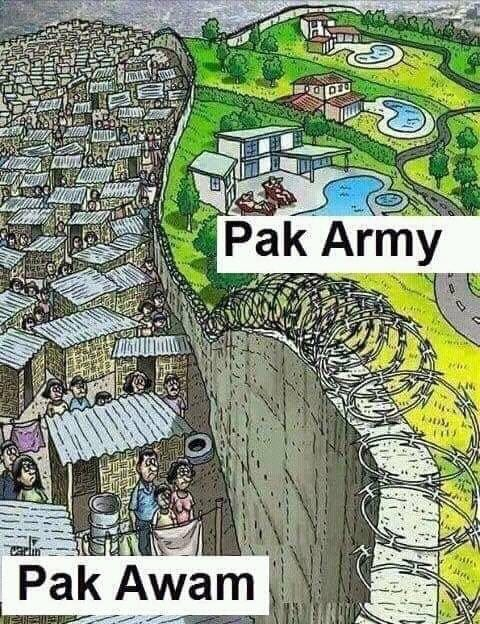
The expansive role of the military in Pakistan’s domestic affairs extends beyond politics and foreign policy, significantly permeating the economic sphere. To begin with, the military absorbs a substantial portion of the GDP—Pakistan’s defence expenditure for FY2025 stood at 2.3% of GDP, exceeding equivalent figures for India, China, and the European Union. According to a study by Moneycontrol, Pakistan’s defence budget experienced an annual growth rate of 12.6% between FY17 and FY25, compared to India’s 8%. In contrast, education and healthcare were allocated merely 2% and 1.3% of the GDP, respectively.
In addition, the military has developed an extensive private conglomerate, commonly referred to as the ‘milbus’ (military business)—a term introduced by prominent scholar Ayesha Siddiqa in her seminal work Military Inc.: Inside Pakistan’s Military Economy. Through a network of commercial enterprises, including the Fauji Foundation, Army Welfare Trust, Shaheen Foundation, Bahria Foundation, and the highly contentious Defence Housing Authority (DHA), the military has embedded itself across numerous sectors such as real estate, banking, manufacturing, agriculture, shipping, education, and media. Some estimates suggest that the military controls approximately 12% of the nation’s land.
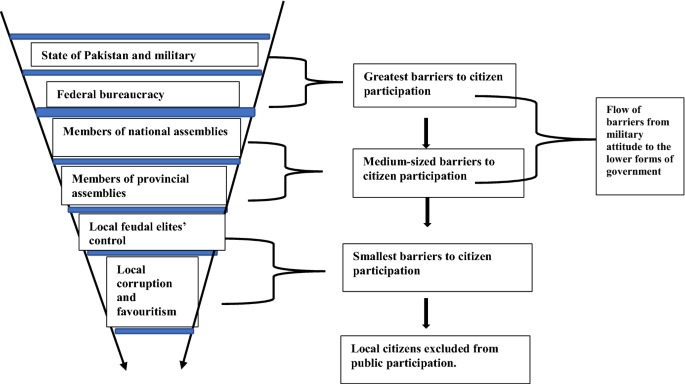
Although the military and its proponents contend that the professionalism, stability, and efficiency it represents are reflected in its economic endeavours, many critics challenge the monopolistic, expansive, and opaque nature of this military dominance. Defence-operated industries suppress local competition and private enterprise, while benefiting from tax concessions and minimal regulatory oversight. By blurring the boundary between protector and profiteer, the military prioritises strategic positioning and its own commercial gain over public welfare and principles of market equity. These concerns are amplified when certain ventures become entangled in corruption scandals, such as the DHA Valley Islamabad fraud, or disregard public interests, as seen in the Indus canals initiative. The DHA—initially established to offer affordable housing for retired military personnel but now catering to elite residential projects—has faced widespread criticism over questionable land acquisitions and community displacements to benefit the privileged. Moreover, the inclusion of senior military officials in the 2021 Pandora Papers exposed the extent to which they funnel vital national assets through offshore financial channels.
The ‘milbus’ in Pakistan has not only exacerbated the persistent and severe underinvestment in human development, but the military’s substantial economic influence also reinforces its political dominance within the country. It is well established that the military remains the most powerful institution in Pakistan, having governed directly for nearly three decades and exerting significant influence behind the scenes during periods of civilian administration. Given the military’s pervasive control over the economy, civilian governments are largely stripped of the ability to make independent decisions based on the needs and interests of the populace.
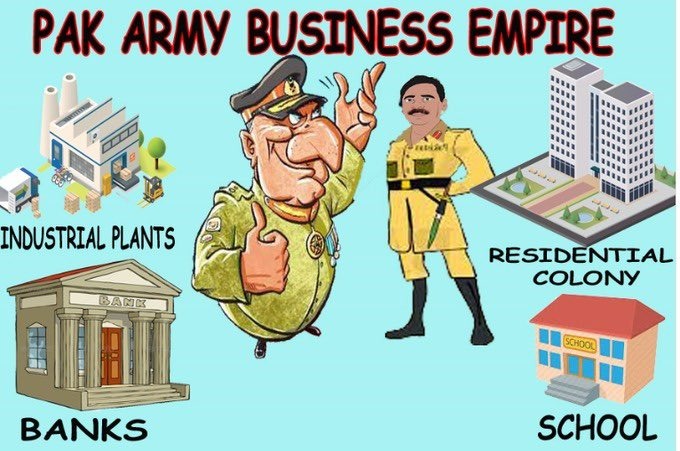
Thus, the expansive economic domain of the military in Pakistan has a direct impact on the nation’s socio-economic stability. On one hand, defence-operated enterprises—shielded from public audits and regulatory scrutiny—create monopolies that undermine local businesses, deplete public resources, and significantly intensify inequality. On the other hand, the ‘milbus’ entrenches authoritarianism, rendering civilian governments largely symbolic. At a time when the country’s economic crisis continues to spiral, inflicting severe hardship on ordinary citizens, it is essential to critically reassess the allocation of national resources, particularly those directed towards the military. The military’s vast commercial ventures must be brought under the same regulatory framework as civilian enterprises, and its market dominance restricted. Achieving this requires a fundamental recalibration of civil-military relations, along with a reflective discourse on the appropriate role of the military within a democratic framework.