
-Arun Anand
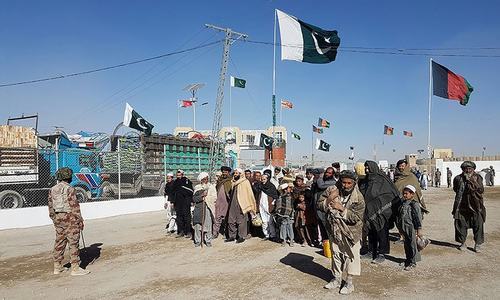
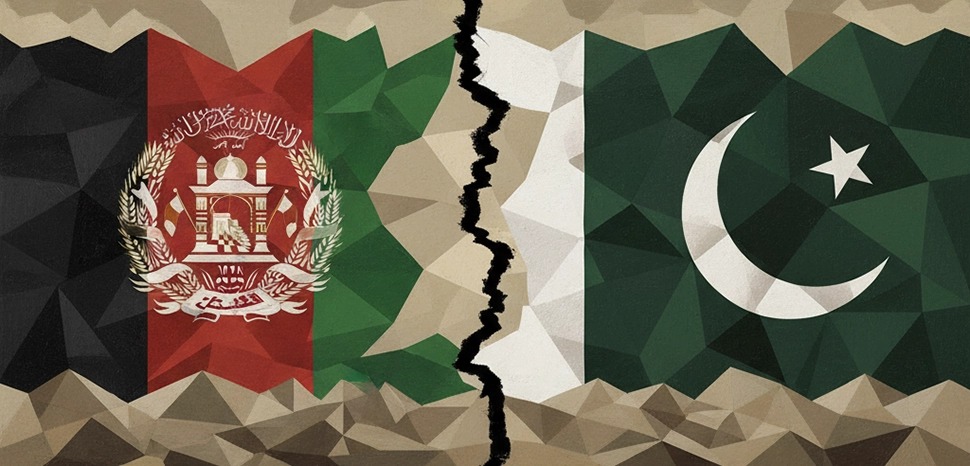
For decades, Pakistan has insisted that stability in Afghanistan is essential for its own security. Yet today, Islamabad is pursuing a policy that does exactly the opposite by strangling Afghanistan’s fragile economy. The objective is to ‘coerce’ the Afghan Taliban government into submission. The prolonged closure of key border crossings along the Durand Line, including Torkham between Khyber Pakhtunkhwa and Nangarhar and Chaman-Spin Boldak between Balochistan and Kandahar, has turned geography into a weapon. It is a classic case of Pakistan weaponising Afghanistan’s landlocked reality in order to force political compliance through economic suffocation.
Border Closures as Economic Warfare
For more than four months since October 2025 heavy military clashes, these border crossings have remained shut. The informal cross-border trade that has been a feature of Afghanistan-Pakistan relations since decades. Millions of Afghans depend on this for daily survival. With the daily movement of essentials like food, medicine, fuel, and construction materials effectively stopped, Afghans face a severe crisis as Afghanistan used to export much of its agriculture and horticulture produce besides coal to the Pakistani market.
The cross-border trade between the two countries saw a 40 per cent decline in 2025 from 2024, down from over $2.64 billion to $1.77 billion. For a landlocked country already reeling from international sanctions, frozen assets, and humanitarian crisis, the impact has been more than severe. And Pakistan knows this, which is precisely what gives its policy a coercive power.
Islamabad has justified the border closure by accusing the Afghan Taliban of sheltering terrorist groups such as Tehreek-e-Taliban Pakistan (TTP), besides enabling attacks by Baloch insurgents like the Balochistan Liberation Army (BLA). On January 20, Prime Minister Shehbaz Sharif repeated this familiar refrain, insisting that while the blockade “should not have been there”, and yet warning that Afghanistan must decide “whether it wants to live peacefully or not”.
But this rhetoric serves as a smokescreen. While the struggle with militancy is real and deeply destabilising for Pakistan, the current crisis cannot be explained solely or even primarily by security concerns.
From ‘Strategic Depth’ to Strategic Frustration
Instead, it reflects a deeper failure of Islamabad’s Afghan policy, one that has left Pakistan’s military-dominated establishment frustrated, exposed, and resorting to blunt instruments to regain leverage over Kabul.
It may be recalled that when the Taliban returned to power in August 2021, Pakistan’s political and military establishment celebrated openly. The American withdrawal and the collapse of the Western-backed Afghan government were hailed as a vindication of decades of strategic investment. Senior generals spoke of “strategic depth” finally being secured, with then Director General of Inter-Services Intelligence (ISI) famously sipping coffee in Kabul the next day. There was a kind of confidence among Pakistani experts and establishment figures that finally a pliant Kabul would align closely with Islamabad’s regional priorities.
The expectations were sweeping. A Taliban-ruled Afghanistan, it was believed, would deny India any influence in the country besides erasing New Delhi’s soft-power gains built through billions of dollars in infrastructure, education, and development projects. It would accept, or at least stop contesting, the legitimacy of the Durand Line, a colonial-era boundary that cuts through Pashtun lands and has never been formally recognised by any Afghan government, including Taliban in its previous rule from 1996 to 2001. And most importantly, the expectation from the Taliban government was to rein in anti-Pakistan terrorist groups like TTP operating along its porous frontier.
None of this has materialised. Instead, Pakistani leadership now finds itself facing an Afghan Taliban leadership that is assertive and nationalist as well as far less malleable than they had anticipated. Taliban officials speak openly of Afghan sovereignty and have pushed back the Pakistani pressure. They have raised the pitch over the legitimacy of Durand Line hence continuing a long-standing Afghan position that cuts across ideological lines. The result of Pakistani stubbornness means that their relations have grown increasingly tense as marked by border skirmishes, diplomatic barbs, and mutual accusations.
Security Rhetoric and Failing Coercive Strategy
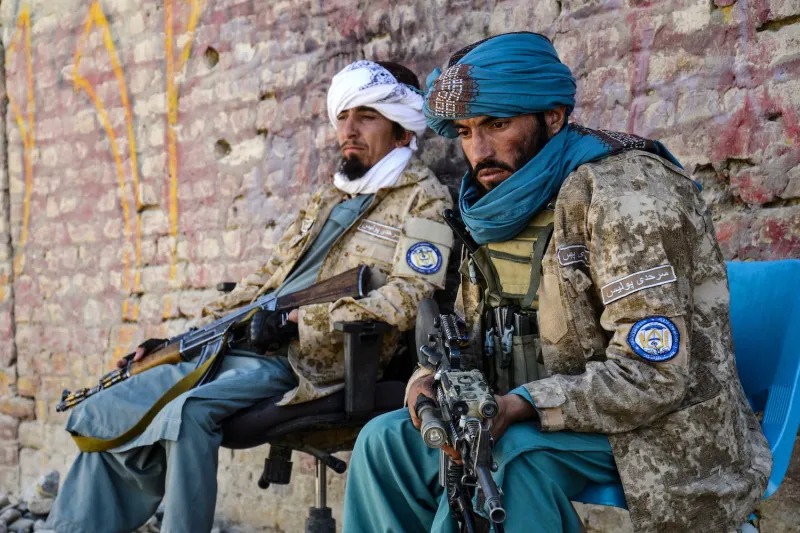
The resurgence of the TTP has been particularly exasperating for Islamabad. Since the Taliban’s return to power in 2021, the group has grown bolder and launched multiple attacks across Pakistan’s northwest. For instance, 667 Pakistani soldiers were killed in 2025 alone as per a report by Pakistan Institute of Conflict and Security Studies (PICSS), up by 26 per cent from 2024.
Likewise, Baloch insurgent violence has also intensified, which has fed a sense of encirclement within Pakistan’s security establishment. Interestingly, rather than addressing the domestic roots of these insurgencies prevalent across KP and Balochistan, such as political exclusion, economic neglect, and heavy-handed military policies, Islamabad has chosen to externalise blame, pointing squarely at Kabul. This is where the accusation that the Afghan Taliban are “backing” the TTP and BLA becomes politically useful for Pakistan. It allows the establishment to escape any calls for accountability over the serious security debacles and present its coercive measures against Afghanistan as defensive.
The tactic of Pakistan leveraging Afghan geography to achieve what its diplomacy has failed to deliver fits a broader pattern of attempts to salvage its failed Afghan strategy. After having overestimated its influence over the Afghan Taliban, its military-dominated establishment now oscillates between coercion and complaint. The mass deportation of hundreds of thousands of Afghan refugees over the past few years is part of the same effort. Though they have framed this measure through legal and security cover, the expulsions have nonetheless added to Afghanistan’s humanitarian burden while signalling Pakistan’s willingness to use vulnerable populations as leverage.
The irony is hard to miss as Pakistan’s leaders insist that instability in Afghanistan threatens regional peace and yet their policies actively deepen that instability. They are willingly overlooking the fact that economic strangulation does not produce compliance and restore lost influence; rather, it breeds resentment and exposes the limits of such a policy.
Nevertheless, Pakistan’s attempt to weaponise Afghanistan’s landlocked status reveals less about Taliban culpability than about Islamabad’s strategic frustration as their grand vision of a compliant, controllable Afghanistan has collapsed. In its place, there is a harder reality at display with a sovereign neighbour with its own interests, grievances, and limits of tolerance.
As such, if Pakistan continues down this path of closing borders, expelling refugees, and masking strategic failures behind its security rhetoric, it may succeed only in entrenching hostility on its western flank. The establishment led by Asim Munir would do Pakistan a favour by understanding that stability cannot be coerced through economic siege but must be built through sober reassessment, regional cooperation, and an acceptance that influence earned through pressure is always fragile. But for now, however, Pakistan appears intent on tightening the noose, betting that hunger and hardship will achieve what decades of policy could not even as history suggests otherwise.