
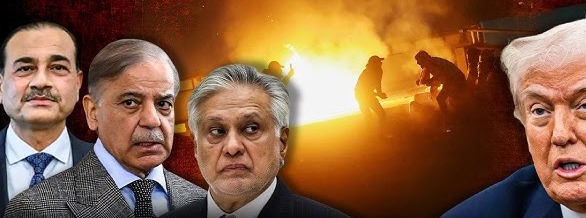
Pakistan’s claims of neutrality in the Middle East mask a deeper alignment with US strategic interests and regional power politics. Behind narratives of victimhood and sovereignty lies a pattern of dependency, propaganda, and calculated geopolitical positioning
Pakistan often portrays itself as a nation caught in the crosshairs of regional rivalries, claiming that it could be the “next target” after Iran in the Middle East. Recently, Pakistan’s Defence Minister, Khawaja Asif, publicly warned of what he described as a coordinated regional design, alleging that India, Afghanistan, and Israel could align against Pakistan in the event of regime change in Tehran and framing the evolving situation as part of a broader hostile agenda encircling Pakistan and turning it into a vassal state. This narrative, however, is misleading and does not reflect the ground realities.
In reality, Pakistan is firmly aligned with the United States and Israel.
Its foreign policy has historically been shaped by its dependency on American support, often receiving substantial financial aid in return for participating in Washington’s regional objectives. Khawaja Asif himself acknowledged that Pakistan has consistently been used as a “toilet paper” by the US—a tool for executing policies in Afghanistan and beyond. Despite this, Pakistani leadership continues to portray itself as innocent, a victim of regional dynamics, and a target of potential aggression from its neighbors.
Manufactured Victimhood and the “War on Terror” Narrative
Pakistan’s narrative of victimhood also extends to its domestic and regional security challenges. When confronted over sponsoring terror against its neighbors, it frequently claims to have suffered enormous losses—more than 90,000 people—during the “War on Terror,” blaming the United States for its misfortunes. While the human cost is real, Pakistan’s government conveniently ignores its own agency in allowing extremist groups to operate and using them strategically against neighboring countries, from Kashmir to Kandahar. It even brainwashed and radicalized the whole Afghan population through madrasa and clerics’ networks; now most of them speak Urdu, which isn’t their mother tongue—such is the level of brainwashing. This narrative serves to absolve Pakistan of responsibility while portraying it as a passive player in global politics.
Pakistan’s structural economic weaknesses exacerbate its reliance on external powers. Dollar inflows from the United States are critical for sustaining its economy. As Moeed Yusuf, Pakistan’s former National Security Adviser, openly acknowledged, “Pakistan does not have financial independence and… its foreign policy is still not free from US influence,” adding that “when you procure loans, your economic sovereignty is compromised,” which in turn shapes foreign policy choices. Similarly, Rabia Akhtar, Dean of Social Sciences at the University of Lahore, has argued that Pakistan’s economic trajectory has long been tied to leveraging its geostrategic importance to attract foreign assistance rather than building sustainable internal economic strength.
As a result, Islamabad has a clear incentive to remain in Washington’s favour. Moreover, in periods without regional crises, Pakistan has historically manufactured or amplified situations—such as highlighting terrorist threats in Afghanistan, projecting the expansion of ISIS in the region, or emphasizing instability elsewhere—to draw US attention and aid. Maintaining relevance in American eyes is a central pillar of Pakistan’s foreign policy.
Another driver of Pakistan’s regional behavior is its strategic rivalry with India. India’s growing partnership with the US in the Indo-Pacific frustrates Islamabad, prompting it to strengthen its ties with Washington to maintain parity in strategic attention. Pakistan’s obsession with “keeping up” with India often leads it to overplay its role in regional crises, creating narratives designed more for domestic and US audiences than for the truth.
The Middle East Dynamics and Contradictions
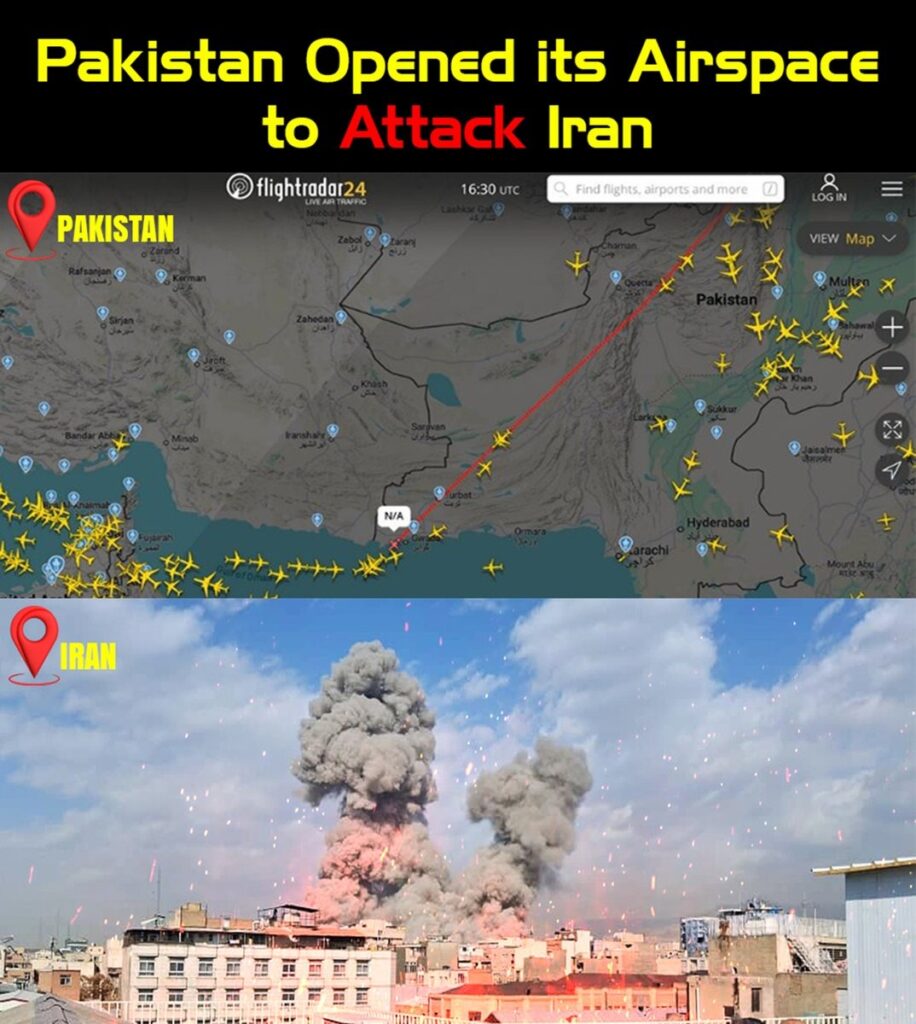
The ongoing Middle East conflict illustrates Pakistan’s duplicity. On the one hand, it assures Iran; on the other hand, it stands with the opposite camp. Pakistan recently signed a mutual defense pact with Saudi Arabia and reinforced these commitments, as its senior leaders, including Deputy Prime Minister and Foreign Minister Ishaq Dar, publicly warned that if Iran were to attack Saudi Arabia, Pakistan would stand by Riyadh under its defense obligations. Such statements make Islamabad’s claims of neutrality increasingly unconvincing. At the same time, narratives circulated by Pakistani sources claimed that Israeli and US fighter jets were approaching Pakistani airspace and warned that Pakistan would attack if they crossed it, projecting an image of vigilance and defiance. Yet parallel reports—including claims by elements within Islamic Revolutionary Guard Corps (IRGC) that Pakistan had facilitated US or Israeli operations—indicate complicity and affirmed the speculation that American forces may have been using Pakistani airspace in the broader confrontation with Iran. By amplifying warnings about potential Israeli aggression while downplaying its own strategic alignments, Pakistan appears intent on masking the extent of its cooperation with Washington and maintaining a veneer of independence for domestic and regional audiences.
Moreover, timing is crucial in geopolitics, and Pakistan has frequently used diversionary tactics. For instance, recent escalations and attacks on Afghanistan appeared to be coordinated to distract Iran from Israeli and US attacks and to weaken the Taliban so that it could help Trump in acquiring Bagram Airbase in Afghanistan, signaling Islamabad’s collaboration with the broader objectives of Washington. Meanwhile, Pakistani media and social networks amplify propaganda, portraying Pakistan as neutral or even aligned with Iran, while its defense minister openly admits long-term subservience to US interests.
Proxy Geopolitics and the Illusion of Neutrality
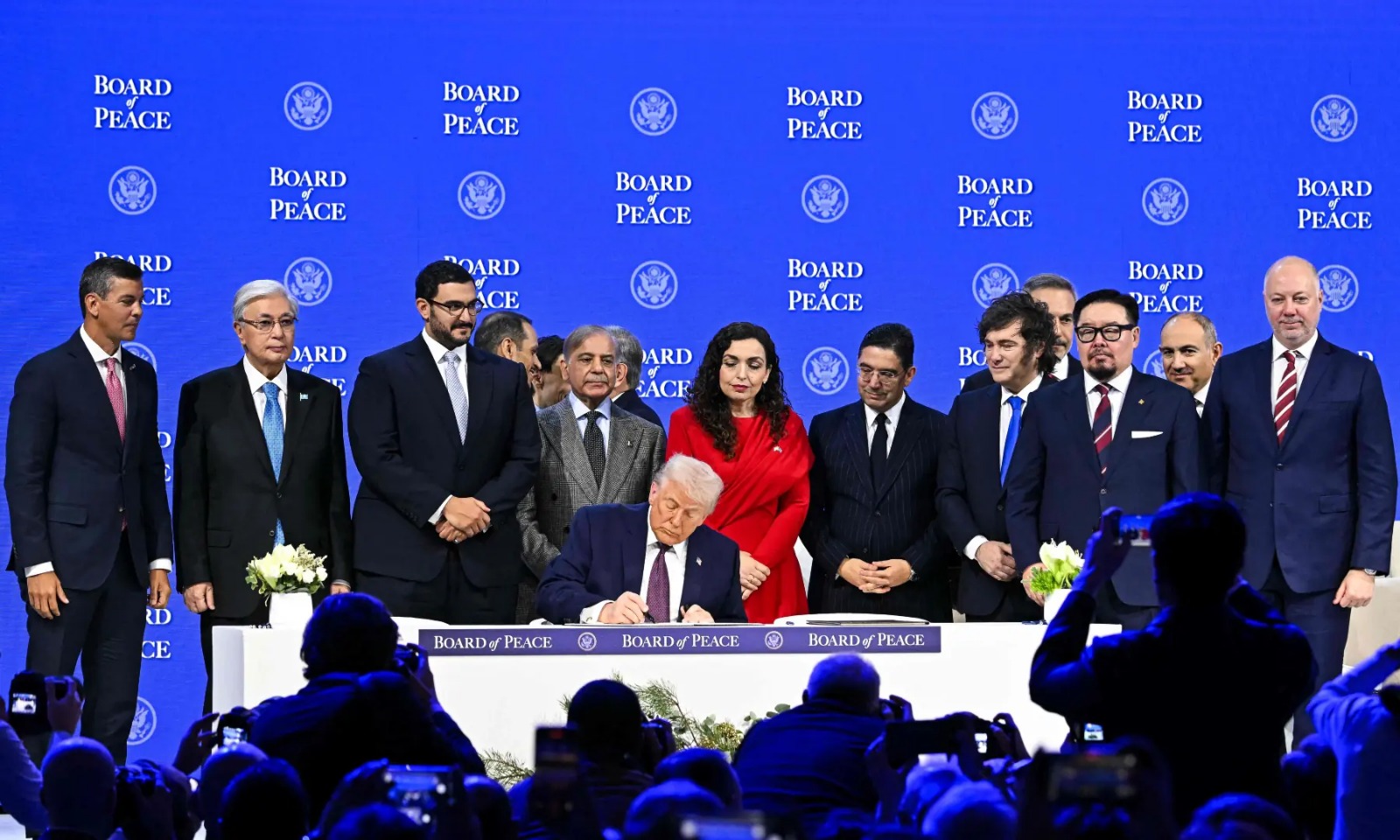
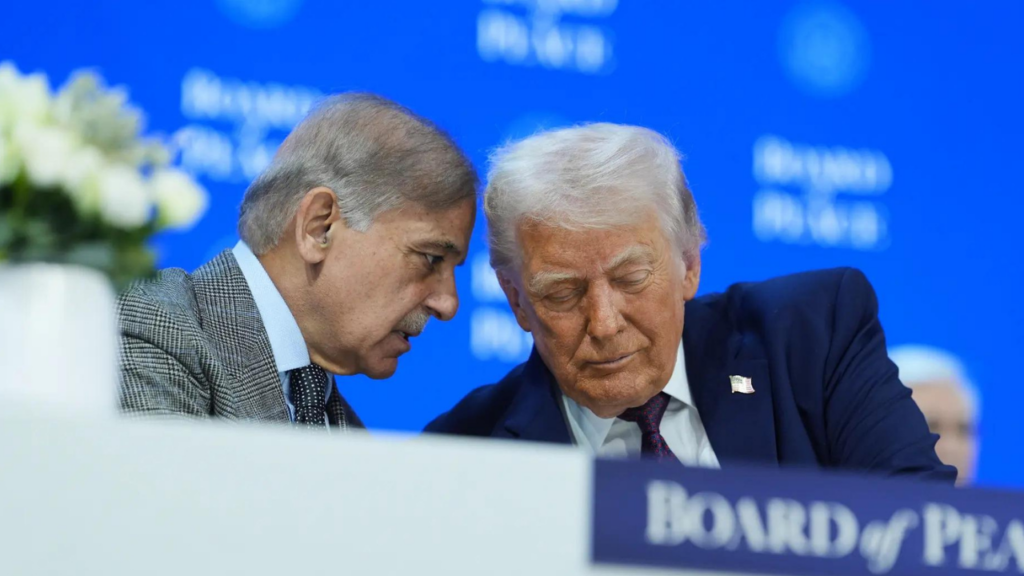
Pakistan has consistently acted as a “bad boy” for the US in the region, from facilitating operations in Afghanistan to serving as a key partner during the “War on Terror,” creating regional instability. Its government, including Prime Minister Shehbaz Sharif, has even nominated President Donald Trump for the Nobel Peace Prize repeatedly and left no stone unturned to praise his global leadership, and one should not forget that Pakistan is an important member of the Board of Peace and will work under the US and Israel in the international stabilization force to disarm Hamas. This highlights Pakistan’s attempts to maintain visibility and favor with American political leadership. Such actions underscore Pakistan’s longstanding strategy: prioritizing US alignment, leveraging crises for attention and aid, and manufacturing narratives that obscure its role in regional instability.
Pakistan’s claims of neutrality, victimhood, or potential targeting by Iran are largely propaganda. Its strategic choices are dictated by dependency on the US, rivalry with India, and obligations under regional defense pacts, particularly with Saudi Arabia. While Islamabad portrays itself as a victim, its leadership has repeatedly acknowledged, implicitly or explicitly, that Pakistan has been a tool of US policy. In short, Pakistan is not neutral—it remains a key US and Israeli proxy in the region, using propaganda to mislead its own people and obscure its role in shaping regional crises.
-Arun Anand
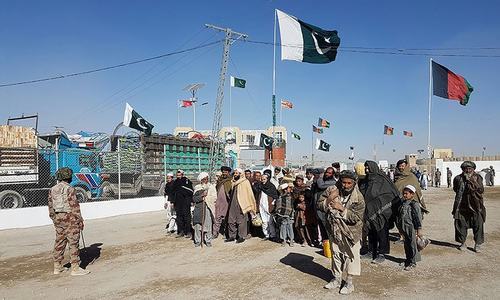
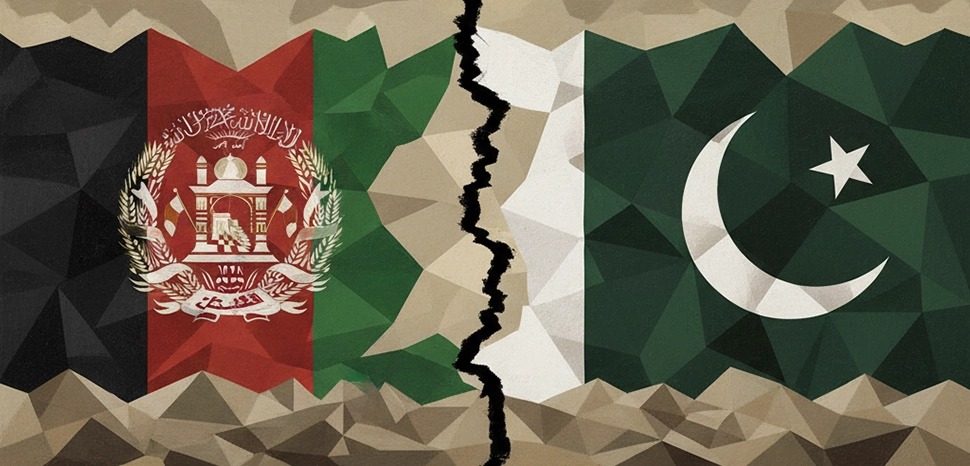
For decades, Pakistan has insisted that stability in Afghanistan is essential for its own security. Yet today, Islamabad is pursuing a policy that does exactly the opposite by strangling Afghanistan’s fragile economy. The objective is to ‘coerce’ the Afghan Taliban government into submission. The prolonged closure of key border crossings along the Durand Line, including Torkham between Khyber Pakhtunkhwa and Nangarhar and Chaman-Spin Boldak between Balochistan and Kandahar, has turned geography into a weapon. It is a classic case of Pakistan weaponising Afghanistan’s landlocked reality in order to force political compliance through economic suffocation.
Border Closures as Economic Warfare
For more than four months since October 2025 heavy military clashes, these border crossings have remained shut. The informal cross-border trade that has been a feature of Afghanistan-Pakistan relations since decades. Millions of Afghans depend on this for daily survival. With the daily movement of essentials like food, medicine, fuel, and construction materials effectively stopped, Afghans face a severe crisis as Afghanistan used to export much of its agriculture and horticulture produce besides coal to the Pakistani market.
The cross-border trade between the two countries saw a 40 per cent decline in 2025 from 2024, down from over $2.64 billion to $1.77 billion. For a landlocked country already reeling from international sanctions, frozen assets, and humanitarian crisis, the impact has been more than severe. And Pakistan knows this, which is precisely what gives its policy a coercive power.
Islamabad has justified the border closure by accusing the Afghan Taliban of sheltering terrorist groups such as Tehreek-e-Taliban Pakistan (TTP), besides enabling attacks by Baloch insurgents like the Balochistan Liberation Army (BLA). On January 20, Prime Minister Shehbaz Sharif repeated this familiar refrain, insisting that while the blockade “should not have been there”, and yet warning that Afghanistan must decide “whether it wants to live peacefully or not”.
But this rhetoric serves as a smokescreen. While the struggle with militancy is real and deeply destabilising for Pakistan, the current crisis cannot be explained solely or even primarily by security concerns.
From ‘Strategic Depth’ to Strategic Frustration
Instead, it reflects a deeper failure of Islamabad’s Afghan policy, one that has left Pakistan’s military-dominated establishment frustrated, exposed, and resorting to blunt instruments to regain leverage over Kabul.
It may be recalled that when the Taliban returned to power in August 2021, Pakistan’s political and military establishment celebrated openly. The American withdrawal and the collapse of the Western-backed Afghan government were hailed as a vindication of decades of strategic investment. Senior generals spoke of “strategic depth” finally being secured, with then Director General of Inter-Services Intelligence (ISI) famously sipping coffee in Kabul the next day. There was a kind of confidence among Pakistani experts and establishment figures that finally a pliant Kabul would align closely with Islamabad’s regional priorities.
The expectations were sweeping. A Taliban-ruled Afghanistan, it was believed, would deny India any influence in the country besides erasing New Delhi’s soft-power gains built through billions of dollars in infrastructure, education, and development projects. It would accept, or at least stop contesting, the legitimacy of the Durand Line, a colonial-era boundary that cuts through Pashtun lands and has never been formally recognised by any Afghan government, including Taliban in its previous rule from 1996 to 2001. And most importantly, the expectation from the Taliban government was to rein in anti-Pakistan terrorist groups like TTP operating along its porous frontier.
None of this has materialised. Instead, Pakistani leadership now finds itself facing an Afghan Taliban leadership that is assertive and nationalist as well as far less malleable than they had anticipated. Taliban officials speak openly of Afghan sovereignty and have pushed back the Pakistani pressure. They have raised the pitch over the legitimacy of Durand Line hence continuing a long-standing Afghan position that cuts across ideological lines. The result of Pakistani stubbornness means that their relations have grown increasingly tense as marked by border skirmishes, diplomatic barbs, and mutual accusations.
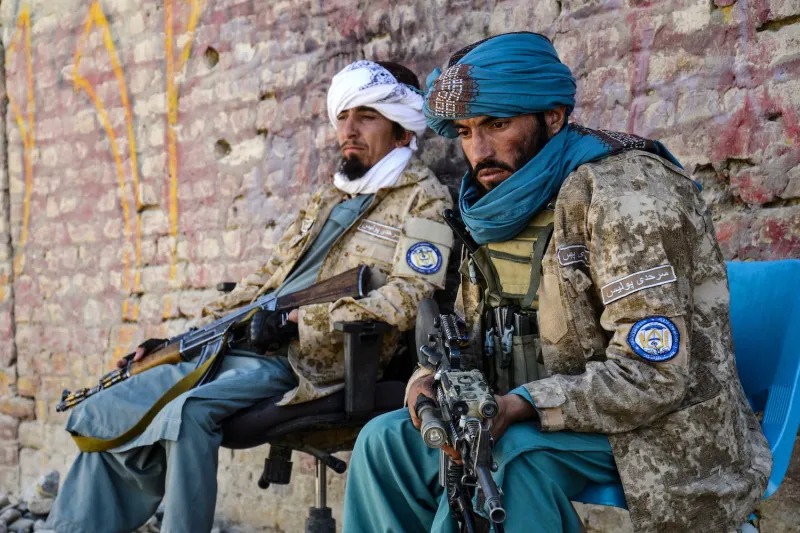
Security Rhetoric and Failing Coercive Strategy
The resurgence of the TTP has been particularly exasperating for Islamabad. Since the Taliban’s return to power in 2021, the group has grown bolder and launched multiple attacks across Pakistan’s northwest. For instance, 667 Pakistani soldiers were killed in 2025 alone as per a report by Pakistan Institute of Conflict and Security Studies (PICSS), up by 26 per cent from 2024.
Likewise, Baloch insurgent violence has also intensified, which has fed a sense of encirclement within Pakistan’s security establishment. Interestingly, rather than addressing the domestic roots of these insurgencies prevalent across KP and Balochistan, such as political exclusion, economic neglect, and heavy-handed military policies, Islamabad has chosen to externalise blame, pointing squarely at Kabul. This is where the accusation that the Afghan Taliban are “backing” the TTP and BLA becomes politically useful for Pakistan. It allows the establishment to escape any calls for accountability over the serious security debacles and present its coercive measures against Afghanistan as defensive.
The tactic of Pakistan leveraging Afghan geography to achieve what its diplomacy has failed to deliver fits a broader pattern of attempts to salvage its failed Afghan strategy. After having overestimated its influence over the Afghan Taliban, its military-dominated establishment now oscillates between coercion and complaint. The mass deportation of hundreds of thousands of Afghan refugees over the past few years is part of the same effort. Though they have framed this measure through legal and security cover, the expulsions have nonetheless added to Afghanistan’s humanitarian burden while signalling Pakistan’s willingness to use vulnerable populations as leverage.
The irony is hard to miss as Pakistan’s leaders insist that instability in Afghanistan threatens regional peace and yet their policies actively deepen that instability. They are willingly overlooking the fact that economic strangulation does not produce compliance and restore lost influence; rather, it breeds resentment and exposes the limits of such a policy.
Nevertheless, Pakistan’s attempt to weaponise Afghanistan’s landlocked status reveals less about Taliban culpability than about Islamabad’s strategic frustration as their grand vision of a compliant, controllable Afghanistan has collapsed. In its place, there is a harder reality at display with a sovereign neighbour with its own interests, grievances, and limits of tolerance.
As such, if Pakistan continues down this path of closing borders, expelling refugees, and masking strategic failures behind its security rhetoric, it may succeed only in entrenching hostility on its western flank. The establishment led by Asim Munir would do Pakistan a favour by understanding that stability cannot be coerced through economic siege but must be built through sober reassessment, regional cooperation, and an acceptance that influence earned through pressure is always fragile. But for now, however, Pakistan appears intent on tightening the noose, betting that hunger and hardship will achieve what decades of policy could not even as history suggests otherwise.
-Arun Anand
The irony of being Pakistan is that it had to pay one billion US dollars for Donald Trump’s Board of Peace seat while it seeks 2.2 billion US dollars in UAE aid. Pakistan is reeling under impoverishment, yet it spends like a country swimming in surplus. It is as if the nation is borrowing oxygen while promising to plant forests abroad. That single contradiction captures the state of affairs in Pakistan today.
It is not anger alone, and it is not confusion alone. It is disbelief mixed with exhaustion. How does a country negotiating loan rollovers, begging for IMF relief, and struggling to keep its foreign reserves afloat suddenly find room for billion-dollar diplomacy? How does a state that asks its people to tighten their belts behave as though its own belt has no limits? The handout photograph from the Pakistan Military Academy at Kakul tells a different story. Prime Minister Shehbaz Sharif stands beside Field Marshal Asim Munir, watching young cadets march in perfect rhythm. Their boots strike the ground with discipline, their posture straight, their future seemingly secure. The image is meant to convey strength, order, and control. It is meant to say the state is steady and confident. But outside that parade ground, Pakistan feels anything but steady. It feels fragile. It feels tired. And tired nations cannot afford grand performances.
Pakistan’s external debt has crossed 125 billion dollars. More than half of the government’s annual revenue now goes into servicing loans. In 2024 alone, the country paid over 24 billion dollars just to keep creditors satisfied. That amount is larger than what Pakistan spends on education and health combined. Foreign reserves hover between 8 and 10 billion dollars, barely enough to cover two months of imports. This is not financial comfort. This is emergency breathing space. This is a nation living month to month, negotiating survival in instalments. At the same time, Pakistan remains tied to a 7-billion-dollar IMF program that dictates its electricity prices, fuel costs, and fiscal discipline. Interest rates are still painfully high, close to 20 percent, choking businesses and discouraging investment. Electricity tariffs are among the highest in South Asia, forcing families to choose between cooling their homes and feeding their children. Fuel prices shape food inflation, and food inflation shapes despair. Development spending continues to shrink, not because it is unnecessary, but because debt leaves little room for growth. And yet, in the middle of this financial suffocation, Pakistan has found roughly one billion dollars to become a permanent member of US President Donald Trump’s newly formed “Board of Peace,” a diplomatic initiative aimed at advancing a lasting ceasefire and reconstruction in Gaza. For oil-rich nations and financially stable economies, a billion dollars is a strategic investment. For Pakistan, it is borrowed confidence. It is a promise made on credit.
The government presents this as moral leadership. It says Pakistan is standing with Gaza and asserting its diplomatic relevance. Morally, the intention is difficult to oppose. Pakistan has always supported the Palestinian cause, and public sentiment overwhelmingly favors justice and peace for Gaza. But morality without economic realism becomes dangerous. A country drowning in debt cannot pretend to be a lifeboat for the world. Compassion does not disappear when finances are tight, but responsibility must grow sharper. This is where the contradiction becomes painfully human. Over forty percent of Pakistan’s population now lives near or below the poverty line. International estimates show that more than twelve million Pakistanis slipped into poverty during recent inflation shocks. Food inflation once crossed forty-five percent, and although official numbers show moderation, market prices remain stubbornly high. Ask any household, and they will tell you that groceries still cost more than they can comfortably afford. Cooking oil, flour, rice, pulses, and vegetables have all become careful calculations rather than casual purchases. Electricity bills now swallow entire salaries. Gas shortages in winter push families back to burning wood and coal. Healthcare costs delay treatment, turning small illnesses into lifelong burdens. Education expenses force parents to choose which child can continue studying and which must stay home. Youth unemployment remains underreported, and graduates increasingly view migration as the only exit from economic suffocation. This is not laziness. This is survival instinct. Child malnutrition remains alarmingly high, hovering near thirty-eight percent. Millions of children remain out of school. Clean drinking water remains inaccessible to tens of millions. These are not abstract figures. These are silent emergencies unfolding in homes where hope has become fragile. In this reality, a billion-dollar diplomatic seat feels distant and disconnected. It feels like a luxury bought with borrowed money while the kitchen remains empty.
People are not rejecting peace. They are rejecting hypocrisy. They are asking how a state that cannot stabilize electricity bills can stabilize international conflict. They are asking how a government that struggles to subsidize flour can afford to subsidize diplomacy. They are asking why their suffering must become the financial foundation for elite prestige. This is not selfishness. It is fatigue. It is the tiredness of people who have been asked to sacrifice for decades while seeing little improvement in return. Foreign Minister Ishaq Dar has defended the move, saying Pakistan’s membership aligns with its support for the Gaza Peace Plan and may help translate hope into concrete steps toward a permanent ceasefire. The language is noble, but the economic reality remains brutal. A country that cannot control its own inflation, debt, and unemployment cannot project sustainable influence abroad. Influence does not come from paying to sit at tables. It comes from stability that others respect.
There is also a quieter irony embedded in this decision. Pakistan is seeking financial relief from the UAE while joining a board that includes the UAE as a fellow member. It sits at the same table as both borrower and partner. That dynamic matters. It shapes who speaks confidently and who speaks cautiously. Pakistan enters not as an equal power but as a financially dependent participant seeking validation. That weakens its position rather than strengthening it. This is why the decision feels more like performance than policy. It is diplomacy designed to appear bold rather than diplomacy grounded in capacity. Pakistan is trying to look influential while financially vulnerable. That contradiction is visible to the world and painfully felt at home.
The danger lies not only in this decision but in the precedent it sets. If Pakistan pays to belong today, it will be expected to pay tomorrow. If prestige becomes something that must be purchased, then foreign policy becomes a marketplace. And Pakistan, operating on loans and rollovers, cannot afford to shop for recognition. This is how debt becomes policy, and policy becomes hostage to creditors.
Support for Gaza could have been delivered through humanitarian aid, diplomatic advocacy, political lobbying, and moral alignment. These actions require far fewer resources and carry genuine moral weight. A billion-dollar permanent membership feels excessive, especially for a country still recovering from the brink of default. It feels less like peace-building and more like prestige-buying. Prestige, for a poor nation, is the most expensive addiction.
The photograph from Kakul remains striking. It shows discipline, youth, and national pride. But strength today is not measured by how polished a parade looks. It is measured by fiscal discipline, economic credibility, and public trust. A parade cannot hide unpaid bills. A uniform cannot cancel inflation. A ceremony cannot replace stability. Pakistan does not lack compassion. Its people donate generously during floods and disasters. They stand with Gaza emotionally and politically. They carry deep empathy for suffering beyond their borders. What they cannot accept is being asked to fund international symbolism while their own lives grow smaller. They want dignity at home before prestige abroad.
This decision feels like a country trying to sound powerful while negotiating survival in private. It feels like borrowed confidence. It feels like standing tall on financial tiptoe. The tragedy is not that Pakistan wants peace. The tragedy is that it is trying to buy relevance instead of building stability. Stability is the only form of power that lasts. Everything else is temporary.
Leadership is not just about showing up internationally. It is about protecting your people domestically. When a government can control inflation, create jobs, stabilize energy prices, strengthen schools, and support hospitals, then its voice abroad carries authority. Until then, diplomacy risks becoming theatre. Peace is priceless. Gaza deserves justice, dignity, and reconstruction. But a nation drowning in debt cannot pretend to be a global rescuer. You cannot pour from an empty cup. You cannot save the world while starving at home. You cannot borrow for survival and spend for prestige without consequences. Pakistan stands today between symbolism and survival. The government has chosen symbolism. The people are choosing endurance. History will decide whether this moment was courage or miscalculation. For now, it feels like a fragile economy carrying a heavy costume, trying to perform strength while quietly asking for breath.
-Arun Anand
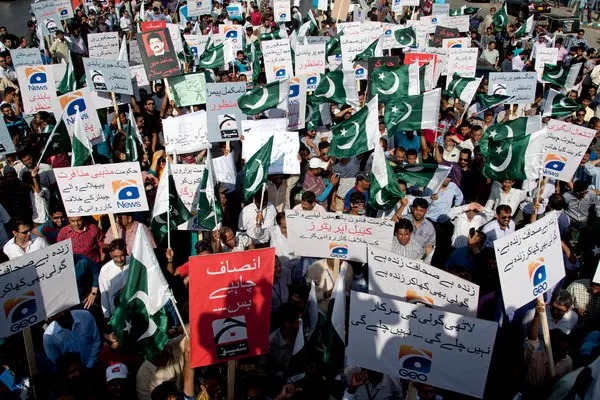
Pakistan is living through one of its bleakest democratic moments, and the source of this suffocation is no mystery. Power in the country has steadily migrated away from elected institutions and settled firmly in the hands of Army Chief Gen Asim Munir. What remains of civilian rule exists largely for show, a thin constitutional curtain behind which the military calls the shots. Parliament debates, courts issue verdicts, and government leaders make speeches—but none of it matters unless it aligns with the will of the man in uniform.
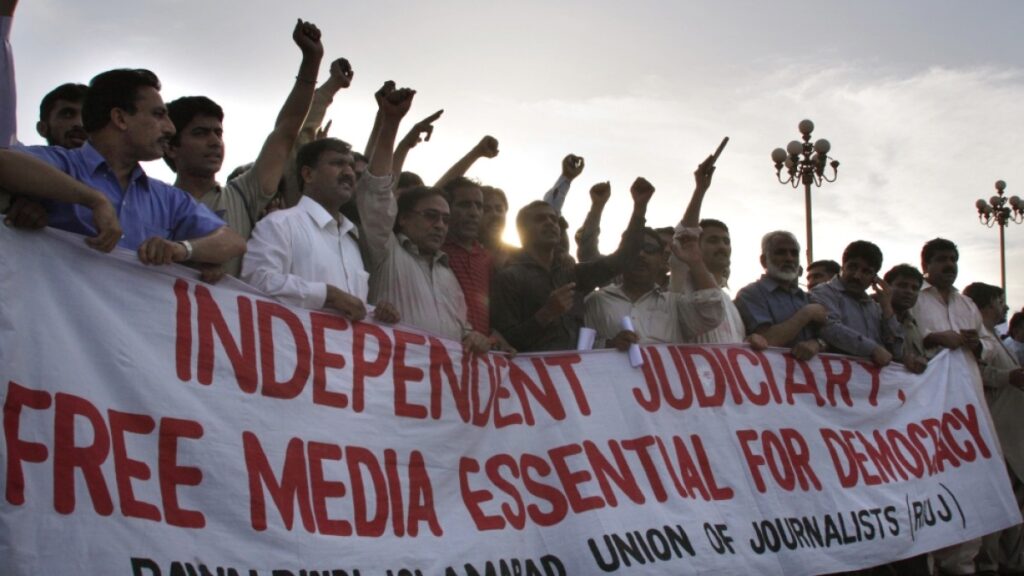
Under Gen Munir, this imbalance has hardened into something far more dangerous: a system built on fear, coercion and punishment. Dissent is no longer treated as disagreement; it is framed as treason. Criticism is rebranded as terrorism. And loyalty to jailed former Prime Minister Imran Khan has become the ultimate crime. The dismantling of civilian authority did not happen overnight. It has been methodical.
First, political engineering ensured a weak government in Islamabad. Then the judiciary was tamed through pressure, selective accountability, and unmistakable signals about what kind of verdicts were acceptable. Today, few judges dare to pretend independence when cases touch the military or Imran Khan. Sentences have grown harsher and outcomes increasingly predictable. The result is a dysfunctional state that operates like a command structure with no accountability for the ruling elite that largely comprises the military.
When Journalism Becomes a Crime
The latest victims of this tightening grip are journalists, analysts, and former military officers who dared to speak publicly against the army’s dictatorship and political purge. In January 2026, an Anti-Terrorism Court sentenced seven Pakistanis to life imprisonment for what it called digital terrorism related to the protests of May 9, 2023. None of the accused were present in court. All live abroad. Several were never even informed that proceedings were underway. This was not justice; it was theatre of the absurd. This was a message crafted not for the defendants, but for those still inside Pakistan desperately trying to find a space for free expression. Among those sentenced are some of the most seasoned voices in Pakistani journalism.
Shaheen Sehbai, with nearly five decades of experience and former editor of The News International, has long criticised the military’s dominance over civilian life. His crime was intellectual honesty and an unwillingness to pretend that today’s generals possess any vision or restraint. At his age, sentencing him to life imprisonment is not just punitive—it is vindictive. Wajahat Saeed Khan, an investigative journalist respected for his work on security affairs, was reportedly never summoned or notified of any charges. His trial happened without his knowledge, underscoring how irrelevant Pakistan’s judicial process has become.
Sabir Shakir, a veteran broadcaster who left Pakistan after alleged threats from the previous army chief, now finds himself branded a terrorist for doing what journalists are meant to do: ask uncomfortable questions. Analyst Moeed Peerzada’s case adds an even darker edge. Living in the United States, he incurred the military’s wrath by citing international media reports that contradicted official Pakistani claims during a military episode. Days after his conviction, his home in the US mysteriously caught fire. While no direct accusations have been made, the symbolism is chilling. Critics of the army, it seems, are no longer safe even beyond Pakistan’s borders.
The remaining three—former army officers turned YouTubers—had already been court-martialled, stripped of rank, and sentenced to long prison terms for exposing internal misconduct. The Anti-Terrorism Court’s decision to pile life sentences on top of military punishment reveals Munir’s insecurity. An institution confident in its legitimacy does not fear YouTube channels speaking the truth. Together, these cases mark a decisive shift in Pakistan’s media space, as journalists are now equated with criminals. The purpose is not merely to silence specific individuals, but to terrify everyone else into submission. If respected journalists and commentators based in countries other than Pakistan can be condemned as terrorists without being heard, what hope remains for media persons inside Pakistan?
The Prisoner Who Still Threatens Power
At the centre of this crackdown lies one man: Imran Khan. For General Munir, Khan is not just a political rival; he is an existential threat. Unlike other leaders who clashed with the military and then quietly left the country, Khan stayed. He faced arrest, imprisonment, humiliation—and refused to break. Despite being behind bars, Khan continues to shape Pakistan’s political landscape. His influence within his party—Pakistan Tehreek-e-Insaf (PTI)—remains intact. His word still determines the opposition strategy. His popularity, particularly in Punjab and Khyber Pakhtunkhwa, has survived relentless propaganda, mass arrests, party defections, and legal assaults. This endurance explains the severity of the response against anyone perceived as sympathetic to him.
Under Munir’s command, neutrality is no longer enough, and even silence can be suspicious. Any positive mention of Khan—by a journalist, analyst, or former officer—is treated as alignment with an enemy camp. The government’s occasional talk of “dialogue” with the opposition is widely understood as a cosmetic gesture with no serious intent. Prime Minister Shehbaz Sharif may speak of harmony and national unity, but no serious negotiation can proceed without the army’s consent. And there is one non-negotiable issue that ensures talks will never mature: Imran Khan’s freedom.
The ruling coalition knows that Munir will not permit Khan’s release under any circumstances. At the same time, the opposition cannot abandon its central demand without losing credibility. This guarantees stalemate. ‘Dialogue’ is more of a performance, not policy, as Khan continues to unsettle the system. His nomination of Mehmood Khan Achakzai as leader of the opposition in the National Assembly shows that his political instincts remain sharp. It also demonstrates that PTI, despite being battered, has not collapsed. For a military leadership obsessed with total control, this lingering defiance is intolerable.
A Country Held Hostage
Pakistan today is not merely experiencing a political crisis; it is experiencing a collective collapse of freedoms. The press is muzzled. Courts are coerced. Politicians are managed. Fear has replaced debate, and punishment has replaced persuasion. Munir may currently hold all the levers of power, but history offers a sobering lesson: authority sustained through repression rarely sustains beyond a point. The journalists sentenced to life imprisonment may be physically absent from Pakistan, but their cases are now permanently etched into another dark chapter of its democratic decline. Imran Khan languishes in jail. Journalists face threats and punishment. And the military remains unchecked. For now, the silence may appear complete. But beneath it, resentment is growing as Pakistan waits to implode.
-Arun Anand
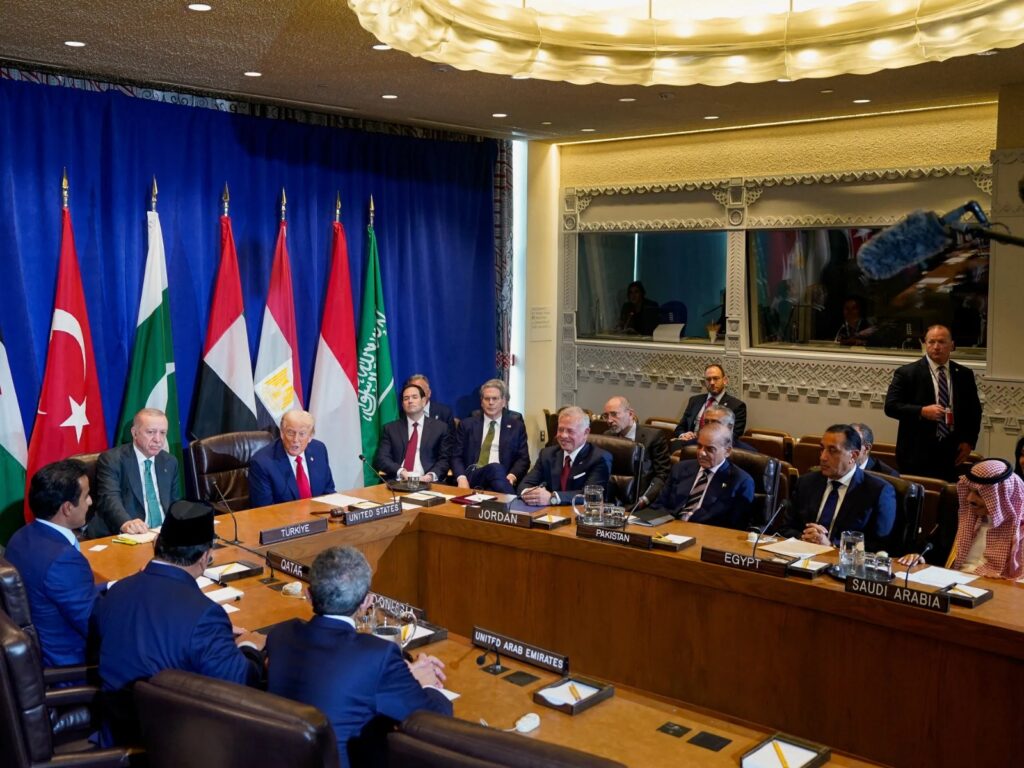
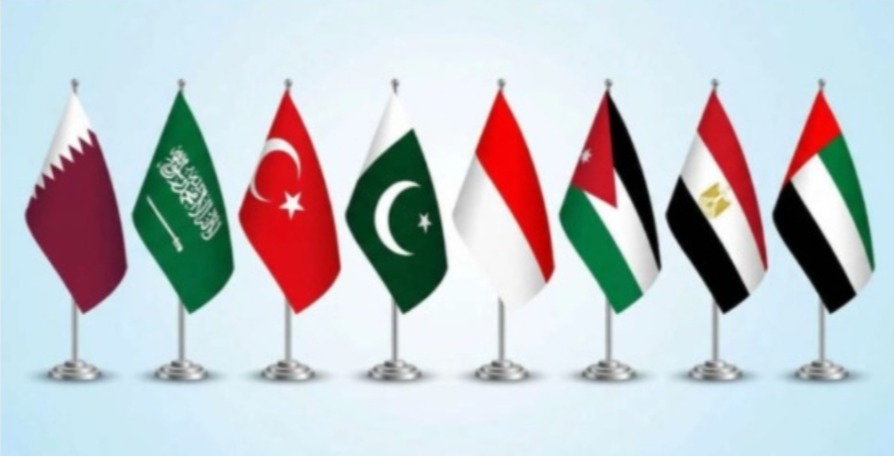
Pakistan has a knack for arriving at the wrong place at precisely the wrong time. When Russia attacked Ukraine in February 2022, its then prime minister, Imran Khan, was seated in the Kremlin, smiling and shaking hands for cameras. And when Saudi Arabia and the United Arab Emirates, Islamabad’s most important Middle Eastern patrons, found themselves at odds over Yemen last week, it was once again caught in the crossfire. This time Emirati President Sheikh Mohammed bin Zayed Al Nahyan was on his hunting trip to Pakistan. These moments are not mere coincidences but rather symptoms of a deeper strategic malaise of a military-dominated foreign policy that repeatedly entangles Pakistan in conflicts it neither controls nor fully understands.
Over the past decade, Pakistan has drifted from being a peripheral player in the Middle East to an increasingly exposed one. As the shift has been shaped by transactional military diplomacy as signified by recent Strategic Mutual Defence Agreement with Saudi Arabia, the result is a country wedged uncomfortably between rival power centers with China and the United States on one axis globally, and Saudi Arabia and the UAE on another at the regional level. While each of its allies expects loyalty, no one offers insulation when loyalties collide.
That collision is now visible in Yemen and most likely in Libya. On December 30, Riyadh announced that it targeted a weapons shipment at Yemen’s Mukalla port, claiming the arms originated from the Emirati port of Fujairah. Riyadh alleged that weapons were destined for the Southern Transitional Council (STC), a UAE-backed separatist group seeking to carve out an independent state in southern Yemen.
It made Pakistan to tread an uncomfortable line. Though Islamabad expressed “complete solidarity” with Saudi Arabia, reaffirming its support for the kingdom’s sovereignty and Yemen’s territorial integrity, what it did not do was just as revealing. Pakistan avoided naming the STC, sidestepped Abu Dhabi’s role in nurturing Yemeni separatism, and refrained from any criticism that might upset the Emirati leadership.
However, it should be known that diplomatic hedging has its limits. On the very morning Saudi Arabia carried out strikes against what it described as Emirati-linked weapons shipments, Pakistan’s prime minister, Shehbaz Sharif, along with senior cabinet members, including Deputy PM and Foreign Minister Ishaq Dar, was meeting Sheikh Mohammed bin Zayed at his family’s palatial estate in Rahim Yar Khan. The optics were ironic with Pakistan professing solidarity with Riyadh while hosting the very leader Riyadh was pressuring militarily. There have been unsubstantiated reports that Saudi Arabia declined a request for a meeting by Pakistan’s powerful army chief, Field Marshal Asim Munir, thereby reinforcing the impression that Islamabad’s balancing act was wearing thin.
This episode underscored a broader truth that Pakistan was no longer merely navigating Gulf rivalries but was being shaped by them. And nowhere is this more dangerous than in Gaza. As US President Donald Trump pushes his vision of post-war Gaza governance under an international body, he has publicly sought Pakistan’s commitments to contribute troops to his envisioned security or stabilization force for the territory.
For Islamabad, the proposition is fraught with peril as deploying Pakistani troops to the war-battered Palestinian region would not be a neutral peacekeeping mission. As the Gaza stabilisation force would almost certainly involve disarming Hamas, enforcing cease-fire arrangements, and operating under an American or Israeli security framework, such a role would place Pakistan at odds with popular sentiment at home, where sympathy for the Palestinian cause runs deep. Moreover, it would also damage the country’s standing in the broader Muslim world, where participation in what many would view as an externally imposed security regime or forced disarming of what many consider a Palestinian resistance group would be seen as complicity with Israel.
However, if Pakistan Army assumes such a role, it won’t be its first as it has a history of renting its role to the regional players. Pakistani military officers played a role in assisting Jordan’s Hashemite monarchy during the 1970 Black September crisis by helping violently crackdown on Palestinian fighters. The Pakistani contingent in Amman was overseen by Brigadier Mohammad Zia-ul-Haq, who would later seize power in 1977 and rule as a military dictator. That episode left a lasting scar on Pakistan’s image among Palestinians and repeating such a role in Gaza would be exponentially more damaging.
Yet Gaza is not the only front where Pakistan’s Middle East policy is unravelling. On December 21, Army Chief Asim Munir signed what was touted as a $4.6 billion defense deal with Khalifa Haftar in Benghazi, from where the Libyan military strongman controls eastern part of the country through the Libyan National Army (LNA). The agreement reportedly included the sale of JF-17 Block III fighter jets and Super Mushshak trainer aircraft, making it the largest arms deal in Pakistan’s history.
Though the deal on paper signifies Pakistan’s strategic reach, however, in reality, it was a diplomatic misstep of the highest order. Firstly, Libya is a divided country with rival governments governing it in parts. There is Abdul Hamid Dbeibeh’s internationally recognised Government of National Unity (GNU) in Tripoli and then the other, Haftar’s Benghazi-based unrecognised Government of National Stability (GNS). Secondly, Libya remains under an international arms embargo imposed by the United Nations in 2011. Therefore, any major weapons transfer and that too to an unrecognised entity risk undermining of the international law.
This deal does not only fly in the face of UN sanctions; it also puts constrains in Islamabad’s regional policy. By publicly aligning itself with Haftar, Pakistan effectively chose sides in a complex regional proxy contest as the military strongman is backed by the UAE and Egypt whereas the GNU, by contrast, enjoys the support of the United Nations and Saudi Arabia. Islamabad’s outreach to Benghazi thus undercuts its relationship with Riyadh, at precisely the moment when Saudi goodwill is most needed.
These choices cumulatively result in what can be described as a strategic overextension without any strategic clarity. It is evident that Pakistan is trying to achieve a role of indispensability in the region, but forgets that it does not possess the diplomatic leverage for the same. It can offer nothing than renting its military against a price. Its military leadership appears to believe that visibility equals influence, that being “in the room” guarantees relevance. In practice, it has made Pakistan vulnerable to pressure from stronger powers with clearer agendas. And at home, the risks are just as severe. In a country grappling with severe economic crisis, political instability, and militant violence, such a diplomatic overstretching cannot be afforded.
As such, Pakistan is on a path of pursuing a foreign policy driven less by national consensus than by the ambitions of a security establishment which is eager to project power abroad, even as stability at home remains elusive. And if Pakistan continues down this path and gets entangled in Gulf rivalries, is pressured to send troops to Gaza, and aligns with contested actors like Khalifa Haftar, it risks becoming a pawn that a mediator its elite envisions. In the Middle East’s unforgiving geopolitical chessboard, pawns are easily sacrificed.
-Arun Anand
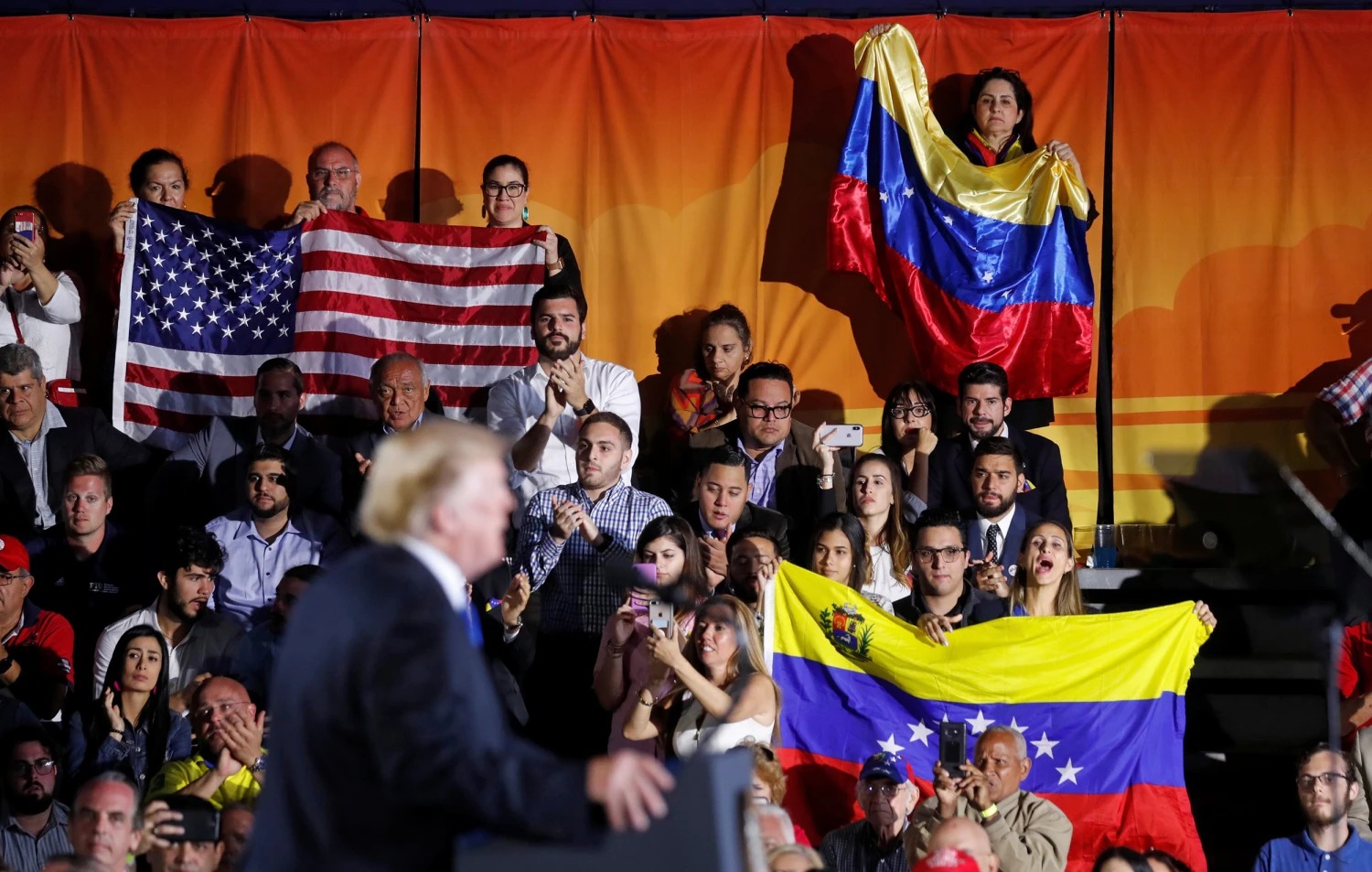
The American-led post-World War II order has been built upon the sustained rhetoric of normativity, which includes democracy, governance, and human rights, but it practises geopolitics in a far older language: utility. Nowhere is this dissonance more visible than in the contrast between how the West treats Venezuela and how it engages Pakistan.
Both countries are repeatedly invoked in the US and Western security calculus, are associated with illicit networks, and sit uneasily with liberal democratic norms. Yet one is publicly disciplined as a democratic deviant, while the other is quietly accommodated as a strategic necessity. This asymmetry is not accidental. It reflects how democracy has become a selective instrument rather than a consistent universal principle of Western foreign policy.
Venezuela’s position in the Western imagination is shaped more by its symbolism than by its material power. Over the past decade, it has been framed as a cautionary tale of democratic backsliding, economic mismanagement, and narco-state behaviour. Western governments have been vocal in condemning electoral irregularities, restrictions on opposition parties, and the concentration of power in the executive’s hands. Sanctions regimes have followed, justified as necessary pressure to restore democratic order.
There is, of course, substance to these concerns. Venezuela has become a significant transit corridor for cocaine flowing from Colombia to Europe and West Africa. According to the UN Office on Drugs and Crime, routes passing through Venezuela expanded sharply after 2015, aided by weak state institutions and collusion at lower administrative levels. The US Drug Enforcement Administration has repeatedly flagged the role of Venezuelan territory in cocaine trafficking networks linked to Latin American cartels. These activities have destabilised neighbouring states and fuelled organised crime beyond the region.
Yet it is also essential to keep the scale of this threat in perspective. Venezuela is a transit state, not the global centre of the narcotics economy. It neither produces cocaine nor controls the principal distribution networks that feed North American and European markets, unlike other Latin American countries. Its capacity to project narcotics as an instrument of state power is unfounded, and its political instability, while devastating domestically, does not fundamentally alter the balance of power in any major theatre. This distance allows Western capitals to treat Venezuela as a manageable problem, one that can be addressed through sanctions, rhetoric, and diplomatic isolation without incurring high strategic costs.
Pakistan occupies a very different category. It is not merely a troubled democracy or an authoritarian-leaning state. It is a nuclear-armed country of over 240 million people, embedded in one of the world’s most volatile regions, and historically enmeshed in conflicts that have directly affected global security. Unlike Venezuela, Pakistan’s internal political arrangements are not a distant normative concern. They are intimately linked to patterns of violence, militancy, and instability that have spilled across borders for decades.
The erosion of civilian authority in Pakistan is no longer subtle. Over the years, the military has evolved from an arbiter to a manager and, finally, to a de facto ruler of the political system. Elections continue to be held, but their outcomes are carefully shaped. Political leaders who challenge the military’s primacy find themselves marginalised, imprisoned, or disqualified. Media outlets operate under pervasive pressure, and the judiciary oscillates between moments of resistance and strategic compliance. What remains is not a functioning civilian democracy but a controlled political space designed to preserve military dominance. Western governments are not unaware of this transformation.
The reason lies in the magnitude of the security risks associated with Pakistan. Unlike Venezuela, Pakistan has a long and well-documented relationship with terrorist organisations that operate transnationally. Pakistan’s neighbour India, and at times the United States Congress itself, have accused it of pursuing a state-sponsored terror policy. Groups such as Lashkar-e-Taiba and Jaish-e-Mohammed, designated terrorist organisations by multiple Western governments, have operated with varying degrees of tolerance within Pakistan’s security ecosystem. The Financial Action Task Force placed Pakistan on its grey list from 2018 to 2022 precisely because of persistent deficiencies in curbing terror financing and money laundering. These were not symbolic concerns; they reflected systemic weaknesses in controlling financial flows linked to violent extremism.
The human cost of this ecosystem has been substantial. The Global Terrorism Index has consistently ranked Pakistan among the countries most affected by terrorism over the past two decades. More importantly for Western interests, terror networks nurtured or tolerated within Pakistan have been implicated in attacks beyond its borders, from Afghanistan to India, and have maintained ideological and logistical linkages with global jihadist movements. These are not marginal threats. They sit at the core of post-9/11 security anxieties.
And yet, it is precisely this dangerous profile that has insulated Pakistan from democratic scrutiny. Western policymakers have long operated on the assumption that the Pakistani military, for all its flaws, is the only institution capable of maintaining a semblance of order over a deeply fragmented society and a sprawling security apparatus. Civilian politics are viewed as destabilising, prone to populism, and insufficiently reliable on issues of counter-terrorism and nuclear security. Military dominance, by contrast, offers predictability.
This logic reached its peak during the war in Afghanistan. Pakistan was repeatedly described as indispensable, even as evidence mounted of its selective cooperation and strategic hedging. The language of partnership persisted because alternatives were deemed worse. That mindset has not disappeared with the withdrawal from Kabul. It has merely been repurposed within a broader calculus shaped by China, regional stability, and nuclear risk management.
However, since Pakistan’s inception, there have been no sustained efforts whatsoever from the West to hold it accountable in this light. This is precisely why democratic leaders in Pakistan are jailed, exiled, or worse, killed if they do not work in tandem with military apparatchiks.
Here lies the core contradiction. If Venezuela is castigated for enabling narcotics flows that undermine governance and security, Pakistan’s far more consequential role in sustaining terror infrastructures should attract even greater concern. The difference is not in severity, but in inconvenience. Pressuring Pakistan on democracy risks alienating an actor whose cooperation, however ambivalent, is still considered necessary. Venezuela offers no such dilemma.
This selective morality carries long-term costs. By normalising military rule in Pakistan, the West is not neutral; it is actively shaping incentives. It signals to Pakistan’s generals that political engineering carries few international penalties as long as strategic commitments are upheld. It weakens civilian actors by depriving them of external support precisely when internal checks are being dismantled. And it reinforces a governance model that has repeatedly failed to deliver stability, economic growth, or social cohesion.
There is also a broader credibility problem. When democracy is defended loudly in some cases and softly sidelined in others, it ceases to function as a normative anchor. It becomes a tool of convenience, deployed where costs are low and withdrawn where stakes are high. This erosion is not lost on other authoritarian regimes, nor on societies living under constrained political conditions. It fosters cynicism about Western intentions and strengthens the argument that values are merely a rhetorical cover for power politics.
The irony is that this approach may ultimately undermine the very stability it seeks to preserve. Pakistan’s repeated cycles of military dominance have not resolved its structural crises. They have deepened economic fragility, intensified centre–periphery tensions, and eroded public trust. Suppressing political competition does not eliminate dissent; it displaces it into more volatile forms. In a nuclear-armed state with a history of militant spillovers, this is not a risk that can be indefinitely managed.
The comparison with Venezuela, then, is not about absolving one or condemning the other. It is about recognising how selectively applied principles distort policy outcomes and loosen moral footing. Venezuela’s problems are real, but their global impact is limited. Pakistan’s internal authoritarianism, by contrast, intersects directly with some of the most persistent security challenges facing South Asia and beyond. Treating the former as a democratic emergency and the latter as a tolerable anomaly reveals not moral clarity but strategic myopia.
If the West wishes to reclaim credibility in its democracy agenda, it must confront this imbalance honestly. That does not mean identical policies for vastly different contexts. It does mean acknowledging that democracy cannot be championed only when it is cost-free. Otherwise, the language of values will continue to ring hollow, and the structures of instability that selective silence enables will remain firmly in place. Ultimately, the question is not whether the West can afford to pressure Pakistan on democratic norms. It is whether it can afford not to.
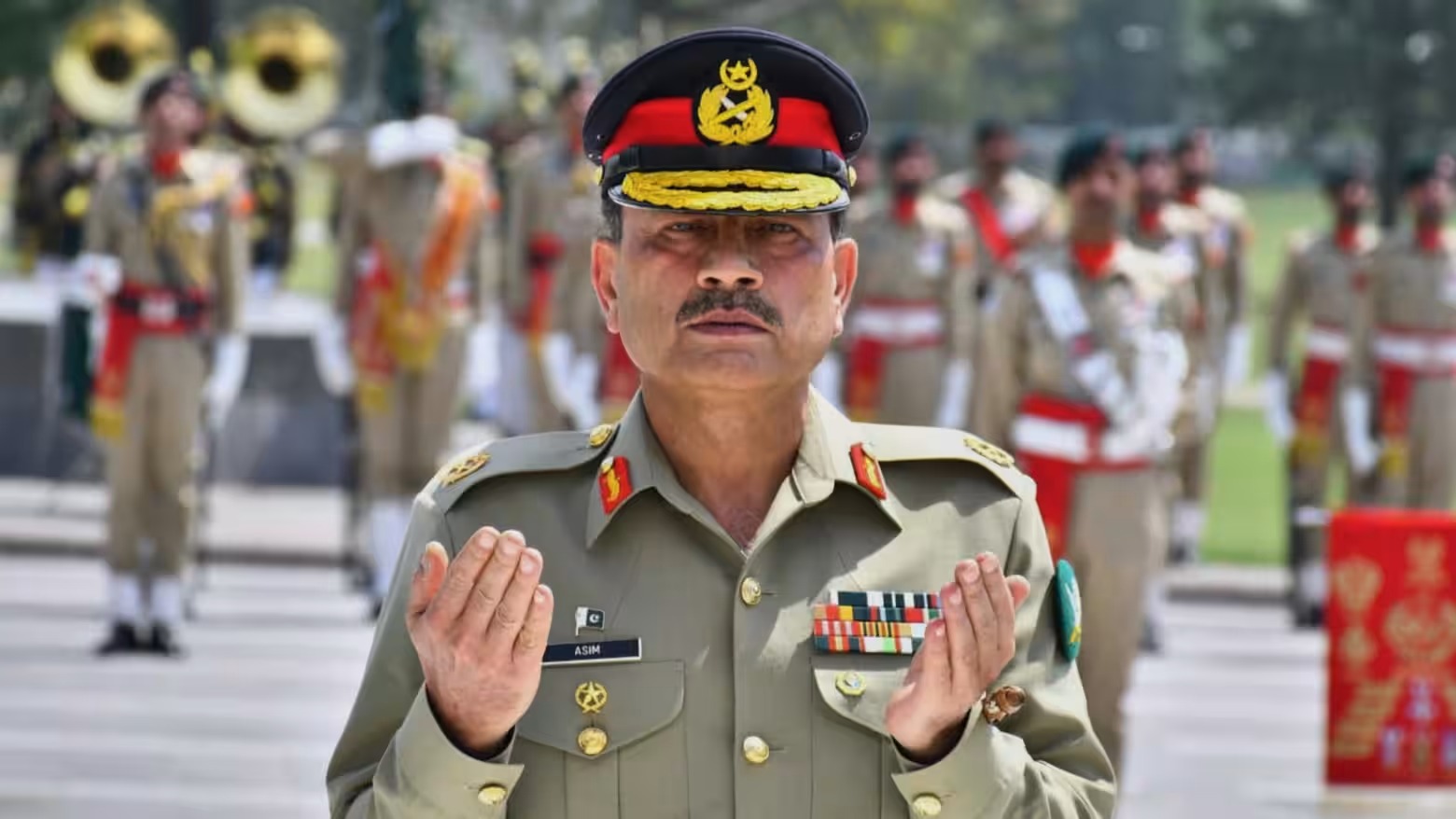
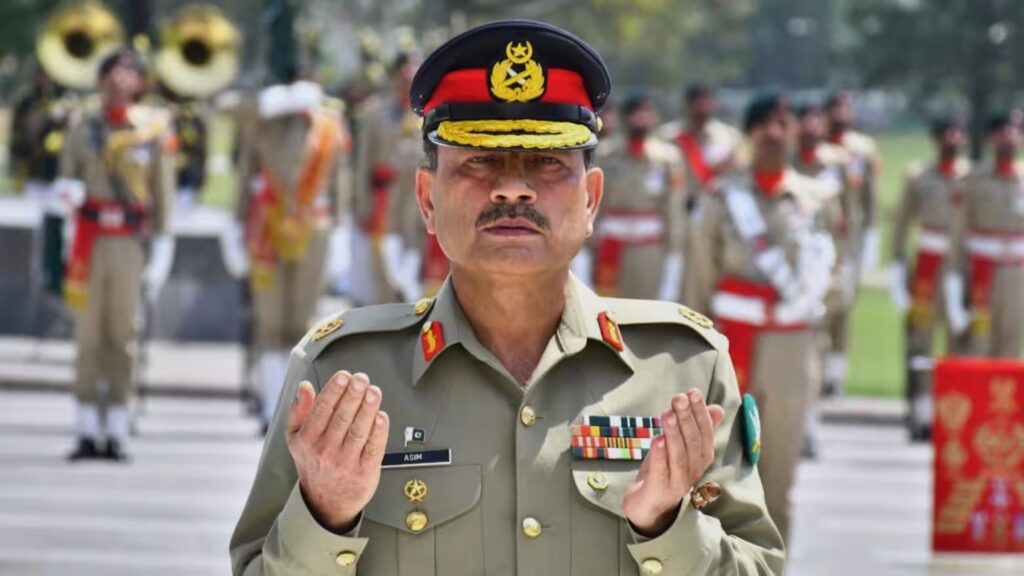
Pakistan’s military has consolidated its dominance over the country’s political and governance structures in 2025 through sweeping constitutional changes that critics describe as a silent coup, effectively formalising the army’s long-standing control over the state.
In late 2025, Pakistan’s parliament passed a set of constitutional amendments that restructured the country’s defence and command architecture. Central to these changes was the creation of a powerful Chief of Defence Forces post, occupied by the serving army chief, placing the Army, Navy and Air Force under a single military command. The move significantly reduced the role of civilian oversight and weakened the traditional checks that existed within the defence establishment.
Analysts say the new framework grants unprecedented authority to the army chief, including extended tenure protections and enhanced control over strategic decision-making. The restructuring also diminished the relevance of previously existing military coordination mechanisms, reinforcing the army’s primacy over other institutions. Opposition figures and civil society groups have criticised the amendments as the constitutional entrenchment of military supremacy, arguing that they erode democratic norms and further marginalise elected civilian leadership. Critics warn that the formal expansion of military power will restrict political freedoms and narrow the space for dissent.
Supporters of the changes within the establishment argue that the new command structure improves national security coordination and strengthens Pakistan’s defence posture amid regional instability. However, detractors counter that similar arguments have historically been used to justify military dominance at the expense of democratic governance. Pakistan has experienced repeated cycles of direct and indirect military rule since its founding. Observers note that while the army has long exercised decisive influence behind the scenes, the 2025 amendments mark a decisive shift by embedding that influence directly into the constitutional framework.
As Pakistan enters 2026, analysts warn that the formalisation of military control could have long-term consequences for the country’s democratic institutions, civil-military balance and political stability.
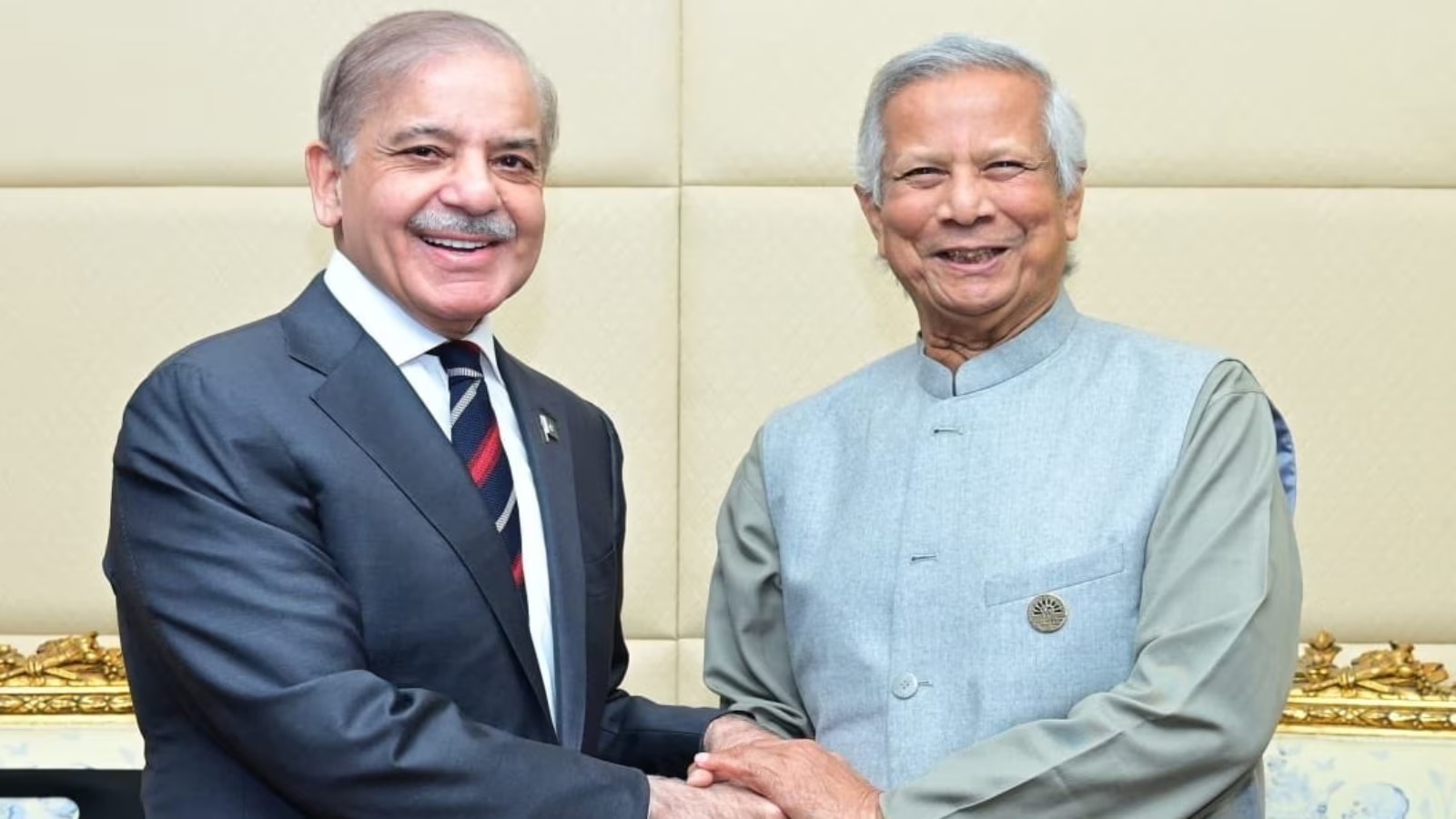
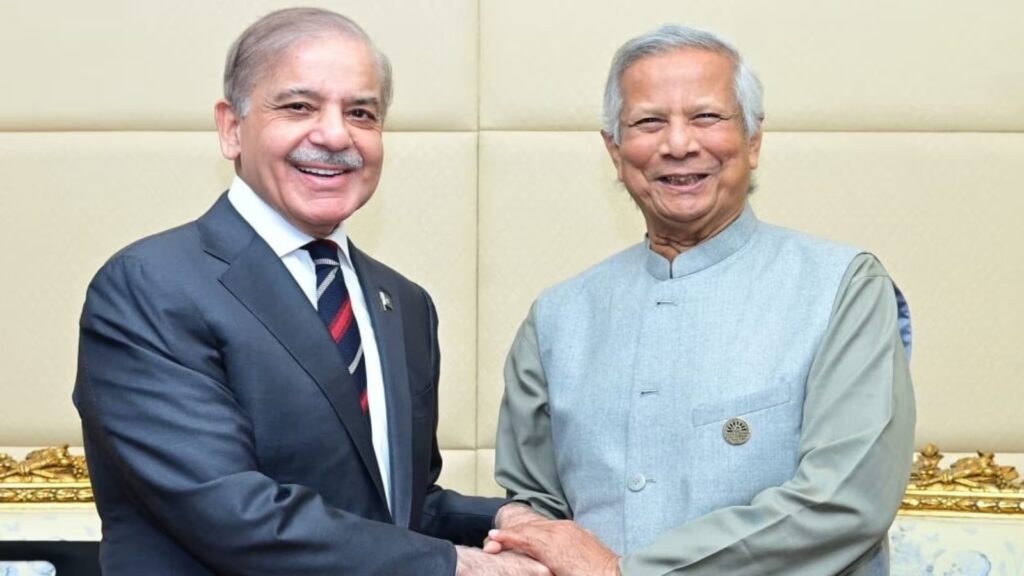
India is closely watching Pakistan’s renewed security and diplomatic outreach to Bangladesh, viewing the recent warming of ties between Islamabad and Dhaka as a development with serious implications for regional stability and Indian national security The shift follows political changes in Bangladesh after the exit of former Prime Minister Sheikh Hasina and the emergence of an interim administration led by Muhammad Yunus. Analysts say the transition has created space for Pakistan to re-enter Bangladesh’s strategic landscape after decades of limited engagement shaped by historical grievances linked to the 1971 Liberation War.
In recent months, Pakistan and Bangladesh have witnessed an increase in high-level contacts, including interactions involving military and security-linked officials. These engagements mark a notable departure from Dhaka’s earlier posture of keeping Islamabad at arm’s length. Indian security observers are particularly concerned about indications of expanded intelligence activity under diplomatic cover, warning that such a presence could facilitate covert influence operations affecting India’s eastern front.
Pakistan’s defence outreach has also become more visible through naval visits, military exchanges and discussions on defence cooperation. Although officially framed as confidence-building measures, Indian analysts caution that these steps may lay the groundwork for deeper military coordination in the Bay of Bengal region. Any form of intelligence sharing or logistical access is viewed as especially sensitive given Bangladesh’s proximity to India’s northeastern states and the strategic Siliguri Corridor that links the region to the Indian mainland.
India’s concerns are driven by multiple factors, including the potential security risks posed by a Pakistani intelligence footprint in Bangladesh, fears of cross-border destabilisation, and the possible revival of extremist networks targeting Indian interests. The convergence of Pakistan’s outreach with China’s expanding influence in Bangladesh further compounds these anxieties, raising the prospect of a strategic realignment that could challenge India’s traditional role in South Asia.
Within Bangladesh, the renewed engagement with Pakistan remains politically and emotionally contentious. Sections of civil society, liberation war veterans and rights activists view security cooperation with Islamabad as historically insensitive and strategically risky. Supporters of the interim administration, however, argue that diversifying foreign relations is necessary to assert autonomy and reduce reliance on any single external partner amid domestic political uncertainty.
New Delhi has so far responded with cautious diplomacy, maintaining engagement with Dhaka while making clear that national security considerations will not be compromised. Intelligence and defence agencies are said to be closely monitoring developments, even as diplomatic channels remain open. As South Asia’s geopolitical landscape continues to evolve, Pakistan’s renewed outreach to Bangladesh highlights how internal political shifts can reshape regional alignments. For India, the challenge lies in sustaining a stable relationship with a key neighbour while remaining vigilant against emerging security risks along its eastern frontier.
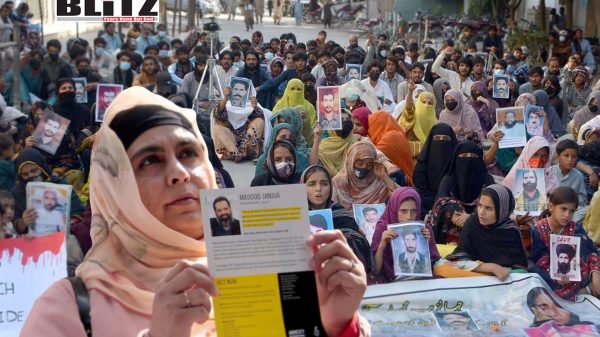
What was intended to be a forum for peace and dialogue in Pakistan’s restive northwest has instead highlighted the country’s deepening human rights crisis, after two university students reportedly disappeared following their participation in a peace jirga in Peshawar. The “grand peace jirga,” held on November 12 in Peshawar, was organised by the Khyber Pakhtunkhwa chapter of Pakistan Tehreek-e-Insaf (PTI) and attended by tribal elders, religious scholars, civil society representatives, activists and students. The gathering aimed to discuss the worsening security situation in the region, particularly in the context of rising violence and strained relations with Afghanistan.
However, shortly after the event concluded, Khubaib Wazir and Adnan Wazir, members of the Waziristan Students’ Society, reportedly went missing under circumstances that rights groups describe as deeply troubling. According to eyewitness accounts, the two students were intercepted by unidentified men in plain clothes while returning from the jirga to their hostels. Since then, their whereabouts remain unknown. No arrest records, charges or official statements have been issued by police or security agencies, leaving their families and fellow students in a state of anguish and uncertainty.
Human rights advocates say the incident reflects a broader pattern in Pakistan where individuals who engage in peaceful political or civic activity — particularly from tribal regions — are treated as security risks rather than citizens exercising their rights. In the aftermath of the disappearance, some pro-state voices have attempted to associate the students with the Pashtun Tahafuz Movement (PTM), a non-violent rights movement that has frequently criticised the conduct of security forces in former tribal areas. PTM leaders have repeatedly denied any links to militancy, maintaining that their demands centre on constitutional rights, accountability and an end to extrajudicial practices.
The case has reignited debate around enforced disappearances, a long-standing and contentious issue in Pakistan. Rights organisations estimate that thousands of people — including students, activists, journalists and political workers — have disappeared over the past decade, particularly in Khyber Pakhtunkhwa and Balochistan. Families often report being denied information, legal recourse or even acknowledgement from authorities. Despite the existence of official inquiry commissions, critics argue that accountability remains elusive, with very few cases resulting in prosecutions or clear explanations. The continued silence surrounding recent disappearances has further eroded public confidence in state institutions and the rule of law.
Civil society groups warn that such incidents send a chilling message to young Pakistanis: that even peaceful participation in dialogue or advocacy can invite severe consequences. As calls grow for the safe recovery of the missing students, rights defenders stress that genuine stability cannot be achieved through fear, secrecy and repression. For now, the disappearance of Khubaib Wazir and Adnan Wazir stands as a stark symbol of a shrinking civic space in Pakistan — where seeking peace and accountability increasingly comes at a personal cost.
-Arun Anand
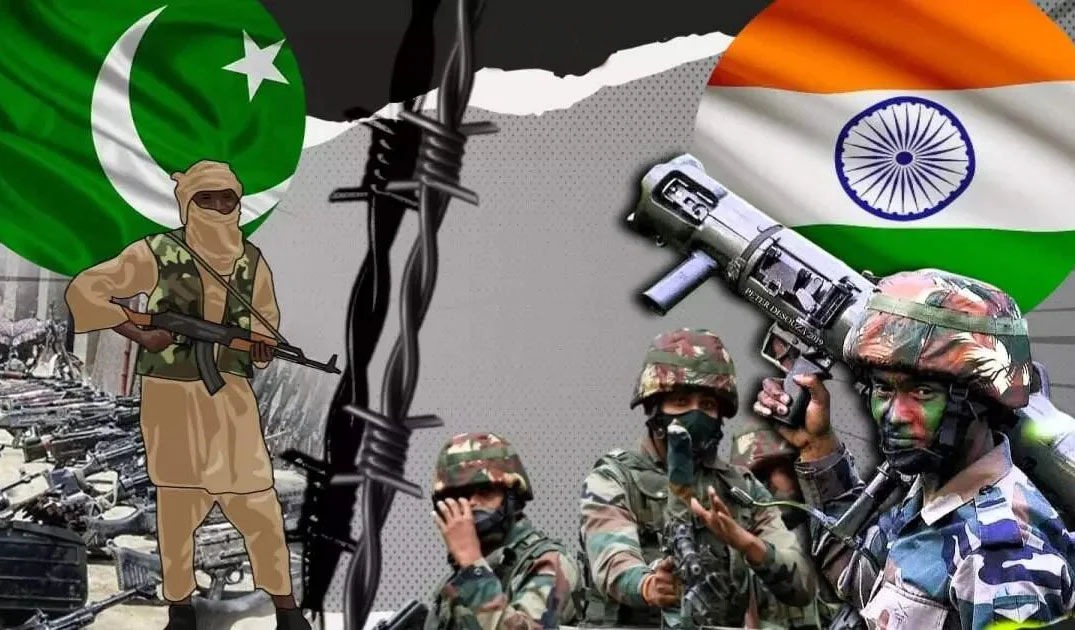
For over four decades, Pakistan bet its security strategy on one idea: that Afghanistan could be controlled and turned into a “strategic depth” against India. The military and political elite in Islamabad treated Kabul as a buffer and a playground — a state to be manipulated through compliant regimes and proxy jihadist groups.
Militant networks were nurtured as instruments of foreign policy, and Pakistan believed this would secure influence across the region and check India’s power. Instead, the very forces Islamabad once empowered have turned against it. In 2025, the grand doctrine of strategic depth lies in ruins — a self-inflicted disaster now driving Pakistan’s worst security crisis in years.
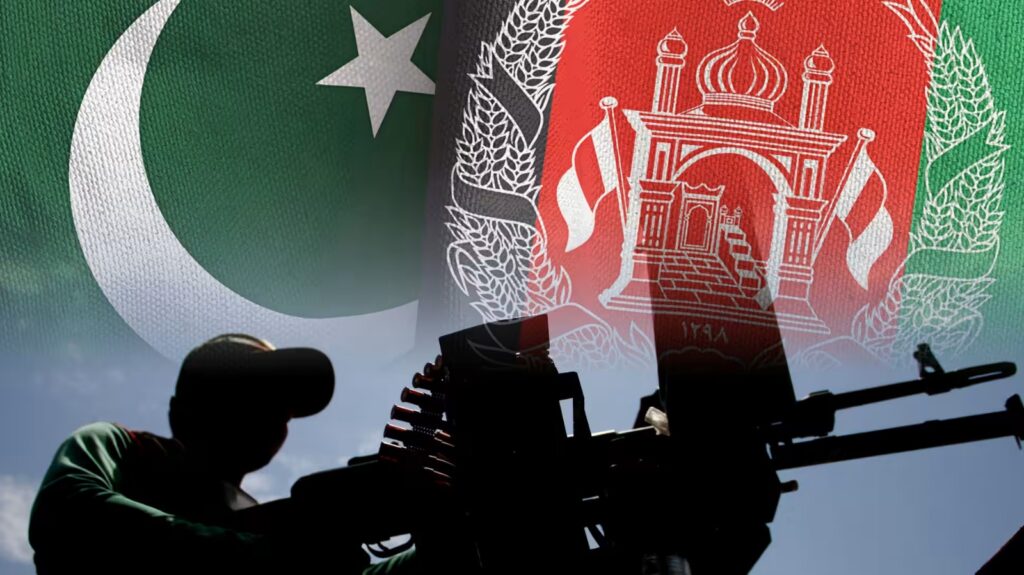
Rather than securing Pakistan, Afghanistan has become the epicentre of the very dangers Islamabad once believed it could manage or manipulate. What was once perceived as an asset has now become a trap. The transformation of Afghanistan from strategic depth to strategic liability has unfolded gradually, but the past two years have made the shift undeniable.
When the Taliban returned to power in Kabul in 2021, Pakistan was widely seen as the external actor poised to benefit the most. Many within Islamabad believed that a Taliban government, because of historical ties, would be cooperative, deferential, and dependent. But that assumption now looks dangerously misplaced.
The Taliban’s political priorities have changed, their sources of external support have diversified, and their internal legitimacy depends on projecting a strong, independent stance — especially against Pakistan, which many ordinary Afghans still view with suspicion. Instead of shaping Afghan behaviour, Pakistan now finds itself confronting a volatile neighbour whose rulers no longer feel obliged to accommodate Pakistani interests.
Militant Blowback and a Hardening Border
Nowhere is this reversal clearer than in the surge of militant activity targeting Pakistan from Afghan soil. Over the past year, Pakistan has experienced a marked increase in terrorist attacks carried out by the Tehreek-i-Taliban Pakistan (TTP) and associated networks. Security reports from 2024 and 2025 indicated that many attackers either crossed over from Afghanistan or were trained and sheltered there.
Pakistani officials have repeatedly stated that a significant percentage of suicide bombers involved in major attacks were Afghan nationals. The data, while varying between sources, consistently shows a dangerous trend that the Afghanistan-Pakistan border has become increasingly porous to extremist infiltration, and many of these groups feel emboldened by their close ideological ties to the Afghan Taliban.
This is the central irony of Pakistan’s predicament. The militant ecosystem that Islamabad once supported for regional leverage has now splintered in ways that work against Pakistan itself. The TTP, originally an offshoot of groups nurtured under earlier Afghan policies, now treats Pakistan as its primary enemy.
Pakistan’s own creation has turned against its creator. The militancy that Islamabad once believed could be contained beyond its borders has now penetrated deep inside — striking security convoys, police units, and civilian targets with growing regularity. The blowback is undeniable.
In response, Pakistan has increasingly resorted to military actions along — and across — the Afghan border. Throughout 2024 and into 2025, Pakistan conducted a series of cross-border artillery strikes and air raids targeting what it described as TTP safe havens. In several cases, those strikes hit areas inside Afghanistan, killing not only militants but also civilians, including women and children. These incidents have sharply escalated diplomatic tensions.
Kabul has issued multiple condemnations, arguing that Pakistan is violating Afghan sovereignty and inflaming anti-Pakistan sentiment among the Afghan population. What Islamabad once framed as necessary counterterror operations are now seen by many Afghans as external aggression, deepening hostility that already runs high.
Border clashes have also intensified. In late 2024 and through out 2025, firefights between Pakistani forces and Taliban border units became frequent, sometimes lasting hours. Pakistani officials reported significant casualties on their side, and Afghan authorities claimed similar losses.
The AfPak border — once envisioned as a controllable frontier from which Pakistan could extend influence — has hardened into one of the most militarized and unstable fault lines in South Asia. Instead of projecting strength, Pakistan finds itself in a defensive posture, its troops stretched and its internal security architecture under strain.
Diminishing Diplomatic Leverage and Growing Vulnerability
Diplomacy has not eased the tensions. Attempts at negotiation, including several rounds of high-level talks in 2024 and 2025, produced only limited agreements focused on border management and intelligence sharing. These arrangements have struggled to translate into real cooperation on the ground. The Taliban government maintains that it does not control the TTP, insisting that the group operates independently.
Pakistani officials reject that claim, arguing that nothing of significance can operate in Afghanistan without at least tacit Taliban approval. The resulting stalemate has left both countries locked in a cycle of accusation and retaliation.
Pakistan’s broader regional standing has also been affected. The international community has expressed growing concern about the escalating border violence, with several countries calling for restraint and renewed dialogue. Islamabad, once positioned as a key interlocutor between the Taliban and the West, now finds its diplomatic leverage diminished.
Meanwhile, the Taliban have sought new partnerships — particularly with regional powers seeking economic or strategic opportunities in Afghanistan. This reduces Pakistan’s ability to shape events in Kabul and signals a fundamental shift in the balance of influence.
The implications for Pakistan’s internal security are profound. The resurgence of terrorism within its borders has strained provincial administrations, especially in Khyber Pakhtunkhwa and Balochistan. Police forces remain under-equipped, despite repeated calls for better resources. Public frustration is rising, particularly as attacks occur with worrying frequency.
Many citizens question the effectiveness of Pakistan’s long-standing policies toward Afghanistan and ask whether the sacrifices of the past two decades — military operations, casualties, and massive financial costs — have led to greater safety or merely deeper vulnerability.
The broader economic situation compounds the crisis. Pakistan’s financial struggles, including high inflation, energy shortages, and slow GDP growth, make it increasingly difficult to sustain prolonged military readiness along a volatile border. The costs of counterinsurgency operations, refugees’ management, and security infrastructure rise steadily even as state revenues remain limited.
Meanwhile, Afghanistan shows no sign of curbing the groups hostile to Pakistan. This asymmetry — a costly security burden with no cooperative counterpart in Kabul — underscores how Pakistan’s strategic depth has morphed into a strategic trap.
A Strategic Concept in Collapse
Yet the most troubling dimension of this trap is conceptual. Pakistan’s Afghan policy relied on assumptions that no longer hold: that Kabul could be influenced through patronage that militant groups could be calibrated for strategic use, and that Afghanistan’s internal dynamics would remain subordinate to Pakistani interests. The reality of 2025 contradicts each of these assumptions.
The Taliban now make decisions independently. Militant groups have become ideological actors rather than controllable proxies. Afghan nationalism, sharpened by decades of conflict, rejects external interference from any quarter — especially from Pakistan. The strategic logic underpinning decades of policy has evaporated, but its consequences persist.
Pakistan now stands at a critical juncture. It can continue to treat Afghanistan as a battleground, striking across the border and relying on force to push back the militants. But this would deepen the cycle of violence, alienating Afghan society further, and entrenching hostile networks.
Alternatively, Pakistan could pursue a significant recalibration — acknowledging the limits of influence, dismantling the remnants of proxy structures, and treating Afghanistan as a sovereign neighbour rather than a proxy regime. Such a shift would require political courage and institutional consensus, both of which have historically been fragile when it comes to Pakistan. But without such a rethinking, Pakistan risks sinking deeper into the trap of its own making.
The strategic depth that Islamabad long prized has become an illusion. Afghanistan is no longer a pliable sphere of influence but a source of hostility capable of undermining Pakistan’s security from within. The militants once cultivated as assets have become liabilities. The border once seen as a shield has become a wound. Pakistan’s Afghan dilemma is no longer about losing influence; it is about preventing the fallout from a potent threat to its own stability.
The question facing Pakistan in 2025 is not whether Afghanistan can be controlled but whether Pakistan can escape the strategic trap created by decades of miscalculation. Whether it will recalibrate before the trap tightens further is a question that will impact the region’s future also.
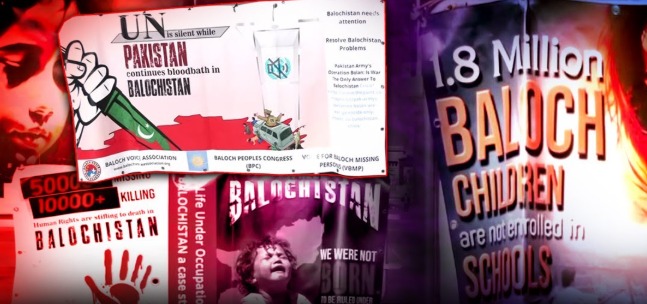
-Arun Anand
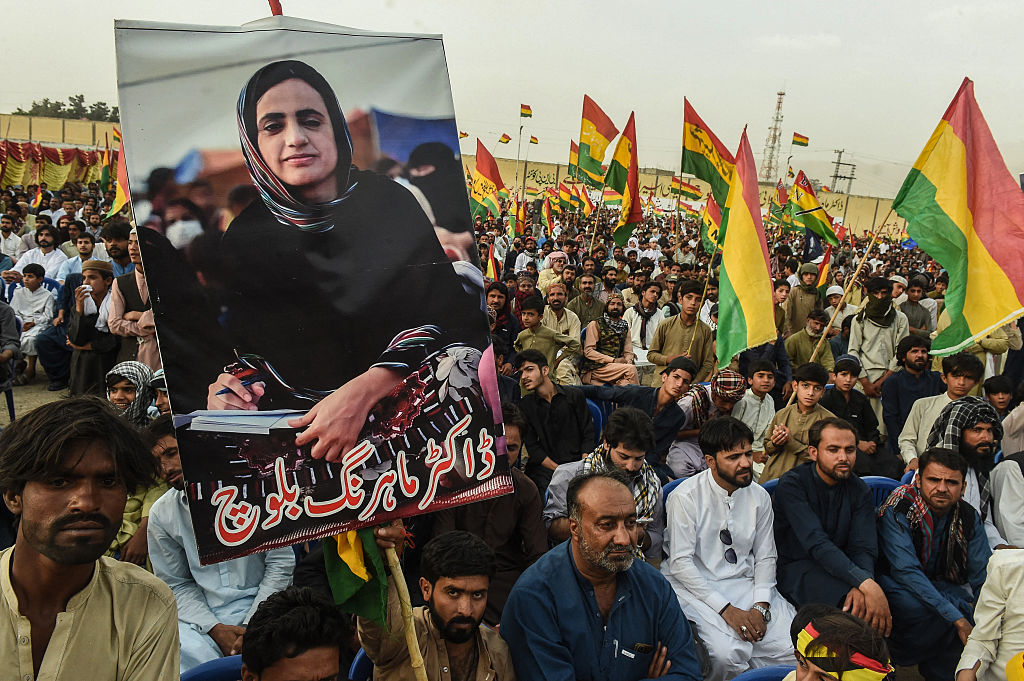
Over Eight months have passed since Dr. Mahrang Baloch, a young physician turned human rights icon, was arrested on trumped-up charges in Quetta, Balochistan. 257 days since the state threw her into jail under Pakistan’s catch-all arsenal of “anti-terrorism” and “sedition” clauses. And 37 weeks since much of Pakistan’s so-called progressive intelligentsia, which was once vocal and proud of its commitment to dissent, fell conspicuously and unforgivably silent.
The cruelty of this moment is not just in what the state has done to Dr. Mahrang and her comrades in the Baloch Yakjehti Committee (BYC). It is in how predictable the silence of non-Baloch Pakistanis has been, including among the ever-shrinking ranks of “liberals” who still claim to champion democracy. In a country descending, quite visibly, into a military authoritarianism, or so to say an Orwellian farce, even moral outrage has become selective.
This is the joke Pakistan has become: a place where everyone knows the cases against Mahrang and her associates are a sham and yet almost no one outside Balochistan dares to say it aloud.
To understand why the establishment is so determined to crush Dr. Mahrang, it is necessary to recall the arc of her rise. The Baloch Yakjehti Committee was never just another protest collective. Founded in 2018 by Dr. Mahrang along with Sammi Deen Baloch and Beebow Baloch, the BYC emerged as a rare, grassroots Baloch women-led peaceful movement. Its central goal was exactly the issue the Pakistani state has most wanted to keep hidden: the unending human rights violations by its military, especially enforced disappearances and custodial killings.
For decades, Baloch families, mostly women and children, marched in circles demanding to know where their sons, brothers, and fathers are. What the BYC did was to put names, faces, stories, and grieving families at the centre of a national conversation that Pakistan’s military dominated establishment always wanted to suppress.
Its gradually became the primary platform to voice the grievances against the militaristic policy of Pakistan towards the province. The watershed moment came in late 2023, after the custodial killing of 20-year-old Balach Marri Baloch, abducted by plain-clothes Counter Terrorism Department officials. The BYC-led march, largely comprising women carrying photos of relatives who vanished, travelled from Kech in Turbat to Islamabad, seeking accountability and an end to military excesses. It exposed the brutality of the security apparatus to a mainstream audience, and for the first time in years, the state’s narrative on Balochistan began to crack.
The state responded as expected: with repression. But the more it tried to silence the BYC, the more the movement grew. In July 2024, the BYC convened the Baloch Raji Muchi (Baloch National Grand Jirga) in Gwadar. it aimed at exposing Islamabad’s imperial policies in Balochistan from resource exploitation to demographic engineering to routine extrajudicial killings. Despite highway blockades and internet shutdowns, hundreds reached the venue. For the state, it became apparent that BYC was not merely a fringe group but one with mass appeal.
For Pakistan’s deep state, particularly an increasingly entrenched military under Army Chief Asim Munir, such defiance from the country’s most dispossessed province was intolerable.
And so, on 22 March 2025, Pakistani state finally arrested Dr. Mahrang during a peaceful sit-in demanding the release of the brother of Bebarg Zehri, one of the BYC’s central organisers, abducted two days earlier on 20 March. She was charged under anti-terrorism statutes of Maintenance of Public Order besides sedition. Others who were arrested included BYC Central Organizers Bebarg Zehri and Beebow Baloch, Shah Jee Sibghat Ullah, Gulzadi Baloch, among others. Sammi Deen Baloch, herself the daughter of a disappeared man, was detained and later released.
Human rights organizations have called the charges farcical, the arrests punitive, the crackdown an unmistakable escalation of the military’s doctrine of enforced silence. But silence is now Pakistan’s national reflex.
To be fair, a small handful of prominent voices such as London-based novelist Mohammed Hanif and academic Ayesha Siddiqa, besides Harris Khalique, of Human Rrights Commission of Pakistan (HRCP) spoke out. But beyond this, Pakistan’s progressive class, journalists, civil society networks, and ‘liberal’ commentators have largely looked away. In fact, media played aided the state in labelling Mahrang and her BYC members as secessionists.
The reason is as old as Pakistan itself: when the state targets Baloch activists, most Pakistanis convince themselves that this is someone else’s problem. That the Baloch live too far away, that the disappearances are exaggerated, that security considerations justify exceptional measures. Even the Pakistanis who rally for Palestine, who write poetic elegies for democracy, suddenly find nuance when the victims are Baloch. It is nothing but hypocrisy of the highest order.
That selective empathy has given the military a free pass to dismantle what little democratic space remains. It is no coincidence that Pakistan is undergoing its worst authoritarian slide in decades: a re-engineered judiciary, censorship of the press, mass trials of political activists, and the sidelining of dissenting voices from Baloch rights organizers to opposition politicians under the guise of national stability. Therefore, the silence is not passive but an enabling one.
Dr. Mahrang’s imprisonment is thus more than a legal case. It is a moral indictment of what Pakistan has become. Eight months and one week in jail, without due process, for leading peaceful marches asking a simple question: “Where are our loved ones?” If a state cannot tolerate even that question, is there any legitimacy whatsoever left in it?
It seems that the Pakistan’s rulers believe that imprisoning the BYC leadership will extinguish the movement. But they seem to be overlooking the fact that it emerged from the shared trauma of over seven thousand families whose sons were taken in the dead of the night and the light of the day. It grew because the state’s violence is structural, not episodic.
The cruel joke is not that Pakistan’s establishment behaves with impunity. That much has long been known. The cruel joke is that the country’s liberal progressive class, which once claimed to represent conscience, has become too timid to speak when conscience demands nothing more radical than stating facts everyone already knows.
Everyone knows the charges against Dr. Mahrang are a farce. Everyone knows why she was arrested. Everyone knows what the military fears most: not terrorism, not foreign conspiracies, but the possibility that ordinary Pakistanis might finally look at Balochistan and see citizens, not a security threat.
The tragedy is not only that Pakistan is drifting into authoritarianism. It is that so many who should know better have chosen silence as the price of comfort.
-Arun Anand
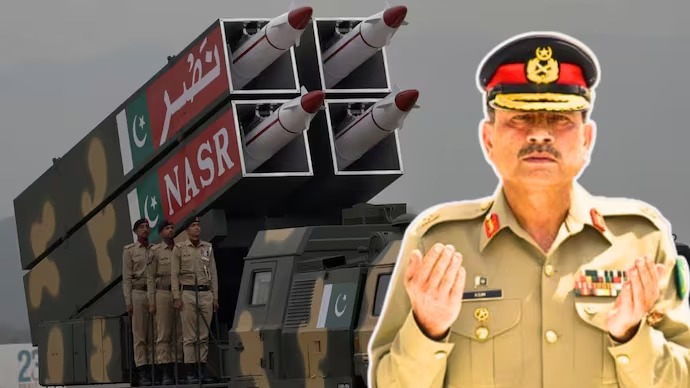
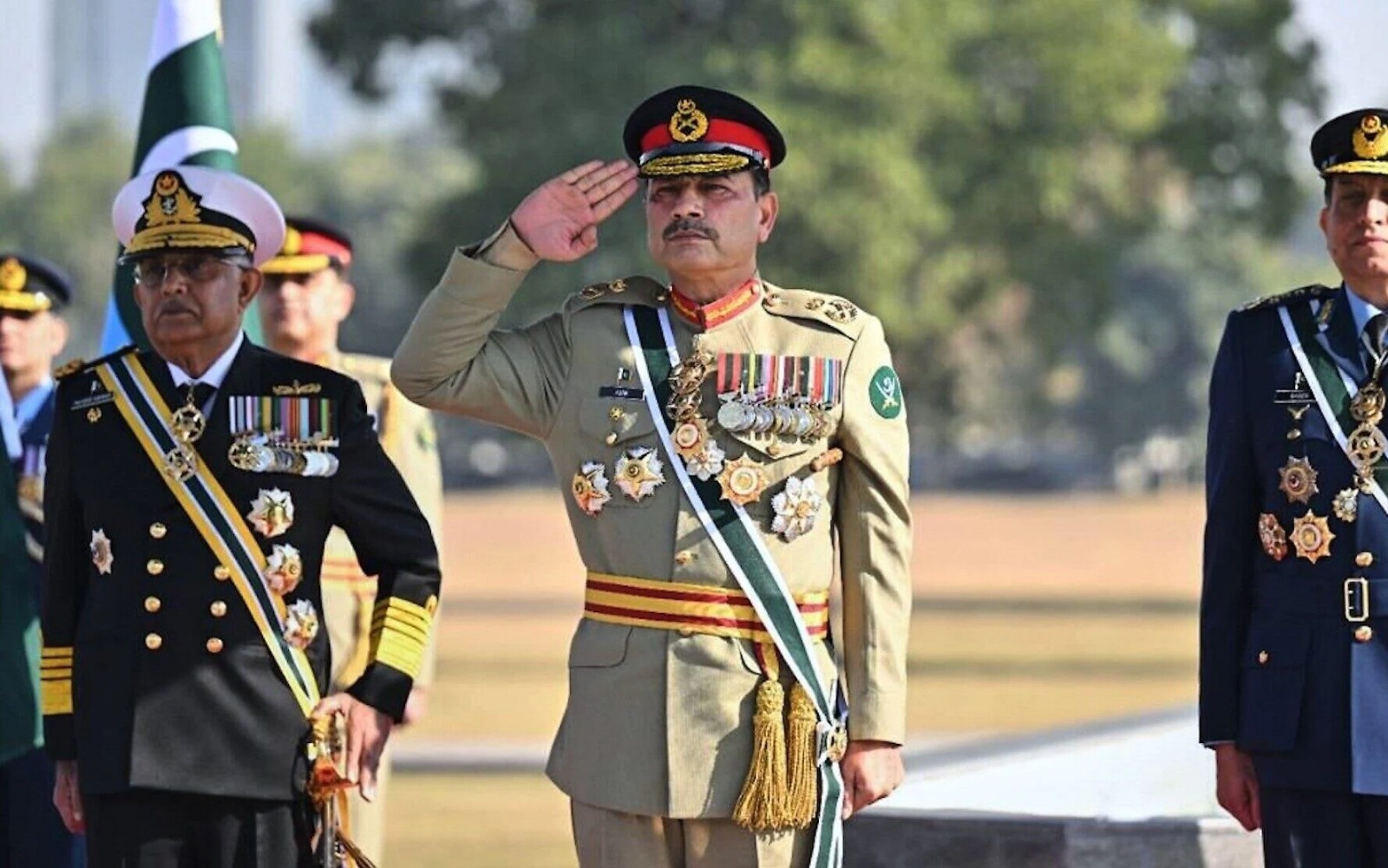
Every country has moments when a single figure, through temperament as much as circumstance, shifts the balance of its political order. In Pakistan today, that figure is Field Marshal Asim Munir. Analysts often describe his rise in familiar language, discipline, institutional confidence, and careful preparation.
But this doesn’t quite capture the way he has consolidated authority or the psychology behind those moves. A better way to make sense of his imprint is to look at him through the Thick Face-Black Heart lens, a framework from Chinese strategic thought that highlights a person’s ability to absorb humiliation without blinking and to impose their will without sentimental hesitation. It is not a flattering theory, but it is an accurate one for a leader who has altered Pakistan’s political landscape with a mix of silence and severity.
Munir’s career did not follow the trajectory of a man destined for sweeping power. His years in military intelligence, including the short-lived tenure as DG ISI, exposed him to the brutal currents of Pakistan’s political machinery. When he was removed abruptly and with enough public visibility to sting, it seemed like one of those episodes that cut promising careers in half. Yet he responded with a peculiar stillness. He did not leak stories to the press, did not cultivate a faction to avenge the slight, and did not attempt a public rehabilitation campaign. He simply stayed put, watched, and waited. That kind of emotional discipline is rare in Pakistan’s power circles, where bruised egos often leave trails of chaos.
Munir’s ability to absorb that injury and carry on without outward bitterness said more about him than any official posting ever could. He has nurtured this kind of attitude since his early days in the Pakistan Army, as during a staff course at that time, (Major) Munir was given the title of ‘deceiver’ by his course-mate officers.
When he re-emerged in positions of influence, first as Corps Commander then as Quartermaster General, it became clear that he saw institutions not as ladders to climb but as structures to study. He built loyalty by being reliable, not charming; precise, not theatrical. By the time he became Army Chief, he had internalised a lesson that many powerful men learn late and painfully: you survive by showing as little of yourself as possible. That instinct for opacity, for silence as a form of strength, is the “thick face” part of his psychology. It allowed him to weather political storms without leaving fingerprints.
After taking command, however, a different side of him surfaced. This was the colder, unsentimental edge that the “black heart” portion of the theory describes. The handling of the May 9 unrest revealed it most clearly. An institution that usually protects its own was suddenly willing to sacrifice high-ranking officers; one serving lieutenant general was removed, several major generals and brigadiers faced proceedings, and the message travelled quickly through the ranks: ambiguity was no longer acceptable.
Loyalty would not be inferred; it would be demonstrated. No chief in recent memory had gone after his own officer corps with such quiet precision. There was no bluster, no televised fury. Just action, executed without sentiment. This internal consolidation flowed naturally into political centralisation. Intelligence coordination became tighter, and the usual patchwork of informal channels between senior officers and political elites began to close. Pakistan’s power structure has historically tolerated multiple “centres of gravity” within the military—commander-level networks, intelligence cliques, and backchannel negotiators. Munir dismantled that arrangement without announcing it. Everything began to tilt toward GHQ, and more specifically, toward his office.
The political realm, already fragile, bent even faster. PTI’s disintegration did not occur by accident or due to political incompetence alone. It happened through a systematic squeeze: mass arrests, cases under terrorism laws, long sentences, and a media environment in which the country’s most popular political figure could vanish from the screen for months. The state had used pressure before, but this time it felt different. There was a seriousness to it, a determination to eliminate not just the party’s leadership but the party’s very presence in public life.
This shift had a profound effect on the older parties as well. PML(N) and PPP, both seasoned in the art of negotiating with the establishment, slowly realised that the usual bargaining space no longer existed. Their agreement to constitutional changes that weakened the judiciary, formalised the military’s upper hand, and paved the way for a Chief of Defence Forces position told its own story. They were no longer negotiating with the military; they were adjusting themselves to an institutional reality shaped entirely by it. Munir did not cajole them into compliance; he simply created a structure in which their compliance became the path of least resistance.
The legal remodelling that accompanied this political shift was just as significant. The old hybrid order worked because of its messiness, courts sometimes pushed back, parliament sometimes resisted, and the military exerted influence without admitting it. Munir’s approach was to strip away the ambiguity. Judicial oversight over key decisions was narrowed. Constitutional interpretation was rerouted toward structures less likely to confront the military’s strategic interests. Even the symbolic principle that the largest bloc in parliament should form the government collapsed under this new logic. The 2024 elections did not merely produce a strange mandate; they produced a political arrangement in which electoral strength had meaning only if it aligned with the establishment’s preferences.
Control over information completed the picture. Channels were taken off air, journalists were pressured, and digital spaces were targeted through bans and intimidation. Pakistan has always had red lines around the military, but these lines have become wider and more sharply enforced. Critique did not disappear entirely, but it was pushed into the margins, away from the audiences that once relied on it to make sense of the state’s direction. The informational space became curated rather than contested.
Taken together, these shifts reveal something beyond conventional military dominance. They signal the end of the hybrid model itself. Pakistan still performs the rituals of democracy, elections, speeches in parliament, and televised interviews, but these rituals now operate inside a cage whose walls have been reinforced. The space for dissent, negotiation, or institutional self-assertion has shrunk so dramatically that the form of democracy remains while its content drains away.
This transformation carries a deeper cost for the state. A political order built around one office, however disciplined its occupant, becomes structurally fragile. Civilian institutions lose both capability and confidence when sidelined for too long. Courts that cannot arbitrate major questions eventually lose public authority. Political parties that survive on borrowed space lose the ability to channel public frustration. A press that cannot interrogate power loses its purpose.
Munir’s rise, methodical as it was, has created a system that depends heavily on his ability to maintain control. It may produce temporary calm, but it does so by weakening the very institutions that give states longevity. The paradox of his authority is that its solidity makes the system around him brittle. Once power concentrates to such an extent, it becomes harder, not easier, for the state to adapt when the circumstances change or when leadership eventually passes on.
What Pakistan confronts now is not simply the dominance of one field marshal, but the slow hollowing-out of democratic life. The façade is still there, but the architecture behind it has shifted. Munir embodies the psychology of survival and imposition central to the Thick Face-Black Heart theory. Through patience and severity, he has remade the political order. But in doing so, he has also made the state more dependent on command than on consensus. That dependence may be the most dangerous legacy of all.
-Arun Anand

On December 10, the U.S. Chargé d’Affaires in Islamabad, Natalie Baker, announced that the U.S. Exim Bank had approved a package of $1.25 billion in financing to support mining operations at Reko Diq, one of the world’s richest untapped copper and gold deposits. On the surface, Washington framed the decision as a step toward securing global supply chains for critical minerals.
Islamabad portrayed it as a sign of renewed confidence in Pakistan’s investment climate. But for Balochistan, Pakistan’s largest province by land but its poorest by every measure, the announcement landed like yet another reminder that its natural wealth is a prize others are free to carve up.
This Exim Bank financing flows directly after two MoUs were signed on September 8, 2025, between Pakistan and the United States for “critical minerals cooperation.” The military dominated Shehbaz Sharif government heralded the agreements as a milestone. But in Balochistan, they are yet another chapter in an old story: the extraction of Balochistan’s resources by outside powers, facilitated by a central government that treats the province not as a partner but as a colony.
For decades, Pakistan has perfected a model of imperial governance in Balochistan, which combines military control, political manipulation, and economic dispossession. What is new today is not the extraction but the identity of the extractors. The United States now joins China, whose multibillion-dollar projects under the China-Pakistan Economic Corridor (CPEC) have already given Beijing expansive access to Balochistan’s ports, highways, and mineral deposits.
Pakistan’s rulers have turned Balochistan into a marketplace where global powers shop for resources while the people who live above those riches remain among the most deprived in South Asia.
Balochistan’s modern history is inseparable from the manner in which it entered Pakistan. After the forced accession of 1948, the province was governed with suspicion and repression. Islamabad treated Baloch aspirations for autonomy as rebellion, not politics. The result is a province where the most powerful institution is not the provincial assembly but the Quetta cantonment, whose writ supersedes that of any civilian office.
Even today, Balochistan’s political leadership is crafted in military corridors of Rawalpindi and the condonement at Quetta. The current chief minister, Sarfaraz Bugti, is widely viewed as a product of the military establishment, who is another local administrator empowered to manage dissent rather than address the province’s material deprivation. The result is a governance system more interested in securing resource corridors than building schools, hospitals, or representative institutions.
Under this militarized order, resource extraction has been carefully organized to ensure that wealth flows outward to Pakistan’s dominant province, Punjab, and to foreign partners courted by the military-led state. Balochistan’s natural gas from Sui fueled Pakistan’s industrial growth for decades, yet most Baloch households cook on firewood.
Today, its copper and gold fields promise to enrich foreign corporations and deliver revenue to Islamabad, while the communities living in the shadow of these mines remain jobless, landless, and under surveillance.
Even menial jobs at major projects like security guards, cleaners, construction labor, are routinely filled by workers imported from Punjab. The message is unmistakable that the state does not merely extract from Balochistan, it excludes Baloch people from even the crumbs of that extraction.
The rush by both China and the U.S. for access to Balochistan’s minerals reflects how Pakistan’s ruling elite has repositioned the province within global competition. Beijing’s footprint was first to expand, anchored by the Gwadar port and a series of infrastructure and mining agreements.
CPEC promised development but delivered a model where Chinese companies received generous concessions, security cordons were erected to protect foreign workers, and local fishing communities were pushed to the margins.
Now, Washington enters the scene, not as a counterweight to China’s influence but as another partner in Pakistan’s long tradition of opaque, extractive deals. It reflects a bipartisan plunder with Pakistan inviting multiple patrons to mine a region whose own residents are denied the most basic political and economic rights.
The most striking thing about Balochistan is how starkly its material reality contradicts its mineral wealth. Despite being mineral rich in every aspect, the province ranks at the bottom of every development index in Pakistan. For instance, the poverty appears near-universal with 71 percent of the provincial population living in multidimensional poverty. It is nearly double the national average of 38 percent and in districts like Awaran, Kharan, and Panjgur, even exceeds 80 percent.
Likewise, education is in an equally dire state. Literacy hovers around 40–44 percent, the lowest in the country, with female literacy dropping below 25 percent in many rural districts. More than 60 percent of Balochistan’s children are out of school. These are not statistics of a neglected province; they are the metrics of deliberate underdevelopment.
The story is same across healthcare with the province recording the highest maternal mortality ratio of 785 deaths per 100,000 live births. It is abysmal compared to the national average of 186.
Nevertheless, the new U.S. financing for Reko Diq along with the other critical mineral MoU is significant not because it marks a shift in Washington’s policy but because it reveals a continuity in Pakistan’s own governing logic of treating Balochistan as a frontier to exploit.
The province is secured by force, governed through proxies, and opened to whichever foreign power is willing to invest billions with no questions asked about political rights or local consent.
Even when the government speaks of “benefit-sharing,” it does not specify it that the benefit is for Punjabis and Punjabi military and political elite that dominates the levers of power in Pakistan. As such, it is not partnership but a plunder with legal paperwork.
The tragedy is not just that Balochistan’s resources are being plundered. It is that this plunder is now bipartisan, endorsed by Islamabad, welcomed by Washington and Beijing, and justified in the name of development that never arrives.
For the people of Balochistan, the empire has simply added new partners. The loot continues. The province remains impoverished. And the world’s most powerful countries now share in the spoils of a land whose own residents have yet to taste the prosperity lying beneath their feet.
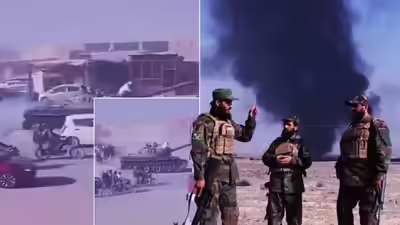
-Arun Anand
On the intervening night of October 7-8, Pakistan Army suffered one of its deadliest blows in recent months when eleven of its soldiers, including two senior officers, were killed in an anti-militancy operation in Khyber Pakhtunkhwa’s Orakzai district. According to a statement from Inter-Services Public Relations (ISPR), Lt. Col. Junaid Tariq, 39, and his second-in-command, Major Tayyab Rahat, 33, were killed during an intelligence-based operation (IBO) against Tehreek-e-Taliban Pakistan (TTP) militants.
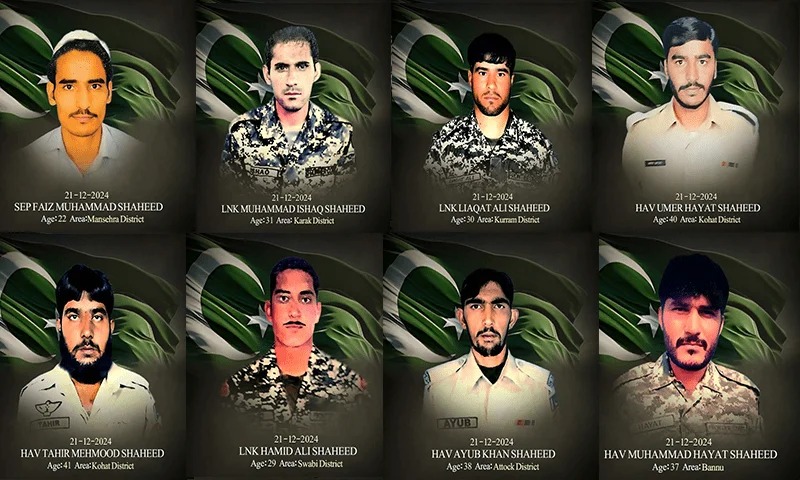
Now, barely 24 hours later, in another statement, ISPR revealed that another young officer, 30-year-old Major Sibtain Haider, was killed in another firefight in Dera Ismail Khan. The loss of these many soldiers in mere two days highlights the resurgence of militancy across Pakistan’s restive northwest and Balochistan. It reveals an uncomfortable truth that while its soldiers bleed on the frontlines, Pakistan’s powerful military leadership remains increasingly busy in managing internal politics, governance and diplomacy instead of its delegated responsibility of national security.
These recent deaths add to a steadily rising tally of military casualties in Pakistan’s long and exhausting counterinsurgency wars. What began two decades ago as an ambitious campaign to “cleanse” the tribal belt of militants has evolved into a grinding cycle of violence that Pakistan has never truly escaped. Since launching “Operation Azm-i-Istehkam” in June last year, which was supposed to be comprehensive campaign to reassert state authority in militancy-infested regions in the country’s hinterland, the military has claimed frequent “successes” in neutralizing insurgents. However, the numbers tell another story.
According to a recently released report by the Pakistan Institute for Conflict and Security Studies (PICSS), Pakistan witnessed 212 militant attacks in August and September alone, which resulted in 135 deaths beside injuries to nearly two hundred. More significantly, among the dead were 61 security personnel, which is nearly triple the number of militants killed during anti-insurgency operations. The ratio exposes a deeply troubling imbalance that far from being on the defensive, militant outfits like the TTP and Islamic State’s Khorasan affiliate (IS-K) have grown more emboldened and well-equipped.
Parallel data from the Centre for Research and Security Studies (CRSS) reinforces the bleak picture. “In just three quarters,” CRSS noted, “2025 has proven nearly as deadly as all of 2024, with 2,414 fatalities recorded compared to 2,546 for the entire year before. With a quarter still remaining, 2025 is on course to surpass last year’s toll.” If the trajectory holds, this could be Pakistan’s bloodiest year in a decade.
The figures are symptomatic of a deeper institutional malaise. Pakistan’s Army, which is inarguably the most powerful institution in the country and has for decades served its de facto decision-maker, is increasingly distracted due to its non-military functions. Under Chief of Army Staff Field Marshal Asim Munir, who took command in November 2022, the military’s attention has been directed more toward managing Pakistan’s politics and external relations than securing its own soil.
Instead of focusing on the country’s hinterland in KPK and Balochistan where militants and insurgents have reasserted their presence, the top brass in Rawalpindi has been preoccupied with stabilizing a floundering civilian government, brokering deals with foreign creditors, and navigating Islamabad’s fragile ties with Washington, Beijing, and Riyadh. Asim Munir himself has appeared as much a statesman as a soldier by not only negotiating financial lifelines, leading diplomatic engagements, and, in many ways, functioning as Pakistan’s parallel prime minister.
But this expanding political role has come at a cost. While the Army’s leadership remains entangled in governance and foreign policy, its counterterrorism machinery has been stretched thin as well as demoralized.
Such military causalities will only add to the worsening morale of soldiers.
While the militant violence has resurged across Pakistan’s peripheries, with TTP re-establishing its shadow administrations in parts if KPK and a new generation of Baloch insurgents targeting military convoys, economic projects, and Chinese infrastructure linked to the China-Pakistan Economic Corridor (CPEC), the state’s response has been both predictable and ineffective. Rawalpindi and Islamabad has responded with more military operations, more checkpoints, more rhetoric about “national resolve.”
For those living under the shadow of this militarised system in KPK and Balochistan, Pakistan Army’s presence has always been “less like protection” and more like suppression and occupation. Despite such a reality, the country’s security establishment has never shown any willingness to confront the political roots of this instability. They continue to overlook how the decades of militarized governance have alienated communities and deepened distrust between the centre and the periphery.
While soldiers die on the frontlines, the Army’s headquarters in Rawalpindi remains entrenched in civilian affairs. Field Marshal Munir has been instrumental in shaping Pakistan’s political transition after the fall of Imran Khan’s government, ensuring a pliant civilian administration led by Prime Minister Shehbaz Sharif. The Army’s imprint, which was shadowy earlier, over the judiciary, media, and bureaucracy has grown heavier than ever.
In economic policy, too, the military’s footprint is unmistakable. Army Chief has been instrumental in establishing the Special Investment Facilitation Council (SIFC), which aimed at attracting foreign investments into the country. Even foreign policy has become a military domain with Asim Munir regularly visiting abroad to countries like United States and China besides Gulf countries. He is not only eclipsing the role of a foreign minister but is growingly demonstrating himself to the world as the most important power centre of the country. This over-centralization of power has weakened civilian institutions, stifled accountability, and blurred the line between national defense and political engineering.
Pakistan’s security doctrine has, for a long time, demonstrated external fixation on India and Afghanistan, whom it has blamed for its recurrent security failures. However, today Pakistan’s most serious threats lie within. The persistence of homegrown militancy in KPK, ethno-nationalist insurgency of Balochistan, and sectarian violence across the country indicates a failure of security doctrine.
Though it conceived Operation Azm-i-Istehkam, like many of its predecessors, as a show of force, its failure to contain militancy demonstrates the reluctance of the Army to deal with its own policy contradictions. For decades, Rawalpindi tolerated “good” and “bad” militants, a legacy of decades of sponsorship of various proxies given its regional ambitions. Now its attempts to fight them without addressing the ideological and institutional complicity that sustained them is akin to treating symptoms while ignoring the disease.
The growing toll of military casualties are a reminder of this cost, symbolizing the futility of a security policy mired in political distraction. For years, Pakistan’s generals have justified their political dominance as a bulwark against instability. Yet the rising body count suggests the opposite as the more the Army entrenches itself in the levers of governance, the less secure the country becomes.
As the violence escalates, will military continue to be both the ruler and the defender remains to be seen. But the fact remains that the sprawling, unaccountable, and politically entangled empire of the generals has hollowed out the very institution it claims to protect. It is the Pakistani soldiers who are paying the price for a leadership that has lost its sense of responsibility.
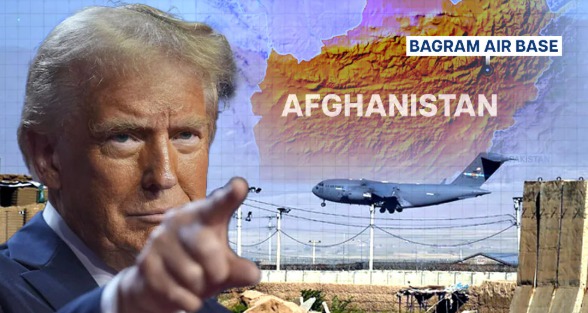
-Salah Uddin Shoaib Choudhury

The United States looks poised to return to the very theatre it once abandoned: Bagram. What Washington calls a tactical correction could quickly become a strategic rupture for South Asia. A renewed US push – now reportedly coordinated with Pakistan’s security establishment – to retake Bagram Air Base and re-establish a foothold in Afghanistan risks detonating a broader regional conflagration, reigniting refugee flows, empowering jihadist networks and drawing Pakistan deeper into an unwinnable security quagmire. The question is not whether the dust will settle – it is how many countries, communities and lives will be buried beneath it.
US President Donald Trump – in what he frames as a move to correct the “perceived mistakes” of the previous administration – has signalled renewed US interest in re-establishing a presence at Afghanistan’s strategic Bagram Air Base. Washington’s overtures have already put Islamabad on notice to expedite preparations for possible operations that could include seizing Bagram and pushing to unseat or reshape the current Taliban-led regime. Reports indicate that, if such a military offensive goes forward, US–Pakistani forces could also strike selected targets inside Afghanistan and press against militant networks that threaten Pakistan, including Tehreek-e-Taliban Pakistan (TTP).
The Afghan Taliban reportedly reacted to these developments by ordering their Defence Ministry and the so-called Tath’heri (Purification) Commission to erase biometric records of Taliban officials and fighters – a move described in reporting based on Middle East Research Institute (MEMRI) sources. The directive, according to those reports, reflects deep concern among Taliban leaders that renewed US pressure or the collapse of talks in places such as Bagram could trigger unilateral strikes or renewed efforts to dismantle their command structures.
Purging biometric data is both practical and symbolic. Practically, the obliteration of fingerprints, iris scans and other personal identifiers would complicate outside efforts to track commanders and rank-and-file fighters; it would make it easier for militants to slip across borders, adopt new identities, or seek refuge in other networks. Symbolically, the purge signals a loss of confidence in negotiations and a preparation for the worst-case scenario: a new round of kinetic pressure that could again turn Afghanistan into a launching pad for transnational militancy. Human-rights and humanitarian organisations have long warned about the risks posed by biometric systems in Afghanistan — both when those systems fall into insurgent hands and when their erasure removes accountability and traceability for vulnerable civilians.
Intelligence reporting suggests militants are preparing multiple fallback options: some operatives may attempt to embed with groups such as Al Qaeda and the Islamic State Khorasan Province (ISKP); others may cross into Pakistan’s tribal districts and border provinces. These movements, if they occur en masse, would re-create the destabilising dynamics Islamabad confronted after 2001 – namely, the spillover of fighters, weapons and illicit finance into Pakistan’s frontier regions, with huge costs in lives, displacement and security.
There are already signs of high-stakes diplomacy and renewed security contact between Washington and Islamabad. Recent high-level interactions between US and Pakistani military and political leaders suggest a rapid re-engagement that some analysts read as a strategic gamble by Pakistan’s military establishment to regain influence and secure economic or security concessions from Washington. Whether Islamabad will accept a subordinate role in a US-led operation in Afghanistan, however, is far from certain; domestic politics, sectarian fissures, and a host of ongoing internal insurgencies complicate any Pakistani commitment.
Pakistan’s domestic situation makes any external adventure riskier. The Pakistani Army is already struggling to continue military operations in Balochistan and Khyber Pakhtunkhwa; at the same time, serious political unrest in Pakistan-occupied Kashmir (PoK) and rising opposition activity inside the country would make the reallocation of troops and resources to a new Afghan campaign politically costly and operationally difficult. Moreover, the persistent threat from TTP and other domestic militant groups means Islamabad cannot simply redeploy its security apparatus without leaving critical vulnerabilities at home. In short, the calculus that once made Pakistan a willing partner for extraterritorial operations has changed. The Pakistani state of the 2000s is not the Pakistani state of today.
If Washington and Islamabad proceed with joint offensives to retake Bagram and press into Afghanistan, the immediate human cost will be severe. Large-scale operations — air strikes, special-forces raids and cross-border pursuit — will almost certainly result in significant civilian casualties, internal displacement, and the fracturing of fragile local governance structures. The re-introduction of sustained foreign military activity would also invite responses from regional powers. Iranian and Russian policymakers have repeatedly warned that aggressive US moves in Afghanistan could escalate into broader confrontations, while China has signaled unease about renewed American military footprints in Central and South Asia.
A renewed campaign could also spur a scramble over Afghanistan’s illicit economies, particularly the opium trade. Historically, control over narcotics routes and processing has financed militias and threatened to entangle security services in corrupt economies. If Pakistan’s Inter-Service Intelligence (ISI) and other actors become further implicated in attempts to control smuggling routes or extract rents from the trade, that will accelerate domestic corruption and erode the legitimacy of state institutions.
Finally, the political fallout inside Pakistan could be profound. Opposition parties and civil society could mobilise against what they characterize as another dangerous foreign entanglement, while disenfranchised groups in restive provinces might exploit the distraction to intensify insurgencies. The combination of military overstretch, economic strain, and a renewed influx of fighters into the tribal belt would make Pakistan considerably less stable — and therefore less capable of managing the very threats a joint operation claims to resolve.
In short, the prospect of a US–Pakistan operation to retake Bagram is not simply a tactical matter of bases and battalions. It is a decision with wide-ranging geopolitical, humanitarian and domestic consequences: for Afghan civilians, for Pakistan’s fragile polity, and for the broader regional balance.
Reoccupying Bagram would be a Pyrrhic victory. Even if US and Pakistani forces briefly seize terrain, the deeper strategic problems that have long plagued Afghanistan – fractured governance, opportunistic militancy, narcotics economies, and the absence of a legitimate, inclusive political settlement – will remain. Worse, a military-first solution risks exporting instability into Pakistan and across the region.
If there is to be any hope of stabilising Afghanistan, it must rest on clear political objectives, robust humanitarian safeguards, and a regional framework that includes not only the United States and Pakistan but also Afghanistan’s neighbours.
Policymakers in Washington and Islamabad should weigh prudence over bravado: the lives lost, institutions shattered and refugee crises unleashed by another foreign intervention cannot be undone by a single airstrike or parade of proclamations.

– Arun Anand
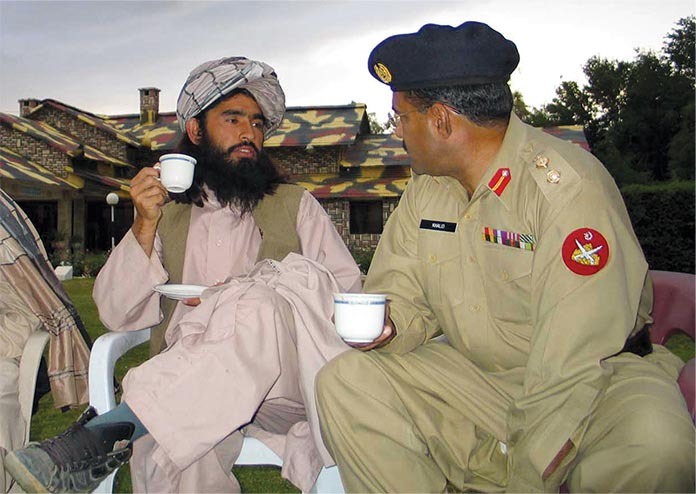
India’s investigation into the bombing of November 10 near Delhi’s Red Fort has peeled back yet another layer of a problem that New Delhi has long warned the world about: Pakistan’s enduring role as a state sponsor and safe haven for jihadist terrorism. Fifteen people have been killed in the attack, carried out just two days after the Jammu and Kashmir Police quietly uncovered a sophisticated terror module operating far from the stereotypical image of gun-wielding militants. This network, led by highly educated professionals including doctors, has now been traced directly back to the Jaish-e-Mohammad (JeM) and transnational Ansar Ghazwat-ul-Hind (an affiliate of Al Qaeda), both Pakistan-based groups fostered by the country’s military establishment.
The arrests mark one of the most troubling cases in recent years — not only because of the carnage in the heart of the Indian capital but because of what they reveal about the evolution of Pakistan’s proxy warfare machinery. A “white-collar” terror module, with operatives embedded in colleges and hospitals, radicalised digitally, guided remotely and transnationally, and supervised by handlers working under the protective umbrella of Pakistan’s security apparatus, underscores how deeply entrenched and globally connected Islamabad’s militant factories remain.
For India, the revelation is hardly surprising. For the international community, it should be alarming. Indian security agencies have now established that the Delhi module’s leaders maintained active communication with Pakistan and Turkey-based controllers ostensibly linked to JeM chief Masood Azhar. If there were any doubts about JeM’s operational revival after years of supposed crackdowns in Pakistan and India’s Operation Sindoor, the Delhi blast should put them to rest. More importantly, the module’s exposure reiterates an uncomfortable truth: despite periodic claims of counter-terror reforms, Pakistan’s soil continues to nurture and export jihadist groups as an instrument of statecraft. Masood Azhar is believed to be living comfortably in Pakistan, protected rather than prosecuted.
The timing of this exposure is equally significant. They come on the heels of Operation Sindoor, India’s unprecedented cross-border strikes on May 6 and 7 targeting terrorist infrastructures across Pakistan-occupied Jammu & Kashmir and inside Pakistan’s heartland besides several military facilities. Among the targets was JeM’s headquarters in Bahawalpur, the Markaz Subhan Allah, where ten members of Azhar’s family and four of his trusted lieutenants were killed. It was acknowledged by his senior jihadi associate Ilyas Kashmiri who is on record stating that Azhar’s family was torn apart by Indian strikes.
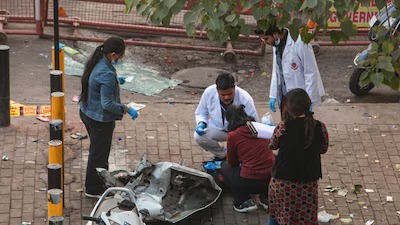
What was instructive then was how senior Pakistan Army officers and civilian government officials were present at funerals for Azhar’s aides, thereby exposing Pakistan’s “good” and “bad” distinction of terrorists, which it often invoked to justify selective counterterrorism efforts.It is no secret how Pakistan has used terrorism as a key component of its regional policy since decades. Though it may have started with Afghan Jihad in 1980s, it successively patronised the establishment of a network of India focused groups such as JeM, Lashkar-e-Taiba (LeT), and Hizbul Mujahideen, ostensibly to bleed India at a minimal cost through this proxy war.
Be it the infrastructure for recruitment, training, and indoctrination, it has allowed these groups to thrive under various guises like religious charities, madrasa networks, social welfare groups, and sometimes openly paramilitary outfits. For instance, LeT of Hafiz Saeed is fronted by his Jamatud Dawa charitable organisation. What sets the present moment apart is not the existence of these groups but the brazenness with which they operate under Pakistan’s current military leadership. While Islamabad routinely assures global audiences that terrorist activity has been curbed, evidence on the ground suggests the opposite: terrorist organisations are diversifying their recruitment pools, expanding digital operations, improving financial concealment, and deepening their operational cooperation.
The Delhi module’s composition of educated, professionally accomplished individuals recruited ideologically rather than preying on economically vulnerable ones demonstrates a dangerous shift. These are not fringe radicals but inconspicuous by being embedded in mainstream society, efficient at building clean identities, and less likely to attract suspicion to travel freely and avoid security red flags. This is not the work of rogue actors. It reflects a coherent strategy. This appears to be getting systematised under current Pakistan Army Chief Field Marshal Asim Munir under whom Pakistan is undergoing a dangerous power consolidation by the powerful military establishment. Munir’s actions suggest Pakistan Army’s old reliance on militant proxies returning even as the country itself grapples with heightened levels of extremism from its former proxies like Tehreek-e-Taliban Pakistan (TTP) and Baloch nationalist insurgents.
Under Munir, the military has consolidated power across civilian institutions, tightened its grip on internal dissent, and centralised strategic decision-making. This is exemplified by the recent 27th Constitutional Amendment which provides the legal cover to Asim Munir’s actions by extending him lifetime of immunity as Field Marshal and making him the overall chief of all the armed forces of Pakistan. But on the question of terrorism, the signals have been unmistakable with groups like JeM and LeT still seen as vital instruments of Pakistan’s regional calculus. Moreover, Munir’s public rhetoric has grown more hawkish, echoing the confrontational doctrines of previous generals who viewed militancy as a cost-effective extension of state policy.
In that context, the presence of senior army officials at the funerals of JeM operatives killed during Operation Sindoor was more than symbolism; it was an official endorsement of the terror policy. It signalled to the jihadist ecosystem that Pakistan’s military elite remains committed to the decades-old compact: continue fighting India and, in exchange, receive protection, funding, and freedom of movement. Internationally, Pakistan has mastered the art of performing compliance. It arrests foot soldiers while sparing the leadership. It shutters organisations only to allow them to reappear under new names like The Resistance Front (TRF) for LeT and People’s Anti-Fascist Front (PAFF) for JeM. It serves on the UN bodies on counterterrorism while patronising terrorists through the back door. The aim is not to eliminate terrorism but to manage it by tightening or loosening the tap depending on geopolitical incentives.
Unfortunately, Western governments led by the United States have often been complicit in allowing Pakistan to play this double game by prioritising short-term strategic interests. It has resulted in a perverse equilibrium where Pakistan may suffer from homegrown extremist violence and yet nurtures groups that attack its neighbours simultaneously.As such, the Delhi bombing and the terror module’s exposure should force a reassessment, as a country that cannot or will not dismantle the terror ecosystem responsible for destabilising an entire region cannot be treated as a credible partner in global counterterrorism. It is not merely a domestic law-and-order story of India but a reminder that Pakistan’s terrorist infrastructure remains intact, adaptive, and internationally connected. It is also a warning that Pakistan’s military leadership, despite rhetorical commitments to stability, continues to rely on terrorism as a tool of state policy.
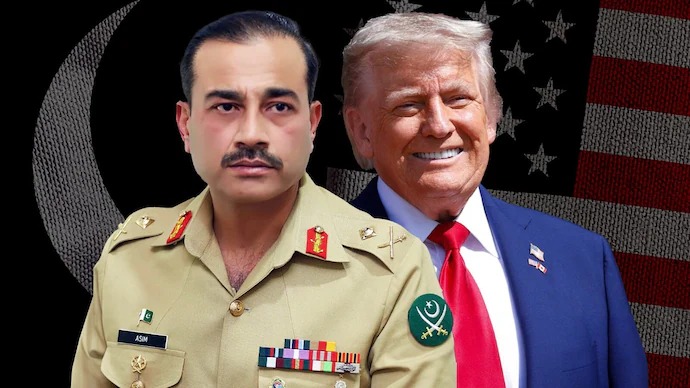
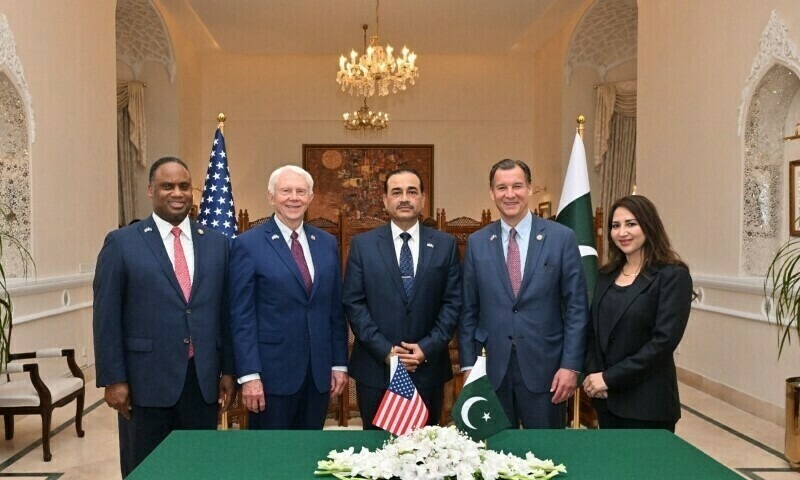
The history of US-Pakistan relations illustrate one of the most paradoxical alliances in modern geopolitics: a superpower that continuously funded, armed, and politically legitimized a state whose security establishment simultaneously fostered the very militant ecosystems that would later threaten American, Indian, Afghan, and global security. This contradiction — rooted in Cold War priorities, sustained through post-9/11 calculations, and shaped by Pakistan’s military-driven strategic doctrines –exposes how international patronage can inadvertently strengthen networks capable of producing catastrophic attacks such as the 2008 Mumbai assault. A deeper examination of this relationship, grounded in historical data and security evidence, raises the critical question of whether similar 26/11-type events could occur again under conditions that remain structurally unchanged. US–Pakistan ties took shape in the early Cold War years, when Washington sought military footholds to counter Soviet influence across Asia.
Pakistan, newly independent and searching for strategic allies, found in the United States a willing patron. Between 1954 and 1965 alone, Washington provided Pakistan more than $2.5 billion in economic and military assistance, with roughly 60% of this aid directed toward the armed forces. American weapons—F-86 Sabre jets, M-47 Patton tanks, artillery systems—quickly transformed Pakistan’s military capacity. However, the deeper impact was institutional — US assistance reinforced the Pakistan Army’s centrality in national politics, undermining civilian authority and contributing to successive military coups. By the time General Ayub Khan seized power in 1958, Pakistan’s military establishment was not only dominant but also deeply embedded in the country’s foreign policy outlook, particularly regarding India. The Soviet invasion of Afghanistan in 1979 further intensified this alliance.
The CIA’s Operation Cyclone, one of the largest covert programs in its history, funneled billions of dollars into Pakistan. Estimates place U.S. contributions at $3.2 billion during the 1980s, matched by roughly the same amount from Saudi Arabia. This funding, channeled largely through Pakistan’s Inter-Services Intelligence (ISI), supported the training and arming of more than 100,000 mujahideen fighters. The intention was clear: turn Afghanistan into the Soviet Union’s quagmire. Yet the consequences were far more expansive. Pakistan’s security establishment selectively supported Islamist factions that aligned with its strategic interests, especially those capable of projecting influence into Afghanistan and later into Kashmir.
The militant infrastructure — the training camps near Peshawar, the radical madrassas in the northwest, the logistical corridors through tribal areas — became permanent fixtures, outliving the Soviet withdrawal. This transformation was not simply collateral damage; it was strategically cultivated.
The Pakistan Army’s doctrine of “asymmetric warfare” against India, combined with its pursuit of “strategic depth” in Afghanistan, created incentives to preserve and deploy militant groups as instruments of foreign policy. Lashkar-e-Taiba (LeT), founded in 1987 with ideological and logistical roots in the Afghan jihad, became one of the primary beneficiaries of this environment. Though the U.S. never directly funded LeT, the broader military-intelligence ecosystem—strengthened through U.S. patronage—allowed LeT to grow into a highly disciplined, militarized organization capable of executing cross-border operations with precision.
After 9/11, the U.S.–Pakistan relationship entered another high-stakes phase. Washington designated Pakistan a “major non-NATO ally,” providing more than $33 billion in aid between 2002 and 2018. Of this, $14.6 billion came in the form of Coalition Support Funds (CSF) meant to reimburse Pakistan for counterterrorism operations. Yet multiple U.S. audits revealed extensive misuse and misreporting.
The Government Accountability Office and Pentagon oversight bodies documented that Pakistan diverted CSF money to purchase conventional military equipment—F-16 upgrades, naval modernization, anti-ship missiles—none of which addressed the counterinsurgency challenges in Afghanistan or the internal militancy problem. Instead, this strengthened the Pakistan Army’s traditional posture against India while leaving intact the selective militant networks that Islamabad deemed assets rather than threats.
The consequences became evident as the Afghan Taliban rebounded throughout the 2004–2018 period. U.S. military commanders repeatedly testified before Congress that Taliban leaders operated from sanctuaries in Pakistan, specifically the Quetta Shura and Peshawar Shura. These safe havens contributed to the deaths of more than 2,400 American soldiers and tens of thousands of Afghan civilians. Despite receiving billions in U.S. aid, Pakistan’s military establishment maintained its dual policy: aggressive action against anti-state militants like Tehrik-e-Taliban Pakistan (TTP), and permissive or supportive behavior toward groups aligned with its external goals, including the Afghan Taliban, Haqqani network, LeT, and Jaish-e-Mohammed (JeM).
This selective approach is not an allegation, but a pattern documented by scholars such as C. Christine Fair, Hussain Haqqani, and numerous U.S. intelligence assessments. The 26/11 Mumbai attack demonstrated the extent to which this militant ecosystem could project violence far beyond South Asia’s battlefield margins. The assault, which killed 166 people over three days, showcased training, coordination, and operational sophistication rarely seen outside state-assisted terrorism. David Coleman Headley, the Pakistani-American operative who conducted reconnaissance for the attacks, admitted in U.S. court that he received training at LeT camps and interacted with individuals connected to Pakistan’s security establishment.
Several planners of the attack, including Zaki-ur-Rehman Lakhvi, operated visibly within Pakistan for years—arrested only under international pressure and often released under opaque judicial processes. U.S. Treasury designations between 2010 and 2018 repeatedly named Pakistan-based LeT operatives, charities, and funding nodes, underscoring the persistent ecosystem that enabled the attack. Pakistan has undoubtedly suffered tremendously from terrorism. Over 70,000 Pakistanis, including civilians and soldiers, were killed in terror violence between 2001 and 2020. Major military operations such as Zarb-e-Azb (2014) and Radd-ul-Fasaad (2017) significantly reduced attacks inside Pakistan by targeting anti-state militants. However, these campaigns maintained the structural distinction between groups that threaten Pakistan internally and those used for external leverage. This dichotomy allowed LeT, JeM, and elements of the Afghan Taliban to survive—even as Pakistan publicly committed to counterterrorism under U.S. and Financial Action Task Force (FATF) pressure.
This selective counterterrorism is central to understanding the ongoing risks of another 26/11-type event. Although Pakistan has taken steps to restrict the activities of certain militant groups, especially under FATF supervision from 2018 to 2022, these measures remain fragmented and reversible. The ideological infrastructure remains largely intact: networks of radical madrassas, veteran trainers from decades of conflict, logistical safe houses, and diaspora-linked financing channels. The organizational DNA of groups like L eT—a disciplined chain of command, military-style training, and operational secrecy—has not been erased. These conditions are far more resilient than tactical bans or symbolic arrests. Moreover, the geopolitical incentives for Pakistan’s security establishment remain largely unchanged. India’s rising global profile—economically, diplomatically, and militarily—intensifies Pakistan’s reliance on asymmetric strategies.
The Pakistan Army’s institutional dominance over foreign policy means these strategies are deeply embedded, not easily abandoned. Even if direct support decreases, passive tolerance or covert facilitation of certain groups can enable them to survive, regroup, or innovate. In an era of drone technology, encrypted communication, and decentralized networks, the possibilities for a future attack are more diffuse and harder to detect.
A 26/11-type event does not require identical conditions; it requires only that a militant group possess the intent, some operational capability, and a permissive or fragmented security environment. Pakistan’s history of selective enforcement creates exactly such an environment. While Islamabad has made commitments under FATF and international pressure, the durability of these reforms remains uncertain. Past behavior—both during and after foreign aid cycles—suggests that once external scrutiny subsides, Pakistan’s security establishment often recalibrates rather than reforms.
The long arc of U.S.–Pakistan relations thus reveal a troubling pattern: American patronage consistently strengthened Pakistan’s military institutions while doing little to align their strategic priorities with global security concerns. This misalignment allowed militant networks to thrive under a shield of deniability. The ecosystem that once produced 26/11 was not an aberration but a by-product of systemic policies, and unless those systems fundamentally change, the risk of future large-scale attacks cannot be dismissed as remote.
–IANS
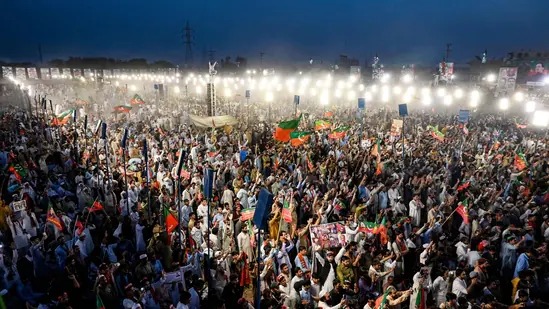
– Arun Anand
When a state alters the rules that govern it, the transformation can arrive with force—or with formality. Pakistan’s 27th Amendment represents the latter: a political restructuring that wields the authority of a coup but cloaks it in legality. Rather than suspending the constitution or dissolving parliament, it reshapes the constitution from within, erasing previous checks on military power. That distinction is crucial—one disrupts the system; the other remakes it. At the heart of this recalibration stands Asim Munir. His promotion to Field Marshal and the proposed establishment of a Chief of Defence Forces position do more than elevate his career—they institutionalize what was long an informal dominance. Unlike Ayub, Zia, or Musharraf, who ruled by toppling constitutions, today’s strategy seeks to embed military supremacy within the constitutional framework itself—ensuring that, in the future, the army can govern without the need to overthrow.
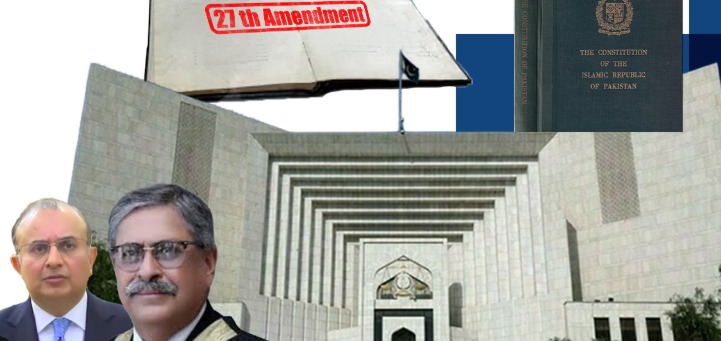
The change is deceptively small in language and vast in consequence. Replace one title with another; place all services under a single command; harden immunities around senior officers; tweak judicial mechanisms so the courts have less room to operate free of executive pressure. Each clause reads like technocratic housekeeping. Taken together, they create a new architecture: an army whose institutional primacy is not merely tolerated but constitutionally protected. That is legal militarism rather than extra-legal rule. This is not an academic quarrel over drafting. It is a political settlement about who counts as the ultimate arbiter of public affairs. Under the old ambiguity, civilian leaders could plausibly claim the last word, even while the military shaped the range of choices behind the scenes. The amendment seeks to collapse that ambiguity in one direction.
Why would civilian parties, visibly weakened and electorally vulnerable at times, agree to such a reconfiguration? The motives are painfully direct. Pakistan’s political class operates in a narrow corridor: economic collapse, fragmented coalitions, a restive opposition, and a media space that oscillates between sensationalism and censorship. Under these pressures, cohabitation with the military promises immediate stability. It keeps riots at bay, opens channels to patronage, and provides a shield against judicial harassment or street mobilisation. Short-term survival, in other words, is a powerful incentive. Yet political survival bought by reliance on the barracks is a pyrrhic achievement. Civilian parties have historically gained legitimacy by standing up to military overreach. Opposition to the establishment, even when risky, has often been the most reliable source of political capital. When a leader defies the generals and survives, that defiance becomes a badge of authenticity. By contrast, parties that appear to defend or normalise the military’s dominance surrender the claim to be an alternative. They transform from contesting forces into managers within a narrower, military-shaped consensus.
This is the arithmetic of erosion. Short-term gains for the party in power can lead to long-term erosion of its moral and political standing. Consent, in this context, is not neutrality; it is a transfer of legitimacy. A constitution stamped by the military’s imprimatur becomes less a shield of pluralism than a vehicle for managed politics. Democracies do not die in dramatic moments alone; they wither when the forms of democracy remain but their essence, the capacity of political actors to challenge and to be challenged on equal footing, is hollowed out. Those who enable this constitutional realignment may imagine that they will keep the benefits: stability, access to resources, and the ability to govern without constant confrontation. But history is unsparing about such bargains. Iskander Mirza appointed Ayub and found himself dispossessed within days. Zulfiqar Ali Bhutto, who navigated the generals’ world, was later tried and executed under military rule. Nawaz Sharif’s flirtation with the military ended in exile. Power that is lent by a stronger institution is rarely returned intact.
The amendment also alters the foundation upon which other institutions stand. The judiciary, already a site of contestation, risks becoming a subsidiary player if a new constitutional forum strips the Supreme Court of powers or if transfer mechanisms for judges are altered to reduce their independence. Provinces that won space under the 18th Amendment see their gains threatened if federal competencies are recentralised or if finances are reconstituted in ways that favour central control. The fragmentation of federal bargains bolsters local grievances, and these grievances become fuel for instability, precisely the outcome the army claims to preempt.
There is a particular irony to the present moment that is worth stressing. Civilian politicians once drew their energy from popular resistance to an overbearing establishment. That very act of resistance could convert electoral weakness into credible leadership. Today, however, many politicians choose acquiescence because the immediate costs of resistance, jail, economic disruption, and the threat of engineered crises look intolerable. They trade a precarious moral authority for a steady foothold in the office. The problem is that this lease rarely extends beyond the lifetime of a political cycle, and its renewal depends on the goodwill of the institution whose favour they bought.
And yet the public mood complicates any neat diagnosis of decline. Ordinary Pakistanis are weary; years of economic pain and political turbulence have dulled their appetite for dramatic confrontation. Some will welcome the promise of order; others will shrug their shoulders. That fatigue provides the ideal conditions for legalised domination: the population tolerates constraint for the promise of relief. But tolerance is not acquiescence; it is the brittle glue that holds an unstable settlement together until it snaps.
When Munir leaves the scene, and he will, as all men do, the institution he helped constitutionalise will remain. The following chief benefits from a script rewritten to favour the uniform, drawing authority from not just force but law. Undoing that script will require more than an election or a public outcry; it will demand a sustained political project that reconstructs constitutional checks, reenergises provincial autonomy, and restores judicial independence. That project is possible but arduous; it requires actors willing to risk more than a short-term office. History’s lesson is stark: military dominance dressed as legality is harder to overthrow than military dominance that operates outside the law. Coups create ruptures; constitutionalised power creates permanence. That permanence is the danger Pakistan now confronts. Civilian leaders may survive one more term by stitching themselves to the armour of the state. But in doing so, they risk leaving their successor a hollowed democracy in which elections occur. Still, choices are preordained, institutions exist in form but not in force, and public legitimacy belongs more to the barracks than to the ballot.
If Pakistan is to reclaim a civilian future, the task is not merely to defeat a law in court or to rally people to the streets. It is to rebuild the conditions under which political actors can contest power on their own terms: functional parties with roots in society, a judiciary that can adjudicate without fear, and provincial institutions that can defend local interests. Without those pillars, the 27th Amendment will not just make one man powerful; it will recalibrate a nation to a default of managed politics, a country where the Constitution still exists on paper but where democracy, clause by clause, has been quietly transformed.
The fading aftermath of a lost battle continues to smoulder quietly, and for Pakistan’s armed forces—particularly its beleaguered army under its current Chief—these remnants represent not resilience, but a lingering, unhealed wound. This wound was inflicted by the overwhelming setback suffered during India’s precisely orchestrated Operation Sindoor. The mission effectively laid bare the vulnerabilities and superficial nature of Pakistan’s covert strategies along the Line of Control (LoC). In the wake of this defeat, the response from Pakistan was not one of reflection or strategic recalibration, but rather a recommitment to exhausted methods—chiefly, the long-standing practice of sponsoring terrorism. This shadow conflict, which Pakistan has cultivated for decades, has recently been reignited with intensified zeal and even more ominous intent. Operation Sindoor dismantled the myth that the Pakistan Army maintains superiority in asymmetric warfare across the LoC. Employing intelligence-led targeting, coordinated civilian-military operations within Kashmir, and precision strikes, India succeeded in destroying several of Pakistan’s key terrorist infrastructure points. Numerous high-ranking handlers, operating in proximity to frontline military positions, were also neutralised. Pakistan’s infamous Border Action Teams, unprepared for the scale and precision of the assault, suffered significant losses. Reinforcements dispatched under the assumption of surprise advantage were instead ambushed with lethal efficiency. Conservative estimates suggest that more than 70 Pakistani regular troops and special forces were either killed or incapacitated in the course of the operation. However, these figures remain unacknowledged by Pakistan’s military media wing, the Inter-Services Public Relations (ISPR), based in Rawalpindi.
The consequences extended beyond a mere tactical defeat—it marked a profound symbolic breakdown. The veil was lifted, revealing to the international community the unmistakable nexus between the Pakistan Army and terrorist organisations falsely presented as ideological movements. As Pakistan’s military leadership staggered under the impact—wounded both physically and psychologically—it did not pursue introspection or institutional reform. Instead, its response was fuelled by vengeance. With its credibility in tatters and domestic cohesion eroded by mounting economic distress, the military hierarchy resorted to its familiar playbook: reinforcing the architecture of cross-border terrorism. Within the rugged landscapes of Pakistan-occupied Kashmir (PoK), a fresh wave of militant training camps began to emerge—spreading like malignant growths. The same geography that once served as refuge for insurgents in the early 2000s is being repurposed—not to defend, but to initiate offensive operations aimed at infiltration and sabotage. These installations are far more advanced than rudimentary jungle shelters; they are heavily fortified compounds, featuring structured obstacle courses, dedicated firing ranges, encrypted communication hubs, and efficient logistics chains—all operated with military-level discipline and overseen directly by Pakistani officers of field rank.
In the interior regions of Pakistan-occupied Kashmir (PoK), satellite surveillance and signal intelligence have revealed a notable uptick in activity linked to operatives of Jaish-e-Mohammed and Lashkar-e-Taiba—groups ostensibly proscribed by Pakistan but, in reality, sustained and armed by its military-intelligence apparatus. Historic infiltration routes through Kupwara, Uri, and Poonch are being revitalised, now augmented with modern techniques involving drone-based supply drops, underground tunnel systems, and nocturnal incursions enhanced by GPS jamming technologies. The danger lies not in covert denial, but in a conscious intensification of hostile intent. The Chief of the Pakistan Army, acutely conscious of the country’s precarious diplomatic and economic condition, is engaging in a hazardous strategic gamble. With increasing scrutiny over his leadership both within military circles and among the broader public, he appears driven to recapture a faltering narrative through the use of “strategic proxies.” Terrorism remains the most potent instrument in Rawalpindi’s longstanding arsenal—an instrument now employed with alarming recklessness. His leadership, beleaguered by internal factionalism and an unparalleled erosion of legitimacy, seems fixated not on reform or peaceful coexistence, but on expanding clandestine conflict. Alarmingly, this ideological decay is no longer confined to PoK. The most disconcerting evolution is now taking root within Pakistan’s Punjab province. Once regarded as the cultural nucleus and a relatively secular space in the national context, Punjab is experiencing a covert revival of urban terror infrastructure. In cities such as Lahore, Bahawalpur, and Multan, dormant terrorist cells are being discreetly reactivated. These are not improvised militias of disenfranchised youth armed with outdated weapons; they are increasingly professionalised units under the instruction of retired ISI personnel, many of whom now operate under the guise of NGOs, charitable entities, or religious seminaries. These fronts offer both ideological justification and logistical support for what appears to be a quietly resurgent domestic terror ecosystem.

Amidst an ongoing civil-military power struggle, one aspect of the Pakistani state’s machinery remains untouched: the consistent prioritisation of defence funding and so-called “strategic programmes.” Despite a population grappling with soaring prices of basic commodities such as wheat and petrol, billions of rupees continue to be funnelled into clandestine military activities. International aid, ostensibly allocated for flood recovery and infrastructure development, has seemingly vanished into unaccounted defence-related expenditures. The directives issued by the Army Chief appear concerned less with professional armed forces modernisation and more with psychological operations, refining doctrines of insurgency, and sustaining strategic equilibrium through non-state proxies rather than overt confrontation. Ironically, this intensified focus on exporting militancy coincides with the military’s own struggle against a growing insurgency within national borders. The tribal regions, once controlled through sheer force and temporary truces, are experiencing renewed unrest. Militant organisations such as the Tehrik-i-Taliban Pakistan (TTP), emboldened by regional instability and the decline of American presence in Afghanistan, have launched an aggressive internal campaign, particularly in Khyber Pakhtunkhwa and Balochistan. These insurgents have evolved beyond hit-and-run tactics; they now execute coordinated ambushes, capture military outposts, and even target mid-level officers for assassination. By conservative estimates, the Pakistani military has suffered more than 400 fatalities from militant assaults within its own borders over the past year. In North Waziristan alone, targeted attacks since January have claimed the lives of at least 80 soldiers. Yet, in the face of such heavy losses, the Army Chief’s priorities appear skewed—focused less on internal security and more on provoking tensions across the Line of Control. It seems the military establishment has acquiesced to a state of perpetual violence, both domestically and externally, in a bid to uphold its strategic narrative. Even more troubling is the army’s renewed alignment with radical ideological movements. A network of newly established madrasas—many reportedly funded by Wahhabi donors from the Gulf—has emerged across southern Punjab and rural Sindh. These institutions are not simply centres of religious study but have become active recruitment hubs. Children are subjected to extremist indoctrination, trained in the use of firearms by adolescence, and taught to view martyrdom across the LoC as a sacred obligation. Intelligence surveillance has recorded a 40% surge in new recruit movement towards training facilities in PoK, signalling that the terror infrastructure is not merely operational, but expanding at an alarming pace.
In recent months, Indian intelligence agencies have intercepted a number of disturbing communications. In one exchange, a Pakistani handler claims to have “fifty fresh mujahideen ready for deployment in Poonch.” In another, an ISI operative provides precise instructions for drone drop locations within Indian territory. These individuals are not unsanctioned actors; rather, they operate openly under the protection of the military, frequently utilising official vehicles and accessing military-grade hardware. Simultaneously, Pakistan’s diplomatic representatives persistently deny any involvement by the state. However, the emerging pattern is far too consistent, deliberate, and institutionally embedded to be dismissed as coincidental. Repeatedly, whenever Pakistan experiences internal turmoil—be it economic hardship, political instability, or military dissent—it reverts to its traditional strategy of asymmetric aggression. A noticeable increase in ceasefire violations often follows periods of domestic unrest. Likewise, each instance of public criticism directed at the Army Chief seems to coincide with a renewed infiltration effort across the Line of Control.
Pakistan’s current strategy reflects both desperation and peril.
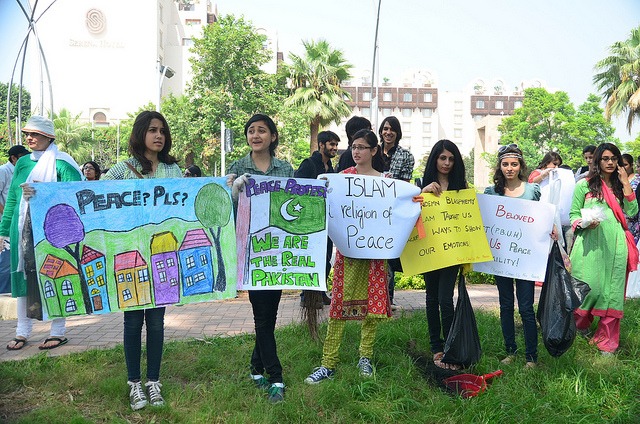
For a nation grappling with a crisis of legitimacy, burdened by mounting debt, and increasingly isolated on the international stage, the promotion of terrorism has ceased to be merely a tactic—it has become a lifeline. However, the consequences of this approach are proving to be overwhelmingly detrimental. With a society marked by deep internal fractures, a politically polarised environment, and a growing insurgency, the country teeters on the brink of internal collapse. Despite this, its military leadership remains fixated on outdated notions, still pursuing the illusion of strategic depth that effectively disappeared decades ago. The current course charted by the Army Chief reflects not a path towards military success, but one of reckless obstinacy. By continuously dispatching more terrorists across the Line of Control, he not only provokes a more capable adversary, but also accelerates the erosion of Pakistan’s future under the crushing weight of its own misguided ambitions.
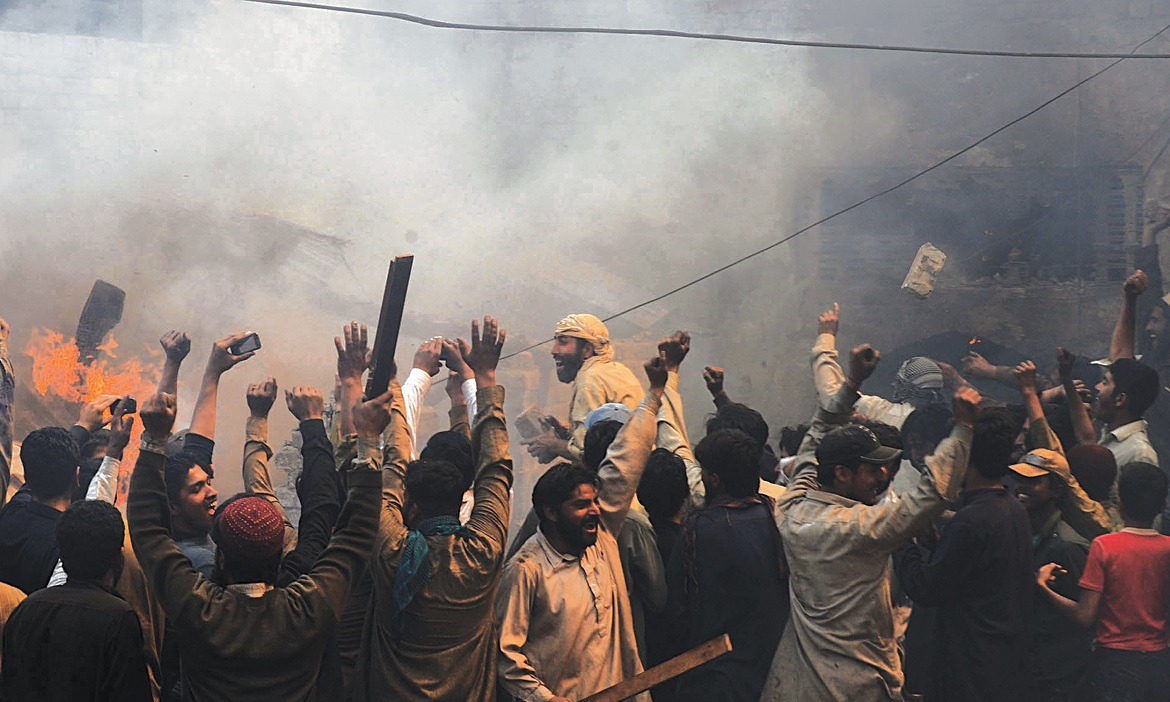
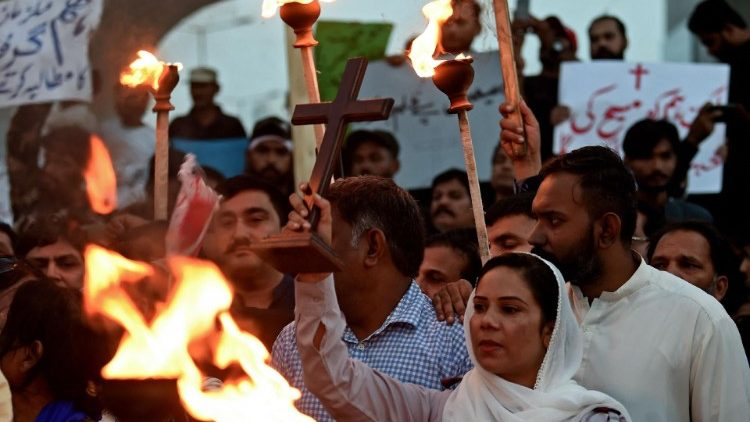
Every time one looks up Pakistan on the internet, one is bombarded with news of death, destruction, and discrimination. The country, which was carved out of India in 1948, with the vision of creating a safe territory for the minorities of the subcontinent, has devolved into a place where the majority of people endure some or the other form of oppression and threats, under a state that is always on the edge of collapse. Most recently, a disturbing video of a man and woman being shot to death by a bunch of men in the Balochistan province has emerged on social media. Investigation has revealed it to be a case of so-called ‘honor killing’ ordered by a local tribal leader and executed by the woman’s brother. Such killings based on archaic notions of ‘honor’, gender-based violence, persecution of religious and ethnic minorities, civilian killings by militants, and state-orchestrated killings in the name of counter-terrorism and counter-insurgency, and more, pervade the news cycle in the country where the elites who lead the security forces are immersed in amassing political and economic capital, more than providing security to the citizens.
Although Pakistan has a long history of being both a promoter and victim of terrorism, the crisis has particularly aggravated since the August 2021 resurgence of the Taliban in neighbouring Afghanistan. As the US left the country after a 20-year-long protracted war, much of the sophisticated weaponry that it had provided for the Afghan army found itself in the hands of the Taliban and Pakistan-based militant insurgent groups, specifically the Tehreek-e-Taliban Pakistan (TTP) and Baloch Liberation Army (BLA). Overnight, these groups swelled in capacity, exacerbating the security crisis for Pakistani forces as well as civilians. The Global Terrorism Index report of 2025 placed Pakistan in the 2nd position, noting 1,081 terrorism-related fatalities and 1,099 terrorist attacks in 2024.
In the past years, these groups have also scaled up their attacks on Pakistanis from other provinces as well as foreigners, particularly Chinese workers. In August last year, in a chilling incident, the BLA militants forced out 23 passengers from a civilian bus, checked their identity cards, and killed them after establishing that they were Punjabis. In March 2024, a suicide bombing killed 5 Chinese engineers working on a dam project in Khyber Pakhtunkhwa. The rise in attacks on Chinese workers has become a sore point between Pakistan and China, threatening to jeopardize the China-Pakistan Economic Corridor.
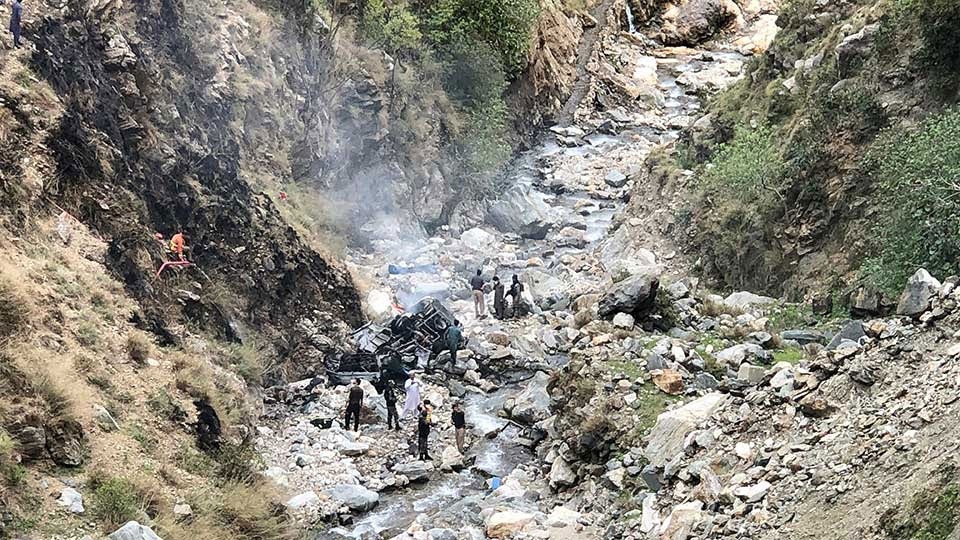
Additionally, the Pakistani military’s response to these terrorist groups has also opened up another security threat for the people. In Balochistan, in the name of countering the long-standing insurgency, the state has routinized enforced disappearances, custodial killings, and torture, without any accountability. Although it is very difficult to ascertain the exact number of forcefully disappeared people, to get an idea of the scale of this tragedy, one can refer to the Human Rights Watch report which has recorded 8,463 cases of missing persons between 2011 and January 2024 or the Pakistan Commission of Inquiry on Enforced Disappearances (COIED) which registered 10,078 cases. A civil resistance movement led by women has also emerged in the past couple of years, demanding accountability from the state for its excesses in Balochistan. However, it has been violently quelled, with its leaders incarcerated.
Since the founding of Pakistan on religious lines, there has been a concerted effort by the state to marginalize and erase its religious minorities, most prominently Hindus, Christians, and Sikhs. Besides systemic discrimination, cultural marginalization, and destruction of places of worship, religious minorities constantly face the threat of violence, ostracization, and forced conversions. Around 20-25 Hindu girls are estimated to be kidnapped and converted in Sindh every month. The police and judiciary often exempt the perpetrators who often enjoy social influence and support for ‘scoring’ a conversion to Islam. The draconian blasphemy law is another tool with which religious and sectarian minorities (Shias and Ahmadis) are persecuted. More disturbingly, when someone weaponizes the blasphemy accusation, often the cases do not even reach the courts as the enraged public murders the accused by themselves. At least 70 people have been reportedly murdered over blasphemy accusations since 1990. This figure includes the notorious killing of the Sri Lankan Christian worker Priyantha Kumara. The discourse around the law is so charged that anyone who dares to oppose it faces the same threat of being lynched. Prominent political figures such as the former governor of Punjab Salman Taseer and former Federal Minister for Minorites Shahbaz Bhatti have been assassinated for opposing the law, and judges who either convict vigilantes or acquit the falsely accused have to flee the country to save their lives.
When it comes to women, regressive social attitudes and a decrepit administration have led to a scenario where crimes like harassment are only routine but normalized. According to a Women Safety Audit undertaken by UN Women in 2020, over 80% women reported facing harassment in public places. Women are also the overwhelming targets of so-called honour killings- the Human Rights Commission of the country registered 405 cases in 2024 alone, most of them against women. As per data by the Sustainable Social Development Organization, only one of the 32 cases reported in the Balochistan province this year has led to a conviction, pointing to the dire situation where state neglect has emboldened criminals and proliferated such a heinous crime.
Despite the terrifying picture that the above instances and analyses paint about Pakistan, it is still only scratching the surface. In a country beset with administrative disrepair, state-supported religious extremism, ethnic violence, systemic impunity, suppression of dissent, and economic crisis, one can only imagine the daily struggle for survival that people are subjected to. Pakistan urgently requires a radical overhaul of state identity, civil-military relations, and state-society relations. However, given the status quo of absolute state complacency and elite capture, the future of the citizens of the country appears distressingly grim.
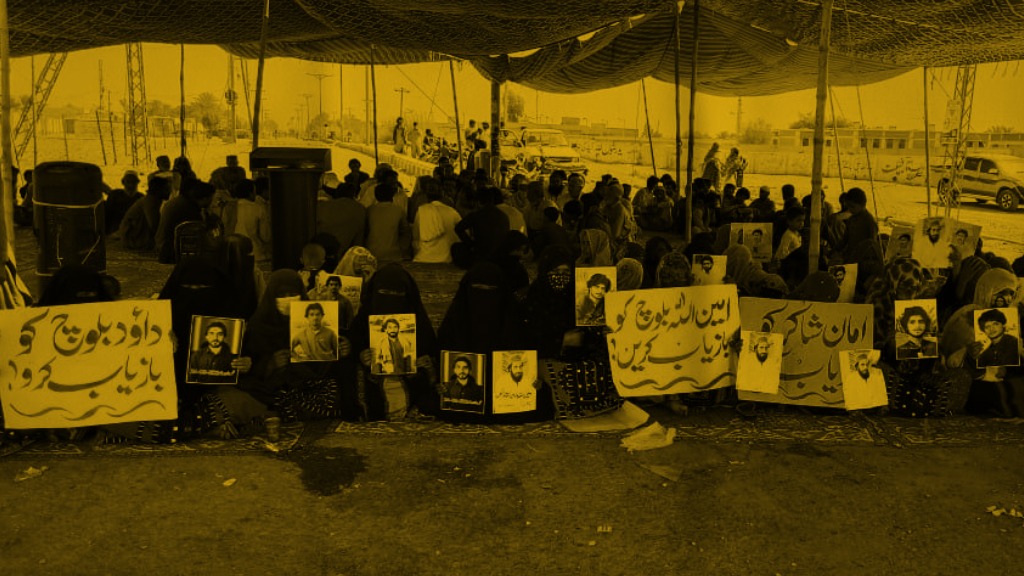
The Balochistan province of Pakistan represents a long-standing festering wound- one that the state, instead of healing, is bent on continually aggravating. The largest, resource-abundant, yet poorest province of the country, Balochistan has been reeling in the crossfire of a chronic armed insurgency and a disproportionate state response, in addition to systemic political and economic marginalization. Even as Pakistan was recently engaged in military confrontations with India- the most severe since the Kargil conflict of 1999, the Baloch insurgents kept intensifying their operations. Now, in the name of more effective counter-terrorism, the government has passed another legislation that threatens to worsen the situation by legitimizing state excesses in the province.
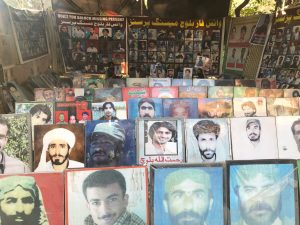
Amid vehement opposition by legal experts, human rights groups, and civil society, the Balochistan Assembly passed the Counter-terrorism (Balochistan Amendment) Act 2025 on June 4. The legislation, which makes new inclusions into the 1997 Anti-terrorism Act, authorizes armed forces, civil armed forces, and intelligence agencies to preventively detain a person for up to three months without any charges or trial. Eliminating judicial oversight, joint investigation teams can now issue detention orders, seize property or other possessions, and conduct ideological or psychological profiling of the detainees, all on their own accord. The Act has been put in place for 6 years, after which it can be extended for a period of 2 years if the provincial government thus notifies.
Collective suppression under the garb of combating insurgency and terrorism is far from new in Balochistan. Particularly since the mid-2000s, the Pakistani state has notoriously enacted a ‘kill and dump’ policy and forged an atmosphere where the threat as well as execution of enforced disappearances, custodial torture and killings, fake encounters, and arbitrary detention is part of daily life. This month itself, Pakistan based human rights organisation, the Baloch Yakjehti Committee (BYC), in its bi-annual human rights report, revealed that 752 people were forcibly disappeared from January to June 2025, out of which 181 were later released and 25 died in custody. The report also registered 117 extrajudicial killings in the same period, with most of the victims reportedly being students and young political activists.
Even when the Act was a proposed bill in the provincial assembly, human rights groups, including Amnesty International and the Human Rights Commission of Pakistan (HRCP), had staunchly opposed its passage over concerns that it would legalize state instrumentalization of enforced disappearances and arbitrary detention. After it was adopted, the HRCP condemned the “sweeping powers of preventive detention” outlined by the Act, which undermine civilian law enforcement domain by involving military personnel in the oversight boards, and contravene the country’s constitutional obligations under Article 10 (legal safeguards for those arrested or detained) as well as its commitments under the International Covenant on Civil and Political Rights. The BYC, too, released a strongly-worded statement, decrying the Act’s “grave violation of fundamental rights, including personal liberty, due process, and protection from arbitrary detention.”
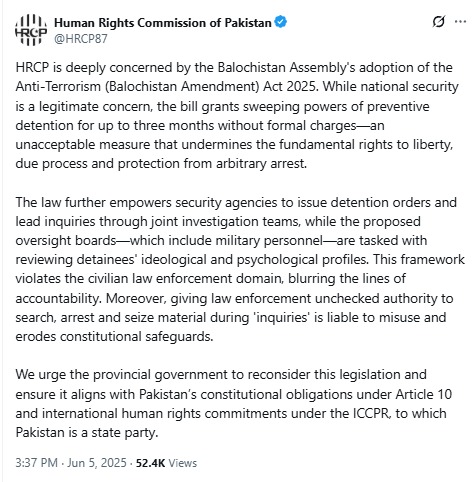
Meanwhile, Pakistani government is projecting the Act as a decisive framework against terrorist forces and something that will help end the issue of missing persons. Balochistan Chief Minister Sarfaraz Bugti described it as a milestone which, according to him, will counter the “organised conspiracy” and “false allegations against state institutions” regarding enforced disappearances. Bugti also claimed that the insurgency in the province is a “foreign intelligence agency driven war” against Pakistan, a narrative that has been parroted for a long time by the Pakistani establishment. This absolute denial and deflection by the authorities point to their utter unwillingness to acknowledge, address, and resolve the plight of the Baloch people, further alienating them and fueling the militancy.
The Baloch people are already subjected to an extremely stifled environment, wherein demands of accountability from the state are constantly misconstrued as separatism, justifying excessive crackdown and harassment. The BYC-led peaceful Baloch civil resistance movement, which has emerged as a resilient force in the past couple of years, has had to face constant vilification, disruptions, harassment, and violent crackdown by the state, with its leaders, including Mahrang Baloch, incarcerated. Rather than taking advantage of a peaceful civilian platform that works towards state accountability and political reconciliation within the federal framework, the heavy-handed response of the Pakistani state creates conditions where peaceful political activism loses relevance and the people, particularly the youth, increasingly view armed insurgency as the only alternative.
Within the context of an ever-ascending insurgency, progressively alienated people, rising attacks on CPEC workers and projects as well as Punjabi migrants, the newly passed amendment act will certainly estrange the Baloch people further. The ensuing state excesses, which will now take on a robe of legal legitimacy, will exacerbate the security crisis in the province. At a point when the Pakistani state must proactively prioritize meaningful political engagement with Baloch grievances, demonstrate accountability and willingness towards politico-economic inclusion and justice for Balochistan, it is almost a suicide run to introduce a blatantly exploitative and tyrannical legislation. By legalizing repression in a province which already represents an existential landmine, Pakistan has truly set in motion its own unravelling.
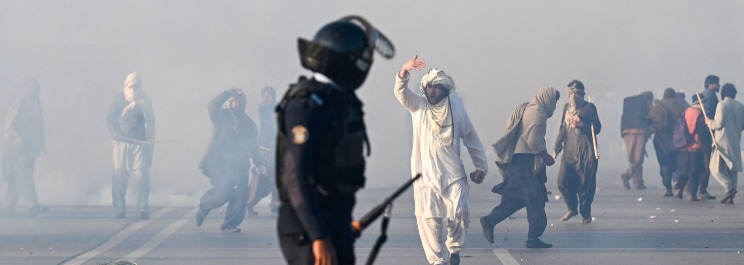
In Pakistan’s fraught political landscape, where military dominance has often operated behind a veil of civilian rule if not outrightly seizing power, a new chapter is being written. Analysts and experts describe the country’s current governance framework as a ‘hybrid system’ wherein military exerts control over the civilian executive. But, instead of resisting such entrenchment in the executive affairs of Pakistan, the country’s political class is openly celebrating the system and its own active complicitly. Its latest manifestation was witnessed in the aftermath of Pakistan Army Chief General Asim Munir’s June 2025 Washington luncheon with the US President Donald Trump where he was accorded an honour typically reserved for heads of state. Defence Minister Khawaja Asif in a recent social media post on X (formerly Twitter) hailed the so-called “hybrid model” of governance as the secret to Pakistan’s recent successes.
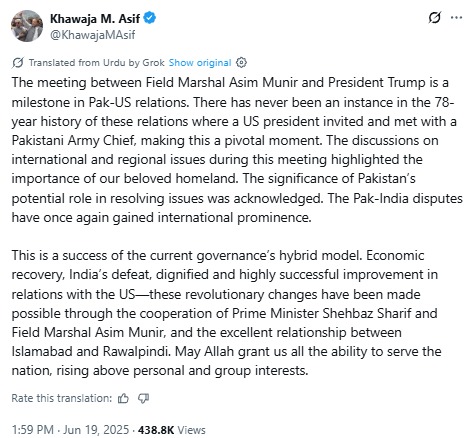
Asif’s post was unambiguous, stating, “The revival of the economy, the defeat of India, the glorious and highly successful improvement in relations with the US” were all, according to him, made possible not by democratic governance or parliamentary mandate, but by “excellent relations between Islamabad and Rawalpindi.” This was the highest form of from the current political elite referring to not only the civilian government’s alignment with the military high command but its subservience to it.
Far from being a gaffe or one-off comment, Asif’s post was emblematic of a broader trend, which is the normalization, and even celebration, of military dominance in Pakistan’s political system under the tenure of current Chief of Army Staff.
Field Marshal Asim Munir, who assumed command of Pakistan’s powerful military in November 2022, has swiftly moved to expand the influence of military establishment far beyond traditional defence and security matters. During these years, Pakistani Army has reasserted itself as the ultimate arbiter of political legitimacy, economic policy, foreign affairs, and even media narratives, something that is not lost in the currently in Pakistani information space.
Munir’s model of control is less about martial law and more about managed democracy, which is a façade of civilian rule where real power resides in the barracks of Rawalpindi. In contrast to some of his predecessors like General Qamar Javed Bajwa and Raheel Sharif who preferred to operate in the shadows, Munir’s approach is increasingly overt. Whether through the military’s economic arm, the ever-growing surveillance state, or the selective engineering of elections and political alliances, his footprint has growingly become unmistakable.
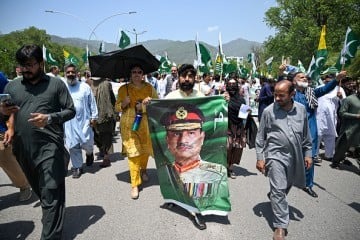
This has been demonstrated by the much controversial 2024 general elections through brazen manipulation of the system to ensure the current government under Shehbaz Sharif takes shape. It included the use of all arms of the state, be it the election commission or judiciary, the military establishment ensured that the Pakistan Tehreek-e-Insaaf (PTI) party was restrained from partaking in elections and denying its nominees a unified platform to contest besides scores others imprisoned, disqualified on technicalities, or marginalized through media blackouts.
Nevertheless, what makes this moment particularly alarming is not just the military’s overreach and dominance over civilian executive, but the political class’s enthusiastic submission to it. Instead of resisting authoritarian drift, Pakistan’s major political parties, led by ruling Pakistan Muslim League-Nawaz (PML-N), along with Pakistan People’s Party (PPP), have largely embraced it for seeking favour with the military brass in the hopes of electoral blessings or protection from legal troubles.
As such, once symbols of democratic resistance, the silence of these political parties on issues of censorship, enforced disappearances, political victimization, and military trials of civilians speaks volumes. They are increasingly toeing the establishment’s line and facilitating its power grab by enabling legislative amendments. Under this arrangement, Pakistan Military (Army, Air Force and Navy) Acts have been amended to increase powers of the armed forces along with increasing the tenures of service chiefs, besides 26th constitutional amendment to undermine the country’s judiciary by tweaking the judicial appointments procedure and weaking the powers of Chief Justice of Pakistan.
The most revealing indicator of this alliance is the mainstreaming of “hybrid regime”, once a derided term used by analysts and civil society to describe the country’s militarized democracy. It is now worn as a badge of honour by ruling politicians, as Khwaja Asif’s adoration highlights. That a sitting defence minister could proudly glorify military dominance over civilian executive, without fear of political backlash, signals how far democratic norms have eroded. It also glosses over the fact that Pakistan all kinds of ills, ranging from economic woes, security unravelling, and political instability, are all because of the very military establishment’s Machiavellian overreach beyond their constitutional mandate.
Under Asim Munir’s command, the military has expanded its grip on key civilian institutions, including the judiciary, the Election Commission, the media, and even elements of the economic policy machinery. It can be safely argued that this so-called “hybrid model” is little more than a euphemism for authoritarianism in civilian clothes as Pakistani judiciary is being either co-opted or cowed into silence, while journalists face harassment, detention, or worse for merely questioning the prevailing order. In such a system, the military does not need to seize power as it already exercises it, via the institutions it controls.
For decades, Pakistan has oscillated between overt military dictatorships and fragile democratic transitions. Each time democracy has been restored, there was hope, however faint, that the balance of power might tilt in favour of civilian supremacy. Under Field Marshal Munir, that hope appears to be vanishing fast. What distinguishes the present era is not just the military’s ambition, but the political elite’s abdication of responsibility.
By cheerleading military dominance, political leaders are not just compromising democratic norms, they are legitimizing authoritarianism. And in doing so, they are narrowing the space for dissent, weakening civilian institutions, and undermining public trust in electoral processes, which are all basic indicators of a democracy.
The consequences are profound. Pakistan’s economy, already struggling under the weight of inflation, debt, and a collapsing rupee, cannot recover without institutional accountability. Foreign policy, especially relations with neighbours like India and Afghanistan, requires democratic consensus, not militarized doctrine. And internal security, increasingly threatened by extremism and separatism, as evidenced by raging Baloch insurgency and Islamist extremism, cannot be addressed through brute force alone.
For Pakistan to reclaim its democratic identity, it must begin with a clear-eyed recognition of where it stands today. The so-called hybrid system is not a strength, but a symptom of institutional decay. Political leaders must stop outsourcing legitimacy to the military and instead invest in rebuilding the public’s faith in democratic governance.
Asim Munir’s consolidation of power may serve the short-term interests of a few, but it comes at the cost of Pakistan’s democratic soul. If left unchallenged, the current trajectory will lead not to national revival, but to a more entrenched and unaccountable authoritarianism. And history has shown, time and again, that such regimes do not end in glory, but in collapse.
The relationship between the United States and Pakistan has long been defined by convenience rather than conviction, punctuated by moments of intense cooperation followed by spells of deep mistrust. As recent developments begin to raise eyebrows, it is becoming increasingly evident that a new chapter may be unfolding—one marked not by a sincere partnership but by calculated strategic necessity. US President Donald Trump’s reported upcoming visit to Pakistan and the high-profile visit of Pakistan’s Army Chief Field Marshal Asim Munir to Washington have sent clear signals that both sides are once again exploring a tighter embrace. But what lies beneath these gestures? Is this an authentic shift or merely a transactional dance, choreographed by geopolitical compulsions? History casts a long shadow on the US-Pakistan relationship. For decades, their engagement has followed a familiar script: Washington courts Islamabad in times of need, showering it with aid and promises, only to withdraw affection when priorities shift or Pakistan’s duplicity becomes too glaring to ignore. From the Cold War to the post-9/11 era, the partnership has rarely transcended its opportunistic core. Every time the United States found itself in a regional quandary—whether it was countering Soviet expansion or hunting terrorists in Afghanistan—Pakistan presented itself as an indispensable ally. But once the urgency faded, so did the illusion of camaraderie.
The present moment bears the unmistakable scent of déjà vu. The United States, preoccupied with China’s growing footprint and an increasingly complex Indo-Pacific matrix, sees value in reactivating its lines to Islamabad. Pakistan, battered economically and diplomatically isolated, is desperate to regain relevance and secure strategic patronage. It is a classic case of mutual convenience masquerading as renewed friendship. The question is not whether both countries need each other—clearly, they do—but whether this need is rooted in sustainable goals or another fleeting convergence of interests. Pakistan’s military establishment, the true power center of the country, has always been adept at selling its strategic geography. Wedged between Iran, Afghanistan, India, and China, Pakistan offers prime real estate on the geopolitical chessboard. But that geography comes with a price—one that Washington has paid before. Decades of American military and economic assistance have yielded little in terms of lasting reform or ideological alignment. Instead, the US often found itself underwriting a security apparatus that played both sides—hunting terrorists with one hand while harboring them with the other.
Consider the bitter legacy of Afghanistan. While publicly siding with the US in its war on terror, Pakistan simultaneously gave sanctuary to the Taliban and other extremist elements. Osama bin Laden was discovered not in a remote cave but in Abbottabad, a stone’s throw from a Pakistani military academy. Billions in aid could not buy loyalty; it merely sustained a regime skilled in hedging its bets. The withdrawal from Afghanistan in 2021, with its chaotic final days, was a stark reminder of the cost of trusting Islamabad too easily. Now, as the Biden administration recalibrates its foreign policy priorities, and with Donald Trump potentially re-entering the global stage, the temptation to revive a working relationship with Pakistan is palpable. Trump’s anticipated visit may be billed as a diplomatic outreach, but it is likely a signal to Beijing, Delhi, and even Riyadh that Washington still sees value in Islamabad. In return, Pakistan hopes to leverage this attention to escape its pariah status and secure economic lifelines.
But such maneuvering is dangerous. It rewards ambiguity and penalizes clarity. While India—America’s primary partner in the region—remains firmly in the camp of democratic values and open markets, Pakistan continues to operate in murky waters. The same military establishment now reaching out to Washington is also clamping down on democratic dissent at home. Political opponents are jailed, press freedom is strangled, and civil society remains under siege. How does the United States reconcile these facts with its professed commitment to liberal values?
Furthermore, the strategic rationale is itself questionable. If the idea is to counterbalance China’s growing influence in South Asia, relying on Pakistan is a paradox. Islamabad is deeply enmeshed in Beijing’s orbit through the China-Pakistan Economic Corridor (CPEC), a flagship component of the Belt and Road Initiative. Chinese investments have tied Pakistan’s infrastructure, telecom, and energy sectors to its northern neighbor. Any US hope of peeling Pakistan away from China is not just naïve—it borders on delusional. This is not to say that engagement with Pakistan is futile. Dialogue is necessary, especially with a nuclear-armed state teetering on the edge of political and economic collapse. But engagement must be disciplined, not desperate. The US cannot afford to repeat the mistakes of the past, offering carrots without demands for real change. If Pakistan seeks legitimacy, it must earn it—not merely by allowing high-level visits or agreeing to intelligence sharing, but by taking concrete steps to dismantle extremist networks, uphold human rights, and shift its foreign policy posture from duplicity to transparency.
Field Marshal Asim Munir’s visit to Washington may be seen as an opening salvo, a signal of Pakistan’s willingness to reset. But it is vital to remember that such resets have occurred before—with limited results. From Musharraf to Kayani, from Raheel Sharif to Bajwa, every military leader has spoken the language of reform and cooperation, only to revert to old habits once the checks cleared. There is no evidence yet that Munir represents a meaningful break from this tradition. His public statements may emphasize development and diplomacy, but Pakistan’s internal dynamics suggest otherwise. Ultimately, what makes this moment perilous is the global context. The United States is no longer operating in a unipolar world. Russia is resurgent, China is emboldened, and the Middle East is in flux. In such an environment, the margin for error is razor-thin. A misstep in Pakistan could alienate India, embolden militants, or simply waste resources in a dead-end alliance. Realism demands cold calculations—not nostalgia for a partnership that never truly was.
The US must resist the lure of tactical engagement without strategic depth. It must demand accountability, not mere access. And it must remember that short-term alliances built on necessity are seldom sustainable. For Pakistan, the message should be equally clear: the era of exploiting geography for aid is over. If it wishes to be seen as a credible partner, it must act like one. So, are the US and Pakistan recalibrating ties for strategic convenience? Undoubtedly. But convenience is not conviction. And until both sides confront the ghosts of their past dealings, this reset risks becoming just another rerun in a long history of missed opportunities, broken promises, and dangerous illusions.
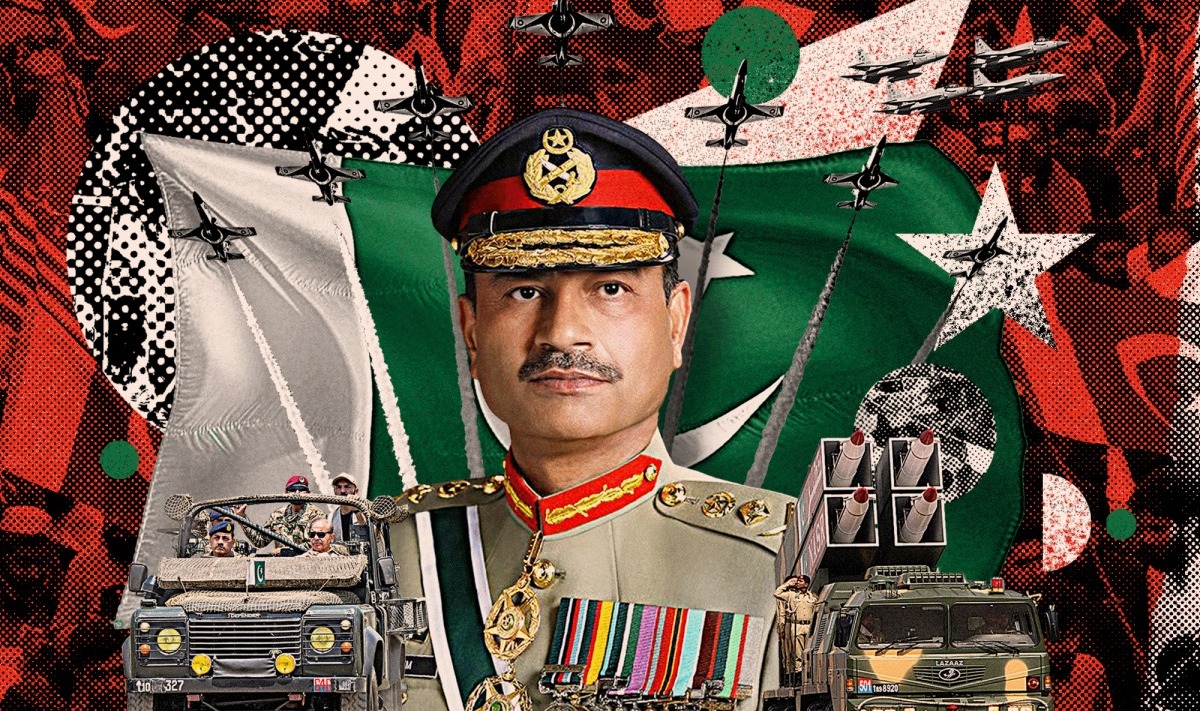
As Field Marshal Asim Munir wrapped up yet another high-profile visit to China this time, Pakistan’s indispensable “iron brother”, it carries an explicit message for both domestic and external audiences that Pakistan’s top general is not just the chief of army staff. He is the country’s de facto head of state, foreign minister, and economic strategist rolled into one uniformed figure.
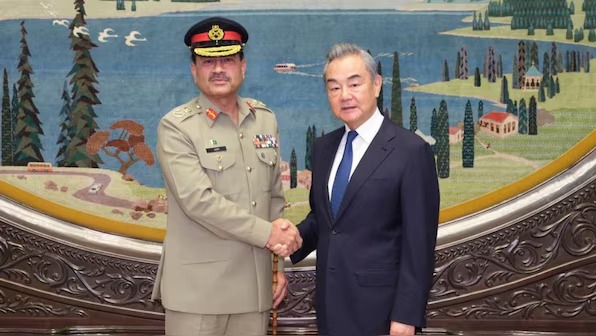
From Beijing to Washington, Asim Munir has emerged as Pakistan’s most visible face on the international stage. In a telling departure from past norms, where foreign policy and diplomacy were handled by civilian leaders, Munir now routinely engages heads of state and top ministers of the world’s major powers. In June, he was received in Washington with a protocol typically reserved for presidents, wherein he was hosted for a formal luncheon by President Donald Trump. His July 25 visit to Beijing was similarly instructive. He met with China’s Vice President Han Zheng, Foreign Minister Wang Yi, and the top brass of the People’s Liberation Army, covering everything from regional security to the future of the China-Pakistan Economic Corridor (CPEC), as per the statement issued by Pakistan Army’s Inter-Services Public Relations (ISPR).
This outreach to Washington and Beijing, Pakistan’s most significant external “allies”, seems to have effectively supplanted the civilian government of Shehbaz Sharif in both style and substance. In both capitals, Munir is treated as the true interlocutor, highlighting how far Pakistan’s military has overreached into domains traditionally managed by elected representatives.
Asim Munir’s aggressive diplomacy abroad is only one facet of a broader power consolidation at home that has pushed Pakistan into what can only be described as a military-led “hybrid authoritarianism”. Behind the civilian façade, the military establishment has pulled all institutional levers to dominate the judiciary, the economy, and the legislative process.
A glaring example is the military’s grabbing of vast tracts of agricultural land in Punjab and Sindh under the guise of “national development” in 2023. Under Munir’s watch, thousands of acres of government land have been allotted to serving and retired officers for agricultural purposes, all in the name of so-called food security of the country. This wholesale land grab, facilitated by pliant bureaucracies and rubber-stamp judicial processes, is in addition to over 12 million acres of land already in the possession of armed forces.
Meanwhile, the economic crisis that grips Pakistan has not spared the foreign exchange reserves, yet the military’s own financial apparatus remains untouched. The military-run business conglomerates, run under Fauji Foundation, Shaheen Foundation, Bahria Foundation and Army Welfare Trust (AWT), continue to thrive tax-free and without government oversight.

At the same time, there has been a steep rise in the government defence budgetary allocations, with a 20 per cent hike in 2025, as announced in June. This has come even as social sectors like health and education face severe cuts in their annual allocations, all in the name of austerity.
All of this is made possible by legal tweaks and constitutional manipulation. Laws such as Pakistan Army Act and the Official Secrets Act have been weaponized through amendments to stifle dissent. This has allowed the government to try hundreds of civilians, including opposition activists and journalists, by military courts in the aftermath of May 9, 2023, violent anti-government protests.
Moreover, Asim Munir has furthered the strategic parachuting of military officers in the civilian institutions like Water and Power Development Authority (WAPDA) and National Database and Registration Agency (NADRA), among dozens of others. Such encroachment in civilian affairs ensures that the military establishment influences every lever of the country’s governance structure. This increasing opacity and unchecked power have real-world consequences.
Perhaps the most damning indictment of Asim Munir’s tenure is not just the scope of his ambition, it is the cost at which it has come. Munir may go down in history as the army chief who has lost hundreds of soldiers to insurgent attacks in merely two years of his tenure. From Balochistan to the tribal hinterland of Khyber Pakhtunkhwa (KPK), Pakistani troops have come under relentless assault from a rejuvenated insurgency, especially by groups like Balochistan Liberation Army (BLA) and Tehreek-e-Taliban Pakistan (TTP). In June, over a dozen soldiers were killed in a single attack in North Waziristan, with TTP claiming responsibility. The environment in Pakistan has been made such that no one dares to raise the questions over why the army was caught so off guard as the answer lies in the misplaced priorities of its leadership. As such, intelligence failures and overstretched resources diverted toward political engineering have left the national security more and more vulnerable.
Munir’s focus has clearly shifted from commanding the army to controlling the country. His preoccupation with political micromanagement, from managing elections, orchestrating defections, and installing compliant judges, has allowed militant groups to regroup and strike with impunity.
The consequences of this military overreach are not abstract. Pakistan today finds itself mired in economic stagnation, political instability, and social repression. The elected government of Shehbaz Sharif of Pakistan Muslim League-Nawaz (PML-N) serves little purpose beyond legitimizing decisions made in Rawalpindi. Even the civilian cabinet has admitted, as evidenced by Defence Minister Khwaja Asif’s recent statements, that policy decisions are taken in consultation with the military establishment.
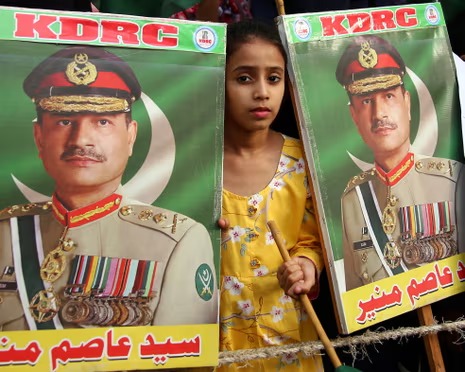
This is not new in Pakistan, where the military has always been a shadow power. But under Asim Munir, the shadow has become the spotlight. Unlike his predecessors like General Qamar Bajwa, who preferred to rule from behind the scenes, Field Marshal Munir appears unashamed of his centrality. He has no qualms about attending investment conferences, briefing envoys, or commenting on fiscal policy, which are all duties that fall well outside the remit of a military officer.
This overt control is compounded by an ecosystem of surveillance, censorship, and intimidation. Herein media channels have been taken off air for airing dissenting views, with scores of journalists arrested or forced into exile in the last two years.
Asim Munir’s Pakistan is one where the constitution is interpreted through camouflage, where democracy is performed but not practiced, and where the price of questioning the army is, quite literally, one’s freedom. The military establishment’s institutional interests have expanded from national defense to national domination, and Munir is their most visible symbol. The erosion of civil institutions, the suppression of dissent, and the neglect of core military duties are not just signs of overreach, but that of a rot.
And as Pakistan’s soldiers continue to fall in the country’s hinterlands of Balochistan and KPK while their chief chases diplomatic photo-ops, the question must be asked: Who really rules Pakistan? And for how long can a country survive when its generals stop guarding the borders and start governing the state?
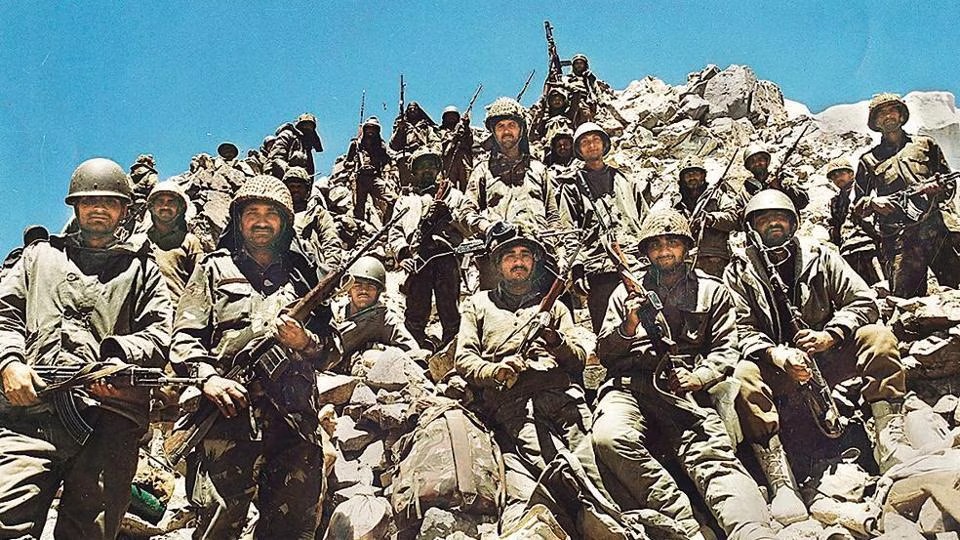
Twenty-six years ago, a bold infiltration in the Kargil region jolted the nation, as armed intruders crossed the border and occupied key high-altitude positions on India’s side of the Line of Control (LoC) in Jammu and Kashmir. Initially believed to be militants, the infiltrators were later confirmed to be part of a carefully planned covert military offensive—Operation Badr—conducted by the Pakistan Army.
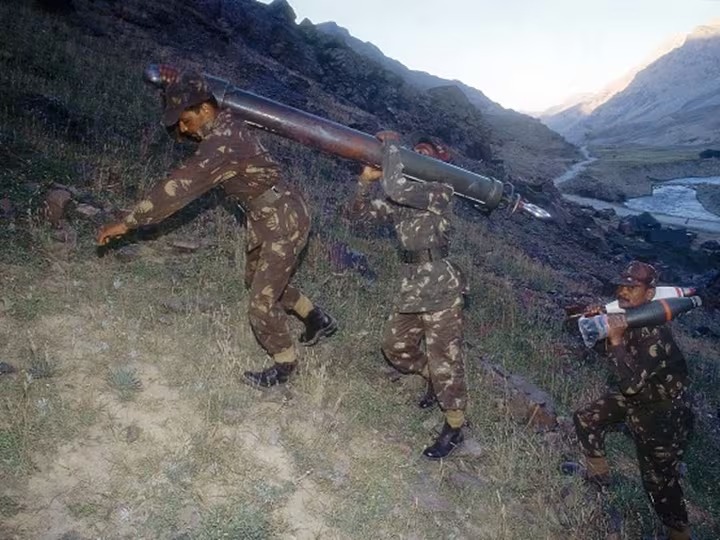
The objective was to secure a strategic advantage in the Kashmir region, sever India’s vital link to Siachen by cutting off Indian troops, compel their withdrawal, and ultimately facilitate the occupation of all of Kashmir. This incursion came just months after India and Pakistan had signed the historic Lahore Declaration, a bilateral agreement aimed at reducing tensions and resolving disputes through peaceful means and mutual respect for territorial sovereignty. The summer of 1999 thus marked Pakistan’s breach of this landmark accord and India’s decisive countermeasure through the launch of Operation Vijay.
The Kargil War of 1999 marked the first conventional conflict between two nuclear-armed states. What distinguishes this war is its conduct at extreme altitudes, spanning a 170-kilometre stretch of the Himalayan frontier, where Indian troops contended not only with hostile forces but also with harsh environmental conditions. Operating in low-oxygen environments, Indian soldiers ascended steep, icy cliffs—ranging between 8,000 and 18,000 feet—under relentless enemy fire to dislodge opposing forces and reclaim Indian territory. This conflict was, therefore, not merely a battle against a hostile adversary, well-entrenched in fortified bunkers with weapons poised, but also a confrontation with the unforgiving forces of nature. Despite the tactical advantage held by the enemy, Indian soldiers exhibited extraordinary perseverance, selflessness, and determination, rendering this military triumph one of the most revered in the nation’s history.
Victory in war is not solely determined by advanced weaponry, and the Kargil conflict serves as a definitive example. Indian troops, in fact, were not equipped with adequate mountaineering gear necessary for scaling the steep, frozen inclines. Despite these material shortcomings, they demonstrated the capacity to improvise, adapt, and overcome the obstacles before them, owing to their rigorous training in high-altitude warfare. Yet, the decisive factor in securing this victory was the spirit of camaraderie, which uplifted morale and inspired Indian soldiers to confront the entrenched enemy positions. This hard-won triumph still resonates through the words “Yeh Dil Maange More,” radioed by Captain Vikram Batra of the 13 J&K Rifles following the re-capture of Point 5140, the highest peak of Tololing. Captain Batra and his men then advanced to reclaim Point 4875 in the Mushkoh Valley, significantly shifting the momentum in India’s favour. It was here that the young officer laid down his life while attempting to save a fellow soldier from enemy fire. Beyond strategic prowess, Captain Batra embodied exceptional courage and leadership at merely 24 years of age, for which he was posthumously awarded the Param Vir Chakra, the nation’s highest military honour.
Grenadier Yogendra Singh Yadav of the Ghatak platoon was merely 19 years old when he sustained at least 15 gunshot wounds from enemy fire while ascending the cliff face during the assault on Tiger Hill. Despite his severe injuries, Yadav continued to advance as the unit’s sole survivor, ultimately destroying enemy bunkers with grenades and engaging in close-quarter combat to eliminate opposing soldiers, thereby clearing the path for his platoon to reclaim the strategic heights. As the youngest recipient of the Param Vir Chakra, Yogendra Singh Yadav recounts his extraordinary feat of courage with profound humility. Others, such as Major Rajesh Singh Adhikari (18 Grenadiers), Major Vivek Gupta (2 Rajputana Rifles), and Naik Digendra Kumar (2 Rajputana Rifles), led their men along the Tololing Ridge, targeting enemy bunkers, eliminating adversaries, and facilitating troop advancement—often at the cost of their own lives. These narratives, among many others, depict valiant soldiers shielding comrades from constant enemy assault, neutralising enemy positions before succumbing to fatal injuries, and enabling the Indian Army to reclaim national territory. Their collective sacrifice and indomitable spirit define the unmatched heroism of Operation Vijay.
The morale of the Indian Army received widespread public acclaim alongside robust institutional backing, standing in marked contrast to the approach adopted by its adversary. Pakistan’s Operation Badr was reportedly conceived in secrecy by a select group of senior military generals, excluding the Nawaz Sharif-led civilian government from the planning process. This not only compromised Pakistan’s democratic framework but also laid bare the entrenched influence of the country’s deep state. The covert nature of the operation and subsequent diplomatic isolation led to severe embarrassment for Pakistan’s civilian leadership, which initially denied the involvement of regular Pakistani troops in Kargil, portraying the infiltrators as ‘mujahideen’. Even after confirmation of identities of deceased Pakistani soldiers, the government refused to claim their bodies, keeping their families uninformed. It was Indian soldiers who performed the burials of many Pakistani troops with full military honours, accompanied by Muslim clerics conducting rites in accordance with Islamic customs. Notably, the body of Pakistani Captain Karnal Sher Khan was returned with a letter from Indian Brigadier M.P.S. Bajwa, commending Sher Khan’s courage and urging Pakistan to bestow military recognition. Although belated, Captain Sher Khan was posthumously awarded Pakistan’s highest military decoration—the Nishan-e-Haider. Twenty-five years later, the Pakistan Army formally acknowledged its involvement in the Kargil conflict, with former Prime Minister Nawaz Sharif publicly conceding the strategic misjudgement.
The Indian Army’s hoisting of the tricolour atop Tiger Hill on 4 July 1999—overlooking National Highway 1D, the vital lifeline of Ladakh—following its recapture from Pakistani forces, endures as a powerful emblem of national sovereignty, safeguarded by the unwavering dedication of Indian soldiers. It continues to stand as a profound symbol of territorial integrity, preserved through the courage and sacrifice of Indian troops. As the nation commemorates Kargil Vijay Diwas on 26 July, it is a moment to honour those who laid down their lives in defence of every inch of our homeland, as well as those who continue to uphold the national flag with unwavering pride.
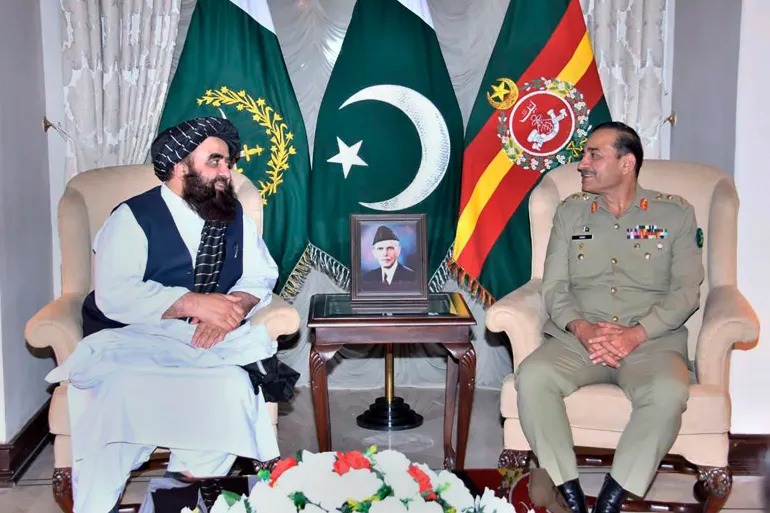
The Tehrik-i-Taliban Pakistan (TTP) today epitomises the unintended consequences of Pakistan’s own strategic miscalculations — a Frankenstein’s monster birthed by the very establishment that once nurtured it as a supposed asset. For years, the Pakistani military establishment has engaged in the perilous tactic of fostering militant proxies, under the mistaken belief that such forces could be wielded with precision and control.
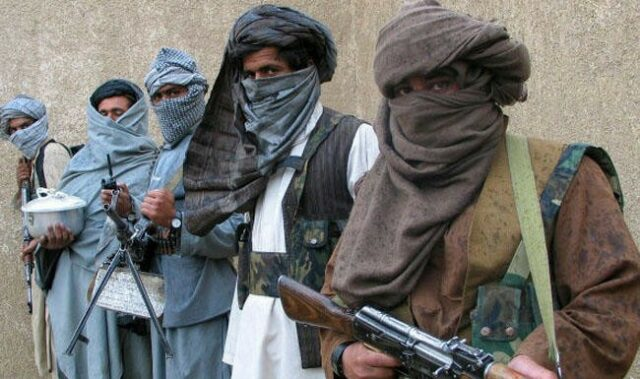
The TTP is a direct outcome of this approach — conceived within the shadows of domestic power plays and geopolitical strategies, only to evolve into a force that now torments its originators. This is not a narrative shaped by external actors or foreign agendas, but one firmly grounded in Pakistan’s internal policies, particularly the militarisation of the Khyber Pakhtunkhwa (KPK) province and the consistent marginalisation of the Pashtun community. At the core of this destructive trajectory lies the military’s entrenched reliance on coercion over governance in managing the tribal regions. In the wake of 9/11 and Pakistan’s alignment with the United States in the war on terror, the tribal belt — especially South and North Waziristan — became a battleground of competing interests. The Pakistani military, balancing international expectations with domestic imperatives, initiated a series of operations across the tribal zones. What started as a mission to eliminate foreign militants rapidly expanded to include local tribes, most notably the Mehsud — the very community from which the TTP would ultimately arise.
The military’s strategy was blunt and indiscriminate. Entire villages were displaced, with little distinction made between suspected militants and civilians, as the region underwent intense militarisation. Daily life for the Pashtun population became dominated by curfews, checkpoints, and constant surveillance. The Mehsud tribe, in particular, bore the brunt of these operations, enduring severe hardship and loss. The military’s incursion into their lands, homes, and way of life sowed deep-seated resentment. Within this climate of humiliation and forced displacement, the TTP found both a steady stream of recruits and a rationale for its existence. It presented itself as a guardian of Pashtun honour, even as it perpetrated horrific acts of violence against both civilians and the state. A significant parallel in this pattern of radicalisation was the 2007 Lal Masjid incident in Islamabad. What began as a confrontation between the state and a radical Islamist faction escalated into a full-scale military operation, resulting in the deaths of numerous students, including young girls. The operation’s brutality, widely broadcast and sensationalised, had a profound impact across conservative and tribal areas of Pakistan, intensifying anti-state feelings. For many, especially among the Pashtun population, it exemplified the duplicity of a state that had long enabled religious extremism when advantageous, only to crush it with force once it posed a threat to the capital’s stability. This contradictory stance further entrenched the perception that the Pakistani state regarded its peripheral regions — particularly Pashtun communities — as disposable.
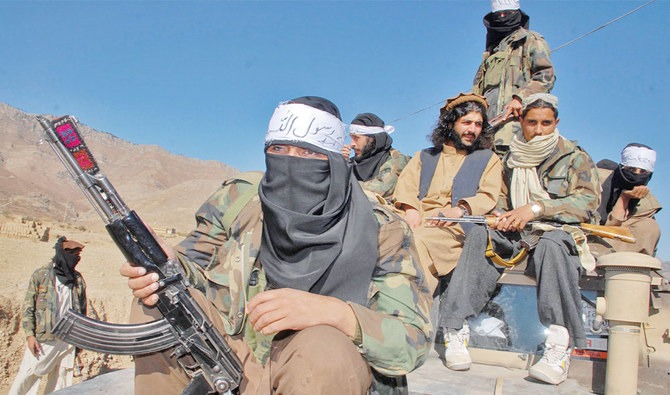
Complex Calculations Shape Pakistan-TTP Negotiations
The treatment of the large-scale displacement of Pashtuns during and after military operations starkly illustrates the state’s profound indifference towards the community. Millions were uprooted from the Federally Administered Tribal Areas (FATA) and surrounding regions, only to encounter neglect and suspicion in urban centres such as Peshawar and Karachi. Refugee camps were overcrowded, underfunded, and lacked even basic provisions. The displaced were frequently regarded as second-class citizens. Rather than support and reintegration, they were met with poverty, constant surveillance, and routine profiling by police and intelligence agencies. For many young Pashtuns — already suffering from trauma and anger — the TTP offered not just vengeance, but a sense of identity and belonging. This systemic exclusion was not merely a bureaucratic failure, but a manifestation of deeper cultural and political biases. For decades, dominant national narratives — largely shaped by Punjab-centric perspectives — have stereotyped Pashtuns as primitive, uncivilised, and innately violent. Such dehumanisation served dual aims: it legitimised the aggressive militarisation of Pashtun regions and deflected attention from their political demands. In textbooks, mainstream media, and public discourse, Pashtuns were seldom depicted as integral contributors to the nation — instead, they were constructed as ‘others’, romanticised as valiant fighters when useful, and vilified as security threats when expedient.
This cultural mischaracterisation has carried significant political ramifications. It fostered a deep distrust between the Pashtun population and the state — a void the TTP was quick to exploit. By presenting itself as the champion of the oppressed and the avenger of injustices, it garnered sympathy and support from a community that felt consistently marginalised and mistreated. The state’s unwillingness to engage with genuine Pashtun concerns — including demands for political inclusion, equitable resource distribution, and fundamental rights — only widened the divide. The rise of movements such as the Pashtun Tahafuz Movement (PTM) is a clear manifestation of this estrangement, as is the state’s heavy-handed repression of it. Ironically, despite PTM’s emphasis on nonviolence and democratic reform, the state has often regarded it with greater suspicion than the TTP — revealing its confused and contradictory approach to Pashtun dissent. The TTP, in many respects, represents the consequence of the establishment’s flawed policy of distinguishing between “good Taliban” and “bad Taliban” — a dichotomy more relevant in strategic deliberations than in real-world outcomes. During the early phases of Pakistan’s involvement in the Afghan jihad, military and intelligence agencies provided support to militant actors, including those from the tribal belt, in efforts to project influence into Afghanistan and counter India. This patronage persisted beyond 9/11, with certain factions shielded or permitted to operate in anticipation that they could still serve strategic objectives. However, these entities — particularly the TTP — soon evolved independent agendas, shaped by radical ideology, tribal traditions, and a desire for retribution. The creation had developed a mind of its own.
Today, the TTP has redirected its violence inward, targeting the very military convoys that may once have harboured its founders. It assaults outposts, police stations, and civilian targets across Khyber Pakhtunkhwa and beyond. Despite repeated declarations of its defeat, the group has consistently demonstrated a disturbing ability to regroup — not solely due to external sanctuaries, but because the domestic conditions that facilitated its rise remain unresolved. Each failed operation, each instance of extrajudicial killing, each displaced household — these are not mere incidental costs; they are the fertile ground from which insurgency resurfaces. There is a bitter irony in observing the Pakistani military — long regarded as the state’s most dominant institution — struggle against a creation of its own making. Ordinary citizens — particularly Pashtuns — find themselves caught between state oppression and militant brutality. This tragedy is further exacerbated by the enduring lack of critical reflection within the establishment. The prevailing discourse remains fixated on external threats, cross-border terrorism, and international conspiracies — all deflecting attention from the internal policies that have continually backfired. The TTP cannot simply be eradicated through military force, for it represents more than a security challenge; it is a manifestation of political and societal failure. Its existence is entrenched in decades of marginalisation, distortion, and abuse. Lasting peace will not be achieved through violence alone; it requires genuine justice, inclusive representation, and a confronting of historical wrongs. Until the state acknowledges the humanity, rights, and legitimate grievances of the Pashtun population — and abandons the militarised lens through which dissent is seen as betrayal — the cycle of violence will persist. Pakistan’s establishment now faces an uncomfortable reality: it cannot indefinitely wield fire without suffering the consequences. The TTP is no longer just an insurgency; it is a violent reflection of the state’s own enduring failures. The Frankenstein is no longer shackled — it roams freely across the mountains and valleys of Khyber Pakhtunkhwa, a chilling testament to the fact that once unleashed, such monsters do not fade quietly.
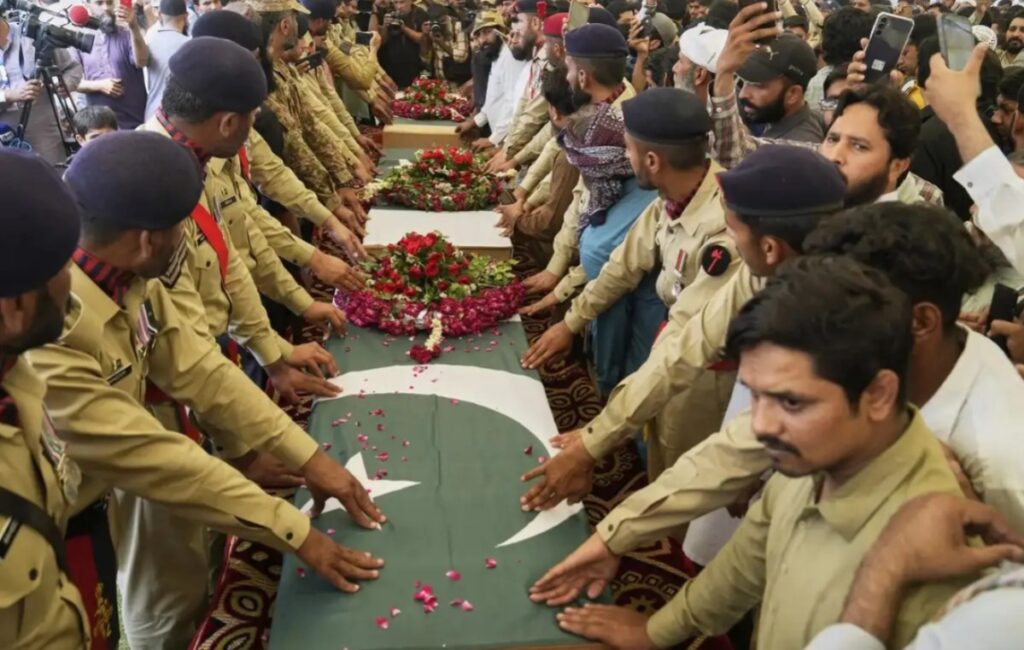
When 26 civilians were massacred in Pahalgam tourist spot of Kashmir on April 22, 2025, it sent immediate shockwaves across India. But what has followed since may mark a turning point in how the world, particularly the Global South, responds to terrorism, particularly when it comes to state-sponsored acts of it.
For decades, India has sounded the alarm about Pakistan’s use of terrorism as an instrument of state policy, especially in Jammu and Kashmir. And quite often, its warnings were met with scepticism, diluted in diplomatic language, or lost in the geopolitical noise of the broader South Asian region. But the brutality of the Pahalgam attack, and the growing body of evidence linking the perpetrators to Pakistan-based groups, along with shifting geopolitical dynamics seems to have brought a considerable change in that conversation.
More significantly, India’s response this time was also swift and multipronged. Under Operation Sindoor on May 6-7, it launched a precise and calibrated military retaliation targeting terror infrastructure across the Line of Control (LoC) in Pakistan Occupied Jammu and Kashmir (POJK) and mainland Pakistan. The military operation was accompanied by its diplomatic offensive, which has been very methodical and effective as the changing discourse about terrorism reflects. The culmination of these efforts was on full display at the 2025 BRICS+ Summit in Rio de Janeiro, Brazil, where the Global South bloc issued an unambiguous condemnation of a terror attack in Jammu and Kashmir, naming both the incident and its nature, which is remarkable.
The BRICS+ declaration stated it “condemned in the strongest terms the terrorist attack in Jammu and Kashmir on April 22, 2025, during which 26 people were killed and many more injured,” and reaffirmed a collective commitment to fighting terrorism “in all its forms and manifestations, including the cross-border movement of terrorists, terrorism financing and safe havens.”
This was not just diplomatic cliché and marks a quiet but significant pivot in the emerging world order where the Global South bloc is finally calling out double standards on terrorism, and doing so with rare unanimity.
A Shift in Global Norms
The Global South has long been a theatre of conflicting narratives when it comes to terrorism. While Western powers often dominate the discourse around extremism, violence in the Global South, whether in South Asia, West Asia, Southeast Asia, or African continent, has received a more selective treatment. However, that seems to be now changing.
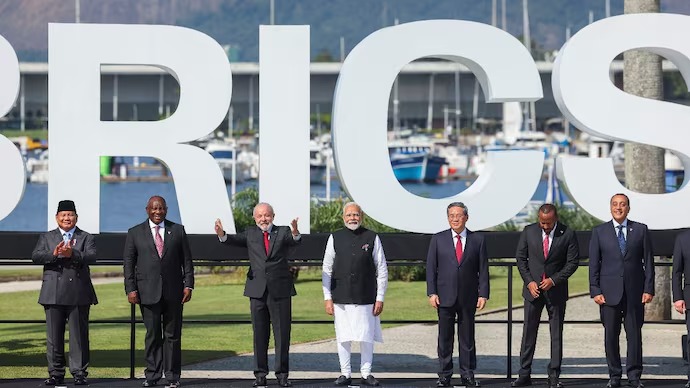
India’s diplomatic campaign, strengthened by real-time evidence and growing solidarity among peer economies, is spotlighting how selective empathy and geopolitical hedging allow state-backed terror proxies to thrive. The BRICS+ statement, endorsed even by countries like China, which shares close strategic partnership with Pakistan, signals that this silence may no longer be tenable in the long run.
Indeed, the real headline from Rio wasn’t just that the Pahalgam attack was condemned. It was that China did not block the language of the declaration. This is significant given the depth of China-Pakistan strategic cooperation, especially under the China-Pakistan Economic Corridor (CPEC) framework, and Beijing’s long-standing practice of shielding Pakistani entities and terrorists like Masood Azhar from censure in global forums such as the UN Security Council (UNSC). Moreover, as per multiple independent assessments, Pakistan is heavily dependent on Chinese-origin military equipment whose share has grown over 80 percent of its conventional arsenal. Therefore, for China to allow a declaration that highlights cross-border terrorism, which may be a veiled but yet has an unmistakable reference to Pakistan, is nothing short of a diplomatic milestone for India.
The Growing Evidence of Pakistan’s Terror sponsorship
India’s case against Pakistan is no longer just about moral outrage. It is now substantiated by tangible, corroborated evidence that paints a picture of systemic complicity. According to Indian intelligence reports shared with international partners, including with the UNSC’s 1267 Sanctions Committee, in the aftermath of the Pahalgam massacre, the attackers belonged to a faction of The Resistance Front (TRF), which is a proxy outfit widely recognized as a rebranded arm of Pakistan sponsored terrorist group Lashkar-e-Taiba (LeT). Both LeT and its affiliate networks have long enjoyed safe havens in Pakistan, with little meaningful action taken against their leadership despite international pressure and FATF conditions.
For years, Pakistan has relied on plausible deniability, labelling these groups as “non-state actors” beyond its control. But that narrative is wearing thin, particularly when attacks like Pahalgam are followed by the same tell-tale signs: trained cadres, sophisticated arms, and ideological alignment with Pakistan’s strategic calculus on Kashmir.
The BRICS+ Moment
The BRICS+ platform, which originally established by Brazil, Russia, India, China, and then South Africa and has now expanded to include key economies such as Egypt, Ethiopia, Iran, and the UAE, is increasingly seen as the voice of the Global South. It provides a forum for new powers to voice their concerns free from the historical constraints of Cold War dichotomies or Western alliances.
The Rio summit’s declaration on terrorism suggests that member states are no longer willing to overlook threats that destabilize their regions in favour of transactional diplomacy. For countries like Brazil and South Africa, which have dealt with their own home-grown security challenges, there is growing realization that impunity for terrorism anywhere poses risks everywhere.
India’s persistent framing of Pakistan’s terror infrastructure not as a bilateral grievance but as a global security issue seems to be gaining traction. New Delhi’s argument is simple: if terrorism financed, trained, and directed from across borders is tolerated in Kashmir, it sets a precedent that could embolden similar actors in Africa, Latin America, and Southeast Asia.
Reframing the Global South
The BRICS+ condemnation also highlights a deeper shift in Global South’s readiness to define its own red lines rather than outsourcing them to the geopolitical West. For decades, countries like India have been expected to toe the line of major powers when it came to defining security threats, be it in the West Asia, Central Asia, or elsewhere. But now, the Global South is building a consensus that its security interests are not derivative, rather they are primary. This is especially true when those interests are undermined by state-sponsored extremism operating under the guise of ideology, liberation, or regional grievance.
In this context, the silence or equivocation of certain powers on acts of terrorism, particularly those with clear cross-border linkages, can no longer be justified. The BRICS+ condemnation of the Pahalgam attack represents a break from the era of wilful ambiguity. It sets a bar of accountability for all states, regardless of their strategic alignments.
The Way Ahead
For Pakistan, this emerging scrutiny from fellow members of the Global South should lead to prompt introspection. Its longstanding strategy of cultivating asymmetric warfare through non-state actors has not only destabilized its neighbourhood but it has become its Achilles’ heel with several of its patronised terrorist groups redirecting their violence against Pakistan.
The evolving alignments and re-alignments at the global level signify that the world is no longer willing to excuse terrorism when it arrives wearing different uniforms. Nor is it buying the notion that development partnerships can offset or obscure the costs of cross-border violence.
India’s diplomatic pivot, wherein it complements force with diplomatic forums, is reshaping how terrorism should be debated and condemned in global settings. In this light, the BRICS+ statement in Rio is not just a victory for Indian diplomacy, but it also signals that the world’s emerging powers are ready to call terrorism by its name without considering who sponsors it.

In a region long afflicted by insurgency and instability, Pakistan’s military establishment has emerged not merely as a participant, but as a principal architect in the deliberate orchestration and international projection of terrorism. Far from being a collateral consequence of geopolitical upheaval, Pakistan’s facilitation of terrorism is a calculated, institutionalised component of its strategic doctrine—an enduring pillar of statecraft. From sheltering global jihadist organisations to now allegedly utilising ISIS to target both the Afghan Taliban and Baloch rebels, Pakistan’s military-intelligence complex has evolved proxy warfare into a systemic geopolitical instrument. Recent intelligence assessments from Afghan and Western security officials highlight a deeply unsettling trend: factions within Pakistan’s Inter-Services Intelligence (ISI) are reportedly enabling elements of the Islamic State-Khorasan Province (ISIS-K) to undermine the Taliban regime. Since the Taliban’s reassertion of power in 2021, relations with Islamabad have deteriorated—primarily over disputes concerning the Durand Line and the Taliban’s sheltering of Tehrik-i-Taliban Pakistan (TTP) operatives. In response, Pakistan appears to be recalibrating its approach—weaponising ISIS-K to destabilise Taliban rule and re-establish influence in Kabul.
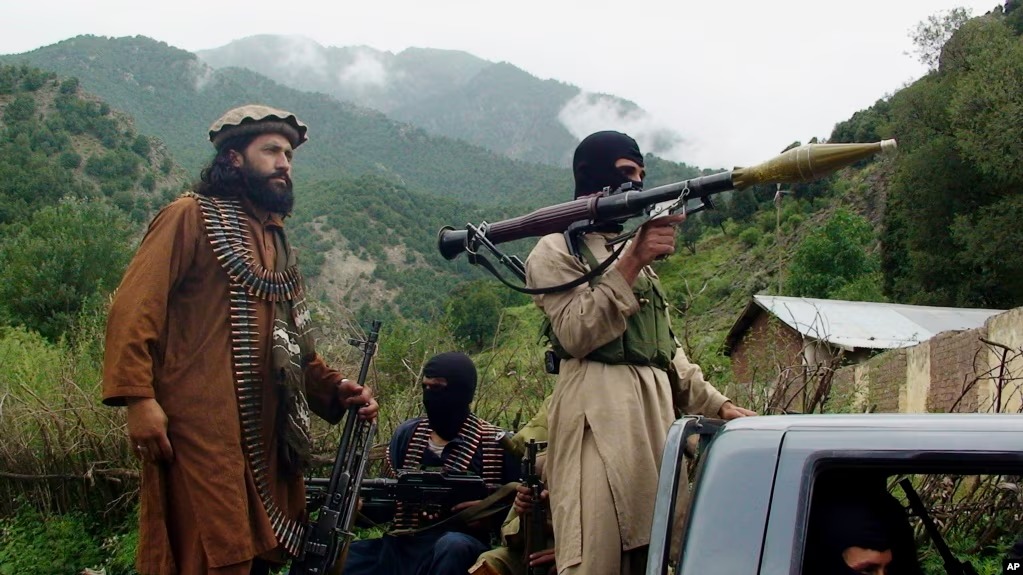
This is not a product of conjecture. A series of ISIS-K attacks against Taliban figures and Afghanistan’s Shia minorities have reportedly been linked to training centres and safe zones within Pakistan’s Khyber Pakhtunkhwa and Balochistan provinces. Afghan intelligence authorities have consistently accused the ISI of facilitating the logistical operations of ISIS-K, enabling cross-border movements, and covertly supporting actors opposed to Taliban authority. The Taliban government itself has issued public statements alleging that ISIS operatives infiltrating their territory do so with the backing of foreign intelligence agencies—an implicit reference to Pakistan. Simultaneously, Balochistan remains engulfed in a protracted and brutal conflict. The Baloch rebellion, driven by long-standing economic marginalisation and violent repression, has intensified in recent years. Yet, rather than addressing these deep-rooted grievances, the Pakistani military has responded with increased militarisation and a particularly disturbing tactic: deploying jihadist groups, including Lashkar-e-Jhangvi and militants linked to ISIS, against secular Baloch nationalist leaders. In numerous instances, Baloch activists and combatants have been assassinated or abducted by groups publicly aligned with ISIS, only for subsequent intelligence to expose their connections to ISI operatives through intercepted communications and insider testimonies.
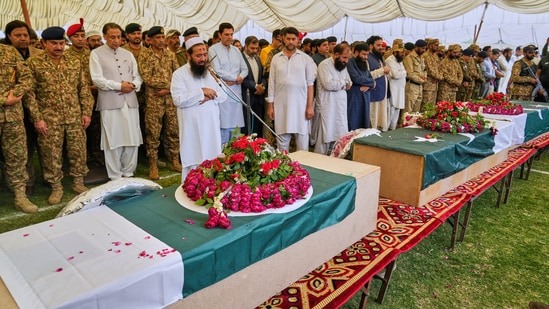
The manipulation is systematic. By deploying jihadist proxies, the Pakistani military achieves plausible deniability, evades international censure, and delegitimises the Baloch movement by associating it with religious extremism. This strategy is not novel—it is an extension of a doctrine that has been honed for over forty years. During the 1980s, Pakistan’s military and the ISI constructed a vast proxy network of extremist groups to project influence, acquire strategic depth, and suppress domestic dissent. The U.S.-backed jihad against the Soviet Union in Afghanistan served as the prototype. Billions in American and Saudi funds were channelled through the ISI to support mujahideen fighters—many of whom later evolved into the Taliban and al-Qaeda. This infrastructure did not dissipate with the end of the Cold War; it was repurposed. In Indian-administered Kashmir, the ISI actively cultivated groups such as Lashkar-e-Taiba (LeT) and Jaish-e-Mohammed (JeM), responsible for some of the most egregious terrorist incidents in India, including the 2001 Indian Parliament attack and the 2008 Mumbai massacre. Hafiz Saeed, founder of LeT and designated a global terrorist by the UN and the U.S., has operated openly within Pakistan for years, organising mass rallies and running charitable fronts that double as recruitment hubs. The scale of this state-terrorism nexus is staggering. A 2023 Financial Action Task Force (FATF) report observed that Pakistan still harbours more than 40 UN-designated terrorist entities, many of which continue to enjoy unimpeded movement, fundraising capacity, and operational latitude. Islamabad has made surface-level arrests and account freezes to avoid sanctions, yet its deeper strategic sponsorship remains untouched.
This duality—supporting terrorism while simultaneously portraying itself as a victim—has become Pakistan’s geopolitical hallmark. Domestically, Islamist groups are weaponised to suppress dissenting journalists, intellectuals, and minority communities. On the international stage, terrorism is wielded as a tool of state influence. Whether confronting the Taliban in Kabul, fomenting unrest in Kashmir, or directing ISIS-linked operations in Balochistan, the ISI’s unseen influence is a constant. Global counterterrorism efforts have failed to dismantle this duplicity. Osama bin Laden’s presence mere kilometres from Pakistan’s premier military academy in Abbottabad starkly revealed Islamabad’s lack of sincerity in combating terrorism. This pattern persists, evident in the state’s bifurcation between “bad terrorists” (who attack Pakistan) and “good terrorists” (who serve strategic interests).
What renders this strategy especially perilous in 2025 is the shifting geopolitical landscape. With China deepening its regional engagement via the China-Pakistan Economic Corridor (CPEC), Beijing is increasingly alarmed by the instability in Balochistan. Yet, rather than curtail militant violence, Pakistan’s military has escalated its reliance on extremist proxies to suppress opposition and secure Chinese investments—transforming CPEC into a corridor shadowed by systemic violence. The global community must cease its indulgence of Pakistan’s duplicitous stance on terrorism. The military’s entrenchment of terror as a tool of foreign and domestic policy has rendered South Asia a continual theatre of conflict, with reverberations reaching as far as Europe and North America. Continued Western support—whether in the form of aid, weaponry, or diplomatic concessions—only serves to embolden Pakistan’s militarised deep state.
Pakistan is not a casualty of terrorism—it is among its principal architects. Unless the international community acknowledges this reality and responds with decisive measures—targeted sanctions, terror designations, and a withdrawal of support—the region will remain hostage to a military that thrives in ambiguity, playing a lethal double game at immense human cost.
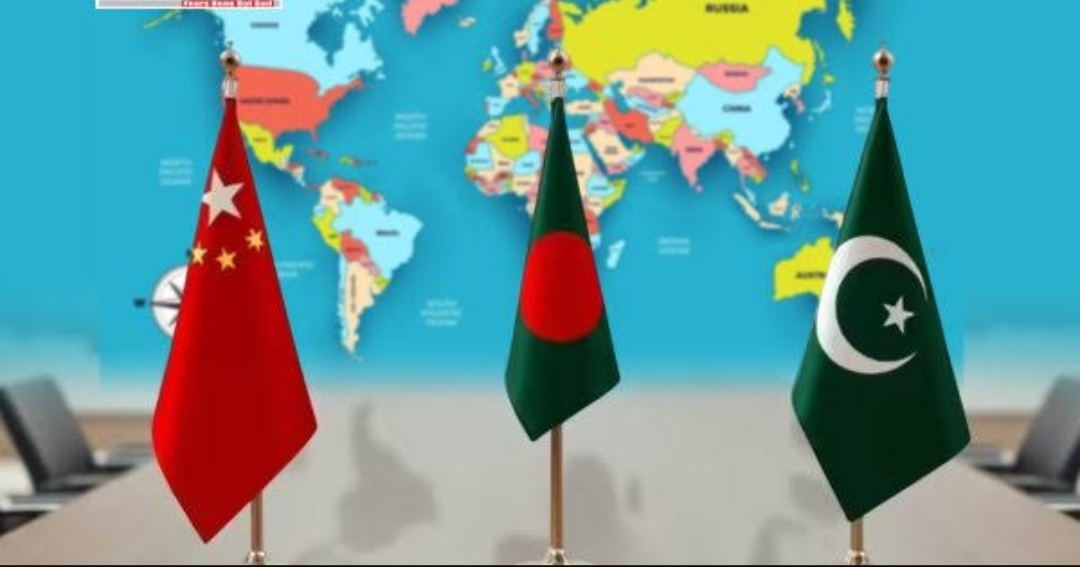
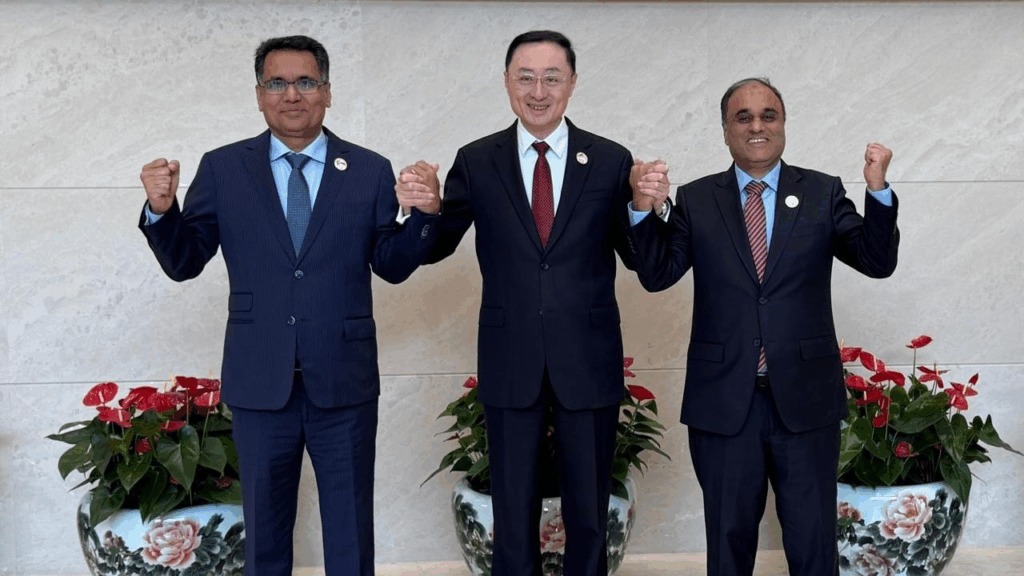
Since the displacement of Bangladesh’s long-standing Prime Minister Sheikh Hasina in August 2024, the geopolitical landscape of South Asia has undergone significant transformation. Hasina, who previously served as a strategic ally to India while simultaneously managing diplomatic engagement with China, departed from office leaving a nation grappling with economic adversity and political fragmentation. This context appears to have instigated a reassessment of core tenets of her foreign policy legacy. The trilateral summit held on 19 June in Kunming, China—involving representatives from Pakistan, Bangladesh, and China—has precipitated renewed scrutiny of shifting regional alliances and their ramifications for both regional stability and security, as well as for India’s strategic position. Nevertheless, amid optimistic assessments foregrounding the consolidation of cooperation among these three actors, several pivotal concerns remain under-examined. Notably, these include China’s ostensibly benign yet strategically motivated economic diplomacy and the persistence of proxy terrorism sustained through the China-Pakistan nexus, both of which warrant critical scholarly attention.
The Kunming trilateral discussions, convened in conjunction with the 9th China–South Asia Exposition and the 6th China–South Asia Cooperation Forum, saw the participation of Chinese Vice Minister of Foreign Affairs Sun Weidong, Pakistani Additional Secretary (Asia-Pacific) Imran Ahmed Siddiqui—with Foreign Secretary Amna Baloch attending virtually—and Bangladeshi Foreign Secretary Md. Ruhul Alam Siddique. The meeting resulted in a joint commitment to advance cooperation in several critical sectors, including industrial and commercial development, maritime affairs, water resource management and climate adaptation, agricultural innovation, and youth engagement. The Chinese delegation’s official statement underscored the guiding principles of “good-neighbourliness, reciprocal trust, equality, openness, inclusivity, and shared progress” as central to the evolving partnership.
Both Pakistan and Bangladesh have increasingly embraced China’s Belt and Road Initiative (BRI), widely interpreted as a strategy by Beijing to establish a strategic perimeter around India. Over the past decade, China has become a leading development partner for Bangladesh, channelling substantial investments into a diverse portfolio of infrastructure projects, encompassing port facilities, power generation, and connectivity enhancements such as highways, bridges, and tunnels. Notable examples include the Padma Bridge Rail Link, the Karnaphuli River Tunnel, the Payra Port Development, and the Dhaka Elevated Expressway. To date, Bangladesh has maintained a cautious stance, avoiding excessive dependence on the People’s Republic of China and thereby sidestepping the so-called ‘debt-trap diplomacy’ that has ensnared countries like Sri Lanka. Nevertheless, under the new leadership, there are indications of a shift away from the previous prioritisation of India in strategic matters, as historically advocated by Hasina and the Awami League, and towards a more receptive posture regarding Chinese involvement. In March of this year, Muhammad Yunus, Chief Adviser to the Interim Government, signalled openness to Chinese participation in the Teesta River Comprehensive Management and Restoration Project. Additionally, both nations are reportedly negotiating collaboration on the Lalmonirhat Airbase, situated less than 150 kilometres from the Siliguri Corridor. Such developments not only heighten India’s security concerns but also, given the new administration’s strategic miscalculations, risk compromising Bangladesh’s sovereignty—a pattern consistent with established Chinese foreign policy tactics.

Pakistan’s persistent instrumentalisation of proxy militant networks for strategic objectives is well-documented. Prior to Bangladeshi independence in 1971, Pakistan facilitated the sheltering, training, and arming of insurgent factions operating in India’s northeast from East Pakistani (now Bangladeshi) territory. Under Sheikh Hasina’s leadership, Bangladesh implemented decisive counter-terrorism measures, dismantling such groups operating within its borders and extraditing numerous militant leaders to India. Presently, China—as the primary supplier of military equipment to both Pakistan and Bangladesh, while also providing critical economic support to Pakistan—has emerged as an essential enabler for Pakistan’s sustained proxy-terror infrastructure. Documented instances exist where Chinese telecommunications equipment, ostensibly designated for Pakistani military use, has been confiscated from terrorists in Jammu and Kashmir. This empirical evidence underscores a concerning China-Pakistan nexus actively contributing to regional destabilisation through asymmetric warfare tactics.
India’s cautious monitoring of Bangladesh’s diplomatic realignment is contextually justified, given their shared 4,000-kilometre border—the world’s fifth-longest terrestrial boundary—and critical bilateral economic and security interdependencies. This vigilance intensifies as Bangladesh cultivates warmer relations with India’s strategic adversaries, Pakistan and China, particularly following India’s recent experience of another significant terrorist attack in Kashmir with established Pakistani linkages. Bangladesh’s deepening alignment with actors demonstrably associated with economic entrapment strategies or the facilitation of proxy terrorism for geopolitical objectives presents legitimate concerns. Such developments jeopardise not only India’s security calculus but also the broader regional stability and security architecture.
While the evolving regional dynamics warrant close observation, Bangladesh continues to acknowledge the significance of India for its economic, political, and strategic interests. Notably, when China and Pakistan suggested the formation of a trilateral working group, Bangladesh opted to reject the proposal. Moreover, the country’s foreign affairs adviser clarified, a week after the Kunming meeting, that the gathering did not signify an alliance and was not directed against any third party—a statement made in response to queries concerning India. This underscores that, despite the cooling of relations with India since Sheikh Hasina’s removal, Bangladesh remains acutely aware of its profound reliance on its neighbour. In this context, although the trilateral engagement with China and Pakistan marks a shift in diplomatic posture, Bangladesh’s restrained approach indicates that it is not prepared to relinquish its foundational relationship with India. The coming months will prove crucial in determining whether such balancing endures or gives way to a realignment that could potentially alter South Asia’s strategic landscape.
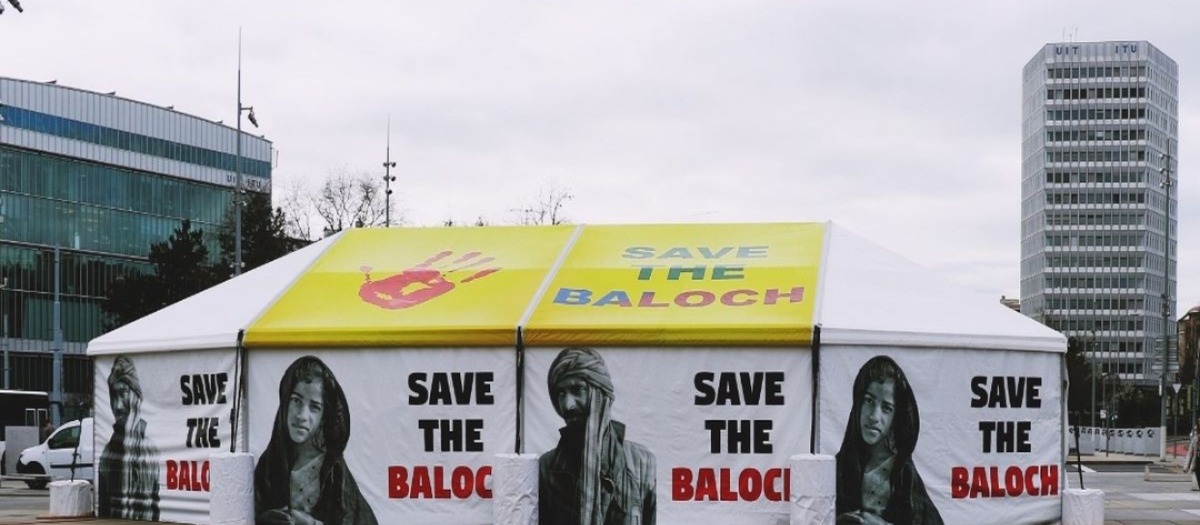
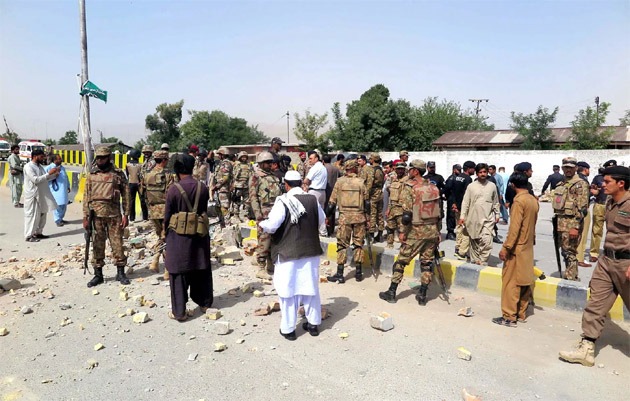
Balochistan, the largest and most resource-abundant province of Pakistan, continues to face persistent unrest—an occupied territory enduring a systematic campaign of military dominance, economic exploitation, and cultural suppression. Since its forcible annexation by Pakistan in March 1948, Balochistan has experienced repeated uprisings, each met with severe state-led repression. Despite enduring decades of marginalisation, the Baloch people’s call for self-determination remains undiminished. The origins of this enduring conflict lie in the coerced incorporation of the Baloch princely state of Kalat into Pakistan. On 15 August 1947, Kalat proclaimed its independence, and its elected parliament subsequently voted against joining Pakistan. Nevertheless, under military duress, the Khan of Kalat was compelled to sign an instrument of accession in March 1948. This act, widely viewed as illegitimate, sparked the first of five major Baloch rebellions—occurring in 1948, 1958, 1962, 1973, and the most protracted uprising, which began in 2004 and persists to this day.
Balochistan constitutes 44% of Pakistan’s total land area, yet it remains the most underdeveloped region in the country. Although the province accounts for 36% of Pakistan’s natural gas production, a mere 10% of its residents have access to piped gas. Sui, where natural gas was first discovered in 1952, ironically still lacks basic amenities such as electricity and clean drinking water. According to the Pakistan Economic Survey 2024–25, Balochistan’s literacy rate is a mere 42.01%, markedly lower than Punjab’s 66.25%. Despite its wealth in minerals, fossil fuels, and a strategically vital coastline, its inhabitants remain among the most impoverished in the nation. These disparities are not coincidental—they are structurally imposed. The China-Pakistan Economic Corridor (CPEC), a $62 billion infrastructure initiative, has exacerbated the economic subjugation of Balochistan. Gwadar Port, the flagship project of CPEC, has effectively become a Chinese-dominated zone from which the indigenous Baloch have been displaced. Traditional fishing communities have been denied access to ancestral coastal areas, while development zones enclosed by fencing, constant paramilitary presence, and checkpoints have proliferated—vastly outnumbering educational and healthcare facilities. Rather than fostering development, Gwadar has transformed into a heavily securitised zone.
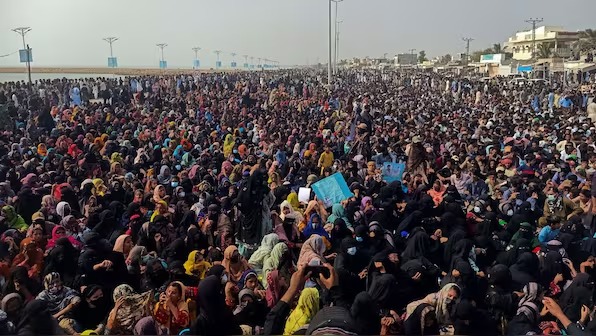
Although Pakistan presents CPEC as a transformative initiative, it has instead become a focal point of resistance. Widespread protests erupted in 2024 and continued into early 2025, driven by grievances related to displacement, joblessness, and denial of fundamental rights. The state’s response was marked by repression. In July 2024, peaceful protestors in Gwadar were subjected to violence and arbitrary detention, while internet services were suspended. Human Rights Watch and Amnesty International denounced the use of excessive force and unlawful detentions. The situation further deteriorated in 2024–2025 with a sharp rise in enforced disappearances. Pakistan’s own Commission of Inquiry on Enforced Disappearances (COIED) has acknowledged that more than 10,000 individuals have disappeared since 2011—2,752 of whom are from Balochistan. Amnesty International’s January 2024 report documented an additional 379 cases in that year alone. Abductions carried out by intelligence agencies and paramilitary forces have become a systematic means of stifling dissent.
One of the most harrowing incidents occurred in July 2024, when Hayat Sabzal Baloch was abducted in Turbat; his mutilated body was discovered in February 2025, discarded without dignity. In January 2025, a 15-year-old student, Anas Ahmed, was forcibly disappeared in Karachi. These instances reflect a broader systemic pattern in which the state metes out collective punishment by targeting children, youth, and activists. The abductions of Baloch women have also escalated. On 27 May 2025, 24-year-old Mahjabeen Baloch was taken from Quetta Civil Hospital by plainclothes security personnel. Her only offence was the organisation of peaceful student demonstrations. She now joins a growing list of women subjected to enforced disappearance—signalling a disturbing evolution in Pakistan’s counterinsurgency tactics.
Protests have persisted despite widespread repression. In March 2025, nationwide demonstrations erupted following a BLA-orchestrated hijacking of the Jaffar Express in the Bolan Pass, resulting in 64 fatalities, including 18 soldiers and 33 militants. In response, Pakistani forces launched “Operation Green Bolan.” Although the state proclaimed success, numerous civilians were either killed or forcibly disappeared. The victims’ families organised sit-ins in Quetta, demanding the return of their missing relatives. Their peaceful appeals were met with rubber bullets and mass detentions. Central to this nonviolent resistance is Mahrang Baloch, a young physician and human rights advocate. As the founder of the Baloch Yakjehti Committee (BYC), she has emerged as the voice of thousands of families of the disappeared. In March 2025, she was arrested and imprisoned in Hudda Jail—the same prison where her father was once held before his disappearance. Despite being denied a fair trial or presentation of evidence; she continues to draw international attention. TIME magazine named her among its TIME100 Next list in 2025. PEN Norway, UN Working Groups, and Malala Yousafzai have all called for her release. Her words, “To demand justice is not terrorism,” have become a defining slogan.
Nevertheless, the state continues to criminalise dissent. Peaceful demonstrators are branded as terrorists; journalists reporting on enforced disappearances face harassment; and human rights advocates are accused of advancing foreign agendas. Pakistan’s official discourse dismisses all Baloch grievances as “Indian-backed separatism,” overlooking decades of systemic violence and legitimate political aspirations. Violence in the region is not solely perpetuated by the state—militancy has also escalated. In August 2024, the Baloch Liberation Army’s Operation Herof resulted in the deaths of 14 security personnel and over 60 civilians in a coordinated assault. In November 2024, a suicide bombing at Quetta Railway Station killed 32 people. The BLA claimed responsibility, citing the attack as retaliation for state atrocities. These recurring cycles of violence and reprisal have increasingly radicalised the socio-political environment, severely narrowing the space for peaceful resolution.
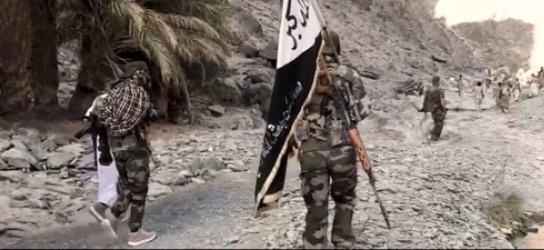
Compounding the anguish, prominent figures such as national racer Tariq Baloch were assassinated in May 2025. Activists have described it as a “kill-and-dump” operation—where individuals are executed by state agents and their bodies discarded to serve as a deterrent. Domestic media frequently fall silent under state pressure, while international journalists are denied access. This sustained information blackout has rendered Balochistan one of the most poorly reported conflict zones globally. Cultural repression further deepens this siege. The Balochi language is scarcely taught in schools, while textbooks systematically omit Baloch history and identity. Cultural figures such as Professor Saba Dashtiyari, a staunch advocate for linguistic and cultural rights, have been assassinated. Today, artists and poets continue their work either in exile or in secrecy, preserving the spirit of resistance through music, literature, and oral storytelling.
Balochistan’s demographic landscape is also being intentionally reshaped. A process of settler colonialism is underway, with non-Baloch communities incentivised to settle in strategic districts. Electoral boundaries are manipulated to dilute indigenous political influence, resulting in further marginalisation and disenfranchisement. Nevertheless, the Baloch people persist in their resistance. From guerrilla fighters in the rugged mountains to student demonstrators in urban centres, and activists within the diaspora in Europe and North America, the will to defy remains resolute. Each martyr’s funeral becomes a site of protest. Every name of the disappeared is transformed into a slogan. Each expression of resistance—be it a poem, mural, or sit-in—resonates across generations with undiminished force.
Pakistan’s GDP increased by 2.5% in 2024 and is forecasted to grow by 2.6% in 2025, according to the Ministry of Finance. Yet this economic growth has failed to benefit Balochistan in any meaningful way. While Pakistan’s per capita income stands at $1,824, Balochistan’s figure remains significantly lower, with widespread unemployment and malnutrition. In the 2023–24 provincial budget, Rs 750 billion was allocated, yet sectors such as health, education, and infrastructure remain severely neglected. Funds earmarked for “security” rarely reach the public. The global community remains largely indifferent. No United Nations fact-finding mission has ever visited Balochistan. Western nations, including the United States and China, continue to prioritise strategic relations with Pakistan over addressing human rights concerns. Although international organisations publish reports, diplomatic pressure remains negligible. The conflict receives scant media coverage, surfacing only when violence reaches major cities.
Balochistan is not merely a tale of insurgency—it is the narrative of a nation resisting erasure. A people denied the right to live with dignity continue to choose defiance. The state may resort to killing, abduction, and censorship—but it cannot extinguish the resolve of a people who steadfastly remember their history, uphold their identity, and dream of freedom. The assault on Balochistan transcends military action—it is an existential struggle. Yet in the face of oppression, a young woman imprisoned, a mother clutching a photograph of her missing son, and a protestor inscribing slogans on a wall all convey a unified message: We exist. We resist. And we shall not be silenced.
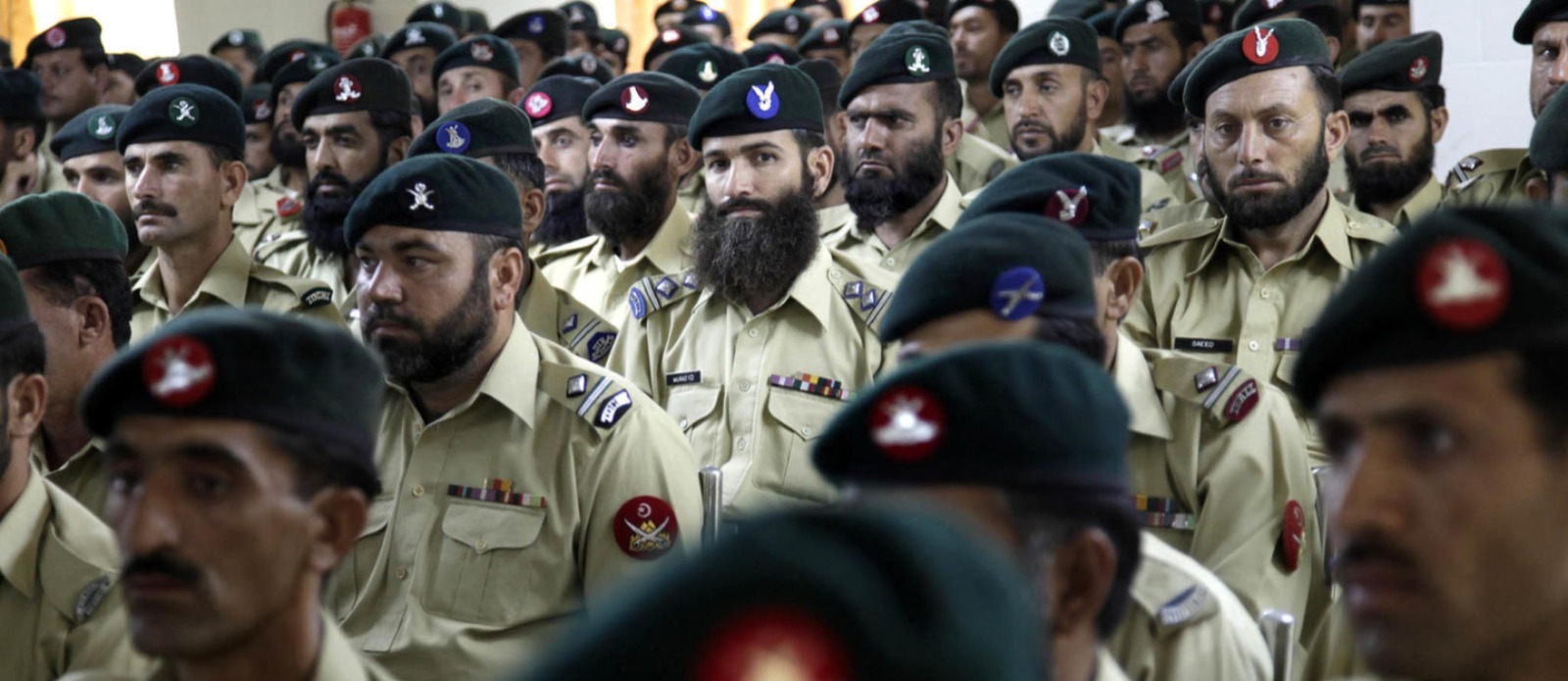
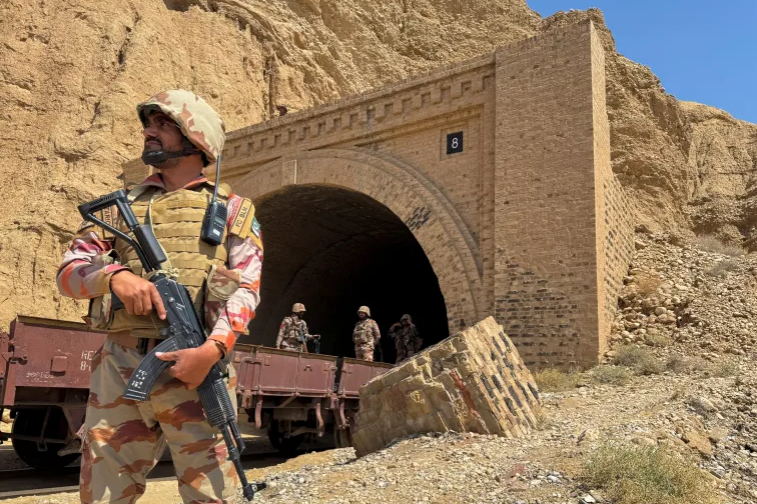
Pakistan’s political landscape has long been orchestrated not by its elected representatives but by the opaque influence of its military elite, whose grip on the nation’s trajectory grows ever more evident with each successive episode. The recent visit of Pakistan’s Army Chief, General Asim Munir, to the United States—noticeably unaccompanied by the Prime Minister—serves as a striking indication of how far civilian authority has been marginalised. If this were not a sufficiently telling sign, Pakistan’s peculiar nomination of Donald Trump for the Nobel Peace Prize further underscores the surreal and unaccountable hybrid regime now presiding over this nuclear-armed state. In this unfolding drama, it is not the democratic will but the triad of Allah, America, and the Army that dictates Pakistan’s fate—a trinity that has empowered its generals with unrestrained influence while exacting profound costs from the very nation they claim to defend. It is widely acknowledged that Pakistan’s military has long exercised disproportionate influence over foreign affairs, national security, and internal governance. Yet General Munir’s solo diplomatic foray in Washington, absent the country’s elected leader, signifies something even more disquieting: the total institutional marginalisation of civilian leadership. In a functioning democracy, the Prime Minister serves as head of government, the principal figure in bilateral diplomacy, and the voice of the citizenry on the global stage. Munir’s lone presence was not simply symbolic—it conveyed an unequivocal message to both the international community and Pakistan’s own populace: the Army is the central agent of the state; the Prime Minister is merely ceremonial.
The distorted rationale was further exposed through the bewildering act of nominating Donald Trump—a figure whose presidency was marked by disorder and polarisation—for the Nobel Peace Prize. Even by Pakistan’s frequently opaque and labyrinthine political norms, this gesture was confounding. Yet, when interpreted through the prism of military realpolitik, a grim logic emerges. Trump symbolises a yearning for transactional diplomacy, authoritarian leadership, and covert negotiations that bypass democratic structures. Pakistan’s military, which has long prospered through bilateral engagements that marginalise civilian leadership, perceives in Trump an ideal counterpart—someone who engages directly with generals rather than governments.
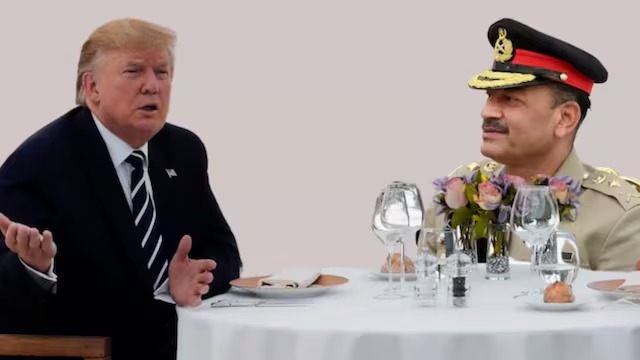
The nomination has little to do with peace or diplomacy. It is, rather, a calculated overture—a political courtship extended from Rawalpindi to Mar-a-Lago. More telling, however, is how these developments reflect the underlying architecture of Pakistan’s political framework. The Defence Minister, Khawaja Asif, recently extolled the so-called “hybrid system”—a euphemism for the military-civilian power dynamic that is far from equitable. In his own remarks, he commended this Frankenstein construct as a viable model, laying bare the tragic paradox wherein elected representatives not only accept their diminishing relevance but actively endorse it. One might expect such a structure to be imposed upon reluctant politicians. Yet, as a pointed tweet observed: “It’s not that the civilians have ceded space… it’s that they have cheered on their own marginalisation.” The betrayal extends beyond institutional decay—it is a moral failure, a surrender of democratic integrity.
The tweet strikes at the heart of Pakistan’s political malaise. In any healthy democracy, military overreach is met with civilian resistance, protest, and defiance. In Pakistan, however, civilians have often extended the ladder. The PML-N, PPP, and even the once-principled PTI have each, at different junctures, prioritised immediate political advantage by siding with the military rather than upholding long-term democratic norms. This complicity has eroded civilian authority, normalised coups without the need for tanks, and fostered a political class more concerned with navigating the corridors of power than exercising meaningful governance. A more recent tweet—“Allah, America and Army have always been the dominant forces in Pakistani politics. While the generals have amassed power and wealth as a ‘front-line state’, the nation has borne grievous losses. The Trump-Asim Munir meeting marks the death knell of civilian rule.”—resembles a final elegy for Pakistan’s democratic ambitions. It reveals the core paradox within the country’s strategic posture. Since the Cold War, Pakistan’s military has exploited its geopolitical location and strategic value to amass significant political power and attract foreign assistance. The United States, in search of a dependable South Asian partner, repeatedly chose generals over institutions. This enduring gamble, played across decades, has enriched the military while leaving the nation depleted—economically, politically, and morally.
The so-called front-line state designation evolved into a euphemism for enduring dependency. Pakistan’s military exchanged national sovereignty for security-related funding, yet these financial inflows rarely benefited the wider population. Infrastructure deteriorated, education was marginalised, and healthcare systems collapsed. Meanwhile, the General Headquarters in Rawalpindi thrived—expanding housing schemes, corporate ventures, and even political entities. The consequences of this Faustian pact were not borne by the generals, but by civilians—deprived of agency, stifled in dissent, and reduced to passive observers of their own governance. Within this context, General Asim Munir’s meeting with Donald Trump transcends a mere diplomatic engagement; it starkly underscores the fact that Pakistan’s military is now independently conducting foreign relations, free from parliamentary scrutiny or public accountability. This is evocative of a state within a state—except the inner state no longer feels compelled to operate in the shadows. It strides openly into the White House, delivers public statements, nominates foreign leaders for peace prizes, and orchestrates the installation, management, and removal of civilian administrations at will. And all of this occurs with the silent consent—at times, the enthusiastic endorsement—of those it has systematically rendered powerless.
Perhaps most damning is the near-total absence of public indignation. Pakistanis have become so habituated to military dominance that even the most overt manifestations of authoritarianism provoke little more than indifference. A quiet fatalism pervades the national psyche—a collective resignation to the belief that the Army will govern, irrespective of constitutional order. Consequently, when a Defence Minister extols a hybrid regime, or an Army Chief assumes the diplomatic stage in Washington without the Prime Minister, it scarcely raises eyebrows. The boundary between the abnormal and the accepted has long since dissolved. Yet this trajectory is ultimately untenable. The military’s growing consolidation of authority is not merely politically corrosive—it is strategically perilous. No nation can endure indefinitely under the dominion of its own armed forces. The systematic erosion of civilian institutions, the ritualised subjugation of elected officials, and the economic prioritisation of military interests do not constitute a formula for national resilience. Rather, they serve as indicators of institutional decay. Pakistan’s gravest threat is not foreign—it is domestic: the entrenched militarism that refuses to recede, and a civilian leadership unwilling to resist.
While the generals may believe that another endorsement from Washington or the rise of another transactional figure like Trump will cement their dominance, history is not so easily deceived. Every short-term alliance with a foreign benefactor carries a long-term price. American backing is never perpetual. Its interests do not reflect the aspirations of Pakistan’s people, but rather its own shifting geopolitical priorities. When those priorities change—as they inevitably do—the military risks being left with a nation bereft of legitimacy, lacking public confidence, and increasingly marginalised on the world stage. It is not yet too late to change direction. But for such a course correction, Pakistan’s civilian leadership must rediscover its resolve. It must cease applauding its own subjugation. It must confront an inconvenient truth: a state governed by generals is no democracy, and a citizenry living in fear is not free. Civilian leaders must challenge the myth that the military is the country’s only functional institution and commit instead to building the strength and credibility of civilian governance. Most importantly, they must reject the illusion that the Army and the people are one and the same. They are not. One is meant to serve the other—and so it must.
The Trump-Asim Munir episode may, in retrospect, be seen as a defining moment—not because it altered the status quo, but because it laid it bare. It exposed a civilian government so enfeebled that it stood by mutely as its authority was overtaken on foreign soil. It exposed a military so emboldened that it no longer sees the need to maintain even the façade of democratic legitimacy. And it exposed a political class so deeply complicit in its own disempowerment that it has come to regard marginalisation as a form of merit. This is not a hybrid arrangement. It is a hostage scenario. And, tragically, Pakistan is fast exhausting its time to mount a rescue.
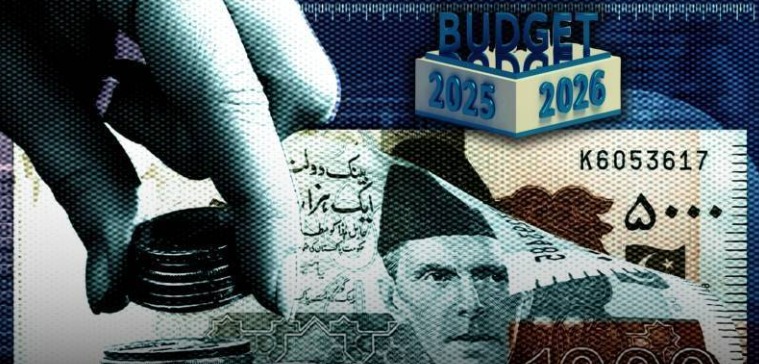
The presentation of Pakistan’s Federal Budget for the fiscal year 2025–26 on 10 June serves not only as a financial outline for the nation but also as a telling indicator of the entrenched power dynamics within its political economy. With total federal spending amounting to Rs 17.57 trillion, the budget is framed in official discourse as a pathway to economic recovery and national security. Yet, a more critical and nuanced examination exposes these narratives as concealing a heavily militarised fiscal framework, wherein the Pakistan Army emerges as the primary beneficiary—frequently to the detriment of democratic institutions, inter-provincial fairness, and the country’s long-term developmental prospects.
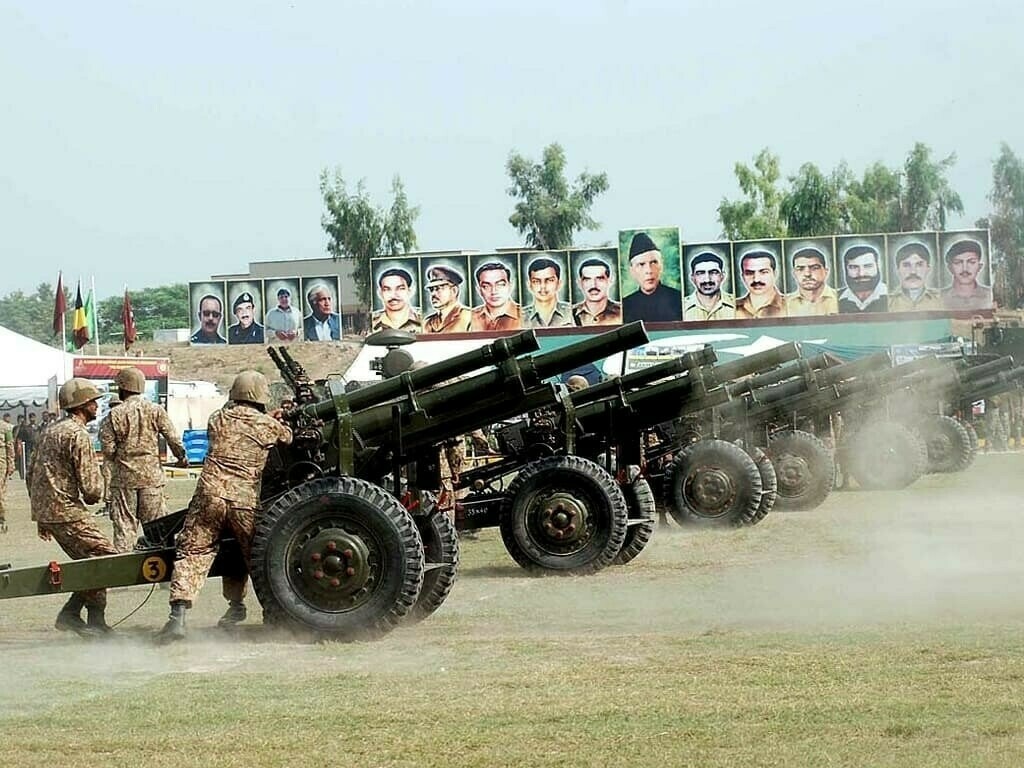
A particularly striking illustration of this military-oriented strategy is evident in the federal government’s distribution of resources through the National Finance Commission (NFC) Award. Of the Rs 8.21 trillion allocated for provincial transfers, Punjab—widely regarded as the military establishment’s political bastion—receives Rs 4.25 trillion, constituting 51.74% of the total. Sindh is granted 24.55% (Rs 2.01 trillion), Khyber Pakhtunkhwa 14.62% (Rs 1.20 trillion), while Balochistan—the nation’s most underdeveloped and marginalised province—receives a scant 9.09% (Rs 0.75 trillion).
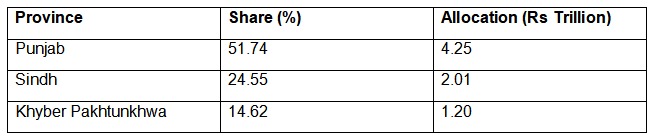
This distribution highlights not merely economic partiality, but also the military’s entrenched involvement in shaping inter-provincial fiscal allocations to favour compliant constituencies while marginalising dissenting regions. The reality that Punjab receives more than double the funds allocated to Sindh and almost six times that of Balochistan—without any remedial provisions to address the latter’s enduring underdevelopment—raises significant concerns regarding the military’s opaque yet enduring influence over federal policy formulation.
The situation in Balochistan is especially grave. Despite its abundant natural resources, the province has endured persistent economic neglect, political exclusion, and military repression. In the 2025–26 budget, Balochistan has once again been overlooked in terms of significant federal development projects. This fiscal marginalisation is no coincidence—it exemplifies a wider securitisation agenda, wherein the state, under military dominance, views Balochistan more as a geostrategic asset than as a population entitled to governance and service. Military cantonments continue to proliferate across the region, yet essential infrastructure such as schools, hospitals, and roads remain scarce. The Army’s approach to calls for enhanced resource autonomy and local governance remains rooted in coercion rather than dialogue.
In Sindh, and particularly in Karachi—the nation’s economic hub—the disparity in budgetary allocation is equally evident. Although the province is a significant net contributor to Pakistan’s overall revenue, its share of federal resources remains disproportionately low. The limited federal expenditure on Sindh’s urban infrastructure and rural healthcare or education reflects Islamabad’s wider policy orientation: maintain centralised authority and channel resources towards regions aligned with military interests, while penalising areas that challenge the establishment’s dominance. Sindh’s increasing political divergence from military-sanctioned narratives likely accounts for its persistent fiscal sidelining.
Khyber Pakhtunkhwa (KP), despite serving as a frontline region in Pakistan’s so-called war on terror and enduring the harshest impacts of military operations and their humanitarian fallout, is allocated a mere 14.62% of the federal divisible pool. The irony is stark—the province has borne immense human cost in service of the Army’s security objectives, yet receives scant developmental assistance in return. This inconsistency highlights the military’s instrumentalist approach toward peripheral regions: exploit them for strategic leverage while withholding the benefits of federal investment and post-conflict reconstruction.
Nowhere is the military’s hold over the national budget more visible than in defence expenditure. The 2025–26 budget earmarks Rs 2.55 trillion solely for military operations and equipment—a 20% rise from the previous fiscal year. When defence pensions are factored in, this figure increases to Rs 3.29 trillion. By comparison, the Public Sector Development Programme (PSDP)—the central mechanism for promoting public welfare and infrastructure development—has been limited to just Rs 1 trillion, accounting for only 6% of total federal spending.
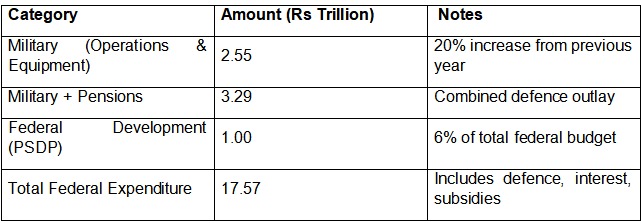
This fiscal imbalance reveals a troubling truth: Pakistan is not simply a state possessing a powerful military—it is a military possessing a state. Defence is allocated over three times the funding designated for all federal development initiatives combined. In a country burdened by IMF-driven austerity measures, escalating poverty, a failing education system, and a deteriorating healthcare sector, such budgetary priorities are not merely imprudent—they are fundamentally undemocratic.
The military’s economic dominion extends well beyond formal budgetary provisions. Through an extensive network of foundations, real estate enterprises, and corporate entities such as the Fauji Foundation and Army Welfare Trust, the Pakistan Army maintains a commanding presence across the national economy. Nevertheless, it persistently demands an increasing proportion of federal tax revenues under the pretext of “national security.” The most recent rise in defence spending has been rationalised by invoking perceived threats stemming from India’s Operation Sindoor—a cross-border strike purportedly revealing Pakistan’s defence vulnerabilities. Yet, leveraging such incidents to justify inflated military budgets further illustrates the Army’s adeptness at securitising each fiscal cycle to its advantage, frequently at the expense of economic prudence and democratic accountability.
Public reaction to the budget has been largely unfavourable, particularly across digital platforms where a limited degree of free expression persists. On Twitter/X, Facebook, and YouTube, trending hashtags such as #Budget2025, #PakistanDefenceBudget, and #CivilianNeglect reflect mounting discontent over the military’s dominance in determining national priorities. Sentiment analysis of user posts and comments reveals a citizenry increasingly aggrieved by rising inflation, unemployment, and deteriorating public services, all while observing the Army amass greater wealth, influence, and impunity.
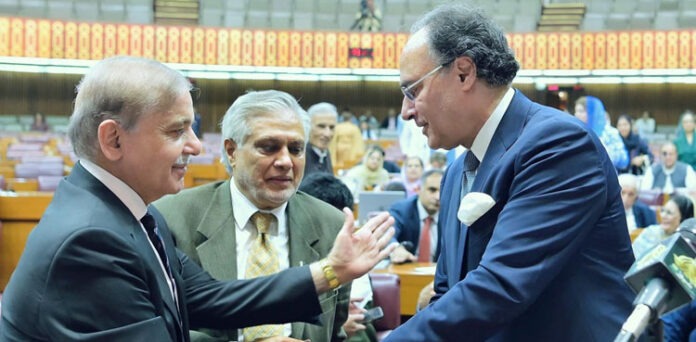
From Baloch activists decrying the absence of schools and access to clean water, to Sindhi commentators criticising the inequities of the budget, and citizens in KP questioning the marginalisation of a region scarred by conflict and extremism, provincial discontent is no longer latent—it is erupting. Even prominent political leaders have begun to cautiously voice concerns over the budget’s military bias, although many continue to remain silent, constrained by the fear of institutional retaliation.
Exacerbating this growing public dissatisfaction is the stark contrast drawn between the current budget and those enacted during former Prime Minister Imran Khan’s tenure. Although his administration faced criticism for economic mismanagement, it was nonetheless seen as making some effort to invest in health, education, and social welfare. In the present context, citizens view even these limited advancements as having been reversed, supplanted by an inflated defence budget that delivers no tangible benefit to the ordinary Pakistani.
The debt burden is also intensifying. Pakistan’s obligations for debt servicing are steadily increasing, with a significant portion of non-defence expenditure now directed towards interest repayments. Yet, despite these fiscal pressures, the military remains untouched by austerity. On the contrary, it continues to benefit from consistent budgetary hikes, preferential land allocations, and expansive business entitlements—all safeguarded by a pervasive culture of impunity and the enduring absence of civilian oversight.
Even more troubling is the manner in which the military’s fiscal dominance is accompanied by political repression. Independent economists and journalists who challenge defence expenditures frequently encounter threats or censorship. Parliamentary scrutiny of military spending remains largely symbolic, with no transparency regarding detailed budgetary breakdowns. This lack of openness is deliberate—it constitutes an institutionalised mechanism of military governance by alternative means.
The 2025–26 federal budget thus reflects the distorted civil-military equilibrium in Pakistan. It is more than a fiscal plan; it constitutes a political declaration. It confirms that the Pakistan Army—unelected and formally subordinate under the Constitution—continues to operate as the country’s de facto authority, exercising control not only over foreign affairs and domestic security but also over financial governance. The implications of this dynamic are severe: inhibited human development, widening inter-regional disparities, and a nation locked into a persistent cycle of underdevelopment and authoritarian rule.
Nevertheless, the latest federal budget lays bare the deeply embedded militarism that characterises Pakistan’s state apparatus. While Punjab enjoys a disproportionately favourable share and the Army continues to consolidate its dominance, the provinces of Balochistan, Sindh, and KP remain mired in systemic marginalisation and underinvestment. The budget not only reinforces fiscal disparity but also perpetuates political inequity, upholding a status quo in which military power eclipses democratic will, and security takes precedence over justice, social welfare, and equity. Without a fundamental reconfiguration of civil-military relations—beginning with fiscal transparency and genuine civilian oversight—Pakistan’s prospects for democracy and development will remain subordinated to the ambitions of its military elite.
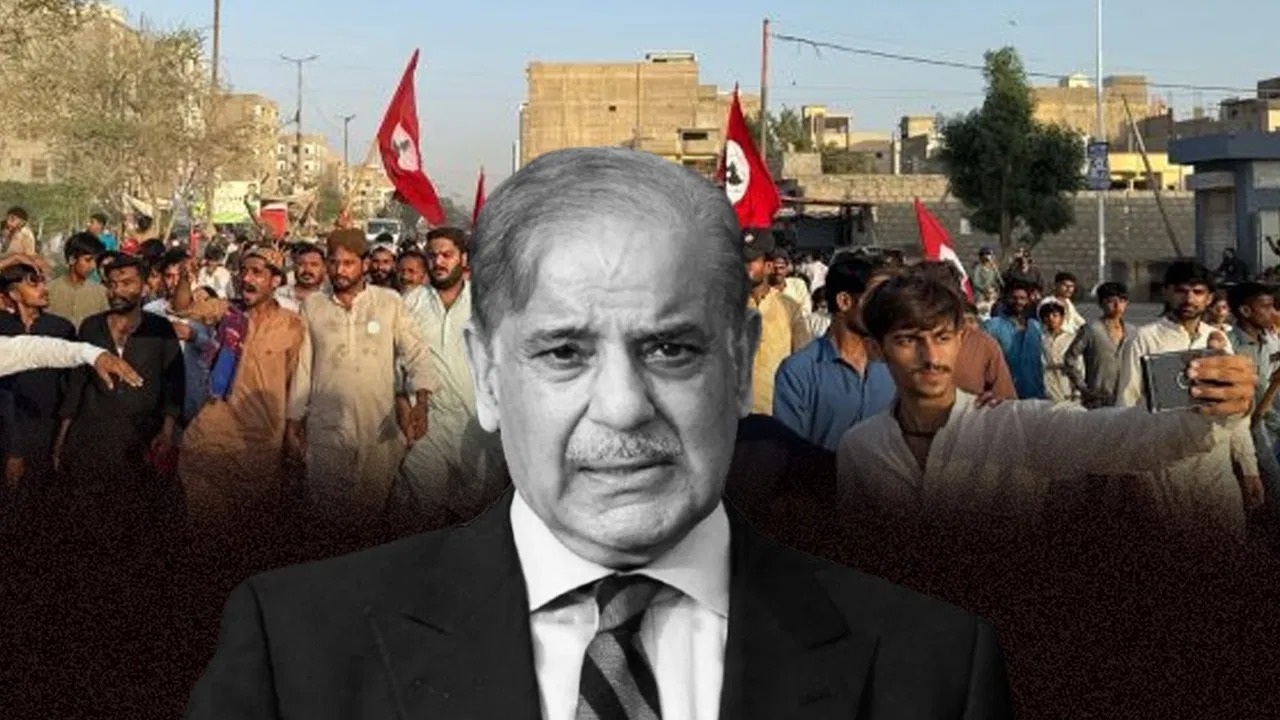
Despite Pakistan achieving a tenuous peace with India following military escalations along the border after the deadly Pahalgam massacre, the regime simultaneously faced multiple internal challenges. The escalation of activities by insurgent groups such as Tehreek-e-Taliban Pakistan (TTP) and Baloch Liberation Army (BLA) in the provinces of Khyber Pakhtunkhwa and Balochistan has already undermined the military establishment’s popularity, legitimacy, and morale. Meanwhile, popular protests in Sindh, ongoing for several months in opposition to the federal government’s proposed Indus canals project, have escalated into violence. Rather than addressing the grievances politically, the regime opted for a harsh crackdown, resulting in the deaths of two activists, which further incited protestors to set fire to the residence of Sindh’s Interior Minister, Ziaul Hassan Lanjar.
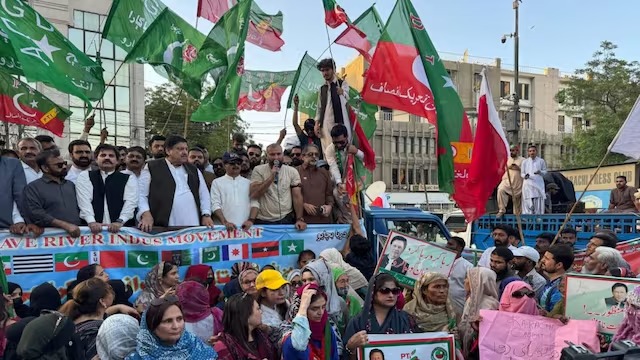
The province of Sindh has long been a simmering cauldron of discontent, spanning several decades. It has consistently voiced grievances over federal discrimination and political marginalisation, which have benefited the politically and economically dominant Punjab. Central to the inter-provincial conflict between Sindh and Punjab is the issue of water, particularly the Indus River. On this occasion, the province mobilised in protests against the federal government’s decree to construct “six strategic canals” intended to address agricultural underdevelopment and food insecurity nationwide. Although the regime agreed to suspend the project in April amid persistent protests until a consensus among provinces was achieved, the demonstrations persisted, accusing the government of secretly proceeding with canal construction and engaging in deception. Public frustration escalated, prompting the regime to launch a harsh crackdown that resulted in the shooting of Zahid Laghari, a prominent activist of the Sindhi nationalist group Jeay Sindh Muttahida Mahaz (JSMM). This triggered a volatile situation in which protestors blocked a vital national highway, set oil tankers on fire, and roamed the area armed with AK-47 rifles.
The canal project forms part of the broader Green Pakistan Initiative (GPI), launched in July 2023 with the aim of modernising the country’s agricultural sector. Agriculture is a vital component of Pakistan’s economy, contributing 25% to GDP and providing employment to 37% of the population.
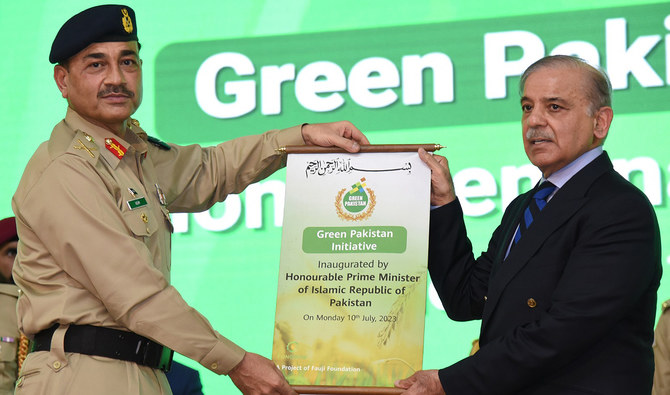
The initiative seeks to promote modern farming techniques, including the introduction of high-yield seeds and fertilisers, attract investment, and convert barren land into fertile, cultivable areas. In June 2024, President Asif Ali Zardari, as part of the GPI’s progression, approved the construction of six canals, with two planned for each of the provinces Punjab, Sindh, and Balochistan. Among these, the Cholistan canal has provoked significant opposition in Sindh, as residents believe it will substantially divert water from the Indus, reducing the province’s equitable share. Although the government assured that the canal would be constructed along the Sutlej River—governed by India under the 1960 Indus Water Treaty—and would utilise surplus monsoon flows along with river water from Punjab, Sindhi leaders disputed this claim, highlighting the critically low flow levels of the Sutlej.
Despite hosting the country’s financial centre, Karachi, and making a substantial contribution to the national economy, Sindh remains marginalised by federal policies that systematically neglect its interests, leading to its gradual decline. Agriculture accounts for 17% of Sindh’s provincial economy, with 77% of its agricultural land reliant on irrigation from the Indus River. The Indus is vital to the province, serving not only as a crucial water source for agriculture and daily consumption but also preventing the intrusion of Arabian Sea water inland, sustaining the mangrove forests in the Indus delta, and preserving these ancient ecosystems and cultural lifeways. Unsurprisingly, the Indus has been a continual source of dispute for lower riparian Sindh, which bears the impact of federal water management policies, such as dam and canal construction, that divert water to upper riparian Punjab. A notable example is the Kalabagh dam, proposed by General Zia ul-Haq in the 1980s, which was halted following strong opposition from Sindh and other stakeholders.
In this context, the Water Apportionment Accord of 1991 was established to resolve inter-provincial water disputes and ensure a fair distribution of water resources. However, the authority responsible for implementing the accord, the Indus River System Authority (IRSA), has faced widespread criticism for operating through a non-transparent and complex process, which has exacerbated disputes among provinces regarding the interpretation of its provisions. Additionally, the accord did not address the issue of sharing water shortages. Given the severe infrastructural deficiencies, frequent flooding, and impacts of climate change contributing to water scarcity, the lack of a mechanism for equitable sharing places the greatest burden on lower-riparian Sindh. IRSA is also known for disregarding concerns raised by provincial representatives while prioritising the establishment’s agenda. This was evident when IRSA issued the ‘Water Availability Certificate’ for the Cholistan canal in February 2025, asserting adequate water availability for the project despite objections from the Sindhi representative.
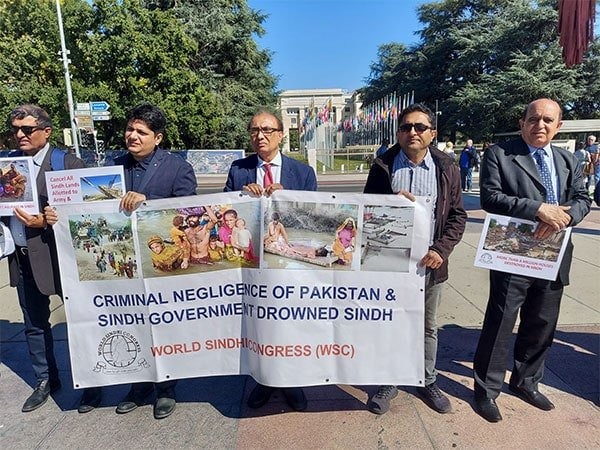
For decades, Sindh has persistently alleged that it receives significantly less water than allocated under the 1991 Accord. The diminishing flow of the Indus has had devastating effects on the province, including the encroachment of seawater inland, which has led to salinisation and erosion of extensive agricultural lands, reduction of mangrove forests, mass displacement of populations, destruction of livelihoods, and severe impoverishment. The frequent flooding experienced in the province is another outcome of these mismanaged water policies. Sindh is still struggling to recover from the catastrophic 2022 floods, which devastated approximately 4.4 million acres of agricultural land and resulted in nearly 800 fatalities. Consequently, it is understandable that the population has vehemently opposed efforts to further deprive them not only of their rightful share but also of their fundamental source of sustenance. Nabi Bux Sathio, Vice President of the Sindh Chamber of Agriculture, stated that the Cholistan canal would “ruin 12 million acres of agricultural land in Sindh to irrigate just 1.2 million acres of desert in Punjab.”
Therefore, the Pakistani government should address the grievances of the Sindhi population with sensitivity and accountability, rather than resorting to violent repression. Instead of treating the issue as merely a provincial concern, the regime must adopt a holistic perspective and recognise its reliance on its diverse constituents. With demands for provincial autonomy and government accountability intensifying across all provinces except Punjab, Pakistan must confront the profound seriousness of the situation and respond with rationality.
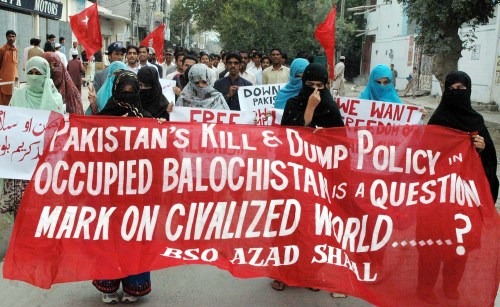
In today’s interconnected world, where the internet is vital for communication, commerce, and education, a government-imposed digital blackout represents more than a policy—it conveys a powerful message. This message continues to resonate in its third year within one of the central districts of Pakistan’s Balochistan province. Panjgur, renowned for its date palm cultivation and situated between Quetta, the provincial capital, and the strategic port city of Gwadar, has remained digitally incapacitated for several years. On 26 May, Pakistan’s Ministry of Interior prolonged the internet suspension in the area for a further six months, citing the “prevailing law and order situation” as justification.
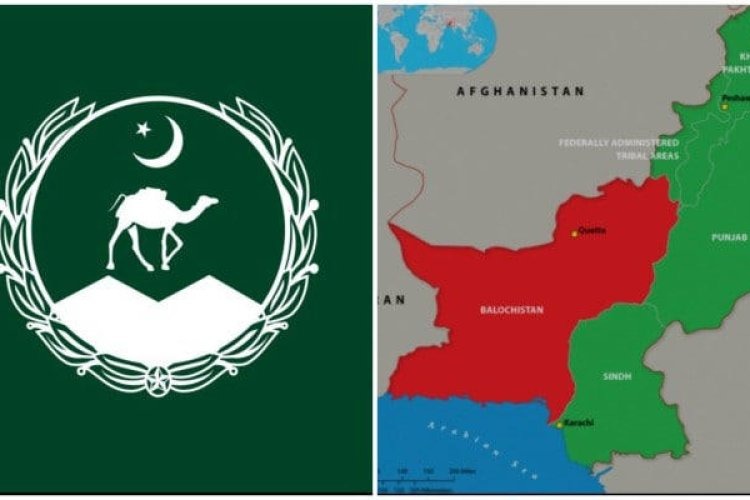
This decision might appear to be a localized matter of governance or security. However, it symbolises a far more profound dysfunction within the Pakistani state and is closely tied to the government’s militarised policy towards Balochistan. More significantly, this neo-imperialist and securitised strategy, which has kept Balochistan in turmoil and unresolved for decades, carries serious consequences not only for Pakistan’s internal cohesion but also for its foreign policy and its persistently strained relations within the region, particularly with India.
The Baloch insurgency is not a recent phenomenon. Since Pakistan’s formation in 1947, the Baloch have launched multiple uprisings in response to what they perceive as systemic political marginalisation, economic deprivation, and cultural suppression by the Pakistani state. The fifth and ongoing phase of this armed resistance, which commenced in the early 2000s, has demonstrated notable resilience, with groups such as the Balochistan Liberation Army (BLA) posing an escalating challenge to the state. As The Economist notes, the distinct feature of this current insurgency lies in its broader support base, extending beyond a few feudal elites to include an increasingly mobilised Baloch middle class. What started as a regional demand for autonomy has, under the weight of state repression, evolved into increasingly vocal calls for full independence from Pakistan.
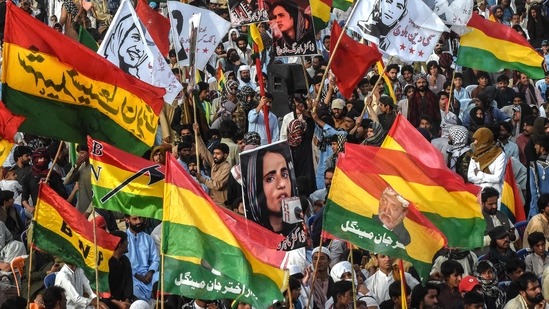
Rather than pursuing genuine dialogue or instituting reforms, the Pakistani state has consistently resorted to militarised governance in the region, characterised by grave human rights violations, including thousands of enforced disappearances, extrajudicial executions, sexual violence against Baloch women, and widespread information blackouts. The internet suspension in Panjgur—along with similar disruptions in districts such as Kech and Gwadar, notably during the Baloch Yakjehti Committee-led protests of February–March 2025—is not merely a case of administrative excess. It forms part of a broader strategic approach that views Balochistan not as an equal federating unit, but as a rebellious frontier to be subdued for its resources. This perception is further entrenched by the military’s manipulation of local politics, whereby it installs loyalists into provincial governance structures, sidelining indigenous political actors deemed unreliable.
But what does this mean for Pakistan’s foreign policy?
At its foundation, foreign policy represents an extension of a state’s internal stability and should ideally embody political maturity. In Pakistan’s case, the persistent Baloch insurgency acts as both a distraction and a strategic liability. It consumes financial and military resources that might otherwise be allocated to constructive diplomatic engagement or economic development. More pointedly, the situation in Balochistan significantly affects Pakistan’s regional dynamics. For example, having consistently failed to address the underlying Baloch grievances, the Pakistani establishment frequently resorts to deflecting criticism of its shortcomings by accusing India of covertly supporting Baloch insurgent groups.
Although there is little publicly available evidence to substantiate Pakistan’s claims of Indian involvement in Balochistan, the reality is that the protracted conflict has become not only a critical weakness and challenge within its domestic security architecture but also a growing diplomatic liability. As human rights discourse increasingly influences multilateral institutions and resonates among Western allies, the Pakistani Army’s ongoing military repression is likely to attract heightened international condemnation.
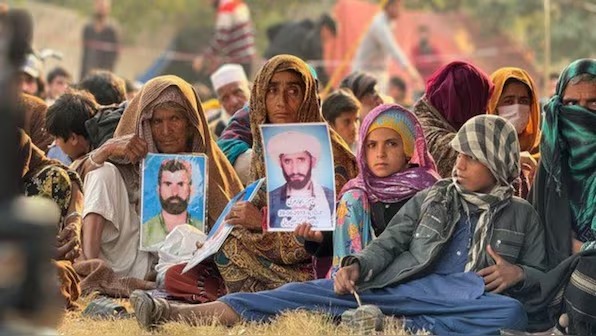
Furthermore, ongoing state repression and the resulting militancy hinder prospects for regional cooperation. The China-Pakistan Economic Corridor (CPEC), heralded as the flagship project of China’s Belt and Road Initiative (BRI) and a cornerstone of Pakistan’s economic diplomacy, has its most extensive infrastructural presence in Balochistan. Although Islamabad promotes CPEC as transformative—promising advancements in roads, energy, and infrastructure—these promises have yet to materialise meaningfully on the ground, even after a decade. Many Baloch nationalists view the project as a neo-colonial venture that marginalises local communities while enriching external stakeholders. Measures such as internet shutdowns, arbitrary arrests, and militarised checkpoints in Gwadar and surrounding areas have only deepened these concerns. Despite China’s growing alarm over Balochistan’s deteriorating security—underscored by multiple attacks on Chinese personnel and assets last year—Pakistan’s response remains firmly rooted in a security-focused paradigm.
This brings the focus back to Panjgur. In a region where students, the business community, and other segments of society are deprived of access to the digital realm, the state is effectively severing the area from the modern world. This digital disconnection does not restore stability; rather, it is intended to conceal the abuses committed by the Pakistan Army and to silence the grievances of the Baloch people. The Pakistani establishment fails to recognise that, over time, such measures generate greater alienation, radicalisation, and instability.
Accordingly, Islamabad must recognise that Balochistan represents not merely a security challenge but a failure of governance. While internet restrictions may temporarily quell dissent, they will not resolve the insurgency and instead deepen feelings of alienation among the Baloch population. As long as Panjgur and vast areas of Balochistan remain isolated—both literally and metaphorically—Pakistan’s pursuit of internal stability and regional peace, particularly with India, will remain unattainable. A state that cannot deliver justice and connectivity to its own citizens lacks the credibility to demand justice or trust from its neighbours or the wider international community.
The route to peace in Pakistan does not lie solely through Islamabad and Rawalpindi; instead, it winds through Panjgur and traverses Balochistan.
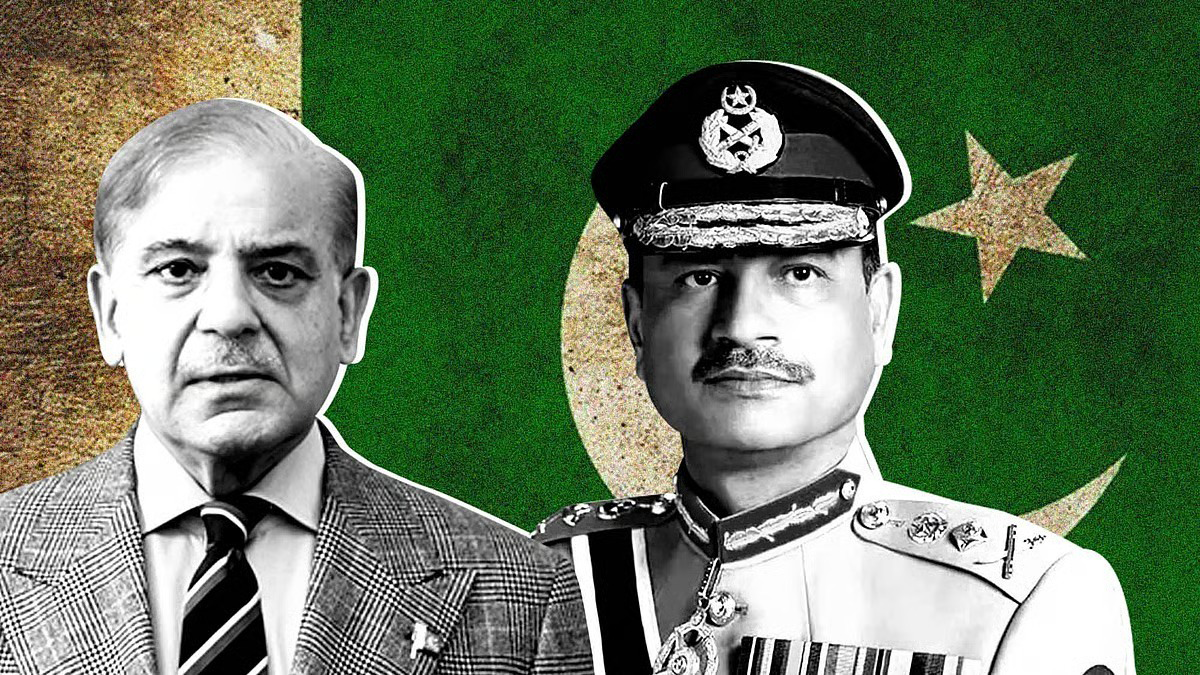
In a development that has sparked concern across Pakistan’s social landscape, the federal government under Shahbaz Sharif has recently bestowed the rank of Field Marshal—the nation’s highest military title—upon General Asim Munir, the Chief of Army Staff. Officially justified on the grounds of his “exemplary leadership” during the latest military confrontation with India, the move has prompted significant debate regarding the future direction of civil-military relations in Pakistan, as well as the military’s increasingly entrenched influence over democratic institutions, which have historically operated under the shadow of the armed forces.
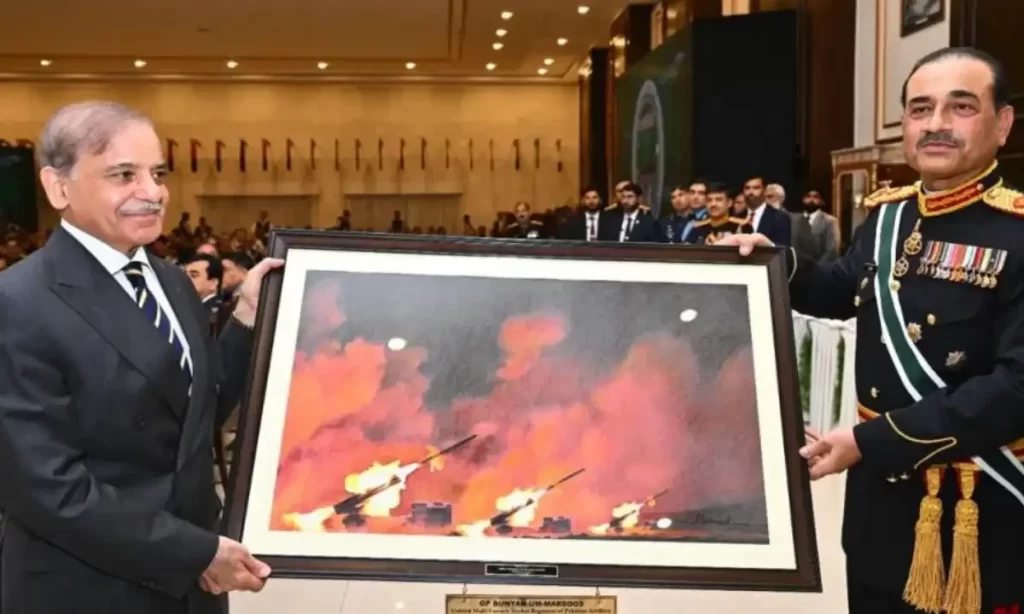
This marks only the second occasion in Pakistan’s nearly eight-decade history that such a distinction has been granted to a military general. The first instance was in 1959, when General Ayub Khan received the title and subsequently governed Pakistan as a military autocrat for more than ten years. Though the comparison remains unspoken, it is both striking and revealing.
General Munir’s promotion to Field Marshal follows a recent military escalation between India and Pakistan, triggered by Operation Sindoor (6–7 May) launched by the Indian Armed Forces in retaliation for the killing of 26 tourists in Pahalgam, Jammu and Kashmir, on 22 April by Pakistan-based Lashkar-e-Toiba-affiliated terrorists. While official statements from Islamabad praised the operation as a strategic triumph that repelled Indian “aggression,” emerging reports suggest a far more nuanced reality. This is despite Indian forces not only striking terrorist infrastructure in initial precision attacks between 7–9 May, but also widening the operation’s scope to target at least nine Pakistan Air Force (PAF) bases, in addition to other military assets including air defence systems in urban centres such as Lahore. No fewer than three airbases, including Rafiqui, sustained substantial damage and were rendered non-operational.
The official account presented by the Pakistan military underscores themes of restraint, readiness, and strategic deterrence. In doing so, the narrative seeks to transform a moment of vulnerability into one of fortitude. The conferment of the Field Marshal rank on General Munir is being promoted as a key element of this narrative reconstruction by the military leadership. This symbolic gesture aims to unify Pakistan behind its armed forces and convey an image of institutional robustness at a time when internal dissent was mounting, and the legitimacy of both the military and civilian governments has been increasingly questioned in recent years, particularly following electoral manipulation.

The significance of General Munir’s elevation extends well beyond ceremonial recognition. In Pakistan, where the military has historically served as the primary arbiter of political authority, such appointments are seldom purely symbolic. They frequently carry prescriptive implications. This promotion should be understood as a formal acknowledgement of the ongoing consolidation of military supremacy over key state institutions. For example, the military establishment has appointed numerous retired and active officers to head various civilian agencies such as NADRA (National Database and Registration Authority), WAPDA (Water and Power Development Authority), and organisations like SUPARCO (Pakistan Space & Upper Atmosphere Research Commission), among others. The increasingly indistinct boundary between civilian and military spheres has become a defining feature of Pakistan’s governance framework. Consequently, General Munir’s advancement is not merely a commendation of his “wartime” leadership but a clear indication that the military intends to maintain, if not extend, its control over the country’s political arena in the foreseeable future.
The Army’s impetus for this symbolic consolidation of authority arises in part from its declining public reputation in recent years. Previously regarded as the exclusive guardian of order and stability within a volatile political environment, the Army’s overt involvement in political manoeuvring has faced growing criticism.
The pivotal moment occurred with the removal—and eventual incarceration—of former Pakistani Prime Minister Imran Khan. Initially perceived as the military’s preferred candidate, Khan’s time in office deteriorated relations with the generals, culminating in his ousting via a no-confidence motion in 2022, widely considered to have been orchestrated by the military leadership. His subsequent arrest and the suppression of his supporters attracted widespread condemnation both within Pakistan and internationally, undermining the Army’s carefully maintained reputation as an impartial protector of the national interest.
Within this context, the conferment of the Field Marshal rank serves as an effort to regain diminished legitimacy. General Munir is portrayed not merely as a military tactician but as a unifying national leader who re-established Pakistan’s strategic equilibrium amid Indian hostility and maintained national cohesion during periods of internal turmoil.
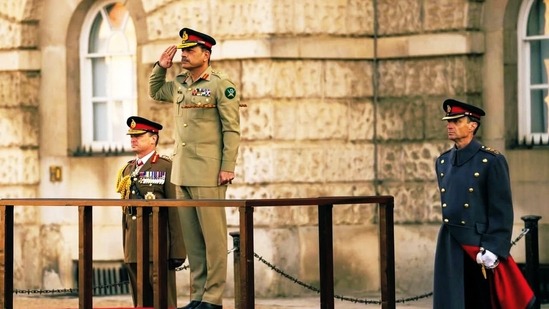
However, such symbolism carries significant consequences. The present civilian government, largely perceived as a product of the military-backed elections of 2024, has exhibited minimal opposition to this concentration of power. Consequently, Pakistan is edging alarmingly close to overt authoritarianism. What sets this period apart from previous episodes of military rule is the façade of civilian governance that confers democratic legitimacy on what is fundamentally a military-controlled state apparatus. Within this context, the Field Marshal designation is not merely a ceremonial embellishment but rather a symbol crowning an increasingly centralised power structure, which allows scant space for institutional independence or democratic accountability in Pakistan.
Furthermore, this display of confidence should also be interpreted as concealing underlying vulnerabilities amid the ongoing and severe economic crisis and security challenges confronting Pakistan. For example, the rupee continues to depreciate, inflation remains elevated, and the country remains heavily dependent on IMF bailouts alongside financial assistance from allied nations such as China and Saudi Arabia.
In Pakistan, the legacy of Field Marshal Ayub Khan continues to exert a significant influence. His period in power was characterised by centralisation, suppression of dissent, and a disastrous conflict with India in 1965. The Pakistani establishment may be invoking the memory of strong leadership once more, even if it comes at the expense of institutional stagnation. More importantly, this development diverts attention from a crucial question: Who holds the military accountable in Pakistan? In democratic systems, even generals during wartime are subject to scrutiny by elected officials. However, in Pakistan, where the Army has long functioned as a state within a state, such oversight remains largely unattainable.
Pakistan is at a pivotal crossroads, and the promotion of General Asim Munir to Field Marshal epitomises the broader political shift in which civilian institutions are progressively subordinated to military control, with democratic aspirations being compromised in favour of purported security priorities.
In the short term, this action may effectively convey a sense of unity and strength. However, over the longer term, the concentration of authority in unelected hands seldom augurs well for institutional progress or political stability. As Pakistan addresses its economic difficulties, faces insurgency threats, and contends with the complexities of a multipolar global order, its most significant challenge may arise not from external adversaries but internally: the erosion of democratic principles and the deepening entrenchment of military dominance.

Pakistan’s enduring economic difficulties are well recognised globally. In recent years, the nation has experienced alarming inflation, an ongoing crisis in foreign exchange reserves, and an overwhelming debt burden. These issues have led to widespread unemployment, increased poverty, and daily hardships for a population already caught in the crossfire of recurring terrorist violence and military operations ostensibly aimed at countering it. Nevertheless, despite this worsening scenario and the harsh effects of austerity measures imposed by the IMF on the populace, Pakistan’s disproportionately large military appears unaffected and is, in fact, gradually expanding its share of the national economy.
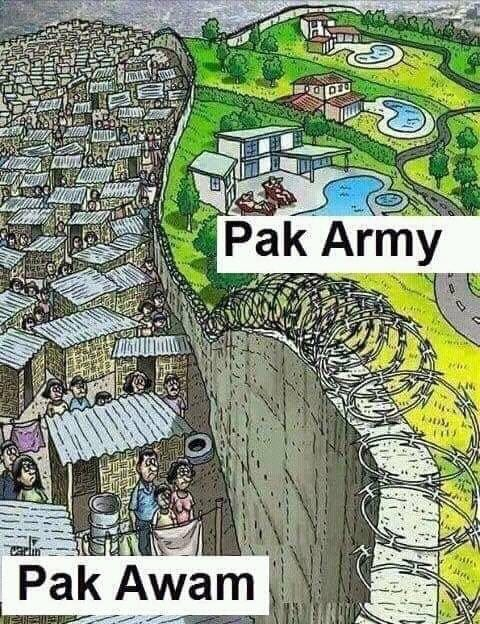
The expansive role of the military in Pakistan’s domestic affairs extends beyond politics and foreign policy, significantly permeating the economic sphere. To begin with, the military absorbs a substantial portion of the GDP—Pakistan’s defence expenditure for FY2025 stood at 2.3% of GDP, exceeding equivalent figures for India, China, and the European Union. According to a study by Moneycontrol, Pakistan’s defence budget experienced an annual growth rate of 12.6% between FY17 and FY25, compared to India’s 8%. In contrast, education and healthcare were allocated merely 2% and 1.3% of the GDP, respectively.
In addition, the military has developed an extensive private conglomerate, commonly referred to as the ‘milbus’ (military business)—a term introduced by prominent scholar Ayesha Siddiqa in her seminal work Military Inc.: Inside Pakistan’s Military Economy. Through a network of commercial enterprises, including the Fauji Foundation, Army Welfare Trust, Shaheen Foundation, Bahria Foundation, and the highly contentious Defence Housing Authority (DHA), the military has embedded itself across numerous sectors such as real estate, banking, manufacturing, agriculture, shipping, education, and media. Some estimates suggest that the military controls approximately 12% of the nation’s land.
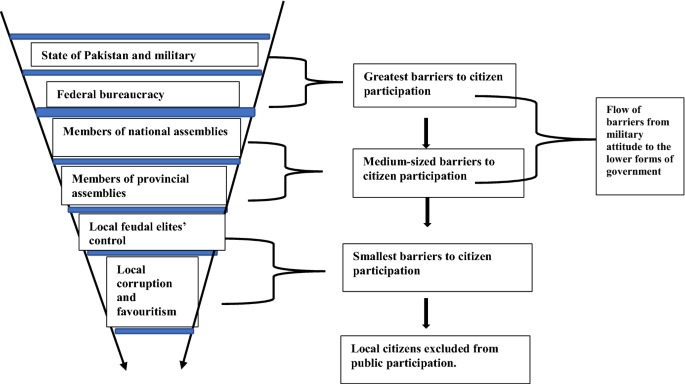
Although the military and its proponents contend that the professionalism, stability, and efficiency it represents are reflected in its economic endeavours, many critics challenge the monopolistic, expansive, and opaque nature of this military dominance. Defence-operated industries suppress local competition and private enterprise, while benefiting from tax concessions and minimal regulatory oversight. By blurring the boundary between protector and profiteer, the military prioritises strategic positioning and its own commercial gain over public welfare and principles of market equity. These concerns are amplified when certain ventures become entangled in corruption scandals, such as the DHA Valley Islamabad fraud, or disregard public interests, as seen in the Indus canals initiative. The DHA—initially established to offer affordable housing for retired military personnel but now catering to elite residential projects—has faced widespread criticism over questionable land acquisitions and community displacements to benefit the privileged. Moreover, the inclusion of senior military officials in the 2021 Pandora Papers exposed the extent to which they funnel vital national assets through offshore financial channels.
The ‘milbus’ in Pakistan has not only exacerbated the persistent and severe underinvestment in human development, but the military’s substantial economic influence also reinforces its political dominance within the country. It is well established that the military remains the most powerful institution in Pakistan, having governed directly for nearly three decades and exerting significant influence behind the scenes during periods of civilian administration. Given the military’s pervasive control over the economy, civilian governments are largely stripped of the ability to make independent decisions based on the needs and interests of the populace.
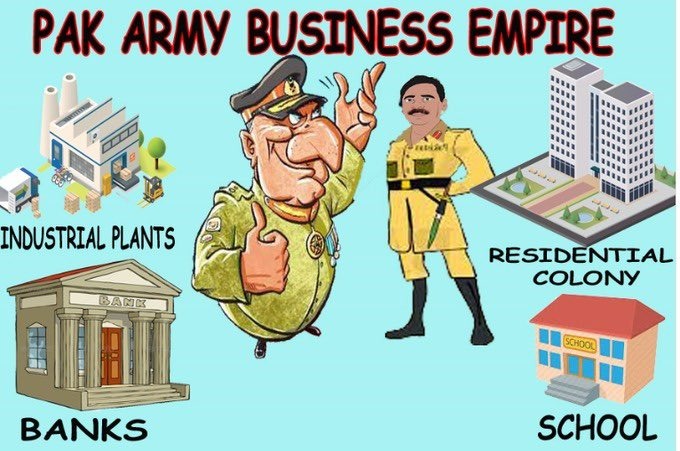
Thus, the expansive economic domain of the military in Pakistan has a direct impact on the nation’s socio-economic stability. On one hand, defence-operated enterprises—shielded from public audits and regulatory scrutiny—create monopolies that undermine local businesses, deplete public resources, and significantly intensify inequality. On the other hand, the ‘milbus’ entrenches authoritarianism, rendering civilian governments largely symbolic. At a time when the country’s economic crisis continues to spiral, inflicting severe hardship on ordinary citizens, it is essential to critically reassess the allocation of national resources, particularly those directed towards the military. The military’s vast commercial ventures must be brought under the same regulatory framework as civilian enterprises, and its market dominance restricted. Achieving this requires a fundamental recalibration of civil-military relations, along with a reflective discourse on the appropriate role of the military within a democratic framework.
Pakistan’s National Security Strategy Is Broken. Reform Must Begin at Home
In 2021, the Pakistani government introduced its inaugural National Security Policy, asserting that “the safety, security, dignity, and prosperity of citizens in all their manifestations will remain the ultimate purpose of Pakistan’s national security (p. 6).” To many, this appeared to mark a shift—at least rhetorically—towards a more citizen-focused and comprehensive understanding of security, moving away from the historically military-centric framework. Yet, four years on, such declarations appear increasingly unfulfilled.
From Balochistan to Khyber Pakhtunkhwa, Pakistan remains challenged by escalating internal insurgencies. The Baloch nationalist movement, in particular, has withstood decades of state repression and, in recent years, has expanded both in territorial scope and tactical capability. Concurrently, Pakistan’s regional stance—especially its policy alignment with the Afghan Taliban and its enduring engagement with extremist proxies—has resulted in diplomatic isolation and increased domestic exposure to militant reprisals.
If Pakistan aspires to become a secure state, it must first confront a difficult truth: national security cannot be sustained on the basis of repression, strategic ambiguity, and denial. Instead, it must be re-envisioned to include justice, political reconciliation, and an honest reckoning with historical missteps. This transformation must commence with Balochistan.
For decades, the Pakistani state has approached Baloch nationalism not as a legitimate political grievance requiring resolution, but as a security challenge to be forcefully suppressed. This approach has involved enforced disappearances, extrajudicial killings, and aggressive military interventions. Consequently, a profound sense of alienation has taken root among Baloch communities, many of whom, having suffered state violence, now view the state more as a colonising force than a protective authority. It is therefore unsurprising that leading non-violent advocates for justice in the province, such as Mahrang Baloch, have personally experienced repression, with numerous family members subjected to enforced disappearances or extrajudicial killings.
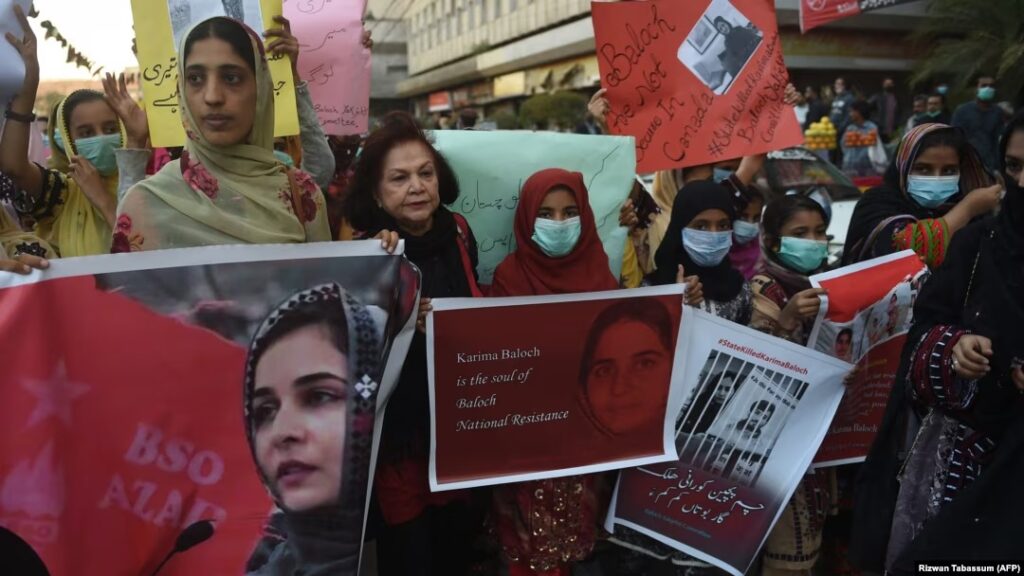
Despite ongoing state abuses, the insurgency has persisted—and indeed, it has adapted. Organisations such as the Baloch Liberation Army (BLA) have extended their activities beyond traditional rural strongholds, increasingly targeting economic infrastructure and security personnel across the province, and occasionally in major urban centres such as Karachi. In recent years, Baloch insurgents have repeatedly attacked Pakistani military facilities and China-backed development projects, resulting in the deaths of several Chinese nationals. This trajectory does not reflect a weakening movement; rather, it underscores the failure of the Pakistani state’s militarised strategy.
The government continues to portray the insurgency as externally orchestrated, particularly by India. This narrative serves to conveniently sidestep the deeper, legitimate grievances of Baloch citizens, including political exclusion, resource extraction without local benefit, and a lack of essential public services. Notably, Balochistan—despite its substantial mineral wealth—remains among the most impoverished and underdeveloped regions in the country. It is this stark disjunction between the state’s strategic priorities and the lived experiences of its people that lies at the core of Pakistan’s faltering national security framework.
Pakistan’s prevailing security architecture has been predominantly shaped and directed by the military establishment. Its conventional orientation has remained India-centric, interpreting national security primarily through the limited perspective of perceived external threats. This strategic outlook has fostered three deeply detrimental tendencies within the country’s policymaking.
Firstly, it has resulted in the systematic securitisation of internal dissent. Movements advocating for ethnic rights, such as the Pashtun Tahafuz Movement, calls for democratic reform, and even critical journalism are frequently perceived as threats to “national unity.” The state’s response has often been coercive, ranging from censorship to outright violence—as recently witnessed during the Baloch Yakjehti Committee’s protest march against extrajudicial killings and ongoing state-enforced disappearances in Balochistan. This approach has only exacerbated public distrust and further eroded the cohesion of the social fabric.
Secondly, it has normalised the deployment of non-state actors as tools of regional influence. From Kashmir to Afghanistan, Pakistan has supported extremist groups that serve its strategic objectives. While this proxy strategy may have yielded short-term gains, it has come at a significant cost, as several of these groups have turned against the state itself—most notably the Tehrik-i-Taliban Pakistan (TTP), which has resurged in strength in recent years.
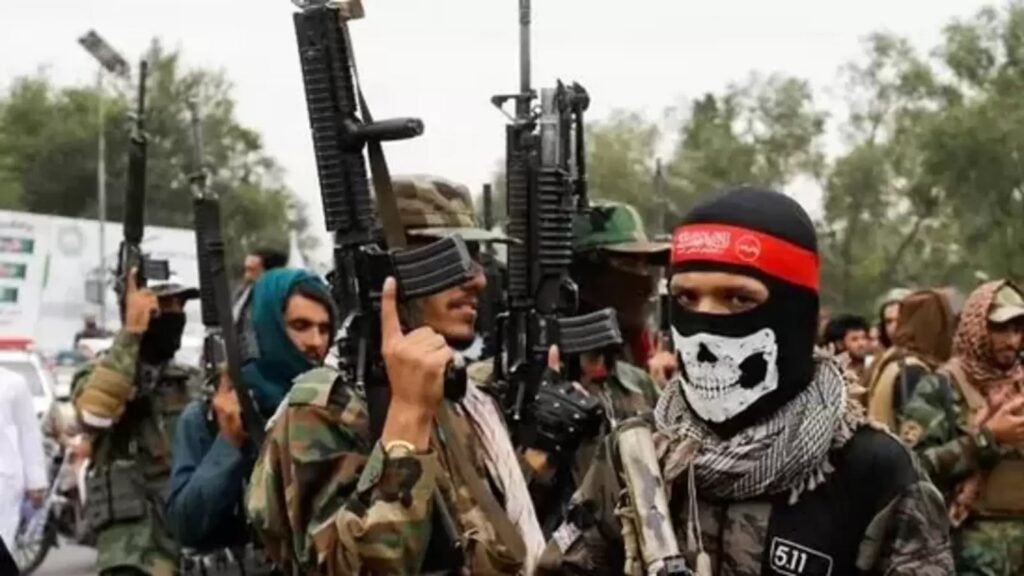
Thirdly, this strategy has contributed to Pakistan’s diplomatic isolation. Its ongoing support for, or at least tolerance of, the Afghan Taliban has estranged key allies, including the United States and the wider international community. Repeated statements by US officials accusing Pakistan of exploiting its partnership with Washington for counterterrorism purposes while simultaneously shielding such groups underscore this duplicity. Moreover, Pakistan’s failure to present a coherent counter-extremism policy has rendered it an unreliable actor in global counterterrorism initiatives. Arguably, Pakistan’s national security doctrine has, paradoxically, undermined its own security.
For Pakistan to break free from this cyclical pattern, it requires more than a mere superficial adjustment to its national security policy. A profound transformation is necessary, starting with a shift in focus from safeguarding the interests of the military establishment to prioritising the welfare of its citizens.
This entails prioritising political dialogue over military repression in Balochistan and other turbulent regions. Additionally, it must recognise that dissent is not an act of treason, that ethnic grievances do not constitute national threats, and that lasting peace is achieved through negotiation, not eradication.
This also requires rejecting the militarised approach in favour of empowering civilian institutions to lead on internal security. The intelligence and military apparatus must not serve as both judge and executioner in matters of internal dissent. Pakistan’s democracy, despite its fragility, cannot thrive under the strain of a constant state of emergency and dominant military control.
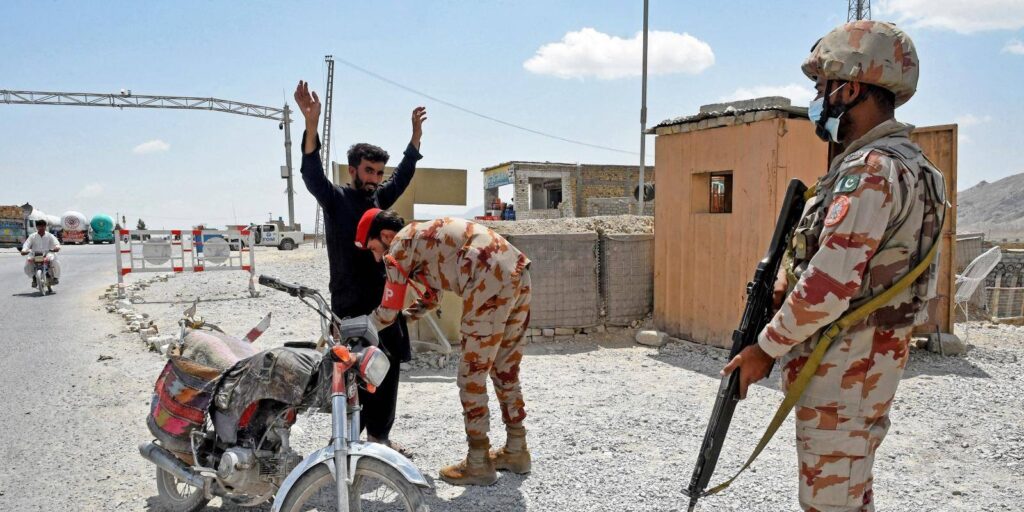
Moreover, it is crucial to abandon the “good Taliban, bad Taliban” policy, which has always been driven more by strategic considerations than by moral principles. The Taliban’s resurgence in Afghanistan represents a model that Pakistan should avoid, as it has strengthened jihadist networks across the region. Pakistan must end its strategic ambivalence and decisively distance itself from all extremist groups. No state can achieve stability while harbouring forces fundamentally opposed to the very concept of the modern nation-state. Pakistan has options, but lacks the political will.
The path to reform will be challenging. It will necessitate the military’s relinquishment of some control over internal policy decisions, as well as political leaders demonstrating the courage to confront uncomfortable truths. Additionally, it will require society as a whole to call for a new definition of security—one that is not merely the absence of conflict, but the presence of justice, opportunity, and dignity. For Pakistan, the stakes are immense. The choice is no longer between change and continuity, but between transformation and ongoing disintegration.
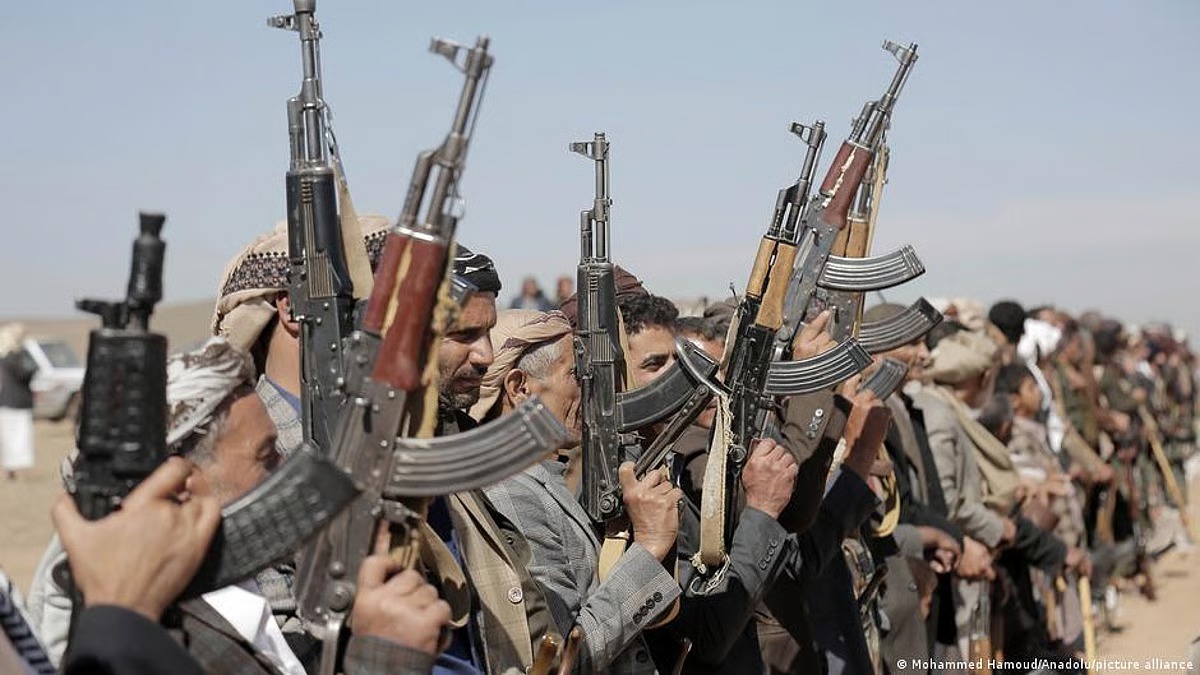
In the aftermath of India’s Operation Sindoor on May 7, which targeted militant infrastructure in Pakistan and Pakistan-occupied Kashmir, a familiar cycle of accusations and denials has resumed. Pakistani officials immediately labelled the operation a strike on civilians insisting that places of worship, and religious schools, were among the many targets.
Particular attention has been drawn to Markaz Subhan Allah in Bahawalpur, a facility long known as the headquarters of the Deobandi militant group Jaish-e-Mohammed (JeM).
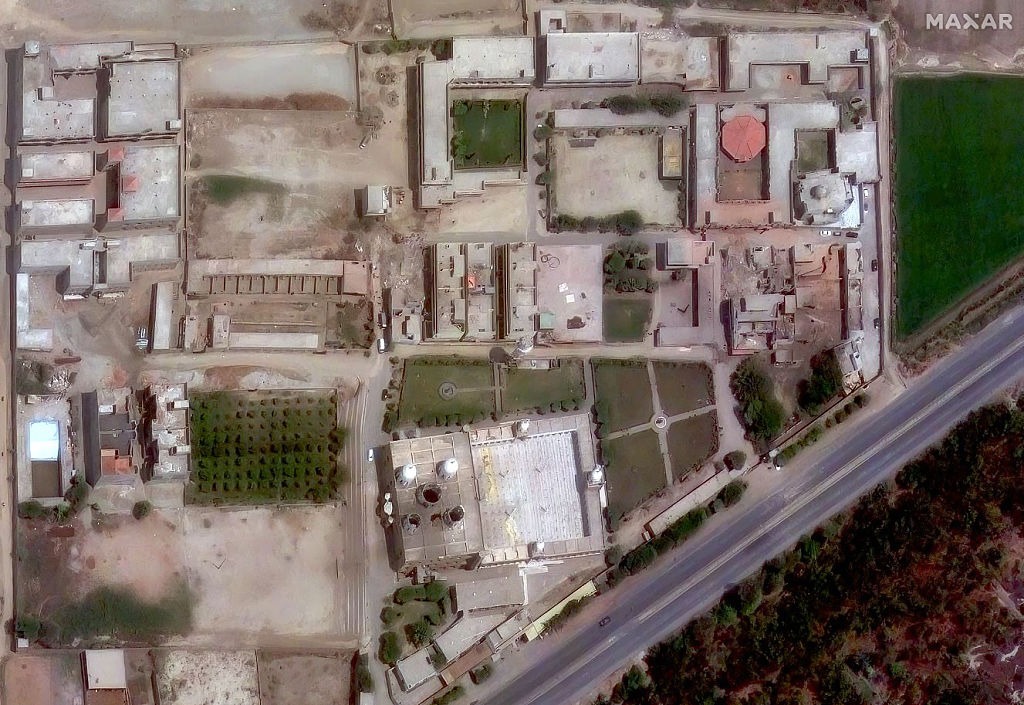
It was here, notably, that Masood Azhar, the proscribed group’s founder, reappeared in December 2024 after years of purported house arrest, a stark reminder of how Pakistan’s most dangerous extremists often operate with impunity, even when officially designated as threats by the international community.
This narrative may resonate in some quarters of the international community, but it masks a deeper, long-running reality which is that many of Pakistan’s religious seminaries, or madrassas, have long played a central role in incubating violent extremism. While not all madrasas are complicit, thousands have served as ideological and operational feeders for some of the region’s most dangerous militant groups.
The connection between Pakistan’s madrassa network and its decades-old strategy of cultivating proxy groups is well documented. And yet, it remains largely absent from current discourses on terrorism globally. To understand the roots of regional instability and why efforts to counter terrorism often flounder, the international community needs come to terms with this institutional reality.
An Infrastructure of Indoctrination
Since the 1980s, after President General Ziaul Haq thrust Pakistan into the frontline of global jihad against Soviet Communists in Afghanistan with the support of United States and Saudi Arabia, the country’s intelligence services, particularly the Inter-Services Intelligence (ISI), have cultivated relationships with a range of militant groups. As the anti-Soviet jihad in Afghanistan folded in the late 1980s, Pakistani Army, having adopted the doctrine of “strategic depth,” the notion that non-state actors could serve as force multipliers in conflicts with neighboring states, redirected these Afghan Jihad returnees to Kashmir. Moreover, an umbrella of Kashmir-centric anti-India groups, such as Hizbul Mujahideen (HM), Lashkar-e-Toiba (LeT), and Jaish-e-Muhammad (JeM), were created to sustain the insurgency in Kashmir. It is instructive when Former President General Pervez Musharraf acknowledged as much in 2010 admitting how Pakistan had supported militant groups to “pressure India.”
But the more pressing question is how Pakistan’s military and its Inter-Services Intelligence (ISI) continue to sustain such a vast militant ecosystem. The answer lies in the decades-old nexus between militant outfits like Lashkar-e-Taiba and Jaish-e-Mohammed, and a wide network of religious seminaries (madrassas) that serve as sources of both ideological indoctrination and recruitment.
While madrassa system of education is not new to Pakistan, but their explosive growth over the last few decades has altered the country’s educational and religious landscape. From just a few hundred at independence in 1947, their numbers have ballooned to more than 30,000 today, a conservative estimate, with nearly half of these operating without state oversight.
While some offer basic religious instruction, many propagate an austere, puritanical version of Islam, often influenced by Saudi Wahhabism and Deobandi orthodoxy — that fosters sectarian intolerance and glorifies armed struggle. For instance, many of these madrassas, as highlighted by M. W. Malla (2020), have relied on curriculum which emotively glorifies “jihad – Islamic holy war – through vivid imagery for whom alif (A) was meant Allah, be (B) meant Bundook (Gun), jim (J) meant jihad, and ha (Ha) meant hathiyar (arms) and likewise.”
A Pipeline to Militancy
In theory, madrassas are meant to provide education and social support to the underprivileged. However, in case of Pakistan, a significant proportion of these Islamic schools serve as gateways to radicalization. The situation is compounded by lack of governmental oversight. For instance, while the officially registered madrasas, numbering nearly 17500 as per governmental statistics, cater over 2.2 million students, millions more are enrolled in the unregistered ones. Consequently, orphaned and impoverished children, often with no other schooling options, are drawn into a closed system where anti-Western and anti-Hindu narratives are presented as divine truth. Recruitment for jihadist groups often begins in these classrooms.
Incidentally, some of the most prominent Islamic religious seminaries of Pakistan such as Jamia Ashrafia in Lahore, Dar-ul-Uloom Banori Town in Karachi, and Jamia Haqqania Akora Khattak have been repeatedly linked to known extremist organizations. Take the case of Jamia Haqqania, which has been referred to as the “University of Jihad” and its former Vice Chancellor Maulana Samiul Haq as the “Father of Taliban.” Much of the Haqqania network leadership and cadre, which is part of Afghan Taliban, has received their religious training from these institutions with a number of them currently surving in the transitional government of Taliban in Afghanistan.
Even as international pressure has mounted, reform efforts have faltered. It is instructive how Pakistan’s current government quietly abandoned the 2019 requirement for madrassas to register with the Ministry of Education, a modest reform that aimed at bringing religious seminaries under state oversight. The reversal came in December 2024, as part of a political bargain with Jamiat-e-Ulema-e-Islam (Fazl), Deobandi religious party led by Maulana Fazlur Rehman, to secure the party’s support for a constitutional amendment that expanded the powers of the military establishment while curbing the judiciary’s independence. Pakistan’s leaders have often found it easier to co-opt these groups than to challenge them — a compromise that comes at significant cost.
Beyond the Madrassa
The culture of radicalization in Pakistan does not stop at religious schools. State-run public schools often include textbooks that promote intolerance, framing India and the West as existential threats. Clerics like Maulana Abdul Aziz, once the head of Islamabad’s infamous Lal Masjid, openly issue calls to violence. He has faced little accountability despite repeated clashes with the state.
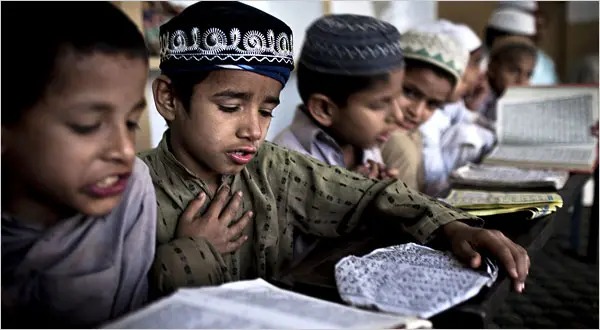
This radical ecosystem is self-reinforcing. With 39 percent of Pakistan’s population living below the poverty line, many families have little choice but to send their children to madrassas that offer free food and shelter. But the pattern is not limited to the poor. In recent years, Pakistan has witnessed recruitment by extremist groups among the educated elite, including medical students and professionals drawn to the ideology of ISIS and its affiliates.
This widening appeal underscores that extremism in Pakistan is not simply a problem of poverty or illiteracy — it is one of systemic indoctrination and strategic tolerance. The madrassas are just the most visible node in a much broader network of radicalization.
The Global Dimension
That Pakistan has managed to sustain this infrastructure with relatively few consequences is, in part, a reflection of international inconsistency. During the U.S.-led war in Afghanistan, Islamabad was seen as a necessary, if difficult, partner. More than $33 billion in U.S. aid flowed into Pakistan post-9/11, even as evidence mounted that its military continued to support insurgent groups like Afghan Taliban, LeT, HM and JeM.
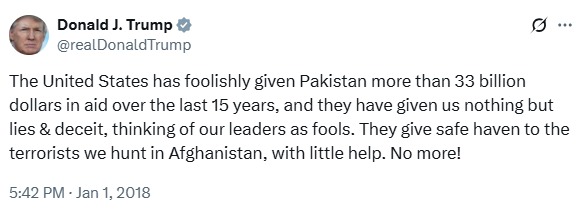
What is more problematic is how China, too, despite vying for the global leadership and having endured terrorism in its Xinjiang province, has largely refrained from pressuring Pakistan. This is being justified by its investment in the China-Pakistan Economic Corridor (CPEC) and its geopolitical competition with India. Moreover, while the state patronage of funding conservative religious education from Gulf countries has gone down, the role of religious groups has continued to foster this ecosystem.
In addition, in terms of global oversight, even the Financial Action Task Force (FATF), the global watchdog on terror financing, has struggled to enforce long-term compliance. Though Pakistan was removed from the FATF’s “grey list” in 2022, much of the underlying infrastructure remains intact.
A Familiar Playbook
The claims that India’s recent strikes targeted civilian infrastructure follow a well-established script. In 2019, following the Balakot airstrikes, it denied that any militant camp had been hit, despite independent verification of the target’s history as a JeM facility.
What makes Operation Sindoor different is not the nature of Pakistan’s response, but the context in which it occurs. Militant violence inside Pakistan has surged, with a 79 percent increase in attacks in 2023 alone. Many of these attacks have been carried out by groups the state once sheltered. The Tehrik-i-Taliban Pakistan (TTP), now re-empowered by the Taliban’s return in Afghanistan, has turned its guns inward.
In effect, Pakistan is now haunted by its own proxies, groups once deployed as strategic assets have grown autonomous and hostile. The madrassas that fed them remain largely untouched, a sign of the state’s reluctance, or inability, to dismantle the very apparatus it helped create.
The Consequences of Denial
The madrassa-militancy nexus is not the only reason for instability in South Asia, but it is a critical one.
As long as Pakistan continues to shield this infrastructure behind religious rhetoric and claims of victimhood, genuine counterterrorism cooperation will remain elusive.
For the international community, the lesson is clear: treating Pakistan as a willing partner while ignoring its internal contradictions only delays the reckoning. Madrassa reform, state accountability, and a broader ideological shift are not just domestic imperatives for Pakistan, but they are regional and global necessities.
Until then, any claims of targeting civilians in strikes like Operation Sindoor must be weighed against a broader, uncomfortable truth: some of the very institutions Pakistan defends as sacred have long functioned as sanctuaries for those who preach and practice violence.

Over the past couple of decades, Pakistan has steadily lost favours it once enjoyed with key allies, including the US, for its incessant instrumentalization of terrorism as state policy. As the post 9/11 world increasingly adopted global norms on no tolerance for terrorism, Pakistan remained stuck in its tactics of viewing militant networks as strategic assets, particularly deployed against India. Embarrassingly exposed time and again, the country currently finds itself amid multiple crises at once, from a precarious economic state to existentially threatening insurgencies, all exacerbated by a severely weakened global standing. This was laid bare during its recent hostilities with India, following the blood-curdling Pahalgam attack of April 22, as countries that have traditionally aligned with Pakistan refused to come to its aid.
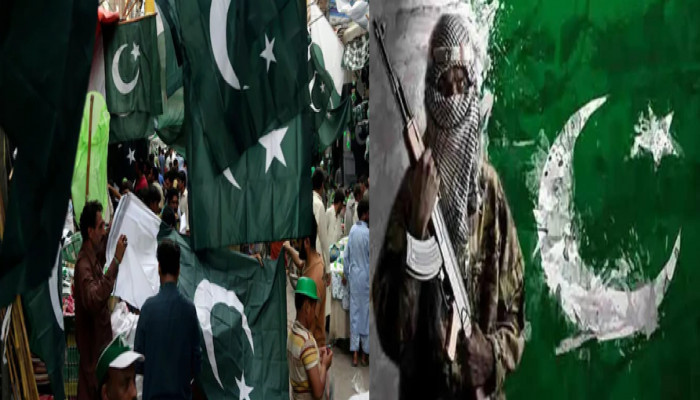
Pakistan’s role in the proliferation of global terrorism began with its alliance with the CIA in arming the Afghan Mujahideen against the USSR in the 1980s. However, this policy of using militant proxies for geopolitical ends was soon institutionalized by the Pakistani establishment which then deployed the same tactics to undermine India, and specifically stir up Islamist militancy in Kashmir. Even as it projected itself as a US ally in the global war on terror, it continued to shelter and support radical elements, reflected in its infamous distinction between ‘good Taliban’ and ‘bad Taliban’. The primary reason why it covertly backed the Afghan Taliban was again as to secure an allied Islamist regime in Afghanistan as a counter to India. This could not be concealed for long and the US, frustrated by Pakistan’s duplicitous designs, significantly cut down on its economic and military aid to the country, in addition to distancing itself diplomatically.
On the other hand, the continuous terrorist attacks in India, evidentially linked to Pakistan, such as the 2001 Parliament attack, 2008 Mumbai attacks, 2019 Pulwama attack, among others, tarnished the latter’s global reputation as the epicentre of terrorism. In recent years, even Muslim majority nations such as the Persian Gulf countries, particularly Saudi Arabia and UAE, have shifted their foreign policy rationale from religion and ideology-based alignment with Pakistan to a more forward-looking cooperation based on the imperatives of economic pragmatism, regional stability and security, and the emerging new world order, with India.

Similarly, the Organization of Islamic Countries (OIC) has, in the past few years, demonstrated its respect and willingness to engage with India, much to the distaste of Pakistan. The first and quite heavy blow came when the forum invited India’s then Foreign Minister Sushma Swaraj as a ‘guest of honour’ in its 2019 meeting in Abu Dhabi, despite Pakistan’s objections. The next year, in a departure from its usual stance, the OIC declined to have Kashmir on its agenda, reflecting Pakistan’s deteriorating standing in the forum and India’s increasing global clout. Although amid the recent military escalations between the two neighbours in the wake of the Pahalgam terror attack, the OIC appears to have favoured Pakistan’s narrative on Kashmir, inciting censure from India, it remains questionable how long it is going to last, given Pakistan’s free-falling economic, security and diplomatic situation as well as the organisation’s history of snubbing the country’s requests more often than not.
Destabilizing Pakistan’s strategic calculus and exacerbating its internal crisis is its once intimate ally- the Afghan Taliban. Since returning to power in August 2021, an event that was looked at with much optimism and triumph in Islamabad, the Afghan Taliban have turned sour with their neighbour that accuses them of supporting the Tehreek-e-Taliban Pakistan (TTP) or the Pakistani Taliban. The TTP has recently emerged as the most potent insurgent group within the country, in addition to the Baloch Liberation Army (BLA), launching relentless attacks on security forces and civilians, and increasingly establishing proto-state pockets in Pakistani territory. The loss of the Afghan Taliban as a reliable ally against India despite years of covert and risk-laden backing certainly constitutes an existential setback for Pakistan, made worse by the growing engagement between the Afghan Taliban and India.
The decades of Pakistan’s instrumentalization of terror have left it in a position that it itself finds difficult to get out of. Not only has the sponsorship of terrorism backfired on its own people as it ranks 2nd in the Global Terrorism Index 2025, but the years of neglect of its internal issues has bred insurgencies that have attacked even Chinese workers and projects, jeopardizing its most strategic partnership. As Pakistan suffers from alarming inflation, dropping currency and foreign exchange reserves, and dependence on IMF bailouts and bilateral loans, its internal security crises have not only weakened it politically but also economically by staving off any potential investment.
Therefore, in order to prevent its own unravelling, Pakistan must take stock of the shifting geopolitical landscape wherein nations prioritize stability, economic cooperation, and counter-terrorism over religious or ideological affiliations. Its continued backing of terror has already cost it irreparably, both internally and externally. Unless it radically recalibrates its geopolitical strategy, one that has no space for militant proxies, the future seems grim for the country.
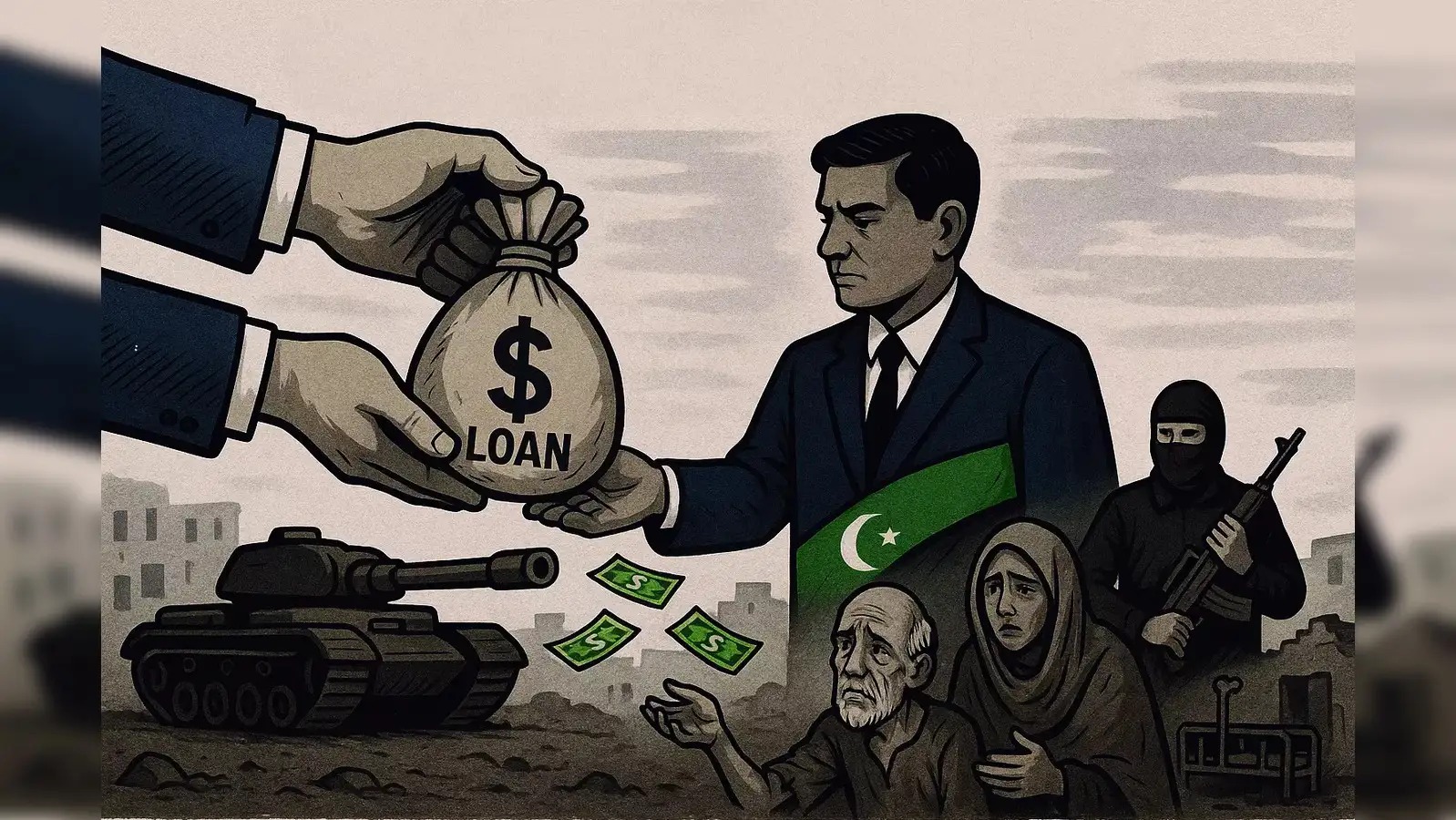
In the aftermath of the Pahalgam massacre, the fingerprints of Pakistan’s proxy militant infrastructure were all but unmistakable. For decades, the military establishment in Rawalpindi has relied on asymmetric warfare through its proxy militant networks to provoke India while shielding itself behind the veneer of plausible deniability. The latest attack in Jammu and Kashmir’s Pahalgam on April 22, killing 26 civilians, followed a familiar script—designed not only to stir unrest in the region but also to bait an Indian response that could be leveraged for domestic political consolidation.
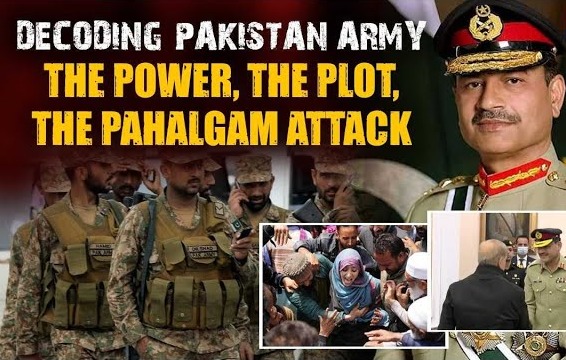
But this time, the playbook seems to be unravelling.
The Pakistan Army, under the leadership of General Asim Munir, seemed to have calculated an anticipated Indian retaliation with such a provocation that could be choreographed into a nationalistic rallying cry in its aftermath. Such manufactured moments of crisis have historically served the military’s purpose of reasserting its primacy in the country’s political and national security discourse. However, the sociopolitical terrain of Pakistan today is no longer the same as it was during previous confrontations.
India did respond to the Pahalgam attack with a calibrated military operation. On the night of May 7, under Operation SINDOOR, Indian armed forces targeted the infrastructure of long-operating terrorist groups, including Lashkar-e-Taiba (LeT), Jaish-e-Mohammed (JeM), and Hizbul Mujahideen (HM), across nine places in Punjab and Pakistan-occupied Jammu and Kashmir (PoJK). It was precise, strategic, and aimed at sending a clear signal: India will not tolerate cross-border terrorism and retains the right to act pre-emptively against threats originating from Pakistani soil.
Far from uniting Pakistan behind its army, the attack and subsequent Indian response have only magnified the deep fractures that lie within the country. While the government attempted to stage a performative show of national unity, the absence of solidarity from Pakistan’s historically marginalized ethnic groups has been glaring. Neither the Baloch nor the Pashtun communities—both of whom have long endured the brunt of the military’s repression and counterinsurgency operations—showed any overt inclination to stand with the state or the generals now appealing for unity. Instead, a suicide blast killed seven Pakistan Army soldiers in Balochistan on the very day of Op Sindoor.
At a time when Pakistan has effectively become a ‘Punjabistan’, given the dominant control that Punjab exerts over key state institutions, including the military, as well as disproportionate hold over to national resources, this raises a stark question: in the event of an escalated military confrontation with India, who will fight for Pakistan?
The Limits of the “External Enemy” Narrative
The Pakistan Army has always thrived on the construction of an “external enemy,” most prominently India, to maintain its unrivalled influence over national affairs. Whether in times of political upheaval or economic crises, the spectre of Indian aggression has been cynically deployed to suppress dissent, justify military budgets, and delegitimize civilian political actors. But the effectiveness of this narrative is fading, especially when the legitimacy of the military itself is in question.
The ongoing human rights violations, extrajudicial killings and state-enforced disappearances in Khyber Pakhtunkhwa and Balochistan have damaging the trust people had towards the army. The Baloch insurgency continues to simmer, with growing calls for outright independence, something that was earlier limited to internal autonomy. The Pashtun Tahafuz Movement (PTM) has exposed the military’s brutal tactics in tribal regions, and although the movement is often silenced through intimidation and arrests, its underlying grievances remain potent. Alongside this, the Tehreek-e-Taliban Pakistan (TTP) has also increased the intensity of their armed insurgency, with hundreds of attacks in the last few years.
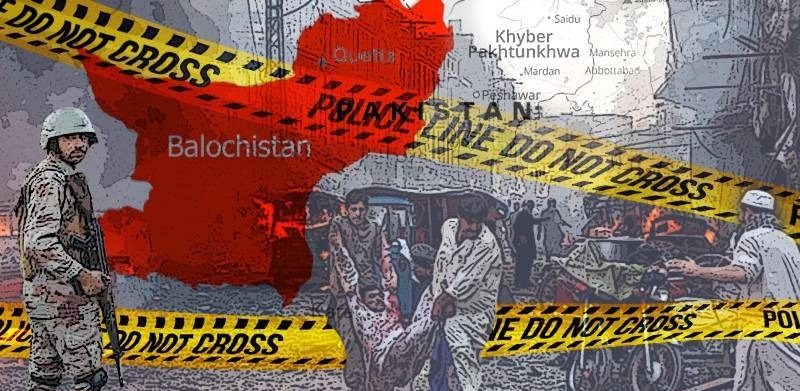
In such a climate, the attempt to whip up nationalist fervour around an India-Pakistan confrontation appears hollow and self-defeating. The ethnic periphery, long disenfranchised and suppressed, sees little reason to rally behind a state apparatus that has never treated them as equal stakeholders in the Pakistani project.
A Calculated Indian Doctrine
India, for its part, has signalled a significant shift in its approach to cross-border terrorism. “While earlier responses were largely diplomatic or defensive, India’s actions following the 2016 Uri attack, culminating in the 2019 Balakot airstrikes, marked a shift toward a more proactive and pre-emptive counterterrorism strategy. Now the post-Pahalgam strike under Op SINDOOR is different in both scale and message. New Delhi’s intent is now unambiguous: there will be no tolerance for Pakistani state-sponsored terrorism, and any provocation will invite proportionate, and possibly pre-emptive, military action.
By targeting terror infrastructure and avoiding civilian casualties, India walked a fine line, reflective of its doctrine of minimising collateral damage, to ensure on its part that this response does not spiral into a full-blown war. This strategic restraint while establishing its deterrence arc is designed as a demonstration of maturity and not as a sign of weakness.
What complicates matters for Pakistan is that this shift in Indian posture arrives at a moment of acute internal fragility. Its economy is in tatters, inflation is high, and the IMF continues to hover over its fiscal policy decisions. Politically, the country remains in turmoil following a deeply controversial general election, widely seen as manipulated by the military establishment to sideline populist leader Imran Khan, who remains jailed since 2023. Protests, arrests, and media censorship have become routine. Interestingly when on a day India undertook its cross-border strikes on terror assets, Pakistan Army secured a Supreme Court adjudication that allows it to try the civilians in military courts.
In this context, a military misadventure with India risks not only a humiliating defeat but also a domestic backlash that could irreparably damage the army’s authority.
Escalation Without Strategy
The temptation for Rawalpindi to escalate, either through additional proxy attacks or border skirmishes, remains high. While it has increased its cross-border shelling targeting civilians, which has killed over a dozen border residents of Jammu and Kashmir, a move of direction escalation would be nothing but deeply unwise. “By now, it should be clear to Pakistan just how vulnerable it remains, especially after India followed up with a coordinated drone strike across nearly nine cities, including the neutralization of an air defence system in Lahore on May 8, in response to attempted attacks by Pakistan’s armed forces on Indian military installations in the Northern and Western sectors.
For one, the geopolitical climate is no longer conducive to Pakistan’s old strategy of continuing to use terrorism as statecraft. The Financial Action Task Force (FATF), though it removed Pakistan from its grey list in 2022, remains watchful and it should be seen as a forgone conclusion that this continued patronisation of terror groups will put it back as a nation of terror sponsors. The international opinion following Pahalgam massacre which was condemned globally, with major powers acknowledging India’s right to defend itself from such terror elements, is an eye opener to that end, bringing swift international condemnation and furthering its diplomatic isolation. Pakistan’s Gulf allies, increasingly aligned with India on economic and strategic fronts, are unlikely to bail it out in the event of another full-scale crisis. Their post-Pahalgam opinion is a testament of this reality.
Moreover, China, Pakistan’s all-weather friend, has grown weary of instability. The China-Pakistan Economic Corridor (CPEC), once hailed as a transformative initiative, has stalled due to security concerns in Balochistan and beyond. Beijing is unlikely to support any adventurism that could jeopardize its investments despite some of the Chinese strategic hawks seeking China’s declare its commitment to defend Pakistan sovereignty in any eventuality.
Thus, escalation without a clearly defined strategic goal would amount to national self-sabotage. The army must instead reckon with its internal legitimacy crisis, reassess its use of proxies, and confront the reality that its traditional levers of control are weakening.
A Moment of Reckoning
The fallout from the Pahalgam massacre and now Operation Sindoor marks a turning point, not only in Indo-Pak relations, which remain perennially fraught, but also in Pakistan’s internal balance of power. The military’s attempt to engineer a patriotic revival through orchestrated conflict seems to be backfiring, revealing a brittle state hollowed out by decades of ethnic suppression, institutional decay, and misgovernance.
What Pakistan needs is not another external confrontation but an honest reckoning with its domestic contradictions. It must initiate a political process that includes, rather than marginalizes, its ethnic peripheries. It must reorient its security doctrine away from India-centric paranoia toward genuine internal stability. And above all, it must curb the military’s ability to unilaterally dictate the nation’s trajectory through violence and manipulation.
Until then, the question will continue to haunt Rawalpindi’s corridors of power: if not the Baloch, not the Pashtuns, not even the disillusioned urban middle classes—then who will fight for Pakistan?

The Deadly Terrorist attack in Pahalgam on 22nd April claimed the lives of 26 tourists, leaving India as a nation seething with anger at the visuals of the dastardly attack. In the aftermath of the attack, India conducted Operation SINDOOR on the morning of May 6, followed by heavy shelling and killing of civilians by Pakistan in the Poonch area of Jammu and Kashmir. The threat of an all-out war looms large if Pakistan indulges in any bravado.
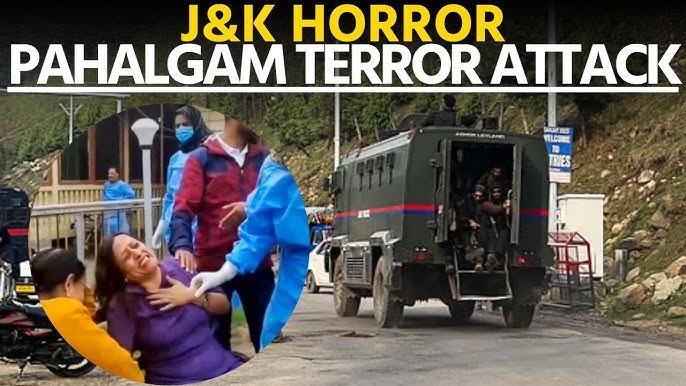
Just a day after the abhorrent attack, a slew of retributive measures was announced after a meeting of the Cabinet Committee on Security (CCS), led by PM Narendra Modi. It was decided to keep the crucial Indus Water Treaty in abeyance, the Attari-Wagah border was shut with immediate effect, Pakistani Nationals were asked to leave India, the Defence advisors of Pakistan in India were declared Persona Non-Grata, and the overall strength of the Pakistani High Commission in India was to be downsized to 30 from the present 55 officials. Pakistan, in response, closed its airspace for Indian airlines and suspended all trade ties with India. Complimenting Pakistan’s retaliatory measures, there was the usual nuclear sabre-rattling as well. Issuing an open threat to India, Pakistan’s Railway Minister Hanif Abbasi said that its 130 nuclear warheads are not only for display and have been kept for India, and if India tries to stop Pakistan’s share of water from the Indus, then the former should prepare for a full-scale war.
While on the surface, it may seem like a routine bilateral escalation between India and Pakistan, it wouldn’t be unreasonable to think that there may be some deeper strategic motives at play. Recently, US President Donald Trump slapped massive up to 245 percent tariffs on all Chinese imports, reacting to which the Chinese took up similar measures and raised the tariffs to 125 percent on American goods from the current 84 percent. The Trade war between the two biggest economies of the world sent ripples across the world, and India too was concerned as its manufacturing, mainly steel, auto, electronics, and pharmaceutical industries are heavily reliant on China for raw materials, and any disruptions in the supply chain could prove detrimental to the Indian economy and its consumers. But just as every cloud has a silver lining, so too does this trade war.
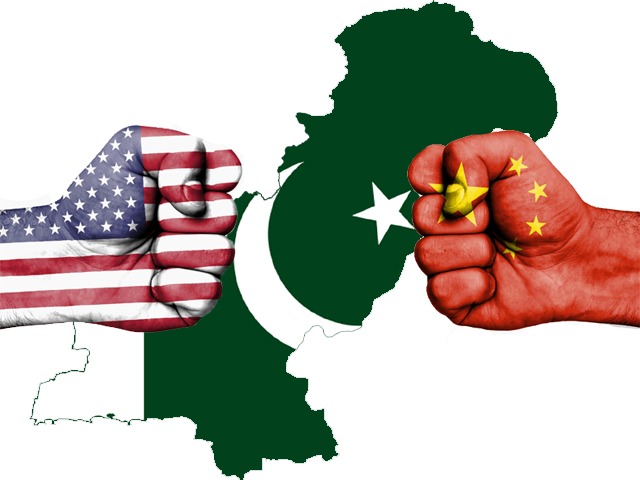
In a recently published report in the Indian Express, Richard Baldwin, a professor of Economics at IMD Business School, said that Middle power countries like India could secure a substantial foothold in global supply chains because of the US-China Trade War. He emphasized that if US tariffs persist on China, it could be beneficial to emerging markets as businesses would look to diversify and relocate, and India presents itself as a preferred destination for the same. It wasn’t just a speculation; this resonated on the ground as well, as Apple laid out its ambitious plan to shift all US-bound iPhone production from China to India by 2026. According to the Financial Times Report, Apple aims to produce more than 60 million iPhones annually in India to meet its demand back home in the US.
India was also actively involved in identifying and attracting several companies that were looking to shift their operations away from China. It tried to position itself as a natural alternative for companies moving away from China by portraying itself as a safe, secure, and stable democracy that offers a conducive environment for businesses.
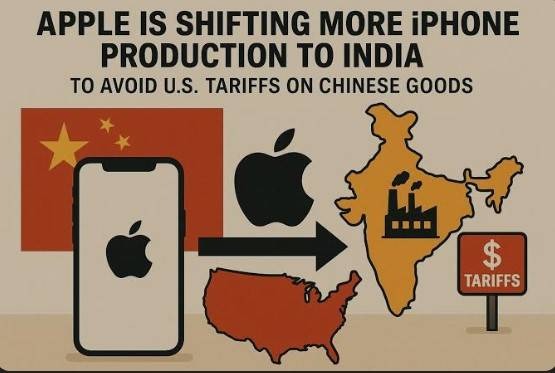
But the recent Pahalgam attack and the escalation that followed between India and Pakistan gave China exactly what it needed. It was a chance for China to showcase the risk factors involved for businesses that were looking to relocate to India. The conflict served as an alarming reminder to the world, especially businesses, that the situation between the two South Asian arch-rivals is still volatile and could explode at any moment. The Chinese social media, in the recent past, has been flooded with the narrative of how this trade war between them and the US has given an undeserving opportunity for India to attract businesses and investments. Though Beijing openly urged both India and Pakistan to act with restraint, behind the curtains, it was actively pulling the strings to encourage Pakistan to escalate and stretch the confrontation with India. China also extended support to Pakistan’s demand for an impartial probe into the Pahalgam Terror attack.
Currently, Beijing is dealing with an economic slowdown, and the situation has only gotten worse after the trade war with the US. It wouldn’t be imprudent to guess that an active Chinese role is at play behind the scenes, as it would be in China’s interest to portray India as an unstable, unfavourable, and unsafe alternative to thwart the relocation efforts of various businesses. Using Pakistan as a proxy to further its objective by offering diplomatic and even military support, China has tried to spoil India’s image as a safe investment hub. Additionally, the terrorist attack in Pahalgam’s Picturesque Baisaran Valley has allowed India’s adversaries to cast doubt on the claims of the Modi government that the situation has drastically improved in Jammu and Kashmir post the abrogation of Article 370. India has been trying hard to build the narrative that the abrogation has ushered in an era of peace and progress for Jammu and Kashmir, and the recent attack challenges this claim of the Indian government. The attack directly hits the core of Jammu and Kashmir’s economic recovery, especially its tourism sector.
(The writer is a political strategist with expertise in media relations and geopolitical developments)
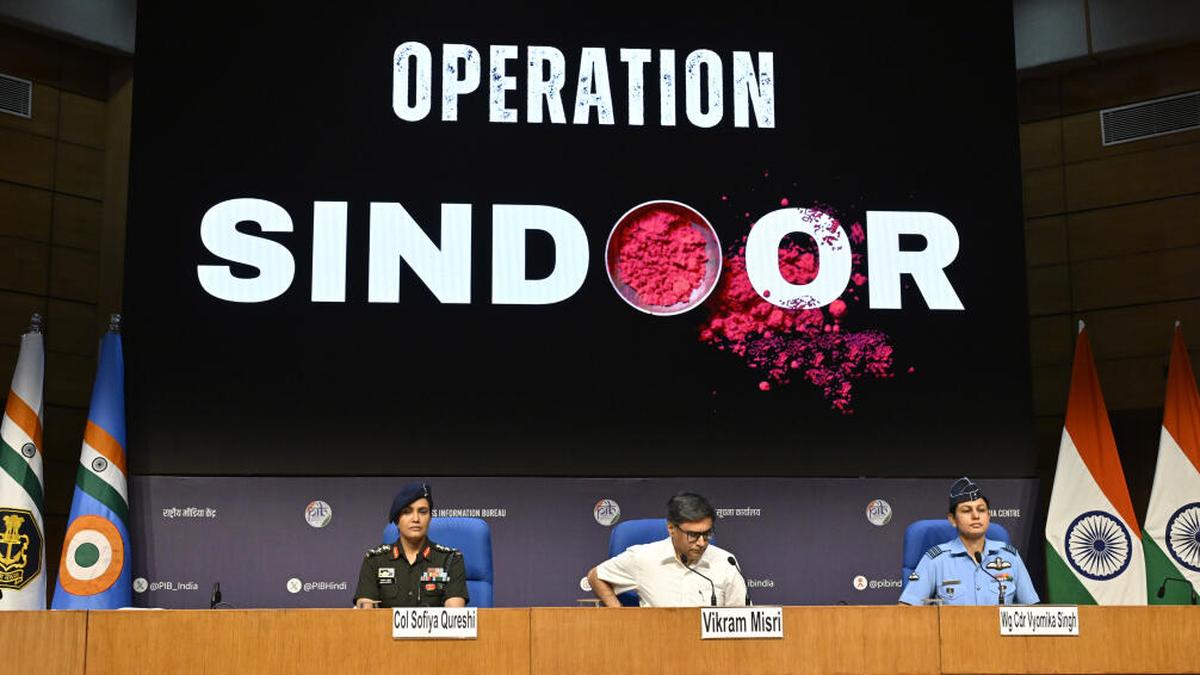
Pakistan has dozens of terrorist organisations which operate from its soil and export terrorism to rest of the world. These organisations have a financial ecosystem that has survived the international scrutiny and multiple operations from international agencies to stop terror financing.
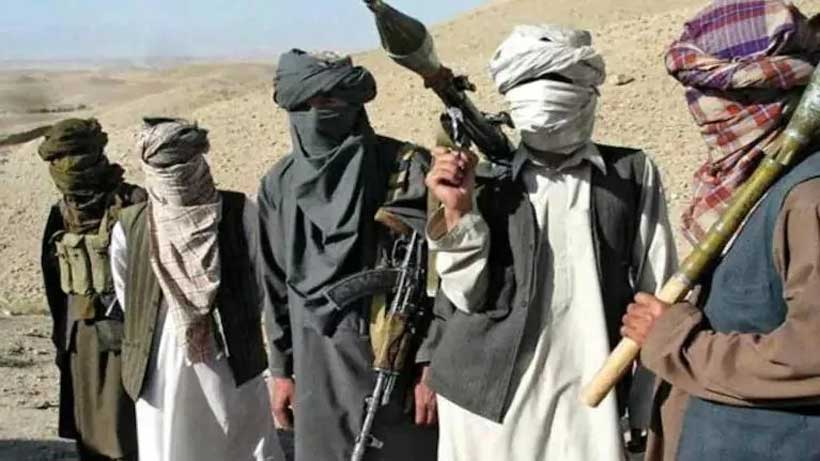
Pakistan has five broad categories of terrorist organisations: (1) Globally oriented; (2) Afghanistan-oriented; (3) India-oriented; (4) Domestically oriented; and (5) Sectarian (anti-Shia).
The India-oriented terrorist organisations include: Lashkar-e-Taiba (LET) formed in the late 1980s; Jaish-e-Mohammed (JEM) founded in 2000; Harakat-ul Jihad Islami (HUJI) formed in 1980; Harakat ul-Mujahidin (HUM) was established in 1998; Hizbul Mujahideen (HM) was formed in 1989.
According to a study paper “Pakistan Army and Terrorism; an unholy alliance” done by Amsterdam based, European Foundation for South Asian Studies (EFSAS), Amsterdam, “Pakistan… plays a key role in funding these terrorist organizations. As per reports, the yearly expenditure of ISI(Pakistan’s intelligence agency) towards the terrorist organizations runs between 125-250 million USD, covering salaries, cash incentives for high-risk operations and retainers for guides, porters and informers.”
An internal report of Pakistan governments Financial Monitoring Unit(FMU) , titled “National Risk Assessment on Money Laundering and Terrorism Financing 2017” has details of how terror groups are generating funds in Pakistan. This report was never made public but excerpts of these reports were quoted by Noor Zahid and Madeeha Anwar in a Voice of America report published in 2017. The duo exposed the funding of Pak terror groups in a report titled ‘Pakistan Terror Groups Get Rich From Crime, Money Laundering’
According to Zahid and Anwar, “Waves of crime in Pakistan — including extortion, smuggling and kidnapping for ransom — are major sources of terrorist financing for extremist groups in the country. “Main sources of income of terrorists in Pakistan include foreign funding, drug trafficking, kidnapping for ransom, extortion from business, vehicle snatching,” according to the 45-page confidential report by FMU, which is an intelligence service department within Pakistan’s Ministry of Finance.
“The report, which had not been released publicly, says over 200 local and international terrorist organizations generate billions of Pakistani rupees to fund their activities. Annual operational budget of terrorist organizations is from 5 million rupees [about $48,000] to 25 million rupees [about $240,000],” the report said, according to The News website, which published these excerpts.
‘Terrorism Monitor’ of Jamestown Foundation revealed in December 2024 another important facet of terror funding in Pakistan. It said, “Terrorist groups in Pakistan frequently use high-denomination currency to finance their operations. Permitting a large number of high-value notes to be in circulation makes it easy for bad actors to transfer considerable amounts of money without a digital footprint, making illicit activities easier to conduct.”
The relatively high availability of such bills in circulation in Pakistan is due to the country’s underutilization of electronic payment systems, it added.
According to this report, Tunda, a notorious bomb expert for Lashkar-e-Taiba (LeT) who reportedly masterminded more than 40 bombings in India had told the Indian law enforcement agencies after his arrest with huge amount of Pakistan currency that large denomination bills were “kings who could do anything for them.”
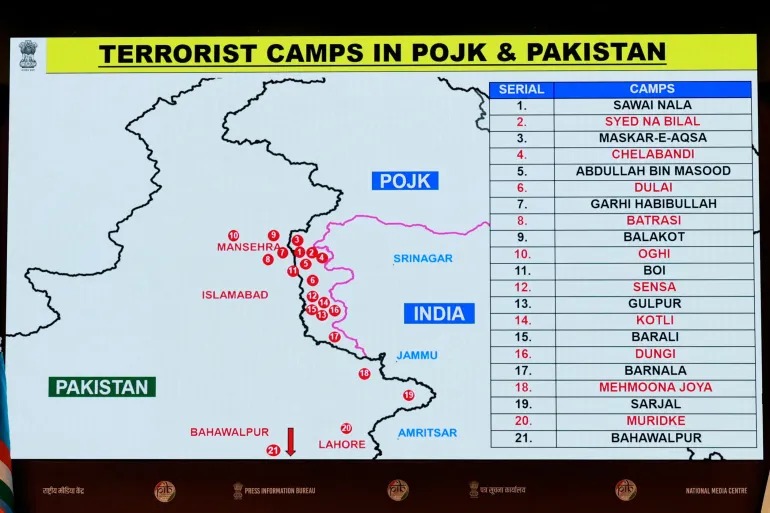
“Pakistani denominations currently in circulation include 10-, 20-, 50-, 100-, 500-, 1,000-, and 5,000-rupee notes. It is noteworthy that Pakistan, which makes up 3 percent of the world’s population, accounts for 7.1 percent of the world’s unbanked adults,” says this report.
According to a research brief prepared by US Congressional Research Service in 2023, “Although Pakistan’s 2014 National Action Plan to counter terrorism seeks to ensure that no armed militias are allowed to function in the country, several United Nations- and U.S.-designated terrorist groups continue to operate from Pakistani soil.”
Islamic Charities
Almost all the terrorist organisations have set up Islamic charities as their fronts in Pakistan. These charities operate globally. In fact, USAID had funded many of these charities, revealed a recent report by the Middle East Forum, a US based think tank revealed. In addition the ‘Zakat’ collected from common people during the month of Ramadan by these charities are also funnelled to fund these terrorist organisations.
Since the 1980s, Pakistan has had a system of compulsory collection of zakat, relying on a state-administered zakat fund and zakat councils at federal, provincial and district levels. In 2024, the average zakat giver paid about 15,000 Pakistani rupees with over 50 million Pakistanis contributing. The total funds generated in Pakistan through Zakat was over 600 billion Pakistani rupees in 2024. A large chunk of this money goes for oiling the terror infrastructure established by Pakistani state and their proxy terrorist groups.
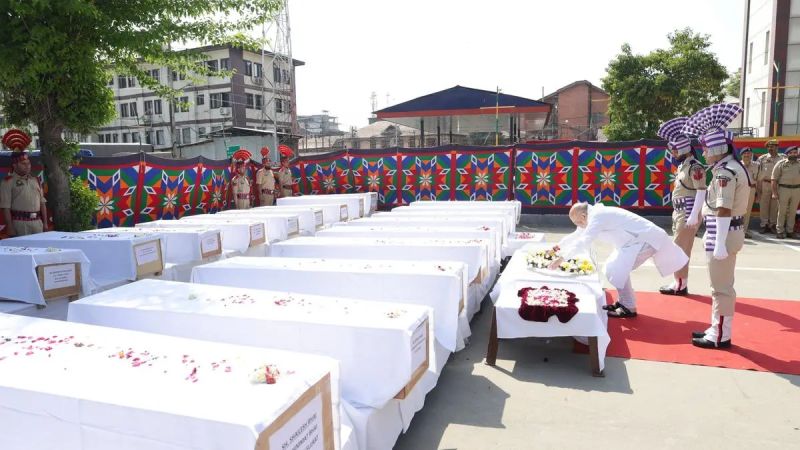
In a turn of events that lays bare the enduring proclivity of Pakistan’s military-intelligence apparatus for perfidious adventurism, the subcontinent has once again been plunged into the vortex of tragedy and retribution. On 22 April, the scenic tranquillity of Pahalgam in Jammu and Kashmir was shattered by a heinous act of terror—an attack carried out by assailants of Pakistani provenance, leaving in its wake a trail of innocent blood, most of it that of unsuspecting tourists.
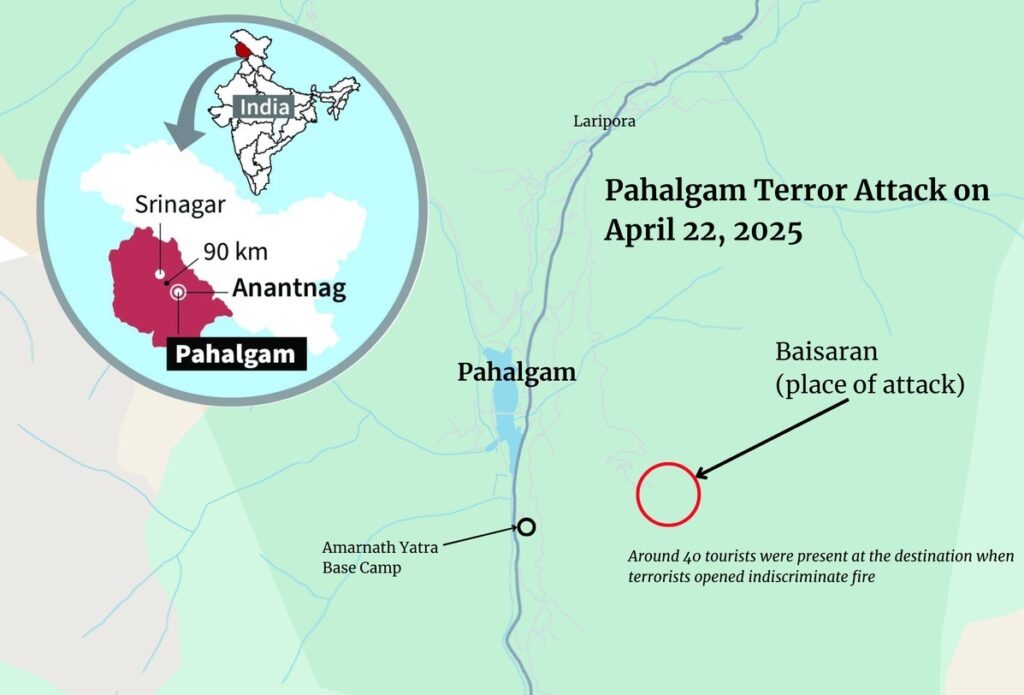
This egregious violation of human sanctity provoked an unequivocal and resolute response from New Delhi. In a swift Cabinet Sub-Committee review chaired by Prime Minister Narendra Modi on 23 April, the Indian government charted a bold course of action, announced by India’s Foreign Secretary Vikram Misri. Among the arsenal of retaliatory instruments under consideration, it was the suspension of India’s obligations under the Indus Waters Treaty (IWT) that emerged as the most telling—and symbolic—rebuke to Islamabad.
This abrupt departure from what has long been a pillar of regional diplomacy signals a watershed moment—both literally and metaphorically—in South Asia’s geopolitical tapestry. For more than six decades, the IWT has served as an improbable exemplar of bilateral cooperation, a rare artefact of amity amidst a chronically discordant relationship. That India should now suspend this treaty reflects a fundamental recalibration of its strategic posture, particularly vis-à-vis Pakistan’s sustained dalliance with proxy terrorism. But before one delves into the ramifications of this audacious move, one must first examine the edifice of the Indus Waters Treaty—its origins, its operational architecture, and the significance it has come to assume in both geopolitical and existential terms.
A Riverine Pact Forged in Discord
Conceived in the crucible of Cold War anxieties and brokered under the watchful eyes of the World Bank, the IWT was inked in 1960 after an arduous nine-year negotiation. At the heart of the agreement lay the equitable distribution of the six rivers of the Indus basin—the Indus, Jhelum, and Chenab in the west; and the Ravi, Beas, and Sutlej in the east.
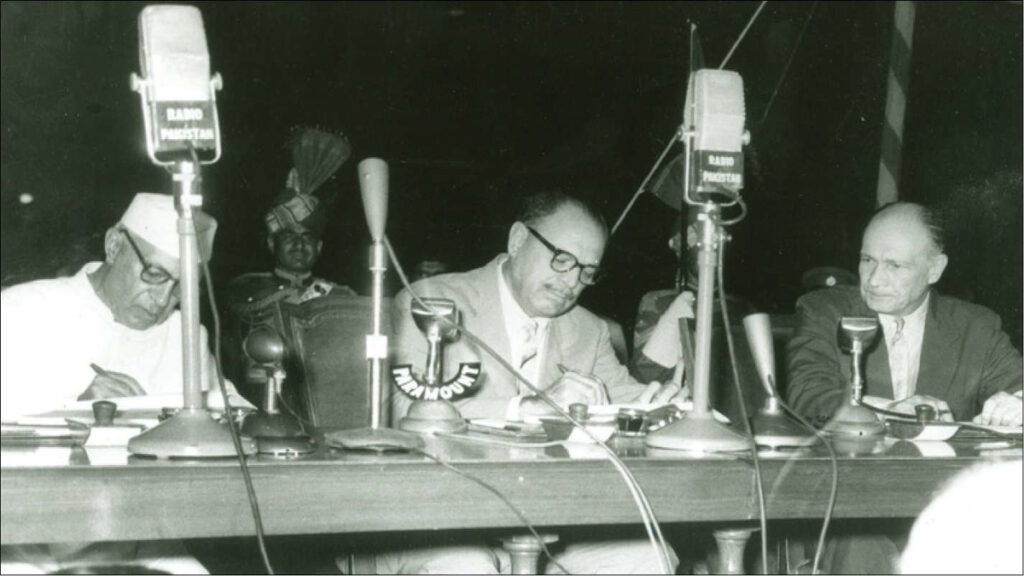
In what can only be described as an act of magnanimous restraint, India ceded exclusive control over the three Western rivers—comprising nearly 70% of the total water volume—to Pakistan, while retaining dominion over the three Eastern ones. This asymmetry, while glaring, was accepted in the spirit of regional stability and the hope that water, the most elemental of life’s resources, might also irrigate the parched soil of subcontinental peace. But alas, that noble aspiration has withered. Successive regimes in Islamabad have weaponised non-state actors, cultivating a cottage industry of jihadist terror that has repeatedly spilled across the Line of Control and stained Indian soil with blood. And yet, even amidst war and vitriol, India abided by the treaty, honouring its commitments with a stoic discipline that belied the provocations it endured. This forbearance, however, is not inexhaustible.
The Cost of Generosity
To understand the magnitude of India’s concession, consider the numbers. The Eastern rivers—Ravi, Beas, and Sutlej—over which India has unfettered rights, collectively yield about 41 billion cubic metres of water annually. The Western rivers, gifted to Pakistan, deliver nearly 99 billion cubic metres—more than double the volume under Indian control. This hydrological largesse has become the very artery of Pakistan’s survival. In a nation where agriculture constitutes over 25% of GDP and sustains approximately 70% of the populace, water is not a mere resource—it is an existential imperative. The Indus basin fuels its farms, powers its turbines, and feeds its people. To perturb this flow is to imperil the nation’s economic equilibrium and societal cohesion.
And yet, Pakistan’s security establishment has long treated this precious accommodation as a given—immutable, untouchable, and immune to the vagaries of geopolitical conduct. This misplaced confidence has emboldened it to pursue a duplicitous doctrine—of nurturing militant proxies even as it benefited from the benevolence of Indian water diplomacy.
The Straw That Broke the Canal
By suspending the IWT, India is sending a message steeped in symbolism but not lacking in substance. This is not merely an outburst of indignation—it is a calibrated policy shift. The message is unequivocal: India shall no longer subsidise its adversary’s antagonism with strategic concessions. If Pakistan insists on fomenting unrest through insidious means, it must also be prepared to forfeit the privileges accorded to it under treaties predicated on good faith.
One may argue, with some justification, that India’s current water infrastructure lacks the immediate capacity to divert or fully harness the Western rivers. The requisite reservoirs, barrages, and canal systems for such a hydrological overhaul are still under development. But in geopolitics, perception often precedes practice. The very act of invoking the treaty’s suspension has rattled the strategic calculus in Islamabad and laid bare the fragility of its assumptions.
For decades, Pakistan has operated on the belief that India’s strategic restraint—especially in the hydrological domain—was sacrosanct. It misread India’s civility as weakness. That illusion has now been spectacularly shattered.
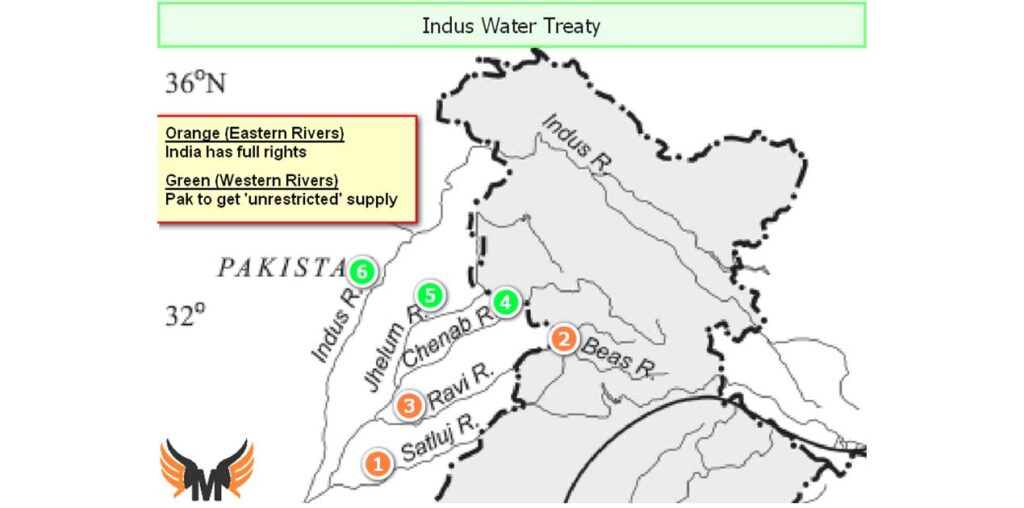
A Faustian Bargain That Failed
What, then, has Pakistan gained from its Faustian pact with terror? Has its strategy of bleeding India through a thousand cuts yielded dividends? On the contrary, the costs have been profound and self-defeating.
Far from “liberating” Kashmir or coercing India into negotiations on its own terms, Pakistan finds itself internationally isolated, diplomatically suspect, and economically anaemic. Worse still, the terror groups it once mentored have now metastasised, turning their guns inward and threatening the cohesion of the Pakistani state itself. The logic of proxy warfare—premised on the deniability of violence and the expendability of cannon fodder—has unravelled. In its place stands a polity riddled with extremism, plagued by economic fragility, and mired in geopolitical ignominy. The international community, once indulgent of Pakistan’s strategic anxieties, now views its double game with growing exasperation.
The Geopolitical Ripple Effect
India’s suspension of the IWT, while unilateral in action, has multilateral implications. It signals to the world that New Delhi is prepared to reframe the contours of South Asian diplomacy. Water—long considered sacrosanct—can no longer be divorced
To paraphrase the ancient wisdom of the East, one cannot bathe twice in the same river—because the water has moved on, and so has time. Pakistan, too, must now move on—from the shackles of militancy, from the dogmas of military overreach, and from the delusion that duplicity can be a permanent policy.
If it fails to do so, history may not be as forgiving as the Indus once was.
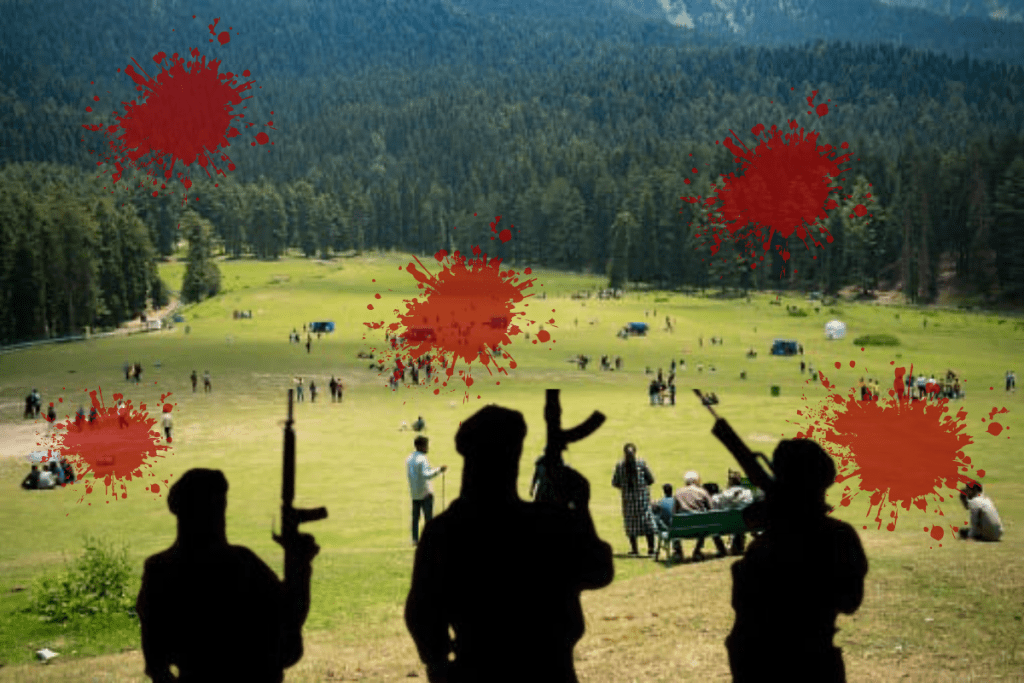
Pakistan today finds itself in the throes of a deep and multifaceted crisis. A collapsing economy, political volatility, and a fraying internal security order have combined to expose the limits of the state’s resilience. Armed ethnonationalist movements in Balochistan and Khyber Pakhtunkhwa, along with a resurgence of transnational jihadist violence, now pose grave challenges to internal cohesion. Compounding this crisis of the state’s systemic dysfunction is the unprecedented erosion of public trust in the military — historically the most powerful and stable institution in the country.
In any functioning democracy, such systemic dysfunction might prompt serious institutional introspection. But Pakistan is not a conventional democracy. Its generals continue to dominate the national security and foreign policy apparatus, leaving little room for recalibration — particularly on matters where the military has long maintained primacy, such as its regional policy.
On April 15, General Asim Munir, Pakistan’s current Army Chief and undoubtedly its most powerful figure, delivered a politically charged speech aimed at salvaging the military’s diminished public standing.
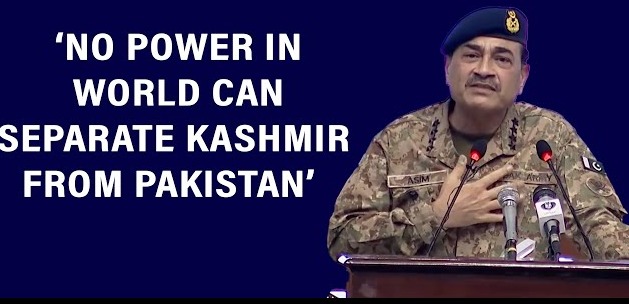
Instead of reflecting on the domestic failures under his tenure, Munir fell back on a familiar script by invoking Kashmir as the nation’s unfinished cause, a “jugular vein”, which will be supported till the very last end. But this time, he cast Pakistan’s long-standing support for insurgency in Jammu and Kashmir through a more overtly communal lens, framing it within a polarizing Hindu-Muslim binary. Far from an offhand remark, this rhetoric not only distracts from Pakistan’s internal problems but also serves to reaffirm Islamabad’s continued reliance on militant proxies as instruments of foreign policy.
Disturbing, though not surprising, the consequences of General Munir’s provocative speech seemed to unfold just days later, with militants carrying out a deadly attack in Pahalgam, a popular tourist destination in Jammu and Kashmir’s Anantnag district.
Early reports indicate the armed assailants, mostly non-locals of Pakistani origins, having singled out victims based on their religious identity before launching a brutal massacre that killed at least 26 civilians and injured many more. The synchronicity between the timing of the speech and nature of the attack are difficult to dismiss as mere coincidence. Instead, they raise serious concerns about the ongoing connection between Pakistan’s powerful military establishment and the extremist groups it has long been accused of supporting behind the scenes. The group claiming responsibility, The Resistance Front (TRF), is widely recognized as a rebranded version of Lashkar-e-Taiba — a U.N.-designated terrorist organization with deep ties to Pakistan’s security establishment. TRF’s reinvention is widely viewed as a strategic manoeuvre to shield Islamabad from international censure, including scrutiny by the Financial Action Task Force (FATF).
The timing of the attack, so closely following General Munir’s speech, raises troubling questions. For decades, militant violence in Kashmir has often followed inflammatory statements from Pakistani leaders or shifts in the geopolitical landscape. The latest attack appears to follow this pattern, and its motive fits a familiar logic: force India back to the negotiating table by stoking instability.
There are three interconnected factors that may underscore how Pakistan’s fingerprints appear evident. First, the Pakistan Army’s public legitimacy is at its lowest point since the country’s founding in 1947, largely due to its deep and controversial involvement in domestic politics. Second, the Shehbaz Sharif-led government has repeatedly reached out to New Delhi to revive bilateral talks—an initiative that India has, quite justifiably, conditioned on Islamabad halting its support for terrorist networks targeting Indian interests. Third, since India’s 2019 constitutional reorganization of Jammu and Kashmir, the region has steadily transitioned from a “terrorism” flashpoint to a “tourism” revival story, leaving Pakistan’s decades-old Kashmir narrative and its attempts to internationalise the so-called dispute adrift.
The timing of the attack coinciding with U.S. Vice President J.D. Vance’s visit to India adds a provocative layer. It recalls a grim precedent: in March 2000, during President Bill Clinton’s visit to India, Pakistani-backed militants massacred Sikh villagers in Kashmir — Chittisinghpura massacre —an act widely seen as an attempt to draw global attention to Islamabad’s agenda. The parallels are hard to ignore.
But the most damning aspect of Pakistan’s strategy is that while it is increasingly self-defeating, it refuses to abandon this strategy despite its violent backfire. Militant blowback has rendered vast stretches of its own territory—particularly in Khyber Pakhtunkhwa and Balochistan—effectively beyond the reach of the central government, now largely controlled by Islamist extremists and Baloch nationalist insurgents, respectively. Extremist networks once deployed for strategic depth have turned inward, contributing to Pakistan’s domestic instability. According to the 2025 Global Terrorism Index, Pakistan now ranks as the world’s second most terrorism-affected country, surpassed only by Burkina Faso. Terrorism-related fatalities in Pakistan rose by 45 percent in 2024 alone.

Yet, despite these devastating costs, both in lives lost and in national stability, Pakistan’s military and political leadership remains either unwilling or unable to break with its long-standing policy of using militant proxies as instruments of regional strategy. This stubborn adherence to an outdated and corrosive doctrine has hollowed the state from within. The massacre in Pahalgam is not merely a cross-border atrocity; it is a symptom of a state trapped in its own delusions — one that continues to use extremist violence as a tool of policy even as it undermines its own survival.
While global powers have rightly condemned this latest act of terrorism at Pahalgam, expressions of outrage are no longer sufficient. The international community must adopt a firmer stance—one that combines diplomatic pressure, targeted sanctions, and enhanced monitoring of Pakistan’s financial and security networks. Islamabad must be made to understand that impunity is no longer an option as cost of inaction is steep.
For too long, Pakistan’s proxy war playbook has been tolerated as a regional irritant, which it is not. If this pattern continues unchecked, the risk of broader destabilization in South Asia — and the possibility of an escalation — will become all too real. The world must act before this proxy war metastasizes into something far more dangerous.
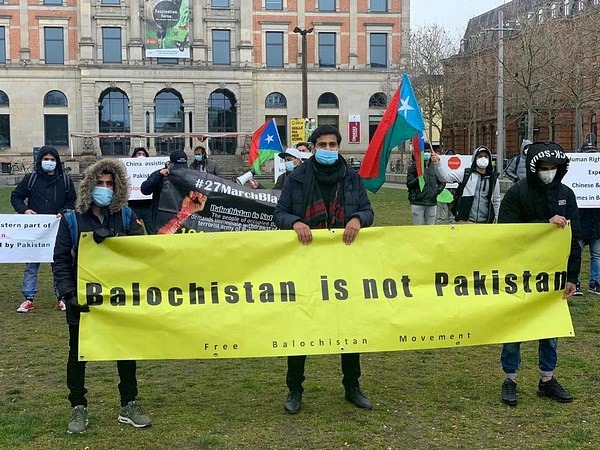
In the shadowed corridors of the Pakistani state, where power is wielded not by the parliament but by barracks and clandestine agencies, the soul of Balochistan bleeds. The month of January 2025 alone saw 107 enforced disappearances across the province, according to a chilling report by Paank, the human rights wing of the Baloch National Movement. These are not just numbers—they are human lives swallowed by a brutal machine that operates beyond accountability, with the military establishment acting as judge, jury, and often, executioner. Dr. Abdul Malik Baloch, President of the National Party and former Chief Minister of Balochistan, has emerged as one of the few political voices courageous enough to confront the state’s ongoing repression. In a recent public address, he condemned the federal government and military’s intrusion into Balochistan’s affairs—especially through the controversial Mines and Minerals Act, which he decried as a constitutional betrayal.
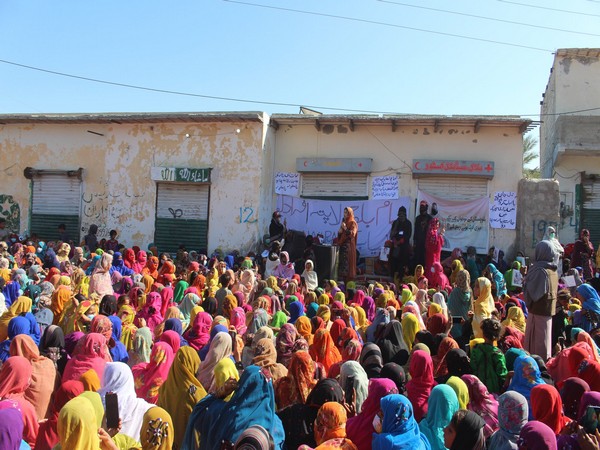
Resource Colonialism in a Federal Guise
The plunder of Balochistan’s natural wealth—Saindak, Reko Diq, Gwadar—is conducted not with development in mind, but domination. The people of Balochistan are treated not as stakeholders, but as subjects of a 21st-century colonial project. Contracts with companies like Pakistan Petroleum Limited and Saindak Metals are renewed without the consultation of legitimate public representatives, further entrenching the military’s grip over the region’s resources. John Locke, the Enlightenment philosopher who laid the foundation for liberal constitutionalism, argued that a government loses legitimacy the moment it no longer operates with the consent of the governed. The Pakistani state’s actions in Balochistan represent a grotesque inversion of this principle. Where the social contract demands mutual obligation, the state offers extraction and suppression. In Locke’s words, such a regime ceases to be civil and becomes a “state of war.”
Disappearances: The Anatomy of a State Crime
The figures from the Paank report are harrowing: enforced disappearances have become the norm rather than the exception. These are not rogue acts but systematic state policy—an organized terror campaign carried out by military and intelligence agencies to quash dissent and eradicate political opposition. The mutilated bodies of Muhammad Ismail (20) and Muhammad Abbas (17), found after being abducted from their Kalat home, represent the fate of thousands. Their youth, their innocence, their right to live—all discarded in the name of national security. Hekmatullah Baloch, another victim, was shot during a peaceful protest and succumbed to his injuries in a Karachi hospital. His crime? Demanding accountability. Michel Foucault, in his seminal work Discipline and Punish, observed that modern states have replaced the public spectacle of punishment with hidden forms of control—surveillance, incarceration, and disappearance. Pakistan, in Balochistan, has regressed to a grotesque hybrid, mixing the medieval cruelty of mutilation with the modern state’s bureaucratic efficiency. The Fourth Schedule and Maintenance of Public Order (3MPO) are not laws—they are instruments of tyranny.
The Illusion of Democracy and the Reality of Martial Law
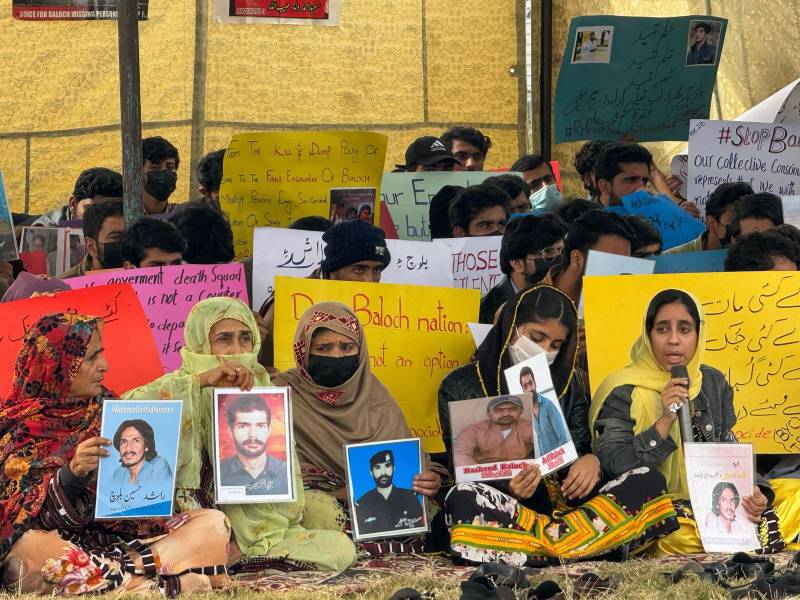
While Islamabad claims to be a constitutional democracy, Balochistan is ruled like an occupied territory. Dr. Abdul Malik denounced the frequent use of colonial-era laws to detain political activists, many of them women. He rightly equated this crackdown to civil martial law—a regime where uniforms dictate politics and silence becomes the only guarantee of safety. The philosopher Hannah Arendt warned that the collapse of the line between the legal and the illegal is the precursor to totalitarianism. In Balochistan, this line has not only been blurred; it has been erased. The people no longer know when they cross a boundary, because the boundary moves with the will of the soldier. This system does not merely suppress dissent—it criminalizes existence itself. Border trade, once a lifeline for over three million people, has been strangled by new regulations and taxes. What remains is not law and order but extortion by officials, where survival is a privilege granted to the obedient and denied to the defiant.
The Politics of Extraction and Exclusion
The resource curse is not a theory in Balochistan—it is lived reality. The province is rich in gas, gold, copper, and port infrastructure, yet its people suffer from abject poverty, rampant illiteracy, and systemic unemployment. This paradox is no accident; it is by design. Antonio Gramsci’s idea of passive revolution is illuminating here. Gramsci noted how dominant classes use state apparatuses to integrate resistance into the system without altering its exploitative foundations. In Balochistan, token development projects and cosmetic representation serve as cover for a deeper colonization. What the state offers is not empowerment but pacification. Even the façade of electoral politics is undermined. Dr. Malik lamented that extensions to mineral contracts were being signed without legitimate public oversight, deepening the alienation of the Baloch people. This political exclusion is a deliberate strategy to delegitimize regional autonomy and enforce submission to centralized authority.
Dispossession Disguised as Security

The Talaar check post, which Dr. Malik demanded be dismantled, is not merely a security installation—it is a symbol of domination. It represents the architecture of occupation: a structure that surveils, intimidates, and fragments the community it purports to protect. Similar outposts dot the Baloch landscape like scars, each a reminder that the state sees its own citizens as insurgents in need of subjugation. Frantz Fanon, in The Wretched of the Earth, described colonial regimes that deploy violence not just to suppress rebellion but to imprint inferiority onto the colonized psyche. The Pakistan Army’s presence in Balochistan functions the same way. It tells the Baloch they do not own their land, their bodies, or their future.
Dr. Malik’s demands are not radical—they are constitutional. He asks for the release of political workers, simplification of trade rules, and the withdrawal of draconian laws. Yet in the eyes of the establishment, such calls are tantamount to sedition. This reaction reveals the state’s true nature: one that cannot accommodate dissent because its foundations are built on domination, not dialogue. It views Baloch identity not as a part of the national mosaic, but as a threat to its imposed uniformity. The German philosopher Jürgen Habermas emphasized the importance of “communicative rationality”—the idea that democratic societies should resolve conflicts through open, inclusive dialogue. The Pakistani state, instead, speaks in the language of bullets, barbed wire, and black sites. It confuses coercion with cohesion and believes silence equals stability.
A Dark Mirror for the World
The world must not avert its eyes. What is happening in Balochistan is not an internal affair—it is a human rights catastrophe that demands international scrutiny. The United Nations, the European Union, and rights organizations must pressure Pakistan to end its military campaign of terror. Balochistan is the mirror in which we see the true face of the Pakistani establishment: brutal, extractive, and unapologetically authoritarian. Until the military returns to the barracks, until the disappeared are returned to their families, and until the people of Balochistan control their own destiny, there will be no peace. To paraphrase the philosopher Rousseau: A people once forced to be silent will eventually speak with fire. Balochistan is the mirror in which we see the true face of the Pakistani establishment: brutal, extractive, and unapologetically authoritarian. Until the military returns to the barracks, until the disappeared are returned to their families, and until the people of Balochistan control their own destiny, there will be no peace. Pakistan has, willy-nilly, disappeared the people of Balochistan—fathers, mothers, brothers, daughters—without remorse or accountability. This machinery of oppression has shattered countless lives and torn apart the social fabric of a proud and historic people. The silence of the disappeared echoes louder than any protest; it reverberates through every Baloch household and haunts every mother who waits at her doorstep. These disappearances, and the suffering they bring, are not merely crimes—they are the slow incineration of hope. If this trajectory of state violence and contempt continues, it will not just destabilize Balochistan but engulf any prospect of peace. A state that thrives on the pain of its peripheries cannot claim unity; it can only demand obedience, and such obedience always comes at the cost of human dignity. It is no longer a question of politics—it is a question of survival. And the world must choose: to remain complicit in silence or to stand with a people struggling to be seen, to be heard, and above all—to be free.
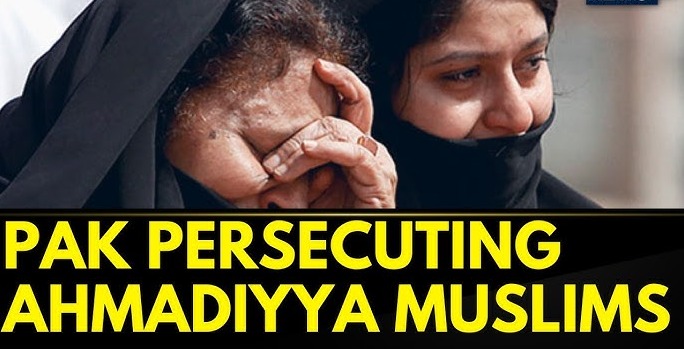
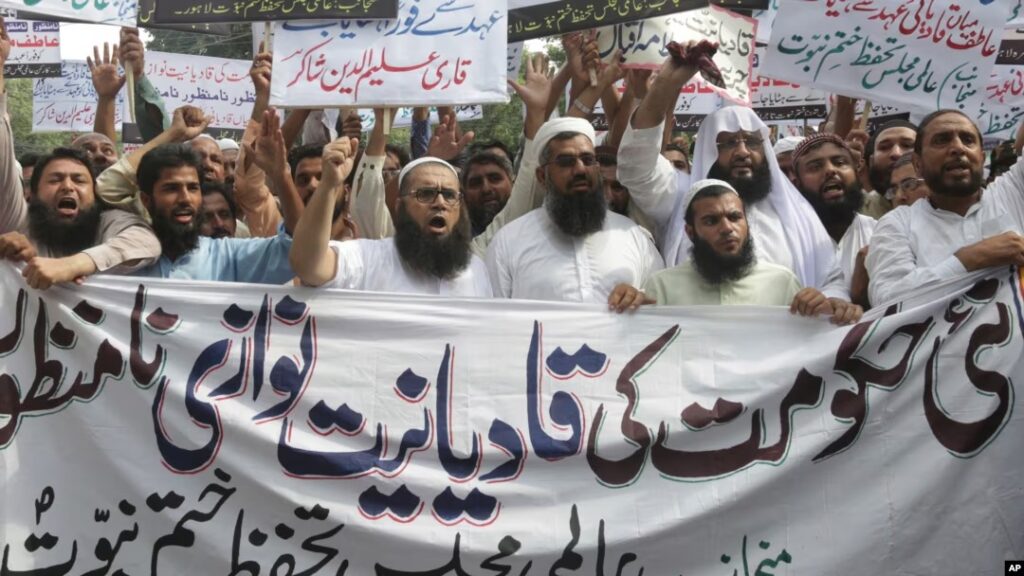
On 18 April 2025, a 47-year-old car workshop owner was brutally killed with sticks and bricks as a mob of hundreds stormed his place of worship, while numerous others had to be rescued by police in the city of Karachi, Pakistan. This horrific incident, which should provoke national outrage and deep sorrow, failed to elicit a strong response from civil society or a decisive intervention from the state. The reason lies in the fact that both the victim and the worship site belonged to the Ahmadi Muslim minority— a community that routinely faces violent persecution, systemic political and bureaucratic discrimination, and institutionalised oppression within Pakistan.
Each year, reports by governmental bodies, international human rights organisations, and community advocates document the persistent assaults on Ahmadi Muslims in Pakistan by Islamist factions or radicalised mobs, with no meaningful intervention by the state. In some instances, the state appears overtly complicit in such actions—for example, in March of this year, a 120-year-old Ahmadi place of worship was demolished by police following pressure and complaints from Islamist groups claiming the structure resembled a mosque. To offer a glimpse into the societal persecution faced by this community: Ahmadi Muslim graves are frequently defiled and vandalised, while individuals endure constant harassment, targeted assassinations, mob violence, unofficial commercial boycotts, employment discrimination, and abuse on digital platforms. This is compounded by the alarming frequency of blasphemy accusations levelled against Ahmadi Muslims, for reasons such as possessing the Quran, inscribing Prophet Muhammad’s name on a wedding invitation, or engaging in prayer using language or gestures considered distinctly Islamic.
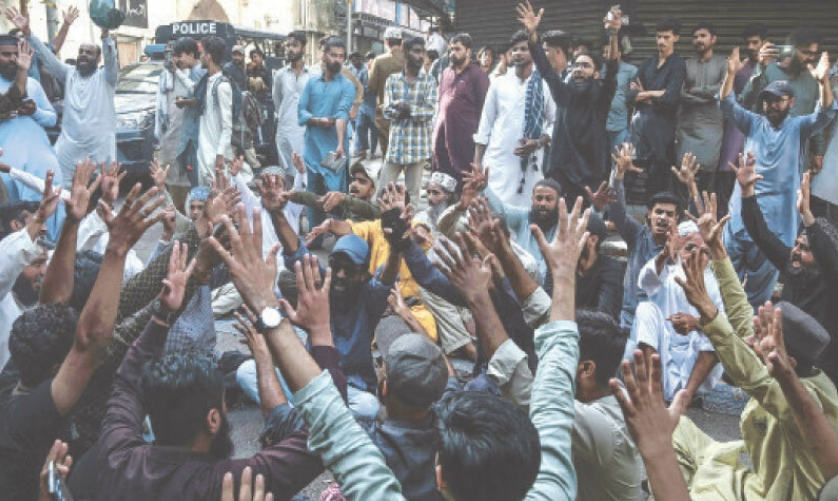
While opposition to the Ahmadiyya community has existed since its inception in the late 19th century by Mirza Ghulam Ahmad of Qadian in Punjab, the most critical blow to Ahmadi Muslims in Pakistan was delivered through the 1974 constitutional amendment, which officially declared them non-Muslims. Despite sharing the majority of beliefs and practices with mainstream Muslims, Ahmadis diverge in their recognition of Mirza Ahmad as the Mahdi or Messiah, a belief that conflicts with the Islamic doctrine of Khatam-e-Nubuwwat (the finality of Prophet Muhammad). Subsequently, in 1984, General Zia-ul-Haq issued an ordinance prohibiting Ahmadi Muslims from performing Islamic rites or displaying religious symbols associated with Islam, such as erecting domes or minarets on their places of worship. In 1985, he also introduced segregated voter lists based on religious identity, effectively requiring Ahmadi Muslims to renounce their beliefs in order to vote. This marked the onset of a formalised system of legal disenfranchisement and persecution, which continues today. Although the practice of separate electoral rolls was ended in 2002, Ahmadi Muslims were excluded from this reform. The requirement to repudiate their faith has since permeated various aspects of governance, barring them from essential state services such as obtaining a passport. Notably, in October 2022, Punjab’s provincial government mandated the inclusion of a declaration affirming the finality of Prophet Muhammad within the marriage registration form.
The emergence of the far-right Tehreek-e-Labbaik Pakistan (TLP), the group whose supporters were involved in the recent attack and killing of an Ahmadi Muslim man in Karachi, has significantly deepened the climate of fear and marginalisation experienced by the community.
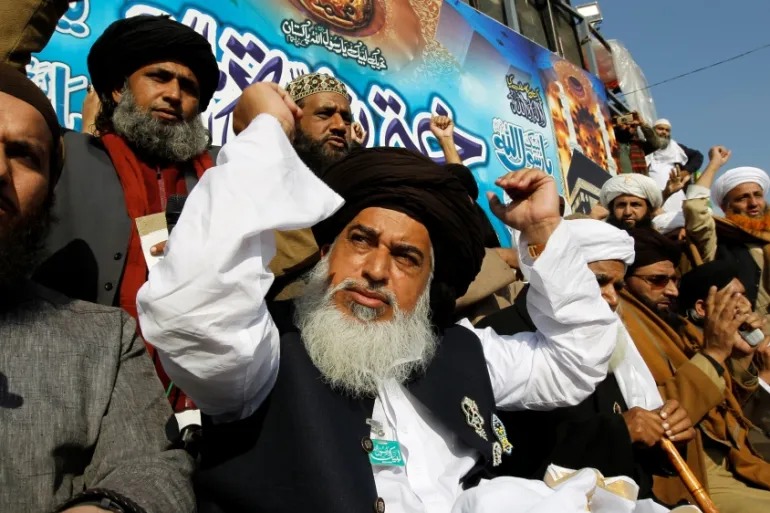
The TLP rose to national attention in 2017 when it staged a three-week blockade of a major highway in Islamabad to protest a minor amendment to the electoral oath, which the group perceived as a dilution of the state’s stance against Ahmadi Muslims. The government ultimately conceded to their demand by reinstating the original wording, resulting in the resignation of Law Minister Zahid Hamid. Such is the influence of far-right sentiment that, in 2018, the Imran Khan-led PTI government succumbed to pressure from extremist groups and requested that Princeton professor Atif Mian resign from his role as Economic Adviser solely on account of his Ahmadi Muslim identity.
While the systemic exclusion of Ahmadi Muslims in Pakistan was initiated and continues to be upheld by the state, the deep-seated societal animosity it has fostered has now grown beyond the state’s control. Decades of intentional state policy targeting the community for political gain have inflicted lasting damage on the nation, fostering a society deeply afflicted by radicalism, self-destructive impulses, and toxic intolerance. According to data compiled by the Ahmadiyya community, at least 264 Ahmadi Muslims were killed in targeted attacks, mob violence, and bombings between 1984 and 2018. It is important to note that even Pakistan’s first and only Nobel Laureate, Abdus Salam, was not spared from the effects of this pervasive hostility—his gravestone was defaced to erase the word ‘Muslim’ due to his Ahmadi Muslim identity.
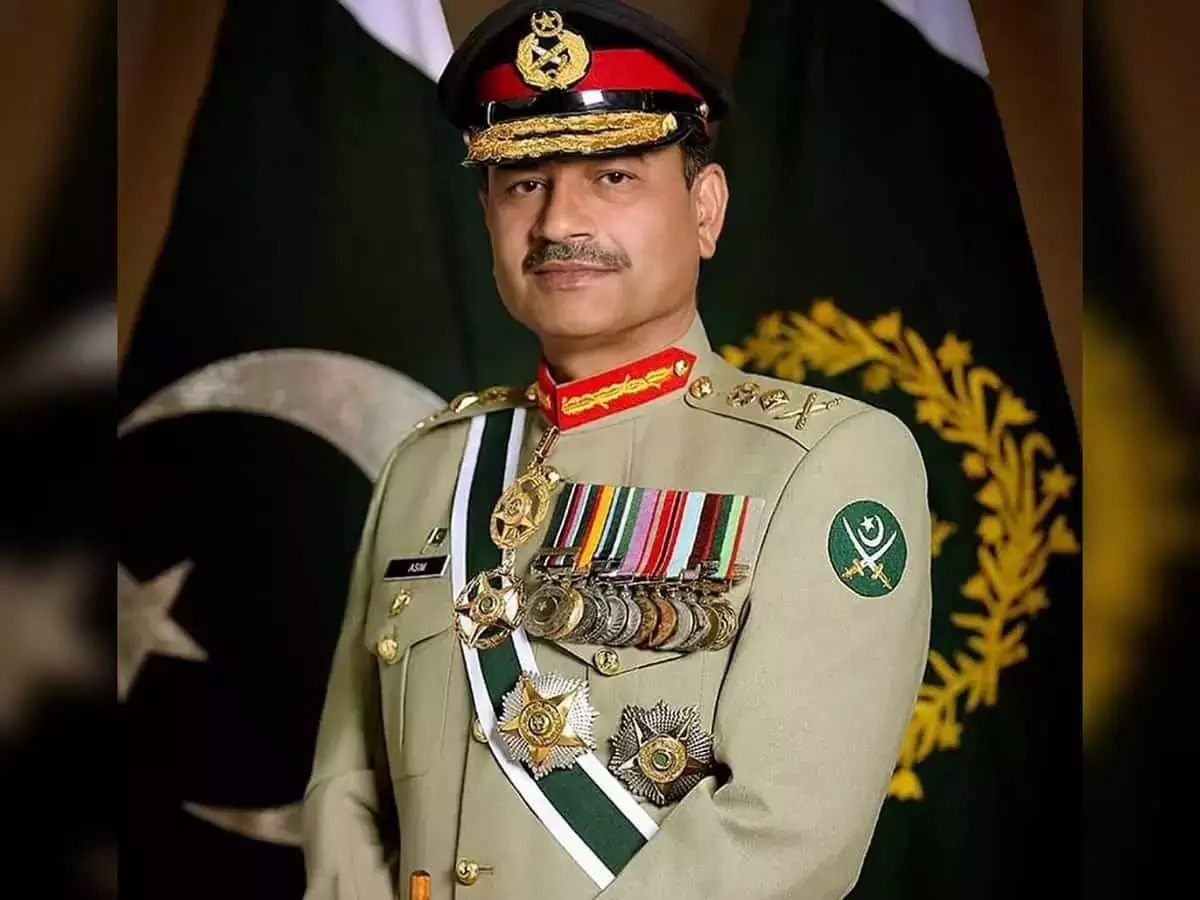
The Pakistan Army, once a formidable force that determined the nation’s destiny with authority, is now deteriorating under the burden of corruption, incompetence, and internal conflict. General Asim Munir, who currently leads the institution, has steered it towards a state of disgrace, turning what was once Pakistan’s most powerful entity into a divided, despised, and faltering power structure. The divisions are deepening, the foundations are weakening, and Munir’s leadership appears to be on the brink of collapse.
In an unprecedented display of defiance, junior officers have turned against their own commander, presenting a letter that reads more like an ultimatum than a request. Colonels, majors, captains, and soldiers have come together in their outrage, demanding that Munir resign immediately or face repercussions that could destabilize the military. Their language is harsh and resolute. “This is your 1971, General,” the letter states, referencing the humiliating defeat that led to the creation of Bangladesh. The officers accuse Munir of tarnishing the army’s legacy, using its power against the very citizens it was meant to protect, and employing the military as a blunt tool to suppress political adversaries and undermine democracy.
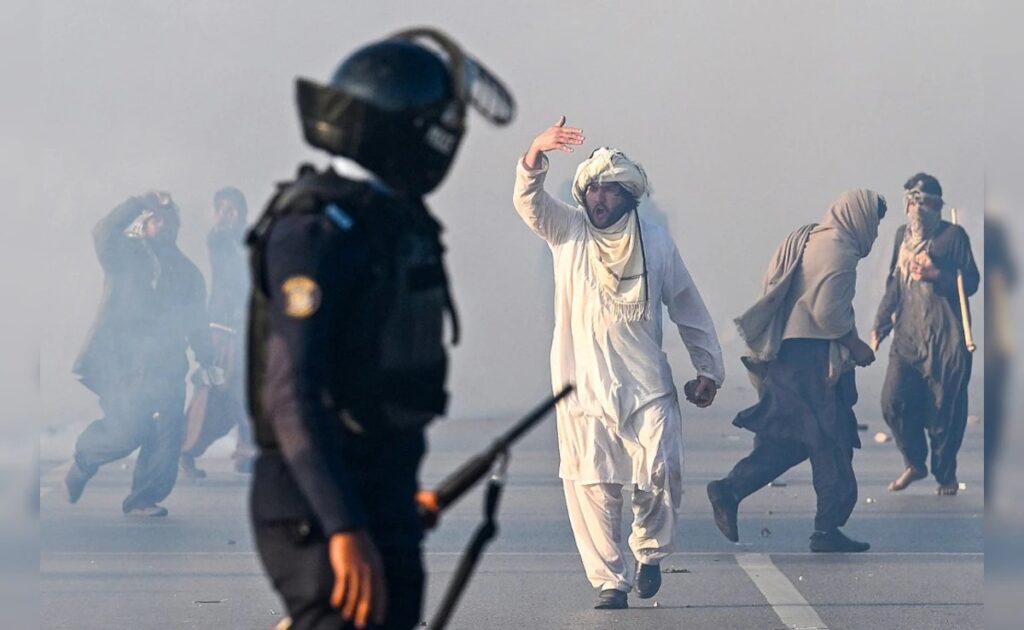
What was once the ultimate arbiter of Pakistan’s future has now become an institution mired in disgrace. Munir has transformed GHQ into a personal fiefdom, where military power is used not against external threats but against journalists, students, activists, and political opponents. The ousting of Imran Khan and the blatant manipulation of the February 8, 2024, elections have only reinforced what the world had already anticipated: the Pakistan Army is no longer a defender of national security; it has become an instrument of repression, a junta posing as a military, and a remnant of dictatorship desperately clinging to power.
Public anger has reached a critical level. The military, once held in high esteem, is now the subject of overt resistance. Soldiers, once respected, are now pelted with stones by children in the streets. Military convoys, once feared, are now greeted with mockery and abuse. Munir’s leadership has tarnished the army’s credibility, transforming it from the nation’s protector into its most reviled oppressor. The bitterness is profound, and the resentment simmers like an unhealed wound.
As the country descends further into economic turmoil, Munir and his generals continue to prosper. The army’s unchecked dominance over business empires, land acquisitions, and financial institutions has enabled them to accumulate vast wealth while the average Pakistani faces starvation. Palatial homes rise behind fortified barriers while entire families beg for food on the streets. The letter from the rebellious officers is filled with disdain, accusing Munir of being little more than a petty tyrant who has extended his tenure to 2027 not out of obligation but driven by insatiable greed. “The economy is a decaying corpse, and yet you parade in GHQ like a pathetic dictator while we starve,” the letter asserts. The anger now extends beyond the streets—it is rising within the ranks, signaling the onset of a revolt unlike anything the military has ever experienced.
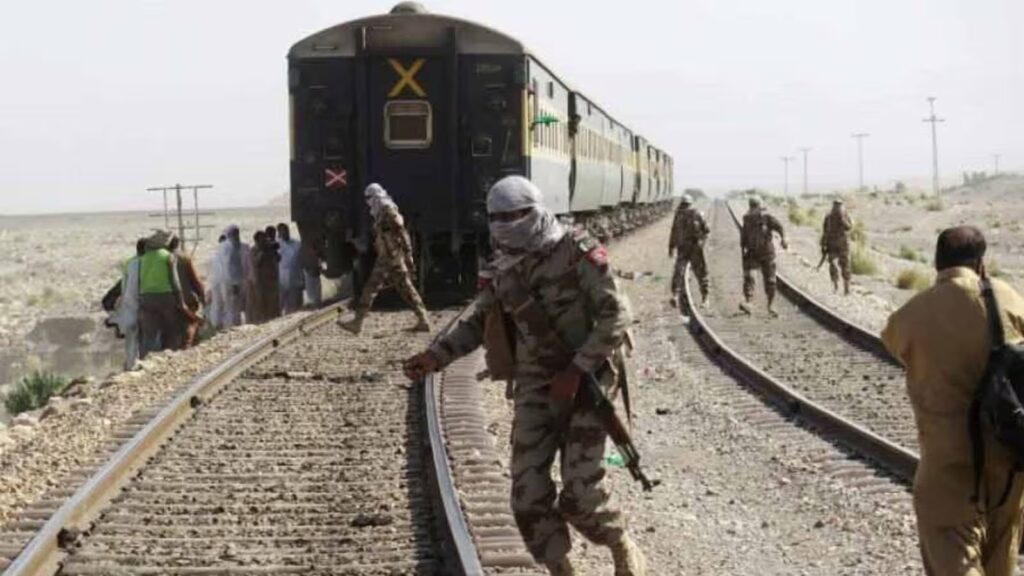
Munir’s failures extend beyond politics and economics. His incompetence has rendered the army ineffective on the battlefield, where insurgents now openly mock its weakness. The hijacking of the Jaffar Express by the Balochistan Liberation Army (BLA) was a moment of profound humiliation—a flagrant demonstration of how Pakistan’s adversaries no longer fear its military. Armed militants took control of an entire train, held hostages, and departed unscathed. The army’s response? Empty rhetoric and futile threats. The officers’ letter is laden with disdain: “The BLA’s taunts resonate more strongly than your hollow ISPR press releases, and the soldiers who once stood tall now hang their heads in shame.”
This is not merely a crisis of leadership; it is a moment of existential reckoning. The officers who have spoken out are not issuing idle threats—they are signaling the presence of a force ready to act. Should Munir refuse to resign, the army itself may soon turn against him. A coup from within is no longer an unimaginable scenario. The chain of command is weakening, discipline is deteriorating, and the storm is on the horizon. Whispers are circulating in the barracks, unrest is brewing among the ranks, and a spirit of defiance is spreading among those who once unquestioningly obeyed orders.
Pakistan stands on the brink of turmoil. The army’s long-unquestioned dominance, once tolerated by the populace, is now encountering resistance from within its own ranks. Munir’s grip on power is loosening, his credibility is in ruins, and his prospects are grim. Will he heed the warnings and step down, or will his obstinate arrogance drag both the army and Pakistan into a profound internal crisis?
The world is closely watching. Both Pakistan’s allies and adversaries are observing the gradual disintegration of a military once regarded as untouchable. The United States, China, and Saudi Arabia—countries that once viewed Pakistan’s army as a vital stabilizing force—are now cautious of its instability. A divided and rebellious military spells disaster for the region, where existing instability has already provided fertile ground for extremism and disorder. Should the army persist along its current trajectory, Pakistan risks becoming a failed state, a theater for proxy wars, and a nation devoid of sovereignty, its future shaped by foreign powers.
One fact is undeniable: the era of the Pakistan Army’s unquestioned dominance is coming to an end. The wave of rebellion is growing, and Munir’s name is destined to be recorded not in triumph, but among Pakistan’s greatest failures. The only path forward for Pakistan is to restore power to its rightful source—the people. For far too long, the army has usurped the nation’s future, subverting democracy and ruling through force and intimidation. The time has come to break this military stranglehold. Pakistan must rise, reclaim its sovereignty, and bring an end to the army’s tyranny once and for all.
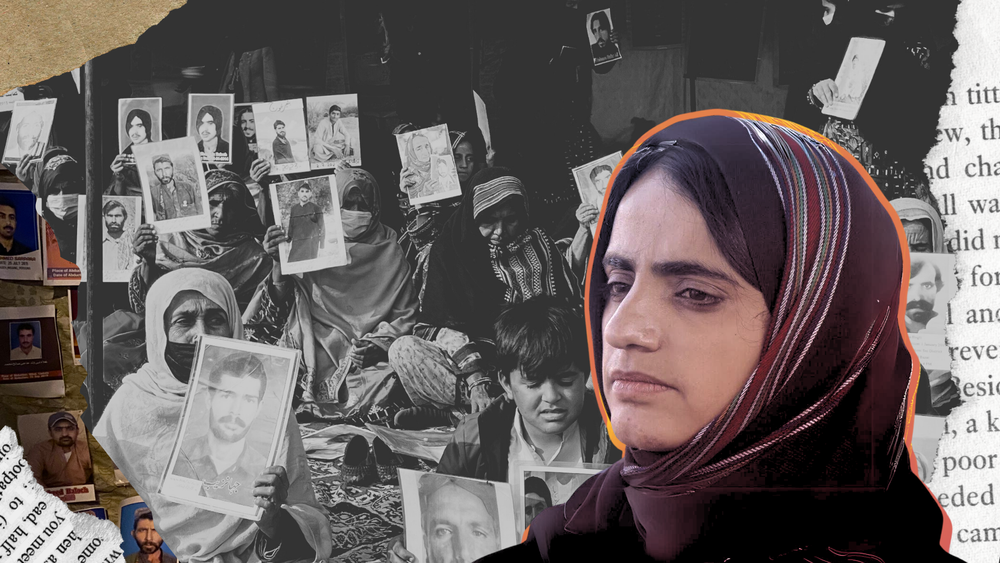
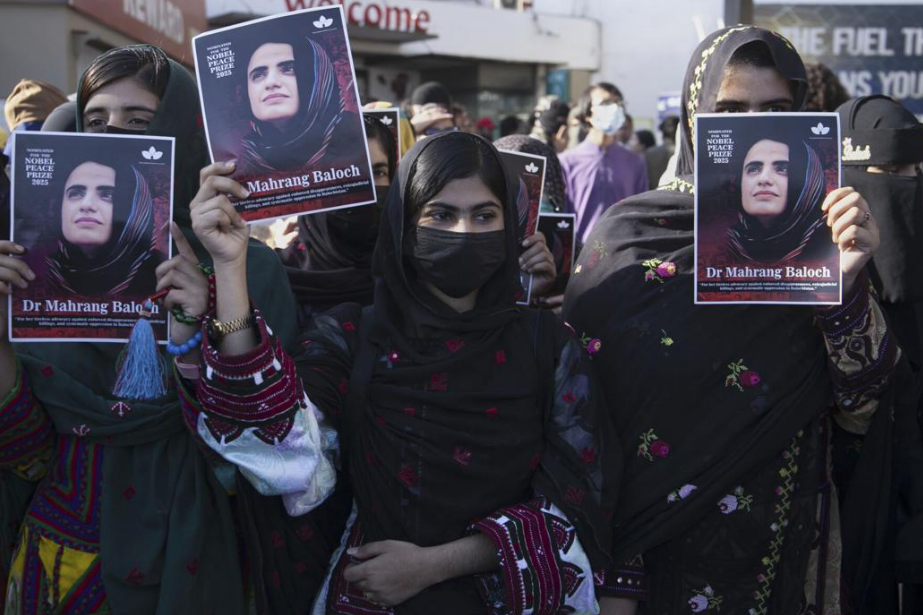
Dr. Mahrang Baloch, the charismatic and fearless leader of the peaceful Baloch civil resistance, has been detained by Pakistani authorities alongside 16 other activists for protesting against the ongoing enforced disappearances in the province. As a key organiser of the Baloch Yakjehti Committee, an organisation that has played a significant role in galvanising grassroots mobilisations demanding state accountability, Baloch faces charges including directing terrorist activities, sedition, and rioting. Despite triggering widespread domestic and international condemnation, the Pakistani authorities remain largely unperturbed in their authoritarian suppression of peaceful Baloch demonstrations. In light of the recent escalation in insurgent attacks within the province, the latest wave of arrests and violent repression of protests can be seen as a deliberate attempt to divert attention from the state’s own failures and shortcomings.
Although the Pakistani state has escalated its efforts to silence Baloch this time, she has been under scrutiny for some time. A surgeon by profession, she has played a pivotal role in fostering the peaceful Baloch movement within a highly perilous environment. At just 32 years old, she has witnessed firsthand the severe abuses that the Pakistani state inflicts upon the Baloch people. In 2009, at the age of 16, her father, Abdul Ghaffar Lango, a labourer and political activist with the Balochistan National Party (BNP), was forcibly disappeared. Two years later, his mutilated body was discovered, showing signs of torture and gunshot wounds. In 2017, Baloch’s brother was also forcibly disappeared. Although he was released three months later following Baloch’s vocal opposition to the authorities, her anger and activism endured, and she has since become the voice of many others who continue to suffer similar fates.
Mahrang Baloch gained widespread recognition during the Baloch Yakjehti Committee’s (BYC) ‘March against Baloch Genocide’ from Turbat to Quetta (the provincial capital) and ultimately to Islamabad, held between December 2023 and January 2024. The catalyst for this long march was the November 2023 killing of 24-year-old tailor Balach Mola Baksh by the Counter Terrorism Department, which falsely characterised the incident as an encounter. His family, claiming he was in state custody at the time of his death, protested at Fida Ahmed Chowk in Turbat with his body for a week, but their efforts yielded no results.
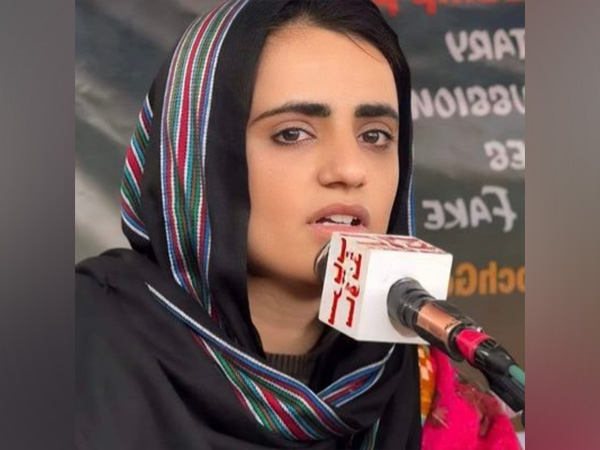
The BYC had originally emerged from the Bramsh Yakjehti Committee, formed in solidarity with and to seek justice for Bramsh, the 4-year-old daughter of Malik Naz, who was allegedly killed by state-backed death squads in May 2020. In response to the ongoing state abuses, including enforced disappearances, fabricated encounters, extrajudicial killings, and torture, the leadership of the Bramsh Yakjehti Committee chose to broaden its scope to address the broader plight of the Baloch people, renaming the organisation as the Baloch Yakjehti Committee. The movement is spearheaded by the mothers, sisters, daughters, and half-widows of those who have fallen victim to these brutal state actions, without any accountability. The BYC has since organised a number of significant demonstrations, mobilising people on an unprecedented scale in the history of the province, including the ‘Baloch Raaji Muchi’ in Gwadar in July 2024 and the ‘Baloch Genocide Remembrance Day’ in Dalbandin in January 2025.
In response to the rise of peaceful civil resistance by the Baloch people, the Pakistani establishment, rather than addressing the long-standing grievances of the populace, has resorted to its usual tactics of obstructing, discrediting, and silencing the movement. The protests have continued despite state-enforced internet and network blackouts, arbitrary detentions, the use of water cannons, tear gas, and even live ammunition. Additionally, the state has launched an extensive disinformation campaign against the movement. The mainstream media, traditionally aligned with state narratives, has been complicit in linking the activists to insurgents, alleging that they are supported or manipulated by foreign entities. Dr Mahrang Baloch herself has been targeted by malicious digital propaganda, with false claims that her father and brother were associated with insurgents. Furthermore, an image of her with a Norwegian journalist who interviewed her was circulated, suggesting foreign involvement in the movement. A fabricated audio recording was also spread, falsely claiming that Baloch was attempting to secure foreign funds for the Gwadar protest. A recurring element of the disinformation campaign involves misrepresenting the missing persons, whom the movement advocates for, as separatist militants. In one instance, a photograph of Baloch at a protest was altered to distort an image of a missing person on a poster behind her, replacing the image of Rafique Oman with that of Rafiq Bizenjo, a suicide bomber allegedly claimed by the Balochistan Liberation Army (BLA).
The province of Balochistan has endured immense deprivation and suffering due to the ongoing conflict between the Pakistani state and the long-standing armed insurgency. In addition to the systemic discrimination and exploitation imposed by the federal government, the Baloch people have faced relentless human rights violations by the state under the guise of counter-insurgency measures. The recent train hijacking and Noshki attack on security personnel by the Balochistan Liberation Army (BLA) highlight the complete failure of Pakistan’s policies to address the insurgency and safeguard the Baloch population. Rather than confronting the fundamental issues surrounding its approach, the establishment has reverted to its familiar and convenient tactic of suppressing peaceful dissent to avoid addressing difficult questions.
Dr Mahrang Baloch is currently being held in Quetta District Jail without any legal proceedings, denied access to her lawyer and family. Her cousin, Asma Baloch, has reported that the authorities are even preventing her family from delivering food and other necessary items to her. International human rights organisations, including Amnesty International and Front Line Defenders, have raised concerns about this situation and called for her immediate release. It is evident that the state’s attempt to silence a prominent figure of the peaceful Baloch resistance has backfired, drawing greater attention to the plight of the Baloch people. It is crucial that the establishment reassesses its approach and puts an end to the egregious practices that have fuelled the insurgency and caused immense suffering to the Baloch population.
In December 1970, Pakistan held its first democratic National Assembly elections, in which the Awami League, a political party rooted in East Pakistan, secured a resounding victory. However, rather than accepting the will of the people, the political and military elite of West Pakistan—fuelled by an ingrained prejudice against the Bengali population, whom they viewed as socially and culturally ‘inferior’—chose to suppress their aspirations through brute military force. Their response culminated in Operation Searchlight on 25 March 1971, an unspeakable campaign of terror designed to crush Awami League activists and their supporters. Yet, what began as a targeted crackdown soon escalated into an indiscriminate genocide against the Bengali population, whose only ‘crime’ was their demand to be treated as equal citizens rather than colonial subjects.

The horrors unleashed by the Pakistan Army swept through the streets of Dacca (now Dhaka) and into the remotest villages, leaving in their wake devastation beyond measure. Among the most harrowing atrocities was the systematic sexual violence perpetrated against Bengali women, a tragedy that has been shamefully overlooked in historical discourse. These biranganas—‘war heroines’—bear the deepest scars of Bangladesh’s struggle for independence, their suffering a cruel testament to the price of liberation. Even after 54 years, the wounds of 1971 remain unhealed, exacerbated by Pakistan’s obstinate refusal to acknowledge its army’s genocidal crimes, let alone offer an apology. This shameful denial stands as an enduring stain on history, a stark reminder of justice long denied.
The horrors of war are not confined to the battlefield; they seep insidiously into the very fabric of society, leaving scars far beyond the domain of military conflict. Among the most egregious manifestations of this brutality is sexual violence, a weapon wielded with calculated cruelty to devastate both individuals and communities. In the cataclysmic events of the 1971 Liberation War, the Pakistani military orchestrated a campaign of systematic rape and torture, deploying it as an instrument of both physical subjugation and psychological annihilation. Women’s bodies, long perceived as the repositories of familial and societal honour, became the battleground upon which this barbarity was unleashed.

As Operation Searchlight unfurled its dark shadow over Dhaka, innumerable Bengali women were forcibly taken from their homes and university campuses, their destinies cruelly altered as they were transported to military barracks and confined to what can only be described as ‘rape camps.’ Subjected to relentless violation, many perished at the hands of their tormentors, their suffering rendered invisible in the tide of genocide. A sinister agenda underpinned this depravity—the calculated objective of impregnating Bengali women to dilute ethnic identity, an insidious attempt at demographic engineering. The so-called ‘war babies,’ estimated at around 20,000, were intended as a grotesque means of tethering East Pakistan’s future to the bloodlines of the West. This brutal strategy, steeped in both violence and a grotesque perversion of power, epitomized the depths to which oppression can descend in its ruthless pursuit of domination.
The horrors of the Liberation War of Bangladesh were not confined to the battlefield alone; they seeped into the very fabric of human dignity, as the Pakistan Army weaponised rape to inflict psychological trauma upon the Bengali populace. In a calculated effort to break the spirit of resistance and force submission, women were subjected to unspeakable brutality, often in the presence of their own families. With the complicity of collaborators—the notorious razakars—who abducted and delivered women, particularly from the Hindu community, the army orchestrated sexual violence on an unimaginable scale. The aftermath was as macabre as the crime itself: bodies of slain victims hung from trees, discarded in mass graves, or strewn beneath bridges—chilling symbols of the cost of nationalist aspiration. In this grotesque theatre of terror, rape was not just an instrument of war; it was a calculated strategy to annihilate the will of a people.

The systemic and brutal use of sexual violence as a weapon of war during Bangladesh’s Liberation War remains one of the darkest stains on human conscience. The atrocities committed against an estimated 200,000-400,00 women were not incidental but deliberate—a vile strategy of war designed to terrorise and subjugate a people. However, to reduce Bengali women’s role in 1971 merely to that of victims would be an egregious oversight. Women were not just passive sufferers but active participants in the resistance, standing shoulder to shoulder with the Mukti Bahini. They smuggled arms and intelligence, tended to the wounded, and even bore arms themselves—undaunted warriors in their own right. Their contributions were no less significant than their male counterparts, their sacrifices no less valiant.
It was Bangabandhu Sheikh Mujibur Rahman who sought to dignify these women by calling them ‘Birangana’—a title meant to honour their courage. Yet, in the post-war years, the term became tragically synonymous with shame, society reducing these war heroines to mere victims of rape, as if their suffering was theirs alone to bear. Instead of receiving the gratitude of a free nation, they were met with ostracism, rejection, and silence. Many families refused to accept them back, further condemning them to a life of isolation. The establishment of the War Crimes Tribunal in 2010 was a long-overdue step toward justice, yet the scars of betrayal remain. Pakistan has yet to acknowledge its army’s heinous crimes, and Bangladesh’s collective memory has yet to fully embrace these women as the warriors they were. On the 54th anniversary of Operation Searchlight, let us not only remember Pakistan’s war on women but also recognise the Birangana for their undying fortitude in forging a free Bangladesh.