
– Arun Anand
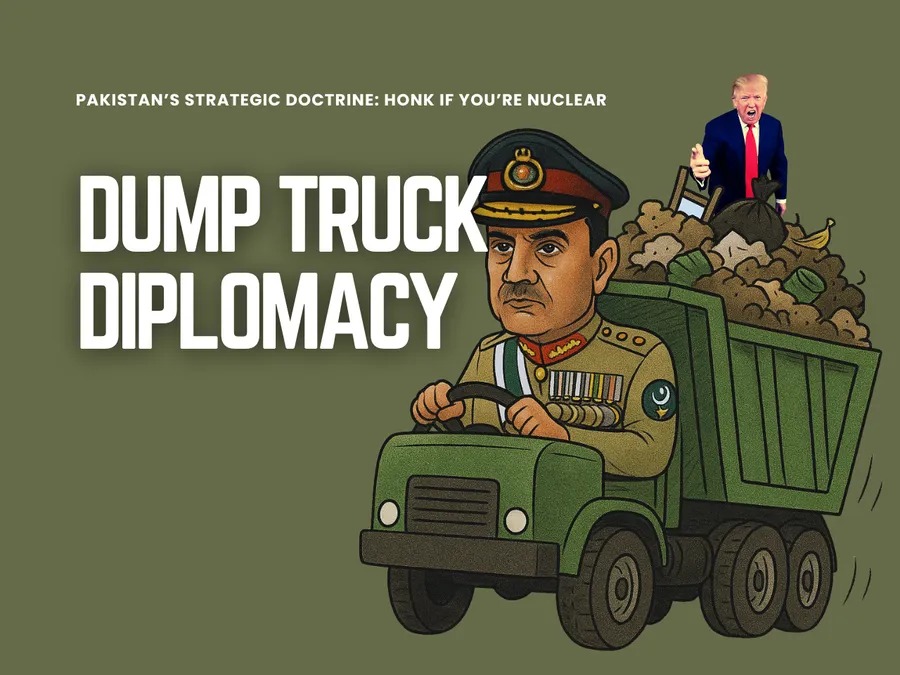
Pakistan’s leaders, both political and military, have long relied on self-serving metaphors to shape the domestic sociopolitical sphere and frame their country’s place in the broader region. Often delivered with a dramaturgical embellishment, these analogies do more than reflect insecurity or national mythmaking. They reveal a deeper strategic mindset in which Pakistan sees value in disruption, leverage through instability, and the cultivation of terrorism as a tool of statecraft.
The latest examples come from Pakistan’s powerful military establishment, which has historically dominated the country’s political and security architecture. It started with Pakistan Army Chief Asim Munir’s interaction with expatriates in Florida, United States, in August this year, wherein he deployed a comparison that captured headlines for its brazenness. “India is a shining Mercedes coming on a highway like a Ferrari,” he said. “But we are a dump truck full of gravel. If the truck hits the car, who is going to be the loser?”
On its surface, such remarks appeared to emphasize resilience: that Pakistan as a lumbering truck may not be glamorous, but it can endure any difficulty and overcome any obstacle. Yet the real significance of this ironical analogy lies elsewhere. It implies that Pakistan retains the capability as well as readiness to cause strategic disruption, even at great cost to itself, and in doing so shape regional outcomes. The metaphor glorifies collision as an equalizer. It suggests that while India surges economically and diplomatically, Pakistan’s relevance lies in its ability to destabilize.
A parallel metaphor that is being increasingly used by the country’s political and military elite describes Pakistan as a “railway engine”, that is portrays it on a slow, traditional, yet persistent mode of progress. The image is meant to frame Pakistan as foundational to South Asian stability, chugging along in contrast to India’s sleek modernization. Implicit in this imagery is the claim that the region’s momentum, direction, and safety can still be both set and derailed by Pakistan’s choices.
Such analogies may seem rhetorical to common masses and yet contain within them a longstanding doctrine of purposeful disruption that Pakistan has employed in the last several decades. It is based on its decades-old strategic worldview wherein it has consistently valorized confrontation, framing India as an existential threat, and more domestically more significant objective of positioning proxy-terrorism as a legitimate extension of state power.
Such a propagandistic rhetoric has found currency amidst Asim Munir’s sweeping consolidation of authority through constitutional amendments to expanded control over the judiciary, nuclear command, and internal security. This narrative push is designed to reinforce his martial narrative that Pakistan may be economically battered, politically unstable, and diplomatically isolated, but it remains capable of inflicting damage that forces global attention.
As such, while Pakistan’s establishment may dress its messaging in fresh metaphors, the underlying doctrine has barely evolved. Since the 26/11 attacks by ISI supported Lashkar-e-Toiba terrorists in Mumbai, there has been little substantive reckoning within Pakistan about the use of terrorist groups as strategic assets. If anything, the rhetoric of state officials in the years since reveals continuity, not change.
It should be noted that there has been consensus within Pakistani establishment, as exposed by the statements from senior retired generals, political leaders, and religious ideologues, who often reiterate that proxy terrorism can be a “force multiplier” against India. Such an argument has been repeatedly framed as asymmetric necessity given that since Pakistan cannot match New Delhi conventionally, so it must leverage “non-state actors” to disrupt India’s rise even as its own economy falters. It explains why and how terrorist groups like LeT and Jaish-e-Mohammed have been normalized within the socio-political discourse of the country by portraying terrorists as instruments of pressure than what they are: terrorists.
This mindset is reflected not only in Pakistan’s reluctance to prosecute figures like Hafiz Saeed or Masood Azhar, but also in its sustained tolerance of groups that openly espouse cross-border terrorism sold as so-called jihad. And the danger of such rhetoric is not abstract as it has recurrently translated into violence that has spilled far beyond India’s borders. Be it 26/11 attacks of 2008 in India or the 9/11 attacks in the United States in 2001, these showcased how such a mentality that the Pakistani establishment patronises can have devastating human costs.
Just as the 9/11 attacks targeted symbols of American openness and global leadership which the world forever, 26/11 targeted India’s cosmopolitan identity to sow internal discord and disrupt its global economic rise. Therefore, should Pakistan’s leadership continue to present disruption as strategic leverage, as they are doing currently, the risk of mass-casualty attacks would remain unacceptably high.
Seen from such a lens, Asim Munir’s use of analogies like ‘dump truck’ or the ‘railway engine’ are not harmless political theatre. It is a reflection of a national mindset of a country of mismanaged economy, which is unable to compete with rising India in any domain, sees strategic relevance in the threat of sabotage. It is a worldview that sees regional equilibrium not in growth or cooperation but in managed instability maintained through terrorist proxies. And that worldview does not confine risk to South Asia, which is why Pakistan’s analogies matter.
In such a scenario, while India cannot afford any complacency, it makes it implicit on the international community to acknowledge that South Asian terrorism, especially when linked to state sponsorship like Pakistan’s role, poses a threat transcending national borders.
Nevertheless, two lessons stand out. Firstly, there needs to be greater transnational intelligence synergy at the international level. For instance, given that countries like India, the United States, the EU, Israel, Southeast Asian partners, and Gulf states, have a shared interest in tackling terrorism, they would need to bolster real-time intelligence exchange, establish joint tracking of financing networks, and coordinated monitoring of extremist propaganda.
Secondly, diplomatic isolation of terror-sponsoring frameworks is no longer optional. The world must explicitly differentiate between Pakistan as a nation and Pakistan’s security apparatus as a destabilizing actor and shape policy accordingly. This is because civilian government is a façade in that country as it is overwhelmingly dominated by the military establishment.
Therefore, the “dump truck” and “railway engine” analogies may have been meant to project endurance, but they expose a darker truth of Pakistan’s military leadership’s outdated belief that regional power can be exercised through disruption and not development. Unless such a mindset is confronted at political, diplomatic, and strategic levels, the international community should rest assured that its risks will not be borne by India alone.
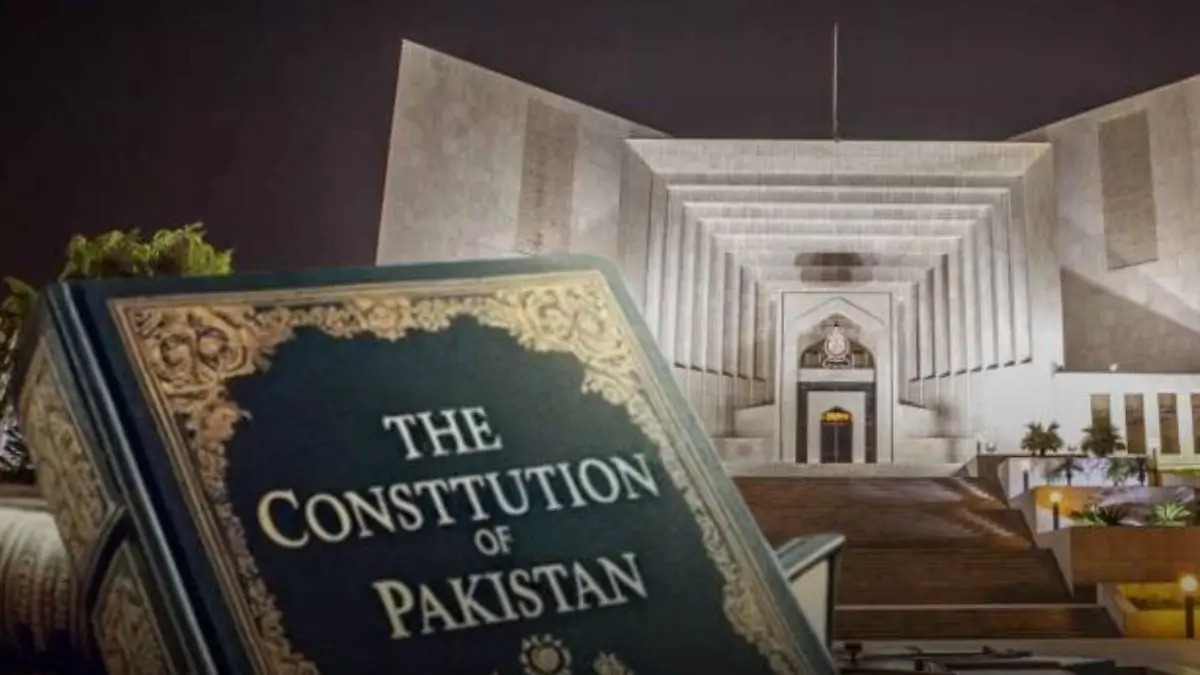
Since his appointment in November 2022, Field Marshal Asim Munir has proved a master practitioner of power consolidation, outpacing even Pakistan’s most notorious military strongmen such as Ayub Khan, Zia-ul-Haq, and Pervez Musharraf. His latest gambit, the proposed 27th Constitutional Amendment, cements that legacy and threatens to formalize Pakistan’s drift into an overt military state.
At its core, the 27th Amendment rewrites Article 243 of Pakistan’s Constitution which details the governing framework of the command of the armed forces (Chapter 2). While, it may appear to be a technical legal change, however, it is, in fact, a crude structural reordering of the Pakistani state in favor of the military establishment that has anyway calling the shots for decades.
Nevertheless, one of the most consequential provisions (clause 5) is the proposed creation of a new office of Chief of Defence Forces (CDF). Under this clause, the Army Chief will automatically assume the role of CDF role, which effectively merges the tri-service command of the army, navy, and air force into one uniformed post. The existing Joint Chiefs of Staff Committee (JCSC), a forum meant to balance inter-service authority, will be abolished.
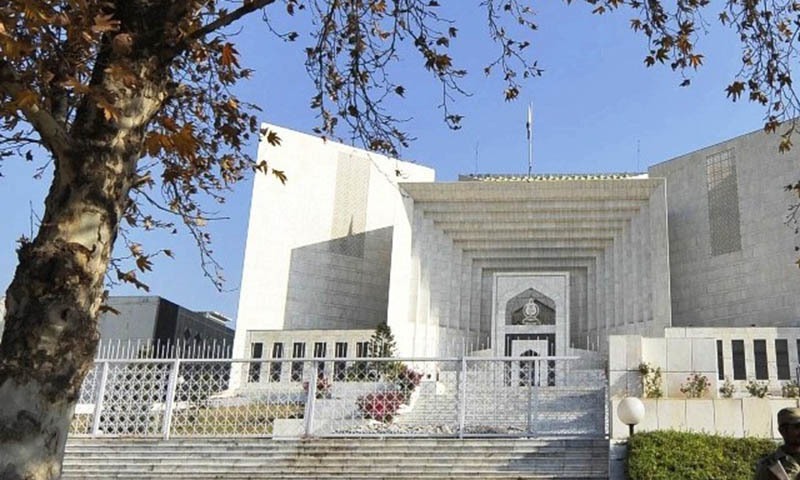
In practical terms, this means all branches of Pakistan’s armed forces will answer to one man, that is Asim Munir. It also conveniently sidelines General Sahir Shamshad Mirza, the current Chairman of the Joint Chiefs and the senior-most general whom the Shehbaz Sharif government bypassed when appointing Munir in 2022.
This clause would mark the first time in Pakistan’s history that the entire military chain of command is legally and constitutionally subordinated to a single officer.
Another major clause (6) under Article 243 transfers effective control of Pakistan’s nuclear arsenal to the Army Chief. The Prime Minister would nominally appoint the Commander of the National Strategic Command (the custodian of nuclear weapons), but only from among “members of the Pakistan Army” and solely on the “recommendation of the Chief of Army Staff concurrently serving as Chief of Defence Forces.”
This wording is not incidental. It ensures that the nuclear command, which has traditionally been supervised by a civilian-led National Command Authority, will now operate entirely under military discretion. Pakistan’s already fragile notion of civilian oversight is being reduced to fiction. With this, Asim Munir not only commands Pakistan’s conventional military forces but also gains exclusive control of its nuclear deterrent.
Perhaps the most extraordinary aspect of the 27th Amendment lies in its provisions for legal protection. Given that the amendment proposes lifetime immunity to the Field Marshal (clauses 7,8,9,10 &11), it practically equates his legal status with that of the President as the Head of the State of Pakistan. In effect, Asim Munir, who was conferred the title of Field Marshal earlier this year, cannot be prosecuted, investigated, or held accountable by any court or parliamentary body for decisions made during or after his tenure.
This is a historic and most consequential departure from Pakistan’s constitutional tradition. Even military rulers like Zia and Musharraf, both of whom seized power through coups, lacked explicit lifetime impunity under constitutional law. However, Munir has, by securing this clause, effectively insulated himself against future civilian pushback or judicial scrutiny, ensuring that any transition of power will not endanger his position or legacy.
Though Pakistan’s history has seen several military rulers institutionalizing their dominance through legal means like Ayub Khan’s rewriting of the 1962 Constitution or Zia-ul-Haq giving the military a permanent political veto by amending Article 58(2)(b), Asim Munir’s strategy is more sophisticated and inarguably more durable. Unlike his predecessors, who relied on overt coups, Munir is using constitutional procedure and parliamentary approval to codify military supremacy. As such, Munir seems to be outdoing the likes of Ayub, Zia, and Musharraf not through coups but by rewriting laws in his own favor.
The Shehbaz Sharif government’s cooperation in pushing this amendment through parliament reveals how deeply Pakistan’s civilian leadership has become dependent on the military’s favor. The Asim Munir-led military establishment has leveraged this vulnerability and extended its control over domestic politics, the economy, and even foreign policy.
By institutionalizing this control through the 27th Amendment, the military no longer needs to rely on backroom manipulation as it can now rule openly, with parliamentary consent.
The conferment of the title “Field Marshal” on Munir earlier this year, following India’s “Operation Sindoor” was the clearest signal of his elevation to the highest power status in the country. It very well echoed self-promotion of Ayub Khan to Field Marshal in the 1960s, when he justified his authority was essential to the country’s national defense.
Munir would do well to remember that Pakistan’s streets which are restless, politically volatile, and steeped in resentment against military domination, though it may dormant now, have a way of humbling even the most entrenched generals. Equally, it is interesting how the country’s political elite, particularly Pakistan Muslim League-Nawaz (PML-N) and Pakistan People’s Party who currently backs Munir seem to have forgotten how such curry favouring of generals have bitten them in the past.
The 27th Amendment marks not just another chapter in Pakistan’s cycle of military dominance but a turning point of the transformation of military supremacy from an unwritten reality into a constitutional fact. Field Marshal Asim Munir may believe he has achieved what his predecessors could not: absolute power with absolute legitimacy. But Pakistan’s history suggests that even the thickest face and the blackest heart cannot shield a ruler from the reckoning that follows hubris.
– Arun Anand