
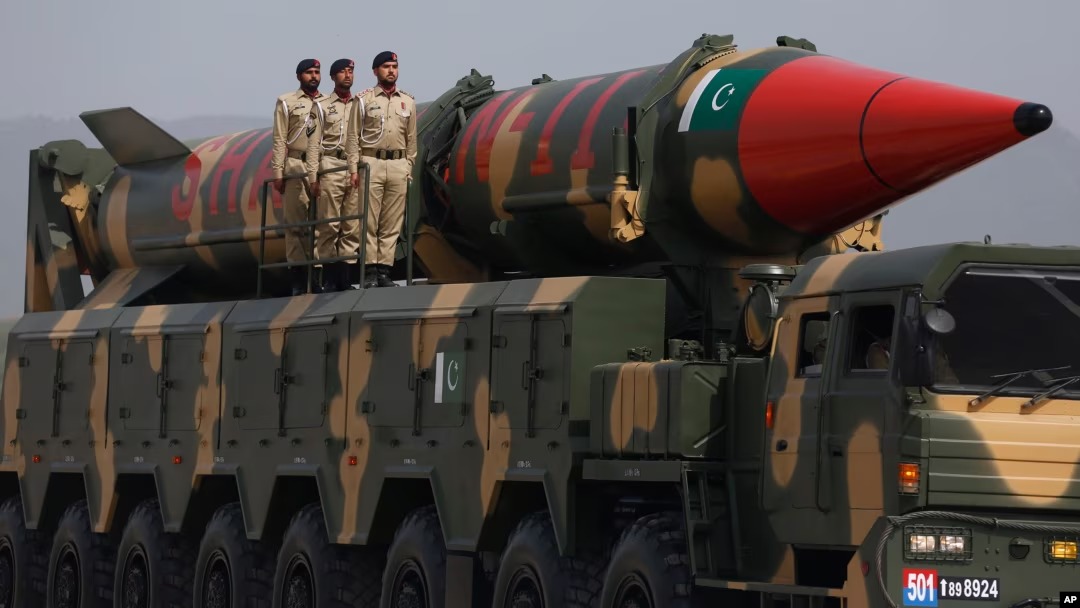
In a move that could recalibrate the fragile balance of power in South Asia, the United States has added Pakistan to its list of buyers for the AIM-120 Advanced Medium-Range Air-to-Air Missile (AMRAAM). This modification to an existing US arms contract with Raytheon represents more than just a defence transaction — it signals a potential rearmament of Pakistan’s air power at a time when the region’s security situation remains precarious.
Pakistan’s inclusion in the programme, valued at over $2.5 billion, revives a defence partnership that had largely stagnated following years of strained relations with Washington. For Pakistan, whose air force still relies heavily on its fleet of American F-16 fighter jets, the acquisition of these advanced BVR (beyond-visual-range) missiles marks a major technological enhancement. For the region, however, it raises troubling questions about stability, deterrence, and the risk of escalation between nuclear-armed rivals.

The AMRAAM, capable of engaging targets at distances beyond 150 kilometres, offers precision, speed, and a “fire-and-forget” capability that allows pilots to disengage immediately after launch. In purely technical terms, it’s a formidable addition to any air force. But in Pakistan’s context, such a system has far-reaching strategic implications.
The country’s military establishment has long pursued parity with India, despite a stark economic gap and persistent domestic crisis. Its historical record of aggressive posturing, coupled with its military’s disproportionate influence over foreign policy, makes the AMRAAM deal far more than a routine upgrade. What appears to be an innocuous arms agreement could, in reality, alter the regional deterrence equation.
South Asia’s air domain has always been sensitive — each technological advance on one side compels a countermeasure from the other.
When India demonstrated its indigenous Astra BVR missile system, it underscored its growing self-reliance and capability to defend its airspace. Pakistan’s response, however, has been to seek external suppliers to maintain parity rather than pursue domestic innovation. The AMRAAM deal thus reflects a continuation of dependence — and a willingness by Washington to overlook the destabilising consequences of arming a military whose strategic ambitions have often undermined peace.
This renewed US–Pakistan engagement also revives old anxieties about the nature of their security relationship.
Historically, American arms transfers to Pakistan have been justified on counterterrorism or defence cooperation grounds, only for those weapons to later be used to posture against India. The F-16 fleet itself, originally supplied under similar premises, became a central tool of Pakistan’s conventional deterrent against its eastern neighbour. The reintroduction of the AMRAAM into this equation risks encouraging the same behaviour — a renewed confidence in coercive diplomacy backed by advanced weaponry.
The timing of this deal is particularly concerning. Pakistan faces one of the most severe economic crisis in its history, coupled with a volatile political environment and a military establishment struggling to maintain control over internal security. Rather than focusing on domestic reform and stability, the country’s leadership appears intent on modernising its military arsenal. This suggests a misalignment of priorities — a pattern familiar to observers of Pakistan’s civil-military dynamics, where the pursuit of military parity often overrides social and economic needs. From a regional security perspective, this missile deal could reintroduce an element of uncertainty into South Asia’s deterrence environment.
India and Pakistan have fought multiple wars, experienced countless border skirmishes, and nearly stumbled into escalation after the Balakot air strikes in 2019 — an episode where Pakistan’s F-16s, armed with earlier versions of the AMRAAM, were already involved. The introduction of more advanced missile variants, such as the C8 and D3, only increases the lethality of potential confrontations.
Critics of the deal in policy circles argue that the US risks repeating historical mistakes. For decades, American support for Pakistan’s military has produced short-term tactical cooperation but long-term instability. Each wave of arms assistance has strengthened the military’s hand internally, often at the expense of democratic governance. It also emboldens the institution to act as an independent power centre — one that wields foreign policy and national security decisions without civilian oversight.
By rearming Pakistan under the guise of modernization, Washington may inadvertently empower an institution that has repeatedly destabilized both its own society and the broader region. For India, the development underscores the enduring asymmetry of US policy in South Asia.
While Washington describes New Delhi as a “strategic partner”, the continuation of military aid to Pakistan introduces contradictions into that narrative. It complicates India’s strategic calculus, forcing it to divert resources toward countering Pakistan’s enhanced air capabilities even as it focuses on its maritime and northern borders. The US, in attempting to maintain influence over both South Asian powers, risks playing both sides — a balancing act that history suggests is unsustainable.
Beyond the India–Pakistan dynamic, the broader concern lies in the precedent this sets. If Pakistan’s procurement of advanced missiles is seen as a reward for engagement with Washington, it could encourage other regional actors to pursue similar deals to maintain balance. This could accelerate an arms race in one of the world’s most militarized regions. At a time when global powers are emphasizing restraint and dialogue in conflict-prone zones, the decision to expand missile sales in South Asia sends the opposite signal.
There’s also the issue of technology security. Pakistan’s track record in protecting advanced military systems has been questioned repeatedly, with concerns about unauthorized access and proliferation. Given the country’s history of nuclear proliferation through networks linked to A Q Khan, Western analysts have often urged caution in transferring sensitive defence technologies. The AMRAAM deal, despite its conventional nature, revives those anxieties — particularly as Pakistan continues to cultivate military partnerships with China and Turkey.
If history is any guide, such arms transfers rarely deliver stability. Instead, they create new dependencies and embolden military adventurism. Pakistan’s leadership has frequently leveraged its geostrategic location to secure Western military aid, only to later pursue policies contrary to US interests. Whether during the Cold War, the Afghan jihad, or the post-9/11 era, the pattern has been consistent: tactical alignment followed by strategic divergence. The AMRAAM deal risks perpetuating that cycle under a new label of “modernization”.
The ultimate casualty of this arrangement could be peace itself. South Asia remains a nuclear flashpoint, with a long history of crisis triggered by miscalculation. In such an environment, the infusion of more advanced air-to-air missiles doesn’t enhance deterrence — it compresses decision times and raises the risks of escalation. Each side, perceiving the other as emboldened, responds with heightened alertness and counter-measures. In that sense, the AMRAAM sale isn’t merely an arms deal; it’s a strategic signal that could unravel years of cautious restraint.
Washington’s rationale may be to preserve leverage in Islamabad, but the cost could be high. By reinforcing the Pakistani military’s capabilities at a moment of internal weakness, the US risks enabling a security apparatus that has historically prioritized confrontation over cooperation. The world has seen how easily tactical weapons superiority can morph into strategic recklessness — and in a region where two nuclear-armed neighbours share a disputed border, that is a gamble no one can afford.
Ultimately, the AMRAAM deal represents a missed opportunity. Instead of encouraging Pakistan to invest in stability, reform, and regional confidence-building, it reinforces old patterns of militarization. For a country that has yet to reconcile its internal political divides or economic fragility, the pursuit of cutting-edge missiles is not a symbol of strength but of misplaced priorities.
As South Asia stands on the edge of renewed tension, the world must recognise that peace cannot be built on firepower. True stability will only come when states are disincentivized from pursuing weapons superiority and are encouraged to pursue transparency, restraint, and dialogue. The AMRAAM sale to Pakistan does the opposite — it arms a volatile region and emboldens the very forces that thrive on instability. And in doing so, it risks turning South Asia once again into one of the most dangerous theatres of modern geopolitics.
–IANS
– Arun Anand
The Global Hindu Temple Network (GHTN) in America has recently released a report highlighting that two major global institutions — the World Bank and the International Monetary Fund (IMF) — have violated their own stated guidelines when it comes to dealing with Pakistan. According to the report, minor girls and women from Pakistan’s minority communities, particularly Hindus, Christians, and Sikhs, continue to face systemic abduction, coerced religious conversion, and forced marriage.
UN Special Rapporteurs, international NGOs, and some local Pakistani groups consistently estimate that the actual number of gender violence cases against minority girls would be around 1,000 cases per year — a figure many observers still consider underreported due to systemic barriers to filing complaints, fear of retaliation, and police inaction.High-profile cases, such as that of Mehak Kumari, 15-year-old Hindu girl, who faced threats of beheading from clerics after reporting a coerced conversion, illustrate the severe risks minority girls and their families encounter, according to the GHTN report.
On December 29, 2023, the U.S. Secretary of State redesignated Pakistan as a “Country of Particular Concern” (CPC) under the International Religious Freedom Act, citing the country’s engagement in or tolerance of particularly severe violations of religious freedom. This designation underscores that the international community regards these abuses including widespread forced conversions, coerced marriages, and abductions of minority girls as not only systemic but severe.
The US Commission on International Religious Freedom (USCIRF) 2025 report again recommended Pakistan to be designated as a “Country of Particular Concern”, urging redesignation and sanctions for systematic violations. Pakistan ranks low on global indices, such as 153 out of 156 on the 2021 Global Gender Gap. It is considered the fourth most dangerous country for women due to high rates of violence.
With recent cases including the abduction of a 14-year-old Christian girl in Sialkot, the forced conversion and marriage of a 15-year-old Christian girl to a 60-year-old man after months of police inaction is striking and underscores systemic abuse. Such abuses are becoming more rampant especially in the case of Hindus. Take the case of abduction of four Hindu siblings in Sindh.
According to Global Forum of Communities Discriminated on Work and Descent (DFOD), on June 19, 2025, four Hindu children — Jiya (22), Diya (20), Disha (16), and Ganesh Kumar (14) — were abducted from their home in Shahdadpur, Sanghar District of Pakistan. Within 48 hours, videos began to circulate online showing them reciting the Kalma. Their names were changed.
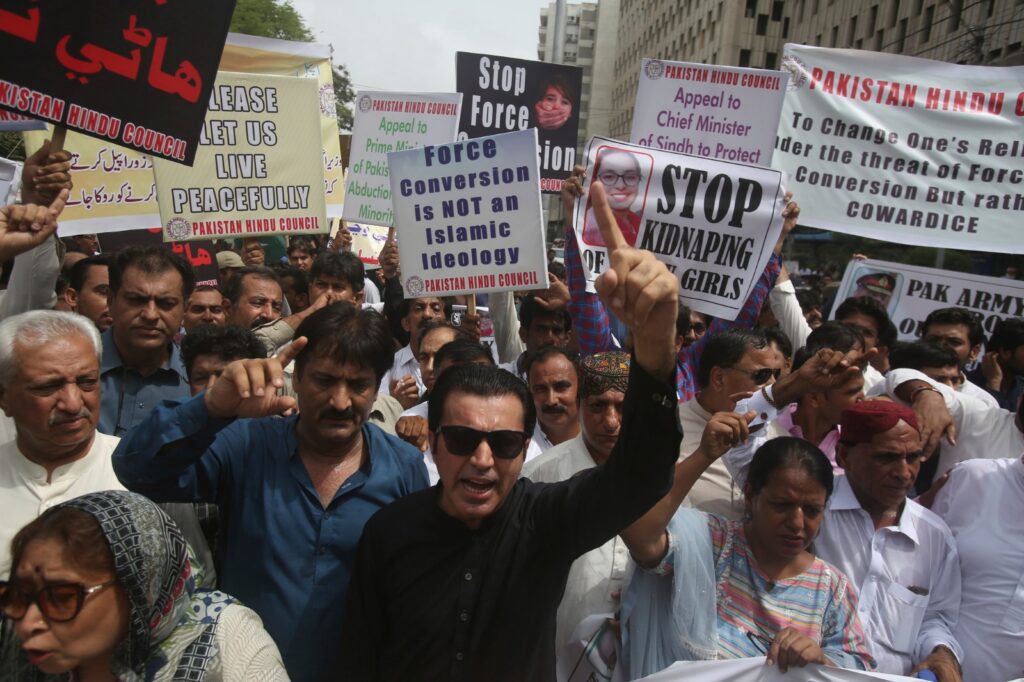
Their identities erased. Their supposed “conversion” to Islam was celebrated by religious hardliners as a victory while the family, and the wider Hindu community, was left devastated.
According to DFOD, this isn’t just an individual case, it is a continuation of an unchecked crisis: the abduction, forced conversion, and exploitation of minority girls and boys in Pakistan, particularly in Sindh, where over 90 per cent of the country’s Hindu population resides.
Patterns of Atrocities
The GHTN report has identified the patterns of the abductions and conversions of the minority girls. Between 2022-2025, “more than 1,000 minor girls of religious minorities are abducted, forcibly converted, married off to strangers, and often trafficked after a few years of abuse. Hindu and Christian girls, often between 12 to16 years old, remain the primary victims. Sikh families have also reported abductions, indicating the practice cuts across communities. Human Rights Commission of Pakistan, United Nations entities, and several human rights organisations have confirmed the persistence of this pattern”.
The report further revealed another pattern: “Victims are typically abducted by older men, often neighbours or local community members. After abduction, the girls are taken to mosques/madrasas/clerics where coerced ‘conversion’ is registered. Marriage certificates are fabricated or issued despite underage status, in violation of child marriage laws. Families who seek justice face intimidation; cases are delayed or dismissed.”
Weaponisation of Islamic laws
Pakistan’s Constitution and legal system prioritise Islamic conformity over minority protections. Courts often validate conversions and marriages of underage girls, citing religious justifications. Efforts to criminalise forced conversions remain blocked by political and religious opposition. Police frequently refuse or delay registration of First Information Reports (FIRs). Courts rely on claims of “voluntary conversion”, disregarding child protection laws. Political reluctance to advance reforms has left protective legislation stalled.
Violation of Guidelines by IMF & World Bank
The GHTN report has raised a pertinent issue about the World Bank and IMF violating their own gender policies by ignoring gender-religion-ethnicity based violence against minor girls and women of religious minorities. Since 2020 the World Bank has given loans worth $14 billion for 66 social welfare projects in Pakistan but has not even mentioned the violence and denial of access and opportunities to these helpless minority girls. In the same period IMF has lent about $13 billion to Pakistan without raising the issue of gender-based violence against religious minorities. The GHTN report has recommended creation of a sub-category of ‘minority inclusion’ for international financial institutions (IFIs) to flag and track gender justice in all lending activities to Pakistan. There should be specific staff positions in the country offices of these institutions dedicated to track and monitor atrocities against minority girls. They should also track access to education and health for religious minorities especially girls and women. This could be a shared resource for the IFIs. The World Bank has done this for the Roma ethnic group in Europe and has experience and expertise to do it.
– Arun Anand
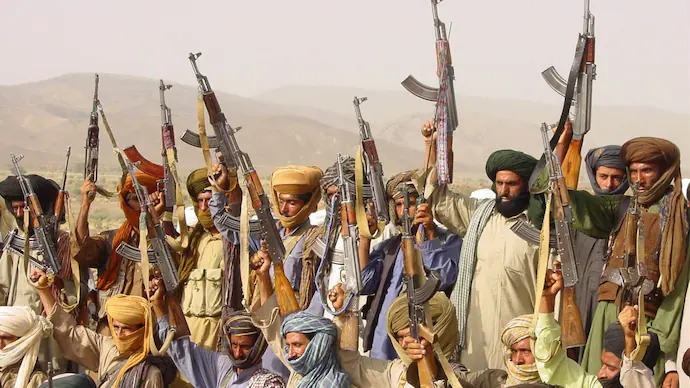
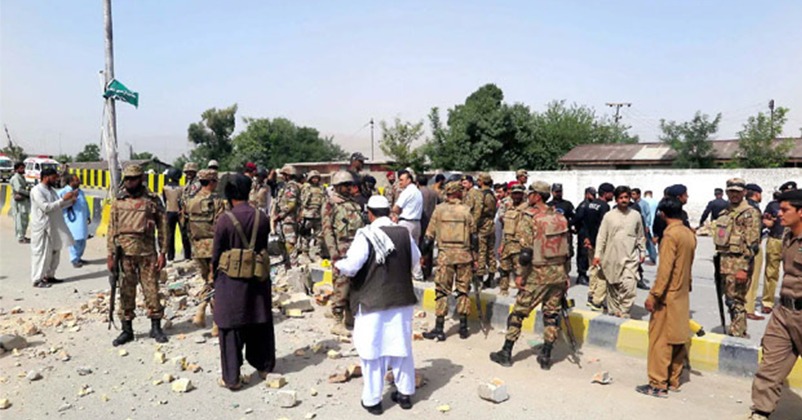
Balochistan is a land which is under the operation of Pakistan and its army, a place where militarization has shaped daily life for generations and where human rights violations have become a defining feature of the state’s presence. Communities across the province describe a reality marked by enforced disappearances, collective punishments, military checkpoints, and surveillance that affects everything from movement to livelihoods. For many Baloch, the feeling is not simply that they are governed by a distant center, but that they live under an occupying force. This sense of suffocation and exclusion has fueled a long-standing freedom struggle, one rooted in the demand for dignity, political rights, and control over the resources that come from their own land. Against this backdrop, pro-independence armed groups continue to carry out attacks that they claim are responses to decades of repression.
On Tuesday, one such group announced responsibility for several operations across the province. These incidents included an improvised explosive device blast in Mastung, the execution of an individual they accused of spying for the Pakistani military in Panjgur, and a grenade attack on a military post in Kech. While armed actions inevitably extend the cycle of violence, supporters of the Baloch cause often view them as part of a resistance movement forced into militancy by the absence of political space and the ever-present threat of military retaliation. The attacks were not isolated events but part of a broader pattern that has escalated throughout 2025.
This year has seen a rising number of armed confrontations, ambushes on military convoys, and assaults on security checkpoints. In several districts, insurgent fighters have demonstrated increased coordination, conducting operations that momentarily challenge the army’s claims of tight control. In many cases, the military responds with sweeping crackdowns, cordoning off villages, detaining males en masse, and sometimes displacing entire communities under the guise of clearing operations.
One of the most significant incidents of 2025 occurred during the hijacking of the Jaffar Express earlier in the year, an episode that shook the country and drew international attention. Dozens of passengers were killed, and the chaotic rescue operation highlighted the state’s unpreparedness despite years of counterinsurgency efforts.
In other months, attacks in Gwadar, Panjgur, Kech, and Kohlu targeted military installations, patrol units, and infrastructure associated with state-backed development projects. Each attack was followed by the familiar pattern of intensified military operations, which in turn deepened local fears and resentments. For many Baloch, the roots of the conflict lie not in the attacks themselves but in the long history of exclusion and exploitation. Balochistan is the largest province by land area and among the richest in natural resources, yet it remains the poorest in development indicators. Gas extracted from Sui fueled Pakistan’s industrialization for decades, but Baloch communities received neither adequate royalties nor basic services. The same dynamic persists today: copper, gold, and other minerals are extracted through deals viewed locally as exploitative, and the massive projects linked to the China-Pakistan Economic Corridor have heightened perceptions that outsiders profit while Baloch residents live under military patrols.
The Pakistani Army presents its presence as a stabilizing force, claiming that it is protecting development and bringing security to a volatile region. But for many families, the uniform represents fear rather than order. Activists and human rights groups have long documented reports of disappearances, where students, teachers, farmers, and political workers vanish without explanation. In some cases, bodies are later found dumped in remote areas; in others, detainees remain unaccounted for, leaving families in endless uncertainty. Villagers speak of night raids, targeted harassment, and arbitrary detentions that make ordinary life unpredictable and fragile.
The events of 2025 have intensified these concerns. After each insurgent attack, the military has expanded its operations deep into residential areas, often sealing entire towns for hours or days. Markets have been shut down, communication networks suspended, and families forced to leave their homes as security forces search door to door. Local leaders warn that the army’s heavy-handed tactics are counterproductive, pushing frustrated youth toward militancy by eliminating peaceful avenues for expressing political grievances.
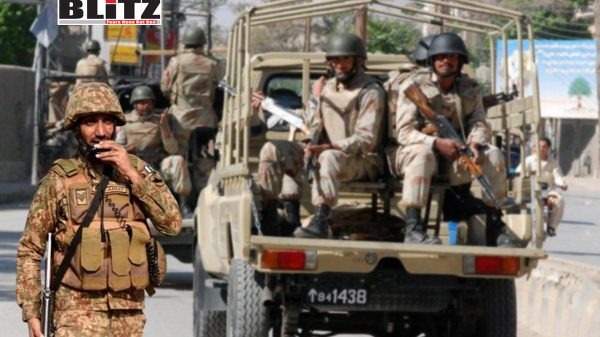
The attacks on Tuesday again underscored this cycle. In Mastung, the IED blast reportedly targeted a patrol, prompting hours of cordoned streets and aggressive searches. In Panjgur, the execution of the alleged informant sparked fears of reprisals. In Kech, the grenade attack on a military post was followed by drone surveillance and increased military movement through surrounding villages. People in these areas spoke of disrupted routines, closed schools, and the tense silence that typically accompanies large-scale army deployments.
Criticism of the Pakistani Army’s role in Balochistan does not imply support for violence, but it does demand an honest acknowledgment of how long-standing injustices have produced the current volatility. The Baloch freedom movement, in its political and militant forms, arises from a lived experience of repression—an experience of being denied the right to self-govern, the right to speak freely, and the right to benefit from one’s own homeland. The state’s insistence on treating the conflict solely as a security problem ignores the political roots of the struggle and exacerbates the very tensions it seeks to eliminate.
Those advocating for Baloch rights argue that the solution lies not in more soldiers or more checkpoints, but in recognizing the political aspirations of the people. They call for accountability for human rights abuses, an end to enforced disappearances, and genuine autonomy that allows Balochistan to govern itself and control its resources. Without these steps, the province remains trapped in a long and painful cycle in which violence breeds further militarization, and militarization fuels the grievances that sustain the insurgency. Balochistan today stands at a crossroads shaped by the tragedies and resistance of 2025. The Tuesday attacks are only one chapter in a broader narrative: a story of a people who feel occupied, marginalized, and robbed of their future. The Pakistani state continues to rely on force, believing that sheer military power can quell a movement born from historical injustices. But the more it tightens its grip, the more alienated the Baloch become, and the further the region moves from any meaningful resolution.
Until the state acknowledges that peace cannot be imposed at gunpoint and that the people of Balochistan must have the right to determine their own political destiny, the conflict will persist. The freedom struggle, whether expressed through political activism or armed resistance, will continue to draw strength from the lived realities of oppression. And each new incident—like the attacks carried out this Tuesday—will serve as a reminder that a province rich in culture, history, and resources remains locked in a conflict sustained not just by militants, but by the heavy hand of the army that claims to be restoring order while deepening the wounds of its people.
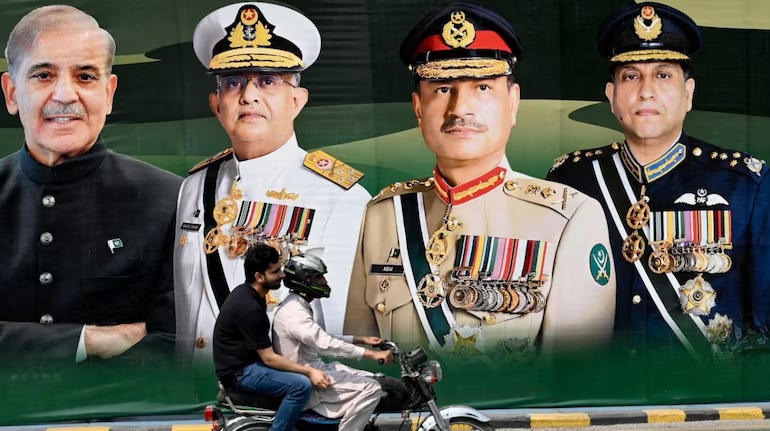
Pakistan’s latest constitutional drama has exposed, yet again, the hollowness of its so-called democracy. But the tragedy this time didn’t unfold with tanks rolling down Constitution Avenue or generals announcing martial law on primetime television.
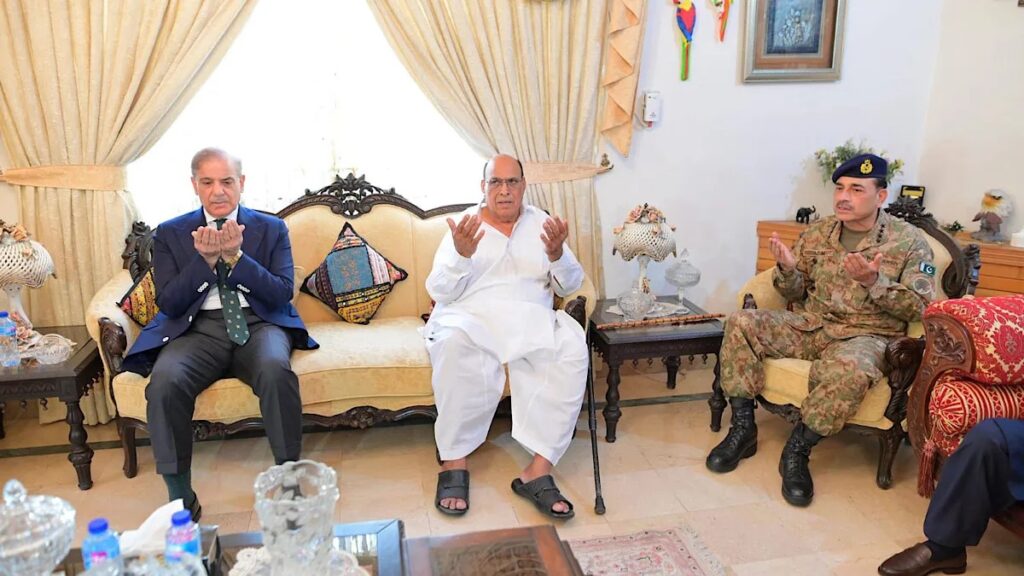
The country has witnessed something even more disturbing: a slow, polished, paperwork-driven coup carefully designed to look respectable. Pakistan’s parliament, already known for its obedience to the military, has quietly fortified the uniformed institution that has dominated the country since 1958.
At the centre of this political theatre is General Asim Munir, elevated to a newly created super-post that sits above every elected institution, and in practice, above the Constitution itself. What has happened is not surprising to anyone familiar with Pakistan’s power structure. The Army has never truly relinquished control; it has only changed its methods. But Munir’s takeover is notable for how meticulously it has been wrapped in constitutional language. He enjoys a position with sweeping authority over all branches of the armed forces, legal immunity, and insulation from judicial review.
For a country already ranked 117 out of 140 in the World Justice Project’s Rule of Law Index and described by Transparency International as having “deep structural corruption,” this formalisation of military supremacy is nothing short of catastrophic.
Munir did not need to send soldiers to raid government buildings. He didn’t even need a dramatic televised coup. Instead, he relied on a parliament weakened by internal divisions and terrified of the Army’s retaliation.
Pakistan’s opposition remains fragmented, with party leaders cycling between prison and exile depending on the mood of the generals. The ruling coalition, desperate for military blessing, pushed through amendments at lightning speed—amendments that create a centralised military command and strip courts of any real oversight over the top brass. This is not a correction. It is a coronation.
Munir himself is hardly a figure of national triumph. His record is marred by failure and controversy. During the May 2023 border flare-up with India, reports from within Pakistan’s own security circles criticised his assessments as “overconfident and strategically weak.”
Instead of accountability, he was promoted—first to Army Chief and now to this constitutionally fortified post. A general who struggled in a limited confrontation is now positioned above the civilians he was supposed to protect. This isn’t just ironic; it is dangerous.
Pakistan’s pattern is painfully predictable. Whenever its democracy shows signs of independence, the military intervenes—openly in 1958, 1977, and 1999, or covertly through engineered court decisions, political intimidation, and backroom deals in the 2000s and 2010s. Now the Army has discovered an even more sophisticated strategy: legislate the coup rather than announce it. The consequences are far-reaching.
First, the judiciary has been effectively declawed. Pakistan’s courts have historically wavered between complicity and resistance, sometimes validating coups (as in the 1958 “Doctrine of Necessity”) and sometimes pushing back against military excess. But with new legal shields protecting the top military office, the courts can do little more than observe silently. Any attempt to challenge military decisions becomes a constitutional dead end.
Civil society doesn’t fare better. Lawyers, journalists, and students have already faced crackdowns over the years, from the 2017 forced disappearances of reporters to the arrests of activists during the 2022–23 political turmoil.
According to Human Rights Watch, enforced disappearances in Pakistan number in the “thousands,” many linked to the military’s intelligence agencies—agencies Munir himself once headed.
Now, empowered with legal endorsement, the military can operate with even greater impunity, creating an atmosphere of fear that suffocates dissent. A society where criticising the Army is treated like a crime cannot grow intellectually or politically. It can only stagnate.
Pakistanis celebrating this constitutional shift—arguing that strong military control will stabilise the country—are ignoring the last 75 years of evidence. Each era of military dominance has ended with economic mismanagement, international isolation, and political collapse.
During Ayub Khan’s rule, growth was accompanied by massive inequality that sparked unrest. Under Zia-ul-Haq, extremism and sectarian violence flourished. Musharraf’s era began with promises of liberal reform but ended with institutional decay and the 2007 crisis. Munir’s turn will be no different.
A military that has never succeeded in creating long-term stability now has even fewer constraints. International consequences are inevitable. Pakistan’s economy is already devastated – inflation hovered around 24 per cent in 2023, external debt crossed $125 billion, and the country begged the IMF for yet another bailout to avoid default. Investors will not pour money into a state where real power lies with generals immune from accountability.
Global lenders rarely trust governments overshadowed by the military, especially when the military has a history of meddling in economic deals for its own benefit.
Pakistan’s powerful military conglomerate, the Fauji Foundation, already controls billions in commercial assets—from cement to fertilisers to food—making it one of the few armies in the world that behaves as a corporate empire. The veneer of legality will not reassure anyone. Aid will come with harsher conditions. Trade partners will hesitate.
Diplomatic pressure will grow. And, as always, the burden will fall not on the generals living in Rawalpindi’s protected compounds but on ordinary Pakistanis struggling to survive.
For India, this is not a comforting development. A Pakistan run more tightly by the Army is a Pakistan that makes decisions through a single institutional lens—reactionary, paranoid, and narrow. Civilian leaders tend to favour negotiation and crisis management; military leaders tend to favour escalation and strategic signalling. An India looking for a stable neighbour will instead face a Pakistan that grows more insular, more insecure, and more unpredictable.
What makes this constitutional coup particularly tragic is that Pakistan had glimpses—small, fragile ones—of democratic revival in the past. Civilian governments occasionally wrestled back authority. Grassroots movements pushed for accountability. Courts sometimes asserted independence. But Munir’s elevation is designed to extinguish those possibilities.
Once constitutionalised, military supremacy becomes far harder to challenge. Munir may think he has secured his legacy by rewriting the rules in his favour, but history has not been kind to Pakistan’s generals. From Ayub’s humiliating resignation to Yahya’s disgrace after 1971, to Musharraf living in exile, Pakistan’s military rulers eventually fell, only after inflicting long-term damage on the nation. This chapter will likely follow the same script.
Ultimately, Pakistan must confront a painful truth: the Army is not the guardian of the state; it is the weight dragging it down. A country where elections change faces but not power structures is not a democracy. A country where criticism of the uniform is treated as treason cannot claim to be free. And a country where one general can legally place himself above the political system cannot pretend to function like a modern nation.
Pakistan may have legalised this coup, but legality does not equal legitimacy. What has happened is an indictment of the entire political order—a system that allows one man in uniform, backed by an institution addicted to power, to override the will of millions.
History will judge Asim Munir and the Pakistan Army harshly. But the people of Pakistan, already battered by poverty, misrule, and repression, are the ones who will pay the price.
–IANS
A new 186-page report by the International Monetary Fund (IMF) has again highlighted an uncomfortable reality: Pakistan’s economic troubles are mainly the result of internal weaknesses, not outside pressure.
The report says corruption, weak institutions, and powerful vested interests have pushed the country to the edge of economic collapse, according to Pakistan Observer website.
According to the IMF, corruption affects almost every level of governance in Pakistan. Policymaking is often controlled by influential groups that use state institutions for personal gain. The report said Pakistan has no reliable system to measure corruption, but one indicator is the National Accountability Bureau’s recovery of 5,300 billion rupees in just two years. Even this massive figure, the IMF says, represents only a small part of the bigger problem, as per the report.
The report states that ordinary people face corruption in everyday services, while the judiciary is widely seen as compromised. Public trust in state institutions has been steadily falling. It also notes how powerful business and political groups manipulate regulations and laws to protect their interests. The IMF cites the 2019 sugar crisis as a clear example. Influential business networks hoarded sugar, increased prices, and moved billions through fake accounts, while the state did little to stop them. Beyond such scandals, the IMF points to deeper structural issues such as a complicated tax system, weak financial management, non-transparent government buying processes, and poor performance in public institutions. It says Pakistan could add 5 to 6.5 percent more GDP growth over five years if it implements serious governance reforms.
The IMF report also highlights that corruption in Pakistan is not new. Both civilian and military governments have promised reforms but ended up creating new forms of misuse. Many leaders dismiss corruption allegations as political attacks, which allows the problem to continue unchecked. The IMF’s findings, however, cannot be brushed aside as political — they are based on independent analysis. The report warns that unless Pakistan breaks the power of strong business families, political dynasties, and elite groups, the country will remain in crisis. Citizens pay heavy taxes and high utility bills, yet public wealth benefits only a small group. The IMF says this imbalance harms not just the economy but also the moral foundation of the country. The report also points to global examples where strong action against corruption led to major reforms.
Countries like China, Japan, South Korea, Singapore, Saudi Arabia, the UAE, Malaysia, Indonesia, and Rwanda have punished powerful officials, business leaders, and even former presidents. Their common principle is that no one is above the law.For Pakistan to follow the same path, the report suggests that accountability institutions must work independently, without political control. Judicial appointments need transparency. Political influence in state departments must end. Taxes should be simplified, government procurement must be transparent, and political financing must be regulated so that policymaking reflects public interest, not elite pressure. The IMF says its report is not meant to punish Pakistan, but to give it one last opportunity to fix its governance system. If Pakistan continues to borrow from the IMF, then it must also implement the governance reforms recommended in the report. Those responsible for the current crisis must show restraint and accept accountability.
–IANS
– Arun Anand
When a state alters the rules that govern it, the transformation can arrive with force—or with formality. Pakistan’s 27th Amendment represents the latter: a political restructuring that wields the authority of a coup but cloaks it in legality. Rather than suspending the constitution or dissolving parliament, it reshapes the constitution from within, erasing previous checks on military power. That distinction is crucial—one disrupts the system; the other remakes it. At the heart of this recalibration stands Asim Munir. His promotion to Field Marshal and the proposed establishment of a Chief of Defence Forces position do more than elevate his career—they institutionalize what was long an informal dominance. Unlike Ayub, Zia, or Musharraf, who ruled by toppling constitutions, today’s strategy seeks to embed military supremacy within the constitutional framework itself—ensuring that, in the future, the army can govern without the need to overthrow.
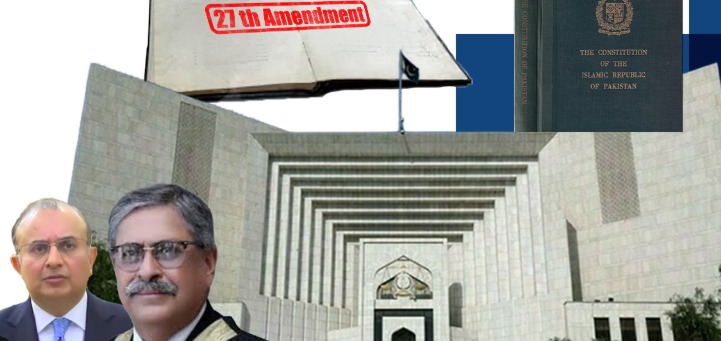
The change is deceptively small in language and vast in consequence. Replace one title with another; place all services under a single command; harden immunities around senior officers; tweak judicial mechanisms so the courts have less room to operate free of executive pressure. Each clause reads like technocratic housekeeping. Taken together, they create a new architecture: an army whose institutional primacy is not merely tolerated but constitutionally protected. That is legal militarism rather than extra-legal rule. This is not an academic quarrel over drafting. It is a political settlement about who counts as the ultimate arbiter of public affairs. Under the old ambiguity, civilian leaders could plausibly claim the last word, even while the military shaped the range of choices behind the scenes. The amendment seeks to collapse that ambiguity in one direction.
Why would civilian parties, visibly weakened and electorally vulnerable at times, agree to such a reconfiguration? The motives are painfully direct. Pakistan’s political class operates in a narrow corridor: economic collapse, fragmented coalitions, a restive opposition, and a media space that oscillates between sensationalism and censorship. Under these pressures, cohabitation with the military promises immediate stability. It keeps riots at bay, opens channels to patronage, and provides a shield against judicial harassment or street mobilisation. Short-term survival, in other words, is a powerful incentive. Yet political survival bought by reliance on the barracks is a pyrrhic achievement. Civilian parties have historically gained legitimacy by standing up to military overreach. Opposition to the establishment, even when risky, has often been the most reliable source of political capital. When a leader defies the generals and survives, that defiance becomes a badge of authenticity. By contrast, parties that appear to defend or normalise the military’s dominance surrender the claim to be an alternative. They transform from contesting forces into managers within a narrower, military-shaped consensus.
This is the arithmetic of erosion. Short-term gains for the party in power can lead to long-term erosion of its moral and political standing. Consent, in this context, is not neutrality; it is a transfer of legitimacy. A constitution stamped by the military’s imprimatur becomes less a shield of pluralism than a vehicle for managed politics. Democracies do not die in dramatic moments alone; they wither when the forms of democracy remain but their essence, the capacity of political actors to challenge and to be challenged on equal footing, is hollowed out. Those who enable this constitutional realignment may imagine that they will keep the benefits: stability, access to resources, and the ability to govern without constant confrontation. But history is unsparing about such bargains. Iskander Mirza appointed Ayub and found himself dispossessed within days. Zulfiqar Ali Bhutto, who navigated the generals’ world, was later tried and executed under military rule. Nawaz Sharif’s flirtation with the military ended in exile. Power that is lent by a stronger institution is rarely returned intact.
The amendment also alters the foundation upon which other institutions stand. The judiciary, already a site of contestation, risks becoming a subsidiary player if a new constitutional forum strips the Supreme Court of powers or if transfer mechanisms for judges are altered to reduce their independence. Provinces that won space under the 18th Amendment see their gains threatened if federal competencies are recentralised or if finances are reconstituted in ways that favour central control. The fragmentation of federal bargains bolsters local grievances, and these grievances become fuel for instability, precisely the outcome the army claims to preempt.
There is a particular irony to the present moment that is worth stressing. Civilian politicians once drew their energy from popular resistance to an overbearing establishment. That very act of resistance could convert electoral weakness into credible leadership. Today, however, many politicians choose acquiescence because the immediate costs of resistance, jail, economic disruption, and the threat of engineered crises look intolerable. They trade a precarious moral authority for a steady foothold in the office. The problem is that this lease rarely extends beyond the lifetime of a political cycle, and its renewal depends on the goodwill of the institution whose favour they bought.
And yet the public mood complicates any neat diagnosis of decline. Ordinary Pakistanis are weary; years of economic pain and political turbulence have dulled their appetite for dramatic confrontation. Some will welcome the promise of order; others will shrug their shoulders. That fatigue provides the ideal conditions for legalised domination: the population tolerates constraint for the promise of relief. But tolerance is not acquiescence; it is the brittle glue that holds an unstable settlement together until it snaps.
When Munir leaves the scene, and he will, as all men do, the institution he helped constitutionalise will remain. The following chief benefits from a script rewritten to favour the uniform, drawing authority from not just force but law. Undoing that script will require more than an election or a public outcry; it will demand a sustained political project that reconstructs constitutional checks, reenergises provincial autonomy, and restores judicial independence. That project is possible but arduous; it requires actors willing to risk more than a short-term office. History’s lesson is stark: military dominance dressed as legality is harder to overthrow than military dominance that operates outside the law. Coups create ruptures; constitutionalised power creates permanence. That permanence is the danger Pakistan now confronts. Civilian leaders may survive one more term by stitching themselves to the armour of the state. But in doing so, they risk leaving their successor a hollowed democracy in which elections occur. Still, choices are preordained, institutions exist in form but not in force, and public legitimacy belongs more to the barracks than to the ballot.
If Pakistan is to reclaim a civilian future, the task is not merely to defeat a law in court or to rally people to the streets. It is to rebuild the conditions under which political actors can contest power on their own terms: functional parties with roots in society, a judiciary that can adjudicate without fear, and provincial institutions that can defend local interests. Without those pillars, the 27th Amendment will not just make one man powerful; it will recalibrate a nation to a default of managed politics, a country where the Constitution still exists on paper but where democracy, clause by clause, has been quietly transformed.
Since his appointment in November 2022, Field Marshal Asim Munir has proved a master practitioner of power consolidation, outpacing even Pakistan’s most notorious military strongmen such as Ayub Khan, Zia-ul-Haq, and Pervez Musharraf. His latest gambit, the proposed 27th Constitutional Amendment, cements that legacy and threatens to formalize Pakistan’s drift into an overt military state.
At its core, the 27th Amendment rewrites Article 243 of Pakistan’s Constitution which details the governing framework of the command of the armed forces (Chapter 2). While, it may appear to be a technical legal change, however, it is, in fact, a crude structural reordering of the Pakistani state in favor of the military establishment that has anyway calling the shots for decades.
Nevertheless, one of the most consequential provisions (clause 5) is the proposed creation of a new office of Chief of Defence Forces (CDF). Under this clause, the Army Chief will automatically assume the role of CDF role, which effectively merges the tri-service command of the army, navy, and air force into one uniformed post. The existing Joint Chiefs of Staff Committee (JCSC), a forum meant to balance inter-service authority, will be abolished.
In practical terms, this means all branches of Pakistan’s armed forces will answer to one man, that is Asim Munir. It also conveniently sidelines General Sahir Shamshad Mirza, the current Chairman of the Joint Chiefs and the senior-most general whom the Shehbaz Sharif government bypassed when appointing Munir in 2022.
This clause would mark the first time in Pakistan’s history that the entire military chain of command is legally and constitutionally subordinated to a single officer.
Another major clause (6) under Article 243 transfers effective control of Pakistan’s nuclear arsenal to the Army Chief. The Prime Minister would nominally appoint the Commander of the National Strategic Command (the custodian of nuclear weapons), but only from among “members of the Pakistan Army” and solely on the “recommendation of the Chief of Army Staff concurrently serving as Chief of Defence Forces.”
This wording is not incidental. It ensures that the nuclear command, which has traditionally been supervised by a civilian-led National Command Authority, will now operate entirely under military discretion. Pakistan’s already fragile notion of civilian oversight is being reduced to fiction. With this, Asim Munir not only commands Pakistan’s conventional military forces but also gains exclusive control of its nuclear deterrent.
Perhaps the most extraordinary aspect of the 27th Amendment lies in its provisions for legal protection. Given that the amendment proposes lifetime immunity to the Field Marshal (clauses 7,8,9,10 &11), it practically equates his legal status with that of the President as the Head of the State of Pakistan. In effect, Asim Munir, who was conferred the title of Field Marshal earlier this year, cannot be prosecuted, investigated, or held accountable by any court or parliamentary body for decisions made during or after his tenure.
This is a historic and most consequential departure from Pakistan’s constitutional tradition. Even military rulers like Zia and Musharraf, both of whom seized power through coups, lacked explicit lifetime impunity under constitutional law. However, Munir has, by securing this clause, effectively insulated himself against future civilian pushback or judicial scrutiny, ensuring that any transition of power will not endanger his position or legacy.
Though Pakistan’s history has seen several military rulers institutionalizing their dominance through legal means like Ayub Khan’s rewriting of the 1962 Constitution or Zia-ul-Haq giving the military a permanent political veto by amending Article 58(2)(b), Asim Munir’s strategy is more sophisticated and inarguably more durable. Unlike his predecessors, who relied on overt coups, Munir is using constitutional procedure and parliamentary approval to codify military supremacy. As such, Munir seems to be outdoing the likes of Ayub, Zia, and Musharraf not through coups but by rewriting laws in his own favor.
The Shehbaz Sharif government’s cooperation in pushing this amendment through parliament reveals how deeply Pakistan’s civilian leadership has become dependent on the military’s favor. The Asim Munir-led military establishment has leveraged this vulnerability and extended its control over domestic politics, the economy, and even foreign policy.
By institutionalizing this control through the 27th Amendment, the military no longer needs to rely on backroom manipulation as it can now rule openly, with parliamentary consent.
The conferment of the title “Field Marshal” on Munir earlier this year, following India’s “Operation Sindoor” was the clearest signal of his elevation to the highest power status in the country. It very well echoed self-promotion of Ayub Khan to Field Marshal in the 1960s, when he justified his authority was essential to the country’s national defense.
Munir would do well to remember that Pakistan’s streets which are restless, politically volatile, and steeped in resentment against military domination, though it may dormant now, have a way of humbling even the most entrenched generals. Equally, it is interesting how the country’s political elite, particularly Pakistan Muslim League-Nawaz (PML-N) and Pakistan People’s Party who currently backs Munir seem to have forgotten how such curry favouring of generals have bitten them in the past.
The 27th Amendment marks not just another chapter in Pakistan’s cycle of military dominance but a turning point of the transformation of military supremacy from an unwritten reality into a constitutional fact. Field Marshal Asim Munir may believe he has achieved what his predecessors could not: absolute power with absolute legitimacy. But Pakistan’s history suggests that even the thickest face and the blackest heart cannot shield a ruler from the reckoning that follows hubris.
– Arun Anand