
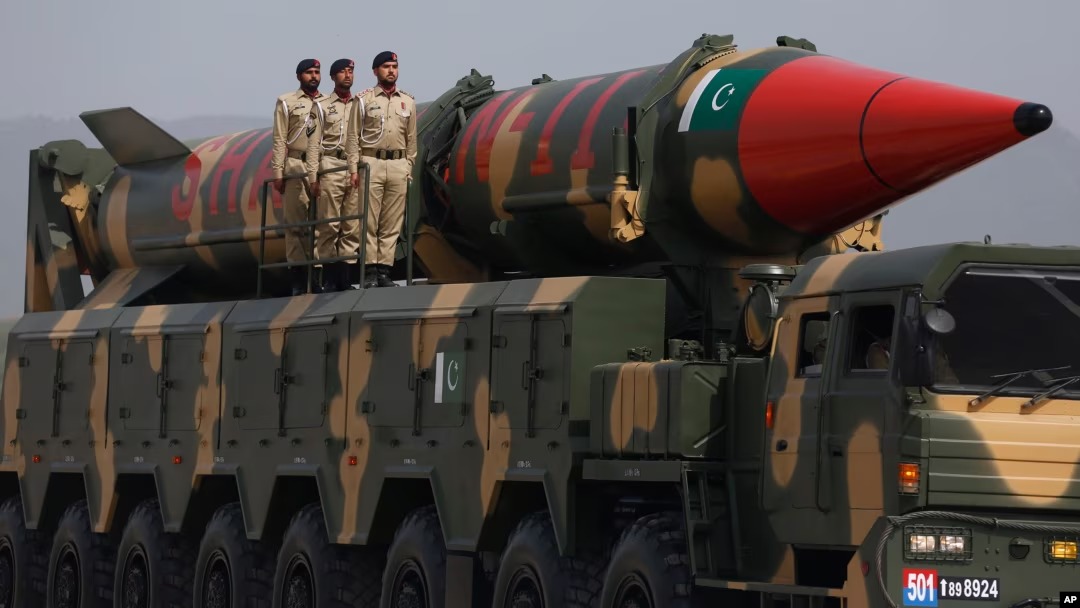
In a move that could recalibrate the fragile balance of power in South Asia, the United States has added Pakistan to its list of buyers for the AIM-120 Advanced Medium-Range Air-to-Air Missile (AMRAAM). This modification to an existing US arms contract with Raytheon represents more than just a defence transaction — it signals a potential rearmament of Pakistan’s air power at a time when the region’s security situation remains precarious.
Pakistan’s inclusion in the programme, valued at over $2.5 billion, revives a defence partnership that had largely stagnated following years of strained relations with Washington. For Pakistan, whose air force still relies heavily on its fleet of American F-16 fighter jets, the acquisition of these advanced BVR (beyond-visual-range) missiles marks a major technological enhancement. For the region, however, it raises troubling questions about stability, deterrence, and the risk of escalation between nuclear-armed rivals.

The AMRAAM, capable of engaging targets at distances beyond 150 kilometres, offers precision, speed, and a “fire-and-forget” capability that allows pilots to disengage immediately after launch. In purely technical terms, it’s a formidable addition to any air force. But in Pakistan’s context, such a system has far-reaching strategic implications.
The country’s military establishment has long pursued parity with India, despite a stark economic gap and persistent domestic crisis. Its historical record of aggressive posturing, coupled with its military’s disproportionate influence over foreign policy, makes the AMRAAM deal far more than a routine upgrade. What appears to be an innocuous arms agreement could, in reality, alter the regional deterrence equation.
South Asia’s air domain has always been sensitive — each technological advance on one side compels a countermeasure from the other.
When India demonstrated its indigenous Astra BVR missile system, it underscored its growing self-reliance and capability to defend its airspace. Pakistan’s response, however, has been to seek external suppliers to maintain parity rather than pursue domestic innovation. The AMRAAM deal thus reflects a continuation of dependence — and a willingness by Washington to overlook the destabilising consequences of arming a military whose strategic ambitions have often undermined peace.
This renewed US–Pakistan engagement also revives old anxieties about the nature of their security relationship.
Historically, American arms transfers to Pakistan have been justified on counterterrorism or defence cooperation grounds, only for those weapons to later be used to posture against India. The F-16 fleet itself, originally supplied under similar premises, became a central tool of Pakistan’s conventional deterrent against its eastern neighbour. The reintroduction of the AMRAAM into this equation risks encouraging the same behaviour — a renewed confidence in coercive diplomacy backed by advanced weaponry.
The timing of this deal is particularly concerning. Pakistan faces one of the most severe economic crisis in its history, coupled with a volatile political environment and a military establishment struggling to maintain control over internal security. Rather than focusing on domestic reform and stability, the country’s leadership appears intent on modernising its military arsenal. This suggests a misalignment of priorities — a pattern familiar to observers of Pakistan’s civil-military dynamics, where the pursuit of military parity often overrides social and economic needs. From a regional security perspective, this missile deal could reintroduce an element of uncertainty into South Asia’s deterrence environment.
India and Pakistan have fought multiple wars, experienced countless border skirmishes, and nearly stumbled into escalation after the Balakot air strikes in 2019 — an episode where Pakistan’s F-16s, armed with earlier versions of the AMRAAM, were already involved. The introduction of more advanced missile variants, such as the C8 and D3, only increases the lethality of potential confrontations.
Critics of the deal in policy circles argue that the US risks repeating historical mistakes. For decades, American support for Pakistan’s military has produced short-term tactical cooperation but long-term instability. Each wave of arms assistance has strengthened the military’s hand internally, often at the expense of democratic governance. It also emboldens the institution to act as an independent power centre — one that wields foreign policy and national security decisions without civilian oversight.
By rearming Pakistan under the guise of modernization, Washington may inadvertently empower an institution that has repeatedly destabilized both its own society and the broader region. For India, the development underscores the enduring asymmetry of US policy in South Asia.
While Washington describes New Delhi as a “strategic partner”, the continuation of military aid to Pakistan introduces contradictions into that narrative. It complicates India’s strategic calculus, forcing it to divert resources toward countering Pakistan’s enhanced air capabilities even as it focuses on its maritime and northern borders. The US, in attempting to maintain influence over both South Asian powers, risks playing both sides — a balancing act that history suggests is unsustainable.
Beyond the India–Pakistan dynamic, the broader concern lies in the precedent this sets. If Pakistan’s procurement of advanced missiles is seen as a reward for engagement with Washington, it could encourage other regional actors to pursue similar deals to maintain balance. This could accelerate an arms race in one of the world’s most militarized regions. At a time when global powers are emphasizing restraint and dialogue in conflict-prone zones, the decision to expand missile sales in South Asia sends the opposite signal.
There’s also the issue of technology security. Pakistan’s track record in protecting advanced military systems has been questioned repeatedly, with concerns about unauthorized access and proliferation. Given the country’s history of nuclear proliferation through networks linked to A Q Khan, Western analysts have often urged caution in transferring sensitive defence technologies. The AMRAAM deal, despite its conventional nature, revives those anxieties — particularly as Pakistan continues to cultivate military partnerships with China and Turkey.
If history is any guide, such arms transfers rarely deliver stability. Instead, they create new dependencies and embolden military adventurism. Pakistan’s leadership has frequently leveraged its geostrategic location to secure Western military aid, only to later pursue policies contrary to US interests. Whether during the Cold War, the Afghan jihad, or the post-9/11 era, the pattern has been consistent: tactical alignment followed by strategic divergence. The AMRAAM deal risks perpetuating that cycle under a new label of “modernization”.
The ultimate casualty of this arrangement could be peace itself. South Asia remains a nuclear flashpoint, with a long history of crisis triggered by miscalculation. In such an environment, the infusion of more advanced air-to-air missiles doesn’t enhance deterrence — it compresses decision times and raises the risks of escalation. Each side, perceiving the other as emboldened, responds with heightened alertness and counter-measures. In that sense, the AMRAAM sale isn’t merely an arms deal; it’s a strategic signal that could unravel years of cautious restraint.
Washington’s rationale may be to preserve leverage in Islamabad, but the cost could be high. By reinforcing the Pakistani military’s capabilities at a moment of internal weakness, the US risks enabling a security apparatus that has historically prioritized confrontation over cooperation. The world has seen how easily tactical weapons superiority can morph into strategic recklessness — and in a region where two nuclear-armed neighbours share a disputed border, that is a gamble no one can afford.
Ultimately, the AMRAAM deal represents a missed opportunity. Instead of encouraging Pakistan to invest in stability, reform, and regional confidence-building, it reinforces old patterns of militarization. For a country that has yet to reconcile its internal political divides or economic fragility, the pursuit of cutting-edge missiles is not a symbol of strength but of misplaced priorities.
As South Asia stands on the edge of renewed tension, the world must recognise that peace cannot be built on firepower. True stability will only come when states are disincentivized from pursuing weapons superiority and are encouraged to pursue transparency, restraint, and dialogue. The AMRAAM sale to Pakistan does the opposite — it arms a volatile region and emboldens the very forces that thrive on instability. And in doing so, it risks turning South Asia once again into one of the most dangerous theatres of modern geopolitics.
–IANS
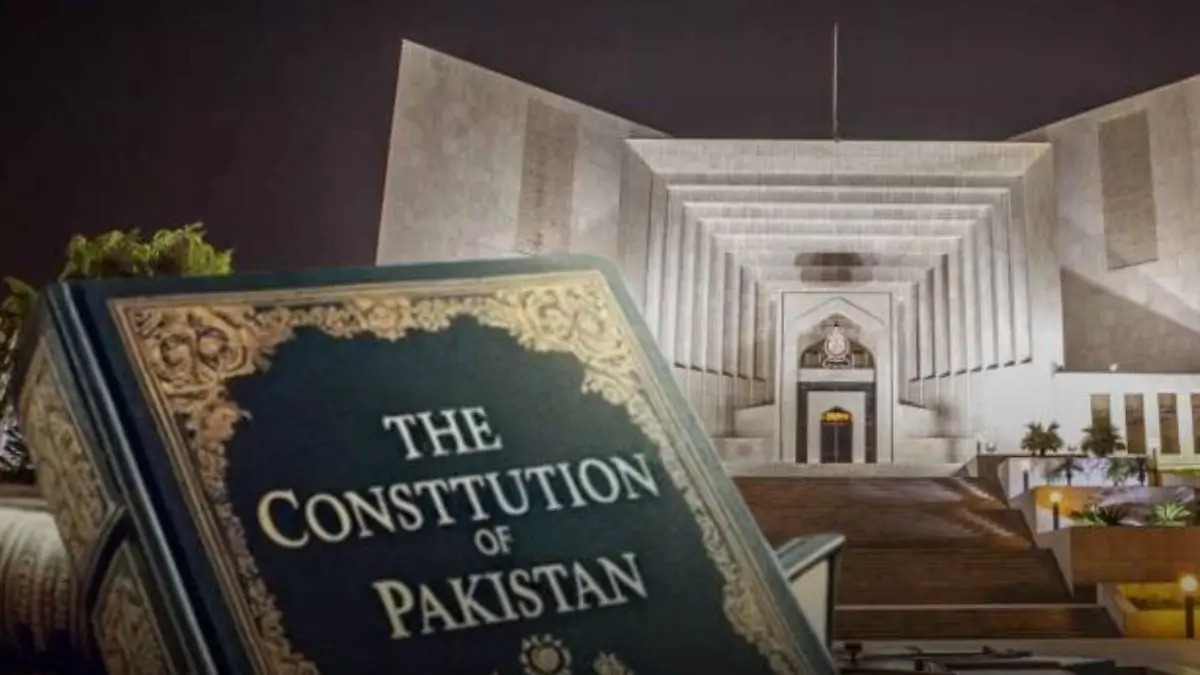
Since his appointment in November 2022, Field Marshal Asim Munir has proved a master practitioner of power consolidation, outpacing even Pakistan’s most notorious military strongmen such as Ayub Khan, Zia-ul-Haq, and Pervez Musharraf. His latest gambit, the proposed 27th Constitutional Amendment, cements that legacy and threatens to formalize Pakistan’s drift into an overt military state.
At its core, the 27th Amendment rewrites Article 243 of Pakistan’s Constitution which details the governing framework of the command of the armed forces (Chapter 2). While, it may appear to be a technical legal change, however, it is, in fact, a crude structural reordering of the Pakistani state in favor of the military establishment that has anyway calling the shots for decades.
Nevertheless, one of the most consequential provisions (clause 5) is the proposed creation of a new office of Chief of Defence Forces (CDF). Under this clause, the Army Chief will automatically assume the role of CDF role, which effectively merges the tri-service command of the army, navy, and air force into one uniformed post. The existing Joint Chiefs of Staff Committee (JCSC), a forum meant to balance inter-service authority, will be abolished.
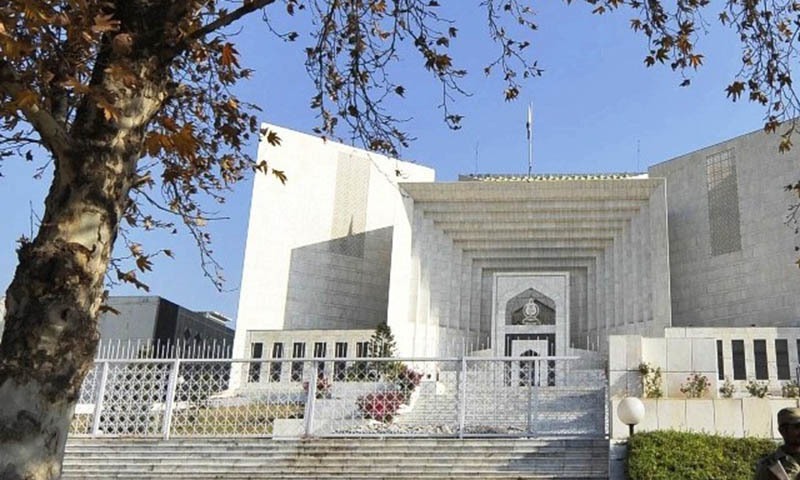
In practical terms, this means all branches of Pakistan’s armed forces will answer to one man, that is Asim Munir. It also conveniently sidelines General Sahir Shamshad Mirza, the current Chairman of the Joint Chiefs and the senior-most general whom the Shehbaz Sharif government bypassed when appointing Munir in 2022.
This clause would mark the first time in Pakistan’s history that the entire military chain of command is legally and constitutionally subordinated to a single officer.
Another major clause (6) under Article 243 transfers effective control of Pakistan’s nuclear arsenal to the Army Chief. The Prime Minister would nominally appoint the Commander of the National Strategic Command (the custodian of nuclear weapons), but only from among “members of the Pakistan Army” and solely on the “recommendation of the Chief of Army Staff concurrently serving as Chief of Defence Forces.”
This wording is not incidental. It ensures that the nuclear command, which has traditionally been supervised by a civilian-led National Command Authority, will now operate entirely under military discretion. Pakistan’s already fragile notion of civilian oversight is being reduced to fiction. With this, Asim Munir not only commands Pakistan’s conventional military forces but also gains exclusive control of its nuclear deterrent.
Perhaps the most extraordinary aspect of the 27th Amendment lies in its provisions for legal protection. Given that the amendment proposes lifetime immunity to the Field Marshal (clauses 7,8,9,10 &11), it practically equates his legal status with that of the President as the Head of the State of Pakistan. In effect, Asim Munir, who was conferred the title of Field Marshal earlier this year, cannot be prosecuted, investigated, or held accountable by any court or parliamentary body for decisions made during or after his tenure.
This is a historic and most consequential departure from Pakistan’s constitutional tradition. Even military rulers like Zia and Musharraf, both of whom seized power through coups, lacked explicit lifetime impunity under constitutional law. However, Munir has, by securing this clause, effectively insulated himself against future civilian pushback or judicial scrutiny, ensuring that any transition of power will not endanger his position or legacy.
Though Pakistan’s history has seen several military rulers institutionalizing their dominance through legal means like Ayub Khan’s rewriting of the 1962 Constitution or Zia-ul-Haq giving the military a permanent political veto by amending Article 58(2)(b), Asim Munir’s strategy is more sophisticated and inarguably more durable. Unlike his predecessors, who relied on overt coups, Munir is using constitutional procedure and parliamentary approval to codify military supremacy. As such, Munir seems to be outdoing the likes of Ayub, Zia, and Musharraf not through coups but by rewriting laws in his own favor.
The Shehbaz Sharif government’s cooperation in pushing this amendment through parliament reveals how deeply Pakistan’s civilian leadership has become dependent on the military’s favor. The Asim Munir-led military establishment has leveraged this vulnerability and extended its control over domestic politics, the economy, and even foreign policy.
By institutionalizing this control through the 27th Amendment, the military no longer needs to rely on backroom manipulation as it can now rule openly, with parliamentary consent.
The conferment of the title “Field Marshal” on Munir earlier this year, following India’s “Operation Sindoor” was the clearest signal of his elevation to the highest power status in the country. It very well echoed self-promotion of Ayub Khan to Field Marshal in the 1960s, when he justified his authority was essential to the country’s national defense.
Munir would do well to remember that Pakistan’s streets which are restless, politically volatile, and steeped in resentment against military domination, though it may dormant now, have a way of humbling even the most entrenched generals. Equally, it is interesting how the country’s political elite, particularly Pakistan Muslim League-Nawaz (PML-N) and Pakistan People’s Party who currently backs Munir seem to have forgotten how such curry favouring of generals have bitten them in the past.
The 27th Amendment marks not just another chapter in Pakistan’s cycle of military dominance but a turning point of the transformation of military supremacy from an unwritten reality into a constitutional fact. Field Marshal Asim Munir may believe he has achieved what his predecessors could not: absolute power with absolute legitimacy. But Pakistan’s history suggests that even the thickest face and the blackest heart cannot shield a ruler from the reckoning that follows hubris.
– Arun Anand