
The Balochistan Liberation Army (BLA) launched what analysts describe as its most expansive operation in decades on January 30, with its fighters attacking military and government installations at nearly 48 locations across 14 cities, including the provincial capital, Quetta. For almost a week, the Pakistan Army struggled to regain control, even as it declared its “clearance operations” had concluded on February 5, while local media reports stated that BLA fighters continued to maintain control over several arterial roads.
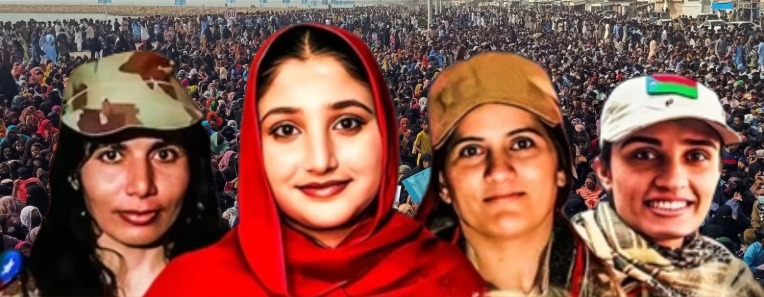
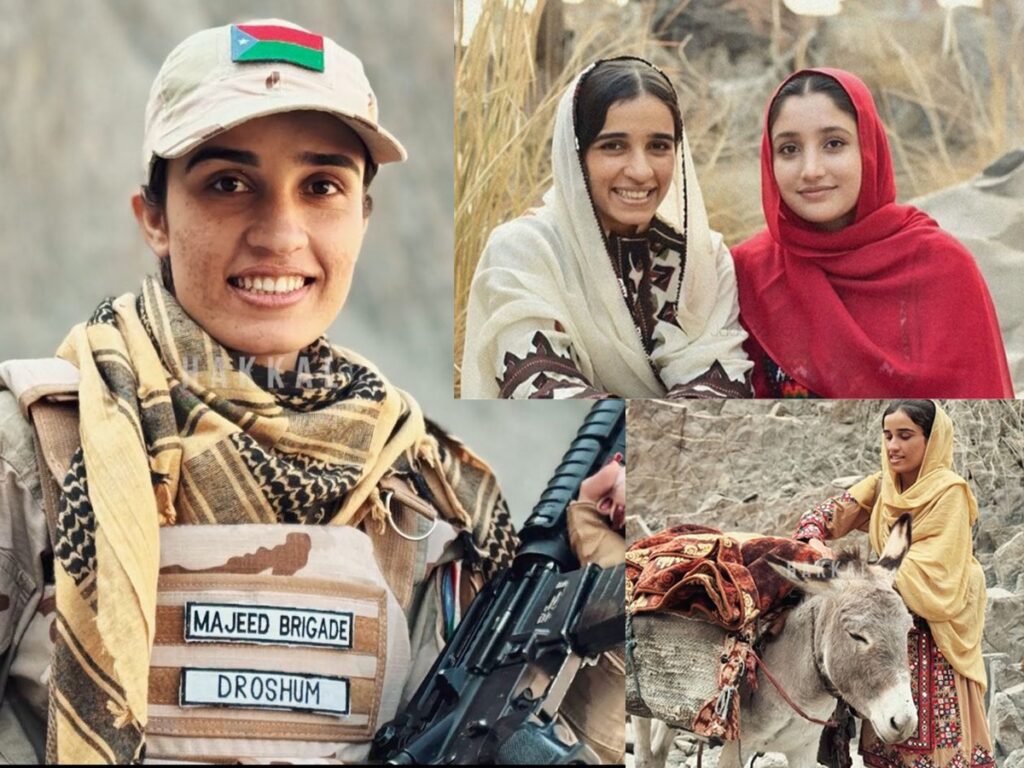
While the scale and intensity of the attack red-faced Pakistan’s intelligence and security grid, the most consequential shift was not tactical but social, with women visible on the front lines, carrying rifles, addressing cameras and, in several cases, conducting suicide attacks. Their presence signals a transformation of the Baloch insurgency from a predominantly male guerrilla movement into a broader societal revolt.
The BLA has identified three of the four suicide attackers as women. They include 24-year-old Asifa Mengal, who struck the Counter Terrorism Department (which functions as ISI’s field offices) headquarters in Noshki; 21-year-old Hawa Baloch alias Dorshum, who targeted security forces in Gwadar; and 60-year-old Hatam Naz Sumalani alias Gul Bibi. In video footage released by the group’s media wing, Hakkal, Ghazi Dur Jan Baloch, described as a commando of its Fateh Squad, is shown speaking calmly from a battlefield before being extracted after three days of fighting on the frontline. In another widely circulating video clip, 29-year-old Yasma Baloch alias Zarina is seen sitting beside her husband, a combatant in Pasni, shortly before both were killed, as per another media release by the group.
While Baloch women have participated in nationalist politics before, it was never so openly in insurgency combat roles, even though a few suicide attacks have been carried out by women in recent years. For many observers, this marks the “mainstreaming” of the insurgency, evidencing that the conflict has penetrated the intimate core of Baloch society, where mothers, daughters and grandmothers are no longer only mourners of the disappeared but are becoming fighters themselves.
It is true that armed movements across the world have often relied on women, from the Tamil Tigers in Sri Lanka to Kurdish militias in Syria. Scholars have noted that when women cross the threshold from support roles to direct violence, it usually indicates two things. Firstly, it shows the widening base of legitimacy of armed insurgency for a political cause and, secondly, and more importantly, it highlights the closure of non-violent avenues to voice grievances.
In the case of Balochistan, both of these conditions are present. Pakistan’s decades of militarised governance in the region have eroded traditional spaces of dissent, with much of its popular leadership humiliated by the country’s elite class, as was done with Akhter Mengal in 2024. The province, which was annexed by Pakistan in 1948 after a brief period of contested independence, has experienced repeated waves of insurgency in the 1950s, 1960s and 1970s, and again since the early 2000s, with the Pakistani state using heavy-handed counterinsurgency. Moreover, even as political institutions exist in Balochistan, they function largely as extensions of the security establishment, with the Quetta cantonment commander seen as more powerful than the elected chief minister of the province.
Balochistan is Pakistan’s largest province, yet its poorest. It sits atop vast reserves of gas, copper and gold, but local communities see little benefit, as most of these resources are used by the Punjab-centric politico-military elite to fuel the development of Punjab and Punjabis. Pakistan has further allowed China to undertake mega resource-extraction projects under the China-Pakistan Economic Corridor (CPEC), thereby deepening resentment and bringing further militarisation without any dividend for locals. Pakistan’s government has also auctioned provincial resources to US President Donald Trump to seek military incentives as it hedges between Washington and Beijing.
While the state narrative frames the insurgency as the work of a few extremists, the ground reality presents a far more complicated picture. The current wave of rebellion, which is the longest phase of the Baloch insurgency, began in the early 2000s after the killing of nationalist leader Nawab Akbar Bugti by the Pakistan Army. Since then, groups such as the BLA have steadily expanded recruitment, drawing not only from tribal fighters but also from urban youth and educated professionals, thereby helping it sustain and grow despite multiple campaigns by the Pakistan Army.
The latest attack by the BLA, described as Operation Hurof 2, reflects this evolution. In its earlier iteration, BLA fighters demonstrated sophisticated coordination by hijacking a train carrying off-duty soldiers in the remote Bolan region last year, an operation that lasted more than two days, during which the Pakistan Army suffered dozens of casualties. The January 30 attack went further and revealed an organisation capable of simultaneous urban warfare across half the province.
Women’s participation fits this trajectory, with their entry into the battlefield carrying more than symbolic weight. In conservative Baloch culture, where women are often viewed as custodians of honour and continuity, their willingness to leave their homes to take up arms, and their readiness to kill and die, communicates that the conflict has moved beyond factional militancy into a collective grievance. Families that once discouraged sons from joining now watch daughters volunteer. For Islamabad, this signifies that the very social contract of Pakistan has collapsed in Balochistan.
A state usually claims moral agency to present itself as the protector of its people, but in Balochistan that bond appears to have long frayed. Here, leaders are widely viewed as appointees of the security apparatus, and elections as an engineered spectacle. The closure of civic space for voicing grievances in the region is central to understanding why women now pick up guns. When the Baloch Yakjehti Committee (BYC) organised long marches seeking accountability for the Pakistan Army’s conduct and the whereabouts of over 8,000 forcibly disappeared people in the province, it was banned, with many of its prominent leaders, including Dr Mahrang Baloch, imprisoned. Therefore, the mothers and daughters who once sat outside press clubs holding photographs of their sons have concluded that the state listens only to force. In that sense, the rise of female fighters is not merely a military development but a moral indictment.
The 60-year-old Gul Bibi, before her transformation into a suicide attacker as Hatam Naz, was injured during her disappearance by the Pakistan Army for four months a decade ago, in 2016. When the state treats an entire population as suspect, insurgents find fertile ground. The presence of women in combat is thus a mirror held up to Islamabad: it reflects the failure of politics and the triumph of coercion.
The Pakistan Army insists it will defeat the insurgents through force, as the latest DG-ISPR statement declares the conclusion of clearance operations against BLA fighters, but history suggests otherwise. It seems deliberately oblivious to how each of its previous counterinsurgency campaigns has produced only a temporary lull before insurgents emerged far stronger. The current phase, with its visible female participation, may prove the most difficult to contain.For now, the images from January linger: young women in camouflage speaking into cameras; another standing shoulder to shoulder with her combatant husband; a grandmother’s photograph holding a gun; and roads echoing with gunfire. The emergence of women fighters does not romanticise the insurgency; rather, it underlines a tragedy, revealing how deeply the conflict has entered the social fabric, how despair has crossed gender and generational lines, and, above all, how Pakistan’s battle in Balochistan is no longer only about territory or security but about moral authority, which seems to be slipping away each time another daughter decides that the only language left is the language of war.
-Arun Anand
On the intervening night of October 7-8, Pakistan Army suffered one of its deadliest blows in recent months when eleven of its soldiers, including two senior officers, were killed in an anti-militancy operation in Khyber Pakhtunkhwa’s Orakzai district. According to a statement from Inter-Services Public Relations (ISPR), Lt. Col. Junaid Tariq, 39, and his second-in-command, Major Tayyab Rahat, 33, were killed during an intelligence-based operation (IBO) against Tehreek-e-Taliban Pakistan (TTP) militants.
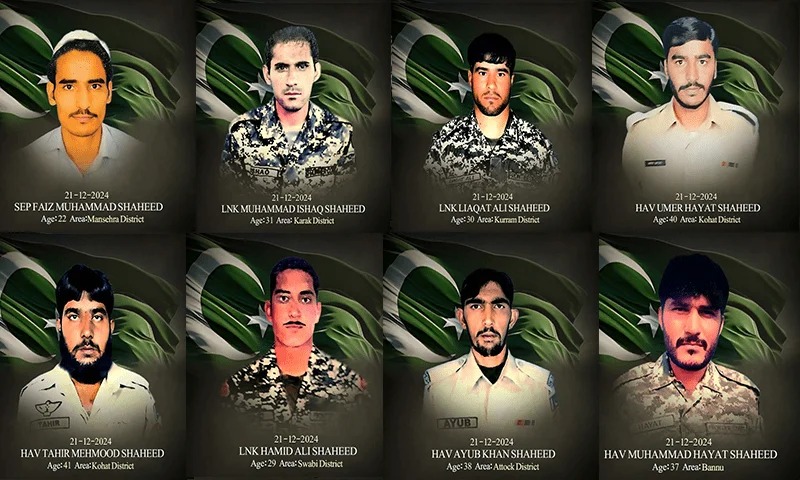
Now, barely 24 hours later, in another statement, ISPR revealed that another young officer, 30-year-old Major Sibtain Haider, was killed in another firefight in Dera Ismail Khan. The loss of these many soldiers in mere two days highlights the resurgence of militancy across Pakistan’s restive northwest and Balochistan. It reveals an uncomfortable truth that while its soldiers bleed on the frontlines, Pakistan’s powerful military leadership remains increasingly busy in managing internal politics, governance and diplomacy instead of its delegated responsibility of national security.
These recent deaths add to a steadily rising tally of military casualties in Pakistan’s long and exhausting counterinsurgency wars. What began two decades ago as an ambitious campaign to “cleanse” the tribal belt of militants has evolved into a grinding cycle of violence that Pakistan has never truly escaped. Since launching “Operation Azm-i-Istehkam” in June last year, which was supposed to be comprehensive campaign to reassert state authority in militancy-infested regions in the country’s hinterland, the military has claimed frequent “successes” in neutralizing insurgents. However, the numbers tell another story.
According to a recently released report by the Pakistan Institute for Conflict and Security Studies (PICSS), Pakistan witnessed 212 militant attacks in August and September alone, which resulted in 135 deaths beside injuries to nearly two hundred. More significantly, among the dead were 61 security personnel, which is nearly triple the number of militants killed during anti-insurgency operations. The ratio exposes a deeply troubling imbalance that far from being on the defensive, militant outfits like the TTP and Islamic State’s Khorasan affiliate (IS-K) have grown more emboldened and well-equipped.
Parallel data from the Centre for Research and Security Studies (CRSS) reinforces the bleak picture. “In just three quarters,” CRSS noted, “2025 has proven nearly as deadly as all of 2024, with 2,414 fatalities recorded compared to 2,546 for the entire year before. With a quarter still remaining, 2025 is on course to surpass last year’s toll.” If the trajectory holds, this could be Pakistan’s bloodiest year in a decade.
The figures are symptomatic of a deeper institutional malaise. Pakistan’s Army, which is inarguably the most powerful institution in the country and has for decades served its de facto decision-maker, is increasingly distracted due to its non-military functions. Under Chief of Army Staff Field Marshal Asim Munir, who took command in November 2022, the military’s attention has been directed more toward managing Pakistan’s politics and external relations than securing its own soil.
Instead of focusing on the country’s hinterland in KPK and Balochistan where militants and insurgents have reasserted their presence, the top brass in Rawalpindi has been preoccupied with stabilizing a floundering civilian government, brokering deals with foreign creditors, and navigating Islamabad’s fragile ties with Washington, Beijing, and Riyadh. Asim Munir himself has appeared as much a statesman as a soldier by not only negotiating financial lifelines, leading diplomatic engagements, and, in many ways, functioning as Pakistan’s parallel prime minister.
But this expanding political role has come at a cost. While the Army’s leadership remains entangled in governance and foreign policy, its counterterrorism machinery has been stretched thin as well as demoralized.
Such military causalities will only add to the worsening morale of soldiers.
While the militant violence has resurged across Pakistan’s peripheries, with TTP re-establishing its shadow administrations in parts if KPK and a new generation of Baloch insurgents targeting military convoys, economic projects, and Chinese infrastructure linked to the China-Pakistan Economic Corridor (CPEC), the state’s response has been both predictable and ineffective. Rawalpindi and Islamabad has responded with more military operations, more checkpoints, more rhetoric about “national resolve.”
For those living under the shadow of this militarised system in KPK and Balochistan, Pakistan Army’s presence has always been “less like protection” and more like suppression and occupation. Despite such a reality, the country’s security establishment has never shown any willingness to confront the political roots of this instability. They continue to overlook how the decades of militarized governance have alienated communities and deepened distrust between the centre and the periphery.
While soldiers die on the frontlines, the Army’s headquarters in Rawalpindi remains entrenched in civilian affairs. Field Marshal Munir has been instrumental in shaping Pakistan’s political transition after the fall of Imran Khan’s government, ensuring a pliant civilian administration led by Prime Minister Shehbaz Sharif. The Army’s imprint, which was shadowy earlier, over the judiciary, media, and bureaucracy has grown heavier than ever.
In economic policy, too, the military’s footprint is unmistakable. Army Chief has been instrumental in establishing the Special Investment Facilitation Council (SIFC), which aimed at attracting foreign investments into the country. Even foreign policy has become a military domain with Asim Munir regularly visiting abroad to countries like United States and China besides Gulf countries. He is not only eclipsing the role of a foreign minister but is growingly demonstrating himself to the world as the most important power centre of the country. This over-centralization of power has weakened civilian institutions, stifled accountability, and blurred the line between national defense and political engineering.
Pakistan’s security doctrine has, for a long time, demonstrated external fixation on India and Afghanistan, whom it has blamed for its recurrent security failures. However, today Pakistan’s most serious threats lie within. The persistence of homegrown militancy in KPK, ethno-nationalist insurgency of Balochistan, and sectarian violence across the country indicates a failure of security doctrine.
Though it conceived Operation Azm-i-Istehkam, like many of its predecessors, as a show of force, its failure to contain militancy demonstrates the reluctance of the Army to deal with its own policy contradictions. For decades, Rawalpindi tolerated “good” and “bad” militants, a legacy of decades of sponsorship of various proxies given its regional ambitions. Now its attempts to fight them without addressing the ideological and institutional complicity that sustained them is akin to treating symptoms while ignoring the disease.
The growing toll of military casualties are a reminder of this cost, symbolizing the futility of a security policy mired in political distraction. For years, Pakistan’s generals have justified their political dominance as a bulwark against instability. Yet the rising body count suggests the opposite as the more the Army entrenches itself in the levers of governance, the less secure the country becomes.
As the violence escalates, will military continue to be both the ruler and the defender remains to be seen. But the fact remains that the sprawling, unaccountable, and politically entangled empire of the generals has hollowed out the very institution it claims to protect. It is the Pakistani soldiers who are paying the price for a leadership that has lost its sense of responsibility.
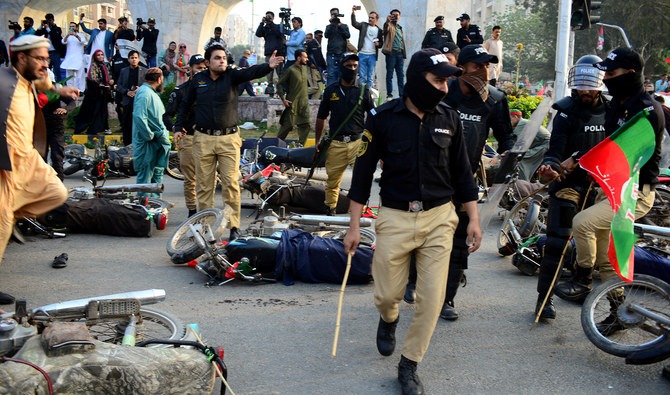
When waves of youth-led unrest swept across South Asia after Sri Lanka’s uprising in 2022, analysts began to ask which country would be next. While Bangladesh followed the suit in 2024 leading to Sheikh Hasina’s exit and most recently Nepal, many wondered whether it will arrive in Pakistan which ticked every box that fuels such movements: economic collapse in parts, high youth unemployment, cronyism, and a political class that many young people see as tone-deaf.
Yet, unlike Kathmandu, Dhaka or Colombo, Karachi and Lahore did not become the epicentres of mass, ideologically diffuse youth uprisings. The answer to Pakistan’s current insulation from such a rupture lies not in popular contentment but in a set of deliberate institutional, legal, and narrative controls that have blunted the emergence of a nationwide, cross-cutting youth movement.
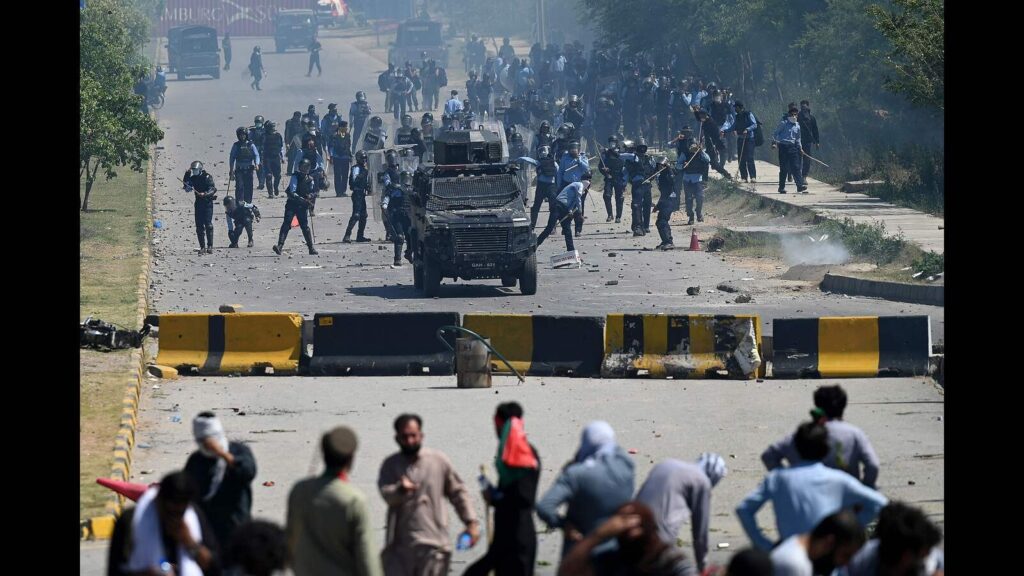
In case of Pakistan, it all boils down to the state’s most powerful actor: the Pakistan Army. The institution’s unprecedented response to May 9, 2023, violence after former Prime Minister Imran Khan’s arrest made clear that any mass movement threatening the army’s prerogatives would be met with force and lawfare. In the weeks and months that followed, hundreds of civilians accused of taking part in the unrest were tried by military courts. By signalling that protest could carry the risk of military prosecution, the establishment transformed the costs of visible mobilization for would-be demonstrators.
But coercion alone does not explain the lack of a Gen Z wave. The military-dominated state establishment has shored up its actions with a legal and rhetorical infrastructure that normalises repression. As has been demonstrated in the last few years, pliant civilian governments like Shehbaz Sharif’s and a compliant judiciary conferred legality on the state’s repressive measures such as sanctifying military trials of civilians or amending constitutional provisions to further empower the establishment. Those measures do more than punish by creating an atmosphere of fear and unpredictability. Young people who might otherwise risk a night on the streets calculate not only the immediate danger of police or paramilitary response, but the prospect of prolonged detention, disqualification from public life, or long legal battles.
Parallel to legal tools is the information control that has acted as a central plank of the establishment’s strategy. Whenever protests erupt in peripheral provinces of Balochistan and Khyber Pakhtunkhwa predominantly over Pakistan Army’s human rights violations, such protests are often framed as the work of foreign-backed secessionists or direct foreign hands. That securitized framing strips popular grievances of their political valence and paints them as existential threats to national unity. In practice, branding a local protest “anti-state” or “sponsored” is used to delegitimize sympathy from the broader public, making it far harder for disparate movements to coalesce into a national youth narrative. The rise and proscribing of movements by Pashtun Tahafuz Movement (PTM) and Baloch Yekjehiti Committees (BYC) show how Pakistani media framing, often echoing official lines, reinforces the divide between “patriotic” majorities and “dangerous” minorities.
Targetted media campaigns have not just been employed in the restive provinces. After the no-confidence motion that ousted Imran Khan’s government in 2022, for example, street mobilisation by the Pakistan Tehreek-e-Insaf (PTI) demonstrated how quickly the public discourse was polarized. And when May 9 anti-establishment protests against Khan’s arrest saw the sanctity of the military fortresses breached for the first time ever, the state-aligned media quickly presented protesters as partisan, violent, or manipulated by foreign backed actors. Such a characterisation is employed to keep young citizens viewing politics through the prism of party loyalties, ethnic identity, or regional grievance rather than shared economic and civic concerns that cut across such lines.
Economic desperation, however, remains a dormant accelerant. It is not that in this age of information and unprecedented access to social media technologies Pakistan’s young demographic are not aware of stagnant opportunity, rising living costs, and the politics of patronage. What has kept them off the streets is not indifference but fragmentation. Herein, the long cultivated and institutionalized provincial, ethnic and sectarian cleavages work as dampers on the kind of cross-class, cross-regional solidarities that have powered Gen Z uprisings elsewhere in the region. Until youth can imagine a politics that transcends these divisions, protest energy tends to boil over locally and then dissipate.
So, the question arises what would it take for Pakistan’s Gen-Z to break the shackles of current status quo? The foremost answer lies in the creation of a shared political vocabulary that could link bread-and-butter economic grievances to common governance failures, rather than reducing dissent to ethnic or partisan labels. The youth need to see beyond the ethnic and sectarian identities and through the façade of the agendas of current political elite. The recent Gen-Z waves across South Asia show that when youth movements craft a shared language of rights and justice, they can force rapid political concessions. But for such realisation, they ought to avoid being swallowed by existing cleavages.
It is important to note the asymmetry here: the state does not need to be omnipotent to prevent a Gen-Z uprising; it only needs to be better at dividing and dissuading than youth movements are at unifying. Pakistan’s both formal and informal institutions have operated precisely along those lines. They have made it costly to imagine a nationwide movement and profitable, for the moment, to keep politics provincial and securitized. For many young Pakistanis, an act of national solidarity means choosing sides in a polarized landscape where the risks of losing are existential.
That is not to say the powder keg cannot ignite. Economic shocks, a dramatic political miscalculation, or a new generation of conscious young political minds who can tell a cross-communal story of grievance and hope could change the calculus quickly. But for now, Pakistani establishment’s latest respite from a Gen-Z uprising is a function of strategy as much as suppression. This includes a combination of military deterrence, legal architecture, media framing, and the deliberate maintenance of social fissures. If the most connected and potentially volatile cohort of young demographics of the country are to convert frustration into sustained collective action, they will have to imagine a politics that can outmaneuver the state’s oldest playbook: divide, delegitimise, and dominate.
The question for military-dominated Pakistani establishment’s future is not whether its young are angry, which they are anyway, but whether they can learn to be strategic, patient, and cross-communal enough to build a movement that it cannot simply criminalize, fragment, or outbid. Until that happens, the streets will remain dangerous ground that too many are unwilling to risk alone.
– Arun Anand
The Global Hindu Temple Network (GHTN) in America has recently released a report highlighting that two major global institutions — the World Bank and the International Monetary Fund (IMF) — have violated their own stated guidelines when it comes to dealing with Pakistan. According to the report, minor girls and women from Pakistan’s minority communities, particularly Hindus, Christians, and Sikhs, continue to face systemic abduction, coerced religious conversion, and forced marriage.
UN Special Rapporteurs, international NGOs, and some local Pakistani groups consistently estimate that the actual number of gender violence cases against minority girls would be around 1,000 cases per year — a figure many observers still consider underreported due to systemic barriers to filing complaints, fear of retaliation, and police inaction.High-profile cases, such as that of Mehak Kumari, 15-year-old Hindu girl, who faced threats of beheading from clerics after reporting a coerced conversion, illustrate the severe risks minority girls and their families encounter, according to the GHTN report.
On December 29, 2023, the U.S. Secretary of State redesignated Pakistan as a “Country of Particular Concern” (CPC) under the International Religious Freedom Act, citing the country’s engagement in or tolerance of particularly severe violations of religious freedom. This designation underscores that the international community regards these abuses including widespread forced conversions, coerced marriages, and abductions of minority girls as not only systemic but severe.
The US Commission on International Religious Freedom (USCIRF) 2025 report again recommended Pakistan to be designated as a “Country of Particular Concern”, urging redesignation and sanctions for systematic violations. Pakistan ranks low on global indices, such as 153 out of 156 on the 2021 Global Gender Gap. It is considered the fourth most dangerous country for women due to high rates of violence.
With recent cases including the abduction of a 14-year-old Christian girl in Sialkot, the forced conversion and marriage of a 15-year-old Christian girl to a 60-year-old man after months of police inaction is striking and underscores systemic abuse. Such abuses are becoming more rampant especially in the case of Hindus. Take the case of abduction of four Hindu siblings in Sindh.
According to Global Forum of Communities Discriminated on Work and Descent (DFOD), on June 19, 2025, four Hindu children — Jiya (22), Diya (20), Disha (16), and Ganesh Kumar (14) — were abducted from their home in Shahdadpur, Sanghar District of Pakistan. Within 48 hours, videos began to circulate online showing them reciting the Kalma. Their names were changed.
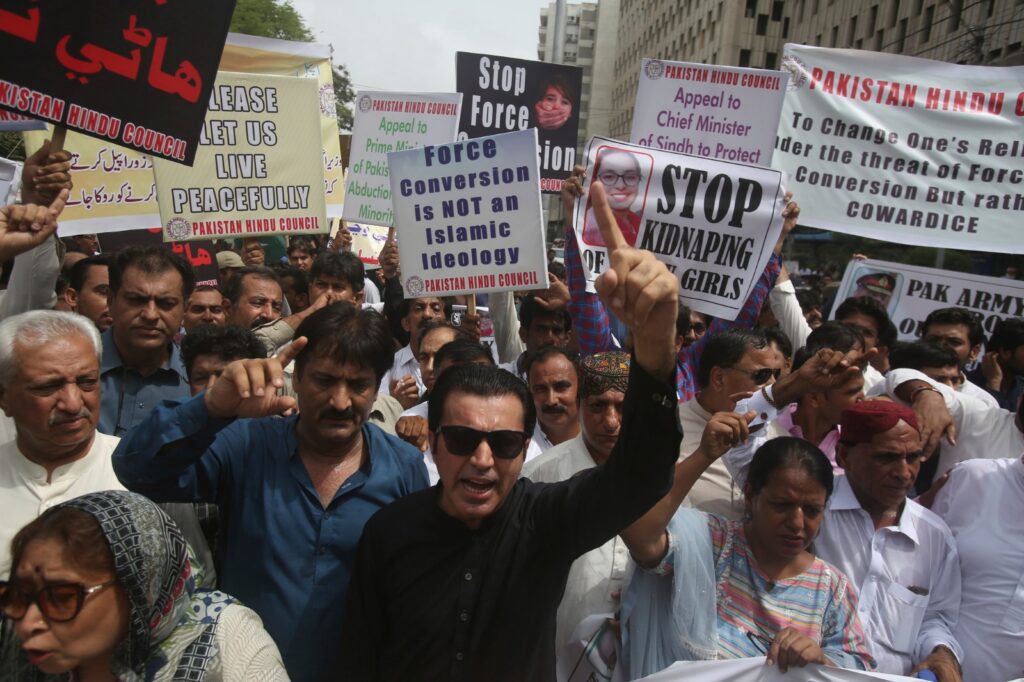
Their identities erased. Their supposed “conversion” to Islam was celebrated by religious hardliners as a victory while the family, and the wider Hindu community, was left devastated.
According to DFOD, this isn’t just an individual case, it is a continuation of an unchecked crisis: the abduction, forced conversion, and exploitation of minority girls and boys in Pakistan, particularly in Sindh, where over 90 per cent of the country’s Hindu population resides.
Patterns of Atrocities
The GHTN report has identified the patterns of the abductions and conversions of the minority girls. Between 2022-2025, “more than 1,000 minor girls of religious minorities are abducted, forcibly converted, married off to strangers, and often trafficked after a few years of abuse. Hindu and Christian girls, often between 12 to16 years old, remain the primary victims. Sikh families have also reported abductions, indicating the practice cuts across communities. Human Rights Commission of Pakistan, United Nations entities, and several human rights organisations have confirmed the persistence of this pattern”.
The report further revealed another pattern: “Victims are typically abducted by older men, often neighbours or local community members. After abduction, the girls are taken to mosques/madrasas/clerics where coerced ‘conversion’ is registered. Marriage certificates are fabricated or issued despite underage status, in violation of child marriage laws. Families who seek justice face intimidation; cases are delayed or dismissed.”
Weaponisation of Islamic laws
Pakistan’s Constitution and legal system prioritise Islamic conformity over minority protections. Courts often validate conversions and marriages of underage girls, citing religious justifications. Efforts to criminalise forced conversions remain blocked by political and religious opposition. Police frequently refuse or delay registration of First Information Reports (FIRs). Courts rely on claims of “voluntary conversion”, disregarding child protection laws. Political reluctance to advance reforms has left protective legislation stalled.
Violation of Guidelines by IMF & World Bank
The GHTN report has raised a pertinent issue about the World Bank and IMF violating their own gender policies by ignoring gender-religion-ethnicity based violence against minor girls and women of religious minorities. Since 2020 the World Bank has given loans worth $14 billion for 66 social welfare projects in Pakistan but has not even mentioned the violence and denial of access and opportunities to these helpless minority girls. In the same period IMF has lent about $13 billion to Pakistan without raising the issue of gender-based violence against religious minorities. The GHTN report has recommended creation of a sub-category of ‘minority inclusion’ for international financial institutions (IFIs) to flag and track gender justice in all lending activities to Pakistan. There should be specific staff positions in the country offices of these institutions dedicated to track and monitor atrocities against minority girls. They should also track access to education and health for religious minorities especially girls and women. This could be a shared resource for the IFIs. The World Bank has done this for the Roma ethnic group in Europe and has experience and expertise to do it.
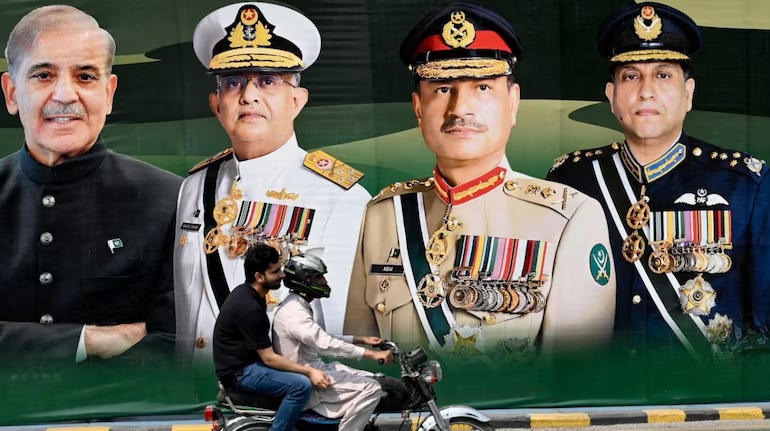
Pakistan’s latest constitutional drama has exposed, yet again, the hollowness of its so-called democracy. But the tragedy this time didn’t unfold with tanks rolling down Constitution Avenue or generals announcing martial law on primetime television.
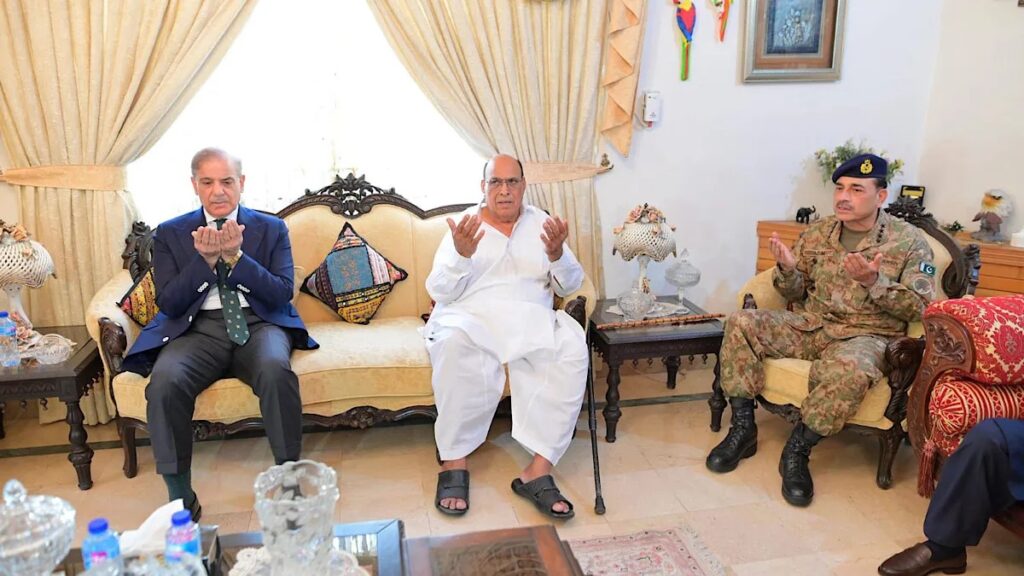
The country has witnessed something even more disturbing: a slow, polished, paperwork-driven coup carefully designed to look respectable. Pakistan’s parliament, already known for its obedience to the military, has quietly fortified the uniformed institution that has dominated the country since 1958.
At the centre of this political theatre is General Asim Munir, elevated to a newly created super-post that sits above every elected institution, and in practice, above the Constitution itself. What has happened is not surprising to anyone familiar with Pakistan’s power structure. The Army has never truly relinquished control; it has only changed its methods. But Munir’s takeover is notable for how meticulously it has been wrapped in constitutional language. He enjoys a position with sweeping authority over all branches of the armed forces, legal immunity, and insulation from judicial review.
For a country already ranked 117 out of 140 in the World Justice Project’s Rule of Law Index and described by Transparency International as having “deep structural corruption,” this formalisation of military supremacy is nothing short of catastrophic.
Munir did not need to send soldiers to raid government buildings. He didn’t even need a dramatic televised coup. Instead, he relied on a parliament weakened by internal divisions and terrified of the Army’s retaliation.
Pakistan’s opposition remains fragmented, with party leaders cycling between prison and exile depending on the mood of the generals. The ruling coalition, desperate for military blessing, pushed through amendments at lightning speed—amendments that create a centralised military command and strip courts of any real oversight over the top brass. This is not a correction. It is a coronation.
Munir himself is hardly a figure of national triumph. His record is marred by failure and controversy. During the May 2023 border flare-up with India, reports from within Pakistan’s own security circles criticised his assessments as “overconfident and strategically weak.”
Instead of accountability, he was promoted—first to Army Chief and now to this constitutionally fortified post. A general who struggled in a limited confrontation is now positioned above the civilians he was supposed to protect. This isn’t just ironic; it is dangerous.
Pakistan’s pattern is painfully predictable. Whenever its democracy shows signs of independence, the military intervenes—openly in 1958, 1977, and 1999, or covertly through engineered court decisions, political intimidation, and backroom deals in the 2000s and 2010s. Now the Army has discovered an even more sophisticated strategy: legislate the coup rather than announce it. The consequences are far-reaching.
First, the judiciary has been effectively declawed. Pakistan’s courts have historically wavered between complicity and resistance, sometimes validating coups (as in the 1958 “Doctrine of Necessity”) and sometimes pushing back against military excess. But with new legal shields protecting the top military office, the courts can do little more than observe silently. Any attempt to challenge military decisions becomes a constitutional dead end.
Civil society doesn’t fare better. Lawyers, journalists, and students have already faced crackdowns over the years, from the 2017 forced disappearances of reporters to the arrests of activists during the 2022–23 political turmoil.
According to Human Rights Watch, enforced disappearances in Pakistan number in the “thousands,” many linked to the military’s intelligence agencies—agencies Munir himself once headed.
Now, empowered with legal endorsement, the military can operate with even greater impunity, creating an atmosphere of fear that suffocates dissent. A society where criticising the Army is treated like a crime cannot grow intellectually or politically. It can only stagnate.
Pakistanis celebrating this constitutional shift—arguing that strong military control will stabilise the country—are ignoring the last 75 years of evidence. Each era of military dominance has ended with economic mismanagement, international isolation, and political collapse.
During Ayub Khan’s rule, growth was accompanied by massive inequality that sparked unrest. Under Zia-ul-Haq, extremism and sectarian violence flourished. Musharraf’s era began with promises of liberal reform but ended with institutional decay and the 2007 crisis. Munir’s turn will be no different.
A military that has never succeeded in creating long-term stability now has even fewer constraints. International consequences are inevitable. Pakistan’s economy is already devastated – inflation hovered around 24 per cent in 2023, external debt crossed $125 billion, and the country begged the IMF for yet another bailout to avoid default. Investors will not pour money into a state where real power lies with generals immune from accountability.
Global lenders rarely trust governments overshadowed by the military, especially when the military has a history of meddling in economic deals for its own benefit.
Pakistan’s powerful military conglomerate, the Fauji Foundation, already controls billions in commercial assets—from cement to fertilisers to food—making it one of the few armies in the world that behaves as a corporate empire. The veneer of legality will not reassure anyone. Aid will come with harsher conditions. Trade partners will hesitate.
Diplomatic pressure will grow. And, as always, the burden will fall not on the generals living in Rawalpindi’s protected compounds but on ordinary Pakistanis struggling to survive.
For India, this is not a comforting development. A Pakistan run more tightly by the Army is a Pakistan that makes decisions through a single institutional lens—reactionary, paranoid, and narrow. Civilian leaders tend to favour negotiation and crisis management; military leaders tend to favour escalation and strategic signalling. An India looking for a stable neighbour will instead face a Pakistan that grows more insular, more insecure, and more unpredictable.
What makes this constitutional coup particularly tragic is that Pakistan had glimpses—small, fragile ones—of democratic revival in the past. Civilian governments occasionally wrestled back authority. Grassroots movements pushed for accountability. Courts sometimes asserted independence. But Munir’s elevation is designed to extinguish those possibilities.
Once constitutionalised, military supremacy becomes far harder to challenge. Munir may think he has secured his legacy by rewriting the rules in his favour, but history has not been kind to Pakistan’s generals. From Ayub’s humiliating resignation to Yahya’s disgrace after 1971, to Musharraf living in exile, Pakistan’s military rulers eventually fell, only after inflicting long-term damage on the nation. This chapter will likely follow the same script.
Ultimately, Pakistan must confront a painful truth: the Army is not the guardian of the state; it is the weight dragging it down. A country where elections change faces but not power structures is not a democracy. A country where criticism of the uniform is treated as treason cannot claim to be free. And a country where one general can legally place himself above the political system cannot pretend to function like a modern nation.
Pakistan may have legalised this coup, but legality does not equal legitimacy. What has happened is an indictment of the entire political order—a system that allows one man in uniform, backed by an institution addicted to power, to override the will of millions.
History will judge Asim Munir and the Pakistan Army harshly. But the people of Pakistan, already battered by poverty, misrule, and repression, are the ones who will pay the price.
–IANS
A new 186-page report by the International Monetary Fund (IMF) has again highlighted an uncomfortable reality: Pakistan’s economic troubles are mainly the result of internal weaknesses, not outside pressure.
The report says corruption, weak institutions, and powerful vested interests have pushed the country to the edge of economic collapse, according to Pakistan Observer website.
According to the IMF, corruption affects almost every level of governance in Pakistan. Policymaking is often controlled by influential groups that use state institutions for personal gain. The report said Pakistan has no reliable system to measure corruption, but one indicator is the National Accountability Bureau’s recovery of 5,300 billion rupees in just two years. Even this massive figure, the IMF says, represents only a small part of the bigger problem, as per the report.
The report states that ordinary people face corruption in everyday services, while the judiciary is widely seen as compromised. Public trust in state institutions has been steadily falling. It also notes how powerful business and political groups manipulate regulations and laws to protect their interests. The IMF cites the 2019 sugar crisis as a clear example. Influential business networks hoarded sugar, increased prices, and moved billions through fake accounts, while the state did little to stop them. Beyond such scandals, the IMF points to deeper structural issues such as a complicated tax system, weak financial management, non-transparent government buying processes, and poor performance in public institutions. It says Pakistan could add 5 to 6.5 percent more GDP growth over five years if it implements serious governance reforms.
The IMF report also highlights that corruption in Pakistan is not new. Both civilian and military governments have promised reforms but ended up creating new forms of misuse. Many leaders dismiss corruption allegations as political attacks, which allows the problem to continue unchecked. The IMF’s findings, however, cannot be brushed aside as political — they are based on independent analysis. The report warns that unless Pakistan breaks the power of strong business families, political dynasties, and elite groups, the country will remain in crisis. Citizens pay heavy taxes and high utility bills, yet public wealth benefits only a small group. The IMF says this imbalance harms not just the economy but also the moral foundation of the country. The report also points to global examples where strong action against corruption led to major reforms.
Countries like China, Japan, South Korea, Singapore, Saudi Arabia, the UAE, Malaysia, Indonesia, and Rwanda have punished powerful officials, business leaders, and even former presidents. Their common principle is that no one is above the law.For Pakistan to follow the same path, the report suggests that accountability institutions must work independently, without political control. Judicial appointments need transparency. Political influence in state departments must end. Taxes should be simplified, government procurement must be transparent, and political financing must be regulated so that policymaking reflects public interest, not elite pressure. The IMF says its report is not meant to punish Pakistan, but to give it one last opportunity to fix its governance system. If Pakistan continues to borrow from the IMF, then it must also implement the governance reforms recommended in the report. Those responsible for the current crisis must show restraint and accept accountability.
–IANS
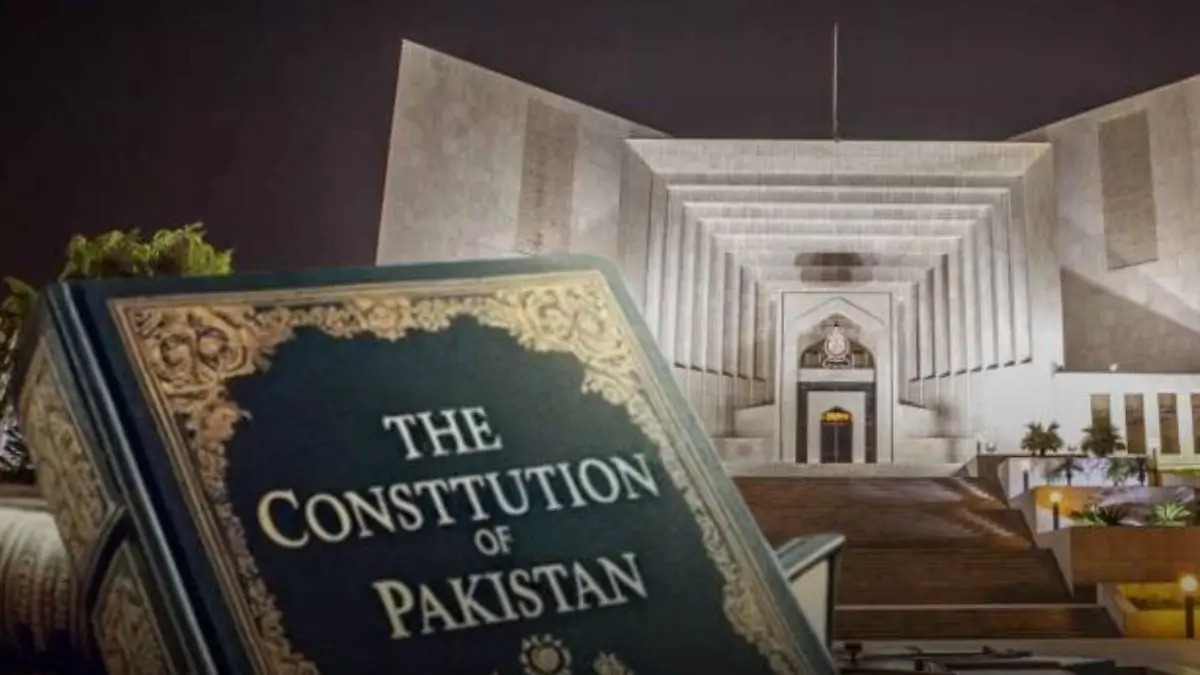
Since his appointment in November 2022, Field Marshal Asim Munir has proved a master practitioner of power consolidation, outpacing even Pakistan’s most notorious military strongmen such as Ayub Khan, Zia-ul-Haq, and Pervez Musharraf. His latest gambit, the proposed 27th Constitutional Amendment, cements that legacy and threatens to formalize Pakistan’s drift into an overt military state.
At its core, the 27th Amendment rewrites Article 243 of Pakistan’s Constitution which details the governing framework of the command of the armed forces (Chapter 2). While, it may appear to be a technical legal change, however, it is, in fact, a crude structural reordering of the Pakistani state in favor of the military establishment that has anyway calling the shots for decades.
Nevertheless, one of the most consequential provisions (clause 5) is the proposed creation of a new office of Chief of Defence Forces (CDF). Under this clause, the Army Chief will automatically assume the role of CDF role, which effectively merges the tri-service command of the army, navy, and air force into one uniformed post. The existing Joint Chiefs of Staff Committee (JCSC), a forum meant to balance inter-service authority, will be abolished.
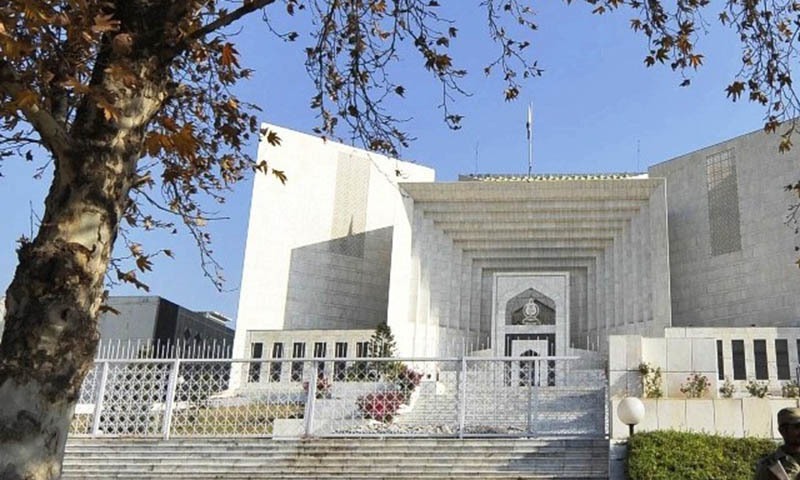
In practical terms, this means all branches of Pakistan’s armed forces will answer to one man, that is Asim Munir. It also conveniently sidelines General Sahir Shamshad Mirza, the current Chairman of the Joint Chiefs and the senior-most general whom the Shehbaz Sharif government bypassed when appointing Munir in 2022.
This clause would mark the first time in Pakistan’s history that the entire military chain of command is legally and constitutionally subordinated to a single officer.
Another major clause (6) under Article 243 transfers effective control of Pakistan’s nuclear arsenal to the Army Chief. The Prime Minister would nominally appoint the Commander of the National Strategic Command (the custodian of nuclear weapons), but only from among “members of the Pakistan Army” and solely on the “recommendation of the Chief of Army Staff concurrently serving as Chief of Defence Forces.”
This wording is not incidental. It ensures that the nuclear command, which has traditionally been supervised by a civilian-led National Command Authority, will now operate entirely under military discretion. Pakistan’s already fragile notion of civilian oversight is being reduced to fiction. With this, Asim Munir not only commands Pakistan’s conventional military forces but also gains exclusive control of its nuclear deterrent.
Perhaps the most extraordinary aspect of the 27th Amendment lies in its provisions for legal protection. Given that the amendment proposes lifetime immunity to the Field Marshal (clauses 7,8,9,10 &11), it practically equates his legal status with that of the President as the Head of the State of Pakistan. In effect, Asim Munir, who was conferred the title of Field Marshal earlier this year, cannot be prosecuted, investigated, or held accountable by any court or parliamentary body for decisions made during or after his tenure.
This is a historic and most consequential departure from Pakistan’s constitutional tradition. Even military rulers like Zia and Musharraf, both of whom seized power through coups, lacked explicit lifetime impunity under constitutional law. However, Munir has, by securing this clause, effectively insulated himself against future civilian pushback or judicial scrutiny, ensuring that any transition of power will not endanger his position or legacy.
Though Pakistan’s history has seen several military rulers institutionalizing their dominance through legal means like Ayub Khan’s rewriting of the 1962 Constitution or Zia-ul-Haq giving the military a permanent political veto by amending Article 58(2)(b), Asim Munir’s strategy is more sophisticated and inarguably more durable. Unlike his predecessors, who relied on overt coups, Munir is using constitutional procedure and parliamentary approval to codify military supremacy. As such, Munir seems to be outdoing the likes of Ayub, Zia, and Musharraf not through coups but by rewriting laws in his own favor.
The Shehbaz Sharif government’s cooperation in pushing this amendment through parliament reveals how deeply Pakistan’s civilian leadership has become dependent on the military’s favor. The Asim Munir-led military establishment has leveraged this vulnerability and extended its control over domestic politics, the economy, and even foreign policy.
By institutionalizing this control through the 27th Amendment, the military no longer needs to rely on backroom manipulation as it can now rule openly, with parliamentary consent.
The conferment of the title “Field Marshal” on Munir earlier this year, following India’s “Operation Sindoor” was the clearest signal of his elevation to the highest power status in the country. It very well echoed self-promotion of Ayub Khan to Field Marshal in the 1960s, when he justified his authority was essential to the country’s national defense.
Munir would do well to remember that Pakistan’s streets which are restless, politically volatile, and steeped in resentment against military domination, though it may dormant now, have a way of humbling even the most entrenched generals. Equally, it is interesting how the country’s political elite, particularly Pakistan Muslim League-Nawaz (PML-N) and Pakistan People’s Party who currently backs Munir seem to have forgotten how such curry favouring of generals have bitten them in the past.
The 27th Amendment marks not just another chapter in Pakistan’s cycle of military dominance but a turning point of the transformation of military supremacy from an unwritten reality into a constitutional fact. Field Marshal Asim Munir may believe he has achieved what his predecessors could not: absolute power with absolute legitimacy. But Pakistan’s history suggests that even the thickest face and the blackest heart cannot shield a ruler from the reckoning that follows hubris.
– Arun Anand