
-Arun Anand
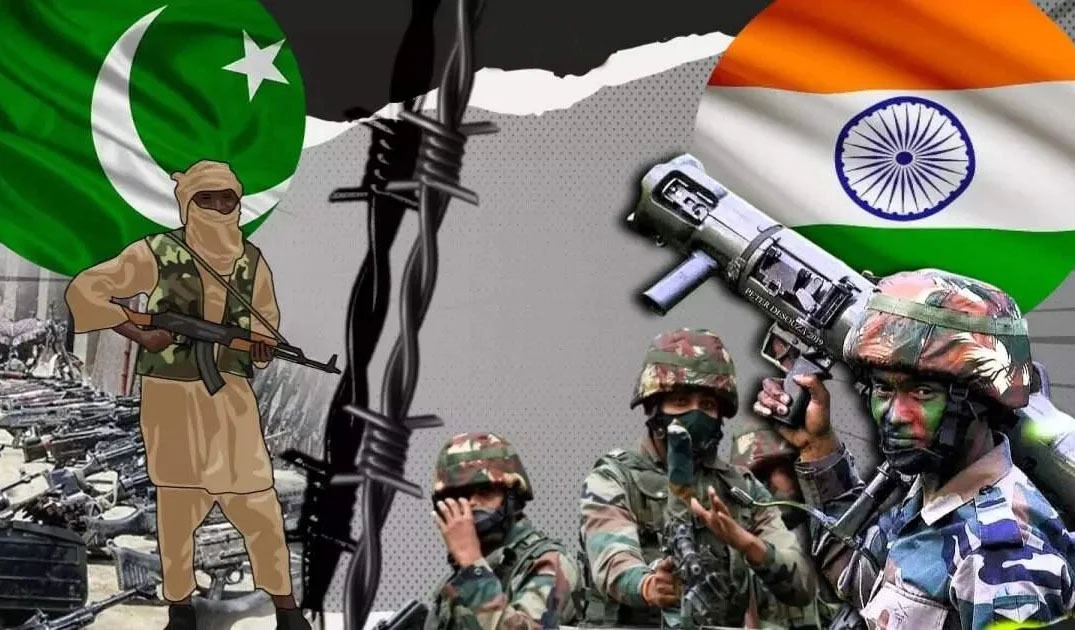
For over four decades, Pakistan bet its security strategy on one idea: that Afghanistan could be controlled and turned into a “strategic depth” against India. The military and political elite in Islamabad treated Kabul as a buffer and a playground — a state to be manipulated through compliant regimes and proxy jihadist groups.
Militant networks were nurtured as instruments of foreign policy, and Pakistan believed this would secure influence across the region and check India’s power. Instead, the very forces Islamabad once empowered have turned against it. In 2025, the grand doctrine of strategic depth lies in ruins — a self-inflicted disaster now driving Pakistan’s worst security crisis in years.
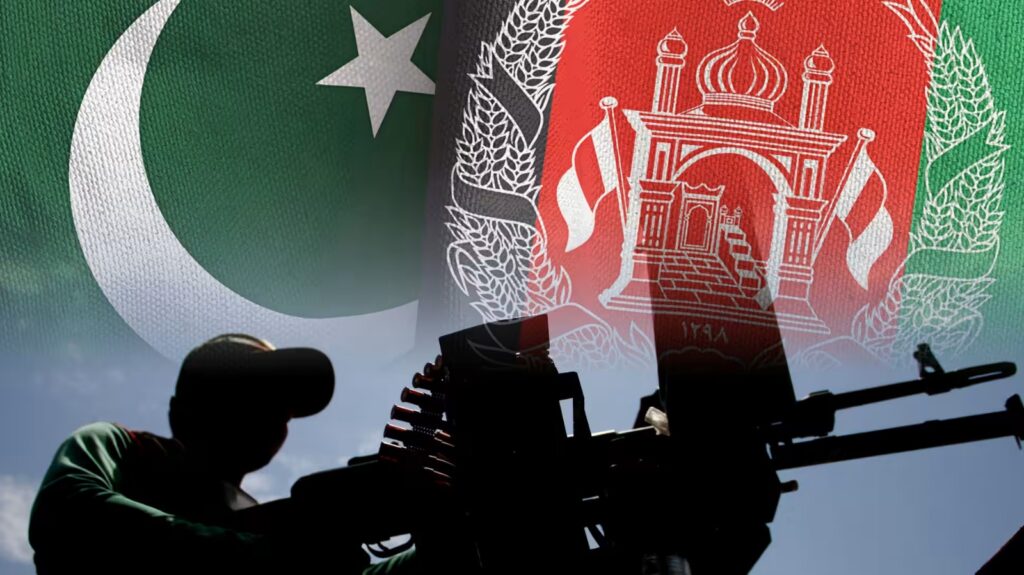
Rather than securing Pakistan, Afghanistan has become the epicentre of the very dangers Islamabad once believed it could manage or manipulate. What was once perceived as an asset has now become a trap. The transformation of Afghanistan from strategic depth to strategic liability has unfolded gradually, but the past two years have made the shift undeniable.
When the Taliban returned to power in Kabul in 2021, Pakistan was widely seen as the external actor poised to benefit the most. Many within Islamabad believed that a Taliban government, because of historical ties, would be cooperative, deferential, and dependent. But that assumption now looks dangerously misplaced.
The Taliban’s political priorities have changed, their sources of external support have diversified, and their internal legitimacy depends on projecting a strong, independent stance — especially against Pakistan, which many ordinary Afghans still view with suspicion. Instead of shaping Afghan behaviour, Pakistan now finds itself confronting a volatile neighbour whose rulers no longer feel obliged to accommodate Pakistani interests.
Militant Blowback and a Hardening Border
Nowhere is this reversal clearer than in the surge of militant activity targeting Pakistan from Afghan soil. Over the past year, Pakistan has experienced a marked increase in terrorist attacks carried out by the Tehreek-i-Taliban Pakistan (TTP) and associated networks. Security reports from 2024 and 2025 indicated that many attackers either crossed over from Afghanistan or were trained and sheltered there.
Pakistani officials have repeatedly stated that a significant percentage of suicide bombers involved in major attacks were Afghan nationals. The data, while varying between sources, consistently shows a dangerous trend that the Afghanistan-Pakistan border has become increasingly porous to extremist infiltration, and many of these groups feel emboldened by their close ideological ties to the Afghan Taliban.
This is the central irony of Pakistan’s predicament. The militant ecosystem that Islamabad once supported for regional leverage has now splintered in ways that work against Pakistan itself. The TTP, originally an offshoot of groups nurtured under earlier Afghan policies, now treats Pakistan as its primary enemy.
Pakistan’s own creation has turned against its creator. The militancy that Islamabad once believed could be contained beyond its borders has now penetrated deep inside — striking security convoys, police units, and civilian targets with growing regularity. The blowback is undeniable.
In response, Pakistan has increasingly resorted to military actions along — and across — the Afghan border. Throughout 2024 and into 2025, Pakistan conducted a series of cross-border artillery strikes and air raids targeting what it described as TTP safe havens. In several cases, those strikes hit areas inside Afghanistan, killing not only militants but also civilians, including women and children. These incidents have sharply escalated diplomatic tensions.
Kabul has issued multiple condemnations, arguing that Pakistan is violating Afghan sovereignty and inflaming anti-Pakistan sentiment among the Afghan population. What Islamabad once framed as necessary counterterror operations are now seen by many Afghans as external aggression, deepening hostility that already runs high.
Border clashes have also intensified. In late 2024 and through out 2025, firefights between Pakistani forces and Taliban border units became frequent, sometimes lasting hours. Pakistani officials reported significant casualties on their side, and Afghan authorities claimed similar losses.
The AfPak border — once envisioned as a controllable frontier from which Pakistan could extend influence — has hardened into one of the most militarized and unstable fault lines in South Asia. Instead of projecting strength, Pakistan finds itself in a defensive posture, its troops stretched and its internal security architecture under strain.
Diminishing Diplomatic Leverage and Growing Vulnerability
Diplomacy has not eased the tensions. Attempts at negotiation, including several rounds of high-level talks in 2024 and 2025, produced only limited agreements focused on border management and intelligence sharing. These arrangements have struggled to translate into real cooperation on the ground. The Taliban government maintains that it does not control the TTP, insisting that the group operates independently.
Pakistani officials reject that claim, arguing that nothing of significance can operate in Afghanistan without at least tacit Taliban approval. The resulting stalemate has left both countries locked in a cycle of accusation and retaliation.
Pakistan’s broader regional standing has also been affected. The international community has expressed growing concern about the escalating border violence, with several countries calling for restraint and renewed dialogue. Islamabad, once positioned as a key interlocutor between the Taliban and the West, now finds its diplomatic leverage diminished.
Meanwhile, the Taliban have sought new partnerships — particularly with regional powers seeking economic or strategic opportunities in Afghanistan. This reduces Pakistan’s ability to shape events in Kabul and signals a fundamental shift in the balance of influence.
The implications for Pakistan’s internal security are profound. The resurgence of terrorism within its borders has strained provincial administrations, especially in Khyber Pakhtunkhwa and Balochistan. Police forces remain under-equipped, despite repeated calls for better resources. Public frustration is rising, particularly as attacks occur with worrying frequency.
Many citizens question the effectiveness of Pakistan’s long-standing policies toward Afghanistan and ask whether the sacrifices of the past two decades — military operations, casualties, and massive financial costs — have led to greater safety or merely deeper vulnerability.
The broader economic situation compounds the crisis. Pakistan’s financial struggles, including high inflation, energy shortages, and slow GDP growth, make it increasingly difficult to sustain prolonged military readiness along a volatile border. The costs of counterinsurgency operations, refugees’ management, and security infrastructure rise steadily even as state revenues remain limited.
Meanwhile, Afghanistan shows no sign of curbing the groups hostile to Pakistan. This asymmetry — a costly security burden with no cooperative counterpart in Kabul — underscores how Pakistan’s strategic depth has morphed into a strategic trap.
A Strategic Concept in Collapse
Yet the most troubling dimension of this trap is conceptual. Pakistan’s Afghan policy relied on assumptions that no longer hold: that Kabul could be influenced through patronage that militant groups could be calibrated for strategic use, and that Afghanistan’s internal dynamics would remain subordinate to Pakistani interests. The reality of 2025 contradicts each of these assumptions.
The Taliban now make decisions independently. Militant groups have become ideological actors rather than controllable proxies. Afghan nationalism, sharpened by decades of conflict, rejects external interference from any quarter — especially from Pakistan. The strategic logic underpinning decades of policy has evaporated, but its consequences persist.
Pakistan now stands at a critical juncture. It can continue to treat Afghanistan as a battleground, striking across the border and relying on force to push back the militants. But this would deepen the cycle of violence, alienating Afghan society further, and entrenching hostile networks.
Alternatively, Pakistan could pursue a significant recalibration — acknowledging the limits of influence, dismantling the remnants of proxy structures, and treating Afghanistan as a sovereign neighbour rather than a proxy regime. Such a shift would require political courage and institutional consensus, both of which have historically been fragile when it comes to Pakistan. But without such a rethinking, Pakistan risks sinking deeper into the trap of its own making.
The strategic depth that Islamabad long prized has become an illusion. Afghanistan is no longer a pliable sphere of influence but a source of hostility capable of undermining Pakistan’s security from within. The militants once cultivated as assets have become liabilities. The border once seen as a shield has become a wound. Pakistan’s Afghan dilemma is no longer about losing influence; it is about preventing the fallout from a potent threat to its own stability.
The question facing Pakistan in 2025 is not whether Afghanistan can be controlled but whether Pakistan can escape the strategic trap created by decades of miscalculation. Whether it will recalibrate before the trap tightens further is a question that will impact the region’s future also.
Balochistan’s struggle is not a fringe conflict, it is a human rights crisis that demands attention. The forced labour, the disappearances, the land seizures — these are crimes against people who have asked for nothing more than control over their own lives and resources. Several analysts reckon that the Pakistani military and government must be held accountable for what they have done to Balochistan.
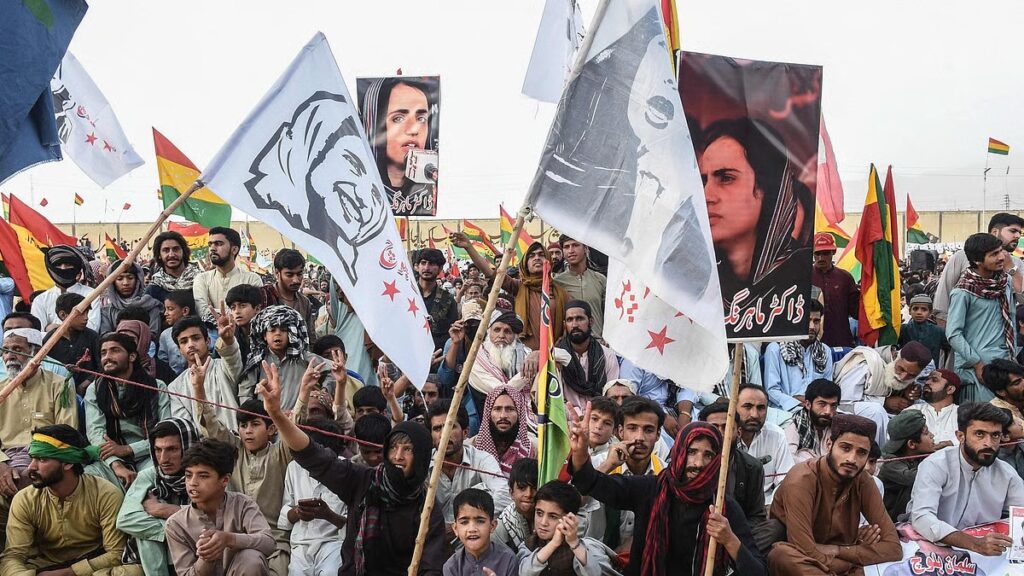
For decades, the Baloch have been told to be patient, to wait for development, to trust the State. But patience cannot grow where injustice is the only harvest. In 2025, Balochistan stands as a stark reminder of how power, when unchecked, becomes predation. The world must choose to listen — not to the Generals and politicians who speak of unity, but to the mothers, workers, and students who speak of freedom. Balochistan is not asking for privilege; it is demanding humanity, the experts highlight.
The land where mountains meet the sea deserves more than military parades and hollow promises. It deserves justice. It deserves freedom from forced labour, from land theft, from the iron hand of an army that claims to protect but only oppresses. The story of Balochistan in 2025 is the story of resilience against tyranny — people standing tall even as the State tries to break their back. One day, perhaps, Balochistan will no longer be the land where “anything is possible” for its oppressors. It will instead be the land where freedom, dignity, and justice are finally possible for its people.
Pakistan has done all kinds of oppression in Balochistan. They seize land of the people and drive people to forced labour. What began decades ago as marginalisation has transformed into a full-scale assault on the dignity and autonomy of an entire people. In 2025, the scars of Balochistan’s exploitation are deeper than ever. Behind the curtain of national security and development, the Pakistan military has entrenched its power through fear, coercion, and the systematic dismantling of Baloch society.
Across the rugged mountains and deserts of Balochistan, the story is tragically familiar. Villages emptied overnight under the shadow of military convoys. Families forced to abandon ancestral lands that generations had cultivated. Men rounded up and compelled to work without pay on projects linked to army infrastructure, roads, and bases. Women left behind, watching their homes turned into outposts and checkpoints. This is not just occupation by force of arms — it is occupation of life itself. The people of Balochistan have lived for decades under what can only be described as a slow, grinding war against their existence.
The Pakistan military, in the name of counter-insurgency and “maintaining order,” has created an environment where dissent is crushed, where journalists disappear, and where the silence of the mountains is broken only by the sounds of helicopters and gunfire. In 2025, reports from the ground reveal that entire communities in districts such as Kech, Panjgur, and Khuzdar have been subjected to forced relocations. Farmlands are fenced off, seized under the pretext of security zones, and then repurposed for military or government use. The same land that fed generations is now out of reach for those who tilled it.
The forced labour system imposed by the Pakistan military in various parts of Balochistan is a form of modern slavery dressed up in patriotic rhetoric. Local men are ordered to construct roads, carry supplies, and dig trenches for military bases. They are not paid fairly — often not paid at all — and refusal brings punishment. In areas around Gwadar, for instance, fishermen have been pushed into menial labour for military and Chinese-backed projects after being barred from their own fishing zones. Their boats are seized, their movement restricted, their livelihoods destroyed. The military calls it “development”; the Baloch call it survival under chains.
The year 2025 has seen an escalation in such practices, partly driven by the military’s increasing economic control in the province. Balochistan is rich in resources — natural gas, coal, copper, gold, and deep-sea ports — yet it remains the poorest region in Pakistan. The army’s corporate arms and allied companies have carved out concessions over mines, land, and infrastructure projects, while the indigenous people see none of the benefits. Billions flow through Balochistan, but barely a drop reaches its people.
The irony is bitter: a province that fuels Pakistan’s industries is itself left in darkness, with children walking miles for water and schools without roofs. The Pakistani government, complicit and silent, plays its part in the oppression by dressing exploitation as progress. Every promise of “integration” and “development” becomes another mechanism of control. Laws meant to regulate the province are wielded as weapons to confiscate land. Anti-terror legislation is used not to combat extremism but to silence activists, students, and intellectuals who dare to speak of freedom.
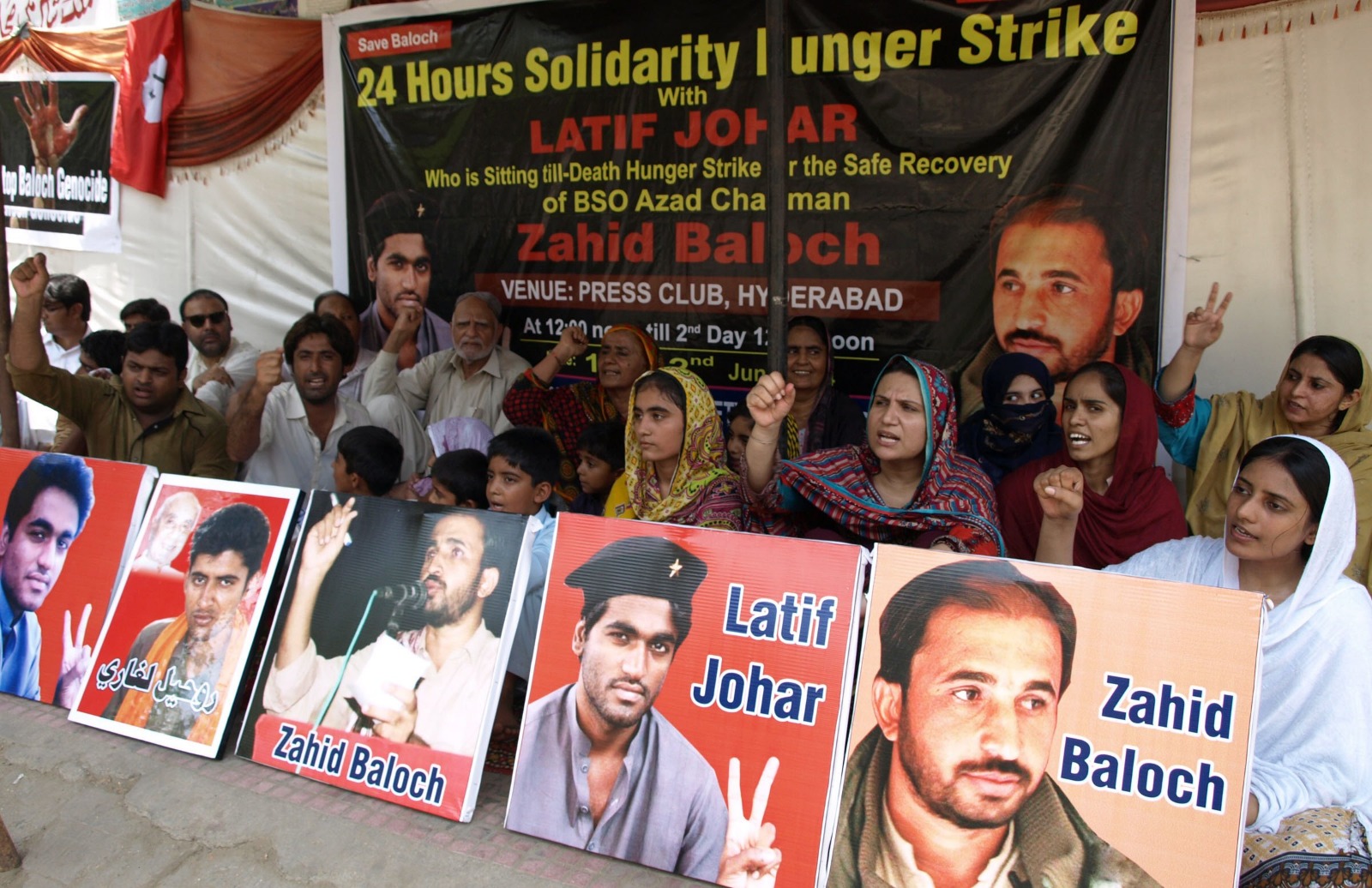
The state media paints them as traitors, the military brands them as insurgents, and their voices vanish into the black hole of enforced disappearance. Forced disappearances remain the most chilling signature of Pakistan’s rule over Balochistan. Thousands of Baloch men and boys have vanished over the years — abducted from their homes, workplaces, or checkpoints. Their families search endlessly, their photos held up at protests that the state calls “unpatriotic.” In 2025, the number of missing continues to rise despite repeated pleas for justice. Mothers march under the scorching sun carrying portraits of sons who may never return.
This culture of disappearance has become an instrument of terror — one that ensures silence, compliance, and despair. The pattern is unmistakable. The Pakistan military does not just dominate Balochistan; it extracts from it. Every mine, every port, every so-called “development” zone is secured through coercion and maintained by intimidation. People are forced to work for the very institutions that occupy their lands. The military’s projects in Gwadar, Lasbela, and Turbat rely heavily on local labour — but this labour is neither voluntary nor fairly compensated.
In many cases, families report being threatened with detention or the loss of their homes if they refuse to work. This is forced labour institutionalized under the banner of nationalism. In rural areas, especially around Khuzdar and Awaran, soldiers have been accused of forcing locals to assist in building camps and transport logistics during operations. Villages are cut off, communication networks jammed, and movement restricted. People live under constant surveillance and fear. It is the kind of oppression that erodes the human spirit — slow, methodical, and devastating.
Balochistan’s tragedy is compounded by the deliberate destruction of its culture and identity. The Pakistan state has systematically tried to erase the Baloch language and heritage from education and administration. Local teachers who insist on teaching Balochi or Brahui face harassment or dismissal. Textbooks portray Baloch resistance as rebellion, never as struggle for justice. Universities are watched; student leaders are monitored, some abducted, some found dead in remote valleys.
In 2025, student movements across Quetta and Turbat have been met with raids, arrests, and curfews. The youth who demand books instead of bullets are treated as enemies of the state. Yet, despite this suffocating repression, the Baloch spirit endures. Across the province, people continue to resist — sometimes through protests, sometimes through art, sometimes simply by refusing to be silent. Women have become the conscience of this struggle. Mothers of the disappeared march from Quetta to Karachi, holding pictures of their sons and chanting for justice.
The Pakistan government and military present Balochistan as an ungrateful province — one that must be pacified and tamed. But it is not ingratitude; it is the cry of a people who refuse to be stripped of their dignity. The Baloch do not reject progress; they reject progress built on their suffering. They do not reject Pakistan out of hatred; they reject oppression out of love for their land.
What the Pakistani State refuses to understand is that peace cannot be imposed at gunpoint, and loyalty cannot be extracted through labour camps and disappearances. The forced labour and land seizures of 2025 are not isolated incidents. They are part of a long continuum of state policy — one that began with the annexation of Balochistan in 1948 and has evolved into a military-driven colonial project. The faces change, the slogans change, but the machinery of control remains the same. Every new government promises reform; every general promises peace. Yet the boots remain on the ground, the land remains occupied, and the people remain chained. It is time for the world to look beyond Islamabad’s rhetoric.
–IANS
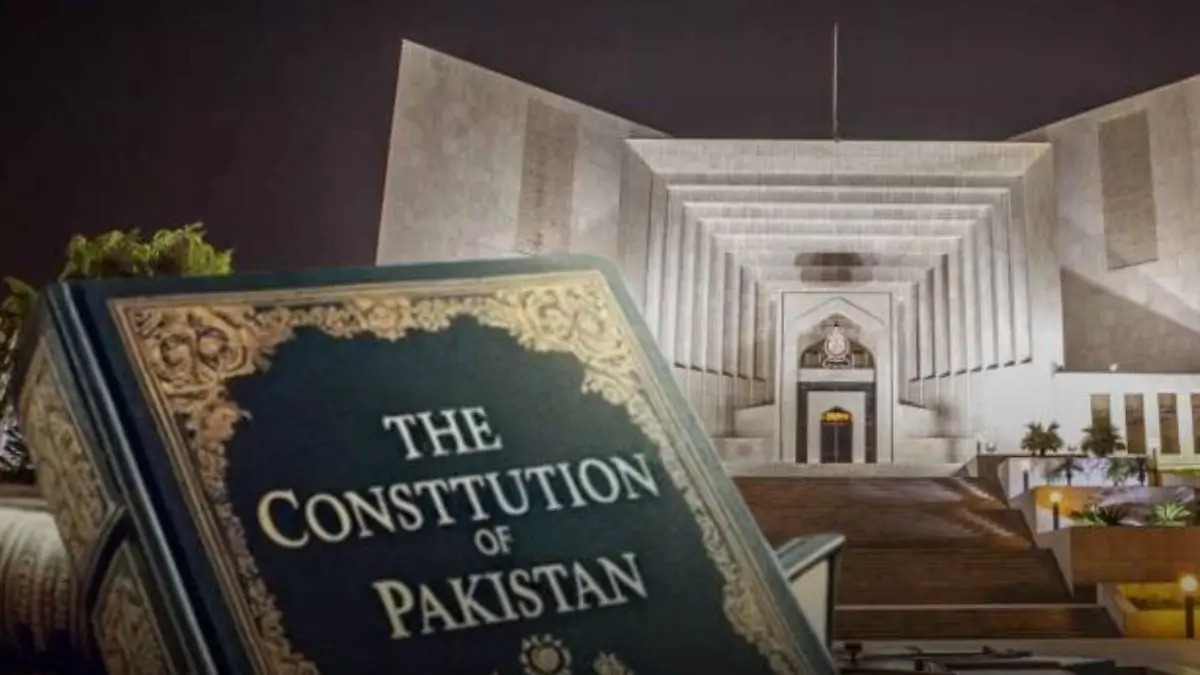
Since his appointment in November 2022, Field Marshal Asim Munir has proved a master practitioner of power consolidation, outpacing even Pakistan’s most notorious military strongmen such as Ayub Khan, Zia-ul-Haq, and Pervez Musharraf. His latest gambit, the proposed 27th Constitutional Amendment, cements that legacy and threatens to formalize Pakistan’s drift into an overt military state.
At its core, the 27th Amendment rewrites Article 243 of Pakistan’s Constitution which details the governing framework of the command of the armed forces (Chapter 2). While, it may appear to be a technical legal change, however, it is, in fact, a crude structural reordering of the Pakistani state in favor of the military establishment that has anyway calling the shots for decades.
Nevertheless, one of the most consequential provisions (clause 5) is the proposed creation of a new office of Chief of Defence Forces (CDF). Under this clause, the Army Chief will automatically assume the role of CDF role, which effectively merges the tri-service command of the army, navy, and air force into one uniformed post. The existing Joint Chiefs of Staff Committee (JCSC), a forum meant to balance inter-service authority, will be abolished.
In practical terms, this means all branches of Pakistan’s armed forces will answer to one man, that is Asim Munir. It also conveniently sidelines General Sahir Shamshad Mirza, the current Chairman of the Joint Chiefs and the senior-most general whom the Shehbaz Sharif government bypassed when appointing Munir in 2022.
This clause would mark the first time in Pakistan’s history that the entire military chain of command is legally and constitutionally subordinated to a single officer.
Another major clause (6) under Article 243 transfers effective control of Pakistan’s nuclear arsenal to the Army Chief. The Prime Minister would nominally appoint the Commander of the National Strategic Command (the custodian of nuclear weapons), but only from among “members of the Pakistan Army” and solely on the “recommendation of the Chief of Army Staff concurrently serving as Chief of Defence Forces.”
This wording is not incidental. It ensures that the nuclear command, which has traditionally been supervised by a civilian-led National Command Authority, will now operate entirely under military discretion. Pakistan’s already fragile notion of civilian oversight is being reduced to fiction. With this, Asim Munir not only commands Pakistan’s conventional military forces but also gains exclusive control of its nuclear deterrent.
Perhaps the most extraordinary aspect of the 27th Amendment lies in its provisions for legal protection. Given that the amendment proposes lifetime immunity to the Field Marshal (clauses 7,8,9,10 &11), it practically equates his legal status with that of the President as the Head of the State of Pakistan. In effect, Asim Munir, who was conferred the title of Field Marshal earlier this year, cannot be prosecuted, investigated, or held accountable by any court or parliamentary body for decisions made during or after his tenure.
This is a historic and most consequential departure from Pakistan’s constitutional tradition. Even military rulers like Zia and Musharraf, both of whom seized power through coups, lacked explicit lifetime impunity under constitutional law. However, Munir has, by securing this clause, effectively insulated himself against future civilian pushback or judicial scrutiny, ensuring that any transition of power will not endanger his position or legacy.
Though Pakistan’s history has seen several military rulers institutionalizing their dominance through legal means like Ayub Khan’s rewriting of the 1962 Constitution or Zia-ul-Haq giving the military a permanent political veto by amending Article 58(2)(b), Asim Munir’s strategy is more sophisticated and inarguably more durable. Unlike his predecessors, who relied on overt coups, Munir is using constitutional procedure and parliamentary approval to codify military supremacy. As such, Munir seems to be outdoing the likes of Ayub, Zia, and Musharraf not through coups but by rewriting laws in his own favor.
The Shehbaz Sharif government’s cooperation in pushing this amendment through parliament reveals how deeply Pakistan’s civilian leadership has become dependent on the military’s favor. The Asim Munir-led military establishment has leveraged this vulnerability and extended its control over domestic politics, the economy, and even foreign policy.
By institutionalizing this control through the 27th Amendment, the military no longer needs to rely on backroom manipulation as it can now rule openly, with parliamentary consent.
The conferment of the title “Field Marshal” on Munir earlier this year, following India’s “Operation Sindoor” was the clearest signal of his elevation to the highest power status in the country. It very well echoed self-promotion of Ayub Khan to Field Marshal in the 1960s, when he justified his authority was essential to the country’s national defense.
Munir would do well to remember that Pakistan’s streets which are restless, politically volatile, and steeped in resentment against military domination, though it may dormant now, have a way of humbling even the most entrenched generals. Equally, it is interesting how the country’s political elite, particularly Pakistan Muslim League-Nawaz (PML-N) and Pakistan People’s Party who currently backs Munir seem to have forgotten how such curry favouring of generals have bitten them in the past.
The 27th Amendment marks not just another chapter in Pakistan’s cycle of military dominance but a turning point of the transformation of military supremacy from an unwritten reality into a constitutional fact. Field Marshal Asim Munir may believe he has achieved what his predecessors could not: absolute power with absolute legitimacy. But Pakistan’s history suggests that even the thickest face and the blackest heart cannot shield a ruler from the reckoning that follows hubris.
– Arun Anand