

-Arun Anand
Pakistan has a knack for arriving at the wrong place at precisely the wrong time. When Russia attacked Ukraine in February 2022, its then prime minister, Imran Khan, was seated in the Kremlin, smiling and shaking hands for cameras. And when Saudi Arabia and the United Arab Emirates, Islamabad’s most important Middle Eastern patrons, found themselves at odds over Yemen last week, it was once again caught in the crossfire. This time Emirati President Sheikh Mohammed bin Zayed Al Nahyan was on his hunting trip to Pakistan. These moments are not mere coincidences but rather symptoms of a deeper strategic malaise of a military-dominated foreign policy that repeatedly entangles Pakistan in conflicts it neither controls nor fully understands.
Over the past decade, Pakistan has drifted from being a peripheral player in the Middle East to an increasingly exposed one. As the shift has been shaped by transactional military diplomacy as signified by recent Strategic Mutual Defence Agreement with Saudi Arabia, the result is a country wedged uncomfortably between rival power centers with China and the United States on one axis globally, and Saudi Arabia and the UAE on another at the regional level. While each of its allies expects loyalty, no one offers insulation when loyalties collide.
That collision is now visible in Yemen and most likely in Libya. On December 30, Riyadh announced that it targeted a weapons shipment at Yemen’s Mukalla port, claiming the arms originated from the Emirati port of Fujairah. Riyadh alleged that weapons were destined for the Southern Transitional Council (STC), a UAE-backed separatist group seeking to carve out an independent state in southern Yemen.
It made Pakistan to tread an uncomfortable line. Though Islamabad expressed “complete solidarity” with Saudi Arabia, reaffirming its support for the kingdom’s sovereignty and Yemen’s territorial integrity, what it did not do was just as revealing. Pakistan avoided naming the STC, sidestepped Abu Dhabi’s role in nurturing Yemeni separatism, and refrained from any criticism that might upset the Emirati leadership.
However, it should be known that diplomatic hedging has its limits. On the very morning Saudi Arabia carried out strikes against what it described as Emirati-linked weapons shipments, Pakistan’s prime minister, Shehbaz Sharif, along with senior cabinet members, including Deputy PM and Foreign Minister Ishaq Dar, was meeting Sheikh Mohammed bin Zayed at his family’s palatial estate in Rahim Yar Khan. The optics were ironic with Pakistan professing solidarity with Riyadh while hosting the very leader Riyadh was pressuring militarily. There have been unsubstantiated reports that Saudi Arabia declined a request for a meeting by Pakistan’s powerful army chief, Field Marshal Asim Munir, thereby reinforcing the impression that Islamabad’s balancing act was wearing thin.
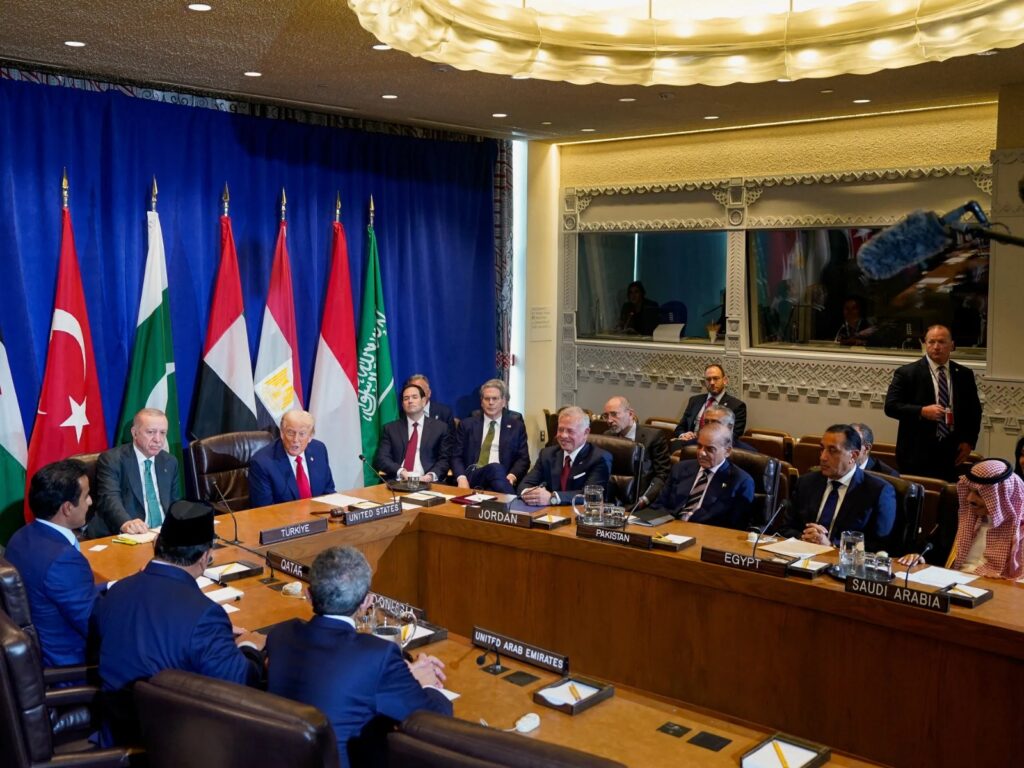
This episode underscored a broader truth that Pakistan was no longer merely navigating Gulf rivalries but was being shaped by them. And nowhere is this more dangerous than in Gaza. As US President Donald Trump pushes his vision of post-war Gaza governance under an international body, he has publicly sought Pakistan’s commitments to contribute troops to his envisioned security or stabilization force for the territory.
For Islamabad, the proposition is fraught with peril as deploying Pakistani troops to the war-battered Palestinian region would not be a neutral peacekeeping mission. As the Gaza stabilisation force would almost certainly involve disarming Hamas, enforcing cease-fire arrangements, and operating under an American or Israeli security framework, such a role would place Pakistan at odds with popular sentiment at home, where sympathy for the Palestinian cause runs deep. Moreover, it would also damage the country’s standing in the broader Muslim world, where participation in what many would view as an externally imposed security regime or forced disarming of what many consider a Palestinian resistance group would be seen as complicity with Israel.
However, if Pakistan Army assumes such a role, it won’t be its first as it has a history of renting its role to the regional players. Pakistani military officers played a role in assisting Jordan’s Hashemite monarchy during the 1970 Black September crisis by helping violently crackdown on Palestinian fighters. The Pakistani contingent in Amman was overseen by Brigadier Mohammad Zia-ul-Haq, who would later seize power in 1977 and rule as a military dictator. That episode left a lasting scar on Pakistan’s image among Palestinians and repeating such a role in Gaza would be exponentially more damaging.
Yet Gaza is not the only front where Pakistan’s Middle East policy is unravelling. On December 21, Army Chief Asim Munir signed what was touted as a $4.6 billion defense deal with Khalifa Haftar in Benghazi, from where the Libyan military strongman controls eastern part of the country through the Libyan National Army (LNA). The agreement reportedly included the sale of JF-17 Block III fighter jets and Super Mushshak trainer aircraft, making it the largest arms deal in Pakistan’s history.
Though the deal on paper signifies Pakistan’s strategic reach, however, in reality, it was a diplomatic misstep of the highest order. Firstly, Libya is a divided country with rival governments governing it in parts. There is Abdul Hamid Dbeibeh’s internationally recognised Government of National Unity (GNU) in Tripoli and then the other, Haftar’s Benghazi-based unrecognised Government of National Stability (GNS). Secondly, Libya remains under an international arms embargo imposed by the United Nations in 2011. Therefore, any major weapons transfer and that too to an unrecognised entity risk undermining of the international law.
This deal does not only fly in the face of UN sanctions; it also puts constrains in Islamabad’s regional policy. By publicly aligning itself with Haftar, Pakistan effectively chose sides in a complex regional proxy contest as the military strongman is backed by the UAE and Egypt whereas the GNU, by contrast, enjoys the support of the United Nations and Saudi Arabia. Islamabad’s outreach to Benghazi thus undercuts its relationship with Riyadh, at precisely the moment when Saudi goodwill is most needed.
These choices cumulatively result in what can be described as a strategic overextension without any strategic clarity. It is evident that Pakistan is trying to achieve a role of indispensability in the region, but forgets that it does not possess the diplomatic leverage for the same. It can offer nothing than renting its military against a price. Its military leadership appears to believe that visibility equals influence, that being “in the room” guarantees relevance. In practice, it has made Pakistan vulnerable to pressure from stronger powers with clearer agendas. And at home, the risks are just as severe. In a country grappling with severe economic crisis, political instability, and militant violence, such a diplomatic overstretching cannot be afforded.
As such, Pakistan is on a path of pursuing a foreign policy driven less by national consensus than by the ambitions of a security establishment which is eager to project power abroad, even as stability at home remains elusive. And if Pakistan continues down this path and gets entangled in Gulf rivalries, is pressured to send troops to Gaza, and aligns with contested actors like Khalifa Haftar, it risks becoming a pawn that a mediator its elite envisions. In the Middle East’s unforgiving geopolitical chessboard, pawns are easily sacrificed.
– Arun Anand
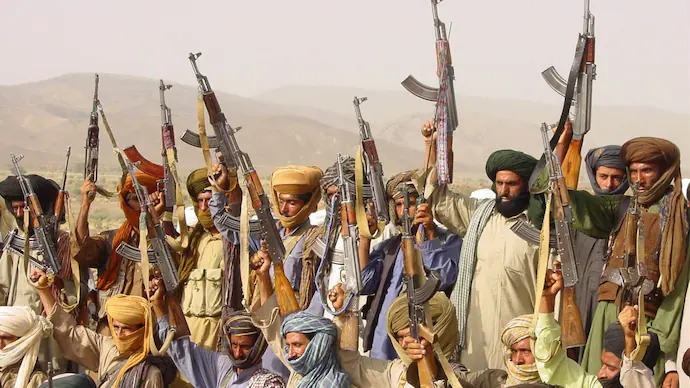
Balochistan is a land which is under the operation of Pakistan and its army, a place where militarization has shaped daily life for generations and where human rights violations have become a defining feature of the state’s presence. Communities across the province describe a reality marked by enforced disappearances, collective punishments, military checkpoints, and surveillance that affects everything from movement to livelihoods. For many Baloch, the feeling is not simply that they are governed by a distant center, but that they live under an occupying force. This sense of suffocation and exclusion has fueled a long-standing freedom struggle, one rooted in the demand for dignity, political rights, and control over the resources that come from their own land. Against this backdrop, pro-independence armed groups continue to carry out attacks that they claim are responses to decades of repression.
On Tuesday, one such group announced responsibility for several operations across the province. These incidents included an improvised explosive device blast in Mastung, the execution of an individual they accused of spying for the Pakistani military in Panjgur, and a grenade attack on a military post in Kech. While armed actions inevitably extend the cycle of violence, supporters of the Baloch cause often view them as part of a resistance movement forced into militancy by the absence of political space and the ever-present threat of military retaliation. The attacks were not isolated events but part of a broader pattern that has escalated throughout 2025.
This year has seen a rising number of armed confrontations, ambushes on military convoys, and assaults on security checkpoints. In several districts, insurgent fighters have demonstrated increased coordination, conducting operations that momentarily challenge the army’s claims of tight control. In many cases, the military responds with sweeping crackdowns, cordoning off villages, detaining males en masse, and sometimes displacing entire communities under the guise of clearing operations.
One of the most significant incidents of 2025 occurred during the hijacking of the Jaffar Express earlier in the year, an episode that shook the country and drew international attention. Dozens of passengers were killed, and the chaotic rescue operation highlighted the state’s unpreparedness despite years of counterinsurgency efforts.
In other months, attacks in Gwadar, Panjgur, Kech, and Kohlu targeted military installations, patrol units, and infrastructure associated with state-backed development projects. Each attack was followed by the familiar pattern of intensified military operations, which in turn deepened local fears and resentments. For many Baloch, the roots of the conflict lie not in the attacks themselves but in the long history of exclusion and exploitation. Balochistan is the largest province by land area and among the richest in natural resources, yet it remains the poorest in development indicators. Gas extracted from Sui fueled Pakistan’s industrialization for decades, but Baloch communities received neither adequate royalties nor basic services. The same dynamic persists today: copper, gold, and other minerals are extracted through deals viewed locally as exploitative, and the massive projects linked to the China-Pakistan Economic Corridor have heightened perceptions that outsiders profit while Baloch residents live under military patrols.
The Pakistani Army presents its presence as a stabilizing force, claiming that it is protecting development and bringing security to a volatile region. But for many families, the uniform represents fear rather than order. Activists and human rights groups have long documented reports of disappearances, where students, teachers, farmers, and political workers vanish without explanation. In some cases, bodies are later found dumped in remote areas; in others, detainees remain unaccounted for, leaving families in endless uncertainty. Villagers speak of night raids, targeted harassment, and arbitrary detentions that make ordinary life unpredictable and fragile.
The events of 2025 have intensified these concerns. After each insurgent attack, the military has expanded its operations deep into residential areas, often sealing entire towns for hours or days. Markets have been shut down, communication networks suspended, and families forced to leave their homes as security forces search door to door. Local leaders warn that the army’s heavy-handed tactics are counterproductive, pushing frustrated youth toward militancy by eliminating peaceful avenues for expressing political grievances.
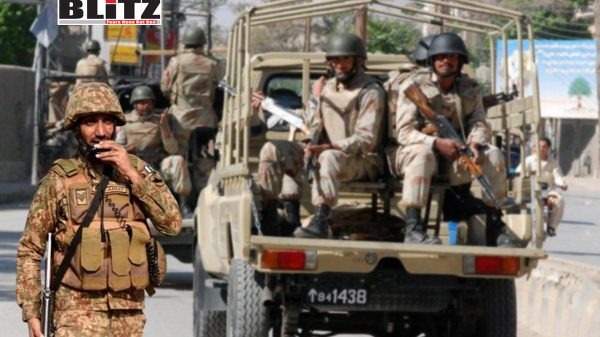
The attacks on Tuesday again underscored this cycle. In Mastung, the IED blast reportedly targeted a patrol, prompting hours of cordoned streets and aggressive searches. In Panjgur, the execution of the alleged informant sparked fears of reprisals. In Kech, the grenade attack on a military post was followed by drone surveillance and increased military movement through surrounding villages. People in these areas spoke of disrupted routines, closed schools, and the tense silence that typically accompanies large-scale army deployments.
Criticism of the Pakistani Army’s role in Balochistan does not imply support for violence, but it does demand an honest acknowledgment of how long-standing injustices have produced the current volatility. The Baloch freedom movement, in its political and militant forms, arises from a lived experience of repression—an experience of being denied the right to self-govern, the right to speak freely, and the right to benefit from one’s own homeland. The state’s insistence on treating the conflict solely as a security problem ignores the political roots of the struggle and exacerbates the very tensions it seeks to eliminate.
Those advocating for Baloch rights argue that the solution lies not in more soldiers or more checkpoints, but in recognizing the political aspirations of the people. They call for accountability for human rights abuses, an end to enforced disappearances, and genuine autonomy that allows Balochistan to govern itself and control its resources. Without these steps, the province remains trapped in a long and painful cycle in which violence breeds further militarization, and militarization fuels the grievances that sustain the insurgency. Balochistan today stands at a crossroads shaped by the tragedies and resistance of 2025. The Tuesday attacks are only one chapter in a broader narrative: a story of a people who feel occupied, marginalized, and robbed of their future. The Pakistani state continues to rely on force, believing that sheer military power can quell a movement born from historical injustices. But the more it tightens its grip, the more alienated the Baloch become, and the further the region moves from any meaningful resolution.
Until the state acknowledges that peace cannot be imposed at gunpoint and that the people of Balochistan must have the right to determine their own political destiny, the conflict will persist. The freedom struggle, whether expressed through political activism or armed resistance, will continue to draw strength from the lived realities of oppression. And each new incident—like the attacks carried out this Tuesday—will serve as a reminder that a province rich in culture, history, and resources remains locked in a conflict sustained not just by militants, but by the heavy hand of the army that claims to be restoring order while deepening the wounds of its people.
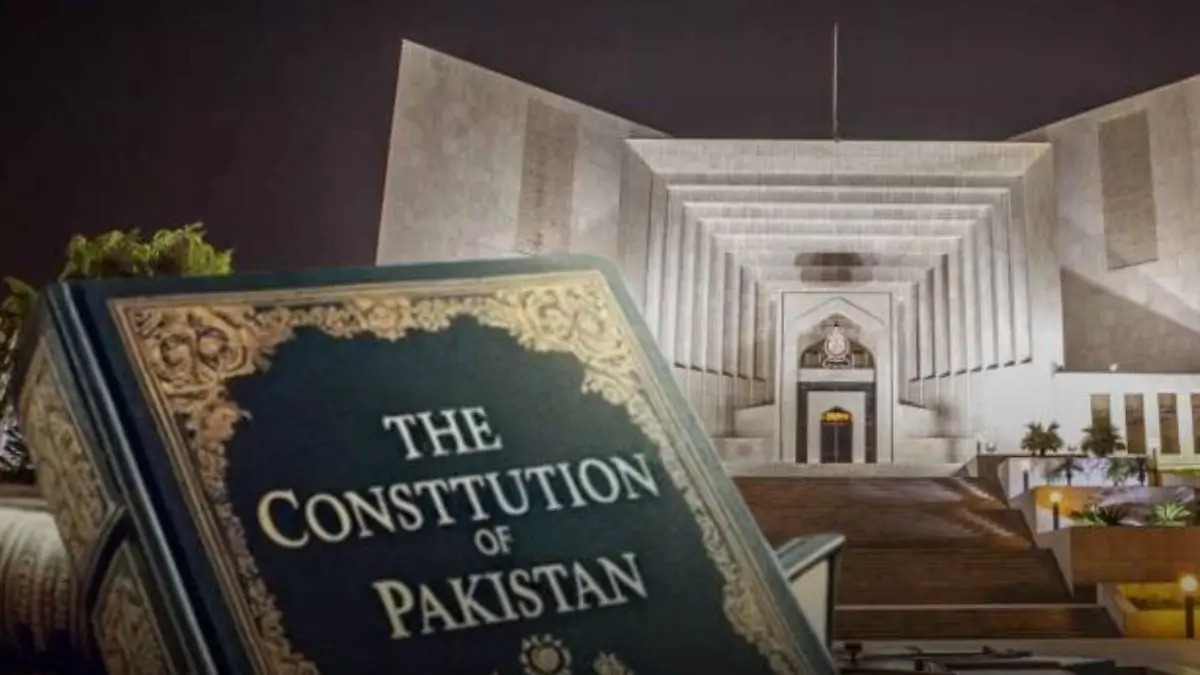
Since his appointment in November 2022, Field Marshal Asim Munir has proved a master practitioner of power consolidation, outpacing even Pakistan’s most notorious military strongmen such as Ayub Khan, Zia-ul-Haq, and Pervez Musharraf. His latest gambit, the proposed 27th Constitutional Amendment, cements that legacy and threatens to formalize Pakistan’s drift into an overt military state.
At its core, the 27th Amendment rewrites Article 243 of Pakistan’s Constitution which details the governing framework of the command of the armed forces (Chapter 2). While, it may appear to be a technical legal change, however, it is, in fact, a crude structural reordering of the Pakistani state in favor of the military establishment that has anyway calling the shots for decades.
Nevertheless, one of the most consequential provisions (clause 5) is the proposed creation of a new office of Chief of Defence Forces (CDF). Under this clause, the Army Chief will automatically assume the role of CDF role, which effectively merges the tri-service command of the army, navy, and air force into one uniformed post. The existing Joint Chiefs of Staff Committee (JCSC), a forum meant to balance inter-service authority, will be abolished.
In practical terms, this means all branches of Pakistan’s armed forces will answer to one man, that is Asim Munir. It also conveniently sidelines General Sahir Shamshad Mirza, the current Chairman of the Joint Chiefs and the senior-most general whom the Shehbaz Sharif government bypassed when appointing Munir in 2022.
This clause would mark the first time in Pakistan’s history that the entire military chain of command is legally and constitutionally subordinated to a single officer.
Another major clause (6) under Article 243 transfers effective control of Pakistan’s nuclear arsenal to the Army Chief. The Prime Minister would nominally appoint the Commander of the National Strategic Command (the custodian of nuclear weapons), but only from among “members of the Pakistan Army” and solely on the “recommendation of the Chief of Army Staff concurrently serving as Chief of Defence Forces.”
This wording is not incidental. It ensures that the nuclear command, which has traditionally been supervised by a civilian-led National Command Authority, will now operate entirely under military discretion. Pakistan’s already fragile notion of civilian oversight is being reduced to fiction. With this, Asim Munir not only commands Pakistan’s conventional military forces but also gains exclusive control of its nuclear deterrent.
Perhaps the most extraordinary aspect of the 27th Amendment lies in its provisions for legal protection. Given that the amendment proposes lifetime immunity to the Field Marshal (clauses 7,8,9,10 &11), it practically equates his legal status with that of the President as the Head of the State of Pakistan. In effect, Asim Munir, who was conferred the title of Field Marshal earlier this year, cannot be prosecuted, investigated, or held accountable by any court or parliamentary body for decisions made during or after his tenure.
This is a historic and most consequential departure from Pakistan’s constitutional tradition. Even military rulers like Zia and Musharraf, both of whom seized power through coups, lacked explicit lifetime impunity under constitutional law. However, Munir has, by securing this clause, effectively insulated himself against future civilian pushback or judicial scrutiny, ensuring that any transition of power will not endanger his position or legacy.
Though Pakistan’s history has seen several military rulers institutionalizing their dominance through legal means like Ayub Khan’s rewriting of the 1962 Constitution or Zia-ul-Haq giving the military a permanent political veto by amending Article 58(2)(b), Asim Munir’s strategy is more sophisticated and inarguably more durable. Unlike his predecessors, who relied on overt coups, Munir is using constitutional procedure and parliamentary approval to codify military supremacy. As such, Munir seems to be outdoing the likes of Ayub, Zia, and Musharraf not through coups but by rewriting laws in his own favor.
The Shehbaz Sharif government’s cooperation in pushing this amendment through parliament reveals how deeply Pakistan’s civilian leadership has become dependent on the military’s favor. The Asim Munir-led military establishment has leveraged this vulnerability and extended its control over domestic politics, the economy, and even foreign policy.
By institutionalizing this control through the 27th Amendment, the military no longer needs to rely on backroom manipulation as it can now rule openly, with parliamentary consent.
The conferment of the title “Field Marshal” on Munir earlier this year, following India’s “Operation Sindoor” was the clearest signal of his elevation to the highest power status in the country. It very well echoed self-promotion of Ayub Khan to Field Marshal in the 1960s, when he justified his authority was essential to the country’s national defense.
Munir would do well to remember that Pakistan’s streets which are restless, politically volatile, and steeped in resentment against military domination, though it may dormant now, have a way of humbling even the most entrenched generals. Equally, it is interesting how the country’s political elite, particularly Pakistan Muslim League-Nawaz (PML-N) and Pakistan People’s Party who currently backs Munir seem to have forgotten how such curry favouring of generals have bitten them in the past.
The 27th Amendment marks not just another chapter in Pakistan’s cycle of military dominance but a turning point of the transformation of military supremacy from an unwritten reality into a constitutional fact. Field Marshal Asim Munir may believe he has achieved what his predecessors could not: absolute power with absolute legitimacy. But Pakistan’s history suggests that even the thickest face and the blackest heart cannot shield a ruler from the reckoning that follows hubris.
– Arun Anand