
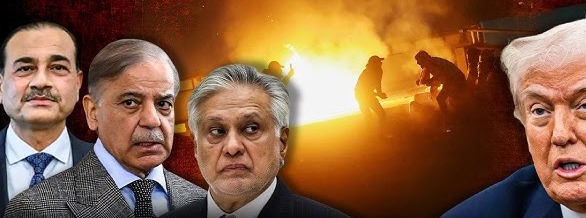
Pakistan’s claims of neutrality in the Middle East mask a deeper alignment with US strategic interests and regional power politics. Behind narratives of victimhood and sovereignty lies a pattern of dependency, propaganda, and calculated geopolitical positioning
Pakistan often portrays itself as a nation caught in the crosshairs of regional rivalries, claiming that it could be the “next target” after Iran in the Middle East. Recently, Pakistan’s Defence Minister, Khawaja Asif, publicly warned of what he described as a coordinated regional design, alleging that India, Afghanistan, and Israel could align against Pakistan in the event of regime change in Tehran and framing the evolving situation as part of a broader hostile agenda encircling Pakistan and turning it into a vassal state. This narrative, however, is misleading and does not reflect the ground realities.
In reality, Pakistan is firmly aligned with the United States and Israel.
Its foreign policy has historically been shaped by its dependency on American support, often receiving substantial financial aid in return for participating in Washington’s regional objectives. Khawaja Asif himself acknowledged that Pakistan has consistently been used as a “toilet paper” by the US—a tool for executing policies in Afghanistan and beyond. Despite this, Pakistani leadership continues to portray itself as innocent, a victim of regional dynamics, and a target of potential aggression from its neighbors.
Manufactured Victimhood and the “War on Terror” Narrative
Pakistan’s narrative of victimhood also extends to its domestic and regional security challenges. When confronted over sponsoring terror against its neighbors, it frequently claims to have suffered enormous losses—more than 90,000 people—during the “War on Terror,” blaming the United States for its misfortunes. While the human cost is real, Pakistan’s government conveniently ignores its own agency in allowing extremist groups to operate and using them strategically against neighboring countries, from Kashmir to Kandahar. It even brainwashed and radicalized the whole Afghan population through madrasa and clerics’ networks; now most of them speak Urdu, which isn’t their mother tongue—such is the level of brainwashing. This narrative serves to absolve Pakistan of responsibility while portraying it as a passive player in global politics.
Pakistan’s structural economic weaknesses exacerbate its reliance on external powers. Dollar inflows from the United States are critical for sustaining its economy. As Moeed Yusuf, Pakistan’s former National Security Adviser, openly acknowledged, “Pakistan does not have financial independence and… its foreign policy is still not free from US influence,” adding that “when you procure loans, your economic sovereignty is compromised,” which in turn shapes foreign policy choices. Similarly, Rabia Akhtar, Dean of Social Sciences at the University of Lahore, has argued that Pakistan’s economic trajectory has long been tied to leveraging its geostrategic importance to attract foreign assistance rather than building sustainable internal economic strength.
As a result, Islamabad has a clear incentive to remain in Washington’s favour. Moreover, in periods without regional crises, Pakistan has historically manufactured or amplified situations—such as highlighting terrorist threats in Afghanistan, projecting the expansion of ISIS in the region, or emphasizing instability elsewhere—to draw US attention and aid. Maintaining relevance in American eyes is a central pillar of Pakistan’s foreign policy.
Another driver of Pakistan’s regional behavior is its strategic rivalry with India. India’s growing partnership with the US in the Indo-Pacific frustrates Islamabad, prompting it to strengthen its ties with Washington to maintain parity in strategic attention. Pakistan’s obsession with “keeping up” with India often leads it to overplay its role in regional crises, creating narratives designed more for domestic and US audiences than for the truth.
The Middle East Dynamics and Contradictions
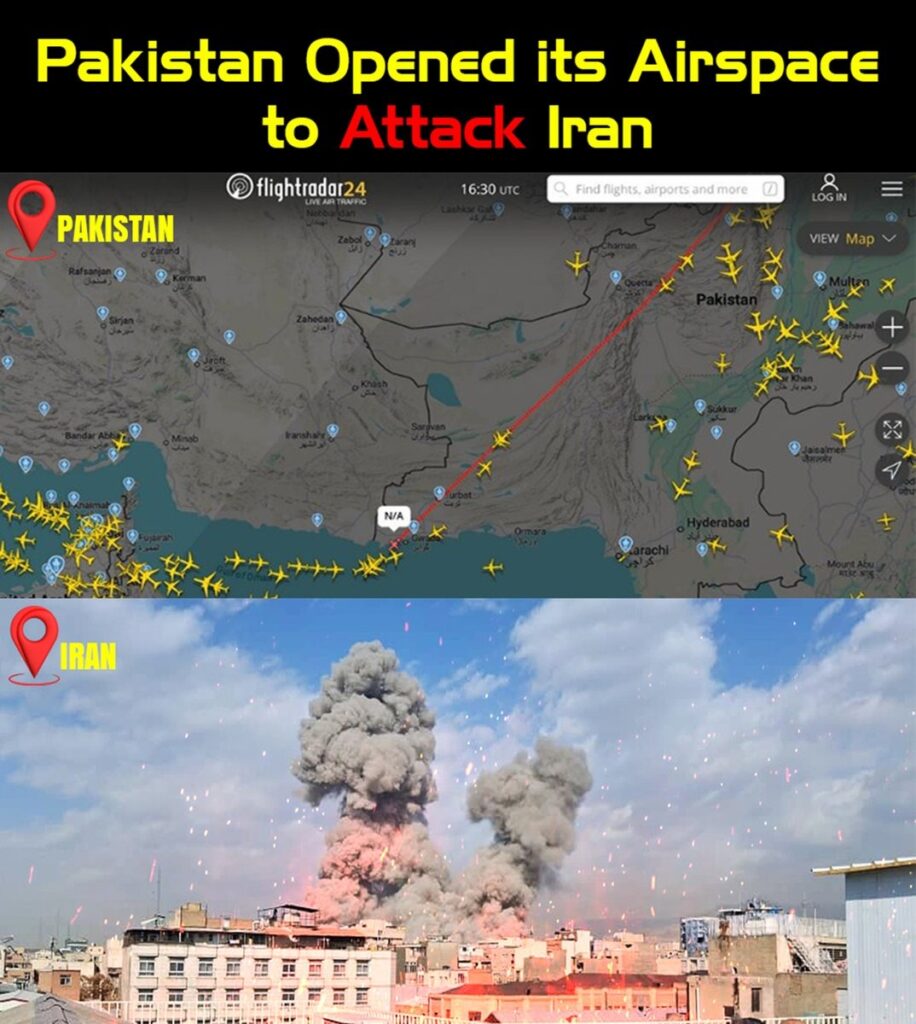
The ongoing Middle East conflict illustrates Pakistan’s duplicity. On the one hand, it assures Iran; on the other hand, it stands with the opposite camp. Pakistan recently signed a mutual defense pact with Saudi Arabia and reinforced these commitments, as its senior leaders, including Deputy Prime Minister and Foreign Minister Ishaq Dar, publicly warned that if Iran were to attack Saudi Arabia, Pakistan would stand by Riyadh under its defense obligations. Such statements make Islamabad’s claims of neutrality increasingly unconvincing. At the same time, narratives circulated by Pakistani sources claimed that Israeli and US fighter jets were approaching Pakistani airspace and warned that Pakistan would attack if they crossed it, projecting an image of vigilance and defiance. Yet parallel reports—including claims by elements within Islamic Revolutionary Guard Corps (IRGC) that Pakistan had facilitated US or Israeli operations—indicate complicity and affirmed the speculation that American forces may have been using Pakistani airspace in the broader confrontation with Iran. By amplifying warnings about potential Israeli aggression while downplaying its own strategic alignments, Pakistan appears intent on masking the extent of its cooperation with Washington and maintaining a veneer of independence for domestic and regional audiences.
Moreover, timing is crucial in geopolitics, and Pakistan has frequently used diversionary tactics. For instance, recent escalations and attacks on Afghanistan appeared to be coordinated to distract Iran from Israeli and US attacks and to weaken the Taliban so that it could help Trump in acquiring Bagram Airbase in Afghanistan, signaling Islamabad’s collaboration with the broader objectives of Washington. Meanwhile, Pakistani media and social networks amplify propaganda, portraying Pakistan as neutral or even aligned with Iran, while its defense minister openly admits long-term subservience to US interests.
Proxy Geopolitics and the Illusion of Neutrality
Pakistan has consistently acted as a “bad boy” for the US in the region, from facilitating operations in Afghanistan to serving as a key partner during the “War on Terror,” creating regional instability. Its government, including Prime Minister Shehbaz Sharif, has even nominated President Donald Trump for the Nobel Peace Prize repeatedly and left no stone unturned to praise his global leadership, and one should not forget that Pakistan is an important member of the Board of Peace and will work under the US and Israel in the international stabilization force to disarm Hamas. This highlights Pakistan’s attempts to maintain visibility and favor with American political leadership. Such actions underscore Pakistan’s longstanding strategy: prioritizing US alignment, leveraging crises for attention and aid, and manufacturing narratives that obscure its role in regional instability.
Pakistan’s claims of neutrality, victimhood, or potential targeting by Iran are largely propaganda. Its strategic choices are dictated by dependency on the US, rivalry with India, and obligations under regional defense pacts, particularly with Saudi Arabia. While Islamabad portrays itself as a victim, its leadership has repeatedly acknowledged, implicitly or explicitly, that Pakistan has been a tool of US policy. In short, Pakistan is not neutral—it remains a key US and Israeli proxy in the region, using propaganda to mislead its own people and obscure its role in shaping regional crises.
-Arun Anand
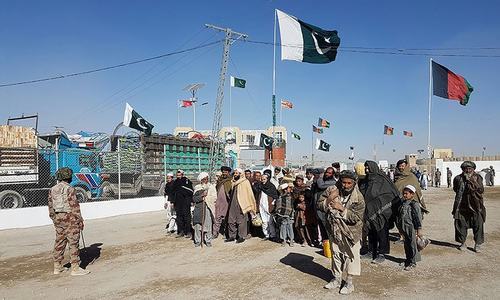
For decades, Pakistan has insisted that stability in Afghanistan is essential for its own security. Yet today, Islamabad is pursuing a policy that does exactly the opposite by strangling Afghanistan’s fragile economy. The objective is to ‘coerce’ the Afghan Taliban government into submission. The prolonged closure of key border crossings along the Durand Line, including Torkham between Khyber Pakhtunkhwa and Nangarhar and Chaman-Spin Boldak between Balochistan and Kandahar, has turned geography into a weapon. It is a classic case of Pakistan weaponising Afghanistan’s landlocked reality in order to force political compliance through economic suffocation.
Border Closures as Economic Warfare
For more than four months since October 2025 heavy military clashes, these border crossings have remained shut. The informal cross-border trade that has been a feature of Afghanistan-Pakistan relations since decades. Millions of Afghans depend on this for daily survival. With the daily movement of essentials like food, medicine, fuel, and construction materials effectively stopped, Afghans face a severe crisis as Afghanistan used to export much of its agriculture and horticulture produce besides coal to the Pakistani market.
The cross-border trade between the two countries saw a 40 per cent decline in 2025 from 2024, down from over $2.64 billion to $1.77 billion. For a landlocked country already reeling from international sanctions, frozen assets, and humanitarian crisis, the impact has been more than severe. And Pakistan knows this, which is precisely what gives its policy a coercive power.
Islamabad has justified the border closure by accusing the Afghan Taliban of sheltering terrorist groups such as Tehreek-e-Taliban Pakistan (TTP), besides enabling attacks by Baloch insurgents like the Balochistan Liberation Army (BLA). On January 20, Prime Minister Shehbaz Sharif repeated this familiar refrain, insisting that while the blockade “should not have been there”, and yet warning that Afghanistan must decide “whether it wants to live peacefully or not”.
But this rhetoric serves as a smokescreen. While the struggle with militancy is real and deeply destabilising for Pakistan, the current crisis cannot be explained solely or even primarily by security concerns.
From ‘Strategic Depth’ to Strategic Frustration
Instead, it reflects a deeper failure of Islamabad’s Afghan policy, one that has left Pakistan’s military-dominated establishment frustrated, exposed, and resorting to blunt instruments to regain leverage over Kabul.
It may be recalled that when the Taliban returned to power in August 2021, Pakistan’s political and military establishment celebrated openly. The American withdrawal and the collapse of the Western-backed Afghan government were hailed as a vindication of decades of strategic investment. Senior generals spoke of “strategic depth” finally being secured, with then Director General of Inter-Services Intelligence (ISI) famously sipping coffee in Kabul the next day. There was a kind of confidence among Pakistani experts and establishment figures that finally a pliant Kabul would align closely with Islamabad’s regional priorities.
The expectations were sweeping. A Taliban-ruled Afghanistan, it was believed, would deny India any influence in the country besides erasing New Delhi’s soft-power gains built through billions of dollars in infrastructure, education, and development projects. It would accept, or at least stop contesting, the legitimacy of the Durand Line, a colonial-era boundary that cuts through Pashtun lands and has never been formally recognised by any Afghan government, including Taliban in its previous rule from 1996 to 2001. And most importantly, the expectation from the Taliban government was to rein in anti-Pakistan terrorist groups like TTP operating along its porous frontier.
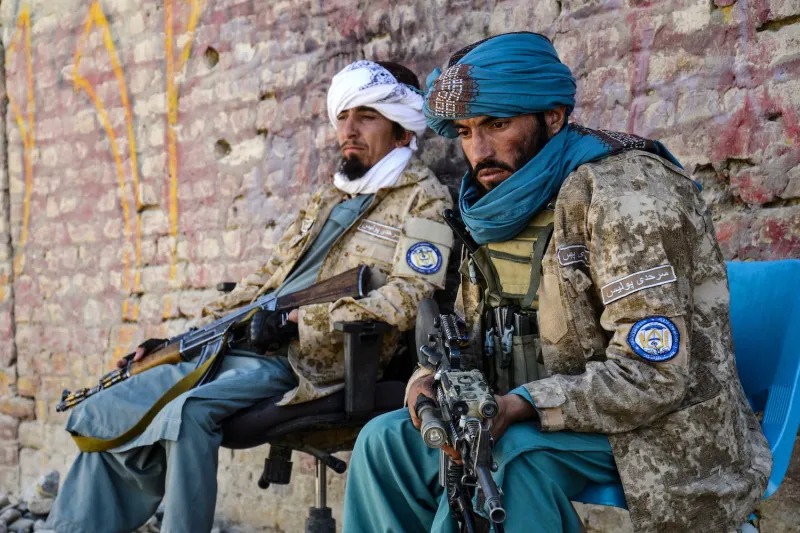
None of this has materialised. Instead, Pakistani leadership now finds itself facing an Afghan Taliban leadership that is assertive and nationalist as well as far less malleable than they had anticipated. Taliban officials speak openly of Afghan sovereignty and have pushed back the Pakistani pressure. They have raised the pitch over the legitimacy of Durand Line hence continuing a long-standing Afghan position that cuts across ideological lines. The result of Pakistani stubbornness means that their relations have grown increasingly tense as marked by border skirmishes, diplomatic barbs, and mutual accusations.
Security Rhetoric and Failing Coercive Strategy
The resurgence of the TTP has been particularly exasperating for Islamabad. Since the Taliban’s return to power in 2021, the group has grown bolder and launched multiple attacks across Pakistan’s northwest. For instance, 667 Pakistani soldiers were killed in 2025 alone as per a report by Pakistan Institute of Conflict and Security Studies (PICSS), up by 26 per cent from 2024.
Likewise, Baloch insurgent violence has also intensified, which has fed a sense of encirclement within Pakistan’s security establishment. Interestingly, rather than addressing the domestic roots of these insurgencies prevalent across KP and Balochistan, such as political exclusion, economic neglect, and heavy-handed military policies, Islamabad has chosen to externalise blame, pointing squarely at Kabul. This is where the accusation that the Afghan Taliban are “backing” the TTP and BLA becomes politically useful for Pakistan. It allows the establishment to escape any calls for accountability over the serious security debacles and present its coercive measures against Afghanistan as defensive.
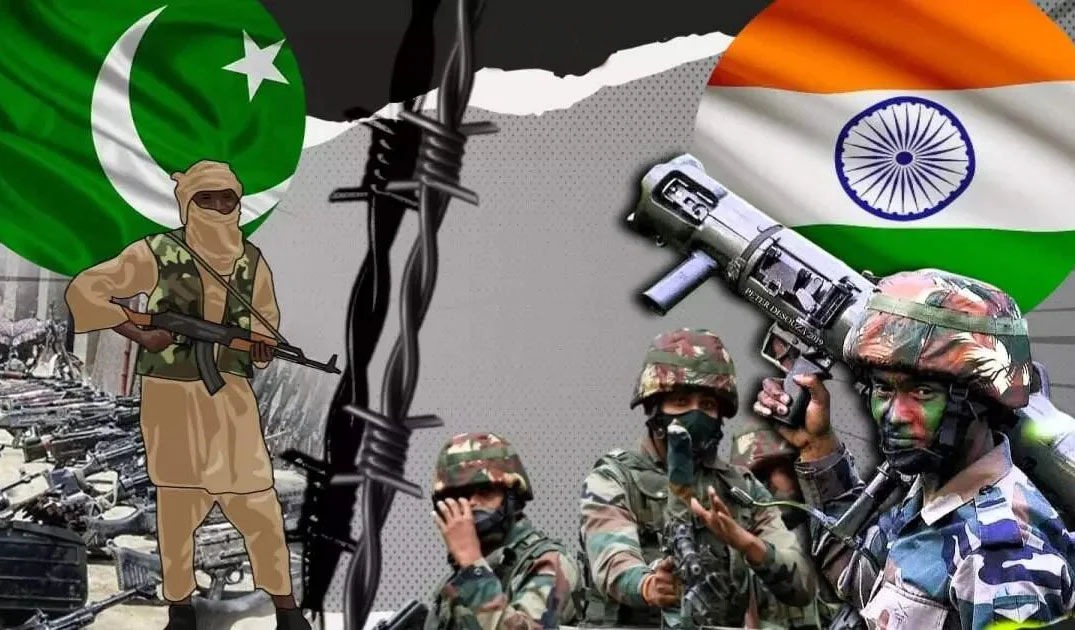
The tactic of Pakistan leveraging Afghan geography to achieve what its diplomacy has failed to deliver fits a broader pattern of attempts to salvage its failed Afghan strategy. After having overestimated its influence over the Afghan Taliban, its military-dominated establishment now oscillates between coercion and complaint. The mass deportation of hundreds of thousands of Afghan refugees over the past few years is part of the same effort. Though they have framed this measure through legal and security cover, the expulsions have nonetheless added to Afghanistan’s humanitarian burden while signalling Pakistan’s willingness to use vulnerable populations as leverage.
The irony is hard to miss as Pakistan’s leaders insist that instability in Afghanistan threatens regional peace and yet their policies actively deepen that instability. They are willingly overlooking the fact that economic strangulation does not produce compliance and restore lost influence; rather, it breeds resentment and exposes the limits of such a policy.
Nevertheless, Pakistan’s attempt to weaponise Afghanistan’s landlocked status reveals less about Taliban culpability than about Islamabad’s strategic frustration as their grand vision of a compliant, controllable Afghanistan has collapsed. In its place, there is a harder reality at display with a sovereign neighbour with its own interests, grievances, and limits of tolerance.
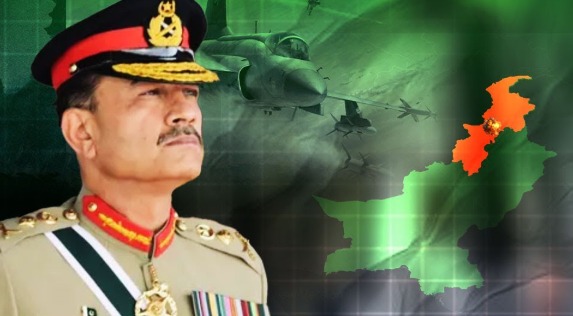
As such, if Pakistan continues down this path of closing borders, expelling refugees, and masking strategic failures behind its security rhetoric, it may succeed only in entrenching hostility on its western flank. The establishment led by Asim Munir would do Pakistan a favour by understanding that stability cannot be coerced through economic siege but must be built through sober reassessment, regional cooperation, and an acceptance that influence earned through pressure is always fragile. But for now, however, Pakistan appears intent on tightening the noose, betting that hunger and hardship will achieve what decades of policy could not even as history suggests otherwise.
-Arun Anand
For over four decades, Pakistan bet its security strategy on one idea: that Afghanistan could be controlled and turned into a “strategic depth” against India. The military and political elite in Islamabad treated Kabul as a buffer and a playground — a state to be manipulated through compliant regimes and proxy jihadist groups.
Militant networks were nurtured as instruments of foreign policy, and Pakistan believed this would secure influence across the region and check India’s power. Instead, the very forces Islamabad once empowered have turned against it. In 2025, the grand doctrine of strategic depth lies in ruins — a self-inflicted disaster now driving Pakistan’s worst security crisis in years.
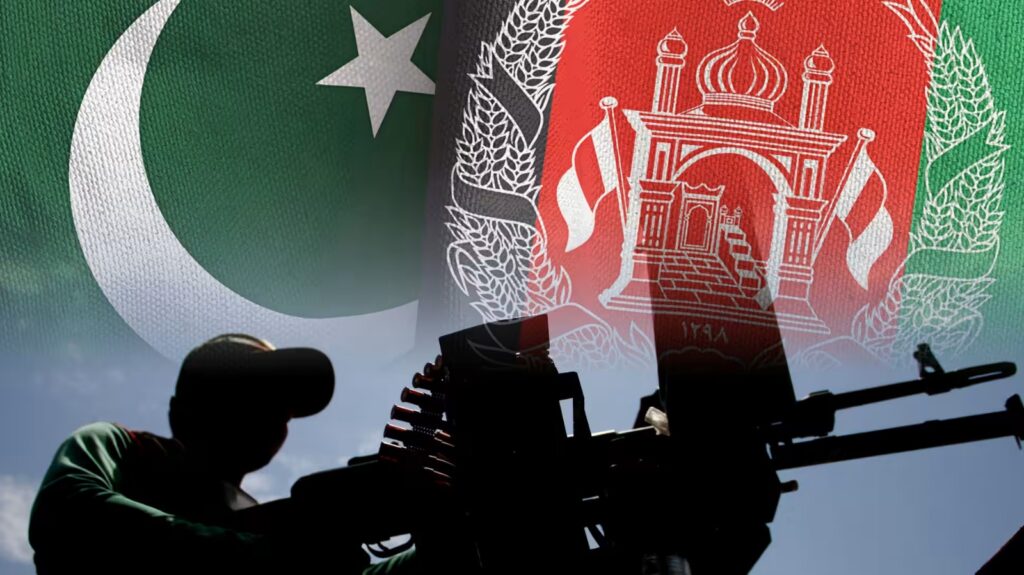
Rather than securing Pakistan, Afghanistan has become the epicentre of the very dangers Islamabad once believed it could manage or manipulate. What was once perceived as an asset has now become a trap. The transformation of Afghanistan from strategic depth to strategic liability has unfolded gradually, but the past two years have made the shift undeniable.
When the Taliban returned to power in Kabul in 2021, Pakistan was widely seen as the external actor poised to benefit the most. Many within Islamabad believed that a Taliban government, because of historical ties, would be cooperative, deferential, and dependent. But that assumption now looks dangerously misplaced.
The Taliban’s political priorities have changed, their sources of external support have diversified, and their internal legitimacy depends on projecting a strong, independent stance — especially against Pakistan, which many ordinary Afghans still view with suspicion. Instead of shaping Afghan behaviour, Pakistan now finds itself confronting a volatile neighbour whose rulers no longer feel obliged to accommodate Pakistani interests.
Militant Blowback and a Hardening Border
Nowhere is this reversal clearer than in the surge of militant activity targeting Pakistan from Afghan soil. Over the past year, Pakistan has experienced a marked increase in terrorist attacks carried out by the Tehreek-i-Taliban Pakistan (TTP) and associated networks. Security reports from 2024 and 2025 indicated that many attackers either crossed over from Afghanistan or were trained and sheltered there.
Pakistani officials have repeatedly stated that a significant percentage of suicide bombers involved in major attacks were Afghan nationals. The data, while varying between sources, consistently shows a dangerous trend that the Afghanistan-Pakistan border has become increasingly porous to extremist infiltration, and many of these groups feel emboldened by their close ideological ties to the Afghan Taliban.
This is the central irony of Pakistan’s predicament. The militant ecosystem that Islamabad once supported for regional leverage has now splintered in ways that work against Pakistan itself. The TTP, originally an offshoot of groups nurtured under earlier Afghan policies, now treats Pakistan as its primary enemy.
Pakistan’s own creation has turned against its creator. The militancy that Islamabad once believed could be contained beyond its borders has now penetrated deep inside — striking security convoys, police units, and civilian targets with growing regularity. The blowback is undeniable.
In response, Pakistan has increasingly resorted to military actions along — and across — the Afghan border. Throughout 2024 and into 2025, Pakistan conducted a series of cross-border artillery strikes and air raids targeting what it described as TTP safe havens. In several cases, those strikes hit areas inside Afghanistan, killing not only militants but also civilians, including women and children. These incidents have sharply escalated diplomatic tensions.
Kabul has issued multiple condemnations, arguing that Pakistan is violating Afghan sovereignty and inflaming anti-Pakistan sentiment among the Afghan population. What Islamabad once framed as necessary counterterror operations are now seen by many Afghans as external aggression, deepening hostility that already runs high.
Border clashes have also intensified. In late 2024 and through out 2025, firefights between Pakistani forces and Taliban border units became frequent, sometimes lasting hours. Pakistani officials reported significant casualties on their side, and Afghan authorities claimed similar losses.
The AfPak border — once envisioned as a controllable frontier from which Pakistan could extend influence — has hardened into one of the most militarized and unstable fault lines in South Asia. Instead of projecting strength, Pakistan finds itself in a defensive posture, its troops stretched and its internal security architecture under strain.
Diminishing Diplomatic Leverage and Growing Vulnerability
Diplomacy has not eased the tensions. Attempts at negotiation, including several rounds of high-level talks in 2024 and 2025, produced only limited agreements focused on border management and intelligence sharing. These arrangements have struggled to translate into real cooperation on the ground. The Taliban government maintains that it does not control the TTP, insisting that the group operates independently.
Pakistani officials reject that claim, arguing that nothing of significance can operate in Afghanistan without at least tacit Taliban approval. The resulting stalemate has left both countries locked in a cycle of accusation and retaliation.
Pakistan’s broader regional standing has also been affected. The international community has expressed growing concern about the escalating border violence, with several countries calling for restraint and renewed dialogue. Islamabad, once positioned as a key interlocutor between the Taliban and the West, now finds its diplomatic leverage diminished.
Meanwhile, the Taliban have sought new partnerships — particularly with regional powers seeking economic or strategic opportunities in Afghanistan. This reduces Pakistan’s ability to shape events in Kabul and signals a fundamental shift in the balance of influence.
The implications for Pakistan’s internal security are profound. The resurgence of terrorism within its borders has strained provincial administrations, especially in Khyber Pakhtunkhwa and Balochistan. Police forces remain under-equipped, despite repeated calls for better resources. Public frustration is rising, particularly as attacks occur with worrying frequency.
Many citizens question the effectiveness of Pakistan’s long-standing policies toward Afghanistan and ask whether the sacrifices of the past two decades — military operations, casualties, and massive financial costs — have led to greater safety or merely deeper vulnerability.
The broader economic situation compounds the crisis. Pakistan’s financial struggles, including high inflation, energy shortages, and slow GDP growth, make it increasingly difficult to sustain prolonged military readiness along a volatile border. The costs of counterinsurgency operations, refugees’ management, and security infrastructure rise steadily even as state revenues remain limited.
Meanwhile, Afghanistan shows no sign of curbing the groups hostile to Pakistan. This asymmetry — a costly security burden with no cooperative counterpart in Kabul — underscores how Pakistan’s strategic depth has morphed into a strategic trap.
A Strategic Concept in Collapse
Yet the most troubling dimension of this trap is conceptual. Pakistan’s Afghan policy relied on assumptions that no longer hold: that Kabul could be influenced through patronage that militant groups could be calibrated for strategic use, and that Afghanistan’s internal dynamics would remain subordinate to Pakistani interests. The reality of 2025 contradicts each of these assumptions.
The Taliban now make decisions independently. Militant groups have become ideological actors rather than controllable proxies. Afghan nationalism, sharpened by decades of conflict, rejects external interference from any quarter — especially from Pakistan. The strategic logic underpinning decades of policy has evaporated, but its consequences persist.
Pakistan now stands at a critical juncture. It can continue to treat Afghanistan as a battleground, striking across the border and relying on force to push back the militants. But this would deepen the cycle of violence, alienating Afghan society further, and entrenching hostile networks.
Alternatively, Pakistan could pursue a significant recalibration — acknowledging the limits of influence, dismantling the remnants of proxy structures, and treating Afghanistan as a sovereign neighbour rather than a proxy regime. Such a shift would require political courage and institutional consensus, both of which have historically been fragile when it comes to Pakistan. But without such a rethinking, Pakistan risks sinking deeper into the trap of its own making.
The strategic depth that Islamabad long prized has become an illusion. Afghanistan is no longer a pliable sphere of influence but a source of hostility capable of undermining Pakistan’s security from within. The militants once cultivated as assets have become liabilities. The border once seen as a shield has become a wound. Pakistan’s Afghan dilemma is no longer about losing influence; it is about preventing the fallout from a potent threat to its own stability.
The question facing Pakistan in 2025 is not whether Afghanistan can be controlled but whether Pakistan can escape the strategic trap created by decades of miscalculation. Whether it will recalibrate before the trap tightens further is a question that will impact the region’s future also.
-Salah Uddin Shoaib Choudhury

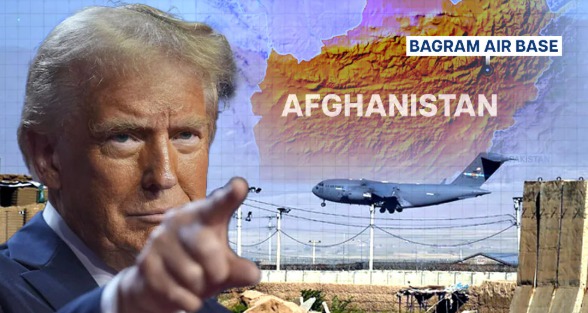
The United States looks poised to return to the very theatre it once abandoned: Bagram. What Washington calls a tactical correction could quickly become a strategic rupture for South Asia. A renewed US push – now reportedly coordinated with Pakistan’s security establishment – to retake Bagram Air Base and re-establish a foothold in Afghanistan risks detonating a broader regional conflagration, reigniting refugee flows, empowering jihadist networks and drawing Pakistan deeper into an unwinnable security quagmire. The question is not whether the dust will settle – it is how many countries, communities and lives will be buried beneath it.
US President Donald Trump – in what he frames as a move to correct the “perceived mistakes” of the previous administration – has signalled renewed US interest in re-establishing a presence at Afghanistan’s strategic Bagram Air Base. Washington’s overtures have already put Islamabad on notice to expedite preparations for possible operations that could include seizing Bagram and pushing to unseat or reshape the current Taliban-led regime. Reports indicate that, if such a military offensive goes forward, US–Pakistani forces could also strike selected targets inside Afghanistan and press against militant networks that threaten Pakistan, including Tehreek-e-Taliban Pakistan (TTP).
The Afghan Taliban reportedly reacted to these developments by ordering their Defence Ministry and the so-called Tath’heri (Purification) Commission to erase biometric records of Taliban officials and fighters – a move described in reporting based on Middle East Research Institute (MEMRI) sources. The directive, according to those reports, reflects deep concern among Taliban leaders that renewed US pressure or the collapse of talks in places such as Bagram could trigger unilateral strikes or renewed efforts to dismantle their command structures.
Purging biometric data is both practical and symbolic. Practically, the obliteration of fingerprints, iris scans and other personal identifiers would complicate outside efforts to track commanders and rank-and-file fighters; it would make it easier for militants to slip across borders, adopt new identities, or seek refuge in other networks. Symbolically, the purge signals a loss of confidence in negotiations and a preparation for the worst-case scenario: a new round of kinetic pressure that could again turn Afghanistan into a launching pad for transnational militancy. Human-rights and humanitarian organisations have long warned about the risks posed by biometric systems in Afghanistan — both when those systems fall into insurgent hands and when their erasure removes accountability and traceability for vulnerable civilians.
Intelligence reporting suggests militants are preparing multiple fallback options: some operatives may attempt to embed with groups such as Al Qaeda and the Islamic State Khorasan Province (ISKP); others may cross into Pakistan’s tribal districts and border provinces. These movements, if they occur en masse, would re-create the destabilising dynamics Islamabad confronted after 2001 – namely, the spillover of fighters, weapons and illicit finance into Pakistan’s frontier regions, with huge costs in lives, displacement and security.
There are already signs of high-stakes diplomacy and renewed security contact between Washington and Islamabad. Recent high-level interactions between US and Pakistani military and political leaders suggest a rapid re-engagement that some analysts read as a strategic gamble by Pakistan’s military establishment to regain influence and secure economic or security concessions from Washington. Whether Islamabad will accept a subordinate role in a US-led operation in Afghanistan, however, is far from certain; domestic politics, sectarian fissures, and a host of ongoing internal insurgencies complicate any Pakistani commitment.
Pakistan’s domestic situation makes any external adventure riskier. The Pakistani Army is already struggling to continue military operations in Balochistan and Khyber Pakhtunkhwa; at the same time, serious political unrest in Pakistan-occupied Kashmir (PoK) and rising opposition activity inside the country would make the reallocation of troops and resources to a new Afghan campaign politically costly and operationally difficult. Moreover, the persistent threat from TTP and other domestic militant groups means Islamabad cannot simply redeploy its security apparatus without leaving critical vulnerabilities at home. In short, the calculus that once made Pakistan a willing partner for extraterritorial operations has changed. The Pakistani state of the 2000s is not the Pakistani state of today.
If Washington and Islamabad proceed with joint offensives to retake Bagram and press into Afghanistan, the immediate human cost will be severe. Large-scale operations — air strikes, special-forces raids and cross-border pursuit — will almost certainly result in significant civilian casualties, internal displacement, and the fracturing of fragile local governance structures. The re-introduction of sustained foreign military activity would also invite responses from regional powers. Iranian and Russian policymakers have repeatedly warned that aggressive US moves in Afghanistan could escalate into broader confrontations, while China has signaled unease about renewed American military footprints in Central and South Asia.
A renewed campaign could also spur a scramble over Afghanistan’s illicit economies, particularly the opium trade. Historically, control over narcotics routes and processing has financed militias and threatened to entangle security services in corrupt economies. If Pakistan’s Inter-Service Intelligence (ISI) and other actors become further implicated in attempts to control smuggling routes or extract rents from the trade, that will accelerate domestic corruption and erode the legitimacy of state institutions.
Finally, the political fallout inside Pakistan could be profound. Opposition parties and civil society could mobilise against what they characterize as another dangerous foreign entanglement, while disenfranchised groups in restive provinces might exploit the distraction to intensify insurgencies. The combination of military overstretch, economic strain, and a renewed influx of fighters into the tribal belt would make Pakistan considerably less stable — and therefore less capable of managing the very threats a joint operation claims to resolve.
In short, the prospect of a US–Pakistan operation to retake Bagram is not simply a tactical matter of bases and battalions. It is a decision with wide-ranging geopolitical, humanitarian and domestic consequences: for Afghan civilians, for Pakistan’s fragile polity, and for the broader regional balance.
Reoccupying Bagram would be a Pyrrhic victory. Even if US and Pakistani forces briefly seize terrain, the deeper strategic problems that have long plagued Afghanistan – fractured governance, opportunistic militancy, narcotics economies, and the absence of a legitimate, inclusive political settlement – will remain. Worse, a military-first solution risks exporting instability into Pakistan and across the region.
If there is to be any hope of stabilising Afghanistan, it must rest on clear political objectives, robust humanitarian safeguards, and a regional framework that includes not only the United States and Pakistan but also Afghanistan’s neighbours.
Policymakers in Washington and Islamabad should weigh prudence over bravado: the lives lost, institutions shattered and refugee crises unleashed by another foreign intervention cannot be undone by a single airstrike or parade of proclamations.
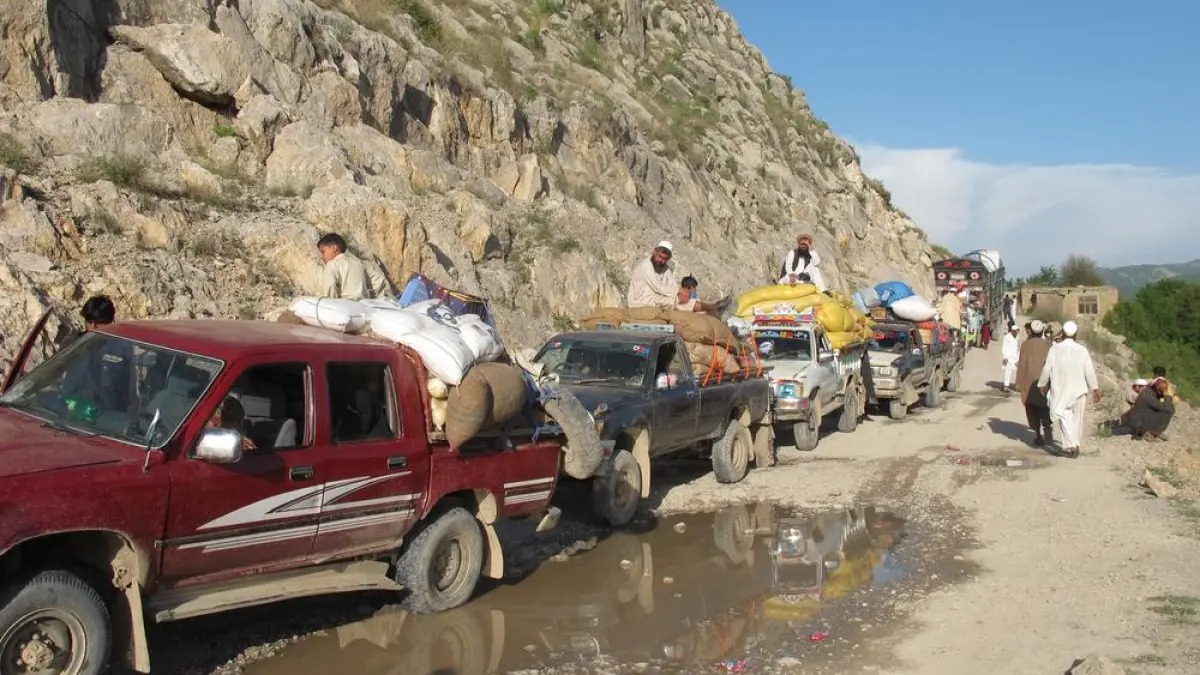
Pakistan is a state that is killing its own people. In October, Pakistani state carried out attacks in Khyber Pakhtunkhwa, where at least 23 civilians, including women and children, were killed.
The Pakistani Airforce bombed residential homes in Tirah Valley; four houses were obliterated in the attack, leaving families buried under rubble. While the military has refused to acknowledge responsibility, local officials have confirmed that the assault was carried out under the pretext of striking Taliban hideouts. In reality, it was innocent civilians who paid the price.
Pakistan Tehreek-e-Insaf leader Iqbal Afridi has accused the army of launching “an attack on unarmed civilians,” making it clear that this was not crossfire, but a deliberate strike. This is not the first time Khyber Pakhtunkhwa has been forced to bleed for Islamabad’s wars. The region has been turned into a battlefield for decades, starting with Pakistan’s decision in 1979 to use the tribal belt as a staging ground for anti-Soviet jihad.
Funded by billions of US and Saudi dollars and guided by the ISI, militant groups were trained and sheltered in the same mountains that are now being bombed. When the Soviets withdrew in 1988, these groups did not dissolve; they entrenched themselves deeper. Following the US invasion of Afghanistan in 2001, waves of fighters crossed into Pakistan, bringing instability and bloodshed. By the late 2000s, the Tehreek-e-Taliban Pakistan had formed, headquartered in precisely the same districts now devastated by airstrikes. Islamabad claims these operations are meant to fight terrorism, but the evidence shows otherwise.
Human Rights Watch and Amnesty International have repeatedly documented how Pakistan’s campaigns in the tribal belt rely on indiscriminate bombardment, extrajudicial killings, and collective punishment. In 2009, the military’s offensive in South Waziristan displaced over half a million people. In 2014, the so-called Operation Zarb-e-Azb uprooted nearly a million more. In both cases, airstrikes leveled entire villages. The Bureau of Investigative Journalism, tracking drone strikes and Pakistani air raids, has estimated that thousands of civilians—including women and children—were killed in Pakistan’s tribal belt between 2004 and 2018 alone. Yet official records often describe these deaths simply as “terrorist casualties,” erasing the reality of who was actually killed.
The humanitarian toll is staggering. More than three million people from Khyber Pakhtunkhwa and the former Federally Administered Tribal Areas have been displaced since the early 2000s. Camps remain overcrowded, underfunded, and neglected, with families living without basic healthcare, schooling, or clean water. Entire generations of Pashtun children are growing up under the shadow of fighter jets and drones. For them, the Pakistani flag does not symbolize protection but fear. Every bombing plants deeper resentment, feeding the very militancy Islamabad claims to be fighting. Studies by conflict-monitoring groups confirm that civilian killings by state forces correlate with higher rates of insurgent recruitment.
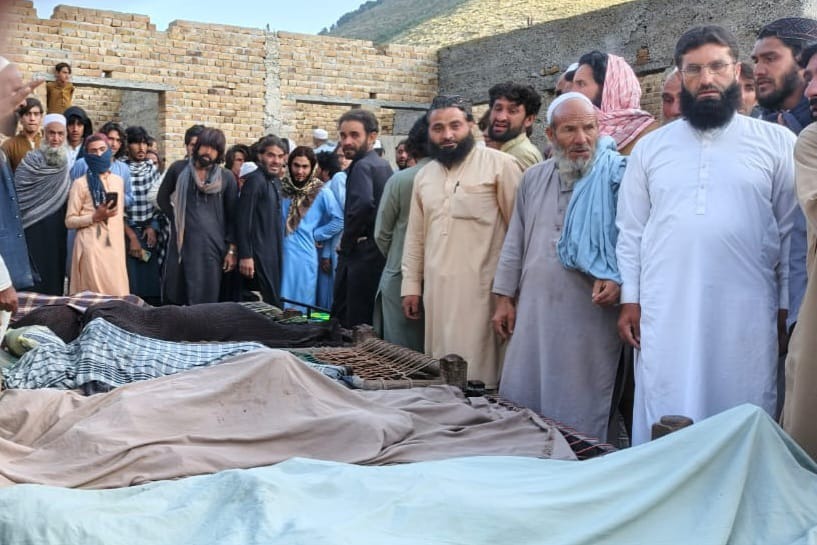
Put simply, Pakistan is manufacturing the enemies it then claims to battle. The silence from Islamabad is perhaps the most damning evidence of impunity. After the Tirah Valley strike, no government minister stepped forward with an explanation. No inquiry was announced. No reparations were promised to families who had lost their homes and loved ones.
This pattern is consistent: when the Pakistan Air Force bombed villages in North Waziristan in 2014, killing scores of civilians, no independent investigation followed. When artillery fire hit refugee camps in Kurram Agency in 2008, Islamabad dismissed reports as “enemy propaganda”. Each massacre disappears from public record, erased by the military’s tight control of media narratives. The ethnic dimension cannot be ignored. Most victims of these operations are Pashtuns, a community that has long been treated as second-class within Pakistan.
The Pashtun Tahafuz Movement (PTM) has consistently raised its voice against extrajudicial killings, enforced disappearances, and indiscriminate airstrikes, but its leaders are harassed, arrested, and silenced. The military’s branding of entire Pashtun populations as “terrorist sympathizers” has created a system where civilian lives are seen as expendable. When bombs fall on Pashtun villages, Islamabad’s ruling elite in Lahore and Islamabad barely notice. What makes this even more hypocritical is Pakistan’s double game with militancy. For decades, Islamabad sheltered groups like the Afghan Taliban and the Haqqani Network, providing them safe havens while cracking down on local Pashtuns under the banner of counter-terrorism. Even today, international analysts point out that Pakistan differentiates between “good Taliban,” who serve its strategic goals, and “bad Taliban,” who challenge its authority.
This cynical distinction means that the full weight of military power is directed not against insurgents but against civilians caught in the middle. The result is what we saw in Tirah Valley: dead women, dead children, and a government that pretends nothing happened. The cost of Pakistan’s militarized policies is not limited to its borders. Every time Islamabad bombs its own civilians, it destabilizes the wider region. Refugees flee into Afghanistan, straining already fragile systems there. Cross-border violence escalates, feeding cycles of retribution. International jihadist networks use these massacres as propaganda, pointing to them as proof of state brutality.
Pakistan’s actions, instead of containing militancy, export it across South and Central Asia. International silence only deepens the tragedy. Western governments that routinely criticize human rights violations in other countries remain muted when Islamabad bombs its own villages. Pakistan markets itself as an indispensable ally in the “war on terror,” but the reality is darker. This is the same state that nurtured militant networks for strategic depth, the same military that sheltered the Afghan Taliban leadership, and the same intelligence apparatus that played a double game for decades. Today, it justifies civilian massacres under the cover of counterterrorism while demanding international aid and legitimacy.
The 23 killed in Tirah Valley are not collateral damage. They are the latest victims of a system that views its own people as targets. From Waziristan to Swat, from Bajaur to Khyber, the pattern is the same: bomb first, deny responsibility, and move on without accountability. The cycle will continue until Pakistan dismantles its militarised policies, ends indiscriminate air campaigns, and begins treating the people of Khyber Pakhtunkhwa as citizens instead of enemies. The families who lost everything in a single airstrike do not need more empty rhetoric about security. They need justice, acknowledgement, and the right to live without fear of their own army. And until that happens, the truth remains stark and unavoidable: Pakistan is a state that is killing its own people.
–IANS
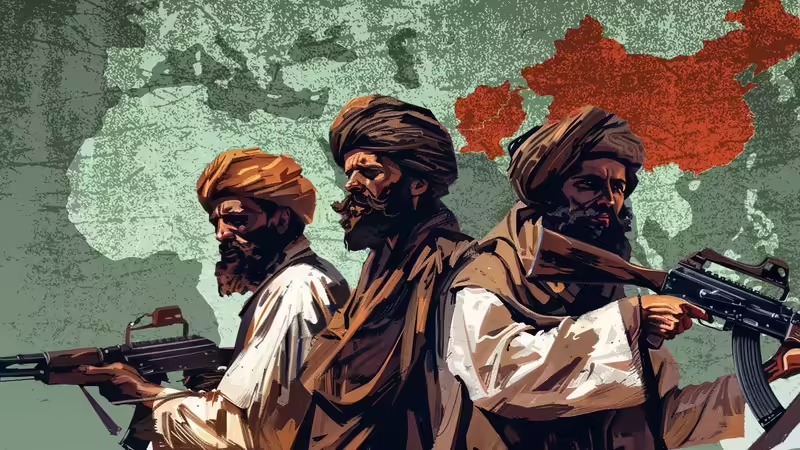
– Arun Anand
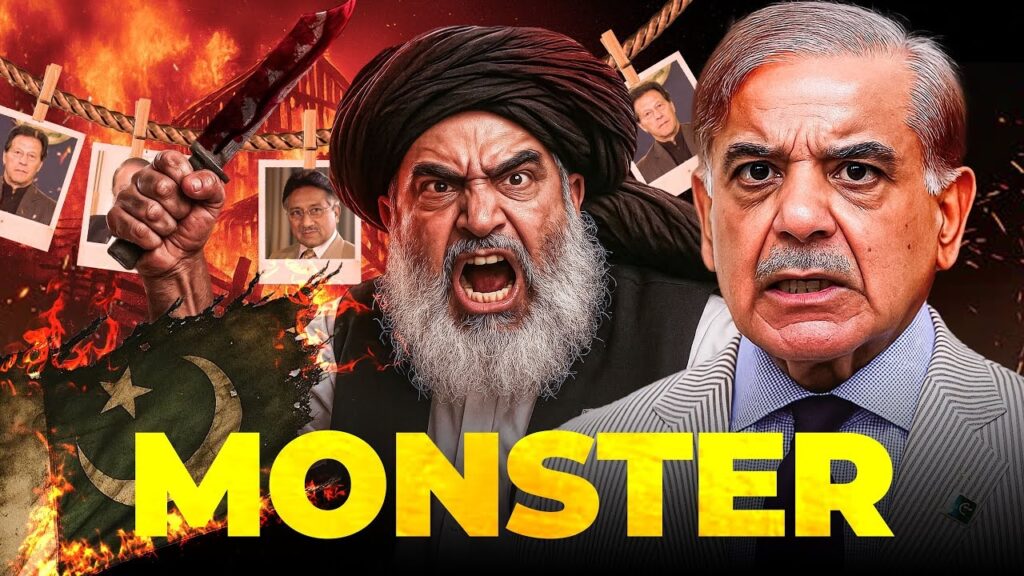
There is a dark irony unfolding in South Asia: Pakistan, long accused of nurturing militant groups as tools of regional influence, is now locked in open conflict with Afghanistan over the very monsters it helped create. The war Islamabad now wages on Afghan soil, under the pretext of destroying the Tehreek-e-Taliban Pakistan (TTP), is in many ways a war against its own reflection. For decades, Pakistan cultivated militant networks for strategic depth, funded radical religious infrastructure, and tolerated extremist ideologies under its nose. Now, those networks have turned inward, destabilizing its own borders and forcing it into the position of aggressor, violating Afghanistan’s territorial integrity and further endangering a region already trembling under the weight of instability. The roots of this crisis reach back to the 1980s, when Pakistan became the staging ground for the anti-Soviet jihad in Afghanistan. With U.S. and Saudi funding, the Pakistani military and its intelligence arm, the Inter-Services Intelligence (ISI), trained tens of thousands of fighters, funneled weapons through the tribal areas, and radicalized a generation in the name of religion and nationalism. This vast militant infrastructure did not disappear after the Soviet withdrawal—it metastasized. By the 1990s, Pakistan supported the rise of the Afghan Taliban, viewing them as a proxy to ensure a friendly regime in Kabul and to deny India any foothold. That same policy of weaponizing extremism spilled back into Pakistan’s own territory, where groups that once served Islamabad’s ambitions turned rogue, seeking to impose their own version of Islam by force.
The TTP emerged in 2007 as a coalition of various Pakistani militant factions. Its founding leader, Baitullah Mehsud, was a product of the tribal belt in Waziristan, trained in the same jihadist ecosystem Pakistan had helped sustain for decades. Initially tolerated as a buffer against local insurgencies, the TTP began to challenge the Pakistani state directly, attacking military convoys, police installations, and schools. From 2007 to 2024, TTP attacks have killed more than 85,000 Pakistanis, including civilians and soldiers, according to Pakistan’s own counterterrorism statistics. Yet the irony is inescapable: the group’s ideology, recruitment networks, and funding channels are all descendants of the very militant infrastructure that Pakistan’s military establishment built, nurtured, and exploited.
In recent years, Islamabad has sought to portray itself as the victim of cross-border terrorism, arguing that the TTP now operates from sanctuaries in Afghanistan. There is truth in the claim that many TTP fighters fled across the Durand Line after Pakistan’s military offensives in 2014 and 2017. But the more fundamental truth is that these sanctuaries exist only because Pakistan drove them there after years of manipulation and failed peace deals. Now, when the TTP stages attacks on Pakistani soil, Islamabad responds with airstrikes and artillery fire across the border, violating Afghan sovereignty and causing civilian casualties. In March 2025 alone, more than 40 civilians were reported killed in air raids in Khost and Paktika provinces. In September, Pakistani strikes near Nangarhar and Kunar killed at least 60 people, including women and children, according to Afghan local authorities. The toll is rising monthly, and the conflict risks spiraling into a wider confrontation between two nuclear-armed neighbors. The cost to human life is staggering. Since August 2021, when the Taliban regained power in Kabul, more than 1,200 people have died in Pakistan-Afghanistan border clashes, including 380 civilians.
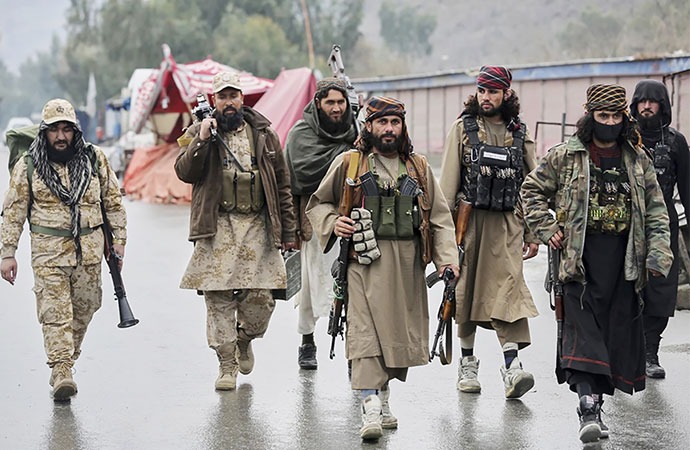
Over 600,000 Afghans have been displaced from eastern provinces due to Pakistani bombardment, while thousands of Pakistani civilians living in frontier districts have fled their homes because of TTP incursions. Trade routes between Torkham and Spin Boldak have been repeatedly closed, crippling the livelihoods of thousands of traders. The border, once porous but functional, has turned into a militarized zone of suspicion and fear. Afghan officials accuse Pakistan of acting like an occupying power, while Islamabad justifies its actions as “preventive counterterrorism.” But there is nothing preventive about indiscriminate bombing. Every missile that lands on Afghan soil deepens the resentment of ordinary Afghans and fuels the anti-Pakistan sentiment that militants thrive upon. At the core of this escalation is Pakistan’s refusal to confront its own culpability. The TTP was not born in a vacuum; it was engineered by decades of policy that saw militant groups as assets. Pakistan’s military establishment has long differentiated between the “good Taliban,” who operate in Afghanistan and serve Islamabad’s regional interests, and the “bad Taliban,” who attack within Pakistan. This cynical dichotomy has collapsed.
Fighters once trained for operations in Afghanistan have turned their guns inward, angry at Pakistan’s cooperation with the United States and its repression of Islamist networks. The same madrassas that produced Taliban ideologues in the 1990s continue to churn out young men steeped in extremist ideology. The result is a conveyor belt of radicalization that Pakistan itself struggles to turn off. Economically, the blowback has been disastrous. The war on terror, combined with Pakistan’s internal insurgency, has cost the country over $150 billion in lost GDP since 2001. Foreign investment has fled. Security spending consumes nearly 20% of Pakistan’s federal budget, leaving little for education, health, or infrastructure. Inflation has soared, unemployment is at record levels, and public trust in the military—the country’s most powerful institution—is crumbling. For ordinary Pakistanis, the state’s obsession with controlling Afghanistan through militant proxies has produced nothing but perpetual insecurity and poverty. The narrative that Pakistan is itself a victim of terrorism rings hollow when one remembers that it was Pakistan’s own state machinery that created, sheltered, and armed the very groups now tearing it apart.
Afghanistan, meanwhile, suffers the consequences of Pakistan’s militarism. Its fragile economy, already devastated by sanctions and international isolation, is further strangled by border closures and bombings. Afghan villages in Khost, Paktia, and Kandahar have been hit multiple times by Pakistani airstrikes that claim to target TTP hideouts but often strike homes and mosques. The death toll in Afghanistan since Pakistan began its cross-border operations in 2022 has surpassed 2,000, including hundreds of women and children. Each attack drives a deeper wedge between the two nations and pushes Afghanistan closer to resentment, revenge, and radicalization. In the absence of legitimate international mediation, these tit-for-tat escalations could ignite a full-blown war, one that would destabilize the entire region. The implications for South Asia’s peace are dire. With India and Pakistan already locked in a frozen hostility, any further militarization of the Pakistan-Afghanistan border threatens to open another front in the regional security crisis. The influx of refugees, cross-border militant flows, and smuggling networks will exacerbate tensions across Central Asia. China, which has invested billions in the China-Pakistan Economic Corridor, faces growing insecurity in its western projects. Iran, too, fears the spillover of militancy into its eastern provinces. South Asia’s peace, already hanging by a thread, could unravel completely if Pakistan continues to externalize the consequences of its own policies.
The argument that Pakistan is the epicenter of global militancy is not mere rhetoric—it is borne out by data. Of the world’s twenty most active terrorist groups identified by international monitoring agencies in 2024, at least six originated or operate primarily from Pakistani soil. Pakistan remains the only country where three distinct Taliban movements—Afghan Taliban, Pakistani Taliban, and various splinters—coexist, often with overlapping logistics and ideological networks. From Lashkar-e-Taiba and Jaish-e-Mohammed to the Haqqani Network and TTP, these groups share the same genealogical tree: nurtured by Pakistan’s security apparatus under the illusion of strategic control. The result is a self-perpetuating cycle of violence that has not only consumed Pakistan but also undermined peace from Kabul to Kashmir.
Pakistan’s strategy of plausible deniability—funding, training, or tolerating militants and then denying responsibility—has reached its end. The international community increasingly sees Pakistan not as a victim of terrorism but as a hub of it. Its actions in Afghanistan—airstrikes, cross-border raids, violations of sovereignty—expose its desperation to contain a monster that no longer obeys. The TTP’s resurgence is the final proof that Pakistan’s policy of using terrorism as an instrument of statecraft has imploded. The creator has lost control of its creation.
The tragedy is that ordinary Pakistanis and Afghans pay the price. In both countries, generations have known nothing but war, displacement, and loss. The children of the madrassas and refugee camps, born into poverty and indoctrination, become the cannon fodder for wars they never chose. Every time a bomb falls, another cycle of vengeance begins. The only way to end this is for Pakistan to dismantle the infrastructure of extremism it has built—its militant networks, ideological nurseries, and covert funding chains—and to accept that peace cannot be achieved through manipulation or force. The conflict between Pakistan and Afghanistan is thus not just a border dispute or a counterterrorism campaign. It is the culmination of decades of duplicity—a nation at war with the ghosts it raised. Pakistan created the monastery of militancy, nourished it with ideology and money, and now finds itself devoured by its own creation. The flames burning along the Durand Line are not just consuming Afghan villages—they are consuming Pakistan’s own moral legitimacy, its economy, and its future. Until Pakistan confronts this truth, peace in South Asia will remain a mirage, forever out of reach, flickering behind the smoke of wars that never end.