
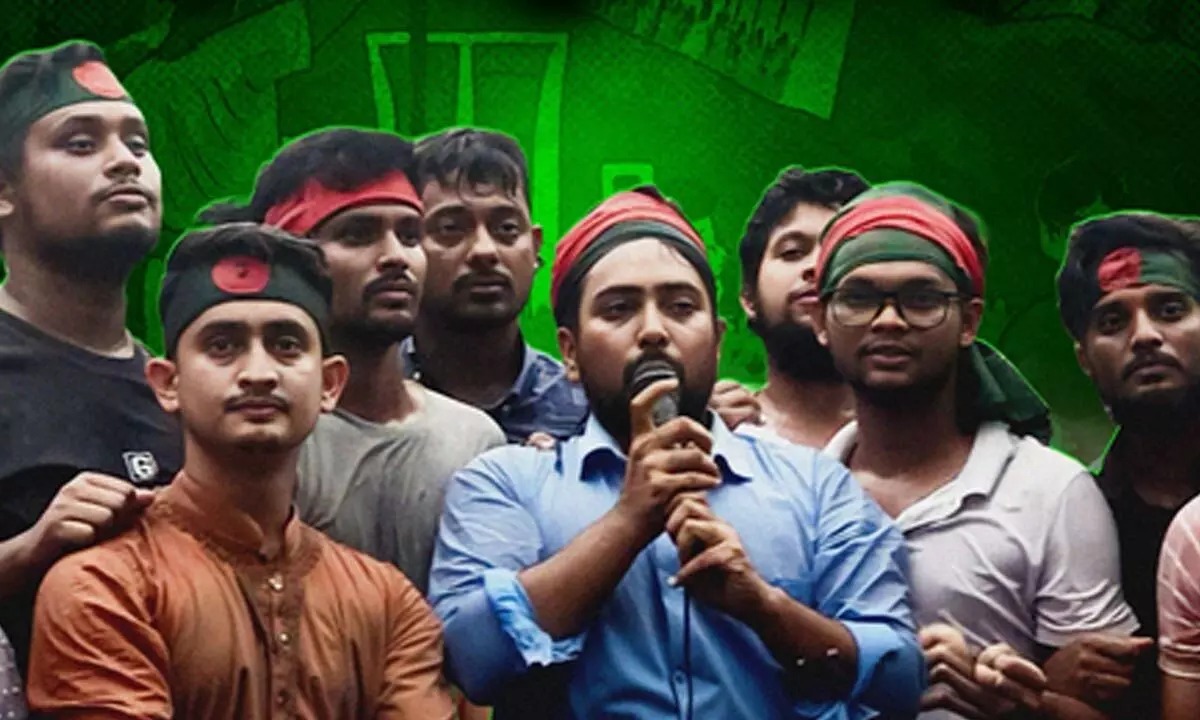
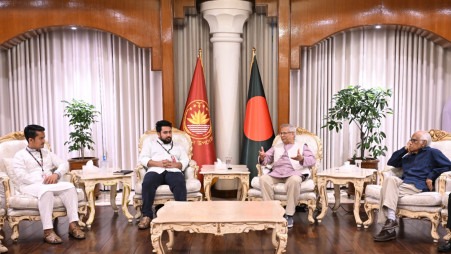
The political climate in Bangladesh is charged as parties are gearing up for Jatiya Sangsad election in February, next year. While Bangladesh Nationalist Party (BNP) has officially announced 237 candidates to contest for 300 parliamentary seats in the upcoming election, Jamaat-e-Islami is yet to announce its candidacy as it is contemplating to enter into coalition with other parties.
National Citizen Party (NCP), on the other hand, expressed desire to contest alone in all 300 seats, although stating its openness to coalition with other parties. Amidst this, the announcement of Asif Mahmud, the student advisor of the interim government, to contest in the forthcoming election from a Dhaka constituency, was much awaited. However, this pronouncement unmasks the interim government’s neutrality, long contested by political parties. And thus begins the anticipation — will the upcoming election be free and fair?
Since the beginning of this year, the interim government’s neutrality came under scrutiny as a new political party — the National Citizen Party (NCP) — came into being, a party formed by student leaders of the 2024 July Uprising. Established on 8th August 2024, the interim government included three student advisors — Nahid Islam, Asif Mahmud and Mahfuz Alam — who were also core leaders of the Uprising.
One of them, Nahid Islam, resigned from his advisory position this February to join the NCP as its chief convenor, leading to allegations against the interim government sustaining the establishment of a ‘King’s Party’ instead of fulfilling political parties’ demand of announcing an election roadmap.
Indeed, Chief Advisor Muhammad Yunus has shown partisanship towards the NCP, given that student leaders were the one supporting (and inviting) Yunus to hold this position in the interim government. This is notwithstanding the revelation by Youth, Labour and Sports advisor Asif Mahmud of Bangladesh Army Chief’s reservations about students’ decision of inviting Yunus, in a video of Mahmud shared by NCP chief (South) Hasnat Abdullah back in March.
Much before the formal establishment of the NCP, Muhammad Yunus’s interim government parroted the same narrative as that of student leaders of the July Uprising, taking measures suiting their demands. Nowhere has this been more prominent than in a series of official measures targeted to erase Sheikh Mujibur Rahmas’s legacy, to the extent of stripping him of his title of ‘Father of the Nation’. Taking the hands of these July Uprising leaders, the interim government resorted to historical revisionism of the Liberation War, raising a new political discourse of ‘new Bangladesh’ — where Bangladesh is believed to attain ‘real liberation’ on 5 August 2025, the day Sheikh Hasina was forced to flee the country.
Following NCP’s formation, the interim government has accepted many of its demands, even before the party’s official registration in the Election Commission. The official ban on Awami League in May via amendment of 2009 Anti-Terrorism Act, barring it from contesting in the national election came only after NCP hit the streets. This ban on a party, rather than individuals accused of war crimes, has been claimed as undemocratic by international rights organisations. League’s ban has been NCP’s main goals, one that Yunus conceded to, as evident in his earlier statements where he expressed the decision on Awami League’s participation in election to be left to the League itself.
In line with NCP’s demands, the interim government has paid excessive attention to reforms, while keeping Bangladesh’s democratic transition via election in the backseat. This has led to political parties’ accusing the interim government of giving administrative benefits to people (referring to Nahid Islam) who left the government to form their own party—thus the interim government facilitating the establishment of a ‘King’s Party’ to derail the election. The two student advisors—Asif Mahmud and Mahfuz Alam—of the interim government have also been accused of being ‘NCP loyalists’ around the same time and political parties demanded for their resignation, as they have violated the expected neutrality of the interim government which is to ensure free and fair political democratic transition.
The July Charter is another area where the interim government displayed its tilt towards the student-led party. Only after a threat by NCP to declare the July Charter on their own, the interim government announced the July Declaration on 5 August and gave it constitutional recognition, fulfilling yet another NCP’s agenda. The July National Charter, announced on 17 October, further incorporated many of NCP’s demands—which were opposed by the now largest political party BNP along with other parties. These are—public referendum on reforms included in the July Charter which also includes 48 constitutional reforms and omission of notes of dissent in the implementation process of the July Charter, moves that drew controversy for bypassing legal parliamentary process and undemocratic enforcement, leaving consensus out of the July Charter. The Charter also excluded the basic constitutional principles based on liberation aspirations (nationalism, socialism, democracy and secularism), closely aligning with NCP’s demands whose vision is to put the final nail to the 1972 ‘Mujibist’ Constitution.
It was the implementation process of the July Charter and the finalisation of the election roadmap in October that again raised fresh accusations of the interim government’s neutrality being compromised. Parties, especially BNP and Jamaa, alleged that the Charter implementation process to show political biasness (towards NCP), and pressed for removal of party-affiliated individuals from the interim government (supposed to assume the role of caretaker government before election) hinting at student advisors Mahfuz Alam and Asif Mahmud, who are believed to be NCP loyalists. Following meetings with party representations with the Chief Advisor, raising concerns on neutrality compromising free and fair polls, the top echelon of the government asked the two student advisors to step down.
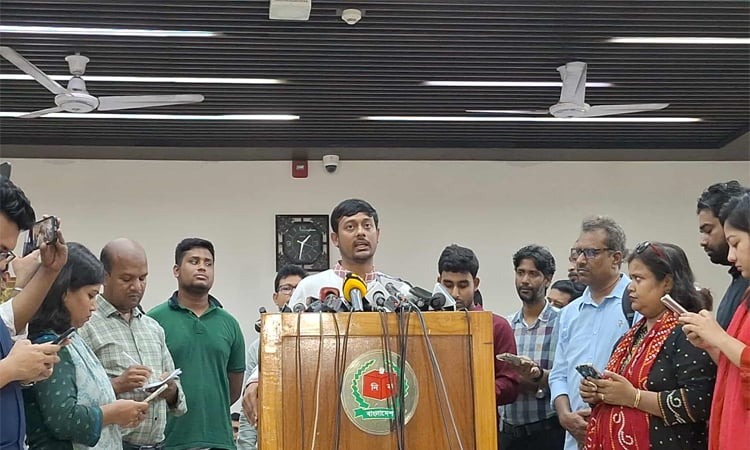
Both advisors requested more time to reach their decision on resignation. While Mahfuz Alam, Information and Broadcasting advisor, still has not shown any interest in contesting for the upcoming election, local government advisor Asif Mahmud recently announced that he will contest election and will resign from his administrative position before that. While he has not yet revealed if he would contest the election as an independent candidate or via any party (NCP), Mahmud’s late revelation unveils that the interim government never being a neutral administrative body in the first place.
Mahmud also proved his earlier press report true where he opined that “advisors who intend to join politics should resign after election announcement… otherwise the election will be questioned.” With only two months left for national election, the political tense environment in Bangladesh and interim government’s neutrality unmasked confirm that 13th national election will neither be inclusive, nor free and fair.
–IANS
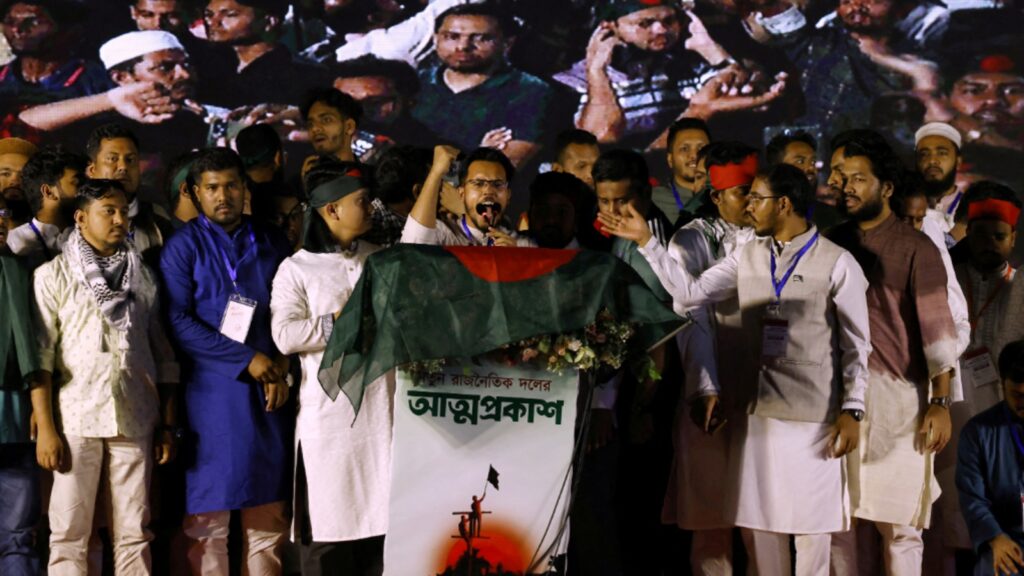
With Bangladesh’s national election scheduled for February 2026, the National Citizen Party (NCP) has displayed its unwillingness for polls without securing complete impunity for its political coup during last year’s July uprising. The actions and remarks of leaders in the NCP exposed the party’s growing insecurity in the political game.
Its consistent demand for electoral reform — to have national elections based on proportional representation (also favoured by Islamist parties) — reflect its awareness of lack of popular support.
The optimism of the July Uprising quickly faded as witnessed in the growing political chaos following the exit of former Bangladesh’s Prime Minister Sheikh Hasina which revealed the country’s democracy deficit.
Now with the Bangladesh Election Commission (EC) denying the ‘shapla’ symbol to NCP, the party’s ego is shattered, as members are threatening to delay the election if they are denied its electoral symbol. NCP is now open to both the Bangladesh Nationalist Party (BNP) and the radical Islamist party Jamaat-e-Islami for political alliances, notwithstanding the war of words it has been engaging in with both and presenting itself before Bangladesh as the ‘new’ alternative. Truly, NCP’s ‘revolutionary’ emergence has been short-lived and is perhaps now reaching its endgame.
Given the political vacuum as a result of Hasina’s ousting and political ostracisation of Awami League – that remains as Bangladesh’s largest political party – the country witnessed two political developments. This includes the resurgence of Islamists on the political stage and the growing fissures between former allies BNP and Jamaat.
A new political platform was established in September last year known as the Jatiyo Nagorik Committee (National Student Committee), by prominent student leaders of the July Uprising. The intent behind the formation of this platform was to replace the ‘existing fascist political settlement’ with a ‘democratic one’ and become the ideological vanguard of the July Uprising.
The committee felt that only through the establishment of a new political party, the political aspiration of the July Uprising can be achieved. This paved the way for the establishment of a student-led political party — Jatiyo Nagorik Party (National Citizen Party) — that announced its formation on February 28, 2025 with a centrist and pluralist ideological approach that aims to establish a “second republic” in Bangladesh. It also announced its expectation to contest for all 300 seats in the national (Jatiya Sangsad) election.
Just six months within this year, a total of 32 NCP leaders resigned from the party citing internal conflict, misconduct and dissatisfaction with leadership. Moreover, its NCP’s student wing — Bangladesh Gonotantrik Chhatra Sangsad (BGCS) — faced heavy defeats and failed to secure central posts in recent student union elections of Dhaka, Jahangirnagar, Chattogram and Rajshahi University. The surveys on voter preference since early this year also denote the same trend.
A nationwide survey by Innovision Consulting held this March reported that despite appeal among young voters, the voters’ preference for NCP stands at an overall five per cent. Another survey by the BRAC Institute of Governance and Development (BIGD) in July showed only a marginal 2.8 per cent increase from two. The latest People’s Election Pulse Survey in September, preference for NCP stands at 4.9 per cent. Surprisingly, NCP’s main rival, Awami League, despite the ban, continues to enjoy a higher voters’ preference percentage than the NCP as per these surveys.
NCP drew controversies even before its launch. The selection of the initial 10 core members of the NCP was criticised for its lack of inclusivity and lacking a democratic process. Moreover, the inclusion of leaders from the Jatiyo Nagorik Committee having past ties with Jamaat’s student wing Islami Chhatra Shibir in the party created another round of uproar, leading to their voluntary withdrawal. Another controversy followed when a recognised activist of LGBTQ community was reported to secure a position in the party’s central committee, sparking debate and dissatisfaction even among NCP leaders, eventually leading to the member’s exclusion. Quite early on, the new party’s approach to present an alternative as the most inclusive party and its own internal contradictions reflected NCP’s own ideological challenges.
Led by students under the banner of Students Against Discrimination (SAD), the 2024 July Uprising was popularised as Bangladesh’s ‘second liberation’. The movement — largely composed of anti-Hasina forces — championed for an inclusive, plural, just and democratic Bangladesh. Thus, Bangladesh’s political landscape not only changed after August 5 2024, but also initiated a new debate on which direction the country’s politics should head.
The interim government was established on August 8, just days after Hasina fled the country. The main coordinators of the Students Against Discrimination (SAD) invited Muhammad Yunus to head the interim government as the Chief Advisor. Three prominent leaders of SAD — Nahid Islam, Mahfuj Alam and Asif Muhammad — also became advisors in the interim government representing students. Thus, SAD played a significant role in legitimising Yunus’ administration, installing it the responsibility of implementing reforms and conducting a free and fair election.
Amidst anticipation of who will be part of the NCP’s central leadership, Nahid Islam resigned from its advisory position in the Ministry of Information and Broadcasting to become the chief convenor of the party. Islam’s joining the NCP was not viewed favourably by other political parties who accused the interim government of helping for the establishment of a ‘King’s Party’ under its schemes of endless reforms rather than announcing a clear election roadmap. NCP’s formation and the Chief Advisor Yunus’s soft spot for the student political party, also put its own neutrality in question. Political parties like Gono Odhikar Forum and the BNP strongly demanded for resignation of student advisors Mahfuj Alam and Asif Muhammad alleging them as NCP loyalists.
Bangladesh’s political culture rooted violence, corruption and extortion soon caught up to the nation’s newest political alternative. In April, its joint member secretary, Gazi Salauddin Tanvir, was accused of involvement in corruption and misconduct over the appointment of Deputy Commissioners, leading to his removal from NCP. The party’s ‘March to build the country’ rally in July took a violent turn in Gopalganj district when party leaders revealed their real intent — bury Mujibism along with 1972 ‘Mujibbadi’ Constitution.
NCP’s rally in Gopalganj, the birthplace of Sheikh Mujibur Rahman where Awami League continues to maintain a stronghold despite ban, was perceived as a provocative act by locals as words spread the party’s intention to desecrate Mujib’s graveyard leading to a violent clash. The following month, NCP joint coordinator of Chattogram city branch Nizam Uddin’s video of his involvement in extortion to suppress a port-related protest became viral, leading to his suspension. Indeed, the apple didn’t fall far from the tree.
The interim government’s political bias towards NCP became more visible when, following NCP-led street protests in May, it announced a ban on the Awami League thus leading to its registration suspension as a political party in the Election Commission. Before NCP’s protest, the interim government had maintained that it was for ‘Awami League to decide if it wants to participate in the election’, indicating it had no plan to ban the party earlier. It is not just Awami League’s ban, but also attempts at complete historical revisionism — removing public holidays dedicated to Sheikh Mujibur Rahman, excluding his title as the ‘Father of the Nation’ by revising the Liberation War Act and removing his picture by redesigning currency notes and portraits from public offices, to name a few — are all calculative steps taken under the strong demands of the NCP.
–IANS