
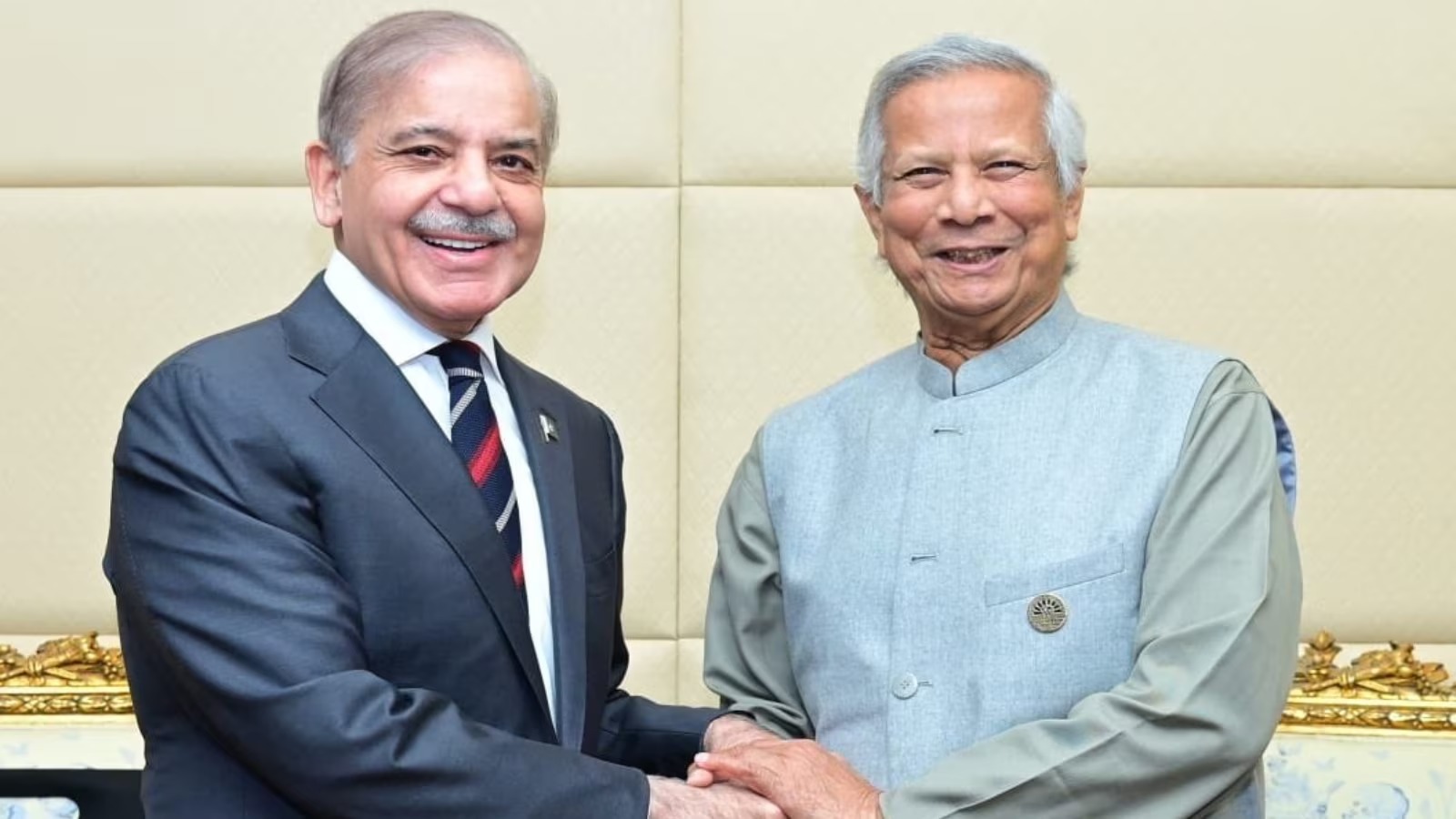
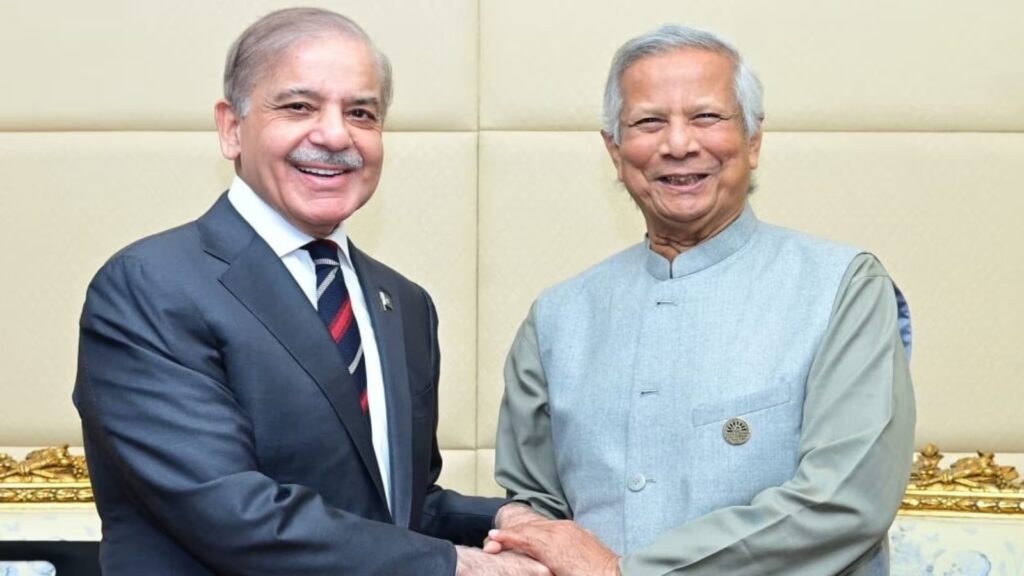
India is closely watching Pakistan’s renewed security and diplomatic outreach to Bangladesh, viewing the recent warming of ties between Islamabad and Dhaka as a development with serious implications for regional stability and Indian national security The shift follows political changes in Bangladesh after the exit of former Prime Minister Sheikh Hasina and the emergence of an interim administration led by Muhammad Yunus. Analysts say the transition has created space for Pakistan to re-enter Bangladesh’s strategic landscape after decades of limited engagement shaped by historical grievances linked to the 1971 Liberation War.
In recent months, Pakistan and Bangladesh have witnessed an increase in high-level contacts, including interactions involving military and security-linked officials. These engagements mark a notable departure from Dhaka’s earlier posture of keeping Islamabad at arm’s length. Indian security observers are particularly concerned about indications of expanded intelligence activity under diplomatic cover, warning that such a presence could facilitate covert influence operations affecting India’s eastern front.
Pakistan’s defence outreach has also become more visible through naval visits, military exchanges and discussions on defence cooperation. Although officially framed as confidence-building measures, Indian analysts caution that these steps may lay the groundwork for deeper military coordination in the Bay of Bengal region. Any form of intelligence sharing or logistical access is viewed as especially sensitive given Bangladesh’s proximity to India’s northeastern states and the strategic Siliguri Corridor that links the region to the Indian mainland.
India’s concerns are driven by multiple factors, including the potential security risks posed by a Pakistani intelligence footprint in Bangladesh, fears of cross-border destabilisation, and the possible revival of extremist networks targeting Indian interests. The convergence of Pakistan’s outreach with China’s expanding influence in Bangladesh further compounds these anxieties, raising the prospect of a strategic realignment that could challenge India’s traditional role in South Asia.
Within Bangladesh, the renewed engagement with Pakistan remains politically and emotionally contentious. Sections of civil society, liberation war veterans and rights activists view security cooperation with Islamabad as historically insensitive and strategically risky. Supporters of the interim administration, however, argue that diversifying foreign relations is necessary to assert autonomy and reduce reliance on any single external partner amid domestic political uncertainty.
New Delhi has so far responded with cautious diplomacy, maintaining engagement with Dhaka while making clear that national security considerations will not be compromised. Intelligence and defence agencies are said to be closely monitoring developments, even as diplomatic channels remain open. As South Asia’s geopolitical landscape continues to evolve, Pakistan’s renewed outreach to Bangladesh highlights how internal political shifts can reshape regional alignments. For India, the challenge lies in sustaining a stable relationship with a key neighbour while remaining vigilant against emerging security risks along its eastern frontier.
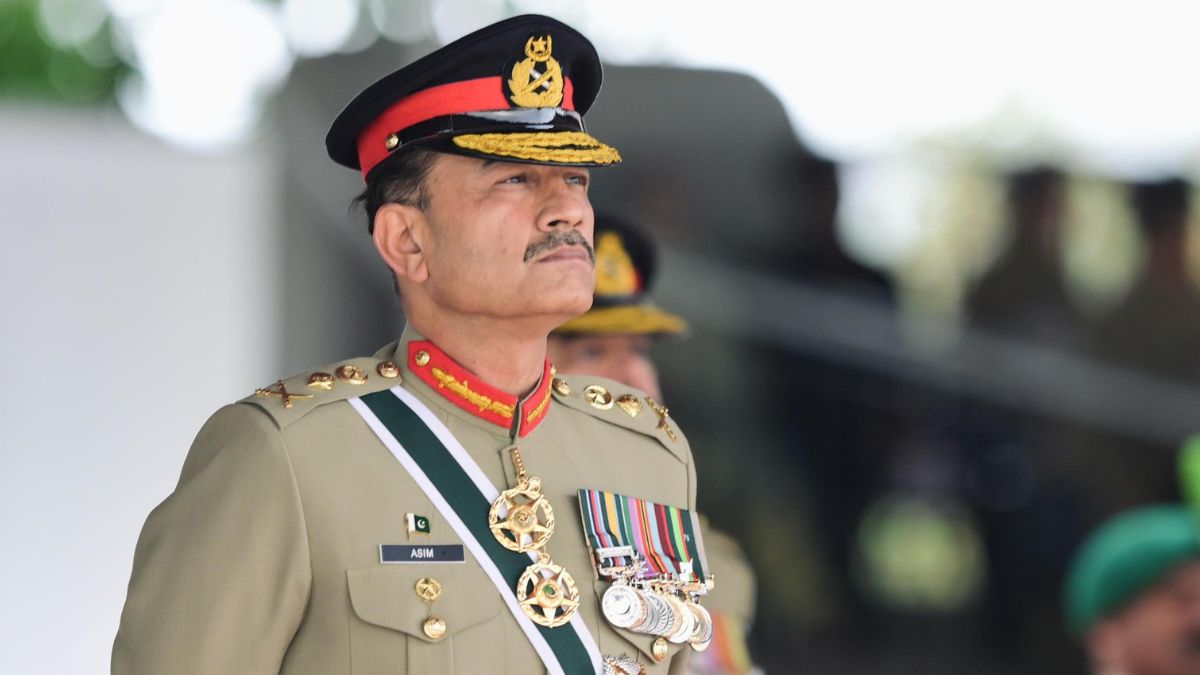
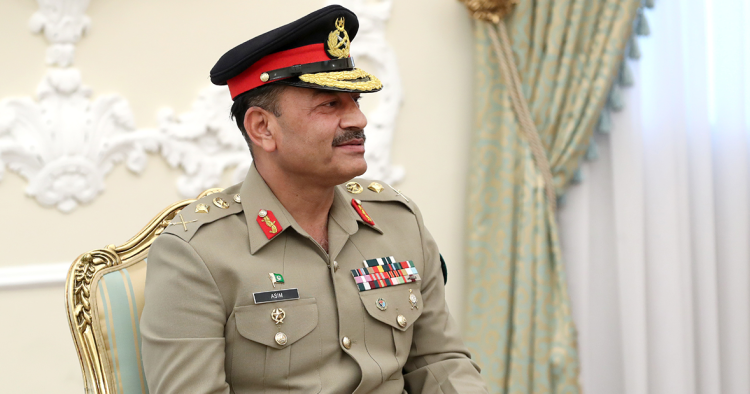
Pakistan’s military under Field Marshal Asim Munir has drawn widespread attention both domestically and internationally amid what analysts describe as an assertive doctrine of power consolidation that some commentators liken to the controversial “Thick Face, Black Heart” ethos — a philosophy emphasizing relentless ambition and emotional detachment in pursuit of strategic goals.
Asim Munir, elevated to the rare rank of Field Marshal and now serving as Pakistan’s top military leader with expanded authority across all branches of the armed forces, has increasingly been portrayed as the central figure in the country’s power matrix. This perception follows a series of constitutional, policy and institutional shifts that have strengthened the military’s role in governance and national decision‑making while civilian authority appears weakened in practice.
Analysts say the “Thick Face, Black Heart” description — originally a controversial management/philosophy concept suggesting ruthless focus on one’s own objectives — has been applied by observers to illustrate how Pakistan’s military leadership under Munir navigates political opposition, dissent and strategic competition with little regard for conventional political constraints or public criticism. Supporters of this view argue that it reflects a pragmatic effort to stabilise a deeply fractured nation; critics warn that it risks undermining democratic norms and civil liberties.
Under Munir’s command, Pakistan’s military has expanded its influence beyond core security functions into economic, legal and political domains. Constitutional changes adopted in recent months have formalised the military’s institutional reach and provided legal protections for its leadership, raising concerns among human rights advocates, religious scholars and political opponents about accountability and the balance of power. Critics argue that such measures create a near‑imperial position for the army chief, insulated from civilian oversight or judicial review.
The assertiveness of Munir’s leadership is reflected in the military’s public posture on key national issues, including counterterrorism operations, foreign relations, and domestic order. Statements from the armed forces emphasise national unity against external threats while framing internal dissent as destabilising “digital terrorism,” a term used by military officials to describe what they see as coordinated efforts to erode public confidence in the army.
Within Pakistan, reactions to Munir’s approach are sharply divided. Supporters within the establishment credit him with restoring stability after years of political volatility and with guiding the country through complex regional security challenges. They point to the army’s increased public approval and recent strategic achievements as evidence of effective leadership.
At the same time, political figures and civil society voices remain highly critical. Some legislators and religious leaders have publicly questioned the unaccountable powers granted to the military leadership, arguing they exceed constitutional norms and contradict the principles of democratic governance. A noticeable rift has also emerged with segments of the religious establishment that oppose lifetime legal immunity and other protections afforded to Munir under recent constitutional amendments — labeling such privileges as both legally and ethically indefensible.
Beyond internal politics, Pakistan’s strategic posture under Munir remains assertive. Military statements emphasise readiness to respond decisively to any perceived threats, reinforcing Islamabad’s hardline stance on longstanding tensions with neighbouring states and militant groups. This has coincided with broader defence cooperation agreements with regional partners, efforts to expand military exports, and high‑level engagements with international counterparts.
Observers say this blend of strategic assertiveness and political control suggests a doctrine in which military priorities — and the personalities driving them — play a defining role in setting Pakistan’s national agenda. Whether this model will produce long‑term stability or deepen democratic deficits in a nuclear‑armed nation facing significant economic, social and geopolitical challenges remains a key question for analysts watching developments in South Asia.
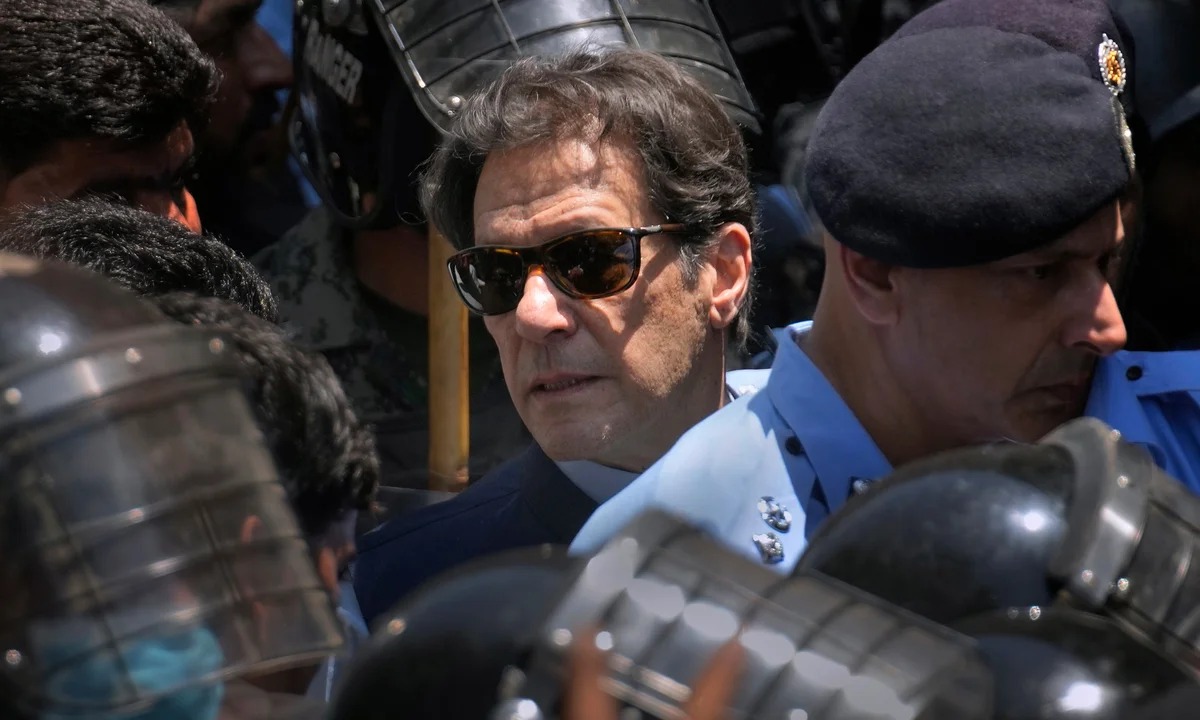
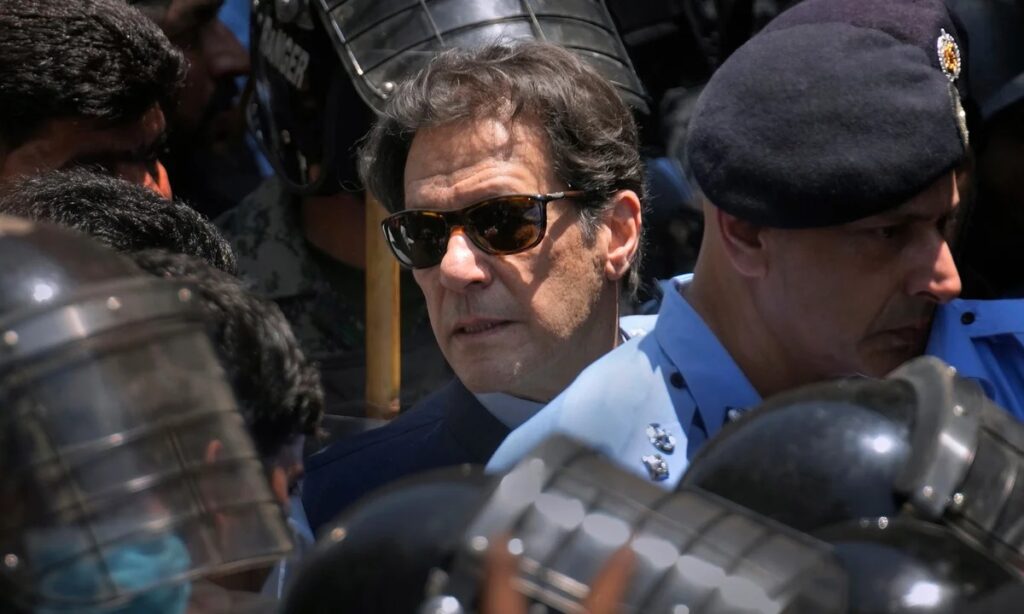 Concerns are growing within Pakistan and among international observers following a sharp escalation in rhetoric from the country’s military establishment regarding former Prime Minister Imran Khan, who has remained in custody since 2023 amid multiple legal cases. Recent public statements by military officials have framed Khan as a serious threat to national stability, marking a notable shift from earlier messaging that portrayed him primarily as a political adversary. Analysts say this change in tone has heightened fears about the direction of Pakistan’s civil-military relations and the broader political environment.
Observers note that the military’s recent characterisation of Khan goes beyond political criticism, instead invoking national security concerns and allegations of destabilisation. Such language, critics argue, risks further polarising the country at a time when political tensions are already high. Human rights advocates and political analysts caution that portraying a detained political leader as an existential threat to the state can undermine legal safeguards and due process, particularly in a system where the military wields significant influence.
Imran Khan, a former international cricket star turned politician, served as Pakistan’s prime minister from 2018 until his removal through a parliamentary vote in 2022. Since then, he has faced multiple convictions and legal proceedings, which he and his supporters describe as politically motivated. Despite being imprisoned, Khan continues to command substantial public support, especially among younger voters. His party, Pakistan Tehreek-e-Insaf (PTI), has faced arrests, restrictions and political pressure, further intensifying the confrontation between civilian political forces and the establishment.
Supporters of Khan view the military’s statements as an attempt to justify harsher measures against him and his party. They warn that escalating rhetoric could deepen instability and erode democratic norms. Political commentators have urged restraint, stressing the importance of constitutional processes and judicial independence. Several analysts have also warned that excessive use of security narratives against political opponents risks long-term damage to Pakistan’s democratic framework.
The situation has drawn attention from international observers, who have repeatedly called for respect for human rights, rule of law and fair legal processes. Pakistan’s political trajectory remains under close scrutiny as it balances internal political challenges with regional and economic pressures.
As Pakistan navigates an increasingly tense political climate, the fate of Imran Khan remains a central issue. How state institutions handle the situation is likely to have lasting implications for civil liberties, political stability and democratic governance in the country. For now, analysts say, de-escalation, transparency and adherence to legal norms will be critical to preventing further deterioration of trust between the state and the public.