Despite domestic turmoil, Pakistan’s Gen-Z chose to stay off streets; here is why

When waves of youth-led unrest swept across South Asia after Sri Lanka’s uprising in 2022, analysts began to ask which country would be next. While Bangladesh followed the suit in 2024 leading to Sheikh Hasina’s exit and most recently Nepal, many wondered whether it will arrive in Pakistan which ticked every box that fuels such movements: economic collapse in parts, high youth unemployment, cronyism, and a political class that many young people see as tone-deaf.

Yet, unlike Kathmandu, Dhaka or Colombo, Karachi and Lahore did not become the epicentres of mass, ideologically diffuse youth uprisings. The answer to Pakistan’s current insulation from such a rupture lies not in popular contentment but in a set of deliberate institutional, legal, and narrative controls that have blunted the emergence of a nationwide, cross-cutting youth movement.

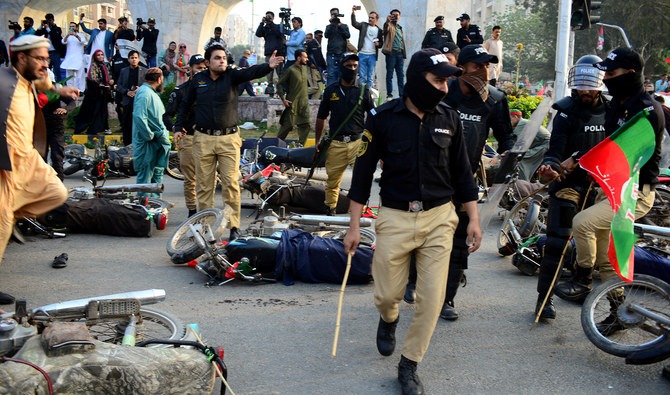
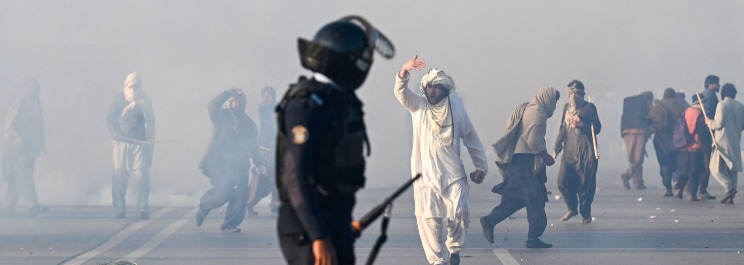
Islamabad on edge as Imran Khan supporters, police clash on streets

In case of Pakistan, it all boils down to the state’s most powerful actor: the Pakistan Army. The institution’s unprecedented response to May 9, 2023, violence after former Prime Minister Imran Khan’s arrest made clear that any mass movement threatening the army’s prerogatives would be met with force and lawfare. In the weeks and months that followed, hundreds of civilians accused of taking part in the unrest were tried by military courts. By signalling that protest could carry the risk of military prosecution, the establishment transformed the costs of visible mobilization for would-be demonstrators.

But coercion alone does not explain the lack of a Gen Z wave. The military-dominated state establishment has shored up its actions with a legal and rhetorical infrastructure that normalises repression. As has been demonstrated in the last few years, pliant civilian governments like Shehbaz Sharif’s and a compliant judiciary conferred legality on the state’s repressive measures such as sanctifying military trials of civilians or amending constitutional provisions to further empower the establishment. Those measures do more than punish by creating an atmosphere of fear and unpredictability. Young people who might otherwise risk a night on the streets calculate not only the immediate danger of police or paramilitary response, but the prospect of prolonged detention, disqualification from public life, or long legal battles.

Parallel to legal tools is the information control that has acted as a central plank of the establishment’s strategy. Whenever protests erupt in peripheral provinces of Balochistan and Khyber Pakhtunkhwa predominantly over Pakistan Army’s human rights violations, such protests are often framed as the work of foreign-backed secessionists or direct foreign hands. That securitized framing strips popular grievances of their political valence and paints them as existential threats to national unity. In practice, branding a local protest “anti-state” or “sponsored” is used to delegitimize sympathy from the broader public, making it far harder for disparate movements to coalesce into a national youth narrative. The rise and proscribing of movements by Pashtun Tahafuz Movement (PTM) and Baloch Yekjehiti Committees (BYC) show how Pakistani media framing, often echoing official lines, reinforces the divide between “patriotic” majorities and “dangerous” minorities.

Targetted media campaigns have not just been employed in the restive provinces. After the no-confidence motion that ousted Imran Khan’s government in 2022, for example, street mobilisation by the Pakistan Tehreek-e-Insaf (PTI) demonstrated how quickly the public discourse was polarized. And when May 9 anti-establishment protests against Khan’s arrest saw the sanctity of the military fortresses breached for the first time ever, the state-aligned media quickly presented protesters as partisan, violent, or manipulated by foreign backed actors. Such a characterisation is employed to keep young citizens viewing politics through the prism of party loyalties, ethnic identity, or regional grievance rather than shared economic and civic concerns that cut across such lines.

Economic desperation, however, remains a dormant accelerant. It is not that in this age of information and unprecedented access to social media technologies Pakistan’s young demographic are not aware of stagnant opportunity, rising living costs, and the politics of patronage. What has kept them off the streets is not indifference but fragmentation. Herein, the long cultivated and institutionalized provincial, ethnic and sectarian cleavages work as dampers on the kind of cross-class, cross-regional solidarities that have powered Gen Z uprisings elsewhere in the region. Until youth can imagine a politics that transcends these divisions, protest energy tends to boil over locally and then dissipate.

So, the question arises what would it take for Pakistan’s Gen-Z to break the shackles of current status quo? The foremost answer lies in the creation of a shared political vocabulary that could link bread-and-butter economic grievances to common governance failures, rather than reducing dissent to ethnic or partisan labels. The youth need to see beyond the ethnic and sectarian identities and through the façade of the agendas of current political elite. The recent Gen-Z waves across South Asia show that when youth movements craft a shared language of rights and justice, they can force rapid political concessions. But for such realisation, they ought to avoid being swallowed by existing cleavages.

It is important to note the asymmetry here: the state does not need to be omnipotent to prevent a Gen-Z uprising; it only needs to be better at dividing and dissuading than youth movements are at unifying. Pakistan’s both formal and informal institutions have operated precisely along those lines. They have made it costly to imagine a nationwide movement and profitable, for the moment, to keep politics provincial and securitized. For many young Pakistanis, an act of national solidarity means choosing sides in a polarized landscape where the risks of losing are existential.

That is not to say the powder keg cannot ignite. Economic shocks, a dramatic political miscalculation, or a new generation of conscious young political minds who can tell a cross-communal story of grievance and hope could change the calculus quickly. But for now, Pakistani establishment’s latest respite from a Gen-Z uprising is a function of strategy as much as suppression. This includes a combination of military deterrence, legal architecture, media framing, and the deliberate maintenance of social fissures. If the most connected and potentially volatile cohort of young demographics of the country are to convert frustration into sustained collective action, they will have to imagine a politics that can outmaneuver the state’s oldest playbook: divide, delegitimise, and dominate.

The question for military-dominated Pakistani establishment’s future is not whether its young are angry, which they are anyway, but whether they can learn to be strategic, patient, and cross-communal enough to build a movement that it cannot simply criminalize, fragment, or outbid. Until that happens, the streets will remain dangerous ground that too many are unwilling to risk alone.

Pakistan’s Uniformed Democracy: Asim Munir’s Rise and the Civilian Surrender

In Pakistan’s fraught political landscape, where military dominance has often operated behind a veil of civilian rule if not outrightly seizing power, a new chapter is being written. Analysts and experts describe the country’s current governance framework as a ‘hybrid system’ wherein military exerts control over the civilian executive. But, instead of resisting such entrenchment in the executive affairs of Pakistan, the country’s political class is openly celebrating the system and its own active complicitly. Its latest manifestation was witnessed in the aftermath of Pakistan Army Chief General Asim Munir’s June 2025 Washington luncheon with the US President Donald Trump where he was accorded an honour typically reserved for heads of state. Defence Minister Khawaja Asif in a recent social media post on X (formerly Twitter) hailed the so-called “hybrid model” of governance as the secret to Pakistan’s recent successes.

Pakistan’s defense minister says hybrid model ‘doing wonders’

Asif’s post was unambiguous, stating, “The revival of the economy, the defeat of India, the glorious and highly successful improvement in relations with the US” were all, according to him, made possible not by democratic governance or parliamentary mandate, but by “excellent relations between Islamabad and Rawalpindi.” This was the highest form of from the current political elite referring to not only the civilian government’s alignment with the military high command but its subservience to it.

Far from being a gaffe or one-off comment, Asif’s post was emblematic of a broader trend, which is the normalization, and even celebration, of military dominance in Pakistan’s political system under the tenure of current Chief of Army Staff.

Field Marshal Asim Munir, who assumed command of Pakistan’s powerful military in November 2022, has swiftly moved to expand the influence of military establishment far beyond traditional defence and security matters. During these years, Pakistani Army has reasserted itself as the ultimate arbiter of political legitimacy, economic policy, foreign affairs, and even media narratives, something that is not lost in the currently in Pakistani information space.

Munir’s model of control is less about martial law and more about managed democracy, which is a façade of civilian rule where real power resides in the barracks of Rawalpindi. In contrast to some of his predecessors like General Qamar Javed Bajwa and Raheel Sharif who preferred to operate in the shadows, Munir’s approach is increasingly overt. Whether through the military’s economic arm, the ever-growing surveillance state, or the selective engineering of elections and political alliances, his footprint has growingly become unmistakable.

Munir’s Controversial Rise and Pakistan’s Drift to a ‘Hard State’

This has been demonstrated by the much controversial 2024 general elections through brazen manipulation of the system to ensure the current government under Shehbaz Sharif takes shape. It included the use of all arms of the state, be it the election commission or judiciary, the military establishment ensured that the Pakistan Tehreek-e-Insaaf (PTI) party was restrained from partaking in elections and denying its nominees a unified platform to contest besides scores others imprisoned, disqualified on technicalities, or marginalized through media blackouts.

Nevertheless, what makes this moment particularly alarming is not just the military’s overreach and dominance over civilian executive, but the political class’s enthusiastic submission to it. Instead of resisting authoritarian drift, Pakistan’s major political parties, led by ruling Pakistan Muslim League-Nawaz (PML-N), along with Pakistan People’s Party (PPP), have largely embraced it for seeking favour with the military brass in the hopes of electoral blessings or protection from legal troubles.

As such, once symbols of democratic resistance, the silence of these political parties on issues of censorship, enforced disappearances, political victimization, and military trials of civilians speaks volumes. They are increasingly toeing the establishment’s line and facilitating its power grab by enabling legislative amendments. Under this arrangement, Pakistan Military (Army, Air Force and Navy) Acts have been amended to increase powers of the armed forces along with increasing the tenures of service chiefs, besides 26th constitutional amendment to undermine the country’s judiciary by tweaking the judicial appointments procedure and weaking the powers of Chief Justice of Pakistan.

The most revealing indicator of this alliance is the mainstreaming of “hybrid regime”, once a derided term used by analysts and civil society to describe the country’s militarized democracy. It is now worn as a badge of honour by ruling politicians, as Khwaja Asif’s adoration highlights. That a sitting defence minister could proudly glorify military dominance over civilian executive, without fear of political backlash, signals how far democratic norms have eroded. It also glosses over the fact that Pakistan all kinds of ills, ranging from economic woes, security unravelling, and political instability, are all because of the very military establishment’s Machiavellian overreach beyond their constitutional mandate.

Under Asim Munir’s command, the military has expanded its grip on key civilian institutions, including the judiciary, the Election Commission, the media, and even elements of the economic policy machinery. It can be safely argued that this so-called “hybrid model” is little more than a euphemism for authoritarianism in civilian clothes as Pakistani judiciary is being either co-opted or cowed into silence, while journalists face harassment, detention, or worse for merely questioning the prevailing order. In such a system, the military does not need to seize power as it already exercises it, via the institutions it controls.

For decades, Pakistan has oscillated between overt military dictatorships and fragile democratic transitions. Each time democracy has been restored, there was hope, however faint, that the balance of power might tilt in favour of civilian supremacy. Under Field Marshal Munir, that hope appears to be vanishing fast. What distinguishes the present era is not just the military’s ambition, but the political elite’s abdication of responsibility.

By cheerleading military dominance, political leaders are not just compromising democratic norms, they are legitimizing authoritarianism. And in doing so, they are narrowing the space for dissent, weakening civilian institutions, and undermining public trust in electoral processes, which are all basic indicators of a democracy.

The consequences are profound. Pakistan’s economy, already struggling under the weight of inflation, debt, and a collapsing rupee, cannot recover without institutional accountability. Foreign policy, especially relations with neighbours like India and Afghanistan, requires democratic consensus, not militarized doctrine. And internal security, increasingly threatened by extremism and separatism, as evidenced by raging Baloch insurgency and Islamist extremism, cannot be addressed through brute force alone.

For Pakistan to reclaim its democratic identity, it must begin with a clear-eyed recognition of where it stands today. The so-called hybrid system is not a strength, but a symptom of institutional decay. Political leaders must stop outsourcing legitimacy to the military and instead invest in rebuilding the public’s faith in democratic governance.

Asim Munir’s consolidation of power may serve the short-term interests of a few, but it comes at the cost of Pakistan’s democratic soul. If left unchallenged, the current trajectory will lead not to national revival, but to a more entrenched and unaccountable authoritarianism. And history has shown, time and again, that such regimes do not end in glory, but in collapse.

Escalating Rift Between Bangladesh Military and Interim Government

Bangladesh remains in a state of perpetual uncertainty, as reports surface of an escalating rift between the Muhammad Yunus-led Interim Government and the country’s military establishment. Amidst allegations of coup attempts aimed at dislodging Army Chief General Waker-Uz-Zaman from his leadership, the chasm between the two factions has become increasingly conspicuous. Contentious disputes have emerged over critical matters, including the nation’s deteriorating law and order situation and the timeline for forthcoming elections. The Yunus administration, however, exhibits a palpable reluctance to facilitate timely electoral proceedings, thereby fuelling concerns that it might be seeking to prolong its unconstitutional grip on power.

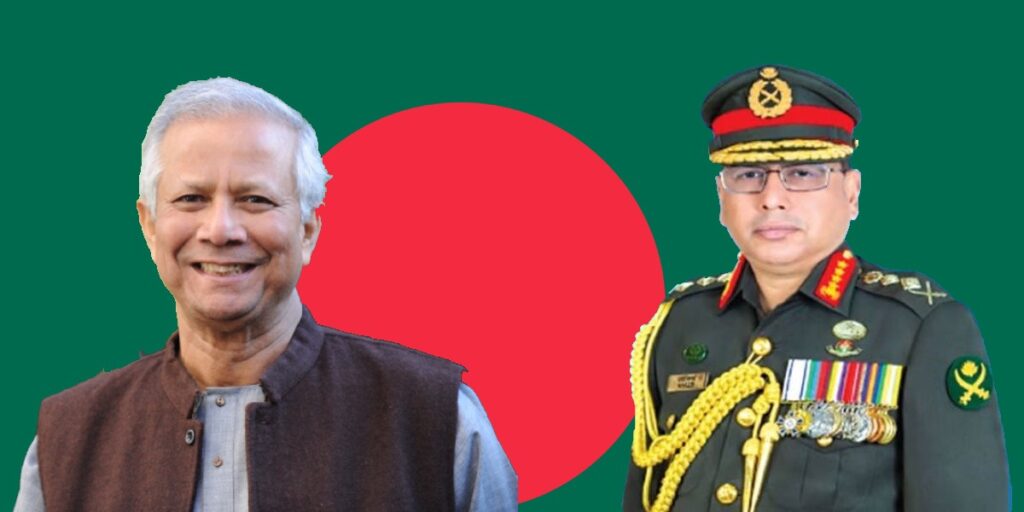
Bangladesh Chief Advisor Md. Yunus (Left) and Army Chief General Waker-uz-Zaman (Right)

Deepening discord has emerged between the military establishment and the Interim Government, precipitated by the country’s deteriorating security environment and the pervasive political instability aggravated by internecine strife among rival factions. On the law-and-order front, the country has witnessed a sustained wave of arson attacks over the past several months, targeting Awami League leadership and cadre besides minority Hindus. The arsonist mobs, predominantly led by groups aligned with the Students Against Discrimination (SAD) movement and Islamists, have been brazenly targeting even sites of national significance. Among the most egregious incidents was the desecration of Dhanmondi 32, the family residence of the nation’s founding father, Sheikh Mujibur Rahman, which serves as Bangabandhu Memorial Museum. It may be recalled that SAD played a critical role in the anti-government agitation that culminated in the ousting of Sheikh Hasina from power in August 2024, and has ever since maintained strong influence over the governance affairs of the country through the interim administration of Muhammad Yunus, with a number of its members serving as the advisors, that is de facto ministers of the government.

Additionally, as the SAD movement transitioned into formal politics through the establishment of its own political entity, the Jatiya Nagorik Party (JNP), it has been at loggerheads with other political parties such as the Bangladesh Nationalist Party (BNP) over the timeline of the elections and implementation of constitutional reforms in the country. Given its considerable influence within the Interim Government, SAD has persistently advocated for the implementation of constitutional reforms as a precondition for any electoral process. However, the BNP and its allied factions demand the immediate conduct of elections, contending that any institutional reforms should rightfully be the prerogative of a legitimately elected government. In addition, SAD affiliates have violently tackled BNP’s student wing, Jatiotabadi Chatradal, injuring over 150 students in one of the incidents at a Khulna University last month.

Amidst these increasing uncertainties, on his part, the Army Chief has persistently criticized the Interim Government’s incompetence in maintaining law and order and also voiced grave concerns over the surge of Islamist radicalism, cautioning that such developments pose an existential threat to the nation’s stability and territorial integrity. General Zaman issued a grave reprimand to political factions on February 27, warning that their relentless hostilities and factional rivalries could imperil Bangladesh’s hard-won sovereignty. Expressing his frustration with the lingering turmoil of the preceding “seven to eight months,” Zaman cautioned, “If you cannot forget your differences and work together, if you engage in mudslinging and fighting, the independence and sovereignty of this country and nation will be at stake.”

Subsequently, the SAD leadership has increasingly targeted the Army Chief, accusing him of political interference, even threatening anti-military protests across the country. For instance, on March 22, Hasnat Abdullah, SAD convener, claimed that General Zaman was attempting to reintroduce and reinstate Awami League by pushing for the participation of what he called “Refined Awami League,” which would include mostly the second rung leadership of Sheikh Hasina’s party. Hasnat warned that the students’ groups were ready to launch a movement against the military establishment over this kind of “political interference”. Another student leader and an advisor in Yunus administration, Asif Mahmud Bhuiyan, in a video message on March 21, also accused General Zaman of harbouring resentment against Muhammad Yunus by claiming that the Army chief “had reluctantly agreed to appoint” him as the chief adviser of the interim government following the removal of Sheikh Hasina on August 5, 2024.

These provocations assume criticality in light of March 12 revelations that General Zaman thwarted a Pakistan-sponsored and Interim Administration-endorsed intra-Army coup against the military establishment. As per reports, Bangladesh Army’s Quartermaster General (QMG), Lt. Gen. Muhammad Faizur Rahman, a staunch Islamist who is known for his pro-Pakistan Army and Jamat-e-Islami (JeI) proclivities, led the failed coup attempt alongside Principal Staff Officer (PSO) of the Armed Forces Division (AFD), Lt. Gen. S M Kamrul Hassan. Interestingly, both officers have been instrumental in facilitating increased military engagements between the Pakistan Army and their Bangladeshi counterparts, with Lt. Gen. Rahman having recently hosted an Inter-Services Intelligence (ISI) delegation in Dhaka, while Lt. Gen. Hassan led a military delegation to Pakistan merely a month prior. Reports further alleged that Chief Advisor Muhammad Yunus and the SAD leadership acquiesced to the plot to remove General Waker, who has resisted overt Islamisation of the state institutions and has maintained pressure on the transitional government against delaying elections.

Following these provocations, General Zaman, as reports indicate, convened a series of high-level meetings with the Army leadership on March 22 to deliberate on the country’s precarious political and security landscape. Though Army dismissed such conjectures describing these meetings as routine for assessing country’s security situation, these developments raised speculations across Bangladesh’s social media sphere, with widespread conjecture that the military establishment might imminently resort to the imposition of emergency measures to quell the prevailing uncertainty. Some reports even claimed that concurrent to these deliberations, Bangladesh Army even mobilised its Savar-based 9th Division, ostensibly towards Dhaka. Such speculations of Army’s potential resort to extraordinary measures to prevent further destabilization underscores the pervasive fear that these developments could spiral into a broader conflict.

As such, these unfolding events serve as a starkly demonstrate the deepening chasm of mistrust between Gen. Waker-Uz-Zaman-led military establishment and the SAD-dominated Interim Government of Muhammad Yunus. General Zaman’s recent warnings regarding the nation’s deteriorating security environment and the risk of civil unrest suggest a growing sense of urgency within the military ranks. Therefore, as the trust deficit between military establishment and the Interim Government widens, the country faces an increasingly perilous trajectory, with the looming threat of political disarray and a descent into outright anarchy.