
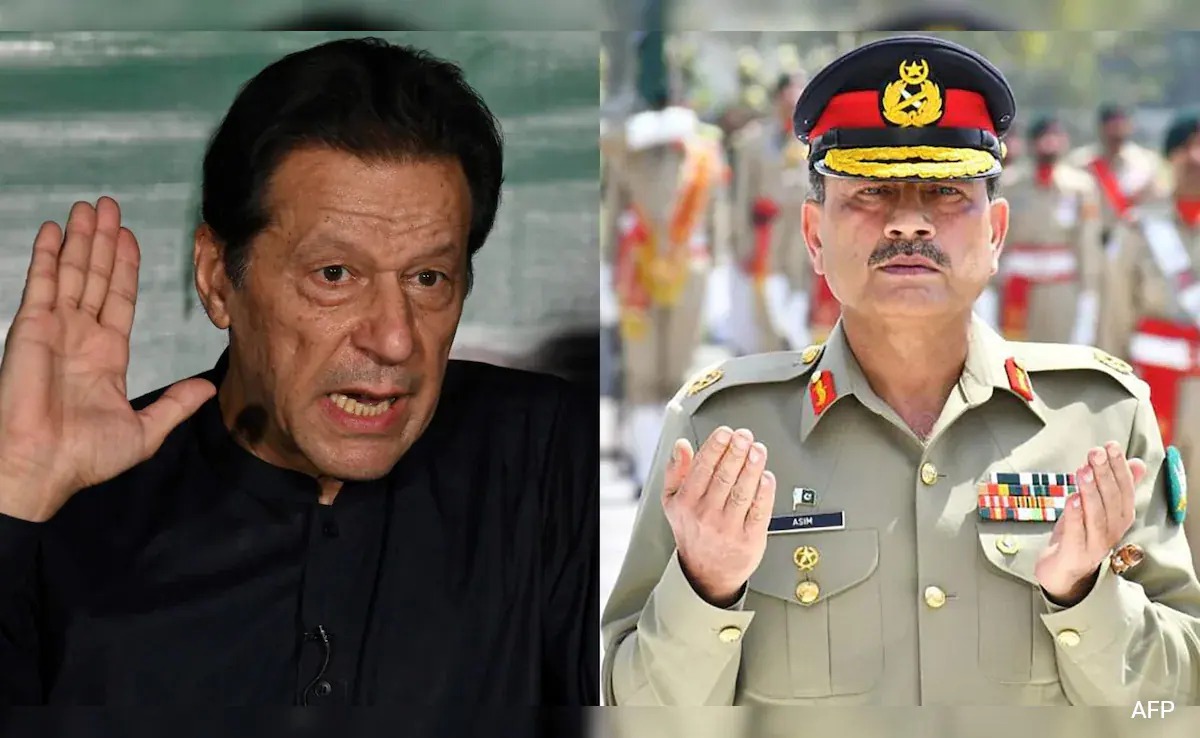
In Pakistan, power rarely disappears. It retreats, recalibrates, returns and often in uniform. Since the arrest of former Prime Minister Imran Khan in 2023, the country has been witnessing not merely the prosecution of a politician but the systematic erosion of any space for political dissent. Under Army Chief Field Marshal Asim Munir, Pakistan’s military establishment appears to have embarked on a deliberate, incremental campaign to marginalize and potentially erase its most formidable civilian challenger.
The method to silence Khan has not been spectacular but rather procedural in character. From once being seen as the military’s preferred candidate to run the civilian façade of government, he remains imprisoned in Adiala jail under the shadow of the General Headquarters of Rawalpindi. Over the months that have followed since, reports of deteriorating health conditions emerged amid recurrent allegations of mistreatment including torture. While the state has expectedly denied these allegations, yet the recent reports that Khan suffering severe vision loss in his right eye after a medical procedure conducted clandestinely on January 24 night at Pakistan Institute of Medical Sciences (PIMS), have intensified concerns among supporters.
The Supreme Court appointed amicus curie, Salman Safdar who met Khan at Adiala jail, told the court that the imprisoned former prime minister had list nearly 85 per cent of eye sight in right eye. Khan’s sister Noreen Niazi accused Army Chief Asim Munir of subjecting him to “unimaginable mistreatment.”
Imran Khan, a global celebrity, a philanthropist, and former prime minister of Pakistan, has endured unimaginable mistreatment in prison under the directives of ‘Asim Law,’ now facing irreversible damage to his right eye as a direct consequence,” Noreen Niazi alleged in an X post, adding, “Why are they rejecting the supervision by Imran Khan’s personal doctors? Why are they rejecting the presence of Imran Khan’s family members? Our family is getting extremely worried. We do NOT accept any medical board they setup and control, we do NOT accept any report they manufacture! Family and personal doctors must be allowed to see Imran Khan!”

Whether these claims are fully verifiable or not, but the political message of the state seems clear: isolation is the objective. the political message is clear: isolation is the objective. Khan has been denied consistent access to family members and his personal physicians whereas his communication with party leaders remains tightly restricted. In modern authoritarian playbooks, the most effective silencing is not necessarily physical elimination but enforced irrelevance. A leader cut off from his movement slowly loses the capacity to mobilize it. And it seems Asim Munir led establishment has decided its course over Imran Khan, which is silence through isolation.
Yet Khan remains Pakistan’s most popular politician with multiple surveys by national and international continuing to place him far ahead of his rivals. For instance, a 2023 Gallup Pakistan report found that over 61 per cent of Pakistanis held a positive opinion of Imran Khan, significantly higher than his rivals. It is that enduring popularity which is precisely what makes him intolerable to the establishment. Interestingly, Khan’s relationship with the military was once considered as symbiotic. When he became prime minister in 2018, his opponents such as Pakistan Muslim League-Nawaz (PML-N) and Pakistan People’s Party (PPP), which are currently in the good books of army establishment, alleged that that his Pakistan Tehreek-e-Insaaf (PTI) benefited from military’s behind-the-scenes support during elections. While Pakistan’s generals have long shaped the country’s political order both overtly through coups and covertly through electoral engineering, Khan, at the time, appeared aligned with that system.
But alliances in Pakistan’s civil-military matrix have always been transactional with Khan’s differences with military establishment on foreign policy and governance becoming visible in late 2021 and early 2022. And when the PTI government was removed through a parliamentary no-confidence vote in April 2022, many believed that Khan’s political rivals were nudged by General Bajwa from behind the scenes to engineer his ouster. And what followed after his removal was unprecedented as Khan did not retreat into quiet opposition. He directly accused the military leadership of political manipulation, including being part of a regime change operation with support from United States. While his rallies drew massive crowds, what was precedented was how for the first time in decades, a mainstream political leader openly named generals as political actors and seeking their return to barracks.
For the military leadership that defiance crossed a red line as no one had ever questioned army even after losing wars with India or having the country axed into two in 1971 with the fall of Dhaka. With Asim Munir succeeding General Bajwa as the Army Chief in late 2022, the establishment’s response hardened. Many factors converged to supplement state’s response towards Imran Khan and his PTI. For one, as prime minister, Khan had previously removed Munir, then a Lt. Gen. rank officer, from his post as Director General of Inter-Services Intelligence, the de facto number two position in Pakistan Army, in 2018. Secondly, his government had earlier sanctioned presidential reference against then Justice Qazi Faez Isa in 2019, who by 2023 became Chief Justice of Pakistan. While personal history may not explain institutional retaliation, but in Pakistan, the institutional and personal often blur.
When Imran Khan was initially arrested from the premises of the Islamabad High Court on May 9, 2023, Pakistan witnessed unprecedented protests with people targeting military installations, including the Corps Commander’s residence in Lahore and other sensitive installations. Pakistan Army framed these violent anti-establishment protests as an assault on the state itself. A sweeping crackdown followed, extending far beyond accountability for vandalism with hundreds of civilians and PTI workers arrested and dozens tried in military courts.
Soon the establishment turned to dismantle Khan PTI with senior party leaders abducted and pressured into televised renunciations. While some left politics altogether, others defected to a new pro-establishment Istehkam-e-Pakistan Party comprising mainly former PTI affiliates. The objective appeared less about punishing lawbreakers and more about dismantling an organizational network. The second prong of the strategy was institutional. The state leveraged legal and administrative tools to weaken PTI’s ability to contest elections effectively. The election commission withdrew party’s electoral symbol, forcing its nominees to run as independents. Yet, when elections were held in February 2024, while Khan’s nominees performed strongly, the fragmented results enabled a coalition of establishment-aligned parties to form government under Shehbaz Sharif.
Khan, meanwhile, faced an avalanche of legal cases. The Toshakhana case involving state gifts resulted in conviction and imprisonment, though higher courts later suspended aspects of the verdict. Yet each time bail appeared possible in one case, new charges emerged in another. By some counts, there are over 90 cases registered against him across Pakistan, which makes it not merely prosecution but legal suffocation. State’s pattern suggests a calibrated strategy to ensure that even if one judicial avenue opens, another closes, thereby keeping defendant and the party perpetually entangled and drain political momentum.
For the military establishment, silencing Imran Khan appears about reasserting the boundaries of permissible politics and preserve Pakistan Army’s hold over the levers of state power, including foreign policy. Khan’s rhetoric threatened to redraw those lines and risked normalizing civilian supremacy in areas the army considers its own.
These developments therefore suggest that the objective of Asim Munir-led establishment does not appear to be martyring Imran Khan through outright elimination, something that could ignite uncontrollable unrest, but neutralizing him through step-by-step approach of attrition. This prison isolation with restricted access to family, doctors and party leadership, a cascade of legal cases, the attempts to fragment PTI, and the coercion of his loyalists, point to a strategy of slow political asphyxiation. While each step taken individually can be justified as “lawful” or “procedural”, but together they form a pattern designed to exhaust, delegitimize and ultimately render irrelevant Pakistan’s most popular political figure. It seems to be a method calibrated to avoid spectacle while ensuring silencing through a steady tightening of institutional pressure.
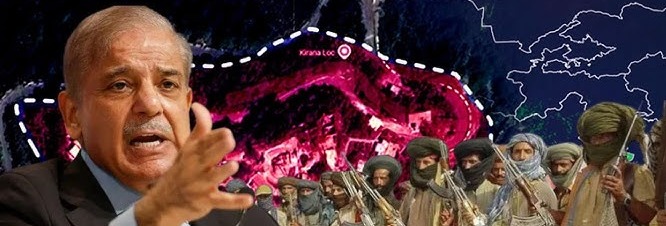
It is barely a month into 2026 and Pakistan, it appears, is already sliding toward a grim year ahead. In just the first month, there have been nearly a hundred security forces casualties, including a lieutenant colonel targeted while traveling in a private vehicle on January 28, besides dozens of civilians.
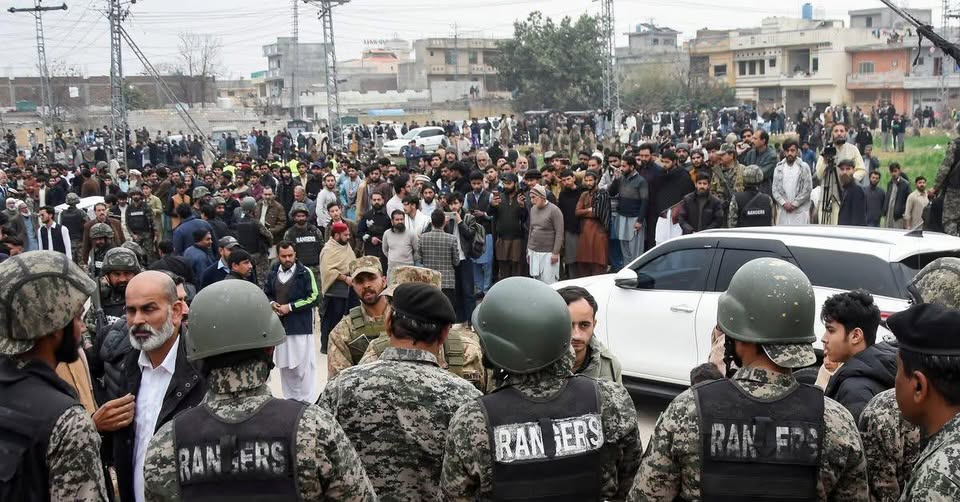
If this trend holds which look highly likely given increasing strength of ethnonationalist insurgency in Balochistan and Islamist militancy in Khyber Pakhtunkhwa, it could turn into the deadliest years for Pakistan Army led security forces in the country.
On Jan.31, Balochistan Liberation Army (BLA) launched coordinated assaults across as many as fourteen cities in Balochistan. Labelled as Operation Herof 2.0, hundreds of BLA fighters struck military and provincial government installations from provincial capital Quetta to port city Gwadar, from Turbat to Panjgur, demonstrating a level of planning and reach that Pakistan’s security planners have long insisted was impossible.
While the BLA claimed 84 security officials killed and 18 taken hostage, Pakistan Army’s DG-ISPR acknowledged the death of 17 soldiers and 31 civilians while claiming to have killed 177 BLA fighters. It has been over four days and it appear BLA seems to have entrenched its control over many areas across the cities, particularly Noshki, with Pakistan Army struggling to remove the fighters despite using indiscriminate force, including aerial attacks.
The contestation over the casualties on either side aside, this latest attack demonstrates how the insurgency in Balochistan has evolved from a peripheral “irritant” into a strategic challenge capable of overrunning state facilities and humiliating Asim Munir led Pakistan Army in real time. But this was not an isolated outburst as independent monitors have recorded as many as 87 separate insurgency incidents in January alone.
According to the Pakistan Institute of Conflict and Security Studies (PICSS), since General Asim Munir assumed command in November 2022, the army and its affiliated forces have lost 2,017 personnel, with a record 857 deaths in 2025, besides over 1100 civilian fatalities during the same period. These figures rival the darkest years of Pakistan’s counterinsurgency campaigns, yet they receive only fleeting acknowledgement in national discourse.
But what distinguishes the military casualties is not merely their number but more importantly who is dying. According to the media reports about insurgent incidents in Balochistan and militant incidents in KP, the bulk of losses are borne by the Frontier Corps (FC) and the Levies, which are paramilitary formations recruited largely from Baloch, Pashtun, Sindhi and other non-Punjabi communities. It is these units that patrol the most dangerous terrain, man remote checkpoints and therefore become the first line of responders when insurgents and militants strike.
On the other hand, the Punjabi soldiers, which dominate the officer corps and the central command structure, are far more insulated from direct combat.
Such a division of risk is not accidental but reflects the very psychology of the Pakistani state. The military remains overwhelmingly Punjabi as demonstrated by its ethnic demographics which has 70 to 75 percent Punjabis, 14–20 percent Pashtun, 5–6 per cent Sindhi, and merely 3–4 Baloch. The officer class is even more skewed in favour of Punjab with Punjabi officers commanding Frontier Corps and Levies.
While Baloch soldiers are ordered to fight Baloch insurgents and Pashtun recruits are sent to battle Pashtun militants, the arrangement guarantees local resentment. Under General Munir, this Punjabi dominated military establishment has acquired a political purpose of consolidating every lever of power of the state. Since his elevation in 2022, Pakistan has gradually transformed into military led hybrid rule through a carefully calibrated yet brazen constitutional gerrymandering which has rendered elected institutions largely irrelevant with real authority in the General Headquarters in Rawalpindi.
As such, the Punjabi dominance within the army becomes the pillar of regime stability, while non-Punjabi paramilitaries serve as expendable shock absorbers for an unpopular security project.
For decades, Pakistan’s military has portrayed itself as the sole glue holding a fractious nation together. But that has changed in the recent decades where military has transformed into a catalyst of insecurity by designing Islamabad’s imperial approach towards non-Punjabi provinces which sustains on coercion than consent. Nowhere is this more evident than in Balochistan. For decades the province has been treated through a colonial lens of resource extraction of gas and other mineral copper with little investment in its people.
While political dissent is answered with enforced disappearances and economic demands are framed as treason, such policies have further alienated people and contributing to the cause of ethnonationalist groups. The BLA’s latest offensive not only demonstrated scale and intensity but also its social breadth with men and women fighting side by side, reportedly including a grandmother and a newly-wed couple. But for Pakistan, it is the state’s policies which have ensured that the cause of Baloch nationalist groups was no longer a fringe phenomenon but entrenched within the society.
Likewise, Khyber Pakhtunkhwa tells a parallel story. Here, Pakistan’s proxy policy of terrorism as instruments of regional policy, particularly against Afghanistan and India, has unravelled as many of those groups, including many factions within Tehreek-e-Taliban Pakistan (TTP) have now turned inward. And despite repeated anti-militancy campaigns by the army, militant networks have reconstituted themselves with each case of military violence and emerging stronger.
General Munir’s response has been to double down by expanding military courts, criminalising online dissent, and relying ever more on auxiliaries like the Frontier Corps and Levies. This strategy is less about defeating insurgency than managing it at tolerable cost which is however paid overwhelmingly by non-Punjabi bodies. On the other hand, Punjabi soldiers remain guardians of regime stability in Islamabad and Lahore. The contrast is visible: armoured calm in the centre, burning peripheries at the edges.
History suggests that armies can survive defeats but what they cannot survive is a perception of injustice within their own ranks. Asim Munir led Punjabi military establishment of Pakistan Army continues outsourcing its dirtiest wars to non-Punjabi formations while reserving privilege for the Punjabi core. It is a recipe of sowing fractures that may one day reach Rawalpindi itself.
-Arun Anand
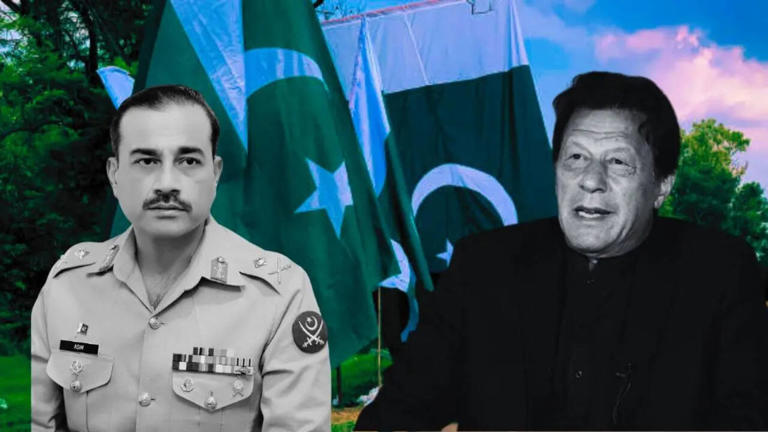
Pakistan is living through one of its bleakest democratic moments, and the source of this suffocation is no mystery. Power in the country has steadily migrated away from elected institutions and settled firmly in the hands of Army Chief Gen Asim Munir. What remains of civilian rule exists largely for show, a thin constitutional curtain behind which the military calls the shots. Parliament debates, courts issue verdicts, and government leaders make speeches—but none of it matters unless it aligns with the will of the man in uniform.
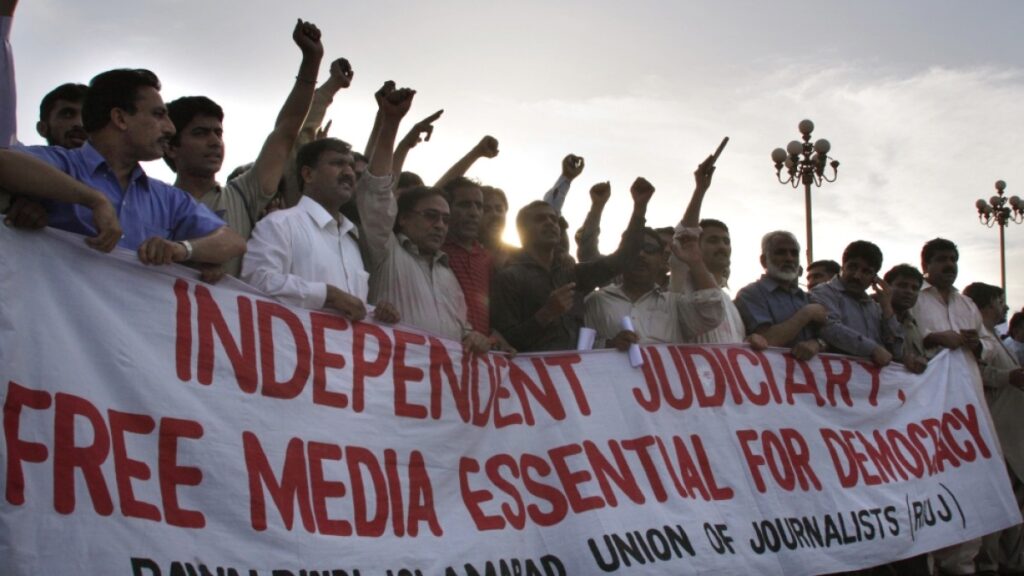
Under Gen Munir, this imbalance has hardened into something far more dangerous: a system built on fear, coercion and punishment. Dissent is no longer treated as disagreement; it is framed as treason. Criticism is rebranded as terrorism. And loyalty to jailed former Prime Minister Imran Khan has become the ultimate crime. The dismantling of civilian authority did not happen overnight. It has been methodical.
First, political engineering ensured a weak government in Islamabad. Then the judiciary was tamed through pressure, selective accountability, and unmistakable signals about what kind of verdicts were acceptable. Today, few judges dare to pretend independence when cases touch the military or Imran Khan. Sentences have grown harsher and outcomes increasingly predictable. The result is a dysfunctional state that operates like a command structure with no accountability for the ruling elite that largely comprises the military.
When Journalism Becomes a Crime
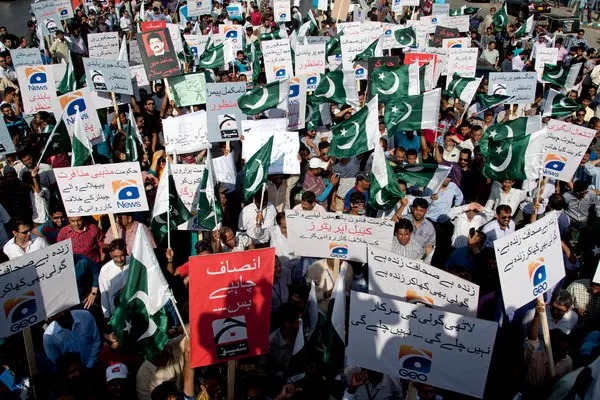
The latest victims of this tightening grip are journalists, analysts, and former military officers who dared to speak publicly against the army’s dictatorship and political purge. In January 2026, an Anti-Terrorism Court sentenced seven Pakistanis to life imprisonment for what it called digital terrorism related to the protests of May 9, 2023. None of the accused were present in court. All live abroad. Several were never even informed that proceedings were underway. This was not justice; it was theatre of the absurd. This was a message crafted not for the defendants, but for those still inside Pakistan desperately trying to find a space for free expression. Among those sentenced are some of the most seasoned voices in Pakistani journalism.
Shaheen Sehbai, with nearly five decades of experience and former editor of The News International, has long criticised the military’s dominance over civilian life. His crime was intellectual honesty and an unwillingness to pretend that today’s generals possess any vision or restraint. At his age, sentencing him to life imprisonment is not just punitive—it is vindictive. Wajahat Saeed Khan, an investigative journalist respected for his work on security affairs, was reportedly never summoned or notified of any charges. His trial happened without his knowledge, underscoring how irrelevant Pakistan’s judicial process has become.
Sabir Shakir, a veteran broadcaster who left Pakistan after alleged threats from the previous army chief, now finds himself branded a terrorist for doing what journalists are meant to do: ask uncomfortable questions. Analyst Moeed Peerzada’s case adds an even darker edge. Living in the United States, he incurred the military’s wrath by citing international media reports that contradicted official Pakistani claims during a military episode. Days after his conviction, his home in the US mysteriously caught fire. While no direct accusations have been made, the symbolism is chilling. Critics of the army, it seems, are no longer safe even beyond Pakistan’s borders.
The remaining three—former army officers turned YouTubers—had already been court-martialled, stripped of rank, and sentenced to long prison terms for exposing internal misconduct. The Anti-Terrorism Court’s decision to pile life sentences on top of military punishment reveals Munir’s insecurity. An institution confident in its legitimacy does not fear YouTube channels speaking the truth. Together, these cases mark a decisive shift in Pakistan’s media space, as journalists are now equated with criminals. The purpose is not merely to silence specific individuals, but to terrify everyone else into submission. If respected journalists and commentators based in countries other than Pakistan can be condemned as terrorists without being heard, what hope remains for media persons inside Pakistan?
The Prisoner Who Still Threatens Power
At the centre of this crackdown lies one man: Imran Khan. For General Munir, Khan is not just a political rival; he is an existential threat. Unlike other leaders who clashed with the military and then quietly left the country, Khan stayed. He faced arrest, imprisonment, humiliation—and refused to break. Despite being behind bars, Khan continues to shape Pakistan’s political landscape. His influence within his party—Pakistan Tehreek-e-Insaf (PTI)—remains intact. His word still determines the opposition strategy. His popularity, particularly in Punjab and Khyber Pakhtunkhwa, has survived relentless propaganda, mass arrests, party defections, and legal assaults. This endurance explains the severity of the response against anyone perceived as sympathetic to him.
Under Munir’s command, neutrality is no longer enough, and even silence can be suspicious. Any positive mention of Khan—by a journalist, analyst, or former officer—is treated as alignment with an enemy camp. The government’s occasional talk of “dialogue” with the opposition is widely understood as a cosmetic gesture with no serious intent. Prime Minister Shehbaz Sharif may speak of harmony and national unity, but no serious negotiation can proceed without the army’s consent. And there is one non-negotiable issue that ensures talks will never mature: Imran Khan’s freedom.
The ruling coalition knows that Munir will not permit Khan’s release under any circumstances. At the same time, the opposition cannot abandon its central demand without losing credibility. This guarantees stalemate. ‘Dialogue’ is more of a performance, not policy, as Khan continues to unsettle the system. His nomination of Mehmood Khan Achakzai as leader of the opposition in the National Assembly shows that his political instincts remain sharp. It also demonstrates that PTI, despite being battered, has not collapsed. For a military leadership obsessed with total control, this lingering defiance is intolerable.
A Country Held Hostage
Pakistan today is not merely experiencing a political crisis; it is experiencing a collective collapse of freedoms. The press is muzzled. Courts are coerced. Politicians are managed. Fear has replaced debate, and punishment has replaced persuasion. Munir may currently hold all the levers of power, but history offers a sobering lesson: authority sustained through repression rarely sustains beyond a point. The journalists sentenced to life imprisonment may be physically absent from Pakistan, but their cases are now permanently etched into another dark chapter of its democratic decline. Imran Khan languishes in jail. Journalists face threats and punishment. And the military remains unchecked. For now, the silence may appear complete. But beneath it, resentment is growing as Pakistan waits to implode.
-Arun Anand
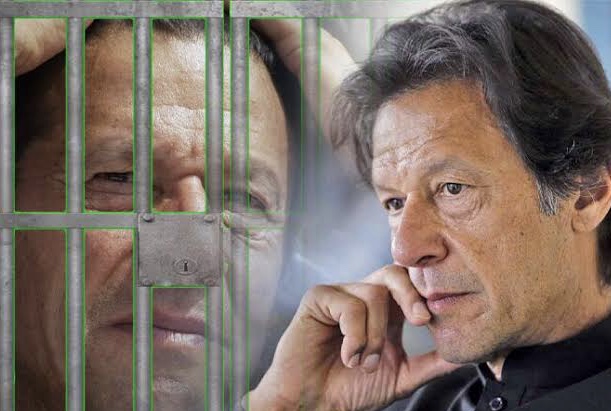
For months, there have been speculations about Imran Khan’s fate behind the high walls of Adiala Jail in the garrison town of Rawalpindi where he remains imprisoned since 2023. But the question took a darker turn when the military establishment abruptly shifted its rhetoric as well as actions. After keeping Khan incommunicado for weeks by denying even routine family visitations, the Army has now begun portraying him as a security threat of unprecedented scale.
On December 5, in a sharply worded press conference, Director General of the Inter-Services Public Relations (DG ISPR) Lt. Gen. Ahmed Sharif Chaudhry delivered something far more political than any uniformed official should be comfortable pronouncing: he accused the former prime minister of being a “matter of national security,” a “delusional” leader working in “deep collusion” with foreign actors.
For an institution whose leadership has spent decades insisting on its political neutrality, not that there appeared any given their actions, this was something extraordinary. The Army did not merely criticize a political figure, but declared Imran Khan a national security threat. It is difficult to read such language as anything other than a preparation to shape public opinion before the state contemplates something irreversible. Pakistan’s military spokesmen have long been prone to sweeping condemnations of adversaries, but the intensity, timing, and vocabulary now being deployed against prime minister feels ominously different.
The accusation that Mr. Khan wrote to the International Monetary Fund urging it to halt financial engagement with Pakistan, the insinuation that he encouraged “civil disobedience” and non-payment of electricity bills, and, most seriously, the claim that he directed supporters to “target” the Army’s leadership constitute a narrative engineered to portray him not simply as a political rival, but an existential enemy of the state. What is striking is not whether Army’s allegations against Khan are objectively provable given Pakistanis know well that truth has rarely constrained the military’s political ambitions, but rather why the establishment feels compelled to publicly build a case right now. The last time something like this happened was under Gen. Ziaul Haq against Zulfikar Ali Bhutto and everyone knows how that turned into.
Part of the answer lies in timing. Pakistan is no longer simply managing dissent; it is reordering the very architecture of the state. As the military centralizes power, constitutional checks have been amputated one amendment at a time. Judicial independence has been hollowed out. Other political parties, often willing accomplices, have little incentive to resist. In such an environment, the figure who refuses to bow becomes not merely inconvenient but intolerable.
To understand why the military felt the need to drop even the pretence of impartiality, one must look at the dramatic transformation underway within Pakistan’s political and constitutional architecture. Under Army Chief Field Marshal Asim Munir, the military has embarked on the most ambitious power consolidation project in decades in the last three years. What began after the May 9, 2023 protests with the expansion of military courts to try civilians has now morphed into a full-blown restructuring of the state itself. The 26th Constitutional Amendment (October 2024) extended the tenures of the service chiefs across the Army, Navy, and Air Force, eliminating uncertainty around leadership renewal and enhancing institutional continuity in the Army’s favour. But it was the 27th Amendment, passed in November 2025, that fundamentally reconfigured Pakistan’s civil–military equation. It abolished the Joint Chiefs of Staff Committee, replaced it with the position of Chief of Defence Forces, to be concurrently held by the Army Chief, and effectively subordinated the other services under one office. In a nuclear-armed state with a history of military rule, that consolidation is not merely bureaucratic; it is structural.
Simultaneously, the judiciary, which for long was touted as a democratic bulwark against creeping political entrenchment of the military has been reshaped. First, its governance mechanisms were refashioned (26th Amendment). Then, Supreme Court powers were diluted by the recent creation of a Federal Constitutional Court (27th Amendment). This is not mere influence. It is systemic absorption.
Despite these transformations, one obstacle has stubbornly endured: Imran Khan. He remains, by most accounts, the most popular political figure in Pakistan. His party, which has been repressed, splintered, and blocked electorally, still retains vast grassroots following. For a military trying to secure lifetime authority, a leader with mass legitimacy is a direct threat.
Other political parties have chosen a more convenient path. Pakistan Muslim League-Nawaz and Pakistan People’s Party, historically adversaries of military dominance, have now become facilitators of constitutional engineering, trading democratic principle for short-term political advantage. Their acquiescence clears the path for the Army. Only Mr. Khan and his Pakistan Tehreek-e-Insaf (PTI) stands outside this arrangement.
Which brings us back to the recent press conference. By designating Mr. Khan a national security threat, the military is not merely attacking his reputation; rather, it is constructing a moral and political foundation upon which the state could justify extreme measures, including the possibility of execution. Such rhetoric helps contain public outrage before it erupts. It tells citizens that the state is acting reluctantly, compelled by a danger that only it fully understands. Because, in countries with fragile institutions like Pakistan, executions are rarely announced but prepared through such manoeuvrings.
For decades, Pakistan’s generals have governed from behind a curtain of denial when not in power through direct coup d’états. They intervened, but insisted they were not intervening. They shaped governments but claimed they were merely “facilitating democracy.” Now, that performance has ended. The uniform seems to be stepping onto the political stage without disguise.
The significance of this shift should not be underestimated. When a military stops pretending, it stops needing permission. When it openly criminalizes popular political leaders, it removes the final brake on its power. Pakistan is now at that precipice. And the most alarming part of the Army’s latest messaging is how carefully choreographed it seems: foreign collusion, national betrayal, internal threat, economic sabotage. These are not random allegations. They are elements of a legal and psychological template historically used to eliminate political enemies. As such, this campaign against Mr. Khan is no spontaneous outburst. It is calculated, sequential, and increasingly extreme. It aims not only to discredit him, but to normalize the idea that removing him, through legal pretexts or through execution, will be a matter of national necessity.
Pakistanis have seen this logic before, and they know where it leads. The difference is that today, the military is not acting in the shadows but speaking in the language of open justification. That should terrify anyone who still believes Pakistan’s future lies in civilian rule. The Army may not yet have decided what it will ultimately do with Imran Khan. But one thing is clear that it is preparing the public emotionally, politically, and morally for a step it once would have feared to take. And if that step comes, no one will be able to say they were not warned.