
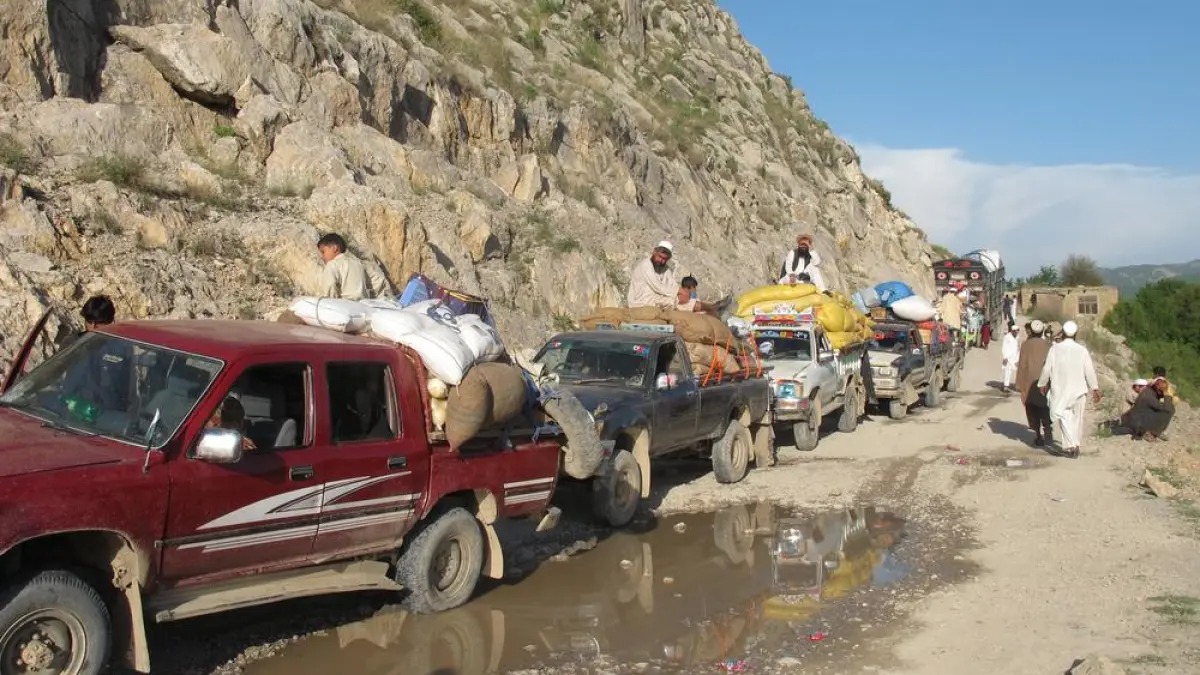
Pakistan is a state that is killing its own people. In October, Pakistani state carried out attacks in Khyber Pakhtunkhwa, where at least 23 civilians, including women and children, were killed.
The Pakistani Airforce bombed residential homes in Tirah Valley; four houses were obliterated in the attack, leaving families buried under rubble. While the military has refused to acknowledge responsibility, local officials have confirmed that the assault was carried out under the pretext of striking Taliban hideouts. In reality, it was innocent civilians who paid the price.
Pakistan Tehreek-e-Insaf leader Iqbal Afridi has accused the army of launching “an attack on unarmed civilians,” making it clear that this was not crossfire, but a deliberate strike. This is not the first time Khyber Pakhtunkhwa has been forced to bleed for Islamabad’s wars. The region has been turned into a battlefield for decades, starting with Pakistan’s decision in 1979 to use the tribal belt as a staging ground for anti-Soviet jihad.
Funded by billions of US and Saudi dollars and guided by the ISI, militant groups were trained and sheltered in the same mountains that are now being bombed. When the Soviets withdrew in 1988, these groups did not dissolve; they entrenched themselves deeper. Following the US invasion of Afghanistan in 2001, waves of fighters crossed into Pakistan, bringing instability and bloodshed. By the late 2000s, the Tehreek-e-Taliban Pakistan had formed, headquartered in precisely the same districts now devastated by airstrikes. Islamabad claims these operations are meant to fight terrorism, but the evidence shows otherwise.
Human Rights Watch and Amnesty International have repeatedly documented how Pakistan’s campaigns in the tribal belt rely on indiscriminate bombardment, extrajudicial killings, and collective punishment. In 2009, the military’s offensive in South Waziristan displaced over half a million people. In 2014, the so-called Operation Zarb-e-Azb uprooted nearly a million more. In both cases, airstrikes leveled entire villages. The Bureau of Investigative Journalism, tracking drone strikes and Pakistani air raids, has estimated that thousands of civilians—including women and children—were killed in Pakistan’s tribal belt between 2004 and 2018 alone. Yet official records often describe these deaths simply as “terrorist casualties,” erasing the reality of who was actually killed.
The humanitarian toll is staggering. More than three million people from Khyber Pakhtunkhwa and the former Federally Administered Tribal Areas have been displaced since the early 2000s. Camps remain overcrowded, underfunded, and neglected, with families living without basic healthcare, schooling, or clean water. Entire generations of Pashtun children are growing up under the shadow of fighter jets and drones. For them, the Pakistani flag does not symbolize protection but fear. Every bombing plants deeper resentment, feeding the very militancy Islamabad claims to be fighting. Studies by conflict-monitoring groups confirm that civilian killings by state forces correlate with higher rates of insurgent recruitment.
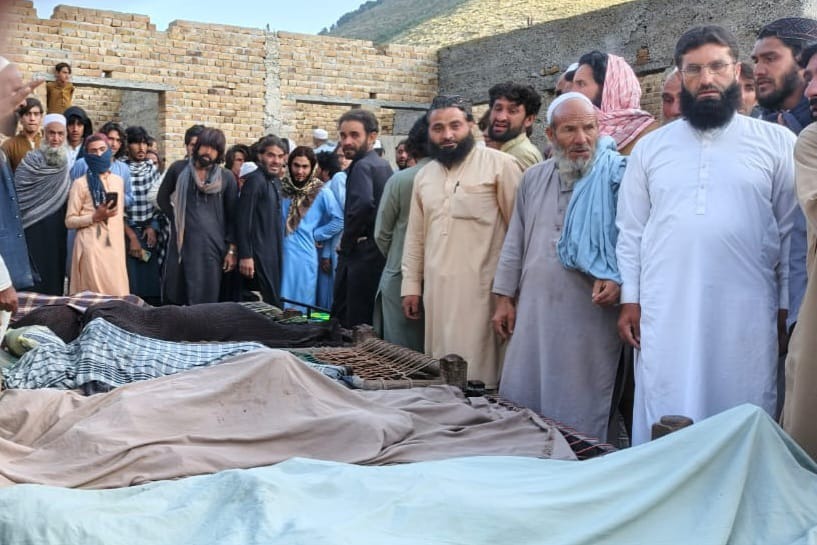
Put simply, Pakistan is manufacturing the enemies it then claims to battle. The silence from Islamabad is perhaps the most damning evidence of impunity. After the Tirah Valley strike, no government minister stepped forward with an explanation. No inquiry was announced. No reparations were promised to families who had lost their homes and loved ones.
This pattern is consistent: when the Pakistan Air Force bombed villages in North Waziristan in 2014, killing scores of civilians, no independent investigation followed. When artillery fire hit refugee camps in Kurram Agency in 2008, Islamabad dismissed reports as “enemy propaganda”. Each massacre disappears from public record, erased by the military’s tight control of media narratives. The ethnic dimension cannot be ignored. Most victims of these operations are Pashtuns, a community that has long been treated as second-class within Pakistan.
The Pashtun Tahafuz Movement (PTM) has consistently raised its voice against extrajudicial killings, enforced disappearances, and indiscriminate airstrikes, but its leaders are harassed, arrested, and silenced. The military’s branding of entire Pashtun populations as “terrorist sympathizers” has created a system where civilian lives are seen as expendable. When bombs fall on Pashtun villages, Islamabad’s ruling elite in Lahore and Islamabad barely notice. What makes this even more hypocritical is Pakistan’s double game with militancy. For decades, Islamabad sheltered groups like the Afghan Taliban and the Haqqani Network, providing them safe havens while cracking down on local Pashtuns under the banner of counter-terrorism. Even today, international analysts point out that Pakistan differentiates between “good Taliban,” who serve its strategic goals, and “bad Taliban,” who challenge its authority.
This cynical distinction means that the full weight of military power is directed not against insurgents but against civilians caught in the middle. The result is what we saw in Tirah Valley: dead women, dead children, and a government that pretends nothing happened. The cost of Pakistan’s militarized policies is not limited to its borders. Every time Islamabad bombs its own civilians, it destabilizes the wider region. Refugees flee into Afghanistan, straining already fragile systems there. Cross-border violence escalates, feeding cycles of retribution. International jihadist networks use these massacres as propaganda, pointing to them as proof of state brutality.
Pakistan’s actions, instead of containing militancy, export it across South and Central Asia. International silence only deepens the tragedy. Western governments that routinely criticize human rights violations in other countries remain muted when Islamabad bombs its own villages. Pakistan markets itself as an indispensable ally in the “war on terror,” but the reality is darker. This is the same state that nurtured militant networks for strategic depth, the same military that sheltered the Afghan Taliban leadership, and the same intelligence apparatus that played a double game for decades. Today, it justifies civilian massacres under the cover of counterterrorism while demanding international aid and legitimacy.
The 23 killed in Tirah Valley are not collateral damage. They are the latest victims of a system that views its own people as targets. From Waziristan to Swat, from Bajaur to Khyber, the pattern is the same: bomb first, deny responsibility, and move on without accountability. The cycle will continue until Pakistan dismantles its militarised policies, ends indiscriminate air campaigns, and begins treating the people of Khyber Pakhtunkhwa as citizens instead of enemies. The families who lost everything in a single airstrike do not need more empty rhetoric about security. They need justice, acknowledgement, and the right to live without fear of their own army. And until that happens, the truth remains stark and unavoidable: Pakistan is a state that is killing its own people.
–IANS
The history of US-Pakistan relations illustrate one of the most paradoxical alliances in modern geopolitics: a superpower that continuously funded, armed, and politically legitimized a state whose security establishment simultaneously fostered the very militant ecosystems that would later threaten American, Indian, Afghan, and global security. This contradiction — rooted in Cold War priorities, sustained through post-9/11 calculations, and shaped by Pakistan’s military-driven strategic doctrines –exposes how international patronage can inadvertently strengthen networks capable of producing catastrophic attacks such as the 2008 Mumbai assault. A deeper examination of this relationship, grounded in historical data and security evidence, raises the critical question of whether similar 26/11-type events could occur again under conditions that remain structurally unchanged. US–Pakistan ties took shape in the early Cold War years, when Washington sought military footholds to counter Soviet influence across Asia.
Pakistan, newly independent and searching for strategic allies, found in the United States a willing patron. Between 1954 and 1965 alone, Washington provided Pakistan more than $2.5 billion in economic and military assistance, with roughly 60% of this aid directed toward the armed forces. American weapons—F-86 Sabre jets, M-47 Patton tanks, artillery systems—quickly transformed Pakistan’s military capacity. However, the deeper impact was institutional — US assistance reinforced the Pakistan Army’s centrality in national politics, undermining civilian authority and contributing to successive military coups. By the time General Ayub Khan seized power in 1958, Pakistan’s military establishment was not only dominant but also deeply embedded in the country’s foreign policy outlook, particularly regarding India. The Soviet invasion of Afghanistan in 1979 further intensified this alliance.
The CIA’s Operation Cyclone, one of the largest covert programs in its history, funneled billions of dollars into Pakistan. Estimates place U.S. contributions at $3.2 billion during the 1980s, matched by roughly the same amount from Saudi Arabia. This funding, channeled largely through Pakistan’s Inter-Services Intelligence (ISI), supported the training and arming of more than 100,000 mujahideen fighters. The intention was clear: turn Afghanistan into the Soviet Union’s quagmire. Yet the consequences were far more expansive. Pakistan’s security establishment selectively supported Islamist factions that aligned with its strategic interests, especially those capable of projecting influence into Afghanistan and later into Kashmir.
The militant infrastructure — the training camps near Peshawar, the radical madrassas in the northwest, the logistical corridors through tribal areas — became permanent fixtures, outliving the Soviet withdrawal. This transformation was not simply collateral damage; it was strategically cultivated.
The Pakistan Army’s doctrine of “asymmetric warfare” against India, combined with its pursuit of “strategic depth” in Afghanistan, created incentives to preserve and deploy militant groups as instruments of foreign policy. Lashkar-e-Taiba (LeT), founded in 1987 with ideological and logistical roots in the Afghan jihad, became one of the primary beneficiaries of this environment. Though the U.S. never directly funded LeT, the broader military-intelligence ecosystem—strengthened through U.S. patronage—allowed LeT to grow into a highly disciplined, militarized organization capable of executing cross-border operations with precision.
After 9/11, the U.S.–Pakistan relationship entered another high-stakes phase. Washington designated Pakistan a “major non-NATO ally,” providing more than $33 billion in aid between 2002 and 2018. Of this, $14.6 billion came in the form of Coalition Support Funds (CSF) meant to reimburse Pakistan for counterterrorism operations. Yet multiple U.S. audits revealed extensive misuse and misreporting.
The Government Accountability Office and Pentagon oversight bodies documented that Pakistan diverted CSF money to purchase conventional military equipment—F-16 upgrades, naval modernization, anti-ship missiles—none of which addressed the counterinsurgency challenges in Afghanistan or the internal militancy problem. Instead, this strengthened the Pakistan Army’s traditional posture against India while leaving intact the selective militant networks that Islamabad deemed assets rather than threats.
The consequences became evident as the Afghan Taliban rebounded throughout the 2004–2018 period. U.S. military commanders repeatedly testified before Congress that Taliban leaders operated from sanctuaries in Pakistan, specifically the Quetta Shura and Peshawar Shura. These safe havens contributed to the deaths of more than 2,400 American soldiers and tens of thousands of Afghan civilians. Despite receiving billions in U.S. aid, Pakistan’s military establishment maintained its dual policy: aggressive action against anti-state militants like Tehrik-e-Taliban Pakistan (TTP), and permissive or supportive behavior toward groups aligned with its external goals, including the Afghan Taliban, Haqqani network, LeT, and Jaish-e-Mohammed (JeM).
This selective approach is not an allegation, but a pattern documented by scholars such as C. Christine Fair, Hussain Haqqani, and numerous U.S. intelligence assessments. The 26/11 Mumbai attack demonstrated the extent to which this militant ecosystem could project violence far beyond South Asia’s battlefield margins. The assault, which killed 166 people over three days, showcased training, coordination, and operational sophistication rarely seen outside state-assisted terrorism. David Coleman Headley, the Pakistani-American operative who conducted reconnaissance for the attacks, admitted in U.S. court that he received training at LeT camps and interacted with individuals connected to Pakistan’s security establishment.
Several planners of the attack, including Zaki-ur-Rehman Lakhvi, operated visibly within Pakistan for years—arrested only under international pressure and often released under opaque judicial processes. U.S. Treasury designations between 2010 and 2018 repeatedly named Pakistan-based LeT operatives, charities, and funding nodes, underscoring the persistent ecosystem that enabled the attack. Pakistan has undoubtedly suffered tremendously from terrorism. Over 70,000 Pakistanis, including civilians and soldiers, were killed in terror violence between 2001 and 2020. Major military operations such as Zarb-e-Azb (2014) and Radd-ul-Fasaad (2017) significantly reduced attacks inside Pakistan by targeting anti-state militants. However, these campaigns maintained the structural distinction between groups that threaten Pakistan internally and those used for external leverage. This dichotomy allowed LeT, JeM, and elements of the Afghan Taliban to survive—even as Pakistan publicly committed to counterterrorism under U.S. and Financial Action Task Force (FATF) pressure.
This selective counterterrorism is central to understanding the ongoing risks of another 26/11-type event. Although Pakistan has taken steps to restrict the activities of certain militant groups, especially under FATF supervision from 2018 to 2022, these measures remain fragmented and reversible. The ideological infrastructure remains largely intact: networks of radical madrassas, veteran trainers from decades of conflict, logistical safe houses, and diaspora-linked financing channels. The organizational DNA of groups like L eT—a disciplined chain of command, military-style training, and operational secrecy—has not been erased. These conditions are far more resilient than tactical bans or symbolic arrests. Moreover, the geopolitical incentives for Pakistan’s security establishment remain largely unchanged. India’s rising global profile—economically, diplomatically, and militarily—intensifies Pakistan’s reliance on asymmetric strategies.
The Pakistan Army’s institutional dominance over foreign policy means these strategies are deeply embedded, not easily abandoned. Even if direct support decreases, passive tolerance or covert facilitation of certain groups can enable them to survive, regroup, or innovate. In an era of drone technology, encrypted communication, and decentralized networks, the possibilities for a future attack are more diffuse and harder to detect.
A 26/11-type event does not require identical conditions; it requires only that a militant group possess the intent, some operational capability, and a permissive or fragmented security environment. Pakistan’s history of selective enforcement creates exactly such an environment. While Islamabad has made commitments under FATF and international pressure, the durability of these reforms remains uncertain. Past behavior—both during and after foreign aid cycles—suggests that once external scrutiny subsides, Pakistan’s security establishment often recalibrates rather than reforms.
The long arc of U.S.–Pakistan relations thus reveal a troubling pattern: American patronage consistently strengthened Pakistan’s military institutions while doing little to align their strategic priorities with global security concerns. This misalignment allowed militant networks to thrive under a shield of deniability. The ecosystem that once produced 26/11 was not an aberration but a by-product of systemic policies, and unless those systems fundamentally change, the risk of future large-scale attacks cannot be dismissed as remote.
–IANS
– Arun Anand
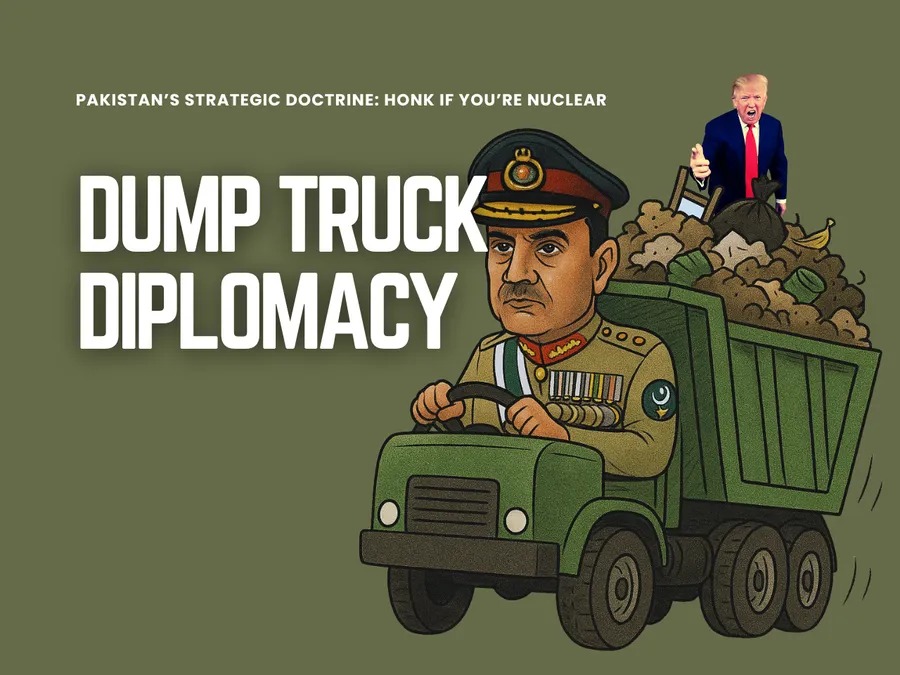
Pakistan’s leaders, both political and military, have long relied on self-serving metaphors to shape the domestic sociopolitical sphere and frame their country’s place in the broader region. Often delivered with a dramaturgical embellishment, these analogies do more than reflect insecurity or national mythmaking. They reveal a deeper strategic mindset in which Pakistan sees value in disruption, leverage through instability, and the cultivation of terrorism as a tool of statecraft.
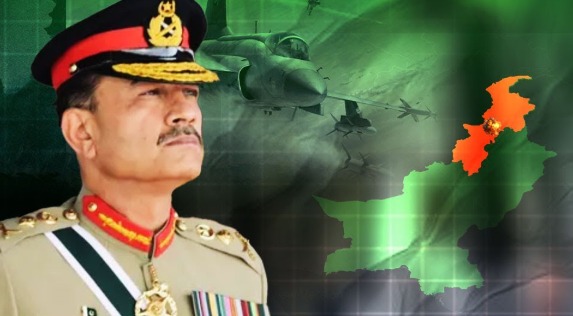
The latest examples come from Pakistan’s powerful military establishment, which has historically dominated the country’s political and security architecture. It started with Pakistan Army Chief Asim Munir’s interaction with expatriates in Florida, United States, in August this year, wherein he deployed a comparison that captured headlines for its brazenness. “India is a shining Mercedes coming on a highway like a Ferrari,” he said. “But we are a dump truck full of gravel. If the truck hits the car, who is going to be the loser?”
On its surface, such remarks appeared to emphasize resilience: that Pakistan as a lumbering truck may not be glamorous, but it can endure any difficulty and overcome any obstacle. Yet the real significance of this ironical analogy lies elsewhere. It implies that Pakistan retains the capability as well as readiness to cause strategic disruption, even at great cost to itself, and in doing so shape regional outcomes. The metaphor glorifies collision as an equalizer. It suggests that while India surges economically and diplomatically, Pakistan’s relevance lies in its ability to destabilize.
A parallel metaphor that is being increasingly used by the country’s political and military elite describes Pakistan as a “railway engine”, that is portrays it on a slow, traditional, yet persistent mode of progress. The image is meant to frame Pakistan as foundational to South Asian stability, chugging along in contrast to India’s sleek modernization. Implicit in this imagery is the claim that the region’s momentum, direction, and safety can still be both set and derailed by Pakistan’s choices.
Such analogies may seem rhetorical to common masses and yet contain within them a longstanding doctrine of purposeful disruption that Pakistan has employed in the last several decades. It is based on its decades-old strategic worldview wherein it has consistently valorized confrontation, framing India as an existential threat, and more domestically more significant objective of positioning proxy-terrorism as a legitimate extension of state power.
Such a propagandistic rhetoric has found currency amidst Asim Munir’s sweeping consolidation of authority through constitutional amendments to expanded control over the judiciary, nuclear command, and internal security. This narrative push is designed to reinforce his martial narrative that Pakistan may be economically battered, politically unstable, and diplomatically isolated, but it remains capable of inflicting damage that forces global attention.
As such, while Pakistan’s establishment may dress its messaging in fresh metaphors, the underlying doctrine has barely evolved. Since the 26/11 attacks by ISI supported Lashkar-e-Toiba terrorists in Mumbai, there has been little substantive reckoning within Pakistan about the use of terrorist groups as strategic assets. If anything, the rhetoric of state officials in the years since reveals continuity, not change.
It should be noted that there has been consensus within Pakistani establishment, as exposed by the statements from senior retired generals, political leaders, and religious ideologues, who often reiterate that proxy terrorism can be a “force multiplier” against India. Such an argument has been repeatedly framed as asymmetric necessity given that since Pakistan cannot match New Delhi conventionally, so it must leverage “non-state actors” to disrupt India’s rise even as its own economy falters. It explains why and how terrorist groups like LeT and Jaish-e-Mohammed have been normalized within the socio-political discourse of the country by portraying terrorists as instruments of pressure than what they are: terrorists.
This mindset is reflected not only in Pakistan’s reluctance to prosecute figures like Hafiz Saeed or Masood Azhar, but also in its sustained tolerance of groups that openly espouse cross-border terrorism sold as so-called jihad. And the danger of such rhetoric is not abstract as it has recurrently translated into violence that has spilled far beyond India’s borders. Be it 26/11 attacks of 2008 in India or the 9/11 attacks in the United States in 2001, these showcased how such a mentality that the Pakistani establishment patronises can have devastating human costs.
Just as the 9/11 attacks targeted symbols of American openness and global leadership which the world forever, 26/11 targeted India’s cosmopolitan identity to sow internal discord and disrupt its global economic rise. Therefore, should Pakistan’s leadership continue to present disruption as strategic leverage, as they are doing currently, the risk of mass-casualty attacks would remain unacceptably high.
Seen from such a lens, Asim Munir’s use of analogies like ‘dump truck’ or the ‘railway engine’ are not harmless political theatre. It is a reflection of a national mindset of a country of mismanaged economy, which is unable to compete with rising India in any domain, sees strategic relevance in the threat of sabotage. It is a worldview that sees regional equilibrium not in growth or cooperation but in managed instability maintained through terrorist proxies. And that worldview does not confine risk to South Asia, which is why Pakistan’s analogies matter.
In such a scenario, while India cannot afford any complacency, it makes it implicit on the international community to acknowledge that South Asian terrorism, especially when linked to state sponsorship like Pakistan’s role, poses a threat transcending national borders.
Nevertheless, two lessons stand out. Firstly, there needs to be greater transnational intelligence synergy at the international level. For instance, given that countries like India, the United States, the EU, Israel, Southeast Asian partners, and Gulf states, have a shared interest in tackling terrorism, they would need to bolster real-time intelligence exchange, establish joint tracking of financing networks, and coordinated monitoring of extremist propaganda.
Secondly, diplomatic isolation of terror-sponsoring frameworks is no longer optional. The world must explicitly differentiate between Pakistan as a nation and Pakistan’s security apparatus as a destabilizing actor and shape policy accordingly. This is because civilian government is a façade in that country as it is overwhelmingly dominated by the military establishment.
Therefore, the “dump truck” and “railway engine” analogies may have been meant to project endurance, but they expose a darker truth of Pakistan’s military leadership’s outdated belief that regional power can be exercised through disruption and not development. Unless such a mindset is confronted at political, diplomatic, and strategic levels, the international community should rest assured that its risks will not be borne by India alone.
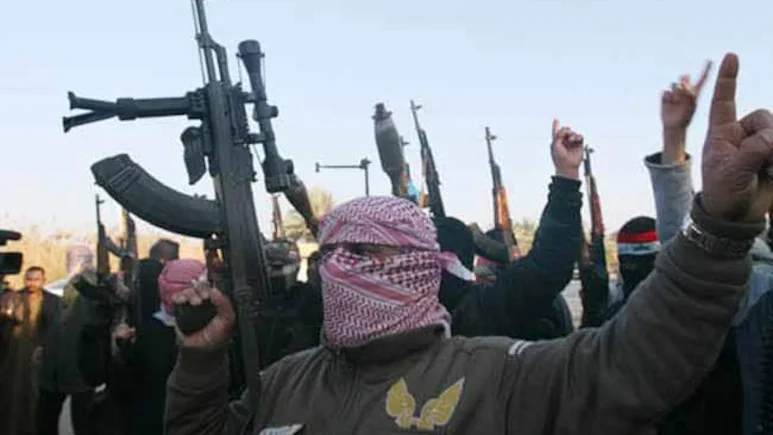
The fading aftermath of a lost battle continues to smoulder quietly, and for Pakistan’s armed forces—particularly its beleaguered army under its current Chief—these remnants represent not resilience, but a lingering, unhealed wound. This wound was inflicted by the overwhelming setback suffered during India’s precisely orchestrated Operation Sindoor. The mission effectively laid bare the vulnerabilities and superficial nature of Pakistan’s covert strategies along the Line of Control (LoC). In the wake of this defeat, the response from Pakistan was not one of reflection or strategic recalibration, but rather a recommitment to exhausted methods—chiefly, the long-standing practice of sponsoring terrorism. This shadow conflict, which Pakistan has cultivated for decades, has recently been reignited with intensified zeal and even more ominous intent. Operation Sindoor dismantled the myth that the Pakistan Army maintains superiority in asymmetric warfare across the LoC. Employing intelligence-led targeting, coordinated civilian-military operations within Kashmir, and precision strikes, India succeeded in destroying several of Pakistan’s key terrorist infrastructure points. Numerous high-ranking handlers, operating in proximity to frontline military positions, were also neutralised. Pakistan’s infamous Border Action Teams, unprepared for the scale and precision of the assault, suffered significant losses. Reinforcements dispatched under the assumption of surprise advantage were instead ambushed with lethal efficiency. Conservative estimates suggest that more than 70 Pakistani regular troops and special forces were either killed or incapacitated in the course of the operation. However, these figures remain unacknowledged by Pakistan’s military media wing, the Inter-Services Public Relations (ISPR), based in Rawalpindi.
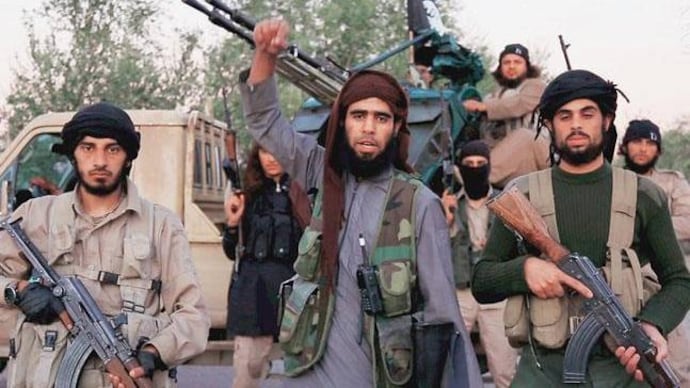
The consequences extended beyond a mere tactical defeat—it marked a profound symbolic breakdown. The veil was lifted, revealing to the international community the unmistakable nexus between the Pakistan Army and terrorist organisations falsely presented as ideological movements. As Pakistan’s military leadership staggered under the impact—wounded both physically and psychologically—it did not pursue introspection or institutional reform. Instead, its response was fuelled by vengeance. With its credibility in tatters and domestic cohesion eroded by mounting economic distress, the military hierarchy resorted to its familiar playbook: reinforcing the architecture of cross-border terrorism. Within the rugged landscapes of Pakistan-occupied Kashmir (PoK), a fresh wave of militant training camps began to emerge—spreading like malignant growths. The same geography that once served as refuge for insurgents in the early 2000s is being repurposed—not to defend, but to initiate offensive operations aimed at infiltration and sabotage. These installations are far more advanced than rudimentary jungle shelters; they are heavily fortified compounds, featuring structured obstacle courses, dedicated firing ranges, encrypted communication hubs, and efficient logistics chains—all operated with military-level discipline and overseen directly by Pakistani officers of field rank.
In the interior regions of Pakistan-occupied Kashmir (PoK), satellite surveillance and signal intelligence have revealed a notable uptick in activity linked to operatives of Jaish-e-Mohammed and Lashkar-e-Taiba—groups ostensibly proscribed by Pakistan but, in reality, sustained and armed by its military-intelligence apparatus. Historic infiltration routes through Kupwara, Uri, and Poonch are being revitalised, now augmented with modern techniques involving drone-based supply drops, underground tunnel systems, and nocturnal incursions enhanced by GPS jamming technologies. The danger lies not in covert denial, but in a conscious intensification of hostile intent. The Chief of the Pakistan Army, acutely conscious of the country’s precarious diplomatic and economic condition, is engaging in a hazardous strategic gamble. With increasing scrutiny over his leadership both within military circles and among the broader public, he appears driven to recapture a faltering narrative through the use of “strategic proxies.” Terrorism remains the most potent instrument in Rawalpindi’s longstanding arsenal—an instrument now employed with alarming recklessness. His leadership, beleaguered by internal factionalism and an unparalleled erosion of legitimacy, seems fixated not on reform or peaceful coexistence, but on expanding clandestine conflict. Alarmingly, this ideological decay is no longer confined to PoK. The most disconcerting evolution is now taking root within Pakistan’s Punjab province. Once regarded as the cultural nucleus and a relatively secular space in the national context, Punjab is experiencing a covert revival of urban terror infrastructure. In cities such as Lahore, Bahawalpur, and Multan, dormant terrorist cells are being discreetly reactivated. These are not improvised militias of disenfranchised youth armed with outdated weapons; they are increasingly professionalised units under the instruction of retired ISI personnel, many of whom now operate under the guise of NGOs, charitable entities, or religious seminaries. These fronts offer both ideological justification and logistical support for what appears to be a quietly resurgent domestic terror ecosystem.

Amidst an ongoing civil-military power struggle, one aspect of the Pakistani state’s machinery remains untouched: the consistent prioritisation of defence funding and so-called “strategic programmes.” Despite a population grappling with soaring prices of basic commodities such as wheat and petrol, billions of rupees continue to be funnelled into clandestine military activities. International aid, ostensibly allocated for flood recovery and infrastructure development, has seemingly vanished into unaccounted defence-related expenditures. The directives issued by the Army Chief appear concerned less with professional armed forces modernisation and more with psychological operations, refining doctrines of insurgency, and sustaining strategic equilibrium through non-state proxies rather than overt confrontation. Ironically, this intensified focus on exporting militancy coincides with the military’s own struggle against a growing insurgency within national borders. The tribal regions, once controlled through sheer force and temporary truces, are experiencing renewed unrest. Militant organisations such as the Tehrik-i-Taliban Pakistan (TTP), emboldened by regional instability and the decline of American presence in Afghanistan, have launched an aggressive internal campaign, particularly in Khyber Pakhtunkhwa and Balochistan. These insurgents have evolved beyond hit-and-run tactics; they now execute coordinated ambushes, capture military outposts, and even target mid-level officers for assassination. By conservative estimates, the Pakistani military has suffered more than 400 fatalities from militant assaults within its own borders over the past year. In North Waziristan alone, targeted attacks since January have claimed the lives of at least 80 soldiers. Yet, in the face of such heavy losses, the Army Chief’s priorities appear skewed—focused less on internal security and more on provoking tensions across the Line of Control. It seems the military establishment has acquiesced to a state of perpetual violence, both domestically and externally, in a bid to uphold its strategic narrative. Even more troubling is the army’s renewed alignment with radical ideological movements. A network of newly established madrasas—many reportedly funded by Wahhabi donors from the Gulf—has emerged across southern Punjab and rural Sindh. These institutions are not simply centres of religious study but have become active recruitment hubs. Children are subjected to extremist indoctrination, trained in the use of firearms by adolescence, and taught to view martyrdom across the LoC as a sacred obligation. Intelligence surveillance has recorded a 40% surge in new recruit movement towards training facilities in PoK, signalling that the terror infrastructure is not merely operational, but expanding at an alarming pace.
In recent months, Indian intelligence agencies have intercepted a number of disturbing communications. In one exchange, a Pakistani handler claims to have “fifty fresh mujahideen ready for deployment in Poonch.” In another, an ISI operative provides precise instructions for drone drop locations within Indian territory. These individuals are not unsanctioned actors; rather, they operate openly under the protection of the military, frequently utilising official vehicles and accessing military-grade hardware. Simultaneously, Pakistan’s diplomatic representatives persistently deny any involvement by the state. However, the emerging pattern is far too consistent, deliberate, and institutionally embedded to be dismissed as coincidental. Repeatedly, whenever Pakistan experiences internal turmoil—be it economic hardship, political instability, or military dissent—it reverts to its traditional strategy of asymmetric aggression. A noticeable increase in ceasefire violations often follows periods of domestic unrest. Likewise, each instance of public criticism directed at the Army Chief seems to coincide with a renewed infiltration effort across the Line of Control.
Pakistan’s current strategy reflects both desperation and peril.
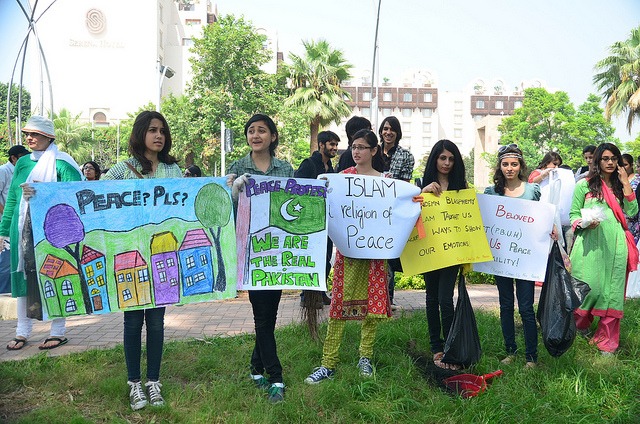
For a nation grappling with a crisis of legitimacy, burdened by mounting debt, and increasingly isolated on the international stage, the promotion of terrorism has ceased to be merely a tactic—it has become a lifeline. However, the consequences of this approach are proving to be overwhelmingly detrimental. With a society marked by deep internal fractures, a politically polarised environment, and a growing insurgency, the country teeters on the brink of internal collapse. Despite this, its military leadership remains fixated on outdated notions, still pursuing the illusion of strategic depth that effectively disappeared decades ago. The current course charted by the Army Chief reflects not a path towards military success, but one of reckless obstinacy. By continuously dispatching more terrorists across the Line of Control, he not only provokes a more capable adversary, but also accelerates the erosion of Pakistan’s future under the crushing weight of its own misguided ambitions.
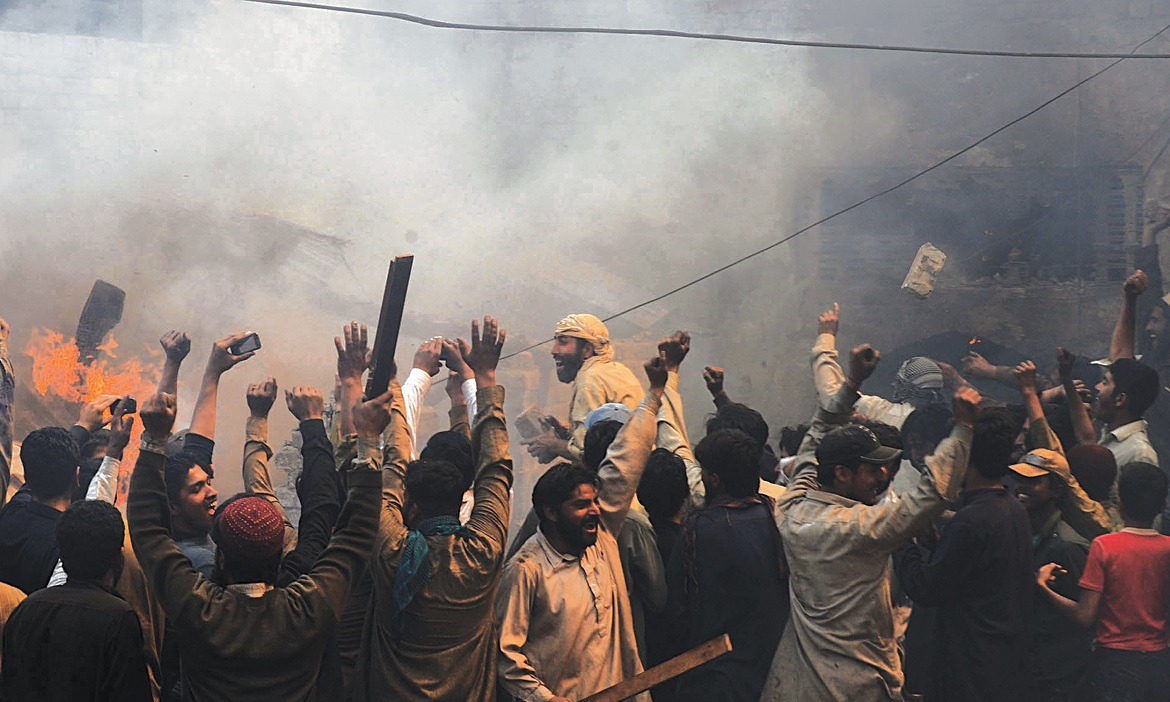
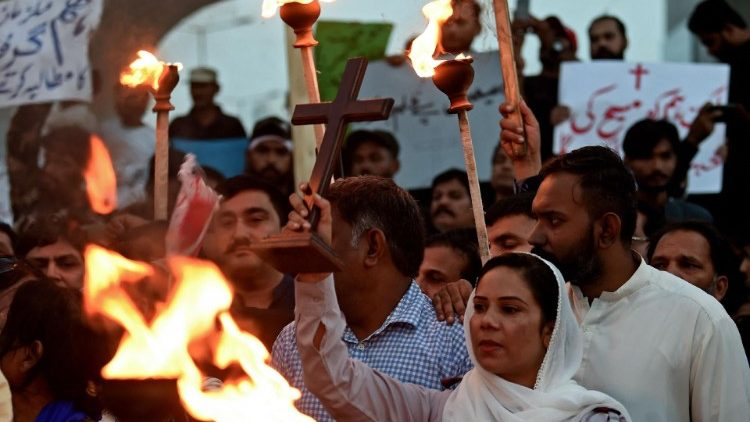
Every time one looks up Pakistan on the internet, one is bombarded with news of death, destruction, and discrimination. The country, which was carved out of India in 1948, with the vision of creating a safe territory for the minorities of the subcontinent, has devolved into a place where the majority of people endure some or the other form of oppression and threats, under a state that is always on the edge of collapse. Most recently, a disturbing video of a man and woman being shot to death by a bunch of men in the Balochistan province has emerged on social media. Investigation has revealed it to be a case of so-called ‘honor killing’ ordered by a local tribal leader and executed by the woman’s brother. Such killings based on archaic notions of ‘honor’, gender-based violence, persecution of religious and ethnic minorities, civilian killings by militants, and state-orchestrated killings in the name of counter-terrorism and counter-insurgency, and more, pervade the news cycle in the country where the elites who lead the security forces are immersed in amassing political and economic capital, more than providing security to the citizens.
Although Pakistan has a long history of being both a promoter and victim of terrorism, the crisis has particularly aggravated since the August 2021 resurgence of the Taliban in neighbouring Afghanistan. As the US left the country after a 20-year-long protracted war, much of the sophisticated weaponry that it had provided for the Afghan army found itself in the hands of the Taliban and Pakistan-based militant insurgent groups, specifically the Tehreek-e-Taliban Pakistan (TTP) and Baloch Liberation Army (BLA). Overnight, these groups swelled in capacity, exacerbating the security crisis for Pakistani forces as well as civilians. The Global Terrorism Index report of 2025 placed Pakistan in the 2nd position, noting 1,081 terrorism-related fatalities and 1,099 terrorist attacks in 2024.
In the past years, these groups have also scaled up their attacks on Pakistanis from other provinces as well as foreigners, particularly Chinese workers. In August last year, in a chilling incident, the BLA militants forced out 23 passengers from a civilian bus, checked their identity cards, and killed them after establishing that they were Punjabis. In March 2024, a suicide bombing killed 5 Chinese engineers working on a dam project in Khyber Pakhtunkhwa. The rise in attacks on Chinese workers has become a sore point between Pakistan and China, threatening to jeopardize the China-Pakistan Economic Corridor.
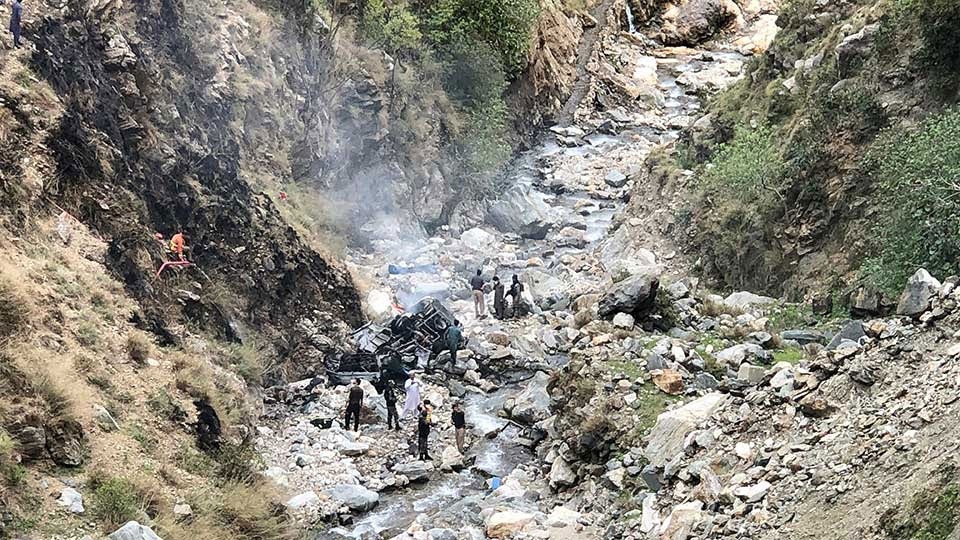
Additionally, the Pakistani military’s response to these terrorist groups has also opened up another security threat for the people. In Balochistan, in the name of countering the long-standing insurgency, the state has routinized enforced disappearances, custodial killings, and torture, without any accountability. Although it is very difficult to ascertain the exact number of forcefully disappeared people, to get an idea of the scale of this tragedy, one can refer to the Human Rights Watch report which has recorded 8,463 cases of missing persons between 2011 and January 2024 or the Pakistan Commission of Inquiry on Enforced Disappearances (COIED) which registered 10,078 cases. A civil resistance movement led by women has also emerged in the past couple of years, demanding accountability from the state for its excesses in Balochistan. However, it has been violently quelled, with its leaders incarcerated.
Since the founding of Pakistan on religious lines, there has been a concerted effort by the state to marginalize and erase its religious minorities, most prominently Hindus, Christians, and Sikhs. Besides systemic discrimination, cultural marginalization, and destruction of places of worship, religious minorities constantly face the threat of violence, ostracization, and forced conversions. Around 20-25 Hindu girls are estimated to be kidnapped and converted in Sindh every month. The police and judiciary often exempt the perpetrators who often enjoy social influence and support for ‘scoring’ a conversion to Islam. The draconian blasphemy law is another tool with which religious and sectarian minorities (Shias and Ahmadis) are persecuted. More disturbingly, when someone weaponizes the blasphemy accusation, often the cases do not even reach the courts as the enraged public murders the accused by themselves. At least 70 people have been reportedly murdered over blasphemy accusations since 1990. This figure includes the notorious killing of the Sri Lankan Christian worker Priyantha Kumara. The discourse around the law is so charged that anyone who dares to oppose it faces the same threat of being lynched. Prominent political figures such as the former governor of Punjab Salman Taseer and former Federal Minister for Minorites Shahbaz Bhatti have been assassinated for opposing the law, and judges who either convict vigilantes or acquit the falsely accused have to flee the country to save their lives.
When it comes to women, regressive social attitudes and a decrepit administration have led to a scenario where crimes like harassment are only routine but normalized. According to a Women Safety Audit undertaken by UN Women in 2020, over 80% women reported facing harassment in public places. Women are also the overwhelming targets of so-called honour killings- the Human Rights Commission of the country registered 405 cases in 2024 alone, most of them against women. As per data by the Sustainable Social Development Organization, only one of the 32 cases reported in the Balochistan province this year has led to a conviction, pointing to the dire situation where state neglect has emboldened criminals and proliferated such a heinous crime.
Despite the terrifying picture that the above instances and analyses paint about Pakistan, it is still only scratching the surface. In a country beset with administrative disrepair, state-supported religious extremism, ethnic violence, systemic impunity, suppression of dissent, and economic crisis, one can only imagine the daily struggle for survival that people are subjected to. Pakistan urgently requires a radical overhaul of state identity, civil-military relations, and state-society relations. However, given the status quo of absolute state complacency and elite capture, the future of the citizens of the country appears distressingly grim.

In a region long afflicted by insurgency and instability, Pakistan’s military establishment has emerged not merely as a participant, but as a principal architect in the deliberate orchestration and international projection of terrorism. Far from being a collateral consequence of geopolitical upheaval, Pakistan’s facilitation of terrorism is a calculated, institutionalised component of its strategic doctrine—an enduring pillar of statecraft. From sheltering global jihadist organisations to now allegedly utilising ISIS to target both the Afghan Taliban and Baloch rebels, Pakistan’s military-intelligence complex has evolved proxy warfare into a systemic geopolitical instrument. Recent intelligence assessments from Afghan and Western security officials highlight a deeply unsettling trend: factions within Pakistan’s Inter-Services Intelligence (ISI) are reportedly enabling elements of the Islamic State-Khorasan Province (ISIS-K) to undermine the Taliban regime. Since the Taliban’s reassertion of power in 2021, relations with Islamabad have deteriorated—primarily over disputes concerning the Durand Line and the Taliban’s sheltering of Tehrik-i-Taliban Pakistan (TTP) operatives. In response, Pakistan appears to be recalibrating its approach—weaponising ISIS-K to destabilise Taliban rule and re-establish influence in Kabul.
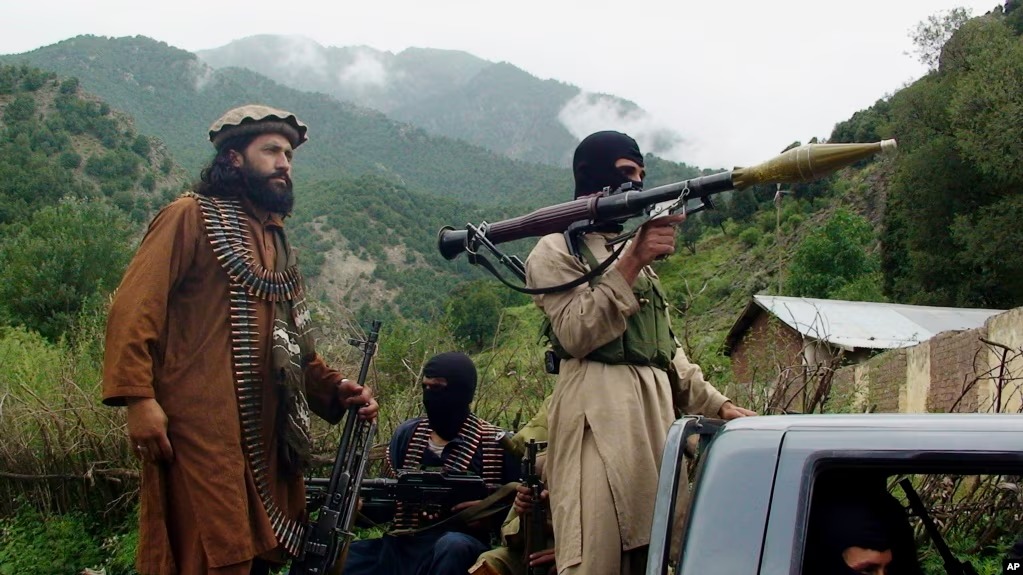
This is not a product of conjecture. A series of ISIS-K attacks against Taliban figures and Afghanistan’s Shia minorities have reportedly been linked to training centres and safe zones within Pakistan’s Khyber Pakhtunkhwa and Balochistan provinces. Afghan intelligence authorities have consistently accused the ISI of facilitating the logistical operations of ISIS-K, enabling cross-border movements, and covertly supporting actors opposed to Taliban authority. The Taliban government itself has issued public statements alleging that ISIS operatives infiltrating their territory do so with the backing of foreign intelligence agencies—an implicit reference to Pakistan. Simultaneously, Balochistan remains engulfed in a protracted and brutal conflict. The Baloch rebellion, driven by long-standing economic marginalisation and violent repression, has intensified in recent years. Yet, rather than addressing these deep-rooted grievances, the Pakistani military has responded with increased militarisation and a particularly disturbing tactic: deploying jihadist groups, including Lashkar-e-Jhangvi and militants linked to ISIS, against secular Baloch nationalist leaders. In numerous instances, Baloch activists and combatants have been assassinated or abducted by groups publicly aligned with ISIS, only for subsequent intelligence to expose their connections to ISI operatives through intercepted communications and insider testimonies.
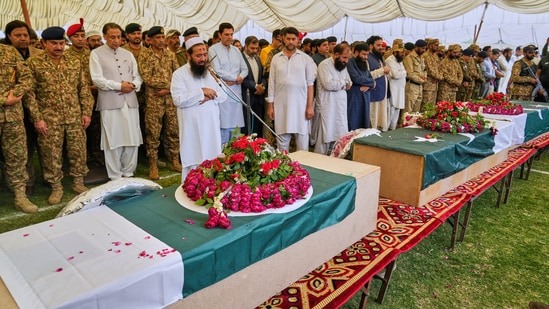
The manipulation is systematic. By deploying jihadist proxies, the Pakistani military achieves plausible deniability, evades international censure, and delegitimises the Baloch movement by associating it with religious extremism. This strategy is not novel—it is an extension of a doctrine that has been honed for over forty years. During the 1980s, Pakistan’s military and the ISI constructed a vast proxy network of extremist groups to project influence, acquire strategic depth, and suppress domestic dissent. The U.S.-backed jihad against the Soviet Union in Afghanistan served as the prototype. Billions in American and Saudi funds were channelled through the ISI to support mujahideen fighters—many of whom later evolved into the Taliban and al-Qaeda. This infrastructure did not dissipate with the end of the Cold War; it was repurposed. In Indian-administered Kashmir, the ISI actively cultivated groups such as Lashkar-e-Taiba (LeT) and Jaish-e-Mohammed (JeM), responsible for some of the most egregious terrorist incidents in India, including the 2001 Indian Parliament attack and the 2008 Mumbai massacre. Hafiz Saeed, founder of LeT and designated a global terrorist by the UN and the U.S., has operated openly within Pakistan for years, organising mass rallies and running charitable fronts that double as recruitment hubs. The scale of this state-terrorism nexus is staggering. A 2023 Financial Action Task Force (FATF) report observed that Pakistan still harbours more than 40 UN-designated terrorist entities, many of which continue to enjoy unimpeded movement, fundraising capacity, and operational latitude. Islamabad has made surface-level arrests and account freezes to avoid sanctions, yet its deeper strategic sponsorship remains untouched.
This duality—supporting terrorism while simultaneously portraying itself as a victim—has become Pakistan’s geopolitical hallmark. Domestically, Islamist groups are weaponised to suppress dissenting journalists, intellectuals, and minority communities. On the international stage, terrorism is wielded as a tool of state influence. Whether confronting the Taliban in Kabul, fomenting unrest in Kashmir, or directing ISIS-linked operations in Balochistan, the ISI’s unseen influence is a constant. Global counterterrorism efforts have failed to dismantle this duplicity. Osama bin Laden’s presence mere kilometres from Pakistan’s premier military academy in Abbottabad starkly revealed Islamabad’s lack of sincerity in combating terrorism. This pattern persists, evident in the state’s bifurcation between “bad terrorists” (who attack Pakistan) and “good terrorists” (who serve strategic interests).
What renders this strategy especially perilous in 2025 is the shifting geopolitical landscape. With China deepening its regional engagement via the China-Pakistan Economic Corridor (CPEC), Beijing is increasingly alarmed by the instability in Balochistan. Yet, rather than curtail militant violence, Pakistan’s military has escalated its reliance on extremist proxies to suppress opposition and secure Chinese investments—transforming CPEC into a corridor shadowed by systemic violence. The global community must cease its indulgence of Pakistan’s duplicitous stance on terrorism. The military’s entrenchment of terror as a tool of foreign and domestic policy has rendered South Asia a continual theatre of conflict, with reverberations reaching as far as Europe and North America. Continued Western support—whether in the form of aid, weaponry, or diplomatic concessions—only serves to embolden Pakistan’s militarised deep state.
Pakistan is not a casualty of terrorism—it is among its principal architects. Unless the international community acknowledges this reality and responds with decisive measures—targeted sanctions, terror designations, and a withdrawal of support—the region will remain hostage to a military that thrives in ambiguity, playing a lethal double game at immense human cost.
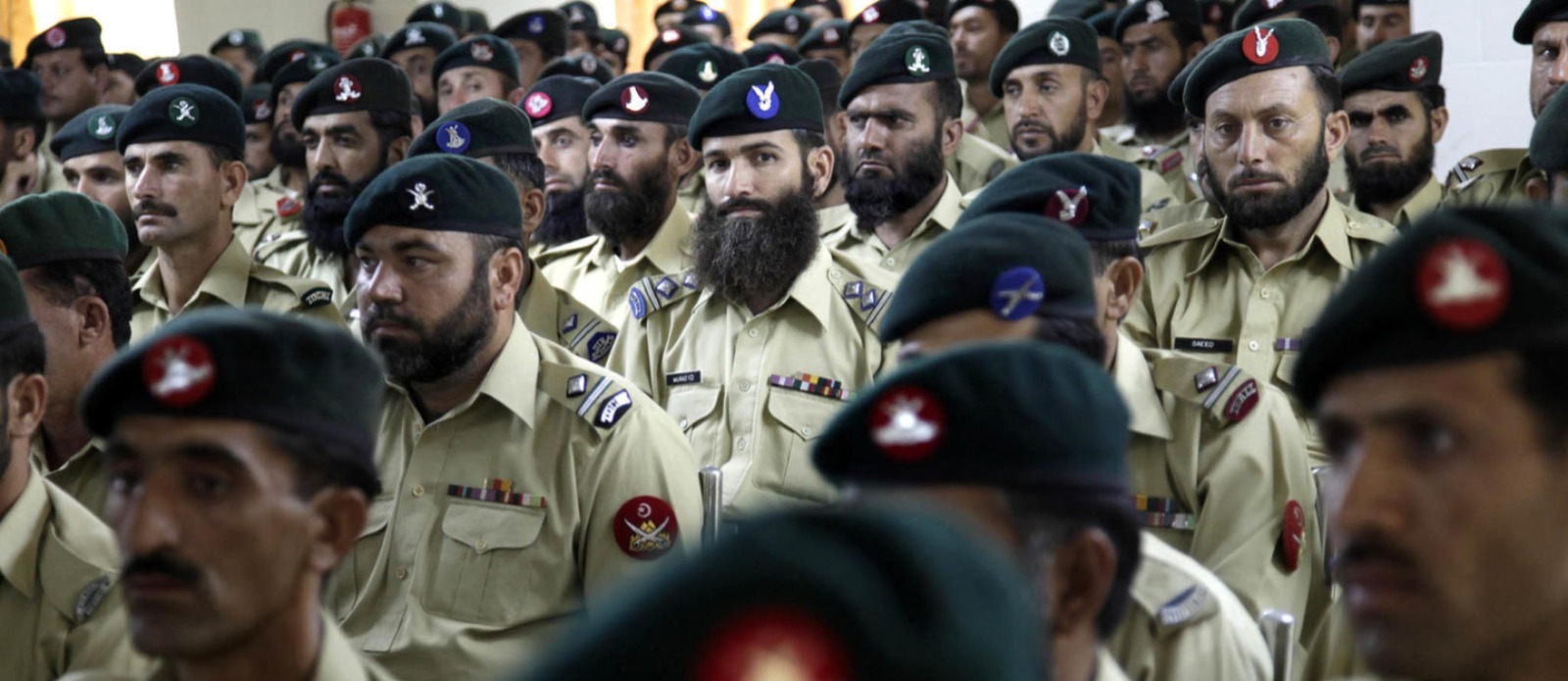
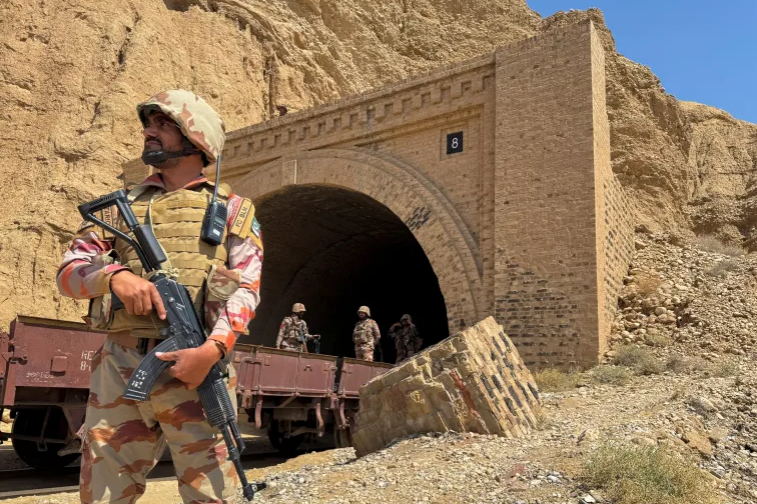
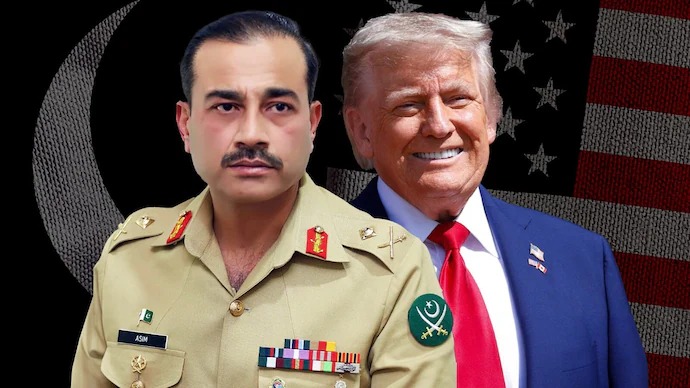
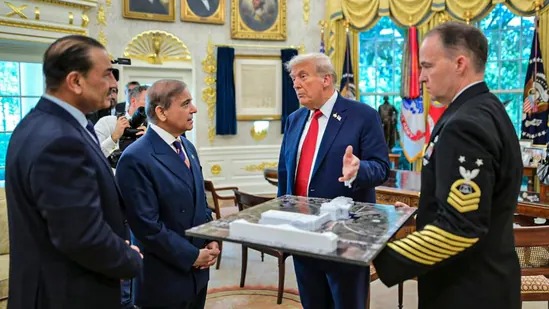
Pakistan’s political landscape has long been orchestrated not by its elected representatives but by the opaque influence of its military elite, whose grip on the nation’s trajectory grows ever more evident with each successive episode. The recent visit of Pakistan’s Army Chief, General Asim Munir, to the United States—noticeably unaccompanied by the Prime Minister—serves as a striking indication of how far civilian authority has been marginalised. If this were not a sufficiently telling sign, Pakistan’s peculiar nomination of Donald Trump for the Nobel Peace Prize further underscores the surreal and unaccountable hybrid regime now presiding over this nuclear-armed state. In this unfolding drama, it is not the democratic will but the triad of Allah, America, and the Army that dictates Pakistan’s fate—a trinity that has empowered its generals with unrestrained influence while exacting profound costs from the very nation they claim to defend. It is widely acknowledged that Pakistan’s military has long exercised disproportionate influence over foreign affairs, national security, and internal governance. Yet General Munir’s solo diplomatic foray in Washington, absent the country’s elected leader, signifies something even more disquieting: the total institutional marginalisation of civilian leadership. In a functioning democracy, the Prime Minister serves as head of government, the principal figure in bilateral diplomacy, and the voice of the citizenry on the global stage. Munir’s lone presence was not simply symbolic—it conveyed an unequivocal message to both the international community and Pakistan’s own populace: the Army is the central agent of the state; the Prime Minister is merely ceremonial.
The distorted rationale was further exposed through the bewildering act of nominating Donald Trump—a figure whose presidency was marked by disorder and polarisation—for the Nobel Peace Prize. Even by Pakistan’s frequently opaque and labyrinthine political norms, this gesture was confounding. Yet, when interpreted through the prism of military realpolitik, a grim logic emerges. Trump symbolises a yearning for transactional diplomacy, authoritarian leadership, and covert negotiations that bypass democratic structures. Pakistan’s military, which has long prospered through bilateral engagements that marginalise civilian leadership, perceives in Trump an ideal counterpart—someone who engages directly with generals rather than governments.
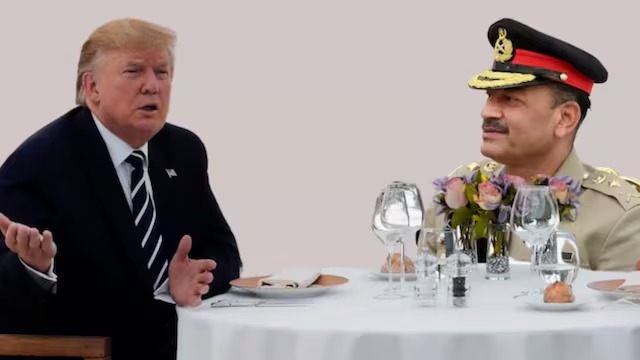
The nomination has little to do with peace or diplomacy. It is, rather, a calculated overture—a political courtship extended from Rawalpindi to Mar-a-Lago. More telling, however, is how these developments reflect the underlying architecture of Pakistan’s political framework. The Defence Minister, Khawaja Asif, recently extolled the so-called “hybrid system”—a euphemism for the military-civilian power dynamic that is far from equitable. In his own remarks, he commended this Frankenstein construct as a viable model, laying bare the tragic paradox wherein elected representatives not only accept their diminishing relevance but actively endorse it. One might expect such a structure to be imposed upon reluctant politicians. Yet, as a pointed tweet observed: “It’s not that the civilians have ceded space… it’s that they have cheered on their own marginalisation.” The betrayal extends beyond institutional decay—it is a moral failure, a surrender of democratic integrity.
The tweet strikes at the heart of Pakistan’s political malaise. In any healthy democracy, military overreach is met with civilian resistance, protest, and defiance. In Pakistan, however, civilians have often extended the ladder. The PML-N, PPP, and even the once-principled PTI have each, at different junctures, prioritised immediate political advantage by siding with the military rather than upholding long-term democratic norms. This complicity has eroded civilian authority, normalised coups without the need for tanks, and fostered a political class more concerned with navigating the corridors of power than exercising meaningful governance. A more recent tweet—“Allah, America and Army have always been the dominant forces in Pakistani politics. While the generals have amassed power and wealth as a ‘front-line state’, the nation has borne grievous losses. The Trump-Asim Munir meeting marks the death knell of civilian rule.”—resembles a final elegy for Pakistan’s democratic ambitions. It reveals the core paradox within the country’s strategic posture. Since the Cold War, Pakistan’s military has exploited its geopolitical location and strategic value to amass significant political power and attract foreign assistance. The United States, in search of a dependable South Asian partner, repeatedly chose generals over institutions. This enduring gamble, played across decades, has enriched the military while leaving the nation depleted—economically, politically, and morally.
The so-called front-line state designation evolved into a euphemism for enduring dependency. Pakistan’s military exchanged national sovereignty for security-related funding, yet these financial inflows rarely benefited the wider population. Infrastructure deteriorated, education was marginalised, and healthcare systems collapsed. Meanwhile, the General Headquarters in Rawalpindi thrived—expanding housing schemes, corporate ventures, and even political entities. The consequences of this Faustian pact were not borne by the generals, but by civilians—deprived of agency, stifled in dissent, and reduced to passive observers of their own governance. Within this context, General Asim Munir’s meeting with Donald Trump transcends a mere diplomatic engagement; it starkly underscores the fact that Pakistan’s military is now independently conducting foreign relations, free from parliamentary scrutiny or public accountability. This is evocative of a state within a state—except the inner state no longer feels compelled to operate in the shadows. It strides openly into the White House, delivers public statements, nominates foreign leaders for peace prizes, and orchestrates the installation, management, and removal of civilian administrations at will. And all of this occurs with the silent consent—at times, the enthusiastic endorsement—of those it has systematically rendered powerless.
Perhaps most damning is the near-total absence of public indignation. Pakistanis have become so habituated to military dominance that even the most overt manifestations of authoritarianism provoke little more than indifference. A quiet fatalism pervades the national psyche—a collective resignation to the belief that the Army will govern, irrespective of constitutional order. Consequently, when a Defence Minister extols a hybrid regime, or an Army Chief assumes the diplomatic stage in Washington without the Prime Minister, it scarcely raises eyebrows. The boundary between the abnormal and the accepted has long since dissolved. Yet this trajectory is ultimately untenable. The military’s growing consolidation of authority is not merely politically corrosive—it is strategically perilous. No nation can endure indefinitely under the dominion of its own armed forces. The systematic erosion of civilian institutions, the ritualised subjugation of elected officials, and the economic prioritisation of military interests do not constitute a formula for national resilience. Rather, they serve as indicators of institutional decay. Pakistan’s gravest threat is not foreign—it is domestic: the entrenched militarism that refuses to recede, and a civilian leadership unwilling to resist.
While the generals may believe that another endorsement from Washington or the rise of another transactional figure like Trump will cement their dominance, history is not so easily deceived. Every short-term alliance with a foreign benefactor carries a long-term price. American backing is never perpetual. Its interests do not reflect the aspirations of Pakistan’s people, but rather its own shifting geopolitical priorities. When those priorities change—as they inevitably do—the military risks being left with a nation bereft of legitimacy, lacking public confidence, and increasingly marginalised on the world stage. It is not yet too late to change direction. But for such a course correction, Pakistan’s civilian leadership must rediscover its resolve. It must cease applauding its own subjugation. It must confront an inconvenient truth: a state governed by generals is no democracy, and a citizenry living in fear is not free. Civilian leaders must challenge the myth that the military is the country’s only functional institution and commit instead to building the strength and credibility of civilian governance. Most importantly, they must reject the illusion that the Army and the people are one and the same. They are not. One is meant to serve the other—and so it must.
The Trump-Asim Munir episode may, in retrospect, be seen as a defining moment—not because it altered the status quo, but because it laid it bare. It exposed a civilian government so enfeebled that it stood by mutely as its authority was overtaken on foreign soil. It exposed a military so emboldened that it no longer sees the need to maintain even the façade of democratic legitimacy. And it exposed a political class so deeply complicit in its own disempowerment that it has come to regard marginalisation as a form of merit. This is not a hybrid arrangement. It is a hostage scenario. And, tragically, Pakistan is fast exhausting its time to mount a rescue.