
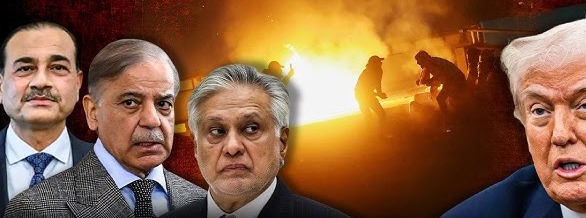
Pakistan’s claims of neutrality in the Middle East mask a deeper alignment with US strategic interests and regional power politics. Behind narratives of victimhood and sovereignty lies a pattern of dependency, propaganda, and calculated geopolitical positioning
Pakistan often portrays itself as a nation caught in the crosshairs of regional rivalries, claiming that it could be the “next target” after Iran in the Middle East. Recently, Pakistan’s Defence Minister, Khawaja Asif, publicly warned of what he described as a coordinated regional design, alleging that India, Afghanistan, and Israel could align against Pakistan in the event of regime change in Tehran and framing the evolving situation as part of a broader hostile agenda encircling Pakistan and turning it into a vassal state. This narrative, however, is misleading and does not reflect the ground realities.
In reality, Pakistan is firmly aligned with the United States and Israel.
Its foreign policy has historically been shaped by its dependency on American support, often receiving substantial financial aid in return for participating in Washington’s regional objectives. Khawaja Asif himself acknowledged that Pakistan has consistently been used as a “toilet paper” by the US—a tool for executing policies in Afghanistan and beyond. Despite this, Pakistani leadership continues to portray itself as innocent, a victim of regional dynamics, and a target of potential aggression from its neighbors.
Manufactured Victimhood and the “War on Terror” Narrative
Pakistan’s narrative of victimhood also extends to its domestic and regional security challenges. When confronted over sponsoring terror against its neighbors, it frequently claims to have suffered enormous losses—more than 90,000 people—during the “War on Terror,” blaming the United States for its misfortunes. While the human cost is real, Pakistan’s government conveniently ignores its own agency in allowing extremist groups to operate and using them strategically against neighboring countries, from Kashmir to Kandahar. It even brainwashed and radicalized the whole Afghan population through madrasa and clerics’ networks; now most of them speak Urdu, which isn’t their mother tongue—such is the level of brainwashing. This narrative serves to absolve Pakistan of responsibility while portraying it as a passive player in global politics.
Pakistan’s structural economic weaknesses exacerbate its reliance on external powers. Dollar inflows from the United States are critical for sustaining its economy. As Moeed Yusuf, Pakistan’s former National Security Adviser, openly acknowledged, “Pakistan does not have financial independence and… its foreign policy is still not free from US influence,” adding that “when you procure loans, your economic sovereignty is compromised,” which in turn shapes foreign policy choices. Similarly, Rabia Akhtar, Dean of Social Sciences at the University of Lahore, has argued that Pakistan’s economic trajectory has long been tied to leveraging its geostrategic importance to attract foreign assistance rather than building sustainable internal economic strength.
As a result, Islamabad has a clear incentive to remain in Washington’s favour. Moreover, in periods without regional crises, Pakistan has historically manufactured or amplified situations—such as highlighting terrorist threats in Afghanistan, projecting the expansion of ISIS in the region, or emphasizing instability elsewhere—to draw US attention and aid. Maintaining relevance in American eyes is a central pillar of Pakistan’s foreign policy.
Another driver of Pakistan’s regional behavior is its strategic rivalry with India. India’s growing partnership with the US in the Indo-Pacific frustrates Islamabad, prompting it to strengthen its ties with Washington to maintain parity in strategic attention. Pakistan’s obsession with “keeping up” with India often leads it to overplay its role in regional crises, creating narratives designed more for domestic and US audiences than for the truth.
The Middle East Dynamics and Contradictions
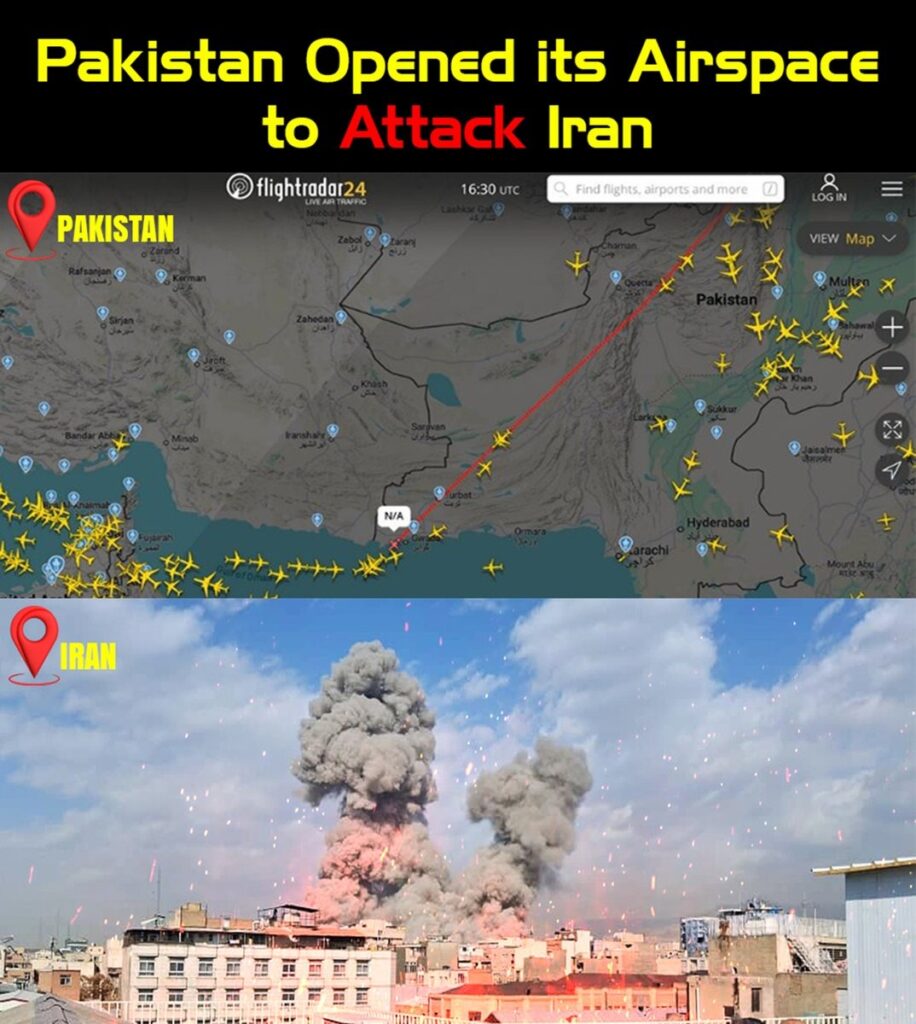
The ongoing Middle East conflict illustrates Pakistan’s duplicity. On the one hand, it assures Iran; on the other hand, it stands with the opposite camp. Pakistan recently signed a mutual defense pact with Saudi Arabia and reinforced these commitments, as its senior leaders, including Deputy Prime Minister and Foreign Minister Ishaq Dar, publicly warned that if Iran were to attack Saudi Arabia, Pakistan would stand by Riyadh under its defense obligations. Such statements make Islamabad’s claims of neutrality increasingly unconvincing. At the same time, narratives circulated by Pakistani sources claimed that Israeli and US fighter jets were approaching Pakistani airspace and warned that Pakistan would attack if they crossed it, projecting an image of vigilance and defiance. Yet parallel reports—including claims by elements within Islamic Revolutionary Guard Corps (IRGC) that Pakistan had facilitated US or Israeli operations—indicate complicity and affirmed the speculation that American forces may have been using Pakistani airspace in the broader confrontation with Iran. By amplifying warnings about potential Israeli aggression while downplaying its own strategic alignments, Pakistan appears intent on masking the extent of its cooperation with Washington and maintaining a veneer of independence for domestic and regional audiences.
Moreover, timing is crucial in geopolitics, and Pakistan has frequently used diversionary tactics. For instance, recent escalations and attacks on Afghanistan appeared to be coordinated to distract Iran from Israeli and US attacks and to weaken the Taliban so that it could help Trump in acquiring Bagram Airbase in Afghanistan, signaling Islamabad’s collaboration with the broader objectives of Washington. Meanwhile, Pakistani media and social networks amplify propaganda, portraying Pakistan as neutral or even aligned with Iran, while its defense minister openly admits long-term subservience to US interests.
Proxy Geopolitics and the Illusion of Neutrality
Pakistan has consistently acted as a “bad boy” for the US in the region, from facilitating operations in Afghanistan to serving as a key partner during the “War on Terror,” creating regional instability. Its government, including Prime Minister Shehbaz Sharif, has even nominated President Donald Trump for the Nobel Peace Prize repeatedly and left no stone unturned to praise his global leadership, and one should not forget that Pakistan is an important member of the Board of Peace and will work under the US and Israel in the international stabilization force to disarm Hamas. This highlights Pakistan’s attempts to maintain visibility and favor with American political leadership. Such actions underscore Pakistan’s longstanding strategy: prioritizing US alignment, leveraging crises for attention and aid, and manufacturing narratives that obscure its role in regional instability.
Pakistan’s claims of neutrality, victimhood, or potential targeting by Iran are largely propaganda. Its strategic choices are dictated by dependency on the US, rivalry with India, and obligations under regional defense pacts, particularly with Saudi Arabia. While Islamabad portrays itself as a victim, its leadership has repeatedly acknowledged, implicitly or explicitly, that Pakistan has been a tool of US policy. In short, Pakistan is not neutral—it remains a key US and Israeli proxy in the region, using propaganda to mislead its own people and obscure its role in shaping regional crises.
-Arun Anand
Pakistan has a knack for arriving at the wrong place at precisely the wrong time. When Russia attacked Ukraine in February 2022, its then prime minister, Imran Khan, was seated in the Kremlin, smiling and shaking hands for cameras. And when Saudi Arabia and the United Arab Emirates, Islamabad’s most important Middle Eastern patrons, found themselves at odds over Yemen last week, it was once again caught in the crossfire. This time Emirati President Sheikh Mohammed bin Zayed Al Nahyan was on his hunting trip to Pakistan. These moments are not mere coincidences but rather symptoms of a deeper strategic malaise of a military-dominated foreign policy that repeatedly entangles Pakistan in conflicts it neither controls nor fully understands.
Over the past decade, Pakistan has drifted from being a peripheral player in the Middle East to an increasingly exposed one. As the shift has been shaped by transactional military diplomacy as signified by recent Strategic Mutual Defence Agreement with Saudi Arabia, the result is a country wedged uncomfortably between rival power centers with China and the United States on one axis globally, and Saudi Arabia and the UAE on another at the regional level. While each of its allies expects loyalty, no one offers insulation when loyalties collide.
That collision is now visible in Yemen and most likely in Libya. On December 30, Riyadh announced that it targeted a weapons shipment at Yemen’s Mukalla port, claiming the arms originated from the Emirati port of Fujairah. Riyadh alleged that weapons were destined for the Southern Transitional Council (STC), a UAE-backed separatist group seeking to carve out an independent state in southern Yemen.
It made Pakistan to tread an uncomfortable line. Though Islamabad expressed “complete solidarity” with Saudi Arabia, reaffirming its support for the kingdom’s sovereignty and Yemen’s territorial integrity, what it did not do was just as revealing. Pakistan avoided naming the STC, sidestepped Abu Dhabi’s role in nurturing Yemeni separatism, and refrained from any criticism that might upset the Emirati leadership.
However, it should be known that diplomatic hedging has its limits. On the very morning Saudi Arabia carried out strikes against what it described as Emirati-linked weapons shipments, Pakistan’s prime minister, Shehbaz Sharif, along with senior cabinet members, including Deputy PM and Foreign Minister Ishaq Dar, was meeting Sheikh Mohammed bin Zayed at his family’s palatial estate in Rahim Yar Khan. The optics were ironic with Pakistan professing solidarity with Riyadh while hosting the very leader Riyadh was pressuring militarily. There have been unsubstantiated reports that Saudi Arabia declined a request for a meeting by Pakistan’s powerful army chief, Field Marshal Asim Munir, thereby reinforcing the impression that Islamabad’s balancing act was wearing thin.
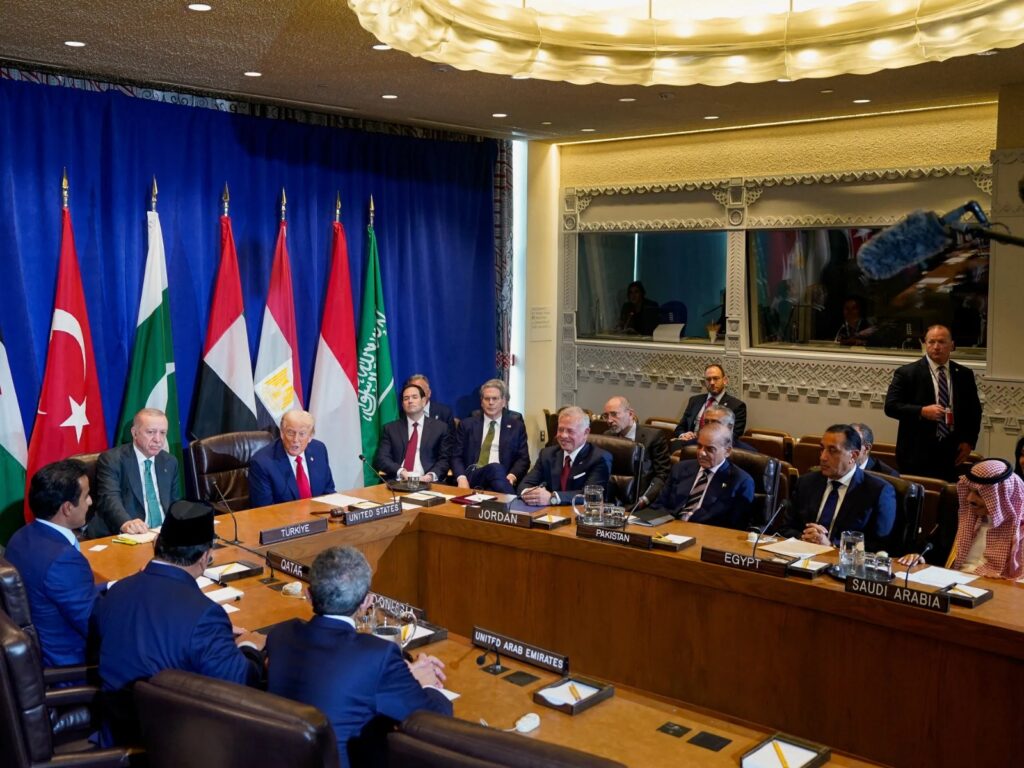
This episode underscored a broader truth that Pakistan was no longer merely navigating Gulf rivalries but was being shaped by them. And nowhere is this more dangerous than in Gaza. As US President Donald Trump pushes his vision of post-war Gaza governance under an international body, he has publicly sought Pakistan’s commitments to contribute troops to his envisioned security or stabilization force for the territory.
For Islamabad, the proposition is fraught with peril as deploying Pakistani troops to the war-battered Palestinian region would not be a neutral peacekeeping mission. As the Gaza stabilisation force would almost certainly involve disarming Hamas, enforcing cease-fire arrangements, and operating under an American or Israeli security framework, such a role would place Pakistan at odds with popular sentiment at home, where sympathy for the Palestinian cause runs deep. Moreover, it would also damage the country’s standing in the broader Muslim world, where participation in what many would view as an externally imposed security regime or forced disarming of what many consider a Palestinian resistance group would be seen as complicity with Israel.
However, if Pakistan Army assumes such a role, it won’t be its first as it has a history of renting its role to the regional players. Pakistani military officers played a role in assisting Jordan’s Hashemite monarchy during the 1970 Black September crisis by helping violently crackdown on Palestinian fighters. The Pakistani contingent in Amman was overseen by Brigadier Mohammad Zia-ul-Haq, who would later seize power in 1977 and rule as a military dictator. That episode left a lasting scar on Pakistan’s image among Palestinians and repeating such a role in Gaza would be exponentially more damaging.
Yet Gaza is not the only front where Pakistan’s Middle East policy is unravelling. On December 21, Army Chief Asim Munir signed what was touted as a $4.6 billion defense deal with Khalifa Haftar in Benghazi, from where the Libyan military strongman controls eastern part of the country through the Libyan National Army (LNA). The agreement reportedly included the sale of JF-17 Block III fighter jets and Super Mushshak trainer aircraft, making it the largest arms deal in Pakistan’s history.
Though the deal on paper signifies Pakistan’s strategic reach, however, in reality, it was a diplomatic misstep of the highest order. Firstly, Libya is a divided country with rival governments governing it in parts. There is Abdul Hamid Dbeibeh’s internationally recognised Government of National Unity (GNU) in Tripoli and then the other, Haftar’s Benghazi-based unrecognised Government of National Stability (GNS). Secondly, Libya remains under an international arms embargo imposed by the United Nations in 2011. Therefore, any major weapons transfer and that too to an unrecognised entity risk undermining of the international law.
This deal does not only fly in the face of UN sanctions; it also puts constrains in Islamabad’s regional policy. By publicly aligning itself with Haftar, Pakistan effectively chose sides in a complex regional proxy contest as the military strongman is backed by the UAE and Egypt whereas the GNU, by contrast, enjoys the support of the United Nations and Saudi Arabia. Islamabad’s outreach to Benghazi thus undercuts its relationship with Riyadh, at precisely the moment when Saudi goodwill is most needed.
These choices cumulatively result in what can be described as a strategic overextension without any strategic clarity. It is evident that Pakistan is trying to achieve a role of indispensability in the region, but forgets that it does not possess the diplomatic leverage for the same. It can offer nothing than renting its military against a price. Its military leadership appears to believe that visibility equals influence, that being “in the room” guarantees relevance. In practice, it has made Pakistan vulnerable to pressure from stronger powers with clearer agendas. And at home, the risks are just as severe. In a country grappling with severe economic crisis, political instability, and militant violence, such a diplomatic overstretching cannot be afforded.
As such, Pakistan is on a path of pursuing a foreign policy driven less by national consensus than by the ambitions of a security establishment which is eager to project power abroad, even as stability at home remains elusive. And if Pakistan continues down this path and gets entangled in Gulf rivalries, is pressured to send troops to Gaza, and aligns with contested actors like Khalifa Haftar, it risks becoming a pawn that a mediator its elite envisions. In the Middle East’s unforgiving geopolitical chessboard, pawns are easily sacrificed.
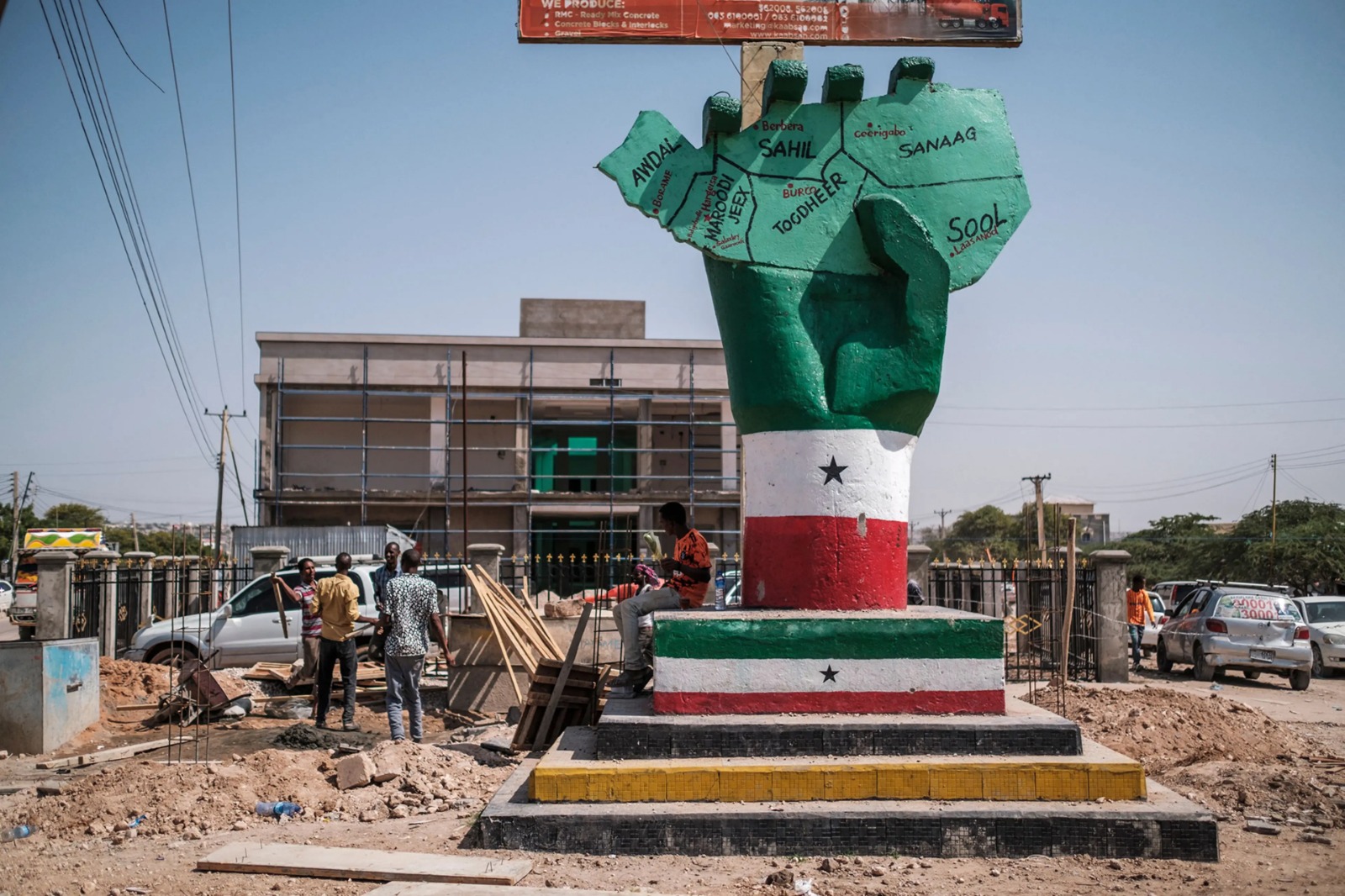
-Arun Anand
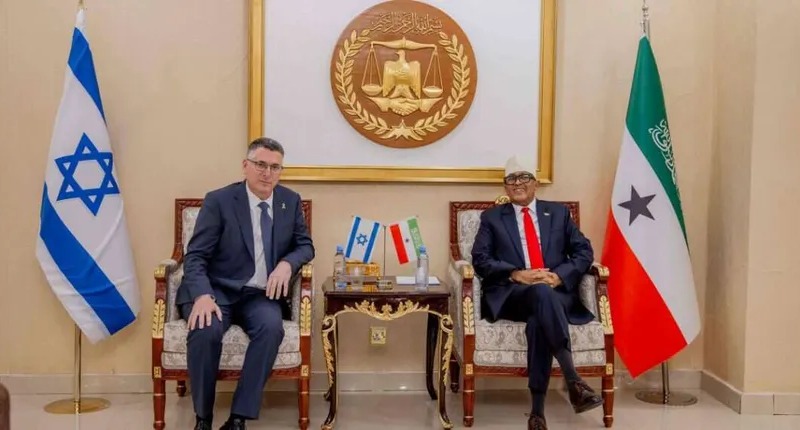
On December 26, 2025, Israeli Prime Minister Benjamin Netanyahu raise diplomatic tempers in Middle East by unilaterally recognising the Republic of Somaliland, the breakaway region of Somalia which has been functioning as a de facto state since 1991. This decision goes beyond a diplomatic gesture and signifies a landmark geopolitical move that signals a recalibration of power politics in the Red Sea, the Horn of Africa, and the eastern Mediterranean.
Not only did it break a long-standing international taboo against recognising defacto regions, it also injected new momentum into a region which is increasingly defined by strategic choke points, rival maritime visions, and great-power competition.
Located along the southern edge of the Gulf of Aden, bordering Djibouti, and sitting astride the approaches to Bab el-Mandeb, Somaliland has existed in diplomatic limbo for three decades ago. Its decision to exit political union followed the collapse of Siad Barre’s regime and has since built functioning political institutions while Mogadishu remained mired in civil war, insurgency, and foreign intervention.
It has conducted multiple elections, maintained relative internal stability, issued its own currency and passports, and exercised effective territorial control, which constitute core criteria of statehood under international law. And still, recognition eluded Hargeisa, largely because of international deference to the fiction of Somali territorial unity.
But the December 26 recognition by Israel marks the first major breach in this diplomatic wall. Framed within the broader ethos of the Abraham Accords, which seeks to normalise Israel’s relations with its Arab neighbours, Prime Minister Benjamin Netanyahu’s announcement historically significant elevates Somaliland from diplomatic obscurity and signals that geopolitical utility and governance capacity can, under certain conditions, trump inherited postcolonial borders.
Though this precedent alone makes the decision a watershed moment, yet the true importance of this move lies less in symbolism and more in strategy.
This decision must be read against the backdrop of the Red Sea’s growing militarization in recent years. For instance, the Bab el-Mandeb Strait which connects the Gulf of Aden to the Red Sea and, by extension, the Suez Canal (which opens into Mediterranean Sea) has emerged as one of the world’s most contested maritime chokepoints.
During the prolonged Gaza war that followed Hamas’s October 7, 2023 terrorist attack on Israel, Iran-backed Houthi militia in Yemen repeatedly targeted Israeli-linked shipping, exposing Israel’s vulnerability along its maritime lifelines.
As such, it cannot be divorced from the Israel’s broader post-Gaza recalibration, where it is prioritizing securing maritime routes, diversifying strategic partnerships, and reducing reliance on fragile regional arrangements.
What Somaliland does is it provide Israel a rare strategic advantage in the region where hostile non-state actors have in recent years emerged a significant irritant to its maritime access. Its Port of Berbera can provide Israeli Defence Force (IDF) with potential logistical depth, maritime awareness, and forward presence in Red Sea region and deny any military advantage to hostile actors like Houthis who sit across on the eastern coast of Gulf of Aden.
Israel has demonstrated its resolve to grow its relations with Somaliland through the January 7 Hargeisa visit by Foreign Minister Gideon Saar, becoming the first high-level international dignitary to visit the country.
More crucially, this decision followed the 10th trilateral summit of December 23 between Israel, Greece, and Cyprus in Jerusalem, wherein their leaders —PM Netanyahu, PM Kyriakos Mitsotakis (Greece) and President Nikos Christodoulides (Cyprus)— reaffirmed cooperation on energy, security, and regional stability.
These are the areas where all three states have found themselves increasingly at odds with Turkey’s assertive posture in the Eastern Mediterranean region.
Together, these moves, as such, reveal a coherent strategy by Israel to constrain Ankara’s regional ambitions. It is should be noted that Turkey, under President Recep Tayyip Erdogan, has pursued an increasingly revisionist foreign policy, blending neo-Ottoman rhetoric with military deployments and proxy relationships stretching from Libya and Syria to the Horn of Africa.
In the eastern Mediterranean, Turkey’s aggressive maritime claims and unilateral actions have antagonized Greece and Cyprus while undermining cooperative energy frameworks in the region.
In the Horn of Africa, Ankara has followed a similar playbook. By becoming the principal external patron of Somalia’s federal government under President Hassan Sheikh Mohamud, through military training, financial aid, and base access, Turkey has positioned Mogadishu as the cornerstone of its Red Sea strategy.
But this engagement has always been less about Somali stability and more about power projection. It provides Ankara with proximity to Bab el-Mandeb and leverage over one of the world’s most vital maritime corridors through which roughly 12-15 per cent of global trade worth over 1 trillion USD is conducted annually.
Israel’s recognition of Somaliland, therefore, directly undercuts this strategy. It legitimizes an alternative political entity that Ankara has consistently sought to marginalize and weakens Turkey’s monopoly over Somalia’s external partnerships. President Recep Tayyip Erdoğan’s sharp condemnation and calling the move “illegitimate and unacceptable” betrays Ankara’s anxiety that its Horn of Africa foothold may now face meaningful constraints.
But Turkey’s insistence on Somali “unity and territorial integrity” rings hollow when contrasted with its own record of selective sovereignty advocacy for regions like Northern Cyprus. What Ankara fears is not fragmentation per se, but the erosion of its geopolitical leverage in the Red Sea basin.
For India, this decision by Israel carries quiet but significant implications, particularly for the India–Middle East–Europe Economic Corridor (IMEC). The project which has been conceived as a multimodal trade and connectivity initiative linking India to Europe via the Middle East, was disrupted by the Gaza war and this recalibration could ring positively for realising its implementation.
Moreover, Somaliland, and specifically the Port of Berbera, offers New Delhi an alternative gateway into the region and the broader African hinterland, including landlocked Ethiopia. While New Delhi, due to its express commitment to norms based international relations, may be constrained by its adherence to UN norms and is unlikely to formally recognize Somaliland in the near term, Israel’s move expands its strategic options without requiring overt diplomatic commitments.
Equally important is what this means vis-à-vis Turkey. Ankara has consistently positioned itself as an alternative economic and political hub for the Muslim world, often at odds with India’s interests. By weakening Turkey’s strategic depth near the Red Sea, Israel’s move indirectly aligns with India’s interest in a more plural, less Ankara-dominated regional order.
Israel’s recognition of Somaliland is, at its core, a bet: that regional stability will increasingly favor functional governance over inherited legitimacy, maritime strategy over rhetorical solidarity, and coalitions of the willing over paralyzed multilateralism. It challenges Turkey’s negative and destabilizing role in multiple theaters, signals resolve in the face of maritime coercion, and opens new possibilities for partners like India.
While this decision offers Somaliland its long-delayed validation and Israel the strategic depth, it represents a rare diplomatic setback for Turkey. Whether others follow Israel’s lead remains uncertain. But one thing is clear that the Red Sea is no longer a peripheral theatre and this development makes it a focal point of geopolitics in the years ahead.