
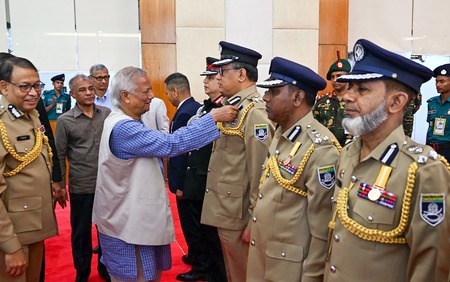
Bangladesh today stands on the brink of an unprecedented national catastrophe. Under the guise of reform and accountability, the pro-Islamist regime of Muhammad Yunus has begun dismantling the nation’s most vital institutions – the Armed Forces and the Directorate General of Forces Intelligence (DGFI). What appears to be a judicial process is, in reality, a political purge aimed at replacing the patriotic guardians of Bangladesh’s sovereignty with a militant, ideologically driven “Islamic Revolutionary Army”. In doing so, the Yunus regime risks transforming Bangladesh from a moderate Muslim democracy into a jihadist state – a South Asian version of Iran or Afghanistan.
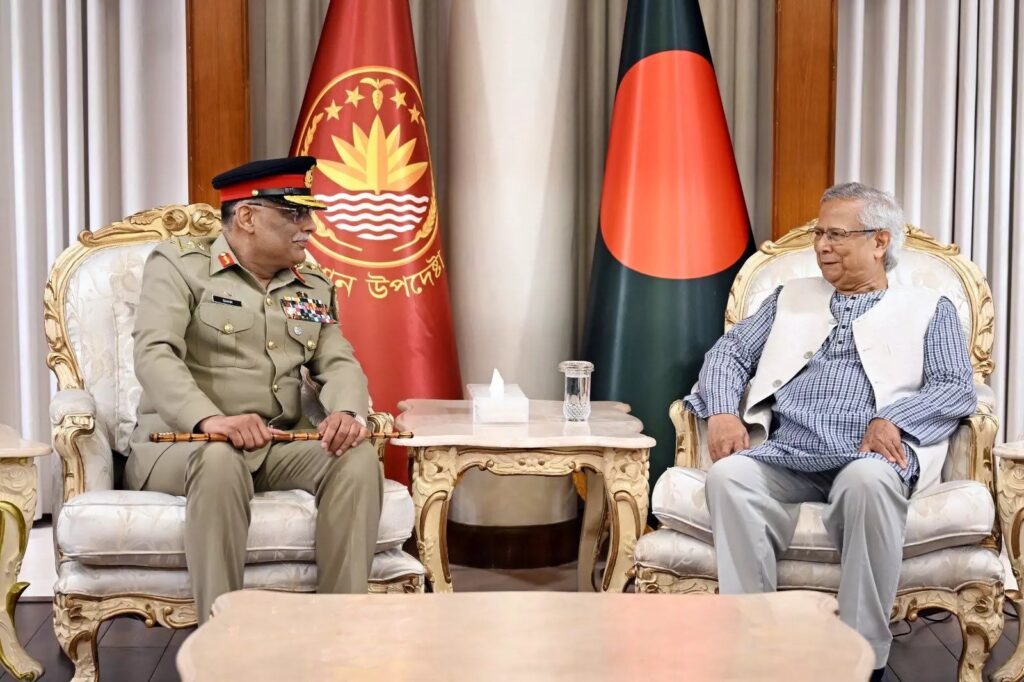
As anticipated, the regime in Dhaka, led by Muhammad Yunus has begun implementing its blueprint to create an Islamic Revolutionary Army (IRA) by disbanding the Bangladesh Armed Forces and the country’s primary intelligence agency, the Directorate General of Forces Intelligence (DGFI).
According to credible media reports, investigators have submitted a chargesheet against 11 army officers, including eight Generals, accusing them of committing “crimes against humanity” – offences carrying the death penalty. The charge sheet also names former Prime Minister Sheikh Hasina as the principal accused. Simultaneously, the regime has launched legal measures to permanently outlaw the Awami League, Bangladesh’s oldest and largest political party, in a move clearly engineered to eliminate any chance of an inclusive national election, which Yunus intends to stage in February 2026 under his absolute control.
The accused listed in the chargesheet include: former Prime Minister Sheikh Hasina, former National Security Advisor Tarique Ahmed Siddique, former DGFI Director General Lt. Gen. (retd) Mohammad Akbar Hossain, former DG Major General (retd) Saiful Abedin, Lt. Gen. (retd) Md Saiful Alam, former DG Lt. Gen. Tabrez Shams Chowdhury, former DG Major General (retd) Hamidul Haque, Major General Towhidul Islam, Major General Sarwar Hossain, Major General Kabir Ahmed, Brigadier General Mahbubur Rahman Siddique, Brigadier General Ahmed Tanvir Majhar Siddique, and Lt. Col. (retd) Makhsurul Haque.
Among them, four are currently in active service. However, under the amended International Crimes Tribunal Act, serving officers accused in such cases are suspended from holding official positions, according to Chief Prosecutor Tajul Islam.
The entire case behind this chargesheet accusing senior military officers originates from a dramatized “documentary film” funded by the National Endowment for Democracy (NED) – an organisation that has, for several years, played an active role in defaming the Bangladesh Army and DGFI.
Unfortunately, during this massive propaganda campaign, both institutions failed to mount an effective counter-narrative. Even after Sheikh Hasina’s ouster, when Yunus and his allies intensified their attacks on DGFI — particularly through claims of detentions inside “Aynaghar”, an imaginary facility invented by a NED-funded, overseas-based media outlet – the disinformation continued unchecked. The so-called “documentary” presented fabricated testimonies from alleged victims, serving as the foundation for the current legal onslaught.
Most importantly, the Bangladesh Armed Forces and DGFI had played a crucial role in the 2024 anti-Hasina protests, which ultimately enabled the US Deep State’s regime-change operation to succeed. More than 14 months after Sheikh Hasina’s removal and the installation of the Yunus regime – a transition initially supported by segments of the military – it has become evident that the ultimate goal of Yunus and his foreign backers is to completely dismantle Bangladesh’s Armed Forces and counterterrorism institutions to pave the way for transforming the country into an Islamist Caliphate.
It was earlier reported that Pakistan’s Army Chief General Asim Munir has been orchestrating this plot to dismantle the Bangladesh Army and DGFI, working in concert with key figures of Jamaat-e-Islami, Ansar Al-Islam (the local franchise of Al-Qaeda), and several high-ranking members of the Yunus regime. Although the current chargesheet targets former DGFI chiefs and counterterrorism officials, credible intelligence sources suggest Islamabad’s ultimate goal is to implicate Army Chief General Waker Uz Zaman, accusing him of “enforced disappearances and unlawful detentions”.
Muhammad Yunus and at least two of his close foreign-linked advisors are believed to be quietly assisting this effort, providing legal and diplomatic cover to neutralise Bangladesh’s last line of defence against Islamist expansionism.
Commenting on this alarming development, noted military analyst M A Hossain stated, “This is possibly the first-ever case in any country where top officials of a national intelligence agency have been prosecuted for defending their nation from terrorism. It defies logic. How can a judiciary target its own security defenders in a case clearly masterminded by Pakistan’s military establishment and its local proxies? The next step, inevitably, will be implicating Army Chief General Waker Uz Zaman – the ultimate command authority – to decapitate the Armed Forces entirely”.
Defence expert Damsana Ranadhiran, a special contributor to Bangladesh’s Blitz media outlet, warned: “This legal ambush targetting Bangladeshi Generals will have dire consequences. It will weaken the military’s command structure and open the door for Pakistan-backed officers to take charge. This is a textbook ISI strategy – a blend of legal warfare, psychological manipulation, and political subversion – identical to what Pakistan executed in Afghanistan and Kashmir”.
Ranadhiran further cautioned that Bangladesh’s sovereignty and regional stability are now at stake.
“Bangladesh did not endure the genocide of 1971 only to be subdued again by Pakistan’s puppeteers and Islamist collaborators. If Pakistan’s designs are not countered immediately through diplomatic, military, and legal means, South Asia may descend into chaos – a region overrun by proxy wars, terror networks, and narcotics-driven insurgencies”.
These fabricated charges against senior military officers are designed to discredit and paralyse the Armed Forces, paving the way for Yunus to replace them with a new paramilitary militia modelled after Iran’s Islamic Revolutionary Guard Corps (IRGC). The envisioned Islamic Revolutionary Army (IRA) will be ideologically loyal to the regime rather than to the nation – a hallmark of theocratic authoritarianism.
The motive behind Yunus’s hostility toward the military lies in its potential to resist his project of selling out Bangladesh’s sovereignty for personal and foreign gain. Much like his political idol Hamid Karzai, Yunus seeks to maintain power through foreign patronage rather than public legitimacy.
Analysts estimate his genuine domestic support at no more than five per cent. His crusade against the Awami League, with its 45 million supporters, is part of a larger design to eliminate all political opposition. After banning the Awami League, the regime now aims to suppress smaller parties such as the Jatiya Party and left-leaning groups to cement a one-man rule under the pretext of “national reform”.
Alongside institutional purges, Yunus has unleashed a campaign of terror against journalists, intellectuals, and dissenters. Hundreds have been imprisoned, and at least 266 journalists face fabricated murder charges – making Yunus arguably an even greater oppressor of the press than Turkey’s President Recep Tayyip Erdogan.
Meanwhile, the regime is rapidly replacing the national police with an “Auxiliary Police” modeled on Iran’s morality police. Recruited from Hizb ut-Tahrir, Hefazat-e-Islam, and Ansar Al-Islam, this force enforces Taliban-style dress codes and harasses women in traditional Bengali attire. Reports of hijab-clad patrols intimidating citizens are becoming alarmingly common.
For decades, DGFI played a pivotal role in fighting terrorism and militancy, dismantling insurgent networks, and shutting down foreign-backed terrorist training camps – including those of India’s United Liberation Front of Assam (ULFA). Its success in keeping Bangladesh free of transnational terrorism made it a target of Islamist extremists and the Pakistani ISI, who now see an opportunity for revenge under the Yunus administration.
Since last year’s Jihadist Coup, Bangladesh has been slipping rapidly toward Islamist rule. Top jihadists – including Ansar Al-Islam leader Jashimuddin Rahmani – were released from prison and now allowed to operate freely. Rahmani has publicly vowed to attack secular voices and bloggers, branding them as “enemies of Islam”. Shockingly, the regime has made no effort to re-arrest such fugitives or curb their militant propaganda.
If this trajectory continues unchecked, Bangladesh may soon cease to exist as the secular republic envisioned by the martyrs of 1971. The systematic destruction of the Armed Forces, intelligence services, and democratic institutions is not merely a domestic tragedy – it is a regional security crisis. South Asia cannot afford another failed state governed by zealots and manipulated by Pakistan’s ISI. The international community, especially India and democratic allies, must recognise that defending Bangladesh’s Armed Forces today is equivalent to defending the last line of resistance against the spread of militant Islamism in South Asia. Silence is complicity – and complicity, in this case, could be catastrophic.
–IANS
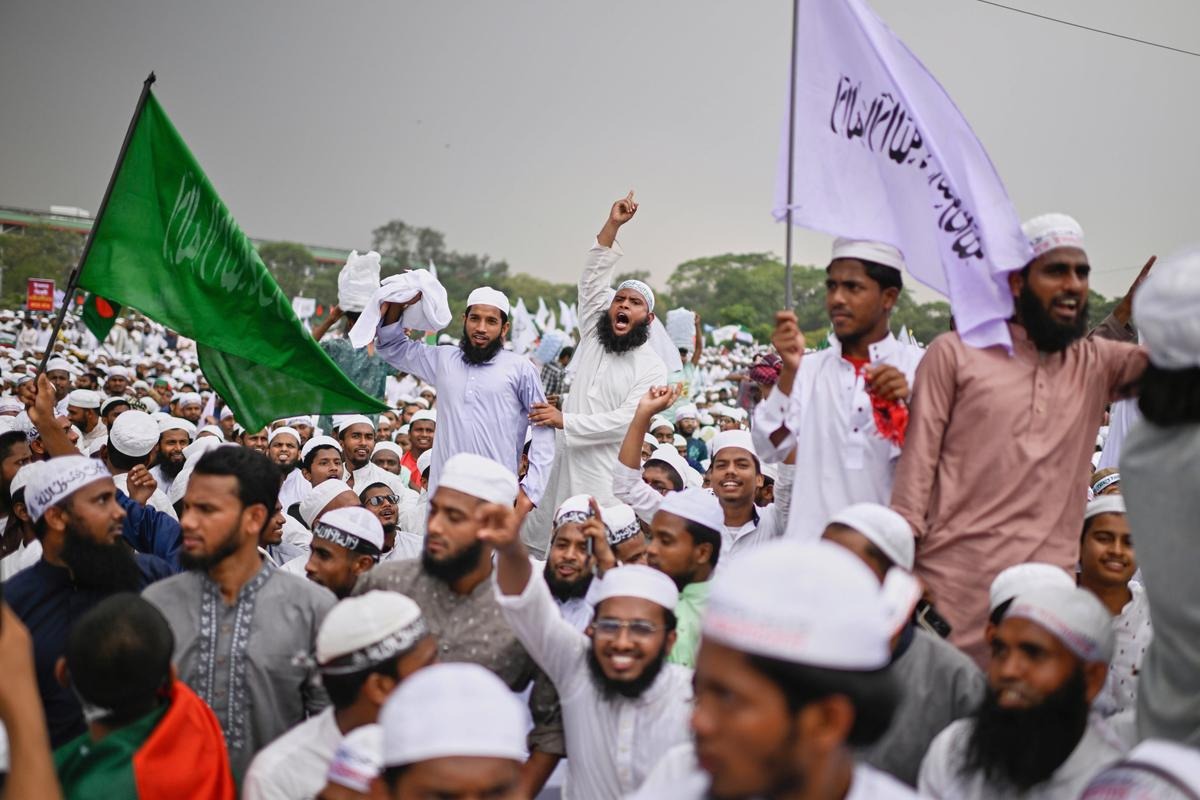
Amidst the developments in Bangladesh’s political trajectory, the resurgence of Islamists has been the one catching everyone’s attention. A country with about 90 per cent Muslim population, this surely is not supposed to be alarming. But Bangladesh is no Middle East or Central Asia — wherein religion profoundly shaped their political systems. Religion, albeit a strong influence, has more cultural and symbolic presence than a political one — whereby Bangladesh’s political establishment is influenced by principles of nationalism, socialism, secularism and democracy. Here, cultural and ethnolinguistic identity have historically taken precedence over religious one.
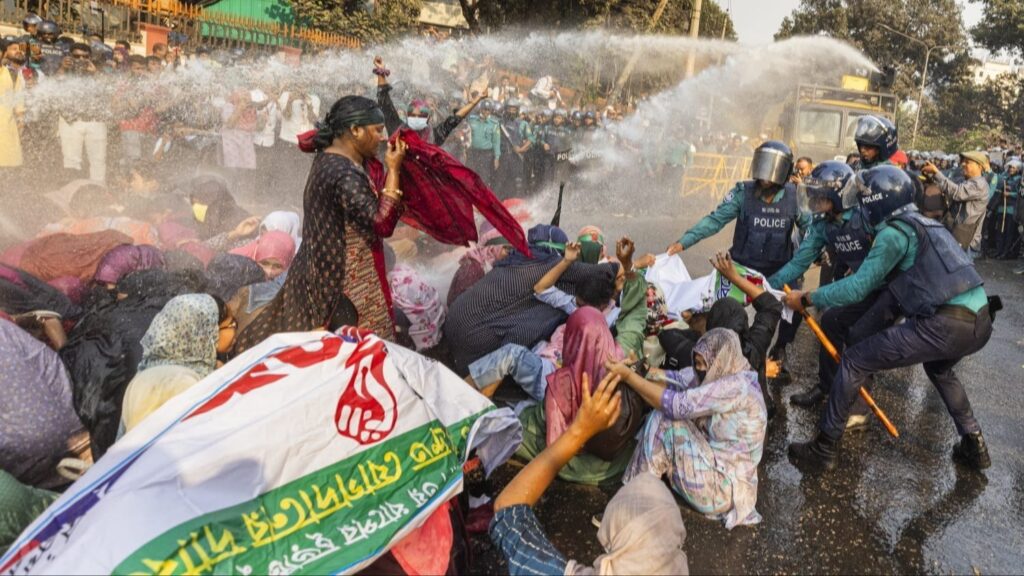
Islamists in Bangladesh seek a complete overhaul of the socio-political-legal system rooted in Islamic values and principles, contrary to the present establishment in Bangladesh. However, Islamists do not comprise a homogenous group, as they take their ideological orientation from different Islamic schools of thought, namely, Hanafi, Deobandi, Barelvi, Salafi and Sufi. Among these, Hanafi and Deobandi exert the most socio-political influence. The Islamists, initially marginalised post Bangladesh’s independence, were rehabilitated under military rule. After restoration of democracy and civilian government in 1990, some created formal political alliances while maintaining grassroot mobilisation in religious institutions and madrasas and entered the electoral field. Others took the path of militancy, launched a series of terror attacks in Bangladesh and re-configured into newer factions after facing state crackdowns and bans, especially under the Awami League government.
The recent unofficial visit of seven Islamic scholars to Afghanistan on Taliban’s invitation needs a careful assessment. The meeting was framed as seven Bangladeshi Islamic scholars observing human rights and women’s rights situation in Afghanistan in face of backlash from the West. However, one cannot overlook the heavy political intent as the meeting also prioritised strengthening ties between Islamic scholars of the two countries, to enhance diplomatic relations in future, beside cooperating on areas like trade, education and healthcare.
Following the Taliban takeover of Afghanistan in 2021, Bangladesh government (now dismantled), maintained its distance and refused to give Taliban any diplomatic recognition. Rather, it exercised caution — monitoring and countering the celebratory reactions of Islamists on social media who hailed it as a ‘triumph of Islam’. Even before the takeover, many Bangladeshi Islamist radicals were arrested by security authorities who were caught attempting to join the Taliban in Afghanistan by crossing India.
Why were Bangladesh’s Islamist influenced youth attracted to the Taliban? Because of Bangladesh’s own home-grown extremist groups that emerged in the 1980s-90s, notable being Harkat-ul Jihad Al Islami Bangladesh (HuJIB), and Jamaat-ul-Mujahedeen Bangladesh (JMB), established by fighters who joined the Taliban during Afghan jihad’s fight against Soviet invasion of Afghanistan. After these fighters returned to Bangladesh, they sought to bring the Taliban’s envision into reality—to establish an Islamic rule in Bangladesh, based on Shaira jurisprudence. These groups are also reported to have links with transnational terrorist organisations like al-Qaeda, al-Mujahideen and even Lashkar-e-Taiba (LeT). The early to mid 2000s was a period of rampant Islamic terror attacks by these groups, primary targets being NGOs and secular and cultural events that they deemed to be ‘un-Islamic’. However, most extremist organisations were checked via strict counterterrorism measures by 2007, although another wave of terrorist attacks surfaced between the period of 2013-2016.
The seven Islamic scholars who attended the meeting with Taliban included Khelafat Majlis chief Mamunul Haque, Nayeb-e-Amir (Pir of Madhupur) of Hefazat-e-Islam Bangladesh Abdul Hamid, Abdul Awal, Abdul Haque, Habibullah Mahmud Qasemi, Monir Hossain Qasemi and Mahbubur Rahman. Both Hefazat and Khelafat belong to the same Deobandi tradition and predominantly trained in Qawmi madrasas, that emphasises in Islamic scholarship independent of state regulated Alia system. In terms of core ideological beliefs, both lay strict emphasis on scriptural orthodoxy, rejection of Barelvi tradition, Sufi practices and Ahmadiya’s inclusion as Muslims and opposition to Western influences, especially on culture and education. In effect, both champions complete Islamisation of socio-cultural life.
Khelafat Majlis, founded in late 1989, emerged during the Bangladesh anti-Ershad movement. An Islamist political party, Khelafat, stated its goal of creating a national governance framework that is based on Qura, Sunnah and early Islamic Caliphates. Therefore, the party’s main target of mobilisation were Islamic scholars and aimed at creating a larger unity between these scholars and general Muslims against the secular system of governance who would push for Khelafat’s Political Islam. Its activities largely confined to anti-secular and blasphemy protests—be it organising a large mass demonstration from Dhaka to Ayodhya demanding for Babri Masjid restoration that was demolished in 1993, protest against installation of “Eternal Flame” at Suhrawardy Udyan, the anti-Taslima movement that led to her exile, the 2017 anti-Statue protest against the installation of the statue of Lady Justice from the Supreme Court premises in Dhaka.
In electoral politics, it had a minimal presence, entering into coalition with both BNP (that it opted out in 2021). Although not involved in overt terror activities, Khelafat’s hardline stance coupled with ideological leniency towards the Taliban were deemed threatening to Bangladesh’s secular principles. Its leaders, including chief Mamunul Haque, were arrested under Digital Security Act and Anti-Terrorism Act under the Awami League government for their participation in protests in anti-secular, anti-blasphemy protests, in alliance with Hefazat-e-Islam.
Unlike Khelafat Majlis, Hefazat-e-Islam is not a political party but an Islamist organisation, drawing on the same ideology and traditions like Khelafat. A coalition of more than 25,000 Qawmi madrasas across Bangladesh, Hefazat emerged in 2010 as a reaction to Awami League government’s Women Development Policy (2009) draft giving women equal inheritance rights. In 2013, Hefazat held a massive rally by blocking roads, commerce and regular activities. Known as the Shapla Chattar siege in Dhaka, Hefazat presented its 13-point demands that included introduction of blasphemy laws, gender segregation in public, declaring Ahmadiyyas as non-Muslims, and curbing every un-Islamic activity, to state a few.
Following Jamaat’s decline in Bangladesh under Awami League’s government, Hefazat’s emergence was seen as the rise of a new radical Islam in Bangladesh and this 2013 siege, a pivotal moment of radical Islamists urban mobilizational efforts directly challenging the secular state authority. Other notable protests are the anti-statue protest of 2017, anti-Modi protest in 2021, the latter turning violent and the death of 17 people. The leaders of Hefazat-e-Islam were meted the same treatment as its ally Khelafat, who provided logistical and ideological support to Hefazat’s programmes.
Following the July Uprising and the establishment of an interim government, both Hefazat-e-Islam and Khelafat Majlis regained their position and marked its active presence in the country. Detained leaders, including Hefazat chief were released, seen as part of the interim government’s reconciliation. However, thanks to both, and its allied Islamic parties, Bangladesh has also been witnessing a series of attacks, especially on the freedom of cultural expression.
Towhidi Janata, a loosely organised group of ‘agitated Muslims’ has been notorious to wreak havoc on events like Book Fair, Lalon Fakir Mela, Basant Utsav and women’s football match. Needless to say, Hefazat and Khelafat provide backing to Towhidi that has also been making headlines recently for increasing attacks on shrines, including the exhumation and burning of body of Nurul Pagla. While these Islamic scholars were in Kabul to meet the Taliban, its leaders and activities back home organised street rallies demanding for implementation of the July Charter and declaring Ahmadiyas to be non-Muslims and a Constitutional reform that is based on Sharia.
Khelafat and Hefazat, although not a terrorist organisation, are ideologically extremist whose beliefs go against Bangladesh’s core national principles. The Taliban meeting surely is their symbolic assertion — of Bangladesh’s Islamists envision of Talibanising the country. This meeting with the Taliban also points to a future normalisation of diplomatic relations between Bangladesh and Taliban’s Afghanistan, as the interim government seems to not object to such an informal meeting. A radicalised Bangladesh under the garb of Islamists pose a serious problem for South Asian neighbours, given these factions’ ideological links not just with Taliban, but also with Pakistan. The Global South, therefore, needs to keep an open eye to such ‘harmless’ meetings.
–IANS
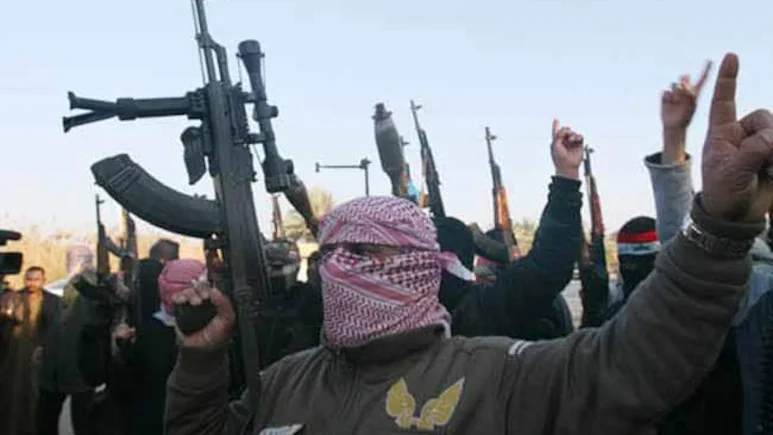
The fading aftermath of a lost battle continues to smoulder quietly, and for Pakistan’s armed forces—particularly its beleaguered army under its current Chief—these remnants represent not resilience, but a lingering, unhealed wound. This wound was inflicted by the overwhelming setback suffered during India’s precisely orchestrated Operation Sindoor. The mission effectively laid bare the vulnerabilities and superficial nature of Pakistan’s covert strategies along the Line of Control (LoC). In the wake of this defeat, the response from Pakistan was not one of reflection or strategic recalibration, but rather a recommitment to exhausted methods—chiefly, the long-standing practice of sponsoring terrorism. This shadow conflict, which Pakistan has cultivated for decades, has recently been reignited with intensified zeal and even more ominous intent. Operation Sindoor dismantled the myth that the Pakistan Army maintains superiority in asymmetric warfare across the LoC. Employing intelligence-led targeting, coordinated civilian-military operations within Kashmir, and precision strikes, India succeeded in destroying several of Pakistan’s key terrorist infrastructure points. Numerous high-ranking handlers, operating in proximity to frontline military positions, were also neutralised. Pakistan’s infamous Border Action Teams, unprepared for the scale and precision of the assault, suffered significant losses. Reinforcements dispatched under the assumption of surprise advantage were instead ambushed with lethal efficiency. Conservative estimates suggest that more than 70 Pakistani regular troops and special forces were either killed or incapacitated in the course of the operation. However, these figures remain unacknowledged by Pakistan’s military media wing, the Inter-Services Public Relations (ISPR), based in Rawalpindi.
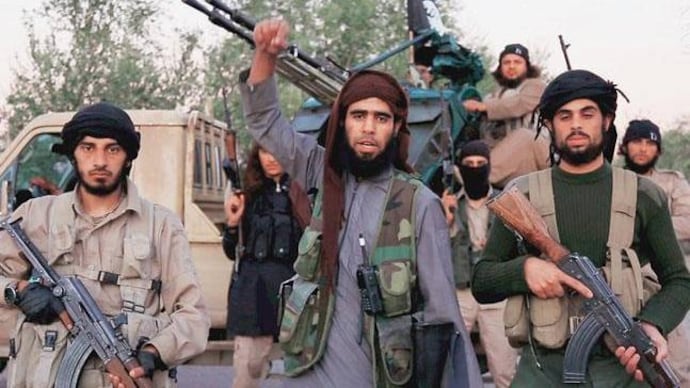
The consequences extended beyond a mere tactical defeat—it marked a profound symbolic breakdown. The veil was lifted, revealing to the international community the unmistakable nexus between the Pakistan Army and terrorist organisations falsely presented as ideological movements. As Pakistan’s military leadership staggered under the impact—wounded both physically and psychologically—it did not pursue introspection or institutional reform. Instead, its response was fuelled by vengeance. With its credibility in tatters and domestic cohesion eroded by mounting economic distress, the military hierarchy resorted to its familiar playbook: reinforcing the architecture of cross-border terrorism. Within the rugged landscapes of Pakistan-occupied Kashmir (PoK), a fresh wave of militant training camps began to emerge—spreading like malignant growths. The same geography that once served as refuge for insurgents in the early 2000s is being repurposed—not to defend, but to initiate offensive operations aimed at infiltration and sabotage. These installations are far more advanced than rudimentary jungle shelters; they are heavily fortified compounds, featuring structured obstacle courses, dedicated firing ranges, encrypted communication hubs, and efficient logistics chains—all operated with military-level discipline and overseen directly by Pakistani officers of field rank.
In the interior regions of Pakistan-occupied Kashmir (PoK), satellite surveillance and signal intelligence have revealed a notable uptick in activity linked to operatives of Jaish-e-Mohammed and Lashkar-e-Taiba—groups ostensibly proscribed by Pakistan but, in reality, sustained and armed by its military-intelligence apparatus. Historic infiltration routes through Kupwara, Uri, and Poonch are being revitalised, now augmented with modern techniques involving drone-based supply drops, underground tunnel systems, and nocturnal incursions enhanced by GPS jamming technologies. The danger lies not in covert denial, but in a conscious intensification of hostile intent. The Chief of the Pakistan Army, acutely conscious of the country’s precarious diplomatic and economic condition, is engaging in a hazardous strategic gamble. With increasing scrutiny over his leadership both within military circles and among the broader public, he appears driven to recapture a faltering narrative through the use of “strategic proxies.” Terrorism remains the most potent instrument in Rawalpindi’s longstanding arsenal—an instrument now employed with alarming recklessness. His leadership, beleaguered by internal factionalism and an unparalleled erosion of legitimacy, seems fixated not on reform or peaceful coexistence, but on expanding clandestine conflict. Alarmingly, this ideological decay is no longer confined to PoK. The most disconcerting evolution is now taking root within Pakistan’s Punjab province. Once regarded as the cultural nucleus and a relatively secular space in the national context, Punjab is experiencing a covert revival of urban terror infrastructure. In cities such as Lahore, Bahawalpur, and Multan, dormant terrorist cells are being discreetly reactivated. These are not improvised militias of disenfranchised youth armed with outdated weapons; they are increasingly professionalised units under the instruction of retired ISI personnel, many of whom now operate under the guise of NGOs, charitable entities, or religious seminaries. These fronts offer both ideological justification and logistical support for what appears to be a quietly resurgent domestic terror ecosystem.

Amidst an ongoing civil-military power struggle, one aspect of the Pakistani state’s machinery remains untouched: the consistent prioritisation of defence funding and so-called “strategic programmes.” Despite a population grappling with soaring prices of basic commodities such as wheat and petrol, billions of rupees continue to be funnelled into clandestine military activities. International aid, ostensibly allocated for flood recovery and infrastructure development, has seemingly vanished into unaccounted defence-related expenditures. The directives issued by the Army Chief appear concerned less with professional armed forces modernisation and more with psychological operations, refining doctrines of insurgency, and sustaining strategic equilibrium through non-state proxies rather than overt confrontation. Ironically, this intensified focus on exporting militancy coincides with the military’s own struggle against a growing insurgency within national borders. The tribal regions, once controlled through sheer force and temporary truces, are experiencing renewed unrest. Militant organisations such as the Tehrik-i-Taliban Pakistan (TTP), emboldened by regional instability and the decline of American presence in Afghanistan, have launched an aggressive internal campaign, particularly in Khyber Pakhtunkhwa and Balochistan. These insurgents have evolved beyond hit-and-run tactics; they now execute coordinated ambushes, capture military outposts, and even target mid-level officers for assassination. By conservative estimates, the Pakistani military has suffered more than 400 fatalities from militant assaults within its own borders over the past year. In North Waziristan alone, targeted attacks since January have claimed the lives of at least 80 soldiers. Yet, in the face of such heavy losses, the Army Chief’s priorities appear skewed—focused less on internal security and more on provoking tensions across the Line of Control. It seems the military establishment has acquiesced to a state of perpetual violence, both domestically and externally, in a bid to uphold its strategic narrative. Even more troubling is the army’s renewed alignment with radical ideological movements. A network of newly established madrasas—many reportedly funded by Wahhabi donors from the Gulf—has emerged across southern Punjab and rural Sindh. These institutions are not simply centres of religious study but have become active recruitment hubs. Children are subjected to extremist indoctrination, trained in the use of firearms by adolescence, and taught to view martyrdom across the LoC as a sacred obligation. Intelligence surveillance has recorded a 40% surge in new recruit movement towards training facilities in PoK, signalling that the terror infrastructure is not merely operational, but expanding at an alarming pace.
In recent months, Indian intelligence agencies have intercepted a number of disturbing communications. In one exchange, a Pakistani handler claims to have “fifty fresh mujahideen ready for deployment in Poonch.” In another, an ISI operative provides precise instructions for drone drop locations within Indian territory. These individuals are not unsanctioned actors; rather, they operate openly under the protection of the military, frequently utilising official vehicles and accessing military-grade hardware. Simultaneously, Pakistan’s diplomatic representatives persistently deny any involvement by the state. However, the emerging pattern is far too consistent, deliberate, and institutionally embedded to be dismissed as coincidental. Repeatedly, whenever Pakistan experiences internal turmoil—be it economic hardship, political instability, or military dissent—it reverts to its traditional strategy of asymmetric aggression. A noticeable increase in ceasefire violations often follows periods of domestic unrest. Likewise, each instance of public criticism directed at the Army Chief seems to coincide with a renewed infiltration effort across the Line of Control.
Pakistan’s current strategy reflects both desperation and peril.
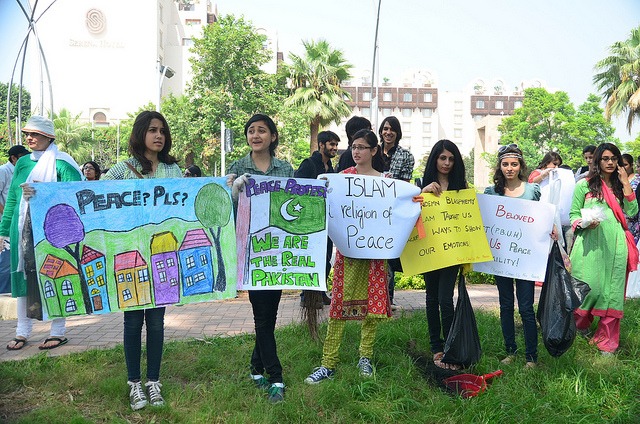
For a nation grappling with a crisis of legitimacy, burdened by mounting debt, and increasingly isolated on the international stage, the promotion of terrorism has ceased to be merely a tactic—it has become a lifeline. However, the consequences of this approach are proving to be overwhelmingly detrimental. With a society marked by deep internal fractures, a politically polarised environment, and a growing insurgency, the country teeters on the brink of internal collapse. Despite this, its military leadership remains fixated on outdated notions, still pursuing the illusion of strategic depth that effectively disappeared decades ago. The current course charted by the Army Chief reflects not a path towards military success, but one of reckless obstinacy. By continuously dispatching more terrorists across the Line of Control, he not only provokes a more capable adversary, but also accelerates the erosion of Pakistan’s future under the crushing weight of its own misguided ambitions.
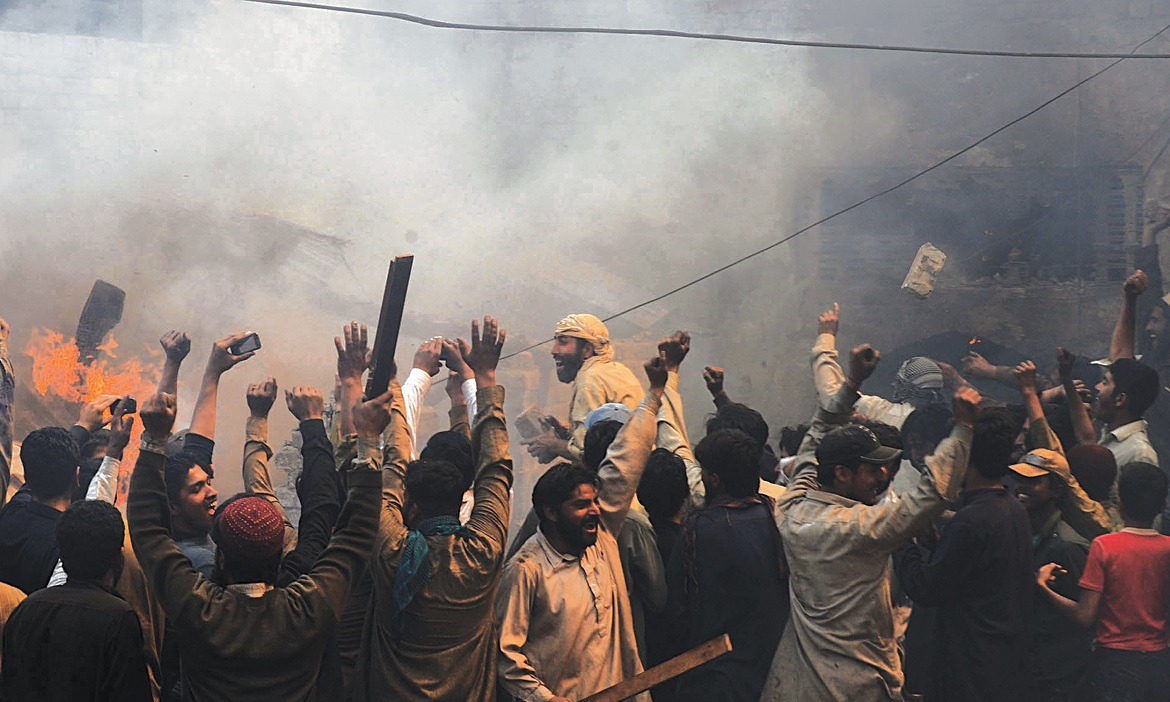
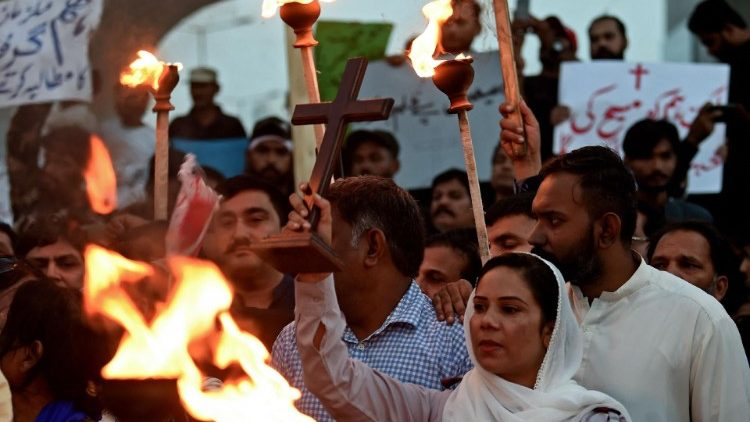
Every time one looks up Pakistan on the internet, one is bombarded with news of death, destruction, and discrimination. The country, which was carved out of India in 1948, with the vision of creating a safe territory for the minorities of the subcontinent, has devolved into a place where the majority of people endure some or the other form of oppression and threats, under a state that is always on the edge of collapse. Most recently, a disturbing video of a man and woman being shot to death by a bunch of men in the Balochistan province has emerged on social media. Investigation has revealed it to be a case of so-called ‘honor killing’ ordered by a local tribal leader and executed by the woman’s brother. Such killings based on archaic notions of ‘honor’, gender-based violence, persecution of religious and ethnic minorities, civilian killings by militants, and state-orchestrated killings in the name of counter-terrorism and counter-insurgency, and more, pervade the news cycle in the country where the elites who lead the security forces are immersed in amassing political and economic capital, more than providing security to the citizens.
Although Pakistan has a long history of being both a promoter and victim of terrorism, the crisis has particularly aggravated since the August 2021 resurgence of the Taliban in neighbouring Afghanistan. As the US left the country after a 20-year-long protracted war, much of the sophisticated weaponry that it had provided for the Afghan army found itself in the hands of the Taliban and Pakistan-based militant insurgent groups, specifically the Tehreek-e-Taliban Pakistan (TTP) and Baloch Liberation Army (BLA). Overnight, these groups swelled in capacity, exacerbating the security crisis for Pakistani forces as well as civilians. The Global Terrorism Index report of 2025 placed Pakistan in the 2nd position, noting 1,081 terrorism-related fatalities and 1,099 terrorist attacks in 2024.
In the past years, these groups have also scaled up their attacks on Pakistanis from other provinces as well as foreigners, particularly Chinese workers. In August last year, in a chilling incident, the BLA militants forced out 23 passengers from a civilian bus, checked their identity cards, and killed them after establishing that they were Punjabis. In March 2024, a suicide bombing killed 5 Chinese engineers working on a dam project in Khyber Pakhtunkhwa. The rise in attacks on Chinese workers has become a sore point between Pakistan and China, threatening to jeopardize the China-Pakistan Economic Corridor.
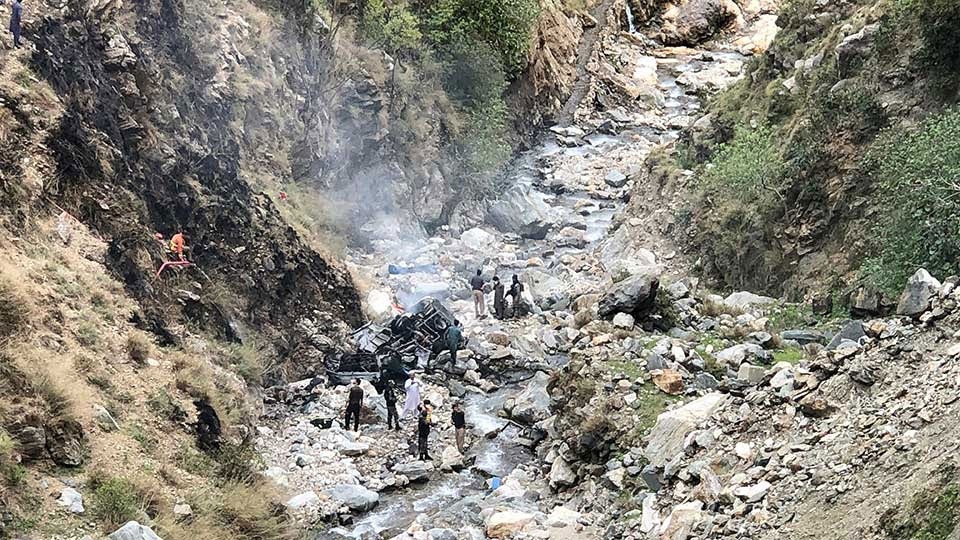
Additionally, the Pakistani military’s response to these terrorist groups has also opened up another security threat for the people. In Balochistan, in the name of countering the long-standing insurgency, the state has routinized enforced disappearances, custodial killings, and torture, without any accountability. Although it is very difficult to ascertain the exact number of forcefully disappeared people, to get an idea of the scale of this tragedy, one can refer to the Human Rights Watch report which has recorded 8,463 cases of missing persons between 2011 and January 2024 or the Pakistan Commission of Inquiry on Enforced Disappearances (COIED) which registered 10,078 cases. A civil resistance movement led by women has also emerged in the past couple of years, demanding accountability from the state for its excesses in Balochistan. However, it has been violently quelled, with its leaders incarcerated.
Since the founding of Pakistan on religious lines, there has been a concerted effort by the state to marginalize and erase its religious minorities, most prominently Hindus, Christians, and Sikhs. Besides systemic discrimination, cultural marginalization, and destruction of places of worship, religious minorities constantly face the threat of violence, ostracization, and forced conversions. Around 20-25 Hindu girls are estimated to be kidnapped and converted in Sindh every month. The police and judiciary often exempt the perpetrators who often enjoy social influence and support for ‘scoring’ a conversion to Islam. The draconian blasphemy law is another tool with which religious and sectarian minorities (Shias and Ahmadis) are persecuted. More disturbingly, when someone weaponizes the blasphemy accusation, often the cases do not even reach the courts as the enraged public murders the accused by themselves. At least 70 people have been reportedly murdered over blasphemy accusations since 1990. This figure includes the notorious killing of the Sri Lankan Christian worker Priyantha Kumara. The discourse around the law is so charged that anyone who dares to oppose it faces the same threat of being lynched. Prominent political figures such as the former governor of Punjab Salman Taseer and former Federal Minister for Minorites Shahbaz Bhatti have been assassinated for opposing the law, and judges who either convict vigilantes or acquit the falsely accused have to flee the country to save their lives.
When it comes to women, regressive social attitudes and a decrepit administration have led to a scenario where crimes like harassment are only routine but normalized. According to a Women Safety Audit undertaken by UN Women in 2020, over 80% women reported facing harassment in public places. Women are also the overwhelming targets of so-called honour killings- the Human Rights Commission of the country registered 405 cases in 2024 alone, most of them against women. As per data by the Sustainable Social Development Organization, only one of the 32 cases reported in the Balochistan province this year has led to a conviction, pointing to the dire situation where state neglect has emboldened criminals and proliferated such a heinous crime.
Despite the terrifying picture that the above instances and analyses paint about Pakistan, it is still only scratching the surface. In a country beset with administrative disrepair, state-supported religious extremism, ethnic violence, systemic impunity, suppression of dissent, and economic crisis, one can only imagine the daily struggle for survival that people are subjected to. Pakistan urgently requires a radical overhaul of state identity, civil-military relations, and state-society relations. However, given the status quo of absolute state complacency and elite capture, the future of the citizens of the country appears distressingly grim.