
– Arun Anand
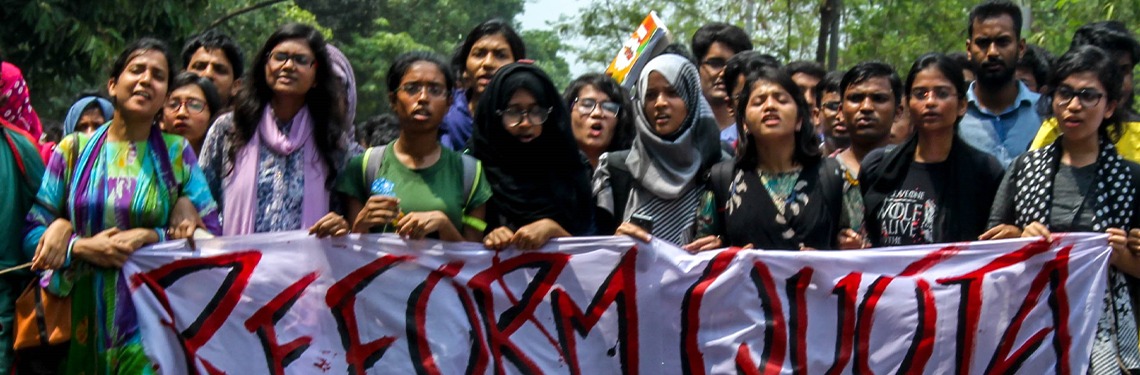
Bangladesh’s interim government recently gave its final approval to the draft of ‘July Mass Uprising Protection and Liability Determination Ordinance’ that grants indemnity to those who participated in the 2024 July Uprising that forced Sheikh Hasina to end her 15-year political rule and flee the country. The ordinance, believed to be the interim government’s fulfilment of ‘earlier commitment’ to ensure ‘legal protection’ to July participants, would take the shape of a law soon.
The ordinance provides impunity to participants from ‘activities carried out with the purpose of political resistance’ during 2024 uprising in July and August. Meaning, if criminal cases are slapped any of uprising participants for carrying out ‘political resistance during uprising’, such cases will be withdrawn by the government. Moreover, the ordinance adds that ‘no new cases will be filed’ against them, from now on, for their activities during the uprising.
The events of July-August have various connotations—uprising, revolution, political coup and political resistance. Those who participated in the uprising called it a ‘revolution’ that paved the way for ‘New Bangladesh’ or ‘Second Republic’. This group, composed mostly of student leaders who led the uprising and some later formed the National Citizen’s Party (NCP), has not only framed the uprising as ‘second liberation’ but also introduced a new political discussion where 1971 Liberation was brought back, reinterpreted and even compared with the 2024 uprising.
The 2024 ‘revolution’ has been portrayed by this group as fulfilling what 1971 could not, a liberation that gave Bangladesh its ‘true independence’. The same narrative is also echoed by another faction—the Islamists—for whom 2024 Uprising rolled the red carpet for their resurgence in the political field and now forms the main contending group against Bangladesh Nationalist Party (BNP) in the February 2026 national election.
Collectively, the Awami League is now branded as a ‘fascist’, a justification used by the interim government for banning Awami League’s political activities in May, closing the League’s door to participate in the February 2026 national election.
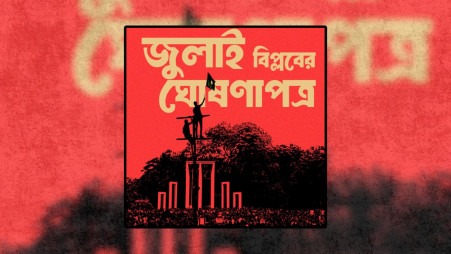
The interim government, in its official capacity, recognised the July participants as ‘july warriors’ (July Joddha), similar to ‘war heroes’ (Mukti Joddha) of Liberation War. On the first anniversary of the uprising, the interim government unveiled the July Declaration on 5 August 2025, following pressures from Student Against Discrimination (SAD), the main force behind the July Uprising and NCP to give 2024 events a constitutional recognition.
The Declaration, declared to be given a constitutional status, was supposed to be a statement to recognise the July Uprising and its ambitions for ‘Second Republic’. Rather, it became a political fatwa against Awami League and its political past since 1971 (as interpreted by its opponents), an obituary of the 1972 Constitution that is now labelled as ‘Mujibist Constitution’, and legitimising the ‘unconstitutionally’ formed interim government.
There is little doubt about the interim government’s biases towards leaders of the July Uprising. Indeed, it was the student leaders of SAD that invited Muhammad Yunus to come back to Bangladesh and take the role of the chief advisor of the interim government on 8 August 2024.
In return, three of the advisors in the interim government were student leaders of July Uprising. Many in the political circle believe that the interim government that helped the formation of National Citizen’s Party (NCP), a King’s Party, by intentionally delaying the announcement of an election roadmap. The neutrality became exposed when one of the advisors resigned to become the convenor of the NCP, while another resigned only recently to become the NCP’s spokesperson.
Since NCP’s establishment, the interim government displayed its soft corner for the student party, echoing the same political narrative as that of NCP, and even actively taking measures of historical revisionism to erase Awami League and Sheikh Mujibur Rahman’s legacy.
The recognition of July warriors has not been without controversy either. The gazetted list of about 1,402 warriors declared as ‘national heroes’ are promised tax benefits, welfare and rehabilitation, and now legal protection as per the 14 January ordinance. However, the gazetted lists were accused of including fake claimants, irregularities and political misuse, ironically the accusations slapped against Sheikh Hasina during the early phase of July Uprising when it was in the stage of anti-quota protest.
The ‘July warriors’ also violently clashed with police on the day of signing of the July Charter in October demanding for state recognition of martyr status, in addition to compensation and legal immunity—demands that were ultimately added as Clause 5 of the July Charter.
The latest move to this shenanigan—the July Mass Uprising Protection ordinance—justifies all kinds of acts that happened in July-August, especially violence against minorities and looting of arms from security forces, by indirectly branding these acts as ‘political resistance’. The wave of communal violence witnessed during this time, and continues even today were dismissed by the interim government as ‘political’.
Despite international reports, the interim government insists on these being ‘non-communal’ attacks. With only less than three weeks before 13th national election, over one-third of the polling booths are also marked as ‘risky’, while about 1,3331 of the 5,763 firearms and explosive looted during July Uprising remain missing, posing an alarming risk to security during the election time.
The protection ordinance potentially shields all human rights abuses. Although the interim government clarified that only ‘political resistance’ is to be given legal protection, the tweaking of human rights abuses as ‘political reaction’ leaves little room to comprehend that all these criminal acts will also be treated as ‘political resistance’.
The shameful attempt to equate 2024 July with the 1971 Liberation War, by providing equal status, benefits, memorials, and now legal protection not only downplays Bangladesh’s painful history but also changes the whole political trajectory of the country where political violence will get state protection.
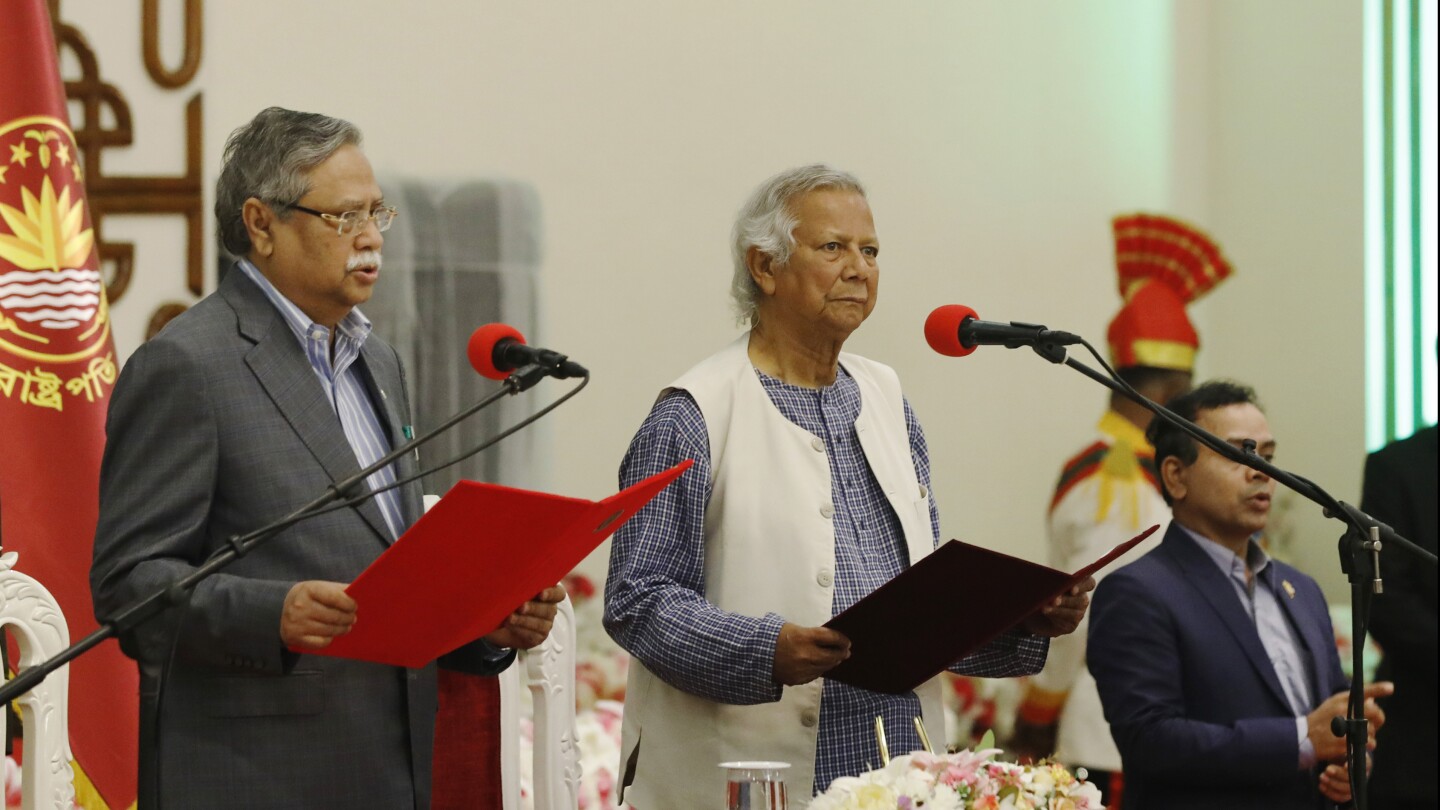
A former Bangladeshi intelligence officer has made sharp allegations against Nobel Peace Prize laureate Muhammad Yunus, claiming that the globally admired figure operates within — and benefits from — a deeply entrenched network of power inside Bangladesh. The remarks have reignited debate over governance, legitimacy, and influence under the country’s interim administration.
Speaking in an interview, the retired official said that while Yunus is widely viewed internationally as a humanitarian and reformer, sections within Bangladesh’s security and political establishment perceived him as the centre of a powerful “system” that quietly shaped state decisions.
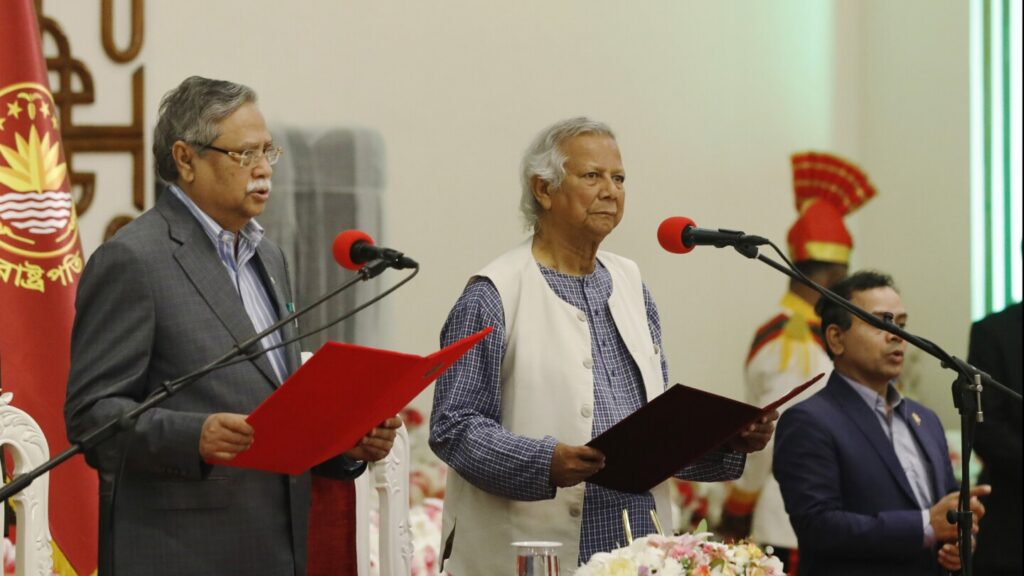
Yunus assumed charge as Chief Adviser of Bangladesh’s interim government in August 2024 after mass protests led to the fall of long-serving Prime Minister Sheikh Hasina. His appointment was welcomed by many foreign governments and international observers who saw him as a stabilising figure capable of steering the country toward democratic elections.
However, at home, criticism has grown. The former intelligence officer alleged that Yunus’s influence extended well beyond his constitutional role, affecting appointments, policy direction, and institutional functioning in ways that resembled a parallel power structure.
According to the ex-officer, individuals and institutions closely associated with Yunus formed a tightly knit network that exercised influence without public accountability. He claimed this structure blurred the lines between civil society, governance, and state authority, raising concerns about transparency and democratic norms.
Critics have also pointed to appointments of individuals perceived to be close to Yunus, arguing that such decisions reinforce the idea of an elite circle guiding governance behind the scenes. Supporters reject this view, saying experienced and credible individuals were brought in to stabilise a fragile state.
The allegations come at a time of continued political tension and sporadic violence across Bangladesh. The killing of a youth activist earlier this year triggered protests and intensified accusations that the interim government has struggled to maintain law and order.
Former Prime Minister Sheikh Hasina, now living abroad, has accused the Yunus-led administration of allowing instability to spread and failing to protect vulnerable communities. The interim government has denied these charges, stating that investigations into incidents of violence are ongoing and that restoring security remains a priority.
A key point of criticism from Yunus’s opponents is the absence of an electoral mandate. They argue that his international stature gives him disproportionate influence within the country, creating an imbalance between global perception and domestic accountability.
Supporters counter that Yunus was brought in during an extraordinary crisis and that his role is temporary, focused solely on reforms and preparing the ground for free and fair elections.
As Bangladesh moves toward national elections expected in early 2026, debate over the nature of power within the interim government is likely to intensify. The former intelligence officer’s comments have added fuel to an already polarised political environment, highlighting the sharp divide between international admiration for Yunus and domestic skepticism among his critics.
The interim government maintains that its only objective is to stabilise the country and ensure a credible democratic transition. Whether it can bridge the growing trust gap at home remains a central question in the months ahead.
-(Dr Sreoshi Sinha, Senior Fellow, Centre for Joint Warfare Studies
& Abu Obaidha Arin, University of
Delhi.)
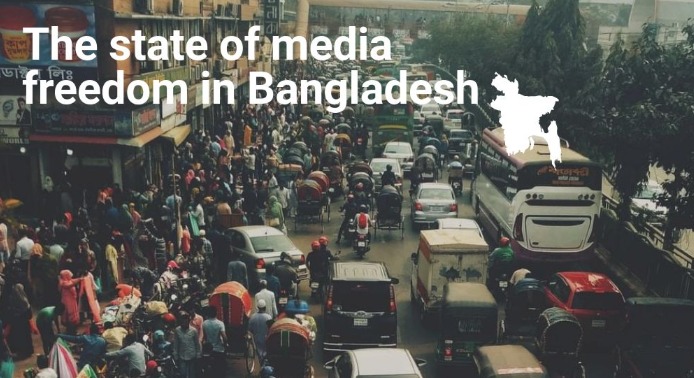
The persecution of journalists by the state is a grim reality across many authoritarian regimes—from Taliban-ruled Afghanistan to Myanmar, Belarus, Turkiye, and the Philippines. In such contexts, the press—often deemed the “fourth pillar of democracy”—is treated not as a watchdog, but as a threat. Bangladesh is also echoing this global trend. After the fall of the Sheikh Hasina government on August 5, 2024, many viewed the rise of Nobel Laureate Dr Muhammad Yunus as a turning point. Backed by student protests and public sentiment, his appointment as Chief Adviser cum Prime Minister of the interim government was seen as a symbolic “second liberation,” especially for the country’s long-suffocated media. But within months, that promise gave way to disillusionment. Despite initial pledges to restore freedom of expression and uphold democratic values, Yunus’s administration has presided over a deepening assault on press freedom. Journalists, both in urban and rural areas, are now facing threats, fabricated charges, detentions, and brutal attacks. Old laws like the Digital Security Act— once condemned by Yunus himself—remain in force. New regulations, framed in the name of “digital safety,” risk further gagging the media. More troubling still, the government has failed to announce an election date, turning its “interim” status into a prolonged, unaccountable rule. Institutions meant to safeguard democracy have fallen silent or become enablers of repression. The optimism of August has morphed into fear, as the Yunus regime retools authoritarian tactics under the guise of reform. In one year, the Yunus-led government has systematically undermined media freedom in Bangladesh. And hope has curdled into control, and the dream of a freer, more democratic society is slipping further away with each passing day. Behind the laurels lies a familiar hand of repression.
A Dangerous Time for Free Expression
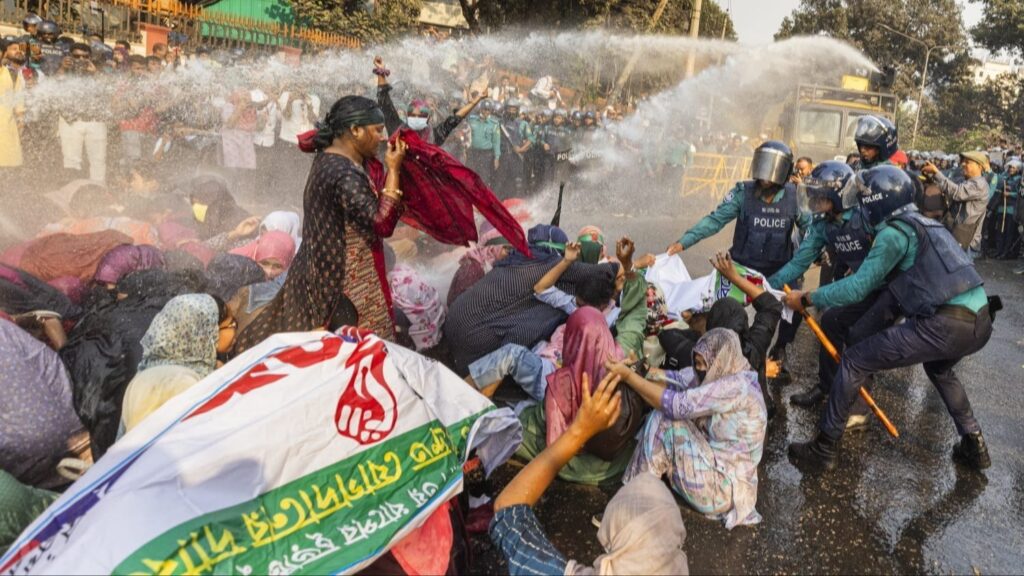
Freedom of speech, a foundational pillar of democracy, remains under severe threat. Journalists—especially those from minority communities—are facing escalating violence, legal harassment, and coordinated state-backed intimidation. A report released on World Press Freedom Day 2025 paints a bleak picture: within eight months of Dr Yunus taking office, at least 640 journalists were targeted. Of these, 182 faced criminal cases, 206 experienced violence, and 85 were placed under financial scrutiny by the Bangladesh Financial Intelligence Unit. The attacks are not isolated; they are systemic, deliberate, and widespread. From legal persecution to outright physical violence, the Yunus regime has transformed Bangladesh into one of the most dangerous places in Asia to be a journalist. Violence against journalists has become commonplace. In March 2025, two journalists were attacked at Barishal Court, while others were assaulted in Dhaka and outside the Dhaka Reporters’ Unity. The most horrific incident came on March 18, when a woman journalist was gang-raped in Dhaka—a case that drew international outrage, including condemnation from ARTICLE 19 and other watchdogs.
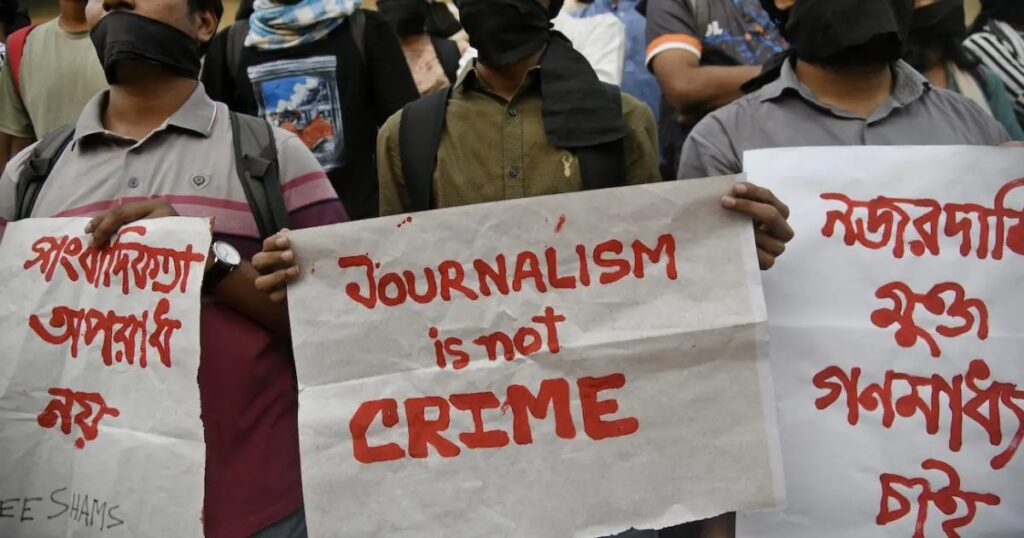
In April, New Age’s Rafia Tamanna and Daily Prantojon’s Sajedul Islam Selim were physically attacked. Offices of news outlets were vandalised. Prothom Alo, a paper accused of being an “agent of India,” saw its Rajshahi office destroyed. These attacks illustrate a dangerous trend: the delegitimisation of critical voices through nationalist propaganda followed by violent suppression. Legal harassment has become a preferred tool to silence dissent. Journalists are being dragged into courtrooms and prisons over flimsy or fabricated charges. Kamruzzaman, a journalist in Satkhira, was sentenced to 10 days in jail by a mobile court for “obstructing government work.” His real crime? Reporting on poor construction work. Rubel Hossain of Dhaka Mail was falsely implicated in a murder case related to student protests. Three prominent journalists—Naem Nizam, Moynal Hossain Chowdhury, and Syed Burhan Kabir—faced arrest warrants under the much-criticised Digital Security Act. Their only fault: publishing content critical of powerful figures.
The State vs. Media Institutions
Media institutions haven’t been spared either. An adviser at the Ministry of Information and Broadcasting announced audits targeting “opposition-affiliated” media houses—a move widely viewed as financial intimidation. Deepto TV suspended its news broadcasts following political backlash. ATN Bangla dismissed a reporter for merely raising a sensitive question. In both cases, official denials of state interference were undercut by obvious patterns of state-orchestrated pressure. In a disturbing episode on May 4, journalists at Daily Janakantha protesting unpaid wages were assaulted by goons reportedly linked to the National Citizen Party. This convergence of financial abuse and physical violence has created a stifling environment for critical media. The Yunus government has done little to allay fears about surveillance and data privacy. Instead, it has doubled down with proposed legislation like the Cyber Protection Ordinance 2025 and the Personal Data Protection Ordinance—laws that could further institutionalise censorship and mass surveillance. With travel bans imposed on more than 300 journalists, and bank accounts frozen for over 100 of them, the message is clear: dissent will be crushed not just with batons, but with bureaucracy. Journalists from minority communities are bearing the brunt of the crackdown. Shyamol Dutta, a leading Hindu journalist and editor of Bhorer Kagoj, was jailed after being removed from his post at the National Press Club. Munni Saha, a prominent media personality, is facing several cases and has been detained for questioning. More than 50 minority journalists are reportedly living in fear, with many dismissed from their jobs under opaque circumstances. This pattern reflects not just a press freedom issue, but an assault on the fundamental rights of minority communities.
Targeting Prominent Figures and Media Houses
The arrest of top media professionals like Mozammel Babu, CEO of Ekattor TV, and Syed Ishtiaq Reza, former chief of news at GTV, has shocked the industry. The charges—often murder or conspiracy—lack credibility, pointing to a larger political agenda. In one bizarre move, a complaint filed with the International Crimes Tribunal accused 29 journalists and editors, alongside former Prime Minister Sheikh Hasina, of spreading “false news to justify genocide.” The charges are outrageous and serve no purpose but to stoke fear and paralyse the press. Even high-profile reporters like Shahnaz Sharmin, known for her fearless on-the-ground reporting, have been named in criminal complaints. Her alleged involvement in the death of a protester is widely seen as a fabricated effort to tarnish her reputation. Dr Yunus’s rise to power was framed as a “second liberation.” His global reputation as a humanitarian and social entrepreneur gave many hope. But the honeymoon was short-lived. The arrest, torture, and surveillance of journalists under his watch signal a complete betrayal of those ideals. Rather than dismantling the oppressive tools of the previous regime, the interim government has inherited and expanded them. Laws are being used as weapons. The courts have turned into instruments of intimidation. And civil liberties—once hoped to be restored—have only deteriorated. Despite the dire situation, there are glimmers of resistance. A Media Reform Commission, proposed by information adviser Nahid Islam, offers a chance for dialogue and reform. But unless these proposals are translated into immediate action—starting with the release of unjustly detained journalists and withdrawal of politically motivated cases— the initiative risks becoming another empty gesture. Civil society must stay vigilant. International watchdogs, human rights organisations, and democratic governments must increase pressure on the Yunus administration. Silence is not neutrality—it is complicity.
The Fight for Truth Must Go On
In the last 12 months, Bangladesh has moved from the promise of change to the peril of authoritarianism. The interim government led by Dr Muhammad Yunus was expected to restore justice, transparency, and democratic values. Instead, it has turned against the very institutions and individuals that form the backbone of a functioning democracy—the free press. The persecution of journalists, the weaponisation of laws, the sidelining of minority voices, and the unending delay of elections paint a grim portrait of a government losing legitimacy by the day. If Yunus does not act swiftly to reverse this trend, he risks eroding not only his reputation but also the democratic foundation of the country. Bangladesh’s journalists are not just chroniclers of events—they are defenders of democracy, truth, and public interest. Silencing them will not silence the truth. It will only delay the reckoning. The time for reform is now—before the darkness of repression becomes permanent
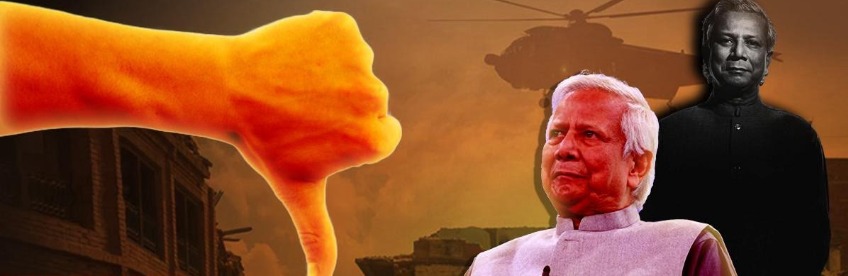
Bangladesh’s former intelligence officer and diplomat Aminul Hoque Polash, in exile since the fall of the Sheikh Hasina regime, has broken his silence on the hidden power structures, financial engineering, and political ambitions surrounding Nobel laureate and the country’s interim leader Muhammad Yunus.
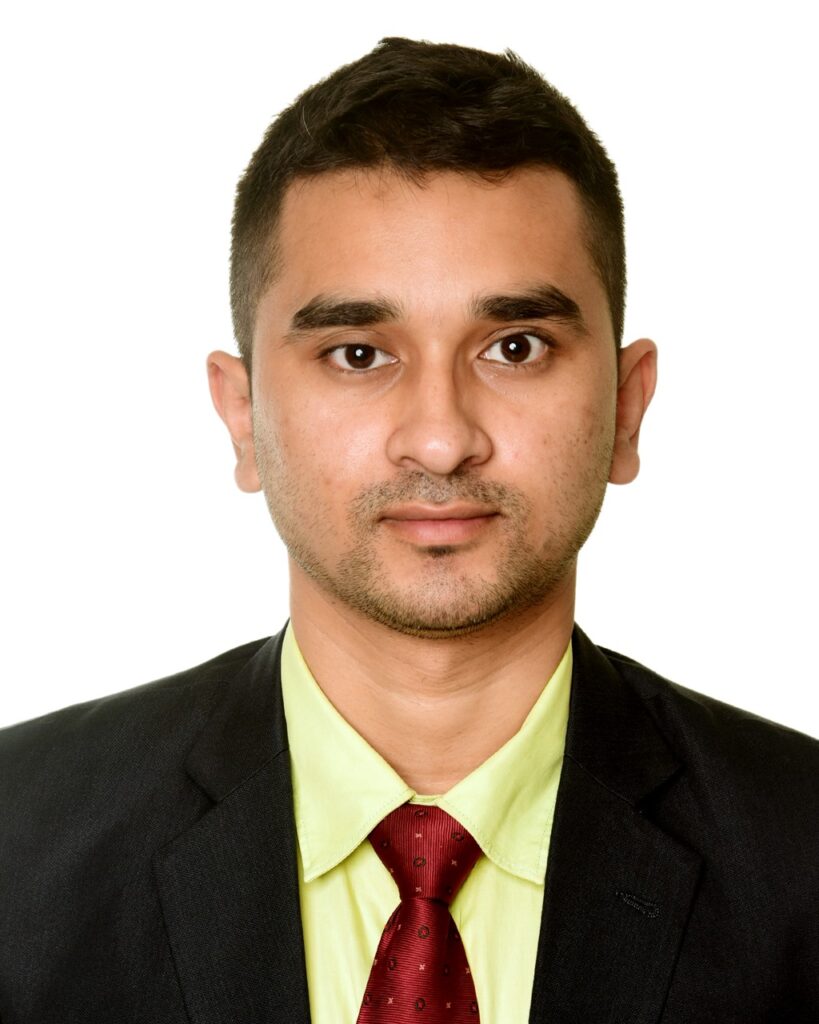
In an exclusive conversation, Polash walks News18 through classified insights, internal documents, and lived experiences inside Bangladesh’s national security system, revealing a side of Yunus the world has never seen before.
Before we get into the details about Dr Yunus, tell us how you ended up in exile.
I never pictured myself sitting in another country, talking about the collapse of the institutions I once served. I spent nearly a decade inside national security and foreign service. My work was simple in principle: follow evidence, protect the state, and protect the people.
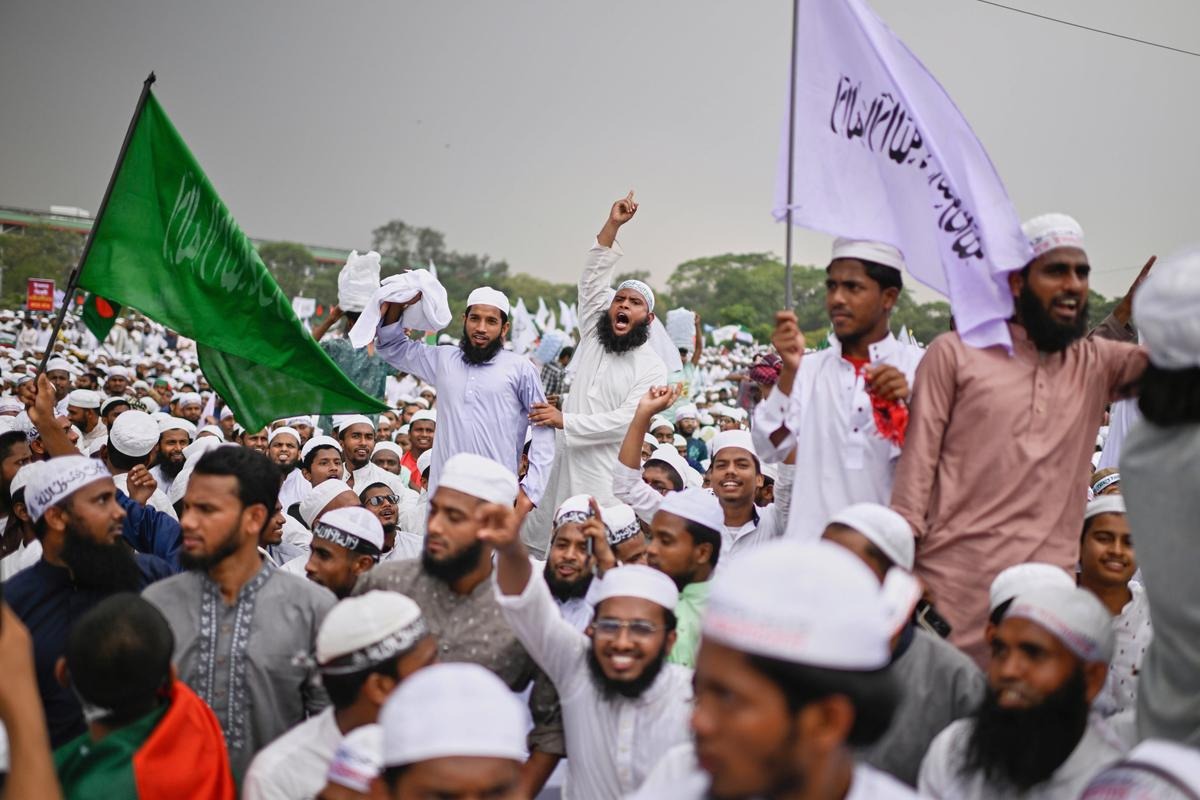
Amidst the developments in Bangladesh’s political trajectory, the resurgence of Islamists has been the one catching everyone’s attention. A country with about 90 per cent Muslim population, this surely is not supposed to be alarming. But Bangladesh is no Middle East or Central Asia — wherein religion profoundly shaped their political systems. Religion, albeit a strong influence, has more cultural and symbolic presence than a political one — whereby Bangladesh’s political establishment is influenced by principles of nationalism, socialism, secularism and democracy. Here, cultural and ethnolinguistic identity have historically taken precedence over religious one.
Islamists in Bangladesh seek a complete overhaul of the socio-political-legal system rooted in Islamic values and principles, contrary to the present establishment in Bangladesh. However, Islamists do not comprise a homogenous group, as they take their ideological orientation from different Islamic schools of thought, namely, Hanafi, Deobandi, Barelvi, Salafi and Sufi. Among these, Hanafi and Deobandi exert the most socio-political influence. The Islamists, initially marginalised post Bangladesh’s independence, were rehabilitated under military rule. After restoration of democracy and civilian government in 1990, some created formal political alliances while maintaining grassroot mobilisation in religious institutions and madrasas and entered the electoral field. Others took the path of militancy, launched a series of terror attacks in Bangladesh and re-configured into newer factions after facing state crackdowns and bans, especially under the Awami League government.
The recent unofficial visit of seven Islamic scholars to Afghanistan on Taliban’s invitation needs a careful assessment. The meeting was framed as seven Bangladeshi Islamic scholars observing human rights and women’s rights situation in Afghanistan in face of backlash from the West. However, one cannot overlook the heavy political intent as the meeting also prioritised strengthening ties between Islamic scholars of the two countries, to enhance diplomatic relations in future, beside cooperating on areas like trade, education and healthcare.
Following the Taliban takeover of Afghanistan in 2021, Bangladesh government (now dismantled), maintained its distance and refused to give Taliban any diplomatic recognition. Rather, it exercised caution — monitoring and countering the celebratory reactions of Islamists on social media who hailed it as a ‘triumph of Islam’. Even before the takeover, many Bangladeshi Islamist radicals were arrested by security authorities who were caught attempting to join the Taliban in Afghanistan by crossing India.
Why were Bangladesh’s Islamist influenced youth attracted to the Taliban? Because of Bangladesh’s own home-grown extremist groups that emerged in the 1980s-90s, notable being Harkat-ul Jihad Al Islami Bangladesh (HuJIB), and Jamaat-ul-Mujahedeen Bangladesh (JMB), established by fighters who joined the Taliban during Afghan jihad’s fight against Soviet invasion of Afghanistan. After these fighters returned to Bangladesh, they sought to bring the Taliban’s envision into reality—to establish an Islamic rule in Bangladesh, based on Shaira jurisprudence. These groups are also reported to have links with transnational terrorist organisations like al-Qaeda, al-Mujahideen and even Lashkar-e-Taiba (LeT). The early to mid 2000s was a period of rampant Islamic terror attacks by these groups, primary targets being NGOs and secular and cultural events that they deemed to be ‘un-Islamic’. However, most extremist organisations were checked via strict counterterrorism measures by 2007, although another wave of terrorist attacks surfaced between the period of 2013-2016.
The seven Islamic scholars who attended the meeting with Taliban included Khelafat Majlis chief Mamunul Haque, Nayeb-e-Amir (Pir of Madhupur) of Hefazat-e-Islam Bangladesh Abdul Hamid, Abdul Awal, Abdul Haque, Habibullah Mahmud Qasemi, Monir Hossain Qasemi and Mahbubur Rahman. Both Hefazat and Khelafat belong to the same Deobandi tradition and predominantly trained in Qawmi madrasas, that emphasises in Islamic scholarship independent of state regulated Alia system. In terms of core ideological beliefs, both lay strict emphasis on scriptural orthodoxy, rejection of Barelvi tradition, Sufi practices and Ahmadiya’s inclusion as Muslims and opposition to Western influences, especially on culture and education. In effect, both champions complete Islamisation of socio-cultural life.
Khelafat Majlis, founded in late 1989, emerged during the Bangladesh anti-Ershad movement. An Islamist political party, Khelafat, stated its goal of creating a national governance framework that is based on Qura, Sunnah and early Islamic Caliphates. Therefore, the party’s main target of mobilisation were Islamic scholars and aimed at creating a larger unity between these scholars and general Muslims against the secular system of governance who would push for Khelafat’s Political Islam. Its activities largely confined to anti-secular and blasphemy protests—be it organising a large mass demonstration from Dhaka to Ayodhya demanding for Babri Masjid restoration that was demolished in 1993, protest against installation of “Eternal Flame” at Suhrawardy Udyan, the anti-Taslima movement that led to her exile, the 2017 anti-Statue protest against the installation of the statue of Lady Justice from the Supreme Court premises in Dhaka.
In electoral politics, it had a minimal presence, entering into coalition with both BNP (that it opted out in 2021). Although not involved in overt terror activities, Khelafat’s hardline stance coupled with ideological leniency towards the Taliban were deemed threatening to Bangladesh’s secular principles. Its leaders, including chief Mamunul Haque, were arrested under Digital Security Act and Anti-Terrorism Act under the Awami League government for their participation in protests in anti-secular, anti-blasphemy protests, in alliance with Hefazat-e-Islam.
Unlike Khelafat Majlis, Hefazat-e-Islam is not a political party but an Islamist organisation, drawing on the same ideology and traditions like Khelafat. A coalition of more than 25,000 Qawmi madrasas across Bangladesh, Hefazat emerged in 2010 as a reaction to Awami League government’s Women Development Policy (2009) draft giving women equal inheritance rights. In 2013, Hefazat held a massive rally by blocking roads, commerce and regular activities. Known as the Shapla Chattar siege in Dhaka, Hefazat presented its 13-point demands that included introduction of blasphemy laws, gender segregation in public, declaring Ahmadiyyas as non-Muslims, and curbing every un-Islamic activity, to state a few.
Following Jamaat’s decline in Bangladesh under Awami League’s government, Hefazat’s emergence was seen as the rise of a new radical Islam in Bangladesh and this 2013 siege, a pivotal moment of radical Islamists urban mobilizational efforts directly challenging the secular state authority. Other notable protests are the anti-statue protest of 2017, anti-Modi protest in 2021, the latter turning violent and the death of 17 people. The leaders of Hefazat-e-Islam were meted the same treatment as its ally Khelafat, who provided logistical and ideological support to Hefazat’s programmes.
Following the July Uprising and the establishment of an interim government, both Hefazat-e-Islam and Khelafat Majlis regained their position and marked its active presence in the country. Detained leaders, including Hefazat chief were released, seen as part of the interim government’s reconciliation. However, thanks to both, and its allied Islamic parties, Bangladesh has also been witnessing a series of attacks, especially on the freedom of cultural expression.
Towhidi Janata, a loosely organised group of ‘agitated Muslims’ has been notorious to wreak havoc on events like Book Fair, Lalon Fakir Mela, Basant Utsav and women’s football match. Needless to say, Hefazat and Khelafat provide backing to Towhidi that has also been making headlines recently for increasing attacks on shrines, including the exhumation and burning of body of Nurul Pagla. While these Islamic scholars were in Kabul to meet the Taliban, its leaders and activities back home organised street rallies demanding for implementation of the July Charter and declaring Ahmadiyas to be non-Muslims and a Constitutional reform that is based on Sharia.
Khelafat and Hefazat, although not a terrorist organisation, are ideologically extremist whose beliefs go against Bangladesh’s core national principles. The Taliban meeting surely is their symbolic assertion — of Bangladesh’s Islamists envision of Talibanising the country. This meeting with the Taliban also points to a future normalisation of diplomatic relations between Bangladesh and Taliban’s Afghanistan, as the interim government seems to not object to such an informal meeting. A radicalised Bangladesh under the garb of Islamists pose a serious problem for South Asian neighbours, given these factions’ ideological links not just with Taliban, but also with Pakistan. The Global South, therefore, needs to keep an open eye to such ‘harmless’ meetings.
–IANS
– Arun Anand
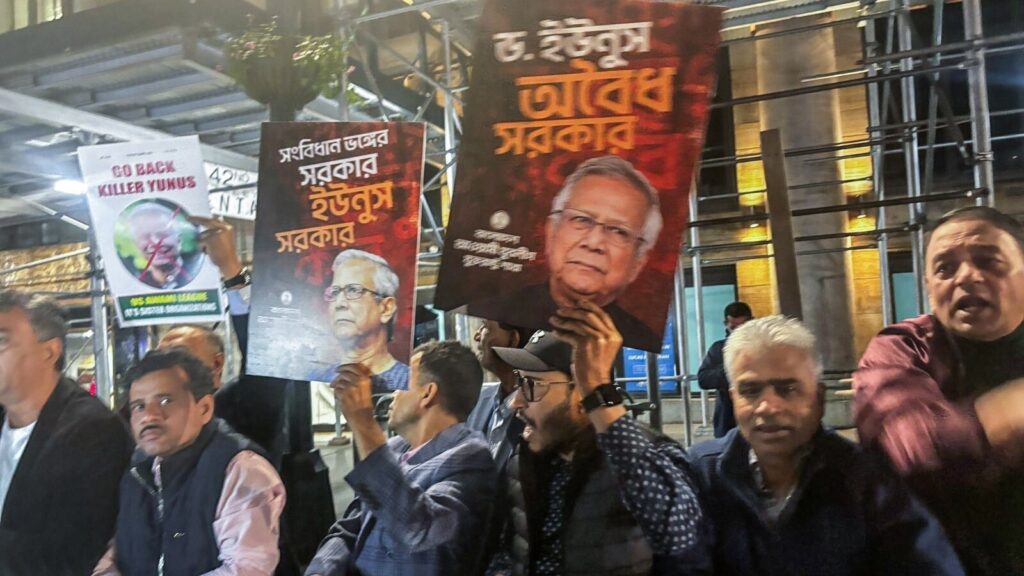
The interim government, which has been in power for over a year, is now grappling with a credibility crisis as political parties question its neutrality and its ability to ensure free and fair elections in the upcoming national polls scheduled for February.
Formed under the leadership of Muhammad Yunus following Sheikh Hasina’s ouster last year, the interim administration was projected as a corrective force meant to dismantle the remnants of authoritarianism in the country. Its key responsibilities were to restore stability, implement crucial reforms, and oversee a transparent democratic transition. Yet, it has failed on all these fronts. The initial perception of the interim government as a righteous alternative has eroded, exposing an even deeper democratic deficit than before.
Recently, six international human rights organisations have addressed a letter to Muhammad Yunus, the interim government’s chief advisor, urging his government to take concrete measures to prevent further human rights violations and to advance reforms process to uphold the country’s human rights. Two pressing issues addressed in the letter deserve our attention, for these highlight the failures of the interim government—the arbitrary arrests and detentions of journalists and politically motivated attacks on Awami League members.
Press freedom has been a longstanding concern in Bangladesh, partly due to the country being under prolonged military rule and the failure to reforming media even after restoration of civilian government in 1990. It is well established that press faced unprecedented censorship previously whereby any criticism against the government in power has been stifled. While the media in Bangladesh hoped to see a new dawn of freedom after 2024 July Uprising, the reality, however, remains concerning. In an eerily similar way like its predecessor, the interim government continues to target journalists in Bangladesh, via harassment, intimidation, physical attack (including murder) and detention.
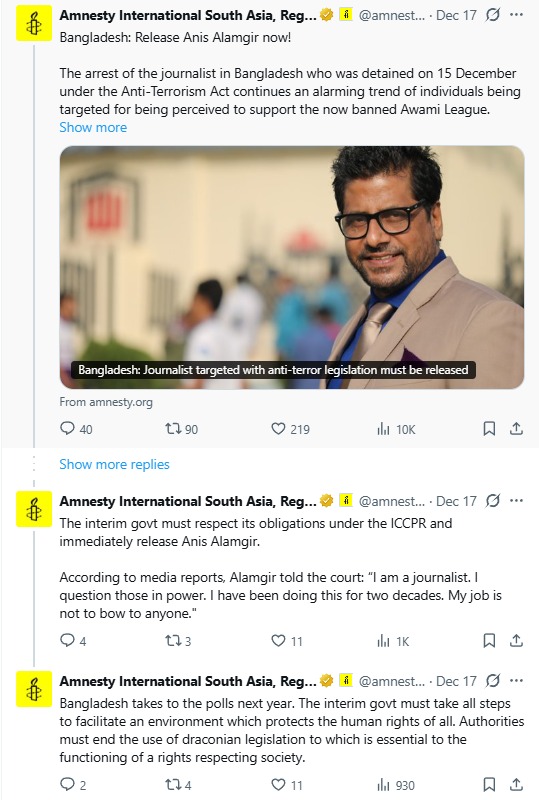
Labelling any voice of dissent and criticism as “collaborators of fascist Awami League government” has become the interim government’s most used tool of repressing media freedom. The mob attack on speakers inside Dhaka Reporters’ Unity, and detention of 16, including journalist Monjurul Alam Panna under anti-Terrorism Act has been widely criticised as Bangladesh’s growing culture of intimidation and impunity since the past year.
According to the World Freedom Index, Bangladesh’s press freedom was classified as “very serious”, noting that over 130 journalists have been subjected to ‘unfounded judicial proceedings’, especially on charges of ‘crimes against humanity’ and ‘murder’. As per Rights and Risks Analysis Group (RRAG) report, in the first eight months of Yunus-led interim government, about 640 journalists have been targeted, which includes 182 journalists being filed under criminal cases, 206 journalists being filed under acts of violence, and cancellation of press accreditation of 167 journalists.
The first half of this year witnessed 266 journalists being implicated in cases related to July Uprising, and about 50 media organisations in the country being impacted on the same accusation. Dhaka-based Human Rights Support Society (HRSS) also reported the ‘alarming’ human rights situation in Bangladesh, noting that 340 journalists have been victims of murder. Human Rights Watch in its October report, too, accused the interim government of abusing recent amended Anti-Terrorism Act to target political opponents, including academics and journalists, and stuff them in prisons.
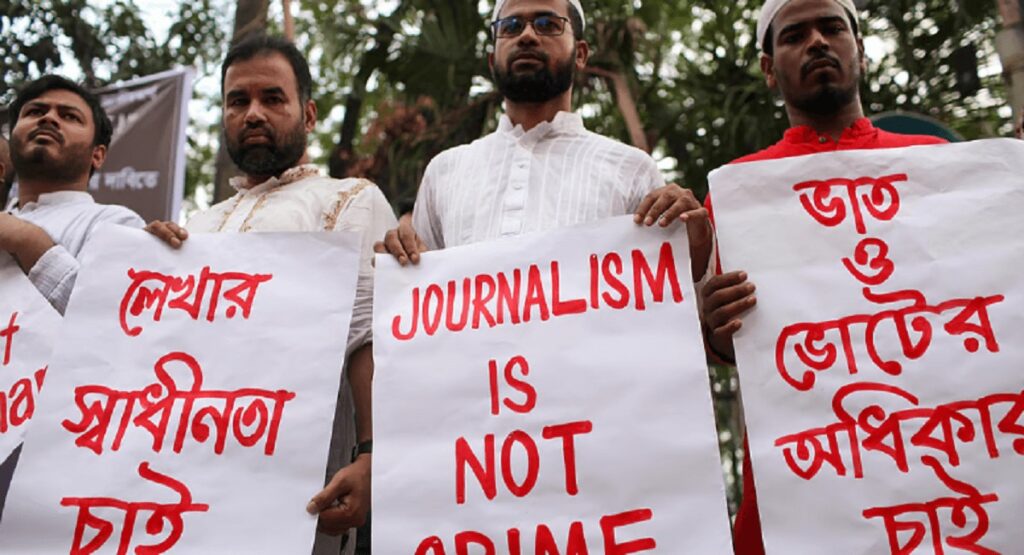
Bangladeshi Journalists in International Media (BJIM) also claimed that attacks on journalists reported in different districts allegedly involve local miscreants and even law enforcement agencies while the administration has taken no visible steps yet. The declining state of press freedom in Bangladesh remains a challenge to the country’s democratic transition.
For the interim government, the journalists are not the only opponents slapped with terrorism charges. The main target of its wrath has been members and loyalists of the Awami League.
Post-Hasina Bangladesh witnessed a paradigm shift of its historical narrative—from Sheikh Mujibur Rahman’s legacy to the history of Liberation War itself. Moreover, moments after Hasina fled Bangladesh, the country succumbed to a compromised law and order situation, where mobocracy emerged as new normal. Instead of restoring stability, the interim government exhausted all its efforts in ostracizing Awami League. From army, judiciary and police force, educational institutions, all League loyalists were first replaced or forced to resign.
The government also became a bystander to the surge in mob attacks on those alleged to be League loyalists (including, the religious minorities), justifying these attacks as “political”. Every act of vandalism, including the despicable demolition of 32 Dhanmondi, was also labelled as “act of provocation” by outsiders. Instead of arresting the perpetrators, the interim government launched Operation Devil Hunt, arresting as many as 18,384 people across Bangladesh, mostly those affiliated with the Awami League and Chhatra and Jubo League.
This witch-hunt started much before Awami League was officially banned this May following the amendment of Anti-Terrorism Law. The ban received criticisms from international rights organisations—Human Rights Watch, United Nations and Amnesty International—as a partisan act that risk repressing political pluralism which also undermine the country’s reform process.
The Human Rights Watch deputy Asia director accused the interim government of being more stuck on juggling an unreformed security sector, violent religious hardliners and political groups seeking vengeance on Hasina supporters than protecting the rights of Bangladeshis. The report also noted the interim government’s pattern of mass arrests and arbitrary detention of hundreds of League supporters misusing its amended Anti-Terrorism Law, slapping them with baseless charges and denying the detainees with proper medical care and bail.
The Freedom House reported that while the interim government lifted restrictions on major political parties that opposed the Awami League, restrictions increased on former ruling party. Leaders of Awami League were arrested on alleged crimes based on skewed evidence. The ban on the party, the cancellation of its party registration at the Election Commission along with the continues witch-hunting on League and its allies via amendment of legislative measures have not only hindered the activities of Awami League but also identified as the interim government undermining fundamental freedoms.
Notwithstanding Yunus and his other adviser’s persistent denial of worrying human rights track, rights organisations—both national as well as international—have been noting the hypocrisy of following the same ‘fascist’ path against which it was established in the first place. It is now evident that Muhammad Yunus is only using its political powers to seek political vendetta against Awami League and Sheikh Hasina, his old opponents.
Now with just the players change, democracy is taking a backseat, while mobocracy, culture of extortion, religious extremism and political violence—all sustained via the interim government’s human rights violations—are ruling Bangladesh’s political culture. Amidst this, the chances of a free and fair election, a just and inclusive democratic transition feel slim.
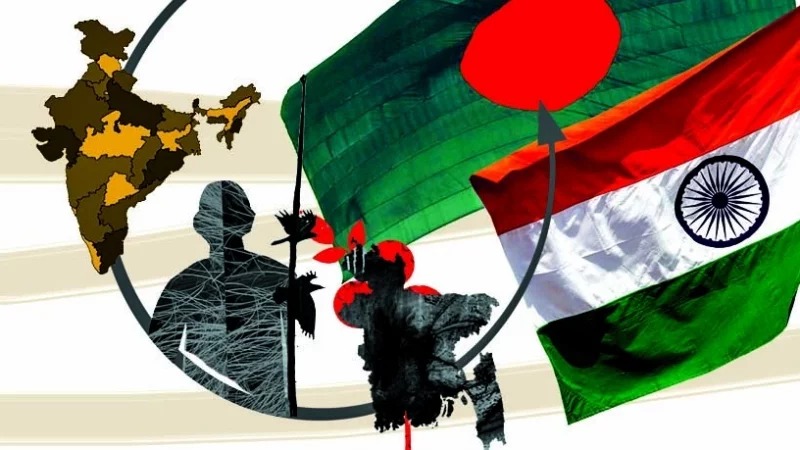
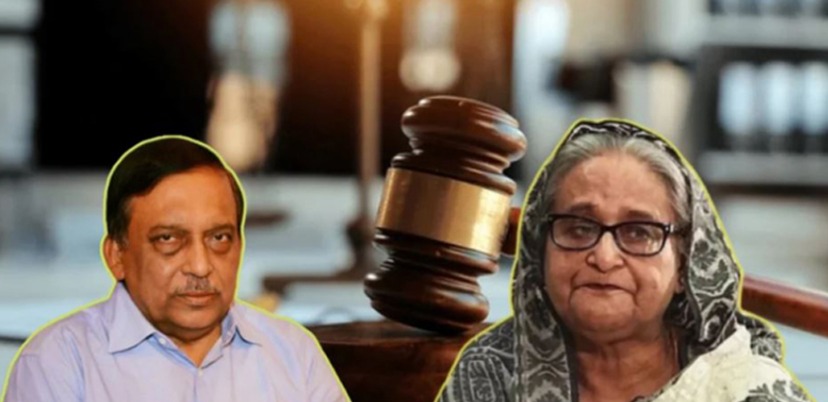
The partition of India has been described by historians as a great misfortune of human civilization. In his book ‘Guilty Man of Partition of India’, Dr. Ram Manohar Lohia argues that the leaders responsible for the partition of India were arrogant, conceited and ambitious. South Asia is still reeling from the aftermath of partition. Bengali Muslims, who accepted Pakistan as Muslims, launched a revolution under the leadership of Sheikh Mujibur Rahman to create Bangladesh for their language, culture and identity. At that time, Pakistan was widely supported and assisted by America and China. India, which was defeated by China in 1962, was isolated from China and America after defeating Pakistan in 1965. Pakistan’s military rulers did not spare any brutality to suppress the movement led by Sheikh Mujibur Rahman. Three million Bengalis were martyred in the eight-month movement. Pakistani soldiers raped three hundred thousand Bengali women to change the Bengali language.
In the history of human civilization, no military force in the world has shown such ruthlessness and brutality. Due to the growing movement, India was forced to feed the Bengali refugees. In the 70s, India received the excellent leadership of Indira Gandhi. Indira Gandhi was a skilled player in diplomacy. She mobilized the Indian army to support the Mukti Bahini soldiers. At that difficult juncture in history, America and China did not hesitate to threaten India.
US President Nixon did not just advocate for Pakistan but also sent a warship with nuclear capabilities to the Bay of Bengal. Similarly, China also used the word war to invade India from the Himalayan region. That was a difficult situation for Indira Gandhi. She traveled to the Soviet Union and succeeded in signing a peace treaty with the Soviet Union in 1971. According to the terms of the treaty, the clause on the invasion of India stated that Soviet Russia would fight alongside India. Due to the aftermath of the peace treaty with Soviet Russia, American pressure and Chinese threats became self-evident. In other words, Indira Gandhi succeeded in becoming the midwife of Bangladesh. Bangladesh was born on the basis of culture. The song written by Rabindranath Tagore became the national anthem of Bangladesh.
In Bangladesh, which was built on the concept of a secular and inclusive society, Sheikh Mujibur Rahman was martyred along with his family in 1975 after being targeted by extremists. Sheikh Hasina was able to save her life because she was in Germany. Over time, she took refuge in India. After 1975, it seems that the rule was in the hands of extremists for a long time. Bangladeshi society is divided into two parts, the Ashraf and the Atarf. The Ashraf community has a large population and this community seems to support inclusiveness and secularism, while the Atarf seems to stand in favor of Islamization and Sharia law. After 1975, the Jamdani rebellion was again in favor of secularism in 1989. In other words, Bengali nationalism seems to have become strong again and managed to hold power for a long time. However, from 2001 to 2006, extremist forces like the BNP and Jamaat-e-Islami succeeded in making Bangladesh a victim of backwardness.
From 2006 to 2008, the nationalist movement in Bangladesh, especially under the leadership of Sheikh Hasina’s party, became successful. Bangladesh began to draw up a roadmap for modernization. In 2012, the movement took shape, taking the decision to transform Bangladesh’s economy under the leadership of Sheikh Hasina. With the arrival of Sheikh Hasina, there was a major change in foreign policy. Resolving the border issue with India was a major success of Bangladesh’s foreign policy. Due to Sheikh Hasina’s strong leadership, Bangladesh became one of the fastest growing economies in South Asia. By importing raw materials from India, Bangladesh succeeded in making a leap in the textile sector in Europe and America.
Bangladesh was able to benefit more from the heat and heat of globalization and open economy. Bangladesh’s modernization journey was not digestible even by America. Due to the geopolitical structure of Bangladesh, America wanted to keep its footprint in Bangladesh, Saint Martin Island. The American base campus on Saint Martin Island was sponsored by the American goal of observing Chinese activities in Myanmar. Sheikh Hasina did not have American conditions. Against this background, an uprising began in Bangladesh with the alliance of America and Pakistan and the goodwill of China. This uprising turned into an explosion. Sheikh Hasina’s working style was also different. Hasina also abused her power to rein in the radicals and suppress the opposition. On August 5, 2024, Sheikh Hasina managed to escape from Bangladesh and took refuge in India.
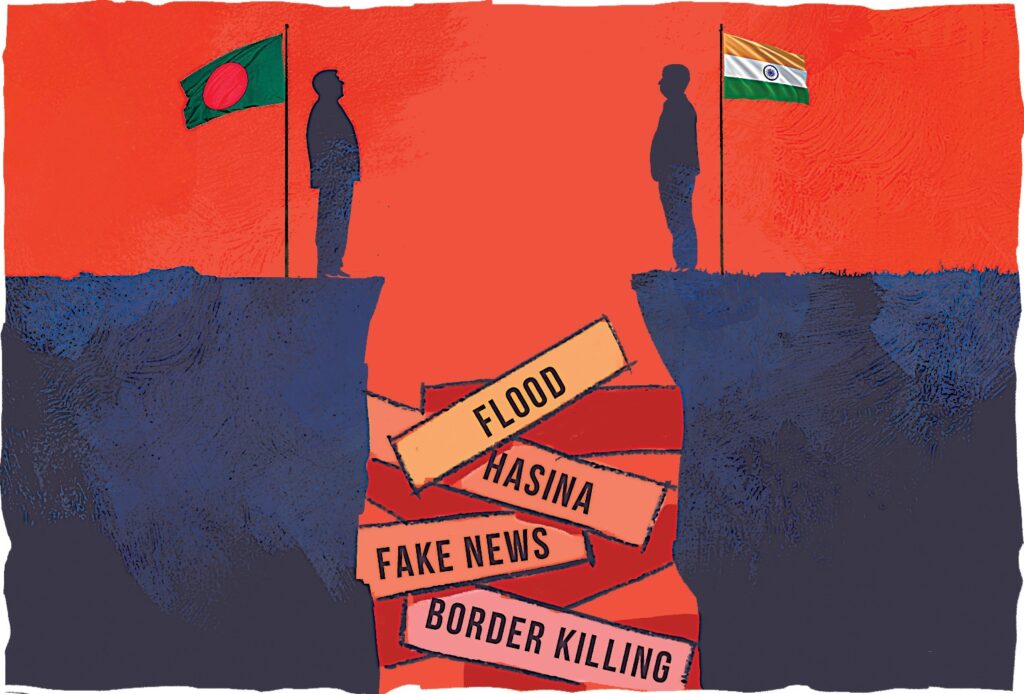
During this long period, the Hindu community of Bangladesh became a scapegoat. The Hindu community had the largest investment in Bangladesh’s textiles. After the Hindu community became the target of radicalism, the textile system was completely destroyed. During the leadership of Bangladesh under Nobel Prize winner Mohammad Yunus, the alliance between Bangladesh and Pakistan seems to have fully increased. Recently, a Bangladeshi court has sentenced Sheikh Hasina to death, and Bangladesh seems to have started diplomatic efforts to pressure India to extradite Sheikh Hasina, who has taken refuge in India.
Bangladesh’s security advisor, who is visiting India, has placed Indian security advisor Ajit Doval in Bangladesh’s favor. Although there is an extradition treaty between India and Bangladesh, its articles 6 and 7 state that the extradition treaty will not be applicable to political charges. Despite the deep influence of the Awami League in Bangladesh, there is silence in civil society due to the rampant extremism. Experts believe that the Hindu community will again be targeted by terrorists in the region where Sheikh Hasina was installed as the protector of the one crore Hindu community, which has had a great impact on the lives of the people of Bangladesh. Experts believe that Bangladesh may become like Afghanistan in the region where the chemistry between Bangladesh and Pakistan has dissolved.
In this sense, international powers and human rights activists have appealed to India not to extradite Sheikh Hasina. It does not seem appropriate to extradite Sheikh Hasina on the basis of democratic values. Since Bengali society is strong in terms of civilization, culture and literature, Bangladeshi society has the ability to defeat extremism. It can be estimated that the Awami League will regain power in the region where democracy is established in Bangladesh. In this sense, it does not seem appropriate to stand under any diplomatic pressure, keeping in mind the broader interests of South Asia. Modi should consider the example of Indira Gandhi and pursue a strategic policy with Bangladesh.
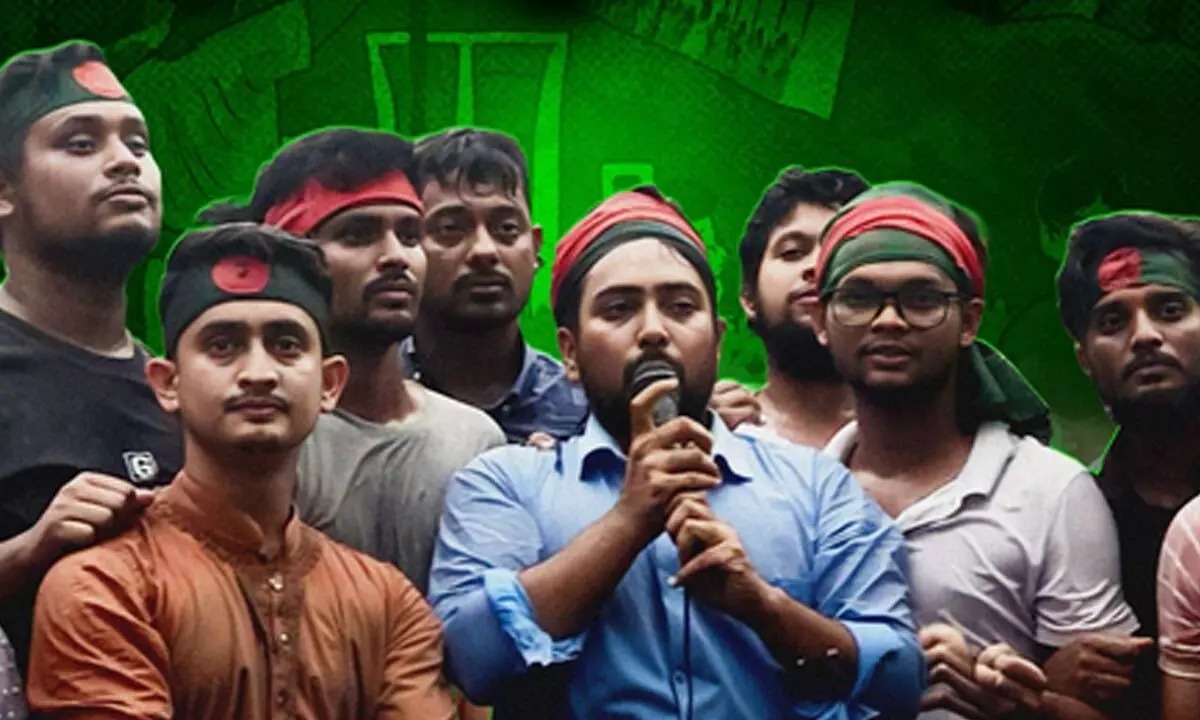
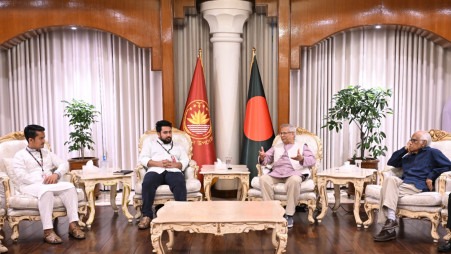
The political climate in Bangladesh is charged as parties are gearing up for Jatiya Sangsad election in February, next year. While Bangladesh Nationalist Party (BNP) has officially announced 237 candidates to contest for 300 parliamentary seats in the upcoming election, Jamaat-e-Islami is yet to announce its candidacy as it is contemplating to enter into coalition with other parties.
National Citizen Party (NCP), on the other hand, expressed desire to contest alone in all 300 seats, although stating its openness to coalition with other parties. Amidst this, the announcement of Asif Mahmud, the student advisor of the interim government, to contest in the forthcoming election from a Dhaka constituency, was much awaited. However, this pronouncement unmasks the interim government’s neutrality, long contested by political parties. And thus begins the anticipation — will the upcoming election be free and fair?
Since the beginning of this year, the interim government’s neutrality came under scrutiny as a new political party — the National Citizen Party (NCP) — came into being, a party formed by student leaders of the 2024 July Uprising. Established on 8th August 2024, the interim government included three student advisors — Nahid Islam, Asif Mahmud and Mahfuz Alam — who were also core leaders of the Uprising.
One of them, Nahid Islam, resigned from his advisory position this February to join the NCP as its chief convenor, leading to allegations against the interim government sustaining the establishment of a ‘King’s Party’ instead of fulfilling political parties’ demand of announcing an election roadmap.
Indeed, Chief Advisor Muhammad Yunus has shown partisanship towards the NCP, given that student leaders were the one supporting (and inviting) Yunus to hold this position in the interim government. This is notwithstanding the revelation by Youth, Labour and Sports advisor Asif Mahmud of Bangladesh Army Chief’s reservations about students’ decision of inviting Yunus, in a video of Mahmud shared by NCP chief (South) Hasnat Abdullah back in March.
Much before the formal establishment of the NCP, Muhammad Yunus’s interim government parroted the same narrative as that of student leaders of the July Uprising, taking measures suiting their demands. Nowhere has this been more prominent than in a series of official measures targeted to erase Sheikh Mujibur Rahmas’s legacy, to the extent of stripping him of his title of ‘Father of the Nation’. Taking the hands of these July Uprising leaders, the interim government resorted to historical revisionism of the Liberation War, raising a new political discourse of ‘new Bangladesh’ — where Bangladesh is believed to attain ‘real liberation’ on 5 August 2025, the day Sheikh Hasina was forced to flee the country.
Following NCP’s formation, the interim government has accepted many of its demands, even before the party’s official registration in the Election Commission. The official ban on Awami League in May via amendment of 2009 Anti-Terrorism Act, barring it from contesting in the national election came only after NCP hit the streets. This ban on a party, rather than individuals accused of war crimes, has been claimed as undemocratic by international rights organisations. League’s ban has been NCP’s main goals, one that Yunus conceded to, as evident in his earlier statements where he expressed the decision on Awami League’s participation in election to be left to the League itself.
In line with NCP’s demands, the interim government has paid excessive attention to reforms, while keeping Bangladesh’s democratic transition via election in the backseat. This has led to political parties’ accusing the interim government of giving administrative benefits to people (referring to Nahid Islam) who left the government to form their own party—thus the interim government facilitating the establishment of a ‘King’s Party’ to derail the election. The two student advisors—Asif Mahmud and Mahfuz Alam—of the interim government have also been accused of being ‘NCP loyalists’ around the same time and political parties demanded for their resignation, as they have violated the expected neutrality of the interim government which is to ensure free and fair political democratic transition.
The July Charter is another area where the interim government displayed its tilt towards the student-led party. Only after a threat by NCP to declare the July Charter on their own, the interim government announced the July Declaration on 5 August and gave it constitutional recognition, fulfilling yet another NCP’s agenda. The July National Charter, announced on 17 October, further incorporated many of NCP’s demands—which were opposed by the now largest political party BNP along with other parties. These are—public referendum on reforms included in the July Charter which also includes 48 constitutional reforms and omission of notes of dissent in the implementation process of the July Charter, moves that drew controversy for bypassing legal parliamentary process and undemocratic enforcement, leaving consensus out of the July Charter. The Charter also excluded the basic constitutional principles based on liberation aspirations (nationalism, socialism, democracy and secularism), closely aligning with NCP’s demands whose vision is to put the final nail to the 1972 ‘Mujibist’ Constitution.
It was the implementation process of the July Charter and the finalisation of the election roadmap in October that again raised fresh accusations of the interim government’s neutrality being compromised. Parties, especially BNP and Jamaa, alleged that the Charter implementation process to show political biasness (towards NCP), and pressed for removal of party-affiliated individuals from the interim government (supposed to assume the role of caretaker government before election) hinting at student advisors Mahfuz Alam and Asif Mahmud, who are believed to be NCP loyalists. Following meetings with party representations with the Chief Advisor, raising concerns on neutrality compromising free and fair polls, the top echelon of the government asked the two student advisors to step down.
Both advisors requested more time to reach their decision on resignation. While Mahfuz Alam, Information and Broadcasting advisor, still has not shown any interest in contesting for the upcoming election, local government advisor Asif Mahmud recently announced that he will contest election and will resign from his administrative position before that. While he has not yet revealed if he would contest the election as an independent candidate or via any party (NCP), Mahmud’s late revelation unveils that the interim government never being a neutral administrative body in the first place.
Mahmud also proved his earlier press report true where he opined that “advisors who intend to join politics should resign after election announcement… otherwise the election will be questioned.” With only two months left for national election, the political tense environment in Bangladesh and interim government’s neutrality unmasked confirm that 13th national election will neither be inclusive, nor free and fair.
–IANS
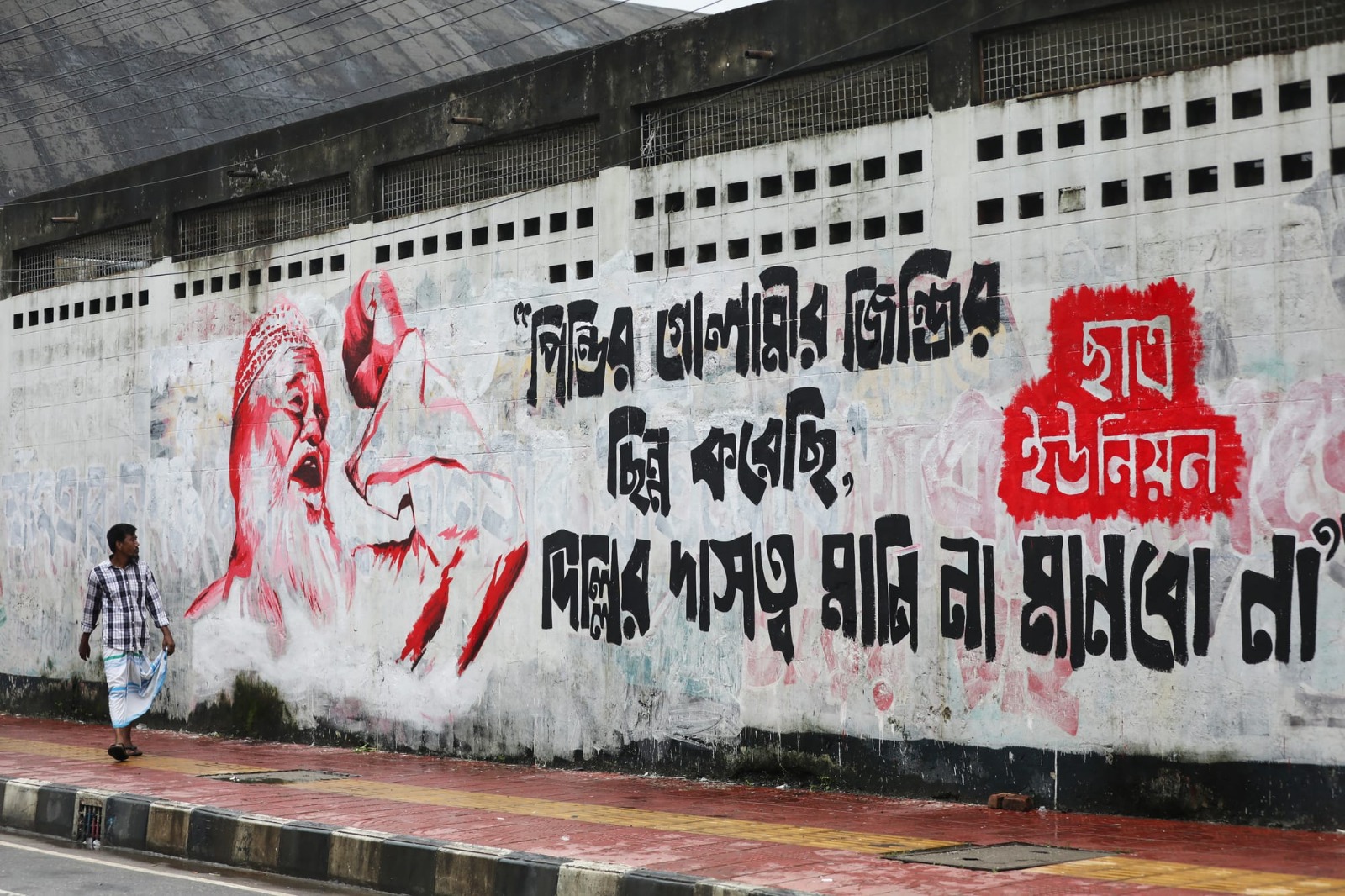
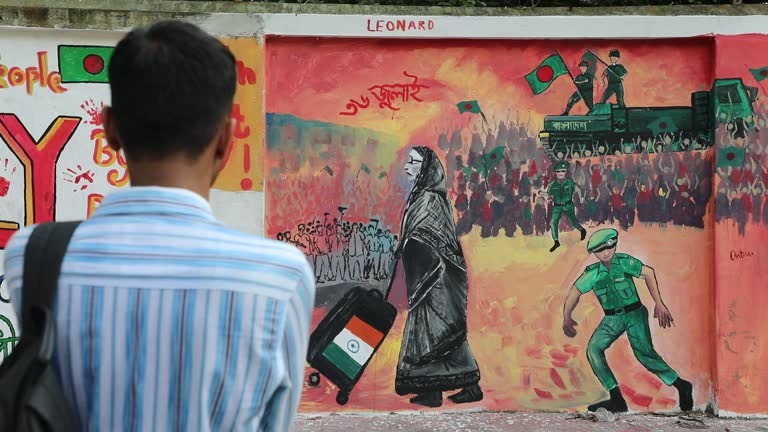
The 2024 July Uprising that ended Sheikh Hasina’s 15-year political tenure transformed Bangladesh’s political landscape. With anti-Hasina forces grabbing power, the political culture shifted and Bangladesh’s foreign policy took a spin as its old friend India came to be seen as an enemy overnight.
Anti-India sentiment was present in Bangladesh even during Hasina’s tenure, especially nurtured by radical Islamists and Pakistan apologists. The reason was heightened bilateral ties reached between India and Bangladesh on multifaceted areas — from cultural diplomacy to reaching understanding on water and land sharing, to new connectivity projects – port, buses and railway – for economic cooperation to greater border security, thanks to joint counter-terrorism measures.
It was also the time Bangladesh’s relations with Pakistan witnessed a thaw as under International Crimes Tribunal, war criminals mostly belonging to Jamaat-e-Islami who collaborated with Pakistan Army during 1971 Liberation War, were given death sentences and life imprisonment on charges of war crimes.
In the domestic sphere, Hasina’s hard dealing of new terrorist offshoots, witnessed during 2013-17, aggravated radical Islamists who openly advocated against Bangladesh being a constitutionally secular state (an ideological stand of Awami League party). All these factors culminated in shaping a new narrative — Hasina “selling” Bangladesh’s democracy to New Delhi.
Soon after the January 2024 election where Sheikh Hasina faced a decisive win, her political opponents doubled down on anti-India propaganda. First, they criticised New Delhi for congratulating Hasina at a time western countries raised concern over Bangladesh’s free and fair election. Then they blamed New Delhi for meddling in Dhaka’s internal affairs, alleging Narendra Modi government to have had a hand behind Hasina’s victory in 12th parliamentary election. All these because New Delhi maintained a non-interventionist approach to any country’s domestic politics, national election being one of them. Thus started the ‘India Out’ campaign in Bangladesh, mirroring Maldives’ drive earlier in 2023. Nevertheless, this did not affect bilateral ties in any way and the campaign soon died because of low popularity.
After Hasina’s deposition, the interim government’s foreign policy recalibration underwent a paradigm shift — moving closer to erstwhile coloniser Pakistan while maintaining a cold distance with New Delhi. The Chief Advisor Muhammad Yunus himself drew attention on many occasions for his provocative speeches antagonising New Delhi — from calling Bangladesh as the only guardian of Bay of Bengal for India’s “landlocked” northeast states during his China visit in March to claiming that New Delhi “disliked” or “disapproved” of student protest in Bangladesh that ousted Hasina and insisting at the UNGA in September that SAARC is nearly defunct because of “politics of one country” (indirectly referring to India).
In this blame game, Yunus conveniently avoided the core issue of SAARC being defunct — the Pakistan-sponsored terrorist attack in India’s Uri that undermined regional cooperation and led to cancellation of 19th SAARC Summit in Islamabad and boycott by neighbouring countries.
India, during the July Uprising, maintained diplomatic communication with Dhaka where it “observed developments closely”. Moreover, New Delhi’s focus during the unrest was to ensure security of Indian nationals, especially students, in Bangladesh and taking measures to avoid any breaches of border security.
It is common knowledge how post-Hasina, Bangladesh splurged into a deep law and order crisis, as violence of all kinds — gender, communal, ethnic, political — engulfed the country.
The consistent security lapse has created deep public distrust towards Bangladesh’s law enforcement forces. The rise in mob violence and rampant acts of vandalism of Sheikh Mujibur Rahman’s murals went unchecked and unnoticed by the interim government. The demolition of Mujib’s private residence -32 Dhanmondi – in February, however, pulled widespread criticism from both within and outside Bangladesh.
Instead of taking accountability for its lacklustre attitude towards restoring law and order, the interim government pointed the finger at New Delhi, for “giving platform” to Sheikh Hasina to give speeches. In fact, this has been the persistent narrative of the interim government, every time it was questioned of lawlessness within the country, from violence in Gopalganj to Chittagong Hill Tract. The justification was always the same — Sheikh Hasina attempting to destabilise Bangladesh “with foreign help”, hinting at New Delhi.
Recently, Bangladesh registered a protest against India for Hasina’s interviews published in Indian and foreign news outlets, alleging India to allow Hasina to make “hate speeches” that risk destabilising Bangladesh. India has reiterated that Hasina’s speeches are not New Delhi’s diplomatic position but one made in her personal capacity. This is because India is a democracy where the press is not controlled, unlike Bangladesh that is going through a democracy deficit.
Moreover, Dhaka foreign advisor recently called India Foreign Secretary’s remarks on hoping to see a “free, fair and inclusive election” in Bangladesh as “completely unwarranted”, claiming the national election as Dhaka’s “internal matter” and hence “not Delhi’s concern”. Bizarrely, Dhaka has been appreciative of Western countries who too expressed hope to see a free and fair election in Bangladesh. The political climate in Bangladesh has turned more volatile because it has banned Awami League from contesting elections, triggering counter protests by party activists and supporters in the nation. The usual jibe of “foreign force destabilising Bangladesh” continues.
Bilateral ties between India and Bangladesh strained not because New Delhi turned its back but because Dhaka, under the interim government, has been weaponizing anti-India sentiment to hide its inefficiency.
In a recent attack on Awami League office in Gulistan, the video of miscreants vandalising a sculpture depicting Pakistan’s surrender to India during 1971 Liberation War became viral. It showed a man saying that if the image remained intact, League’s allies “might return and claim their roles”. Much like Pakistan, the interim government’s attempt at historical revisionism, especially of India’s role in the 1971 Liberation War, through textbook revision is no secret now.
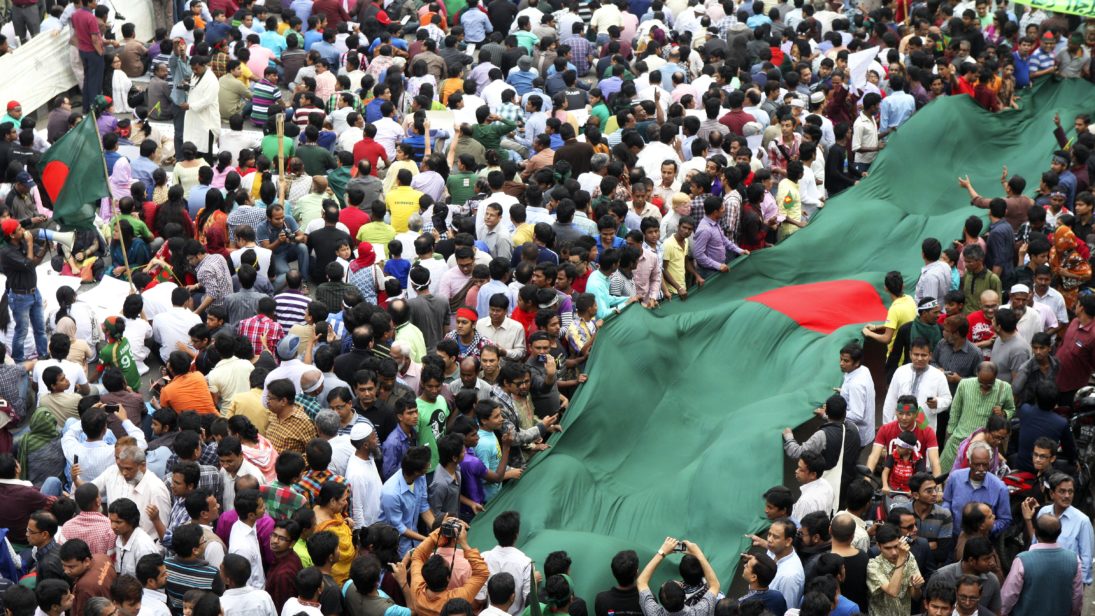
The July 2024 Uprising constituted a watershed moment in the political history of Bangladesh, precipitating significant transformations in both leadership and governance structures. In the aftermath, established political parties, along with newly emergent entities, have asserted themselves actively as opposition forces, predominantly targeting the Awami League. This development has underscored the emergence of a “new Bangladesh,” characterised by its explicit recognition and promotion of individuals and groups that have vigorously opposed the previous ruling party and its associated legacy.
A salient illustration of this shift is observable in the interim government’s concerted efforts to reconfigure collective historical memory regarding the 1971 Liberation War. These initiatives have sought to reconstruct historical narratives in a manner that tends to marginalise or omit the contributions of the Awami League—most notably those of Sheikh Mujibur Rahman, who is widely recognised as Bangladesh’s founding father and principal architect of its independence.
With respect to Sheikh Hasina, whose tenure concluded with her removal from office in August 2024, opposition rhetoric has advanced the prevailing assertion that her sustained electoral success was attributable to her close association with India. Immediately following the 2024 electoral outcome, a movement akin to the Maldives’ “India Out” campaign emerged within Bangladesh, advocating for a boycott of Indian commodities and alleging that India had exerted undue influence on Bangladesh’s domestic political processes to sustain Hasina’s prolonged incumbency. Her subsequent exile in New Delhi has further substantiated this discourse, lending greater credence to these claims among her critics.
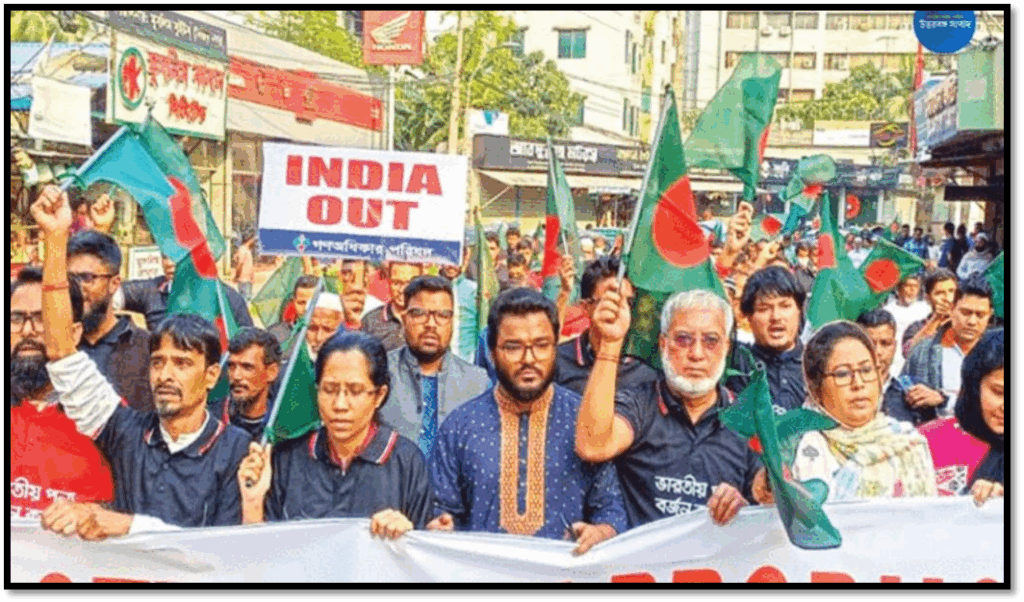
In the run-up to the forthcoming 13th national election, Bangladesh’s political milieu appears increasingly permeated by anti-India sentiment. Notably, this disposition is manifest not only within opposition parties but is also discernible in the interim government’s policy orientations and public actions.
Following the collapse of Hasina’s administration, the dynamics of India-Bangladesh relations have undergone notable changes. The newly installed interim leadership has adopted a divergent foreign policy trajectory, deliberately creating distance from India. This realignment is exemplified by the imposition of trade restrictions on imports from India. Conversely, the interim administration has deepened its engagement with Pakistan, a state from which Bangladesh achieved independence through the violent conflict of 1971. While some Bangladeshi commentators characterise this rapprochement as a calculated diplomatic manoeuvre, they frequently overlook the fact that substantive shifts in foreign policy have largely been confined to relations with India.
Domestic foreign policy experts have critiqued India’s previous strategy, contending that it disproportionately prioritised relations with the Awami League, thereby “placing all its eggs in one basket.” However, this argument tends to neglect the profound historical and cultural ties between the two nations. India was the second country after Bhutan, to recognise Bangladesh’s sovereignty in 1971, and both states retain strong affinities rooted in common histories, languages, and cultures as former territories of British India. Although it is accurate that India maintained closer relations with the Awami League-led government relative to the BNP coalition—which adopted a more adversarial stance towards India—this does not imply that bilateral relations are determined solely by partisan considerations.
The two countries also share an extensive and porous frontier, which has historically given rise to challenges such as unauthorised migration, cross-border smuggling, and sporadic border disputes—issues that persist in the contemporary context. Following Sheikh Hasina’s departure from Dhaka, Bangladesh experienced significant upheaval, marked by violence against minority populations and a deterioration of law and order. Coverage of these events provoked concern in India, which recalled the influx of millions of refugees during the 1971 conflict. Nevertheless, attempts by Indian authorities to voice their apprehensions were routinely dismissed by the interim government as “fabrications” or “politically motivated narratives.”
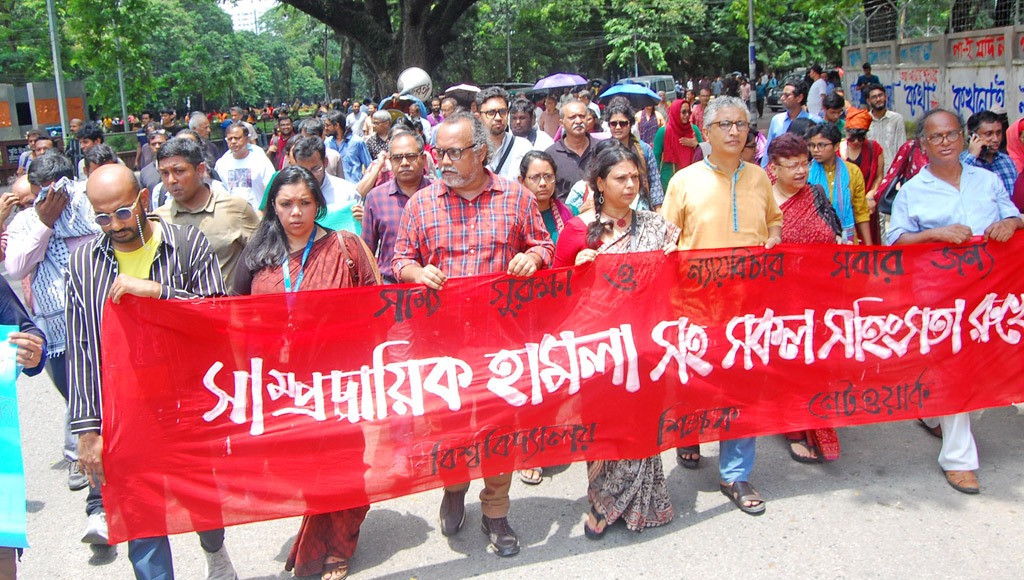
Rather than accepting responsibility for shortcomings in maintaining law and order, the interim administration has persistently sought to attribute blame to India. For instance, when the historic Dhanmondi 32 residence of Sheikh Mujibur Rahman was subjected to vandalism in February, the authorities, instead of acknowledging deficiencies in their security apparatus, alleged that India was enabling Sheikh Hasina to disseminate her messages from exile. India issued a strong diplomatic protest in response to these assertions, yet the interim leadership in Dhaka continued to evade accountability.
The chief advisor to the interim government has frequently alluded to “external actors” fomenting instability in Bangladesh—implicitly referring to India—while refraining from acknowledging his own administration’s role in the prevailing disorder. This narrative strategy serves to deflect scrutiny from the government’s administrative failures and simultaneously consolidates its anti-India credentials among certain domestic constituencies.
Simultaneously, various political parties, including Islamist factions, have adopted similar anti-India rhetoric in an effort to harness popular support. Islamist groups, some of which were previously marginalised or proscribed, are now openly advocating for the establishment of a Sharia-based constitution and mounting attacks on the country’s secular foundations. The interim government’s persistent silence regarding these developments has allowed such groups to consolidate their influence and propagate their ideological agenda largely unimpeded.
Among the most prominent actors in this landscape is Jamaat-e-Islami, which is currently attempting to present itself as a progressive entity. Nevertheless, it continues to evade responsibility for its contentious role during the 1971 war. This organisation, along with emerging groups such as the National Citizenry Party (NCP), is actively seeking to reinterpret the narrative of the Liberation War. They propagate the erroneous claim that India’s involvement constituted interference in what was an internal Pakistani matter, and suggest that Indian intervention was the primary catalyst for the partition in 1971. Such assertions are not only historically inaccurate but also deeply disrespectful to those who sacrificed their lives for Bangladesh’s independence.
Recently, the NCP attributed responsibility for the Gopalganj unrest to so-called “pro-India” factions with links to the Awami League. This incident exemplifies how anti-India rhetoric is being employed for political advantage. However, such narratives provoke a fundamental question: What incentive would India have to promote instability or disorder in Bangladesh? Given the significant security challenges India already confronts emanating from its western neighbour, Pakistan, it has little desire to see turmoil on its eastern frontier.
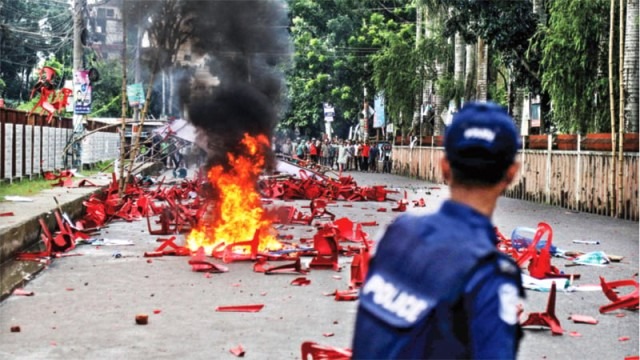
Rather than assigning culpability to India, Bangladeshi political leaders ought to address the internal issues that frequently stem from their own policies and decisions. Utilising India as a scapegoat for political expediency may offer short-term benefits in electoral terms, but ultimately proves detrimental to the nation’s long-term interests. The premise that India is behind every crisis in Bangladesh is not only unsubstantiated but also poses potential risks.
India, on its part, continues to express its aspiration for a peaceful, democratic, and secular Bangladesh, and remains prepared to engage with any administration that upholds mutual values and interests. However, substantive cooperation cannot occur if India is persistently perceived solely as an adversary or rival.
As the forthcoming election approaches, Bangladesh faces a decisive juncture. The nation must determine whether it wishes to forge a future founded on truth, collaboration, and democratic values, or remain encumbered by a cycle of scapegoating and historical distortion. A stable and prosperous Bangladesh is in the best interests not only of its own populace, but also of the entire region—including India.
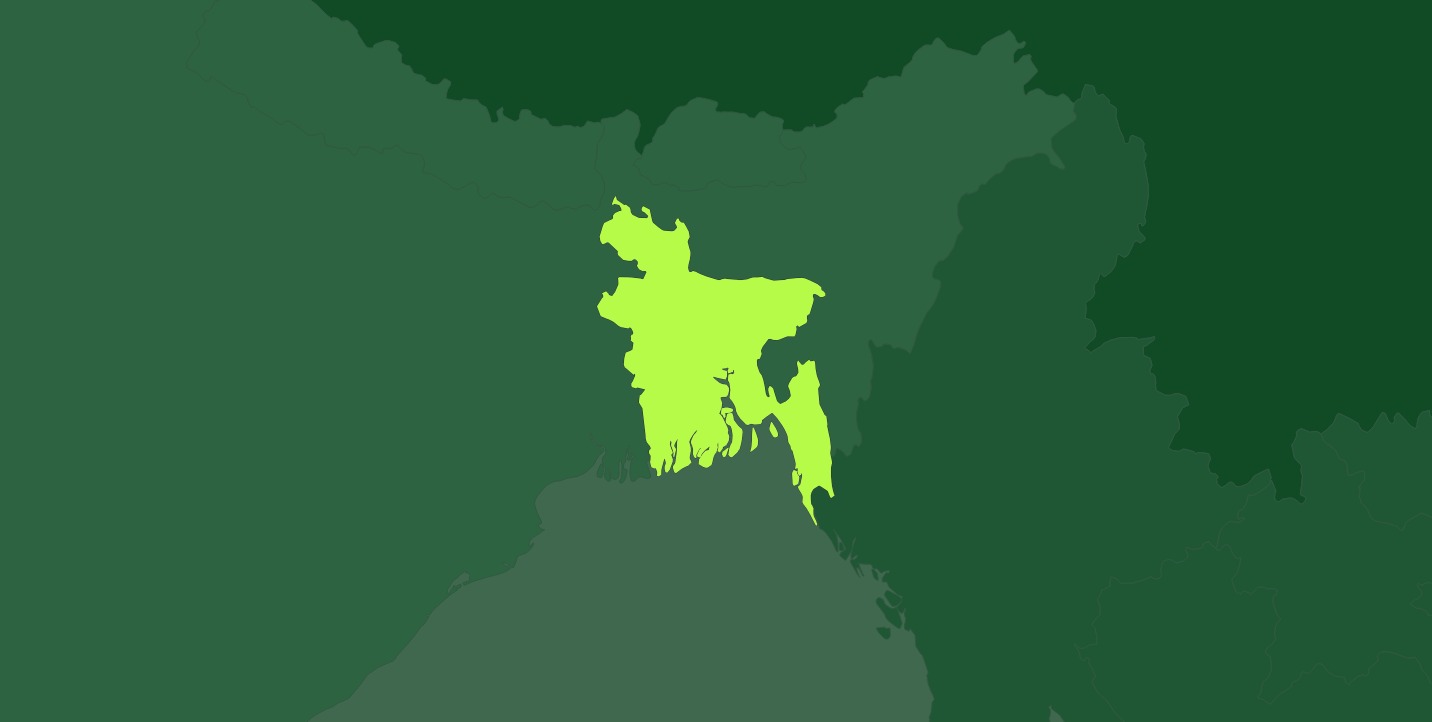
As the international community marked World Refugee Day on 20 June, the spotlight once again turned to the festering Rohingya crisis—a painful reminder of Bangladesh’s humanitarian generosity now burdened by geopolitical consequences. Since Myanmar’s brutal military crackdown in 2017, nearly 600,000 Rohingyas escaped the carnage in Rakhine and found refuge across the border in Bangladesh.
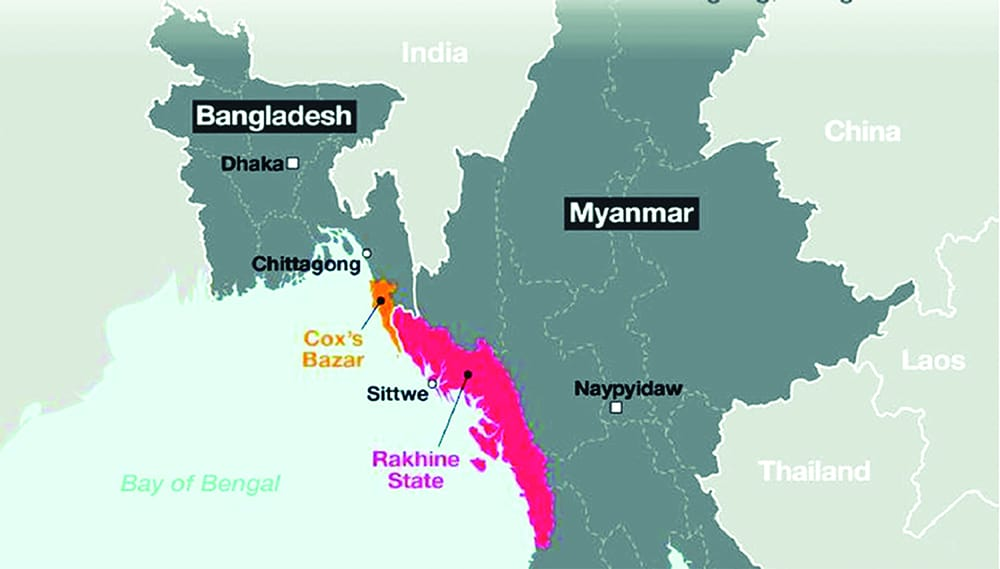
Fast forward seven years, and over 1.2 million Rohingya refugees are crammed into makeshift shelters in Cox’s Bazar, still yearning to return to their homeland with dignity and security—an aspiration that remains elusive.
What began as a noble act of compassion by the former government has morphed into a strategic nightmare. Bangladesh, already stretched thin economically, took the Rohingyas in under humanitarian grounds, building the world’s largest refugee settlement in Cox’s Bazar. But the generosity came with a price. Dhaka’s persistent call for repatriation was meant to be a long-term fix to a short-term crisis. Yet, repatriation remains a diplomatic mirage, complicated further by Myanmar’s internal chaos and the lack of sustained international pressure on Naypyidaw.
The cost of hosting over a million displaced people has proved to be far more than just financial. Bangladesh’s social fabric, national security, and local economies are all feeling the heat. The unceasing flow of refugees has strained border security, while the camps themselves have become breeding grounds for illicit activity. Radical networks have infiltrated the refugee settlements, luring disenfranchised Rohingya youth into drug trafficking, human smuggling, and armed violence. In the past two years alone, nearly 150 violent incidents have been reported within these camps—grim testimony to a growing lawlessness that local authorities are ill-equipped to contain.
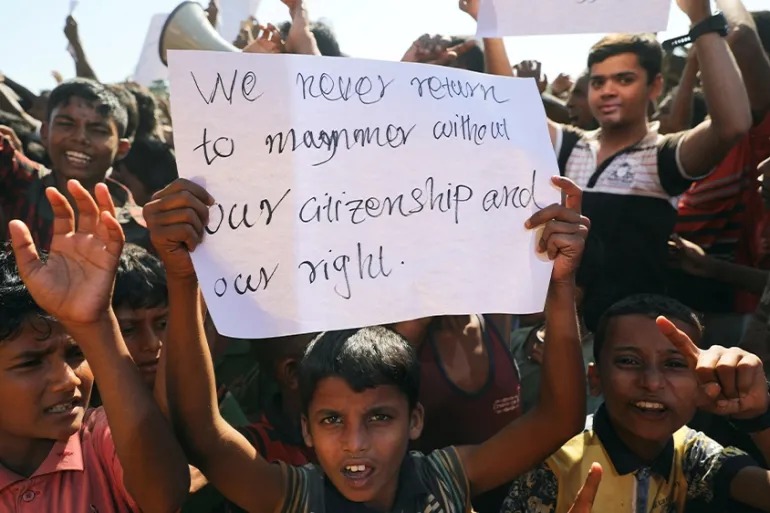
The security lapse extends beyond the refugee camps. Bangladesh’s border dynamics have undergone a worrying transformation. The Arakan Army—a powerful ethnic rebel group fighting Myanmar’s junta—has made significant inroads in Rakhine. With the civil war now reaching the doorstep of Bangladesh, the implications are severe. The renewed fighting in Rakhine has triggered a fresh wave of displacement, with over 120,000 more Rohingyas reportedly crossing into Bangladesh in the last 18 months alone.
This comes at a time when donor fatigue has set in. International aid for Rohingya refugees is dwindling, putting immense pressure on Bangladesh’s limited resources. Moreover, the Arakan Army’s aggressive posturing has not spared Bangladesh either. Incidents of Bangladeshi fishermen being abducted near Cox’s Bazar by the Arakan Army have sparked serious concerns about the integrity of Bangladesh’s already porous borders.
In the face of this multifaceted crisis, the current interim administration led by Dr. Muhammad Yunus has taken centre stage. Since assuming office, Yunus has prioritised the Rohingya issue, intensifying diplomatic overtures to garner international backing for repatriation. In February, Yunus addressed a letter to UN Secretary-General Antonio Guterres, detailing the worsening humanitarian situation and Myanmar’s deteriorating internal order. The UN chief responded with diplomatic optimism, promising support to secure unimpeded humanitarian access in Rakhine and beyond.
The high point of this engagement came in March, when Guterres visited the refugee camps in Cox’s Bazar. During the visit, Yunus and the UN Secretary-General jointly pledged to begin repatriation by the next Eid (this June). It was at this juncture that the idea of a “humanitarian corridor” was floated—allegedly a UN-brokered channel linking Cox’s Bazar to Rakhine to facilitate aid delivery and eventual refugee return.
With the ouster of Sheikh Hasina, Bangladesh has witnessed a disquieting transformation that has sent ripples of concern across its socio-political and cultural landscape. Images and videos of the student-led July uprising—once hailed as a breath of fresh air—now stand juxtaposed against the vandalism of murals and statues of Sheikh Mujibur Rahman, the Father of the Nation. Religious sites and properties belonging to minorities have come under attack, raising an alarming question: Is Bangladesh facing a Taliban-like takeover, akin to what Afghanistan endured?
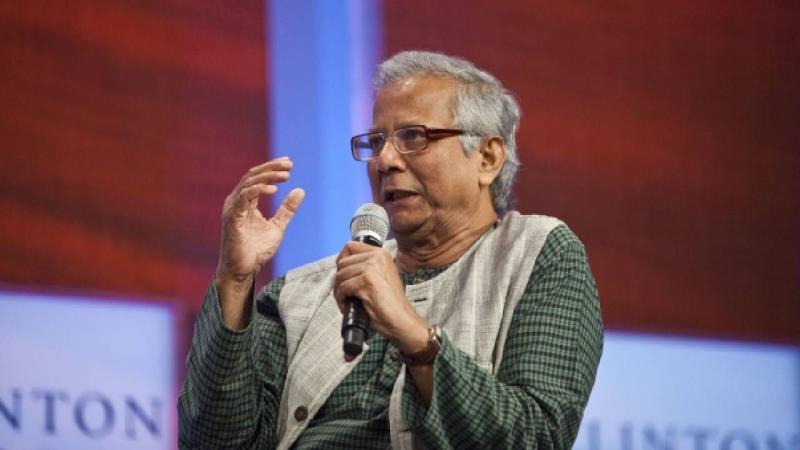
Initially, such concerns were dismissed—often mocked—as exaggerated alarmism by optimistic observers who celebrated the so-called ‘second liberation’. Yet, nearly ten months into this ‘new Bangladesh’, the unfolding reality on the ground increasingly vindicates those early apprehensions. The promise of the July uprising, which inspired a youthful generation eager for a free, democratic, just, and pluralistic nation, now seems betrayed by a rapid and disconcerting political and cultural regression. How did Bangladesh veer so sharply from those aspirations after 5 August? The answer lies in the silent complicity of the interim government, which has chosen the path of the Quiet Game.
Two recent incidents illustrate the creeping fundamentalism taking root. In Tangail, the screening of a movie was cancelled following protests from local Islamic groups. In Sylhet and Tangail, tourists celebrating Eid faced disruptions by similar groups. The charges leveled? Alleged promotion of obscenity and vulgarity during the sacred Eid week. These examples, seemingly minor, hint at a larger, more troubling pattern—where Islamic fundamentalist forces are increasingly policing public morality and curtailing freedoms.
This resurgence of religious fundamentalism is not spontaneous; it has been growing steadily since the formation of the interim government tasked with reforms after the removal of Sheikh Hasina’s government. The period has opened up spaces for extremist ideologies, endangering the secular and pluralistic fabric painstakingly woven into Bangladesh’s national identity.
Historical Context: The Roots of Bangladesh’s Secular Identity
Bangladesh’s pluralism and secularism are neither accidental nor superficial constructs. They are deeply rooted in history—particularly the 1971 Liberation War, which was fought to safeguard the Bengali language, culture, and identity against the repressive West Pakistan regime. The war was also a battle against religious fanaticism, symbolized by groups like Jamaat-e-Islami and their armed auxiliaries, who violently opposed Bengali nationalism and targeted the cultural ethos perceived as ‘un-Islamic’.
For Bangladeshis, pride in their unique identity remains paramount—a nation born out of sacrifice to protect its linguistic and cultural heritage. This historic legacy makes the current surge of Islamic fundamentalism not only a political threat but a direct challenge to the very essence of Bangladesh’s founding ethos.
Exploiting the Power Vacuum: Fundamentalists on the March
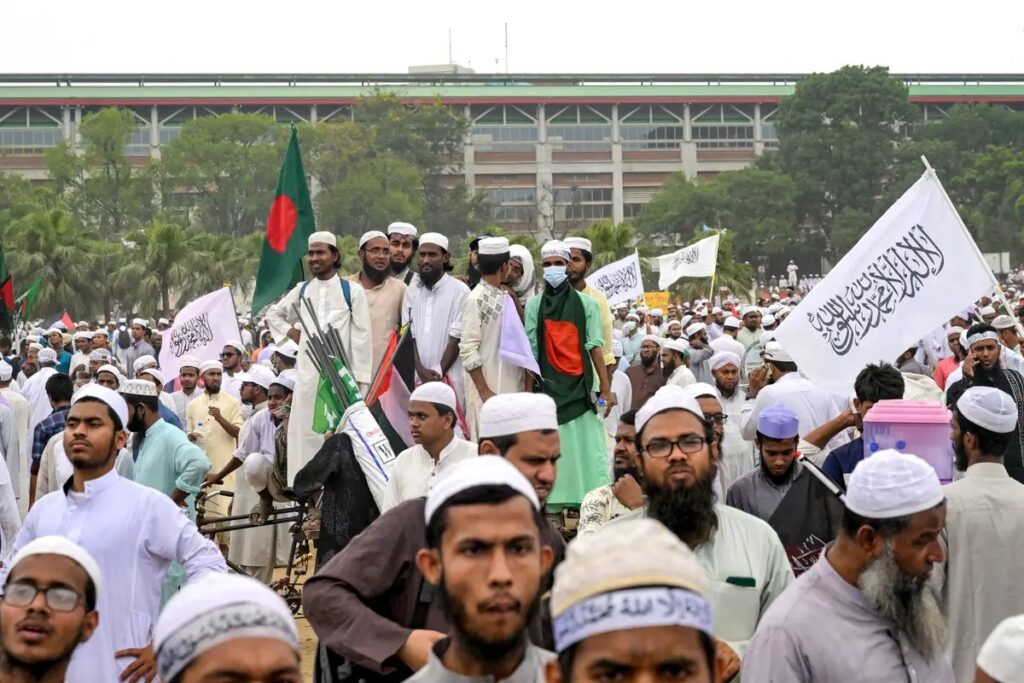
The political upheaval created by Sheikh Hasina’s ouster has emboldened Islamic fundamentalist groups, most notably Hizb-ut-Tahrir—a banned organisation during the previous government’s tenure. Seizing the opportunity, Hizb-ut-Tahrir has reemerged, publicly demanding the establishment of an Islamic Caliphate in Bangladesh. Islamic political parties are actively negotiating with the interim government to replace the secular 1972 Constitution with Islamic sharia law, effectively turning Bangladesh into an Islamic state.
This agenda is no secret. The hardline groups have taken to the streets with alarming zeal, targeting cultural and social events under the guise of eradicating ‘un-Islamic’ activities. The name “Towhidi Janata” has become synonymous with this wave of moral vigilantism—ubiquitous at festivals, cultural celebrations, and public gatherings, their mission is clear: to suppress cultural expressions that do not conform to their stringent interpretation of Islam.
The Assault on Culture: A War on Pluralism
One cannot overlook the symbolic significance of the cancellations and disruptions. The Lalon Mela—an annual festival honouring Lalon Fakir, a mystic poet who represents the core values of tolerance and cultural diversity—was forcibly cancelled in Narayanganj after threats from Islamic groups. Similarly, festivals celebrating tolerance and pluralism have been obstructed by Hefazat-e-Islam and other hardliners, who denounce the festival’s philosophies as ‘contradictory to Islam.’
The famed Basanta Utsav (Spring Festival) too suffered a similar fate, canceled amid threats. These cancellations are unprecedented in Bangladesh’s history and serve as a stark warning sign for the nation’s cultural health. The Amar Ekushey book fair, an iconic annual literary event commemorating the Language Movement martyrs, faced protests led by Towhidi Janata when a stall displayed books by Taslima Nasrin—a writer demonized by Islamist hardliners for her outspoken secularism and criticism of religious orthodoxy. The ensuing altercation and forced closure of the stall revealed how freedom of expression, especially dissenting voices, might be strangled under an increasingly Islamist regime.
Even Pohela Baishakh, the Bengali New Year and Bangladesh’s largest cultural festival, came under attack. Hardliners branded it as an ‘India-imposed Hindu festival’ and pressured organizers to rename the event from Mangal Shobhajatra to Barshabaran Ananda Shobhajatra, diluting its cultural resonance. Attacks on the Dhaka Eid procession, accusing it of featuring ‘idol-like’ symbols, illustrate an unwillingness to embrace the syncretic nature of Bengali Islamic culture—a culture shared and celebrated by both Muslims and non-Muslims alike.
The hardliners’ ideological narrowness was further exposed during Ramzan, when Jamaat-e-Islami led protests enforcing a daytime shutdown of eateries, disregarding Islamic allowances for exemptions to fasting. Such actions betray an agenda more political than religious, seeking to control social life and suppress diversity.
Gender and Moral Policing: A Targeted Attack on Women
The rise of Islamist fundamentalism is also marked by an intensification of anti-women ideologies. Women’s football tournaments have been vandalized, canceled under threats citing Islamic values. Towhidi Janata has opposed women’s public presence in social venues, harassed women for dress codes, and openly engaged in moral policing. Physical assaults on women for perceived ‘immodesty’ have become disturbingly commonplace, often with implicit or explicit backing from Islamist factions.
Even women’s rights institutions have come under fire, with Islamic parties vocally opposing reports highlighting gender inequalities. This reflects the deep-seated misogyny embedded in the Islamist vision for Bangladesh, which stands in stark contrast to the country’s progressive strides in women’s empowerment over past decades.
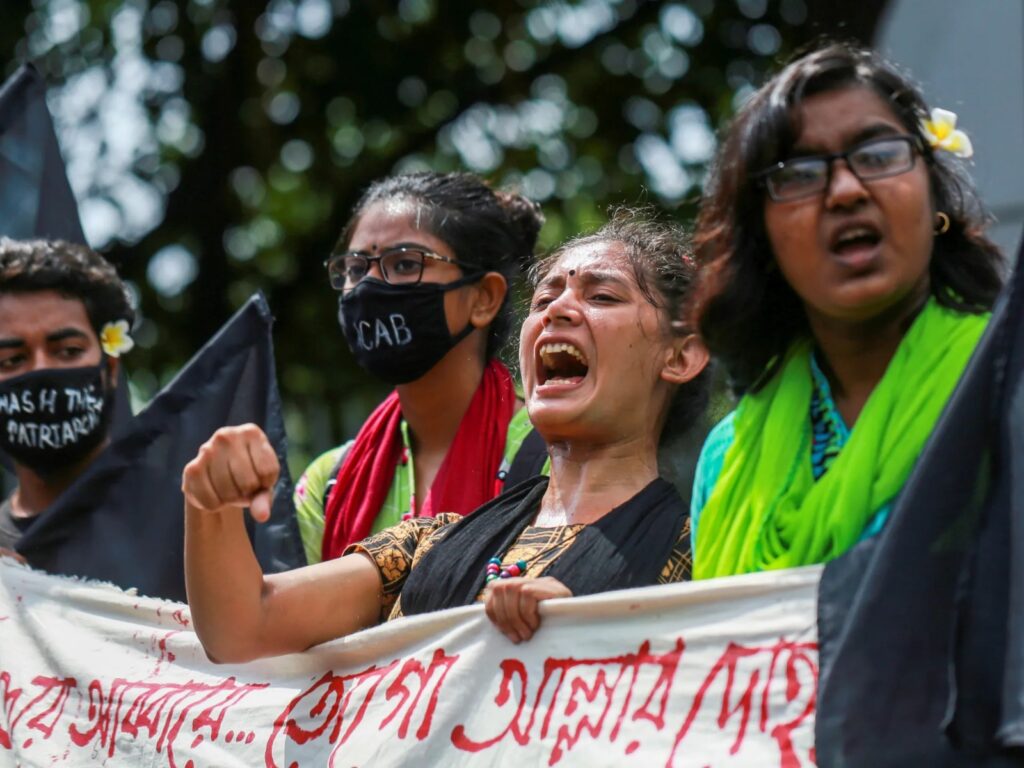
The Role of the Interim Government: Silent Enabler
What is most troubling is the interim government’s near-complete silence in the face of these alarming developments. The government has chosen passivity—akin to children playing the ‘Quiet Game’—allowing Islamist hardliners to expand their influence unchecked. Law enforcement agencies have largely failed to intervene, sending a signal of tacit approval or, at best, unwillingness to confront fundamentalist violence.The Yunus-led interim administration’s removal of ‘secularism,’ ‘nationalism,’ and ‘socialism’ from the new state principles marks a deliberate ideological shift. This removal is not merely symbolic; it clears the constitutional path for the ascendancy of Islamic law and governance. Combined with the government’s inaction against fundamentalist incursions into public life, this new political reality is steering Bangladesh toward a Talibanisation under the guise of a ‘second liberation.’
The Cost of ‘Second Liberation’
This ‘second liberation,’ far from delivering freedom and justice, risks enslaving Bangladesh to a form of Islamist authoritarianism reminiscent of Taliban rule in Afghanistan. It threatens to erode the hard-won freedoms of speech, religious tolerance, gender equality, and cultural pluralism that define Bangladesh’s unique identity. If unchecked, this Islamist resurgence will not only undermine the nation’s secular foundation but also reverse decades of social progress and democratic development. The tragedy is that the youthful energy and hopes that fuelled the July uprising may soon be crushed under the boots of religious extremism, and the ideals of the Liberation War may be relegated to distant memory.
Conclusion: A Call to Vigilance and Resistance
The Talibanisation of Bangladesh is neither inevitable nor irreversible. It is a product of political choices, social complacency, and ideological neglect. For Bangladesh to reclaim its pluralistic and democratic future, decisive action must be taken to curb the rise of fundamentalism, protect secularism, and uphold constitutional principles that guarantee freedom for all citizens.
The interim government must abandon its passive stance and actively enforce laws against extremist groups, protect cultural expressions, safeguard women’s rights, and restore the foundational ideals of the nation. Civil society, the youth, and international partners also have critical roles to play in resisting the creeping shadow of Talibanisation and ensuring that Bangladesh’s second liberation truly embodies liberation for all its people, not just a select few.
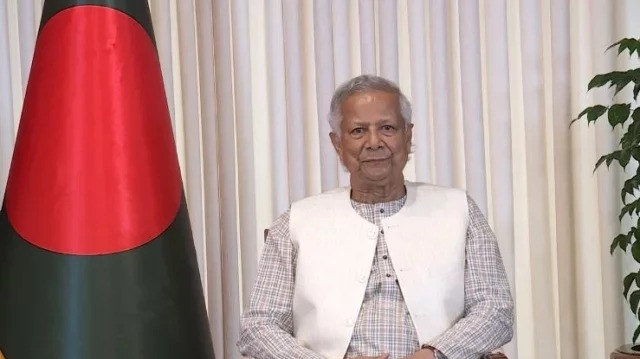
Muhammad Yunus’s popularity is waning as the interim government faces a series of crises, with Bangladesh’s political landscape becoming increasingly complex. This month marks the tenth month since Yunus assumed leadership of the country’s state machinery as the chief advisor of the interim government—formed through the consensus of political parties, civil society, and the military following the ousting of Sheikh Hasina. It was widely expected that the interim government would serve a brief term, similar to previous caretaker administrations, with its primary responsibilities being a) the efficient management of state affairs and b) the facilitation of free and fair elections. In practice, however, the Yunus administration has failed to achieve either objective and has instead undertaken the broader task of state reform through the creation of various reform commissions. Meanwhile, Yunus’s policies and decisions have only exacerbated the challenges faced by the interim government amidst the chaotic conditions that have gripped the nation since 5 August last year. Despite this, Yunus appears to be navigating against the current of the country’s political will. This raises a pertinent question—why is Muhammad Yunus still holding onto office?
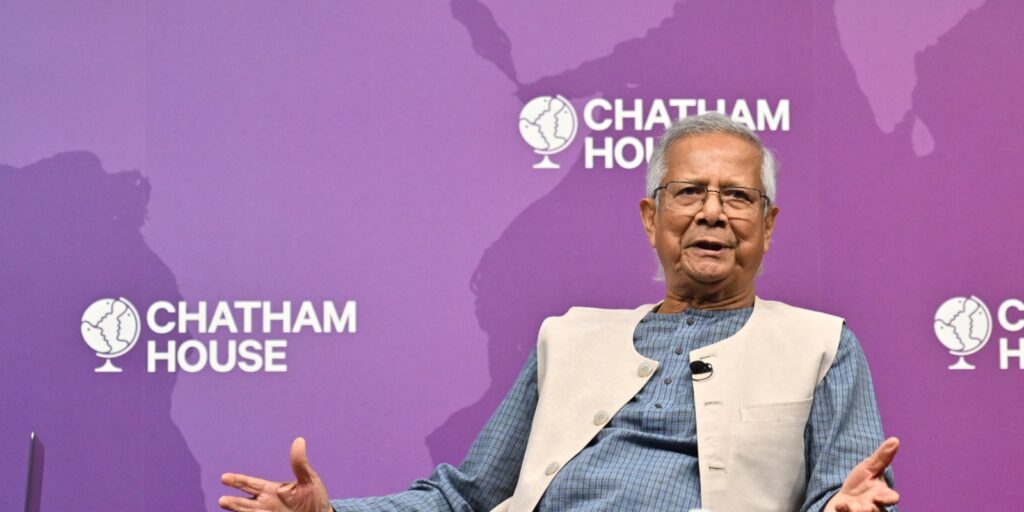
Several key developments support this assertion. One such example is the enactment of unconstitutional amendments through the passing of ordinances such as the Cyber Protection Ordinance, amendments to the International Crimes (Tribunals) Act, the Anti-Terrorism Act, and the Enforced Law Ordinance. These ordinances were criticised for being passed unilaterally without any public consultation. More critically, these legislative moves reflect Yunus’s apparent political vendetta—namely, the marginalisation of the Awami League. Two significant developments further reinforce this view: firstly, the deteriorating state of press freedom in Bangladesh, and secondly, the imposed ban on the Awami League.
The Cyber Protection Ordinance, which replaced the stringent Cyber Security Act, was introduced by the interim government with the stated aim of strengthening cyber security. This move followed a period during which press freedom in Bangladesh had been severely eroded under the previous deposed administration. However, the new ordinance has demonstrated a similar tendency to suppress press freedom, as evidenced by the condemnation from rights groups over the revocation of press accreditation for journalists. The retaliatory targeting of journalists critical of Muhammad Yunus and the interim government, documented by the Rights and Risk Analysis Group (RRAG), presents an alarming picture—approximately 640 journalists have been targeted over the past eight months, with 91 reportedly harassed or assaulted in May alone. The charging of journalists with terrorism and other criminal offences—mainly in connection with the July uprising and their alleged ties to the former regime—has been widely criticised as a deliberate effort by the interim government to stifle press freedom. Contrary to the expectations of restored free speech following the July uprising, press freedom remains a critical concern, as highlighted by the latest global ranking from international human rights group Article 19, which categorised Bangladesh as a ‘crisis’ country for freedom of expression.
The amendment to the Anti-Terrorism Act, approved on 11 May, introduced a provision enabling the prohibition of terrorism-related activities by individuals and ‘entities’. Concerns had already emerged that this ordinance would empower the interim government with unchecked authority to suppress political activity, especially given its move to ban the ‘activities’ of the Awami League under pressure from certain political parties. Merely a day after the ordinance’s enactment, the Awami League was officially dissolved—another unilateral measure implemented without public consultation. Though welcomed by parties that had mobilised on the streets demanding this outcome, Yunus’s decision provoked strong international criticism and deepened domestic political divisions, with many viewing it as a violation of democratic norms carried out without due process. The politically driven violence targeting League supporters since Hasina’s departure is well documented, and the ban is seen as a further escalation of such acts under a veil of impunity. These unconstitutional legal interventions have been justifiably identified as the interim government’s erosion of the country’s core human rights and freedoms.
Muhammad Yunus’s proposal in April to establish a humanitarian corridor connecting to Myanmar’s Rakhine region marks the latest instance of his administration’s misjudgement. What distinguishes this issue from previous ones is the rare, unified protest and criticism it drew from all political parties—both established and emerging—arguably the first instance of such consensus since Hasina’s removal.
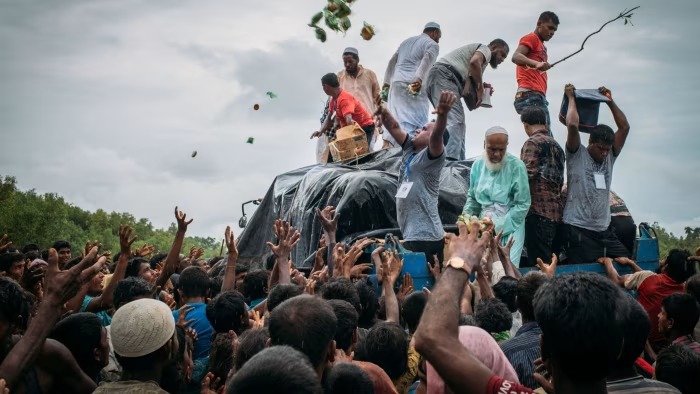
On one hand, concerns were raised about the geopolitical risks this corridor posed to Bangladesh’s territorial integrity; on the other, questions were directed at the interim government’s unilateral move to propose such an initiative—despite lacking the mandate—without consulting political parties. The proposal also fuelled suspicions that Yunus was favouring the interests of foreign powers at the expense of national sovereignty. Not only political parties, but even the Bangladesh Army expressed disapproval, further highlighting widening tensions with the interim government. The Army Chief firmly rejected the idea of any such “bloody corridor” and instructed Yunus to hold elections by December, prompting the interim government to ultimately withdraw the proposal.
The issue of elections has emerged as the most prominent point of contention against the Yunus administration. The intentional postponement of the national election has not only fuelled divisions among political parties but also hindered meaningful progress in the statebuilding process. Although the interim government initially announced national polls could be held by December 2025, the subsequent extension of the timeline to June 2026 has sparked suspicions and fears that Yunus is deliberately attempting to cling to power. The absence of a clear electoral roadmap—despite repeated requests from political parties—has intensified concerns that the interim government may further delay elections until the following winter. The political impartiality of the interim administration is increasingly under scrutiny, with many viewing Yunus as favouring the newly formed National Citizen’s Party (NCP), and suspecting that the postponement of the elections is a calculated strategy to give the NCP a strategic advantage in the forthcoming vote.
However, the broad consensus among political parties on the urgency of holding early elections—despite their ideological differences—signals a notable shift in the political landscape: time appears to be running out for Muhammad Yunus. The current political climate stands in stark contrast to last August, when Yunus was invited to lead the interim government. The people of Bangladesh are now demanding elections, seeking to exercise their democratic rights and facilitate a smooth political transition. It seems the chief advisor may have grown too accustomed to the power he holds and is now making desperate efforts to remain in office.
The interim government has now been in power for nine months, yet Bangladesh remains trapped in a cycle of political turmoil and uncertainty. On one side, political parties are more fragmented than ever before, while on the other, the interim administration continues to struggle with addressing the country’s persistent socio-economic and political challenges.

Although interim government was established with broad consensus among civil society, political leaders, and the military following the mass uprising of 2024, the interim government under Dr Yunus has faced considerable difficulties since its formation. Indeed, much of the disorder that has engulfed the nation since last August can be attributed to the Yunus administration. While there was initial enthusiasm for a reformed Bangladesh, free from its authoritarian legacy, the interim government has largely proven to be a passive administration, repeatedly mired in controversy.
It could be argued that the criticisms directed at the Yunus administration originate from remnants of the deposed Hasina regime. Dr Yunus has secured considerable support from global leaders, thereby legitimising the interim government and receiving strong endorsement primarily from Western countries in its pursuit of reforms and conduct of elections. Nonetheless, domestically, the legislative initiatives intended to implement reforms have encountered opposition not only from some of the very factions that contributed to the establishment of the interim government but also from international human rights organisations. Key legislative measures include the Cyber Protection Ordinance, amendments to the International Crimes (Tribunals) Act, and the Anti-Terrorism Act.
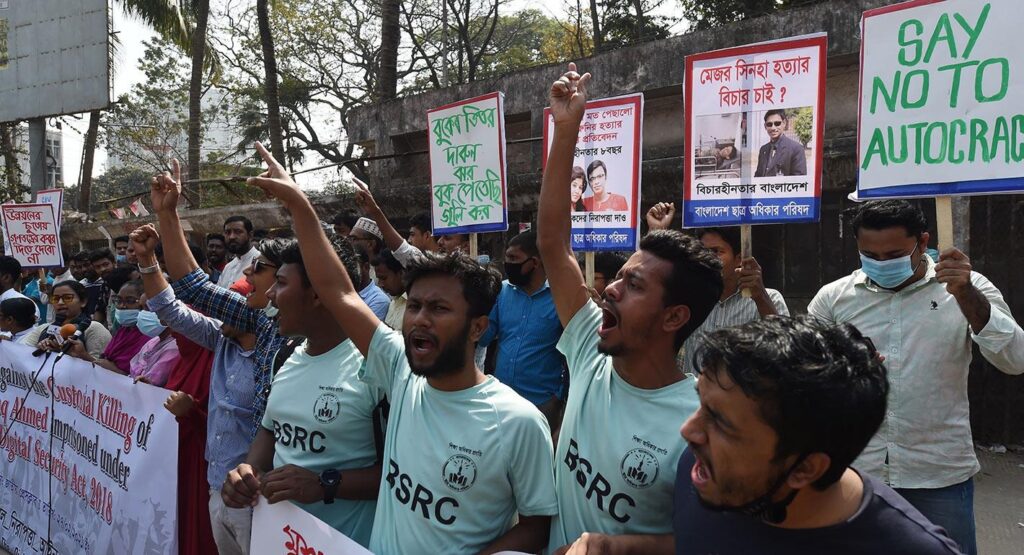
The state of media freedom in Bangladesh remains deeply concerning, with numerous reports of violence, harassment, censorship, and prosecution of journalists and media outlets. Often these outlets are being accused by the interim government as collaborators with the Awami League—contradicting its commitment to uphold press freedom. The introduction of the Cyber Protection Ordinance, which replaced the contentious Cyber Security Act (CSA), quickly sparked apprehension regarding the government’s surveillance practices under the guise of enhancing cyber security. Organisations such as Transparency International Bangladesh (TIB) criticised the ordinance for being approved without adequate public consultation and for retaining CSA’s surveillance provisions, thereby posing a potential threat to media freedom in the future. This development coincided with the interim government’s cancellation of press accreditation for 167 journalists and the filing of charges of “crimes against humanity” against 25 journalists due to their alleged links with the Awami League government, provoking condemnation from human rights groups. Media freedom remains a critical concern, exhibiting patterns reminiscent of the previous administration. The most recent report by the Rights and Risk Analysis Group (RRAG), published on World Press Freedom Day 2025—when Bangladesh ranked 149th out of 180 countries—revealed that in the eight months under Dr Yunus’s interim government, 640 journalists were targeted. The administration’s efforts to suppress media critical of Yunus have involved not only branding them as pro-Awami League but also revoking press accreditations, resorting to violence, and levying criminal charges including money laundering, criminal offences, and terrorism. Consequently, urgent media reforms demand serious and immediate attention.
The amendment of the International Crimes (Tribunals) Act through an ordinance extended the powers of investigative offices to conduct searches and seize evidence without prior approval from the tribunal. Additionally, the new ordinance authorised the tribunal to freeze and confiscate the assets of the accused. More recently, a second amendment introduced provisions allowing the trial and punishment of ‘organisations’ for crimes within the tribunal’s jurisdiction. In essence, these amendments enhanced the tribunal’s authority to ban organisations, confiscate their properties, and suspend their registration if found guilty of crimes against humanity. Initially, political parties were included in the ordinance, but this was subsequently removed to avoid political controversy. Nonetheless, these amendments—particularly the second—have attracted significant criticism from human rights organisations such as Human Rights Watch (HRW), which argue that they undermine fundamental human rights. Concerns have been raised that these changes could be exploited as tools for political repression of opposition groups, lacking adequate accountability, thus posing a threat to democratic principles. The ban on the Awami League has only reinforced this scepticism.

On the 11th of this month, the interim government approved the draft ordinance of the Anti-Terrorism (Amendment) Act, introducing a new provision to prohibit activities of individuals or ‘entities’ involved in terrorism, thereby granting the government extensive powers to regulate political activities. Just one day earlier, the interim government imposed a ban on the “activities” of the Awami League amid increasing pressure from the Nationalist Communist Party (NCP) and Islamic parties. The ordinance, approved overnight, revised the existing Anti-Terrorism Act of 2009 and was subsequently used on 12 May to officially disband the Awami League, providing a clear indication of arbitrary targeting and suppression without accountability. This action provoked widespread condemnation from foreign governments, international human rights organisations, as well as domestic political leaders and analysts. The systematic targeting of Awami League leaders, activists, and supporters—who have faced mob violence over the past nine months—has sparked concern and criticism over the interim government’s failure to prevent the country’s descent into lawlessness. Instead, through the launch of Operation Devil Hunt aimed at curbing mob attacks, the interim government appeared to be settling political scores by arresting a disproportionate number of League sympathisers. The banning of a political party mirrored the authoritarian tactics of the deposed government, now widely labelled ‘fascist’, fuelling fears of a further erosion of democratic space. Moreover, the interim government’s ordinance on enforced disappearance has also faced criticism for lacking public consultation, accountability measures, and failing to address past abuses.
The interim government’s recent legislative initiatives, presented as reforms, amount to little more than old wine in new bottles. While political parties in Bangladesh remain divided on the issue, international human rights organisations have been unequivocal in their criticism—these measures pose a significant threat to fundamental human freedoms. The interim government’s political vendetta has become increasingly apparent, as has the growing shadow of disapproval cast over the Yunus administration.
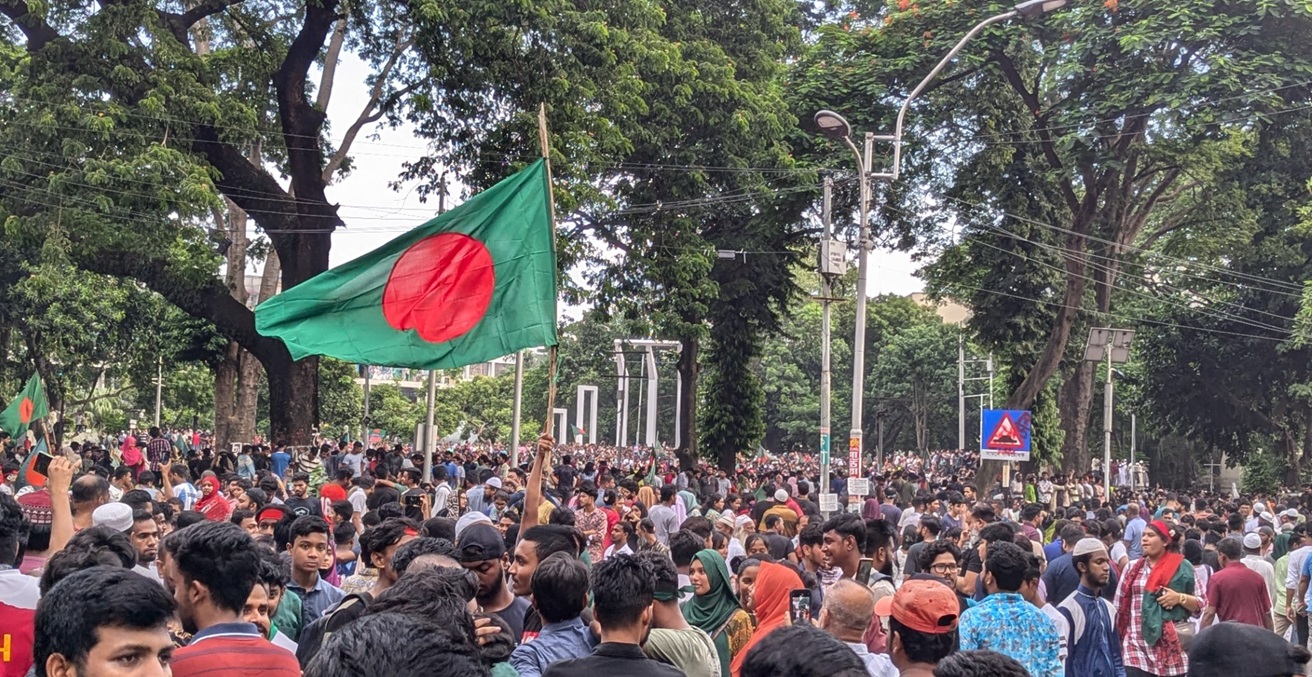
Eight months have elapsed since the resounding crescendo of civic unrest reverberated through the streets of Dhaka and beyond—a movement now etched into contemporary Bangladeshi history as the transformative July Uprising of 2024. The student-led revolt, galvanised by a weary citizenry exhausted by fifteen uninterrupted years of Sheikh Hasina’s increasingly authoritarian reign, precipitated the fall of a regime many had come to regard as synonymous with unbridled majoritarianism and the erosion of democratic norms.
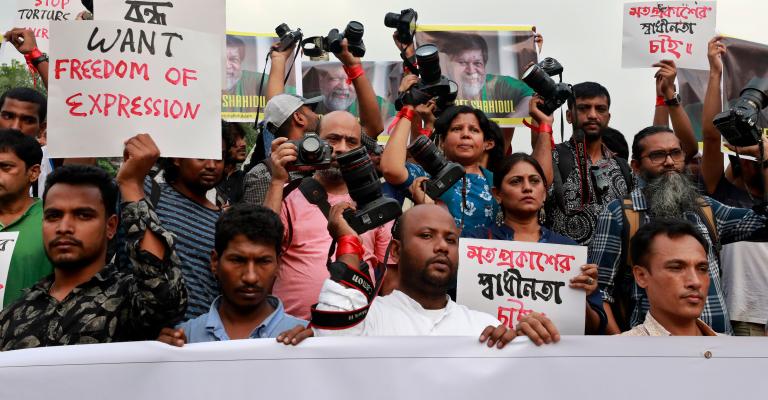
To fill the ensuing political vacuum, and ostensibly to shepherd the country through an equitable and peaceful democratic transition—something many Bangladeshis believe has been perennially elusive—a provisional apparatus of governance was constituted. Thus, on the 8th of August 2024, the Interim Government was born, led by none other than the venerable Dr Muhammad Yunus, Nobel Laureate and paragon of ethical capitalism. He assumed the mantle of Chief Advisor, entrusted with the Herculean task of stabilising a beleaguered state, instituting crucial reforms, and, most crucially, preparing the ground for a free and fair general election that would usher Bangladesh from the throes of perceived fascism into the luminous embrace of democratic revival.
Commencing with a retinue of sixteen advisors—a council subsequently expanded to twenty-one to reflect the national appetite for reform and rejuvenation—the interim regime drew cautious optimism both domestically and abroad. Dr Yunus was even featured in Time magazine’s list of the 100 most influential people for his pivotal role in “steering Bangladesh toward democracy following last year’s student-led uprising.” And yet, beneath this veneer of progress, the state of the nation has grown only more labyrinthine, with multiple fault lines deepening. As we stand at the octagonal milestone of this transitional government, it is both timely and imperative to evaluate its performance through several key prisms.
Of Persecution and Prejudice: Minorities under Siege
One of the most tragic ironies of this so-called democratic rebirth has been the abrupt surge in attacks on religious minorities. Far from heralding a new era of inclusivity, the post-Hasina epoch has witnessed a disturbing uptick in communal hostilities—many of which are allegedly orchestrated by groups vehemently opposed to the former regime. Between the 5th and 25th of August alone, over a thousand communal incidents were recorded, including acts of arson, looting, desecration of places of worship, and targeted violence against individuals from religious minorities.
While communal violence is regrettably not a novel phenomenon in Bangladesh’s socio-political landscape, the interim government’s response—or lack thereof—has been particularly dispiriting. Rather than acknowledging the sectarian undertones of these attacks, the authorities have consistently downplayed them as “politically motivated incidents,” even going so far as to label the media’s coverage as “exaggerated”. This obfuscation culminated in October during the sacred Durga Puja celebrations, when a spate of violent attacks against Hindus drew national and international opprobrium. The interim government’s rather sheepish declaration of “collective failure” offered scant solace to the victims.
To compound the travesty, when Hindu communities rallied in protest, several of their spiritual leaders were unceremoniously detained on charges of sedition. This chilling sequence of events exposes the interim authority’s alarming refusal to confront what appears to be a systemic pattern of persecution—raising profound concerns about the fate of minorities in the so-called “New Bangladesh.”
Unrest in the Hills: The Forgotten Frontiers
Parallel to the plight of religious minorities is the deteriorating condition of Bangladesh’s ethnic communities, particularly those inhabiting the restive Chittagong Hill Tracts (CHT). Since September of last year, the CHT has become a crucible of ethnic tension and conflict, with over 200 documented instances of human rights violations. The alleged complicity of the Bangladesh Army, which is believed to be tacitly supporting the interim regime, adds a sinister dimension to this unfolding crisis.
These violations include unlawful land grabs, destruction of indigenous properties, and systemic harassment by Bengali settlers and law enforcement agencies. Despite repeated calls for action, the interim government has remained conspicuously inert, preferring instead to label the crisis as an “internal administrative matter”—a semantic sleight of hand that serves only to trivialise the gravity of the situation.
While the 1997 Peace Accord promised autonomy and protection to the indigenous populations, its implementation remains elusive. The government’s reluctance to engage indigenous leaders or uphold their cultural and political rights betrays a troubling inclination to placate fundamentalist factions at the expense of pluralism. Recent incidents, such as the abduction of five university students and the rape of an ethnic minority girl, have further inflamed tensions. Yet, Home Advisor Lt Gen (Retd) Md Jahangir Alam Chowdhury blithely claimed that “the hills are more peaceful than ever”—a statement that borders on Orwellian absurdity.
A Mobocracy in the Making
The culture of lawlessness has not restricted itself to minority communities. Indeed, the entire country seems to be held hostage to a rapidly metastasising mob culture. Vigilante groups—emboldened by a palpable sense of impunity—have been marauding through cities and towns, targeting anyone perceived to be an affiliate or sympathiser of the erstwhile Awami League regime. Acts of vandalism and public lynching have become grotesquely normalised, and the interim government has responded with a silence that is deafening.
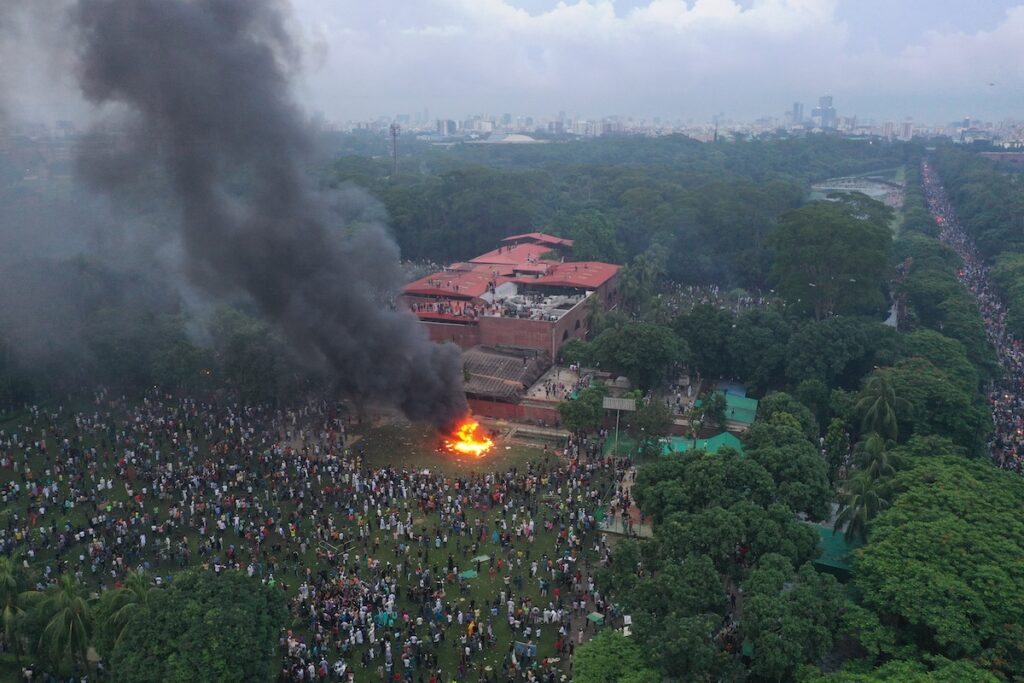
Perhaps the most symbolic manifestation of this new anarchy was the “Bulldozer Procession” that desecrated 32 Dhanmondi—the erstwhile residence of Bangabandhu Sheikh Mujibur Rahman. Rather than issuing a robust denunciation, the interim regime deflected blame onto the fallen Prime Minister herself, accusing her of provoking the unrest. When voices from civil society rose in protest, the government responded not with contrition but with coercion, launching the ominously titled “Operation Devil Hunt.”
This sweeping initiative purported to neutralise disruptive elements. In reality, it served as a mechanism to incarcerate scores of Awami League loyalists under flimsy pretexts. Far from curbing mob violence, the operation revealed a thinly veiled vendetta masquerading as law enforcement. The Home Advisor’s assertion that “law and order remains satisfactory” is not only disingenuous but dangerously delusional.
Theocratic Tendencies: A Secular State in Peril
Perhaps the most alarming transformation under the interim dispensation has been the creeping ascendancy of religious fundamentalism. Groups like Towhidi Janata, believed to be fronting for the ultra-conservative Hefazat-e-Islam, have taken to the streets with disturbing regularity, disrupting cultural festivals and imposing their puritanical mores upon the public sphere. Events celebrating Lalon Shah, Basanta Utsav, and even Pahela Baishakh have come under attack, derided as “un-Islamic” by these self-styled guardians of morality.
Even more perturbing is the group’s open advocacy for the replacement of Bangladesh’s secular legal framework with an interpretation of Sharia, and, more audaciously, the establishment of a Khilafat—a theocratic caliphate—in place of the current democratic system. The interim government’s reaction? Tepid at best, complicit at worst! There has been a conspicuous absence of any concrete initiative to counteract these regressive forces.
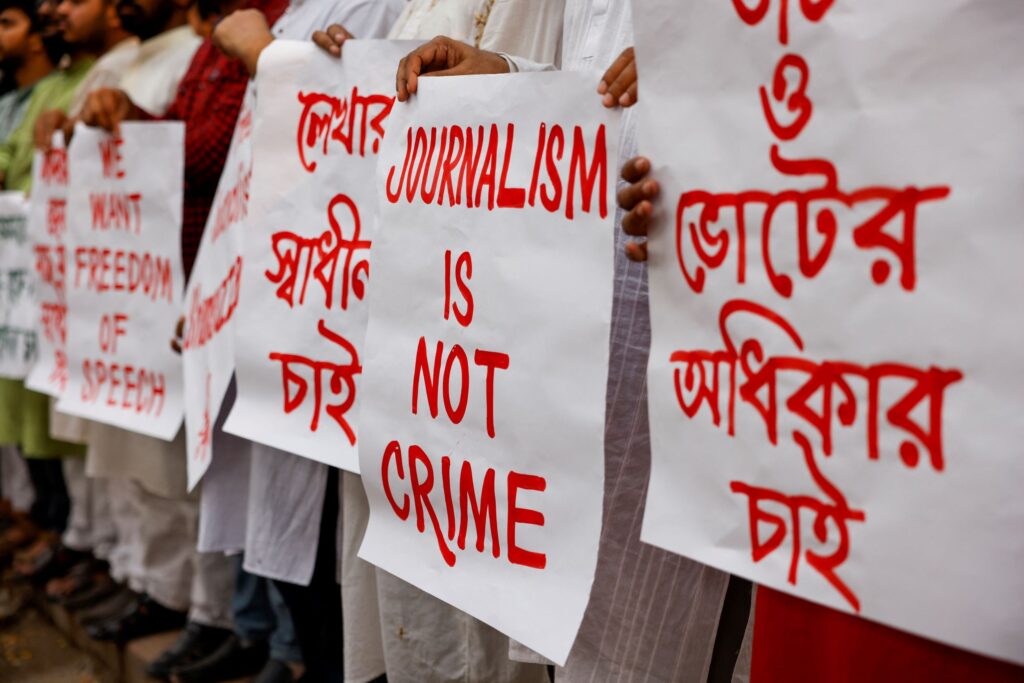
In fact, the government’s acquiescence has emboldened fundamentalist demands, which are now influencing constitutional reform dialogues. Proposals to remove secularism, socialism, and nationalism as foundational tenets of the state are reportedly on the table—an alarming development that threatens to dismantle the very ethos upon which Bangladesh was founded.
An Election Deferred? The Mirage of Democratic Transition
And what of the interim government’s raison d’être—its solemn promise to oversee a timely and transparent general election? Here, too, there is more ambiguity than assurance. Dr Yunus recently floated a tentative window for the polls—between December 2025 and July 2026—following increasing pressure from political quarters. Yet, no definitive electoral roadmap has been divulged.
The Home Advisor’s controversial statement that the people are “requesting” the interim government to remain in power for an additional five years has only intensified suspicion. Is this interim arrangement morphing into a pseudo-permanent regime? Political parties have already begun voicing their discontent, arguing that reforms must follow elections, not precede them. After all, the interim government, lacking constitutional legitimacy, was never intended to substitute a democratically elected dispensation.
A Promise Deferred, a Nation in Flux
After eight months of governance, the interim government finds itself on precarious terrain. Far from guiding Bangladesh towards the promised land of democratic rejuvenation, it has instead presided over an era marked by increased intolerance, emboldened fundamentalism, and institutional inertia. Minority groups are under siege, mob rule festers, and the secular fabric of the nation is unravelling thread by thread.
Without swift course correction, the vision of “Bangladesh 2.0”—a vibrant, pluralistic democracy—risks becoming a mirage in a desert of disillusionment. The interim government must remember that it was borne out of revolution, not resignation. The people did not depose a despot only to be ruled by the shadows of chaos and indecision. The hour is late, the stakes are high, and history shall not be kind to procrastinators.