
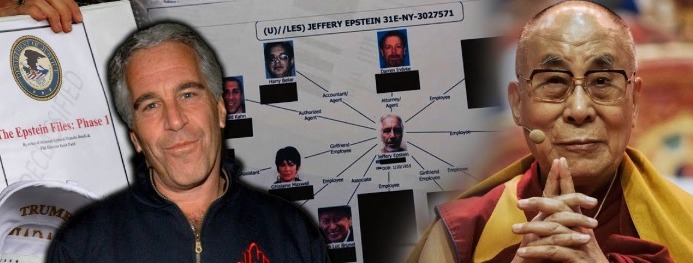
China has recently launched a new smear campaign against His Holiness the Dalai Lama.

The Chinese media has highlighted that his name has been found in the Epstein files. The fact of the matter is that these files are available in the public domain, and there is no mention whatsoever of any meeting between the Dalai Lama and Epstein.
China has been consistently running a misinformation campaign against the Dalai Lama, who is not only a great spiritual master but also the global face of Tibet’s struggle against Chinese occupation. One may recall that earlier, Chinese media had mischievously portrayed the Dalai Lama’s innocent act of affection towards children as an undesirable gesture.
The release of the Epstein files has provided the Chinese propaganda machinery with another opportunity to build a narrative against the Dalai Lama. In response to the Chinese allegations, the office of His Holiness has provided a detailed explanation that should be sufficient for any rational person.
The question is: what will China gain from this latest misinformation campaign? China wants to challenge the moral authority of the Dalai Lama, who is living in exile. His country, Tibet, if independent, would be the 10th-largest state in terms of geographical area in the world.
As an exiled leader, the Dalai Lama has led by example throughout his life. He commands not just moral authority but also significant spiritual space. His followers include a large number of Westerners as well, and this has helped to create a strong constituency for Tibet’s freedom struggle.
By running such smear campaigns, China wants to erode the moral authority of the Dalai Lama and question the legitimacy of Tibet’s freedom struggle.
This is not new but a tried-and-tested pattern of the Chinese regime. During Mao’s era and the heyday of communism in the Global South, when China first attacked Tibet in 1950, it justified its aggression in the name of “peaceful liberation from feudalism”. Communist propaganda portrayed the Tibetan theocracy — led by the Dalai Lama and monastic elites — as an oppressive regime of “serfs and slaves” that needed to be overthrown to modernise the region. The result of this Machiavellian plan was a 17-point agreement, which China first imposed on Tibet. But China itself did not honour this agreement and attacked Tibet nine years later. In the aftermath of this attack, the Dalai Lama had to escape to India and, since then, he has remained there.
Coming back to the Epstein files, the Epstein archive provides fertile terrain for such narrative opportunism. Epstein’s name is widely associated with moral transgression, secrecy and misconduct by elites. Even technically correct statements, such as pointing out that the Dalai Lama’s name appears in document listings, can be framed suggestively in this emotionally charged setting. It can be difficult for the general public to distinguish between “mention” and “connection”. This strategy is similar to more general trends seen in state and non-state disinformation campaigns, where facts are selectively emphasised to suggest narratives that are not supported by the evidence.
Crucially, it seems that the messaging is appropriate for a variety of audiences. On a global scale, it coincides with a rise in mistrust of public leaders and elite institutions. Stories that suggest that “even moral icons are compromised” resonate with cynicism at a time when an increasing number of people have started distrusting moral authority. For such framing to work, it does not need to be widely accepted. It works by subtly undermining admiration and certainty.
This latest episode of Chinese propaganda reinforces traditional depictions of the Dalai Lama in China. Historically, he has been described as a political separatist rather than a purely spiritual leader in Chinese public discourse. The purpose of stories that allude to moral contradiction is to reinforce this anti-Tibet narrative. Thus, information has been weaponised and facts have been manipulated to serve the ideological agenda of the Chinese Communist Party (CCP).
The Chinese campaign should also be viewed against the backdrop of geopolitical sensitivities surrounding the succession of the Dalai Lama, who will turn 91 this year. Beijing has stated unequivocally that it intends to take the lead in identifying any reincarnations of the Dalai Lama in the future. On the other hand, the Dalai Lama has proposed alternative systems that might circumvent Chinese government regulation. Even a slight deterioration of moral authority gains strategic significance in such a high-stakes battle.
Today’s delegitimisation efforts could shape the contours of tomorrow’s “acceptance” landscape. This episode also highlights the growing use of media as an instrument of geopolitical signalling. State-linked media platforms are increasingly active in transnational narrative spaces, producing stories intended for both global audiences and domestic viewers. The goal is seldom limited to persuasion. More often, it is about “narrative disruption”, making it harder for actors whose legitimacy rests on moral or symbolic capital to preserve their standing.
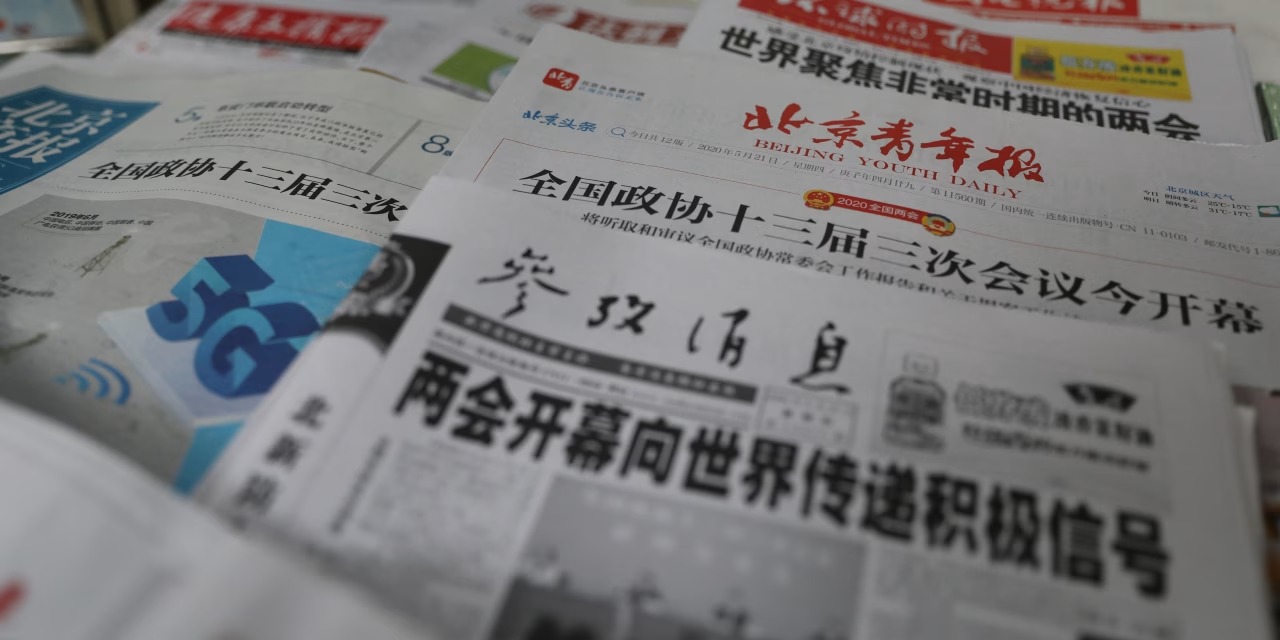
The digital realm was initially envisaged as a great equalizer of knowledge, breaking down barriers of geography, class, and institutional gatekeeping to make huge repositories of information freely accessible to anyone with an internet connection, to empower individuals across the world, to learn, to innovate, and to challenge pre-established narratives on an unprecedented scale. However, what the digital realm has now been turned into is the paramount battlefield of the 21st century, wherein states vie for territory, not just through conventional arms, but dominance over perceptions, narratives, and decision-making. This marks the rise of cognitive warfare, or the strategy that weaponizes information to shape minds, erode trust, and achieve strategic objectives, without even firing a shot.

China has pioneered the approach, as part of its ‘unrestricted warfare’ doctrine, integrating propaganda, disinformation, cyber operations, and psychological manipulation to influence the cognitive environments of its adversaries. People’s Republic of China’s (PRC’s) People’s Liberation Army (PLA) explicitly sees the human brain as the new domain of conflict, aspiring for cognitive dominance, through coordinated campaigns that exploit social media, AI-generated content, and state-affiliated networks.
A stark example of this tactic was recently witnessed early this year, following the U.S. Department of Justice’s release of additional Jeffrey Epstein files. Chinese state-controlled media and affiliated outlets amplify claims that the Dalai Lama was deeply implicated, highlighting mentions of his name over 150 times, often citing emails where Epstein speculated about meetings or events. China Global Television Network, for example, published an article titled, “Dalai Lama’s name appeared at least 169 times in Epstein files. The Office of His Holiness, the Dalai Lama, unequivocally stated that no meeting ever occurred, and no interactions were authorized, and the references were aspirational at best, with no evidence of any connection or wrongdoing. The timing of PRC outlets and narratives on social media is worth noting and emerged immediately after the Dalai Lama’s Grammy Award win. The objective was to tarnish his global moral authority and to undermine Tibetan cultural identity.
The tactic is not new. In 2023, as well, China’s “Pedophile” Smear Campaign tried to tarnish the image of His Holiness. In 2023 again, Global Times tried portraying pre-1959 Tibet as a feudal, slave society under the Dalai Lama’s theocratic rule, accusing him of being a slave owner. In 2021 as well, the Global Times’ white paper reprint, titled “Tibet Since 1951: Liberation, Development and Prosperity, tried showcasing Tibet as ruled by a theocratic, feudal serfdom, that “crushed human dignity, ignored human rights, and impeded development”.
These oft-repeated episodes exemplify how Beijing exploits the digital realm to sow doubt, leveraging platforms, to spread narratives to attempt to portray the Dalai Lama as morally compromised, aligning with China’s long-standing efforts to delegitimize him as a “separatist”.
China’s cognitive warfare against the Dalai Lama is neither isolated nor new. For decades, as seen in the given examples, Beijing has targeted Tibetan exile networks, through cyber-attacks, such as the 2009 GhostNet operation that infiltrated the Dalai Lama’s offices, to ongoing smear campaigns to portray him as a threat to stability. The attempt is to erase Tibetan autonomy in global perceptions, and to manufacture consent for assimilationist policies in Tibet. The tactic now is to flood digital spaces with false scandals, and to diminish his influence among Tibetans and supporters in India and elsewhere.
India also has repeatedly found itself on the receiving end of similar cognitive warfare from China, which gets heightened during recurring border conflicts initiated by China. Just one example out of myriads is from 2020, when, during the Galwan Valley clash, Chinese state-owned media downplayed PLA casualties, and blamed India for provocation, while amplifying calls for boycotts of Indian goods. Beijing has also issued provocative and incorrect geographical maps, come up with names for locations in Arunachal Pradesh, and combined legal warfare with disinformation to try to normalise territorial claims. Cyber intrusions have targeted Indian power grids in Ladakh, Mumbai, and Telangana, and tried to exfiltrate data from India’s ministries, while Chinese-linked networks spread disinformation on social media to exploit domestic fissures. Diaspora communities have also been targeted to sow discord.
Taiwan stands as perhaps the most intensively targeted recipient of China’s cognitive warfare laboratory. Bots, fake accounts, and pro-unification propaganda are difficult to miss in Taiwan, and tactics also include spreading rumours about candidates contesting elections and portraying unification as inevitable and beneficial for Taiwan. The ways in which China targets candidates contesting elections in Taiwan are similar to its smear campaigns against the Dalai Lama; while the ways in which China tries to dampen military morale in Taiwan are similar to its objectives vis-à-vis India. What China also attempts in democracies is to co-opt media, to self-censor on topics that China considers sensitive- such as Tibet or the Dalai Lama, and this illustrates how cognitive operations interact with hybrid coercion.
Other countries, such as Australia, also face parallel threats. Chinese-linked networks have tried to interfere in referendums and elections. In 2025, for example, Beijing appeared to support Labor’s re-election through subtle online campaigns on platforms popular among Chinese Australians, such as WeChat and RedNote (Xiaohongshu); and these included resurfacing old misleading narratives about politicians’ stances on China-related issues, potentially enhanced by generative AI for translated videos or fabricated endorsements. The Philippines and Vietnam also encounter maritime dispute focussed disinformation, and all these examples reveal a pattern that China deploys in its cognitive warfare- to weaken the cohesion of adversaries, to isolate them diplomatically, and to prepare the ground for coercion or conflict.
Ignoring the digital battleground risks ceding strategic advantage in an era where victory is based on the control of cognition, and not just on the conquest of land. As the attempt to link the Dalai Lama to Epstein shows, Beijing’s operations are highly adaptive, opportunistic, and relentless. Communities and countries at the receiving end of China’s cognitive warfare have to prepare their defences in advance, while unifying countermeasures to safeguard open societies.