
Pakistan is a state whose economy is fragile and dependent on International Monetary Fund (IMF) funds. It survives on repeated bailouts, emergency loans, and financial lifelines from friendly nations. Saudi Arabia has stepped in more than once to keep Islamabad afloat. China has long been presented as Pakistan’s “all weather friend” and economic backbone, though many now describe that relationship less as partnership and more as a debt trap. Yet in spite of all this dependency, Pakistan wants the world to believe a different story. It wants to appear economically strong, militarily confident, and financially independent. What Pakistan is doing today is not economic reform. It is rhetoric. It is showing the outside world that it is signing defence deals, selling aircraft, and exporting weapons, trying to prove that its economy is steady and its future secure. But this is an image, not a reality. The strength being displayed is performative. The weakness is simply hidden behind uniforms, fighter jets, and loud announcements.
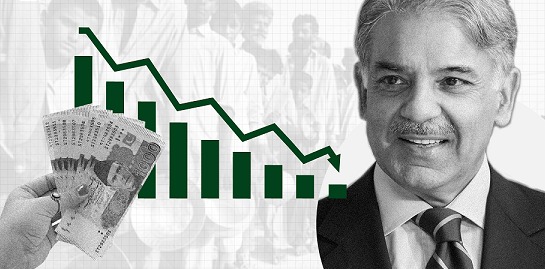
Pakistan is not fixing its economy. It is disguising its vulnerability with military symbolism. The louder Pakistan speaks about defence exports, the quieter it becomes about its real economy. Inflation, unemployment, energy shortages, and debt dominate the lives of ordinary people, yet these issues vanish from official speeches. Instead, fighter jets and arms deals take centre stage. When Pakistani leaders claim that arms exports could replace IMF assistance, it sounds inspiring. But inspiration does not pay debts. A few billion dollars in defence contracts cannot rescue an economy that bleeds far more every year through mismanagement and corruption.These statements are not financial strategies. They are emotional distractions. For a struggling population, this messaging is powerful. It tells them: we are not weak, we are respected, the world is buying from us. It is national pride used as economic anesthesia. The pain is real, but the narrative numbs it. The arms industry becomes a showcase, not because it is saving Pakistan, but because it is one of the few areas where Pakistan can still claim competence. And so, it is inflated, glorified, and sold as proof of national revival.
The JF-17 fighter jet has become the symbol of Pakistan’s supposed rise. It is constantly described as “combat-proven” and “battle-tested,” especially in relation to India. But the aircraft itself is not extraordinary. It is affordable, basic, and politically convenient. Its
value lies in accessibility, not superiority. Yet Pakistan markets it as if it were a technological triumph. Conflict is used as certification. War is turned into advertising. The message is simple: we fight, therefore we are strong. This logic is dangerous and dishonest. It transforms instability into pride and tension into marketing. It ignores the aircraft’s limitations, past safety concerns, and modest capabilities. But in Pakistan’s narrative, facts matter less than perception. The jet is no longer just a machine. It is a storytelling tool. It allows Pakistan to say: We are not just borrowers. We are sellers. We are not desperate. We are capable. The tragedy is that this confidence exists mostly in speeches.
Look at where Pakistan is selling its weapons. Libya. Sudan. Regions torn apart by civil war and instability. These are not healthy markets. They are survival markets. Pakistan is not exporting to strong economies. It is exporting to broken states. This reveals the real nature of its defence trade. It is not a mark of global trust. It is a sign of opportunism in chaos. Pakistan is positioning itself as a supplier to conflict, not stability. And then there is Bangladesh. Any military cooperation here is less about commerce and more about politics. It is aimed directly at India. It is meant to disturb regional equations and reopen old wounds. Even a small deal carries massive symbolic weight. Against India, Pakistan’s defence exports become a narrative weapon. Not a military one, but a psychological one. They are meant to say: we still matter, we still challenge, we still shape the region. The problem is that symbolism is replacing substance.
In Pakistan, only one institution truly thrives: the army. It is the strongest, richest, and most powerful organization in the country. Defence exports do not uplift the people. They strengthen the military’s grip on the economy and politics. Factories, real estate,
business empires, and now arms exports all sit within the military’s shadow. The army prospers while civilians struggle. Soldiers are celebrated while workers search for bread. Jets are showcased while hospitals crumble. This is not national development. It is institutional enrichment. Pakistan’s arms-export story is less about economic independence and more about military dominance over national narrative. The country’s future is being narrated through the language of weapons, not welfare. Pakistan wants to look powerful. It wants to be feared, respected, and acknowledged. But power without stability is just performance. Selling weapons while begging for loans is contradiction dressed as confidence. The IMF keeps Pakistan alive. Saudi Arabia keeps it solvent. China keeps it afloat. And the army keeps it loud. This is not sovereignty. It is dependency with better branding. The world is not witnessing Pakistan’s economic breakthrough. It is witnessing Pakistan’s rhetorical survival strategy. When reform is too difficult, image becomes the alternative. When prosperity is unreachable, pride becomes the substitute. Pakistan is not exporting recovery. It is exporting reassurance. Pakistan has always shown the world that it is strong, disciplined, and unbreakable. But behind that image, its people struggle with poverty, inflation, and hopelessness. The economy remains wounded and dependent, while only the army grows richer and more powerful. Fighter jets rise into the sky, but ordinary Pakistanis remain grounded in hardship. The nation looks powerful from the outside, but inside, its strength is uneven, fragile, and painfully selective.
-Arun Anand
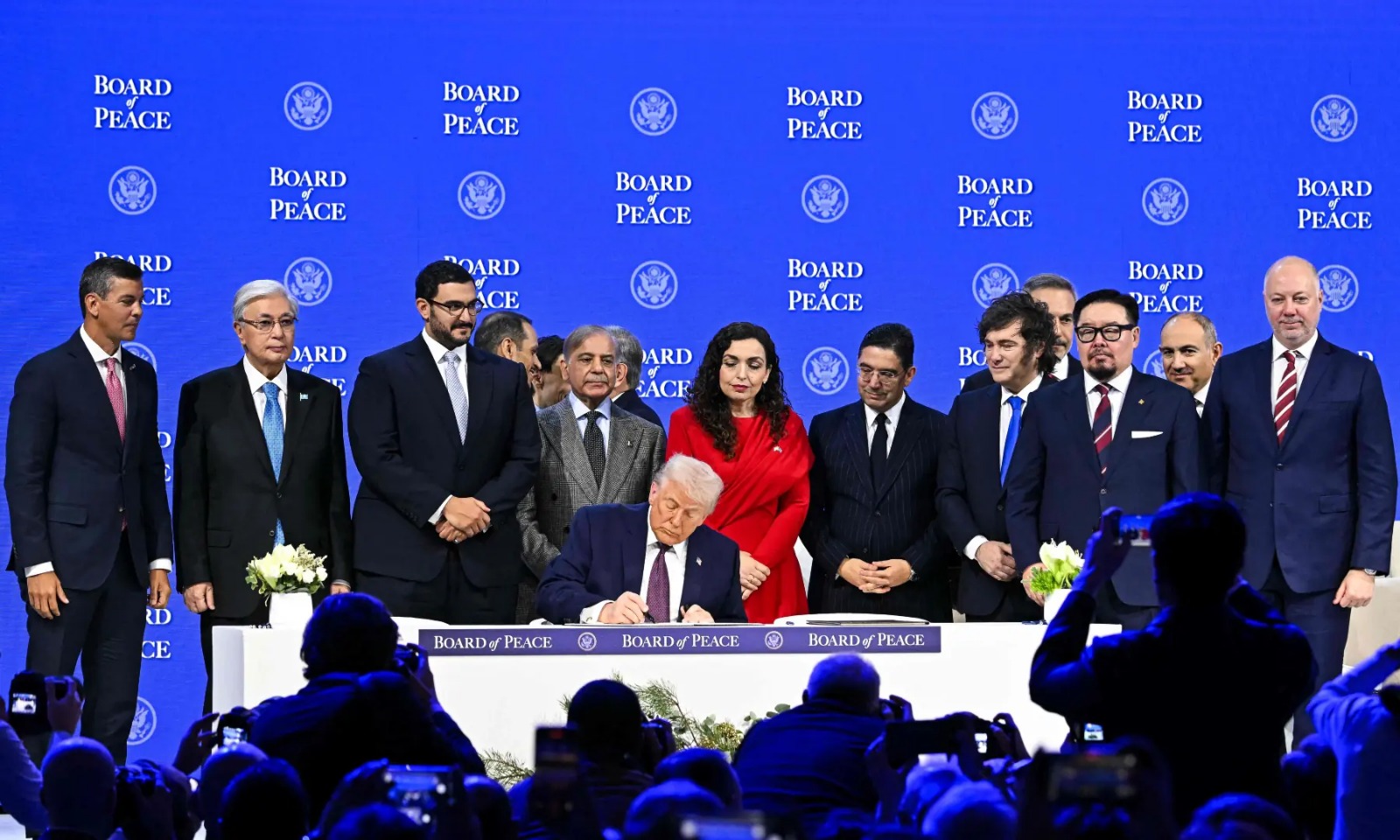
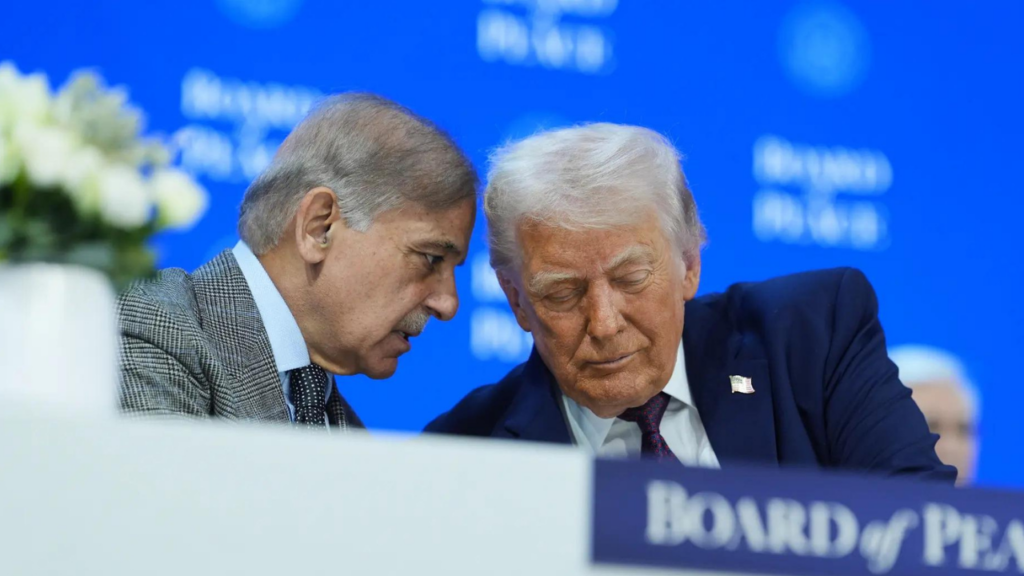
The irony of being Pakistan is that it had to pay one billion US dollars for Donald Trump’s Board of Peace seat while it seeks 2.2 billion US dollars in UAE aid. Pakistan is reeling under impoverishment, yet it spends like a country swimming in surplus. It is as if the nation is borrowing oxygen while promising to plant forests abroad. That single contradiction captures the state of affairs in Pakistan today.
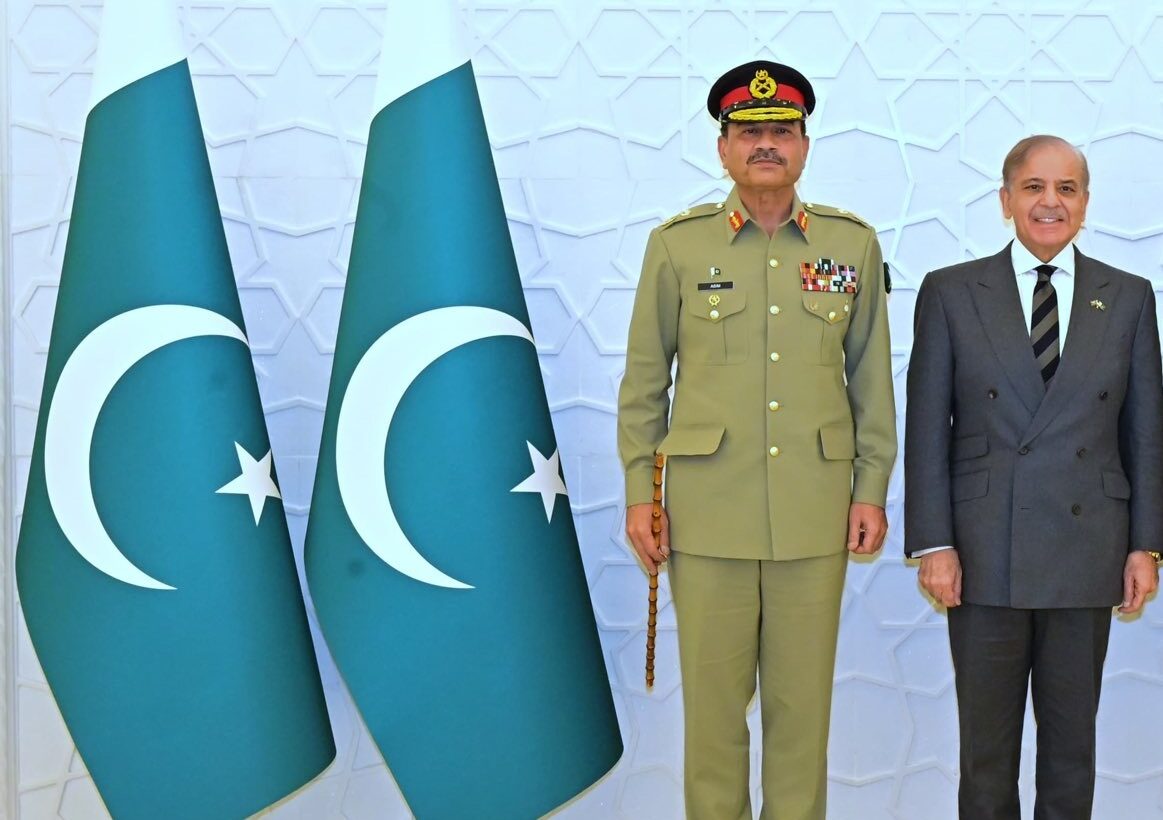
It is not anger alone, and it is not confusion alone. It is disbelief mixed with exhaustion. How does a country negotiating loan rollovers, begging for IMF relief, and struggling to keep its foreign reserves afloat suddenly find room for billion-dollar diplomacy? How does a state that asks its people to tighten their belts behave as though its own belt has no limits? The handout photograph from the Pakistan Military Academy at Kakul tells a different story. Prime Minister Shehbaz Sharif stands beside Field Marshal Asim Munir, watching young cadets march in perfect rhythm. Their boots strike the ground with discipline, their posture straight, their future seemingly secure. The image is meant to convey strength, order, and control. It is meant to say the state is steady and confident. But outside that parade ground, Pakistan feels anything but steady. It feels fragile. It feels tired. And tired nations cannot afford grand performances.
Pakistan’s external debt has crossed 125 billion dollars. More than half of the government’s annual revenue now goes into servicing loans. In 2024 alone, the country paid over 24 billion dollars just to keep creditors satisfied. That amount is larger than what Pakistan spends on education and health combined. Foreign reserves hover between 8 and 10 billion dollars, barely enough to cover two months of imports. This is not financial comfort. This is emergency breathing space. This is a nation living month to month, negotiating survival in instalments. At the same time, Pakistan remains tied to a 7-billion-dollar IMF program that dictates its electricity prices, fuel costs, and fiscal discipline. Interest rates are still painfully high, close to 20 percent, choking businesses and discouraging investment. Electricity tariffs are among the highest in South Asia, forcing families to choose between cooling their homes and feeding their children. Fuel prices shape food inflation, and food inflation shapes despair. Development spending continues to shrink, not because it is unnecessary, but because debt leaves little room for growth. And yet, in the middle of this financial suffocation, Pakistan has found roughly one billion dollars to become a permanent member of US President Donald Trump’s newly formed “Board of Peace,” a diplomatic initiative aimed at advancing a lasting ceasefire and reconstruction in Gaza. For oil-rich nations and financially stable economies, a billion dollars is a strategic investment. For Pakistan, it is borrowed confidence. It is a promise made on credit.
The government presents this as moral leadership. It says Pakistan is standing with Gaza and asserting its diplomatic relevance. Morally, the intention is difficult to oppose. Pakistan has always supported the Palestinian cause, and public sentiment overwhelmingly favors justice and peace for Gaza. But morality without economic realism becomes dangerous. A country drowning in debt cannot pretend to be a lifeboat for the world. Compassion does not disappear when finances are tight, but responsibility must grow sharper. This is where the contradiction becomes painfully human. Over forty percent of Pakistan’s population now lives near or below the poverty line. International estimates show that more than twelve million Pakistanis slipped into poverty during recent inflation shocks. Food inflation once crossed forty-five percent, and although official numbers show moderation, market prices remain stubbornly high. Ask any household, and they will tell you that groceries still cost more than they can comfortably afford. Cooking oil, flour, rice, pulses, and vegetables have all become careful calculations rather than casual purchases. Electricity bills now swallow entire salaries. Gas shortages in winter push families back to burning wood and coal. Healthcare costs delay treatment, turning small illnesses into lifelong burdens. Education expenses force parents to choose which child can continue studying and which must stay home. Youth unemployment remains underreported, and graduates increasingly view migration as the only exit from economic suffocation. This is not laziness. This is survival instinct. Child malnutrition remains alarmingly high, hovering near thirty-eight percent. Millions of children remain out of school. Clean drinking water remains inaccessible to tens of millions. These are not abstract figures. These are silent emergencies unfolding in homes where hope has become fragile. In this reality, a billion-dollar diplomatic seat feels distant and disconnected. It feels like a luxury bought with borrowed money while the kitchen remains empty.
People are not rejecting peace. They are rejecting hypocrisy. They are asking how a state that cannot stabilize electricity bills can stabilize international conflict. They are asking how a government that struggles to subsidize flour can afford to subsidize diplomacy. They are asking why their suffering must become the financial foundation for elite prestige. This is not selfishness. It is fatigue. It is the tiredness of people who have been asked to sacrifice for decades while seeing little improvement in return. Foreign Minister Ishaq Dar has defended the move, saying Pakistan’s membership aligns with its support for the Gaza Peace Plan and may help translate hope into concrete steps toward a permanent ceasefire. The language is noble, but the economic reality remains brutal. A country that cannot control its own inflation, debt, and unemployment cannot project sustainable influence abroad. Influence does not come from paying to sit at tables. It comes from stability that others respect.
There is also a quieter irony embedded in this decision. Pakistan is seeking financial relief from the UAE while joining a board that includes the UAE as a fellow member. It sits at the same table as both borrower and partner. That dynamic matters. It shapes who speaks confidently and who speaks cautiously. Pakistan enters not as an equal power but as a financially dependent participant seeking validation. That weakens its position rather than strengthening it. This is why the decision feels more like performance than policy. It is diplomacy designed to appear bold rather than diplomacy grounded in capacity. Pakistan is trying to look influential while financially vulnerable. That contradiction is visible to the world and painfully felt at home.
The danger lies not only in this decision but in the precedent it sets. If Pakistan pays to belong today, it will be expected to pay tomorrow. If prestige becomes something that must be purchased, then foreign policy becomes a marketplace. And Pakistan, operating on loans and rollovers, cannot afford to shop for recognition. This is how debt becomes policy, and policy becomes hostage to creditors.
Support for Gaza could have been delivered through humanitarian aid, diplomatic advocacy, political lobbying, and moral alignment. These actions require far fewer resources and carry genuine moral weight. A billion-dollar permanent membership feels excessive, especially for a country still recovering from the brink of default. It feels less like peace-building and more like prestige-buying. Prestige, for a poor nation, is the most expensive addiction.
The photograph from Kakul remains striking. It shows discipline, youth, and national pride. But strength today is not measured by how polished a parade looks. It is measured by fiscal discipline, economic credibility, and public trust. A parade cannot hide unpaid bills. A uniform cannot cancel inflation. A ceremony cannot replace stability. Pakistan does not lack compassion. Its people donate generously during floods and disasters. They stand with Gaza emotionally and politically. They carry deep empathy for suffering beyond their borders. What they cannot accept is being asked to fund international symbolism while their own lives grow smaller. They want dignity at home before prestige abroad.
This decision feels like a country trying to sound powerful while negotiating survival in private. It feels like borrowed confidence. It feels like standing tall on financial tiptoe. The tragedy is not that Pakistan wants peace. The tragedy is that it is trying to buy relevance instead of building stability. Stability is the only form of power that lasts. Everything else is temporary.
Leadership is not just about showing up internationally. It is about protecting your people domestically. When a government can control inflation, create jobs, stabilize energy prices, strengthen schools, and support hospitals, then its voice abroad carries authority. Until then, diplomacy risks becoming theatre. Peace is priceless. Gaza deserves justice, dignity, and reconstruction. But a nation drowning in debt cannot pretend to be a global rescuer. You cannot pour from an empty cup. You cannot save the world while starving at home. You cannot borrow for survival and spend for prestige without consequences. Pakistan stands today between symbolism and survival. The government has chosen symbolism. The people are choosing endurance. History will decide whether this moment was courage or miscalculation. For now, it feels like a fragile economy carrying a heavy costume, trying to perform strength while quietly asking for breath.
Pakistan’s Finance Minister Muhammad Aurangzeb has become one of the busiest travelers in global finance. One week he’s in Washington, lobbying the International Monetary Fund (IMF) for yet another tranche of emergency funding; the next, he’s in Riyadh or Abu Dhabi pitching the sale of Pakistan’s national assets from Pakistan International Airlines (PIA) to airports and energy infrastructure.
In many ways, Aurangzeb is less a finance minister than a broker of desperation, auctioning off what remains of Pakistan’s economic sovereignty. The country’s fiscal crisis is not new but continues to be in a risky phase. Pakistan is no longer merely borrowing to stay solvent; it is now being compelled to sell off the remnants of its public sector to keep the economy breathing.
Yet, despite repeated bailouts and promises of reform, the fundamental ailments of Pakistan’s economic system, that is entrenched elite capture, structural inefficiency, and the outsized role of the military in its financial life, remain untouched. Pakistan’s economy has teetered on the brink of default for over three years. In April 2022, the country narrowly averted a sovereign debt crisis. Its inflation skyrocketed to approximately 38 per cent in May 2023 while foreign exchange reserves dropped exponentially to $8.7 billion by February 2023.
Since then, Islamabad has received two IMF bailout packages, multiple loan deferments from China and oil and gas deferred payment options from the Gulf states. But these have merely bought time, not transformation. The numbers tell the story. Pakistan’s external debt has hovered above $130 billion for over a year, while foreign exchange reserves remain dangerously thin, currently at around $19 billion which can cover only a month and half of its imports.
Inflation has oscillated between 3 and 38 per cent, which has qualitatively eroded the purchasing power of ordinary Pakistanis. The rupee continues to slide with 1 USD priced at over 285 PKR whereas energy prices remain high with petrol priced at PKR 265 per liter and diesel at PKR 275 per liter have soared. Moreover, the unemployment rates are only increasing and are currently recorded at around 8 per cent whereas nearly 40 per cent of people battle multidimensional poverty as per latest statics from UN Development Programme (UNDP).
Yet, what stands out is not the depth of Pakistan’s economic pain but the shallowness of its political will to reform. Each IMF program since the 1980s has come up with a familiar checklist of reducing subsidies, broadening the tax base and improving fiscal transparency. And each time, Pakistan has promised compliance but never moved beyond policy rhetoric. The current government’s “reform agenda” under Prime Minister Shehbaz Sharif and Finance Minister Aurangzeb has been no different. While the rhetoric of “structural transformation” fills speeches and communiques, but the reality is cosmetic tinkering.
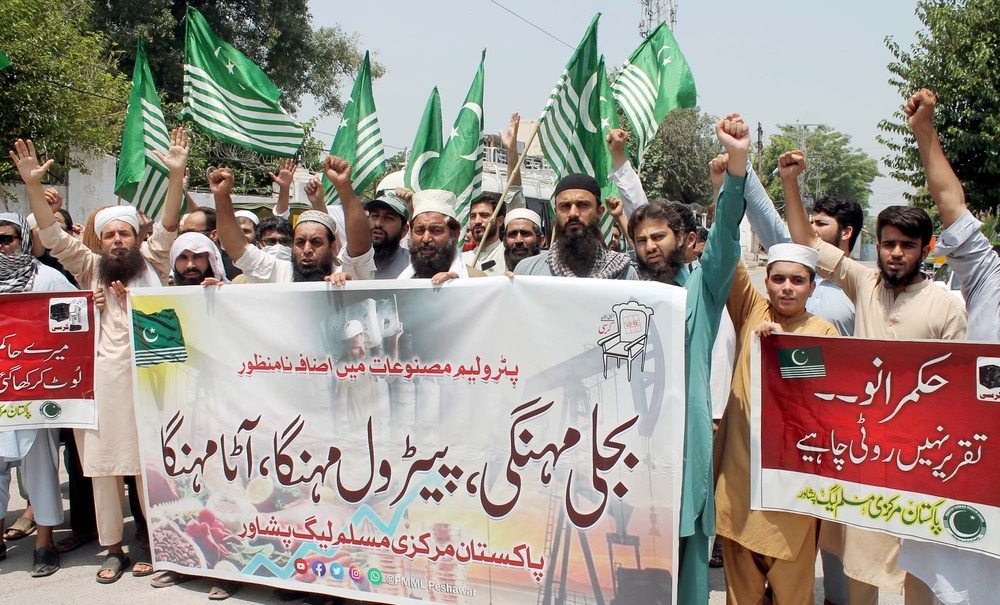
Take the case of broadening the taxation base of the country. Despite years of IMF insistence, Pakistan’s tax-to-GDP ratio remains stuck at around 9 per cent, which remains one of the lowest in Asia. Its situation has been worsened by the fact that the wealthy elite, including feudal landlords, industrial magnates, and military-linked conglomerates, have largely found ways to escape the tax bracket. Meanwhile, the burden falls disproportionately on the salaried middle class and consumers through indirect taxes.
–IANS
– Arun Anand
The Global Hindu Temple Network (GHTN) in America has recently released a report highlighting that two major global institutions — the World Bank and the International Monetary Fund (IMF) — have violated their own stated guidelines when it comes to dealing with Pakistan. According to the report, minor girls and women from Pakistan’s minority communities, particularly Hindus, Christians, and Sikhs, continue to face systemic abduction, coerced religious conversion, and forced marriage.
UN Special Rapporteurs, international NGOs, and some local Pakistani groups consistently estimate that the actual number of gender violence cases against minority girls would be around 1,000 cases per year — a figure many observers still consider underreported due to systemic barriers to filing complaints, fear of retaliation, and police inaction.High-profile cases, such as that of Mehak Kumari, 15-year-old Hindu girl, who faced threats of beheading from clerics after reporting a coerced conversion, illustrate the severe risks minority girls and their families encounter, according to the GHTN report.
On December 29, 2023, the U.S. Secretary of State redesignated Pakistan as a “Country of Particular Concern” (CPC) under the International Religious Freedom Act, citing the country’s engagement in or tolerance of particularly severe violations of religious freedom. This designation underscores that the international community regards these abuses including widespread forced conversions, coerced marriages, and abductions of minority girls as not only systemic but severe.
The US Commission on International Religious Freedom (USCIRF) 2025 report again recommended Pakistan to be designated as a “Country of Particular Concern”, urging redesignation and sanctions for systematic violations. Pakistan ranks low on global indices, such as 153 out of 156 on the 2021 Global Gender Gap. It is considered the fourth most dangerous country for women due to high rates of violence.
With recent cases including the abduction of a 14-year-old Christian girl in Sialkot, the forced conversion and marriage of a 15-year-old Christian girl to a 60-year-old man after months of police inaction is striking and underscores systemic abuse. Such abuses are becoming more rampant especially in the case of Hindus. Take the case of abduction of four Hindu siblings in Sindh.
According to Global Forum of Communities Discriminated on Work and Descent (DFOD), on June 19, 2025, four Hindu children — Jiya (22), Diya (20), Disha (16), and Ganesh Kumar (14) — were abducted from their home in Shahdadpur, Sanghar District of Pakistan. Within 48 hours, videos began to circulate online showing them reciting the Kalma. Their names were changed.
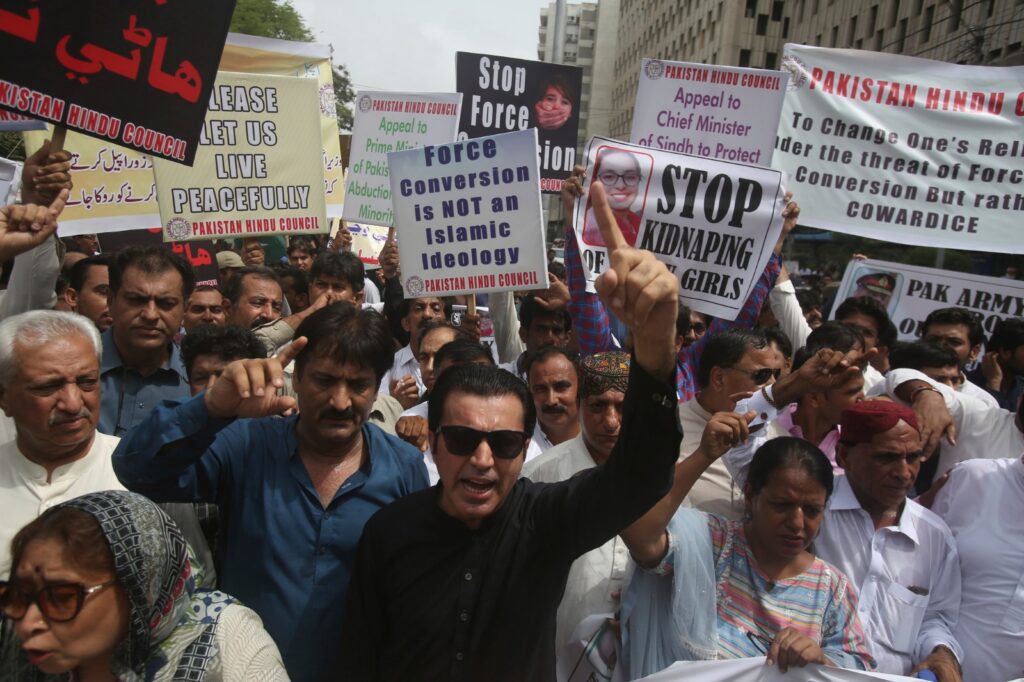
Their identities erased. Their supposed “conversion” to Islam was celebrated by religious hardliners as a victory while the family, and the wider Hindu community, was left devastated.
According to DFOD, this isn’t just an individual case, it is a continuation of an unchecked crisis: the abduction, forced conversion, and exploitation of minority girls and boys in Pakistan, particularly in Sindh, where over 90 per cent of the country’s Hindu population resides.
Patterns of Atrocities
The GHTN report has identified the patterns of the abductions and conversions of the minority girls. Between 2022-2025, “more than 1,000 minor girls of religious minorities are abducted, forcibly converted, married off to strangers, and often trafficked after a few years of abuse. Hindu and Christian girls, often between 12 to16 years old, remain the primary victims. Sikh families have also reported abductions, indicating the practice cuts across communities. Human Rights Commission of Pakistan, United Nations entities, and several human rights organisations have confirmed the persistence of this pattern”.
The report further revealed another pattern: “Victims are typically abducted by older men, often neighbours or local community members. After abduction, the girls are taken to mosques/madrasas/clerics where coerced ‘conversion’ is registered. Marriage certificates are fabricated or issued despite underage status, in violation of child marriage laws. Families who seek justice face intimidation; cases are delayed or dismissed.”
Weaponisation of Islamic laws
Pakistan’s Constitution and legal system prioritise Islamic conformity over minority protections. Courts often validate conversions and marriages of underage girls, citing religious justifications. Efforts to criminalise forced conversions remain blocked by political and religious opposition. Police frequently refuse or delay registration of First Information Reports (FIRs). Courts rely on claims of “voluntary conversion”, disregarding child protection laws. Political reluctance to advance reforms has left protective legislation stalled.
Violation of Guidelines by IMF & World Bank
The GHTN report has raised a pertinent issue about the World Bank and IMF violating their own gender policies by ignoring gender-religion-ethnicity based violence against minor girls and women of religious minorities. Since 2020 the World Bank has given loans worth $14 billion for 66 social welfare projects in Pakistan but has not even mentioned the violence and denial of access and opportunities to these helpless minority girls. In the same period IMF has lent about $13 billion to Pakistan without raising the issue of gender-based violence against religious minorities. The GHTN report has recommended creation of a sub-category of ‘minority inclusion’ for international financial institutions (IFIs) to flag and track gender justice in all lending activities to Pakistan. There should be specific staff positions in the country offices of these institutions dedicated to track and monitor atrocities against minority girls. They should also track access to education and health for religious minorities especially girls and women. This could be a shared resource for the IFIs. The World Bank has done this for the Roma ethnic group in Europe and has experience and expertise to do it.