

-Arun Anand
Myanmar (formerly Burma) sits at a critical crossroads in Asia, both geographically and geopolitically. The country’s location – bordering China, India, Bangladesh, Thailand, and Laos, with a long coastline on the Bay of Bengal and Andaman Sea – makes it a bridge between South Asia and Southeast Asia. In fact, Myanmar is often described as the “main connecting hub” linking East, South, and Southeast Asia. Its shores provide access to the Indian Ocean’s major shipping lanes, which has long attracted great power interest. In short, Myanmar’s geostrategic location grants it outsized importance: it is the only Southeast Asian nation sharing borders with both India and China, and it offers a land gateway from the Bay of Bengal into the heart of Asia.
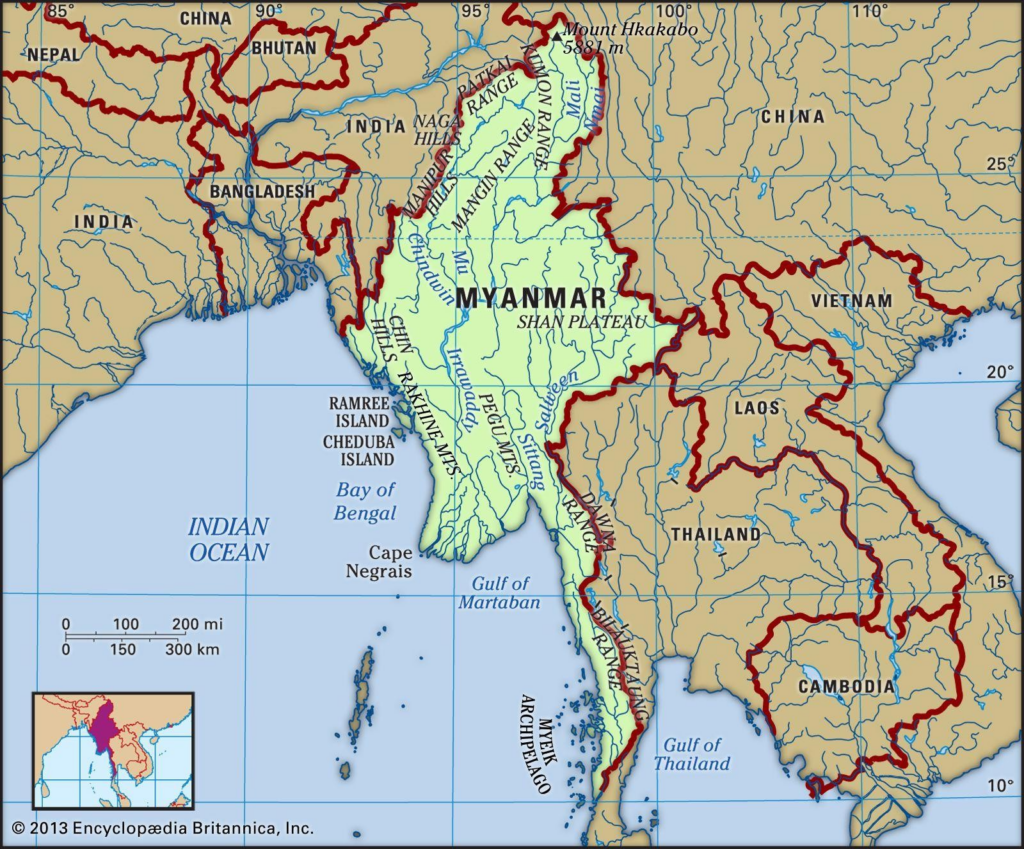
Myanmar Geographical Location
Strategic Geographical Importance
Myanmar’s geography confers strategic advantages that neighbouring powers eagerly seek to leverage. To its west lies the Bay of Bengal (part of the Indian Ocean), positioning Myanmar near vital maritime routes between Asia, the Middle East, and Europe. Historically, even a branch of the ancient Silk Road ran from Myanmar’s shores to China’s Yunnan province, underlining its role as a natural corridor. Today, both China and India view Myanmar as pivotal to their regional aspirations.
In summary, Myanmar’s position at the junction of Asia’s sub-regions lends it significant strategic importance. Geography is the reason a country of 55 million people commands so much attention from global and regional powers. Myanmar is effectively a land bridge and a maritime gateway, one that both China and the West recognise as key to influencing the wider region.
China’s Deepening Influence in Myanmar
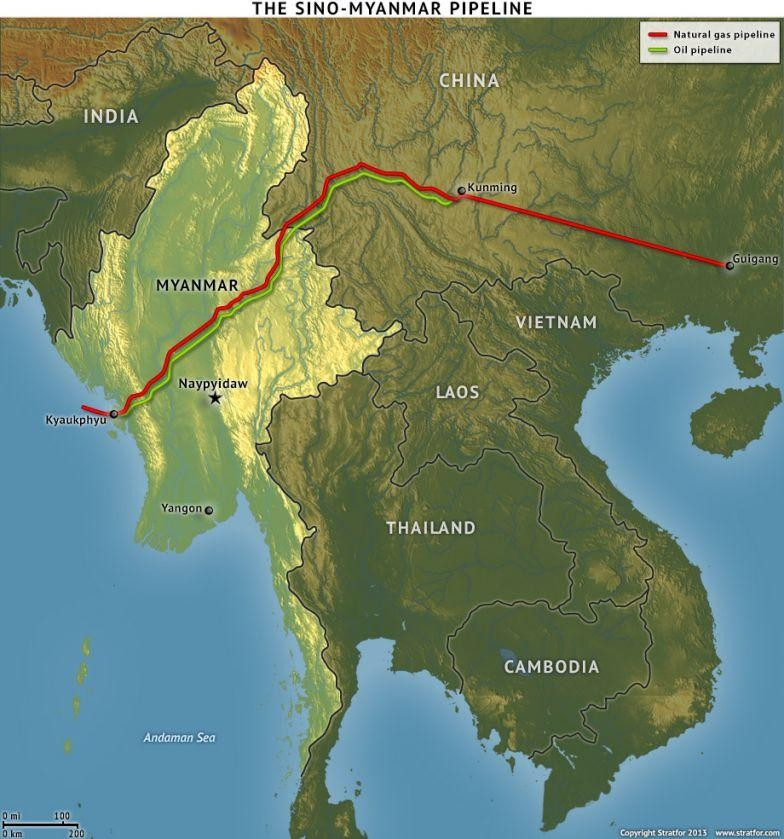
China has emerged as Myanmar’s most influential foreign player, especially in the past decade. Geopolitically, Beijing views Myanmar as crucial to its own strategic objectives. China’s southwestern provinces are landlocked, and Myanmar offers a coveted route to the sea. Through its ambitious Belt and Road Initiative (BRI), China has invested heavily in Myanmar’s infrastructure – from ports to pipelines – to secure that route. For instance, China helped build a deep-water port at Kyaukpyu in Myanmar’s Rakhine State, which serves as the starting point for twin oil and gas pipelines running north into China’s Yunnan Province. These pipelines, completed in the 2010s, allow China to import Middle Eastern oil and gas via Myanmar, bypassing the Malacca Strait – a narrow maritime chokepoint that China views as a strategic vulnerability. By using Myanmar as an overland energy corridor, Beijing reduces its dependence on long sea voyages through congested or potentially hostile waters.
China’s influence in Myanmar extends beyond infrastructure to encompass political and military aspects. During decades when Myanmar was under Western sanctions (due to the former junta’s human rights abuses), China became Myanmar’s closest partner by default. Beijing supplied arms, invested in mining and hydropower, and shielded Myanmar diplomatically at the UN. Even after Myanmar’s brief experiment with democracy, China maintained strong ties with the powerful military (the Tatmadaw). Notably, when the Myanmar army seized power in the February 2021 coup, China reacted with cautious support. Beijing pointedly referred to the coup as a “major reshuffle”, downplaying the overthrow of elected leaders. It continued business as usual – providing weapons to the junta and pushing to continue BRI infrastructure projects – even as much of the world condemned the coup. At the same time, China hedged its bets: it never formally endorsed the military regime and, for a long while, did not allow Myanmar’s coup leader, Senior General Min Aung Hlaing, an official state visit to China. (Beijing even curiously allowed Myanmar’s ousted civilian ambassador to continue occupying Myanmar’s seat at the United Nations, signalling that China hadn’t completely written off the previous government.) This reflected China’s pragmatic approach – engaging the junta to protect its interests, but not fully legitimising it internationally.
However, as Myanmar’s post-coup conflict ground on, China’s stance evolved. By late 2022 and 2023, Myanmar’s internal war was intensifying: ethnic armed groups and new pro- democracy militias were seizing territory, even threatening areas near China’s border. Beijing grew increasingly concerned that Myanmar could descend into chaos – jeopardizing Chinese investments and creating instability on China’s southwestern flank. China’s frustration with Gen. Min Aung Hlaing also mounted, as the junta’s offensives failed to restore order and even hindered Chinese projects (for example, fighting in border regions and a boom in criminal networks there became a headache for Beijing). Fearing a potential collapse of the Myanmar military regime, China decided to double down in support. In late 2023 and 2024, Beijing took a series of assertive steps: it dispatched high-level envoys (including Foreign Minister Wang Yi) to meet the junta, pledged full backing for the junta’s planned 2025 election, and reportedly even helped bolster the Myanmar military’s capabilities (for instance, supplying drone technology). Chinese officials also leaned on various ethnic rebel groups – many of which have enjoyed Chinese cross-border ties – to pause their assaults and cut deals with the military. In November 2023, General Min Aung Hlaing was finally invited to Beijing, signaling China’s renewed embrace of the embattled regime.
It might seem ironic that China, a one-party state, is encouraging Myanmar’s generals to hold an election. But Beijing’s motive is not to foster democracy; rather, China hopes a managed election could “dilute [Min Aung Hlaing’s] power” or produce a more stable, cooperative leadership in Naypyidaw. Analysts note that China dislikes Min Aung Hlaing personally (viewing him as unpredictable and ineffective), so it sees an election as a way to legitimize the junta under fresh faces that might be more amenable to Chinese interests. In other words, China wants a stable partner in Myanmar – it cares less about who wins an election (certainly not pushing for Aung San Suu Kyi’s return, for example) than about ensuring Myanmar doesn’t align with the West or descend into anarchy.
Today, China is arguably the Myanmar junta’s most important patron. It provides economic lifelines (such as trade, investment, and energy revenue) and international cover (for instance, China has vetoed or softened UN resolutions critical of Myanmar). In return, Beijing gains considerable leverage: ongoing access to Myanmar’s resources (like jade, gas, and timber) and strategic infrastructure. If the military regime survives – especially with Beijing’s help – China stands to solidify a “strategic toehold” extending to the Indian Ocean. A friendly Myanmar could host more Chinese projects (such as ports, railways, or even listening posts) that project Chinese influence into South Asia and maritime Asia. This prospect alarms Western strategists, as it would extend China’s reach in a region long dominated by India and watched by the U.S.
In summary, China’s influence in Myanmar is at an all-time high: it has deftly positioned itself as the junta’s indispensable ally, all while framing its involvement as respect for Myanmar’s “sovereignty and stability.”
Western Interests and Involvement
Western nations, notably the United States and its European allies have a significantly different history with Myanmar. During the long years of military dictatorship (from 1962 up until the early 2010s), the West largely treated Myanmar as a pariah state due to its human rights abuses and suppression of democracy. The U.S. and EU imposed tough sanctions for decades, isolating Myanmar’s generals. There was a brief thaw in the 2010s when Myanmar’s military initiated political reforms: the release of Aung San Suu Kyi, elections in 2015, and a quasi-civilian government. At that time, Washington and European capitals rolled back many sanctions and engaged Myanmar with aid and diplomacy, hoping to nurture its transition to democracy – and perhaps to loosen China’s grip by bringing Myanmar into a more liberal, rules-based fold. President Barack Obama even visited Myanmar twice, a symbolic end to its isolation.
That hopeful period did not last. Western relations crashed back down after two events: first, the Myanmar army’s brutal crackdown on the Rohingya Muslim minority in 2017 (which the U.N. later described as “genocidal”), and then the February 2021 coup that ousted the elected government. In response to the coup, the U.S., EU, UK, Canada, Australia and others swiftly re-imposed sanctions on Myanmar’s junta. Within 10 days of the coup, Washington announced a new sanctions regime targeting the generals. Over the next three years, the U.S. piled on nearly 20 rounds of sanctions, hitting top military leaders, their business conglomerates, state- owned oil and gas enterprises (a key revenue source for the regime), and arms brokers. The European Union and Britain similarly enacted multiple waves of asset freezes and travel bans, coordinating to pressure the junta. The intent of these sanctions has been to economically squeeze the military and signal that its illegitimate power grab has severe consequences. Western countries also cut off most development aid and urged foreign companies to divest from Myanmar.
These punitive measures, however, have had limited success in changing the junta’s behaviour. One issue is that Myanmar’s generals are not completely isolated they can still turn to supportive neighbours and great powers to offset Western pressure. China and Russia have provided diplomatic cover (for example, vetoing UN Security Council actions) and continue to trade arms and resources with Myanmar. Neighbouring countries like Thailand and India have also maintained ties with the regime out of pragmatic self-interest. This means Western sanctions, while impactful, cannot totally choke the junta’s lifelines. As one analysis noted, the “junta is far from friendless”: Beijing remains Myanmar’s biggest investor and trade partner, Moscow its arms supplier, and regional governments often prefer engagement over isolation. Hence the generals have (so far) weathered Western sanctions, declaring that they can “handle” international pressure and continuing their brutal crackdowns regardless. Western policymakers themselves acknowledge that, absent more unified global action, sanctions alone are unlikely to force Myanmar’s military to reverse course. Nonetheless, the U.S. and EU see sanctions as a necessary moral stance and a way to deny resources that fuel the junta’s repression (for example, trying to block aviation fuel to hinder the military’s frequent airstrikes on civilian areas).
Strategically, the United States views Myanmar through the lens of its Indo-Pacific competition with China. A Myanmar firmly under Chinese influence (or hosting Chinese bases) would be a setback for the U.S.’s broader regional aims. Thus, even as Washington condemns the coup and human rights abuses, it is also mindful that losing Myanmar entirely to China would harm U.S. interests in the long run. American analysts have warned that if the West remains hands- off, Myanmar could “fall into a protracted state of conflict and fragmentation, supported and dominated by China.” In other words, inaction might cede Myanmar to Beijing’s orbit. This strategic concern is pushing the U.S. to explore creative ways to engage or influence the situation, short of direct military intervention. The U.S. has ramped up humanitarian aid to Myanmar’s refugees and border communities, voiced support for the democratic opposition (the exiled National Unity Government, or NUG), and worked with ASEAN neighbors to push for a peace process. Western countries have also refused to recognize the junta’s planned election, and they continue to call for an inclusive dialogue that involves Suu Kyi and all parties, a call the junta has flatly rejected.
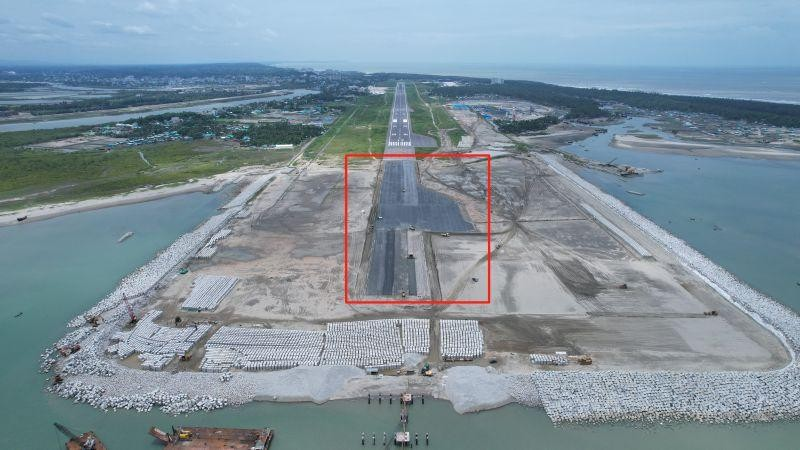
One of the more clandestine efforts attributed to the U.S. and its partners involves Myanmar’s western border. Bangladesh, which shares a border with Myanmar’s tumultuous Rakhine State, has been drawn into the crisis primarily due to the Rohingya refugee exodus. Recently, there has been talk of establishing a “humanitarian corridor” from Bangladesh into Myanmar – ostensibly to deliver aid and possibly facilitate the return of Rohingya refugees. However, reports suggest this corridor concept may double as a channel for Western-aligned support to anti-junta forces. In 2025, investigative reports indicated that the U.S. was quietly working with Bangladesh’s security forces on a plan to support Myanmar’s ethnic rebels in Rakhine State. Under this reported plan, Bangladesh’s army would provide logistical support (but not direct combat troops) to a coalition of anti-junta fighters, including the Arakan Army (an ethnic Rakhine force opposing the Myanmar military). A large supply depot was allegedly being built near Teknaf (Bangladesh’s southern tip) to funnel provisions across the border, effectively
creating a U.S.-backed lifeline into Myanmar. The expansion of Cox’s Bazar airport in Bangladesh was said to be part of this strategy – with the runway extended to accommodate drones, possibly Turkish-made UAVs, that could assist the rebels in Rakhine. All of this was to be done under the guise of an “aid corridor,” separating it from overt military intervention. In fact, Bangladeshi and U.S. officials discussed using the corridor for humanitarian goals, such as returning around 80,000 Rohingya refugees to their homes in Rakhine if the area could be secured by the rebel coalition. On the surface, it sounds like a humanitarian mission – but clearly it has strategic underpinnings, essentially a proxy effort to weaken Myanmar’s junta from the western front.
This so-called Rakhine corridor plan demonstrates the lengths to which Western actors might go to alter the situation in Myanmar without direct intervention. It also puts Bangladesh in a delicate spot: Dhaka is wary of being caught in a great-power proxy war on its border, even as it is under pressure to help resolve the Rohingya crisis. Bangladesh’s government initially gave mixed signals about the corridor, publicly entertaining the idea in early 2025, then voicing caution about being drawn into Myanmar’s civil war. The situation is evolving, but it underscores that Western intervention in Myanmar is no longer limited to speeches and sanctions – there are active efforts to forge new pressure points against the junta, even if under humanitarian auspices. The United States’ overarching goal is to check the Myanmar military’s excesses and prevent China from completely dominating the outcome. Unlike China’s overt state-to- state support of the junta, Western support for Myanmar’s opposition is more covert and framed around democracy and human rights. Nonetheless, both superpowers are now deeply entangled in Myanmar’s crisis, each backing different sides – a classic proxy dynamic that Myanmar’s people ultimately have to bear.
A Turbulent Election and Its Impact
Amid this geopolitical tug-of-war, Myanmar’s internal situation remains explosive, and it is about to reach another critical juncture: a planned national election. The military junta has promised to hold a general election to cement its rule – the first such poll since it grabbed power in 2021. Originally the generals hinted at an election by 2023, but escalating conflict forced repeated delays. As of early 2025, Senior General Min Aung Hlaing extended the country’s state of emergency yet again (citing “security” needs) and indicated an election would occur once “stability and peace” are restored. Observers now expect the junta to attempt a nationwide vote in late 2025. The regime has been feverishly preparing for this faux-democratic exercise: it conducted a census in late 2024 to update voter rolls (an effort that met fierce resistance and violence in rebel-held areas), and it has enacted strict rules to micromanage the election.
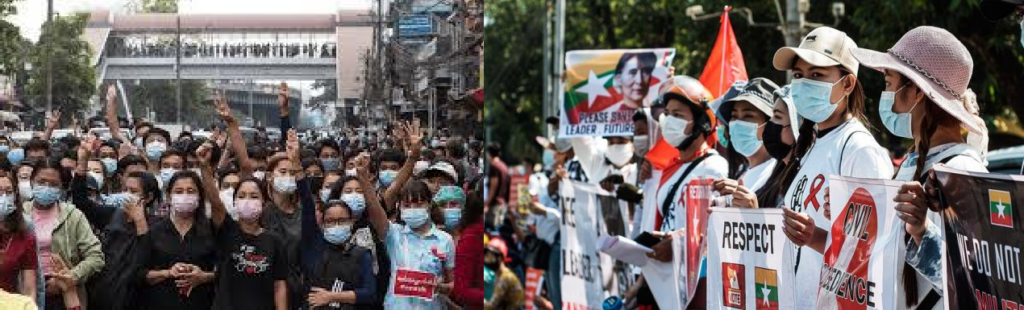
However, few believe that what the military calls an election will be anything more than a sham. All credible opposition has been effectively excluded. The junta has dissolved dozens of political parties – including Aung San Suu Kyi’s National League for Democracy (NLD), which overwhelmingly won the last real elections in 2015 and 2020. (In those 2020 polls, the NLD won 82% of the contested seats, a landslide that the generals refused to accept. The military’s justification for the coup was unproven allegations of voter fraud by the NLD.) Suu Kyi herself remains in prison with 33-year sentence, alongside many of her party’s leaders. Independent media is muzzled, and pro- democracy activists are in hiding or exile.
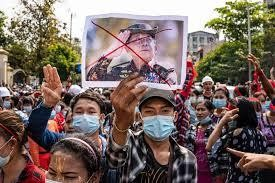
In essence, the junta is arranging an election where the playing field is utterly one-sided – likely handing victory to the military’s proxy party (the USDP) or a slate of military-approved candidates. For Myanmar’s many opposition groups, this vote is nothing but a ploy: “merely an attempt to legitimise the illegitimate regime” that seized power by force. As one spokesperson for the NUG (the opposition government) put it bluntly, “The election will be a sham, it will just be for show.” The military hopes that installing a civilian façade through a controlled election might ease international pressure or domestic dissent. But most Myanmar people are not buying it – and neither are Western governments, which have already declared any junta-run polls to be void of legitimacy.
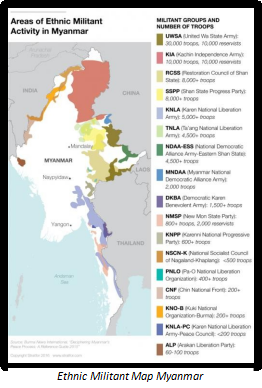
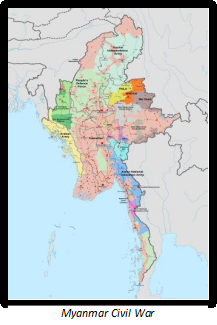
The practical realities on the ground make a free or fair nationwide election impossible at present. Myanmar is in the throes of a civil war; large swathes of the country are not under military control. By the regime’s own admission, voting might be feasible in less than half of Myanmar’s townships. (Some estimates say the junta securely controls only 17% of all village tracts in the country – the rest are contested or held by resistance forces.) In many ethnic minority regions, powerful armies like the Kachin, Karen, and Rakhine’s Arakan Army not only oppose the junta but govern their areas de facto. These groups, along with the NUG’s People’s Defense Forces (PDF militias) across the country, have vowed to disrupt any junta-run election. They see it as a rubber stamp for military rule and have threatened to attack polling stations or convoys. Tragically, this means any election attempt will likely be accompanied by violence and intimidation – and indeed, we have already seen signs of that. During the junta’s census-taking in late 2024 (a dry-run for the voter list), resistance fighters ambushed census workers guarded by soldiers, killing several. The atmosphere is one of fear and defiance; many citizens have said they will boycott the polls if they occur. As one activist observed, it is a “bizarre exercise” to talk of voting while the country is literally at war with itself.
Far from bringing peace, a sham election risks inflaming Myanmar’s conflict even further. The NUG and ethnic rebels have made it clear that they will not recognize the results. Any regime that emerges from this vote will lack credibility in the eyes of a majority of the population, potentially fueling even more resistance. “This election will not lead to stability. It will lead to more instability and more violence,” warned the NUG spokesperson Zaw Kyaw. Unfortunately, that is a very plausible outcome: the act of voting could become yet another flashpoint for clashes, and a new “elected” government dominated by the military might entrench the divide, convincing the opposition that only armed revolution will bring change. In essence, the polls could slam the door on any negotiated solution, hardening the resolve of anti-junta forces to topple the regime by force. Already, since the coup, Myanmar’s conflict has reached “unprecedented” intensity – by 2024 the military was losing territory and seeing record defections. If the junta uses an election to declare itself legitimate, the opposition is likely to double down on the fighting.
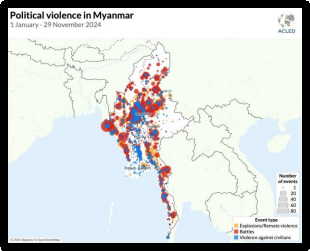
The international response to the planned election is also telling. China, despite having no love for democracy, is paradoxically pushing the junta to hold the vote – but for its own ends. Beijing hopes a new government (even a rigged one) might sideline the obstinate Min Aung Hlaing and install more competent leadership that can stabilize the country (and get Chinese projects back on track). In contrast, Western nations and Myanmar’s neighbors in ASEAN largely view the timing of this election as counterproductive. In January 2025, ASEAN – which usually avoids commenting on members’ internal affairs – urged the junta to prioritize peace over elections, implicitly warning that a vote amid civil war would only make things worse. Western officials have already labeled the planned polls a “sham” and promised to reject the outcome, reinforcing that sanctions will remain or even tighten if the junta proceeds. Thus, rather than opening a path to normalization, the junta’s election could deepen its international isolation (at least with the West), while giving China and a few others an excuse to continue engaging Myanmar on their terms.
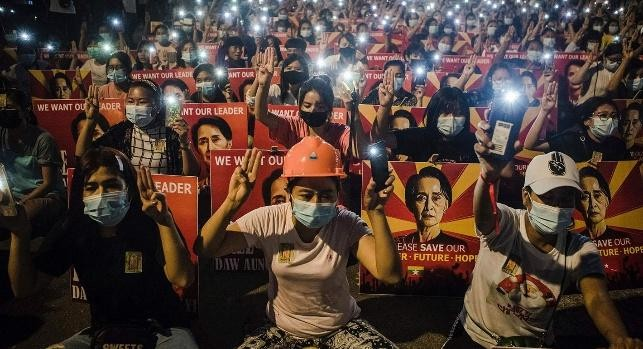
For the people of Myanmar, the immediate impact of these “polls” is unfortunately dire. Many citizens feel disenfranchised – their votes and voices effectively meaningless if the process is fixed. Pro-military factions might use the campaign period to stoke ultranationalism or hatred against minorities (as has happened in past elections), worsening social fractures. Violence is expected to spike around election activities, which could displace even more civilians or result in harsh crackdowns in urban areas. Humanitarian needs – already enormous, with over 3 million internally displaced and half the population in poverty may grow as instability spreads. An illegitimate election also postpones any hope of genuine dialogue between the military and opposition groups, meaning Myanmar’s humanitarian and economic crises will likely grind on.
Outlook: A Nation Caught in Contest
Myanmar’s predicament today is the result of converging pressures: a power-hungry military clinging to control, a determined popular resistance, and competing external powers each trying to secure their interests. The country’s geostrategic position ensures that what happens in Myanmar reverberates beyond its borders – drawing in China’s ambitions, India’s security concerns, Bangladesh’s refugee burdens, ASEAN’s stability worries, and the U.S.’s democratic ideals and Indo-Pacific strategy. This once-isolated nation has become a stage for 21st-century great power rivalry as much as for a people’s struggle for freedom.
In the near term, all eyes are on the junta’s planned election and its aftermath. A forced election could mark a new phase of turbulence. If the military regime manages to hold onto power through brute force and a staged vote, Myanmar may settle into a grim status quo: a fragmented country under a sanctioned dictatorship, increasingly reliant on China and Russia for economic survival and military hardware. Beijing, in that scenario, would likely deepen its footprint –securing its projects and perhaps even gaining a strategic ally on the Bay of Bengal, which would extend China’s influence toward the Indian Ocean in a significant way. Such an outcome would strengthen China’s hand in the region, albeit at the cost of Myanmar’s sovereignty being heavily constrained by Chinese interests. Western countries would probably continue a policy of isolation and pressure, leaving Myanmar largely cut off from global markets and institutions (apart from those aligned with China). The Myanmar people would remain caught in the middle – suffering repression at home and deprived of full engagement with the world.
On the other hand, if resistance forces continue to chip away at the military’s control – as they have since 2021 – Myanmar could see a gradual power shift on the ground. Some analysts even suggest the regime’s hold is weakening to the point that a collapse is conceivable if momentum sustains. In that case, the post-election period might bring even more upheaval as the junta struggles to govern and insurgents move in. It’s a dangerous vacuum that could intensify humanitarian suffering, but it might also create openings for a negotiated solution if international mediators step up. The role of outside powers will remain pivotal: China could broker truces (as it did briefly on the China-Myanmar border in late 2023 or conversely ramp up support to prevent its favored side from losing. The U.S. and regional players might increase backing to the opposition in hopes of forcing the military to the table. Bangladesh and India will be carefully watching Rakhine and the north, respectively, to prevent spillover of violence. ASEAN might eventually push harder on its peace plan, especially if the election proves obviously futile in resolving the crisis.
In any scenario, it’s clear that Myanmar’s fate is of global consequence. For the average Myanmar citizen, these geopolitical games mean little if they cannot attain peace and the right to choose their leaders. The promise of Myanmar’s geostrategic potential – as a thriving crossroads of trade between India, China, and ASEAN – will remain unrealized until the political turmoil is resolved. A stable, democratic Myanmar could indeed be a linchpin of regional connectivity and development, benefiting all players. But as of now, that vision is distant. Instead, the country is embattled and divided, a place where outside powers deliver aid or arms to their preferred side while an elected leader languishes in jail. Myanmar is a nation with a prized location and many powerful suitors, yet it is tormented by internal strife and power struggles. China’s influence is strong and growing, as it stakes a claim to a strategic corridor through Myanmar to the Indian Ocean. The United States and Western allies, not wanting Myanmar to become a Chinese client state, are trying to intervene via sanctions and subtle support to the opposition – even exploring bold moves like a Bangladesh- Myanmar aid corridor. And amid all this, Myanmar’s military is pressing ahead with an election that almost no one believes is real, hoping it can entrench itself in power. The likely impact of these polls is not peace, but more conflict – at least in the short term – because the fundamental political disputes in Myanmar remain unresolved.
For now, Myanmar’s people face an uncertain future: will their country remain a pawn in a geopolitical chess match, or can it regain its sovereignty and unity on their terms? The coming year, with its turbulent “election” and international maneuvers, may provide some answers. What is certain is that Myanmar’s geostrategic importance guarantees the world will be watching closely – and both East and West will continue vying for influence – as this drama unfolds. The hope among many Myanmar citizens and friends abroad is that eventually a genuine political solution will emerge, so that this strategically located nation can escape its cycle of turmoil and realize its potential as a prosperous crossroads, rather than a battleground for proxy wars and power plays.
Sources:
-Arun Anand
Over Eight months have passed since Dr. Mahrang Baloch, a young physician turned human rights icon, was arrested on trumped-up charges in Quetta, Balochistan. 257 days since the state threw her into jail under Pakistan’s catch-all arsenal of “anti-terrorism” and “sedition” clauses. And 37 weeks since much of Pakistan’s so-called progressive intelligentsia, which was once vocal and proud of its commitment to dissent, fell conspicuously and unforgivably silent.
The cruelty of this moment is not just in what the state has done to Dr. Mahrang and her comrades in the Baloch Yakjehti Committee (BYC). It is in how predictable the silence of non-Baloch Pakistanis has been, including among the ever-shrinking ranks of “liberals” who still claim to champion democracy. In a country descending, quite visibly, into a military authoritarianism, or so to say an Orwellian farce, even moral outrage has become selective.
This is the joke Pakistan has become: a place where everyone knows the cases against Mahrang and her associates are a sham and yet almost no one outside Balochistan dares to say it aloud.
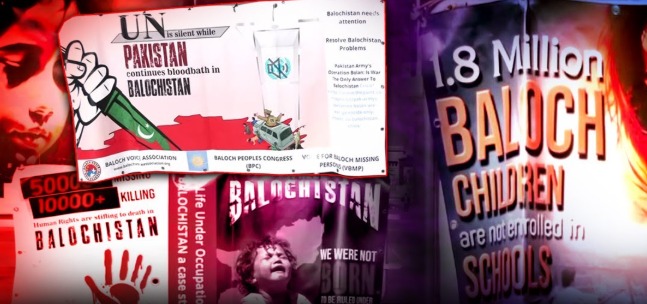
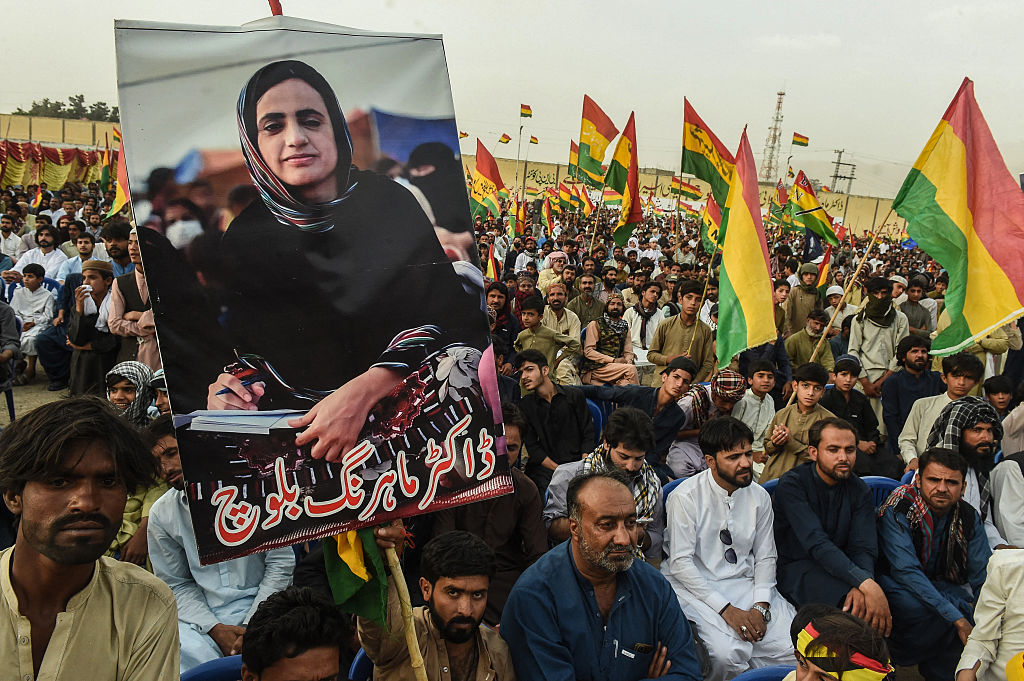
To understand why the establishment is so determined to crush Dr. Mahrang, it is necessary to recall the arc of her rise. The Baloch Yakjehti Committee was never just another protest collective. Founded in 2018 by Dr. Mahrang along with Sammi Deen Baloch and Beebow Baloch, the BYC emerged as a rare, grassroots Baloch women-led peaceful movement. Its central goal was exactly the issue the Pakistani state has most wanted to keep hidden: the unending human rights violations by its military, especially enforced disappearances and custodial killings.
For decades, Baloch families, mostly women and children, marched in circles demanding to know where their sons, brothers, and fathers are. What the BYC did was to put names, faces, stories, and grieving families at the centre of a national conversation that Pakistan’s military dominated establishment always wanted to suppress.
Its gradually became the primary platform to voice the grievances against the militaristic policy of Pakistan towards the province. The watershed moment came in late 2023, after the custodial killing of 20-year-old Balach Marri Baloch, abducted by plain-clothes Counter Terrorism Department officials. The BYC-led march, largely comprising women carrying photos of relatives who vanished, travelled from Kech in Turbat to Islamabad, seeking accountability and an end to military excesses. It exposed the brutality of the security apparatus to a mainstream audience, and for the first time in years, the state’s narrative on Balochistan began to crack.
The state responded as expected: with repression. But the more it tried to silence the BYC, the more the movement grew. In July 2024, the BYC convened the Baloch Raji Muchi (Baloch National Grand Jirga) in Gwadar. it aimed at exposing Islamabad’s imperial policies in Balochistan from resource exploitation to demographic engineering to routine extrajudicial killings. Despite highway blockades and internet shutdowns, hundreds reached the venue. For the state, it became apparent that BYC was not merely a fringe group but one with mass appeal.
For Pakistan’s deep state, particularly an increasingly entrenched military under Army Chief Asim Munir, such defiance from the country’s most dispossessed province was intolerable.
And so, on 22 March 2025, Pakistani state finally arrested Dr. Mahrang during a peaceful sit-in demanding the release of the brother of Bebarg Zehri, one of the BYC’s central organisers, abducted two days earlier on 20 March. She was charged under anti-terrorism statutes of Maintenance of Public Order besides sedition. Others who were arrested included BYC Central Organizers Bebarg Zehri and Beebow Baloch, Shah Jee Sibghat Ullah, Gulzadi Baloch, among others. Sammi Deen Baloch, herself the daughter of a disappeared man, was detained and later released.
Human rights organizations have called the charges farcical, the arrests punitive, the crackdown an unmistakable escalation of the military’s doctrine of enforced silence. But silence is now Pakistan’s national reflex.
To be fair, a small handful of prominent voices such as London-based novelist Mohammed Hanif and academic Ayesha Siddiqa, besides Harris Khalique, of Human Rrights Commission of Pakistan (HRCP) spoke out. But beyond this, Pakistan’s progressive class, journalists, civil society networks, and ‘liberal’ commentators have largely looked away. In fact, media played aided the state in labelling Mahrang and her BYC members as secessionists.
The reason is as old as Pakistan itself: when the state targets Baloch activists, most Pakistanis convince themselves that this is someone else’s problem. That the Baloch live too far away, that the disappearances are exaggerated, that security considerations justify exceptional measures. Even the Pakistanis who rally for Palestine, who write poetic elegies for democracy, suddenly find nuance when the victims are Baloch. It is nothing but hypocrisy of the highest order.
That selective empathy has given the military a free pass to dismantle what little democratic space remains. It is no coincidence that Pakistan is undergoing its worst authoritarian slide in decades: a re-engineered judiciary, censorship of the press, mass trials of political activists, and the sidelining of dissenting voices from Baloch rights organizers to opposition politicians under the guise of national stability. Therefore, the silence is not passive but an enabling one.
Dr. Mahrang’s imprisonment is thus more than a legal case. It is a moral indictment of what Pakistan has become. Eight months and one week in jail, without due process, for leading peaceful marches asking a simple question: “Where are our loved ones?” If a state cannot tolerate even that question, is there any legitimacy whatsoever left in it?
It seems that the Pakistan’s rulers believe that imprisoning the BYC leadership will extinguish the movement. But they seem to be overlooking the fact that it emerged from the shared trauma of over seven thousand families whose sons were taken in the dead of the night and the light of the day. It grew because the state’s violence is structural, not episodic.
The cruel joke is not that Pakistan’s establishment behaves with impunity. That much has long been known. The cruel joke is that the country’s liberal progressive class, which once claimed to represent conscience, has become too timid to speak when conscience demands nothing more radical than stating facts everyone already knows.
Everyone knows the charges against Dr. Mahrang are a farce. Everyone knows why she was arrested. Everyone knows what the military fears most: not terrorism, not foreign conspiracies, but the possibility that ordinary Pakistanis might finally look at Balochistan and see citizens, not a security threat.
The tragedy is not only that Pakistan is drifting into authoritarianism. It is that so many who should know better have chosen silence as the price of comfort.
-Arun Anand
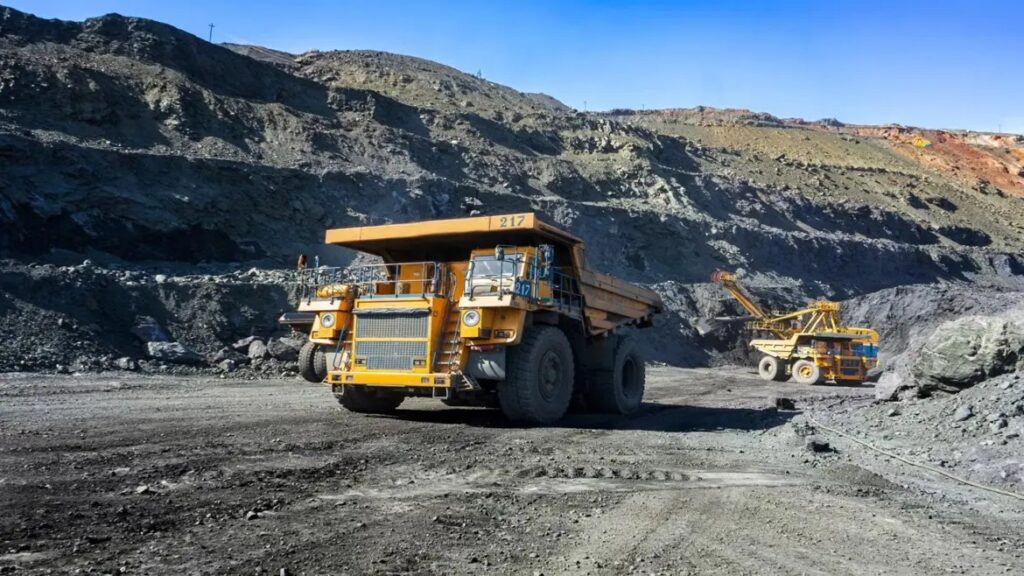
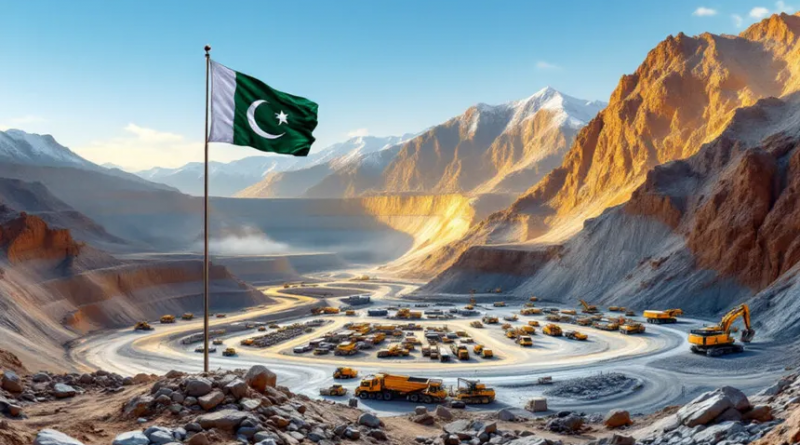
On December 10, the U.S. Chargé d’Affaires in Islamabad, Natalie Baker, announced that the U.S. Exim Bank had approved a package of $1.25 billion in financing to support mining operations at Reko Diq, one of the world’s richest untapped copper and gold deposits. On the surface, Washington framed the decision as a step toward securing global supply chains for critical minerals.
Islamabad portrayed it as a sign of renewed confidence in Pakistan’s investment climate. But for Balochistan, Pakistan’s largest province by land but its poorest by every measure, the announcement landed like yet another reminder that its natural wealth is a prize others are free to carve up.
This Exim Bank financing flows directly after two MoUs were signed on September 8, 2025, between Pakistan and the United States for “critical minerals cooperation.” The military dominated Shehbaz Sharif government heralded the agreements as a milestone. But in Balochistan, they are yet another chapter in an old story: the extraction of Balochistan’s resources by outside powers, facilitated by a central government that treats the province not as a partner but as a colony.
For decades, Pakistan has perfected a model of imperial governance in Balochistan, which combines military control, political manipulation, and economic dispossession. What is new today is not the extraction but the identity of the extractors. The United States now joins China, whose multibillion-dollar projects under the China-Pakistan Economic Corridor (CPEC) have already given Beijing expansive access to Balochistan’s ports, highways, and mineral deposits.
Pakistan’s rulers have turned Balochistan into a marketplace where global powers shop for resources while the people who live above those riches remain among the most deprived in South Asia.
Balochistan’s modern history is inseparable from the manner in which it entered Pakistan. After the forced accession of 1948, the province was governed with suspicion and repression. Islamabad treated Baloch aspirations for autonomy as rebellion, not politics. The result is a province where the most powerful institution is not the provincial assembly but the Quetta cantonment, whose writ supersedes that of any civilian office.
Even today, Balochistan’s political leadership is crafted in military corridors of Rawalpindi and the condonement at Quetta. The current chief minister, Sarfaraz Bugti, is widely viewed as a product of the military establishment, who is another local administrator empowered to manage dissent rather than address the province’s material deprivation. The result is a governance system more interested in securing resource corridors than building schools, hospitals, or representative institutions.
Under this militarized order, resource extraction has been carefully organized to ensure that wealth flows outward to Pakistan’s dominant province, Punjab, and to foreign partners courted by the military-led state. Balochistan’s natural gas from Sui fueled Pakistan’s industrial growth for decades, yet most Baloch households cook on firewood.
Today, its copper and gold fields promise to enrich foreign corporations and deliver revenue to Islamabad, while the communities living in the shadow of these mines remain jobless, landless, and under surveillance.
Even menial jobs at major projects like security guards, cleaners, construction labor, are routinely filled by workers imported from Punjab. The message is unmistakable that the state does not merely extract from Balochistan, it excludes Baloch people from even the crumbs of that extraction.
The rush by both China and the U.S. for access to Balochistan’s minerals reflects how Pakistan’s ruling elite has repositioned the province within global competition. Beijing’s footprint was first to expand, anchored by the Gwadar port and a series of infrastructure and mining agreements.
CPEC promised development but delivered a model where Chinese companies received generous concessions, security cordons were erected to protect foreign workers, and local fishing communities were pushed to the margins.
Now, Washington enters the scene, not as a counterweight to China’s influence but as another partner in Pakistan’s long tradition of opaque, extractive deals. It reflects a bipartisan plunder with Pakistan inviting multiple patrons to mine a region whose own residents are denied the most basic political and economic rights.
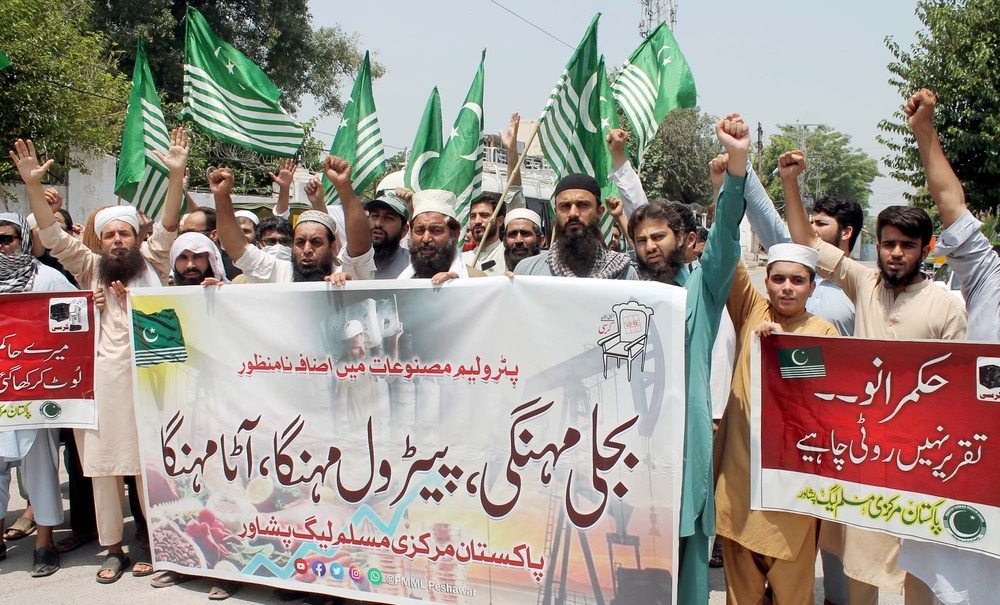
The most striking thing about Balochistan is how starkly its material reality contradicts its mineral wealth. Despite being mineral rich in every aspect, the province ranks at the bottom of every development index in Pakistan. For instance, the poverty appears near-universal with 71 percent of the provincial population living in multidimensional poverty. It is nearly double the national average of 38 percent and in districts like Awaran, Kharan, and Panjgur, even exceeds 80 percent.
Likewise, education is in an equally dire state. Literacy hovers around 40–44 percent, the lowest in the country, with female literacy dropping below 25 percent in many rural districts. More than 60 percent of Balochistan’s children are out of school. These are not statistics of a neglected province; they are the metrics of deliberate underdevelopment.
The story is same across healthcare with the province recording the highest maternal mortality ratio of 785 deaths per 100,000 live births. It is abysmal compared to the national average of 186.
Nevertheless, the new U.S. financing for Reko Diq along with the other critical mineral MoU is significant not because it marks a shift in Washington’s policy but because it reveals a continuity in Pakistan’s own governing logic of treating Balochistan as a frontier to exploit.
The province is secured by force, governed through proxies, and opened to whichever foreign power is willing to invest billions with no questions asked about political rights or local consent.
Even when the government speaks of “benefit-sharing,” it does not specify it that the benefit is for Punjabis and Punjabi military and political elite that dominates the levers of power in Pakistan. As such, it is not partnership but a plunder with legal paperwork.
The tragedy is not just that Balochistan’s resources are being plundered. It is that this plunder is now bipartisan, endorsed by Islamabad, welcomed by Washington and Beijing, and justified in the name of development that never arrives.
For the people of Balochistan, the empire has simply added new partners. The loot continues. The province remains impoverished. And the world’s most powerful countries now share in the spoils of a land whose own residents have yet to taste the prosperity lying beneath their feet.
– Arun Anand
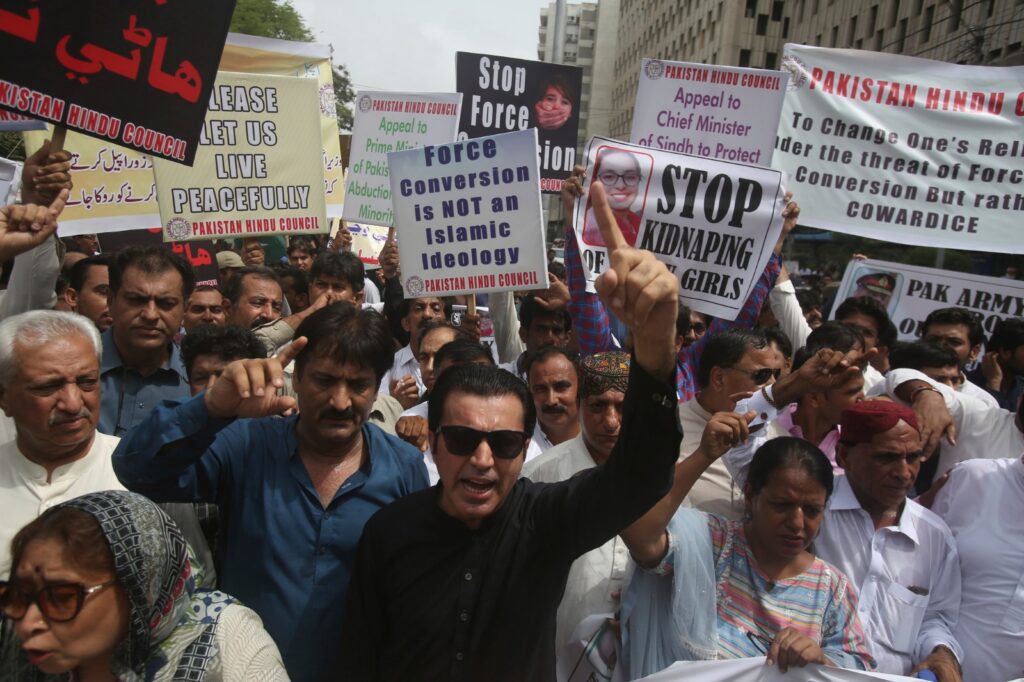
The Global Hindu Temple Network (GHTN) in America has recently released a report highlighting that two major global institutions — the World Bank and the International Monetary Fund (IMF) — have violated their own stated guidelines when it comes to dealing with Pakistan. According to the report, minor girls and women from Pakistan’s minority communities, particularly Hindus, Christians, and Sikhs, continue to face systemic abduction, coerced religious conversion, and forced marriage.
UN Special Rapporteurs, international NGOs, and some local Pakistani groups consistently estimate that the actual number of gender violence cases against minority girls would be around 1,000 cases per year — a figure many observers still consider underreported due to systemic barriers to filing complaints, fear of retaliation, and police inaction.High-profile cases, such as that of Mehak Kumari, 15-year-old Hindu girl, who faced threats of beheading from clerics after reporting a coerced conversion, illustrate the severe risks minority girls and their families encounter, according to the GHTN report.
On December 29, 2023, the U.S. Secretary of State redesignated Pakistan as a “Country of Particular Concern” (CPC) under the International Religious Freedom Act, citing the country’s engagement in or tolerance of particularly severe violations of religious freedom. This designation underscores that the international community regards these abuses including widespread forced conversions, coerced marriages, and abductions of minority girls as not only systemic but severe.
The US Commission on International Religious Freedom (USCIRF) 2025 report again recommended Pakistan to be designated as a “Country of Particular Concern”, urging redesignation and sanctions for systematic violations. Pakistan ranks low on global indices, such as 153 out of 156 on the 2021 Global Gender Gap. It is considered the fourth most dangerous country for women due to high rates of violence.
With recent cases including the abduction of a 14-year-old Christian girl in Sialkot, the forced conversion and marriage of a 15-year-old Christian girl to a 60-year-old man after months of police inaction is striking and underscores systemic abuse. Such abuses are becoming more rampant especially in the case of Hindus. Take the case of abduction of four Hindu siblings in Sindh.
According to Global Forum of Communities Discriminated on Work and Descent (DFOD), on June 19, 2025, four Hindu children — Jiya (22), Diya (20), Disha (16), and Ganesh Kumar (14) — were abducted from their home in Shahdadpur, Sanghar District of Pakistan. Within 48 hours, videos began to circulate online showing them reciting the Kalma. Their names were changed.
Their identities erased. Their supposed “conversion” to Islam was celebrated by religious hardliners as a victory while the family, and the wider Hindu community, was left devastated.
According to DFOD, this isn’t just an individual case, it is a continuation of an unchecked crisis: the abduction, forced conversion, and exploitation of minority girls and boys in Pakistan, particularly in Sindh, where over 90 per cent of the country’s Hindu population resides.
Patterns of Atrocities
The GHTN report has identified the patterns of the abductions and conversions of the minority girls. Between 2022-2025, “more than 1,000 minor girls of religious minorities are abducted, forcibly converted, married off to strangers, and often trafficked after a few years of abuse. Hindu and Christian girls, often between 12 to16 years old, remain the primary victims. Sikh families have also reported abductions, indicating the practice cuts across communities. Human Rights Commission of Pakistan, United Nations entities, and several human rights organisations have confirmed the persistence of this pattern”.
The report further revealed another pattern: “Victims are typically abducted by older men, often neighbours or local community members. After abduction, the girls are taken to mosques/madrasas/clerics where coerced ‘conversion’ is registered. Marriage certificates are fabricated or issued despite underage status, in violation of child marriage laws. Families who seek justice face intimidation; cases are delayed or dismissed.”
Weaponisation of Islamic laws
Pakistan’s Constitution and legal system prioritise Islamic conformity over minority protections. Courts often validate conversions and marriages of underage girls, citing religious justifications. Efforts to criminalise forced conversions remain blocked by political and religious opposition. Police frequently refuse or delay registration of First Information Reports (FIRs). Courts rely on claims of “voluntary conversion”, disregarding child protection laws. Political reluctance to advance reforms has left protective legislation stalled.
Violation of Guidelines by IMF & World Bank
The GHTN report has raised a pertinent issue about the World Bank and IMF violating their own gender policies by ignoring gender-religion-ethnicity based violence against minor girls and women of religious minorities. Since 2020 the World Bank has given loans worth $14 billion for 66 social welfare projects in Pakistan but has not even mentioned the violence and denial of access and opportunities to these helpless minority girls. In the same period IMF has lent about $13 billion to Pakistan without raising the issue of gender-based violence against religious minorities. The GHTN report has recommended creation of a sub-category of ‘minority inclusion’ for international financial institutions (IFIs) to flag and track gender justice in all lending activities to Pakistan. There should be specific staff positions in the country offices of these institutions dedicated to track and monitor atrocities against minority girls. They should also track access to education and health for religious minorities especially girls and women. This could be a shared resource for the IFIs. The World Bank has done this for the Roma ethnic group in Europe and has experience and expertise to do it.
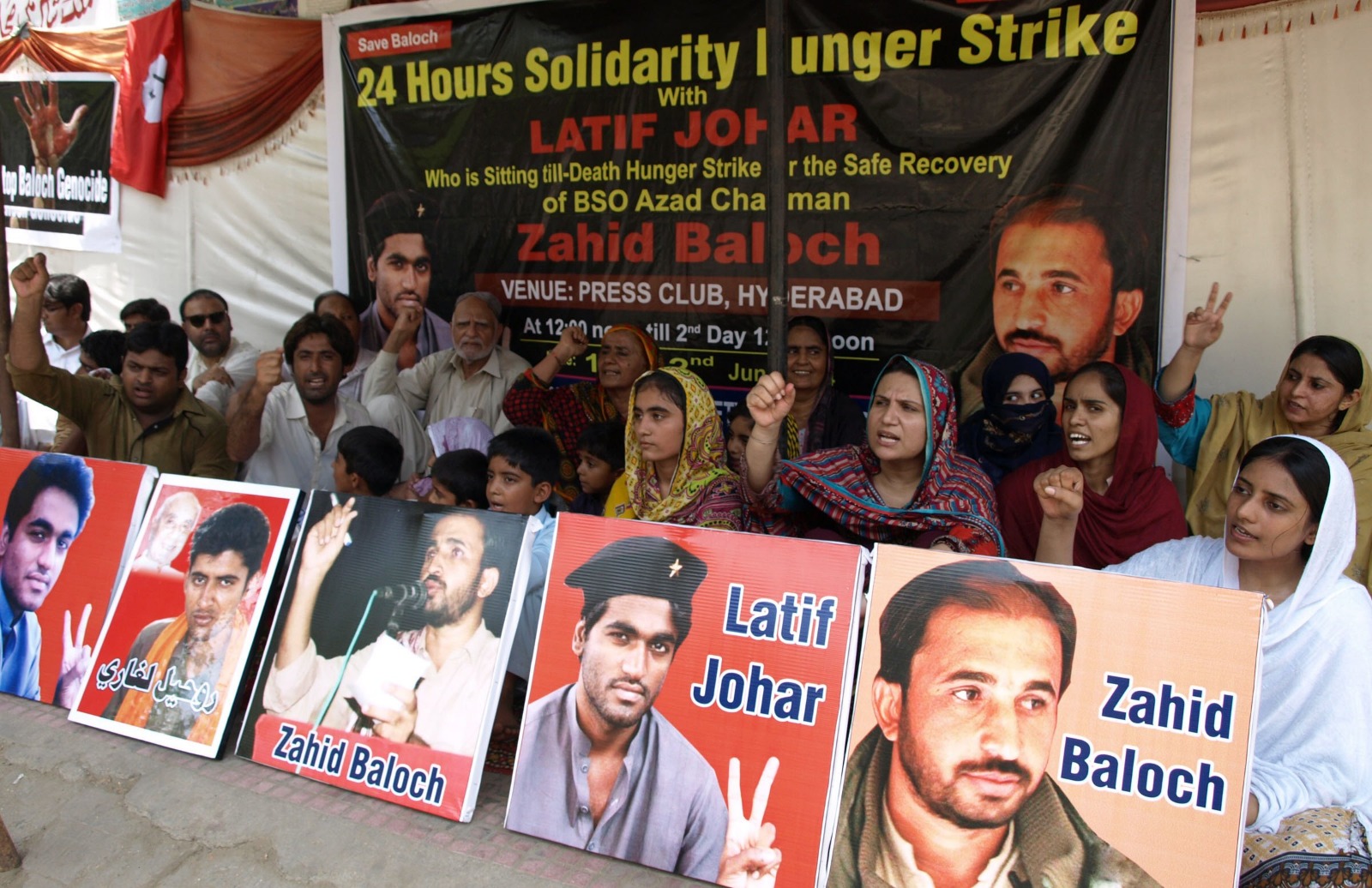
Balochistan’s struggle is not a fringe conflict, it is a human rights crisis that demands attention. The forced labour, the disappearances, the land seizures — these are crimes against people who have asked for nothing more than control over their own lives and resources. Several analysts reckon that the Pakistani military and government must be held accountable for what they have done to Balochistan.
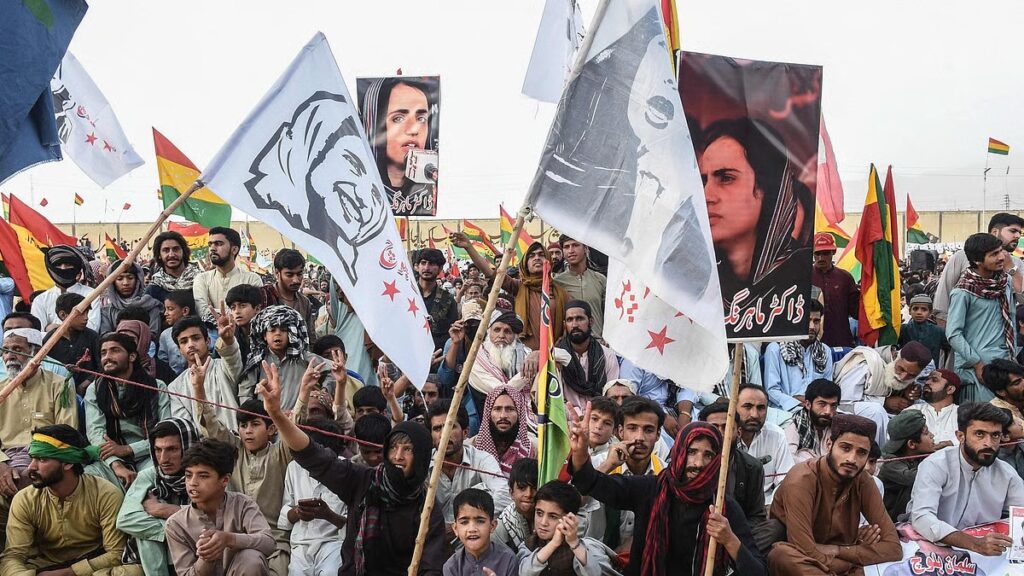
For decades, the Baloch have been told to be patient, to wait for development, to trust the State. But patience cannot grow where injustice is the only harvest. In 2025, Balochistan stands as a stark reminder of how power, when unchecked, becomes predation. The world must choose to listen — not to the Generals and politicians who speak of unity, but to the mothers, workers, and students who speak of freedom. Balochistan is not asking for privilege; it is demanding humanity, the experts highlight.
The land where mountains meet the sea deserves more than military parades and hollow promises. It deserves justice. It deserves freedom from forced labour, from land theft, from the iron hand of an army that claims to protect but only oppresses. The story of Balochistan in 2025 is the story of resilience against tyranny — people standing tall even as the State tries to break their back. One day, perhaps, Balochistan will no longer be the land where “anything is possible” for its oppressors. It will instead be the land where freedom, dignity, and justice are finally possible for its people.
Pakistan has done all kinds of oppression in Balochistan. They seize land of the people and drive people to forced labour. What began decades ago as marginalisation has transformed into a full-scale assault on the dignity and autonomy of an entire people. In 2025, the scars of Balochistan’s exploitation are deeper than ever. Behind the curtain of national security and development, the Pakistan military has entrenched its power through fear, coercion, and the systematic dismantling of Baloch society.
Across the rugged mountains and deserts of Balochistan, the story is tragically familiar. Villages emptied overnight under the shadow of military convoys. Families forced to abandon ancestral lands that generations had cultivated. Men rounded up and compelled to work without pay on projects linked to army infrastructure, roads, and bases. Women left behind, watching their homes turned into outposts and checkpoints. This is not just occupation by force of arms — it is occupation of life itself. The people of Balochistan have lived for decades under what can only be described as a slow, grinding war against their existence.
The Pakistan military, in the name of counter-insurgency and “maintaining order,” has created an environment where dissent is crushed, where journalists disappear, and where the silence of the mountains is broken only by the sounds of helicopters and gunfire. In 2025, reports from the ground reveal that entire communities in districts such as Kech, Panjgur, and Khuzdar have been subjected to forced relocations. Farmlands are fenced off, seized under the pretext of security zones, and then repurposed for military or government use. The same land that fed generations is now out of reach for those who tilled it.
The forced labour system imposed by the Pakistan military in various parts of Balochistan is a form of modern slavery dressed up in patriotic rhetoric. Local men are ordered to construct roads, carry supplies, and dig trenches for military bases. They are not paid fairly — often not paid at all — and refusal brings punishment. In areas around Gwadar, for instance, fishermen have been pushed into menial labour for military and Chinese-backed projects after being barred from their own fishing zones. Their boats are seized, their movement restricted, their livelihoods destroyed. The military calls it “development”; the Baloch call it survival under chains.
The year 2025 has seen an escalation in such practices, partly driven by the military’s increasing economic control in the province. Balochistan is rich in resources — natural gas, coal, copper, gold, and deep-sea ports — yet it remains the poorest region in Pakistan. The army’s corporate arms and allied companies have carved out concessions over mines, land, and infrastructure projects, while the indigenous people see none of the benefits. Billions flow through Balochistan, but barely a drop reaches its people.
The irony is bitter: a province that fuels Pakistan’s industries is itself left in darkness, with children walking miles for water and schools without roofs. The Pakistani government, complicit and silent, plays its part in the oppression by dressing exploitation as progress. Every promise of “integration” and “development” becomes another mechanism of control. Laws meant to regulate the province are wielded as weapons to confiscate land. Anti-terror legislation is used not to combat extremism but to silence activists, students, and intellectuals who dare to speak of freedom.
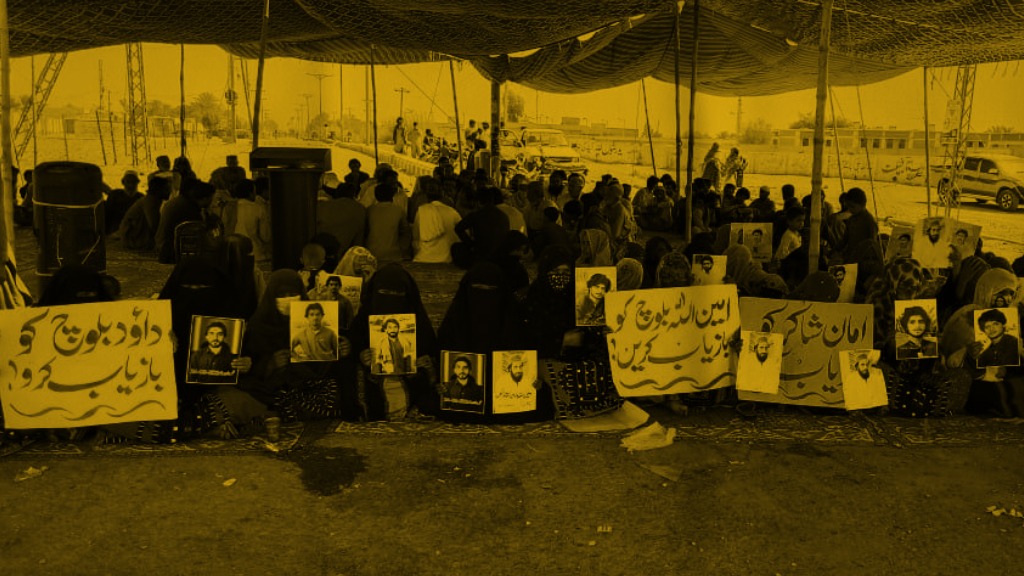
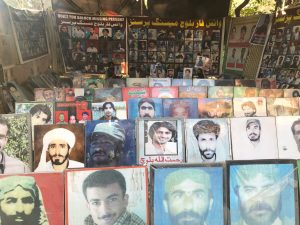
The state media paints them as traitors, the military brands them as insurgents, and their voices vanish into the black hole of enforced disappearance. Forced disappearances remain the most chilling signature of Pakistan’s rule over Balochistan. Thousands of Baloch men and boys have vanished over the years — abducted from their homes, workplaces, or checkpoints. Their families search endlessly, their photos held up at protests that the state calls “unpatriotic.” In 2025, the number of missing continues to rise despite repeated pleas for justice. Mothers march under the scorching sun carrying portraits of sons who may never return.
This culture of disappearance has become an instrument of terror — one that ensures silence, compliance, and despair. The pattern is unmistakable. The Pakistan military does not just dominate Balochistan; it extracts from it. Every mine, every port, every so-called “development” zone is secured through coercion and maintained by intimidation. People are forced to work for the very institutions that occupy their lands. The military’s projects in Gwadar, Lasbela, and Turbat rely heavily on local labour — but this labour is neither voluntary nor fairly compensated.
In many cases, families report being threatened with detention or the loss of their homes if they refuse to work. This is forced labour institutionalized under the banner of nationalism. In rural areas, especially around Khuzdar and Awaran, soldiers have been accused of forcing locals to assist in building camps and transport logistics during operations. Villages are cut off, communication networks jammed, and movement restricted. People live under constant surveillance and fear. It is the kind of oppression that erodes the human spirit — slow, methodical, and devastating.
Balochistan’s tragedy is compounded by the deliberate destruction of its culture and identity. The Pakistan state has systematically tried to erase the Baloch language and heritage from education and administration. Local teachers who insist on teaching Balochi or Brahui face harassment or dismissal. Textbooks portray Baloch resistance as rebellion, never as struggle for justice. Universities are watched; student leaders are monitored, some abducted, some found dead in remote valleys.
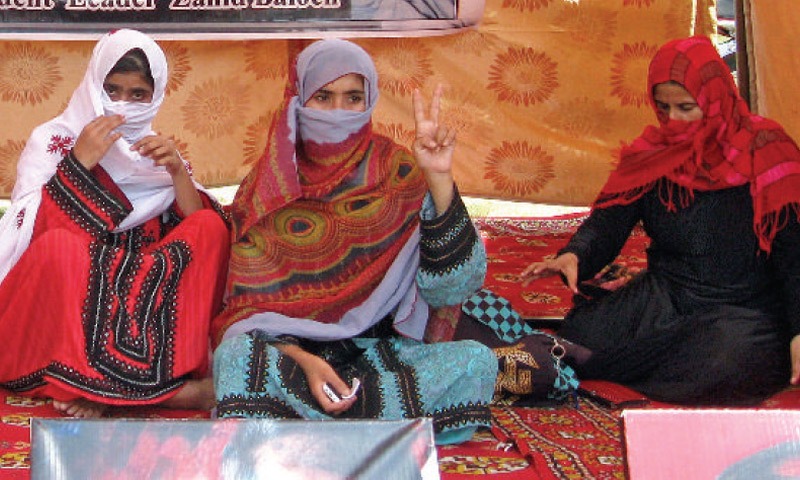
In 2025, student movements across Quetta and Turbat have been met with raids, arrests, and curfews. The youth who demand books instead of bullets are treated as enemies of the state. Yet, despite this suffocating repression, the Baloch spirit endures. Across the province, people continue to resist — sometimes through protests, sometimes through art, sometimes simply by refusing to be silent. Women have become the conscience of this struggle. Mothers of the disappeared march from Quetta to Karachi, holding pictures of their sons and chanting for justice.
The Pakistan government and military present Balochistan as an ungrateful province — one that must be pacified and tamed. But it is not ingratitude; it is the cry of a people who refuse to be stripped of their dignity. The Baloch do not reject progress; they reject progress built on their suffering. They do not reject Pakistan out of hatred; they reject oppression out of love for their land.
What the Pakistani State refuses to understand is that peace cannot be imposed at gunpoint, and loyalty cannot be extracted through labour camps and disappearances. The forced labour and land seizures of 2025 are not isolated incidents. They are part of a long continuum of state policy — one that began with the annexation of Balochistan in 1948 and has evolved into a military-driven colonial project. The faces change, the slogans change, but the machinery of control remains the same. Every new government promises reform; every general promises peace. Yet the boots remain on the ground, the land remains occupied, and the people remain chained. It is time for the world to look beyond Islamabad’s rhetoric.
–IANS
– By Arun Anand
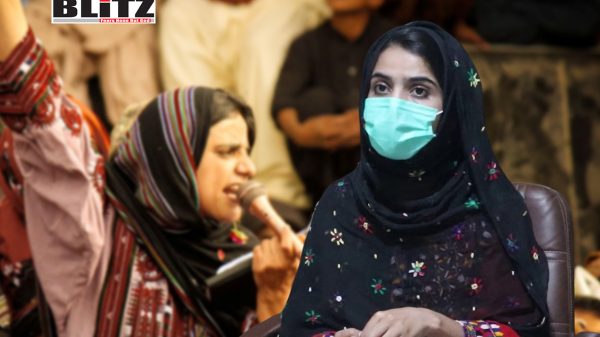
Across the rugged mountains of Balochistan, a quiet revolution has taken shape — not through the barrel of a gun, but through the voices of women who refuse to be silenced. For decades, the Pakistani state has sought to crush the Baloch struggle for rights, identity, and dignity through brute force, censorship, and fear. Yet, amidst the silence imposed by the establishment, Baloch women have risen as the conscience of their people, demanding answers about the disappeared, the tortured, and the dead. Their courage has unsettled Pakistan’s power structure more deeply than any insurgency ever could.
And so, the state has turned its full machinery against them — branding them as traitors, blacklisting them, and attempting to erase them from the nation’s conscience. Pakistan’s fear of Baloch women activists is not born out of security concerns, as its propaganda machinery would have the world believe. It stems from a far more fragile truth: the fear of moral defeat. The establishment that has long ruled through the manipulation of narratives — portraying itself as a victim of terrorism and an upholder of law — cannot bear the voices that strip away this façade. Women like Dr. Sahiba Baloch, Dr. Shalini Baloch, and Samine Deen Baloch have become living examples of the state’s hypocrisy. Their activism exposes what Islamabad has spent decades denying — that the real terror in Balochistan does not come from the mountains but from the cantonments, checkpoints, and intelligence safe houses where young men vanish without a trace.
These women have turned grief into resistance. They march with photographs of missing fathers, brothers, and sons — faces faded by time but made immortal by memory. Their placards demand not privilege but the most basic human right: to know where their loved ones are. For a state built on denial, this demand is dangerous. The Pakistani establishment thrives on invisibility — the invisibility of its crimes, of its political prisoners, of its secret wars. When Baloch women pierce that invisibility, they threaten the very foundation of control that the military has built over Balochistan. The government can bomb villages, censor media, and flood social platforms with propaganda, but it cannot suppress the raw moral clarity of a mother’s cry for her missing child. To silence them, Pakistan’s establishment resorts to the language it knows best — intimidation, smear campaigns, and the weaponization of counterterrorism laws. The inclusion of prominent Baloch women on so-called “watchlists” or “anti-terror registries” is not an act of national security; it is an act of fear. When unarmed women holding peaceful demonstrations are accused of terrorism, it reveals who truly feels threatened. The state that claims to protect its citizens is terrified of citizens who speak the truth. The irony is tragic and telling — that in a country overrun by extremist groups, the military sees danger not in those who kill in the name of ideology, but in those who demand justice in the name of humanity.
The United Nations has expressed alarm over this systematic targeting of Baloch women human-rights defenders. Yet Pakistan continues its repression with impunity, shielded by the same institutions that it manipulates domestically — a judiciary that cowers before the establishment and a media landscape sterilized by fear. The disappearance of Baloch men is not a hidden secret anymore; it is an open wound. Thousands have been abducted by shadowy agencies, tortured in secret cells, and often found dumped in deserts and riverbeds. But when women take to the streets to seek accountability, they too are branded as enemies of the state. The military, unable to confront their truth, paints them as foreign agents, Western puppets, or anti-national propagandists — a tired script repeated whenever Pakistan’s moral bankruptcy is exposed. Behind this fear lies an even deeper insecurity within Pakistan’s power structure. The state was built on a fragile foundation of identity — an identity forged not through inclusion but through suppression. It cannot tolerate voices that challenge its narrative of unity, especially from those it considers peripheral and expendable. Baloch women embody a defiance that is both political and symbolic. They refuse to be confined to the role the state assigns to women — passive, silent, obedient. Their activism is not only a challenge to the military’s control but also a challenge to the patriarchal order that underpins it. When a Baloch woman speaks, she defies both the gun and the gendered silence imposed upon her.
The Pakistan Army, bloated with privilege and arrogance, cannot comprehend this form of power. It is accustomed to silencing dissent with force, not reason. Its generals are comfortable dealing with insurgents, for insurgency justifies military budgets, operations, and the mythology of national security. But women armed only with truth unsettle them in ways bullets never could. They strip away the illusions of heroism and expose the moral rot of a state that kidnaps its own citizens and calls it patriotism. The establishment’s fear of Baloch women is, therefore, the fear of losing control over the narrative — the fear that the world might finally see Pakistan not as a victim of terrorism, but as a perpetrator of systemic violence against its own people. What makes this fear even more profound is the growing international attention to the plight of Baloch activists. For years, Pakistan managed to bury these stories under the rubble of geopolitics — using its strategic importance to silence criticism. But in recent times, the testimonies of Baloch women have begun to pierce through that global indifference. Their statements before human-rights organizations and media outlets have become the cracks through which truth leaks out. Each speech, each vigil, each name they utter chips away at the edifice of impunity the establishment has built. This is why the state is desperate to label them as extremists — because it cannot bear the possibility of being judged by the world through the lens of those it has long oppressed. The persecution of women like Dr. Sahiba Baloch, Dr. Shalini Baloch, and Samine Deen Baloch is part of a broader pattern of state paranoia. These are educated women, professionals, and humanitarians — the very citizens a functioning democracy would celebrate. Yet Pakistan treats them as enemies, because in their words lies the most dangerous weapon of all: legitimacy.
The military’s war in Balochistan depends on dehumanizing the Baloch people. It thrives on portraying them as separatists, terrorists, and outlaws. When articulate, courageous women dismantle that narrative, they expose the establishment’s crimes to both domestic and international scrutiny. This is not just about silencing individuals; it is about suppressing a truth that threatens to delegitimize the entire security state. In a sense, Pakistan’s fear of Baloch women activists is the fear of its own reflection. It is a state that cannot look into the mirror of its history without seeing blood on its hands — from Dhaka to Quetta, from Sindh to the tribal belt.
Every disappeared person, every silenced journalist, every censored voice tells a story of a nation at war with its own people. The Baloch women’s movement forces Pakistan to confront that reality, and that is what terrifies it most. The establishment would rather be feared than exposed, because exposure demands accountability — something the generals have never known. But despite the repression, the movement endures. Baloch women continue to march, to document, to speak. They carry the memory of the disappeared like sacred relics, turning mourning into resistance. Each time the state targets them, it confirms their truth. Each blacklist, each abduction, each threat only amplifies their message: that no amount of violence can erase the demand for justice.
Pakistan’s fear, then, is not of women — it is of the truth they carry. It is the fear that one day the world will listen and see beyond the propaganda, beyond the manufactured narratives of security and nationalism. It is the fear of a reckoning long overdue. The establishment may control the guns, the media, and the courts, but it cannot command the conscience of a people awakening to their own oppression. Baloch women have made sure of that. Their courage has already broken the silence. And for Pakistan’s military establishment — built on secrecy, lies, and fear — that is the beginning of its greatest defeat.
The Balochistan province of Pakistan represents a long-standing festering wound- one that the state, instead of healing, is bent on continually aggravating. The largest, resource-abundant, yet poorest province of the country, Balochistan has been reeling in the crossfire of a chronic armed insurgency and a disproportionate state response, in addition to systemic political and economic marginalization. Even as Pakistan was recently engaged in military confrontations with India- the most severe since the Kargil conflict of 1999, the Baloch insurgents kept intensifying their operations. Now, in the name of more effective counter-terrorism, the government has passed another legislation that threatens to worsen the situation by legitimizing state excesses in the province.
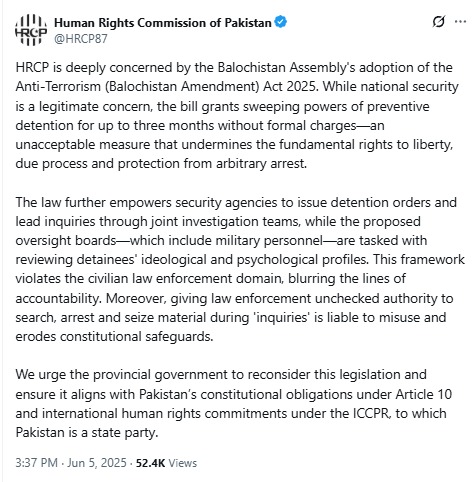
Amid vehement opposition by legal experts, human rights groups, and civil society, the Balochistan Assembly passed the Counter-terrorism (Balochistan Amendment) Act 2025 on June 4. The legislation, which makes new inclusions into the 1997 Anti-terrorism Act, authorizes armed forces, civil armed forces, and intelligence agencies to preventively detain a person for up to three months without any charges or trial. Eliminating judicial oversight, joint investigation teams can now issue detention orders, seize property or other possessions, and conduct ideological or psychological profiling of the detainees, all on their own accord. The Act has been put in place for 6 years, after which it can be extended for a period of 2 years if the provincial government thus notifies.
Collective suppression under the garb of combating insurgency and terrorism is far from new in Balochistan. Particularly since the mid-2000s, the Pakistani state has notoriously enacted a ‘kill and dump’ policy and forged an atmosphere where the threat as well as execution of enforced disappearances, custodial torture and killings, fake encounters, and arbitrary detention is part of daily life. This month itself, Pakistan based human rights organisation, the Baloch Yakjehti Committee (BYC), in its bi-annual human rights report, revealed that 752 people were forcibly disappeared from January to June 2025, out of which 181 were later released and 25 died in custody. The report also registered 117 extrajudicial killings in the same period, with most of the victims reportedly being students and young political activists.
Even when the Act was a proposed bill in the provincial assembly, human rights groups, including Amnesty International and the Human Rights Commission of Pakistan (HRCP), had staunchly opposed its passage over concerns that it would legalize state instrumentalization of enforced disappearances and arbitrary detention. After it was adopted, the HRCP condemned the “sweeping powers of preventive detention” outlined by the Act, which undermine civilian law enforcement domain by involving military personnel in the oversight boards, and contravene the country’s constitutional obligations under Article 10 (legal safeguards for those arrested or detained) as well as its commitments under the International Covenant on Civil and Political Rights. The BYC, too, released a strongly-worded statement, decrying the Act’s “grave violation of fundamental rights, including personal liberty, due process, and protection from arbitrary detention.”
Meanwhile, Pakistani government is projecting the Act as a decisive framework against terrorist forces and something that will help end the issue of missing persons. Balochistan Chief Minister Sarfaraz Bugti described it as a milestone which, according to him, will counter the “organised conspiracy” and “false allegations against state institutions” regarding enforced disappearances. Bugti also claimed that the insurgency in the province is a “foreign intelligence agency driven war” against Pakistan, a narrative that has been parroted for a long time by the Pakistani establishment. This absolute denial and deflection by the authorities point to their utter unwillingness to acknowledge, address, and resolve the plight of the Baloch people, further alienating them and fueling the militancy.
The Baloch people are already subjected to an extremely stifled environment, wherein demands of accountability from the state are constantly misconstrued as separatism, justifying excessive crackdown and harassment. The BYC-led peaceful Baloch civil resistance movement, which has emerged as a resilient force in the past couple of years, has had to face constant vilification, disruptions, harassment, and violent crackdown by the state, with its leaders, including Mahrang Baloch, incarcerated. Rather than taking advantage of a peaceful civilian platform that works towards state accountability and political reconciliation within the federal framework, the heavy-handed response of the Pakistani state creates conditions where peaceful political activism loses relevance and the people, particularly the youth, increasingly view armed insurgency as the only alternative.
Within the context of an ever-ascending insurgency, progressively alienated people, rising attacks on CPEC workers and projects as well as Punjabi migrants, the newly passed amendment act will certainly estrange the Baloch people further. The ensuing state excesses, which will now take on a robe of legal legitimacy, will exacerbate the security crisis in the province. At a point when the Pakistani state must proactively prioritize meaningful political engagement with Baloch grievances, demonstrate accountability and willingness towards politico-economic inclusion and justice for Balochistan, it is almost a suicide run to introduce a blatantly exploitative and tyrannical legislation. By legalizing repression in a province which already represents an existential landmine, Pakistan has truly set in motion its own unravelling.
Over recent years, Pakistan has experienced numerous overlapping and escalating crises, beginning with the regime change in Afghanistan. In August 2021, Pakistan’s hybrid regime initially welcomed the developments that led to the rise of its longstanding ally—the Taliban. However, the situation rapidly deteriorated. The Taliban’s shift in allegiance inflicted not only a geopolitical setback but also spurred a surge in insurgent activity within Pakistan. Beyond the purported Taliban backing of militant organisations—particularly the Tehreek-e-Taliban Pakistan or TTP (a claim the Taliban refutes)—there are various other factors contributing to the groups’ structural and operational transformations. The Baloch Liberation Army (BLA), regarded as the most formidable and ambitious insurgent faction in Pakistan alongside the TTP, clearly exhibits signs of tactical and ideological evolution, necessitating that the Pakistani state recognise these changes in order to formulate appropriate countermeasures.
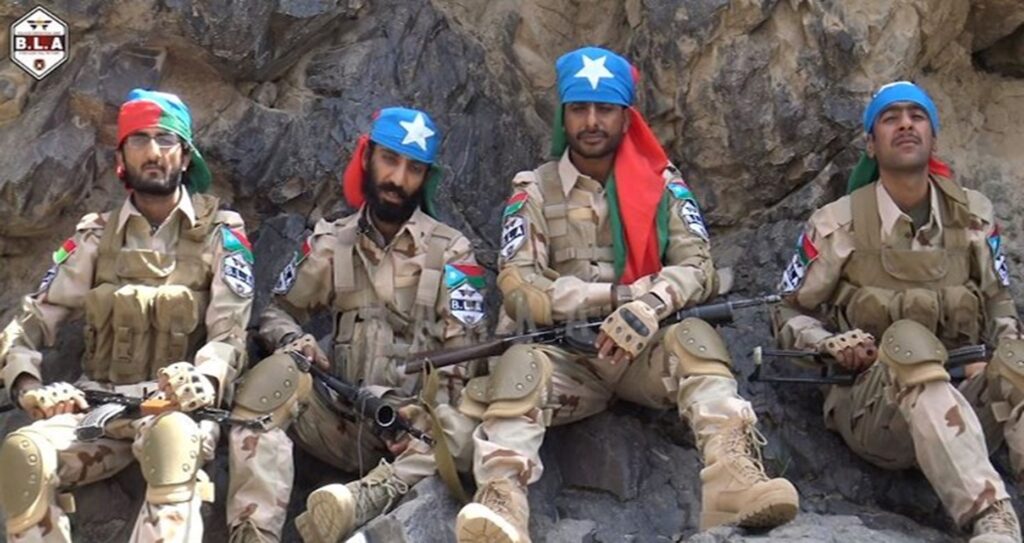
The Baloch Liberation Army (BLA) emerged during the late 1990s and early 2000s as an armed resistance against what the Baloch population perceives as systemic marginalisation and exploitation by the Pakistani state. Balochistan—the largest yet poorest province in the country—possesses significant reserves of natural resources, including coal, natural gas, gold, and copper. The demand for provincial autonomy has persisted for decades, further intensified by the prevalent belief that the region was historically incorporated into Pakistan through coercive means.
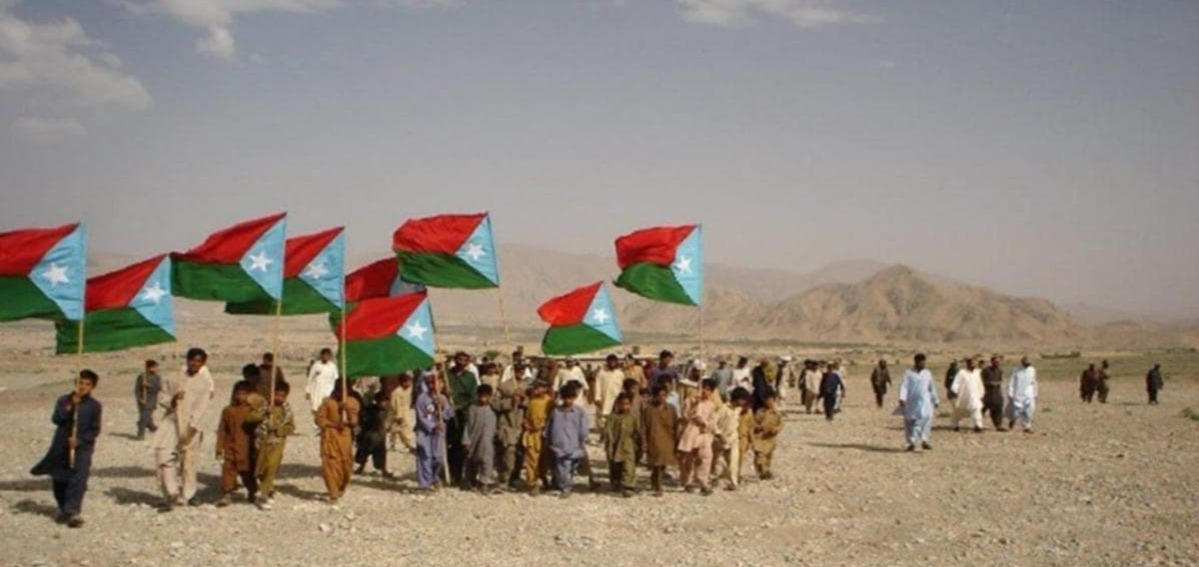
The BLA initially emerged with aims centred on greater provincial authority over governance and resource management, but it soon evolved into a movement advocating full independence. Originally led by tribal figures such as Balach Marri during its early phase, the organisation has since experienced a leadership transition, now predominantly composed of educated middle-class individuals, including women. Notable figures include Aslam Baloch—linked to the suicide attack targeting Chinese engineers in Dalbandin—along with Bashir Zaib Baloch, Hammal Rehan, Rehman Gul Baloch, among others.
This leadership has overseen a significant transformation in the BLA’s tactical approaches and strategic orientation. Once primarily associated with hit-and-run attacks in mountainous regions—typically targeting gas pipelines, mobile towers, railway lines, and similar infrastructure—the group has shifted towards more coordinated and advanced urban guerrilla assaults against state security personnel. A notable recent example occurred on 11 March, when BLA militants hijacked the Quetta-Peshawar Jaffar Express, demanding the release of Baloch political prisoners and victims of enforced disappearances. In retaliation, the Pakistani military undertook a rescue mission lasting over 24 hours, underscoring the BLA’s capacity to engage in prolonged confrontations with state forces. Furthermore, the escalation of suicide attacks—especially since the reactivation of the Majeed Brigade (the BLA’s suicide unit) in 2018—has added a new layer of lethality and strategic depth to its operations. These attacks have also included female combatants such as Shari Baloch, who killed three Chinese lecturers at the Confucius Institute at Karachi University in 2022. Such incidents, along with assaults on Chinese personnel and projects as well as Punjabi migrant workers, serve as deliberate strategic messaging by the BLA. They underscore the group’s territorial claims and its willingness to indiscriminately target civilians it perceives as symbols of colonial domination and state-led exploitation.
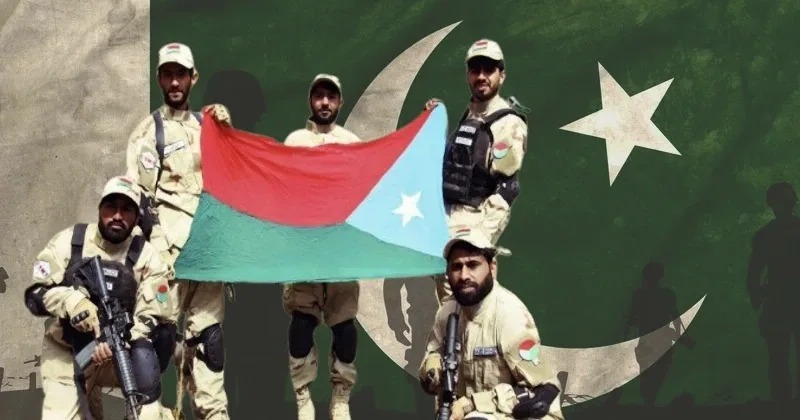
The notable expansion in the BLA’s numerical strength, operational reach, and strategic standing must be understood within a broader, multi-faceted context. Crucially, recognising the debilitating effects of factionalism, several Baloch insurgent groups opted to unite in 2018 under the collective banner of the Baloch Raji Aajoi Sangar (BRAS). This alliance even announced the formation of a joint military command—the Baloch National Army—tasked with implementing a coordinated strategy across the province. Additionally, similar to the TTP, the BLA has significantly profited from the sophisticated weaponry abandoned by US forces following their withdrawal from Afghanistan. Following the March train hijacking, Pakistani authorities disclosed the serial numbers of three American rifles used by the attackers, which were originally supplied to Afghan troops during the conflict. Furthermore, the Taliban’s return to power has created new sanctuaries for Baloch militants to regroup within Afghanistan, in addition to those already existing in Iran’s Sistan-Baluchistan province.
Beyond the aforementioned developments, the BLA has adapted to contemporary dynamics by enhancing its propaganda capabilities through strategic use of social media. Its evolution from rural hit-and-run tactics to an urban guerrilla force engaged in narrative construction is also a response to exclusionary urban development, significant rural-to-urban migration, and increasing internet accessibility. A further aspect of this rhetorical strategy was evident following the deadly terror attack in Pahalgam, India. In a statement issued on 11 May, the BLA claimed responsibility for executing 71 coordinated attacks across 51 locations in the province as part of preparations for Operation Herof 2.0, shedding light on the group’s broader strategic calculus. The BLA appealed to India and other international actors to recognise and support it as a legitimate, indigenous national liberation movement, drawing parallels with the Bangladeshi independence struggle from Pakistan. Through this, the BLA sought to assert its position as a relevant actor in South Asian geopolitics, aiming to weaken what it describes as “the terrorist state” of Pakistan.
Nevertheless, above all other factors, the primary driver behind the BLA’s expanding capabilities is the sustained repression of the Baloch population by the Pakistani state. Decades of harsh policies characterised by systemic marginalisation and collective punishment have so profoundly alienated the Baloch people that, in the absence of viable alternatives, even those opposed to violent methods often find themselves sympathetic to the BLA. It has been reiterated to the point of becoming axiomatic in political science that political challenges cannot be resolved solely through military means. The longstanding political grievances of the Baloch population have consistently been dismissed, silenced, and met with severe, indiscriminate force by the state. Unless Pakistan initiates a process grounded in accountability and sensitivity, and begins to provide the Baloch with genuine political representation and rights, the region will remain ensnared in an unending cycle of violence and repression.