

-Arun Anand
Myanmar (formerly Burma) sits at a critical crossroads in Asia, both geographically and geopolitically. The country’s location – bordering China, India, Bangladesh, Thailand, and Laos, with a long coastline on the Bay of Bengal and Andaman Sea – makes it a bridge between South Asia and Southeast Asia. In fact, Myanmar is often described as the “main connecting hub” linking East, South, and Southeast Asia. Its shores provide access to the Indian Ocean’s major shipping lanes, which has long attracted great power interest. In short, Myanmar’s geostrategic location grants it outsized importance: it is the only Southeast Asian nation sharing borders with both India and China, and it offers a land gateway from the Bay of Bengal into the heart of Asia.
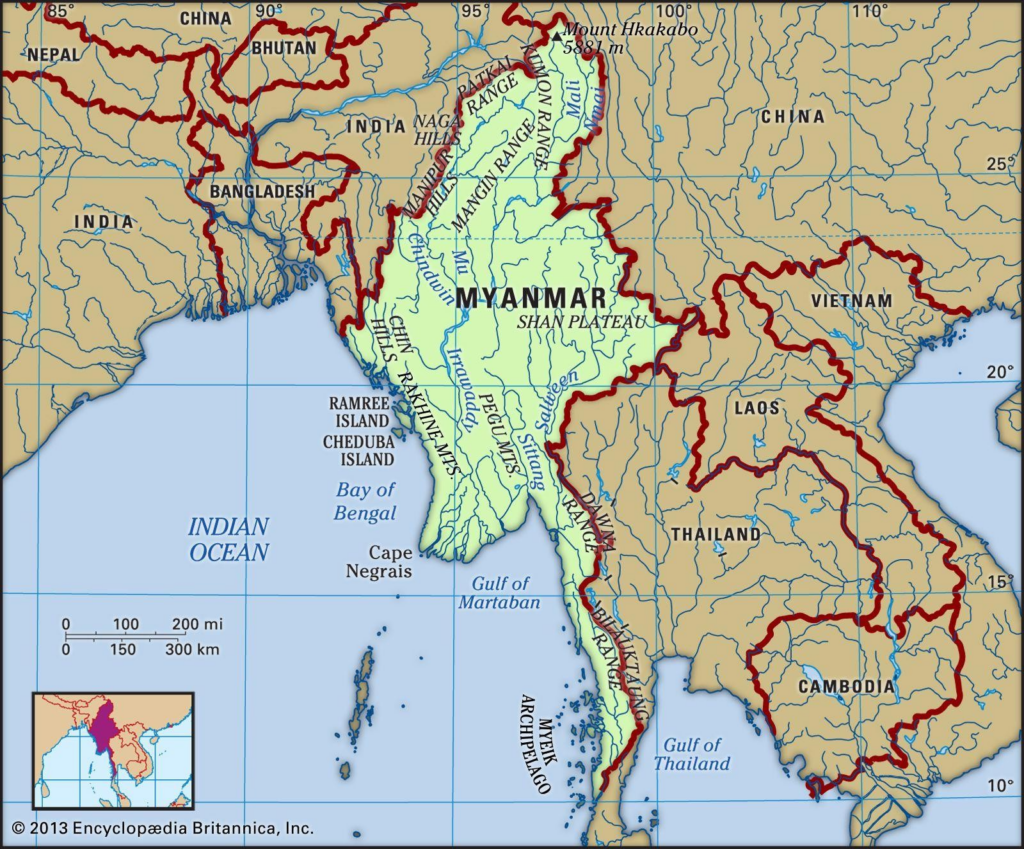
Myanmar Geographical Location
Strategic Geographical Importance
Myanmar’s geography confers strategic advantages that neighbouring powers eagerly seek to leverage. To its west lies the Bay of Bengal (part of the Indian Ocean), positioning Myanmar near vital maritime routes between Asia, the Middle East, and Europe. Historically, even a branch of the ancient Silk Road ran from Myanmar’s shores to China’s Yunnan province, underlining its role as a natural corridor. Today, both China and India view Myanmar as pivotal to their regional aspirations.
In summary, Myanmar’s position at the junction of Asia’s sub-regions lends it significant strategic importance. Geography is the reason a country of 55 million people commands so much attention from global and regional powers. Myanmar is effectively a land bridge and a maritime gateway, one that both China and the West recognise as key to influencing the wider region.
China’s Deepening Influence in Myanmar
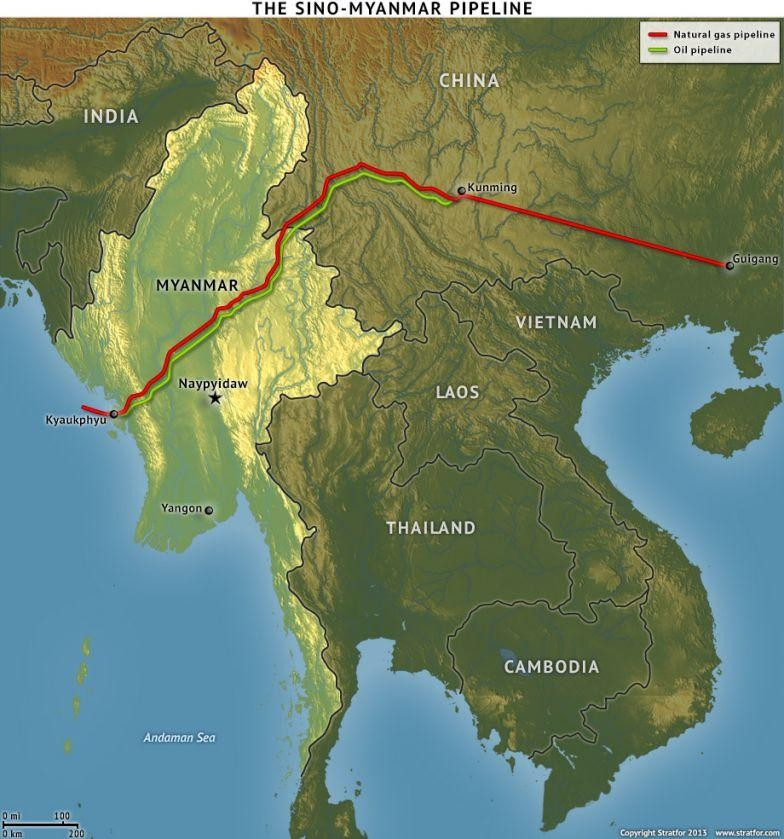
China has emerged as Myanmar’s most influential foreign player, especially in the past decade. Geopolitically, Beijing views Myanmar as crucial to its own strategic objectives. China’s southwestern provinces are landlocked, and Myanmar offers a coveted route to the sea. Through its ambitious Belt and Road Initiative (BRI), China has invested heavily in Myanmar’s infrastructure – from ports to pipelines – to secure that route. For instance, China helped build a deep-water port at Kyaukpyu in Myanmar’s Rakhine State, which serves as the starting point for twin oil and gas pipelines running north into China’s Yunnan Province. These pipelines, completed in the 2010s, allow China to import Middle Eastern oil and gas via Myanmar, bypassing the Malacca Strait – a narrow maritime chokepoint that China views as a strategic vulnerability. By using Myanmar as an overland energy corridor, Beijing reduces its dependence on long sea voyages through congested or potentially hostile waters.
China’s influence in Myanmar extends beyond infrastructure to encompass political and military aspects. During decades when Myanmar was under Western sanctions (due to the former junta’s human rights abuses), China became Myanmar’s closest partner by default. Beijing supplied arms, invested in mining and hydropower, and shielded Myanmar diplomatically at the UN. Even after Myanmar’s brief experiment with democracy, China maintained strong ties with the powerful military (the Tatmadaw). Notably, when the Myanmar army seized power in the February 2021 coup, China reacted with cautious support. Beijing pointedly referred to the coup as a “major reshuffle”, downplaying the overthrow of elected leaders. It continued business as usual – providing weapons to the junta and pushing to continue BRI infrastructure projects – even as much of the world condemned the coup. At the same time, China hedged its bets: it never formally endorsed the military regime and, for a long while, did not allow Myanmar’s coup leader, Senior General Min Aung Hlaing, an official state visit to China. (Beijing even curiously allowed Myanmar’s ousted civilian ambassador to continue occupying Myanmar’s seat at the United Nations, signalling that China hadn’t completely written off the previous government.) This reflected China’s pragmatic approach – engaging the junta to protect its interests, but not fully legitimising it internationally.
However, as Myanmar’s post-coup conflict ground on, China’s stance evolved. By late 2022 and 2023, Myanmar’s internal war was intensifying: ethnic armed groups and new pro- democracy militias were seizing territory, even threatening areas near China’s border. Beijing grew increasingly concerned that Myanmar could descend into chaos – jeopardizing Chinese investments and creating instability on China’s southwestern flank. China’s frustration with Gen. Min Aung Hlaing also mounted, as the junta’s offensives failed to restore order and even hindered Chinese projects (for example, fighting in border regions and a boom in criminal networks there became a headache for Beijing). Fearing a potential collapse of the Myanmar military regime, China decided to double down in support. In late 2023 and 2024, Beijing took a series of assertive steps: it dispatched high-level envoys (including Foreign Minister Wang Yi) to meet the junta, pledged full backing for the junta’s planned 2025 election, and reportedly even helped bolster the Myanmar military’s capabilities (for instance, supplying drone technology). Chinese officials also leaned on various ethnic rebel groups – many of which have enjoyed Chinese cross-border ties – to pause their assaults and cut deals with the military. In November 2023, General Min Aung Hlaing was finally invited to Beijing, signaling China’s renewed embrace of the embattled regime.
It might seem ironic that China, a one-party state, is encouraging Myanmar’s generals to hold an election. But Beijing’s motive is not to foster democracy; rather, China hopes a managed election could “dilute [Min Aung Hlaing’s] power” or produce a more stable, cooperative leadership in Naypyidaw. Analysts note that China dislikes Min Aung Hlaing personally (viewing him as unpredictable and ineffective), so it sees an election as a way to legitimize the junta under fresh faces that might be more amenable to Chinese interests. In other words, China wants a stable partner in Myanmar – it cares less about who wins an election (certainly not pushing for Aung San Suu Kyi’s return, for example) than about ensuring Myanmar doesn’t align with the West or descend into anarchy.
Today, China is arguably the Myanmar junta’s most important patron. It provides economic lifelines (such as trade, investment, and energy revenue) and international cover (for instance, China has vetoed or softened UN resolutions critical of Myanmar). In return, Beijing gains considerable leverage: ongoing access to Myanmar’s resources (like jade, gas, and timber) and strategic infrastructure. If the military regime survives – especially with Beijing’s help – China stands to solidify a “strategic toehold” extending to the Indian Ocean. A friendly Myanmar could host more Chinese projects (such as ports, railways, or even listening posts) that project Chinese influence into South Asia and maritime Asia. This prospect alarms Western strategists, as it would extend China’s reach in a region long dominated by India and watched by the U.S.
In summary, China’s influence in Myanmar is at an all-time high: it has deftly positioned itself as the junta’s indispensable ally, all while framing its involvement as respect for Myanmar’s “sovereignty and stability.”
Western Interests and Involvement
Western nations, notably the United States and its European allies have a significantly different history with Myanmar. During the long years of military dictatorship (from 1962 up until the early 2010s), the West largely treated Myanmar as a pariah state due to its human rights abuses and suppression of democracy. The U.S. and EU imposed tough sanctions for decades, isolating Myanmar’s generals. There was a brief thaw in the 2010s when Myanmar’s military initiated political reforms: the release of Aung San Suu Kyi, elections in 2015, and a quasi-civilian government. At that time, Washington and European capitals rolled back many sanctions and engaged Myanmar with aid and diplomacy, hoping to nurture its transition to democracy – and perhaps to loosen China’s grip by bringing Myanmar into a more liberal, rules-based fold. President Barack Obama even visited Myanmar twice, a symbolic end to its isolation.
That hopeful period did not last. Western relations crashed back down after two events: first, the Myanmar army’s brutal crackdown on the Rohingya Muslim minority in 2017 (which the U.N. later described as “genocidal”), and then the February 2021 coup that ousted the elected government. In response to the coup, the U.S., EU, UK, Canada, Australia and others swiftly re-imposed sanctions on Myanmar’s junta. Within 10 days of the coup, Washington announced a new sanctions regime targeting the generals. Over the next three years, the U.S. piled on nearly 20 rounds of sanctions, hitting top military leaders, their business conglomerates, state- owned oil and gas enterprises (a key revenue source for the regime), and arms brokers. The European Union and Britain similarly enacted multiple waves of asset freezes and travel bans, coordinating to pressure the junta. The intent of these sanctions has been to economically squeeze the military and signal that its illegitimate power grab has severe consequences. Western countries also cut off most development aid and urged foreign companies to divest from Myanmar.
These punitive measures, however, have had limited success in changing the junta’s behaviour. One issue is that Myanmar’s generals are not completely isolated they can still turn to supportive neighbours and great powers to offset Western pressure. China and Russia have provided diplomatic cover (for example, vetoing UN Security Council actions) and continue to trade arms and resources with Myanmar. Neighbouring countries like Thailand and India have also maintained ties with the regime out of pragmatic self-interest. This means Western sanctions, while impactful, cannot totally choke the junta’s lifelines. As one analysis noted, the “junta is far from friendless”: Beijing remains Myanmar’s biggest investor and trade partner, Moscow its arms supplier, and regional governments often prefer engagement over isolation. Hence the generals have (so far) weathered Western sanctions, declaring that they can “handle” international pressure and continuing their brutal crackdowns regardless. Western policymakers themselves acknowledge that, absent more unified global action, sanctions alone are unlikely to force Myanmar’s military to reverse course. Nonetheless, the U.S. and EU see sanctions as a necessary moral stance and a way to deny resources that fuel the junta’s repression (for example, trying to block aviation fuel to hinder the military’s frequent airstrikes on civilian areas).
Strategically, the United States views Myanmar through the lens of its Indo-Pacific competition with China. A Myanmar firmly under Chinese influence (or hosting Chinese bases) would be a setback for the U.S.’s broader regional aims. Thus, even as Washington condemns the coup and human rights abuses, it is also mindful that losing Myanmar entirely to China would harm U.S. interests in the long run. American analysts have warned that if the West remains hands- off, Myanmar could “fall into a protracted state of conflict and fragmentation, supported and dominated by China.” In other words, inaction might cede Myanmar to Beijing’s orbit. This strategic concern is pushing the U.S. to explore creative ways to engage or influence the situation, short of direct military intervention. The U.S. has ramped up humanitarian aid to Myanmar’s refugees and border communities, voiced support for the democratic opposition (the exiled National Unity Government, or NUG), and worked with ASEAN neighbors to push for a peace process. Western countries have also refused to recognize the junta’s planned election, and they continue to call for an inclusive dialogue that involves Suu Kyi and all parties, a call the junta has flatly rejected.
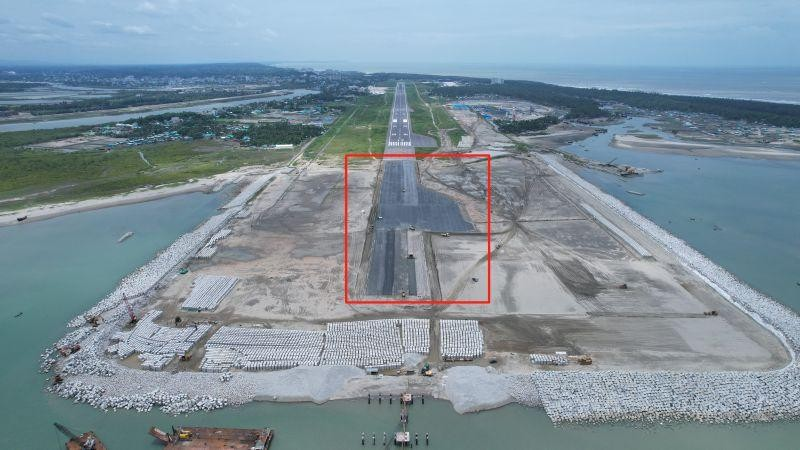
One of the more clandestine efforts attributed to the U.S. and its partners involves Myanmar’s western border. Bangladesh, which shares a border with Myanmar’s tumultuous Rakhine State, has been drawn into the crisis primarily due to the Rohingya refugee exodus. Recently, there has been talk of establishing a “humanitarian corridor” from Bangladesh into Myanmar – ostensibly to deliver aid and possibly facilitate the return of Rohingya refugees. However, reports suggest this corridor concept may double as a channel for Western-aligned support to anti-junta forces. In 2025, investigative reports indicated that the U.S. was quietly working with Bangladesh’s security forces on a plan to support Myanmar’s ethnic rebels in Rakhine State. Under this reported plan, Bangladesh’s army would provide logistical support (but not direct combat troops) to a coalition of anti-junta fighters, including the Arakan Army (an ethnic Rakhine force opposing the Myanmar military). A large supply depot was allegedly being built near Teknaf (Bangladesh’s southern tip) to funnel provisions across the border, effectively
creating a U.S.-backed lifeline into Myanmar. The expansion of Cox’s Bazar airport in Bangladesh was said to be part of this strategy – with the runway extended to accommodate drones, possibly Turkish-made UAVs, that could assist the rebels in Rakhine. All of this was to be done under the guise of an “aid corridor,” separating it from overt military intervention. In fact, Bangladeshi and U.S. officials discussed using the corridor for humanitarian goals, such as returning around 80,000 Rohingya refugees to their homes in Rakhine if the area could be secured by the rebel coalition. On the surface, it sounds like a humanitarian mission – but clearly it has strategic underpinnings, essentially a proxy effort to weaken Myanmar’s junta from the western front.
This so-called Rakhine corridor plan demonstrates the lengths to which Western actors might go to alter the situation in Myanmar without direct intervention. It also puts Bangladesh in a delicate spot: Dhaka is wary of being caught in a great-power proxy war on its border, even as it is under pressure to help resolve the Rohingya crisis. Bangladesh’s government initially gave mixed signals about the corridor, publicly entertaining the idea in early 2025, then voicing caution about being drawn into Myanmar’s civil war. The situation is evolving, but it underscores that Western intervention in Myanmar is no longer limited to speeches and sanctions – there are active efforts to forge new pressure points against the junta, even if under humanitarian auspices. The United States’ overarching goal is to check the Myanmar military’s excesses and prevent China from completely dominating the outcome. Unlike China’s overt state-to- state support of the junta, Western support for Myanmar’s opposition is more covert and framed around democracy and human rights. Nonetheless, both superpowers are now deeply entangled in Myanmar’s crisis, each backing different sides – a classic proxy dynamic that Myanmar’s people ultimately have to bear.
A Turbulent Election and Its Impact
Amid this geopolitical tug-of-war, Myanmar’s internal situation remains explosive, and it is about to reach another critical juncture: a planned national election. The military junta has promised to hold a general election to cement its rule – the first such poll since it grabbed power in 2021. Originally the generals hinted at an election by 2023, but escalating conflict forced repeated delays. As of early 2025, Senior General Min Aung Hlaing extended the country’s state of emergency yet again (citing “security” needs) and indicated an election would occur once “stability and peace” are restored. Observers now expect the junta to attempt a nationwide vote in late 2025. The regime has been feverishly preparing for this faux-democratic exercise: it conducted a census in late 2024 to update voter rolls (an effort that met fierce resistance and violence in rebel-held areas), and it has enacted strict rules to micromanage the election.
However, few believe that what the military calls an election will be anything more than a sham. All credible opposition has been effectively excluded. The junta has dissolved dozens of political parties – including Aung San Suu Kyi’s National League for Democracy (NLD), which overwhelmingly won the last real elections in 2015 and 2020. (In those 2020 polls, the NLD won 82% of the contested seats, a landslide that the generals refused to accept. The military’s justification for the coup was unproven allegations of voter fraud by the NLD.) Suu Kyi herself remains in prison with 33-year sentence, alongside many of her party’s leaders. Independent media is muzzled, and pro- democracy activists are in hiding or exile.
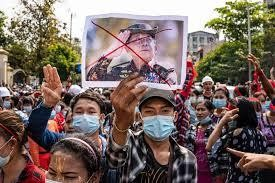
In essence, the junta is arranging an election where the playing field is utterly one-sided – likely handing victory to the military’s proxy party (the USDP) or a slate of military-approved candidates. For Myanmar’s many opposition groups, this vote is nothing but a ploy: “merely an attempt to legitimise the illegitimate regime” that seized power by force. As one spokesperson for the NUG (the opposition government) put it bluntly, “The election will be a sham, it will just be for show.” The military hopes that installing a civilian façade through a controlled election might ease international pressure or domestic dissent. But most Myanmar people are not buying it – and neither are Western governments, which have already declared any junta-run polls to be void of legitimacy.
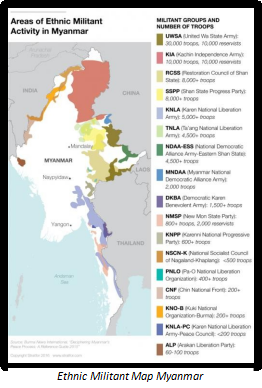
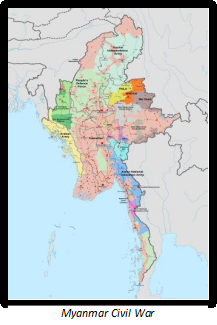
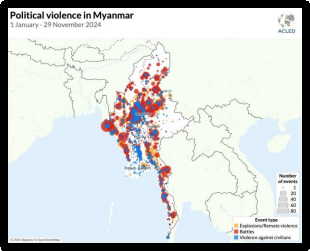
The practical realities on the ground make a free or fair nationwide election impossible at present. Myanmar is in the throes of a civil war; large swathes of the country are not under military control. By the regime’s own admission, voting might be feasible in less than half of Myanmar’s townships. (Some estimates say the junta securely controls only 17% of all village tracts in the country – the rest are contested or held by resistance forces.) In many ethnic minority regions, powerful armies like the Kachin, Karen, and Rakhine’s Arakan Army not only oppose the junta but govern their areas de facto. These groups, along with the NUG’s People’s Defense Forces (PDF militias) across the country, have vowed to disrupt any junta-run election. They see it as a rubber stamp for military rule and have threatened to attack polling stations or convoys. Tragically, this means any election attempt will likely be accompanied by violence and intimidation – and indeed, we have already seen signs of that. During the junta’s census-taking in late 2024 (a dry-run for the voter list), resistance fighters ambushed census workers guarded by soldiers, killing several. The atmosphere is one of fear and defiance; many citizens have said they will boycott the polls if they occur. As one activist observed, it is a “bizarre exercise” to talk of voting while the country is literally at war with itself.
Far from bringing peace, a sham election risks inflaming Myanmar’s conflict even further. The NUG and ethnic rebels have made it clear that they will not recognize the results. Any regime that emerges from this vote will lack credibility in the eyes of a majority of the population, potentially fueling even more resistance. “This election will not lead to stability. It will lead to more instability and more violence,” warned the NUG spokesperson Zaw Kyaw. Unfortunately, that is a very plausible outcome: the act of voting could become yet another flashpoint for clashes, and a new “elected” government dominated by the military might entrench the divide, convincing the opposition that only armed revolution will bring change. In essence, the polls could slam the door on any negotiated solution, hardening the resolve of anti-junta forces to topple the regime by force. Already, since the coup, Myanmar’s conflict has reached “unprecedented” intensity – by 2024 the military was losing territory and seeing record defections. If the junta uses an election to declare itself legitimate, the opposition is likely to double down on the fighting.
The international response to the planned election is also telling. China, despite having no love for democracy, is paradoxically pushing the junta to hold the vote – but for its own ends. Beijing hopes a new government (even a rigged one) might sideline the obstinate Min Aung Hlaing and install more competent leadership that can stabilize the country (and get Chinese projects back on track). In contrast, Western nations and Myanmar’s neighbors in ASEAN largely view the timing of this election as counterproductive. In January 2025, ASEAN – which usually avoids commenting on members’ internal affairs – urged the junta to prioritize peace over elections, implicitly warning that a vote amid civil war would only make things worse. Western officials have already labeled the planned polls a “sham” and promised to reject the outcome, reinforcing that sanctions will remain or even tighten if the junta proceeds. Thus, rather than opening a path to normalization, the junta’s election could deepen its international isolation (at least with the West), while giving China and a few others an excuse to continue engaging Myanmar on their terms.
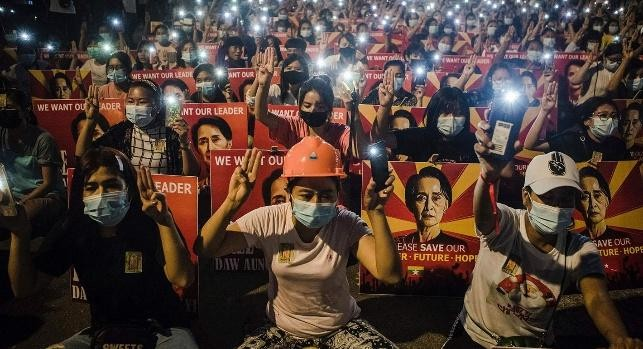
For the people of Myanmar, the immediate impact of these “polls” is unfortunately dire. Many citizens feel disenfranchised – their votes and voices effectively meaningless if the process is fixed. Pro-military factions might use the campaign period to stoke ultranationalism or hatred against minorities (as has happened in past elections), worsening social fractures. Violence is expected to spike around election activities, which could displace even more civilians or result in harsh crackdowns in urban areas. Humanitarian needs – already enormous, with over 3 million internally displaced and half the population in poverty may grow as instability spreads. An illegitimate election also postpones any hope of genuine dialogue between the military and opposition groups, meaning Myanmar’s humanitarian and economic crises will likely grind on.
Outlook: A Nation Caught in Contest
Myanmar’s predicament today is the result of converging pressures: a power-hungry military clinging to control, a determined popular resistance, and competing external powers each trying to secure their interests. The country’s geostrategic position ensures that what happens in Myanmar reverberates beyond its borders – drawing in China’s ambitions, India’s security concerns, Bangladesh’s refugee burdens, ASEAN’s stability worries, and the U.S.’s democratic ideals and Indo-Pacific strategy. This once-isolated nation has become a stage for 21st-century great power rivalry as much as for a people’s struggle for freedom.
In the near term, all eyes are on the junta’s planned election and its aftermath. A forced election could mark a new phase of turbulence. If the military regime manages to hold onto power through brute force and a staged vote, Myanmar may settle into a grim status quo: a fragmented country under a sanctioned dictatorship, increasingly reliant on China and Russia for economic survival and military hardware. Beijing, in that scenario, would likely deepen its footprint –securing its projects and perhaps even gaining a strategic ally on the Bay of Bengal, which would extend China’s influence toward the Indian Ocean in a significant way. Such an outcome would strengthen China’s hand in the region, albeit at the cost of Myanmar’s sovereignty being heavily constrained by Chinese interests. Western countries would probably continue a policy of isolation and pressure, leaving Myanmar largely cut off from global markets and institutions (apart from those aligned with China). The Myanmar people would remain caught in the middle – suffering repression at home and deprived of full engagement with the world.
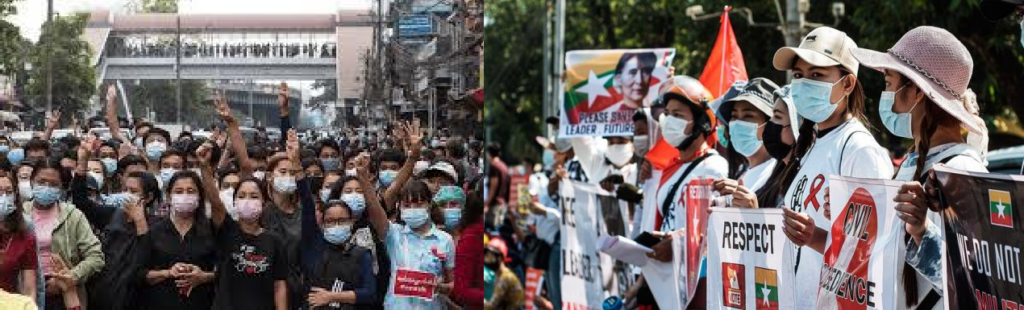
On the other hand, if resistance forces continue to chip away at the military’s control – as they have since 2021 – Myanmar could see a gradual power shift on the ground. Some analysts even suggest the regime’s hold is weakening to the point that a collapse is conceivable if momentum sustains. In that case, the post-election period might bring even more upheaval as the junta struggles to govern and insurgents move in. It’s a dangerous vacuum that could intensify humanitarian suffering, but it might also create openings for a negotiated solution if international mediators step up. The role of outside powers will remain pivotal: China could broker truces (as it did briefly on the China-Myanmar border in late 2023 or conversely ramp up support to prevent its favored side from losing. The U.S. and regional players might increase backing to the opposition in hopes of forcing the military to the table. Bangladesh and India will be carefully watching Rakhine and the north, respectively, to prevent spillover of violence. ASEAN might eventually push harder on its peace plan, especially if the election proves obviously futile in resolving the crisis.
In any scenario, it’s clear that Myanmar’s fate is of global consequence. For the average Myanmar citizen, these geopolitical games mean little if they cannot attain peace and the right to choose their leaders. The promise of Myanmar’s geostrategic potential – as a thriving crossroads of trade between India, China, and ASEAN – will remain unrealized until the political turmoil is resolved. A stable, democratic Myanmar could indeed be a linchpin of regional connectivity and development, benefiting all players. But as of now, that vision is distant. Instead, the country is embattled and divided, a place where outside powers deliver aid or arms to their preferred side while an elected leader languishes in jail. Myanmar is a nation with a prized location and many powerful suitors, yet it is tormented by internal strife and power struggles. China’s influence is strong and growing, as it stakes a claim to a strategic corridor through Myanmar to the Indian Ocean. The United States and Western allies, not wanting Myanmar to become a Chinese client state, are trying to intervene via sanctions and subtle support to the opposition – even exploring bold moves like a Bangladesh- Myanmar aid corridor. And amid all this, Myanmar’s military is pressing ahead with an election that almost no one believes is real, hoping it can entrench itself in power. The likely impact of these polls is not peace, but more conflict – at least in the short term – because the fundamental political disputes in Myanmar remain unresolved.
For now, Myanmar’s people face an uncertain future: will their country remain a pawn in a geopolitical chess match, or can it regain its sovereignty and unity on their terms? The coming year, with its turbulent “election” and international maneuvers, may provide some answers. What is certain is that Myanmar’s geostrategic importance guarantees the world will be watching closely – and both East and West will continue vying for influence – as this drama unfolds. The hope among many Myanmar citizens and friends abroad is that eventually a genuine political solution will emerge, so that this strategically located nation can escape its cycle of turmoil and realize its potential as a prosperous crossroads, rather than a battleground for proxy wars and power plays.
Sources: