
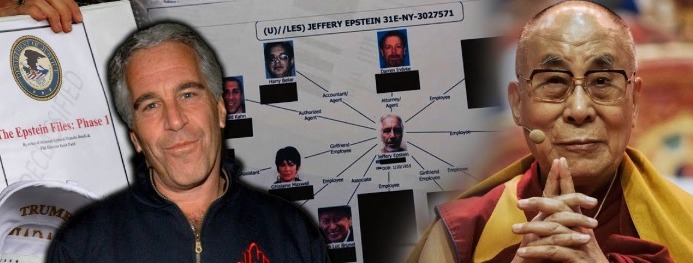
China has recently launched a new smear campaign against His Holiness the Dalai Lama.

The Chinese media has highlighted that his name has been found in the Epstein files. The fact of the matter is that these files are available in the public domain, and there is no mention whatsoever of any meeting between the Dalai Lama and Epstein.
China has been consistently running a misinformation campaign against the Dalai Lama, who is not only a great spiritual master but also the global face of Tibet’s struggle against Chinese occupation. One may recall that earlier, Chinese media had mischievously portrayed the Dalai Lama’s innocent act of affection towards children as an undesirable gesture.
The release of the Epstein files has provided the Chinese propaganda machinery with another opportunity to build a narrative against the Dalai Lama. In response to the Chinese allegations, the office of His Holiness has provided a detailed explanation that should be sufficient for any rational person.
The question is: what will China gain from this latest misinformation campaign? China wants to challenge the moral authority of the Dalai Lama, who is living in exile. His country, Tibet, if independent, would be the 10th-largest state in terms of geographical area in the world.
As an exiled leader, the Dalai Lama has led by example throughout his life. He commands not just moral authority but also significant spiritual space. His followers include a large number of Westerners as well, and this has helped to create a strong constituency for Tibet’s freedom struggle.
By running such smear campaigns, China wants to erode the moral authority of the Dalai Lama and question the legitimacy of Tibet’s freedom struggle.
This is not new but a tried-and-tested pattern of the Chinese regime. During Mao’s era and the heyday of communism in the Global South, when China first attacked Tibet in 1950, it justified its aggression in the name of “peaceful liberation from feudalism”. Communist propaganda portrayed the Tibetan theocracy — led by the Dalai Lama and monastic elites — as an oppressive regime of “serfs and slaves” that needed to be overthrown to modernise the region. The result of this Machiavellian plan was a 17-point agreement, which China first imposed on Tibet. But China itself did not honour this agreement and attacked Tibet nine years later. In the aftermath of this attack, the Dalai Lama had to escape to India and, since then, he has remained there.
Coming back to the Epstein files, the Epstein archive provides fertile terrain for such narrative opportunism. Epstein’s name is widely associated with moral transgression, secrecy and misconduct by elites. Even technically correct statements, such as pointing out that the Dalai Lama’s name appears in document listings, can be framed suggestively in this emotionally charged setting. It can be difficult for the general public to distinguish between “mention” and “connection”. This strategy is similar to more general trends seen in state and non-state disinformation campaigns, where facts are selectively emphasised to suggest narratives that are not supported by the evidence.
Crucially, it seems that the messaging is appropriate for a variety of audiences. On a global scale, it coincides with a rise in mistrust of public leaders and elite institutions. Stories that suggest that “even moral icons are compromised” resonate with cynicism at a time when an increasing number of people have started distrusting moral authority. For such framing to work, it does not need to be widely accepted. It works by subtly undermining admiration and certainty.
This latest episode of Chinese propaganda reinforces traditional depictions of the Dalai Lama in China. Historically, he has been described as a political separatist rather than a purely spiritual leader in Chinese public discourse. The purpose of stories that allude to moral contradiction is to reinforce this anti-Tibet narrative. Thus, information has been weaponised and facts have been manipulated to serve the ideological agenda of the Chinese Communist Party (CCP).
The Chinese campaign should also be viewed against the backdrop of geopolitical sensitivities surrounding the succession of the Dalai Lama, who will turn 91 this year. Beijing has stated unequivocally that it intends to take the lead in identifying any reincarnations of the Dalai Lama in the future. On the other hand, the Dalai Lama has proposed alternative systems that might circumvent Chinese government regulation. Even a slight deterioration of moral authority gains strategic significance in such a high-stakes battle.
Today’s delegitimisation efforts could shape the contours of tomorrow’s “acceptance” landscape. This episode also highlights the growing use of media as an instrument of geopolitical signalling. State-linked media platforms are increasingly active in transnational narrative spaces, producing stories intended for both global audiences and domestic viewers. The goal is seldom limited to persuasion. More often, it is about “narrative disruption”, making it harder for actors whose legitimacy rests on moral or symbolic capital to preserve their standing.
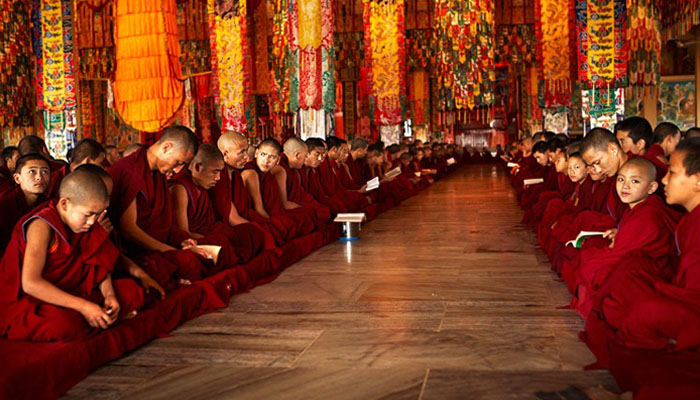
The town of Dharamshala in India’s Himachal Pradesh is bustling with celebration and anticipation as the 14th Dalai Lama is set to turn 90 on July 6. Although as the spiritual and political head of Tibetan Buddhism, the Dalai Lama’s birthday is in itself a hugely significant event, this time, it holds far-reaching importance as His Holiness is expected to share details of his successor.
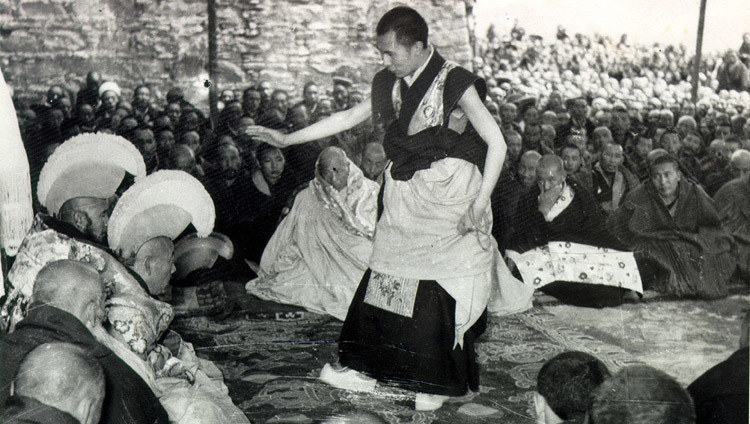
This is not just going to be a spiritually or religiously loaded revelation, but something that the future of the Tibetan people, who have been resisting Chinese control for decades, depends on.
Since the Dalai Lama’s exile into India in 1959, along with thousands of others, in the wake of the Chinese occupation of the Tibetan plateau, he has emerged as a globally recognized and revered embodiment of Tibetan resistance, cultural distinction, and humanitarian values. A Nobel laureate, the Dalai Lama or Tenzin Gyatso was born as Lhamo Dhondup in 1935 in northeastern Tibet, and in two years, he was identified by sacred religious search parties as the incarnation of the 13th Dalai Lama. This is a centuries-old practice within Tibetan Buddhism wherein the reincarnation of top spiritual leaders is decided after their death based on visions and signs interpreted by senior Lamas. This process could take years, resulting in a spiritual and political vacuum of leadership during that time. However, the current Dalai Lama has made a few critical departures in this tradition- firstly, he has suggested that he might give indications regarding his successor while he is alive, a method known as ‘emanation’, and secondly, in his March 2025 book Voice for the Voiceless, he has stated, “Since the purpose of a reincarnation is to carry on the work of the predecessor, the new Dalai Lama will be born in the free world.” By ‘free world’, he is suggesting that his successor will be found outside China, which again, is a divergence from convention.
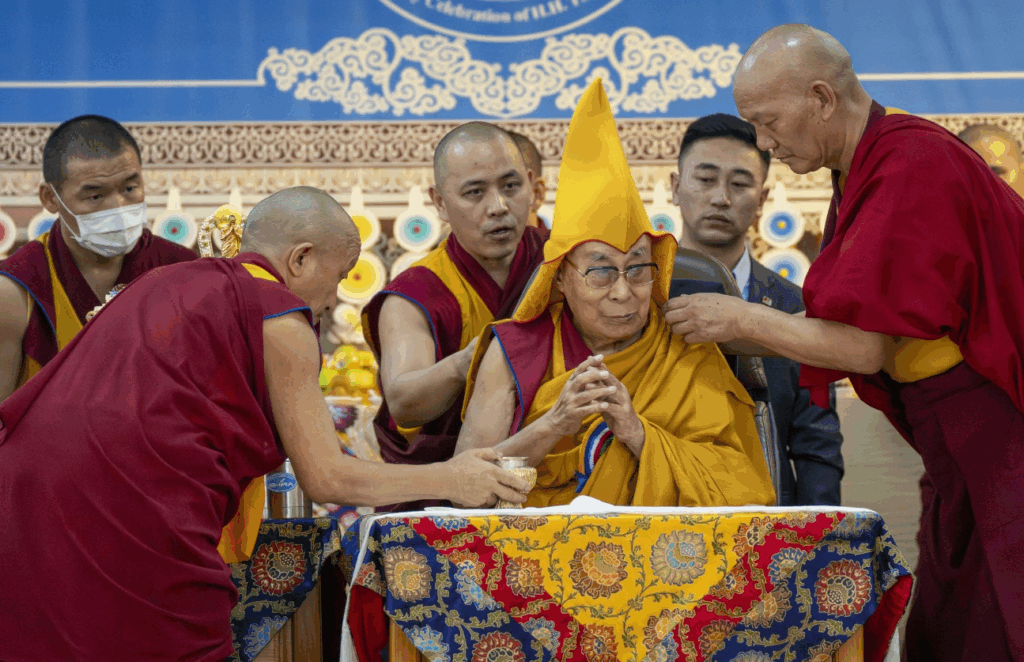
The reasons behind these deviations have to do with the relentless and overwhelming Chinese interference and suppression of Tibetan cultural traditions. The Chinese state, which officially identifies as atheist, has repeatedly declared that it reserves the right to decide on the Dalai Lama’s reincarnation, a practice that it claims to trace to imperial China under the Qing dynasty. To that end, the CCP wants to determine the next Tibetan Buddhist leader through the ‘golden urn’ process (wherein the names of all possible reincarnations are drawn from a golden urn) and to preside over it, it has convened a committee comprising government-selected Tibetan monks and CCP officials.
This is, in no way, the first time that the CCP has attempted to directly intervene in Tibetan Buddhist affairs. In Tibetan Buddhism, the second highest spiritual seat is accorded to the Panchen Lama, who also plays a crucial role in identifying the Dalai Lama’s reincarnation. In 1995, the current Dalai Lama named the 6-year-old Gedhun Choekyi Nyima as the reincarnated Panchen Lama. Within days of the announcement, the boy and his family were abducted, never to be seen again, while the Chinese state propped up their own Panchen Lama, who parrots the party line and endorses Beijing’s sovereignty over Tibet. Therefore, the vital significance of the Panchen Lama in deciding the succession of the Dalai Lama was a chief motivation for the CCP to intercept this seat, which raises anxieties about the future of the figure of the Dalai Lama itself.
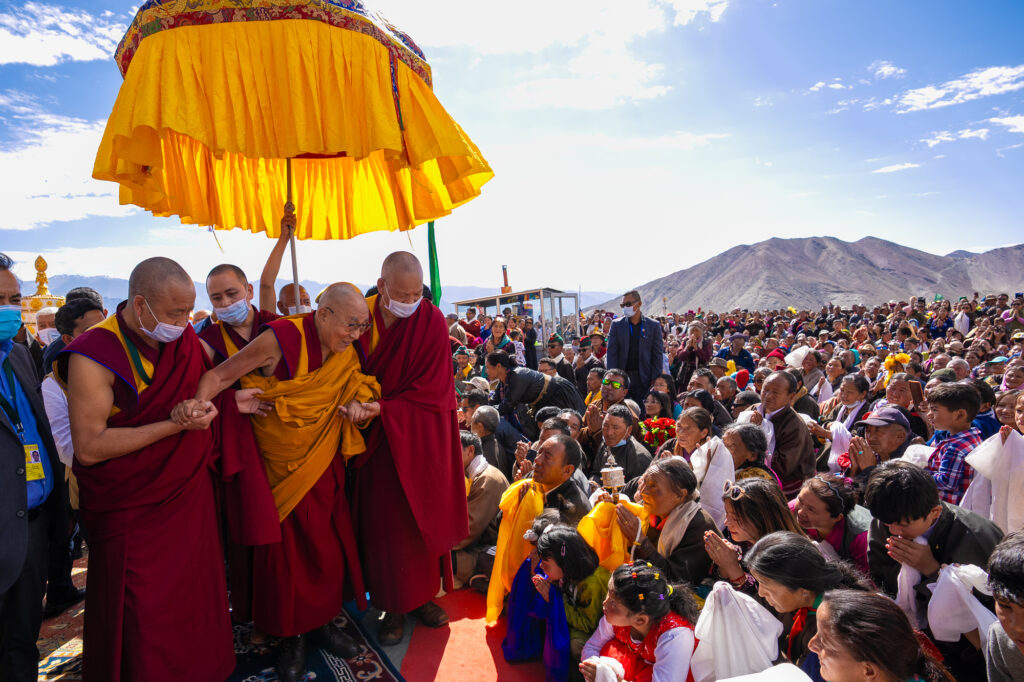
As the Dalai Lama gets older, the apprehension that there might be two Dalai Lamas, one based on suggestions by the current Dalai Lama and another, projected by the CCP, becomes more and more severe. Despite the Dalai Lama’s repeated assertion of fighting for Tibetan autonomy through peaceful means, as opposed to separatism, the CCP has always painted him as a violent secessionist and a threat to Chinese nationhood. As early as 1996, China formally prohibited the display and possession of the Dalai Lama’s images in Tibet, construing it as solidarity with Tibetan secessionism. Over the years, China has intensified its efforts at reshaping Tibetan society, severing the next generation from their language, culture, ways of life, and most importantly, aspiration for autonomy. From uprooting thousands of Tibetans by forcefully relocating their villages, to separating around one million Tibetan children from their families and coercing them into mandatory residential schools designed for their assimilation into the majority Han culture, the CCP has been bent on the cultural and demographic restructuring of Tibet. In fact, since 2023, China has begun referring to Tibet as the ‘Xizang Autonomous Region’ in all official communications, demonstrating its fixation on the cultural erasure of the Tibetan identity.
From this perspective, the Dalai Lama’s 90th birthday, around which he is expected to reveal details on his spiritual inheritance, goes far beyond being an event of spiritual/religious significance, but a critical determinant of regional geopolitics and the direction of the Tibetan movement. As thousands of Tibetans, representatives of several other faiths, celebrated figures such as Richard Gere, and big political names congregate in Dharamshala, all eyes will be on the Dalai Lama or “the protector of the Land of Snows”, as he is hailed by his followers. The world will listen carefully as his words will shape one of the most resilient, enduring, and inspiring struggles of our times.