
-Arun Anand
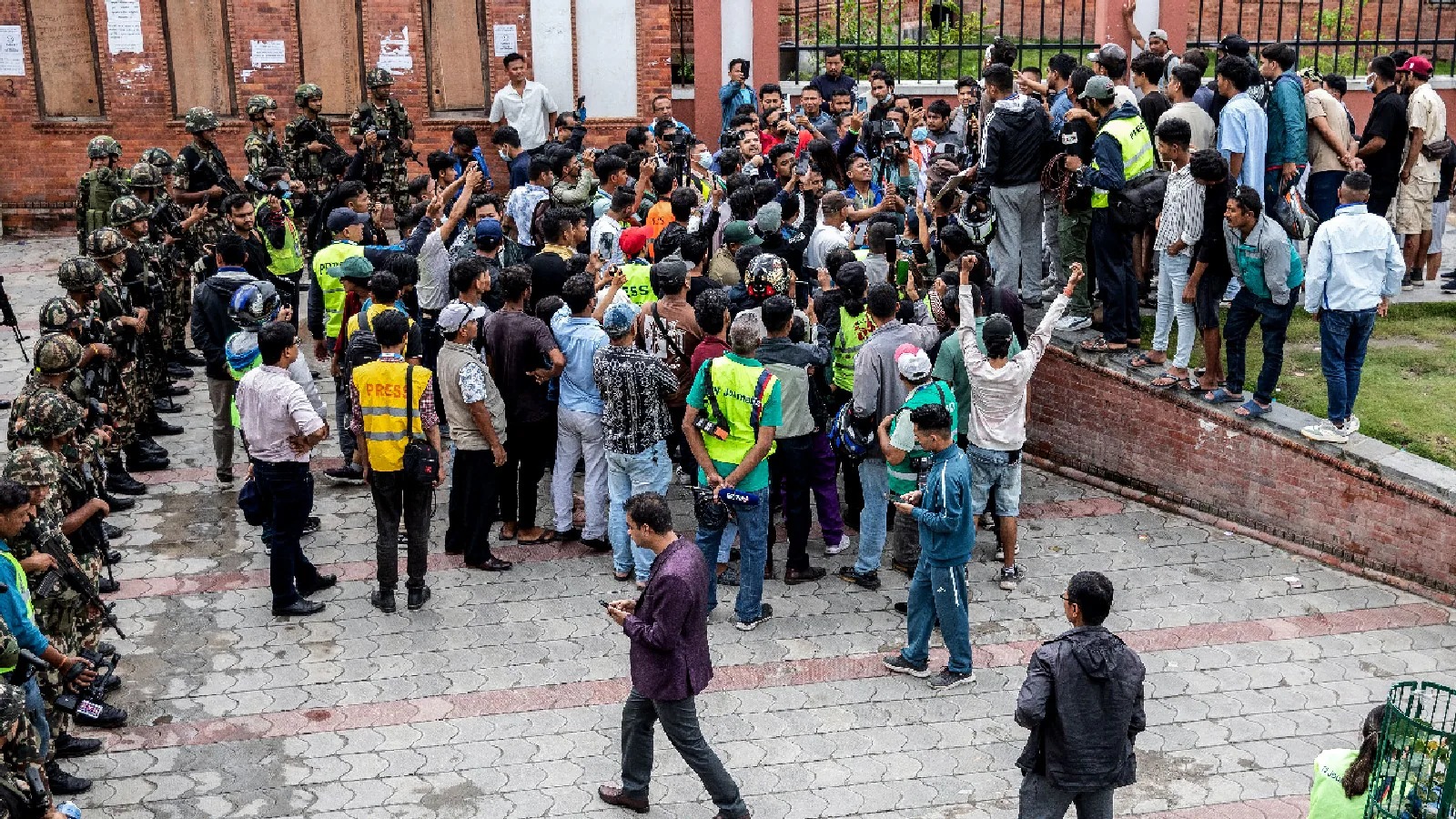
After the recent protests in Nepal by Gen Z that toppled its government, the global commentaries are raising the question: why aren’t India’s youth taking to the streets? As Nepal’s Gen Z had managed to bring down a government within two days, observers in Western capitals rushed to draw comparisons with calm in India. Across all these Western media coverages, the undertone was unmistakably similar — India’s young citizens are either disenchanted or forcibly silenced as they are not coming out on streets. The question that has been repeatedly asked by the Western media is how could 370 million digitally connected, energetic young people stay quiet while their neighbours erupt in rebellion!
This line of reasoning is not only too simplistic; it reflects a new colonial construct. The same Western lens that once portrayed the “East” as mysterious now depicts it as perpetually unstable. This new form of neo-orientalism associates political maturity with the violent protests on the streets; if there is no unrest, it implies stagnation and not a resilient democracy!
The recent BBC piece questioning why India’s Gen Z is not taking to the streets is a manifestation of this tendency.
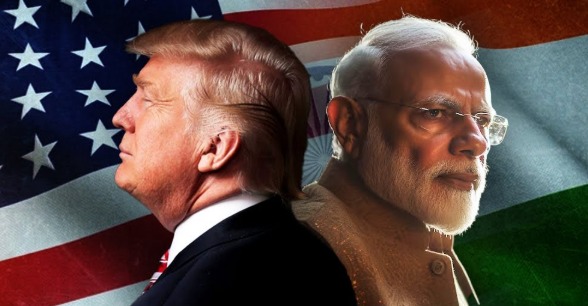
It draws parallels between India and smaller countries like Nepal, Bangladesh, and Madagascar, suggesting that the absence of mass uprisings signals a lack of youthful energy or civic courage. The problem isn’t nastiness, it’s method. Comparing India to these states is to misunderstand how democracies operate at a larger scale. Nepal’s protests erupted after a sudden social media ban and amid a fragile coalition government that survives on thin legitimacy. India’s federal and electoral architecture, by contrast, disperses discontent across 1.4 billion people, 28 states, and thousands of local governments.
The design of Indian democracy doesn’t suppress anger; it channels it. Protests in India rarely topple governments because institutions, courts, elections, bureaucracies, and welfare systems absorb the shock. To view the absence of unrest as evidence of apathy is to overlook how political participation actually functions in a robust and mature democracy.
There is an unspoken discomfort in much of Western coverage about how India, despite all its contradictions, remains economically and politically more stable than its peers. It continues to grow faster than most large democracies, sustains multi-party elections with a healthy turnout, and manages one of the world’s most complex social fabrics without systemic collapse. This stability is rarely celebrated in Western media; it’s often treated with suspicion. The reflexive narrative is to ask what might be going wrong beneath the calm rather than what mechanisms have allowed a post-colonial state to sustain democratic continuity and growth at this scale.
Part of this bias comes from habit. The Western media has always treated South Asia as a theatre of crisis. If the story isn’t of famine, coup, or riot, it barely registers. But another part stems from deeper discomfort; India no longer fits neatly into the developmental hierarchies that once defined the global imagination. It’s too chaotic to be treated as Western, too successful to be pitied as “developing”. So, its stability is read as a paradox, not as an achievement.
In Western capitals, protest is considered a hallmark of civic virtue. The French strike, the British march, and the American sit-in—these are viewed as signs of healthy democracy. Yet when the same template emerges elsewhere, it’s often described in different terms: “unrest”, “mob violence”, or “youth instability”. This double standard also extends to its inverse.
When Western societies experience protest fatigue or political disengagement, it is analysed as a sign of post-modern maturity, a democracy that no longer needs the street. When India’s youth turn to the ballot box instead of barricades, it is defined as evidence of apathy. The irony is glaring. India’s 2024 general election saw the participation of nearly a billion voters, more than the population of the entire West combined. If protest is one language of democracy, participation is another. Yet the latter rarely makes headlines.
To describe India’s Gen Z as “silent” is to overlook the forms of politics that do not conform to Western standards. Indian youth are debating, campaigning, voting, volunteering, building businesses, and engaging digitally at an unprecedented scale. Their politics isn’t always radical; it’s often pragmatic, sometimes ideological, occasionally contradictory. But it is politics nonetheless. The idea that activism must take the form of confrontation reflects a narrow understanding of agency. The Indian model of civic participation relies less on disruption and more on negotiation, achieved through social media, student movements, local elections, or NGO networks. Protest here is not a lifestyle choice; it’s a last resort. This doesn’t make India less democratic. It makes it democratic in a more sustainable way.
The Western gaze often operates on two assumptions: first, that Western democracies are the gold standard for political behaviour; and second, that political energy elsewhere must express itself through familiar Western forms to be valid. Both assumptions collapse under scrutiny. The protests in France over pension reform or Britain’s student marches are never compared to “big democratic neighbours.” They are treated as internal expressions of civic strength, not as part of a regional morality play. But when South or Southeast Asian youth mobilise, or don’t, the question becomes comparative and moralising: why don’t others follow? Why isn’t India emulating its neighbours? This reflects ‘projection’ and not ‘analysis’. Western media expects the template in their part of the world to be replicated everywhere. When it doesn’t, they treat it as a sign of deficiency of democratic values.
If we step away from this template, India’s apparent calm begins to look less like resignation and more like resilience. Its youth are not revolutionaries by default because they have grown up inside an established, functioning democracy. They have witnessed for decades that power dynamics can be successfully changed through ballots, not barricades. This generation of young Indians is also smoothly navigating global economic competition, digital transformation, and an aspirational middle-class culture that prizes progress over protest. Their energies are directed toward mobility, not militancy. Far from being depoliticised, they are the inheritors of a political system that has normalised participation so deeply that it no longer requires upheaval to feel real. In that sense, India’s “stability” is not the absence of politics, it’s the maturity of it.
India would never fit into the Western media’s binary of democratic decline or populist revolt. Her story is less dramatic, but more consequential: a multi-ethnic, multi-religious, multilingual democracy that manages to govern, argue, and grow simultaneously. The West often mistakes this for contradiction. It is, in fact, the definition of balance. The time has come for global media to update its interpretive grammar. Not every democracy must protest to prove it’s alive.To understand India, one must abandon the lens of spectacle and learn to see political endurance as a testament to achievement, not an anomaly. The real story isn’t why India’s youth aren’t burning tyres; it’s why, despite every reason to fracture, the world’s largest democracy still holds together. And that story deserves to be told without a Western filter.
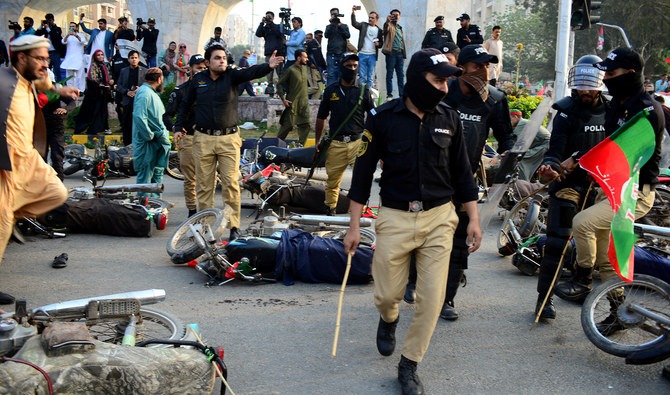
When waves of youth-led unrest swept across South Asia after Sri Lanka’s uprising in 2022, analysts began to ask which country would be next. While Bangladesh followed the suit in 2024 leading to Sheikh Hasina’s exit and most recently Nepal, many wondered whether it will arrive in Pakistan which ticked every box that fuels such movements: economic collapse in parts, high youth unemployment, cronyism, and a political class that many young people see as tone-deaf.
Yet, unlike Kathmandu, Dhaka or Colombo, Karachi and Lahore did not become the epicentres of mass, ideologically diffuse youth uprisings. The answer to Pakistan’s current insulation from such a rupture lies not in popular contentment but in a set of deliberate institutional, legal, and narrative controls that have blunted the emergence of a nationwide, cross-cutting youth movement.
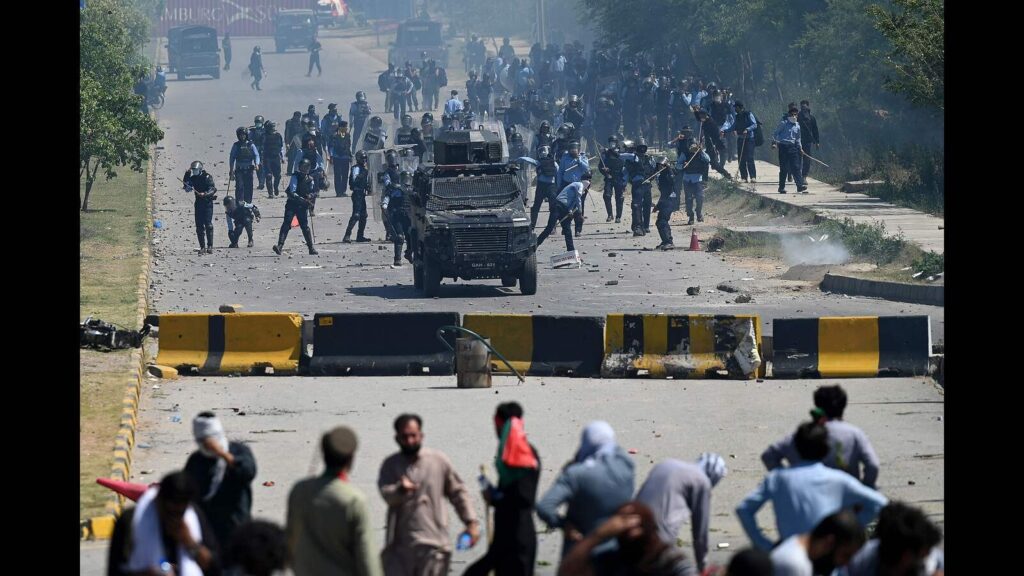
In case of Pakistan, it all boils down to the state’s most powerful actor: the Pakistan Army. The institution’s unprecedented response to May 9, 2023, violence after former Prime Minister Imran Khan’s arrest made clear that any mass movement threatening the army’s prerogatives would be met with force and lawfare. In the weeks and months that followed, hundreds of civilians accused of taking part in the unrest were tried by military courts. By signalling that protest could carry the risk of military prosecution, the establishment transformed the costs of visible mobilization for would-be demonstrators.
But coercion alone does not explain the lack of a Gen Z wave. The military-dominated state establishment has shored up its actions with a legal and rhetorical infrastructure that normalises repression. As has been demonstrated in the last few years, pliant civilian governments like Shehbaz Sharif’s and a compliant judiciary conferred legality on the state’s repressive measures such as sanctifying military trials of civilians or amending constitutional provisions to further empower the establishment. Those measures do more than punish by creating an atmosphere of fear and unpredictability. Young people who might otherwise risk a night on the streets calculate not only the immediate danger of police or paramilitary response, but the prospect of prolonged detention, disqualification from public life, or long legal battles.
Parallel to legal tools is the information control that has acted as a central plank of the establishment’s strategy. Whenever protests erupt in peripheral provinces of Balochistan and Khyber Pakhtunkhwa predominantly over Pakistan Army’s human rights violations, such protests are often framed as the work of foreign-backed secessionists or direct foreign hands. That securitized framing strips popular grievances of their political valence and paints them as existential threats to national unity. In practice, branding a local protest “anti-state” or “sponsored” is used to delegitimize sympathy from the broader public, making it far harder for disparate movements to coalesce into a national youth narrative. The rise and proscribing of movements by Pashtun Tahafuz Movement (PTM) and Baloch Yekjehiti Committees (BYC) show how Pakistani media framing, often echoing official lines, reinforces the divide between “patriotic” majorities and “dangerous” minorities.
Targetted media campaigns have not just been employed in the restive provinces. After the no-confidence motion that ousted Imran Khan’s government in 2022, for example, street mobilisation by the Pakistan Tehreek-e-Insaf (PTI) demonstrated how quickly the public discourse was polarized. And when May 9 anti-establishment protests against Khan’s arrest saw the sanctity of the military fortresses breached for the first time ever, the state-aligned media quickly presented protesters as partisan, violent, or manipulated by foreign backed actors. Such a characterisation is employed to keep young citizens viewing politics through the prism of party loyalties, ethnic identity, or regional grievance rather than shared economic and civic concerns that cut across such lines.
Economic desperation, however, remains a dormant accelerant. It is not that in this age of information and unprecedented access to social media technologies Pakistan’s young demographic are not aware of stagnant opportunity, rising living costs, and the politics of patronage. What has kept them off the streets is not indifference but fragmentation. Herein, the long cultivated and institutionalized provincial, ethnic and sectarian cleavages work as dampers on the kind of cross-class, cross-regional solidarities that have powered Gen Z uprisings elsewhere in the region. Until youth can imagine a politics that transcends these divisions, protest energy tends to boil over locally and then dissipate.
So, the question arises what would it take for Pakistan’s Gen-Z to break the shackles of current status quo? The foremost answer lies in the creation of a shared political vocabulary that could link bread-and-butter economic grievances to common governance failures, rather than reducing dissent to ethnic or partisan labels. The youth need to see beyond the ethnic and sectarian identities and through the façade of the agendas of current political elite. The recent Gen-Z waves across South Asia show that when youth movements craft a shared language of rights and justice, they can force rapid political concessions. But for such realisation, they ought to avoid being swallowed by existing cleavages.
It is important to note the asymmetry here: the state does not need to be omnipotent to prevent a Gen-Z uprising; it only needs to be better at dividing and dissuading than youth movements are at unifying. Pakistan’s both formal and informal institutions have operated precisely along those lines. They have made it costly to imagine a nationwide movement and profitable, for the moment, to keep politics provincial and securitized. For many young Pakistanis, an act of national solidarity means choosing sides in a polarized landscape where the risks of losing are existential.
That is not to say the powder keg cannot ignite. Economic shocks, a dramatic political miscalculation, or a new generation of conscious young political minds who can tell a cross-communal story of grievance and hope could change the calculus quickly. But for now, Pakistani establishment’s latest respite from a Gen-Z uprising is a function of strategy as much as suppression. This includes a combination of military deterrence, legal architecture, media framing, and the deliberate maintenance of social fissures. If the most connected and potentially volatile cohort of young demographics of the country are to convert frustration into sustained collective action, they will have to imagine a politics that can outmaneuver the state’s oldest playbook: divide, delegitimise, and dominate.
The question for military-dominated Pakistani establishment’s future is not whether its young are angry, which they are anyway, but whether they can learn to be strategic, patient, and cross-communal enough to build a movement that it cannot simply criminalize, fragment, or outbid. Until that happens, the streets will remain dangerous ground that too many are unwilling to risk alone.