
It is barely a month into 2026 and Pakistan, it appears, is already sliding toward a grim year ahead. In just the first month, there have been nearly a hundred security forces casualties, including a lieutenant colonel targeted while traveling in a private vehicle on January 28, besides dozens of civilians.
If this trend holds which look highly likely given increasing strength of ethnonationalist insurgency in Balochistan and Islamist militancy in Khyber Pakhtunkhwa, it could turn into the deadliest years for Pakistan Army led security forces in the country.
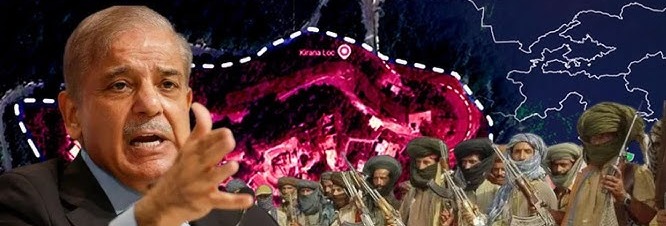
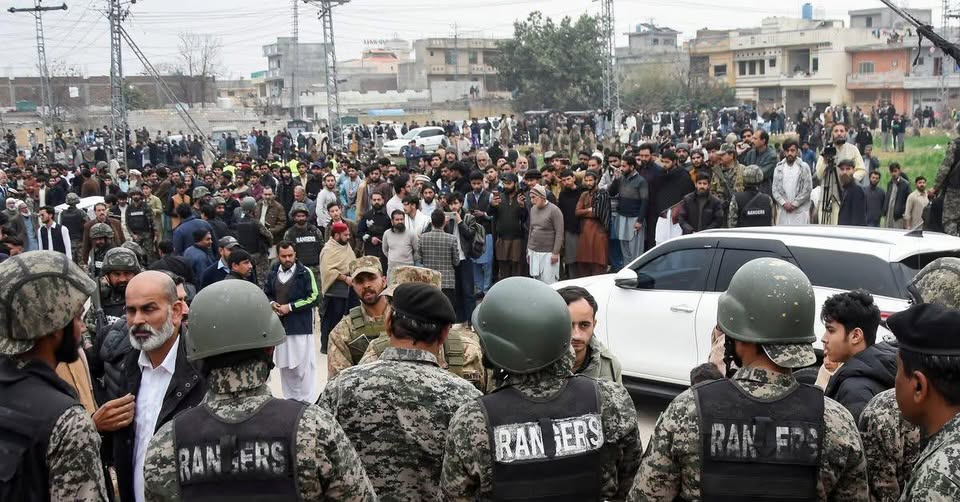
On Jan.31, Balochistan Liberation Army (BLA) launched coordinated assaults across as many as fourteen cities in Balochistan. Labelled as Operation Herof 2.0, hundreds of BLA fighters struck military and provincial government installations from provincial capital Quetta to port city Gwadar, from Turbat to Panjgur, demonstrating a level of planning and reach that Pakistan’s security planners have long insisted was impossible.
While the BLA claimed 84 security officials killed and 18 taken hostage, Pakistan Army’s DG-ISPR acknowledged the death of 17 soldiers and 31 civilians while claiming to have killed 177 BLA fighters. It has been over four days and it appear BLA seems to have entrenched its control over many areas across the cities, particularly Noshki, with Pakistan Army struggling to remove the fighters despite using indiscriminate force, including aerial attacks.
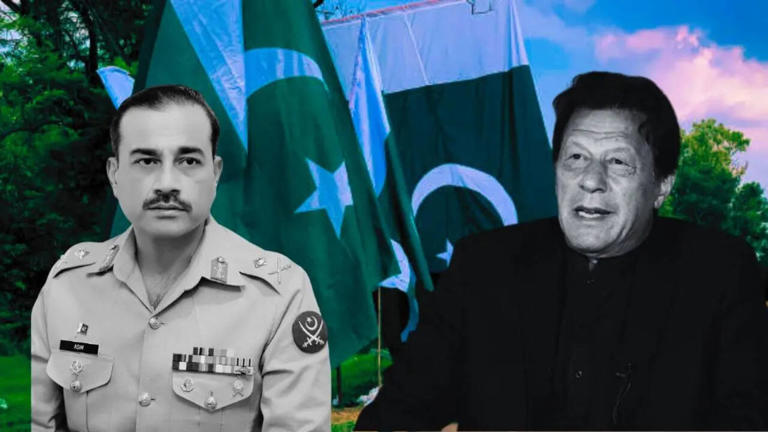
The contestation over the casualties on either side aside, this latest attack demonstrates how the insurgency in Balochistan has evolved from a peripheral “irritant” into a strategic challenge capable of overrunning state facilities and humiliating Asim Munir led Pakistan Army in real time. But this was not an isolated outburst as independent monitors have recorded as many as 87 separate insurgency incidents in January alone.
According to the Pakistan Institute of Conflict and Security Studies (PICSS), since General Asim Munir assumed command in November 2022, the army and its affiliated forces have lost 2,017 personnel, with a record 857 deaths in 2025, besides over 1100 civilian fatalities during the same period. These figures rival the darkest years of Pakistan’s counterinsurgency campaigns, yet they receive only fleeting acknowledgement in national discourse.
But what distinguishes the military casualties is not merely their number but more importantly who is dying. According to the media reports about insurgent incidents in Balochistan and militant incidents in KP, the bulk of losses are borne by the Frontier Corps (FC) and the Levies, which are paramilitary formations recruited largely from Baloch, Pashtun, Sindhi and other non-Punjabi communities. It is these units that patrol the most dangerous terrain, man remote checkpoints and therefore become the first line of responders when insurgents and militants strike.
On the other hand, the Punjabi soldiers, which dominate the officer corps and the central command structure, are far more insulated from direct combat.
Such a division of risk is not accidental but reflects the very psychology of the Pakistani state. The military remains overwhelmingly Punjabi as demonstrated by its ethnic demographics which has 70 to 75 percent Punjabis, 14–20 percent Pashtun, 5–6 per cent Sindhi, and merely 3–4 Baloch. The officer class is even more skewed in favour of Punjab with Punjabi officers commanding Frontier Corps and Levies.
While Baloch soldiers are ordered to fight Baloch insurgents and Pashtun recruits are sent to battle Pashtun militants, the arrangement guarantees local resentment. Under General Munir, this Punjabi dominated military establishment has acquired a political purpose of consolidating every lever of power of the state. Since his elevation in 2022, Pakistan has gradually transformed into military led hybrid rule through a carefully calibrated yet brazen constitutional gerrymandering which has rendered elected institutions largely irrelevant with real authority in the General Headquarters in Rawalpindi.
As such, the Punjabi dominance within the army becomes the pillar of regime stability, while non-Punjabi paramilitaries serve as expendable shock absorbers for an unpopular security project.
For decades, Pakistan’s military has portrayed itself as the sole glue holding a fractious nation together. But that has changed in the recent decades where military has transformed into a catalyst of insecurity by designing Islamabad’s imperial approach towards non-Punjabi provinces which sustains on coercion than consent. Nowhere is this more evident than in Balochistan. For decades the province has been treated through a colonial lens of resource extraction of gas and other mineral copper with little investment in its people.
While political dissent is answered with enforced disappearances and economic demands are framed as treason, such policies have further alienated people and contributing to the cause of ethnonationalist groups. The BLA’s latest offensive not only demonstrated scale and intensity but also its social breadth with men and women fighting side by side, reportedly including a grandmother and a newly-wed couple. But for Pakistan, it is the state’s policies which have ensured that the cause of Baloch nationalist groups was no longer a fringe phenomenon but entrenched within the society.
Likewise, Khyber Pakhtunkhwa tells a parallel story. Here, Pakistan’s proxy policy of terrorism as instruments of regional policy, particularly against Afghanistan and India, has unravelled as many of those groups, including many factions within Tehreek-e-Taliban Pakistan (TTP) have now turned inward. And despite repeated anti-militancy campaigns by the army, militant networks have reconstituted themselves with each case of military violence and emerging stronger.
General Munir’s response has been to double down by expanding military courts, criminalising online dissent, and relying ever more on auxiliaries like the Frontier Corps and Levies. This strategy is less about defeating insurgency than managing it at tolerable cost which is however paid overwhelmingly by non-Punjabi bodies. On the other hand, Punjabi soldiers remain guardians of regime stability in Islamabad and Lahore. The contrast is visible: armoured calm in the centre, burning peripheries at the edges.
History suggests that armies can survive defeats but what they cannot survive is a perception of injustice within their own ranks. Asim Munir led Punjabi military establishment of Pakistan Army continues outsourcing its dirtiest wars to non-Punjabi formations while reserving privilege for the Punjabi core. It is a recipe of sowing fractures that may one day reach Rawalpindi itself.
-Arun Anand
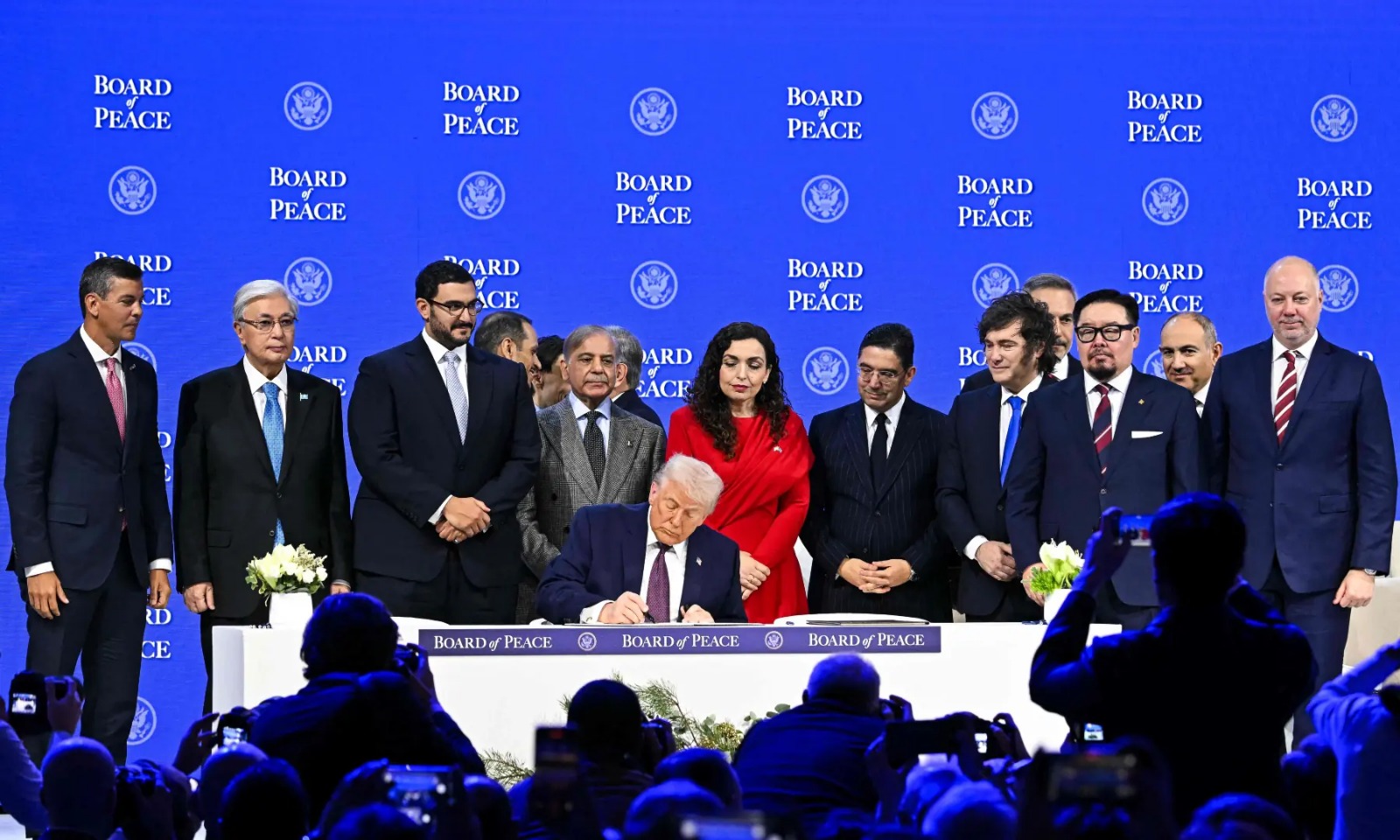
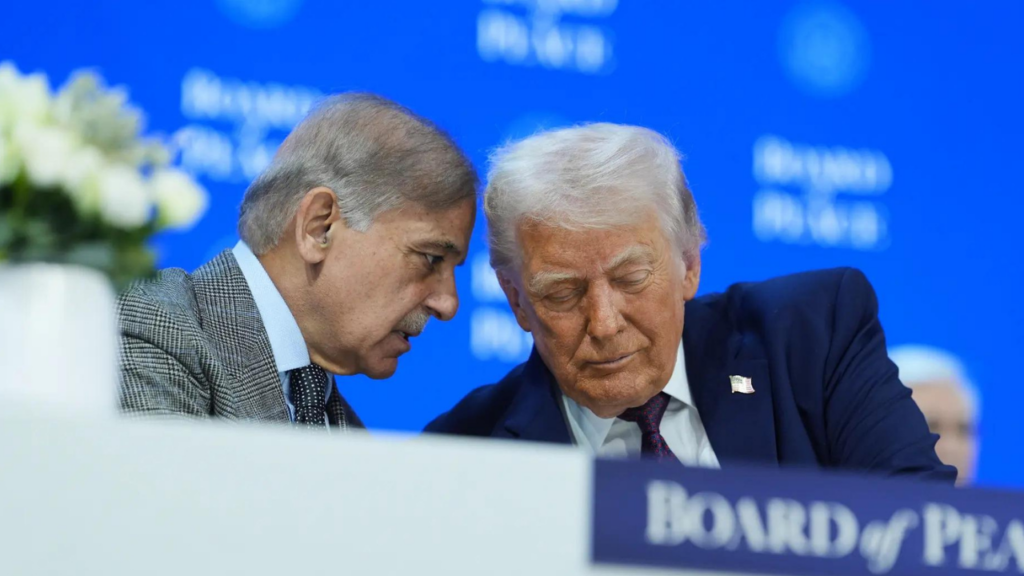
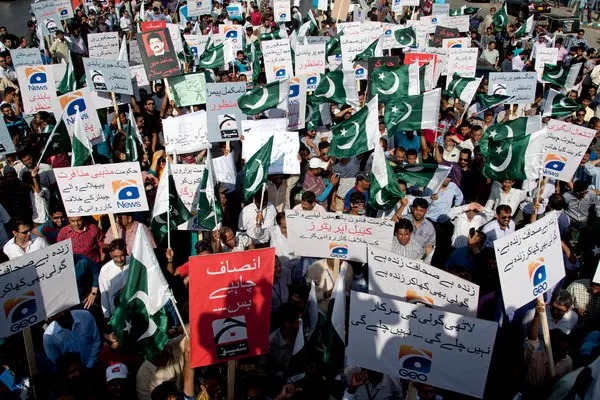
The irony of being Pakistan is that it had to pay one billion US dollars for Donald Trump’s Board of Peace seat while it seeks 2.2 billion US dollars in UAE aid. Pakistan is reeling under impoverishment, yet it spends like a country swimming in surplus. It is as if the nation is borrowing oxygen while promising to plant forests abroad. That single contradiction captures the state of affairs in Pakistan today.
It is not anger alone, and it is not confusion alone. It is disbelief mixed with exhaustion. How does a country negotiating loan rollovers, begging for IMF relief, and struggling to keep its foreign reserves afloat suddenly find room for billion-dollar diplomacy? How does a state that asks its people to tighten their belts behave as though its own belt has no limits? The handout photograph from the Pakistan Military Academy at Kakul tells a different story. Prime Minister Shehbaz Sharif stands beside Field Marshal Asim Munir, watching young cadets march in perfect rhythm. Their boots strike the ground with discipline, their posture straight, their future seemingly secure. The image is meant to convey strength, order, and control. It is meant to say the state is steady and confident. But outside that parade ground, Pakistan feels anything but steady. It feels fragile. It feels tired. And tired nations cannot afford grand performances.
Pakistan’s external debt has crossed 125 billion dollars. More than half of the government’s annual revenue now goes into servicing loans. In 2024 alone, the country paid over 24 billion dollars just to keep creditors satisfied. That amount is larger than what Pakistan spends on education and health combined. Foreign reserves hover between 8 and 10 billion dollars, barely enough to cover two months of imports. This is not financial comfort. This is emergency breathing space. This is a nation living month to month, negotiating survival in instalments. At the same time, Pakistan remains tied to a 7-billion-dollar IMF program that dictates its electricity prices, fuel costs, and fiscal discipline. Interest rates are still painfully high, close to 20 percent, choking businesses and discouraging investment. Electricity tariffs are among the highest in South Asia, forcing families to choose between cooling their homes and feeding their children. Fuel prices shape food inflation, and food inflation shapes despair. Development spending continues to shrink, not because it is unnecessary, but because debt leaves little room for growth. And yet, in the middle of this financial suffocation, Pakistan has found roughly one billion dollars to become a permanent member of US President Donald Trump’s newly formed “Board of Peace,” a diplomatic initiative aimed at advancing a lasting ceasefire and reconstruction in Gaza. For oil-rich nations and financially stable economies, a billion dollars is a strategic investment. For Pakistan, it is borrowed confidence. It is a promise made on credit.
The government presents this as moral leadership. It says Pakistan is standing with Gaza and asserting its diplomatic relevance. Morally, the intention is difficult to oppose. Pakistan has always supported the Palestinian cause, and public sentiment overwhelmingly favors justice and peace for Gaza. But morality without economic realism becomes dangerous. A country drowning in debt cannot pretend to be a lifeboat for the world. Compassion does not disappear when finances are tight, but responsibility must grow sharper. This is where the contradiction becomes painfully human. Over forty percent of Pakistan’s population now lives near or below the poverty line. International estimates show that more than twelve million Pakistanis slipped into poverty during recent inflation shocks. Food inflation once crossed forty-five percent, and although official numbers show moderation, market prices remain stubbornly high. Ask any household, and they will tell you that groceries still cost more than they can comfortably afford. Cooking oil, flour, rice, pulses, and vegetables have all become careful calculations rather than casual purchases. Electricity bills now swallow entire salaries. Gas shortages in winter push families back to burning wood and coal. Healthcare costs delay treatment, turning small illnesses into lifelong burdens. Education expenses force parents to choose which child can continue studying and which must stay home. Youth unemployment remains underreported, and graduates increasingly view migration as the only exit from economic suffocation. This is not laziness. This is survival instinct. Child malnutrition remains alarmingly high, hovering near thirty-eight percent. Millions of children remain out of school. Clean drinking water remains inaccessible to tens of millions. These are not abstract figures. These are silent emergencies unfolding in homes where hope has become fragile. In this reality, a billion-dollar diplomatic seat feels distant and disconnected. It feels like a luxury bought with borrowed money while the kitchen remains empty.
People are not rejecting peace. They are rejecting hypocrisy. They are asking how a state that cannot stabilize electricity bills can stabilize international conflict. They are asking how a government that struggles to subsidize flour can afford to subsidize diplomacy. They are asking why their suffering must become the financial foundation for elite prestige. This is not selfishness. It is fatigue. It is the tiredness of people who have been asked to sacrifice for decades while seeing little improvement in return. Foreign Minister Ishaq Dar has defended the move, saying Pakistan’s membership aligns with its support for the Gaza Peace Plan and may help translate hope into concrete steps toward a permanent ceasefire. The language is noble, but the economic reality remains brutal. A country that cannot control its own inflation, debt, and unemployment cannot project sustainable influence abroad. Influence does not come from paying to sit at tables. It comes from stability that others respect.
There is also a quieter irony embedded in this decision. Pakistan is seeking financial relief from the UAE while joining a board that includes the UAE as a fellow member. It sits at the same table as both borrower and partner. That dynamic matters. It shapes who speaks confidently and who speaks cautiously. Pakistan enters not as an equal power but as a financially dependent participant seeking validation. That weakens its position rather than strengthening it. This is why the decision feels more like performance than policy. It is diplomacy designed to appear bold rather than diplomacy grounded in capacity. Pakistan is trying to look influential while financially vulnerable. That contradiction is visible to the world and painfully felt at home.
The danger lies not only in this decision but in the precedent it sets. If Pakistan pays to belong today, it will be expected to pay tomorrow. If prestige becomes something that must be purchased, then foreign policy becomes a marketplace. And Pakistan, operating on loans and rollovers, cannot afford to shop for recognition. This is how debt becomes policy, and policy becomes hostage to creditors.
Support for Gaza could have been delivered through humanitarian aid, diplomatic advocacy, political lobbying, and moral alignment. These actions require far fewer resources and carry genuine moral weight. A billion-dollar permanent membership feels excessive, especially for a country still recovering from the brink of default. It feels less like peace-building and more like prestige-buying. Prestige, for a poor nation, is the most expensive addiction.
The photograph from Kakul remains striking. It shows discipline, youth, and national pride. But strength today is not measured by how polished a parade looks. It is measured by fiscal discipline, economic credibility, and public trust. A parade cannot hide unpaid bills. A uniform cannot cancel inflation. A ceremony cannot replace stability. Pakistan does not lack compassion. Its people donate generously during floods and disasters. They stand with Gaza emotionally and politically. They carry deep empathy for suffering beyond their borders. What they cannot accept is being asked to fund international symbolism while their own lives grow smaller. They want dignity at home before prestige abroad.
This decision feels like a country trying to sound powerful while negotiating survival in private. It feels like borrowed confidence. It feels like standing tall on financial tiptoe. The tragedy is not that Pakistan wants peace. The tragedy is that it is trying to buy relevance instead of building stability. Stability is the only form of power that lasts. Everything else is temporary.
Leadership is not just about showing up internationally. It is about protecting your people domestically. When a government can control inflation, create jobs, stabilize energy prices, strengthen schools, and support hospitals, then its voice abroad carries authority. Until then, diplomacy risks becoming theatre. Peace is priceless. Gaza deserves justice, dignity, and reconstruction. But a nation drowning in debt cannot pretend to be a global rescuer. You cannot pour from an empty cup. You cannot save the world while starving at home. You cannot borrow for survival and spend for prestige without consequences. Pakistan stands today between symbolism and survival. The government has chosen symbolism. The people are choosing endurance. History will decide whether this moment was courage or miscalculation. For now, it feels like a fragile economy carrying a heavy costume, trying to perform strength while quietly asking for breath.
-Arun Anand
Pakistan is living through one of its bleakest democratic moments, and the source of this suffocation is no mystery. Power in the country has steadily migrated away from elected institutions and settled firmly in the hands of Army Chief Gen Asim Munir. What remains of civilian rule exists largely for show, a thin constitutional curtain behind which the military calls the shots. Parliament debates, courts issue verdicts, and government leaders make speeches—but none of it matters unless it aligns with the will of the man in uniform.
Under Gen Munir, this imbalance has hardened into something far more dangerous: a system built on fear, coercion and punishment. Dissent is no longer treated as disagreement; it is framed as treason. Criticism is rebranded as terrorism. And loyalty to jailed former Prime Minister Imran Khan has become the ultimate crime. The dismantling of civilian authority did not happen overnight. It has been methodical.
First, political engineering ensured a weak government in Islamabad. Then the judiciary was tamed through pressure, selective accountability, and unmistakable signals about what kind of verdicts were acceptable. Today, few judges dare to pretend independence when cases touch the military or Imran Khan. Sentences have grown harsher and outcomes increasingly predictable. The result is a dysfunctional state that operates like a command structure with no accountability for the ruling elite that largely comprises the military.
When Journalism Becomes a Crime
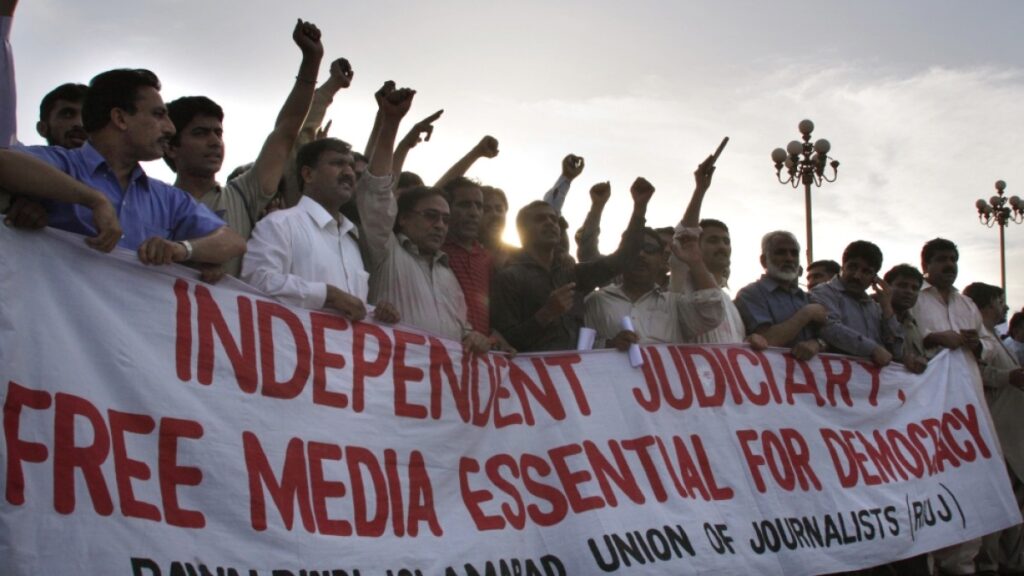
The latest victims of this tightening grip are journalists, analysts, and former military officers who dared to speak publicly against the army’s dictatorship and political purge. In January 2026, an Anti-Terrorism Court sentenced seven Pakistanis to life imprisonment for what it called digital terrorism related to the protests of May 9, 2023. None of the accused were present in court. All live abroad. Several were never even informed that proceedings were underway. This was not justice; it was theatre of the absurd. This was a message crafted not for the defendants, but for those still inside Pakistan desperately trying to find a space for free expression. Among those sentenced are some of the most seasoned voices in Pakistani journalism.
Shaheen Sehbai, with nearly five decades of experience and former editor of The News International, has long criticised the military’s dominance over civilian life. His crime was intellectual honesty and an unwillingness to pretend that today’s generals possess any vision or restraint. At his age, sentencing him to life imprisonment is not just punitive—it is vindictive. Wajahat Saeed Khan, an investigative journalist respected for his work on security affairs, was reportedly never summoned or notified of any charges. His trial happened without his knowledge, underscoring how irrelevant Pakistan’s judicial process has become.
Sabir Shakir, a veteran broadcaster who left Pakistan after alleged threats from the previous army chief, now finds himself branded a terrorist for doing what journalists are meant to do: ask uncomfortable questions. Analyst Moeed Peerzada’s case adds an even darker edge. Living in the United States, he incurred the military’s wrath by citing international media reports that contradicted official Pakistani claims during a military episode. Days after his conviction, his home in the US mysteriously caught fire. While no direct accusations have been made, the symbolism is chilling. Critics of the army, it seems, are no longer safe even beyond Pakistan’s borders.
The remaining three—former army officers turned YouTubers—had already been court-martialled, stripped of rank, and sentenced to long prison terms for exposing internal misconduct. The Anti-Terrorism Court’s decision to pile life sentences on top of military punishment reveals Munir’s insecurity. An institution confident in its legitimacy does not fear YouTube channels speaking the truth. Together, these cases mark a decisive shift in Pakistan’s media space, as journalists are now equated with criminals. The purpose is not merely to silence specific individuals, but to terrify everyone else into submission. If respected journalists and commentators based in countries other than Pakistan can be condemned as terrorists without being heard, what hope remains for media persons inside Pakistan?
The Prisoner Who Still Threatens Power
At the centre of this crackdown lies one man: Imran Khan. For General Munir, Khan is not just a political rival; he is an existential threat. Unlike other leaders who clashed with the military and then quietly left the country, Khan stayed. He faced arrest, imprisonment, humiliation—and refused to break. Despite being behind bars, Khan continues to shape Pakistan’s political landscape. His influence within his party—Pakistan Tehreek-e-Insaf (PTI)—remains intact. His word still determines the opposition strategy. His popularity, particularly in Punjab and Khyber Pakhtunkhwa, has survived relentless propaganda, mass arrests, party defections, and legal assaults. This endurance explains the severity of the response against anyone perceived as sympathetic to him.
Under Munir’s command, neutrality is no longer enough, and even silence can be suspicious. Any positive mention of Khan—by a journalist, analyst, or former officer—is treated as alignment with an enemy camp. The government’s occasional talk of “dialogue” with the opposition is widely understood as a cosmetic gesture with no serious intent. Prime Minister Shehbaz Sharif may speak of harmony and national unity, but no serious negotiation can proceed without the army’s consent. And there is one non-negotiable issue that ensures talks will never mature: Imran Khan’s freedom.
The ruling coalition knows that Munir will not permit Khan’s release under any circumstances. At the same time, the opposition cannot abandon its central demand without losing credibility. This guarantees stalemate. ‘Dialogue’ is more of a performance, not policy, as Khan continues to unsettle the system. His nomination of Mehmood Khan Achakzai as leader of the opposition in the National Assembly shows that his political instincts remain sharp. It also demonstrates that PTI, despite being battered, has not collapsed. For a military leadership obsessed with total control, this lingering defiance is intolerable.
A Country Held Hostage
Pakistan today is not merely experiencing a political crisis; it is experiencing a collective collapse of freedoms. The press is muzzled. Courts are coerced. Politicians are managed. Fear has replaced debate, and punishment has replaced persuasion. Munir may currently hold all the levers of power, but history offers a sobering lesson: authority sustained through repression rarely sustains beyond a point. The journalists sentenced to life imprisonment may be physically absent from Pakistan, but their cases are now permanently etched into another dark chapter of its democratic decline. Imran Khan languishes in jail. Journalists face threats and punishment. And the military remains unchecked. For now, the silence may appear complete. But beneath it, resentment is growing as Pakistan waits to implode.
-Arun Anand
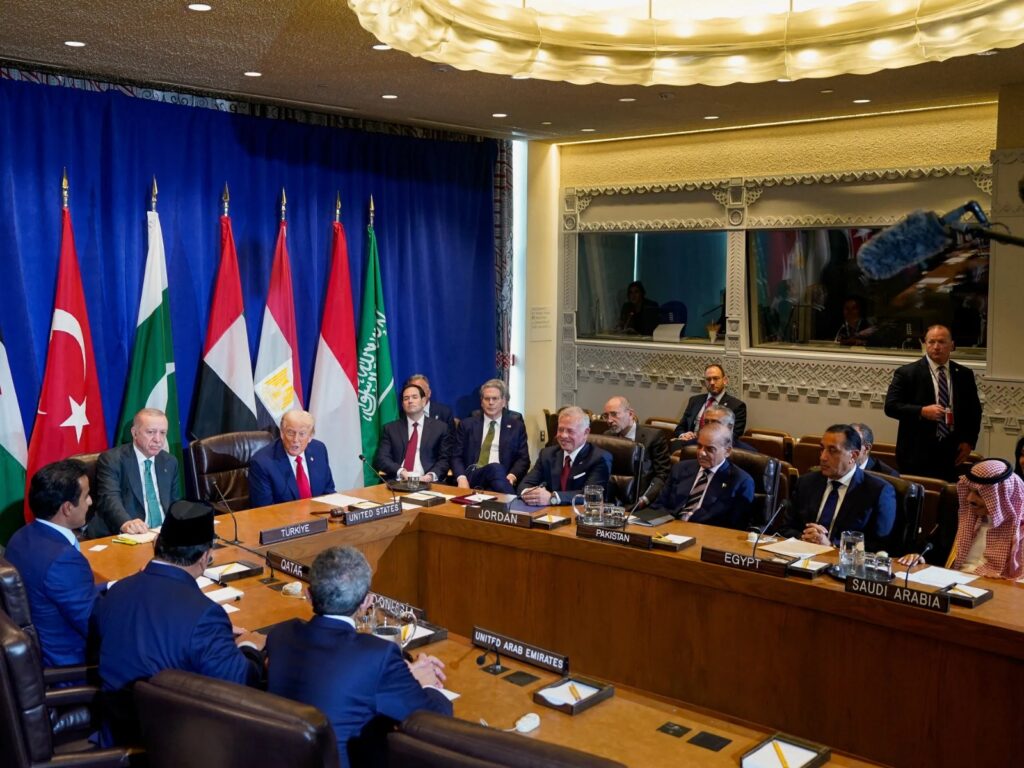
Pakistan has a knack for arriving at the wrong place at precisely the wrong time. When Russia attacked Ukraine in February 2022, its then prime minister, Imran Khan, was seated in the Kremlin, smiling and shaking hands for cameras. And when Saudi Arabia and the United Arab Emirates, Islamabad’s most important Middle Eastern patrons, found themselves at odds over Yemen last week, it was once again caught in the crossfire. This time Emirati President Sheikh Mohammed bin Zayed Al Nahyan was on his hunting trip to Pakistan. These moments are not mere coincidences but rather symptoms of a deeper strategic malaise of a military-dominated foreign policy that repeatedly entangles Pakistan in conflicts it neither controls nor fully understands.
Over the past decade, Pakistan has drifted from being a peripheral player in the Middle East to an increasingly exposed one. As the shift has been shaped by transactional military diplomacy as signified by recent Strategic Mutual Defence Agreement with Saudi Arabia, the result is a country wedged uncomfortably between rival power centers with China and the United States on one axis globally, and Saudi Arabia and the UAE on another at the regional level. While each of its allies expects loyalty, no one offers insulation when loyalties collide.
That collision is now visible in Yemen and most likely in Libya. On December 30, Riyadh announced that it targeted a weapons shipment at Yemen’s Mukalla port, claiming the arms originated from the Emirati port of Fujairah. Riyadh alleged that weapons were destined for the Southern Transitional Council (STC), a UAE-backed separatist group seeking to carve out an independent state in southern Yemen.
It made Pakistan to tread an uncomfortable line. Though Islamabad expressed “complete solidarity” with Saudi Arabia, reaffirming its support for the kingdom’s sovereignty and Yemen’s territorial integrity, what it did not do was just as revealing. Pakistan avoided naming the STC, sidestepped Abu Dhabi’s role in nurturing Yemeni separatism, and refrained from any criticism that might upset the Emirati leadership.
However, it should be known that diplomatic hedging has its limits. On the very morning Saudi Arabia carried out strikes against what it described as Emirati-linked weapons shipments, Pakistan’s prime minister, Shehbaz Sharif, along with senior cabinet members, including Deputy PM and Foreign Minister Ishaq Dar, was meeting Sheikh Mohammed bin Zayed at his family’s palatial estate in Rahim Yar Khan. The optics were ironic with Pakistan professing solidarity with Riyadh while hosting the very leader Riyadh was pressuring militarily. There have been unsubstantiated reports that Saudi Arabia declined a request for a meeting by Pakistan’s powerful army chief, Field Marshal Asim Munir, thereby reinforcing the impression that Islamabad’s balancing act was wearing thin.
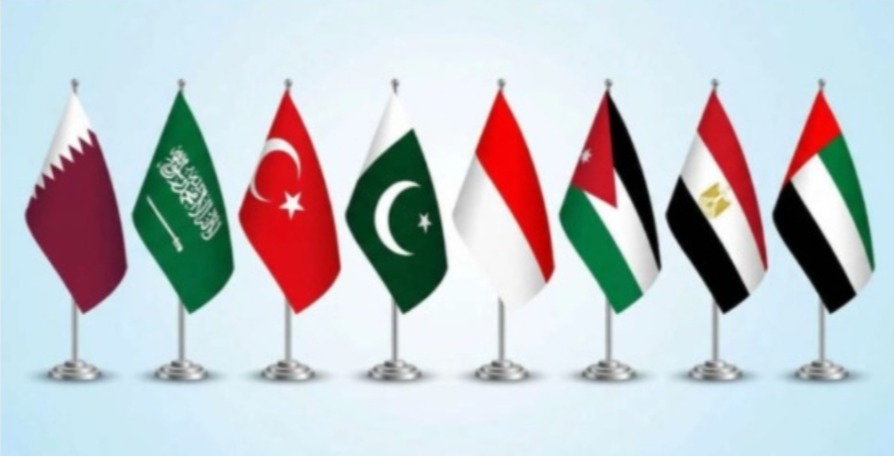
This episode underscored a broader truth that Pakistan was no longer merely navigating Gulf rivalries but was being shaped by them. And nowhere is this more dangerous than in Gaza. As US President Donald Trump pushes his vision of post-war Gaza governance under an international body, he has publicly sought Pakistan’s commitments to contribute troops to his envisioned security or stabilization force for the territory.
For Islamabad, the proposition is fraught with peril as deploying Pakistani troops to the war-battered Palestinian region would not be a neutral peacekeeping mission. As the Gaza stabilisation force would almost certainly involve disarming Hamas, enforcing cease-fire arrangements, and operating under an American or Israeli security framework, such a role would place Pakistan at odds with popular sentiment at home, where sympathy for the Palestinian cause runs deep. Moreover, it would also damage the country’s standing in the broader Muslim world, where participation in what many would view as an externally imposed security regime or forced disarming of what many consider a Palestinian resistance group would be seen as complicity with Israel.
However, if Pakistan Army assumes such a role, it won’t be its first as it has a history of renting its role to the regional players. Pakistani military officers played a role in assisting Jordan’s Hashemite monarchy during the 1970 Black September crisis by helping violently crackdown on Palestinian fighters. The Pakistani contingent in Amman was overseen by Brigadier Mohammad Zia-ul-Haq, who would later seize power in 1977 and rule as a military dictator. That episode left a lasting scar on Pakistan’s image among Palestinians and repeating such a role in Gaza would be exponentially more damaging.
Yet Gaza is not the only front where Pakistan’s Middle East policy is unravelling. On December 21, Army Chief Asim Munir signed what was touted as a $4.6 billion defense deal with Khalifa Haftar in Benghazi, from where the Libyan military strongman controls eastern part of the country through the Libyan National Army (LNA). The agreement reportedly included the sale of JF-17 Block III fighter jets and Super Mushshak trainer aircraft, making it the largest arms deal in Pakistan’s history.
Though the deal on paper signifies Pakistan’s strategic reach, however, in reality, it was a diplomatic misstep of the highest order. Firstly, Libya is a divided country with rival governments governing it in parts. There is Abdul Hamid Dbeibeh’s internationally recognised Government of National Unity (GNU) in Tripoli and then the other, Haftar’s Benghazi-based unrecognised Government of National Stability (GNS). Secondly, Libya remains under an international arms embargo imposed by the United Nations in 2011. Therefore, any major weapons transfer and that too to an unrecognised entity risk undermining of the international law.
This deal does not only fly in the face of UN sanctions; it also puts constrains in Islamabad’s regional policy. By publicly aligning itself with Haftar, Pakistan effectively chose sides in a complex regional proxy contest as the military strongman is backed by the UAE and Egypt whereas the GNU, by contrast, enjoys the support of the United Nations and Saudi Arabia. Islamabad’s outreach to Benghazi thus undercuts its relationship with Riyadh, at precisely the moment when Saudi goodwill is most needed.
These choices cumulatively result in what can be described as a strategic overextension without any strategic clarity. It is evident that Pakistan is trying to achieve a role of indispensability in the region, but forgets that it does not possess the diplomatic leverage for the same. It can offer nothing than renting its military against a price. Its military leadership appears to believe that visibility equals influence, that being “in the room” guarantees relevance. In practice, it has made Pakistan vulnerable to pressure from stronger powers with clearer agendas. And at home, the risks are just as severe. In a country grappling with severe economic crisis, political instability, and militant violence, such a diplomatic overstretching cannot be afforded.
As such, Pakistan is on a path of pursuing a foreign policy driven less by national consensus than by the ambitions of a security establishment which is eager to project power abroad, even as stability at home remains elusive. And if Pakistan continues down this path and gets entangled in Gulf rivalries, is pressured to send troops to Gaza, and aligns with contested actors like Khalifa Haftar, it risks becoming a pawn that a mediator its elite envisions. In the Middle East’s unforgiving geopolitical chessboard, pawns are easily sacrificed.
-Arun Anand
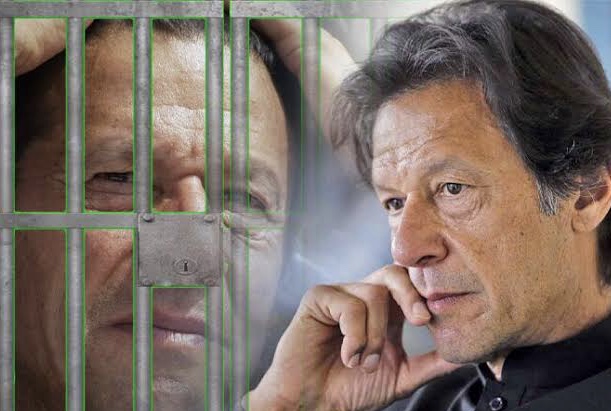
For months, there have been speculations about Imran Khan’s fate behind the high walls of Adiala Jail in the garrison town of Rawalpindi where he remains imprisoned since 2023. But the question took a darker turn when the military establishment abruptly shifted its rhetoric as well as actions. After keeping Khan incommunicado for weeks by denying even routine family visitations, the Army has now begun portraying him as a security threat of unprecedented scale.
On December 5, in a sharply worded press conference, Director General of the Inter-Services Public Relations (DG ISPR) Lt. Gen. Ahmed Sharif Chaudhry delivered something far more political than any uniformed official should be comfortable pronouncing: he accused the former prime minister of being a “matter of national security,” a “delusional” leader working in “deep collusion” with foreign actors.
For an institution whose leadership has spent decades insisting on its political neutrality, not that there appeared any given their actions, this was something extraordinary. The Army did not merely criticize a political figure, but declared Imran Khan a national security threat. It is difficult to read such language as anything other than a preparation to shape public opinion before the state contemplates something irreversible. Pakistan’s military spokesmen have long been prone to sweeping condemnations of adversaries, but the intensity, timing, and vocabulary now being deployed against prime minister feels ominously different.
The accusation that Mr. Khan wrote to the International Monetary Fund urging it to halt financial engagement with Pakistan, the insinuation that he encouraged “civil disobedience” and non-payment of electricity bills, and, most seriously, the claim that he directed supporters to “target” the Army’s leadership constitute a narrative engineered to portray him not simply as a political rival, but an existential enemy of the state. What is striking is not whether Army’s allegations against Khan are objectively provable given Pakistanis know well that truth has rarely constrained the military’s political ambitions, but rather why the establishment feels compelled to publicly build a case right now. The last time something like this happened was under Gen. Ziaul Haq against Zulfikar Ali Bhutto and everyone knows how that turned into.
Part of the answer lies in timing. Pakistan is no longer simply managing dissent; it is reordering the very architecture of the state. As the military centralizes power, constitutional checks have been amputated one amendment at a time. Judicial independence has been hollowed out. Other political parties, often willing accomplices, have little incentive to resist. In such an environment, the figure who refuses to bow becomes not merely inconvenient but intolerable.
To understand why the military felt the need to drop even the pretence of impartiality, one must look at the dramatic transformation underway within Pakistan’s political and constitutional architecture. Under Army Chief Field Marshal Asim Munir, the military has embarked on the most ambitious power consolidation project in decades in the last three years. What began after the May 9, 2023 protests with the expansion of military courts to try civilians has now morphed into a full-blown restructuring of the state itself. The 26th Constitutional Amendment (October 2024) extended the tenures of the service chiefs across the Army, Navy, and Air Force, eliminating uncertainty around leadership renewal and enhancing institutional continuity in the Army’s favour. But it was the 27th Amendment, passed in November 2025, that fundamentally reconfigured Pakistan’s civil–military equation. It abolished the Joint Chiefs of Staff Committee, replaced it with the position of Chief of Defence Forces, to be concurrently held by the Army Chief, and effectively subordinated the other services under one office. In a nuclear-armed state with a history of military rule, that consolidation is not merely bureaucratic; it is structural.
Simultaneously, the judiciary, which for long was touted as a democratic bulwark against creeping political entrenchment of the military has been reshaped. First, its governance mechanisms were refashioned (26th Amendment). Then, Supreme Court powers were diluted by the recent creation of a Federal Constitutional Court (27th Amendment). This is not mere influence. It is systemic absorption.
Despite these transformations, one obstacle has stubbornly endured: Imran Khan. He remains, by most accounts, the most popular political figure in Pakistan. His party, which has been repressed, splintered, and blocked electorally, still retains vast grassroots following. For a military trying to secure lifetime authority, a leader with mass legitimacy is a direct threat.
Other political parties have chosen a more convenient path. Pakistan Muslim League-Nawaz and Pakistan People’s Party, historically adversaries of military dominance, have now become facilitators of constitutional engineering, trading democratic principle for short-term political advantage. Their acquiescence clears the path for the Army. Only Mr. Khan and his Pakistan Tehreek-e-Insaf (PTI) stands outside this arrangement.
Which brings us back to the recent press conference. By designating Mr. Khan a national security threat, the military is not merely attacking his reputation; rather, it is constructing a moral and political foundation upon which the state could justify extreme measures, including the possibility of execution. Such rhetoric helps contain public outrage before it erupts. It tells citizens that the state is acting reluctantly, compelled by a danger that only it fully understands. Because, in countries with fragile institutions like Pakistan, executions are rarely announced but prepared through such manoeuvrings.
For decades, Pakistan’s generals have governed from behind a curtain of denial when not in power through direct coup d’états. They intervened, but insisted they were not intervening. They shaped governments but claimed they were merely “facilitating democracy.” Now, that performance has ended. The uniform seems to be stepping onto the political stage without disguise.
The significance of this shift should not be underestimated. When a military stops pretending, it stops needing permission. When it openly criminalizes popular political leaders, it removes the final brake on its power. Pakistan is now at that precipice. And the most alarming part of the Army’s latest messaging is how carefully choreographed it seems: foreign collusion, national betrayal, internal threat, economic sabotage. These are not random allegations. They are elements of a legal and psychological template historically used to eliminate political enemies. As such, this campaign against Mr. Khan is no spontaneous outburst. It is calculated, sequential, and increasingly extreme. It aims not only to discredit him, but to normalize the idea that removing him, through legal pretexts or through execution, will be a matter of national necessity.
Pakistanis have seen this logic before, and they know where it leads. The difference is that today, the military is not acting in the shadows but speaking in the language of open justification. That should terrify anyone who still believes Pakistan’s future lies in civilian rule. The Army may not yet have decided what it will ultimately do with Imran Khan. But one thing is clear that it is preparing the public emotionally, politically, and morally for a step it once would have feared to take. And if that step comes, no one will be able to say they were not warned.
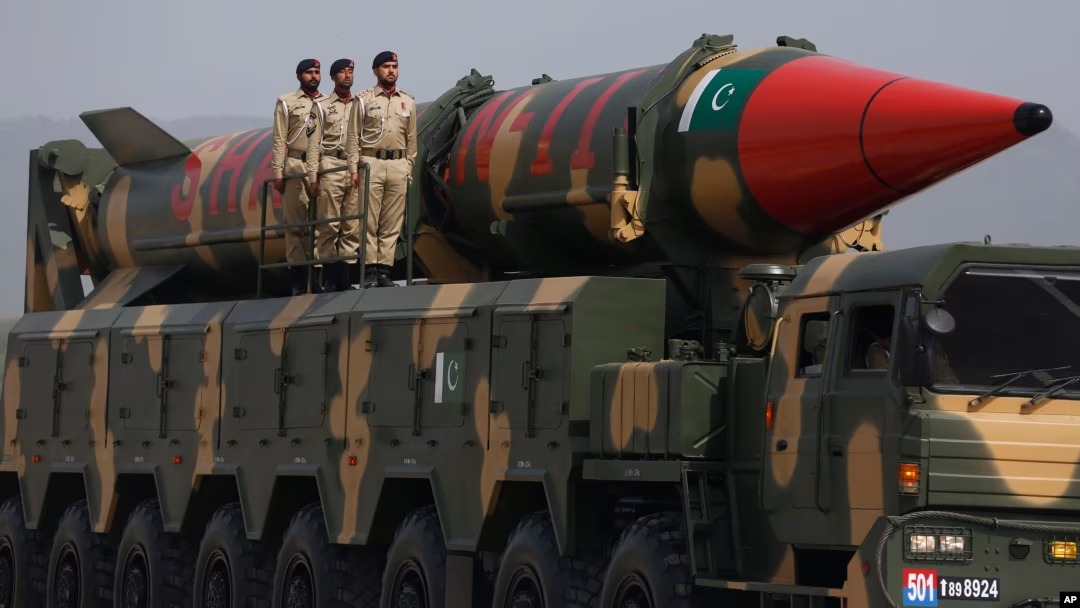
In a move that could recalibrate the fragile balance of power in South Asia, the United States has added Pakistan to its list of buyers for the AIM-120 Advanced Medium-Range Air-to-Air Missile (AMRAAM). This modification to an existing US arms contract with Raytheon represents more than just a defence transaction — it signals a potential rearmament of Pakistan’s air power at a time when the region’s security situation remains precarious.
Pakistan’s inclusion in the programme, valued at over $2.5 billion, revives a defence partnership that had largely stagnated following years of strained relations with Washington. For Pakistan, whose air force still relies heavily on its fleet of American F-16 fighter jets, the acquisition of these advanced BVR (beyond-visual-range) missiles marks a major technological enhancement. For the region, however, it raises troubling questions about stability, deterrence, and the risk of escalation between nuclear-armed rivals.
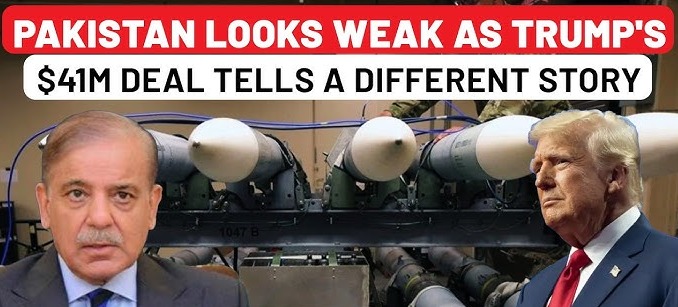
The AMRAAM, capable of engaging targets at distances beyond 150 kilometres, offers precision, speed, and a “fire-and-forget” capability that allows pilots to disengage immediately after launch. In purely technical terms, it’s a formidable addition to any air force. But in Pakistan’s context, such a system has far-reaching strategic implications.
The country’s military establishment has long pursued parity with India, despite a stark economic gap and persistent domestic crisis. Its historical record of aggressive posturing, coupled with its military’s disproportionate influence over foreign policy, makes the AMRAAM deal far more than a routine upgrade. What appears to be an innocuous arms agreement could, in reality, alter the regional deterrence equation.
South Asia’s air domain has always been sensitive — each technological advance on one side compels a countermeasure from the other.
When India demonstrated its indigenous Astra BVR missile system, it underscored its growing self-reliance and capability to defend its airspace. Pakistan’s response, however, has been to seek external suppliers to maintain parity rather than pursue domestic innovation. The AMRAAM deal thus reflects a continuation of dependence — and a willingness by Washington to overlook the destabilising consequences of arming a military whose strategic ambitions have often undermined peace.
This renewed US–Pakistan engagement also revives old anxieties about the nature of their security relationship.
Historically, American arms transfers to Pakistan have been justified on counterterrorism or defence cooperation grounds, only for those weapons to later be used to posture against India. The F-16 fleet itself, originally supplied under similar premises, became a central tool of Pakistan’s conventional deterrent against its eastern neighbour. The reintroduction of the AMRAAM into this equation risks encouraging the same behaviour — a renewed confidence in coercive diplomacy backed by advanced weaponry.
The timing of this deal is particularly concerning. Pakistan faces one of the most severe economic crisis in its history, coupled with a volatile political environment and a military establishment struggling to maintain control over internal security. Rather than focusing on domestic reform and stability, the country’s leadership appears intent on modernising its military arsenal. This suggests a misalignment of priorities — a pattern familiar to observers of Pakistan’s civil-military dynamics, where the pursuit of military parity often overrides social and economic needs. From a regional security perspective, this missile deal could reintroduce an element of uncertainty into South Asia’s deterrence environment.
India and Pakistan have fought multiple wars, experienced countless border skirmishes, and nearly stumbled into escalation after the Balakot air strikes in 2019 — an episode where Pakistan’s F-16s, armed with earlier versions of the AMRAAM, were already involved. The introduction of more advanced missile variants, such as the C8 and D3, only increases the lethality of potential confrontations.
Critics of the deal in policy circles argue that the US risks repeating historical mistakes. For decades, American support for Pakistan’s military has produced short-term tactical cooperation but long-term instability. Each wave of arms assistance has strengthened the military’s hand internally, often at the expense of democratic governance. It also emboldens the institution to act as an independent power centre — one that wields foreign policy and national security decisions without civilian oversight.
By rearming Pakistan under the guise of modernization, Washington may inadvertently empower an institution that has repeatedly destabilized both its own society and the broader region. For India, the development underscores the enduring asymmetry of US policy in South Asia.
While Washington describes New Delhi as a “strategic partner”, the continuation of military aid to Pakistan introduces contradictions into that narrative. It complicates India’s strategic calculus, forcing it to divert resources toward countering Pakistan’s enhanced air capabilities even as it focuses on its maritime and northern borders. The US, in attempting to maintain influence over both South Asian powers, risks playing both sides — a balancing act that history suggests is unsustainable.
Beyond the India–Pakistan dynamic, the broader concern lies in the precedent this sets. If Pakistan’s procurement of advanced missiles is seen as a reward for engagement with Washington, it could encourage other regional actors to pursue similar deals to maintain balance. This could accelerate an arms race in one of the world’s most militarized regions. At a time when global powers are emphasizing restraint and dialogue in conflict-prone zones, the decision to expand missile sales in South Asia sends the opposite signal.
There’s also the issue of technology security. Pakistan’s track record in protecting advanced military systems has been questioned repeatedly, with concerns about unauthorized access and proliferation. Given the country’s history of nuclear proliferation through networks linked to A Q Khan, Western analysts have often urged caution in transferring sensitive defence technologies. The AMRAAM deal, despite its conventional nature, revives those anxieties — particularly as Pakistan continues to cultivate military partnerships with China and Turkey.
If history is any guide, such arms transfers rarely deliver stability. Instead, they create new dependencies and embolden military adventurism. Pakistan’s leadership has frequently leveraged its geostrategic location to secure Western military aid, only to later pursue policies contrary to US interests. Whether during the Cold War, the Afghan jihad, or the post-9/11 era, the pattern has been consistent: tactical alignment followed by strategic divergence. The AMRAAM deal risks perpetuating that cycle under a new label of “modernization”.
The ultimate casualty of this arrangement could be peace itself. South Asia remains a nuclear flashpoint, with a long history of crisis triggered by miscalculation. In such an environment, the infusion of more advanced air-to-air missiles doesn’t enhance deterrence — it compresses decision times and raises the risks of escalation. Each side, perceiving the other as emboldened, responds with heightened alertness and counter-measures. In that sense, the AMRAAM sale isn’t merely an arms deal; it’s a strategic signal that could unravel years of cautious restraint.
Washington’s rationale may be to preserve leverage in Islamabad, but the cost could be high. By reinforcing the Pakistani military’s capabilities at a moment of internal weakness, the US risks enabling a security apparatus that has historically prioritized confrontation over cooperation. The world has seen how easily tactical weapons superiority can morph into strategic recklessness — and in a region where two nuclear-armed neighbours share a disputed border, that is a gamble no one can afford.
Ultimately, the AMRAAM deal represents a missed opportunity. Instead of encouraging Pakistan to invest in stability, reform, and regional confidence-building, it reinforces old patterns of militarization. For a country that has yet to reconcile its internal political divides or economic fragility, the pursuit of cutting-edge missiles is not a symbol of strength but of misplaced priorities.
As South Asia stands on the edge of renewed tension, the world must recognise that peace cannot be built on firepower. True stability will only come when states are disincentivized from pursuing weapons superiority and are encouraged to pursue transparency, restraint, and dialogue. The AMRAAM sale to Pakistan does the opposite — it arms a volatile region and emboldens the very forces that thrive on instability. And in doing so, it risks turning South Asia once again into one of the most dangerous theatres of modern geopolitics.
–IANS
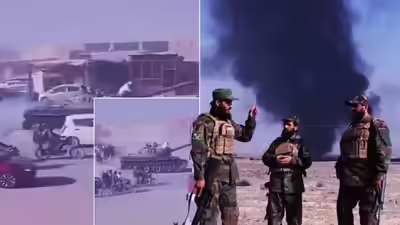
-Arun Anand
On the intervening night of October 7-8, Pakistan Army suffered one of its deadliest blows in recent months when eleven of its soldiers, including two senior officers, were killed in an anti-militancy operation in Khyber Pakhtunkhwa’s Orakzai district. According to a statement from Inter-Services Public Relations (ISPR), Lt. Col. Junaid Tariq, 39, and his second-in-command, Major Tayyab Rahat, 33, were killed during an intelligence-based operation (IBO) against Tehreek-e-Taliban Pakistan (TTP) militants.
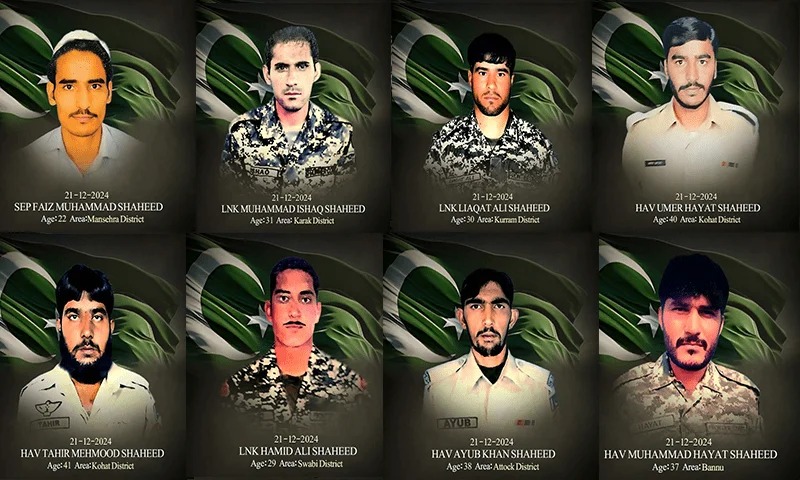
Now, barely 24 hours later, in another statement, ISPR revealed that another young officer, 30-year-old Major Sibtain Haider, was killed in another firefight in Dera Ismail Khan. The loss of these many soldiers in mere two days highlights the resurgence of militancy across Pakistan’s restive northwest and Balochistan. It reveals an uncomfortable truth that while its soldiers bleed on the frontlines, Pakistan’s powerful military leadership remains increasingly busy in managing internal politics, governance and diplomacy instead of its delegated responsibility of national security.
These recent deaths add to a steadily rising tally of military casualties in Pakistan’s long and exhausting counterinsurgency wars. What began two decades ago as an ambitious campaign to “cleanse” the tribal belt of militants has evolved into a grinding cycle of violence that Pakistan has never truly escaped. Since launching “Operation Azm-i-Istehkam” in June last year, which was supposed to be comprehensive campaign to reassert state authority in militancy-infested regions in the country’s hinterland, the military has claimed frequent “successes” in neutralizing insurgents. However, the numbers tell another story.
According to a recently released report by the Pakistan Institute for Conflict and Security Studies (PICSS), Pakistan witnessed 212 militant attacks in August and September alone, which resulted in 135 deaths beside injuries to nearly two hundred. More significantly, among the dead were 61 security personnel, which is nearly triple the number of militants killed during anti-insurgency operations. The ratio exposes a deeply troubling imbalance that far from being on the defensive, militant outfits like the TTP and Islamic State’s Khorasan affiliate (IS-K) have grown more emboldened and well-equipped.
Parallel data from the Centre for Research and Security Studies (CRSS) reinforces the bleak picture. “In just three quarters,” CRSS noted, “2025 has proven nearly as deadly as all of 2024, with 2,414 fatalities recorded compared to 2,546 for the entire year before. With a quarter still remaining, 2025 is on course to surpass last year’s toll.” If the trajectory holds, this could be Pakistan’s bloodiest year in a decade.
The figures are symptomatic of a deeper institutional malaise. Pakistan’s Army, which is inarguably the most powerful institution in the country and has for decades served its de facto decision-maker, is increasingly distracted due to its non-military functions. Under Chief of Army Staff Field Marshal Asim Munir, who took command in November 2022, the military’s attention has been directed more toward managing Pakistan’s politics and external relations than securing its own soil.
Instead of focusing on the country’s hinterland in KPK and Balochistan where militants and insurgents have reasserted their presence, the top brass in Rawalpindi has been preoccupied with stabilizing a floundering civilian government, brokering deals with foreign creditors, and navigating Islamabad’s fragile ties with Washington, Beijing, and Riyadh. Asim Munir himself has appeared as much a statesman as a soldier by not only negotiating financial lifelines, leading diplomatic engagements, and, in many ways, functioning as Pakistan’s parallel prime minister.
But this expanding political role has come at a cost. While the Army’s leadership remains entangled in governance and foreign policy, its counterterrorism machinery has been stretched thin as well as demoralized.
Such military causalities will only add to the worsening morale of soldiers.
While the militant violence has resurged across Pakistan’s peripheries, with TTP re-establishing its shadow administrations in parts if KPK and a new generation of Baloch insurgents targeting military convoys, economic projects, and Chinese infrastructure linked to the China-Pakistan Economic Corridor (CPEC), the state’s response has been both predictable and ineffective. Rawalpindi and Islamabad has responded with more military operations, more checkpoints, more rhetoric about “national resolve.”
For those living under the shadow of this militarised system in KPK and Balochistan, Pakistan Army’s presence has always been “less like protection” and more like suppression and occupation. Despite such a reality, the country’s security establishment has never shown any willingness to confront the political roots of this instability. They continue to overlook how the decades of militarized governance have alienated communities and deepened distrust between the centre and the periphery.
While soldiers die on the frontlines, the Army’s headquarters in Rawalpindi remains entrenched in civilian affairs. Field Marshal Munir has been instrumental in shaping Pakistan’s political transition after the fall of Imran Khan’s government, ensuring a pliant civilian administration led by Prime Minister Shehbaz Sharif. The Army’s imprint, which was shadowy earlier, over the judiciary, media, and bureaucracy has grown heavier than ever.
In economic policy, too, the military’s footprint is unmistakable. Army Chief has been instrumental in establishing the Special Investment Facilitation Council (SIFC), which aimed at attracting foreign investments into the country. Even foreign policy has become a military domain with Asim Munir regularly visiting abroad to countries like United States and China besides Gulf countries. He is not only eclipsing the role of a foreign minister but is growingly demonstrating himself to the world as the most important power centre of the country. This over-centralization of power has weakened civilian institutions, stifled accountability, and blurred the line between national defense and political engineering.
Pakistan’s security doctrine has, for a long time, demonstrated external fixation on India and Afghanistan, whom it has blamed for its recurrent security failures. However, today Pakistan’s most serious threats lie within. The persistence of homegrown militancy in KPK, ethno-nationalist insurgency of Balochistan, and sectarian violence across the country indicates a failure of security doctrine.
Though it conceived Operation Azm-i-Istehkam, like many of its predecessors, as a show of force, its failure to contain militancy demonstrates the reluctance of the Army to deal with its own policy contradictions. For decades, Rawalpindi tolerated “good” and “bad” militants, a legacy of decades of sponsorship of various proxies given its regional ambitions. Now its attempts to fight them without addressing the ideological and institutional complicity that sustained them is akin to treating symptoms while ignoring the disease.
The growing toll of military casualties are a reminder of this cost, symbolizing the futility of a security policy mired in political distraction. For years, Pakistan’s generals have justified their political dominance as a bulwark against instability. Yet the rising body count suggests the opposite as the more the Army entrenches itself in the levers of governance, the less secure the country becomes.
As the violence escalates, will military continue to be both the ruler and the defender remains to be seen. But the fact remains that the sprawling, unaccountable, and politically entangled empire of the generals has hollowed out the very institution it claims to protect. It is the Pakistani soldiers who are paying the price for a leadership that has lost its sense of responsibility.
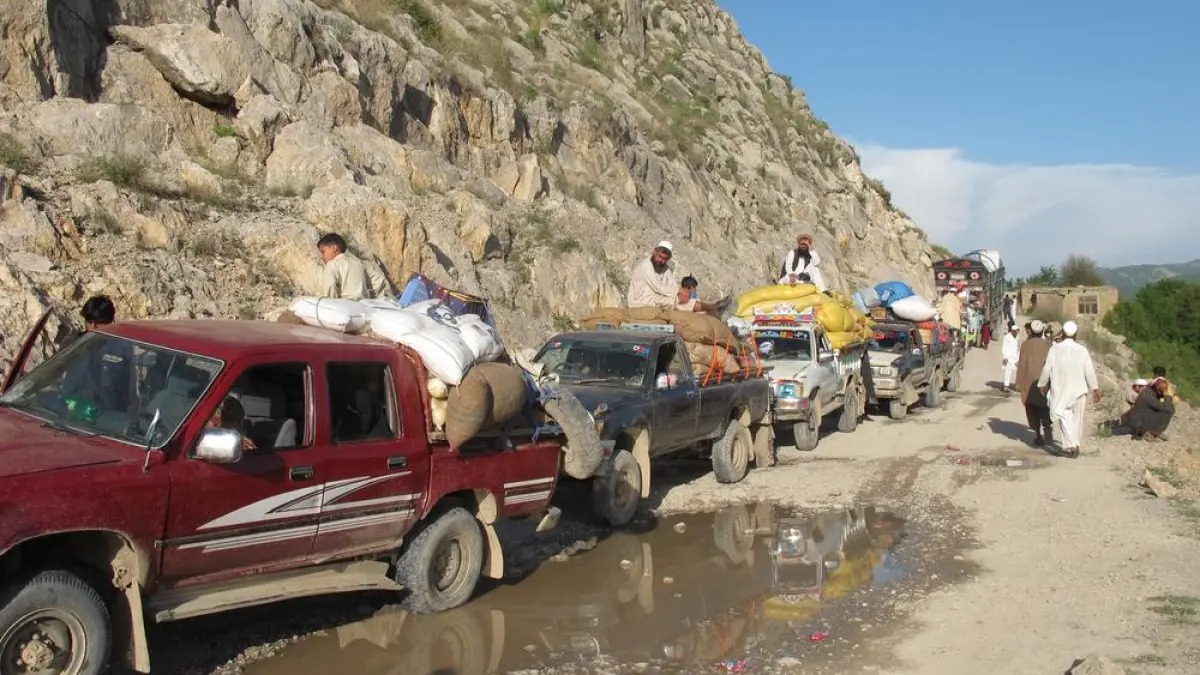
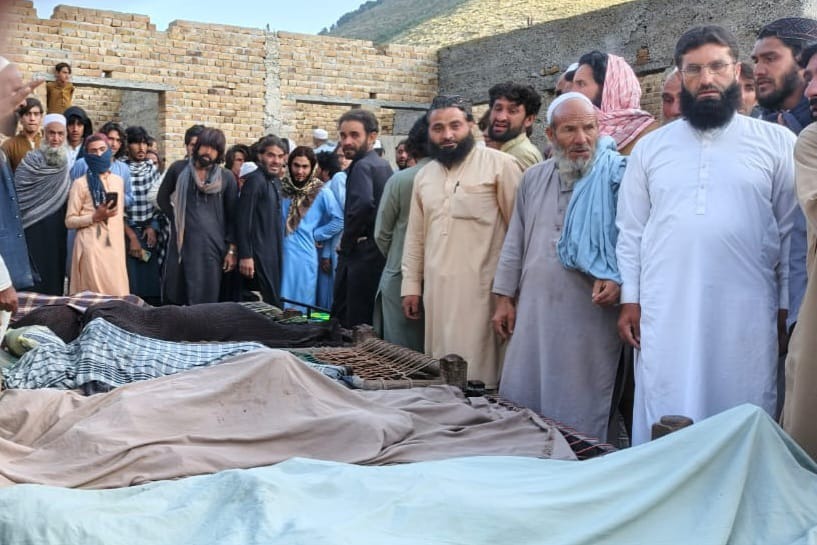
Pakistan is a state that is killing its own people. In October, Pakistani state carried out attacks in Khyber Pakhtunkhwa, where at least 23 civilians, including women and children, were killed.
The Pakistani Airforce bombed residential homes in Tirah Valley; four houses were obliterated in the attack, leaving families buried under rubble. While the military has refused to acknowledge responsibility, local officials have confirmed that the assault was carried out under the pretext of striking Taliban hideouts. In reality, it was innocent civilians who paid the price.
Pakistan Tehreek-e-Insaf leader Iqbal Afridi has accused the army of launching “an attack on unarmed civilians,” making it clear that this was not crossfire, but a deliberate strike. This is not the first time Khyber Pakhtunkhwa has been forced to bleed for Islamabad’s wars. The region has been turned into a battlefield for decades, starting with Pakistan’s decision in 1979 to use the tribal belt as a staging ground for anti-Soviet jihad.
Funded by billions of US and Saudi dollars and guided by the ISI, militant groups were trained and sheltered in the same mountains that are now being bombed. When the Soviets withdrew in 1988, these groups did not dissolve; they entrenched themselves deeper. Following the US invasion of Afghanistan in 2001, waves of fighters crossed into Pakistan, bringing instability and bloodshed. By the late 2000s, the Tehreek-e-Taliban Pakistan had formed, headquartered in precisely the same districts now devastated by airstrikes. Islamabad claims these operations are meant to fight terrorism, but the evidence shows otherwise.
Human Rights Watch and Amnesty International have repeatedly documented how Pakistan’s campaigns in the tribal belt rely on indiscriminate bombardment, extrajudicial killings, and collective punishment. In 2009, the military’s offensive in South Waziristan displaced over half a million people. In 2014, the so-called Operation Zarb-e-Azb uprooted nearly a million more. In both cases, airstrikes leveled entire villages. The Bureau of Investigative Journalism, tracking drone strikes and Pakistani air raids, has estimated that thousands of civilians—including women and children—were killed in Pakistan’s tribal belt between 2004 and 2018 alone. Yet official records often describe these deaths simply as “terrorist casualties,” erasing the reality of who was actually killed.
The humanitarian toll is staggering. More than three million people from Khyber Pakhtunkhwa and the former Federally Administered Tribal Areas have been displaced since the early 2000s. Camps remain overcrowded, underfunded, and neglected, with families living without basic healthcare, schooling, or clean water. Entire generations of Pashtun children are growing up under the shadow of fighter jets and drones. For them, the Pakistani flag does not symbolize protection but fear. Every bombing plants deeper resentment, feeding the very militancy Islamabad claims to be fighting. Studies by conflict-monitoring groups confirm that civilian killings by state forces correlate with higher rates of insurgent recruitment.
Put simply, Pakistan is manufacturing the enemies it then claims to battle. The silence from Islamabad is perhaps the most damning evidence of impunity. After the Tirah Valley strike, no government minister stepped forward with an explanation. No inquiry was announced. No reparations were promised to families who had lost their homes and loved ones.
This pattern is consistent: when the Pakistan Air Force bombed villages in North Waziristan in 2014, killing scores of civilians, no independent investigation followed. When artillery fire hit refugee camps in Kurram Agency in 2008, Islamabad dismissed reports as “enemy propaganda”. Each massacre disappears from public record, erased by the military’s tight control of media narratives. The ethnic dimension cannot be ignored. Most victims of these operations are Pashtuns, a community that has long been treated as second-class within Pakistan.
The Pashtun Tahafuz Movement (PTM) has consistently raised its voice against extrajudicial killings, enforced disappearances, and indiscriminate airstrikes, but its leaders are harassed, arrested, and silenced. The military’s branding of entire Pashtun populations as “terrorist sympathizers” has created a system where civilian lives are seen as expendable. When bombs fall on Pashtun villages, Islamabad’s ruling elite in Lahore and Islamabad barely notice. What makes this even more hypocritical is Pakistan’s double game with militancy. For decades, Islamabad sheltered groups like the Afghan Taliban and the Haqqani Network, providing them safe havens while cracking down on local Pashtuns under the banner of counter-terrorism. Even today, international analysts point out that Pakistan differentiates between “good Taliban,” who serve its strategic goals, and “bad Taliban,” who challenge its authority.
This cynical distinction means that the full weight of military power is directed not against insurgents but against civilians caught in the middle. The result is what we saw in Tirah Valley: dead women, dead children, and a government that pretends nothing happened. The cost of Pakistan’s militarized policies is not limited to its borders. Every time Islamabad bombs its own civilians, it destabilizes the wider region. Refugees flee into Afghanistan, straining already fragile systems there. Cross-border violence escalates, feeding cycles of retribution. International jihadist networks use these massacres as propaganda, pointing to them as proof of state brutality.
Pakistan’s actions, instead of containing militancy, export it across South and Central Asia. International silence only deepens the tragedy. Western governments that routinely criticize human rights violations in other countries remain muted when Islamabad bombs its own villages. Pakistan markets itself as an indispensable ally in the “war on terror,” but the reality is darker. This is the same state that nurtured militant networks for strategic depth, the same military that sheltered the Afghan Taliban leadership, and the same intelligence apparatus that played a double game for decades. Today, it justifies civilian massacres under the cover of counterterrorism while demanding international aid and legitimacy.
The 23 killed in Tirah Valley are not collateral damage. They are the latest victims of a system that views its own people as targets. From Waziristan to Swat, from Bajaur to Khyber, the pattern is the same: bomb first, deny responsibility, and move on without accountability. The cycle will continue until Pakistan dismantles its militarised policies, ends indiscriminate air campaigns, and begins treating the people of Khyber Pakhtunkhwa as citizens instead of enemies. The families who lost everything in a single airstrike do not need more empty rhetoric about security. They need justice, acknowledgement, and the right to live without fear of their own army. And until that happens, the truth remains stark and unavoidable: Pakistan is a state that is killing its own people.
–IANS
– Arun Anand
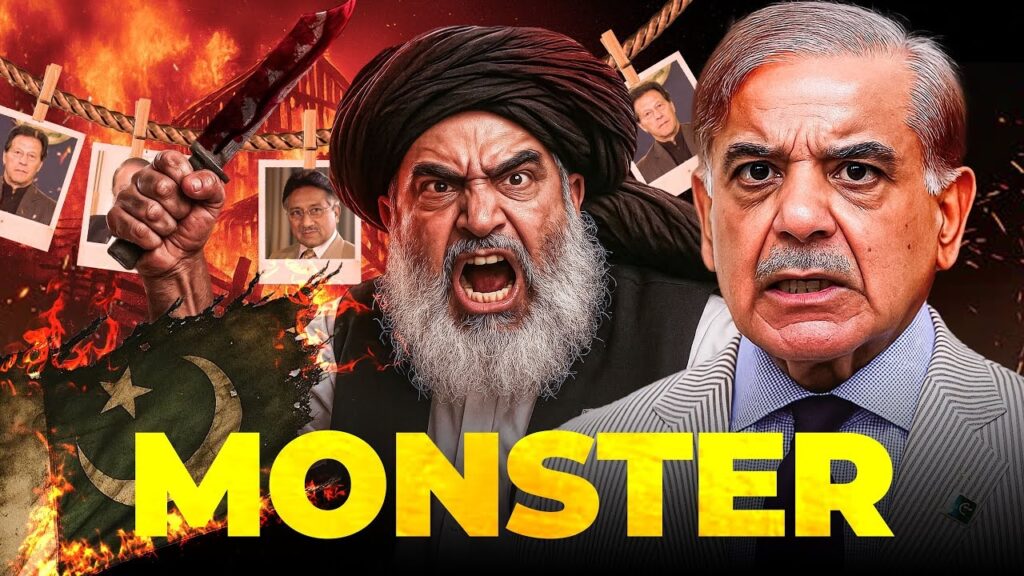
There is a dark irony unfolding in South Asia: Pakistan, long accused of nurturing militant groups as tools of regional influence, is now locked in open conflict with Afghanistan over the very monsters it helped create. The war Islamabad now wages on Afghan soil, under the pretext of destroying the Tehreek-e-Taliban Pakistan (TTP), is in many ways a war against its own reflection. For decades, Pakistan cultivated militant networks for strategic depth, funded radical religious infrastructure, and tolerated extremist ideologies under its nose. Now, those networks have turned inward, destabilizing its own borders and forcing it into the position of aggressor, violating Afghanistan’s territorial integrity and further endangering a region already trembling under the weight of instability. The roots of this crisis reach back to the 1980s, when Pakistan became the staging ground for the anti-Soviet jihad in Afghanistan. With U.S. and Saudi funding, the Pakistani military and its intelligence arm, the Inter-Services Intelligence (ISI), trained tens of thousands of fighters, funneled weapons through the tribal areas, and radicalized a generation in the name of religion and nationalism. This vast militant infrastructure did not disappear after the Soviet withdrawal—it metastasized. By the 1990s, Pakistan supported the rise of the Afghan Taliban, viewing them as a proxy to ensure a friendly regime in Kabul and to deny India any foothold. That same policy of weaponizing extremism spilled back into Pakistan’s own territory, where groups that once served Islamabad’s ambitions turned rogue, seeking to impose their own version of Islam by force.
The TTP emerged in 2007 as a coalition of various Pakistani militant factions. Its founding leader, Baitullah Mehsud, was a product of the tribal belt in Waziristan, trained in the same jihadist ecosystem Pakistan had helped sustain for decades. Initially tolerated as a buffer against local insurgencies, the TTP began to challenge the Pakistani state directly, attacking military convoys, police installations, and schools. From 2007 to 2024, TTP attacks have killed more than 85,000 Pakistanis, including civilians and soldiers, according to Pakistan’s own counterterrorism statistics. Yet the irony is inescapable: the group’s ideology, recruitment networks, and funding channels are all descendants of the very militant infrastructure that Pakistan’s military establishment built, nurtured, and exploited.
In recent years, Islamabad has sought to portray itself as the victim of cross-border terrorism, arguing that the TTP now operates from sanctuaries in Afghanistan. There is truth in the claim that many TTP fighters fled across the Durand Line after Pakistan’s military offensives in 2014 and 2017. But the more fundamental truth is that these sanctuaries exist only because Pakistan drove them there after years of manipulation and failed peace deals. Now, when the TTP stages attacks on Pakistani soil, Islamabad responds with airstrikes and artillery fire across the border, violating Afghan sovereignty and causing civilian casualties. In March 2025 alone, more than 40 civilians were reported killed in air raids in Khost and Paktika provinces. In September, Pakistani strikes near Nangarhar and Kunar killed at least 60 people, including women and children, according to Afghan local authorities. The toll is rising monthly, and the conflict risks spiraling into a wider confrontation between two nuclear-armed neighbors. The cost to human life is staggering. Since August 2021, when the Taliban regained power in Kabul, more than 1,200 people have died in Pakistan-Afghanistan border clashes, including 380 civilians.
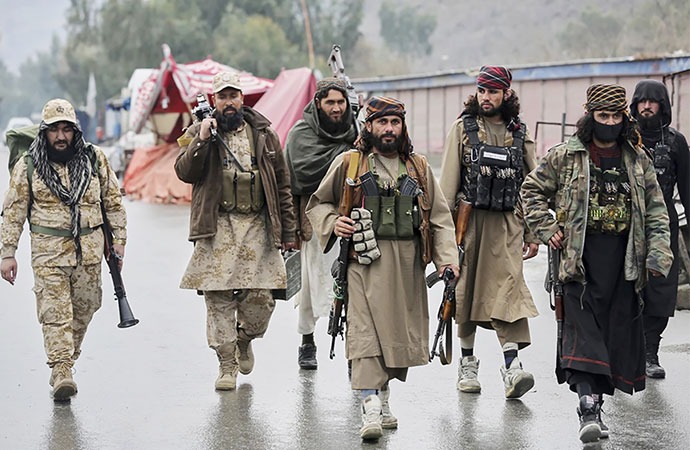
Over 600,000 Afghans have been displaced from eastern provinces due to Pakistani bombardment, while thousands of Pakistani civilians living in frontier districts have fled their homes because of TTP incursions. Trade routes between Torkham and Spin Boldak have been repeatedly closed, crippling the livelihoods of thousands of traders. The border, once porous but functional, has turned into a militarized zone of suspicion and fear. Afghan officials accuse Pakistan of acting like an occupying power, while Islamabad justifies its actions as “preventive counterterrorism.” But there is nothing preventive about indiscriminate bombing. Every missile that lands on Afghan soil deepens the resentment of ordinary Afghans and fuels the anti-Pakistan sentiment that militants thrive upon. At the core of this escalation is Pakistan’s refusal to confront its own culpability. The TTP was not born in a vacuum; it was engineered by decades of policy that saw militant groups as assets. Pakistan’s military establishment has long differentiated between the “good Taliban,” who operate in Afghanistan and serve Islamabad’s regional interests, and the “bad Taliban,” who attack within Pakistan. This cynical dichotomy has collapsed.
Fighters once trained for operations in Afghanistan have turned their guns inward, angry at Pakistan’s cooperation with the United States and its repression of Islamist networks. The same madrassas that produced Taliban ideologues in the 1990s continue to churn out young men steeped in extremist ideology. The result is a conveyor belt of radicalization that Pakistan itself struggles to turn off. Economically, the blowback has been disastrous. The war on terror, combined with Pakistan’s internal insurgency, has cost the country over $150 billion in lost GDP since 2001. Foreign investment has fled. Security spending consumes nearly 20% of Pakistan’s federal budget, leaving little for education, health, or infrastructure. Inflation has soared, unemployment is at record levels, and public trust in the military—the country’s most powerful institution—is crumbling. For ordinary Pakistanis, the state’s obsession with controlling Afghanistan through militant proxies has produced nothing but perpetual insecurity and poverty. The narrative that Pakistan is itself a victim of terrorism rings hollow when one remembers that it was Pakistan’s own state machinery that created, sheltered, and armed the very groups now tearing it apart.
Afghanistan, meanwhile, suffers the consequences of Pakistan’s militarism. Its fragile economy, already devastated by sanctions and international isolation, is further strangled by border closures and bombings. Afghan villages in Khost, Paktia, and Kandahar have been hit multiple times by Pakistani airstrikes that claim to target TTP hideouts but often strike homes and mosques. The death toll in Afghanistan since Pakistan began its cross-border operations in 2022 has surpassed 2,000, including hundreds of women and children. Each attack drives a deeper wedge between the two nations and pushes Afghanistan closer to resentment, revenge, and radicalization. In the absence of legitimate international mediation, these tit-for-tat escalations could ignite a full-blown war, one that would destabilize the entire region. The implications for South Asia’s peace are dire. With India and Pakistan already locked in a frozen hostility, any further militarization of the Pakistan-Afghanistan border threatens to open another front in the regional security crisis. The influx of refugees, cross-border militant flows, and smuggling networks will exacerbate tensions across Central Asia. China, which has invested billions in the China-Pakistan Economic Corridor, faces growing insecurity in its western projects. Iran, too, fears the spillover of militancy into its eastern provinces. South Asia’s peace, already hanging by a thread, could unravel completely if Pakistan continues to externalize the consequences of its own policies.
The argument that Pakistan is the epicenter of global militancy is not mere rhetoric—it is borne out by data. Of the world’s twenty most active terrorist groups identified by international monitoring agencies in 2024, at least six originated or operate primarily from Pakistani soil. Pakistan remains the only country where three distinct Taliban movements—Afghan Taliban, Pakistani Taliban, and various splinters—coexist, often with overlapping logistics and ideological networks. From Lashkar-e-Taiba and Jaish-e-Mohammed to the Haqqani Network and TTP, these groups share the same genealogical tree: nurtured by Pakistan’s security apparatus under the illusion of strategic control. The result is a self-perpetuating cycle of violence that has not only consumed Pakistan but also undermined peace from Kabul to Kashmir.
Pakistan’s strategy of plausible deniability—funding, training, or tolerating militants and then denying responsibility—has reached its end. The international community increasingly sees Pakistan not as a victim of terrorism but as a hub of it. Its actions in Afghanistan—airstrikes, cross-border raids, violations of sovereignty—expose its desperation to contain a monster that no longer obeys. The TTP’s resurgence is the final proof that Pakistan’s policy of using terrorism as an instrument of statecraft has imploded. The creator has lost control of its creation.
The tragedy is that ordinary Pakistanis and Afghans pay the price. In both countries, generations have known nothing but war, displacement, and loss. The children of the madrassas and refugee camps, born into poverty and indoctrination, become the cannon fodder for wars they never chose. Every time a bomb falls, another cycle of vengeance begins. The only way to end this is for Pakistan to dismantle the infrastructure of extremism it has built—its militant networks, ideological nurseries, and covert funding chains—and to accept that peace cannot be achieved through manipulation or force. The conflict between Pakistan and Afghanistan is thus not just a border dispute or a counterterrorism campaign. It is the culmination of decades of duplicity—a nation at war with the ghosts it raised. Pakistan created the monastery of militancy, nourished it with ideology and money, and now finds itself devoured by its own creation. The flames burning along the Durand Line are not just consuming Afghan villages—they are consuming Pakistan’s own moral legitimacy, its economy, and its future. Until Pakistan confronts this truth, peace in South Asia will remain a mirage, forever out of reach, flickering behind the smoke of wars that never end.
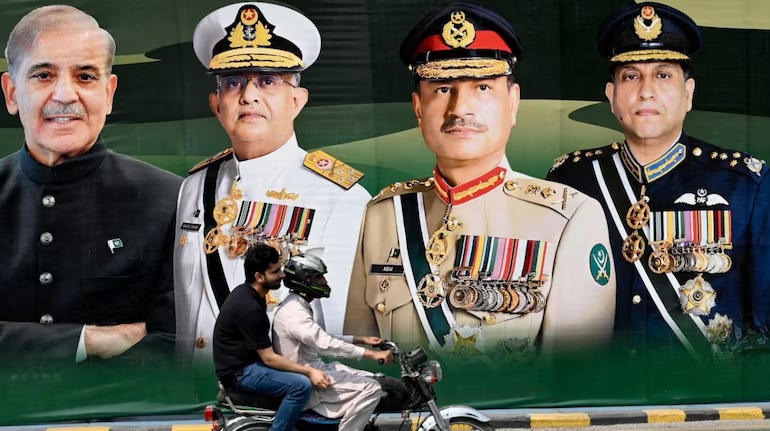
Pakistan’s latest constitutional drama has exposed, yet again, the hollowness of its so-called democracy. But the tragedy this time didn’t unfold with tanks rolling down Constitution Avenue or generals announcing martial law on primetime television.
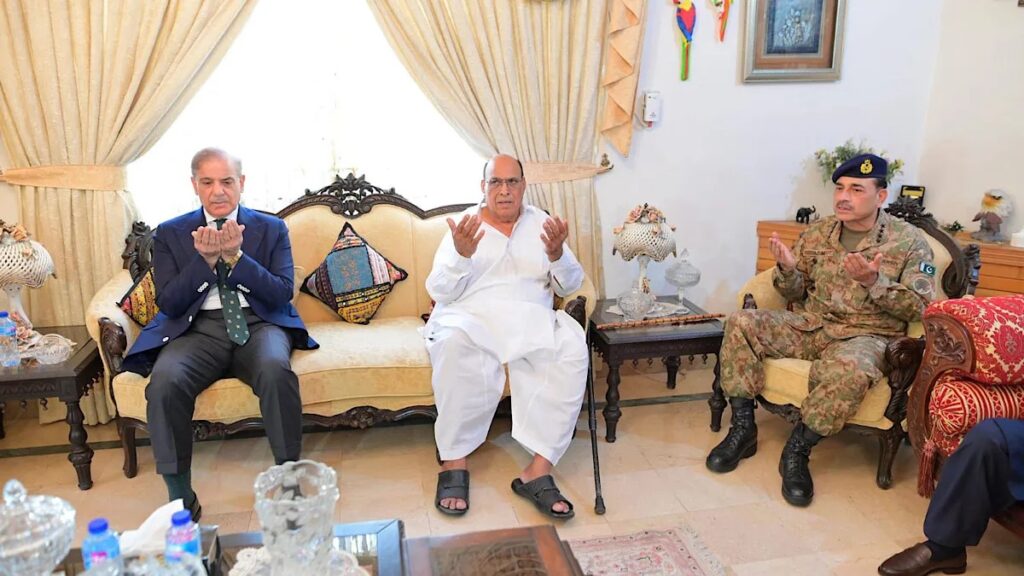
The country has witnessed something even more disturbing: a slow, polished, paperwork-driven coup carefully designed to look respectable. Pakistan’s parliament, already known for its obedience to the military, has quietly fortified the uniformed institution that has dominated the country since 1958.
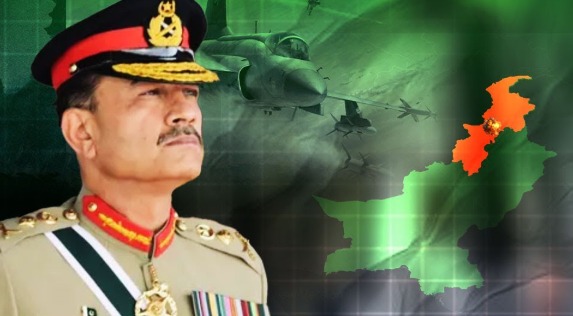
At the centre of this political theatre is General Asim Munir, elevated to a newly created super-post that sits above every elected institution, and in practice, above the Constitution itself. What has happened is not surprising to anyone familiar with Pakistan’s power structure. The Army has never truly relinquished control; it has only changed its methods. But Munir’s takeover is notable for how meticulously it has been wrapped in constitutional language. He enjoys a position with sweeping authority over all branches of the armed forces, legal immunity, and insulation from judicial review.
For a country already ranked 117 out of 140 in the World Justice Project’s Rule of Law Index and described by Transparency International as having “deep structural corruption,” this formalisation of military supremacy is nothing short of catastrophic.
Munir did not need to send soldiers to raid government buildings. He didn’t even need a dramatic televised coup. Instead, he relied on a parliament weakened by internal divisions and terrified of the Army’s retaliation.
Pakistan’s opposition remains fragmented, with party leaders cycling between prison and exile depending on the mood of the generals. The ruling coalition, desperate for military blessing, pushed through amendments at lightning speed—amendments that create a centralised military command and strip courts of any real oversight over the top brass. This is not a correction. It is a coronation.
Munir himself is hardly a figure of national triumph. His record is marred by failure and controversy. During the May 2023 border flare-up with India, reports from within Pakistan’s own security circles criticised his assessments as “overconfident and strategically weak.”
Instead of accountability, he was promoted—first to Army Chief and now to this constitutionally fortified post. A general who struggled in a limited confrontation is now positioned above the civilians he was supposed to protect. This isn’t just ironic; it is dangerous.
Pakistan’s pattern is painfully predictable. Whenever its democracy shows signs of independence, the military intervenes—openly in 1958, 1977, and 1999, or covertly through engineered court decisions, political intimidation, and backroom deals in the 2000s and 2010s. Now the Army has discovered an even more sophisticated strategy: legislate the coup rather than announce it. The consequences are far-reaching.
First, the judiciary has been effectively declawed. Pakistan’s courts have historically wavered between complicity and resistance, sometimes validating coups (as in the 1958 “Doctrine of Necessity”) and sometimes pushing back against military excess. But with new legal shields protecting the top military office, the courts can do little more than observe silently. Any attempt to challenge military decisions becomes a constitutional dead end.
Civil society doesn’t fare better. Lawyers, journalists, and students have already faced crackdowns over the years, from the 2017 forced disappearances of reporters to the arrests of activists during the 2022–23 political turmoil.
According to Human Rights Watch, enforced disappearances in Pakistan number in the “thousands,” many linked to the military’s intelligence agencies—agencies Munir himself once headed.
Now, empowered with legal endorsement, the military can operate with even greater impunity, creating an atmosphere of fear that suffocates dissent. A society where criticising the Army is treated like a crime cannot grow intellectually or politically. It can only stagnate.
Pakistanis celebrating this constitutional shift—arguing that strong military control will stabilise the country—are ignoring the last 75 years of evidence. Each era of military dominance has ended with economic mismanagement, international isolation, and political collapse.
During Ayub Khan’s rule, growth was accompanied by massive inequality that sparked unrest. Under Zia-ul-Haq, extremism and sectarian violence flourished. Musharraf’s era began with promises of liberal reform but ended with institutional decay and the 2007 crisis. Munir’s turn will be no different.
A military that has never succeeded in creating long-term stability now has even fewer constraints. International consequences are inevitable. Pakistan’s economy is already devastated – inflation hovered around 24 per cent in 2023, external debt crossed $125 billion, and the country begged the IMF for yet another bailout to avoid default. Investors will not pour money into a state where real power lies with generals immune from accountability.
Global lenders rarely trust governments overshadowed by the military, especially when the military has a history of meddling in economic deals for its own benefit.
Pakistan’s powerful military conglomerate, the Fauji Foundation, already controls billions in commercial assets—from cement to fertilisers to food—making it one of the few armies in the world that behaves as a corporate empire. The veneer of legality will not reassure anyone. Aid will come with harsher conditions. Trade partners will hesitate.
Diplomatic pressure will grow. And, as always, the burden will fall not on the generals living in Rawalpindi’s protected compounds but on ordinary Pakistanis struggling to survive.
For India, this is not a comforting development. A Pakistan run more tightly by the Army is a Pakistan that makes decisions through a single institutional lens—reactionary, paranoid, and narrow. Civilian leaders tend to favour negotiation and crisis management; military leaders tend to favour escalation and strategic signalling. An India looking for a stable neighbour will instead face a Pakistan that grows more insular, more insecure, and more unpredictable.
What makes this constitutional coup particularly tragic is that Pakistan had glimpses—small, fragile ones—of democratic revival in the past. Civilian governments occasionally wrestled back authority. Grassroots movements pushed for accountability. Courts sometimes asserted independence. But Munir’s elevation is designed to extinguish those possibilities.
Once constitutionalised, military supremacy becomes far harder to challenge. Munir may think he has secured his legacy by rewriting the rules in his favour, but history has not been kind to Pakistan’s generals. From Ayub’s humiliating resignation to Yahya’s disgrace after 1971, to Musharraf living in exile, Pakistan’s military rulers eventually fell, only after inflicting long-term damage on the nation. This chapter will likely follow the same script.
Ultimately, Pakistan must confront a painful truth: the Army is not the guardian of the state; it is the weight dragging it down. A country where elections change faces but not power structures is not a democracy. A country where criticism of the uniform is treated as treason cannot claim to be free. And a country where one general can legally place himself above the political system cannot pretend to function like a modern nation.
Pakistan may have legalised this coup, but legality does not equal legitimacy. What has happened is an indictment of the entire political order—a system that allows one man in uniform, backed by an institution addicted to power, to override the will of millions.
History will judge Asim Munir and the Pakistan Army harshly. But the people of Pakistan, already battered by poverty, misrule, and repression, are the ones who will pay the price.
–IANS

– Arun Anand
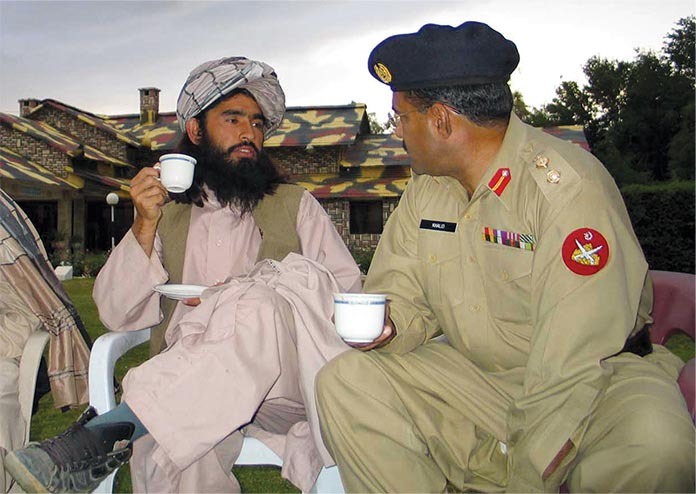
India’s investigation into the bombing of November 10 near Delhi’s Red Fort has peeled back yet another layer of a problem that New Delhi has long warned the world about: Pakistan’s enduring role as a state sponsor and safe haven for jihadist terrorism. Fifteen people have been killed in the attack, carried out just two days after the Jammu and Kashmir Police quietly uncovered a sophisticated terror module operating far from the stereotypical image of gun-wielding militants. This network, led by highly educated professionals including doctors, has now been traced directly back to the Jaish-e-Mohammad (JeM) and transnational Ansar Ghazwat-ul-Hind (an affiliate of Al Qaeda), both Pakistan-based groups fostered by the country’s military establishment.
The arrests mark one of the most troubling cases in recent years — not only because of the carnage in the heart of the Indian capital but because of what they reveal about the evolution of Pakistan’s proxy warfare machinery. A “white-collar” terror module, with operatives embedded in colleges and hospitals, radicalised digitally, guided remotely and transnationally, and supervised by handlers working under the protective umbrella of Pakistan’s security apparatus, underscores how deeply entrenched and globally connected Islamabad’s militant factories remain.
For India, the revelation is hardly surprising. For the international community, it should be alarming. Indian security agencies have now established that the Delhi module’s leaders maintained active communication with Pakistan and Turkey-based controllers ostensibly linked to JeM chief Masood Azhar. If there were any doubts about JeM’s operational revival after years of supposed crackdowns in Pakistan and India’s Operation Sindoor, the Delhi blast should put them to rest. More importantly, the module’s exposure reiterates an uncomfortable truth: despite periodic claims of counter-terror reforms, Pakistan’s soil continues to nurture and export jihadist groups as an instrument of statecraft. Masood Azhar is believed to be living comfortably in Pakistan, protected rather than prosecuted.
The timing of this exposure is equally significant. They come on the heels of Operation Sindoor, India’s unprecedented cross-border strikes on May 6 and 7 targeting terrorist infrastructures across Pakistan-occupied Jammu & Kashmir and inside Pakistan’s heartland besides several military facilities. Among the targets was JeM’s headquarters in Bahawalpur, the Markaz Subhan Allah, where ten members of Azhar’s family and four of his trusted lieutenants were killed. It was acknowledged by his senior jihadi associate Ilyas Kashmiri who is on record stating that Azhar’s family was torn apart by Indian strikes.
What was instructive then was how senior Pakistan Army officers and civilian government officials were present at funerals for Azhar’s aides, thereby exposing Pakistan’s “good” and “bad” distinction of terrorists, which it often invoked to justify selective counterterrorism efforts.It is no secret how Pakistan has used terrorism as a key component of its regional policy since decades. Though it may have started with Afghan Jihad in 1980s, it successively patronised the establishment of a network of India focused groups such as JeM, Lashkar-e-Taiba (LeT), and Hizbul Mujahideen, ostensibly to bleed India at a minimal cost through this proxy war.
Be it the infrastructure for recruitment, training, and indoctrination, it has allowed these groups to thrive under various guises like religious charities, madrasa networks, social welfare groups, and sometimes openly paramilitary outfits. For instance, LeT of Hafiz Saeed is fronted by his Jamatud Dawa charitable organisation. What sets the present moment apart is not the existence of these groups but the brazenness with which they operate under Pakistan’s current military leadership. While Islamabad routinely assures global audiences that terrorist activity has been curbed, evidence on the ground suggests the opposite: terrorist organisations are diversifying their recruitment pools, expanding digital operations, improving financial concealment, and deepening their operational cooperation.
The Delhi module’s composition of educated, professionally accomplished individuals recruited ideologically rather than preying on economically vulnerable ones demonstrates a dangerous shift. These are not fringe radicals but inconspicuous by being embedded in mainstream society, efficient at building clean identities, and less likely to attract suspicion to travel freely and avoid security red flags. This is not the work of rogue actors. It reflects a coherent strategy. This appears to be getting systematised under current Pakistan Army Chief Field Marshal Asim Munir under whom Pakistan is undergoing a dangerous power consolidation by the powerful military establishment. Munir’s actions suggest Pakistan Army’s old reliance on militant proxies returning even as the country itself grapples with heightened levels of extremism from its former proxies like Tehreek-e-Taliban Pakistan (TTP) and Baloch nationalist insurgents.
Under Munir, the military has consolidated power across civilian institutions, tightened its grip on internal dissent, and centralised strategic decision-making. This is exemplified by the recent 27th Constitutional Amendment which provides the legal cover to Asim Munir’s actions by extending him lifetime of immunity as Field Marshal and making him the overall chief of all the armed forces of Pakistan. But on the question of terrorism, the signals have been unmistakable with groups like JeM and LeT still seen as vital instruments of Pakistan’s regional calculus. Moreover, Munir’s public rhetoric has grown more hawkish, echoing the confrontational doctrines of previous generals who viewed militancy as a cost-effective extension of state policy.
In that context, the presence of senior army officials at the funerals of JeM operatives killed during Operation Sindoor was more than symbolism; it was an official endorsement of the terror policy. It signalled to the jihadist ecosystem that Pakistan’s military elite remains committed to the decades-old compact: continue fighting India and, in exchange, receive protection, funding, and freedom of movement. Internationally, Pakistan has mastered the art of performing compliance. It arrests foot soldiers while sparing the leadership. It shutters organisations only to allow them to reappear under new names like The Resistance Front (TRF) for LeT and People’s Anti-Fascist Front (PAFF) for JeM. It serves on the UN bodies on counterterrorism while patronising terrorists through the back door. The aim is not to eliminate terrorism but to manage it by tightening or loosening the tap depending on geopolitical incentives.
Unfortunately, Western governments led by the United States have often been complicit in allowing Pakistan to play this double game by prioritising short-term strategic interests. It has resulted in a perverse equilibrium where Pakistan may suffer from homegrown extremist violence and yet nurtures groups that attack its neighbours simultaneously.As such, the Delhi bombing and the terror module’s exposure should force a reassessment, as a country that cannot or will not dismantle the terror ecosystem responsible for destabilising an entire region cannot be treated as a credible partner in global counterterrorism. It is not merely a domestic law-and-order story of India but a reminder that Pakistan’s terrorist infrastructure remains intact, adaptive, and internationally connected. It is also a warning that Pakistan’s military leadership, despite rhetorical commitments to stability, continues to rely on terrorism as a tool of state policy.
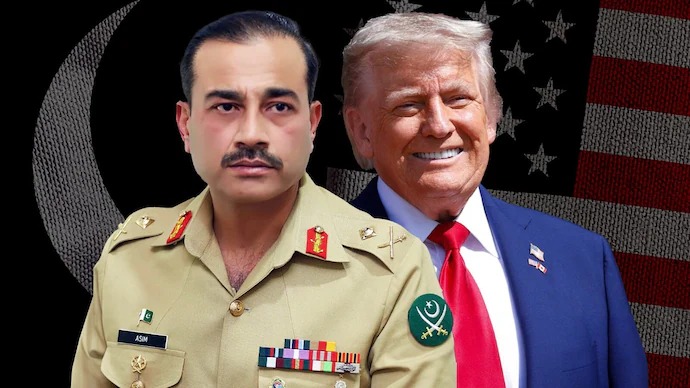
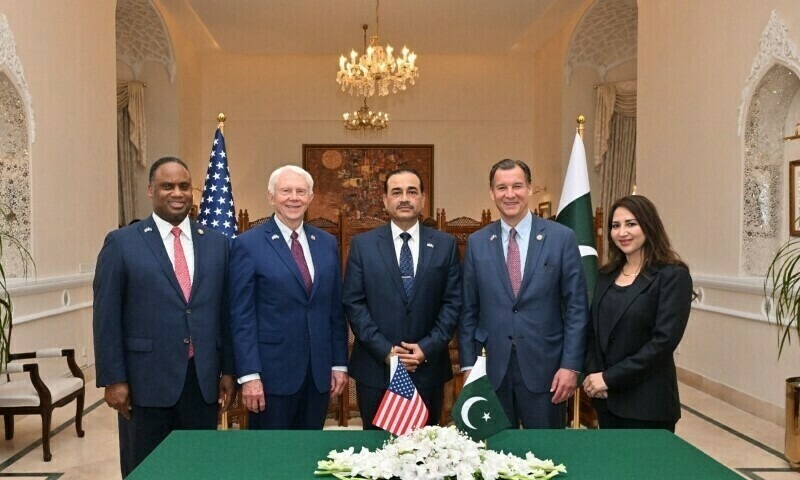
The history of US-Pakistan relations illustrate one of the most paradoxical alliances in modern geopolitics: a superpower that continuously funded, armed, and politically legitimized a state whose security establishment simultaneously fostered the very militant ecosystems that would later threaten American, Indian, Afghan, and global security. This contradiction — rooted in Cold War priorities, sustained through post-9/11 calculations, and shaped by Pakistan’s military-driven strategic doctrines –exposes how international patronage can inadvertently strengthen networks capable of producing catastrophic attacks such as the 2008 Mumbai assault. A deeper examination of this relationship, grounded in historical data and security evidence, raises the critical question of whether similar 26/11-type events could occur again under conditions that remain structurally unchanged. US–Pakistan ties took shape in the early Cold War years, when Washington sought military footholds to counter Soviet influence across Asia.
Pakistan, newly independent and searching for strategic allies, found in the United States a willing patron. Between 1954 and 1965 alone, Washington provided Pakistan more than $2.5 billion in economic and military assistance, with roughly 60% of this aid directed toward the armed forces. American weapons—F-86 Sabre jets, M-47 Patton tanks, artillery systems—quickly transformed Pakistan’s military capacity. However, the deeper impact was institutional — US assistance reinforced the Pakistan Army’s centrality in national politics, undermining civilian authority and contributing to successive military coups. By the time General Ayub Khan seized power in 1958, Pakistan’s military establishment was not only dominant but also deeply embedded in the country’s foreign policy outlook, particularly regarding India. The Soviet invasion of Afghanistan in 1979 further intensified this alliance.
The CIA’s Operation Cyclone, one of the largest covert programs in its history, funneled billions of dollars into Pakistan. Estimates place U.S. contributions at $3.2 billion during the 1980s, matched by roughly the same amount from Saudi Arabia. This funding, channeled largely through Pakistan’s Inter-Services Intelligence (ISI), supported the training and arming of more than 100,000 mujahideen fighters. The intention was clear: turn Afghanistan into the Soviet Union’s quagmire. Yet the consequences were far more expansive. Pakistan’s security establishment selectively supported Islamist factions that aligned with its strategic interests, especially those capable of projecting influence into Afghanistan and later into Kashmir.
The militant infrastructure — the training camps near Peshawar, the radical madrassas in the northwest, the logistical corridors through tribal areas — became permanent fixtures, outliving the Soviet withdrawal. This transformation was not simply collateral damage; it was strategically cultivated.
The Pakistan Army’s doctrine of “asymmetric warfare” against India, combined with its pursuit of “strategic depth” in Afghanistan, created incentives to preserve and deploy militant groups as instruments of foreign policy. Lashkar-e-Taiba (LeT), founded in 1987 with ideological and logistical roots in the Afghan jihad, became one of the primary beneficiaries of this environment. Though the U.S. never directly funded LeT, the broader military-intelligence ecosystem—strengthened through U.S. patronage—allowed LeT to grow into a highly disciplined, militarized organization capable of executing cross-border operations with precision.
After 9/11, the U.S.–Pakistan relationship entered another high-stakes phase. Washington designated Pakistan a “major non-NATO ally,” providing more than $33 billion in aid between 2002 and 2018. Of this, $14.6 billion came in the form of Coalition Support Funds (CSF) meant to reimburse Pakistan for counterterrorism operations. Yet multiple U.S. audits revealed extensive misuse and misreporting.
The Government Accountability Office and Pentagon oversight bodies documented that Pakistan diverted CSF money to purchase conventional military equipment—F-16 upgrades, naval modernization, anti-ship missiles—none of which addressed the counterinsurgency challenges in Afghanistan or the internal militancy problem. Instead, this strengthened the Pakistan Army’s traditional posture against India while leaving intact the selective militant networks that Islamabad deemed assets rather than threats.
The consequences became evident as the Afghan Taliban rebounded throughout the 2004–2018 period. U.S. military commanders repeatedly testified before Congress that Taliban leaders operated from sanctuaries in Pakistan, specifically the Quetta Shura and Peshawar Shura. These safe havens contributed to the deaths of more than 2,400 American soldiers and tens of thousands of Afghan civilians. Despite receiving billions in U.S. aid, Pakistan’s military establishment maintained its dual policy: aggressive action against anti-state militants like Tehrik-e-Taliban Pakistan (TTP), and permissive or supportive behavior toward groups aligned with its external goals, including the Afghan Taliban, Haqqani network, LeT, and Jaish-e-Mohammed (JeM).
This selective approach is not an allegation, but a pattern documented by scholars such as C. Christine Fair, Hussain Haqqani, and numerous U.S. intelligence assessments. The 26/11 Mumbai attack demonstrated the extent to which this militant ecosystem could project violence far beyond South Asia’s battlefield margins. The assault, which killed 166 people over three days, showcased training, coordination, and operational sophistication rarely seen outside state-assisted terrorism. David Coleman Headley, the Pakistani-American operative who conducted reconnaissance for the attacks, admitted in U.S. court that he received training at LeT camps and interacted with individuals connected to Pakistan’s security establishment.
Several planners of the attack, including Zaki-ur-Rehman Lakhvi, operated visibly within Pakistan for years—arrested only under international pressure and often released under opaque judicial processes. U.S. Treasury designations between 2010 and 2018 repeatedly named Pakistan-based LeT operatives, charities, and funding nodes, underscoring the persistent ecosystem that enabled the attack. Pakistan has undoubtedly suffered tremendously from terrorism. Over 70,000 Pakistanis, including civilians and soldiers, were killed in terror violence between 2001 and 2020. Major military operations such as Zarb-e-Azb (2014) and Radd-ul-Fasaad (2017) significantly reduced attacks inside Pakistan by targeting anti-state militants. However, these campaigns maintained the structural distinction between groups that threaten Pakistan internally and those used for external leverage. This dichotomy allowed LeT, JeM, and elements of the Afghan Taliban to survive—even as Pakistan publicly committed to counterterrorism under U.S. and Financial Action Task Force (FATF) pressure.
This selective counterterrorism is central to understanding the ongoing risks of another 26/11-type event. Although Pakistan has taken steps to restrict the activities of certain militant groups, especially under FATF supervision from 2018 to 2022, these measures remain fragmented and reversible. The ideological infrastructure remains largely intact: networks of radical madrassas, veteran trainers from decades of conflict, logistical safe houses, and diaspora-linked financing channels. The organizational DNA of groups like L eT—a disciplined chain of command, military-style training, and operational secrecy—has not been erased. These conditions are far more resilient than tactical bans or symbolic arrests. Moreover, the geopolitical incentives for Pakistan’s security establishment remain largely unchanged. India’s rising global profile—economically, diplomatically, and militarily—intensifies Pakistan’s reliance on asymmetric strategies.
The Pakistan Army’s institutional dominance over foreign policy means these strategies are deeply embedded, not easily abandoned. Even if direct support decreases, passive tolerance or covert facilitation of certain groups can enable them to survive, regroup, or innovate. In an era of drone technology, encrypted communication, and decentralized networks, the possibilities for a future attack are more diffuse and harder to detect.
A 26/11-type event does not require identical conditions; it requires only that a militant group possess the intent, some operational capability, and a permissive or fragmented security environment. Pakistan’s history of selective enforcement creates exactly such an environment. While Islamabad has made commitments under FATF and international pressure, the durability of these reforms remains uncertain. Past behavior—both during and after foreign aid cycles—suggests that once external scrutiny subsides, Pakistan’s security establishment often recalibrates rather than reforms.
The long arc of U.S.–Pakistan relations thus reveal a troubling pattern: American patronage consistently strengthened Pakistan’s military institutions while doing little to align their strategic priorities with global security concerns. This misalignment allowed militant networks to thrive under a shield of deniability. The ecosystem that once produced 26/11 was not an aberration but a by-product of systemic policies, and unless those systems fundamentally change, the risk of future large-scale attacks cannot be dismissed as remote.
–IANS
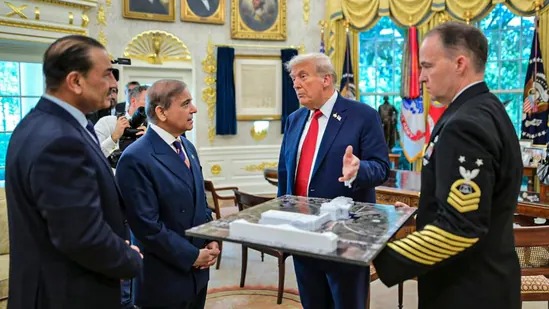
– Arun Anand
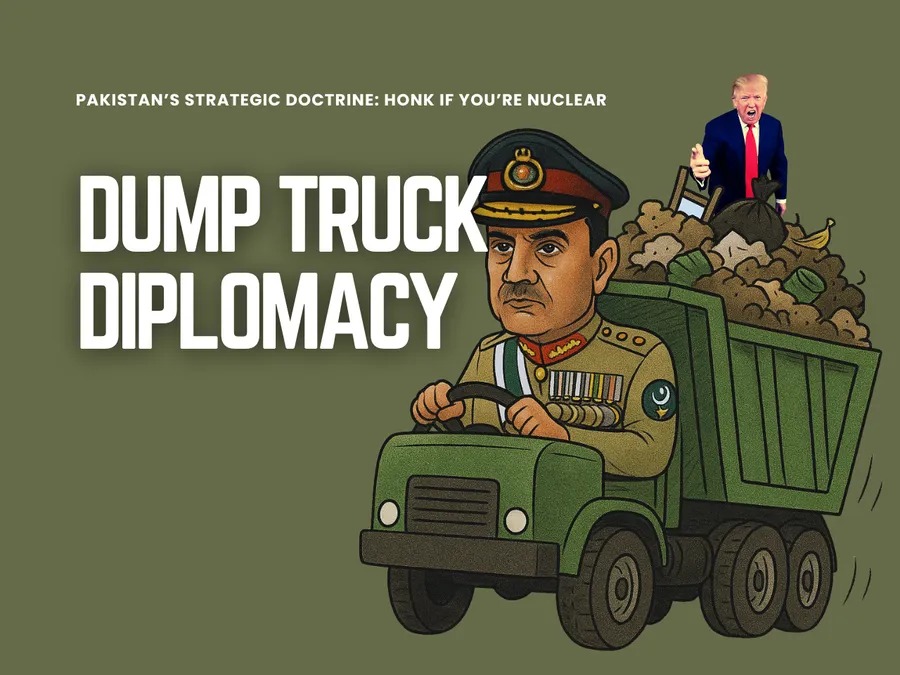
Pakistan’s leaders, both political and military, have long relied on self-serving metaphors to shape the domestic sociopolitical sphere and frame their country’s place in the broader region. Often delivered with a dramaturgical embellishment, these analogies do more than reflect insecurity or national mythmaking. They reveal a deeper strategic mindset in which Pakistan sees value in disruption, leverage through instability, and the cultivation of terrorism as a tool of statecraft.
The latest examples come from Pakistan’s powerful military establishment, which has historically dominated the country’s political and security architecture. It started with Pakistan Army Chief Asim Munir’s interaction with expatriates in Florida, United States, in August this year, wherein he deployed a comparison that captured headlines for its brazenness. “India is a shining Mercedes coming on a highway like a Ferrari,” he said. “But we are a dump truck full of gravel. If the truck hits the car, who is going to be the loser?”
On its surface, such remarks appeared to emphasize resilience: that Pakistan as a lumbering truck may not be glamorous, but it can endure any difficulty and overcome any obstacle. Yet the real significance of this ironical analogy lies elsewhere. It implies that Pakistan retains the capability as well as readiness to cause strategic disruption, even at great cost to itself, and in doing so shape regional outcomes. The metaphor glorifies collision as an equalizer. It suggests that while India surges economically and diplomatically, Pakistan’s relevance lies in its ability to destabilize.
A parallel metaphor that is being increasingly used by the country’s political and military elite describes Pakistan as a “railway engine”, that is portrays it on a slow, traditional, yet persistent mode of progress. The image is meant to frame Pakistan as foundational to South Asian stability, chugging along in contrast to India’s sleek modernization. Implicit in this imagery is the claim that the region’s momentum, direction, and safety can still be both set and derailed by Pakistan’s choices.
Such analogies may seem rhetorical to common masses and yet contain within them a longstanding doctrine of purposeful disruption that Pakistan has employed in the last several decades. It is based on its decades-old strategic worldview wherein it has consistently valorized confrontation, framing India as an existential threat, and more domestically more significant objective of positioning proxy-terrorism as a legitimate extension of state power.
Such a propagandistic rhetoric has found currency amidst Asim Munir’s sweeping consolidation of authority through constitutional amendments to expanded control over the judiciary, nuclear command, and internal security. This narrative push is designed to reinforce his martial narrative that Pakistan may be economically battered, politically unstable, and diplomatically isolated, but it remains capable of inflicting damage that forces global attention.
As such, while Pakistan’s establishment may dress its messaging in fresh metaphors, the underlying doctrine has barely evolved. Since the 26/11 attacks by ISI supported Lashkar-e-Toiba terrorists in Mumbai, there has been little substantive reckoning within Pakistan about the use of terrorist groups as strategic assets. If anything, the rhetoric of state officials in the years since reveals continuity, not change.
It should be noted that there has been consensus within Pakistani establishment, as exposed by the statements from senior retired generals, political leaders, and religious ideologues, who often reiterate that proxy terrorism can be a “force multiplier” against India. Such an argument has been repeatedly framed as asymmetric necessity given that since Pakistan cannot match New Delhi conventionally, so it must leverage “non-state actors” to disrupt India’s rise even as its own economy falters. It explains why and how terrorist groups like LeT and Jaish-e-Mohammed have been normalized within the socio-political discourse of the country by portraying terrorists as instruments of pressure than what they are: terrorists.
This mindset is reflected not only in Pakistan’s reluctance to prosecute figures like Hafiz Saeed or Masood Azhar, but also in its sustained tolerance of groups that openly espouse cross-border terrorism sold as so-called jihad. And the danger of such rhetoric is not abstract as it has recurrently translated into violence that has spilled far beyond India’s borders. Be it 26/11 attacks of 2008 in India or the 9/11 attacks in the United States in 2001, these showcased how such a mentality that the Pakistani establishment patronises can have devastating human costs.
Just as the 9/11 attacks targeted symbols of American openness and global leadership which the world forever, 26/11 targeted India’s cosmopolitan identity to sow internal discord and disrupt its global economic rise. Therefore, should Pakistan’s leadership continue to present disruption as strategic leverage, as they are doing currently, the risk of mass-casualty attacks would remain unacceptably high.
Seen from such a lens, Asim Munir’s use of analogies like ‘dump truck’ or the ‘railway engine’ are not harmless political theatre. It is a reflection of a national mindset of a country of mismanaged economy, which is unable to compete with rising India in any domain, sees strategic relevance in the threat of sabotage. It is a worldview that sees regional equilibrium not in growth or cooperation but in managed instability maintained through terrorist proxies. And that worldview does not confine risk to South Asia, which is why Pakistan’s analogies matter.
In such a scenario, while India cannot afford any complacency, it makes it implicit on the international community to acknowledge that South Asian terrorism, especially when linked to state sponsorship like Pakistan’s role, poses a threat transcending national borders.
Nevertheless, two lessons stand out. Firstly, there needs to be greater transnational intelligence synergy at the international level. For instance, given that countries like India, the United States, the EU, Israel, Southeast Asian partners, and Gulf states, have a shared interest in tackling terrorism, they would need to bolster real-time intelligence exchange, establish joint tracking of financing networks, and coordinated monitoring of extremist propaganda.
Secondly, diplomatic isolation of terror-sponsoring frameworks is no longer optional. The world must explicitly differentiate between Pakistan as a nation and Pakistan’s security apparatus as a destabilizing actor and shape policy accordingly. This is because civilian government is a façade in that country as it is overwhelmingly dominated by the military establishment.
Therefore, the “dump truck” and “railway engine” analogies may have been meant to project endurance, but they expose a darker truth of Pakistan’s military leadership’s outdated belief that regional power can be exercised through disruption and not development. Unless such a mindset is confronted at political, diplomatic, and strategic levels, the international community should rest assured that its risks will not be borne by India alone.
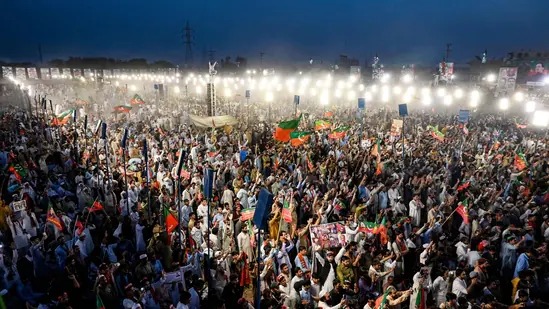
– Arun Anand
When a state alters the rules that govern it, the transformation can arrive with force—or with formality. Pakistan’s 27th Amendment represents the latter: a political restructuring that wields the authority of a coup but cloaks it in legality. Rather than suspending the constitution or dissolving parliament, it reshapes the constitution from within, erasing previous checks on military power. That distinction is crucial—one disrupts the system; the other remakes it. At the heart of this recalibration stands Asim Munir. His promotion to Field Marshal and the proposed establishment of a Chief of Defence Forces position do more than elevate his career—they institutionalize what was long an informal dominance. Unlike Ayub, Zia, or Musharraf, who ruled by toppling constitutions, today’s strategy seeks to embed military supremacy within the constitutional framework itself—ensuring that, in the future, the army can govern without the need to overthrow.
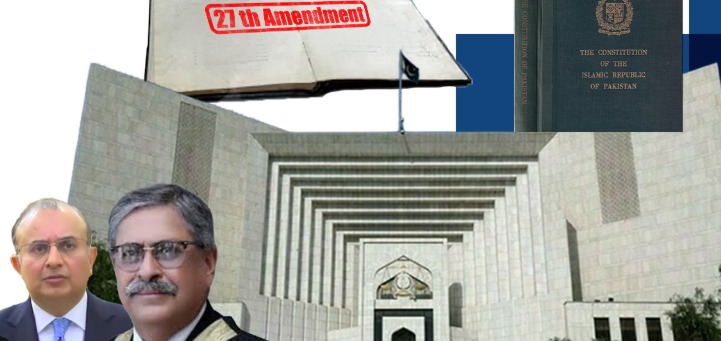
The change is deceptively small in language and vast in consequence. Replace one title with another; place all services under a single command; harden immunities around senior officers; tweak judicial mechanisms so the courts have less room to operate free of executive pressure. Each clause reads like technocratic housekeeping. Taken together, they create a new architecture: an army whose institutional primacy is not merely tolerated but constitutionally protected. That is legal militarism rather than extra-legal rule. This is not an academic quarrel over drafting. It is a political settlement about who counts as the ultimate arbiter of public affairs. Under the old ambiguity, civilian leaders could plausibly claim the last word, even while the military shaped the range of choices behind the scenes. The amendment seeks to collapse that ambiguity in one direction.
Why would civilian parties, visibly weakened and electorally vulnerable at times, agree to such a reconfiguration? The motives are painfully direct. Pakistan’s political class operates in a narrow corridor: economic collapse, fragmented coalitions, a restive opposition, and a media space that oscillates between sensationalism and censorship. Under these pressures, cohabitation with the military promises immediate stability. It keeps riots at bay, opens channels to patronage, and provides a shield against judicial harassment or street mobilisation. Short-term survival, in other words, is a powerful incentive. Yet political survival bought by reliance on the barracks is a pyrrhic achievement. Civilian parties have historically gained legitimacy by standing up to military overreach. Opposition to the establishment, even when risky, has often been the most reliable source of political capital. When a leader defies the generals and survives, that defiance becomes a badge of authenticity. By contrast, parties that appear to defend or normalise the military’s dominance surrender the claim to be an alternative. They transform from contesting forces into managers within a narrower, military-shaped consensus.
This is the arithmetic of erosion. Short-term gains for the party in power can lead to long-term erosion of its moral and political standing. Consent, in this context, is not neutrality; it is a transfer of legitimacy. A constitution stamped by the military’s imprimatur becomes less a shield of pluralism than a vehicle for managed politics. Democracies do not die in dramatic moments alone; they wither when the forms of democracy remain but their essence, the capacity of political actors to challenge and to be challenged on equal footing, is hollowed out. Those who enable this constitutional realignment may imagine that they will keep the benefits: stability, access to resources, and the ability to govern without constant confrontation. But history is unsparing about such bargains. Iskander Mirza appointed Ayub and found himself dispossessed within days. Zulfiqar Ali Bhutto, who navigated the generals’ world, was later tried and executed under military rule. Nawaz Sharif’s flirtation with the military ended in exile. Power that is lent by a stronger institution is rarely returned intact.
The amendment also alters the foundation upon which other institutions stand. The judiciary, already a site of contestation, risks becoming a subsidiary player if a new constitutional forum strips the Supreme Court of powers or if transfer mechanisms for judges are altered to reduce their independence. Provinces that won space under the 18th Amendment see their gains threatened if federal competencies are recentralised or if finances are reconstituted in ways that favour central control. The fragmentation of federal bargains bolsters local grievances, and these grievances become fuel for instability, precisely the outcome the army claims to preempt.
There is a particular irony to the present moment that is worth stressing. Civilian politicians once drew their energy from popular resistance to an overbearing establishment. That very act of resistance could convert electoral weakness into credible leadership. Today, however, many politicians choose acquiescence because the immediate costs of resistance, jail, economic disruption, and the threat of engineered crises look intolerable. They trade a precarious moral authority for a steady foothold in the office. The problem is that this lease rarely extends beyond the lifetime of a political cycle, and its renewal depends on the goodwill of the institution whose favour they bought.
And yet the public mood complicates any neat diagnosis of decline. Ordinary Pakistanis are weary; years of economic pain and political turbulence have dulled their appetite for dramatic confrontation. Some will welcome the promise of order; others will shrug their shoulders. That fatigue provides the ideal conditions for legalised domination: the population tolerates constraint for the promise of relief. But tolerance is not acquiescence; it is the brittle glue that holds an unstable settlement together until it snaps.
When Munir leaves the scene, and he will, as all men do, the institution he helped constitutionalise will remain. The following chief benefits from a script rewritten to favour the uniform, drawing authority from not just force but law. Undoing that script will require more than an election or a public outcry; it will demand a sustained political project that reconstructs constitutional checks, reenergises provincial autonomy, and restores judicial independence. That project is possible but arduous; it requires actors willing to risk more than a short-term office. History’s lesson is stark: military dominance dressed as legality is harder to overthrow than military dominance that operates outside the law. Coups create ruptures; constitutionalised power creates permanence. That permanence is the danger Pakistan now confronts. Civilian leaders may survive one more term by stitching themselves to the armour of the state. But in doing so, they risk leaving their successor a hollowed democracy in which elections occur. Still, choices are preordained, institutions exist in form but not in force, and public legitimacy belongs more to the barracks than to the ballot.
If Pakistan is to reclaim a civilian future, the task is not merely to defeat a law in court or to rally people to the streets. It is to rebuild the conditions under which political actors can contest power on their own terms: functional parties with roots in society, a judiciary that can adjudicate without fear, and provincial institutions that can defend local interests. Without those pillars, the 27th Amendment will not just make one man powerful; it will recalibrate a nation to a default of managed politics, a country where the Constitution still exists on paper but where democracy, clause by clause, has been quietly transformed.
Since his appointment in November 2022, Field Marshal Asim Munir has proved a master practitioner of power consolidation, outpacing even Pakistan’s most notorious military strongmen such as Ayub Khan, Zia-ul-Haq, and Pervez Musharraf. His latest gambit, the proposed 27th Constitutional Amendment, cements that legacy and threatens to formalize Pakistan’s drift into an overt military state.
At its core, the 27th Amendment rewrites Article 243 of Pakistan’s Constitution which details the governing framework of the command of the armed forces (Chapter 2). While, it may appear to be a technical legal change, however, it is, in fact, a crude structural reordering of the Pakistani state in favor of the military establishment that has anyway calling the shots for decades.
Nevertheless, one of the most consequential provisions (clause 5) is the proposed creation of a new office of Chief of Defence Forces (CDF). Under this clause, the Army Chief will automatically assume the role of CDF role, which effectively merges the tri-service command of the army, navy, and air force into one uniformed post. The existing Joint Chiefs of Staff Committee (JCSC), a forum meant to balance inter-service authority, will be abolished.
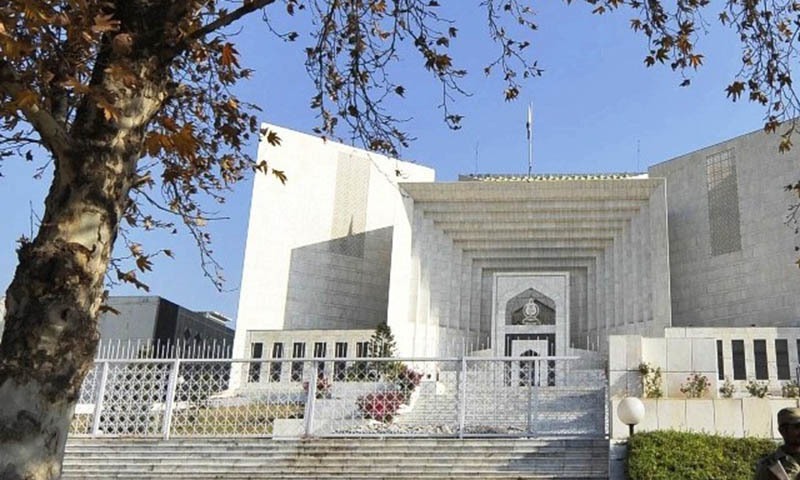
In practical terms, this means all branches of Pakistan’s armed forces will answer to one man, that is Asim Munir. It also conveniently sidelines General Sahir Shamshad Mirza, the current Chairman of the Joint Chiefs and the senior-most general whom the Shehbaz Sharif government bypassed when appointing Munir in 2022.
This clause would mark the first time in Pakistan’s history that the entire military chain of command is legally and constitutionally subordinated to a single officer.
Another major clause (6) under Article 243 transfers effective control of Pakistan’s nuclear arsenal to the Army Chief. The Prime Minister would nominally appoint the Commander of the National Strategic Command (the custodian of nuclear weapons), but only from among “members of the Pakistan Army” and solely on the “recommendation of the Chief of Army Staff concurrently serving as Chief of Defence Forces.”
This wording is not incidental. It ensures that the nuclear command, which has traditionally been supervised by a civilian-led National Command Authority, will now operate entirely under military discretion. Pakistan’s already fragile notion of civilian oversight is being reduced to fiction. With this, Asim Munir not only commands Pakistan’s conventional military forces but also gains exclusive control of its nuclear deterrent.
Perhaps the most extraordinary aspect of the 27th Amendment lies in its provisions for legal protection. Given that the amendment proposes lifetime immunity to the Field Marshal (clauses 7,8,9,10 &11), it practically equates his legal status with that of the President as the Head of the State of Pakistan. In effect, Asim Munir, who was conferred the title of Field Marshal earlier this year, cannot be prosecuted, investigated, or held accountable by any court or parliamentary body for decisions made during or after his tenure.
This is a historic and most consequential departure from Pakistan’s constitutional tradition. Even military rulers like Zia and Musharraf, both of whom seized power through coups, lacked explicit lifetime impunity under constitutional law. However, Munir has, by securing this clause, effectively insulated himself against future civilian pushback or judicial scrutiny, ensuring that any transition of power will not endanger his position or legacy.
Though Pakistan’s history has seen several military rulers institutionalizing their dominance through legal means like Ayub Khan’s rewriting of the 1962 Constitution or Zia-ul-Haq giving the military a permanent political veto by amending Article 58(2)(b), Asim Munir’s strategy is more sophisticated and inarguably more durable. Unlike his predecessors, who relied on overt coups, Munir is using constitutional procedure and parliamentary approval to codify military supremacy. As such, Munir seems to be outdoing the likes of Ayub, Zia, and Musharraf not through coups but by rewriting laws in his own favor.
The Shehbaz Sharif government’s cooperation in pushing this amendment through parliament reveals how deeply Pakistan’s civilian leadership has become dependent on the military’s favor. The Asim Munir-led military establishment has leveraged this vulnerability and extended its control over domestic politics, the economy, and even foreign policy.
By institutionalizing this control through the 27th Amendment, the military no longer needs to rely on backroom manipulation as it can now rule openly, with parliamentary consent.
The conferment of the title “Field Marshal” on Munir earlier this year, following India’s “Operation Sindoor” was the clearest signal of his elevation to the highest power status in the country. It very well echoed self-promotion of Ayub Khan to Field Marshal in the 1960s, when he justified his authority was essential to the country’s national defense.
Munir would do well to remember that Pakistan’s streets which are restless, politically volatile, and steeped in resentment against military domination, though it may dormant now, have a way of humbling even the most entrenched generals. Equally, it is interesting how the country’s political elite, particularly Pakistan Muslim League-Nawaz (PML-N) and Pakistan People’s Party who currently backs Munir seem to have forgotten how such curry favouring of generals have bitten them in the past.
The 27th Amendment marks not just another chapter in Pakistan’s cycle of military dominance but a turning point of the transformation of military supremacy from an unwritten reality into a constitutional fact. Field Marshal Asim Munir may believe he has achieved what his predecessors could not: absolute power with absolute legitimacy. But Pakistan’s history suggests that even the thickest face and the blackest heart cannot shield a ruler from the reckoning that follows hubris.
– Arun Anand