
-Arun Anand
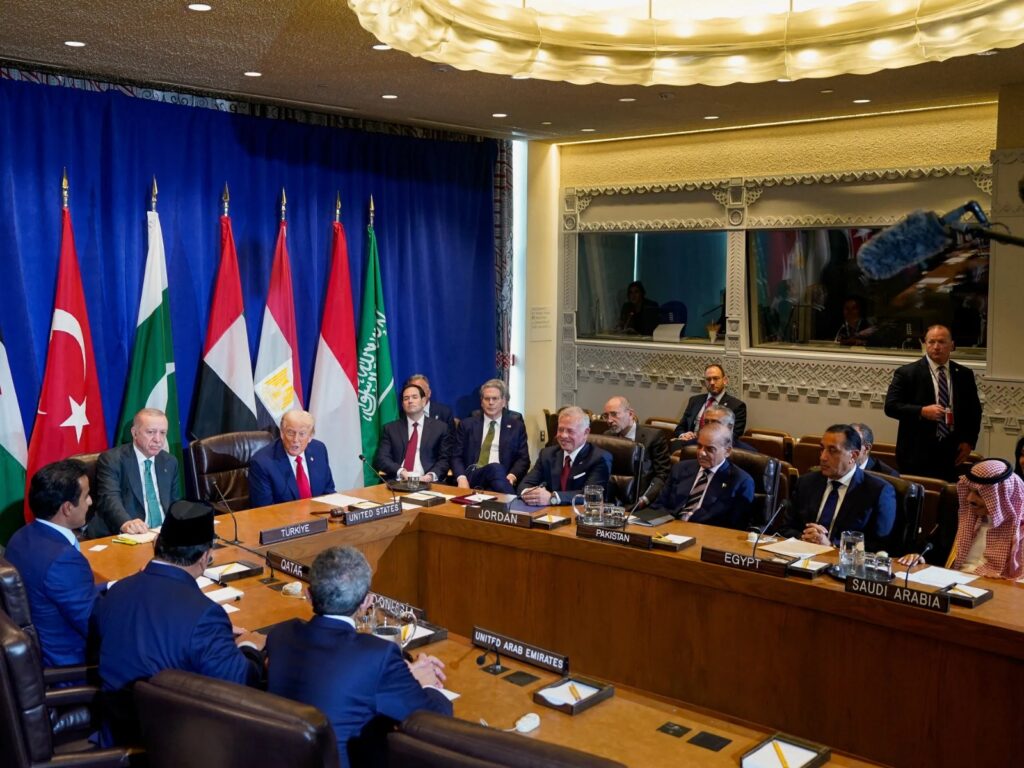
Pakistan has a knack for arriving at the wrong place at precisely the wrong time. When Russia attacked Ukraine in February 2022, its then prime minister, Imran Khan, was seated in the Kremlin, smiling and shaking hands for cameras. And when Saudi Arabia and the United Arab Emirates, Islamabad’s most important Middle Eastern patrons, found themselves at odds over Yemen last week, it was once again caught in the crossfire. This time Emirati President Sheikh Mohammed bin Zayed Al Nahyan was on his hunting trip to Pakistan. These moments are not mere coincidences but rather symptoms of a deeper strategic malaise of a military-dominated foreign policy that repeatedly entangles Pakistan in conflicts it neither controls nor fully understands.
Over the past decade, Pakistan has drifted from being a peripheral player in the Middle East to an increasingly exposed one. As the shift has been shaped by transactional military diplomacy as signified by recent Strategic Mutual Defence Agreement with Saudi Arabia, the result is a country wedged uncomfortably between rival power centers with China and the United States on one axis globally, and Saudi Arabia and the UAE on another at the regional level. While each of its allies expects loyalty, no one offers insulation when loyalties collide.
That collision is now visible in Yemen and most likely in Libya. On December 30, Riyadh announced that it targeted a weapons shipment at Yemen’s Mukalla port, claiming the arms originated from the Emirati port of Fujairah. Riyadh alleged that weapons were destined for the Southern Transitional Council (STC), a UAE-backed separatist group seeking to carve out an independent state in southern Yemen.
It made Pakistan to tread an uncomfortable line. Though Islamabad expressed “complete solidarity” with Saudi Arabia, reaffirming its support for the kingdom’s sovereignty and Yemen’s territorial integrity, what it did not do was just as revealing. Pakistan avoided naming the STC, sidestepped Abu Dhabi’s role in nurturing Yemeni separatism, and refrained from any criticism that might upset the Emirati leadership.
However, it should be known that diplomatic hedging has its limits. On the very morning Saudi Arabia carried out strikes against what it described as Emirati-linked weapons shipments, Pakistan’s prime minister, Shehbaz Sharif, along with senior cabinet members, including Deputy PM and Foreign Minister Ishaq Dar, was meeting Sheikh Mohammed bin Zayed at his family’s palatial estate in Rahim Yar Khan. The optics were ironic with Pakistan professing solidarity with Riyadh while hosting the very leader Riyadh was pressuring militarily. There have been unsubstantiated reports that Saudi Arabia declined a request for a meeting by Pakistan’s powerful army chief, Field Marshal Asim Munir, thereby reinforcing the impression that Islamabad’s balancing act was wearing thin.
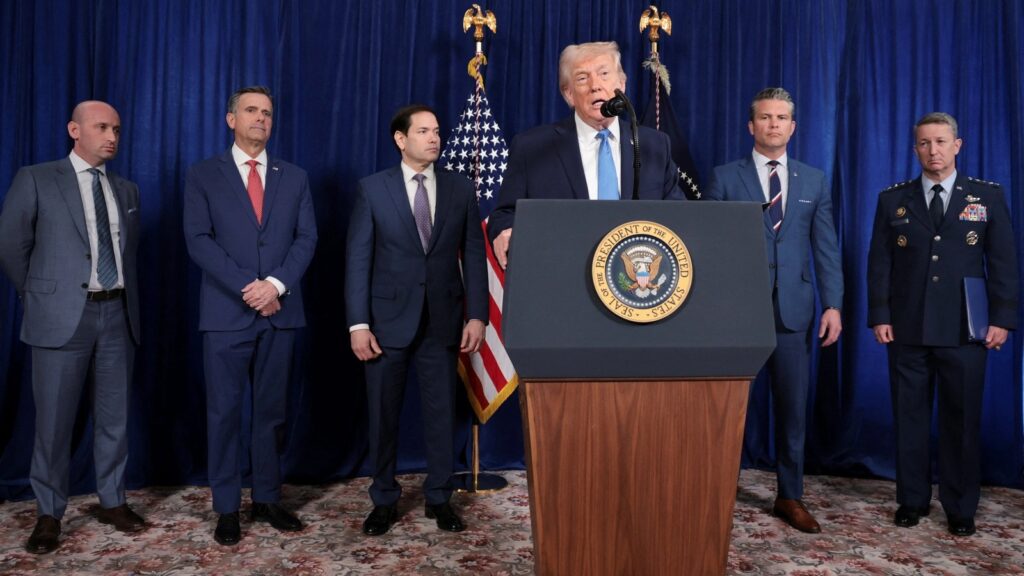
This episode underscored a broader truth that Pakistan was no longer merely navigating Gulf rivalries but was being shaped by them. And nowhere is this more dangerous than in Gaza. As US President Donald Trump pushes his vision of post-war Gaza governance under an international body, he has publicly sought Pakistan’s commitments to contribute troops to his envisioned security or stabilization force for the territory.
For Islamabad, the proposition is fraught with peril as deploying Pakistani troops to the war-battered Palestinian region would not be a neutral peacekeeping mission. As the Gaza stabilisation force would almost certainly involve disarming Hamas, enforcing cease-fire arrangements, and operating under an American or Israeli security framework, such a role would place Pakistan at odds with popular sentiment at home, where sympathy for the Palestinian cause runs deep. Moreover, it would also damage the country’s standing in the broader Muslim world, where participation in what many would view as an externally imposed security regime or forced disarming of what many consider a Palestinian resistance group would be seen as complicity with Israel.
However, if Pakistan Army assumes such a role, it won’t be its first as it has a history of renting its role to the regional players. Pakistani military officers played a role in assisting Jordan’s Hashemite monarchy during the 1970 Black September crisis by helping violently crackdown on Palestinian fighters. The Pakistani contingent in Amman was overseen by Brigadier Mohammad Zia-ul-Haq, who would later seize power in 1977 and rule as a military dictator. That episode left a lasting scar on Pakistan’s image among Palestinians and repeating such a role in Gaza would be exponentially more damaging.
Yet Gaza is not the only front where Pakistan’s Middle East policy is unravelling. On December 21, Army Chief Asim Munir signed what was touted as a $4.6 billion defense deal with Khalifa Haftar in Benghazi, from where the Libyan military strongman controls eastern part of the country through the Libyan National Army (LNA). The agreement reportedly included the sale of JF-17 Block III fighter jets and Super Mushshak trainer aircraft, making it the largest arms deal in Pakistan’s history.
Though the deal on paper signifies Pakistan’s strategic reach, however, in reality, it was a diplomatic misstep of the highest order. Firstly, Libya is a divided country with rival governments governing it in parts. There is Abdul Hamid Dbeibeh’s internationally recognised Government of National Unity (GNU) in Tripoli and then the other, Haftar’s Benghazi-based unrecognised Government of National Stability (GNS). Secondly, Libya remains under an international arms embargo imposed by the United Nations in 2011. Therefore, any major weapons transfer and that too to an unrecognised entity risk undermining of the international law.
This deal does not only fly in the face of UN sanctions; it also puts constrains in Islamabad’s regional policy. By publicly aligning itself with Haftar, Pakistan effectively chose sides in a complex regional proxy contest as the military strongman is backed by the UAE and Egypt whereas the GNU, by contrast, enjoys the support of the United Nations and Saudi Arabia. Islamabad’s outreach to Benghazi thus undercuts its relationship with Riyadh, at precisely the moment when Saudi goodwill is most needed.
These choices cumulatively result in what can be described as a strategic overextension without any strategic clarity. It is evident that Pakistan is trying to achieve a role of indispensability in the region, but forgets that it does not possess the diplomatic leverage for the same. It can offer nothing than renting its military against a price. Its military leadership appears to believe that visibility equals influence, that being “in the room” guarantees relevance. In practice, it has made Pakistan vulnerable to pressure from stronger powers with clearer agendas. And at home, the risks are just as severe. In a country grappling with severe economic crisis, political instability, and militant violence, such a diplomatic overstretching cannot be afforded.
As such, Pakistan is on a path of pursuing a foreign policy driven less by national consensus than by the ambitions of a security establishment which is eager to project power abroad, even as stability at home remains elusive. And if Pakistan continues down this path and gets entangled in Gulf rivalries, is pressured to send troops to Gaza, and aligns with contested actors like Khalifa Haftar, it risks becoming a pawn that a mediator its elite envisions. In the Middle East’s unforgiving geopolitical chessboard, pawns are easily sacrificed.
-Arun Anand
The American-led post-World War II order has been built upon the sustained rhetoric of normativity, which includes democracy, governance, and human rights, but it practises geopolitics in a far older language: utility. Nowhere is this dissonance more visible than in the contrast between how the West treats Venezuela and how it engages Pakistan.
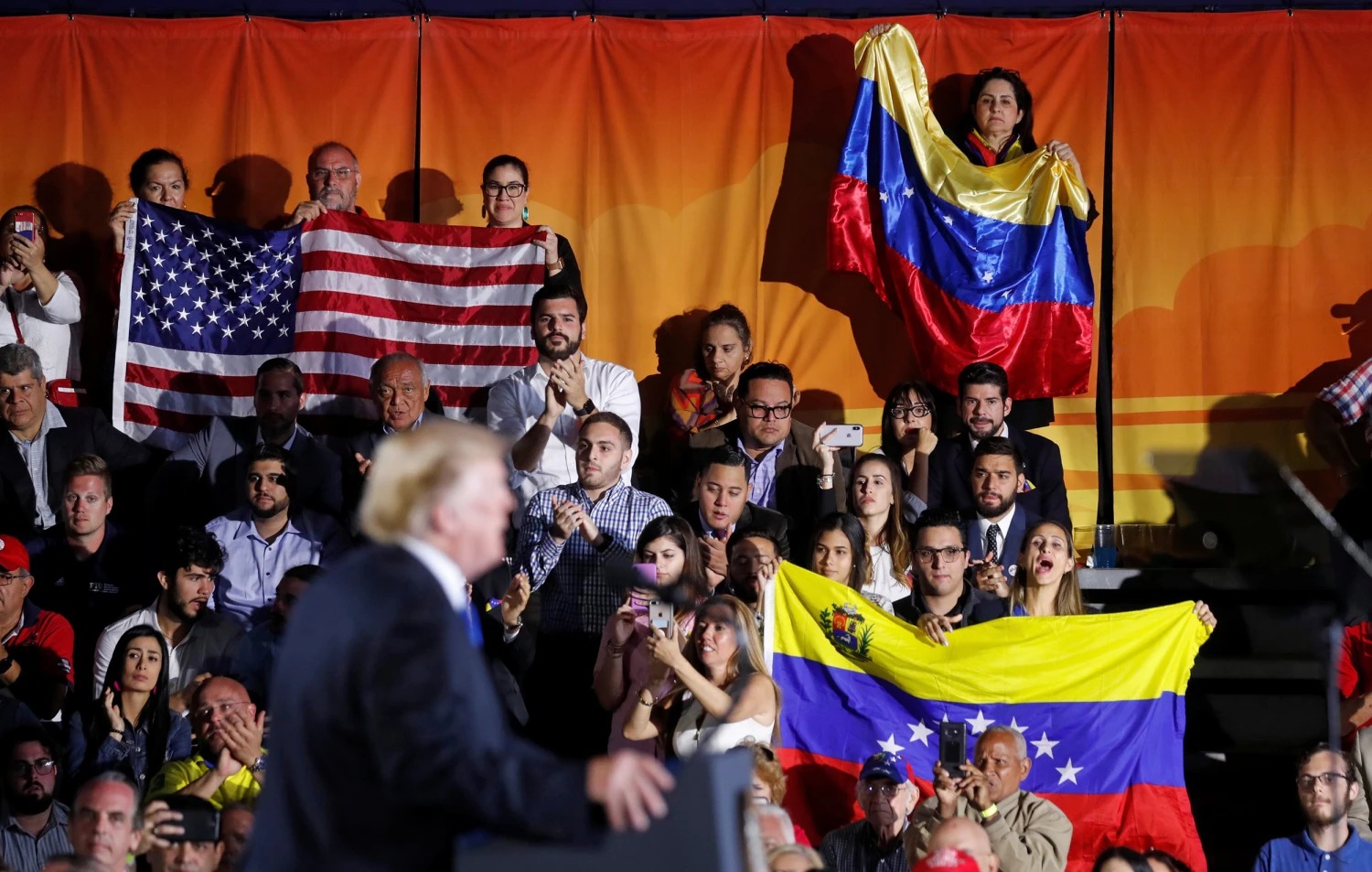
Both countries are repeatedly invoked in the US and Western security calculus, are associated with illicit networks, and sit uneasily with liberal democratic norms. Yet one is publicly disciplined as a democratic deviant, while the other is quietly accommodated as a strategic necessity. This asymmetry is not accidental. It reflects how democracy has become a selective instrument rather than a consistent universal principle of Western foreign policy.
Venezuela’s position in the Western imagination is shaped more by its symbolism than by its material power. Over the past decade, it has been framed as a cautionary tale of democratic backsliding, economic mismanagement, and narco-state behaviour. Western governments have been vocal in condemning electoral irregularities, restrictions on opposition parties, and the concentration of power in the executive’s hands. Sanctions regimes have followed, justified as necessary pressure to restore democratic order.
There is, of course, substance to these concerns. Venezuela has become a significant transit corridor for cocaine flowing from Colombia to Europe and West Africa. According to the UN Office on Drugs and Crime, routes passing through Venezuela expanded sharply after 2015, aided by weak state institutions and collusion at lower administrative levels. The US Drug Enforcement Administration has repeatedly flagged the role of Venezuelan territory in cocaine trafficking networks linked to Latin American cartels. These activities have destabilised neighbouring states and fuelled organised crime beyond the region.
Yet it is also essential to keep the scale of this threat in perspective. Venezuela is a transit state, not the global centre of the narcotics economy. It neither produces cocaine nor controls the principal distribution networks that feed North American and European markets, unlike other Latin American countries. Its capacity to project narcotics as an instrument of state power is unfounded, and its political instability, while devastating domestically, does not fundamentally alter the balance of power in any major theatre. This distance allows Western capitals to treat Venezuela as a manageable problem, one that can be addressed through sanctions, rhetoric, and diplomatic isolation without incurring high strategic costs.
Pakistan occupies a very different category. It is not merely a troubled democracy or an authoritarian-leaning state. It is a nuclear-armed country of over 240 million people, embedded in one of the world’s most volatile regions, and historically enmeshed in conflicts that have directly affected global security. Unlike Venezuela, Pakistan’s internal political arrangements are not a distant normative concern. They are intimately linked to patterns of violence, militancy, and instability that have spilled across borders for decades.
The erosion of civilian authority in Pakistan is no longer subtle. Over the years, the military has evolved from an arbiter to a manager and, finally, to a de facto ruler of the political system. Elections continue to be held, but their outcomes are carefully shaped. Political leaders who challenge the military’s primacy find themselves marginalised, imprisoned, or disqualified. Media outlets operate under pervasive pressure, and the judiciary oscillates between moments of resistance and strategic compliance. What remains is not a functioning civilian democracy but a controlled political space designed to preserve military dominance. Western governments are not unaware of this transformation.
The reason lies in the magnitude of the security risks associated with Pakistan. Unlike Venezuela, Pakistan has a long and well-documented relationship with terrorist organisations that operate transnationally. Pakistan’s neighbour India, and at times the United States Congress itself, have accused it of pursuing a state-sponsored terror policy. Groups such as Lashkar-e-Taiba and Jaish-e-Mohammed, designated terrorist organisations by multiple Western governments, have operated with varying degrees of tolerance within Pakistan’s security ecosystem. The Financial Action Task Force placed Pakistan on its grey list from 2018 to 2022 precisely because of persistent deficiencies in curbing terror financing and money laundering. These were not symbolic concerns; they reflected systemic weaknesses in controlling financial flows linked to violent extremism.
The human cost of this ecosystem has been substantial. The Global Terrorism Index has consistently ranked Pakistan among the countries most affected by terrorism over the past two decades. More importantly for Western interests, terror networks nurtured or tolerated within Pakistan have been implicated in attacks beyond its borders, from Afghanistan to India, and have maintained ideological and logistical linkages with global jihadist movements. These are not marginal threats. They sit at the core of post-9/11 security anxieties.
And yet, it is precisely this dangerous profile that has insulated Pakistan from democratic scrutiny. Western policymakers have long operated on the assumption that the Pakistani military, for all its flaws, is the only institution capable of maintaining a semblance of order over a deeply fragmented society and a sprawling security apparatus. Civilian politics are viewed as destabilising, prone to populism, and insufficiently reliable on issues of counter-terrorism and nuclear security. Military dominance, by contrast, offers predictability.
This logic reached its peak during the war in Afghanistan. Pakistan was repeatedly described as indispensable, even as evidence mounted of its selective cooperation and strategic hedging. The language of partnership persisted because alternatives were deemed worse. That mindset has not disappeared with the withdrawal from Kabul. It has merely been repurposed within a broader calculus shaped by China, regional stability, and nuclear risk management.
However, since Pakistan’s inception, there have been no sustained efforts whatsoever from the West to hold it accountable in this light. This is precisely why democratic leaders in Pakistan are jailed, exiled, or worse, killed if they do not work in tandem with military apparatchiks.
Here lies the core contradiction. If Venezuela is castigated for enabling narcotics flows that undermine governance and security, Pakistan’s far more consequential role in sustaining terror infrastructures should attract even greater concern. The difference is not in severity, but in inconvenience. Pressuring Pakistan on democracy risks alienating an actor whose cooperation, however ambivalent, is still considered necessary. Venezuela offers no such dilemma.
This selective morality carries long-term costs. By normalising military rule in Pakistan, the West is not neutral; it is actively shaping incentives. It signals to Pakistan’s generals that political engineering carries few international penalties as long as strategic commitments are upheld. It weakens civilian actors by depriving them of external support precisely when internal checks are being dismantled. And it reinforces a governance model that has repeatedly failed to deliver stability, economic growth, or social cohesion.
There is also a broader credibility problem. When democracy is defended loudly in some cases and softly sidelined in others, it ceases to function as a normative anchor. It becomes a tool of convenience, deployed where costs are low and withdrawn where stakes are high. This erosion is not lost on other authoritarian regimes, nor on societies living under constrained political conditions. It fosters cynicism about Western intentions and strengthens the argument that values are merely a rhetorical cover for power politics.
The irony is that this approach may ultimately undermine the very stability it seeks to preserve. Pakistan’s repeated cycles of military dominance have not resolved its structural crises. They have deepened economic fragility, intensified centre–periphery tensions, and eroded public trust. Suppressing political competition does not eliminate dissent; it displaces it into more volatile forms. In a nuclear-armed state with a history of militant spillovers, this is not a risk that can be indefinitely managed.
The comparison with Venezuela, then, is not about absolving one or condemning the other. It is about recognising how selectively applied principles distort policy outcomes and loosen moral footing. Venezuela’s problems are real, but their global impact is limited. Pakistan’s internal authoritarianism, by contrast, intersects directly with some of the most persistent security challenges facing South Asia and beyond. Treating the former as a democratic emergency and the latter as a tolerable anomaly reveals not moral clarity but strategic myopia.
If the West wishes to reclaim credibility in its democracy agenda, it must confront this imbalance honestly. That does not mean identical policies for vastly different contexts. It does mean acknowledging that democracy cannot be championed only when it is cost-free. Otherwise, the language of values will continue to ring hollow, and the structures of instability that selective silence enables will remain firmly in place. Ultimately, the question is not whether the West can afford to pressure Pakistan on democratic norms. It is whether it can afford not to.