
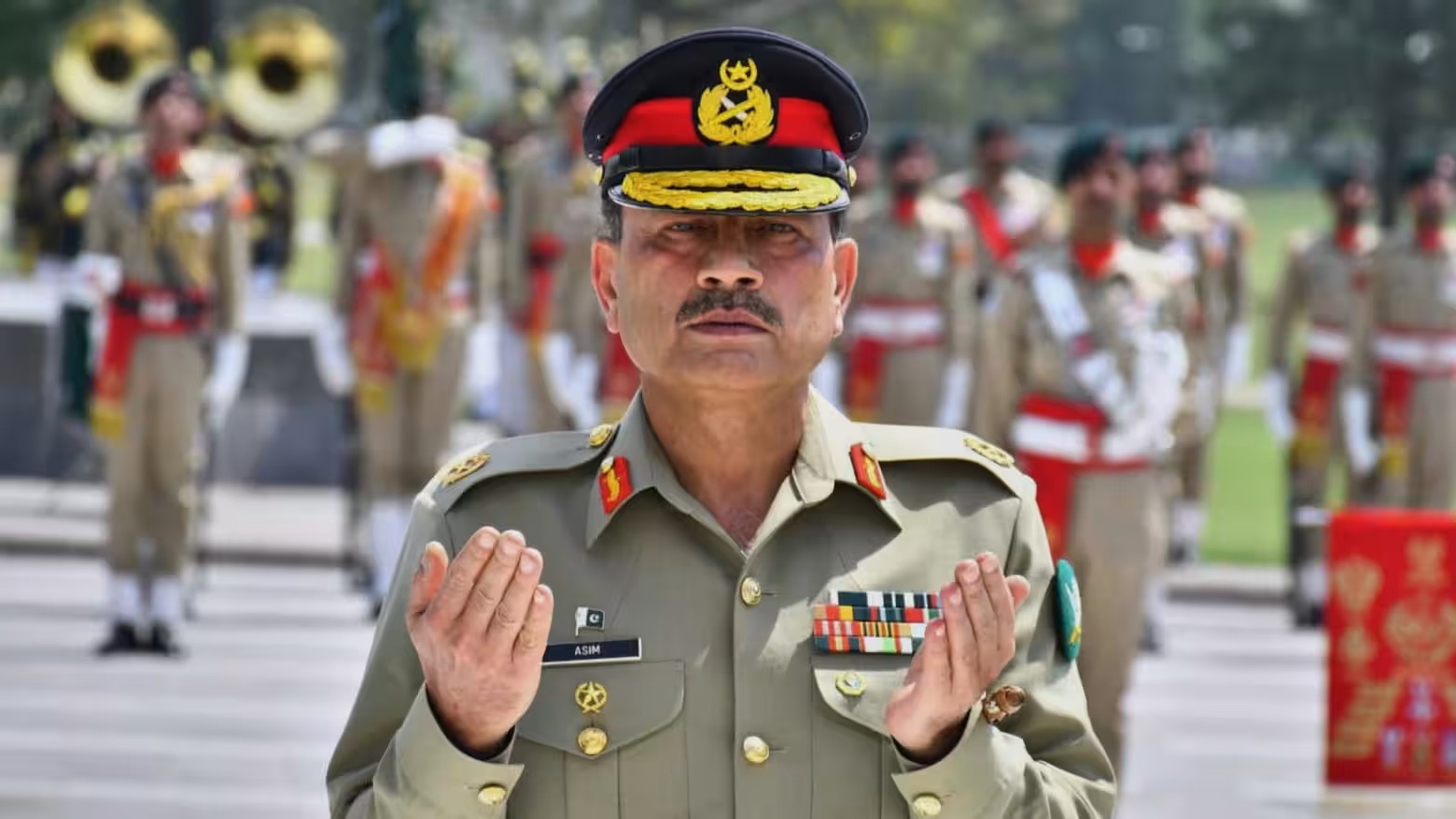
Pakistan’s military has consolidated its dominance over the country’s political and governance structures in 2025 through sweeping constitutional changes that critics describe as a silent coup, effectively formalising the army’s long-standing control over the state.
In late 2025, Pakistan’s parliament passed a set of constitutional amendments that restructured the country’s defence and command architecture. Central to these changes was the creation of a powerful Chief of Defence Forces post, occupied by the serving army chief, placing the Army, Navy and Air Force under a single military command. The move significantly reduced the role of civilian oversight and weakened the traditional checks that existed within the defence establishment.
Analysts say the new framework grants unprecedented authority to the army chief, including extended tenure protections and enhanced control over strategic decision-making. The restructuring also diminished the relevance of previously existing military coordination mechanisms, reinforcing the army’s primacy over other institutions. Opposition figures and civil society groups have criticised the amendments as the constitutional entrenchment of military supremacy, arguing that they erode democratic norms and further marginalise elected civilian leadership. Critics warn that the formal expansion of military power will restrict political freedoms and narrow the space for dissent.
Supporters of the changes within the establishment argue that the new command structure improves national security coordination and strengthens Pakistan’s defence posture amid regional instability. However, detractors counter that similar arguments have historically been used to justify military dominance at the expense of democratic governance. Pakistan has experienced repeated cycles of direct and indirect military rule since its founding. Observers note that while the army has long exercised decisive influence behind the scenes, the 2025 amendments mark a decisive shift by embedding that influence directly into the constitutional framework.
As Pakistan enters 2026, analysts warn that the formalisation of military control could have long-term consequences for the country’s democratic institutions, civil-military balance and political stability.
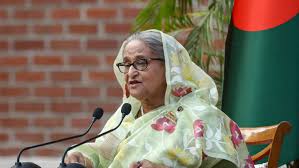
Former Bangladesh prime minister Sheikh Hasina has issued a sharp warning about the state of democracy in Bangladesh, arguing that the country is being governed without legitimate public mandate and that political stability will remain elusive unless inclusive elections are restored. Speaking in a wide-ranging interview, Hasina reflected on the political unrest that led to her departure from office in 2024 and offered a critical assessment of the current interim administration. She said the protests that began as student-led demonstrations were later overtaken by radical elements, resulting in widespread violence, destruction of public property and attacks on law enforcement personnel.
Hasina said her decision to leave the country was taken to prevent further bloodshed as the situation deteriorated. She rejected claims that her government suppressed peaceful dissent, stating that her administration initially allowed protests and sought accountability through judicial mechanisms. The former prime minister was particularly critical of the interim government led by Muhammad Yunus, arguing that it lacks democratic legitimacy because it was not elected by the people. She said banning the Awami League — a party that has won multiple national elections — and detaining its leaders undermines the foundations of democratic governance.
According to Hasina, meaningful political normalisation in Bangladesh requires the lifting of restrictions on political parties, the release of political detainees and the holding of free, fair and inclusive elections. Without these steps, she warned, any future government would struggle to gain domestic or international credibility. Hasina also accused the interim administration of dissolving inquiry processes into the 2024 violence and of empowering extremist groups, alleging that such actions have weakened law and order and endangered minority communities. She expressed concern that the current political climate has discouraged investment and stalled economic momentum built over the past decade.
Defending her own record, Hasina highlighted her role in restoring democratic institutions after periods of military rule and pointed to sustained economic growth, infrastructure development and poverty reduction during her tenure. She maintained that democratic governance requires both strong institutions and the participation of all major political forces. On foreign policy, Hasina cautioned against major strategic realignments by a government without an electoral mandate, arguing that long-term national interests should reflect the will of the people rather than interim political arrangements.
Her remarks come as Bangladesh prepares for national elections amid heightened political polarisation and questions over inclusivity. Observers note that the exclusion of major political parties could undermine voter confidence and deepen instability. As debates over Bangladesh’s democratic future intensify, Hasina’s comments underscore the central question facing the country: whether political order can be restored without broad public participation and electoral legitimacy.
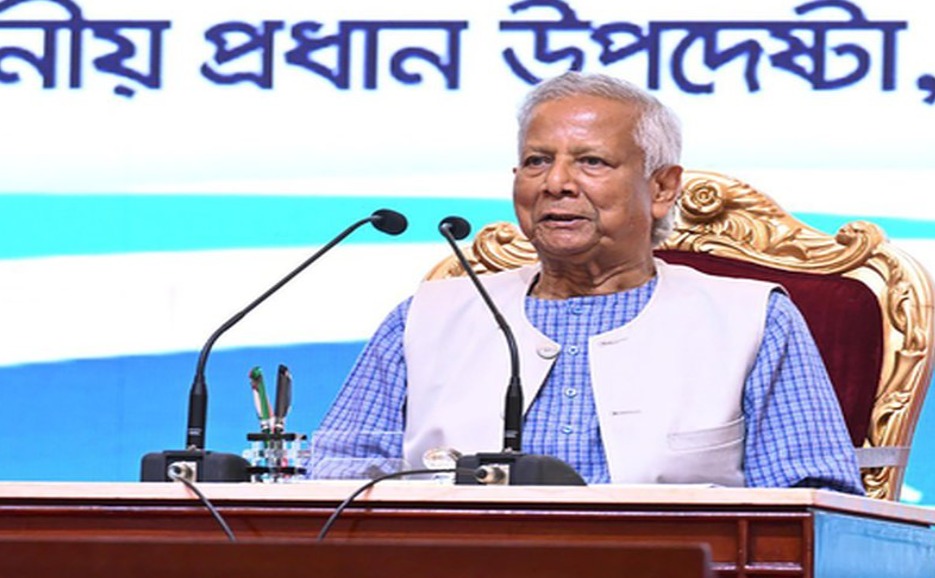
What began as a hopeful chapter for free expression in Bangladesh has turned into a growing crisis for journalists and independent media, according to analysts, human rights groups, and press organisations. When Nobel Laureate Dr. Muhammad Yunus assumed leadership of Bangladesh’s interim government in August 2024 following the fall of the Sheikh Hasina administration, many inside and outside the country saw it as a potential reset for democratic freedoms—particularly for a media landscape long constrained by legal and political pressures.
However, in the 16 months since, journalists report that those early expectations have largely given way to disillusionment. Rather than broadening space for dissenting voices, critics say the government has presided over increasing intimidation, legal harassment, and violent actions against the press.
A report released on World Press Freedom Day 2025 painted a stark picture of deteriorating conditions: within eight months of Yunus taking office, at least 640 journalists were targeted, including assaults, fabricated criminal charges, and financial scrutiny—particularly through state agencies.
Independent press organisations say the situation continues to worsen as Bangladesh approaches its February 2026 national elections. Journalists in Dhaka and beyond now describe death threats, online surveillance, and stalking as the “new normal” for reporters covering politics and governance.
Compounding these concerns, a U.S. press freedom group formally urged Yunus’s government to release journalists imprisoned on questionable murder charges, noting that some detained reporters are held in harsh conditions without credible evidence of wrongdoing.
Beyond individual threats, media institutions themselves have faced violence and destruction. In December, offices of major newspapers—including Prothom Alo and The Daily Star—were vandalised and set alight in mob attacks. Leaders of the Bangladesh Editors’ Council said some elements within the interim government appeared to have allowed or failed to prevent these attacks.
These incidents have sown fear among journalists and civil society activists, many of whom say state forces have been slow or unwilling to protect media workers during outbreaks of mob violence.
Analysts note that draconian legal instruments, including laws framed around “digital safety,” remain in force and are used to muzzle critical reporting—a stark contrast with earlier promises by Yunus to reform such measures.
Observers point to a broader pattern in which courts and administrative bodies have become avenues for silencing dissent, with journalists facing lengthy investigations, travel bans, frozen bank accounts, and professional blacklisting.
Despite these troubling trends, civil society groups continue to push for meaningful media reform and stronger protections for journalists. Advocates say that safeguarding free expression will be essential not just for press freedom, but for the credibility of Bangladesh’s democratic process as the country heads toward a pivotal election.
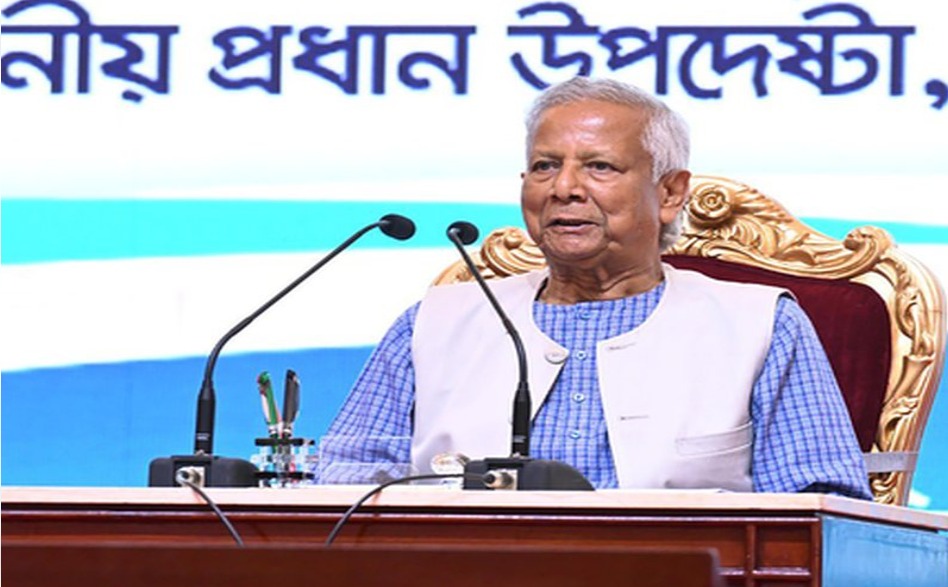
Questions over press freedom in Bangladesh have resurfaced amid allegations that the interim government led by Nobel laureate Muhammad Yunus has failed to ensure an independent and secure environment for journalists, despite pledges of democratic reform.
According to critics and media observers, journalists in Bangladesh continue to face intimidation, legal pressure and harassment, raising concerns that freedom of expression remains constrained under the current administration. The claims suggest that the media environment has not seen the expected improvement following the political transition of 2024.
Journalists and press freedom advocates allege that reporters critical of the government have been subjected to arrests, questioning and legal cases, creating a climate of fear within newsrooms. Several journalists have reported receiving threats, while others say they are increasingly resorting to self-censorship to avoid retaliation. Media organisations argue that the use of legal provisions against journalists has continued under the interim government, undermining assurances that press freedom would be protected during the transition period.
Local journalist bodies have expressed alarm over attacks on media offices and individuals, claiming that insufficient action has been taken against those responsible. They warn that the lack of accountability has emboldened hostile elements and weakened trust in the state’s commitment to protecting journalists. Editors and reporters say the environment for independent journalism has become increasingly hostile, with many fearing for their personal safety while carrying out their professional duties.
The debate over media freedom is unfolding against a backdrop of wider political tension in Bangladesh. Critics of the interim government accuse it of suppressing dissenting voices and narrowing democratic space, particularly as the country prepares for national elections expected in early 2026. Opposition figures and civil society groups argue that restricting media freedom risks undermining the credibility of the electoral process and weakening public confidence in democratic institutions.
The Yunus-led interim government has rejected allegations of press repression, maintaining that it respects freedom of speech and that any legal action against journalists is based on due process rather than political motives. Officials have stated that maintaining law and order and preventing misinformation are key priorities during the transition.
International press freedom and human rights groups have urged Bangladesh’s leadership to strengthen safeguards for journalists, review laws that may be misused to silence criticism, and ensure that media professionals can work without fear or interference. As Bangladesh moves closer to a crucial election year, the state of media freedom is likely to remain under close domestic and international scrutiny, serving as a key measure of the country’s democratic health.
-Arun Anand
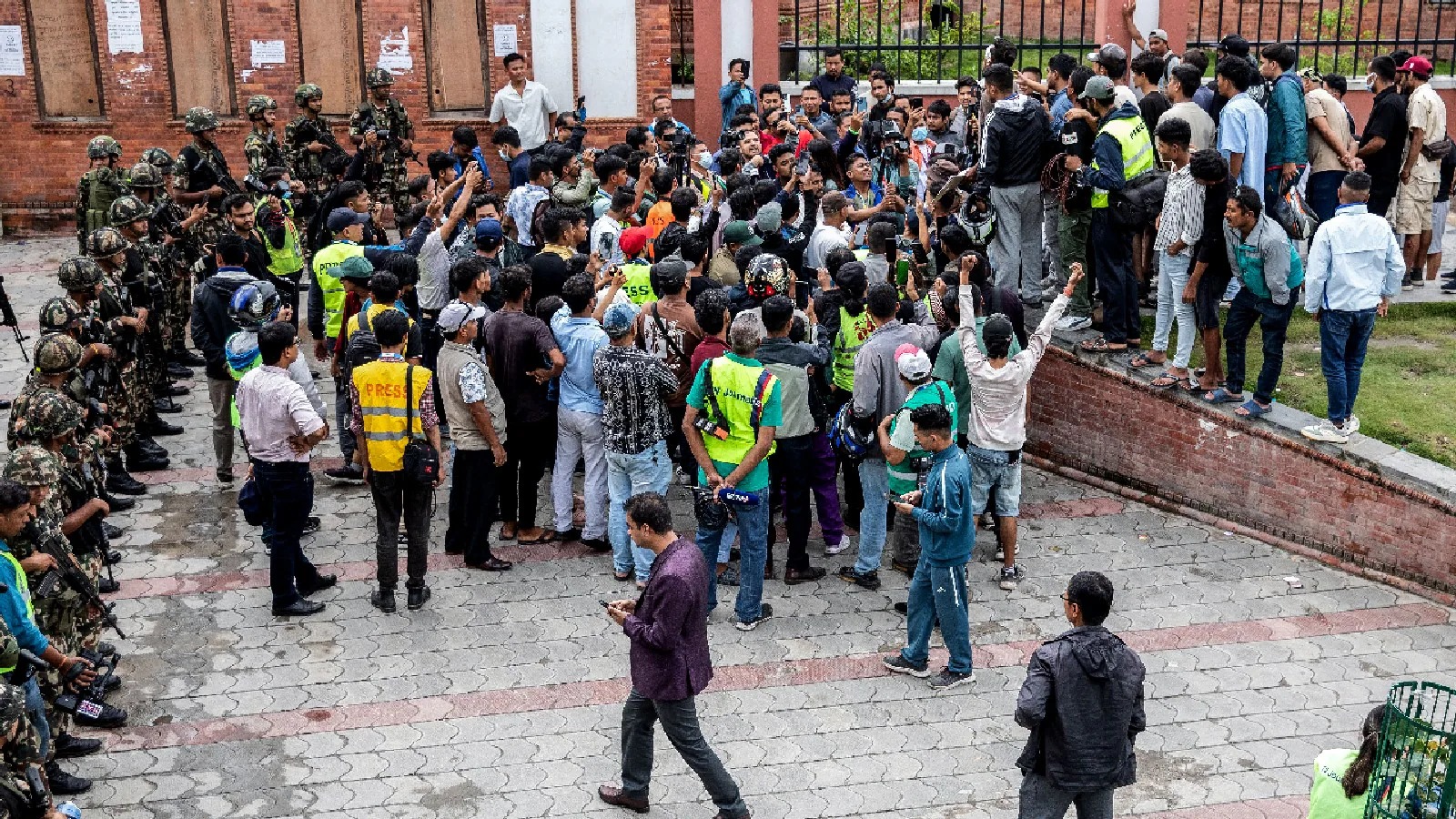
After the recent protests in Nepal by Gen Z that toppled its government, the global commentaries are raising the question: why aren’t India’s youth taking to the streets? As Nepal’s Gen Z had managed to bring down a government within two days, observers in Western capitals rushed to draw comparisons with calm in India. Across all these Western media coverages, the undertone was unmistakably similar — India’s young citizens are either disenchanted or forcibly silenced as they are not coming out on streets. The question that has been repeatedly asked by the Western media is how could 370 million digitally connected, energetic young people stay quiet while their neighbours erupt in rebellion!
This line of reasoning is not only too simplistic; it reflects a new colonial construct. The same Western lens that once portrayed the “East” as mysterious now depicts it as perpetually unstable. This new form of neo-orientalism associates political maturity with the violent protests on the streets; if there is no unrest, it implies stagnation and not a resilient democracy!
The recent BBC piece questioning why India’s Gen Z is not taking to the streets is a manifestation of this tendency.
It draws parallels between India and smaller countries like Nepal, Bangladesh, and Madagascar, suggesting that the absence of mass uprisings signals a lack of youthful energy or civic courage. The problem isn’t nastiness, it’s method. Comparing India to these states is to misunderstand how democracies operate at a larger scale. Nepal’s protests erupted after a sudden social media ban and amid a fragile coalition government that survives on thin legitimacy. India’s federal and electoral architecture, by contrast, disperses discontent across 1.4 billion people, 28 states, and thousands of local governments.
The design of Indian democracy doesn’t suppress anger; it channels it. Protests in India rarely topple governments because institutions, courts, elections, bureaucracies, and welfare systems absorb the shock. To view the absence of unrest as evidence of apathy is to overlook how political participation actually functions in a robust and mature democracy.
There is an unspoken discomfort in much of Western coverage about how India, despite all its contradictions, remains economically and politically more stable than its peers. It continues to grow faster than most large democracies, sustains multi-party elections with a healthy turnout, and manages one of the world’s most complex social fabrics without systemic collapse. This stability is rarely celebrated in Western media; it’s often treated with suspicion. The reflexive narrative is to ask what might be going wrong beneath the calm rather than what mechanisms have allowed a post-colonial state to sustain democratic continuity and growth at this scale.
Part of this bias comes from habit. The Western media has always treated South Asia as a theatre of crisis. If the story isn’t of famine, coup, or riot, it barely registers. But another part stems from deeper discomfort; India no longer fits neatly into the developmental hierarchies that once defined the global imagination. It’s too chaotic to be treated as Western, too successful to be pitied as “developing”. So, its stability is read as a paradox, not as an achievement.
In Western capitals, protest is considered a hallmark of civic virtue. The French strike, the British march, and the American sit-in—these are viewed as signs of healthy democracy. Yet when the same template emerges elsewhere, it’s often described in different terms: “unrest”, “mob violence”, or “youth instability”. This double standard also extends to its inverse.
When Western societies experience protest fatigue or political disengagement, it is analysed as a sign of post-modern maturity, a democracy that no longer needs the street. When India’s youth turn to the ballot box instead of barricades, it is defined as evidence of apathy. The irony is glaring. India’s 2024 general election saw the participation of nearly a billion voters, more than the population of the entire West combined. If protest is one language of democracy, participation is another. Yet the latter rarely makes headlines.
To describe India’s Gen Z as “silent” is to overlook the forms of politics that do not conform to Western standards. Indian youth are debating, campaigning, voting, volunteering, building businesses, and engaging digitally at an unprecedented scale. Their politics isn’t always radical; it’s often pragmatic, sometimes ideological, occasionally contradictory. But it is politics nonetheless. The idea that activism must take the form of confrontation reflects a narrow understanding of agency. The Indian model of civic participation relies less on disruption and more on negotiation, achieved through social media, student movements, local elections, or NGO networks. Protest here is not a lifestyle choice; it’s a last resort. This doesn’t make India less democratic. It makes it democratic in a more sustainable way.
The Western gaze often operates on two assumptions: first, that Western democracies are the gold standard for political behaviour; and second, that political energy elsewhere must express itself through familiar Western forms to be valid. Both assumptions collapse under scrutiny. The protests in France over pension reform or Britain’s student marches are never compared to “big democratic neighbours.” They are treated as internal expressions of civic strength, not as part of a regional morality play. But when South or Southeast Asian youth mobilise, or don’t, the question becomes comparative and moralising: why don’t others follow? Why isn’t India emulating its neighbours? This reflects ‘projection’ and not ‘analysis’. Western media expects the template in their part of the world to be replicated everywhere. When it doesn’t, they treat it as a sign of deficiency of democratic values.
If we step away from this template, India’s apparent calm begins to look less like resignation and more like resilience. Its youth are not revolutionaries by default because they have grown up inside an established, functioning democracy. They have witnessed for decades that power dynamics can be successfully changed through ballots, not barricades. This generation of young Indians is also smoothly navigating global economic competition, digital transformation, and an aspirational middle-class culture that prizes progress over protest. Their energies are directed toward mobility, not militancy. Far from being depoliticised, they are the inheritors of a political system that has normalised participation so deeply that it no longer requires upheaval to feel real. In that sense, India’s “stability” is not the absence of politics, it’s the maturity of it.
India would never fit into the Western media’s binary of democratic decline or populist revolt. Her story is less dramatic, but more consequential: a multi-ethnic, multi-religious, multilingual democracy that manages to govern, argue, and grow simultaneously. The West often mistakes this for contradiction. It is, in fact, the definition of balance. The time has come for global media to update its interpretive grammar. Not every democracy must protest to prove it’s alive.To understand India, one must abandon the lens of spectacle and learn to see political endurance as a testament to achievement, not an anomaly. The real story isn’t why India’s youth aren’t burning tyres; it’s why, despite every reason to fracture, the world’s largest democracy still holds together. And that story deserves to be told without a Western filter.