
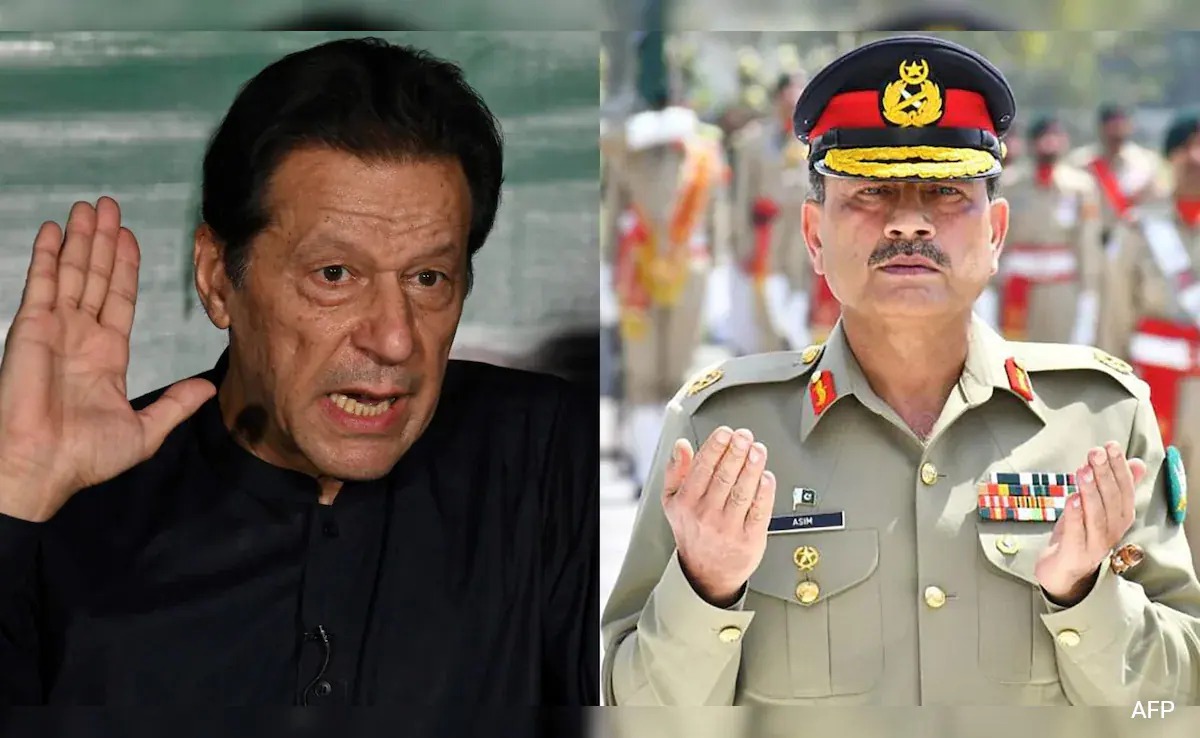
In Pakistan, power rarely disappears. It retreats, recalibrates, returns and often in uniform. Since the arrest of former Prime Minister Imran Khan in 2023, the country has been witnessing not merely the prosecution of a politician but the systematic erosion of any space for political dissent. Under Army Chief Field Marshal Asim Munir, Pakistan’s military establishment appears to have embarked on a deliberate, incremental campaign to marginalize and potentially erase its most formidable civilian challenger.
The method to silence Khan has not been spectacular but rather procedural in character. From once being seen as the military’s preferred candidate to run the civilian façade of government, he remains imprisoned in Adiala jail under the shadow of the General Headquarters of Rawalpindi. Over the months that have followed since, reports of deteriorating health conditions emerged amid recurrent allegations of mistreatment including torture. While the state has expectedly denied these allegations, yet the recent reports that Khan suffering severe vision loss in his right eye after a medical procedure conducted clandestinely on January 24 night at Pakistan Institute of Medical Sciences (PIMS), have intensified concerns among supporters.
The Supreme Court appointed amicus curie, Salman Safdar who met Khan at Adiala jail, told the court that the imprisoned former prime minister had list nearly 85 per cent of eye sight in right eye. Khan’s sister Noreen Niazi accused Army Chief Asim Munir of subjecting him to “unimaginable mistreatment.”
Imran Khan, a global celebrity, a philanthropist, and former prime minister of Pakistan, has endured unimaginable mistreatment in prison under the directives of ‘Asim Law,’ now facing irreversible damage to his right eye as a direct consequence,” Noreen Niazi alleged in an X post, adding, “Why are they rejecting the supervision by Imran Khan’s personal doctors? Why are they rejecting the presence of Imran Khan’s family members? Our family is getting extremely worried. We do NOT accept any medical board they setup and control, we do NOT accept any report they manufacture! Family and personal doctors must be allowed to see Imran Khan!”

Whether these claims are fully verifiable or not, but the political message of the state seems clear: isolation is the objective. the political message is clear: isolation is the objective. Khan has been denied consistent access to family members and his personal physicians whereas his communication with party leaders remains tightly restricted. In modern authoritarian playbooks, the most effective silencing is not necessarily physical elimination but enforced irrelevance. A leader cut off from his movement slowly loses the capacity to mobilize it. And it seems Asim Munir led establishment has decided its course over Imran Khan, which is silence through isolation.
Yet Khan remains Pakistan’s most popular politician with multiple surveys by national and international continuing to place him far ahead of his rivals. For instance, a 2023 Gallup Pakistan report found that over 61 per cent of Pakistanis held a positive opinion of Imran Khan, significantly higher than his rivals. It is that enduring popularity which is precisely what makes him intolerable to the establishment. Interestingly, Khan’s relationship with the military was once considered as symbiotic. When he became prime minister in 2018, his opponents such as Pakistan Muslim League-Nawaz (PML-N) and Pakistan People’s Party (PPP), which are currently in the good books of army establishment, alleged that that his Pakistan Tehreek-e-Insaaf (PTI) benefited from military’s behind-the-scenes support during elections. While Pakistan’s generals have long shaped the country’s political order both overtly through coups and covertly through electoral engineering, Khan, at the time, appeared aligned with that system.
But alliances in Pakistan’s civil-military matrix have always been transactional with Khan’s differences with military establishment on foreign policy and governance becoming visible in late 2021 and early 2022. And when the PTI government was removed through a parliamentary no-confidence vote in April 2022, many believed that Khan’s political rivals were nudged by General Bajwa from behind the scenes to engineer his ouster. And what followed after his removal was unprecedented as Khan did not retreat into quiet opposition. He directly accused the military leadership of political manipulation, including being part of a regime change operation with support from United States. While his rallies drew massive crowds, what was precedented was how for the first time in decades, a mainstream political leader openly named generals as political actors and seeking their return to barracks.
For the military leadership that defiance crossed a red line as no one had ever questioned army even after losing wars with India or having the country axed into two in 1971 with the fall of Dhaka. With Asim Munir succeeding General Bajwa as the Army Chief in late 2022, the establishment’s response hardened. Many factors converged to supplement state’s response towards Imran Khan and his PTI. For one, as prime minister, Khan had previously removed Munir, then a Lt. Gen. rank officer, from his post as Director General of Inter-Services Intelligence, the de facto number two position in Pakistan Army, in 2018. Secondly, his government had earlier sanctioned presidential reference against then Justice Qazi Faez Isa in 2019, who by 2023 became Chief Justice of Pakistan. While personal history may not explain institutional retaliation, but in Pakistan, the institutional and personal often blur.
When Imran Khan was initially arrested from the premises of the Islamabad High Court on May 9, 2023, Pakistan witnessed unprecedented protests with people targeting military installations, including the Corps Commander’s residence in Lahore and other sensitive installations. Pakistan Army framed these violent anti-establishment protests as an assault on the state itself. A sweeping crackdown followed, extending far beyond accountability for vandalism with hundreds of civilians and PTI workers arrested and dozens tried in military courts.
Soon the establishment turned to dismantle Khan PTI with senior party leaders abducted and pressured into televised renunciations. While some left politics altogether, others defected to a new pro-establishment Istehkam-e-Pakistan Party comprising mainly former PTI affiliates. The objective appeared less about punishing lawbreakers and more about dismantling an organizational network. The second prong of the strategy was institutional. The state leveraged legal and administrative tools to weaken PTI’s ability to contest elections effectively. The election commission withdrew party’s electoral symbol, forcing its nominees to run as independents. Yet, when elections were held in February 2024, while Khan’s nominees performed strongly, the fragmented results enabled a coalition of establishment-aligned parties to form government under Shehbaz Sharif.
Khan, meanwhile, faced an avalanche of legal cases. The Toshakhana case involving state gifts resulted in conviction and imprisonment, though higher courts later suspended aspects of the verdict. Yet each time bail appeared possible in one case, new charges emerged in another. By some counts, there are over 90 cases registered against him across Pakistan, which makes it not merely prosecution but legal suffocation. State’s pattern suggests a calibrated strategy to ensure that even if one judicial avenue opens, another closes, thereby keeping defendant and the party perpetually entangled and drain political momentum.
For the military establishment, silencing Imran Khan appears about reasserting the boundaries of permissible politics and preserve Pakistan Army’s hold over the levers of state power, including foreign policy. Khan’s rhetoric threatened to redraw those lines and risked normalizing civilian supremacy in areas the army considers its own.
These developments therefore suggest that the objective of Asim Munir-led establishment does not appear to be martyring Imran Khan through outright elimination, something that could ignite uncontrollable unrest, but neutralizing him through step-by-step approach of attrition. This prison isolation with restricted access to family, doctors and party leadership, a cascade of legal cases, the attempts to fragment PTI, and the coercion of his loyalists, point to a strategy of slow political asphyxiation. While each step taken individually can be justified as “lawful” or “procedural”, but together they form a pattern designed to exhaust, delegitimize and ultimately render irrelevant Pakistan’s most popular political figure. It seems to be a method calibrated to avoid spectacle while ensuring silencing through a steady tightening of institutional pressure.
-Arun Anand
On 31 January 2026, the recent coordinated attacks claimed by the Baloch Liberation Army (BLA) marked a significant escalation in the long-running insurgency in Pakistan’s Balochistan province. For the first time, coordinated operations were carried out simultaneously across twelve cities, including Quetta, Gwadar, Mastung, Noshki, Dalbandin, Kalat, Kharan, Panjgur, Pasni, Turbat, Buleda, and Kech. Both men and women actively participated—not merely as suicide bombers, but as combatants—reflecting the depth of desperation and grievances among Baloch communities. The BLA announced the launch of “Operation Herof Phase II” at the outset of the attacks, framing the coordinated assaults as part of a planned campaign targeting Pakistani security posts and Chinese infrastructure. In its statement, the group said:
“We carried out coordinated attacks across multiple cities in Balochistan, striking military, police, intelligence, and administrative installations. We neutralised over 80 enemy personnel, took 18 hostages, and destroyed more than 30 government properties. Our fighters, including members of the Majeed Brigade, advanced across various areas with mutual coordination, temporarily restricting the movement of Pakistani forces.”
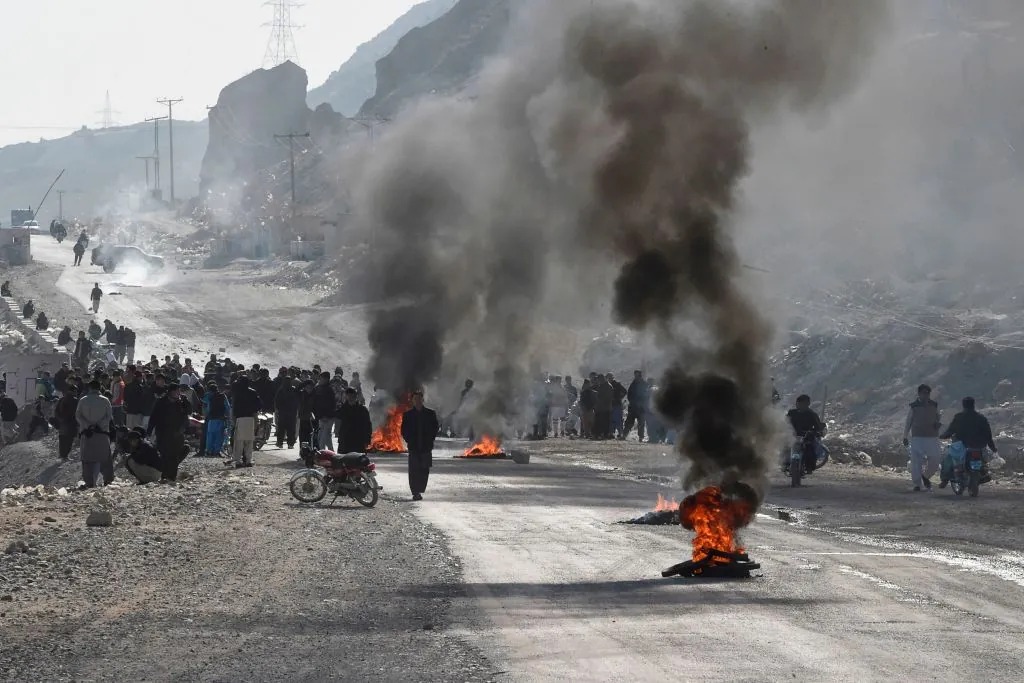
Independent reports suggest total fatalities, including militants, security personnel, and civilians, may exceed 125, highlighting the intensity of the operations. The attacks caused disruptions to roads, transport, and internet and mobile services in affected areas.
Balochistan’s long struggle and Pakistan’s narrative
Almost immediately after the attacks, Pakistan once again blamed India, claiming that the violence was orchestrated and supported by foreign actors. Officials, including the military and Interior Minister Mohsin Naqvi, alleged that the attackers were guided, funded, and strategically directed from outside Pakistan, framing the operations as part of a broader plan by India to destabilise Balochistan. Pakistan strategically even refers to the militants as “Fitna‑al‑Hindustan” in state narratives, presenting the attacks as externally driven.
India, however, categorically rejected Pakistan’s claims, calling them “baseless” and “frivolous.” A spokesperson from the Indian Ministry of External Affairs, Randhir Jaiswal, stated:
“Instead of parroting frivolous claims, Pakistan should focus on its own internal failings and address the longstanding local issues in Balochistan. Allegations against India are baseless and lack any credible evidence. The insurgency in Balochistan is rooted in Pakistan’s internal governance and human rights issues, not external involvement.”
This response underlines that Pakistan’s habitual blame-shifting does not address the real grievances at the heart of the insurgency, and merely masks the structural and historical issues within the province. Balochistan derives its name from the Baloch tribe—the largest ethnic group in the region. The Baloch insurgency has a long history, dating back to the very creation of Pakistan in 1948, and has seen successive cycles of resistance over decades. Resistance against the Pakistani state began soon after the incorporation of the princely state of Kalat, and successive cycles of insurgency have occurred in 1948, 1958–59, 1962–63, 1973–77, and from the early 2000s to the present.
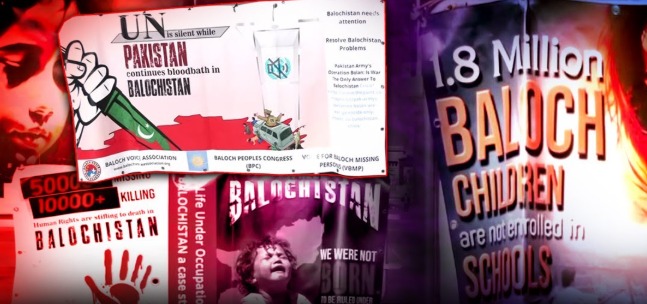
To attribute a struggle with such continuity solely to external actors is to overlook the deeply local and historically entrenched grievances. The conflict has been sustained by systemic issues: political marginalisation, economic exploitation, demographic anxieties, and widespread human rights violations. Reports document enforced disappearances, extrajudicial killings, arbitrary detentions, and military operations by security forces.
Numerous human rights organisations have documented these abuses over decades, highlighting the systemic nature of oppression in Balochistan. Local and regional bodies such as the Human Rights Council of Balochistan (HRCB), Voice for Baloch Missing Persons (VBMP), the Baloch Yakjehti Committee (BYC), and activists like Gulzar Dost have recorded enforced disappearances, extrajudicial killings, and violations of basic civil liberties. National bodies like the Human Rights Commission of Pakistan (HRCP) and international organisations such as Human Rights Watch (HRW) have also reported widespread violations, drawing attention to patterns of abuse, militarisation, and lack of accountability. Additionally, UN human rights mechanisms have expressed concern over disappearances, repression, and human rights infringements, calling on Pakistan to address these longstanding issues. These abuses, combined with limited access to education, healthcare, and basic infrastructure, have fueled resentment and radicalisation.
The growing involvement of women in the insurgency is particularly telling. Traditionally, women in conflict zones rarely take up arms unless social collapse and state oppression reach extreme levels. Many Baloch women have joined militant movements not out of ideology, but in response to personal loss, including the disappearance or killing of family members. This underscores the severity of state brutality and the absence of peaceful avenues for redress.
Economic exclusion and unrest
Balochistan occupies nearly 44 per cent of Pakistan’s territory and is rich in minerals, natural gas, coal, copper, gold, and strategic ports such as Gwadar. Despite this wealth, the province remains Pakistan’s poorest, with insufficient roads, hospitals, schools, electricity, and employment opportunities. Most benefits from the region’s resources flow to Punjab and the federal centre, leaving Balochistan politically and economically marginalised. This structural imbalance lies at the heart of the insurgency. The BLA’s focus on Chinese infrastructure, particularly Gwadar port under the China–Pakistan Economic Corridor (CPEC), highlights local resentment against projects seen as extractive and non-inclusive.
For many Baloch communities, CPEC and Gwadar are symbols of dispossession rather than development. While these projects bring heavy investment and modern infrastructure, locals report that basic needs like clean water, healthcare, education, and jobs remain largely unmet, and skilled roles are frequently given to outsiders. Coastal communities, particularly fishermen in Gwadar, feel their livelihoods have been disrupted by large-scale projects, Chinese trawlers, and strict regulations, deepening the sense of exclusion. The region has also seen increased militarisation, with checkpoints, surveillance, and restrictions on movement, creating an atmosphere of control rather than empowerment. In the eyes of many Baloch, CPEC benefits outsiders and central authorities while ignoring the real needs of the local population, fueling political grievances and, in some cases, militant resistance.
Pakistan’s habitual blaming of India for every major incident is counterproductive. Even if external actors were hypothetically involved, no foreign power could sustain an insurgency for over seven decades without internal grievances. The term “Fitna-ul-Hindustan” may serve short-term political narratives, but it obscures structural and historical realities, allowing problems to fester rather than be resolved.
Balochistan does not require more troops or scapegoating. What it urgently needs is political accommodation, through meaningful autonomy and inclusive dialogue, along with economic inclusion that ensures local communities benefit from their resources. Human rights accountability, particularly regarding enforced disappearances, is critical, as is development carried out with consent rather than imposed megaprojects. Genuine dialogue and regional diplomacy prioritising stability over blame-shifting are essential. Addressing these grievances honestly is not only crucial for Pakistan’s internal cohesion, but also for regional stability. Women fighting in the insurgency, decades-long unrest, and persistent deprivation are signals of a structural crisis, not foreign subversion. Pakistan must set its house in order, because justice, inclusion, and reform are the only sustainable solutions.

-Arun Anand
Myanmar (formerly Burma) sits at a critical crossroads in Asia, both geographically and geopolitically. The country’s location – bordering China, India, Bangladesh, Thailand, and Laos, with a long coastline on the Bay of Bengal and Andaman Sea – makes it a bridge between South Asia and Southeast Asia. In fact, Myanmar is often described as the “main connecting hub” linking East, South, and Southeast Asia. Its shores provide access to the Indian Ocean’s major shipping lanes, which has long attracted great power interest. In short, Myanmar’s geostrategic location grants it outsized importance: it is the only Southeast Asian nation sharing borders with both India and China, and it offers a land gateway from the Bay of Bengal into the heart of Asia.
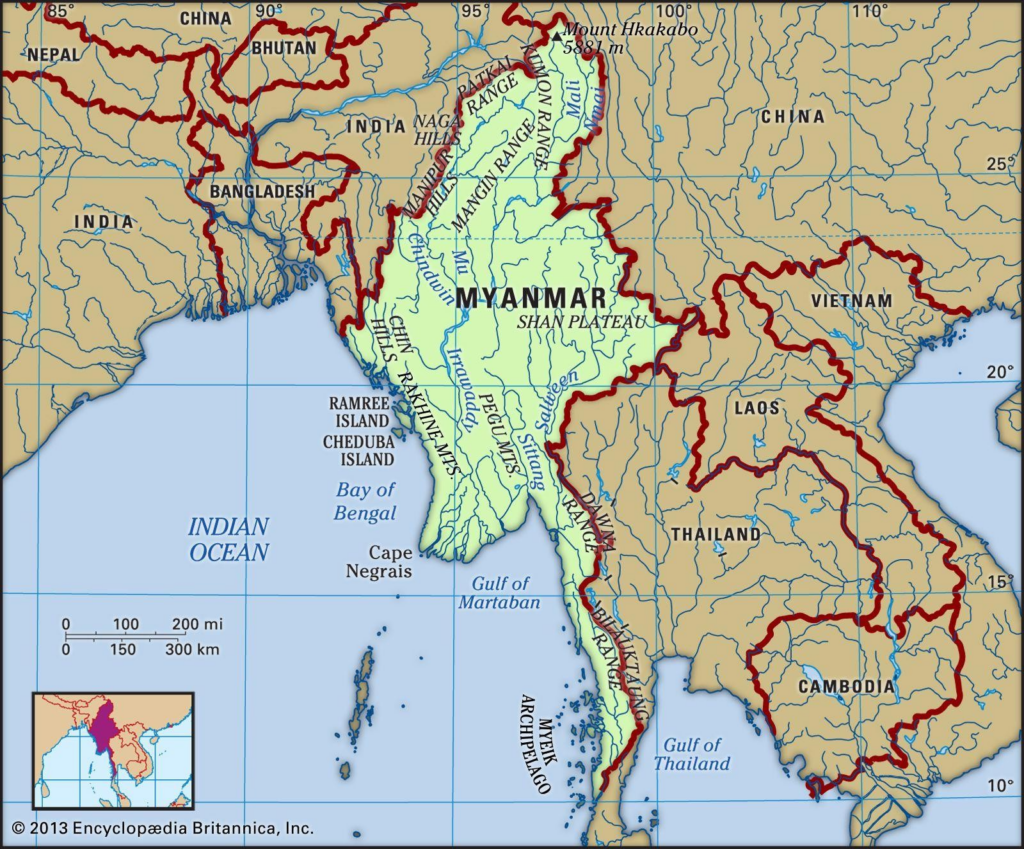
Myanmar Geographical Location
Strategic Geographical Importance
Myanmar’s geography confers strategic advantages that neighbouring powers eagerly seek to leverage. To its west lies the Bay of Bengal (part of the Indian Ocean), positioning Myanmar near vital maritime routes between Asia, the Middle East, and Europe. Historically, even a branch of the ancient Silk Road ran from Myanmar’s shores to China’s Yunnan province, underlining its role as a natural corridor. Today, both China and India view Myanmar as pivotal to their regional aspirations.
In summary, Myanmar’s position at the junction of Asia’s sub-regions lends it significant strategic importance. Geography is the reason a country of 55 million people commands so much attention from global and regional powers. Myanmar is effectively a land bridge and a maritime gateway, one that both China and the West recognise as key to influencing the wider region.
China’s Deepening Influence in Myanmar
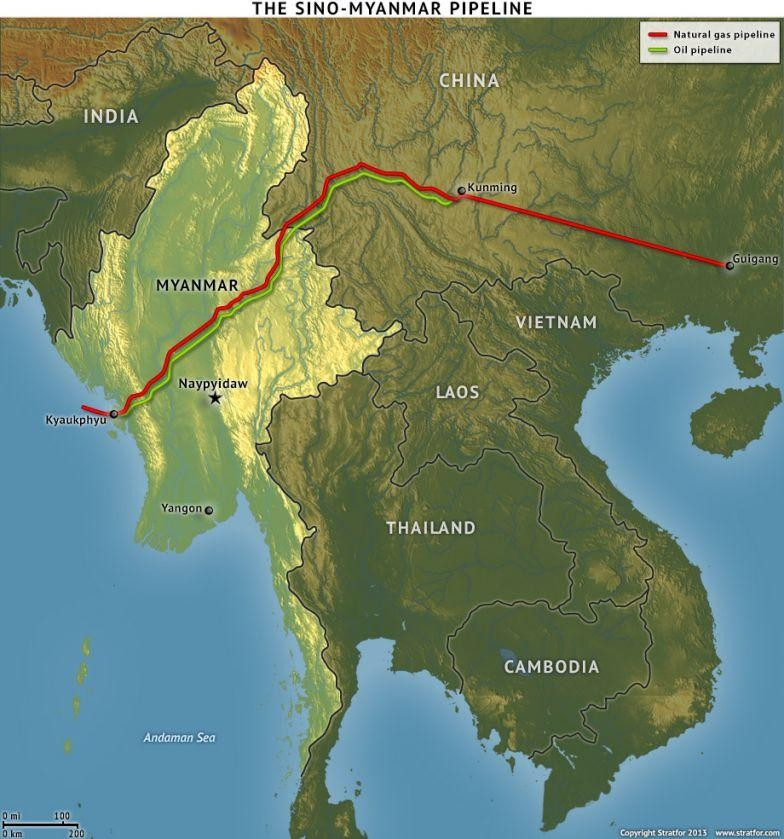
China has emerged as Myanmar’s most influential foreign player, especially in the past decade. Geopolitically, Beijing views Myanmar as crucial to its own strategic objectives. China’s southwestern provinces are landlocked, and Myanmar offers a coveted route to the sea. Through its ambitious Belt and Road Initiative (BRI), China has invested heavily in Myanmar’s infrastructure – from ports to pipelines – to secure that route. For instance, China helped build a deep-water port at Kyaukpyu in Myanmar’s Rakhine State, which serves as the starting point for twin oil and gas pipelines running north into China’s Yunnan Province. These pipelines, completed in the 2010s, allow China to import Middle Eastern oil and gas via Myanmar, bypassing the Malacca Strait – a narrow maritime chokepoint that China views as a strategic vulnerability. By using Myanmar as an overland energy corridor, Beijing reduces its dependence on long sea voyages through congested or potentially hostile waters.
China’s influence in Myanmar extends beyond infrastructure to encompass political and military aspects. During decades when Myanmar was under Western sanctions (due to the former junta’s human rights abuses), China became Myanmar’s closest partner by default. Beijing supplied arms, invested in mining and hydropower, and shielded Myanmar diplomatically at the UN. Even after Myanmar’s brief experiment with democracy, China maintained strong ties with the powerful military (the Tatmadaw). Notably, when the Myanmar army seized power in the February 2021 coup, China reacted with cautious support. Beijing pointedly referred to the coup as a “major reshuffle”, downplaying the overthrow of elected leaders. It continued business as usual – providing weapons to the junta and pushing to continue BRI infrastructure projects – even as much of the world condemned the coup. At the same time, China hedged its bets: it never formally endorsed the military regime and, for a long while, did not allow Myanmar’s coup leader, Senior General Min Aung Hlaing, an official state visit to China. (Beijing even curiously allowed Myanmar’s ousted civilian ambassador to continue occupying Myanmar’s seat at the United Nations, signalling that China hadn’t completely written off the previous government.) This reflected China’s pragmatic approach – engaging the junta to protect its interests, but not fully legitimising it internationally.
However, as Myanmar’s post-coup conflict ground on, China’s stance evolved. By late 2022 and 2023, Myanmar’s internal war was intensifying: ethnic armed groups and new pro- democracy militias were seizing territory, even threatening areas near China’s border. Beijing grew increasingly concerned that Myanmar could descend into chaos – jeopardizing Chinese investments and creating instability on China’s southwestern flank. China’s frustration with Gen. Min Aung Hlaing also mounted, as the junta’s offensives failed to restore order and even hindered Chinese projects (for example, fighting in border regions and a boom in criminal networks there became a headache for Beijing). Fearing a potential collapse of the Myanmar military regime, China decided to double down in support. In late 2023 and 2024, Beijing took a series of assertive steps: it dispatched high-level envoys (including Foreign Minister Wang Yi) to meet the junta, pledged full backing for the junta’s planned 2025 election, and reportedly even helped bolster the Myanmar military’s capabilities (for instance, supplying drone technology). Chinese officials also leaned on various ethnic rebel groups – many of which have enjoyed Chinese cross-border ties – to pause their assaults and cut deals with the military. In November 2023, General Min Aung Hlaing was finally invited to Beijing, signaling China’s renewed embrace of the embattled regime.
It might seem ironic that China, a one-party state, is encouraging Myanmar’s generals to hold an election. But Beijing’s motive is not to foster democracy; rather, China hopes a managed election could “dilute [Min Aung Hlaing’s] power” or produce a more stable, cooperative leadership in Naypyidaw. Analysts note that China dislikes Min Aung Hlaing personally (viewing him as unpredictable and ineffective), so it sees an election as a way to legitimize the junta under fresh faces that might be more amenable to Chinese interests. In other words, China wants a stable partner in Myanmar – it cares less about who wins an election (certainly not pushing for Aung San Suu Kyi’s return, for example) than about ensuring Myanmar doesn’t align with the West or descend into anarchy.
Today, China is arguably the Myanmar junta’s most important patron. It provides economic lifelines (such as trade, investment, and energy revenue) and international cover (for instance, China has vetoed or softened UN resolutions critical of Myanmar). In return, Beijing gains considerable leverage: ongoing access to Myanmar’s resources (like jade, gas, and timber) and strategic infrastructure. If the military regime survives – especially with Beijing’s help – China stands to solidify a “strategic toehold” extending to the Indian Ocean. A friendly Myanmar could host more Chinese projects (such as ports, railways, or even listening posts) that project Chinese influence into South Asia and maritime Asia. This prospect alarms Western strategists, as it would extend China’s reach in a region long dominated by India and watched by the U.S.
In summary, China’s influence in Myanmar is at an all-time high: it has deftly positioned itself as the junta’s indispensable ally, all while framing its involvement as respect for Myanmar’s “sovereignty and stability.”
Western Interests and Involvement
Western nations, notably the United States and its European allies have a significantly different history with Myanmar. During the long years of military dictatorship (from 1962 up until the early 2010s), the West largely treated Myanmar as a pariah state due to its human rights abuses and suppression of democracy. The U.S. and EU imposed tough sanctions for decades, isolating Myanmar’s generals. There was a brief thaw in the 2010s when Myanmar’s military initiated political reforms: the release of Aung San Suu Kyi, elections in 2015, and a quasi-civilian government. At that time, Washington and European capitals rolled back many sanctions and engaged Myanmar with aid and diplomacy, hoping to nurture its transition to democracy – and perhaps to loosen China’s grip by bringing Myanmar into a more liberal, rules-based fold. President Barack Obama even visited Myanmar twice, a symbolic end to its isolation.
That hopeful period did not last. Western relations crashed back down after two events: first, the Myanmar army’s brutal crackdown on the Rohingya Muslim minority in 2017 (which the U.N. later described as “genocidal”), and then the February 2021 coup that ousted the elected government. In response to the coup, the U.S., EU, UK, Canada, Australia and others swiftly re-imposed sanctions on Myanmar’s junta. Within 10 days of the coup, Washington announced a new sanctions regime targeting the generals. Over the next three years, the U.S. piled on nearly 20 rounds of sanctions, hitting top military leaders, their business conglomerates, state- owned oil and gas enterprises (a key revenue source for the regime), and arms brokers. The European Union and Britain similarly enacted multiple waves of asset freezes and travel bans, coordinating to pressure the junta. The intent of these sanctions has been to economically squeeze the military and signal that its illegitimate power grab has severe consequences. Western countries also cut off most development aid and urged foreign companies to divest from Myanmar.
These punitive measures, however, have had limited success in changing the junta’s behaviour. One issue is that Myanmar’s generals are not completely isolated they can still turn to supportive neighbours and great powers to offset Western pressure. China and Russia have provided diplomatic cover (for example, vetoing UN Security Council actions) and continue to trade arms and resources with Myanmar. Neighbouring countries like Thailand and India have also maintained ties with the regime out of pragmatic self-interest. This means Western sanctions, while impactful, cannot totally choke the junta’s lifelines. As one analysis noted, the “junta is far from friendless”: Beijing remains Myanmar’s biggest investor and trade partner, Moscow its arms supplier, and regional governments often prefer engagement over isolation. Hence the generals have (so far) weathered Western sanctions, declaring that they can “handle” international pressure and continuing their brutal crackdowns regardless. Western policymakers themselves acknowledge that, absent more unified global action, sanctions alone are unlikely to force Myanmar’s military to reverse course. Nonetheless, the U.S. and EU see sanctions as a necessary moral stance and a way to deny resources that fuel the junta’s repression (for example, trying to block aviation fuel to hinder the military’s frequent airstrikes on civilian areas).
Strategically, the United States views Myanmar through the lens of its Indo-Pacific competition with China. A Myanmar firmly under Chinese influence (or hosting Chinese bases) would be a setback for the U.S.’s broader regional aims. Thus, even as Washington condemns the coup and human rights abuses, it is also mindful that losing Myanmar entirely to China would harm U.S. interests in the long run. American analysts have warned that if the West remains hands- off, Myanmar could “fall into a protracted state of conflict and fragmentation, supported and dominated by China.” In other words, inaction might cede Myanmar to Beijing’s orbit. This strategic concern is pushing the U.S. to explore creative ways to engage or influence the situation, short of direct military intervention. The U.S. has ramped up humanitarian aid to Myanmar’s refugees and border communities, voiced support for the democratic opposition (the exiled National Unity Government, or NUG), and worked with ASEAN neighbors to push for a peace process. Western countries have also refused to recognize the junta’s planned election, and they continue to call for an inclusive dialogue that involves Suu Kyi and all parties, a call the junta has flatly rejected.
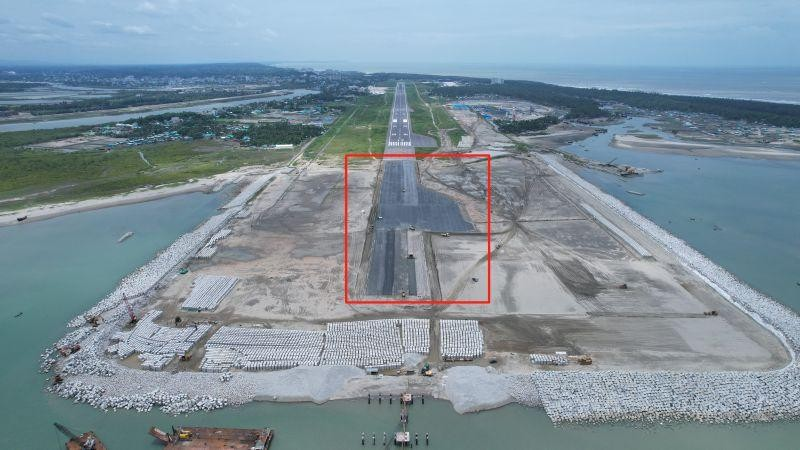
One of the more clandestine efforts attributed to the U.S. and its partners involves Myanmar’s western border. Bangladesh, which shares a border with Myanmar’s tumultuous Rakhine State, has been drawn into the crisis primarily due to the Rohingya refugee exodus. Recently, there has been talk of establishing a “humanitarian corridor” from Bangladesh into Myanmar – ostensibly to deliver aid and possibly facilitate the return of Rohingya refugees. However, reports suggest this corridor concept may double as a channel for Western-aligned support to anti-junta forces. In 2025, investigative reports indicated that the U.S. was quietly working with Bangladesh’s security forces on a plan to support Myanmar’s ethnic rebels in Rakhine State. Under this reported plan, Bangladesh’s army would provide logistical support (but not direct combat troops) to a coalition of anti-junta fighters, including the Arakan Army (an ethnic Rakhine force opposing the Myanmar military). A large supply depot was allegedly being built near Teknaf (Bangladesh’s southern tip) to funnel provisions across the border, effectively
creating a U.S.-backed lifeline into Myanmar. The expansion of Cox’s Bazar airport in Bangladesh was said to be part of this strategy – with the runway extended to accommodate drones, possibly Turkish-made UAVs, that could assist the rebels in Rakhine. All of this was to be done under the guise of an “aid corridor,” separating it from overt military intervention. In fact, Bangladeshi and U.S. officials discussed using the corridor for humanitarian goals, such as returning around 80,000 Rohingya refugees to their homes in Rakhine if the area could be secured by the rebel coalition. On the surface, it sounds like a humanitarian mission – but clearly it has strategic underpinnings, essentially a proxy effort to weaken Myanmar’s junta from the western front.
This so-called Rakhine corridor plan demonstrates the lengths to which Western actors might go to alter the situation in Myanmar without direct intervention. It also puts Bangladesh in a delicate spot: Dhaka is wary of being caught in a great-power proxy war on its border, even as it is under pressure to help resolve the Rohingya crisis. Bangladesh’s government initially gave mixed signals about the corridor, publicly entertaining the idea in early 2025, then voicing caution about being drawn into Myanmar’s civil war. The situation is evolving, but it underscores that Western intervention in Myanmar is no longer limited to speeches and sanctions – there are active efforts to forge new pressure points against the junta, even if under humanitarian auspices. The United States’ overarching goal is to check the Myanmar military’s excesses and prevent China from completely dominating the outcome. Unlike China’s overt state-to- state support of the junta, Western support for Myanmar’s opposition is more covert and framed around democracy and human rights. Nonetheless, both superpowers are now deeply entangled in Myanmar’s crisis, each backing different sides – a classic proxy dynamic that Myanmar’s people ultimately have to bear.
A Turbulent Election and Its Impact
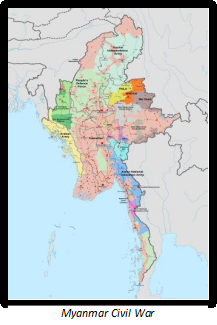
Amid this geopolitical tug-of-war, Myanmar’s internal situation remains explosive, and it is about to reach another critical juncture: a planned national election. The military junta has promised to hold a general election to cement its rule – the first such poll since it grabbed power in 2021. Originally the generals hinted at an election by 2023, but escalating conflict forced repeated delays. As of early 2025, Senior General Min Aung Hlaing extended the country’s state of emergency yet again (citing “security” needs) and indicated an election would occur once “stability and peace” are restored. Observers now expect the junta to attempt a nationwide vote in late 2025. The regime has been feverishly preparing for this faux-democratic exercise: it conducted a census in late 2024 to update voter rolls (an effort that met fierce resistance and violence in rebel-held areas), and it has enacted strict rules to micromanage the election.
However, few believe that what the military calls an election will be anything more than a sham. All credible opposition has been effectively excluded. The junta has dissolved dozens of political parties – including Aung San Suu Kyi’s National League for Democracy (NLD), which overwhelmingly won the last real elections in 2015 and 2020. (In those 2020 polls, the NLD won 82% of the contested seats, a landslide that the generals refused to accept. The military’s justification for the coup was unproven allegations of voter fraud by the NLD.) Suu Kyi herself remains in prison with 33-year sentence, alongside many of her party’s leaders. Independent media is muzzled, and pro- democracy activists are in hiding or exile.
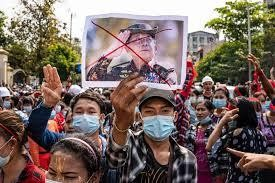
In essence, the junta is arranging an election where the playing field is utterly one-sided – likely handing victory to the military’s proxy party (the USDP) or a slate of military-approved candidates. For Myanmar’s many opposition groups, this vote is nothing but a ploy: “merely an attempt to legitimise the illegitimate regime” that seized power by force. As one spokesperson for the NUG (the opposition government) put it bluntly, “The election will be a sham, it will just be for show.” The military hopes that installing a civilian façade through a controlled election might ease international pressure or domestic dissent. But most Myanmar people are not buying it – and neither are Western governments, which have already declared any junta-run polls to be void of legitimacy.
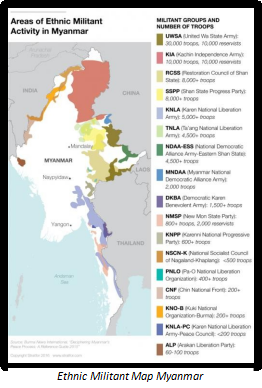
The practical realities on the ground make a free or fair nationwide election impossible at present. Myanmar is in the throes of a civil war; large swathes of the country are not under military control. By the regime’s own admission, voting might be feasible in less than half of Myanmar’s townships. (Some estimates say the junta securely controls only 17% of all village tracts in the country – the rest are contested or held by resistance forces.) In many ethnic minority regions, powerful armies like the Kachin, Karen, and Rakhine’s Arakan Army not only oppose the junta but govern their areas de facto. These groups, along with the NUG’s People’s Defense Forces (PDF militias) across the country, have vowed to disrupt any junta-run election. They see it as a rubber stamp for military rule and have threatened to attack polling stations or convoys. Tragically, this means any election attempt will likely be accompanied by violence and intimidation – and indeed, we have already seen signs of that. During the junta’s census-taking in late 2024 (a dry-run for the voter list), resistance fighters ambushed census workers guarded by soldiers, killing several. The atmosphere is one of fear and defiance; many citizens have said they will boycott the polls if they occur. As one activist observed, it is a “bizarre exercise” to talk of voting while the country is literally at war with itself.
Far from bringing peace, a sham election risks inflaming Myanmar’s conflict even further. The NUG and ethnic rebels have made it clear that they will not recognize the results. Any regime that emerges from this vote will lack credibility in the eyes of a majority of the population, potentially fueling even more resistance. “This election will not lead to stability. It will lead to more instability and more violence,” warned the NUG spokesperson Zaw Kyaw. Unfortunately, that is a very plausible outcome: the act of voting could become yet another flashpoint for clashes, and a new “elected” government dominated by the military might entrench the divide, convincing the opposition that only armed revolution will bring change. In essence, the polls could slam the door on any negotiated solution, hardening the resolve of anti-junta forces to topple the regime by force. Already, since the coup, Myanmar’s conflict has reached “unprecedented” intensity – by 2024 the military was losing territory and seeing record defections. If the junta uses an election to declare itself legitimate, the opposition is likely to double down on the fighting.
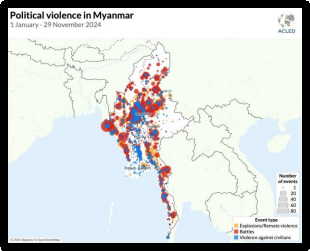
The international response to the planned election is also telling. China, despite having no love for democracy, is paradoxically pushing the junta to hold the vote – but for its own ends. Beijing hopes a new government (even a rigged one) might sideline the obstinate Min Aung Hlaing and install more competent leadership that can stabilize the country (and get Chinese projects back on track). In contrast, Western nations and Myanmar’s neighbors in ASEAN largely view the timing of this election as counterproductive. In January 2025, ASEAN – which usually avoids commenting on members’ internal affairs – urged the junta to prioritize peace over elections, implicitly warning that a vote amid civil war would only make things worse. Western officials have already labeled the planned polls a “sham” and promised to reject the outcome, reinforcing that sanctions will remain or even tighten if the junta proceeds. Thus, rather than opening a path to normalization, the junta’s election could deepen its international isolation (at least with the West), while giving China and a few others an excuse to continue engaging Myanmar on their terms.
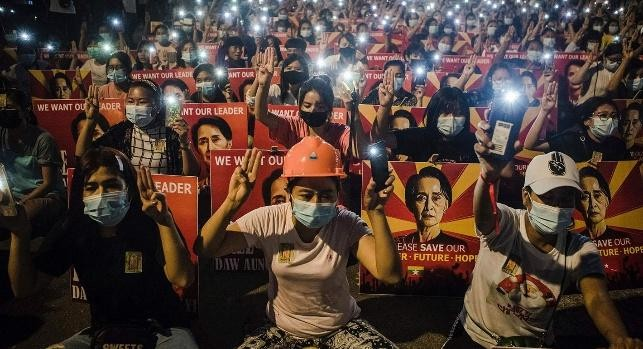
For the people of Myanmar, the immediate impact of these “polls” is unfortunately dire. Many citizens feel disenfranchised – their votes and voices effectively meaningless if the process is fixed. Pro-military factions might use the campaign period to stoke ultranationalism or hatred against minorities (as has happened in past elections), worsening social fractures. Violence is expected to spike around election activities, which could displace even more civilians or result in harsh crackdowns in urban areas. Humanitarian needs – already enormous, with over 3 million internally displaced and half the population in poverty may grow as instability spreads. An illegitimate election also postpones any hope of genuine dialogue between the military and opposition groups, meaning Myanmar’s humanitarian and economic crises will likely grind on.
Outlook: A Nation Caught in Contest
Myanmar’s predicament today is the result of converging pressures: a power-hungry military clinging to control, a determined popular resistance, and competing external powers each trying to secure their interests. The country’s geostrategic position ensures that what happens in Myanmar reverberates beyond its borders – drawing in China’s ambitions, India’s security concerns, Bangladesh’s refugee burdens, ASEAN’s stability worries, and the U.S.’s democratic ideals and Indo-Pacific strategy. This once-isolated nation has become a stage for 21st-century great power rivalry as much as for a people’s struggle for freedom.
In the near term, all eyes are on the junta’s planned election and its aftermath. A forced election could mark a new phase of turbulence. If the military regime manages to hold onto power through brute force and a staged vote, Myanmar may settle into a grim status quo: a fragmented country under a sanctioned dictatorship, increasingly reliant on China and Russia for economic survival and military hardware. Beijing, in that scenario, would likely deepen its footprint –securing its projects and perhaps even gaining a strategic ally on the Bay of Bengal, which would extend China’s influence toward the Indian Ocean in a significant way. Such an outcome would strengthen China’s hand in the region, albeit at the cost of Myanmar’s sovereignty being heavily constrained by Chinese interests. Western countries would probably continue a policy of isolation and pressure, leaving Myanmar largely cut off from global markets and institutions (apart from those aligned with China). The Myanmar people would remain caught in the middle – suffering repression at home and deprived of full engagement with the world.
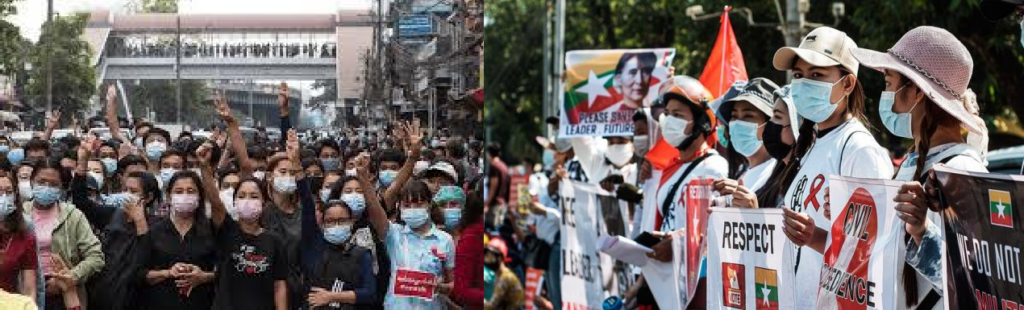
On the other hand, if resistance forces continue to chip away at the military’s control – as they have since 2021 – Myanmar could see a gradual power shift on the ground. Some analysts even suggest the regime’s hold is weakening to the point that a collapse is conceivable if momentum sustains. In that case, the post-election period might bring even more upheaval as the junta struggles to govern and insurgents move in. It’s a dangerous vacuum that could intensify humanitarian suffering, but it might also create openings for a negotiated solution if international mediators step up. The role of outside powers will remain pivotal: China could broker truces (as it did briefly on the China-Myanmar border in late 2023 or conversely ramp up support to prevent its favored side from losing. The U.S. and regional players might increase backing to the opposition in hopes of forcing the military to the table. Bangladesh and India will be carefully watching Rakhine and the north, respectively, to prevent spillover of violence. ASEAN might eventually push harder on its peace plan, especially if the election proves obviously futile in resolving the crisis.
In any scenario, it’s clear that Myanmar’s fate is of global consequence. For the average Myanmar citizen, these geopolitical games mean little if they cannot attain peace and the right to choose their leaders. The promise of Myanmar’s geostrategic potential – as a thriving crossroads of trade between India, China, and ASEAN – will remain unrealized until the political turmoil is resolved. A stable, democratic Myanmar could indeed be a linchpin of regional connectivity and development, benefiting all players. But as of now, that vision is distant. Instead, the country is embattled and divided, a place where outside powers deliver aid or arms to their preferred side while an elected leader languishes in jail. Myanmar is a nation with a prized location and many powerful suitors, yet it is tormented by internal strife and power struggles. China’s influence is strong and growing, as it stakes a claim to a strategic corridor through Myanmar to the Indian Ocean. The United States and Western allies, not wanting Myanmar to become a Chinese client state, are trying to intervene via sanctions and subtle support to the opposition – even exploring bold moves like a Bangladesh- Myanmar aid corridor. And amid all this, Myanmar’s military is pressing ahead with an election that almost no one believes is real, hoping it can entrench itself in power. The likely impact of these polls is not peace, but more conflict – at least in the short term – because the fundamental political disputes in Myanmar remain unresolved.
For now, Myanmar’s people face an uncertain future: will their country remain a pawn in a geopolitical chess match, or can it regain its sovereignty and unity on their terms? The coming year, with its turbulent “election” and international maneuvers, may provide some answers. What is certain is that Myanmar’s geostrategic importance guarantees the world will be watching closely – and both East and West will continue vying for influence – as this drama unfolds. The hope among many Myanmar citizens and friends abroad is that eventually a genuine political solution will emerge, so that this strategically located nation can escape its cycle of turmoil and realize its potential as a prosperous crossroads, rather than a battleground for proxy wars and power plays.
Sources:
-Arun Anand
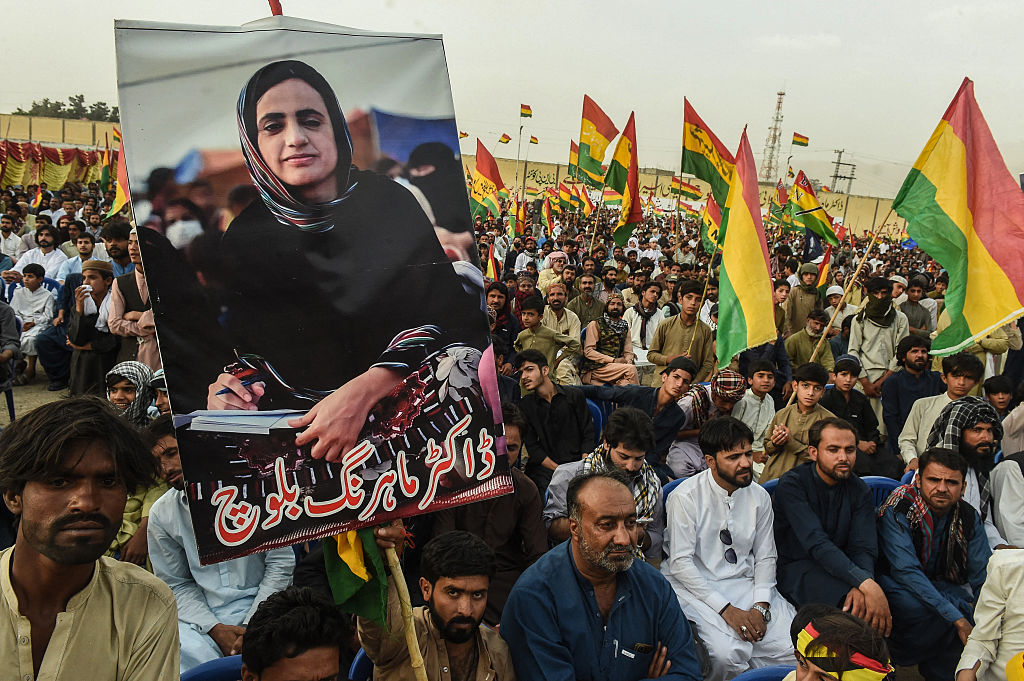
Over Eight months have passed since Dr. Mahrang Baloch, a young physician turned human rights icon, was arrested on trumped-up charges in Quetta, Balochistan. 257 days since the state threw her into jail under Pakistan’s catch-all arsenal of “anti-terrorism” and “sedition” clauses. And 37 weeks since much of Pakistan’s so-called progressive intelligentsia, which was once vocal and proud of its commitment to dissent, fell conspicuously and unforgivably silent.
The cruelty of this moment is not just in what the state has done to Dr. Mahrang and her comrades in the Baloch Yakjehti Committee (BYC). It is in how predictable the silence of non-Baloch Pakistanis has been, including among the ever-shrinking ranks of “liberals” who still claim to champion democracy. In a country descending, quite visibly, into a military authoritarianism, or so to say an Orwellian farce, even moral outrage has become selective.
This is the joke Pakistan has become: a place where everyone knows the cases against Mahrang and her associates are a sham and yet almost no one outside Balochistan dares to say it aloud.
To understand why the establishment is so determined to crush Dr. Mahrang, it is necessary to recall the arc of her rise. The Baloch Yakjehti Committee was never just another protest collective. Founded in 2018 by Dr. Mahrang along with Sammi Deen Baloch and Beebow Baloch, the BYC emerged as a rare, grassroots Baloch women-led peaceful movement. Its central goal was exactly the issue the Pakistani state has most wanted to keep hidden: the unending human rights violations by its military, especially enforced disappearances and custodial killings.
For decades, Baloch families, mostly women and children, marched in circles demanding to know where their sons, brothers, and fathers are. What the BYC did was to put names, faces, stories, and grieving families at the centre of a national conversation that Pakistan’s military dominated establishment always wanted to suppress.
Its gradually became the primary platform to voice the grievances against the militaristic policy of Pakistan towards the province. The watershed moment came in late 2023, after the custodial killing of 20-year-old Balach Marri Baloch, abducted by plain-clothes Counter Terrorism Department officials. The BYC-led march, largely comprising women carrying photos of relatives who vanished, travelled from Kech in Turbat to Islamabad, seeking accountability and an end to military excesses. It exposed the brutality of the security apparatus to a mainstream audience, and for the first time in years, the state’s narrative on Balochistan began to crack.
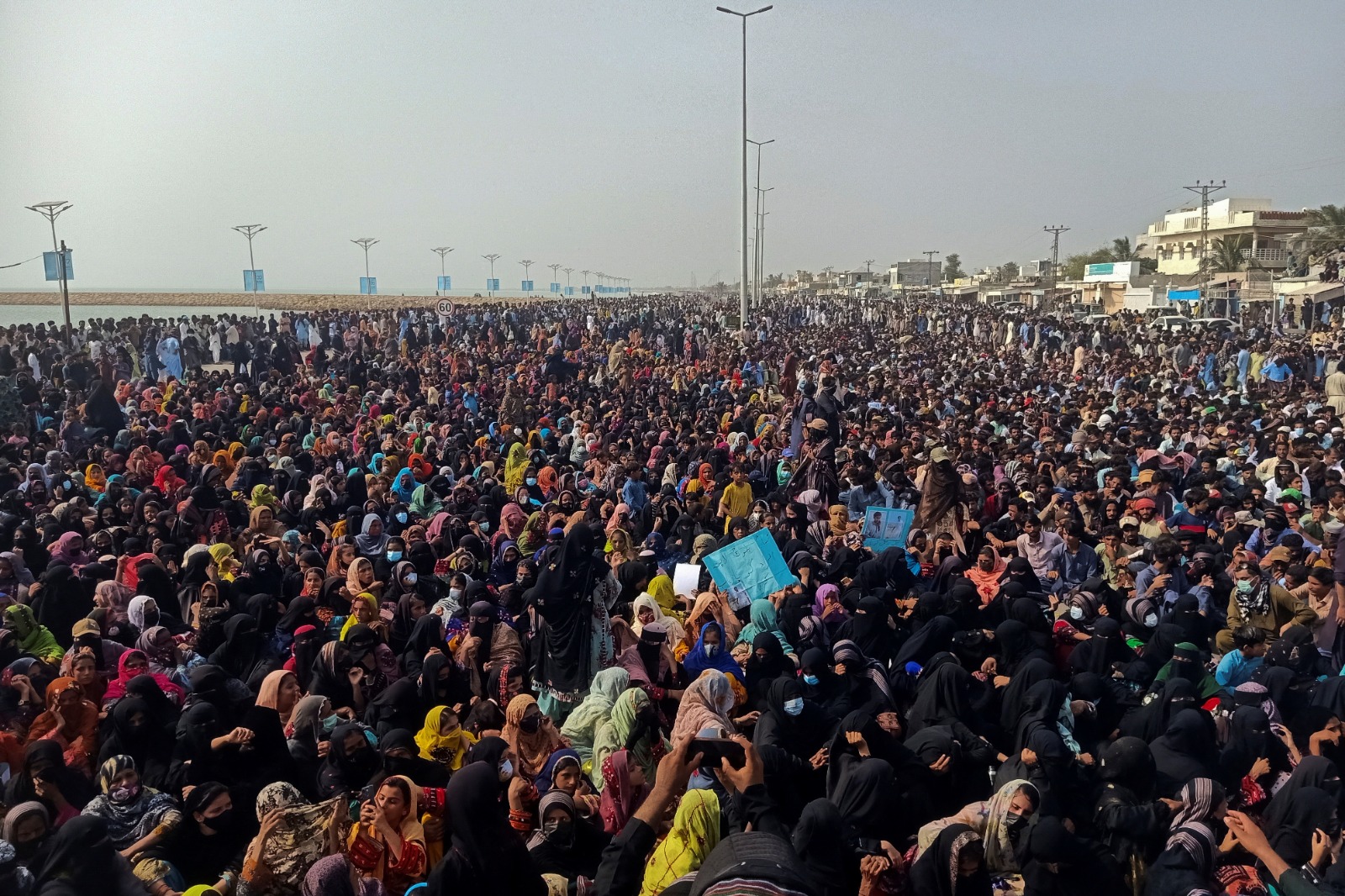
The state responded as expected: with repression. But the more it tried to silence the BYC, the more the movement grew. In July 2024, the BYC convened the Baloch Raji Muchi (Baloch National Grand Jirga) in Gwadar. it aimed at exposing Islamabad’s imperial policies in Balochistan from resource exploitation to demographic engineering to routine extrajudicial killings. Despite highway blockades and internet shutdowns, hundreds reached the venue. For the state, it became apparent that BYC was not merely a fringe group but one with mass appeal.
For Pakistan’s deep state, particularly an increasingly entrenched military under Army Chief Asim Munir, such defiance from the country’s most dispossessed province was intolerable.
And so, on 22 March 2025, Pakistani state finally arrested Dr. Mahrang during a peaceful sit-in demanding the release of the brother of Bebarg Zehri, one of the BYC’s central organisers, abducted two days earlier on 20 March. She was charged under anti-terrorism statutes of Maintenance of Public Order besides sedition. Others who were arrested included BYC Central Organizers Bebarg Zehri and Beebow Baloch, Shah Jee Sibghat Ullah, Gulzadi Baloch, among others. Sammi Deen Baloch, herself the daughter of a disappeared man, was detained and later released.
Human rights organizations have called the charges farcical, the arrests punitive, the crackdown an unmistakable escalation of the military’s doctrine of enforced silence. But silence is now Pakistan’s national reflex.
To be fair, a small handful of prominent voices such as London-based novelist Mohammed Hanif and academic Ayesha Siddiqa, besides Harris Khalique, of Human Rrights Commission of Pakistan (HRCP) spoke out. But beyond this, Pakistan’s progressive class, journalists, civil society networks, and ‘liberal’ commentators have largely looked away. In fact, media played aided the state in labelling Mahrang and her BYC members as secessionists.
The reason is as old as Pakistan itself: when the state targets Baloch activists, most Pakistanis convince themselves that this is someone else’s problem. That the Baloch live too far away, that the disappearances are exaggerated, that security considerations justify exceptional measures. Even the Pakistanis who rally for Palestine, who write poetic elegies for democracy, suddenly find nuance when the victims are Baloch. It is nothing but hypocrisy of the highest order.
That selective empathy has given the military a free pass to dismantle what little democratic space remains. It is no coincidence that Pakistan is undergoing its worst authoritarian slide in decades: a re-engineered judiciary, censorship of the press, mass trials of political activists, and the sidelining of dissenting voices from Baloch rights organizers to opposition politicians under the guise of national stability. Therefore, the silence is not passive but an enabling one.
Dr. Mahrang’s imprisonment is thus more than a legal case. It is a moral indictment of what Pakistan has become. Eight months and one week in jail, without due process, for leading peaceful marches asking a simple question: “Where are our loved ones?” If a state cannot tolerate even that question, is there any legitimacy whatsoever left in it?
It seems that the Pakistan’s rulers believe that imprisoning the BYC leadership will extinguish the movement. But they seem to be overlooking the fact that it emerged from the shared trauma of over seven thousand families whose sons were taken in the dead of the night and the light of the day. It grew because the state’s violence is structural, not episodic.
The cruel joke is not that Pakistan’s establishment behaves with impunity. That much has long been known. The cruel joke is that the country’s liberal progressive class, which once claimed to represent conscience, has become too timid to speak when conscience demands nothing more radical than stating facts everyone already knows.
Everyone knows the charges against Dr. Mahrang are a farce. Everyone knows why she was arrested. Everyone knows what the military fears most: not terrorism, not foreign conspiracies, but the possibility that ordinary Pakistanis might finally look at Balochistan and see citizens, not a security threat.
The tragedy is not only that Pakistan is drifting into authoritarianism. It is that so many who should know better have chosen silence as the price of comfort.
-Arun Anand
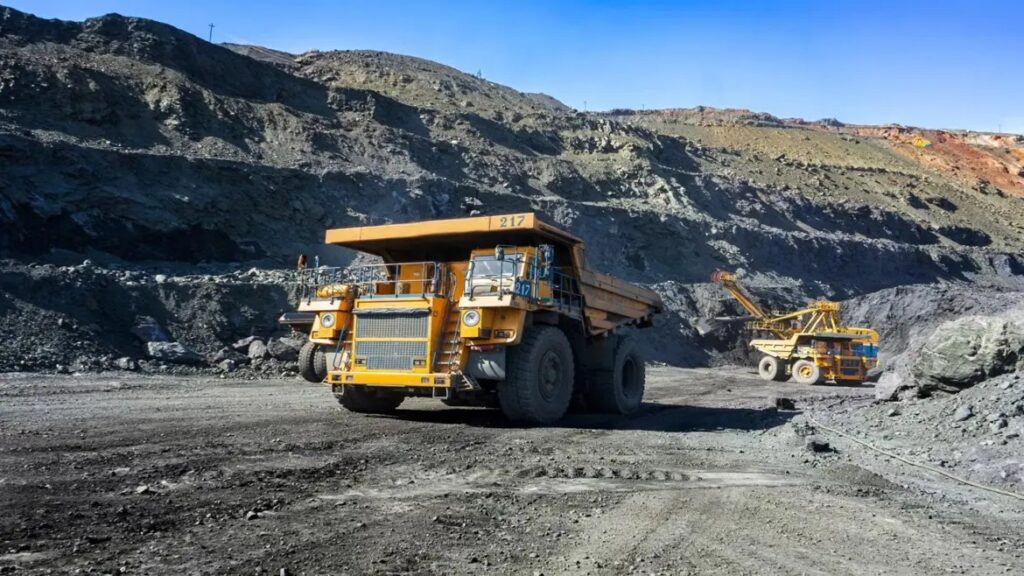
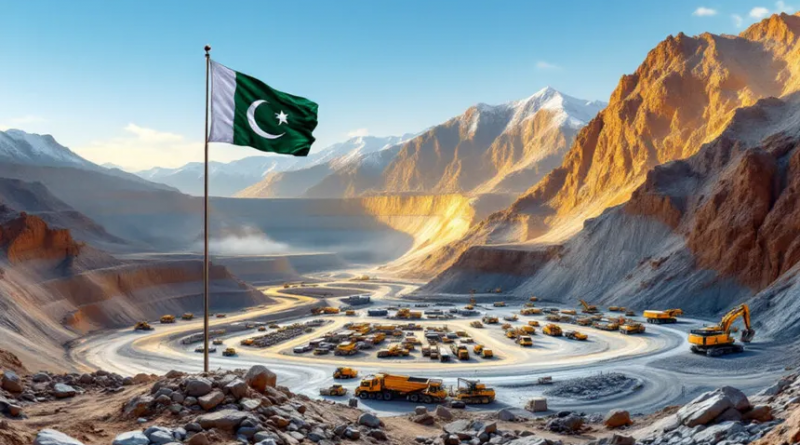
On December 10, the U.S. Chargé d’Affaires in Islamabad, Natalie Baker, announced that the U.S. Exim Bank had approved a package of $1.25 billion in financing to support mining operations at Reko Diq, one of the world’s richest untapped copper and gold deposits. On the surface, Washington framed the decision as a step toward securing global supply chains for critical minerals.
Islamabad portrayed it as a sign of renewed confidence in Pakistan’s investment climate. But for Balochistan, Pakistan’s largest province by land but its poorest by every measure, the announcement landed like yet another reminder that its natural wealth is a prize others are free to carve up.
This Exim Bank financing flows directly after two MoUs were signed on September 8, 2025, between Pakistan and the United States for “critical minerals cooperation.” The military dominated Shehbaz Sharif government heralded the agreements as a milestone. But in Balochistan, they are yet another chapter in an old story: the extraction of Balochistan’s resources by outside powers, facilitated by a central government that treats the province not as a partner but as a colony.
For decades, Pakistan has perfected a model of imperial governance in Balochistan, which combines military control, political manipulation, and economic dispossession. What is new today is not the extraction but the identity of the extractors. The United States now joins China, whose multibillion-dollar projects under the China-Pakistan Economic Corridor (CPEC) have already given Beijing expansive access to Balochistan’s ports, highways, and mineral deposits.
Pakistan’s rulers have turned Balochistan into a marketplace where global powers shop for resources while the people who live above those riches remain among the most deprived in South Asia.
Balochistan’s modern history is inseparable from the manner in which it entered Pakistan. After the forced accession of 1948, the province was governed with suspicion and repression. Islamabad treated Baloch aspirations for autonomy as rebellion, not politics. The result is a province where the most powerful institution is not the provincial assembly but the Quetta cantonment, whose writ supersedes that of any civilian office.
Even today, Balochistan’s political leadership is crafted in military corridors of Rawalpindi and the condonement at Quetta. The current chief minister, Sarfaraz Bugti, is widely viewed as a product of the military establishment, who is another local administrator empowered to manage dissent rather than address the province’s material deprivation. The result is a governance system more interested in securing resource corridors than building schools, hospitals, or representative institutions.
Under this militarized order, resource extraction has been carefully organized to ensure that wealth flows outward to Pakistan’s dominant province, Punjab, and to foreign partners courted by the military-led state. Balochistan’s natural gas from Sui fueled Pakistan’s industrial growth for decades, yet most Baloch households cook on firewood.
Today, its copper and gold fields promise to enrich foreign corporations and deliver revenue to Islamabad, while the communities living in the shadow of these mines remain jobless, landless, and under surveillance.
Even menial jobs at major projects like security guards, cleaners, construction labor, are routinely filled by workers imported from Punjab. The message is unmistakable that the state does not merely extract from Balochistan, it excludes Baloch people from even the crumbs of that extraction.
The rush by both China and the U.S. for access to Balochistan’s minerals reflects how Pakistan’s ruling elite has repositioned the province within global competition. Beijing’s footprint was first to expand, anchored by the Gwadar port and a series of infrastructure and mining agreements.
CPEC promised development but delivered a model where Chinese companies received generous concessions, security cordons were erected to protect foreign workers, and local fishing communities were pushed to the margins.
Now, Washington enters the scene, not as a counterweight to China’s influence but as another partner in Pakistan’s long tradition of opaque, extractive deals. It reflects a bipartisan plunder with Pakistan inviting multiple patrons to mine a region whose own residents are denied the most basic political and economic rights.
The most striking thing about Balochistan is how starkly its material reality contradicts its mineral wealth. Despite being mineral rich in every aspect, the province ranks at the bottom of every development index in Pakistan. For instance, the poverty appears near-universal with 71 percent of the provincial population living in multidimensional poverty. It is nearly double the national average of 38 percent and in districts like Awaran, Kharan, and Panjgur, even exceeds 80 percent.
Likewise, education is in an equally dire state. Literacy hovers around 40–44 percent, the lowest in the country, with female literacy dropping below 25 percent in many rural districts. More than 60 percent of Balochistan’s children are out of school. These are not statistics of a neglected province; they are the metrics of deliberate underdevelopment.
The story is same across healthcare with the province recording the highest maternal mortality ratio of 785 deaths per 100,000 live births. It is abysmal compared to the national average of 186.
Nevertheless, the new U.S. financing for Reko Diq along with the other critical mineral MoU is significant not because it marks a shift in Washington’s policy but because it reveals a continuity in Pakistan’s own governing logic of treating Balochistan as a frontier to exploit.
The province is secured by force, governed through proxies, and opened to whichever foreign power is willing to invest billions with no questions asked about political rights or local consent.
Even when the government speaks of “benefit-sharing,” it does not specify it that the benefit is for Punjabis and Punjabi military and political elite that dominates the levers of power in Pakistan. As such, it is not partnership but a plunder with legal paperwork.
The tragedy is not just that Balochistan’s resources are being plundered. It is that this plunder is now bipartisan, endorsed by Islamabad, welcomed by Washington and Beijing, and justified in the name of development that never arrives.
For the people of Balochistan, the empire has simply added new partners. The loot continues. The province remains impoverished. And the world’s most powerful countries now share in the spoils of a land whose own residents have yet to taste the prosperity lying beneath their feet.
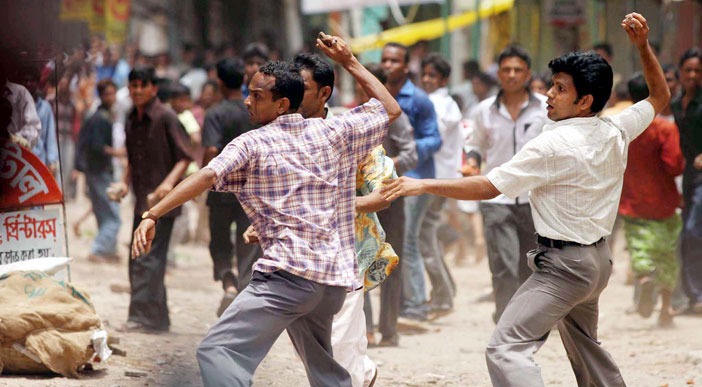
Pakistan’s geopolitics seem to have reached a full circle with the continuous terror of Tehrik-e-Taliban Pakistan (TTP).Founded in 2007, the TTP is a jihadist militant organisation whose prime target is the Pakistani military. The extremist group envisions creating an Islamic caliphate state based on the Deobandi tradition in Pakistan. Besides, the TTP supported the Taliban’s efforts in Afghanistan. Banned by Pakistan in 2008, TTP is believed to have strong ties with al-Qaeda and Taliban in Afghanistan, and its militant attacks are mostly concentrated in Pakistan’s Federally Administered Tribal Areas (FATA) and Khyber Pakhtunkhwa, bordering Afghanistan.
Following the Taliban’s takeover of Afghanistan in 2021, TTP’s activities resumed, and attacks intensified, adding to Pakistan’s own internal terror attacks. At the same time, Pakistan’s state-sponsored terror groups continue their cross-border terrorism, especially in India. The recent military operation by Pakistan in Khyber Pakhtunkhwa that killed 17 TTP militants disclosed a shocking report: one of the militants killed has been identified as a Bangladeshi national. Bangladesh media reported that the slain militant’s family had no idea of his militant background, who claimed to have moved to Dubai to earn a living. However, as per police intelligence, the Bangladeshi militant moved to Afghanistan.
Pakistani authorities reported to have hounded two or three Bangladeshi militants in their earlier operations, while these men allegedly went to Afghanistan on the pretext of religious work, where they later joined an extremist terrorist organisation. This is, however, not a lone case. In April, a 23-year-old Bangladeshi national, Ahmed Zubair, reported to be a member of Tehreek-e-Taliban, was among the 54 militants killed by Pakistan’s military forces. At least eight Bangladeshi nationals were also reported to have migrated to Afghanistan to join the TTP. The Bangladeshi digital platform also stated that Bangladesh’s own security intelligence remains oblivious to TTP’s outreach in Bangladesh, and if any camps are operating inside the country presently. Again, two individuals—33-year-old Ahmed Faisal and 49-year-old Shamin Mahfuz—were arrested in Bangladesh in July for their alleged TTP links.
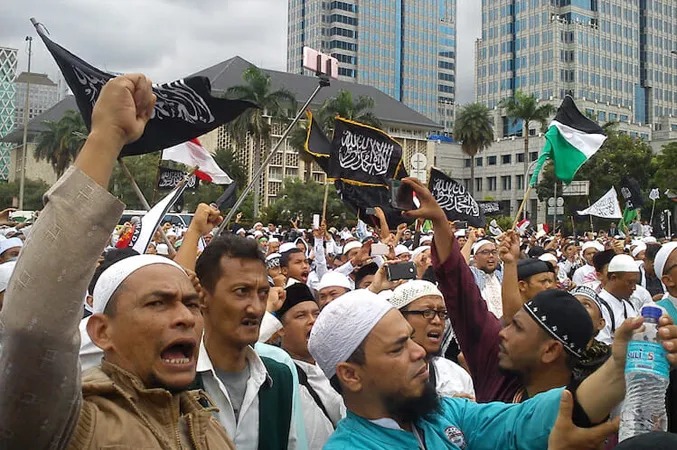
It should be noted that Mahfuz is a former leader of Jamaat-ul-Mujahedeen Bangladesh (JMB), and later founded Jama’atul Ansar Fil Hindal Sharqiya in 2019. Both individuals were also previously detained on multiple terrorism charges. From Faisal’s confession, it came to light that most of these Bangladeshi-national militants have moved to Afghanistan either via Saudi Arabia or via Pakistan to join the TTP. Mostly youth, these militants seek to establish an Islamic caliphate worldwide based on the Sharia. During this arrest, it was also learned that four Bangladeshi nationals who joined the TTP were killed on the Afghan-Pakistan border, while 25 more were preparing to leave Bangladesh to join jihad.
The confession also shed light on one Imran Haider, a senior TTP figure, as being the central figure behind the online indoctrination of Bangladeshi youth to recruit them to the TTP. Around the same time, 36 Bangladeshi nationals were reportedly detained in Malaysia for their alleged involvement in a “radical militant movement”. However, Bangladesh’s home advisor downplayed this and denied their extremist links. Since last year, South Asian geopolitics has gone through an unpredictable arc with the fall of Sheikh Hasina in Bangladesh following the July Uprising. On one hand, the interim government in Bangladesh pivoted to Pakistan, boosting bilateral ties—including trade, education, defence and intelligence sharing, while maintaining a deliberate distance with India, Bangladesh’s oldest and long-standing regional partner.
On the other hand, Bangladesh witnessed a rapid surge of Islamist groups, so long sidelined and suppressed via counterterrorism efforts of the Awami League government. Transnational extremist groups like Hizb-ut Tahrir (banned in 2009) made their presence felt in the country, notably for allegedly organising a procession by students in Dhaka under the banner of ‘Conscious Teachers and Students’, demanding the establishment of an Islamic Caliphate system in Bangladesh in October last year and the ‘March to Khilafat’ rally this March. Muhammad Yunus has also appointed individuals associated with Hizb-ut Tahrir in his interim government, sparking controversy in the political scenario.
Moreover, leaders and associates of groups like Hefazat-e-Islam, Ansarulla Bangla Team and Khelafat Majlis—arrested for their extremist links were also released under the interim government, who have now resumed their hate propaganda, to push for the creation of an Islamic state in Bangladesh based on Sharia law. These developments raise concerns about the resurrection of Islamist extremism in Bangladesh, given its history. Those from Bangladesh joined the Taliban to fight against the Soviet Union in Afghanistan, returned to their homeland in the 1980s and 90s and established extremist organisations, such as Harkat-ul Jihad Al Islami Bangladesh (HuJIB), and Jamaat-ul-Mujahedeen Bangladesh (JMB).
Needless to say, these groups not only had ideological links with the Taliban but also received logistical support and training from al-Qaeda and Pakistan-based Laskhar-e-Taiba (LeT), and their terror operations in Bangladesh were aimed at creating a Taliban-like establishment in the country. While their activities were crippled due to counterterrorism measures by 2007, Bangladesh remained under periodic terror attacks, witnessing a surge from 2013-2016. The political changes in Bangladesh following Hasina’s deposition further strengthen concerns of Islamist extremists’ comeback in the country, as evident from the above-stated reports.
The recent visit of seven Islamic clerics, including the Khelafat Majlis chief and Nayeb-e-Amir (Pir of Madhupur) of Hefazat-e-Islam, to Afghanistan on the invitation of the Taliban should be viewed with the same caution as the rising trend of militancy in Bangladesh. These groups share the same ideological orientation—Deobandi school of Islam—as that of the Taliban and hailed the Taliban takeover of Afghanistan as a “triumph of Islam”. While not extremist groups themselves, these parties’ ideological inclination to the Taliban and their own hardline stance on socio-cultural-political life signal a possible convergence of interests between these organisations and foreign-linked militant ones. Nevertheless, Bangladesh’s Anti-Terrorism Unit’s additional inspector general claims that there is no militant activity in Bangladesh while simultaneously stating that future militant activity cannot be ruled out either. With the election around the corner and Bangladesh’s fragile state of democracy, this rise of militancy in Bangladesh now poses the greatest security risk, not just for Dhaka but also for South Asia as a whole.One can only hope that Bangladesh’s law enforcement forces to deal with militant trends seriously without having to resort to denial. Otherwise, it would not be long before Bangladesh becomes the second Pakistan.
–IANS
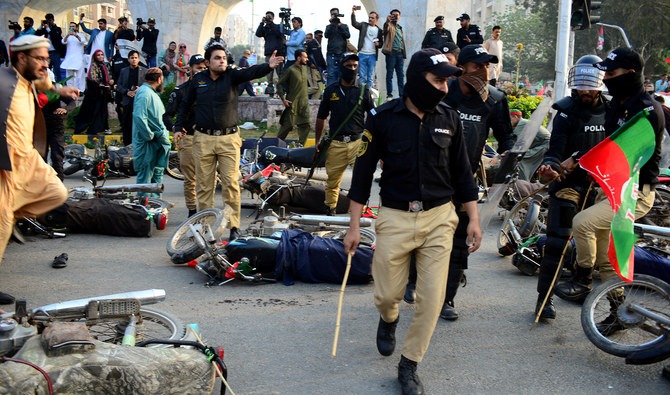
When waves of youth-led unrest swept across South Asia after Sri Lanka’s uprising in 2022, analysts began to ask which country would be next. While Bangladesh followed the suit in 2024 leading to Sheikh Hasina’s exit and most recently Nepal, many wondered whether it will arrive in Pakistan which ticked every box that fuels such movements: economic collapse in parts, high youth unemployment, cronyism, and a political class that many young people see as tone-deaf.
Yet, unlike Kathmandu, Dhaka or Colombo, Karachi and Lahore did not become the epicentres of mass, ideologically diffuse youth uprisings. The answer to Pakistan’s current insulation from such a rupture lies not in popular contentment but in a set of deliberate institutional, legal, and narrative controls that have blunted the emergence of a nationwide, cross-cutting youth movement.
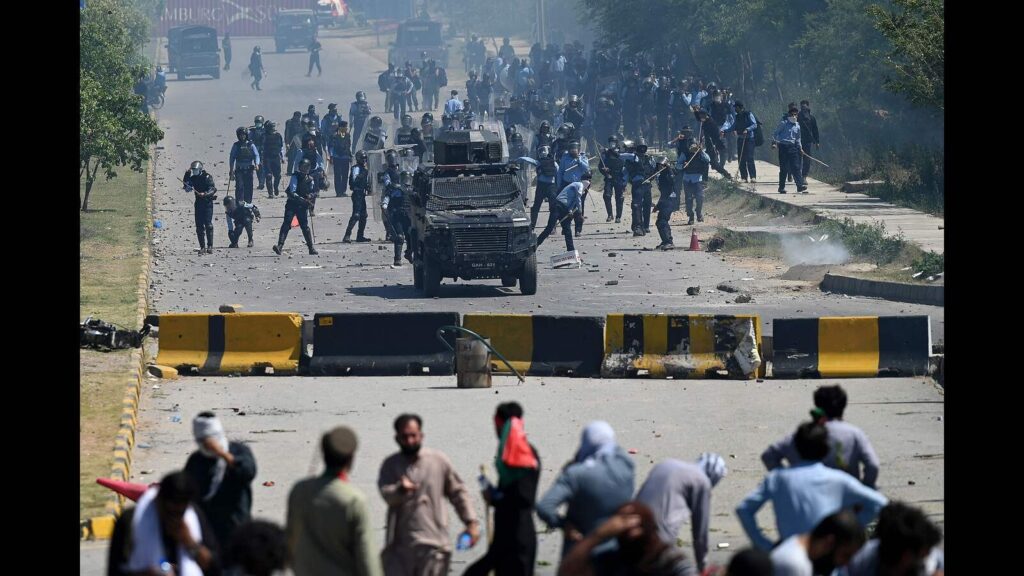
In case of Pakistan, it all boils down to the state’s most powerful actor: the Pakistan Army. The institution’s unprecedented response to May 9, 2023, violence after former Prime Minister Imran Khan’s arrest made clear that any mass movement threatening the army’s prerogatives would be met with force and lawfare. In the weeks and months that followed, hundreds of civilians accused of taking part in the unrest were tried by military courts. By signalling that protest could carry the risk of military prosecution, the establishment transformed the costs of visible mobilization for would-be demonstrators.
But coercion alone does not explain the lack of a Gen Z wave. The military-dominated state establishment has shored up its actions with a legal and rhetorical infrastructure that normalises repression. As has been demonstrated in the last few years, pliant civilian governments like Shehbaz Sharif’s and a compliant judiciary conferred legality on the state’s repressive measures such as sanctifying military trials of civilians or amending constitutional provisions to further empower the establishment. Those measures do more than punish by creating an atmosphere of fear and unpredictability. Young people who might otherwise risk a night on the streets calculate not only the immediate danger of police or paramilitary response, but the prospect of prolonged detention, disqualification from public life, or long legal battles.
Parallel to legal tools is the information control that has acted as a central plank of the establishment’s strategy. Whenever protests erupt in peripheral provinces of Balochistan and Khyber Pakhtunkhwa predominantly over Pakistan Army’s human rights violations, such protests are often framed as the work of foreign-backed secessionists or direct foreign hands. That securitized framing strips popular grievances of their political valence and paints them as existential threats to national unity. In practice, branding a local protest “anti-state” or “sponsored” is used to delegitimize sympathy from the broader public, making it far harder for disparate movements to coalesce into a national youth narrative. The rise and proscribing of movements by Pashtun Tahafuz Movement (PTM) and Baloch Yekjehiti Committees (BYC) show how Pakistani media framing, often echoing official lines, reinforces the divide between “patriotic” majorities and “dangerous” minorities.
Targetted media campaigns have not just been employed in the restive provinces. After the no-confidence motion that ousted Imran Khan’s government in 2022, for example, street mobilisation by the Pakistan Tehreek-e-Insaf (PTI) demonstrated how quickly the public discourse was polarized. And when May 9 anti-establishment protests against Khan’s arrest saw the sanctity of the military fortresses breached for the first time ever, the state-aligned media quickly presented protesters as partisan, violent, or manipulated by foreign backed actors. Such a characterisation is employed to keep young citizens viewing politics through the prism of party loyalties, ethnic identity, or regional grievance rather than shared economic and civic concerns that cut across such lines.
Economic desperation, however, remains a dormant accelerant. It is not that in this age of information and unprecedented access to social media technologies Pakistan’s young demographic are not aware of stagnant opportunity, rising living costs, and the politics of patronage. What has kept them off the streets is not indifference but fragmentation. Herein, the long cultivated and institutionalized provincial, ethnic and sectarian cleavages work as dampers on the kind of cross-class, cross-regional solidarities that have powered Gen Z uprisings elsewhere in the region. Until youth can imagine a politics that transcends these divisions, protest energy tends to boil over locally and then dissipate.
So, the question arises what would it take for Pakistan’s Gen-Z to break the shackles of current status quo? The foremost answer lies in the creation of a shared political vocabulary that could link bread-and-butter economic grievances to common governance failures, rather than reducing dissent to ethnic or partisan labels. The youth need to see beyond the ethnic and sectarian identities and through the façade of the agendas of current political elite. The recent Gen-Z waves across South Asia show that when youth movements craft a shared language of rights and justice, they can force rapid political concessions. But for such realisation, they ought to avoid being swallowed by existing cleavages.
It is important to note the asymmetry here: the state does not need to be omnipotent to prevent a Gen-Z uprising; it only needs to be better at dividing and dissuading than youth movements are at unifying. Pakistan’s both formal and informal institutions have operated precisely along those lines. They have made it costly to imagine a nationwide movement and profitable, for the moment, to keep politics provincial and securitized. For many young Pakistanis, an act of national solidarity means choosing sides in a polarized landscape where the risks of losing are existential.
That is not to say the powder keg cannot ignite. Economic shocks, a dramatic political miscalculation, or a new generation of conscious young political minds who can tell a cross-communal story of grievance and hope could change the calculus quickly. But for now, Pakistani establishment’s latest respite from a Gen-Z uprising is a function of strategy as much as suppression. This includes a combination of military deterrence, legal architecture, media framing, and the deliberate maintenance of social fissures. If the most connected and potentially volatile cohort of young demographics of the country are to convert frustration into sustained collective action, they will have to imagine a politics that can outmaneuver the state’s oldest playbook: divide, delegitimise, and dominate.
The question for military-dominated Pakistani establishment’s future is not whether its young are angry, which they are anyway, but whether they can learn to be strategic, patient, and cross-communal enough to build a movement that it cannot simply criminalize, fragment, or outbid. Until that happens, the streets will remain dangerous ground that too many are unwilling to risk alone.
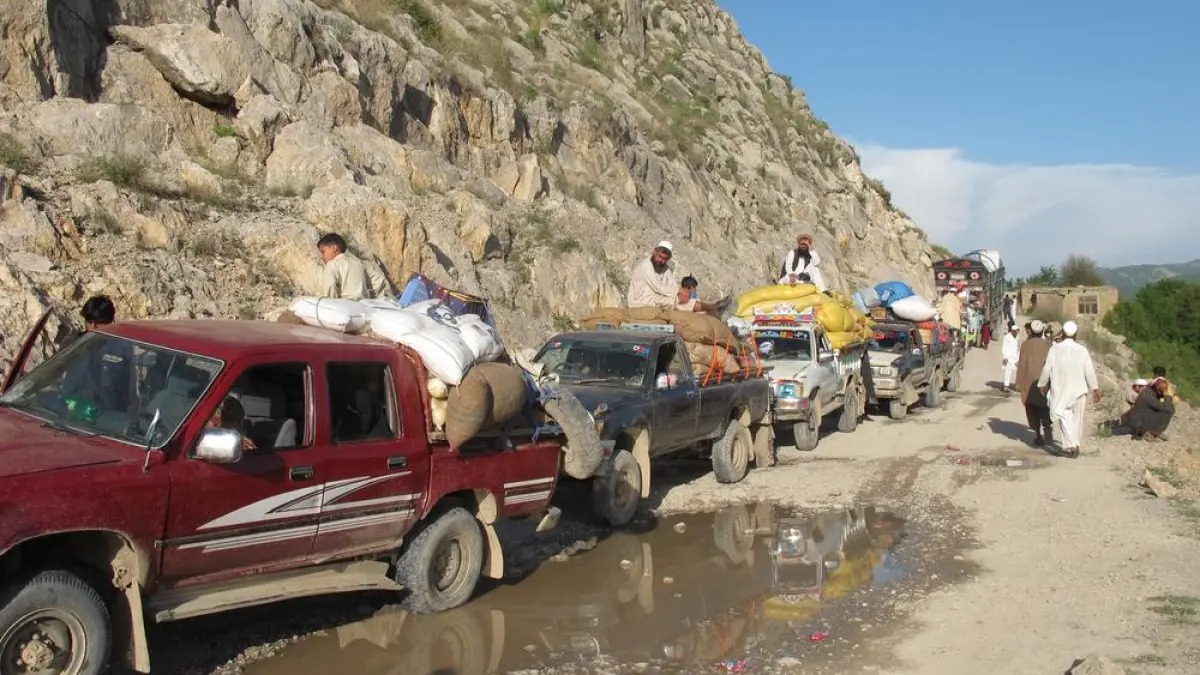
Pakistan is a state that is killing its own people. In October, Pakistani state carried out attacks in Khyber Pakhtunkhwa, where at least 23 civilians, including women and children, were killed.
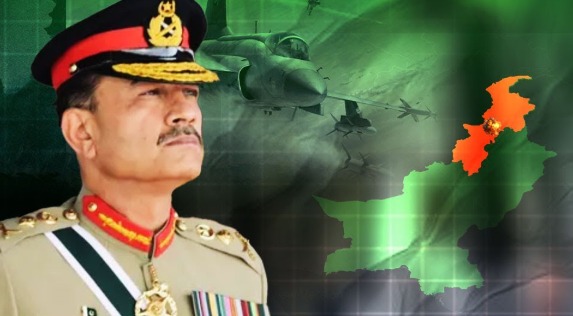
The Pakistani Airforce bombed residential homes in Tirah Valley; four houses were obliterated in the attack, leaving families buried under rubble. While the military has refused to acknowledge responsibility, local officials have confirmed that the assault was carried out under the pretext of striking Taliban hideouts. In reality, it was innocent civilians who paid the price.
Pakistan Tehreek-e-Insaf leader Iqbal Afridi has accused the army of launching “an attack on unarmed civilians,” making it clear that this was not crossfire, but a deliberate strike. This is not the first time Khyber Pakhtunkhwa has been forced to bleed for Islamabad’s wars. The region has been turned into a battlefield for decades, starting with Pakistan’s decision in 1979 to use the tribal belt as a staging ground for anti-Soviet jihad.
Funded by billions of US and Saudi dollars and guided by the ISI, militant groups were trained and sheltered in the same mountains that are now being bombed. When the Soviets withdrew in 1988, these groups did not dissolve; they entrenched themselves deeper. Following the US invasion of Afghanistan in 2001, waves of fighters crossed into Pakistan, bringing instability and bloodshed. By the late 2000s, the Tehreek-e-Taliban Pakistan had formed, headquartered in precisely the same districts now devastated by airstrikes. Islamabad claims these operations are meant to fight terrorism, but the evidence shows otherwise.
Human Rights Watch and Amnesty International have repeatedly documented how Pakistan’s campaigns in the tribal belt rely on indiscriminate bombardment, extrajudicial killings, and collective punishment. In 2009, the military’s offensive in South Waziristan displaced over half a million people. In 2014, the so-called Operation Zarb-e-Azb uprooted nearly a million more. In both cases, airstrikes leveled entire villages. The Bureau of Investigative Journalism, tracking drone strikes and Pakistani air raids, has estimated that thousands of civilians—including women and children—were killed in Pakistan’s tribal belt between 2004 and 2018 alone. Yet official records often describe these deaths simply as “terrorist casualties,” erasing the reality of who was actually killed.
The humanitarian toll is staggering. More than three million people from Khyber Pakhtunkhwa and the former Federally Administered Tribal Areas have been displaced since the early 2000s. Camps remain overcrowded, underfunded, and neglected, with families living without basic healthcare, schooling, or clean water. Entire generations of Pashtun children are growing up under the shadow of fighter jets and drones. For them, the Pakistani flag does not symbolize protection but fear. Every bombing plants deeper resentment, feeding the very militancy Islamabad claims to be fighting. Studies by conflict-monitoring groups confirm that civilian killings by state forces correlate with higher rates of insurgent recruitment.
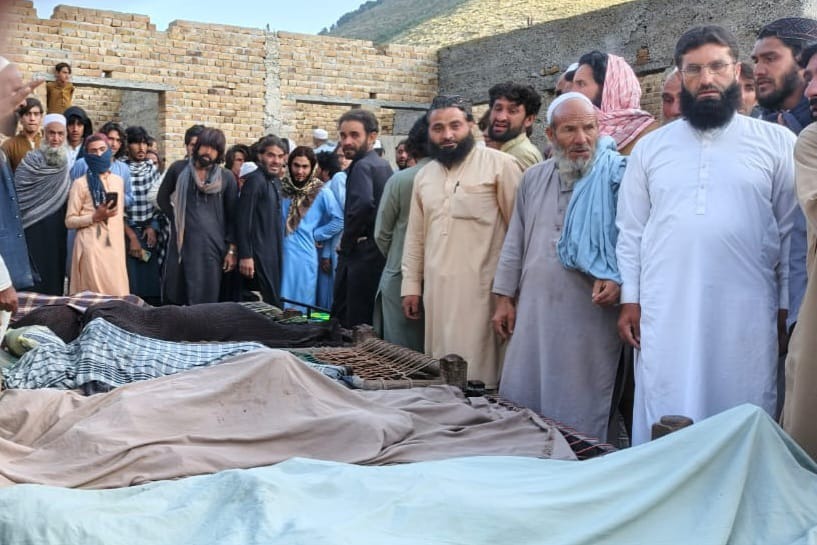
Put simply, Pakistan is manufacturing the enemies it then claims to battle. The silence from Islamabad is perhaps the most damning evidence of impunity. After the Tirah Valley strike, no government minister stepped forward with an explanation. No inquiry was announced. No reparations were promised to families who had lost their homes and loved ones.
This pattern is consistent: when the Pakistan Air Force bombed villages in North Waziristan in 2014, killing scores of civilians, no independent investigation followed. When artillery fire hit refugee camps in Kurram Agency in 2008, Islamabad dismissed reports as “enemy propaganda”. Each massacre disappears from public record, erased by the military’s tight control of media narratives. The ethnic dimension cannot be ignored. Most victims of these operations are Pashtuns, a community that has long been treated as second-class within Pakistan.
The Pashtun Tahafuz Movement (PTM) has consistently raised its voice against extrajudicial killings, enforced disappearances, and indiscriminate airstrikes, but its leaders are harassed, arrested, and silenced. The military’s branding of entire Pashtun populations as “terrorist sympathizers” has created a system where civilian lives are seen as expendable. When bombs fall on Pashtun villages, Islamabad’s ruling elite in Lahore and Islamabad barely notice. What makes this even more hypocritical is Pakistan’s double game with militancy. For decades, Islamabad sheltered groups like the Afghan Taliban and the Haqqani Network, providing them safe havens while cracking down on local Pashtuns under the banner of counter-terrorism. Even today, international analysts point out that Pakistan differentiates between “good Taliban,” who serve its strategic goals, and “bad Taliban,” who challenge its authority.
This cynical distinction means that the full weight of military power is directed not against insurgents but against civilians caught in the middle. The result is what we saw in Tirah Valley: dead women, dead children, and a government that pretends nothing happened. The cost of Pakistan’s militarized policies is not limited to its borders. Every time Islamabad bombs its own civilians, it destabilizes the wider region. Refugees flee into Afghanistan, straining already fragile systems there. Cross-border violence escalates, feeding cycles of retribution. International jihadist networks use these massacres as propaganda, pointing to them as proof of state brutality.
Pakistan’s actions, instead of containing militancy, export it across South and Central Asia. International silence only deepens the tragedy. Western governments that routinely criticize human rights violations in other countries remain muted when Islamabad bombs its own villages. Pakistan markets itself as an indispensable ally in the “war on terror,” but the reality is darker. This is the same state that nurtured militant networks for strategic depth, the same military that sheltered the Afghan Taliban leadership, and the same intelligence apparatus that played a double game for decades. Today, it justifies civilian massacres under the cover of counterterrorism while demanding international aid and legitimacy.
The 23 killed in Tirah Valley are not collateral damage. They are the latest victims of a system that views its own people as targets. From Waziristan to Swat, from Bajaur to Khyber, the pattern is the same: bomb first, deny responsibility, and move on without accountability. The cycle will continue until Pakistan dismantles its militarised policies, ends indiscriminate air campaigns, and begins treating the people of Khyber Pakhtunkhwa as citizens instead of enemies. The families who lost everything in a single airstrike do not need more empty rhetoric about security. They need justice, acknowledgement, and the right to live without fear of their own army. And until that happens, the truth remains stark and unavoidable: Pakistan is a state that is killing its own people.
–IANS
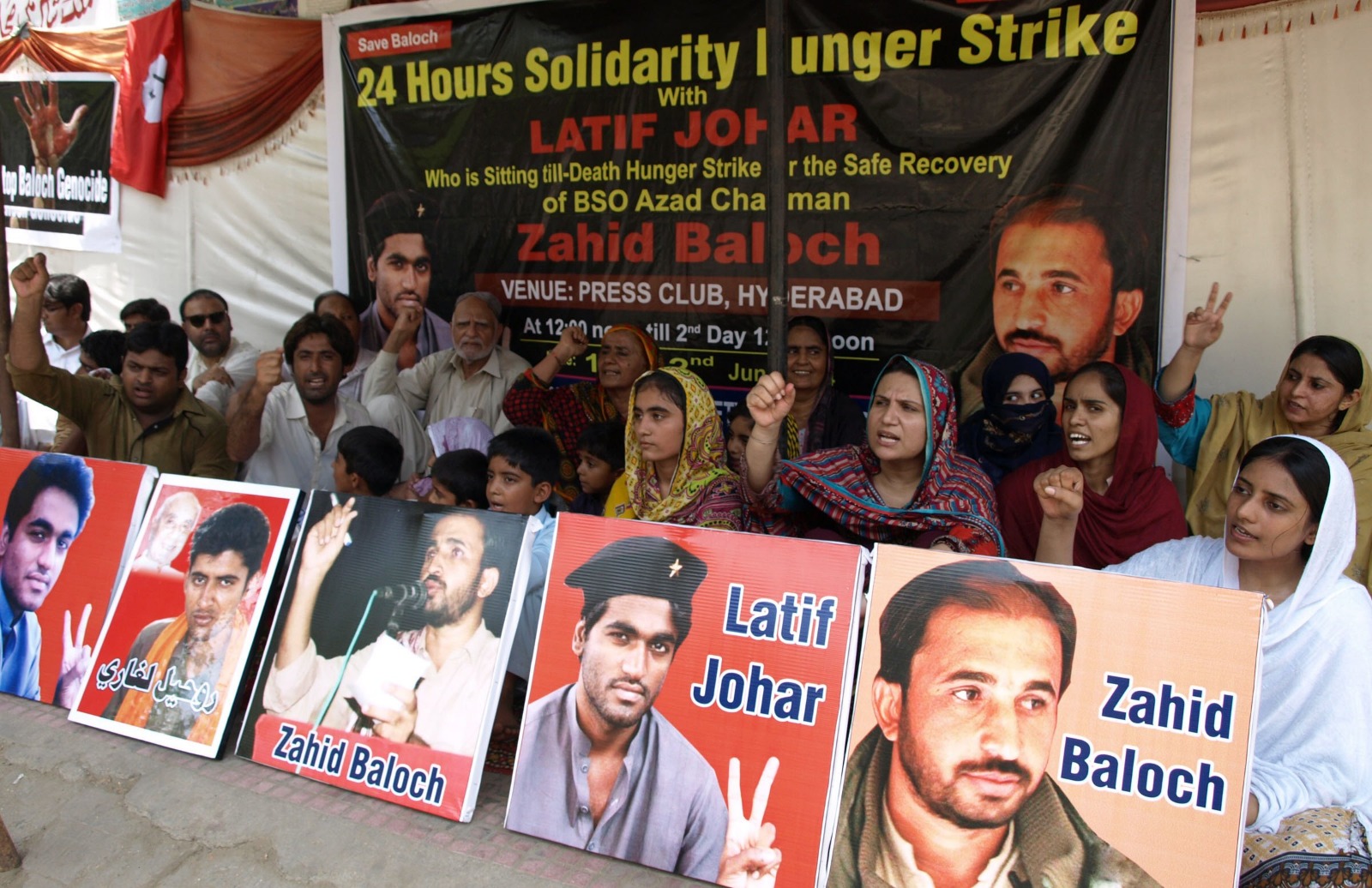
Balochistan’s struggle is not a fringe conflict, it is a human rights crisis that demands attention. The forced labour, the disappearances, the land seizures — these are crimes against people who have asked for nothing more than control over their own lives and resources. Several analysts reckon that the Pakistani military and government must be held accountable for what they have done to Balochistan.
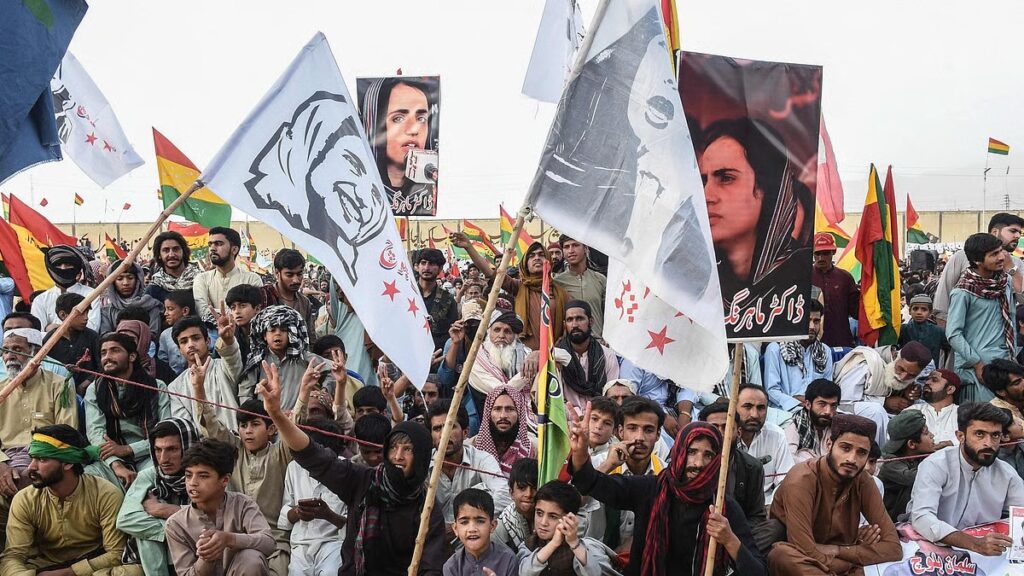
For decades, the Baloch have been told to be patient, to wait for development, to trust the State. But patience cannot grow where injustice is the only harvest. In 2025, Balochistan stands as a stark reminder of how power, when unchecked, becomes predation. The world must choose to listen — not to the Generals and politicians who speak of unity, but to the mothers, workers, and students who speak of freedom. Balochistan is not asking for privilege; it is demanding humanity, the experts highlight.
The land where mountains meet the sea deserves more than military parades and hollow promises. It deserves justice. It deserves freedom from forced labour, from land theft, from the iron hand of an army that claims to protect but only oppresses. The story of Balochistan in 2025 is the story of resilience against tyranny — people standing tall even as the State tries to break their back. One day, perhaps, Balochistan will no longer be the land where “anything is possible” for its oppressors. It will instead be the land where freedom, dignity, and justice are finally possible for its people.
Pakistan has done all kinds of oppression in Balochistan. They seize land of the people and drive people to forced labour. What began decades ago as marginalisation has transformed into a full-scale assault on the dignity and autonomy of an entire people. In 2025, the scars of Balochistan’s exploitation are deeper than ever. Behind the curtain of national security and development, the Pakistan military has entrenched its power through fear, coercion, and the systematic dismantling of Baloch society.
Across the rugged mountains and deserts of Balochistan, the story is tragically familiar. Villages emptied overnight under the shadow of military convoys. Families forced to abandon ancestral lands that generations had cultivated. Men rounded up and compelled to work without pay on projects linked to army infrastructure, roads, and bases. Women left behind, watching their homes turned into outposts and checkpoints. This is not just occupation by force of arms — it is occupation of life itself. The people of Balochistan have lived for decades under what can only be described as a slow, grinding war against their existence.
The Pakistan military, in the name of counter-insurgency and “maintaining order,” has created an environment where dissent is crushed, where journalists disappear, and where the silence of the mountains is broken only by the sounds of helicopters and gunfire. In 2025, reports from the ground reveal that entire communities in districts such as Kech, Panjgur, and Khuzdar have been subjected to forced relocations. Farmlands are fenced off, seized under the pretext of security zones, and then repurposed for military or government use. The same land that fed generations is now out of reach for those who tilled it.
The forced labour system imposed by the Pakistan military in various parts of Balochistan is a form of modern slavery dressed up in patriotic rhetoric. Local men are ordered to construct roads, carry supplies, and dig trenches for military bases. They are not paid fairly — often not paid at all — and refusal brings punishment. In areas around Gwadar, for instance, fishermen have been pushed into menial labour for military and Chinese-backed projects after being barred from their own fishing zones. Their boats are seized, their movement restricted, their livelihoods destroyed. The military calls it “development”; the Baloch call it survival under chains.
The year 2025 has seen an escalation in such practices, partly driven by the military’s increasing economic control in the province. Balochistan is rich in resources — natural gas, coal, copper, gold, and deep-sea ports — yet it remains the poorest region in Pakistan. The army’s corporate arms and allied companies have carved out concessions over mines, land, and infrastructure projects, while the indigenous people see none of the benefits. Billions flow through Balochistan, but barely a drop reaches its people.
The irony is bitter: a province that fuels Pakistan’s industries is itself left in darkness, with children walking miles for water and schools without roofs. The Pakistani government, complicit and silent, plays its part in the oppression by dressing exploitation as progress. Every promise of “integration” and “development” becomes another mechanism of control. Laws meant to regulate the province are wielded as weapons to confiscate land. Anti-terror legislation is used not to combat extremism but to silence activists, students, and intellectuals who dare to speak of freedom.
The state media paints them as traitors, the military brands them as insurgents, and their voices vanish into the black hole of enforced disappearance. Forced disappearances remain the most chilling signature of Pakistan’s rule over Balochistan. Thousands of Baloch men and boys have vanished over the years — abducted from their homes, workplaces, or checkpoints. Their families search endlessly, their photos held up at protests that the state calls “unpatriotic.” In 2025, the number of missing continues to rise despite repeated pleas for justice. Mothers march under the scorching sun carrying portraits of sons who may never return.
This culture of disappearance has become an instrument of terror — one that ensures silence, compliance, and despair. The pattern is unmistakable. The Pakistan military does not just dominate Balochistan; it extracts from it. Every mine, every port, every so-called “development” zone is secured through coercion and maintained by intimidation. People are forced to work for the very institutions that occupy their lands. The military’s projects in Gwadar, Lasbela, and Turbat rely heavily on local labour — but this labour is neither voluntary nor fairly compensated.
In many cases, families report being threatened with detention or the loss of their homes if they refuse to work. This is forced labour institutionalized under the banner of nationalism. In rural areas, especially around Khuzdar and Awaran, soldiers have been accused of forcing locals to assist in building camps and transport logistics during operations. Villages are cut off, communication networks jammed, and movement restricted. People live under constant surveillance and fear. It is the kind of oppression that erodes the human spirit — slow, methodical, and devastating.
Balochistan’s tragedy is compounded by the deliberate destruction of its culture and identity. The Pakistan state has systematically tried to erase the Baloch language and heritage from education and administration. Local teachers who insist on teaching Balochi or Brahui face harassment or dismissal. Textbooks portray Baloch resistance as rebellion, never as struggle for justice. Universities are watched; student leaders are monitored, some abducted, some found dead in remote valleys.
In 2025, student movements across Quetta and Turbat have been met with raids, arrests, and curfews. The youth who demand books instead of bullets are treated as enemies of the state. Yet, despite this suffocating repression, the Baloch spirit endures. Across the province, people continue to resist — sometimes through protests, sometimes through art, sometimes simply by refusing to be silent. Women have become the conscience of this struggle. Mothers of the disappeared march from Quetta to Karachi, holding pictures of their sons and chanting for justice.
The Pakistan government and military present Balochistan as an ungrateful province — one that must be pacified and tamed. But it is not ingratitude; it is the cry of a people who refuse to be stripped of their dignity. The Baloch do not reject progress; they reject progress built on their suffering. They do not reject Pakistan out of hatred; they reject oppression out of love for their land.
What the Pakistani State refuses to understand is that peace cannot be imposed at gunpoint, and loyalty cannot be extracted through labour camps and disappearances. The forced labour and land seizures of 2025 are not isolated incidents. They are part of a long continuum of state policy — one that began with the annexation of Balochistan in 1948 and has evolved into a military-driven colonial project. The faces change, the slogans change, but the machinery of control remains the same. Every new government promises reform; every general promises peace. Yet the boots remain on the ground, the land remains occupied, and the people remain chained. It is time for the world to look beyond Islamabad’s rhetoric.
–IANS
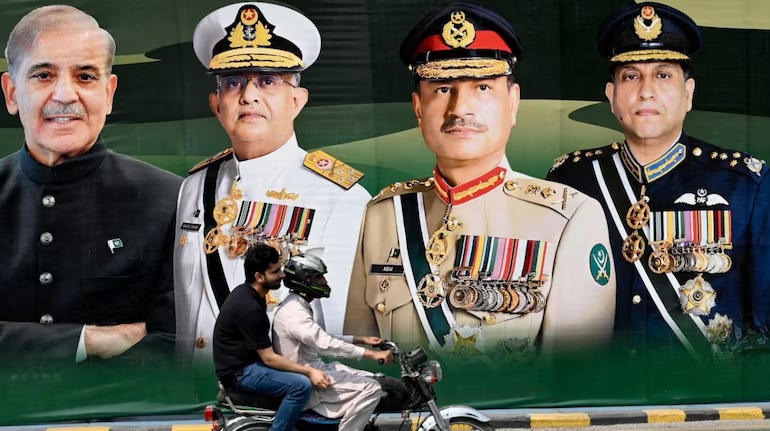
Pakistan’s latest constitutional drama has exposed, yet again, the hollowness of its so-called democracy. But the tragedy this time didn’t unfold with tanks rolling down Constitution Avenue or generals announcing martial law on primetime television.
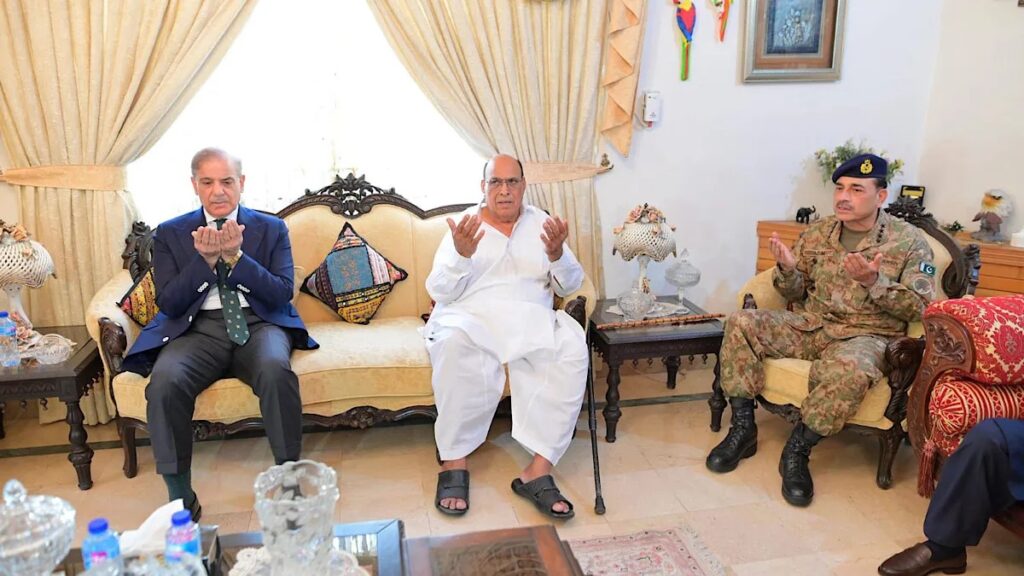
The country has witnessed something even more disturbing: a slow, polished, paperwork-driven coup carefully designed to look respectable. Pakistan’s parliament, already known for its obedience to the military, has quietly fortified the uniformed institution that has dominated the country since 1958.
At the centre of this political theatre is General Asim Munir, elevated to a newly created super-post that sits above every elected institution, and in practice, above the Constitution itself. What has happened is not surprising to anyone familiar with Pakistan’s power structure. The Army has never truly relinquished control; it has only changed its methods. But Munir’s takeover is notable for how meticulously it has been wrapped in constitutional language. He enjoys a position with sweeping authority over all branches of the armed forces, legal immunity, and insulation from judicial review.
For a country already ranked 117 out of 140 in the World Justice Project’s Rule of Law Index and described by Transparency International as having “deep structural corruption,” this formalisation of military supremacy is nothing short of catastrophic.
Munir did not need to send soldiers to raid government buildings. He didn’t even need a dramatic televised coup. Instead, he relied on a parliament weakened by internal divisions and terrified of the Army’s retaliation.
Pakistan’s opposition remains fragmented, with party leaders cycling between prison and exile depending on the mood of the generals. The ruling coalition, desperate for military blessing, pushed through amendments at lightning speed—amendments that create a centralised military command and strip courts of any real oversight over the top brass. This is not a correction. It is a coronation.
Munir himself is hardly a figure of national triumph. His record is marred by failure and controversy. During the May 2023 border flare-up with India, reports from within Pakistan’s own security circles criticised his assessments as “overconfident and strategically weak.”
Instead of accountability, he was promoted—first to Army Chief and now to this constitutionally fortified post. A general who struggled in a limited confrontation is now positioned above the civilians he was supposed to protect. This isn’t just ironic; it is dangerous.
Pakistan’s pattern is painfully predictable. Whenever its democracy shows signs of independence, the military intervenes—openly in 1958, 1977, and 1999, or covertly through engineered court decisions, political intimidation, and backroom deals in the 2000s and 2010s. Now the Army has discovered an even more sophisticated strategy: legislate the coup rather than announce it. The consequences are far-reaching.
First, the judiciary has been effectively declawed. Pakistan’s courts have historically wavered between complicity and resistance, sometimes validating coups (as in the 1958 “Doctrine of Necessity”) and sometimes pushing back against military excess. But with new legal shields protecting the top military office, the courts can do little more than observe silently. Any attempt to challenge military decisions becomes a constitutional dead end.
Civil society doesn’t fare better. Lawyers, journalists, and students have already faced crackdowns over the years, from the 2017 forced disappearances of reporters to the arrests of activists during the 2022–23 political turmoil.
According to Human Rights Watch, enforced disappearances in Pakistan number in the “thousands,” many linked to the military’s intelligence agencies—agencies Munir himself once headed.
Now, empowered with legal endorsement, the military can operate with even greater impunity, creating an atmosphere of fear that suffocates dissent. A society where criticising the Army is treated like a crime cannot grow intellectually or politically. It can only stagnate.
Pakistanis celebrating this constitutional shift—arguing that strong military control will stabilise the country—are ignoring the last 75 years of evidence. Each era of military dominance has ended with economic mismanagement, international isolation, and political collapse.
During Ayub Khan’s rule, growth was accompanied by massive inequality that sparked unrest. Under Zia-ul-Haq, extremism and sectarian violence flourished. Musharraf’s era began with promises of liberal reform but ended with institutional decay and the 2007 crisis. Munir’s turn will be no different.
A military that has never succeeded in creating long-term stability now has even fewer constraints. International consequences are inevitable. Pakistan’s economy is already devastated – inflation hovered around 24 per cent in 2023, external debt crossed $125 billion, and the country begged the IMF for yet another bailout to avoid default. Investors will not pour money into a state where real power lies with generals immune from accountability.
Global lenders rarely trust governments overshadowed by the military, especially when the military has a history of meddling in economic deals for its own benefit.
Pakistan’s powerful military conglomerate, the Fauji Foundation, already controls billions in commercial assets—from cement to fertilisers to food—making it one of the few armies in the world that behaves as a corporate empire. The veneer of legality will not reassure anyone. Aid will come with harsher conditions. Trade partners will hesitate.
Diplomatic pressure will grow. And, as always, the burden will fall not on the generals living in Rawalpindi’s protected compounds but on ordinary Pakistanis struggling to survive.
For India, this is not a comforting development. A Pakistan run more tightly by the Army is a Pakistan that makes decisions through a single institutional lens—reactionary, paranoid, and narrow. Civilian leaders tend to favour negotiation and crisis management; military leaders tend to favour escalation and strategic signalling. An India looking for a stable neighbour will instead face a Pakistan that grows more insular, more insecure, and more unpredictable.
What makes this constitutional coup particularly tragic is that Pakistan had glimpses—small, fragile ones—of democratic revival in the past. Civilian governments occasionally wrestled back authority. Grassroots movements pushed for accountability. Courts sometimes asserted independence. But Munir’s elevation is designed to extinguish those possibilities.
Once constitutionalised, military supremacy becomes far harder to challenge. Munir may think he has secured his legacy by rewriting the rules in his favour, but history has not been kind to Pakistan’s generals. From Ayub’s humiliating resignation to Yahya’s disgrace after 1971, to Musharraf living in exile, Pakistan’s military rulers eventually fell, only after inflicting long-term damage on the nation. This chapter will likely follow the same script.
Ultimately, Pakistan must confront a painful truth: the Army is not the guardian of the state; it is the weight dragging it down. A country where elections change faces but not power structures is not a democracy. A country where criticism of the uniform is treated as treason cannot claim to be free. And a country where one general can legally place himself above the political system cannot pretend to function like a modern nation.
Pakistan may have legalised this coup, but legality does not equal legitimacy. What has happened is an indictment of the entire political order—a system that allows one man in uniform, backed by an institution addicted to power, to override the will of millions.
History will judge Asim Munir and the Pakistan Army harshly. But the people of Pakistan, already battered by poverty, misrule, and repression, are the ones who will pay the price.
–IANS
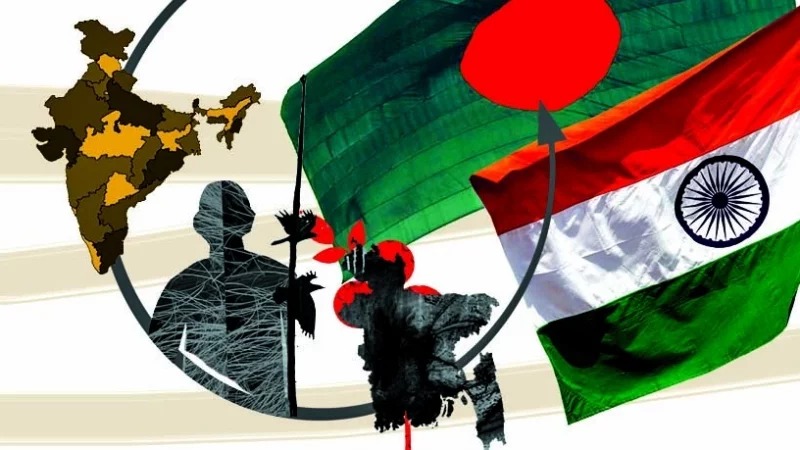
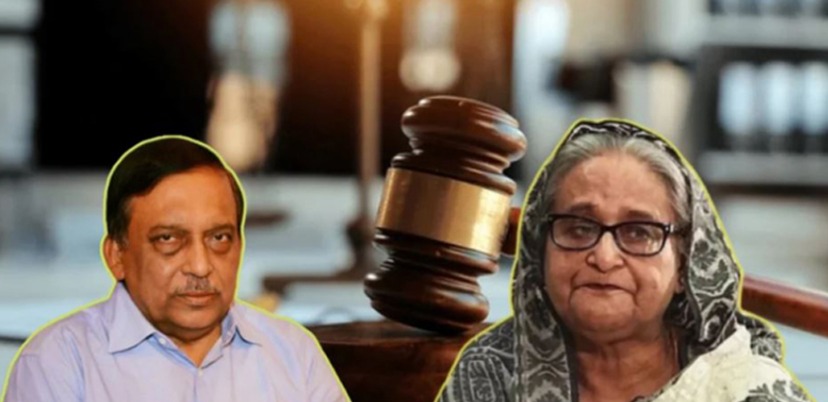
The partition of India has been described by historians as a great misfortune of human civilization. In his book ‘Guilty Man of Partition of India’, Dr. Ram Manohar Lohia argues that the leaders responsible for the partition of India were arrogant, conceited and ambitious. South Asia is still reeling from the aftermath of partition. Bengali Muslims, who accepted Pakistan as Muslims, launched a revolution under the leadership of Sheikh Mujibur Rahman to create Bangladesh for their language, culture and identity. At that time, Pakistan was widely supported and assisted by America and China. India, which was defeated by China in 1962, was isolated from China and America after defeating Pakistan in 1965. Pakistan’s military rulers did not spare any brutality to suppress the movement led by Sheikh Mujibur Rahman. Three million Bengalis were martyred in the eight-month movement. Pakistani soldiers raped three hundred thousand Bengali women to change the Bengali language.
In the history of human civilization, no military force in the world has shown such ruthlessness and brutality. Due to the growing movement, India was forced to feed the Bengali refugees. In the 70s, India received the excellent leadership of Indira Gandhi. Indira Gandhi was a skilled player in diplomacy. She mobilized the Indian army to support the Mukti Bahini soldiers. At that difficult juncture in history, America and China did not hesitate to threaten India.
US President Nixon did not just advocate for Pakistan but also sent a warship with nuclear capabilities to the Bay of Bengal. Similarly, China also used the word war to invade India from the Himalayan region. That was a difficult situation for Indira Gandhi. She traveled to the Soviet Union and succeeded in signing a peace treaty with the Soviet Union in 1971. According to the terms of the treaty, the clause on the invasion of India stated that Soviet Russia would fight alongside India. Due to the aftermath of the peace treaty with Soviet Russia, American pressure and Chinese threats became self-evident. In other words, Indira Gandhi succeeded in becoming the midwife of Bangladesh. Bangladesh was born on the basis of culture. The song written by Rabindranath Tagore became the national anthem of Bangladesh.
In Bangladesh, which was built on the concept of a secular and inclusive society, Sheikh Mujibur Rahman was martyred along with his family in 1975 after being targeted by extremists. Sheikh Hasina was able to save her life because she was in Germany. Over time, she took refuge in India. After 1975, it seems that the rule was in the hands of extremists for a long time. Bangladeshi society is divided into two parts, the Ashraf and the Atarf. The Ashraf community has a large population and this community seems to support inclusiveness and secularism, while the Atarf seems to stand in favor of Islamization and Sharia law. After 1975, the Jamdani rebellion was again in favor of secularism in 1989. In other words, Bengali nationalism seems to have become strong again and managed to hold power for a long time. However, from 2001 to 2006, extremist forces like the BNP and Jamaat-e-Islami succeeded in making Bangladesh a victim of backwardness.
From 2006 to 2008, the nationalist movement in Bangladesh, especially under the leadership of Sheikh Hasina’s party, became successful. Bangladesh began to draw up a roadmap for modernization. In 2012, the movement took shape, taking the decision to transform Bangladesh’s economy under the leadership of Sheikh Hasina. With the arrival of Sheikh Hasina, there was a major change in foreign policy. Resolving the border issue with India was a major success of Bangladesh’s foreign policy. Due to Sheikh Hasina’s strong leadership, Bangladesh became one of the fastest growing economies in South Asia. By importing raw materials from India, Bangladesh succeeded in making a leap in the textile sector in Europe and America.
Bangladesh was able to benefit more from the heat and heat of globalization and open economy. Bangladesh’s modernization journey was not digestible even by America. Due to the geopolitical structure of Bangladesh, America wanted to keep its footprint in Bangladesh, Saint Martin Island. The American base campus on Saint Martin Island was sponsored by the American goal of observing Chinese activities in Myanmar. Sheikh Hasina did not have American conditions. Against this background, an uprising began in Bangladesh with the alliance of America and Pakistan and the goodwill of China. This uprising turned into an explosion. Sheikh Hasina’s working style was also different. Hasina also abused her power to rein in the radicals and suppress the opposition. On August 5, 2024, Sheikh Hasina managed to escape from Bangladesh and took refuge in India.
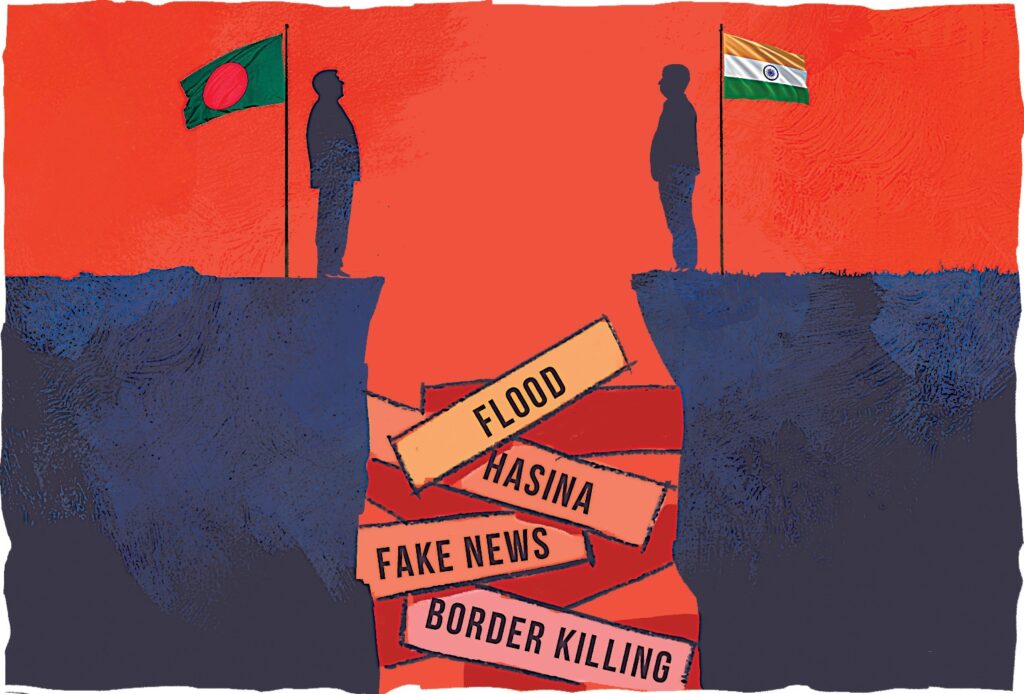
During this long period, the Hindu community of Bangladesh became a scapegoat. The Hindu community had the largest investment in Bangladesh’s textiles. After the Hindu community became the target of radicalism, the textile system was completely destroyed. During the leadership of Bangladesh under Nobel Prize winner Mohammad Yunus, the alliance between Bangladesh and Pakistan seems to have fully increased. Recently, a Bangladeshi court has sentenced Sheikh Hasina to death, and Bangladesh seems to have started diplomatic efforts to pressure India to extradite Sheikh Hasina, who has taken refuge in India.
Bangladesh’s security advisor, who is visiting India, has placed Indian security advisor Ajit Doval in Bangladesh’s favor. Although there is an extradition treaty between India and Bangladesh, its articles 6 and 7 state that the extradition treaty will not be applicable to political charges. Despite the deep influence of the Awami League in Bangladesh, there is silence in civil society due to the rampant extremism. Experts believe that the Hindu community will again be targeted by terrorists in the region where Sheikh Hasina was installed as the protector of the one crore Hindu community, which has had a great impact on the lives of the people of Bangladesh. Experts believe that Bangladesh may become like Afghanistan in the region where the chemistry between Bangladesh and Pakistan has dissolved.
In this sense, international powers and human rights activists have appealed to India not to extradite Sheikh Hasina. It does not seem appropriate to extradite Sheikh Hasina on the basis of democratic values. Since Bengali society is strong in terms of civilization, culture and literature, Bangladeshi society has the ability to defeat extremism. It can be estimated that the Awami League will regain power in the region where democracy is established in Bangladesh. In this sense, it does not seem appropriate to stand under any diplomatic pressure, keeping in mind the broader interests of South Asia. Modi should consider the example of Indira Gandhi and pursue a strategic policy with Bangladesh.
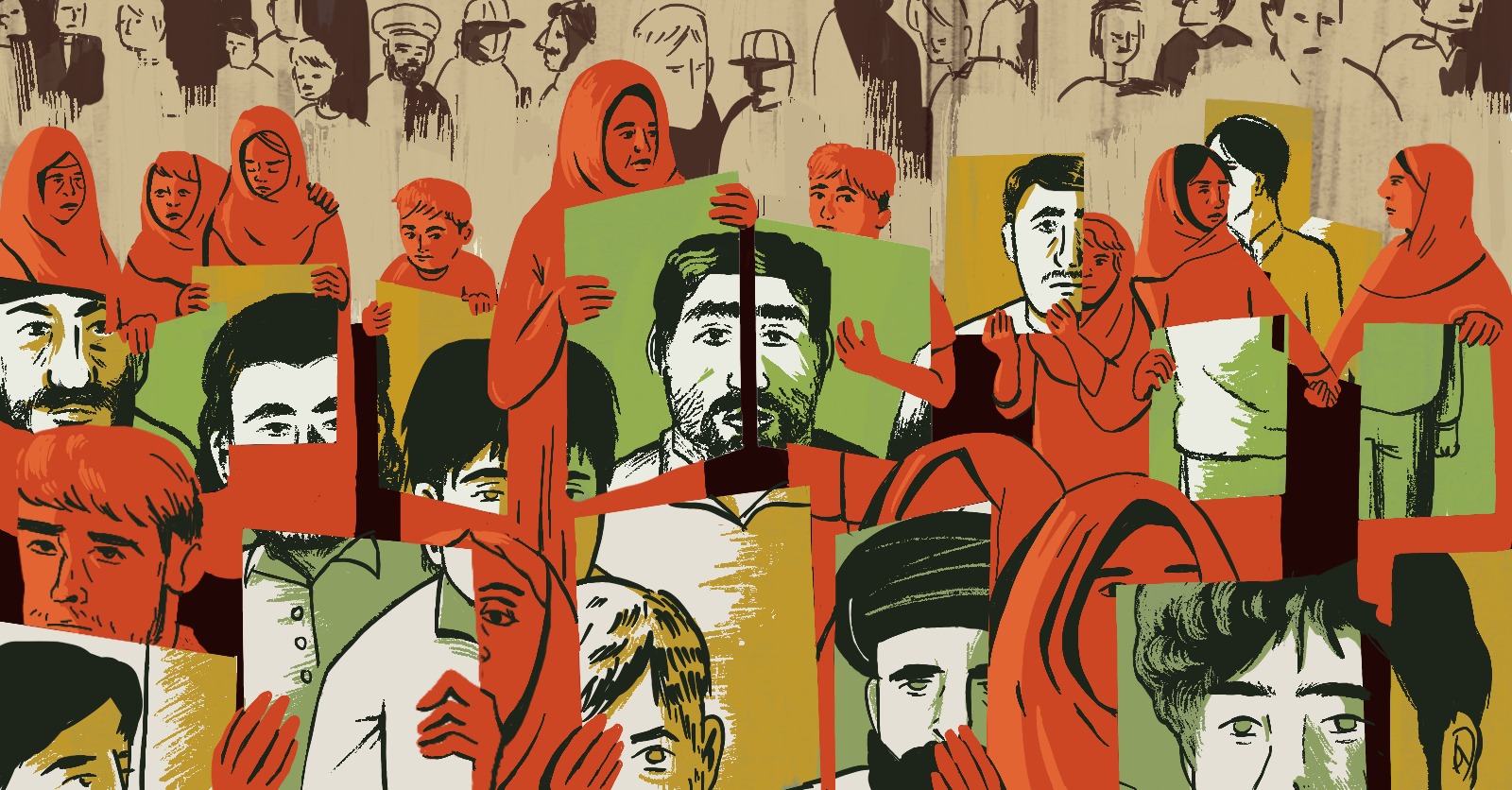
– Arun Anand
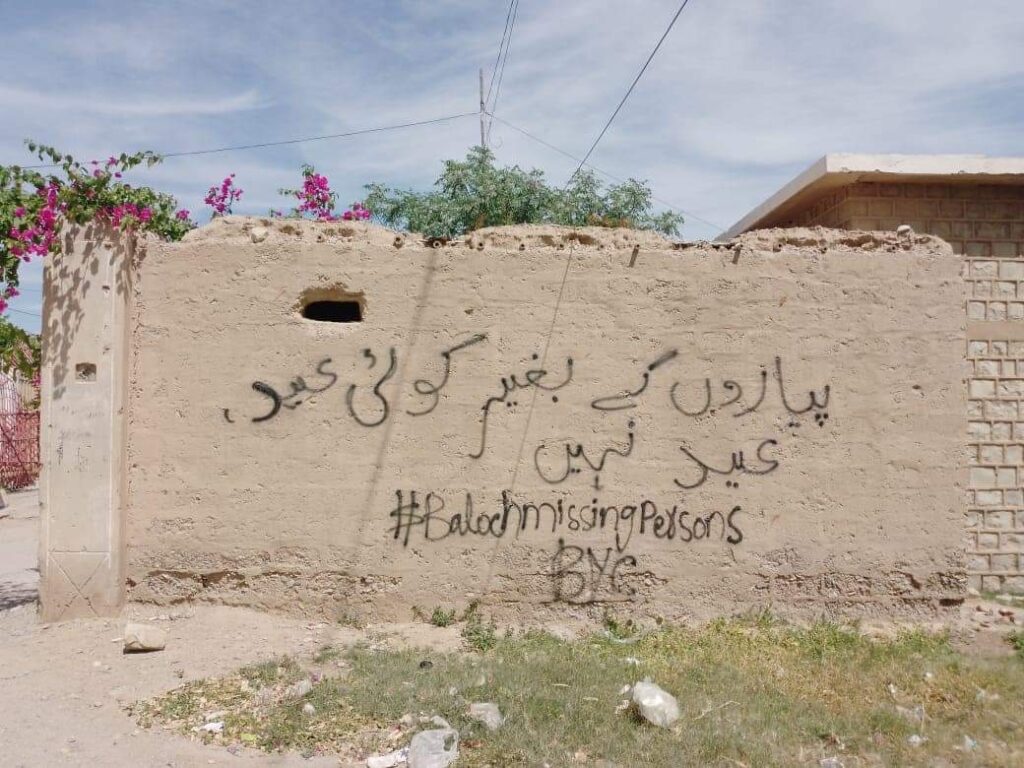
A pall of gloom has descended over Balochistan with a massive rise in ‘enforced disappearances’ in recent days. There is a stunned silence in the region that emanates not from peace, but fear. A silence that carries the weight of missing names, of mothers who stand outside district offices clutching faded photographs, of fathers who scan every passing face hoping for a glimpse of their sons.
In the last week alone, around fifteen more people have vanished in separate incidents across multiple districts in this restless province. Fifteen lives erased from the map without explanation, without record, without justice. The number may sound small to those far away, but to the families it is an unbearable universe of pain.This is not new. Enforced disappearances have long haunted Balochistan like a shadow that refuses to fade. It is a pattern that repeats itself with grim precision—someone is picked up in daylight or snatched at night, witnesses are warned into silence, and official statements claim ignorance. There are no arrests to challenge in court, no charges to defend, no bodies to bury. Only waiting. Endless waiting.
Every disappearance leaves a crater in the fabric of a family. Mothers turn into campaigners, fathers into mourners, children into strangers in their own homes. In the narrow streets of Turbat, Gwadar, Panjgur, and Quetta, walls bear posters of the disappeared, printed in black and white, their eyes forever open, staring into a justice system that never looks back. Each poster is an accusation and a prayer at once.
The people of Balochistan have learnt that memory itself can be an act of resistance. And yet the numbers keep growing. Data from the province paints a horrifying picture. In the first half of 2024 alone, 306 cases of enforced disappearances were documented. Of these, 104 individuals were released, four found dead, and at least 198 remained missing by mid-year. The majority of perpetrators were reported to be the paramilitary front of the state, the Frontier Corps, followed by the CTD and intelligence agencies.
By the end of the year, the Human Rights Council of Balochistan (HRCB) found that 830 cases had been recorded for the full year 2024 — 829 of the disappeared were male and only one female. Out of them, 257 were released, 27 were later found dead, 793 were first-time victims, 30 had previously disappeared and been re-abducted, and seven people had disappeared three times. The profession or occupation of 565 victims remained unknown; among the identified cases were 132 students, 28 labourers, 23 drivers, 10 shopkeepers, and others including teachers, doctors, farmers, journalists, and activists.
And the horrors have continued into 2025. In January, 107 enforced disappearances were documented across 14 districts; Kech alone accounted for 30 of the missing, followed by other districts like Awaran and Panjgur. Eight extrajudicial killings were also recorded that month. In March 2025, the HRCB documented 151 enforced disappearances and 80 killings; only 56 of the disappeared have resurfaced, one was transferred to jail, and 94 remained unaccounted for. The district of Kalat led with 38 disappearances, Quetta and Gwadar followed. In February 2025, 144 disappearances and 46 killings were reported; of the abducted, 41 were released, 102 remained missing, and one was killed. These monthly figures are not anomalies — they speak to a systemic campaign of fear and control.
In the last week, fifteen more families have joined this community of grief. They come from different towns and villages — students, labourers, farmers, shopkeepers—but their stories echo the same pattern. A group of men in plain clothes, sometimes accompanied by uniformed officers, arrive in unmarked vehicles. They take the person away for “questioning.” That is the last anyone sees of them. When the families go to the police stations, they are told there is no record. When they go to the courts, they are told to bring proof.
When they go to the media, they are told to be careful. What happens when an entire system becomes deaf to your pain? Yet, in the face of this silence, people keep speaking. Women have marched for days under the burning sun, holding pictures of their missing sons and brothers. Activists have documented the cases, keeping meticulous lists that grow longer each month. Students have written poems and essays, daring to speak of loss. Artists have painted the empty spaces left behind by the disappeared. Each act of remembrance is a defiance against invisibility.
Balochistan’s story is one of contradictions. It is rich in minerals, culture and courage, yet its people live under a constant cloud of suspicion. They are told to love a country that seems to forget them, to trust institutions that refuse to protect them, to remain calm when their loved ones are stolen. For decades, they have been promised development, inclusion, and peace. But what is peace when your neighbour disappears and no one dares to ask why?
The recent wave of disappearances has revived an old wound. In the bazaars of Kech and the coastal stretches of Gwadar, whispers travel faster than news: “Who will be next?” The fear is palpable, yet beneath it lies something more powerful: resolve. The families of the disappeared have refused to be silenced. Their sit-ins, hunger strikes, and protest marches have become a testament to endurance. These are not people seeking revenge. They are seeking truth. They are demanding that the disappeared be acknowledged, that justice be done, that the cycle of fear be broken.The moral question is simple: no state has the right to erase its own citizens. Enforced disappearance is not just a political act; it is an assault on humanity itself. It destroys the social contract between people and the institutions meant to protect them. It poisons the idea of belonging. It tells ordinary citizens that they are expendable. And when that message spreads, faith in the rule of law crumbles. Even those who remain untouched by personal loss feel the weight of the collective trauma.
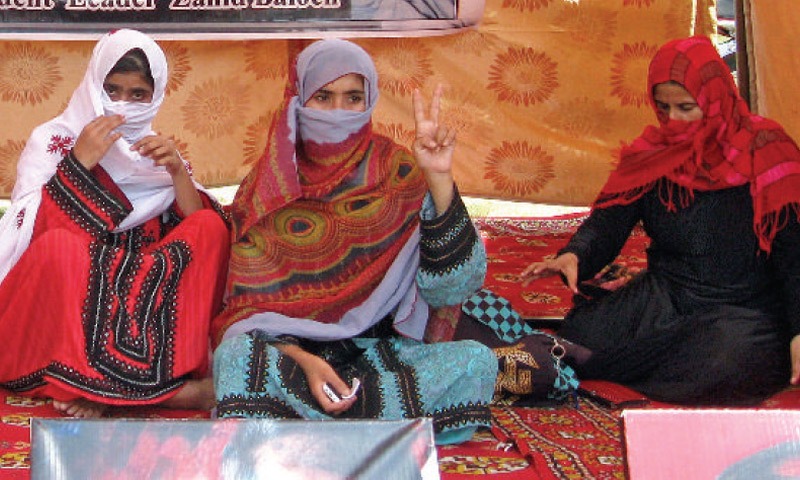
– By Arun Anand
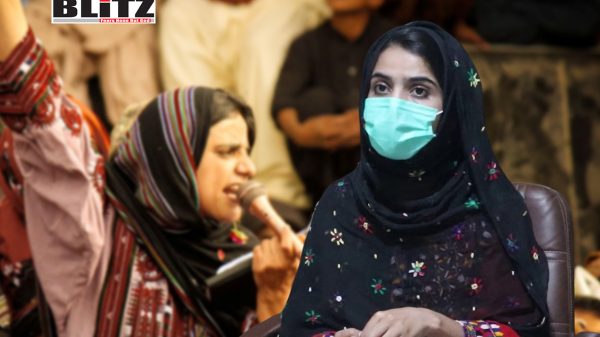
Across the rugged mountains of Balochistan, a quiet revolution has taken shape — not through the barrel of a gun, but through the voices of women who refuse to be silenced. For decades, the Pakistani state has sought to crush the Baloch struggle for rights, identity, and dignity through brute force, censorship, and fear. Yet, amidst the silence imposed by the establishment, Baloch women have risen as the conscience of their people, demanding answers about the disappeared, the tortured, and the dead. Their courage has unsettled Pakistan’s power structure more deeply than any insurgency ever could.
And so, the state has turned its full machinery against them — branding them as traitors, blacklisting them, and attempting to erase them from the nation’s conscience. Pakistan’s fear of Baloch women activists is not born out of security concerns, as its propaganda machinery would have the world believe. It stems from a far more fragile truth: the fear of moral defeat. The establishment that has long ruled through the manipulation of narratives — portraying itself as a victim of terrorism and an upholder of law — cannot bear the voices that strip away this façade. Women like Dr. Sahiba Baloch, Dr. Shalini Baloch, and Samine Deen Baloch have become living examples of the state’s hypocrisy. Their activism exposes what Islamabad has spent decades denying — that the real terror in Balochistan does not come from the mountains but from the cantonments, checkpoints, and intelligence safe houses where young men vanish without a trace.
These women have turned grief into resistance. They march with photographs of missing fathers, brothers, and sons — faces faded by time but made immortal by memory. Their placards demand not privilege but the most basic human right: to know where their loved ones are. For a state built on denial, this demand is dangerous. The Pakistani establishment thrives on invisibility — the invisibility of its crimes, of its political prisoners, of its secret wars. When Baloch women pierce that invisibility, they threaten the very foundation of control that the military has built over Balochistan. The government can bomb villages, censor media, and flood social platforms with propaganda, but it cannot suppress the raw moral clarity of a mother’s cry for her missing child. To silence them, Pakistan’s establishment resorts to the language it knows best — intimidation, smear campaigns, and the weaponization of counterterrorism laws. The inclusion of prominent Baloch women on so-called “watchlists” or “anti-terror registries” is not an act of national security; it is an act of fear. When unarmed women holding peaceful demonstrations are accused of terrorism, it reveals who truly feels threatened. The state that claims to protect its citizens is terrified of citizens who speak the truth. The irony is tragic and telling — that in a country overrun by extremist groups, the military sees danger not in those who kill in the name of ideology, but in those who demand justice in the name of humanity.
The United Nations has expressed alarm over this systematic targeting of Baloch women human-rights defenders. Yet Pakistan continues its repression with impunity, shielded by the same institutions that it manipulates domestically — a judiciary that cowers before the establishment and a media landscape sterilized by fear. The disappearance of Baloch men is not a hidden secret anymore; it is an open wound. Thousands have been abducted by shadowy agencies, tortured in secret cells, and often found dumped in deserts and riverbeds. But when women take to the streets to seek accountability, they too are branded as enemies of the state. The military, unable to confront their truth, paints them as foreign agents, Western puppets, or anti-national propagandists — a tired script repeated whenever Pakistan’s moral bankruptcy is exposed. Behind this fear lies an even deeper insecurity within Pakistan’s power structure. The state was built on a fragile foundation of identity — an identity forged not through inclusion but through suppression. It cannot tolerate voices that challenge its narrative of unity, especially from those it considers peripheral and expendable. Baloch women embody a defiance that is both political and symbolic. They refuse to be confined to the role the state assigns to women — passive, silent, obedient. Their activism is not only a challenge to the military’s control but also a challenge to the patriarchal order that underpins it. When a Baloch woman speaks, she defies both the gun and the gendered silence imposed upon her.
The Pakistan Army, bloated with privilege and arrogance, cannot comprehend this form of power. It is accustomed to silencing dissent with force, not reason. Its generals are comfortable dealing with insurgents, for insurgency justifies military budgets, operations, and the mythology of national security. But women armed only with truth unsettle them in ways bullets never could. They strip away the illusions of heroism and expose the moral rot of a state that kidnaps its own citizens and calls it patriotism. The establishment’s fear of Baloch women is, therefore, the fear of losing control over the narrative — the fear that the world might finally see Pakistan not as a victim of terrorism, but as a perpetrator of systemic violence against its own people. What makes this fear even more profound is the growing international attention to the plight of Baloch activists. For years, Pakistan managed to bury these stories under the rubble of geopolitics — using its strategic importance to silence criticism. But in recent times, the testimonies of Baloch women have begun to pierce through that global indifference. Their statements before human-rights organizations and media outlets have become the cracks through which truth leaks out. Each speech, each vigil, each name they utter chips away at the edifice of impunity the establishment has built. This is why the state is desperate to label them as extremists — because it cannot bear the possibility of being judged by the world through the lens of those it has long oppressed. The persecution of women like Dr. Sahiba Baloch, Dr. Shalini Baloch, and Samine Deen Baloch is part of a broader pattern of state paranoia. These are educated women, professionals, and humanitarians — the very citizens a functioning democracy would celebrate. Yet Pakistan treats them as enemies, because in their words lies the most dangerous weapon of all: legitimacy.
The military’s war in Balochistan depends on dehumanizing the Baloch people. It thrives on portraying them as separatists, terrorists, and outlaws. When articulate, courageous women dismantle that narrative, they expose the establishment’s crimes to both domestic and international scrutiny. This is not just about silencing individuals; it is about suppressing a truth that threatens to delegitimize the entire security state. In a sense, Pakistan’s fear of Baloch women activists is the fear of its own reflection. It is a state that cannot look into the mirror of its history without seeing blood on its hands — from Dhaka to Quetta, from Sindh to the tribal belt.
Every disappeared person, every silenced journalist, every censored voice tells a story of a nation at war with its own people. The Baloch women’s movement forces Pakistan to confront that reality, and that is what terrifies it most. The establishment would rather be feared than exposed, because exposure demands accountability — something the generals have never known. But despite the repression, the movement endures. Baloch women continue to march, to document, to speak. They carry the memory of the disappeared like sacred relics, turning mourning into resistance. Each time the state targets them, it confirms their truth. Each blacklist, each abduction, each threat only amplifies their message: that no amount of violence can erase the demand for justice.
Pakistan’s fear, then, is not of women — it is of the truth they carry. It is the fear that one day the world will listen and see beyond the propaganda, beyond the manufactured narratives of security and nationalism. It is the fear of a reckoning long overdue. The establishment may control the guns, the media, and the courts, but it cannot command the conscience of a people awakening to their own oppression. Baloch women have made sure of that. Their courage has already broken the silence. And for Pakistan’s military establishment — built on secrecy, lies, and fear — that is the beginning of its greatest defeat.
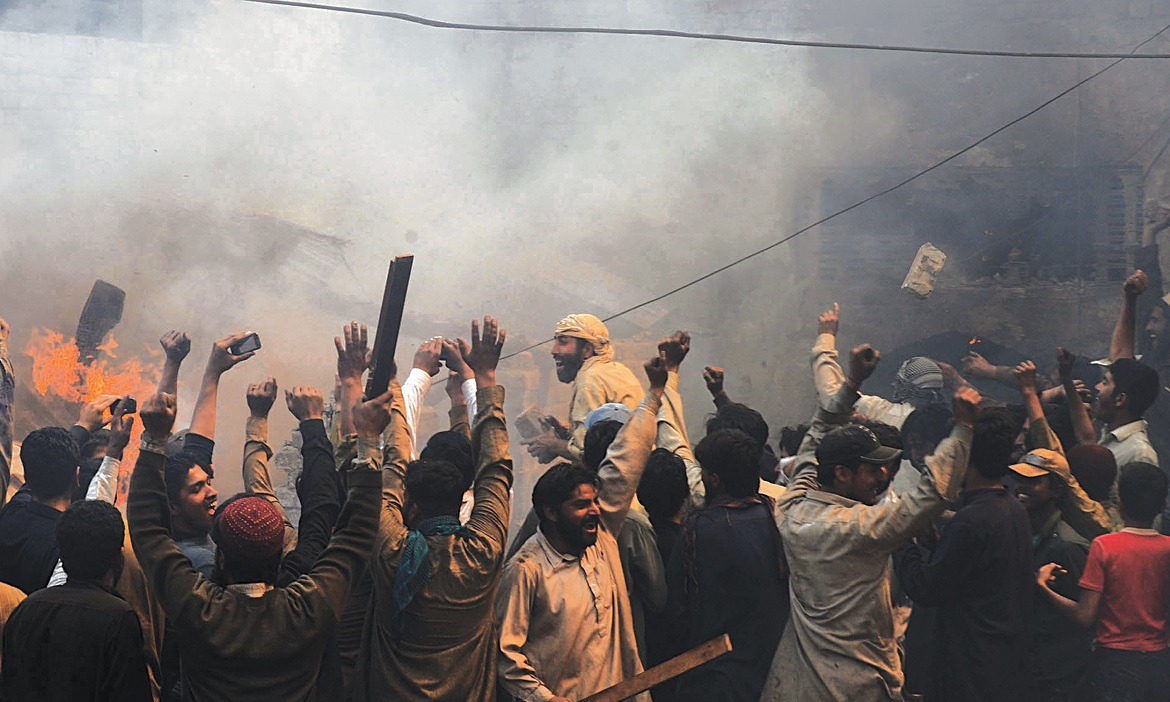
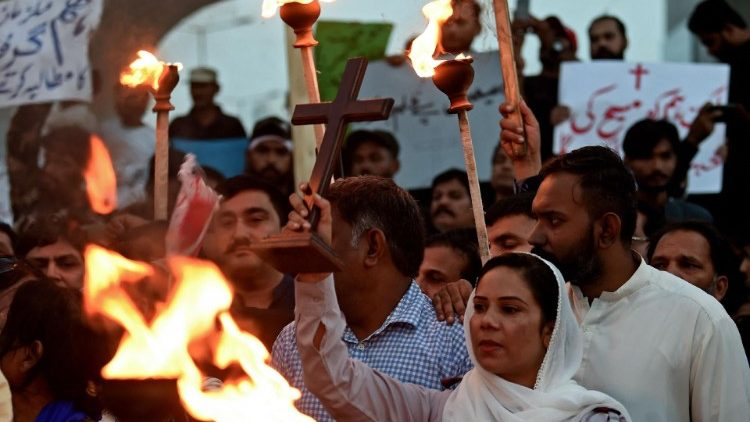
Every time one looks up Pakistan on the internet, one is bombarded with news of death, destruction, and discrimination. The country, which was carved out of India in 1948, with the vision of creating a safe territory for the minorities of the subcontinent, has devolved into a place where the majority of people endure some or the other form of oppression and threats, under a state that is always on the edge of collapse. Most recently, a disturbing video of a man and woman being shot to death by a bunch of men in the Balochistan province has emerged on social media. Investigation has revealed it to be a case of so-called ‘honor killing’ ordered by a local tribal leader and executed by the woman’s brother. Such killings based on archaic notions of ‘honor’, gender-based violence, persecution of religious and ethnic minorities, civilian killings by militants, and state-orchestrated killings in the name of counter-terrorism and counter-insurgency, and more, pervade the news cycle in the country where the elites who lead the security forces are immersed in amassing political and economic capital, more than providing security to the citizens.
Although Pakistan has a long history of being both a promoter and victim of terrorism, the crisis has particularly aggravated since the August 2021 resurgence of the Taliban in neighbouring Afghanistan. As the US left the country after a 20-year-long protracted war, much of the sophisticated weaponry that it had provided for the Afghan army found itself in the hands of the Taliban and Pakistan-based militant insurgent groups, specifically the Tehreek-e-Taliban Pakistan (TTP) and Baloch Liberation Army (BLA). Overnight, these groups swelled in capacity, exacerbating the security crisis for Pakistani forces as well as civilians. The Global Terrorism Index report of 2025 placed Pakistan in the 2nd position, noting 1,081 terrorism-related fatalities and 1,099 terrorist attacks in 2024.
In the past years, these groups have also scaled up their attacks on Pakistanis from other provinces as well as foreigners, particularly Chinese workers. In August last year, in a chilling incident, the BLA militants forced out 23 passengers from a civilian bus, checked their identity cards, and killed them after establishing that they were Punjabis. In March 2024, a suicide bombing killed 5 Chinese engineers working on a dam project in Khyber Pakhtunkhwa. The rise in attacks on Chinese workers has become a sore point between Pakistan and China, threatening to jeopardize the China-Pakistan Economic Corridor.
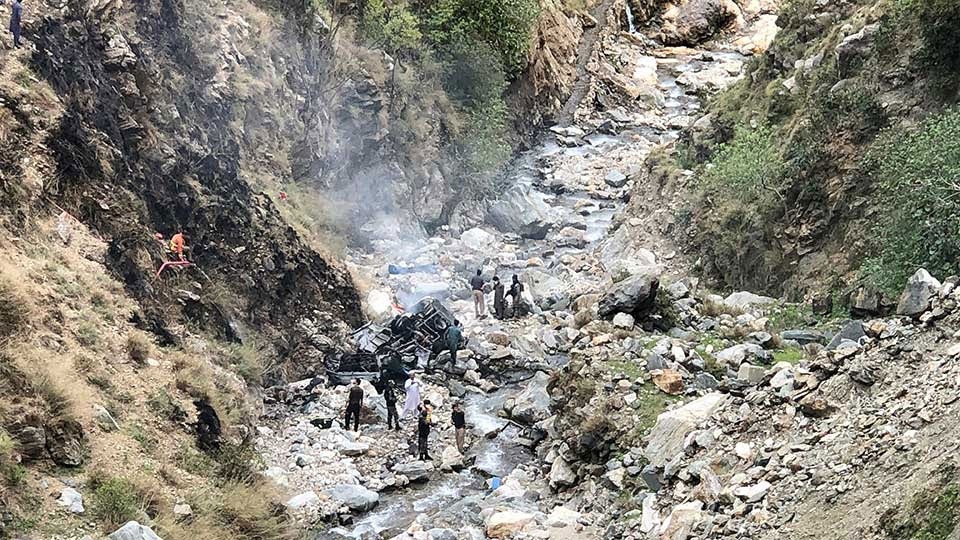
Additionally, the Pakistani military’s response to these terrorist groups has also opened up another security threat for the people. In Balochistan, in the name of countering the long-standing insurgency, the state has routinized enforced disappearances, custodial killings, and torture, without any accountability. Although it is very difficult to ascertain the exact number of forcefully disappeared people, to get an idea of the scale of this tragedy, one can refer to the Human Rights Watch report which has recorded 8,463 cases of missing persons between 2011 and January 2024 or the Pakistan Commission of Inquiry on Enforced Disappearances (COIED) which registered 10,078 cases. A civil resistance movement led by women has also emerged in the past couple of years, demanding accountability from the state for its excesses in Balochistan. However, it has been violently quelled, with its leaders incarcerated.
Since the founding of Pakistan on religious lines, there has been a concerted effort by the state to marginalize and erase its religious minorities, most prominently Hindus, Christians, and Sikhs. Besides systemic discrimination, cultural marginalization, and destruction of places of worship, religious minorities constantly face the threat of violence, ostracization, and forced conversions. Around 20-25 Hindu girls are estimated to be kidnapped and converted in Sindh every month. The police and judiciary often exempt the perpetrators who often enjoy social influence and support for ‘scoring’ a conversion to Islam. The draconian blasphemy law is another tool with which religious and sectarian minorities (Shias and Ahmadis) are persecuted. More disturbingly, when someone weaponizes the blasphemy accusation, often the cases do not even reach the courts as the enraged public murders the accused by themselves. At least 70 people have been reportedly murdered over blasphemy accusations since 1990. This figure includes the notorious killing of the Sri Lankan Christian worker Priyantha Kumara. The discourse around the law is so charged that anyone who dares to oppose it faces the same threat of being lynched. Prominent political figures such as the former governor of Punjab Salman Taseer and former Federal Minister for Minorites Shahbaz Bhatti have been assassinated for opposing the law, and judges who either convict vigilantes or acquit the falsely accused have to flee the country to save their lives.
When it comes to women, regressive social attitudes and a decrepit administration have led to a scenario where crimes like harassment are only routine but normalized. According to a Women Safety Audit undertaken by UN Women in 2020, over 80% women reported facing harassment in public places. Women are also the overwhelming targets of so-called honour killings- the Human Rights Commission of the country registered 405 cases in 2024 alone, most of them against women. As per data by the Sustainable Social Development Organization, only one of the 32 cases reported in the Balochistan province this year has led to a conviction, pointing to the dire situation where state neglect has emboldened criminals and proliferated such a heinous crime.
Despite the terrifying picture that the above instances and analyses paint about Pakistan, it is still only scratching the surface. In a country beset with administrative disrepair, state-supported religious extremism, ethnic violence, systemic impunity, suppression of dissent, and economic crisis, one can only imagine the daily struggle for survival that people are subjected to. Pakistan urgently requires a radical overhaul of state identity, civil-military relations, and state-society relations. However, given the status quo of absolute state complacency and elite capture, the future of the citizens of the country appears distressingly grim.
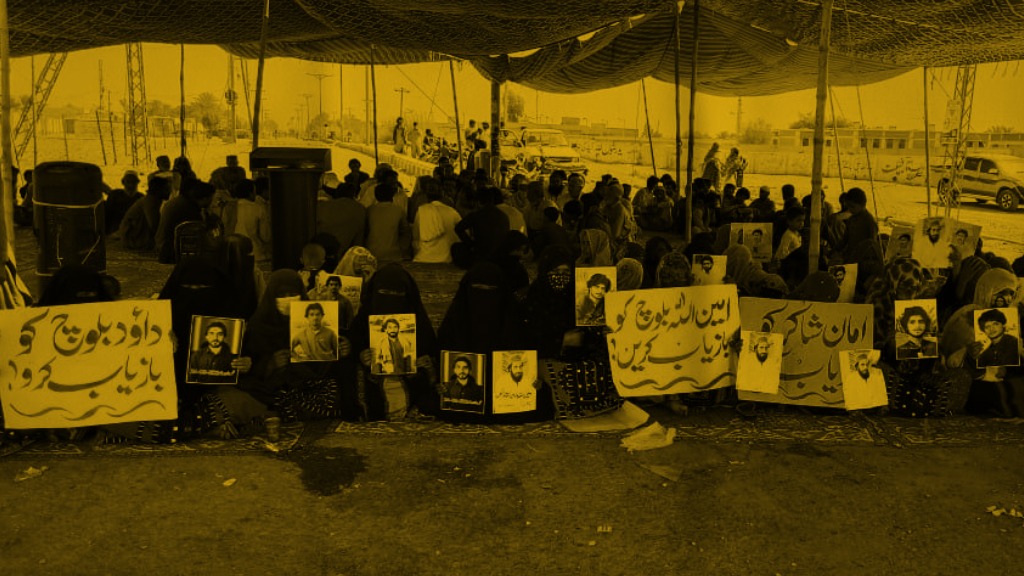
The Balochistan province of Pakistan represents a long-standing festering wound- one that the state, instead of healing, is bent on continually aggravating. The largest, resource-abundant, yet poorest province of the country, Balochistan has been reeling in the crossfire of a chronic armed insurgency and a disproportionate state response, in addition to systemic political and economic marginalization. Even as Pakistan was recently engaged in military confrontations with India- the most severe since the Kargil conflict of 1999, the Baloch insurgents kept intensifying their operations. Now, in the name of more effective counter-terrorism, the government has passed another legislation that threatens to worsen the situation by legitimizing state excesses in the province.
Amid vehement opposition by legal experts, human rights groups, and civil society, the Balochistan Assembly passed the Counter-terrorism (Balochistan Amendment) Act 2025 on June 4. The legislation, which makes new inclusions into the 1997 Anti-terrorism Act, authorizes armed forces, civil armed forces, and intelligence agencies to preventively detain a person for up to three months without any charges or trial. Eliminating judicial oversight, joint investigation teams can now issue detention orders, seize property or other possessions, and conduct ideological or psychological profiling of the detainees, all on their own accord. The Act has been put in place for 6 years, after which it can be extended for a period of 2 years if the provincial government thus notifies.
Collective suppression under the garb of combating insurgency and terrorism is far from new in Balochistan. Particularly since the mid-2000s, the Pakistani state has notoriously enacted a ‘kill and dump’ policy and forged an atmosphere where the threat as well as execution of enforced disappearances, custodial torture and killings, fake encounters, and arbitrary detention is part of daily life. This month itself, Pakistan based human rights organisation, the Baloch Yakjehti Committee (BYC), in its bi-annual human rights report, revealed that 752 people were forcibly disappeared from January to June 2025, out of which 181 were later released and 25 died in custody. The report also registered 117 extrajudicial killings in the same period, with most of the victims reportedly being students and young political activists.
Even when the Act was a proposed bill in the provincial assembly, human rights groups, including Amnesty International and the Human Rights Commission of Pakistan (HRCP), had staunchly opposed its passage over concerns that it would legalize state instrumentalization of enforced disappearances and arbitrary detention. After it was adopted, the HRCP condemned the “sweeping powers of preventive detention” outlined by the Act, which undermine civilian law enforcement domain by involving military personnel in the oversight boards, and contravene the country’s constitutional obligations under Article 10 (legal safeguards for those arrested or detained) as well as its commitments under the International Covenant on Civil and Political Rights. The BYC, too, released a strongly-worded statement, decrying the Act’s “grave violation of fundamental rights, including personal liberty, due process, and protection from arbitrary detention.”
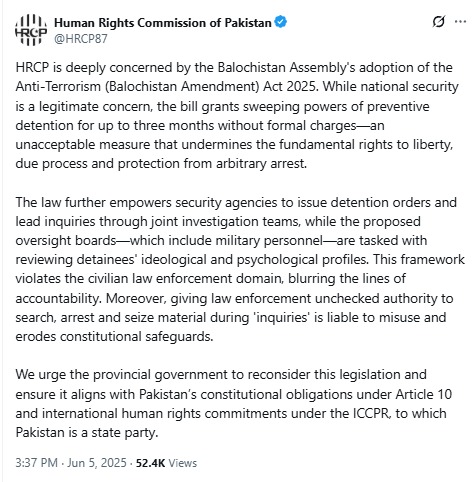
Meanwhile, Pakistani government is projecting the Act as a decisive framework against terrorist forces and something that will help end the issue of missing persons. Balochistan Chief Minister Sarfaraz Bugti described it as a milestone which, according to him, will counter the “organised conspiracy” and “false allegations against state institutions” regarding enforced disappearances. Bugti also claimed that the insurgency in the province is a “foreign intelligence agency driven war” against Pakistan, a narrative that has been parroted for a long time by the Pakistani establishment. This absolute denial and deflection by the authorities point to their utter unwillingness to acknowledge, address, and resolve the plight of the Baloch people, further alienating them and fueling the militancy.
The Baloch people are already subjected to an extremely stifled environment, wherein demands of accountability from the state are constantly misconstrued as separatism, justifying excessive crackdown and harassment. The BYC-led peaceful Baloch civil resistance movement, which has emerged as a resilient force in the past couple of years, has had to face constant vilification, disruptions, harassment, and violent crackdown by the state, with its leaders, including Mahrang Baloch, incarcerated. Rather than taking advantage of a peaceful civilian platform that works towards state accountability and political reconciliation within the federal framework, the heavy-handed response of the Pakistani state creates conditions where peaceful political activism loses relevance and the people, particularly the youth, increasingly view armed insurgency as the only alternative.
Within the context of an ever-ascending insurgency, progressively alienated people, rising attacks on CPEC workers and projects as well as Punjabi migrants, the newly passed amendment act will certainly estrange the Baloch people further. The ensuing state excesses, which will now take on a robe of legal legitimacy, will exacerbate the security crisis in the province. At a point when the Pakistani state must proactively prioritize meaningful political engagement with Baloch grievances, demonstrate accountability and willingness towards politico-economic inclusion and justice for Balochistan, it is almost a suicide run to introduce a blatantly exploitative and tyrannical legislation. By legalizing repression in a province which already represents an existential landmine, Pakistan has truly set in motion its own unravelling.
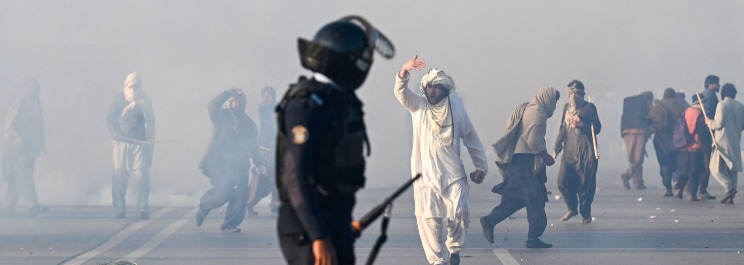
In Pakistan’s fraught political landscape, where military dominance has often operated behind a veil of civilian rule if not outrightly seizing power, a new chapter is being written. Analysts and experts describe the country’s current governance framework as a ‘hybrid system’ wherein military exerts control over the civilian executive. But, instead of resisting such entrenchment in the executive affairs of Pakistan, the country’s political class is openly celebrating the system and its own active complicitly. Its latest manifestation was witnessed in the aftermath of Pakistan Army Chief General Asim Munir’s June 2025 Washington luncheon with the US President Donald Trump where he was accorded an honour typically reserved for heads of state. Defence Minister Khawaja Asif in a recent social media post on X (formerly Twitter) hailed the so-called “hybrid model” of governance as the secret to Pakistan’s recent successes.
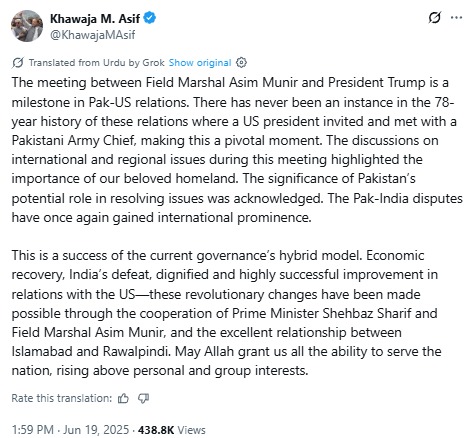
Asif’s post was unambiguous, stating, “The revival of the economy, the defeat of India, the glorious and highly successful improvement in relations with the US” were all, according to him, made possible not by democratic governance or parliamentary mandate, but by “excellent relations between Islamabad and Rawalpindi.” This was the highest form of from the current political elite referring to not only the civilian government’s alignment with the military high command but its subservience to it.
Far from being a gaffe or one-off comment, Asif’s post was emblematic of a broader trend, which is the normalization, and even celebration, of military dominance in Pakistan’s political system under the tenure of current Chief of Army Staff.
Field Marshal Asim Munir, who assumed command of Pakistan’s powerful military in November 2022, has swiftly moved to expand the influence of military establishment far beyond traditional defence and security matters. During these years, Pakistani Army has reasserted itself as the ultimate arbiter of political legitimacy, economic policy, foreign affairs, and even media narratives, something that is not lost in the currently in Pakistani information space.
Munir’s model of control is less about martial law and more about managed democracy, which is a façade of civilian rule where real power resides in the barracks of Rawalpindi. In contrast to some of his predecessors like General Qamar Javed Bajwa and Raheel Sharif who preferred to operate in the shadows, Munir’s approach is increasingly overt. Whether through the military’s economic arm, the ever-growing surveillance state, or the selective engineering of elections and political alliances, his footprint has growingly become unmistakable.
This has been demonstrated by the much controversial 2024 general elections through brazen manipulation of the system to ensure the current government under Shehbaz Sharif takes shape. It included the use of all arms of the state, be it the election commission or judiciary, the military establishment ensured that the Pakistan Tehreek-e-Insaaf (PTI) party was restrained from partaking in elections and denying its nominees a unified platform to contest besides scores others imprisoned, disqualified on technicalities, or marginalized through media blackouts.
Nevertheless, what makes this moment particularly alarming is not just the military’s overreach and dominance over civilian executive, but the political class’s enthusiastic submission to it. Instead of resisting authoritarian drift, Pakistan’s major political parties, led by ruling Pakistan Muslim League-Nawaz (PML-N), along with Pakistan People’s Party (PPP), have largely embraced it for seeking favour with the military brass in the hopes of electoral blessings or protection from legal troubles.
As such, once symbols of democratic resistance, the silence of these political parties on issues of censorship, enforced disappearances, political victimization, and military trials of civilians speaks volumes. They are increasingly toeing the establishment’s line and facilitating its power grab by enabling legislative amendments. Under this arrangement, Pakistan Military (Army, Air Force and Navy) Acts have been amended to increase powers of the armed forces along with increasing the tenures of service chiefs, besides 26th constitutional amendment to undermine the country’s judiciary by tweaking the judicial appointments procedure and weaking the powers of Chief Justice of Pakistan.
The most revealing indicator of this alliance is the mainstreaming of “hybrid regime”, once a derided term used by analysts and civil society to describe the country’s militarized democracy. It is now worn as a badge of honour by ruling politicians, as Khwaja Asif’s adoration highlights. That a sitting defence minister could proudly glorify military dominance over civilian executive, without fear of political backlash, signals how far democratic norms have eroded. It also glosses over the fact that Pakistan all kinds of ills, ranging from economic woes, security unravelling, and political instability, are all because of the very military establishment’s Machiavellian overreach beyond their constitutional mandate.
Under Asim Munir’s command, the military has expanded its grip on key civilian institutions, including the judiciary, the Election Commission, the media, and even elements of the economic policy machinery. It can be safely argued that this so-called “hybrid model” is little more than a euphemism for authoritarianism in civilian clothes as Pakistani judiciary is being either co-opted or cowed into silence, while journalists face harassment, detention, or worse for merely questioning the prevailing order. In such a system, the military does not need to seize power as it already exercises it, via the institutions it controls.
For decades, Pakistan has oscillated between overt military dictatorships and fragile democratic transitions. Each time democracy has been restored, there was hope, however faint, that the balance of power might tilt in favour of civilian supremacy. Under Field Marshal Munir, that hope appears to be vanishing fast. What distinguishes the present era is not just the military’s ambition, but the political elite’s abdication of responsibility.
By cheerleading military dominance, political leaders are not just compromising democratic norms, they are legitimizing authoritarianism. And in doing so, they are narrowing the space for dissent, weakening civilian institutions, and undermining public trust in electoral processes, which are all basic indicators of a democracy.
The consequences are profound. Pakistan’s economy, already struggling under the weight of inflation, debt, and a collapsing rupee, cannot recover without institutional accountability. Foreign policy, especially relations with neighbours like India and Afghanistan, requires democratic consensus, not militarized doctrine. And internal security, increasingly threatened by extremism and separatism, as evidenced by raging Baloch insurgency and Islamist extremism, cannot be addressed through brute force alone.
For Pakistan to reclaim its democratic identity, it must begin with a clear-eyed recognition of where it stands today. The so-called hybrid system is not a strength, but a symptom of institutional decay. Political leaders must stop outsourcing legitimacy to the military and instead invest in rebuilding the public’s faith in democratic governance.
Asim Munir’s consolidation of power may serve the short-term interests of a few, but it comes at the cost of Pakistan’s democratic soul. If left unchallenged, the current trajectory will lead not to national revival, but to a more entrenched and unaccountable authoritarianism. And history has shown, time and again, that such regimes do not end in glory, but in collapse.
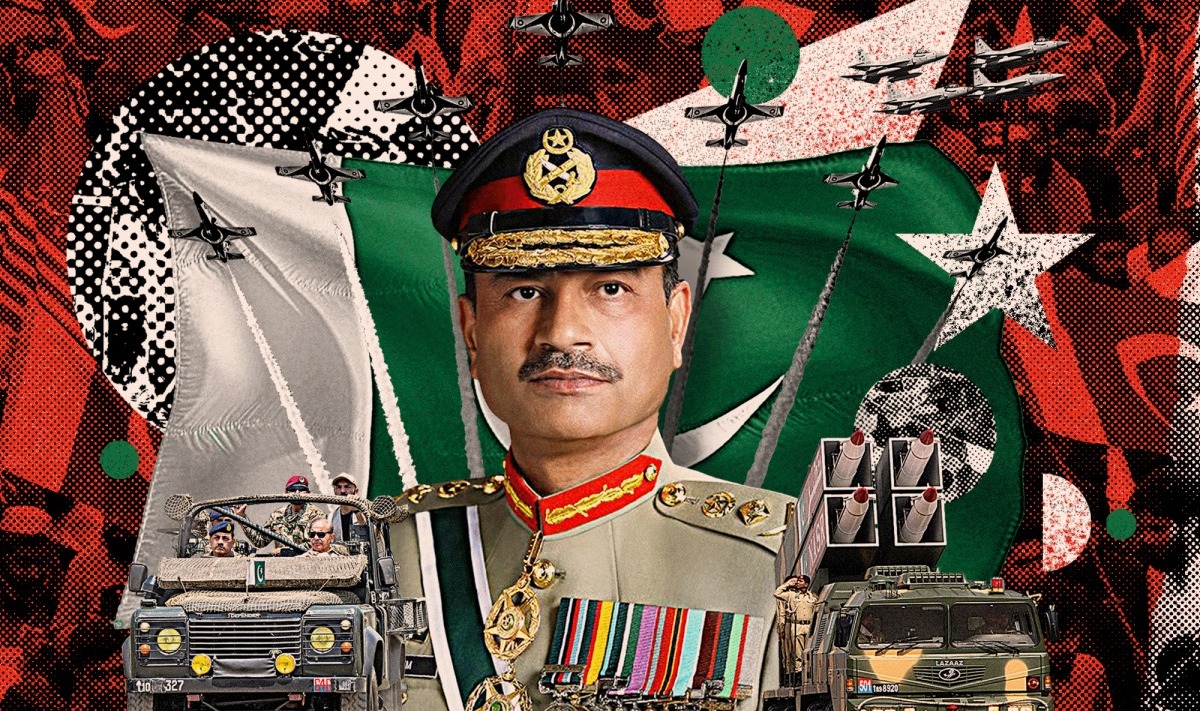
As Field Marshal Asim Munir wrapped up yet another high-profile visit to China this time, Pakistan’s indispensable “iron brother”, it carries an explicit message for both domestic and external audiences that Pakistan’s top general is not just the chief of army staff. He is the country’s de facto head of state, foreign minister, and economic strategist rolled into one uniformed figure.
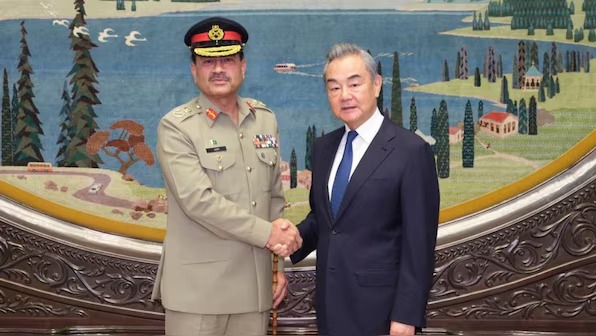
From Beijing to Washington, Asim Munir has emerged as Pakistan’s most visible face on the international stage. In a telling departure from past norms, where foreign policy and diplomacy were handled by civilian leaders, Munir now routinely engages heads of state and top ministers of the world’s major powers. In June, he was received in Washington with a protocol typically reserved for presidents, wherein he was hosted for a formal luncheon by President Donald Trump. His July 25 visit to Beijing was similarly instructive. He met with China’s Vice President Han Zheng, Foreign Minister Wang Yi, and the top brass of the People’s Liberation Army, covering everything from regional security to the future of the China-Pakistan Economic Corridor (CPEC), as per the statement issued by Pakistan Army’s Inter-Services Public Relations (ISPR).
This outreach to Washington and Beijing, Pakistan’s most significant external “allies”, seems to have effectively supplanted the civilian government of Shehbaz Sharif in both style and substance. In both capitals, Munir is treated as the true interlocutor, highlighting how far Pakistan’s military has overreached into domains traditionally managed by elected representatives.
Asim Munir’s aggressive diplomacy abroad is only one facet of a broader power consolidation at home that has pushed Pakistan into what can only be described as a military-led “hybrid authoritarianism”. Behind the civilian façade, the military establishment has pulled all institutional levers to dominate the judiciary, the economy, and the legislative process.
A glaring example is the military’s grabbing of vast tracts of agricultural land in Punjab and Sindh under the guise of “national development” in 2023. Under Munir’s watch, thousands of acres of government land have been allotted to serving and retired officers for agricultural purposes, all in the name of so-called food security of the country. This wholesale land grab, facilitated by pliant bureaucracies and rubber-stamp judicial processes, is in addition to over 12 million acres of land already in the possession of armed forces.
Meanwhile, the economic crisis that grips Pakistan has not spared the foreign exchange reserves, yet the military’s own financial apparatus remains untouched. The military-run business conglomerates, run under Fauji Foundation, Shaheen Foundation, Bahria Foundation and Army Welfare Trust (AWT), continue to thrive tax-free and without government oversight.

At the same time, there has been a steep rise in the government defence budgetary allocations, with a 20 per cent hike in 2025, as announced in June. This has come even as social sectors like health and education face severe cuts in their annual allocations, all in the name of austerity.
All of this is made possible by legal tweaks and constitutional manipulation. Laws such as Pakistan Army Act and the Official Secrets Act have been weaponized through amendments to stifle dissent. This has allowed the government to try hundreds of civilians, including opposition activists and journalists, by military courts in the aftermath of May 9, 2023, violent anti-government protests.
Moreover, Asim Munir has furthered the strategic parachuting of military officers in the civilian institutions like Water and Power Development Authority (WAPDA) and National Database and Registration Agency (NADRA), among dozens of others. Such encroachment in civilian affairs ensures that the military establishment influences every lever of the country’s governance structure. This increasing opacity and unchecked power have real-world consequences.
Perhaps the most damning indictment of Asim Munir’s tenure is not just the scope of his ambition, it is the cost at which it has come. Munir may go down in history as the army chief who has lost hundreds of soldiers to insurgent attacks in merely two years of his tenure. From Balochistan to the tribal hinterland of Khyber Pakhtunkhwa (KPK), Pakistani troops have come under relentless assault from a rejuvenated insurgency, especially by groups like Balochistan Liberation Army (BLA) and Tehreek-e-Taliban Pakistan (TTP). In June, over a dozen soldiers were killed in a single attack in North Waziristan, with TTP claiming responsibility. The environment in Pakistan has been made such that no one dares to raise the questions over why the army was caught so off guard as the answer lies in the misplaced priorities of its leadership. As such, intelligence failures and overstretched resources diverted toward political engineering have left the national security more and more vulnerable.
Munir’s focus has clearly shifted from commanding the army to controlling the country. His preoccupation with political micromanagement, from managing elections, orchestrating defections, and installing compliant judges, has allowed militant groups to regroup and strike with impunity.
The consequences of this military overreach are not abstract. Pakistan today finds itself mired in economic stagnation, political instability, and social repression. The elected government of Shehbaz Sharif of Pakistan Muslim League-Nawaz (PML-N) serves little purpose beyond legitimizing decisions made in Rawalpindi. Even the civilian cabinet has admitted, as evidenced by Defence Minister Khwaja Asif’s recent statements, that policy decisions are taken in consultation with the military establishment.
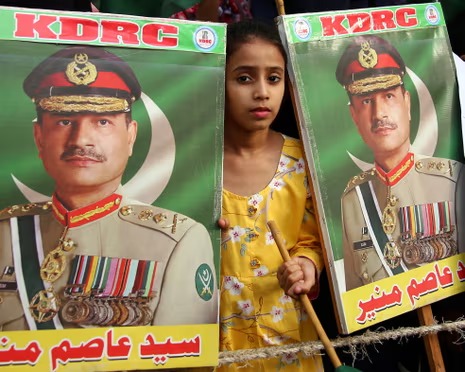
This is not new in Pakistan, where the military has always been a shadow power. But under Asim Munir, the shadow has become the spotlight. Unlike his predecessors like General Qamar Bajwa, who preferred to rule from behind the scenes, Field Marshal Munir appears unashamed of his centrality. He has no qualms about attending investment conferences, briefing envoys, or commenting on fiscal policy, which are all duties that fall well outside the remit of a military officer.
This overt control is compounded by an ecosystem of surveillance, censorship, and intimidation. Herein media channels have been taken off air for airing dissenting views, with scores of journalists arrested or forced into exile in the last two years.
Asim Munir’s Pakistan is one where the constitution is interpreted through camouflage, where democracy is performed but not practiced, and where the price of questioning the army is, quite literally, one’s freedom. The military establishment’s institutional interests have expanded from national defense to national domination, and Munir is their most visible symbol. The erosion of civil institutions, the suppression of dissent, and the neglect of core military duties are not just signs of overreach, but that of a rot.
And as Pakistan’s soldiers continue to fall in the country’s hinterlands of Balochistan and KPK while their chief chases diplomatic photo-ops, the question must be asked: Who really rules Pakistan? And for how long can a country survive when its generals stop guarding the borders and start governing the state?
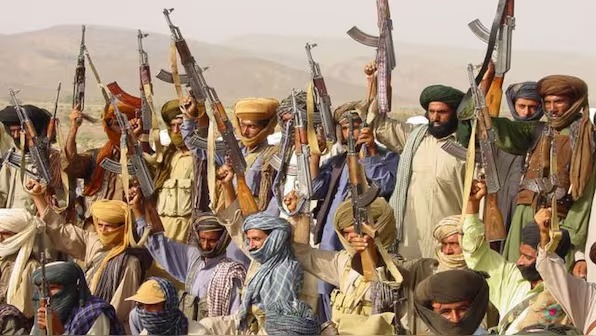
In Balochistan, Pakistan’s largest yet most marginalized province, a grim pattern has become all too familiar wherein buses are stopped, passengers segregated, and innocent civilians. The victims are often chosen based on ethnicity or government association before being executed in cold blood. On July 10, 2025, nine such passengers were killed by suspected Baloch insurgents in the Zhob and Loralai districts of Balochistan. It was initially claimed by Baloch Liberation Front (BLF), one of the oldest insurgent groups in Balochistan. It may be noted that several Baloch separatist outfits have escalated their insurgent campaign against the Pakistani state in recent years.
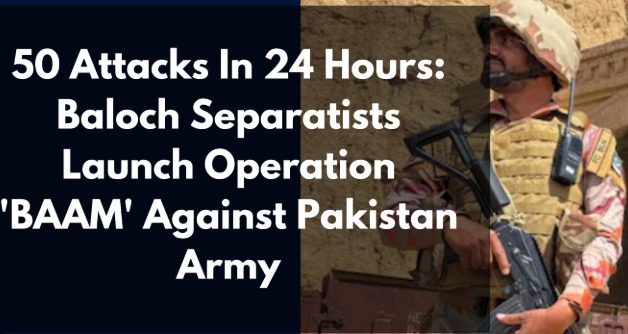
This attack is just one in a series of chilling episodes that have rocked the country’s fragile internal security landscape. It is merely three months from the hijacking of the Jaffar Express train by Baloch insurgents, which was seen as a blow to the military-led security establishment. It not only as an operational embarrassment for the Pakistani military but also as a stark reminder the state is not in control, at least not here. Because, here the Baloch insurgents struck not just at state infrastructure, but also at the very mythology of control cultivated by Pakistan’s powerful military over decades, signally Pakistan slipping back into a state of internal chaos.
These incidents point to an uncomfortable truth that the security in Pakistan is unravelling with the country’s periphery, particularly Balochistan, bearing its brunt.
According to a July 12 report by the Pakistan Institute for Conflict and Security Studies (PICSS), between July 4 and 10 alone, there were at least 27 instances of insurgent or militant violence, which led to 24 fatalities and more than three dozen injuries. It further highlighted that although the violence was widespread across the country, a disproportionately high number of violent incidents took place in Balochistan and Khyber Pakhtunkhwa (KPK), two areas that have long been neglected by the federal government and have endured Pakistan’s militarized governance for decades.
These two provinces have emerged as significant security challenges for the military establishment. Take the case of Balochistan. This resource-rich but with historical experience of continued political disenfranchisement has been simmering with resentment for decades. That resentment, once localized and fragmented, has in recent years transformed into a more coordinated and high-profile insurgency. Armed Baloch groups led by Baloch Liberation Army (BLA) have increasingly targeted not just state security installations and personnel and civilians presumed to be working for the state (collaborators)but also Chinese nationals working on infrastructure projects.
For much of its post-colonial existence, Pakistan has treated Balochistan with a mixture of indifference and coercion. Although the province constitutes nearly 44% of the country’s landmass and holds vast reserves of natural gas, coal, and minerals, it remains the least developed and most underrepresented region in national politics.
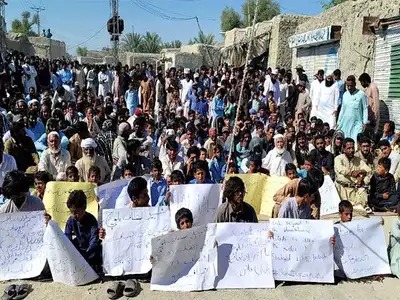
Protest in Balochistan as people demand justice amid rising terror
This neglect is not accidental but a structural. It is rooted in how Islamabad’s successive military dominated governments have viewed Balochistan through a narrow security lens. Instead of investing on integrating the local population into national political or economic frameworks, this militarized governance structure has a history of building garrisons and intelligence networks to rule the province with an Iron fist. As such, social sectors like education remain abysmal and infrastructure underdeveloped with scare avenues of employment for the locals. Such an approach has result in a deepening alienation, especially among the Baloch youth, many of whom now see insurgency not as extremism but as resistance. For many of them, the Pakistani state behaves in an imperialistic manner, interested in extracting provincial resources, while silencing local dissent.
While Balochistan remains the epicentre of anti-state violence, Khyber Pakhtunkhwa, especially its tribal hinterland, continues to be affected by heightened Islamist militancy. The reconstitution of Tehrik-i-Taliban Pakistan (TTP) and the regrouping of splinter jihadist factions have brought fresh violence to the region, including blowback militancy from groups once patronised by the military establishment. For instance, on June 28, at least 13 Pakistan army soldiers killed and a dozen others injured in a car bombing attack by TTP in North Waziristan district. While Islamabad has attempted to engage Pakistan Taliban, in what many described as mainstreaming process, it has failed to reign in the group which has upped its ante.
Pakistan’s worsening internal security is rooted in a doctrinal failure of Pakistan’s most powerful institution: the military. For decades, the Pakistan Army has acted as the ultimate arbiter of national stability. It has been the kingmaker in Islamabad, directed foreign policy, and controlled internal security operations.
But its strategic approach has often leaned heavily on tactical repression and short-term deals with militant proxies, many of whom have eventually turned rogue. Rather than pursuing an inclusive governance regime in the peripheries, the military often resorts to “shock and awe” operations, arbitrary detentions, and enforced disappearances, a feature of its (mis)conduct in Balochistan. This may have bought the military some time through temporary lulls in violence, it really has not shifted the root causes of unrest, which are political disenfranchisement, ethnic exclusion, and socioeconomic neglect.
Moreover, the Army has gotten dirtier with time and politics, and in so doing has reduced its legitimacy at least in part. Its role in propping up so-called hybrid regimes in Islamabad is one example. It is no longer seen as an independent force for good; it is considered a player on the bad side.
It is not merely a security failure that Pakistan is suffering today, rather it is a breakdown of the very social contract, if at all there existed one for the peripheries. When sections of the population feel excluded from political processes, denied economic opportunity, and in fact singled out by the very state that should protect them, insurgency begins to seem not merely possible, but inevitable.
Pakistani rulers would do better for the country by acknowledging what is happening across Balochistan and KPK cannot be vanquished through military operations. Nor can it be whitewashed by official narratives of “external sabotage” or “foreign conspiracies,” something that has become a too convenient tool lately to place all blame neighbouring countries. This unrest goes deeper and is symptomatic of a systemic failure to create an inclusive, equitable, and truly federal state.
Unfolding circumstances demand that Pakistan’s military-dominated establishment and political elite, introspect on the policy approach towards these provinces. Their persistence to govern by coercion while neglecting regional empowerment will only push the crisis deeper. If one may argue, the semblance of control is fast disappearing, and the fires of dissent will stoke ever higher.
Pakistan stands at a crossroads. The surge in violence, especially in historically restive provinces like Balochistan and KPK, is symptomatic of a far deeper institutional rot. It is alarming that the very regions of the state that the current regime is attempting to quell are slipping further into chaos, not by virtue of a lack of power or firepower, but rather the absence of any serious political vision.
Pakistani rulers would do better by grasping the fact that real security cannot be built over “fear, exclusion, or propaganda”. They cannot speak of security unless it is grounded in justice, fairness, representation, and dignity of all citizens, irrespective of ethnicity, language, religion or region. Unless and until those holding power in Islamabad and Rawalpindi understand this, the question will not be how Pakistan restores security, but whether it can prevent the complete unravelling of its internal cohesion.
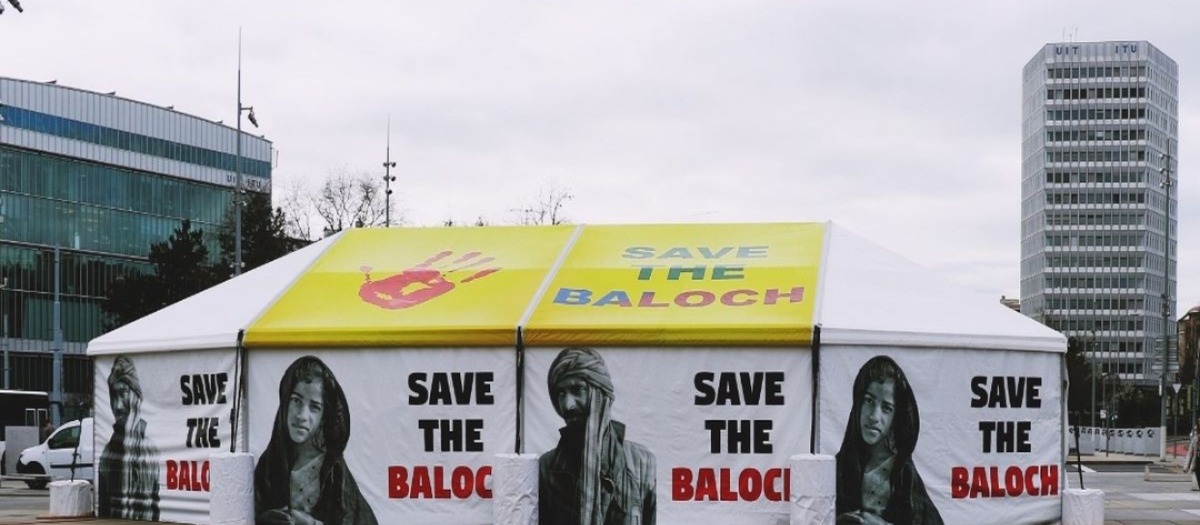
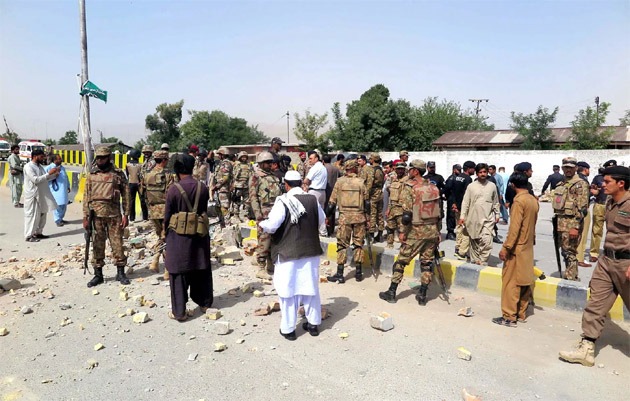
Balochistan, the largest and most resource-abundant province of Pakistan, continues to face persistent unrest—an occupied territory enduring a systematic campaign of military dominance, economic exploitation, and cultural suppression. Since its forcible annexation by Pakistan in March 1948, Balochistan has experienced repeated uprisings, each met with severe state-led repression. Despite enduring decades of marginalisation, the Baloch people’s call for self-determination remains undiminished. The origins of this enduring conflict lie in the coerced incorporation of the Baloch princely state of Kalat into Pakistan. On 15 August 1947, Kalat proclaimed its independence, and its elected parliament subsequently voted against joining Pakistan. Nevertheless, under military duress, the Khan of Kalat was compelled to sign an instrument of accession in March 1948. This act, widely viewed as illegitimate, sparked the first of five major Baloch rebellions—occurring in 1948, 1958, 1962, 1973, and the most protracted uprising, which began in 2004 and persists to this day.
Balochistan constitutes 44% of Pakistan’s total land area, yet it remains the most underdeveloped region in the country. Although the province accounts for 36% of Pakistan’s natural gas production, a mere 10% of its residents have access to piped gas. Sui, where natural gas was first discovered in 1952, ironically still lacks basic amenities such as electricity and clean drinking water. According to the Pakistan Economic Survey 2024–25, Balochistan’s literacy rate is a mere 42.01%, markedly lower than Punjab’s 66.25%. Despite its wealth in minerals, fossil fuels, and a strategically vital coastline, its inhabitants remain among the most impoverished in the nation. These disparities are not coincidental—they are structurally imposed. The China-Pakistan Economic Corridor (CPEC), a $62 billion infrastructure initiative, has exacerbated the economic subjugation of Balochistan. Gwadar Port, the flagship project of CPEC, has effectively become a Chinese-dominated zone from which the indigenous Baloch have been displaced. Traditional fishing communities have been denied access to ancestral coastal areas, while development zones enclosed by fencing, constant paramilitary presence, and checkpoints have proliferated—vastly outnumbering educational and healthcare facilities. Rather than fostering development, Gwadar has transformed into a heavily securitised zone.
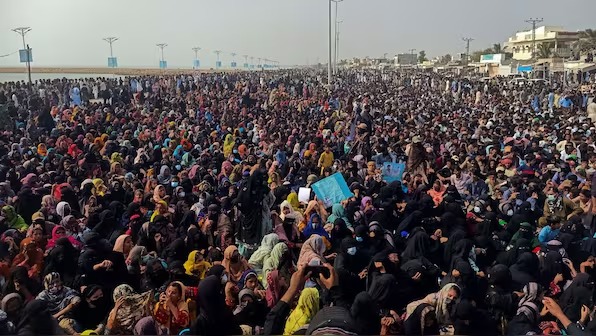
Although Pakistan presents CPEC as a transformative initiative, it has instead become a focal point of resistance. Widespread protests erupted in 2024 and continued into early 2025, driven by grievances related to displacement, joblessness, and denial of fundamental rights. The state’s response was marked by repression. In July 2024, peaceful protestors in Gwadar were subjected to violence and arbitrary detention, while internet services were suspended. Human Rights Watch and Amnesty International denounced the use of excessive force and unlawful detentions. The situation further deteriorated in 2024–2025 with a sharp rise in enforced disappearances. Pakistan’s own Commission of Inquiry on Enforced Disappearances (COIED) has acknowledged that more than 10,000 individuals have disappeared since 2011—2,752 of whom are from Balochistan. Amnesty International’s January 2024 report documented an additional 379 cases in that year alone. Abductions carried out by intelligence agencies and paramilitary forces have become a systematic means of stifling dissent.
One of the most harrowing incidents occurred in July 2024, when Hayat Sabzal Baloch was abducted in Turbat; his mutilated body was discovered in February 2025, discarded without dignity. In January 2025, a 15-year-old student, Anas Ahmed, was forcibly disappeared in Karachi. These instances reflect a broader systemic pattern in which the state metes out collective punishment by targeting children, youth, and activists. The abductions of Baloch women have also escalated. On 27 May 2025, 24-year-old Mahjabeen Baloch was taken from Quetta Civil Hospital by plainclothes security personnel. Her only offence was the organisation of peaceful student demonstrations. She now joins a growing list of women subjected to enforced disappearance—signalling a disturbing evolution in Pakistan’s counterinsurgency tactics.
Protests have persisted despite widespread repression. In March 2025, nationwide demonstrations erupted following a BLA-orchestrated hijacking of the Jaffar Express in the Bolan Pass, resulting in 64 fatalities, including 18 soldiers and 33 militants. In response, Pakistani forces launched “Operation Green Bolan.” Although the state proclaimed success, numerous civilians were either killed or forcibly disappeared. The victims’ families organised sit-ins in Quetta, demanding the return of their missing relatives. Their peaceful appeals were met with rubber bullets and mass detentions. Central to this nonviolent resistance is Mahrang Baloch, a young physician and human rights advocate. As the founder of the Baloch Yakjehti Committee (BYC), she has emerged as the voice of thousands of families of the disappeared. In March 2025, she was arrested and imprisoned in Hudda Jail—the same prison where her father was once held before his disappearance. Despite being denied a fair trial or presentation of evidence; she continues to draw international attention. TIME magazine named her among its TIME100 Next list in 2025. PEN Norway, UN Working Groups, and Malala Yousafzai have all called for her release. Her words, “To demand justice is not terrorism,” have become a defining slogan.
Nevertheless, the state continues to criminalise dissent. Peaceful demonstrators are branded as terrorists; journalists reporting on enforced disappearances face harassment; and human rights advocates are accused of advancing foreign agendas. Pakistan’s official discourse dismisses all Baloch grievances as “Indian-backed separatism,” overlooking decades of systemic violence and legitimate political aspirations. Violence in the region is not solely perpetuated by the state—militancy has also escalated. In August 2024, the Baloch Liberation Army’s Operation Herof resulted in the deaths of 14 security personnel and over 60 civilians in a coordinated assault. In November 2024, a suicide bombing at Quetta Railway Station killed 32 people. The BLA claimed responsibility, citing the attack as retaliation for state atrocities. These recurring cycles of violence and reprisal have increasingly radicalised the socio-political environment, severely narrowing the space for peaceful resolution.
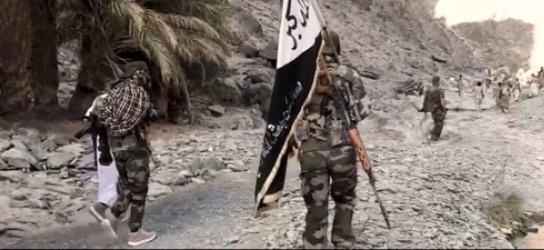
Compounding the anguish, prominent figures such as national racer Tariq Baloch were assassinated in May 2025. Activists have described it as a “kill-and-dump” operation—where individuals are executed by state agents and their bodies discarded to serve as a deterrent. Domestic media frequently fall silent under state pressure, while international journalists are denied access. This sustained information blackout has rendered Balochistan one of the most poorly reported conflict zones globally. Cultural repression further deepens this siege. The Balochi language is scarcely taught in schools, while textbooks systematically omit Baloch history and identity. Cultural figures such as Professor Saba Dashtiyari, a staunch advocate for linguistic and cultural rights, have been assassinated. Today, artists and poets continue their work either in exile or in secrecy, preserving the spirit of resistance through music, literature, and oral storytelling.
Balochistan’s demographic landscape is also being intentionally reshaped. A process of settler colonialism is underway, with non-Baloch communities incentivised to settle in strategic districts. Electoral boundaries are manipulated to dilute indigenous political influence, resulting in further marginalisation and disenfranchisement. Nevertheless, the Baloch people persist in their resistance. From guerrilla fighters in the rugged mountains to student demonstrators in urban centres, and activists within the diaspora in Europe and North America, the will to defy remains resolute. Each martyr’s funeral becomes a site of protest. Every name of the disappeared is transformed into a slogan. Each expression of resistance—be it a poem, mural, or sit-in—resonates across generations with undiminished force.
Pakistan’s GDP increased by 2.5% in 2024 and is forecasted to grow by 2.6% in 2025, according to the Ministry of Finance. Yet this economic growth has failed to benefit Balochistan in any meaningful way. While Pakistan’s per capita income stands at $1,824, Balochistan’s figure remains significantly lower, with widespread unemployment and malnutrition. In the 2023–24 provincial budget, Rs 750 billion was allocated, yet sectors such as health, education, and infrastructure remain severely neglected. Funds earmarked for “security” rarely reach the public. The global community remains largely indifferent. No United Nations fact-finding mission has ever visited Balochistan. Western nations, including the United States and China, continue to prioritise strategic relations with Pakistan over addressing human rights concerns. Although international organisations publish reports, diplomatic pressure remains negligible. The conflict receives scant media coverage, surfacing only when violence reaches major cities.
Balochistan is not merely a tale of insurgency—it is the narrative of a nation resisting erasure. A people denied the right to live with dignity continue to choose defiance. The state may resort to killing, abduction, and censorship—but it cannot extinguish the resolve of a people who steadfastly remember their history, uphold their identity, and dream of freedom. The assault on Balochistan transcends military action—it is an existential struggle. Yet in the face of oppression, a young woman imprisoned, a mother clutching a photograph of her missing son, and a protestor inscribing slogans on a wall all convey a unified message: We exist. We resist. And we shall not be silenced.
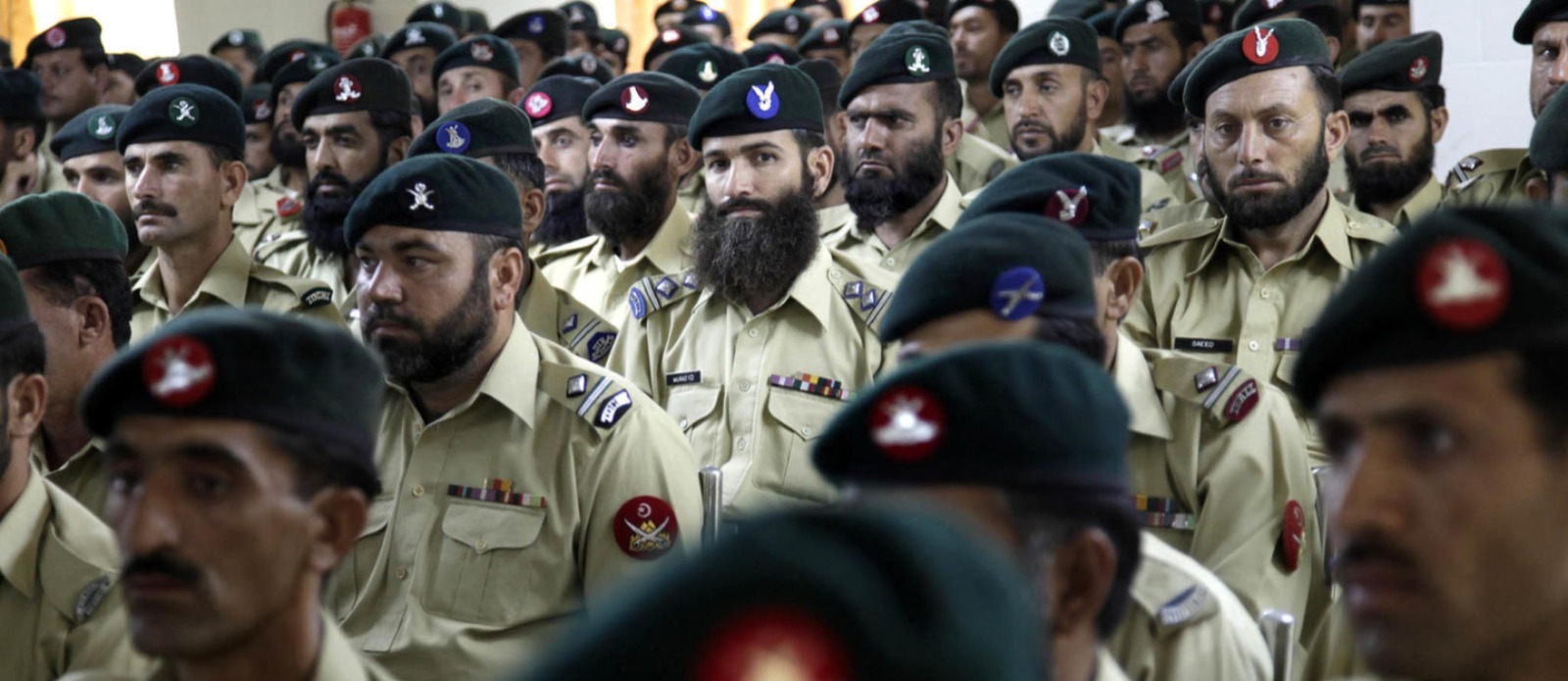
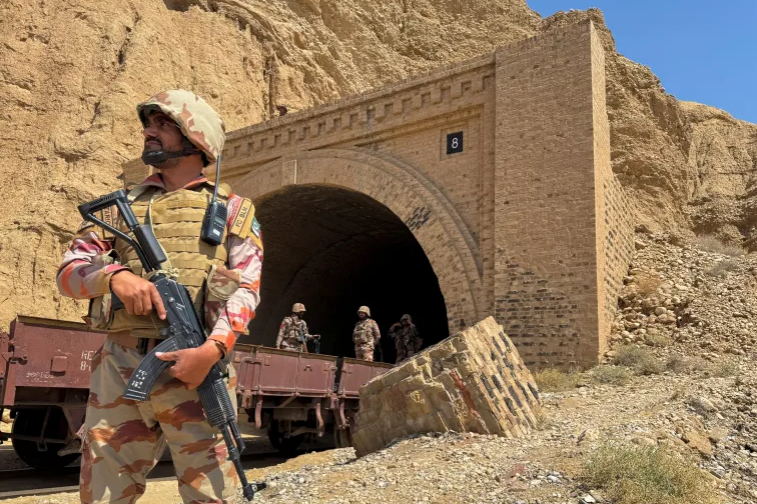
Pakistan’s political landscape has long been orchestrated not by its elected representatives but by the opaque influence of its military elite, whose grip on the nation’s trajectory grows ever more evident with each successive episode. The recent visit of Pakistan’s Army Chief, General Asim Munir, to the United States—noticeably unaccompanied by the Prime Minister—serves as a striking indication of how far civilian authority has been marginalised. If this were not a sufficiently telling sign, Pakistan’s peculiar nomination of Donald Trump for the Nobel Peace Prize further underscores the surreal and unaccountable hybrid regime now presiding over this nuclear-armed state. In this unfolding drama, it is not the democratic will but the triad of Allah, America, and the Army that dictates Pakistan’s fate—a trinity that has empowered its generals with unrestrained influence while exacting profound costs from the very nation they claim to defend. It is widely acknowledged that Pakistan’s military has long exercised disproportionate influence over foreign affairs, national security, and internal governance. Yet General Munir’s solo diplomatic foray in Washington, absent the country’s elected leader, signifies something even more disquieting: the total institutional marginalisation of civilian leadership. In a functioning democracy, the Prime Minister serves as head of government, the principal figure in bilateral diplomacy, and the voice of the citizenry on the global stage. Munir’s lone presence was not simply symbolic—it conveyed an unequivocal message to both the international community and Pakistan’s own populace: the Army is the central agent of the state; the Prime Minister is merely ceremonial.
The distorted rationale was further exposed through the bewildering act of nominating Donald Trump—a figure whose presidency was marked by disorder and polarisation—for the Nobel Peace Prize. Even by Pakistan’s frequently opaque and labyrinthine political norms, this gesture was confounding. Yet, when interpreted through the prism of military realpolitik, a grim logic emerges. Trump symbolises a yearning for transactional diplomacy, authoritarian leadership, and covert negotiations that bypass democratic structures. Pakistan’s military, which has long prospered through bilateral engagements that marginalise civilian leadership, perceives in Trump an ideal counterpart—someone who engages directly with generals rather than governments.
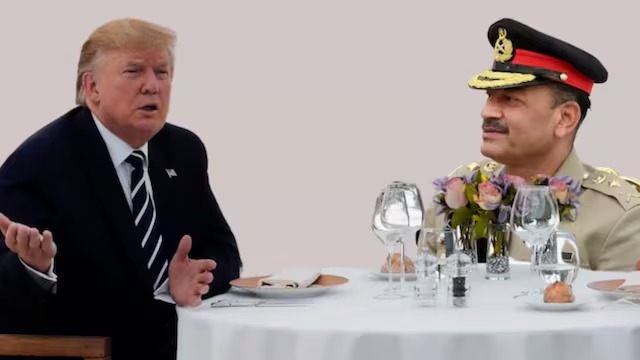
The nomination has little to do with peace or diplomacy. It is, rather, a calculated overture—a political courtship extended from Rawalpindi to Mar-a-Lago. More telling, however, is how these developments reflect the underlying architecture of Pakistan’s political framework. The Defence Minister, Khawaja Asif, recently extolled the so-called “hybrid system”—a euphemism for the military-civilian power dynamic that is far from equitable. In his own remarks, he commended this Frankenstein construct as a viable model, laying bare the tragic paradox wherein elected representatives not only accept their diminishing relevance but actively endorse it. One might expect such a structure to be imposed upon reluctant politicians. Yet, as a pointed tweet observed: “It’s not that the civilians have ceded space… it’s that they have cheered on their own marginalisation.” The betrayal extends beyond institutional decay—it is a moral failure, a surrender of democratic integrity.
The tweet strikes at the heart of Pakistan’s political malaise. In any healthy democracy, military overreach is met with civilian resistance, protest, and defiance. In Pakistan, however, civilians have often extended the ladder. The PML-N, PPP, and even the once-principled PTI have each, at different junctures, prioritised immediate political advantage by siding with the military rather than upholding long-term democratic norms. This complicity has eroded civilian authority, normalised coups without the need for tanks, and fostered a political class more concerned with navigating the corridors of power than exercising meaningful governance. A more recent tweet—“Allah, America and Army have always been the dominant forces in Pakistani politics. While the generals have amassed power and wealth as a ‘front-line state’, the nation has borne grievous losses. The Trump-Asim Munir meeting marks the death knell of civilian rule.”—resembles a final elegy for Pakistan’s democratic ambitions. It reveals the core paradox within the country’s strategic posture. Since the Cold War, Pakistan’s military has exploited its geopolitical location and strategic value to amass significant political power and attract foreign assistance. The United States, in search of a dependable South Asian partner, repeatedly chose generals over institutions. This enduring gamble, played across decades, has enriched the military while leaving the nation depleted—economically, politically, and morally.
The so-called front-line state designation evolved into a euphemism for enduring dependency. Pakistan’s military exchanged national sovereignty for security-related funding, yet these financial inflows rarely benefited the wider population. Infrastructure deteriorated, education was marginalised, and healthcare systems collapsed. Meanwhile, the General Headquarters in Rawalpindi thrived—expanding housing schemes, corporate ventures, and even political entities. The consequences of this Faustian pact were not borne by the generals, but by civilians—deprived of agency, stifled in dissent, and reduced to passive observers of their own governance. Within this context, General Asim Munir’s meeting with Donald Trump transcends a mere diplomatic engagement; it starkly underscores the fact that Pakistan’s military is now independently conducting foreign relations, free from parliamentary scrutiny or public accountability. This is evocative of a state within a state—except the inner state no longer feels compelled to operate in the shadows. It strides openly into the White House, delivers public statements, nominates foreign leaders for peace prizes, and orchestrates the installation, management, and removal of civilian administrations at will. And all of this occurs with the silent consent—at times, the enthusiastic endorsement—of those it has systematically rendered powerless.
Perhaps most damning is the near-total absence of public indignation. Pakistanis have become so habituated to military dominance that even the most overt manifestations of authoritarianism provoke little more than indifference. A quiet fatalism pervades the national psyche—a collective resignation to the belief that the Army will govern, irrespective of constitutional order. Consequently, when a Defence Minister extols a hybrid regime, or an Army Chief assumes the diplomatic stage in Washington without the Prime Minister, it scarcely raises eyebrows. The boundary between the abnormal and the accepted has long since dissolved. Yet this trajectory is ultimately untenable. The military’s growing consolidation of authority is not merely politically corrosive—it is strategically perilous. No nation can endure indefinitely under the dominion of its own armed forces. The systematic erosion of civilian institutions, the ritualised subjugation of elected officials, and the economic prioritisation of military interests do not constitute a formula for national resilience. Rather, they serve as indicators of institutional decay. Pakistan’s gravest threat is not foreign—it is domestic: the entrenched militarism that refuses to recede, and a civilian leadership unwilling to resist.
While the generals may believe that another endorsement from Washington or the rise of another transactional figure like Trump will cement their dominance, history is not so easily deceived. Every short-term alliance with a foreign benefactor carries a long-term price. American backing is never perpetual. Its interests do not reflect the aspirations of Pakistan’s people, but rather its own shifting geopolitical priorities. When those priorities change—as they inevitably do—the military risks being left with a nation bereft of legitimacy, lacking public confidence, and increasingly marginalised on the world stage. It is not yet too late to change direction. But for such a course correction, Pakistan’s civilian leadership must rediscover its resolve. It must cease applauding its own subjugation. It must confront an inconvenient truth: a state governed by generals is no democracy, and a citizenry living in fear is not free. Civilian leaders must challenge the myth that the military is the country’s only functional institution and commit instead to building the strength and credibility of civilian governance. Most importantly, they must reject the illusion that the Army and the people are one and the same. They are not. One is meant to serve the other—and so it must.
The Trump-Asim Munir episode may, in retrospect, be seen as a defining moment—not because it altered the status quo, but because it laid it bare. It exposed a civilian government so enfeebled that it stood by mutely as its authority was overtaken on foreign soil. It exposed a military so emboldened that it no longer sees the need to maintain even the façade of democratic legitimacy. And it exposed a political class so deeply complicit in its own disempowerment that it has come to regard marginalisation as a form of merit. This is not a hybrid arrangement. It is a hostage scenario. And, tragically, Pakistan is fast exhausting its time to mount a rescue.