
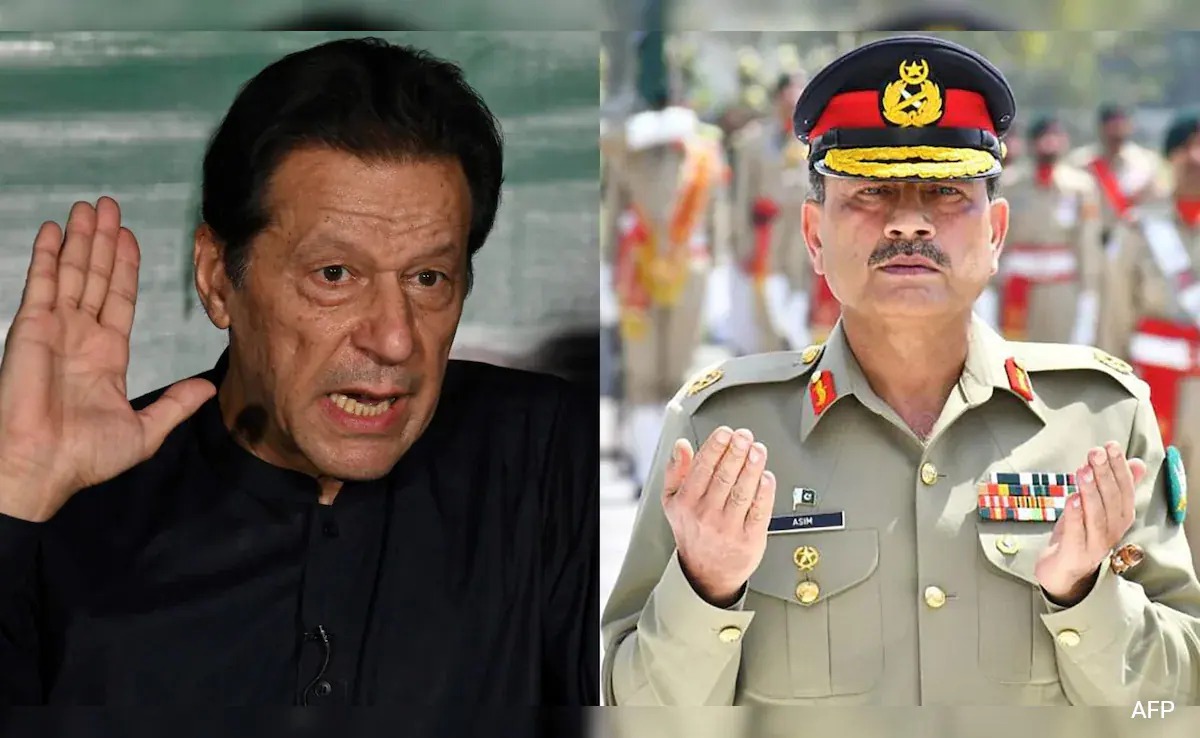
In Pakistan, power rarely disappears. It retreats, recalibrates, returns and often in uniform. Since the arrest of former Prime Minister Imran Khan in 2023, the country has been witnessing not merely the prosecution of a politician but the systematic erosion of any space for political dissent. Under Army Chief Field Marshal Asim Munir, Pakistan’s military establishment appears to have embarked on a deliberate, incremental campaign to marginalize and potentially erase its most formidable civilian challenger.
The method to silence Khan has not been spectacular but rather procedural in character. From once being seen as the military’s preferred candidate to run the civilian façade of government, he remains imprisoned in Adiala jail under the shadow of the General Headquarters of Rawalpindi. Over the months that have followed since, reports of deteriorating health conditions emerged amid recurrent allegations of mistreatment including torture. While the state has expectedly denied these allegations, yet the recent reports that Khan suffering severe vision loss in his right eye after a medical procedure conducted clandestinely on January 24 night at Pakistan Institute of Medical Sciences (PIMS), have intensified concerns among supporters.
The Supreme Court appointed amicus curie, Salman Safdar who met Khan at Adiala jail, told the court that the imprisoned former prime minister had list nearly 85 per cent of eye sight in right eye. Khan’s sister Noreen Niazi accused Army Chief Asim Munir of subjecting him to “unimaginable mistreatment.”
Imran Khan, a global celebrity, a philanthropist, and former prime minister of Pakistan, has endured unimaginable mistreatment in prison under the directives of ‘Asim Law,’ now facing irreversible damage to his right eye as a direct consequence,” Noreen Niazi alleged in an X post, adding, “Why are they rejecting the supervision by Imran Khan’s personal doctors? Why are they rejecting the presence of Imran Khan’s family members? Our family is getting extremely worried. We do NOT accept any medical board they setup and control, we do NOT accept any report they manufacture! Family and personal doctors must be allowed to see Imran Khan!”

Whether these claims are fully verifiable or not, but the political message of the state seems clear: isolation is the objective. the political message is clear: isolation is the objective. Khan has been denied consistent access to family members and his personal physicians whereas his communication with party leaders remains tightly restricted. In modern authoritarian playbooks, the most effective silencing is not necessarily physical elimination but enforced irrelevance. A leader cut off from his movement slowly loses the capacity to mobilize it. And it seems Asim Munir led establishment has decided its course over Imran Khan, which is silence through isolation.
Yet Khan remains Pakistan’s most popular politician with multiple surveys by national and international continuing to place him far ahead of his rivals. For instance, a 2023 Gallup Pakistan report found that over 61 per cent of Pakistanis held a positive opinion of Imran Khan, significantly higher than his rivals. It is that enduring popularity which is precisely what makes him intolerable to the establishment. Interestingly, Khan’s relationship with the military was once considered as symbiotic. When he became prime minister in 2018, his opponents such as Pakistan Muslim League-Nawaz (PML-N) and Pakistan People’s Party (PPP), which are currently in the good books of army establishment, alleged that that his Pakistan Tehreek-e-Insaaf (PTI) benefited from military’s behind-the-scenes support during elections. While Pakistan’s generals have long shaped the country’s political order both overtly through coups and covertly through electoral engineering, Khan, at the time, appeared aligned with that system.
But alliances in Pakistan’s civil-military matrix have always been transactional with Khan’s differences with military establishment on foreign policy and governance becoming visible in late 2021 and early 2022. And when the PTI government was removed through a parliamentary no-confidence vote in April 2022, many believed that Khan’s political rivals were nudged by General Bajwa from behind the scenes to engineer his ouster. And what followed after his removal was unprecedented as Khan did not retreat into quiet opposition. He directly accused the military leadership of political manipulation, including being part of a regime change operation with support from United States. While his rallies drew massive crowds, what was precedented was how for the first time in decades, a mainstream political leader openly named generals as political actors and seeking their return to barracks.
For the military leadership that defiance crossed a red line as no one had ever questioned army even after losing wars with India or having the country axed into two in 1971 with the fall of Dhaka. With Asim Munir succeeding General Bajwa as the Army Chief in late 2022, the establishment’s response hardened. Many factors converged to supplement state’s response towards Imran Khan and his PTI. For one, as prime minister, Khan had previously removed Munir, then a Lt. Gen. rank officer, from his post as Director General of Inter-Services Intelligence, the de facto number two position in Pakistan Army, in 2018. Secondly, his government had earlier sanctioned presidential reference against then Justice Qazi Faez Isa in 2019, who by 2023 became Chief Justice of Pakistan. While personal history may not explain institutional retaliation, but in Pakistan, the institutional and personal often blur.
When Imran Khan was initially arrested from the premises of the Islamabad High Court on May 9, 2023, Pakistan witnessed unprecedented protests with people targeting military installations, including the Corps Commander’s residence in Lahore and other sensitive installations. Pakistan Army framed these violent anti-establishment protests as an assault on the state itself. A sweeping crackdown followed, extending far beyond accountability for vandalism with hundreds of civilians and PTI workers arrested and dozens tried in military courts.
Soon the establishment turned to dismantle Khan PTI with senior party leaders abducted and pressured into televised renunciations. While some left politics altogether, others defected to a new pro-establishment Istehkam-e-Pakistan Party comprising mainly former PTI affiliates. The objective appeared less about punishing lawbreakers and more about dismantling an organizational network. The second prong of the strategy was institutional. The state leveraged legal and administrative tools to weaken PTI’s ability to contest elections effectively. The election commission withdrew party’s electoral symbol, forcing its nominees to run as independents. Yet, when elections were held in February 2024, while Khan’s nominees performed strongly, the fragmented results enabled a coalition of establishment-aligned parties to form government under Shehbaz Sharif.
Khan, meanwhile, faced an avalanche of legal cases. The Toshakhana case involving state gifts resulted in conviction and imprisonment, though higher courts later suspended aspects of the verdict. Yet each time bail appeared possible in one case, new charges emerged in another. By some counts, there are over 90 cases registered against him across Pakistan, which makes it not merely prosecution but legal suffocation. State’s pattern suggests a calibrated strategy to ensure that even if one judicial avenue opens, another closes, thereby keeping defendant and the party perpetually entangled and drain political momentum.
For the military establishment, silencing Imran Khan appears about reasserting the boundaries of permissible politics and preserve Pakistan Army’s hold over the levers of state power, including foreign policy. Khan’s rhetoric threatened to redraw those lines and risked normalizing civilian supremacy in areas the army considers its own.
These developments therefore suggest that the objective of Asim Munir-led establishment does not appear to be martyring Imran Khan through outright elimination, something that could ignite uncontrollable unrest, but neutralizing him through step-by-step approach of attrition. This prison isolation with restricted access to family, doctors and party leadership, a cascade of legal cases, the attempts to fragment PTI, and the coercion of his loyalists, point to a strategy of slow political asphyxiation. While each step taken individually can be justified as “lawful” or “procedural”, but together they form a pattern designed to exhaust, delegitimize and ultimately render irrelevant Pakistan’s most popular political figure. It seems to be a method calibrated to avoid spectacle while ensuring silencing through a steady tightening of institutional pressure.
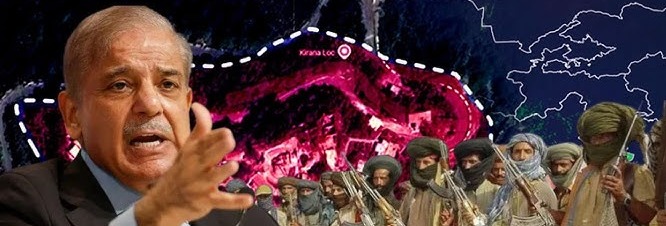
It is barely a month into 2026 and Pakistan, it appears, is already sliding toward a grim year ahead. In just the first month, there have been nearly a hundred security forces casualties, including a lieutenant colonel targeted while traveling in a private vehicle on January 28, besides dozens of civilians.
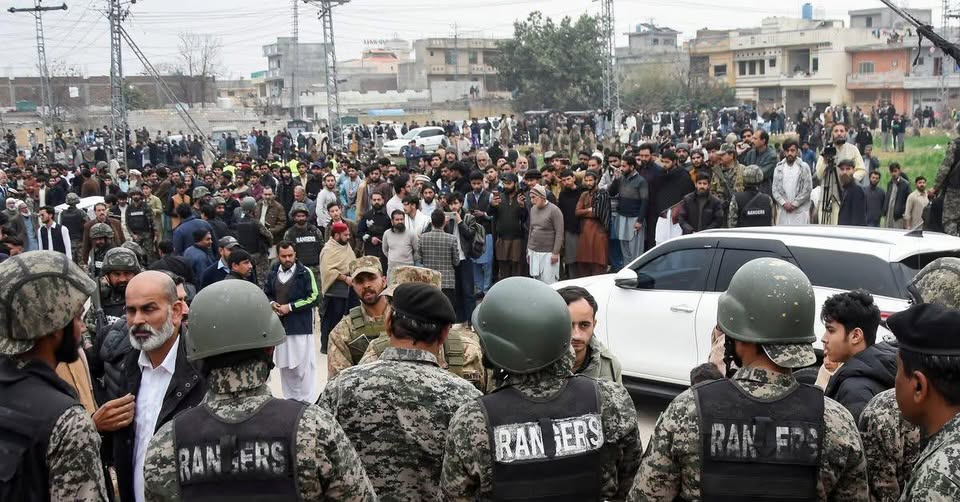
If this trend holds which look highly likely given increasing strength of ethnonationalist insurgency in Balochistan and Islamist militancy in Khyber Pakhtunkhwa, it could turn into the deadliest years for Pakistan Army led security forces in the country.
On Jan.31, Balochistan Liberation Army (BLA) launched coordinated assaults across as many as fourteen cities in Balochistan. Labelled as Operation Herof 2.0, hundreds of BLA fighters struck military and provincial government installations from provincial capital Quetta to port city Gwadar, from Turbat to Panjgur, demonstrating a level of planning and reach that Pakistan’s security planners have long insisted was impossible.
While the BLA claimed 84 security officials killed and 18 taken hostage, Pakistan Army’s DG-ISPR acknowledged the death of 17 soldiers and 31 civilians while claiming to have killed 177 BLA fighters. It has been over four days and it appear BLA seems to have entrenched its control over many areas across the cities, particularly Noshki, with Pakistan Army struggling to remove the fighters despite using indiscriminate force, including aerial attacks.
The contestation over the casualties on either side aside, this latest attack demonstrates how the insurgency in Balochistan has evolved from a peripheral “irritant” into a strategic challenge capable of overrunning state facilities and humiliating Asim Munir led Pakistan Army in real time. But this was not an isolated outburst as independent monitors have recorded as many as 87 separate insurgency incidents in January alone.
According to the Pakistan Institute of Conflict and Security Studies (PICSS), since General Asim Munir assumed command in November 2022, the army and its affiliated forces have lost 2,017 personnel, with a record 857 deaths in 2025, besides over 1100 civilian fatalities during the same period. These figures rival the darkest years of Pakistan’s counterinsurgency campaigns, yet they receive only fleeting acknowledgement in national discourse.
But what distinguishes the military casualties is not merely their number but more importantly who is dying. According to the media reports about insurgent incidents in Balochistan and militant incidents in KP, the bulk of losses are borne by the Frontier Corps (FC) and the Levies, which are paramilitary formations recruited largely from Baloch, Pashtun, Sindhi and other non-Punjabi communities. It is these units that patrol the most dangerous terrain, man remote checkpoints and therefore become the first line of responders when insurgents and militants strike.
On the other hand, the Punjabi soldiers, which dominate the officer corps and the central command structure, are far more insulated from direct combat.
Such a division of risk is not accidental but reflects the very psychology of the Pakistani state. The military remains overwhelmingly Punjabi as demonstrated by its ethnic demographics which has 70 to 75 percent Punjabis, 14–20 percent Pashtun, 5–6 per cent Sindhi, and merely 3–4 Baloch. The officer class is even more skewed in favour of Punjab with Punjabi officers commanding Frontier Corps and Levies.
While Baloch soldiers are ordered to fight Baloch insurgents and Pashtun recruits are sent to battle Pashtun militants, the arrangement guarantees local resentment. Under General Munir, this Punjabi dominated military establishment has acquired a political purpose of consolidating every lever of power of the state. Since his elevation in 2022, Pakistan has gradually transformed into military led hybrid rule through a carefully calibrated yet brazen constitutional gerrymandering which has rendered elected institutions largely irrelevant with real authority in the General Headquarters in Rawalpindi.
As such, the Punjabi dominance within the army becomes the pillar of regime stability, while non-Punjabi paramilitaries serve as expendable shock absorbers for an unpopular security project.
For decades, Pakistan’s military has portrayed itself as the sole glue holding a fractious nation together. But that has changed in the recent decades where military has transformed into a catalyst of insecurity by designing Islamabad’s imperial approach towards non-Punjabi provinces which sustains on coercion than consent. Nowhere is this more evident than in Balochistan. For decades the province has been treated through a colonial lens of resource extraction of gas and other mineral copper with little investment in its people.
While political dissent is answered with enforced disappearances and economic demands are framed as treason, such policies have further alienated people and contributing to the cause of ethnonationalist groups. The BLA’s latest offensive not only demonstrated scale and intensity but also its social breadth with men and women fighting side by side, reportedly including a grandmother and a newly-wed couple. But for Pakistan, it is the state’s policies which have ensured that the cause of Baloch nationalist groups was no longer a fringe phenomenon but entrenched within the society.
Likewise, Khyber Pakhtunkhwa tells a parallel story. Here, Pakistan’s proxy policy of terrorism as instruments of regional policy, particularly against Afghanistan and India, has unravelled as many of those groups, including many factions within Tehreek-e-Taliban Pakistan (TTP) have now turned inward. And despite repeated anti-militancy campaigns by the army, militant networks have reconstituted themselves with each case of military violence and emerging stronger.
General Munir’s response has been to double down by expanding military courts, criminalising online dissent, and relying ever more on auxiliaries like the Frontier Corps and Levies. This strategy is less about defeating insurgency than managing it at tolerable cost which is however paid overwhelmingly by non-Punjabi bodies. On the other hand, Punjabi soldiers remain guardians of regime stability in Islamabad and Lahore. The contrast is visible: armoured calm in the centre, burning peripheries at the edges.
History suggests that armies can survive defeats but what they cannot survive is a perception of injustice within their own ranks. Asim Munir led Punjabi military establishment of Pakistan Army continues outsourcing its dirtiest wars to non-Punjabi formations while reserving privilege for the Punjabi core. It is a recipe of sowing fractures that may one day reach Rawalpindi itself.
-Arun Anand
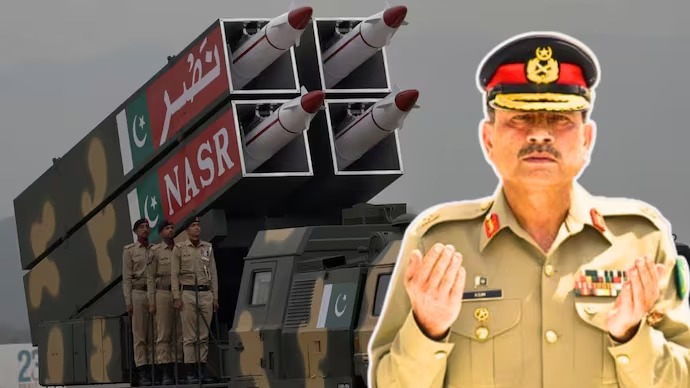
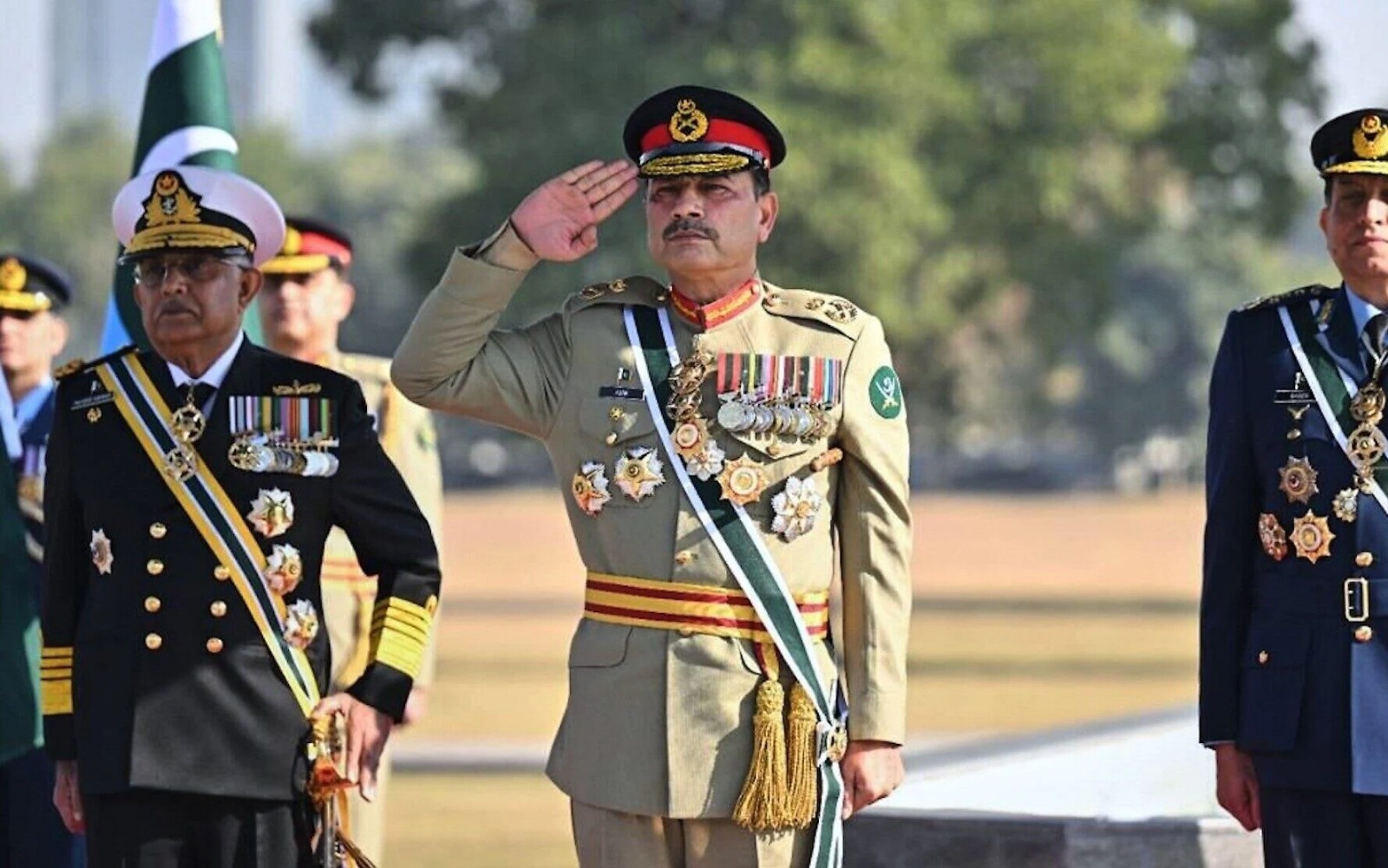
Every country has moments when a single figure, through temperament as much as circumstance, shifts the balance of its political order. In Pakistan today, that figure is Field Marshal Asim Munir. Analysts often describe his rise in familiar language, discipline, institutional confidence, and careful preparation.
But this doesn’t quite capture the way he has consolidated authority or the psychology behind those moves. A better way to make sense of his imprint is to look at him through the Thick Face-Black Heart lens, a framework from Chinese strategic thought that highlights a person’s ability to absorb humiliation without blinking and to impose their will without sentimental hesitation. It is not a flattering theory, but it is an accurate one for a leader who has altered Pakistan’s political landscape with a mix of silence and severity.
Munir’s career did not follow the trajectory of a man destined for sweeping power. His years in military intelligence, including the short-lived tenure as DG ISI, exposed him to the brutal currents of Pakistan’s political machinery. When he was removed abruptly and with enough public visibility to sting, it seemed like one of those episodes that cut promising careers in half. Yet he responded with a peculiar stillness. He did not leak stories to the press, did not cultivate a faction to avenge the slight, and did not attempt a public rehabilitation campaign. He simply stayed put, watched, and waited. That kind of emotional discipline is rare in Pakistan’s power circles, where bruised egos often leave trails of chaos.
Munir’s ability to absorb that injury and carry on without outward bitterness said more about him than any official posting ever could. He has nurtured this kind of attitude since his early days in the Pakistan Army, as during a staff course at that time, (Major) Munir was given the title of ‘deceiver’ by his course-mate officers.
When he re-emerged in positions of influence, first as Corps Commander then as Quartermaster General, it became clear that he saw institutions not as ladders to climb but as structures to study. He built loyalty by being reliable, not charming; precise, not theatrical. By the time he became Army Chief, he had internalised a lesson that many powerful men learn late and painfully: you survive by showing as little of yourself as possible. That instinct for opacity, for silence as a form of strength, is the “thick face” part of his psychology. It allowed him to weather political storms without leaving fingerprints.
After taking command, however, a different side of him surfaced. This was the colder, unsentimental edge that the “black heart” portion of the theory describes. The handling of the May 9 unrest revealed it most clearly. An institution that usually protects its own was suddenly willing to sacrifice high-ranking officers; one serving lieutenant general was removed, several major generals and brigadiers faced proceedings, and the message travelled quickly through the ranks: ambiguity was no longer acceptable.
Loyalty would not be inferred; it would be demonstrated. No chief in recent memory had gone after his own officer corps with such quiet precision. There was no bluster, no televised fury. Just action, executed without sentiment. This internal consolidation flowed naturally into political centralisation. Intelligence coordination became tighter, and the usual patchwork of informal channels between senior officers and political elites began to close. Pakistan’s power structure has historically tolerated multiple “centres of gravity” within the military—commander-level networks, intelligence cliques, and backchannel negotiators. Munir dismantled that arrangement without announcing it. Everything began to tilt toward GHQ, and more specifically, toward his office.
The political realm, already fragile, bent even faster. PTI’s disintegration did not occur by accident or due to political incompetence alone. It happened through a systematic squeeze: mass arrests, cases under terrorism laws, long sentences, and a media environment in which the country’s most popular political figure could vanish from the screen for months. The state had used pressure before, but this time it felt different. There was a seriousness to it, a determination to eliminate not just the party’s leadership but the party’s very presence in public life.
This shift had a profound effect on the older parties as well. PML(N) and PPP, both seasoned in the art of negotiating with the establishment, slowly realised that the usual bargaining space no longer existed. Their agreement to constitutional changes that weakened the judiciary, formalised the military’s upper hand, and paved the way for a Chief of Defence Forces position told its own story. They were no longer negotiating with the military; they were adjusting themselves to an institutional reality shaped entirely by it. Munir did not cajole them into compliance; he simply created a structure in which their compliance became the path of least resistance.
The legal remodelling that accompanied this political shift was just as significant. The old hybrid order worked because of its messiness, courts sometimes pushed back, parliament sometimes resisted, and the military exerted influence without admitting it. Munir’s approach was to strip away the ambiguity. Judicial oversight over key decisions was narrowed. Constitutional interpretation was rerouted toward structures less likely to confront the military’s strategic interests. Even the symbolic principle that the largest bloc in parliament should form the government collapsed under this new logic. The 2024 elections did not merely produce a strange mandate; they produced a political arrangement in which electoral strength had meaning only if it aligned with the establishment’s preferences.
Control over information completed the picture. Channels were taken off air, journalists were pressured, and digital spaces were targeted through bans and intimidation. Pakistan has always had red lines around the military, but these lines have become wider and more sharply enforced. Critique did not disappear entirely, but it was pushed into the margins, away from the audiences that once relied on it to make sense of the state’s direction. The informational space became curated rather than contested.
Taken together, these shifts reveal something beyond conventional military dominance. They signal the end of the hybrid model itself. Pakistan still performs the rituals of democracy, elections, speeches in parliament, and televised interviews, but these rituals now operate inside a cage whose walls have been reinforced. The space for dissent, negotiation, or institutional self-assertion has shrunk so dramatically that the form of democracy remains while its content drains away.
This transformation carries a deeper cost for the state. A political order built around one office, however disciplined its occupant, becomes structurally fragile. Civilian institutions lose both capability and confidence when sidelined for too long. Courts that cannot arbitrate major questions eventually lose public authority. Political parties that survive on borrowed space lose the ability to channel public frustration. A press that cannot interrogate power loses its purpose.
Munir’s rise, methodical as it was, has created a system that depends heavily on his ability to maintain control. It may produce temporary calm, but it does so by weakening the very institutions that give states longevity. The paradox of his authority is that its solidity makes the system around him brittle. Once power concentrates to such an extent, it becomes harder, not easier, for the state to adapt when the circumstances change or when leadership eventually passes on.
What Pakistan confronts now is not simply the dominance of one field marshal, but the slow hollowing-out of democratic life. The façade is still there, but the architecture behind it has shifted. Munir embodies the psychology of survival and imposition central to the Thick Face-Black Heart theory. Through patience and severity, he has remade the political order. But in doing so, he has also made the state more dependent on command than on consensus. That dependence may be the most dangerous legacy of all.
Pakistan’s Finance Minister Muhammad Aurangzeb has become one of the busiest travelers in global finance. One week he’s in Washington, lobbying the International Monetary Fund (IMF) for yet another tranche of emergency funding; the next, he’s in Riyadh or Abu Dhabi pitching the sale of Pakistan’s national assets from Pakistan International Airlines (PIA) to airports and energy infrastructure.
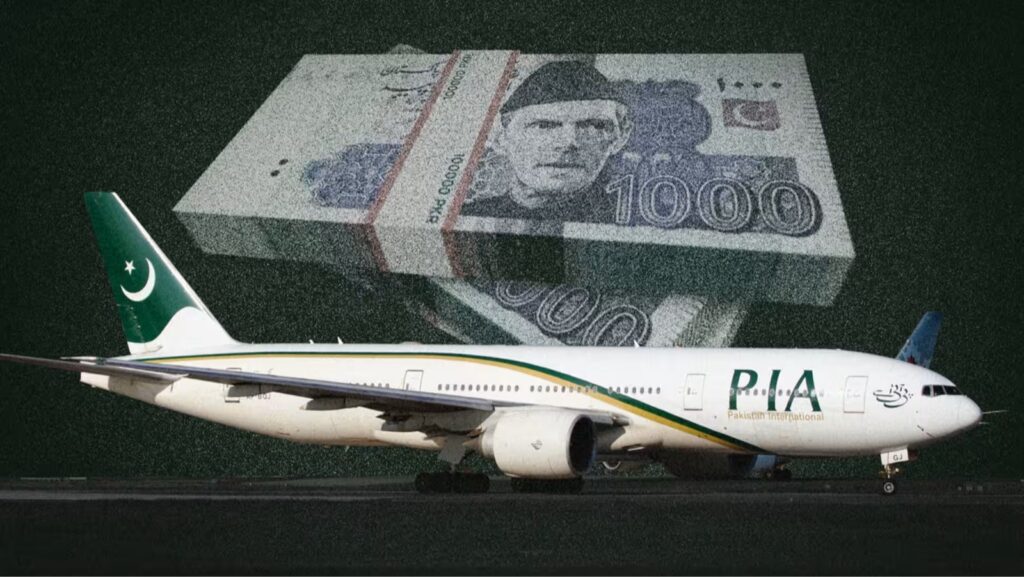
In many ways, Aurangzeb is less a finance minister than a broker of desperation, auctioning off what remains of Pakistan’s economic sovereignty. The country’s fiscal crisis is not new but continues to be in a risky phase. Pakistan is no longer merely borrowing to stay solvent; it is now being compelled to sell off the remnants of its public sector to keep the economy breathing.
Yet, despite repeated bailouts and promises of reform, the fundamental ailments of Pakistan’s economic system, that is entrenched elite capture, structural inefficiency, and the outsized role of the military in its financial life, remain untouched. Pakistan’s economy has teetered on the brink of default for over three years. In April 2022, the country narrowly averted a sovereign debt crisis. Its inflation skyrocketed to approximately 38 per cent in May 2023 while foreign exchange reserves dropped exponentially to $8.7 billion by February 2023.
Since then, Islamabad has received two IMF bailout packages, multiple loan deferments from China and oil and gas deferred payment options from the Gulf states. But these have merely bought time, not transformation. The numbers tell the story. Pakistan’s external debt has hovered above $130 billion for over a year, while foreign exchange reserves remain dangerously thin, currently at around $19 billion which can cover only a month and half of its imports.
Inflation has oscillated between 3 and 38 per cent, which has qualitatively eroded the purchasing power of ordinary Pakistanis. The rupee continues to slide with 1 USD priced at over 285 PKR whereas energy prices remain high with petrol priced at PKR 265 per liter and diesel at PKR 275 per liter have soared. Moreover, the unemployment rates are only increasing and are currently recorded at around 8 per cent whereas nearly 40 per cent of people battle multidimensional poverty as per latest statics from UN Development Programme (UNDP).
Yet, what stands out is not the depth of Pakistan’s economic pain but the shallowness of its political will to reform. Each IMF program since the 1980s has come up with a familiar checklist of reducing subsidies, broadening the tax base and improving fiscal transparency. And each time, Pakistan has promised compliance but never moved beyond policy rhetoric. The current government’s “reform agenda” under Prime Minister Shehbaz Sharif and Finance Minister Aurangzeb has been no different. While the rhetoric of “structural transformation” fills speeches and communiques, but the reality is cosmetic tinkering.
Take the case of broadening the taxation base of the country. Despite years of IMF insistence, Pakistan’s tax-to-GDP ratio remains stuck at around 9 per cent, which remains one of the lowest in Asia. Its situation has been worsened by the fact that the wealthy elite, including feudal landlords, industrial magnates, and military-linked conglomerates, have largely found ways to escape the tax bracket. Meanwhile, the burden falls disproportionately on the salaried middle class and consumers through indirect taxes.
–IANS