
-Arun Anand
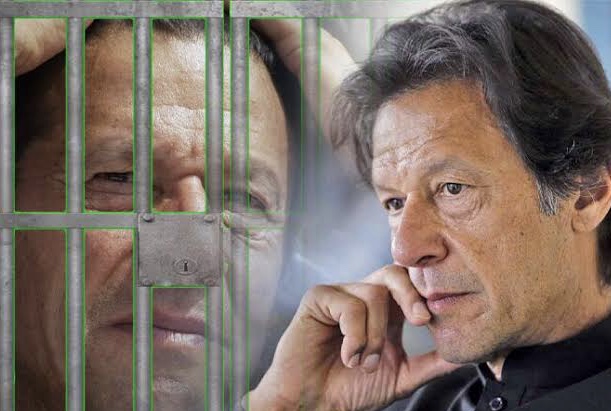
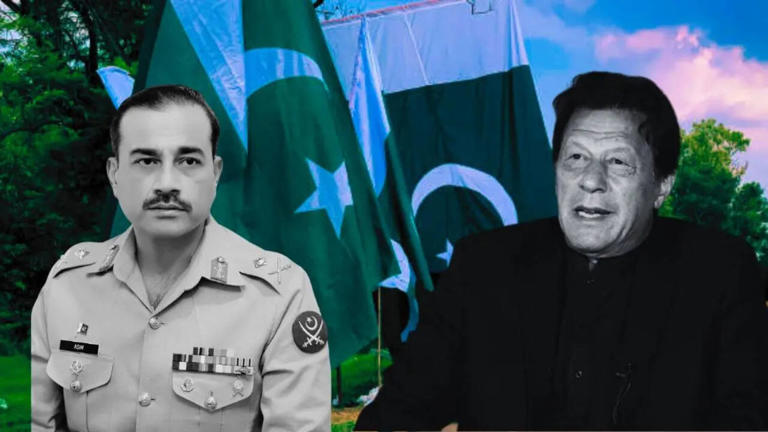
For months, there have been speculations about Imran Khan’s fate behind the high walls of Adiala Jail in the garrison town of Rawalpindi where he remains imprisoned since 2023. But the question took a darker turn when the military establishment abruptly shifted its rhetoric as well as actions. After keeping Khan incommunicado for weeks by denying even routine family visitations, the Army has now begun portraying him as a security threat of unprecedented scale.
On December 5, in a sharply worded press conference, Director General of the Inter-Services Public Relations (DG ISPR) Lt. Gen. Ahmed Sharif Chaudhry delivered something far more political than any uniformed official should be comfortable pronouncing: he accused the former prime minister of being a “matter of national security,” a “delusional” leader working in “deep collusion” with foreign actors.
For an institution whose leadership has spent decades insisting on its political neutrality, not that there appeared any given their actions, this was something extraordinary. The Army did not merely criticize a political figure, but declared Imran Khan a national security threat. It is difficult to read such language as anything other than a preparation to shape public opinion before the state contemplates something irreversible. Pakistan’s military spokesmen have long been prone to sweeping condemnations of adversaries, but the intensity, timing, and vocabulary now being deployed against prime minister feels ominously different.
The accusation that Mr. Khan wrote to the International Monetary Fund urging it to halt financial engagement with Pakistan, the insinuation that he encouraged “civil disobedience” and non-payment of electricity bills, and, most seriously, the claim that he directed supporters to “target” the Army’s leadership constitute a narrative engineered to portray him not simply as a political rival, but an existential enemy of the state. What is striking is not whether Army’s allegations against Khan are objectively provable given Pakistanis know well that truth has rarely constrained the military’s political ambitions, but rather why the establishment feels compelled to publicly build a case right now. The last time something like this happened was under Gen. Ziaul Haq against Zulfikar Ali Bhutto and everyone knows how that turned into.
Part of the answer lies in timing. Pakistan is no longer simply managing dissent; it is reordering the very architecture of the state. As the military centralizes power, constitutional checks have been amputated one amendment at a time. Judicial independence has been hollowed out. Other political parties, often willing accomplices, have little incentive to resist. In such an environment, the figure who refuses to bow becomes not merely inconvenient but intolerable.
To understand why the military felt the need to drop even the pretence of impartiality, one must look at the dramatic transformation underway within Pakistan’s political and constitutional architecture. Under Army Chief Field Marshal Asim Munir, the military has embarked on the most ambitious power consolidation project in decades in the last three years. What began after the May 9, 2023 protests with the expansion of military courts to try civilians has now morphed into a full-blown restructuring of the state itself. The 26th Constitutional Amendment (October 2024) extended the tenures of the service chiefs across the Army, Navy, and Air Force, eliminating uncertainty around leadership renewal and enhancing institutional continuity in the Army’s favour. But it was the 27th Amendment, passed in November 2025, that fundamentally reconfigured Pakistan’s civil–military equation. It abolished the Joint Chiefs of Staff Committee, replaced it with the position of Chief of Defence Forces, to be concurrently held by the Army Chief, and effectively subordinated the other services under one office. In a nuclear-armed state with a history of military rule, that consolidation is not merely bureaucratic; it is structural.
Simultaneously, the judiciary, which for long was touted as a democratic bulwark against creeping political entrenchment of the military has been reshaped. First, its governance mechanisms were refashioned (26th Amendment). Then, Supreme Court powers were diluted by the recent creation of a Federal Constitutional Court (27th Amendment). This is not mere influence. It is systemic absorption.
Despite these transformations, one obstacle has stubbornly endured: Imran Khan. He remains, by most accounts, the most popular political figure in Pakistan. His party, which has been repressed, splintered, and blocked electorally, still retains vast grassroots following. For a military trying to secure lifetime authority, a leader with mass legitimacy is a direct threat.
Other political parties have chosen a more convenient path. Pakistan Muslim League-Nawaz and Pakistan People’s Party, historically adversaries of military dominance, have now become facilitators of constitutional engineering, trading democratic principle for short-term political advantage. Their acquiescence clears the path for the Army. Only Mr. Khan and his Pakistan Tehreek-e-Insaf (PTI) stands outside this arrangement.
Which brings us back to the recent press conference. By designating Mr. Khan a national security threat, the military is not merely attacking his reputation; rather, it is constructing a moral and political foundation upon which the state could justify extreme measures, including the possibility of execution. Such rhetoric helps contain public outrage before it erupts. It tells citizens that the state is acting reluctantly, compelled by a danger that only it fully understands. Because, in countries with fragile institutions like Pakistan, executions are rarely announced but prepared through such manoeuvrings.
For decades, Pakistan’s generals have governed from behind a curtain of denial when not in power through direct coup d’états. They intervened, but insisted they were not intervening. They shaped governments but claimed they were merely “facilitating democracy.” Now, that performance has ended. The uniform seems to be stepping onto the political stage without disguise.
The significance of this shift should not be underestimated. When a military stops pretending, it stops needing permission. When it openly criminalizes popular political leaders, it removes the final brake on its power. Pakistan is now at that precipice. And the most alarming part of the Army’s latest messaging is how carefully choreographed it seems: foreign collusion, national betrayal, internal threat, economic sabotage. These are not random allegations. They are elements of a legal and psychological template historically used to eliminate political enemies. As such, this campaign against Mr. Khan is no spontaneous outburst. It is calculated, sequential, and increasingly extreme. It aims not only to discredit him, but to normalize the idea that removing him, through legal pretexts or through execution, will be a matter of national necessity.
Pakistanis have seen this logic before, and they know where it leads. The difference is that today, the military is not acting in the shadows but speaking in the language of open justification. That should terrify anyone who still believes Pakistan’s future lies in civilian rule. The Army may not yet have decided what it will ultimately do with Imran Khan. But one thing is clear that it is preparing the public emotionally, politically, and morally for a step it once would have feared to take. And if that step comes, no one will be able to say they were not warned.
-Arun Anand
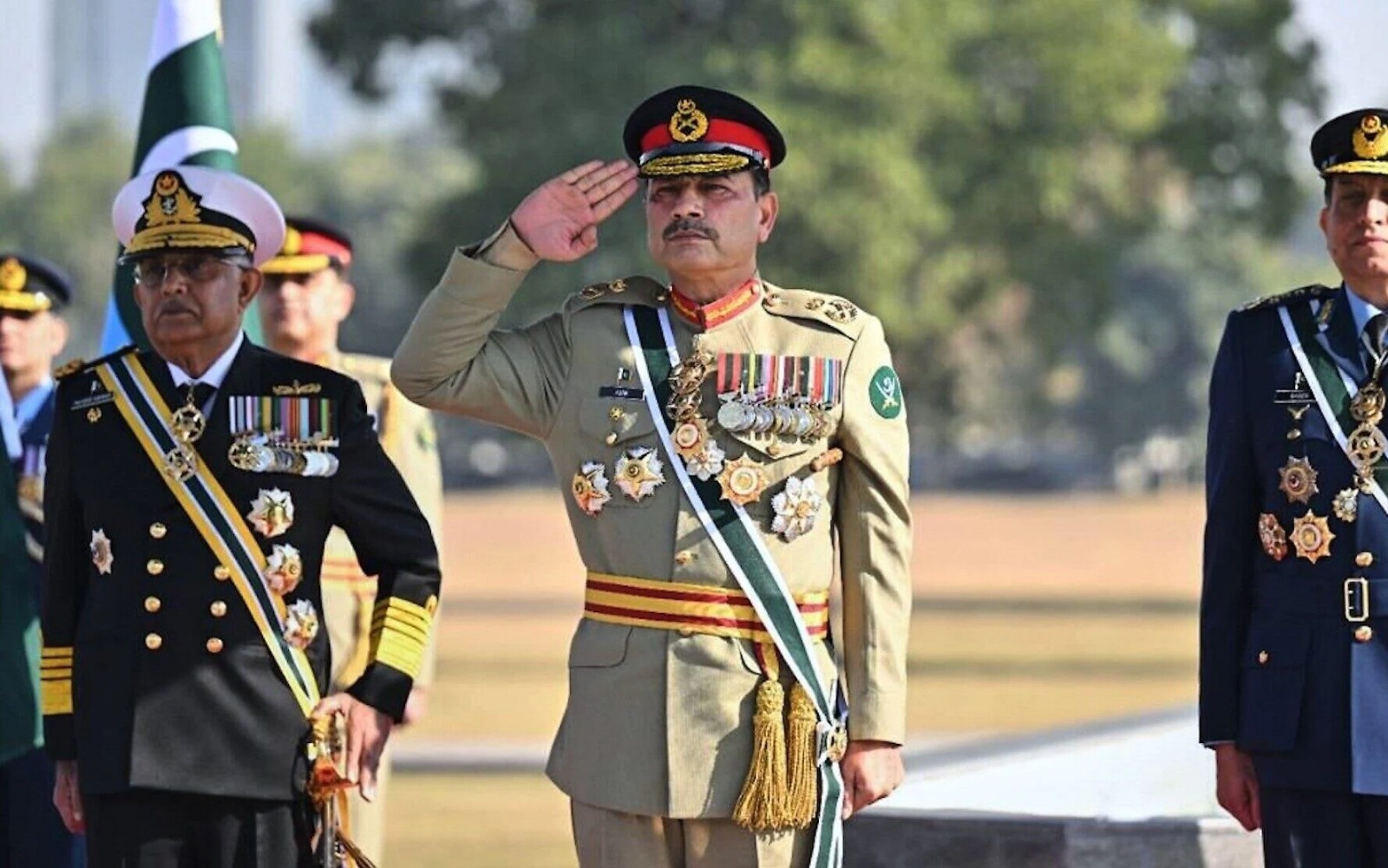
Every country has moments when a single figure, through temperament as much as circumstance, shifts the balance of its political order. In Pakistan today, that figure is Field Marshal Asim Munir. Analysts often describe his rise in familiar language, discipline, institutional confidence, and careful preparation.
But this doesn’t quite capture the way he has consolidated authority or the psychology behind those moves. A better way to make sense of his imprint is to look at him through the Thick Face-Black Heart lens, a framework from Chinese strategic thought that highlights a person’s ability to absorb humiliation without blinking and to impose their will without sentimental hesitation. It is not a flattering theory, but it is an accurate one for a leader who has altered Pakistan’s political landscape with a mix of silence and severity.
Munir’s career did not follow the trajectory of a man destined for sweeping power. His years in military intelligence, including the short-lived tenure as DG ISI, exposed him to the brutal currents of Pakistan’s political machinery. When he was removed abruptly and with enough public visibility to sting, it seemed like one of those episodes that cut promising careers in half. Yet he responded with a peculiar stillness. He did not leak stories to the press, did not cultivate a faction to avenge the slight, and did not attempt a public rehabilitation campaign. He simply stayed put, watched, and waited. That kind of emotional discipline is rare in Pakistan’s power circles, where bruised egos often leave trails of chaos.
Munir’s ability to absorb that injury and carry on without outward bitterness said more about him than any official posting ever could. He has nurtured this kind of attitude since his early days in the Pakistan Army, as during a staff course at that time, (Major) Munir was given the title of ‘deceiver’ by his course-mate officers.
When he re-emerged in positions of influence, first as Corps Commander then as Quartermaster General, it became clear that he saw institutions not as ladders to climb but as structures to study. He built loyalty by being reliable, not charming; precise, not theatrical. By the time he became Army Chief, he had internalised a lesson that many powerful men learn late and painfully: you survive by showing as little of yourself as possible. That instinct for opacity, for silence as a form of strength, is the “thick face” part of his psychology. It allowed him to weather political storms without leaving fingerprints.
After taking command, however, a different side of him surfaced. This was the colder, unsentimental edge that the “black heart” portion of the theory describes. The handling of the May 9 unrest revealed it most clearly. An institution that usually protects its own was suddenly willing to sacrifice high-ranking officers; one serving lieutenant general was removed, several major generals and brigadiers faced proceedings, and the message travelled quickly through the ranks: ambiguity was no longer acceptable.
Loyalty would not be inferred; it would be demonstrated. No chief in recent memory had gone after his own officer corps with such quiet precision. There was no bluster, no televised fury. Just action, executed without sentiment. This internal consolidation flowed naturally into political centralisation. Intelligence coordination became tighter, and the usual patchwork of informal channels between senior officers and political elites began to close. Pakistan’s power structure has historically tolerated multiple “centres of gravity” within the military—commander-level networks, intelligence cliques, and backchannel negotiators. Munir dismantled that arrangement without announcing it. Everything began to tilt toward GHQ, and more specifically, toward his office.
The political realm, already fragile, bent even faster. PTI’s disintegration did not occur by accident or due to political incompetence alone. It happened through a systematic squeeze: mass arrests, cases under terrorism laws, long sentences, and a media environment in which the country’s most popular political figure could vanish from the screen for months. The state had used pressure before, but this time it felt different. There was a seriousness to it, a determination to eliminate not just the party’s leadership but the party’s very presence in public life.
This shift had a profound effect on the older parties as well. PML(N) and PPP, both seasoned in the art of negotiating with the establishment, slowly realised that the usual bargaining space no longer existed. Their agreement to constitutional changes that weakened the judiciary, formalised the military’s upper hand, and paved the way for a Chief of Defence Forces position told its own story. They were no longer negotiating with the military; they were adjusting themselves to an institutional reality shaped entirely by it. Munir did not cajole them into compliance; he simply created a structure in which their compliance became the path of least resistance.
The legal remodelling that accompanied this political shift was just as significant. The old hybrid order worked because of its messiness, courts sometimes pushed back, parliament sometimes resisted, and the military exerted influence without admitting it. Munir’s approach was to strip away the ambiguity. Judicial oversight over key decisions was narrowed. Constitutional interpretation was rerouted toward structures less likely to confront the military’s strategic interests. Even the symbolic principle that the largest bloc in parliament should form the government collapsed under this new logic. The 2024 elections did not merely produce a strange mandate; they produced a political arrangement in which electoral strength had meaning only if it aligned with the establishment’s preferences.
Control over information completed the picture. Channels were taken off air, journalists were pressured, and digital spaces were targeted through bans and intimidation. Pakistan has always had red lines around the military, but these lines have become wider and more sharply enforced. Critique did not disappear entirely, but it was pushed into the margins, away from the audiences that once relied on it to make sense of the state’s direction. The informational space became curated rather than contested.
Taken together, these shifts reveal something beyond conventional military dominance. They signal the end of the hybrid model itself. Pakistan still performs the rituals of democracy, elections, speeches in parliament, and televised interviews, but these rituals now operate inside a cage whose walls have been reinforced. The space for dissent, negotiation, or institutional self-assertion has shrunk so dramatically that the form of democracy remains while its content drains away.
This transformation carries a deeper cost for the state. A political order built around one office, however disciplined its occupant, becomes structurally fragile. Civilian institutions lose both capability and confidence when sidelined for too long. Courts that cannot arbitrate major questions eventually lose public authority. Political parties that survive on borrowed space lose the ability to channel public frustration. A press that cannot interrogate power loses its purpose.
Munir’s rise, methodical as it was, has created a system that depends heavily on his ability to maintain control. It may produce temporary calm, but it does so by weakening the very institutions that give states longevity. The paradox of his authority is that its solidity makes the system around him brittle. Once power concentrates to such an extent, it becomes harder, not easier, for the state to adapt when the circumstances change or when leadership eventually passes on.
What Pakistan confronts now is not simply the dominance of one field marshal, but the slow hollowing-out of democratic life. The façade is still there, but the architecture behind it has shifted. Munir embodies the psychology of survival and imposition central to the Thick Face-Black Heart theory. Through patience and severity, he has remade the political order. But in doing so, he has also made the state more dependent on command than on consensus. That dependence may be the most dangerous legacy of all.
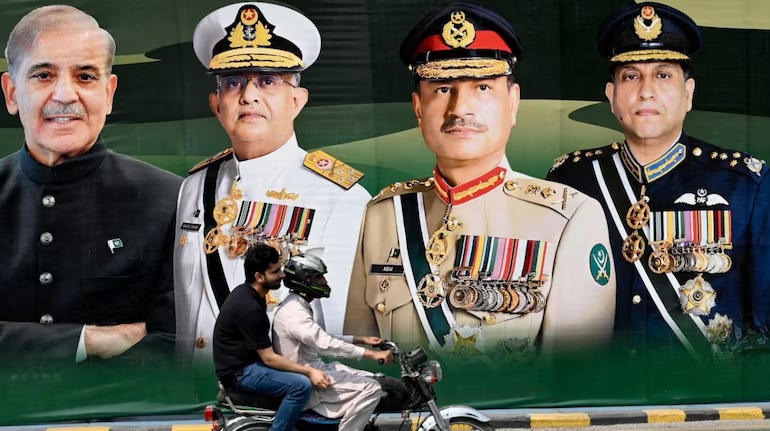
Pakistan’s latest constitutional drama has exposed, yet again, the hollowness of its so-called democracy. But the tragedy this time didn’t unfold with tanks rolling down Constitution Avenue or generals announcing martial law on primetime television.
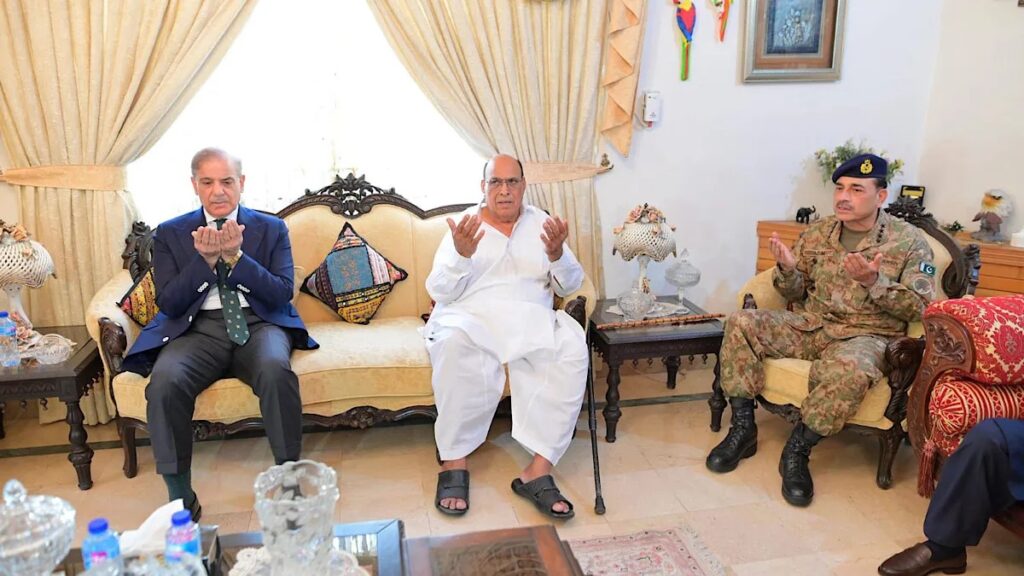
The country has witnessed something even more disturbing: a slow, polished, paperwork-driven coup carefully designed to look respectable. Pakistan’s parliament, already known for its obedience to the military, has quietly fortified the uniformed institution that has dominated the country since 1958.
At the centre of this political theatre is General Asim Munir, elevated to a newly created super-post that sits above every elected institution, and in practice, above the Constitution itself. What has happened is not surprising to anyone familiar with Pakistan’s power structure. The Army has never truly relinquished control; it has only changed its methods. But Munir’s takeover is notable for how meticulously it has been wrapped in constitutional language. He enjoys a position with sweeping authority over all branches of the armed forces, legal immunity, and insulation from judicial review.
For a country already ranked 117 out of 140 in the World Justice Project’s Rule of Law Index and described by Transparency International as having “deep structural corruption,” this formalisation of military supremacy is nothing short of catastrophic.
Munir did not need to send soldiers to raid government buildings. He didn’t even need a dramatic televised coup. Instead, he relied on a parliament weakened by internal divisions and terrified of the Army’s retaliation.
Pakistan’s opposition remains fragmented, with party leaders cycling between prison and exile depending on the mood of the generals. The ruling coalition, desperate for military blessing, pushed through amendments at lightning speed—amendments that create a centralised military command and strip courts of any real oversight over the top brass. This is not a correction. It is a coronation.
Munir himself is hardly a figure of national triumph. His record is marred by failure and controversy. During the May 2023 border flare-up with India, reports from within Pakistan’s own security circles criticised his assessments as “overconfident and strategically weak.”
Instead of accountability, he was promoted—first to Army Chief and now to this constitutionally fortified post. A general who struggled in a limited confrontation is now positioned above the civilians he was supposed to protect. This isn’t just ironic; it is dangerous.
Pakistan’s pattern is painfully predictable. Whenever its democracy shows signs of independence, the military intervenes—openly in 1958, 1977, and 1999, or covertly through engineered court decisions, political intimidation, and backroom deals in the 2000s and 2010s. Now the Army has discovered an even more sophisticated strategy: legislate the coup rather than announce it. The consequences are far-reaching.
First, the judiciary has been effectively declawed. Pakistan’s courts have historically wavered between complicity and resistance, sometimes validating coups (as in the 1958 “Doctrine of Necessity”) and sometimes pushing back against military excess. But with new legal shields protecting the top military office, the courts can do little more than observe silently. Any attempt to challenge military decisions becomes a constitutional dead end.
Civil society doesn’t fare better. Lawyers, journalists, and students have already faced crackdowns over the years, from the 2017 forced disappearances of reporters to the arrests of activists during the 2022–23 political turmoil.
According to Human Rights Watch, enforced disappearances in Pakistan number in the “thousands,” many linked to the military’s intelligence agencies—agencies Munir himself once headed.
Now, empowered with legal endorsement, the military can operate with even greater impunity, creating an atmosphere of fear that suffocates dissent. A society where criticising the Army is treated like a crime cannot grow intellectually or politically. It can only stagnate.
Pakistanis celebrating this constitutional shift—arguing that strong military control will stabilise the country—are ignoring the last 75 years of evidence. Each era of military dominance has ended with economic mismanagement, international isolation, and political collapse.
During Ayub Khan’s rule, growth was accompanied by massive inequality that sparked unrest. Under Zia-ul-Haq, extremism and sectarian violence flourished. Musharraf’s era began with promises of liberal reform but ended with institutional decay and the 2007 crisis. Munir’s turn will be no different.
A military that has never succeeded in creating long-term stability now has even fewer constraints. International consequences are inevitable. Pakistan’s economy is already devastated – inflation hovered around 24 per cent in 2023, external debt crossed $125 billion, and the country begged the IMF for yet another bailout to avoid default. Investors will not pour money into a state where real power lies with generals immune from accountability.
Global lenders rarely trust governments overshadowed by the military, especially when the military has a history of meddling in economic deals for its own benefit.
Pakistan’s powerful military conglomerate, the Fauji Foundation, already controls billions in commercial assets—from cement to fertilisers to food—making it one of the few armies in the world that behaves as a corporate empire. The veneer of legality will not reassure anyone. Aid will come with harsher conditions. Trade partners will hesitate.
Diplomatic pressure will grow. And, as always, the burden will fall not on the generals living in Rawalpindi’s protected compounds but on ordinary Pakistanis struggling to survive.
For India, this is not a comforting development. A Pakistan run more tightly by the Army is a Pakistan that makes decisions through a single institutional lens—reactionary, paranoid, and narrow. Civilian leaders tend to favour negotiation and crisis management; military leaders tend to favour escalation and strategic signalling. An India looking for a stable neighbour will instead face a Pakistan that grows more insular, more insecure, and more unpredictable.
What makes this constitutional coup particularly tragic is that Pakistan had glimpses—small, fragile ones—of democratic revival in the past. Civilian governments occasionally wrestled back authority. Grassroots movements pushed for accountability. Courts sometimes asserted independence. But Munir’s elevation is designed to extinguish those possibilities.
Once constitutionalised, military supremacy becomes far harder to challenge. Munir may think he has secured his legacy by rewriting the rules in his favour, but history has not been kind to Pakistan’s generals. From Ayub’s humiliating resignation to Yahya’s disgrace after 1971, to Musharraf living in exile, Pakistan’s military rulers eventually fell, only after inflicting long-term damage on the nation. This chapter will likely follow the same script.
Ultimately, Pakistan must confront a painful truth: the Army is not the guardian of the state; it is the weight dragging it down. A country where elections change faces but not power structures is not a democracy. A country where criticism of the uniform is treated as treason cannot claim to be free. And a country where one general can legally place himself above the political system cannot pretend to function like a modern nation.
Pakistan may have legalised this coup, but legality does not equal legitimacy. What has happened is an indictment of the entire political order—a system that allows one man in uniform, backed by an institution addicted to power, to override the will of millions.
History will judge Asim Munir and the Pakistan Army harshly. But the people of Pakistan, already battered by poverty, misrule, and repression, are the ones who will pay the price.
–IANS
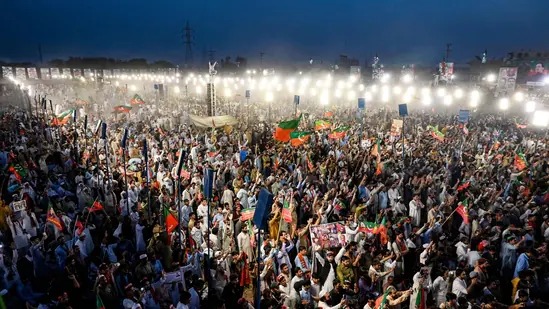
– Arun Anand
When a state alters the rules that govern it, the transformation can arrive with force—or with formality. Pakistan’s 27th Amendment represents the latter: a political restructuring that wields the authority of a coup but cloaks it in legality. Rather than suspending the constitution or dissolving parliament, it reshapes the constitution from within, erasing previous checks on military power. That distinction is crucial—one disrupts the system; the other remakes it. At the heart of this recalibration stands Asim Munir. His promotion to Field Marshal and the proposed establishment of a Chief of Defence Forces position do more than elevate his career—they institutionalize what was long an informal dominance. Unlike Ayub, Zia, or Musharraf, who ruled by toppling constitutions, today’s strategy seeks to embed military supremacy within the constitutional framework itself—ensuring that, in the future, the army can govern without the need to overthrow.
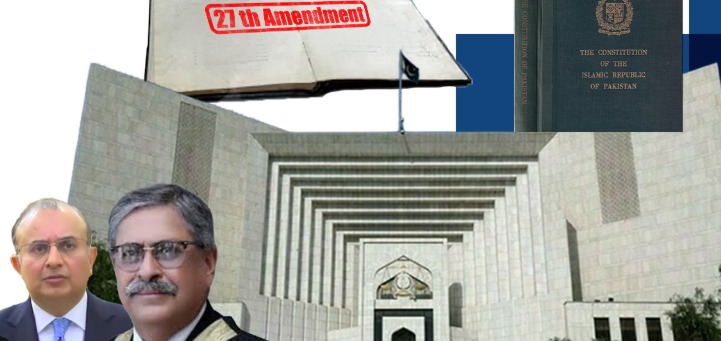
The change is deceptively small in language and vast in consequence. Replace one title with another; place all services under a single command; harden immunities around senior officers; tweak judicial mechanisms so the courts have less room to operate free of executive pressure. Each clause reads like technocratic housekeeping. Taken together, they create a new architecture: an army whose institutional primacy is not merely tolerated but constitutionally protected. That is legal militarism rather than extra-legal rule. This is not an academic quarrel over drafting. It is a political settlement about who counts as the ultimate arbiter of public affairs. Under the old ambiguity, civilian leaders could plausibly claim the last word, even while the military shaped the range of choices behind the scenes. The amendment seeks to collapse that ambiguity in one direction.
Why would civilian parties, visibly weakened and electorally vulnerable at times, agree to such a reconfiguration? The motives are painfully direct. Pakistan’s political class operates in a narrow corridor: economic collapse, fragmented coalitions, a restive opposition, and a media space that oscillates between sensationalism and censorship. Under these pressures, cohabitation with the military promises immediate stability. It keeps riots at bay, opens channels to patronage, and provides a shield against judicial harassment or street mobilisation. Short-term survival, in other words, is a powerful incentive. Yet political survival bought by reliance on the barracks is a pyrrhic achievement. Civilian parties have historically gained legitimacy by standing up to military overreach. Opposition to the establishment, even when risky, has often been the most reliable source of political capital. When a leader defies the generals and survives, that defiance becomes a badge of authenticity. By contrast, parties that appear to defend or normalise the military’s dominance surrender the claim to be an alternative. They transform from contesting forces into managers within a narrower, military-shaped consensus.
This is the arithmetic of erosion. Short-term gains for the party in power can lead to long-term erosion of its moral and political standing. Consent, in this context, is not neutrality; it is a transfer of legitimacy. A constitution stamped by the military’s imprimatur becomes less a shield of pluralism than a vehicle for managed politics. Democracies do not die in dramatic moments alone; they wither when the forms of democracy remain but their essence, the capacity of political actors to challenge and to be challenged on equal footing, is hollowed out. Those who enable this constitutional realignment may imagine that they will keep the benefits: stability, access to resources, and the ability to govern without constant confrontation. But history is unsparing about such bargains. Iskander Mirza appointed Ayub and found himself dispossessed within days. Zulfiqar Ali Bhutto, who navigated the generals’ world, was later tried and executed under military rule. Nawaz Sharif’s flirtation with the military ended in exile. Power that is lent by a stronger institution is rarely returned intact.
The amendment also alters the foundation upon which other institutions stand. The judiciary, already a site of contestation, risks becoming a subsidiary player if a new constitutional forum strips the Supreme Court of powers or if transfer mechanisms for judges are altered to reduce their independence. Provinces that won space under the 18th Amendment see their gains threatened if federal competencies are recentralised or if finances are reconstituted in ways that favour central control. The fragmentation of federal bargains bolsters local grievances, and these grievances become fuel for instability, precisely the outcome the army claims to preempt.
There is a particular irony to the present moment that is worth stressing. Civilian politicians once drew their energy from popular resistance to an overbearing establishment. That very act of resistance could convert electoral weakness into credible leadership. Today, however, many politicians choose acquiescence because the immediate costs of resistance, jail, economic disruption, and the threat of engineered crises look intolerable. They trade a precarious moral authority for a steady foothold in the office. The problem is that this lease rarely extends beyond the lifetime of a political cycle, and its renewal depends on the goodwill of the institution whose favour they bought.
And yet the public mood complicates any neat diagnosis of decline. Ordinary Pakistanis are weary; years of economic pain and political turbulence have dulled their appetite for dramatic confrontation. Some will welcome the promise of order; others will shrug their shoulders. That fatigue provides the ideal conditions for legalised domination: the population tolerates constraint for the promise of relief. But tolerance is not acquiescence; it is the brittle glue that holds an unstable settlement together until it snaps.
When Munir leaves the scene, and he will, as all men do, the institution he helped constitutionalise will remain. The following chief benefits from a script rewritten to favour the uniform, drawing authority from not just force but law. Undoing that script will require more than an election or a public outcry; it will demand a sustained political project that reconstructs constitutional checks, reenergises provincial autonomy, and restores judicial independence. That project is possible but arduous; it requires actors willing to risk more than a short-term office. History’s lesson is stark: military dominance dressed as legality is harder to overthrow than military dominance that operates outside the law. Coups create ruptures; constitutionalised power creates permanence. That permanence is the danger Pakistan now confronts. Civilian leaders may survive one more term by stitching themselves to the armour of the state. But in doing so, they risk leaving their successor a hollowed democracy in which elections occur. Still, choices are preordained, institutions exist in form but not in force, and public legitimacy belongs more to the barracks than to the ballot.
If Pakistan is to reclaim a civilian future, the task is not merely to defeat a law in court or to rally people to the streets. It is to rebuild the conditions under which political actors can contest power on their own terms: functional parties with roots in society, a judiciary that can adjudicate without fear, and provincial institutions that can defend local interests. Without those pillars, the 27th Amendment will not just make one man powerful; it will recalibrate a nation to a default of managed politics, a country where the Constitution still exists on paper but where democracy, clause by clause, has been quietly transformed.
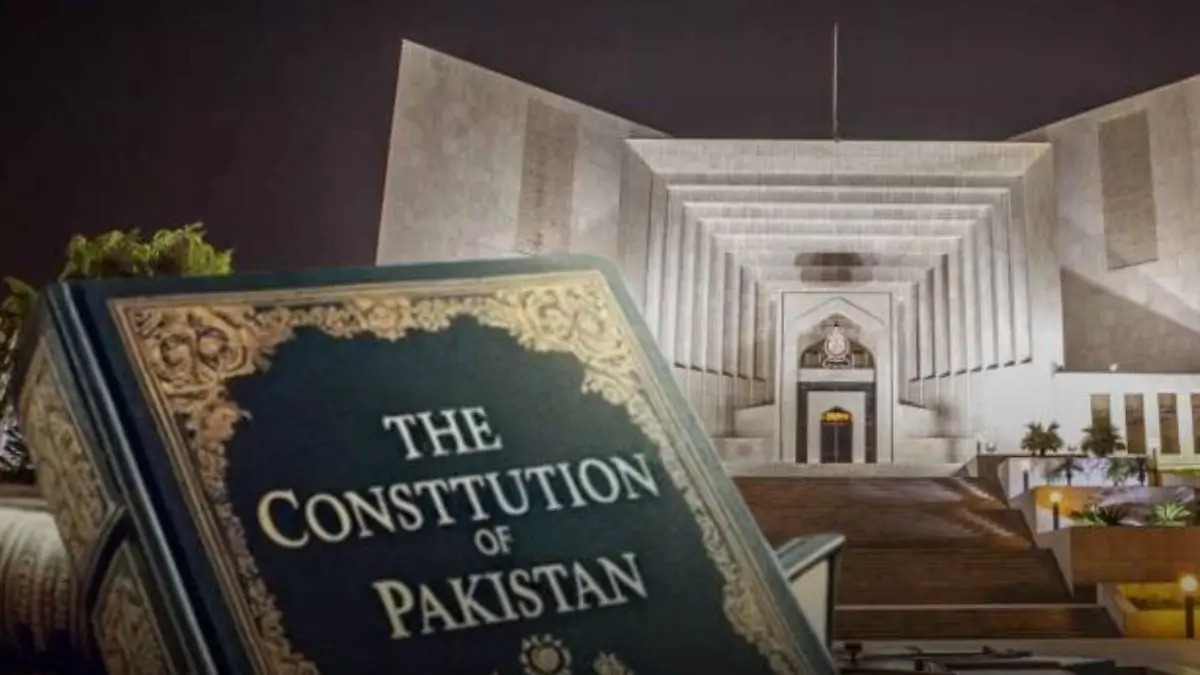
Since his appointment in November 2022, Field Marshal Asim Munir has proved a master practitioner of power consolidation, outpacing even Pakistan’s most notorious military strongmen such as Ayub Khan, Zia-ul-Haq, and Pervez Musharraf. His latest gambit, the proposed 27th Constitutional Amendment, cements that legacy and threatens to formalize Pakistan’s drift into an overt military state.
At its core, the 27th Amendment rewrites Article 243 of Pakistan’s Constitution which details the governing framework of the command of the armed forces (Chapter 2). While, it may appear to be a technical legal change, however, it is, in fact, a crude structural reordering of the Pakistani state in favor of the military establishment that has anyway calling the shots for decades.
Nevertheless, one of the most consequential provisions (clause 5) is the proposed creation of a new office of Chief of Defence Forces (CDF). Under this clause, the Army Chief will automatically assume the role of CDF role, which effectively merges the tri-service command of the army, navy, and air force into one uniformed post. The existing Joint Chiefs of Staff Committee (JCSC), a forum meant to balance inter-service authority, will be abolished.
In practical terms, this means all branches of Pakistan’s armed forces will answer to one man, that is Asim Munir. It also conveniently sidelines General Sahir Shamshad Mirza, the current Chairman of the Joint Chiefs and the senior-most general whom the Shehbaz Sharif government bypassed when appointing Munir in 2022.
This clause would mark the first time in Pakistan’s history that the entire military chain of command is legally and constitutionally subordinated to a single officer.
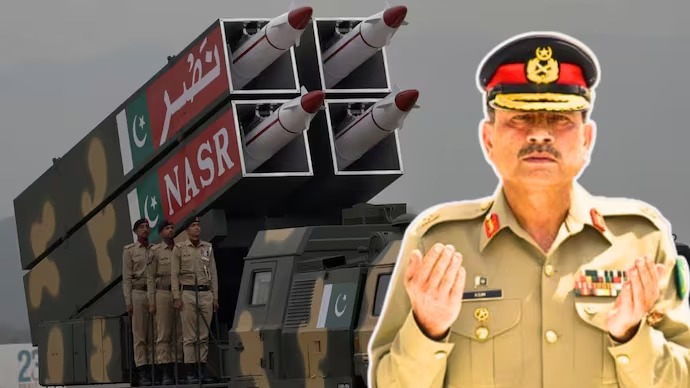
Another major clause (6) under Article 243 transfers effective control of Pakistan’s nuclear arsenal to the Army Chief. The Prime Minister would nominally appoint the Commander of the National Strategic Command (the custodian of nuclear weapons), but only from among “members of the Pakistan Army” and solely on the “recommendation of the Chief of Army Staff concurrently serving as Chief of Defence Forces.”
This wording is not incidental. It ensures that the nuclear command, which has traditionally been supervised by a civilian-led National Command Authority, will now operate entirely under military discretion. Pakistan’s already fragile notion of civilian oversight is being reduced to fiction. With this, Asim Munir not only commands Pakistan’s conventional military forces but also gains exclusive control of its nuclear deterrent.
Perhaps the most extraordinary aspect of the 27th Amendment lies in its provisions for legal protection. Given that the amendment proposes lifetime immunity to the Field Marshal (clauses 7,8,9,10 &11), it practically equates his legal status with that of the President as the Head of the State of Pakistan. In effect, Asim Munir, who was conferred the title of Field Marshal earlier this year, cannot be prosecuted, investigated, or held accountable by any court or parliamentary body for decisions made during or after his tenure.
This is a historic and most consequential departure from Pakistan’s constitutional tradition. Even military rulers like Zia and Musharraf, both of whom seized power through coups, lacked explicit lifetime impunity under constitutional law. However, Munir has, by securing this clause, effectively insulated himself against future civilian pushback or judicial scrutiny, ensuring that any transition of power will not endanger his position or legacy.
Though Pakistan’s history has seen several military rulers institutionalizing their dominance through legal means like Ayub Khan’s rewriting of the 1962 Constitution or Zia-ul-Haq giving the military a permanent political veto by amending Article 58(2)(b), Asim Munir’s strategy is more sophisticated and inarguably more durable. Unlike his predecessors, who relied on overt coups, Munir is using constitutional procedure and parliamentary approval to codify military supremacy. As such, Munir seems to be outdoing the likes of Ayub, Zia, and Musharraf not through coups but by rewriting laws in his own favor.
The Shehbaz Sharif government’s cooperation in pushing this amendment through parliament reveals how deeply Pakistan’s civilian leadership has become dependent on the military’s favor. The Asim Munir-led military establishment has leveraged this vulnerability and extended its control over domestic politics, the economy, and even foreign policy.
By institutionalizing this control through the 27th Amendment, the military no longer needs to rely on backroom manipulation as it can now rule openly, with parliamentary consent.
The conferment of the title “Field Marshal” on Munir earlier this year, following India’s “Operation Sindoor” was the clearest signal of his elevation to the highest power status in the country. It very well echoed self-promotion of Ayub Khan to Field Marshal in the 1960s, when he justified his authority was essential to the country’s national defense.
Munir would do well to remember that Pakistan’s streets which are restless, politically volatile, and steeped in resentment against military domination, though it may dormant now, have a way of humbling even the most entrenched generals. Equally, it is interesting how the country’s political elite, particularly Pakistan Muslim League-Nawaz (PML-N) and Pakistan People’s Party who currently backs Munir seem to have forgotten how such curry favouring of generals have bitten them in the past.
The 27th Amendment marks not just another chapter in Pakistan’s cycle of military dominance but a turning point of the transformation of military supremacy from an unwritten reality into a constitutional fact. Field Marshal Asim Munir may believe he has achieved what his predecessors could not: absolute power with absolute legitimacy. But Pakistan’s history suggests that even the thickest face and the blackest heart cannot shield a ruler from the reckoning that follows hubris.
– Arun Anand