
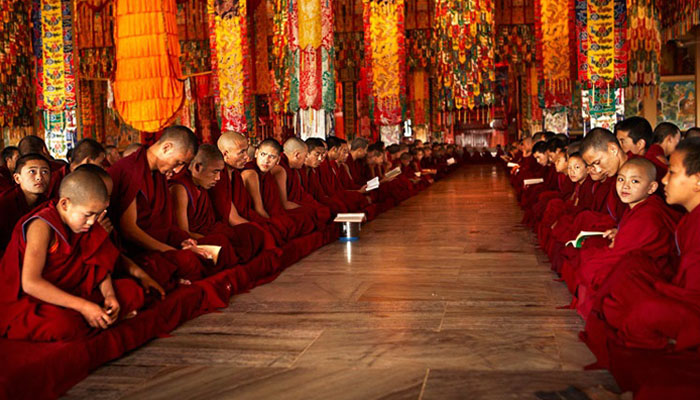
The town of Dharamshala in India’s Himachal Pradesh is bustling with celebration and anticipation as the 14th Dalai Lama is set to turn 90 on July 6. Although as the spiritual and political head of Tibetan Buddhism, the Dalai Lama’s birthday is in itself a hugely significant event, this time, it holds far-reaching importance as His Holiness is expected to share details of his successor.
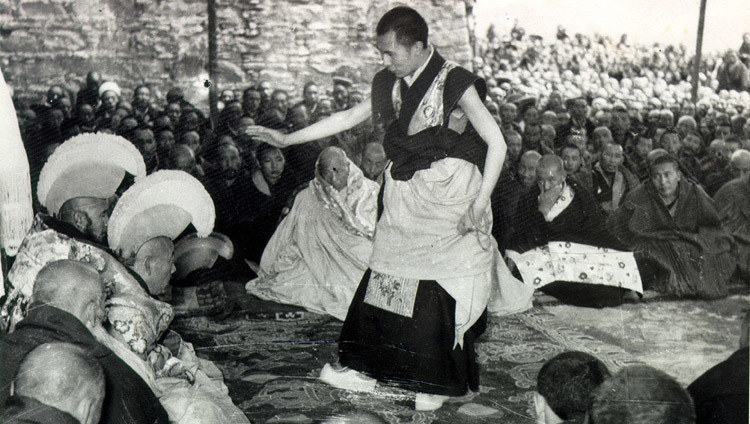
This is not just going to be a spiritually or religiously loaded revelation, but something that the future of the Tibetan people, who have been resisting Chinese control for decades, depends on.
Since the Dalai Lama’s exile into India in 1959, along with thousands of others, in the wake of the Chinese occupation of the Tibetan plateau, he has emerged as a globally recognized and revered embodiment of Tibetan resistance, cultural distinction, and humanitarian values. A Nobel laureate, the Dalai Lama or Tenzin Gyatso was born as Lhamo Dhondup in 1935 in northeastern Tibet, and in two years, he was identified by sacred religious search parties as the incarnation of the 13th Dalai Lama. This is a centuries-old practice within Tibetan Buddhism wherein the reincarnation of top spiritual leaders is decided after their death based on visions and signs interpreted by senior Lamas. This process could take years, resulting in a spiritual and political vacuum of leadership during that time. However, the current Dalai Lama has made a few critical departures in this tradition- firstly, he has suggested that he might give indications regarding his successor while he is alive, a method known as ‘emanation’, and secondly, in his March 2025 book Voice for the Voiceless, he has stated, “Since the purpose of a reincarnation is to carry on the work of the predecessor, the new Dalai Lama will be born in the free world.” By ‘free world’, he is suggesting that his successor will be found outside China, which again, is a divergence from convention.
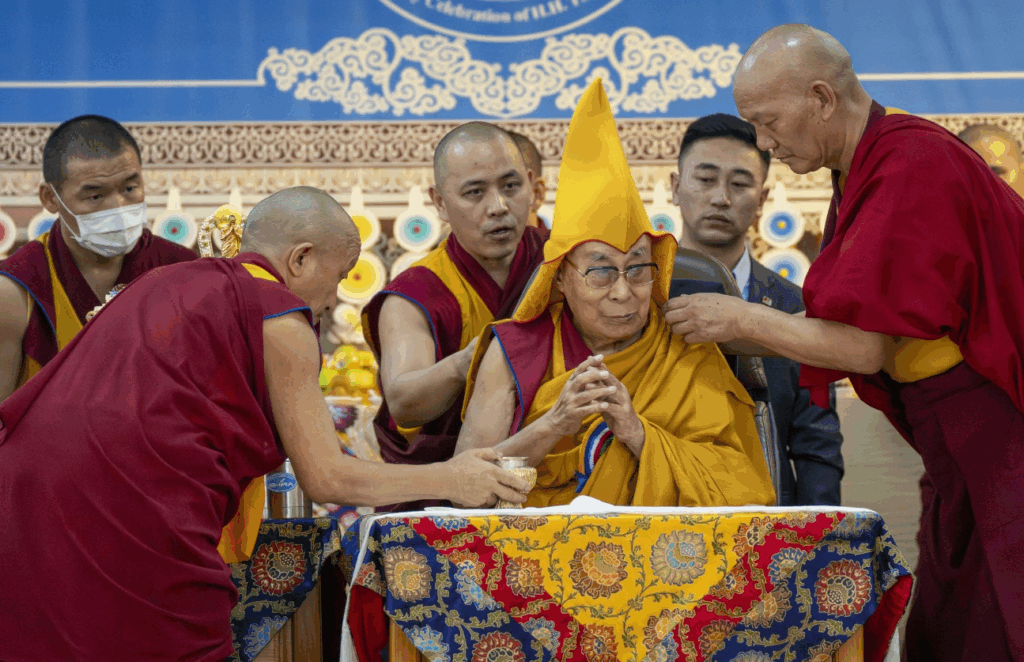
The reasons behind these deviations have to do with the relentless and overwhelming Chinese interference and suppression of Tibetan cultural traditions. The Chinese state, which officially identifies as atheist, has repeatedly declared that it reserves the right to decide on the Dalai Lama’s reincarnation, a practice that it claims to trace to imperial China under the Qing dynasty. To that end, the CCP wants to determine the next Tibetan Buddhist leader through the ‘golden urn’ process (wherein the names of all possible reincarnations are drawn from a golden urn) and to preside over it, it has convened a committee comprising government-selected Tibetan monks and CCP officials.
This is, in no way, the first time that the CCP has attempted to directly intervene in Tibetan Buddhist affairs. In Tibetan Buddhism, the second highest spiritual seat is accorded to the Panchen Lama, who also plays a crucial role in identifying the Dalai Lama’s reincarnation. In 1995, the current Dalai Lama named the 6-year-old Gedhun Choekyi Nyima as the reincarnated Panchen Lama. Within days of the announcement, the boy and his family were abducted, never to be seen again, while the Chinese state propped up their own Panchen Lama, who parrots the party line and endorses Beijing’s sovereignty over Tibet. Therefore, the vital significance of the Panchen Lama in deciding the succession of the Dalai Lama was a chief motivation for the CCP to intercept this seat, which raises anxieties about the future of the figure of the Dalai Lama itself.
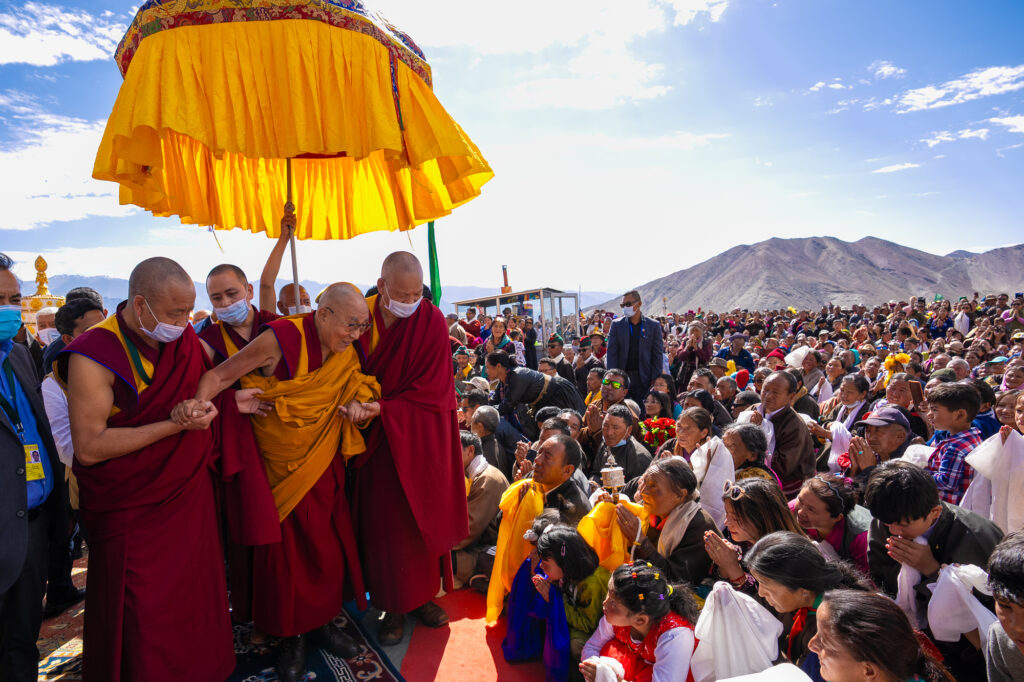
As the Dalai Lama gets older, the apprehension that there might be two Dalai Lamas, one based on suggestions by the current Dalai Lama and another, projected by the CCP, becomes more and more severe. Despite the Dalai Lama’s repeated assertion of fighting for Tibetan autonomy through peaceful means, as opposed to separatism, the CCP has always painted him as a violent secessionist and a threat to Chinese nationhood. As early as 1996, China formally prohibited the display and possession of the Dalai Lama’s images in Tibet, construing it as solidarity with Tibetan secessionism. Over the years, China has intensified its efforts at reshaping Tibetan society, severing the next generation from their language, culture, ways of life, and most importantly, aspiration for autonomy. From uprooting thousands of Tibetans by forcefully relocating their villages, to separating around one million Tibetan children from their families and coercing them into mandatory residential schools designed for their assimilation into the majority Han culture, the CCP has been bent on the cultural and demographic restructuring of Tibet. In fact, since 2023, China has begun referring to Tibet as the ‘Xizang Autonomous Region’ in all official communications, demonstrating its fixation on the cultural erasure of the Tibetan identity.
From this perspective, the Dalai Lama’s 90th birthday, around which he is expected to reveal details on his spiritual inheritance, goes far beyond being an event of spiritual/religious significance, but a critical determinant of regional geopolitics and the direction of the Tibetan movement. As thousands of Tibetans, representatives of several other faiths, celebrated figures such as Richard Gere, and big political names congregate in Dharamshala, all eyes will be on the Dalai Lama or “the protector of the Land of Snows”, as he is hailed by his followers. The world will listen carefully as his words will shape one of the most resilient, enduring, and inspiring struggles of our times.
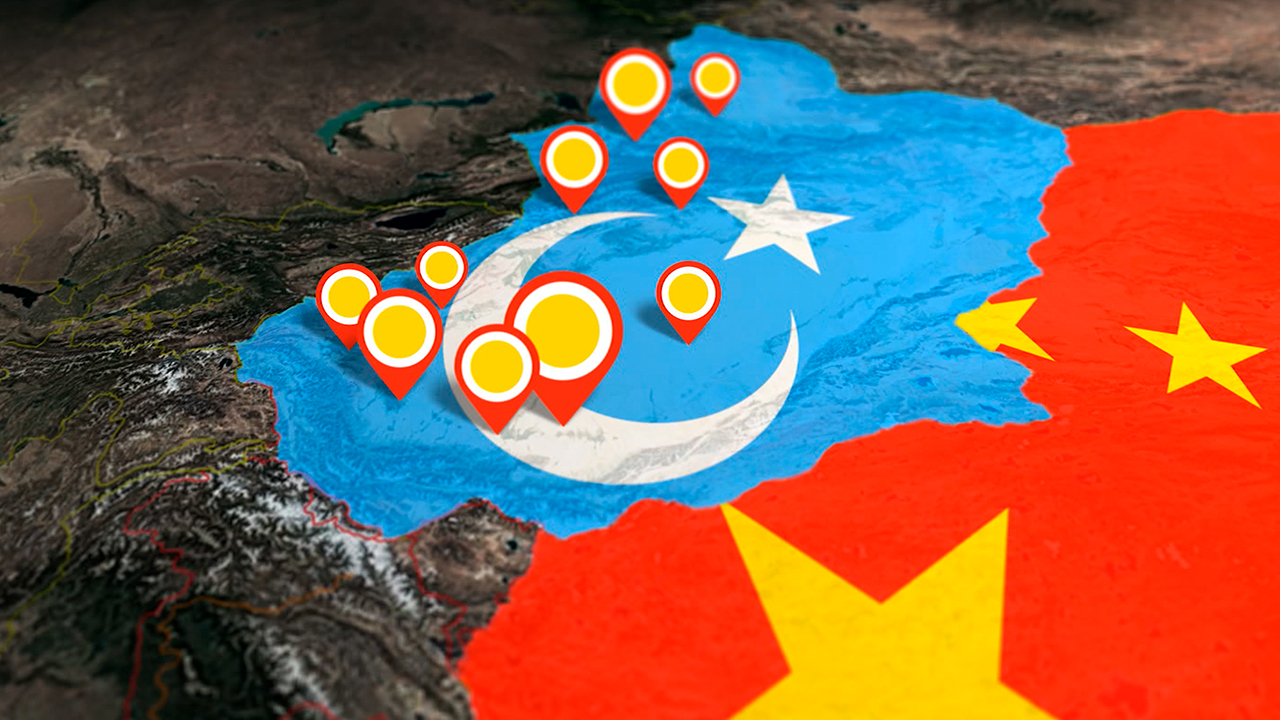
The Uyghurs, a predominantly Muslim ethnic minority concentrated in China’s Xinjiang region, have drawn global attention due to reports of severe human rights abuses. In 2017, Beijing initiated a campaign under President Xi Jinping aimed at eradicating separatism and terrorism in Xinjiang. However, this effort has been widely condemned internationally, with the United Nations identifying it as constituting “crimes against humanity.” Allegations suggest that China has used the pretext of combating extremism to justify a systematic crackdown on Uyghurs, which some nations and organisations have labelled as genocide. Chinese authorities have linked Uyghur activism to groups like the East Turkestan Islamic Movement (ETIM), portraying them as extremists. This has led to widespread violations of human rights, including mass detentions, forced labour, and cultural suppression, further tarnishing China’s global reputation.
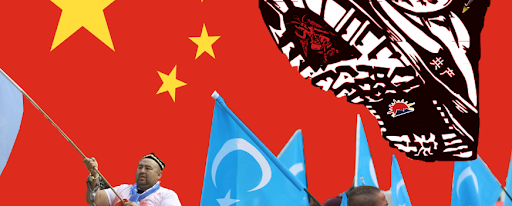
The East Turkestan Movement (ETM) emerged in the late 1990s as a response to decades of systemic oppression faced by the Uyghurs in the Xinjiang Uyghur Autonomous Region (XUAR), which was annexed by China following its occupation in 1949. Despite being officially recognised as one of China’s ethnic minorities, the Uyghurs were subjected to aggressive assimilation policies that sought to undermine their cultural distinctiveness through violent suppression. The ETM, founded by Turkic-speaking Uyghur separatists, represents a nationalist aspiration to establish an independent state of East Turkestan. This envisioned state would encompass regions spanning Kazakhstan, Kyrgyzstan, Uzbekistan, Turkey, Pakistan, Afghanistan, and Xinjiang, providing Uyghurs with a sovereign territory where they could freely preserve their cultural identity without interference from Communist China. The ETM combines religious and ethnic nationalism as its ideological foundation, reflecting resistance against China’s long-standing practices of cultural erasure, territorial control, and systemic marginalisation. The movement has involved not only mobilisation efforts but also armed resistance within Xinjiang as part of its broader struggle for self-determination.
China has responded forcefully to the East Turkestan Movement (ETM), branding it a “terrorist organisation” with alleged connections to transnational groups such as al-Qaeda and the Taliban, which Beijing claims aim to undermine China’s territorial integrity. This characterisation is rooted in Islamophobia and mirrors the post-9/11 environment in the West, where suspicion of Muslims intensified following the attacks. To delegitimise ETM’s separatist ambitions, China labelled it as the “most direct and realistic security threat” to its national stability. In a 2002 government report, Beijing asserted that ETM had received financial and military support from al-Qaeda to carry out militant operations within China. Leveraging the United States’ heightened security concerns after 9/11, China successfully persuaded Washington to designate ETM as a terrorist organisation. This decision, made by the U.S. Treasury Department, was based largely on Chinese claims and overlooked the possibility that Beijing was exploiting global counterterrorism efforts to discredit what many view as a legitimate liberation movement.
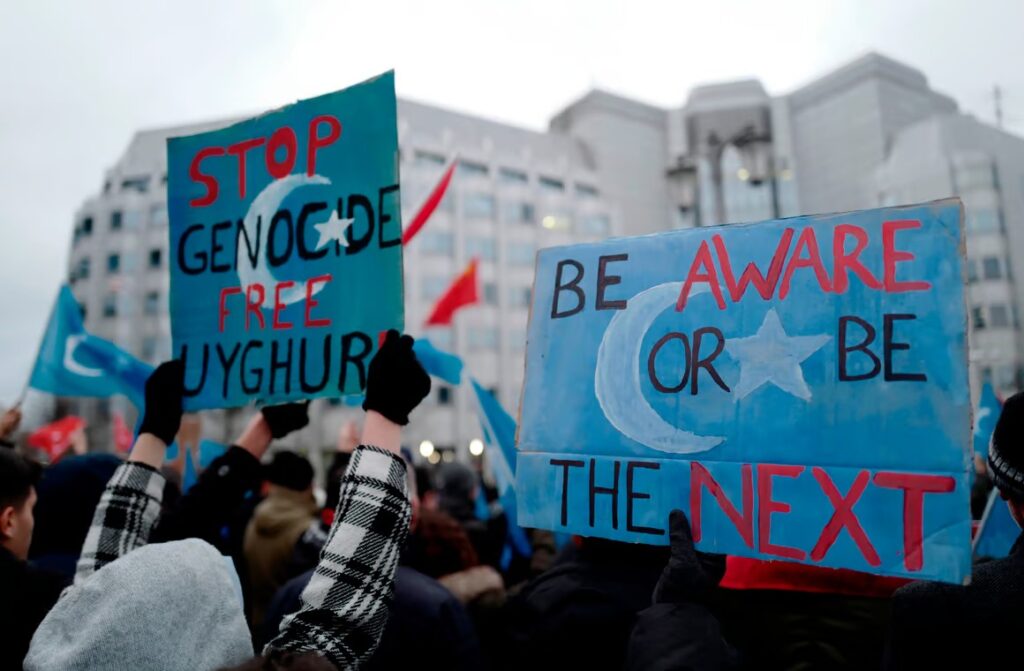
Uyghur Tribunal Is a Litmus Test of the Human Rights Establishment
In addition to the East Turkestan Movement’s (ETM) armed resistance, Uyghur exiles and activists who fled Xinjiang established the East Turkistan Government-in-Exile (ETGE). Founded in 2004 and structured as a democratic parliamentary body, the ETGE shares the ETM’s goal of achieving self-determination for Uyghurs through the creation of an independent East Turkistan. Operating as a political entity, the ETGE has become a prominent global advocate for Uyghur rights, documenting human rights abuses in Xinjiang and raising international awareness of China’s systemic oppression. It has sought to hold China accountable on international platforms, aiming to end atrocities such as forced labour and mass detentions. However, like the ETM, the Chinese government has labelled the ETGE a terrorist organisation and exerted diplomatic pressure on countries that support it or criticise China’s treatment of Uyghurs. Despite these challenges, the ETGE continues to play a critical role in exposing human rights violations, including the use of Uyghur forced labour in global supply chains, which implicates products from major international industries.
The East Turkestan Movement’s (ETM) resistance extends beyond Xinjiang, encompassing Central Asian states that host Uyghur exiles fleeing Chinese persecution, where their cause has gained substantial regional sympathy. Since launching the Belt and Road Initiative (BRI) a decade ago to advance its global hegemony, China has prioritised Central Asia as strategically vital. Through coercive diplomacy and economic incentives, Beijing has sought to consolidate influence over Central Asian governments, suppress Uyghur separatist networks, and dismantle nationalist aspirations among diaspora communities. The East Turkistan Government-in-Exile (ETGE) has consistently condemned regional states perceived as aligning with Chinese policies, framing such cooperation as enabling Beijing’s expansionism. In December 2024, the ETGE denounced the China-Central Asia Summit, arguing it exemplified China’s long-term strategy to erode Central Asian sovereignty through incremental geopolitical dominance. Central Asia has emerged as a focal point in global mineral competition following Kazakhstan’s discovery of the world’s largest rare earth deposits. Recent Sino-Kazakh agreements on critical mineral extraction have raised concerns regarding Astana’s deepening economic dependency and diminishing autonomy over strategic resource management. This development underscores broader anxieties about China leveraging resource partnerships to entrench influence under BRI frameworks, potentially marginalising local agency in Central Asia.
China’s expanding presence in Central Asia poses a significant risk to the sovereignty of regional states while potentially depleting their economic resources. Under the guise of economic incentives, Beijing employs coercive tactics to influence Central Asian governments, aiming to suppress Uyghur exiles and dismantle separatist movements that have found refuge in the region. This growing influence is closely tied to China’s geopolitical ambitions, particularly through initiatives like the Belt and Road Initiative (BRI), which strategically integrate Central Asia into Beijing’s broader plans for global dominance.
For the East Turkestan Movement (ETM), countering China’s manoeuvres in Central Asia is crucial to sustaining its resistance and advancing its goal of Uyghur liberation. The movement faces significant challenges as China leverages its economic power and political influence to undermine Uyghur nationalist aspirations and silence dissent. Combating these tactics becomes essential for preserving the Uyghur cause and ensuring that their aspirations for self-determination remain alive amidst China’s increasing geopolitical encroachments in the region.