
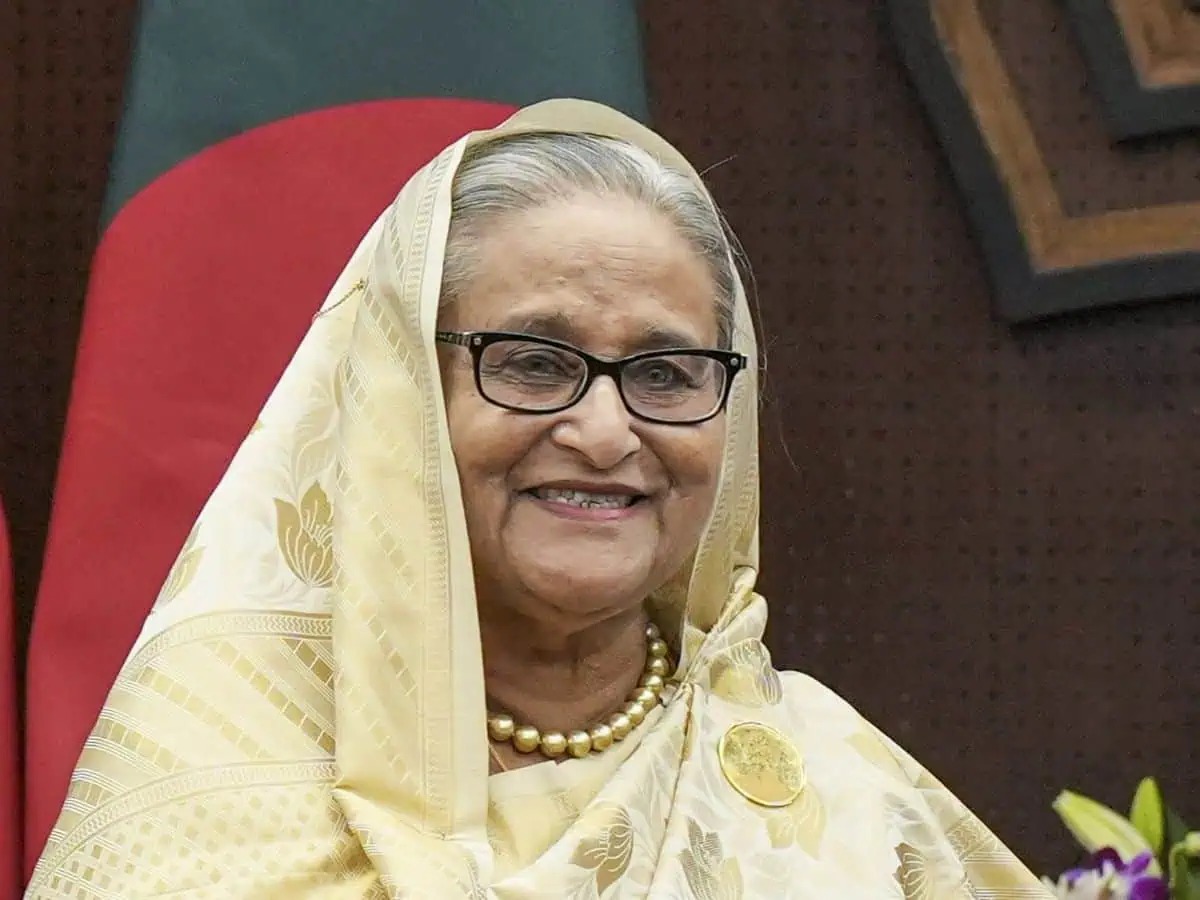
Former Bangladeshi Prime Minister Sheikh Hasina has issued a stark critique of the country’s current political trajectory in a wide‑ranging interview, saying violence, rising extremism and the sidelining of democratic norms under the interim government pose grave risks to Bangladesh’s future. Hasina’s comments come as the nation prepares for parliamentary elections scheduled for February 2026, a moment analysts say will be pivotal for the country’s stability and democratic legitimacy. Now living in exile, Hasina described the protests in 2024 that led to her ouster not as entirely peaceful demonstrations but as movements exploited by extremists who allegedly transformed civic unrest into violent uprisings. She said that attacks on police stations and destruction of infrastructure signified a breakdown in law and order, lamenting that what began as a protest deteriorated into chaos that she felt forced to leave the country to prevent further bloodshed.
Hasina sharply criticised the interim administration led by Nobel laureate Muhammad Yunus, arguing it lacks democratic legitimacy because it governs without a popular mandate. She alleged that the interim government has weakened constitutional structures, undermined the judiciary and failed to curb the influence of extremist factions, including the release of convicted militants she says are now emboldened in public life. According to her, this pattern undermines religious harmony and threatens the secular foundations of the state. She emphasized that free, fair and inclusive elections, including the legal participation of her party — the Awami League — are essential for restoring democratic governance. Hasina argued that elections held without major political parties cannot be considered legitimate and called for the release of political prisoners and lifting of bans on key political organisations.
Reflecting on her long tenure in office, Hasina highlighted what she described as her government’s achievements — including rapid economic growth, poverty reduction and strengthened infrastructure — while defending her record on minority rights and secular governance. She said that healthy political opposition had been encouraged under her leadership and that participatory democracy was central to her vision for Bangladesh. Turning to future prospects, Hasina said she would prioritise the restoration of constitutional rule, accountability for violence, protections for civil liberties and economic renewal if given another opportunity to lead. She reiterated her confidence in the resilience of the Bangladeshi people and their aspiration for participatory democracy.
Bangladesh’s political scene remains deeply fractured. Opposing parties, emerging movements and Islamist factions are all vying for influence ahead of elections that could reshape governance in the country. Analysts note that questions over the interim government’s handling of security, political freedoms and economic challenges are likely to dominate public debate in the coming weeks. Hasina’s critique adds to broader concerns about the credibility of the electoral process and the role of extremist groups in shaping political discourse — concerns that both domestic observers and foreign diplomats say will be crucial to address if Bangladesh is to navigate a peaceful democratic transition.
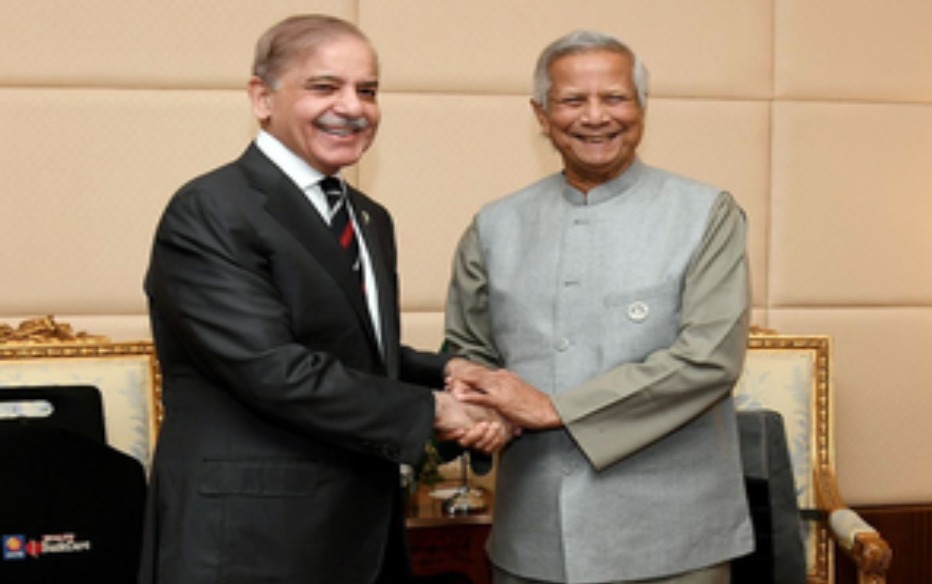
With national elections scheduled for February 2026, Bangladesh’s political climate is increasingly marked by widespread violence, communal tension and attacks on dissenting voices — raising concerns among analysts, civil society and international observers about a deepening democratic crisis. Critics say that since the interim government under Chief Advisor Muhammad Yunus took power in August 2024, the landscape has shifted dramatically. Incidents of mob violence, ethnic attacks and threats to free expression have surged, and political polarization has intensified. These developments are overshadowing hopes for a peaceful, credible electoral transition in the country.
Observers highlight a troubling pattern of violence including attacks on cultural institutions, media outlets, and prominent activists. In mid‑December 2025, mobs targeted major newspapers and cultural organisations in Dhaka, jeopardising both press freedom and artistic expression, according to rights groups. One of the most shocking incidents shaping public perception was the lynching of Dipu Chandra Das, a young Hindu man accused of blasphemy. Das was beaten and killed by a mob, an event that not only shocked civil society but also drew international attention to the fragility of law and order in Bangladesh.
Reports from rights organisations underscore a sharp uptick in blasphemy‑related violence and attacks against religious minorities throughout 2025. More than 70 separate incidents were documented from mid‑year through December, including mob beatings, vandalism of homes and communal unrest in multiple districts. These events point to a climate where accusations can quickly escalate into mass violence, particularly in areas with limited law‑enforcement response.
Political opponents of the interim government argue that state institutions — from law enforcement to the judiciary — have been strained by political divides and have failed to protect vulnerable groups or uphold democratic norms. Former political leaders have publicly blamed the current administration for increasing lawlessness and loss of control, asserting that the breakdown in public order reflects deeper governance challenges. At the same time, some social and political analysts point out that longstanding political rivalries have magnified tensions, and that voices across the spectrum are calling for greater transparency and safeguards ahead of the upcoming elections.
Cross‑border repercussions have also emerged. Protests by diaspora communities and activist groups in neighbouring countries underscore how events in Bangladesh are reverberating beyond its borders. Some international rights organisations have emphasised the need to protect freedom of expression and ensure meaningful civic participation, particularly at a moment when the nation is preparing to elect a new parliament.
With the February 2026 election approaching, stakeholders in Bangladesh face the complex challenge of balancing security, social cohesion and democratic participation. Analysts stress that meaningful reform — including strengthening protections for minorities, safeguarding press freedom, and ensuring accountability for violent acts — will be essential to restoring confidence in the country’s democratic future. For many citizens and observers, the coming months will be a critical test of Bangladesh’s resilience and its ability to uphold democratic principles amid deep political and social tensions.
As Bangladesh stood poised on the cusp of Eid festivities, an ominous pronouncement by Army Chief Waqar Uz-Zaman cast a shadow over the jubilations. With the gravitas befitting his station, he forewarned the nation of an imminent terrorist strike, alluding to intelligence reports that hinted at an insidious conspiracy brewing in the nation’s underbelly. This revelation, however, was neither unheralded nor unprecedented; it merely underscored the prescience of his earlier exhortations, wherein he had urged the polity to desist from internecine strife, cautioning that such acrimonious discord not only debilitates national unity but also imperils the very sovereignty of Bangladesh. His trepidations, as it now transpires, were not misplaced.
The eminent New York Times, in a recent exposé, corroborated his forebodings, asserting that Islamist hardliners were emboldened by the nation’s prevailing political lacuna and were making audacious forays into the public domain, unabashedly seeking to resurrect their ideological dominion. Indeed, this resurgence is but a macabre reprise of Bangladesh’s long and troubled entanglement with Islamic extremism, which first took root in the twilight years of the twentieth century.
The radical outfits operating within Bangladesh have, over the decades, drawn sustenance from transnational terrorist syndicates, most notably the Taliban, al-Qaeda, and, more contemporaneously, the Islamic State of Iraq and Syria (ISIS). Their nefarious machinations, invariably, orbit around a singular and unrelenting objective—the imposition of Islamic rule in Bangladesh, a nation whose constitutional secularism stands in stark opposition to their theocratic aspirations. In pursuit of this ignoble end, their targets have been carefully calibrated: secularists, religious minorities, and any entity or individual whose existence or expression is perceived as inimical to their rigid dogma.
The annals of Bangladesh’s contemporary history bear grim testament to their ruthlessness. From the turn of the millennium, the nation has been buffeted by a series of sanguinary terror attacks, each meticulously orchestrated to instill fear and assert dominion. The apogee of their savagery, perhaps, was the ghastly carnage perpetrated at the Holey Artisan Café in 2016. The grisly hostage crisis that unfurled therein claimed twenty-two lives, the majority of them foreign nationals, and indelibly etched itself into the collective consciousness of the nation. What rendered this atrocity particularly disquieting was its modus operandi, which bore an uncanny resemblance to the tactics deployed by ISIS. This harrowing episode marked the first incontrovertible indication that ISIS’s baleful influence had penetrated Bangladesh’s borders, dispelling any lingering skepticism regarding its reach.
The digital realm has, unsurprisingly, proven to be a fecund battleground for the dissemination of extremist propaganda. With an astuteness that belies their medievalist ideological underpinnings, ISIS operatives have harnessed the far-reaching tentacles of cyberspace, employing indigenous linguistic mediums to indoctrinate and recruit. The dissemination of their pernicious rhetoric in Bangla—a language spoken by nearly 99 percent of Bangladesh’s populace—has served to extend their tentacular grip into the remotest corners of the nation. This calculated exploitation of cyber radicalism has precipitated a perceptible ideological shift among Bangladesh’s homegrown extremist factions, who now increasingly subscribe to the doctrinaire vision of an Islamic Caliphate—a vision assiduously cultivated and propagated by ISIS.
A glaring exemplar of this ideological metamorphosis is the trajectory of the Ansarullah Bangla Team (ABT), a militant conglomerate that initially operated under the aegis of al-Qaeda. Formed in 2007, this nefarious syndicate orchestrated a series of targeted assassinations against secular bloggers, writers, and activists between 2013 and 2015. However, in the aftermath of ISIS’s ascension to prominence on the global jihadist stage, ABT unequivocally pledged allegiance to its cause, a testament to the latter’s magnetic pull in radicalizing impressionable minds.
While the erstwhile government had, to a considerable extent, managed to curb the proliferation of violent extremism, the political upheaval engendered by the ouster of Sheikh Hasina in August last year has catalyzed an alarming re-emergence of these insidious forces. In the wake of her departure, a disquieting lawlessness has permeated the polity, affording these extremist factions an unprecedented opportunity to reassert themselves.
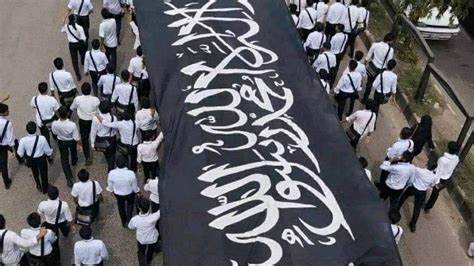
Of particular concern is the resurgence of Hizb ut-Tahrir Bangladesh, an organization that has long been proscribed in the country due to its seditious proclivities. Notorious for its abortive coup attempt in 2011, this transnational jihadist outfit has ideological congruence with ISIS and has now re-emerged with newfound fervor. The immediacy of its resurgence—mere days after Hasina’s deposition—raises perturbing questions about the efficacy of state mechanisms in preempting such resuscitations. In recent months, its adherents have mounted vociferous demonstrations, brazenly demanding the rescission of the ban imposed upon them and clamoring for the establishment of an Islamic Caliphate in Bangladesh. The most conspicuous manifestation of this effrontery was the ‘March for Khilafat’ protest in Dhaka, an event that saw a congregation of ‘Conscious Teachers and Students’ bearing flags uncannily reminiscent of ISIS’s insignia and chanting incendiary slogans. That such a spectacle transpired within the nation’s capital—drawing participation from sections of the educated elite—ought to serve as a dire warning of the extent to which cyber radicalism has permeated urban echelons.
This resurgence of Islamist militancy is not merely an ephemeral phenomenon; it constitutes a structural threat to Bangladesh’s democratic fabric. The re-emergence of Hizb ut-Tahrir, which remains proscribed in thirteen nations, should serve as a cautionary tale. The situation is further exacerbated by the unsettling decision of the interim government, helmed by Nobel laureate Muhammad Yunus, to release several individuals previously convicted of terrorism-related offenses. Such a move, particularly against the backdrop of a deteriorating law and order situation, rampant mob violence, and escalating cases of sexual aggression, augments the prevailing atmosphere of apprehension.
The interim government’s apparent apathy towards this burgeoning menace has not gone unnoticed, least of all by the military establishment. Army Chief Waqar Uz-Zaman’s palpable discontent is emblematic of the growing dissonance between the state apparatus and the armed forces, particularly as Pakistan’s Inter-Services Intelligence (ISI) purportedly amplifies its covert operations on Bangladeshi soil. Should this inertia persist, the Army Chief’s cautionary pronouncement may well transmute into a catastrophic reality—one that Bangladesh may find itself ill-equipped to surmount.