
–Aminul Hoque Polash
A recent report in The Washington Post cited a US diplomat working in Bangladesh, claiming Washington wants to build “friendly relations” with Jamaat-e-Islami. The diplomat reportedly made the remarks in a closed-door discussion with a group of Bangladeshi women journalists on 1 December. The newspaper’s report, we are told, was built around an audio recording of that conversation.
In that recording, the diplomat expressed optimism that Jamaat would perform far better in the 12 February election than it has in the past. He even suggested the journalists invite representatives of Jamaat’s student wing to their programmes and events.
When the journalists raised a fear that Jamaat, if empowered, could enforce Sharia law, the diplomat’s response was striking: he said he did not believe Jamaat would implement Sharia. And even if it did, he added, Washington could respond with measures such as tariffs. He was also heard arguing that Jamaat includes many university graduates in leadership and would not take such a decision.
The Washington Post further quoted multiple political analysts suggesting Jamaat could achieve its best result in history in the 12 February vote and might even end up in power.
So, is this report simply the product of an “audio leak” published just 20 days before the interim government’s election? I don’t think so.
First, it stretches belief that Bangladeshi journalists would secretly record a closed conversation with a US diplomat and then pass it to The Washington Post. Second, The Washington Post would almost certainly have cross-checked the audio with the diplomat concerned. If the diplomat had objected, it is hard to imagine the paper moving ahead in this way. My conclusion is blunt: this was published with the diplomat’s planning, or at least with the US embassy’s consent.
Call it what it is: a soft signal. A carefully calibrated message designed to project reassurance about Jamaat and to normalise the idea of Jamaat as a legitimate future governing force.
And then came the echo.
At the same time, two other international outlets, Reuters and Al Jazeera, also published reports about Jamaat-e-Islami. Both pointed towards the possibility of a strong Jamaat showing in the 12 February election. Al Jazeera’s tone, heavy with praise, makes it difficult not to suspect paid campaigning. More tellingly, an Al Jazeera poll recently put Jamaat’s public support at 33.6 per cent, compared with 34.7 per cent for the BNP.
The goal is obvious: to “naturalise” Jamaat’s pathway to power. To make what should shock the public feel ordinary. To convert the unthinkable into the plausible, and the plausible into the inevitable.
Which brings us to the unavoidable question: can Jamaat really win?
History says no. The highest share of the vote Jamaat ever secured in a normal election was in 1991: 12.13 per cent. In the next three elections, Jamaat’s vote share fell to 8.68 per cent, 4.28 per cent, and 4.7 per cent. In a genuinely competitive election, Jamaat is not a double-digit party.
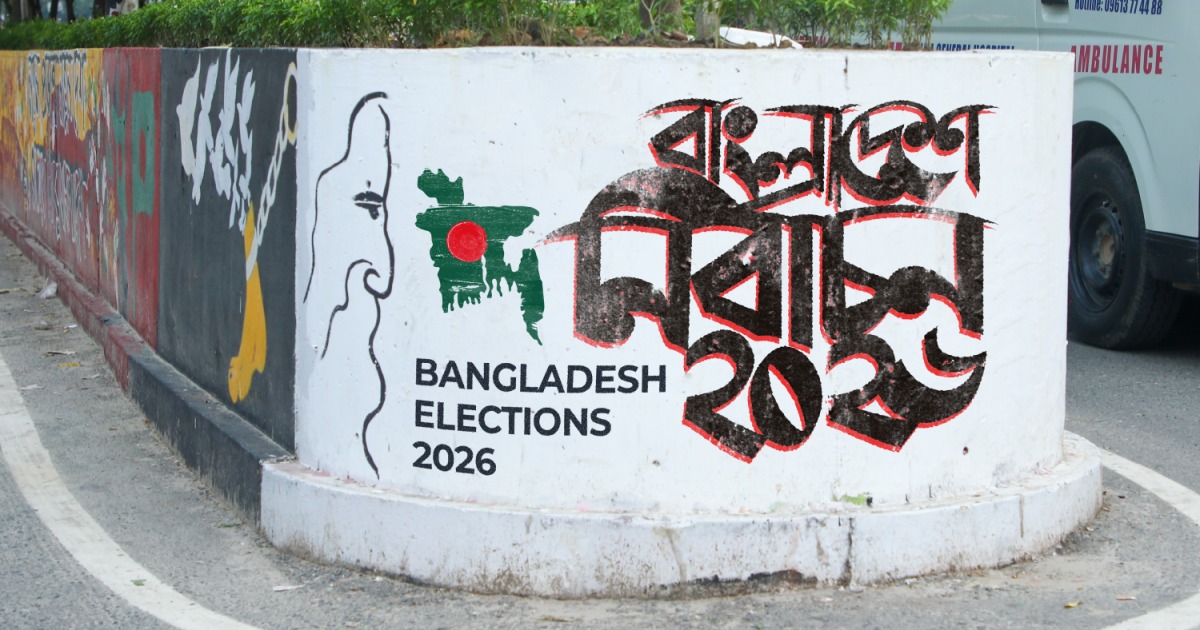
But Bangladesh is not heading into a normal election. An unelected, illegitimate interim administration is preparing a managed vote while keeping the country’s largest political party, the Awami League, effectively outside the electoral process. In that distorted arena, behind-the-scenes engineering is underway to seat Jamaat on the throne. The diplomat’s “leak”, the favourable international coverage, and the publication of flattering polls are not isolated incidents. They are the components of a single operation.
If anyone doubts the direction of travel, they should remember what happened after 5 August. In his first public remarks after that date, the army chief repeatedly addressed Jamaat’s leader with reverential language, calling him “Ameer-e-Jamaat”. From that moment onwards, Jamaat has exerted an outsized, near-monopolistic influence over Bangladesh’s political field.
Yes, Khaleda Zia’s illness, Tarique Rahman’s possible return, and even the prospect of Khaleda Zia’s death have periodically given the BNP a breeze at its back. But the reel and string of the political kite are now held elsewhere. Jamaat controls the tempo.
And it did not happen in a vacuum. The Awami League has been driven off the streets through mob violence, persecution, repression and judicial harassment. With its principal rival forced away from political life, Jamaat has been able to present itself not merely as a participant, but as an authority.
Now look at the state itself.
Every major organ of power, it is argued, is being brought under Jamaat’s influence. Within the military, “Islamisation” is being used as a cover for Jamaatisation. Fifteen decorated army officers are reportedly jailed on allegations connected to the disappearance of Abdullah Hil Azmi, the son of Ghulam Azam, widely regarded as a leading figure among the razakars. Yet it remains unclear whether Azmi was even abducted at all.
The judiciary, too, is described as falling almost entirely under Jamaat’s control. Key administrative positions, especially DCs, SPs, UNOs and OCs, are increasingly occupied by Jamaat-aligned officials.
On campuses, the story repeats itself. Through engineered student union elections, Jamaat’s student organisation, Islami Chhatra Shibir, has established dominance in Dhaka University and other leading public universities. Even vice-chancellor appointments are described as being shaped by Jamaat-friendly influence.
And while this internal consolidation accelerates, external courtship intensifies.
Since August 2024, Jamaat leaders have reportedly held at least four meetings in Washington with US authorities. Their close contact with the US embassy in Bangladesh continues. Meanwhile, the British High Commissioner has held multiple meetings with Jamaat’s ameer, widely reported in the media. Jamaat’s ameer has also visited the United Kingdom recently.
In short, Jamaat has reached a level of favourable conditions never seen since its founding. Not even in Pakistan, the birthplace of its ideological ecosystem.
So why would sections of the Western world want Jamaat? What does the Yunus-led interim administration gain from this? What role is it playing?
The answer offered here is uncompromising: the current interim government has signed multiple agreements with Western powers, particularly the United States, including an NDA arrangement and various trade deals that are described as being against public interest. Some may be public. Much remains opaque. The government wants these agreements protected. It also wants long-term leverage over Bangladesh’s politics and territory.
From a broader geopolitical perspective, Bangladesh’s land matters. It sits at a strategic crossroads. For those intent on consolidating dominance in the Asia-Pacific and simultaneously containing the influence of both China and India, Bangladesh is useful. This is part of a long game.
And if Jamaat, with weak popular legitimacy, can be installed in power, external agendas become easier to execute. The argument is stark: Jamaat, as a party of war criminals and anti-liberation forces, has no natural sense of accountability to Bangladesh’s soil or its people. In exchange for power, it would hand foreign actors a blank cheque.
Now to Dr Yunus.
The claim here is that since taking power, Yunus has already fulfilled his personal ambitions. He has rewarded loyalists with state titles and positions, creating opportunities for them to accumulate money. He has satisfied the demands of the “deep state” that installed him. In doing so, the country’s interests have been sacrificed at every step.
And throughout, Jamaat has offered Yunus unconditional support.
After the election, Yunus’s priority will be survival: a safe exit for himself and his circle. That is tied to securing the future of the student leaders who claim to have been the principal stakeholders of July. In this narrative, Jamaat is stepping in again. The NCP has already aligned with Jamaat. To maintain international lobbying strength, Jamaat will ensure Yunus’s safe exit. It may even install him in the presidency if that serves the arrangement.
So what will the BNP do?
The answer given is grim: very little. Blinded by the hunger for power, the BNP has nodded along as Yunus and his circle pushed forward actions described as hostile to the national interest. Mirza Fakhrul has publicly claimed to see Zia within Yunus. Tarique Rahman has repeatedly been seen praising Yunus. All of it, the argument goes, for a single purpose: to reach power.
But the BNP, it is suggested, failed to understand the real game. At the grassroots, many of its leaders and activists have become disconnected from the public through extortion, land-grabbing and violent intimidation. Even when visible irregularities occurred in student union elections at universities, the BNP’s student wing, Chhatra Dal, either did not protest or could not.
If Jamaat takes power through a staged election on 12 February, the BNP will have no meaningful recourse left.
And the country?
The conclusion is bleak: Bangladeshis should not expect their suffering to end any time soon. Just as a meticulously designed operation removed an elected Awami League government, another meticulous design is now being finalised to seat Jamaat-e-Islami, a party branded by the author as one of war criminals, with the backing of foreign powers.Yunus’s anti-national agreements, it is argued, will be implemented through Jamaat’s hands. Independence, sovereignty and the constitution will be thrown into the dustbin. Secularism, women’s freedom, and minority rights will be locked away in cold storage. The destination is spelled out without ambiguity: Bangladesh will become the Islamic Republic of Bangladesh.
(Disclaimer – Aminul Hoque Polash is a Bangladeshi political activist, researcher, and former government official with experience in national security, diplomacy, and state institutions. Views expressed in the above piece are personal and solely those of the writer. )
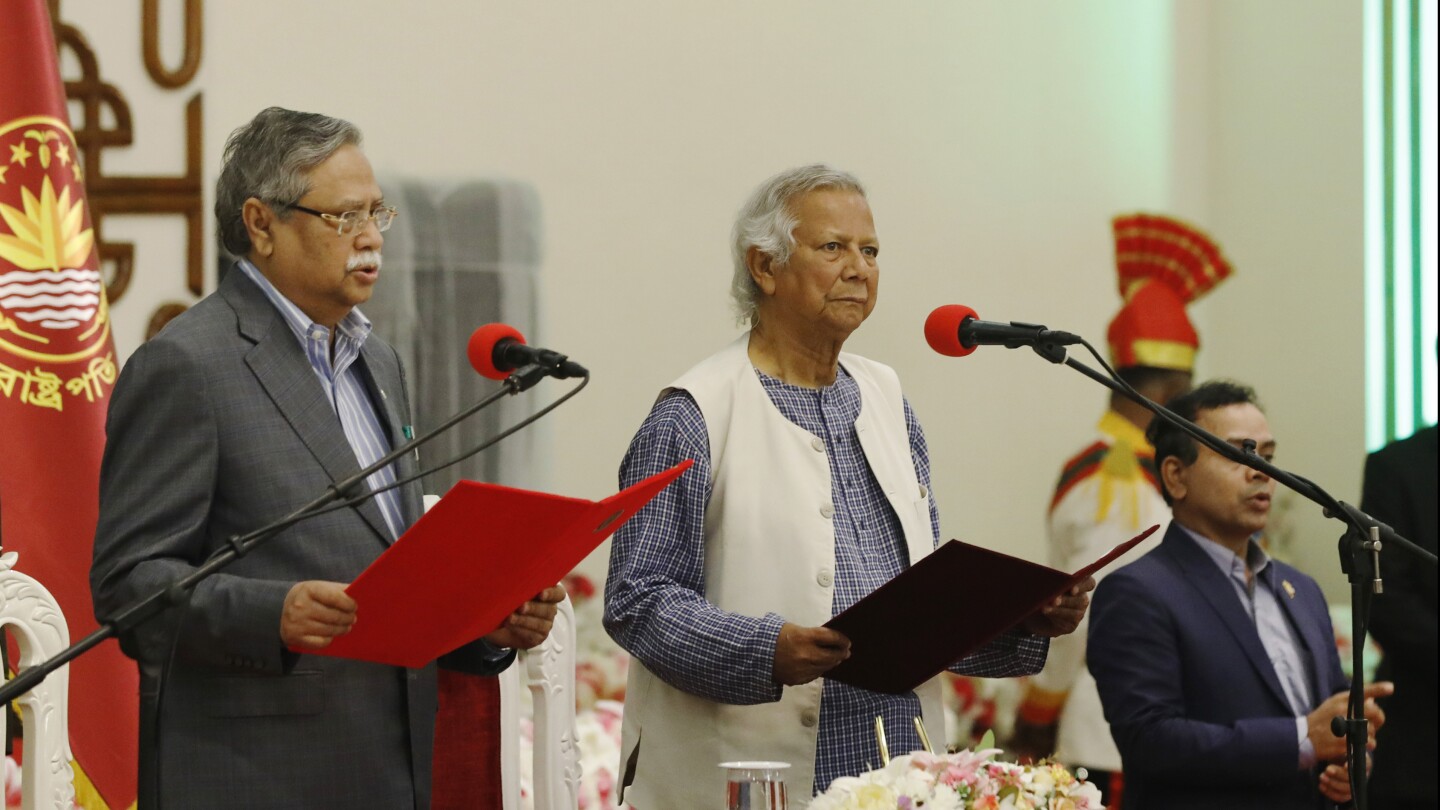
A former Bangladeshi intelligence officer has made sharp allegations against Nobel Peace Prize laureate Muhammad Yunus, claiming that the globally admired figure operates within — and benefits from — a deeply entrenched network of power inside Bangladesh. The remarks have reignited debate over governance, legitimacy, and influence under the country’s interim administration.
Speaking in an interview, the retired official said that while Yunus is widely viewed internationally as a humanitarian and reformer, sections within Bangladesh’s security and political establishment perceived him as the centre of a powerful “system” that quietly shaped state decisions.
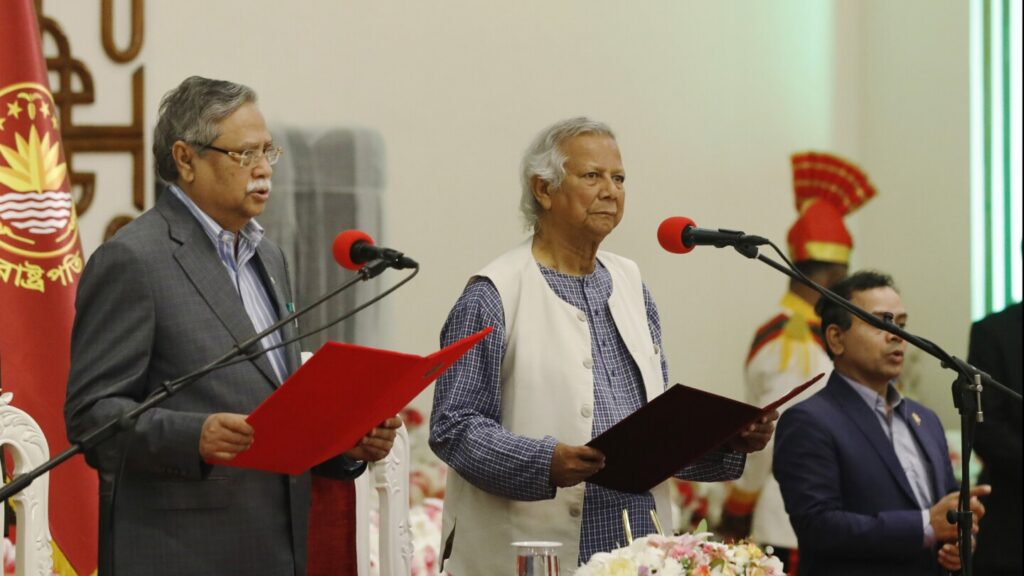
Yunus assumed charge as Chief Adviser of Bangladesh’s interim government in August 2024 after mass protests led to the fall of long-serving Prime Minister Sheikh Hasina. His appointment was welcomed by many foreign governments and international observers who saw him as a stabilising figure capable of steering the country toward democratic elections.
However, at home, criticism has grown. The former intelligence officer alleged that Yunus’s influence extended well beyond his constitutional role, affecting appointments, policy direction, and institutional functioning in ways that resembled a parallel power structure.
According to the ex-officer, individuals and institutions closely associated with Yunus formed a tightly knit network that exercised influence without public accountability. He claimed this structure blurred the lines between civil society, governance, and state authority, raising concerns about transparency and democratic norms.
Critics have also pointed to appointments of individuals perceived to be close to Yunus, arguing that such decisions reinforce the idea of an elite circle guiding governance behind the scenes. Supporters reject this view, saying experienced and credible individuals were brought in to stabilise a fragile state.

The allegations come at a time of continued political tension and sporadic violence across Bangladesh. The killing of a youth activist earlier this year triggered protests and intensified accusations that the interim government has struggled to maintain law and order.
Former Prime Minister Sheikh Hasina, now living abroad, has accused the Yunus-led administration of allowing instability to spread and failing to protect vulnerable communities. The interim government has denied these charges, stating that investigations into incidents of violence are ongoing and that restoring security remains a priority.
A key point of criticism from Yunus’s opponents is the absence of an electoral mandate. They argue that his international stature gives him disproportionate influence within the country, creating an imbalance between global perception and domestic accountability.
Supporters counter that Yunus was brought in during an extraordinary crisis and that his role is temporary, focused solely on reforms and preparing the ground for free and fair elections.
As Bangladesh moves toward national elections expected in early 2026, debate over the nature of power within the interim government is likely to intensify. The former intelligence officer’s comments have added fuel to an already polarised political environment, highlighting the sharp divide between international admiration for Yunus and domestic skepticism among his critics.
The interim government maintains that its only objective is to stabilise the country and ensure a credible democratic transition. Whether it can bridge the growing trust gap at home remains a central question in the months ahead.
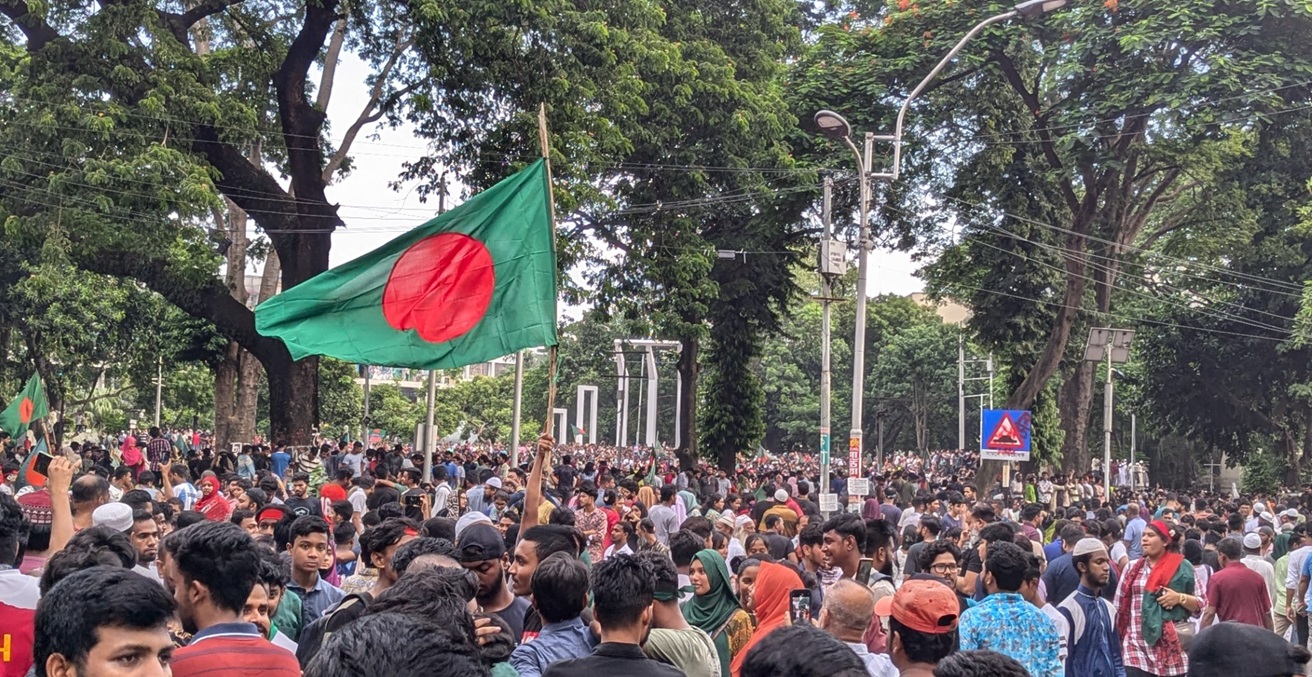
Eight months have elapsed since the resounding crescendo of civic unrest reverberated through the streets of Dhaka and beyond—a movement now etched into contemporary Bangladeshi history as the transformative July Uprising of 2024. The student-led revolt, galvanised by a weary citizenry exhausted by fifteen uninterrupted years of Sheikh Hasina’s increasingly authoritarian reign, precipitated the fall of a regime many had come to regard as synonymous with unbridled majoritarianism and the erosion of democratic norms.
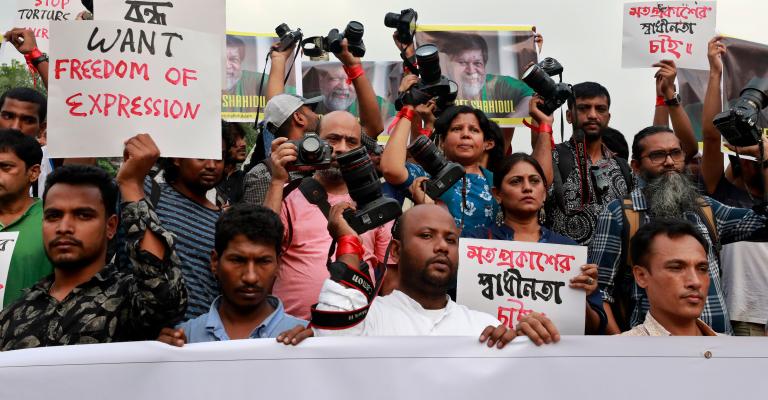
To fill the ensuing political vacuum, and ostensibly to shepherd the country through an equitable and peaceful democratic transition—something many Bangladeshis believe has been perennially elusive—a provisional apparatus of governance was constituted. Thus, on the 8th of August 2024, the Interim Government was born, led by none other than the venerable Dr Muhammad Yunus, Nobel Laureate and paragon of ethical capitalism. He assumed the mantle of Chief Advisor, entrusted with the Herculean task of stabilising a beleaguered state, instituting crucial reforms, and, most crucially, preparing the ground for a free and fair general election that would usher Bangladesh from the throes of perceived fascism into the luminous embrace of democratic revival.
Commencing with a retinue of sixteen advisors—a council subsequently expanded to twenty-one to reflect the national appetite for reform and rejuvenation—the interim regime drew cautious optimism both domestically and abroad. Dr Yunus was even featured in Time magazine’s list of the 100 most influential people for his pivotal role in “steering Bangladesh toward democracy following last year’s student-led uprising.” And yet, beneath this veneer of progress, the state of the nation has grown only more labyrinthine, with multiple fault lines deepening. As we stand at the octagonal milestone of this transitional government, it is both timely and imperative to evaluate its performance through several key prisms.
Of Persecution and Prejudice: Minorities under Siege
One of the most tragic ironies of this so-called democratic rebirth has been the abrupt surge in attacks on religious minorities. Far from heralding a new era of inclusivity, the post-Hasina epoch has witnessed a disturbing uptick in communal hostilities—many of which are allegedly orchestrated by groups vehemently opposed to the former regime. Between the 5th and 25th of August alone, over a thousand communal incidents were recorded, including acts of arson, looting, desecration of places of worship, and targeted violence against individuals from religious minorities.
While communal violence is regrettably not a novel phenomenon in Bangladesh’s socio-political landscape, the interim government’s response—or lack thereof—has been particularly dispiriting. Rather than acknowledging the sectarian undertones of these attacks, the authorities have consistently downplayed them as “politically motivated incidents,” even going so far as to label the media’s coverage as “exaggerated”. This obfuscation culminated in October during the sacred Durga Puja celebrations, when a spate of violent attacks against Hindus drew national and international opprobrium. The interim government’s rather sheepish declaration of “collective failure” offered scant solace to the victims.
To compound the travesty, when Hindu communities rallied in protest, several of their spiritual leaders were unceremoniously detained on charges of sedition. This chilling sequence of events exposes the interim authority’s alarming refusal to confront what appears to be a systemic pattern of persecution—raising profound concerns about the fate of minorities in the so-called “New Bangladesh.”
Unrest in the Hills: The Forgotten Frontiers
Parallel to the plight of religious minorities is the deteriorating condition of Bangladesh’s ethnic communities, particularly those inhabiting the restive Chittagong Hill Tracts (CHT). Since September of last year, the CHT has become a crucible of ethnic tension and conflict, with over 200 documented instances of human rights violations. The alleged complicity of the Bangladesh Army, which is believed to be tacitly supporting the interim regime, adds a sinister dimension to this unfolding crisis.
These violations include unlawful land grabs, destruction of indigenous properties, and systemic harassment by Bengali settlers and law enforcement agencies. Despite repeated calls for action, the interim government has remained conspicuously inert, preferring instead to label the crisis as an “internal administrative matter”—a semantic sleight of hand that serves only to trivialise the gravity of the situation.
While the 1997 Peace Accord promised autonomy and protection to the indigenous populations, its implementation remains elusive. The government’s reluctance to engage indigenous leaders or uphold their cultural and political rights betrays a troubling inclination to placate fundamentalist factions at the expense of pluralism. Recent incidents, such as the abduction of five university students and the rape of an ethnic minority girl, have further inflamed tensions. Yet, Home Advisor Lt Gen (Retd) Md Jahangir Alam Chowdhury blithely claimed that “the hills are more peaceful than ever”—a statement that borders on Orwellian absurdity.
A Mobocracy in the Making
The culture of lawlessness has not restricted itself to minority communities. Indeed, the entire country seems to be held hostage to a rapidly metastasising mob culture. Vigilante groups—emboldened by a palpable sense of impunity—have been marauding through cities and towns, targeting anyone perceived to be an affiliate or sympathiser of the erstwhile Awami League regime. Acts of vandalism and public lynching have become grotesquely normalised, and the interim government has responded with a silence that is deafening.
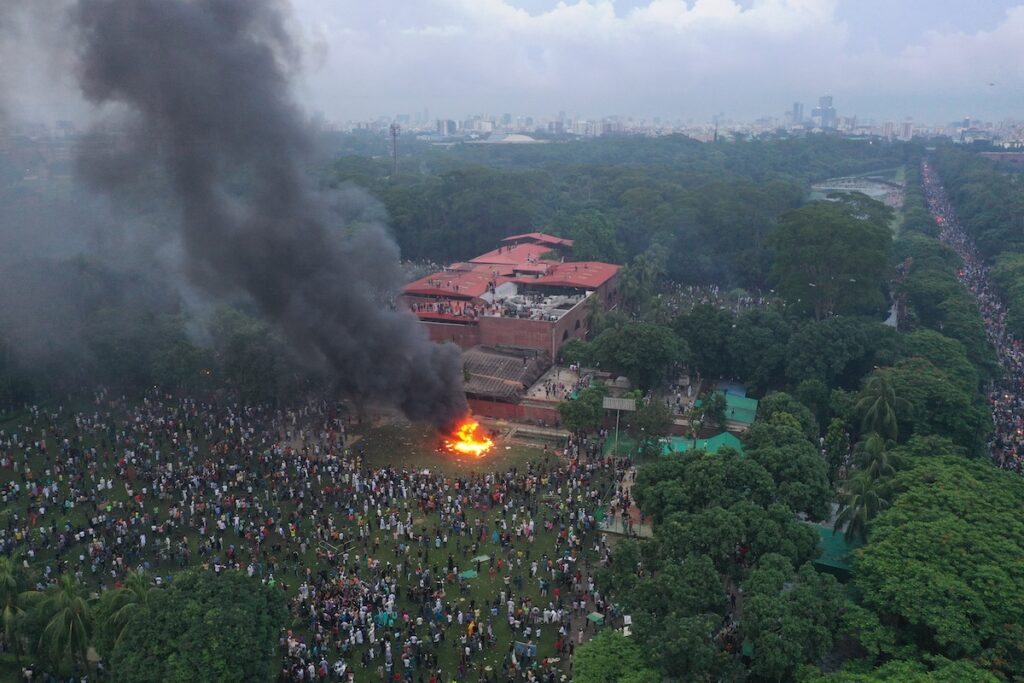
Perhaps the most symbolic manifestation of this new anarchy was the “Bulldozer Procession” that desecrated 32 Dhanmondi—the erstwhile residence of Bangabandhu Sheikh Mujibur Rahman. Rather than issuing a robust denunciation, the interim regime deflected blame onto the fallen Prime Minister herself, accusing her of provoking the unrest. When voices from civil society rose in protest, the government responded not with contrition but with coercion, launching the ominously titled “Operation Devil Hunt.”
This sweeping initiative purported to neutralise disruptive elements. In reality, it served as a mechanism to incarcerate scores of Awami League loyalists under flimsy pretexts. Far from curbing mob violence, the operation revealed a thinly veiled vendetta masquerading as law enforcement. The Home Advisor’s assertion that “law and order remains satisfactory” is not only disingenuous but dangerously delusional.
Theocratic Tendencies: A Secular State in Peril
Perhaps the most alarming transformation under the interim dispensation has been the creeping ascendancy of religious fundamentalism. Groups like Towhidi Janata, believed to be fronting for the ultra-conservative Hefazat-e-Islam, have taken to the streets with disturbing regularity, disrupting cultural festivals and imposing their puritanical mores upon the public sphere. Events celebrating Lalon Shah, Basanta Utsav, and even Pahela Baishakh have come under attack, derided as “un-Islamic” by these self-styled guardians of morality.
Even more perturbing is the group’s open advocacy for the replacement of Bangladesh’s secular legal framework with an interpretation of Sharia, and, more audaciously, the establishment of a Khilafat—a theocratic caliphate—in place of the current democratic system. The interim government’s reaction? Tepid at best, complicit at worst! There has been a conspicuous absence of any concrete initiative to counteract these regressive forces.
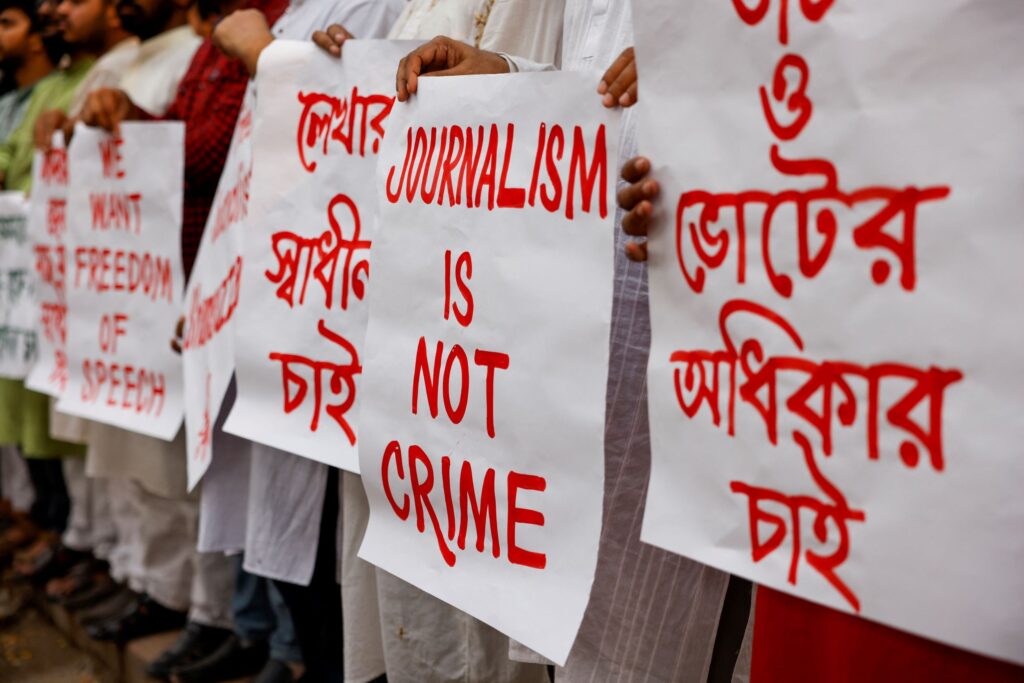
In fact, the government’s acquiescence has emboldened fundamentalist demands, which are now influencing constitutional reform dialogues. Proposals to remove secularism, socialism, and nationalism as foundational tenets of the state are reportedly on the table—an alarming development that threatens to dismantle the very ethos upon which Bangladesh was founded.
An Election Deferred? The Mirage of Democratic Transition
And what of the interim government’s raison d’être—its solemn promise to oversee a timely and transparent general election? Here, too, there is more ambiguity than assurance. Dr Yunus recently floated a tentative window for the polls—between December 2025 and July 2026—following increasing pressure from political quarters. Yet, no definitive electoral roadmap has been divulged.
The Home Advisor’s controversial statement that the people are “requesting” the interim government to remain in power for an additional five years has only intensified suspicion. Is this interim arrangement morphing into a pseudo-permanent regime? Political parties have already begun voicing their discontent, arguing that reforms must follow elections, not precede them. After all, the interim government, lacking constitutional legitimacy, was never intended to substitute a democratically elected dispensation.
A Promise Deferred, a Nation in Flux
After eight months of governance, the interim government finds itself on precarious terrain. Far from guiding Bangladesh towards the promised land of democratic rejuvenation, it has instead presided over an era marked by increased intolerance, emboldened fundamentalism, and institutional inertia. Minority groups are under siege, mob rule festers, and the secular fabric of the nation is unravelling thread by thread.
Without swift course correction, the vision of “Bangladesh 2.0”—a vibrant, pluralistic democracy—risks becoming a mirage in a desert of disillusionment. The interim government must remember that it was borne out of revolution, not resignation. The people did not depose a despot only to be ruled by the shadows of chaos and indecision. The hour is late, the stakes are high, and history shall not be kind to procrastinators.