
– Arun Anand
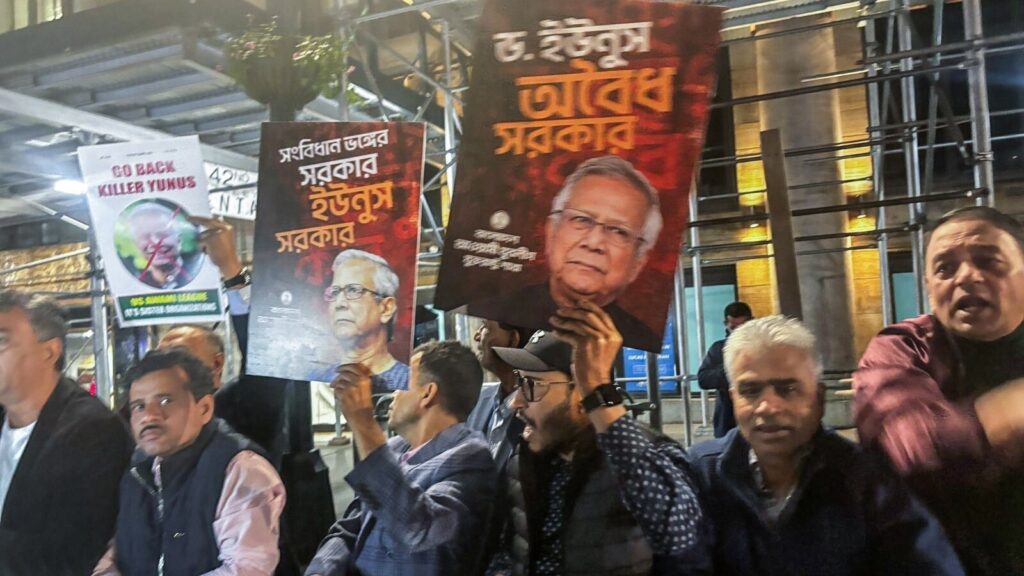
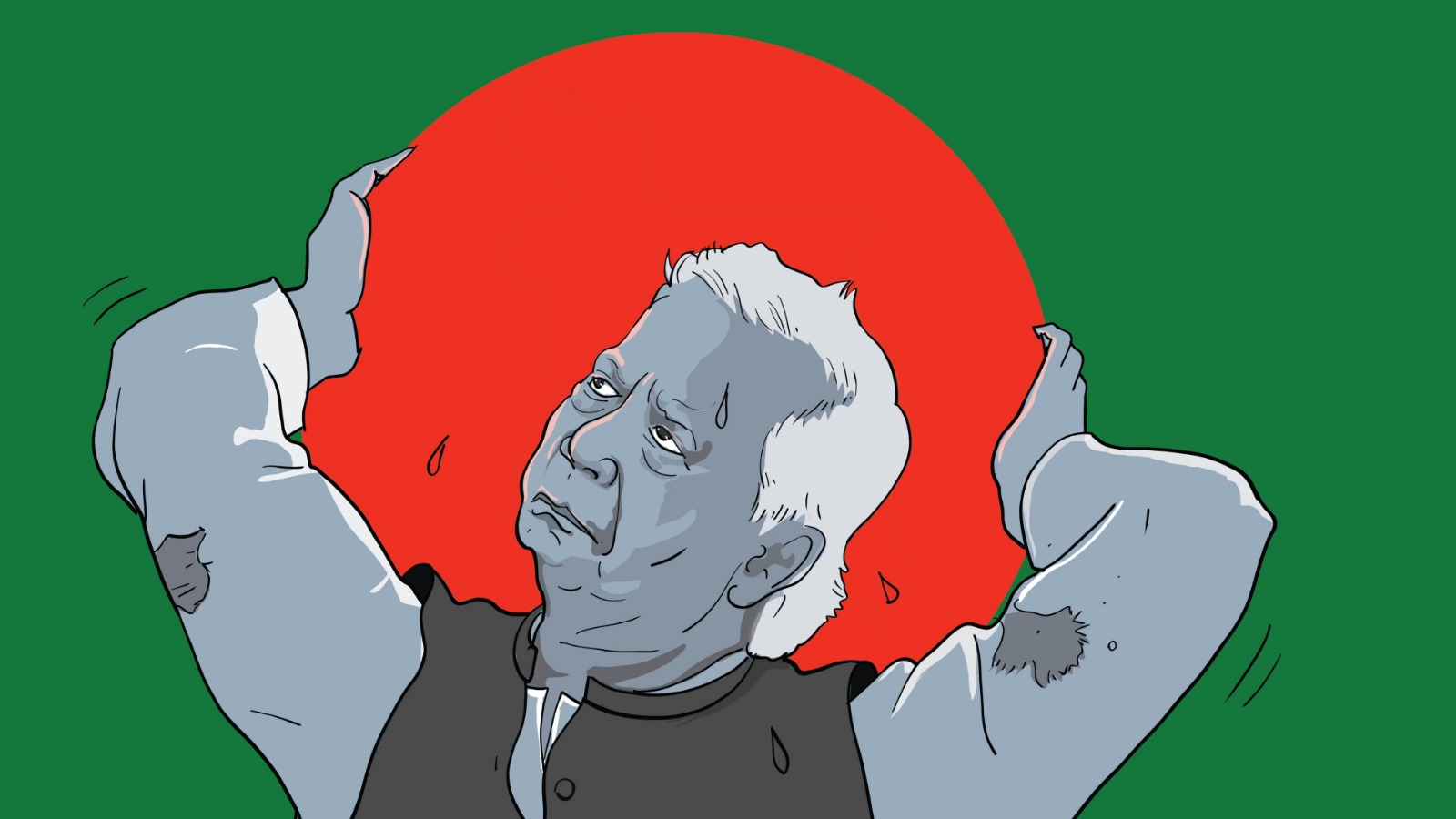
The interim government, which has been in power for over a year, is now grappling with a credibility crisis as political parties question its neutrality and its ability to ensure free and fair elections in the upcoming national polls scheduled for February.
Formed under the leadership of Muhammad Yunus following Sheikh Hasina’s ouster last year, the interim administration was projected as a corrective force meant to dismantle the remnants of authoritarianism in the country. Its key responsibilities were to restore stability, implement crucial reforms, and oversee a transparent democratic transition. Yet, it has failed on all these fronts. The initial perception of the interim government as a righteous alternative has eroded, exposing an even deeper democratic deficit than before.
Recently, six international human rights organisations have addressed a letter to Muhammad Yunus, the interim government’s chief advisor, urging his government to take concrete measures to prevent further human rights violations and to advance reforms process to uphold the country’s human rights. Two pressing issues addressed in the letter deserve our attention, for these highlight the failures of the interim government—the arbitrary arrests and detentions of journalists and politically motivated attacks on Awami League members.
Press freedom has been a longstanding concern in Bangladesh, partly due to the country being under prolonged military rule and the failure to reforming media even after restoration of civilian government in 1990. It is well established that press faced unprecedented censorship previously whereby any criticism against the government in power has been stifled. While the media in Bangladesh hoped to see a new dawn of freedom after 2024 July Uprising, the reality, however, remains concerning. In an eerily similar way like its predecessor, the interim government continues to target journalists in Bangladesh, via harassment, intimidation, physical attack (including murder) and detention.
Labelling any voice of dissent and criticism as “collaborators of fascist Awami League government” has become the interim government’s most used tool of repressing media freedom. The mob attack on speakers inside Dhaka Reporters’ Unity, and detention of 16, including journalist Monjurul Alam Panna under anti-Terrorism Act has been widely criticised as Bangladesh’s growing culture of intimidation and impunity since the past year.
According to the World Freedom Index, Bangladesh’s press freedom was classified as “very serious”, noting that over 130 journalists have been subjected to ‘unfounded judicial proceedings’, especially on charges of ‘crimes against humanity’ and ‘murder’. As per Rights and Risks Analysis Group (RRAG) report, in the first eight months of Yunus-led interim government, about 640 journalists have been targeted, which includes 182 journalists being filed under criminal cases, 206 journalists being filed under acts of violence, and cancellation of press accreditation of 167 journalists.
The first half of this year witnessed 266 journalists being implicated in cases related to July Uprising, and about 50 media organisations in the country being impacted on the same accusation. Dhaka-based Human Rights Support Society (HRSS) also reported the ‘alarming’ human rights situation in Bangladesh, noting that 340 journalists have been victims of murder. Human Rights Watch in its October report, too, accused the interim government of abusing recent amended Anti-Terrorism Act to target political opponents, including academics and journalists, and stuff them in prisons.
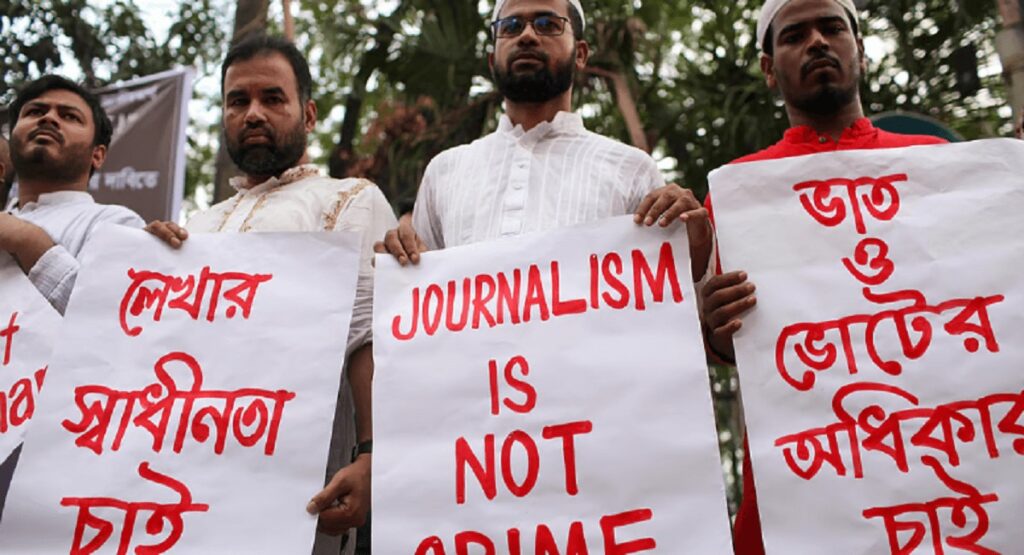
Bangladeshi Journalists in International Media (BJIM) also claimed that attacks on journalists reported in different districts allegedly involve local miscreants and even law enforcement agencies while the administration has taken no visible steps yet. The declining state of press freedom in Bangladesh remains a challenge to the country’s democratic transition.
For the interim government, the journalists are not the only opponents slapped with terrorism charges. The main target of its wrath has been members and loyalists of the Awami League.
Post-Hasina Bangladesh witnessed a paradigm shift of its historical narrative—from Sheikh Mujibur Rahman’s legacy to the history of Liberation War itself. Moreover, moments after Hasina fled Bangladesh, the country succumbed to a compromised law and order situation, where mobocracy emerged as new normal. Instead of restoring stability, the interim government exhausted all its efforts in ostracizing Awami League. From army, judiciary and police force, educational institutions, all League loyalists were first replaced or forced to resign.
The government also became a bystander to the surge in mob attacks on those alleged to be League loyalists (including, the religious minorities), justifying these attacks as “political”. Every act of vandalism, including the despicable demolition of 32 Dhanmondi, was also labelled as “act of provocation” by outsiders. Instead of arresting the perpetrators, the interim government launched Operation Devil Hunt, arresting as many as 18,384 people across Bangladesh, mostly those affiliated with the Awami League and Chhatra and Jubo League.
This witch-hunt started much before Awami League was officially banned this May following the amendment of Anti-Terrorism Law. The ban received criticisms from international rights organisations—Human Rights Watch, United Nations and Amnesty International—as a partisan act that risk repressing political pluralism which also undermine the country’s reform process.
The Human Rights Watch deputy Asia director accused the interim government of being more stuck on juggling an unreformed security sector, violent religious hardliners and political groups seeking vengeance on Hasina supporters than protecting the rights of Bangladeshis. The report also noted the interim government’s pattern of mass arrests and arbitrary detention of hundreds of League supporters misusing its amended Anti-Terrorism Law, slapping them with baseless charges and denying the detainees with proper medical care and bail.
The Freedom House reported that while the interim government lifted restrictions on major political parties that opposed the Awami League, restrictions increased on former ruling party. Leaders of Awami League were arrested on alleged crimes based on skewed evidence. The ban on the party, the cancellation of its party registration at the Election Commission along with the continues witch-hunting on League and its allies via amendment of legislative measures have not only hindered the activities of Awami League but also identified as the interim government undermining fundamental freedoms.
Notwithstanding Yunus and his other adviser’s persistent denial of worrying human rights track, rights organisations—both national as well as international—have been noting the hypocrisy of following the same ‘fascist’ path against which it was established in the first place. It is now evident that Muhammad Yunus is only using its political powers to seek political vendetta against Awami League and Sheikh Hasina, his old opponents.
Now with just the players change, democracy is taking a backseat, while mobocracy, culture of extortion, religious extremism and political violence—all sustained via the interim government’s human rights violations—are ruling Bangladesh’s political culture. Amidst this, the chances of a free and fair election, a just and inclusive democratic transition feel slim.
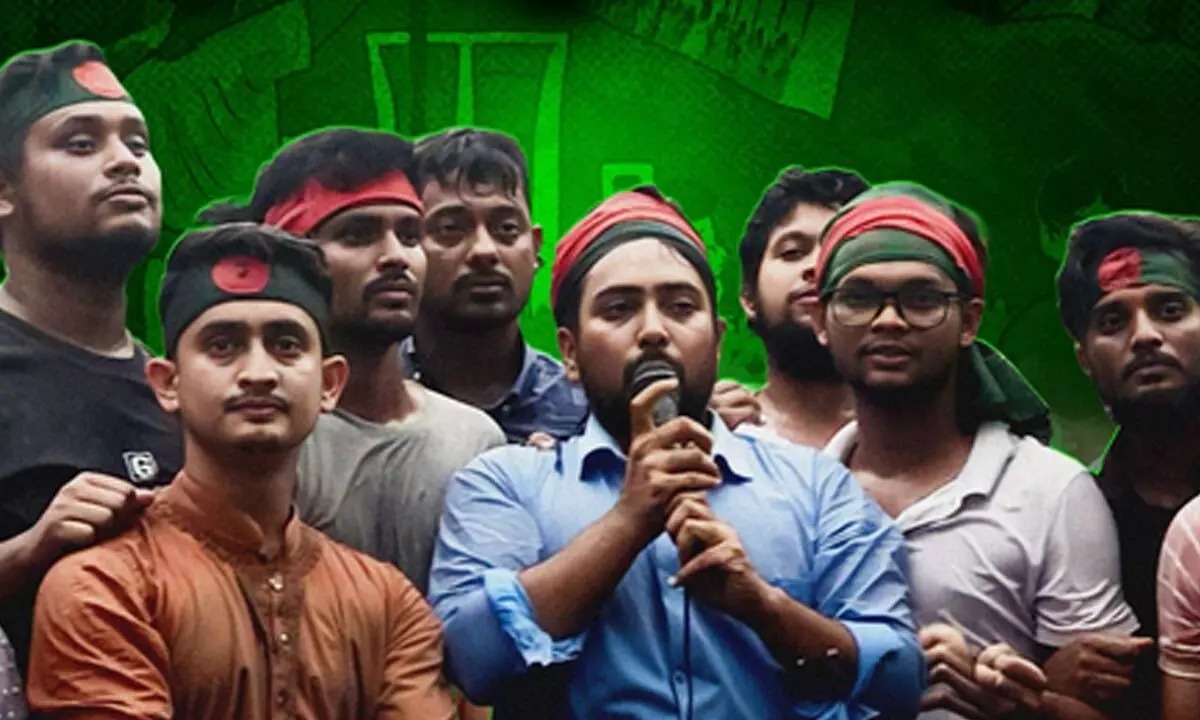
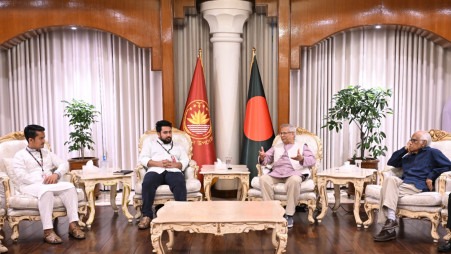
The political climate in Bangladesh is charged as parties are gearing up for Jatiya Sangsad election in February, next year. While Bangladesh Nationalist Party (BNP) has officially announced 237 candidates to contest for 300 parliamentary seats in the upcoming election, Jamaat-e-Islami is yet to announce its candidacy as it is contemplating to enter into coalition with other parties.
National Citizen Party (NCP), on the other hand, expressed desire to contest alone in all 300 seats, although stating its openness to coalition with other parties. Amidst this, the announcement of Asif Mahmud, the student advisor of the interim government, to contest in the forthcoming election from a Dhaka constituency, was much awaited. However, this pronouncement unmasks the interim government’s neutrality, long contested by political parties. And thus begins the anticipation — will the upcoming election be free and fair?
Since the beginning of this year, the interim government’s neutrality came under scrutiny as a new political party — the National Citizen Party (NCP) — came into being, a party formed by student leaders of the 2024 July Uprising. Established on 8th August 2024, the interim government included three student advisors — Nahid Islam, Asif Mahmud and Mahfuz Alam — who were also core leaders of the Uprising.
One of them, Nahid Islam, resigned from his advisory position this February to join the NCP as its chief convenor, leading to allegations against the interim government sustaining the establishment of a ‘King’s Party’ instead of fulfilling political parties’ demand of announcing an election roadmap.
Indeed, Chief Advisor Muhammad Yunus has shown partisanship towards the NCP, given that student leaders were the one supporting (and inviting) Yunus to hold this position in the interim government. This is notwithstanding the revelation by Youth, Labour and Sports advisor Asif Mahmud of Bangladesh Army Chief’s reservations about students’ decision of inviting Yunus, in a video of Mahmud shared by NCP chief (South) Hasnat Abdullah back in March.
Much before the formal establishment of the NCP, Muhammad Yunus’s interim government parroted the same narrative as that of student leaders of the July Uprising, taking measures suiting their demands. Nowhere has this been more prominent than in a series of official measures targeted to erase Sheikh Mujibur Rahmas’s legacy, to the extent of stripping him of his title of ‘Father of the Nation’. Taking the hands of these July Uprising leaders, the interim government resorted to historical revisionism of the Liberation War, raising a new political discourse of ‘new Bangladesh’ — where Bangladesh is believed to attain ‘real liberation’ on 5 August 2025, the day Sheikh Hasina was forced to flee the country.
Following NCP’s formation, the interim government has accepted many of its demands, even before the party’s official registration in the Election Commission. The official ban on Awami League in May via amendment of 2009 Anti-Terrorism Act, barring it from contesting in the national election came only after NCP hit the streets. This ban on a party, rather than individuals accused of war crimes, has been claimed as undemocratic by international rights organisations. League’s ban has been NCP’s main goals, one that Yunus conceded to, as evident in his earlier statements where he expressed the decision on Awami League’s participation in election to be left to the League itself.
In line with NCP’s demands, the interim government has paid excessive attention to reforms, while keeping Bangladesh’s democratic transition via election in the backseat. This has led to political parties’ accusing the interim government of giving administrative benefits to people (referring to Nahid Islam) who left the government to form their own party—thus the interim government facilitating the establishment of a ‘King’s Party’ to derail the election. The two student advisors—Asif Mahmud and Mahfuz Alam—of the interim government have also been accused of being ‘NCP loyalists’ around the same time and political parties demanded for their resignation, as they have violated the expected neutrality of the interim government which is to ensure free and fair political democratic transition.
The July Charter is another area where the interim government displayed its tilt towards the student-led party. Only after a threat by NCP to declare the July Charter on their own, the interim government announced the July Declaration on 5 August and gave it constitutional recognition, fulfilling yet another NCP’s agenda. The July National Charter, announced on 17 October, further incorporated many of NCP’s demands—which were opposed by the now largest political party BNP along with other parties. These are—public referendum on reforms included in the July Charter which also includes 48 constitutional reforms and omission of notes of dissent in the implementation process of the July Charter, moves that drew controversy for bypassing legal parliamentary process and undemocratic enforcement, leaving consensus out of the July Charter. The Charter also excluded the basic constitutional principles based on liberation aspirations (nationalism, socialism, democracy and secularism), closely aligning with NCP’s demands whose vision is to put the final nail to the 1972 ‘Mujibist’ Constitution.
It was the implementation process of the July Charter and the finalisation of the election roadmap in October that again raised fresh accusations of the interim government’s neutrality being compromised. Parties, especially BNP and Jamaa, alleged that the Charter implementation process to show political biasness (towards NCP), and pressed for removal of party-affiliated individuals from the interim government (supposed to assume the role of caretaker government before election) hinting at student advisors Mahfuz Alam and Asif Mahmud, who are believed to be NCP loyalists. Following meetings with party representations with the Chief Advisor, raising concerns on neutrality compromising free and fair polls, the top echelon of the government asked the two student advisors to step down.
Both advisors requested more time to reach their decision on resignation. While Mahfuz Alam, Information and Broadcasting advisor, still has not shown any interest in contesting for the upcoming election, local government advisor Asif Mahmud recently announced that he will contest election and will resign from his administrative position before that. While he has not yet revealed if he would contest the election as an independent candidate or via any party (NCP), Mahmud’s late revelation unveils that the interim government never being a neutral administrative body in the first place.
Mahmud also proved his earlier press report true where he opined that “advisors who intend to join politics should resign after election announcement… otherwise the election will be questioned.” With only two months left for national election, the political tense environment in Bangladesh and interim government’s neutrality unmasked confirm that 13th national election will neither be inclusive, nor free and fair.
–IANS
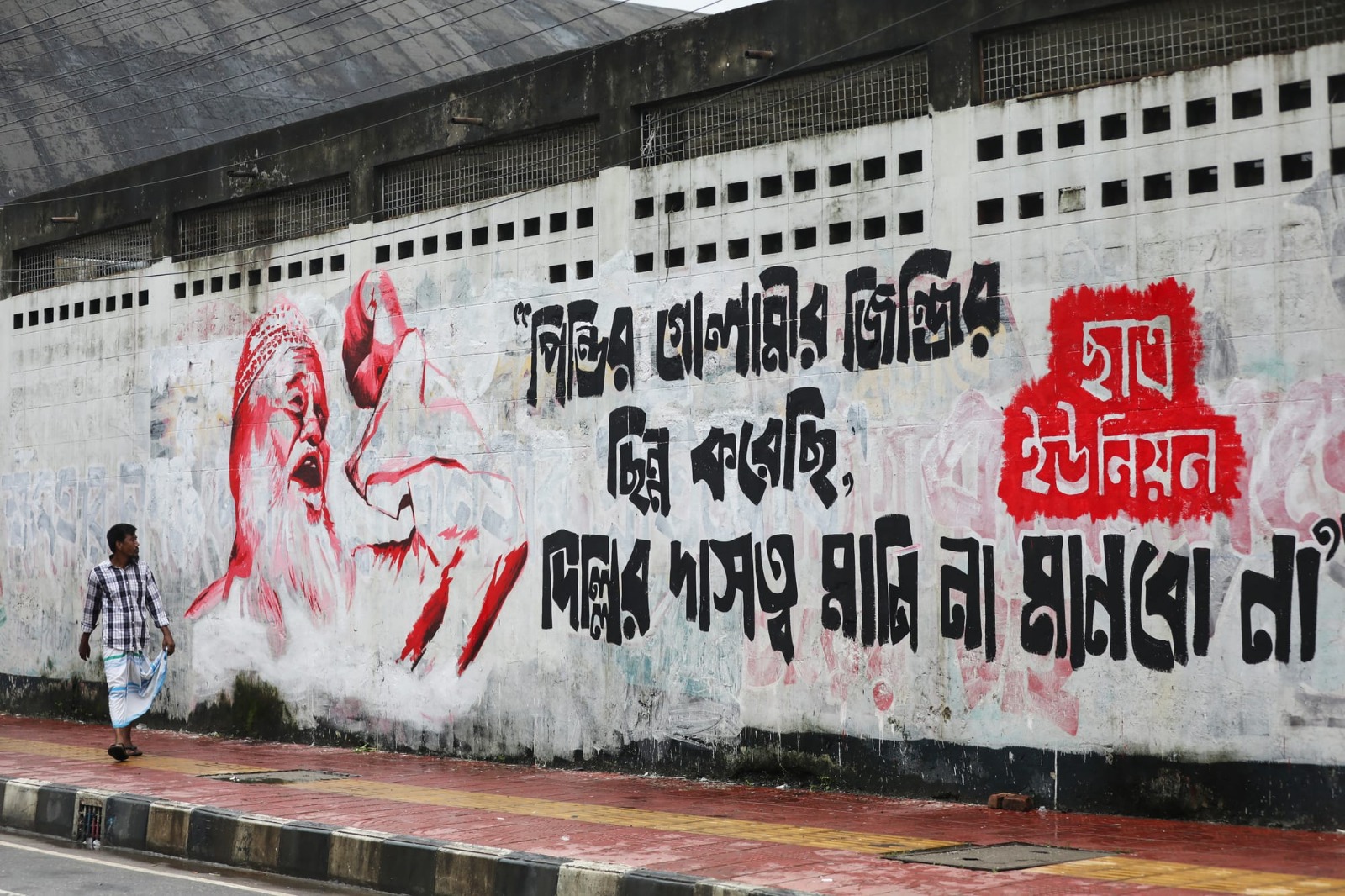
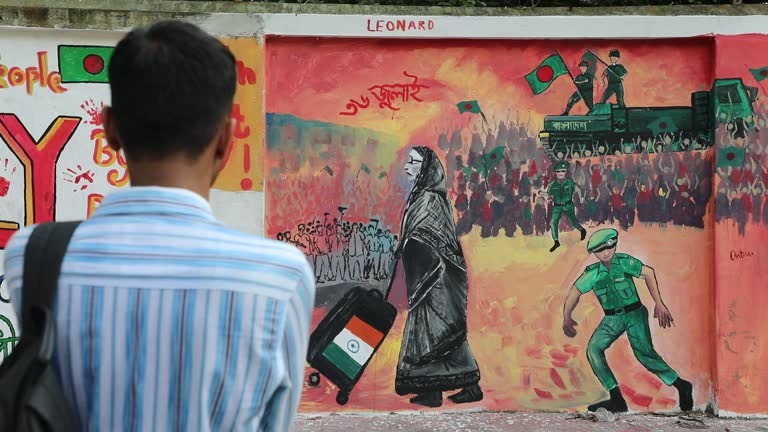
The 2024 July Uprising that ended Sheikh Hasina’s 15-year political tenure transformed Bangladesh’s political landscape. With anti-Hasina forces grabbing power, the political culture shifted and Bangladesh’s foreign policy took a spin as its old friend India came to be seen as an enemy overnight.
Anti-India sentiment was present in Bangladesh even during Hasina’s tenure, especially nurtured by radical Islamists and Pakistan apologists. The reason was heightened bilateral ties reached between India and Bangladesh on multifaceted areas — from cultural diplomacy to reaching understanding on water and land sharing, to new connectivity projects – port, buses and railway – for economic cooperation to greater border security, thanks to joint counter-terrorism measures.
It was also the time Bangladesh’s relations with Pakistan witnessed a thaw as under International Crimes Tribunal, war criminals mostly belonging to Jamaat-e-Islami who collaborated with Pakistan Army during 1971 Liberation War, were given death sentences and life imprisonment on charges of war crimes.
In the domestic sphere, Hasina’s hard dealing of new terrorist offshoots, witnessed during 2013-17, aggravated radical Islamists who openly advocated against Bangladesh being a constitutionally secular state (an ideological stand of Awami League party). All these factors culminated in shaping a new narrative — Hasina “selling” Bangladesh’s democracy to New Delhi.
Soon after the January 2024 election where Sheikh Hasina faced a decisive win, her political opponents doubled down on anti-India propaganda. First, they criticised New Delhi for congratulating Hasina at a time western countries raised concern over Bangladesh’s free and fair election. Then they blamed New Delhi for meddling in Dhaka’s internal affairs, alleging Narendra Modi government to have had a hand behind Hasina’s victory in 12th parliamentary election. All these because New Delhi maintained a non-interventionist approach to any country’s domestic politics, national election being one of them. Thus started the ‘India Out’ campaign in Bangladesh, mirroring Maldives’ drive earlier in 2023. Nevertheless, this did not affect bilateral ties in any way and the campaign soon died because of low popularity.
After Hasina’s deposition, the interim government’s foreign policy recalibration underwent a paradigm shift — moving closer to erstwhile coloniser Pakistan while maintaining a cold distance with New Delhi. The Chief Advisor Muhammad Yunus himself drew attention on many occasions for his provocative speeches antagonising New Delhi — from calling Bangladesh as the only guardian of Bay of Bengal for India’s “landlocked” northeast states during his China visit in March to claiming that New Delhi “disliked” or “disapproved” of student protest in Bangladesh that ousted Hasina and insisting at the UNGA in September that SAARC is nearly defunct because of “politics of one country” (indirectly referring to India).
In this blame game, Yunus conveniently avoided the core issue of SAARC being defunct — the Pakistan-sponsored terrorist attack in India’s Uri that undermined regional cooperation and led to cancellation of 19th SAARC Summit in Islamabad and boycott by neighbouring countries.
India, during the July Uprising, maintained diplomatic communication with Dhaka where it “observed developments closely”. Moreover, New Delhi’s focus during the unrest was to ensure security of Indian nationals, especially students, in Bangladesh and taking measures to avoid any breaches of border security.
It is common knowledge how post-Hasina, Bangladesh splurged into a deep law and order crisis, as violence of all kinds — gender, communal, ethnic, political — engulfed the country.
The consistent security lapse has created deep public distrust towards Bangladesh’s law enforcement forces. The rise in mob violence and rampant acts of vandalism of Sheikh Mujibur Rahman’s murals went unchecked and unnoticed by the interim government. The demolition of Mujib’s private residence -32 Dhanmondi – in February, however, pulled widespread criticism from both within and outside Bangladesh.
Instead of taking accountability for its lacklustre attitude towards restoring law and order, the interim government pointed the finger at New Delhi, for “giving platform” to Sheikh Hasina to give speeches. In fact, this has been the persistent narrative of the interim government, every time it was questioned of lawlessness within the country, from violence in Gopalganj to Chittagong Hill Tract. The justification was always the same — Sheikh Hasina attempting to destabilise Bangladesh “with foreign help”, hinting at New Delhi.
Recently, Bangladesh registered a protest against India for Hasina’s interviews published in Indian and foreign news outlets, alleging India to allow Hasina to make “hate speeches” that risk destabilising Bangladesh. India has reiterated that Hasina’s speeches are not New Delhi’s diplomatic position but one made in her personal capacity. This is because India is a democracy where the press is not controlled, unlike Bangladesh that is going through a democracy deficit.
Moreover, Dhaka foreign advisor recently called India Foreign Secretary’s remarks on hoping to see a “free, fair and inclusive election” in Bangladesh as “completely unwarranted”, claiming the national election as Dhaka’s “internal matter” and hence “not Delhi’s concern”. Bizarrely, Dhaka has been appreciative of Western countries who too expressed hope to see a free and fair election in Bangladesh. The political climate in Bangladesh has turned more volatile because it has banned Awami League from contesting elections, triggering counter protests by party activists and supporters in the nation. The usual jibe of “foreign force destabilising Bangladesh” continues.
Bilateral ties between India and Bangladesh strained not because New Delhi turned its back but because Dhaka, under the interim government, has been weaponizing anti-India sentiment to hide its inefficiency.
In a recent attack on Awami League office in Gulistan, the video of miscreants vandalising a sculpture depicting Pakistan’s surrender to India during 1971 Liberation War became viral. It showed a man saying that if the image remained intact, League’s allies “might return and claim their roles”. Much like Pakistan, the interim government’s attempt at historical revisionism, especially of India’s role in the 1971 Liberation War, through textbook revision is no secret now.
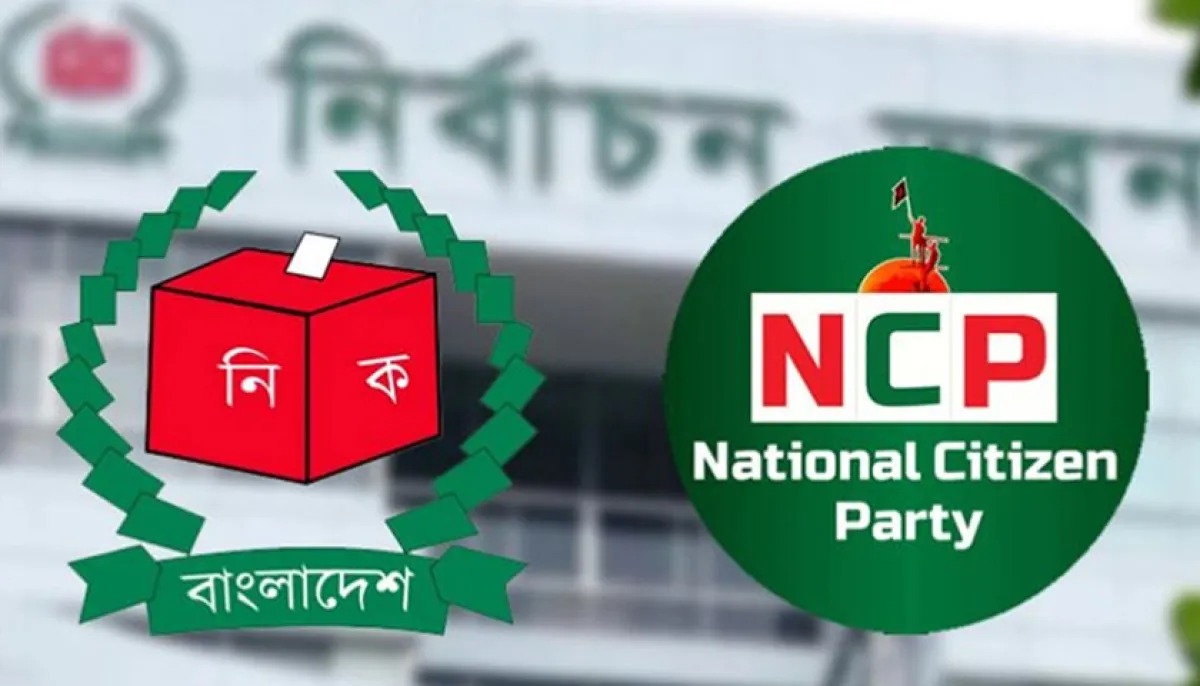
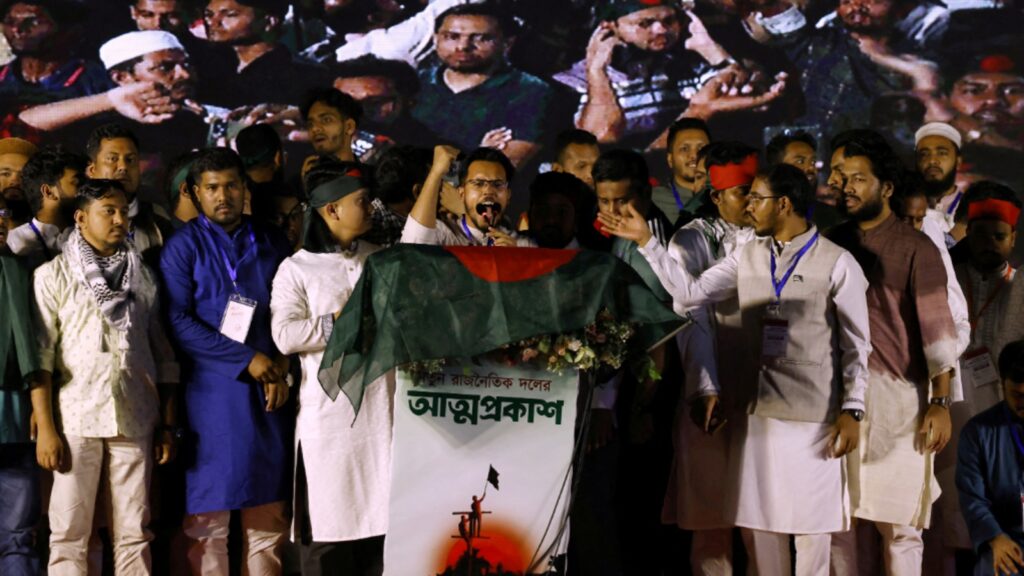
With Bangladesh’s national election scheduled for February 2026, the National Citizen Party (NCP) has displayed its unwillingness for polls without securing complete impunity for its political coup during last year’s July uprising. The actions and remarks of leaders in the NCP exposed the party’s growing insecurity in the political game.
Its consistent demand for electoral reform — to have national elections based on proportional representation (also favoured by Islamist parties) — reflect its awareness of lack of popular support.
The optimism of the July Uprising quickly faded as witnessed in the growing political chaos following the exit of former Bangladesh’s Prime Minister Sheikh Hasina which revealed the country’s democracy deficit.
Now with the Bangladesh Election Commission (EC) denying the ‘shapla’ symbol to NCP, the party’s ego is shattered, as members are threatening to delay the election if they are denied its electoral symbol. NCP is now open to both the Bangladesh Nationalist Party (BNP) and the radical Islamist party Jamaat-e-Islami for political alliances, notwithstanding the war of words it has been engaging in with both and presenting itself before Bangladesh as the ‘new’ alternative. Truly, NCP’s ‘revolutionary’ emergence has been short-lived and is perhaps now reaching its endgame.
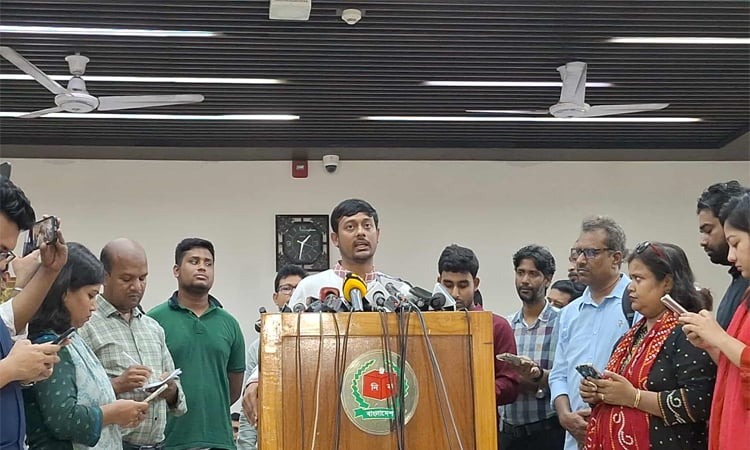
Given the political vacuum as a result of Hasina’s ousting and political ostracisation of Awami League – that remains as Bangladesh’s largest political party – the country witnessed two political developments. This includes the resurgence of Islamists on the political stage and the growing fissures between former allies BNP and Jamaat.
A new political platform was established in September last year known as the Jatiyo Nagorik Committee (National Student Committee), by prominent student leaders of the July Uprising. The intent behind the formation of this platform was to replace the ‘existing fascist political settlement’ with a ‘democratic one’ and become the ideological vanguard of the July Uprising.
The committee felt that only through the establishment of a new political party, the political aspiration of the July Uprising can be achieved. This paved the way for the establishment of a student-led political party — Jatiyo Nagorik Party (National Citizen Party) — that announced its formation on February 28, 2025 with a centrist and pluralist ideological approach that aims to establish a “second republic” in Bangladesh. It also announced its expectation to contest for all 300 seats in the national (Jatiya Sangsad) election.
Just six months within this year, a total of 32 NCP leaders resigned from the party citing internal conflict, misconduct and dissatisfaction with leadership. Moreover, its NCP’s student wing — Bangladesh Gonotantrik Chhatra Sangsad (BGCS) — faced heavy defeats and failed to secure central posts in recent student union elections of Dhaka, Jahangirnagar, Chattogram and Rajshahi University. The surveys on voter preference since early this year also denote the same trend.
A nationwide survey by Innovision Consulting held this March reported that despite appeal among young voters, the voters’ preference for NCP stands at an overall five per cent. Another survey by the BRAC Institute of Governance and Development (BIGD) in July showed only a marginal 2.8 per cent increase from two. The latest People’s Election Pulse Survey in September, preference for NCP stands at 4.9 per cent. Surprisingly, NCP’s main rival, Awami League, despite the ban, continues to enjoy a higher voters’ preference percentage than the NCP as per these surveys.
NCP drew controversies even before its launch. The selection of the initial 10 core members of the NCP was criticised for its lack of inclusivity and lacking a democratic process. Moreover, the inclusion of leaders from the Jatiyo Nagorik Committee having past ties with Jamaat’s student wing Islami Chhatra Shibir in the party created another round of uproar, leading to their voluntary withdrawal. Another controversy followed when a recognised activist of LGBTQ community was reported to secure a position in the party’s central committee, sparking debate and dissatisfaction even among NCP leaders, eventually leading to the member’s exclusion. Quite early on, the new party’s approach to present an alternative as the most inclusive party and its own internal contradictions reflected NCP’s own ideological challenges.
Led by students under the banner of Students Against Discrimination (SAD), the 2024 July Uprising was popularised as Bangladesh’s ‘second liberation’. The movement — largely composed of anti-Hasina forces — championed for an inclusive, plural, just and democratic Bangladesh. Thus, Bangladesh’s political landscape not only changed after August 5 2024, but also initiated a new debate on which direction the country’s politics should head.
The interim government was established on August 8, just days after Hasina fled the country. The main coordinators of the Students Against Discrimination (SAD) invited Muhammad Yunus to head the interim government as the Chief Advisor. Three prominent leaders of SAD — Nahid Islam, Mahfuj Alam and Asif Muhammad — also became advisors in the interim government representing students. Thus, SAD played a significant role in legitimising Yunus’ administration, installing it the responsibility of implementing reforms and conducting a free and fair election.
Amidst anticipation of who will be part of the NCP’s central leadership, Nahid Islam resigned from its advisory position in the Ministry of Information and Broadcasting to become the chief convenor of the party. Islam’s joining the NCP was not viewed favourably by other political parties who accused the interim government of helping for the establishment of a ‘King’s Party’ under its schemes of endless reforms rather than announcing a clear election roadmap. NCP’s formation and the Chief Advisor Yunus’s soft spot for the student political party, also put its own neutrality in question. Political parties like Gono Odhikar Forum and the BNP strongly demanded for resignation of student advisors Mahfuj Alam and Asif Muhammad alleging them as NCP loyalists.
Bangladesh’s political culture rooted violence, corruption and extortion soon caught up to the nation’s newest political alternative. In April, its joint member secretary, Gazi Salauddin Tanvir, was accused of involvement in corruption and misconduct over the appointment of Deputy Commissioners, leading to his removal from NCP. The party’s ‘March to build the country’ rally in July took a violent turn in Gopalganj district when party leaders revealed their real intent — bury Mujibism along with 1972 ‘Mujibbadi’ Constitution.
NCP’s rally in Gopalganj, the birthplace of Sheikh Mujibur Rahman where Awami League continues to maintain a stronghold despite ban, was perceived as a provocative act by locals as words spread the party’s intention to desecrate Mujib’s graveyard leading to a violent clash. The following month, NCP joint coordinator of Chattogram city branch Nizam Uddin’s video of his involvement in extortion to suppress a port-related protest became viral, leading to his suspension. Indeed, the apple didn’t fall far from the tree.
The interim government’s political bias towards NCP became more visible when, following NCP-led street protests in May, it announced a ban on the Awami League thus leading to its registration suspension as a political party in the Election Commission. Before NCP’s protest, the interim government had maintained that it was for ‘Awami League to decide if it wants to participate in the election’, indicating it had no plan to ban the party earlier. It is not just Awami League’s ban, but also attempts at complete historical revisionism — removing public holidays dedicated to Sheikh Mujibur Rahman, excluding his title as the ‘Father of the Nation’ by revising the Liberation War Act and removing his picture by redesigning currency notes and portraits from public offices, to name a few — are all calculative steps taken under the strong demands of the NCP.
–IANS
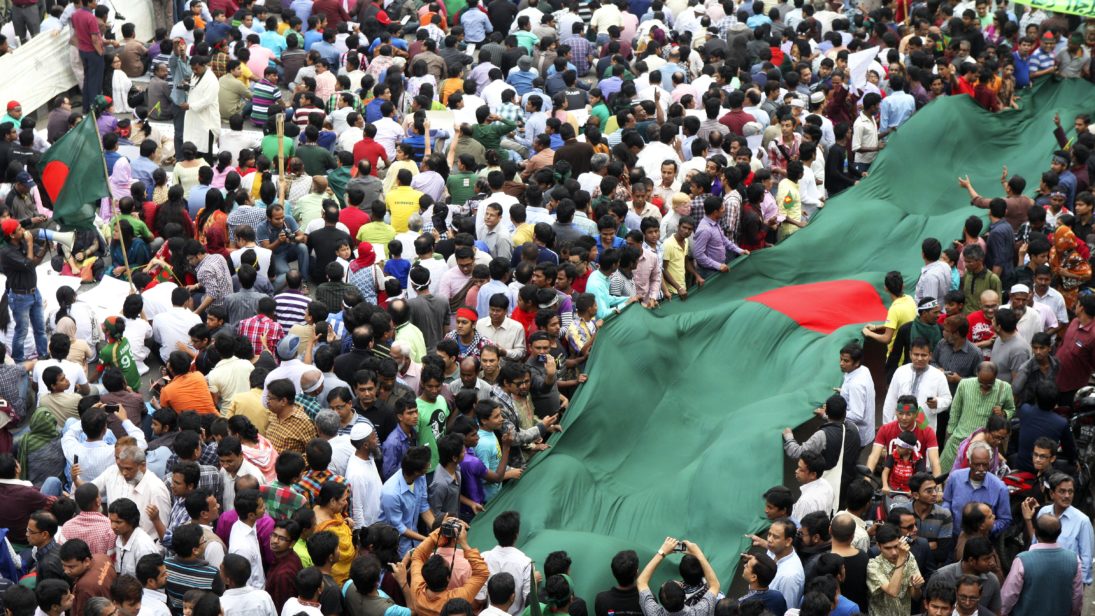
The July 2024 Uprising constituted a watershed moment in the political history of Bangladesh, precipitating significant transformations in both leadership and governance structures. In the aftermath, established political parties, along with newly emergent entities, have asserted themselves actively as opposition forces, predominantly targeting the Awami League. This development has underscored the emergence of a “new Bangladesh,” characterised by its explicit recognition and promotion of individuals and groups that have vigorously opposed the previous ruling party and its associated legacy.
A salient illustration of this shift is observable in the interim government’s concerted efforts to reconfigure collective historical memory regarding the 1971 Liberation War. These initiatives have sought to reconstruct historical narratives in a manner that tends to marginalise or omit the contributions of the Awami League—most notably those of Sheikh Mujibur Rahman, who is widely recognised as Bangladesh’s founding father and principal architect of its independence.
With respect to Sheikh Hasina, whose tenure concluded with her removal from office in August 2024, opposition rhetoric has advanced the prevailing assertion that her sustained electoral success was attributable to her close association with India. Immediately following the 2024 electoral outcome, a movement akin to the Maldives’ “India Out” campaign emerged within Bangladesh, advocating for a boycott of Indian commodities and alleging that India had exerted undue influence on Bangladesh’s domestic political processes to sustain Hasina’s prolonged incumbency. Her subsequent exile in New Delhi has further substantiated this discourse, lending greater credence to these claims among her critics.
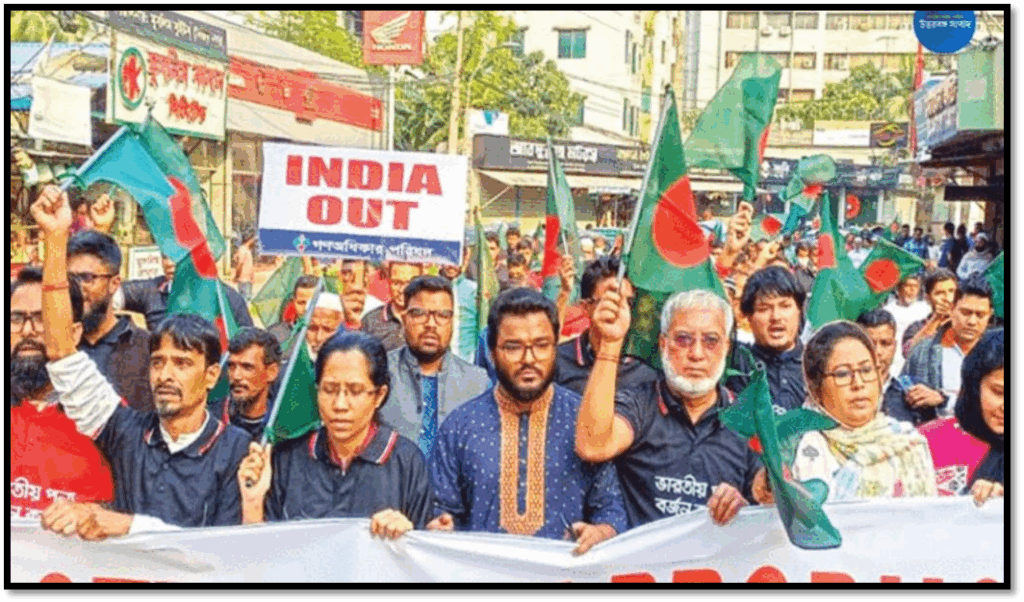
In the run-up to the forthcoming 13th national election, Bangladesh’s political milieu appears increasingly permeated by anti-India sentiment. Notably, this disposition is manifest not only within opposition parties but is also discernible in the interim government’s policy orientations and public actions.
Following the collapse of Hasina’s administration, the dynamics of India-Bangladesh relations have undergone notable changes. The newly installed interim leadership has adopted a divergent foreign policy trajectory, deliberately creating distance from India. This realignment is exemplified by the imposition of trade restrictions on imports from India. Conversely, the interim administration has deepened its engagement with Pakistan, a state from which Bangladesh achieved independence through the violent conflict of 1971. While some Bangladeshi commentators characterise this rapprochement as a calculated diplomatic manoeuvre, they frequently overlook the fact that substantive shifts in foreign policy have largely been confined to relations with India.
Domestic foreign policy experts have critiqued India’s previous strategy, contending that it disproportionately prioritised relations with the Awami League, thereby “placing all its eggs in one basket.” However, this argument tends to neglect the profound historical and cultural ties between the two nations. India was the second country after Bhutan, to recognise Bangladesh’s sovereignty in 1971, and both states retain strong affinities rooted in common histories, languages, and cultures as former territories of British India. Although it is accurate that India maintained closer relations with the Awami League-led government relative to the BNP coalition—which adopted a more adversarial stance towards India—this does not imply that bilateral relations are determined solely by partisan considerations.
The two countries also share an extensive and porous frontier, which has historically given rise to challenges such as unauthorised migration, cross-border smuggling, and sporadic border disputes—issues that persist in the contemporary context. Following Sheikh Hasina’s departure from Dhaka, Bangladesh experienced significant upheaval, marked by violence against minority populations and a deterioration of law and order. Coverage of these events provoked concern in India, which recalled the influx of millions of refugees during the 1971 conflict. Nevertheless, attempts by Indian authorities to voice their apprehensions were routinely dismissed by the interim government as “fabrications” or “politically motivated narratives.”
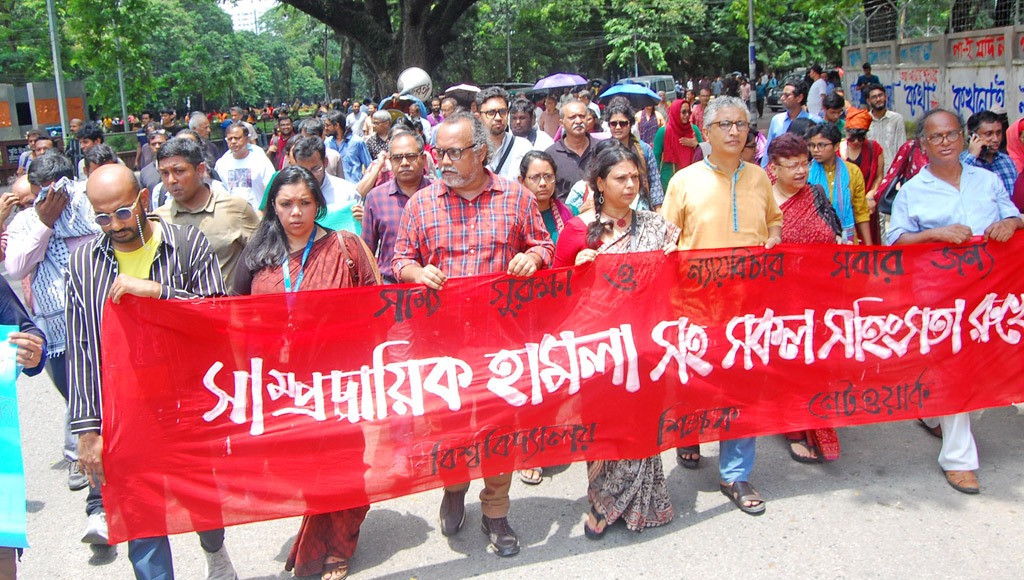
Rather than accepting responsibility for shortcomings in maintaining law and order, the interim administration has persistently sought to attribute blame to India. For instance, when the historic Dhanmondi 32 residence of Sheikh Mujibur Rahman was subjected to vandalism in February, the authorities, instead of acknowledging deficiencies in their security apparatus, alleged that India was enabling Sheikh Hasina to disseminate her messages from exile. India issued a strong diplomatic protest in response to these assertions, yet the interim leadership in Dhaka continued to evade accountability.
The chief advisor to the interim government has frequently alluded to “external actors” fomenting instability in Bangladesh—implicitly referring to India—while refraining from acknowledging his own administration’s role in the prevailing disorder. This narrative strategy serves to deflect scrutiny from the government’s administrative failures and simultaneously consolidates its anti-India credentials among certain domestic constituencies.
Simultaneously, various political parties, including Islamist factions, have adopted similar anti-India rhetoric in an effort to harness popular support. Islamist groups, some of which were previously marginalised or proscribed, are now openly advocating for the establishment of a Sharia-based constitution and mounting attacks on the country’s secular foundations. The interim government’s persistent silence regarding these developments has allowed such groups to consolidate their influence and propagate their ideological agenda largely unimpeded.
Among the most prominent actors in this landscape is Jamaat-e-Islami, which is currently attempting to present itself as a progressive entity. Nevertheless, it continues to evade responsibility for its contentious role during the 1971 war. This organisation, along with emerging groups such as the National Citizenry Party (NCP), is actively seeking to reinterpret the narrative of the Liberation War. They propagate the erroneous claim that India’s involvement constituted interference in what was an internal Pakistani matter, and suggest that Indian intervention was the primary catalyst for the partition in 1971. Such assertions are not only historically inaccurate but also deeply disrespectful to those who sacrificed their lives for Bangladesh’s independence.
Recently, the NCP attributed responsibility for the Gopalganj unrest to so-called “pro-India” factions with links to the Awami League. This incident exemplifies how anti-India rhetoric is being employed for political advantage. However, such narratives provoke a fundamental question: What incentive would India have to promote instability or disorder in Bangladesh? Given the significant security challenges India already confronts emanating from its western neighbour, Pakistan, it has little desire to see turmoil on its eastern frontier.
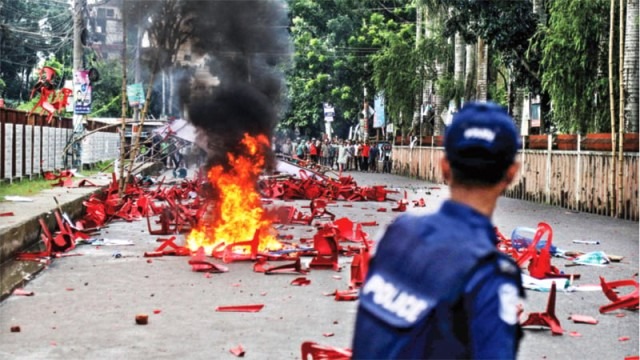
Rather than assigning culpability to India, Bangladeshi political leaders ought to address the internal issues that frequently stem from their own policies and decisions. Utilising India as a scapegoat for political expediency may offer short-term benefits in electoral terms, but ultimately proves detrimental to the nation’s long-term interests. The premise that India is behind every crisis in Bangladesh is not only unsubstantiated but also poses potential risks.
India, on its part, continues to express its aspiration for a peaceful, democratic, and secular Bangladesh, and remains prepared to engage with any administration that upholds mutual values and interests. However, substantive cooperation cannot occur if India is persistently perceived solely as an adversary or rival.
As the forthcoming election approaches, Bangladesh faces a decisive juncture. The nation must determine whether it wishes to forge a future founded on truth, collaboration, and democratic values, or remain encumbered by a cycle of scapegoating and historical distortion. A stable and prosperous Bangladesh is in the best interests not only of its own populace, but also of the entire region—including India.