
The Balochistan Liberation Army (BLA) launched what analysts describe as its most expansive operation in decades on January 30, with its fighters attacking military and government installations at nearly 48 locations across 14 cities, including the provincial capital, Quetta. For almost a week, the Pakistan Army struggled to regain control, even as it declared its “clearance operations” had concluded on February 5, while local media reports stated that BLA fighters continued to maintain control over several arterial roads.
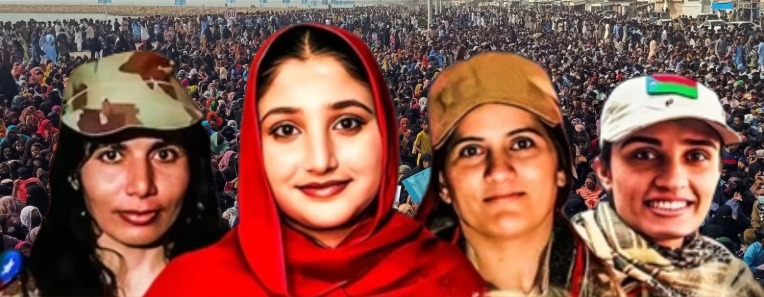
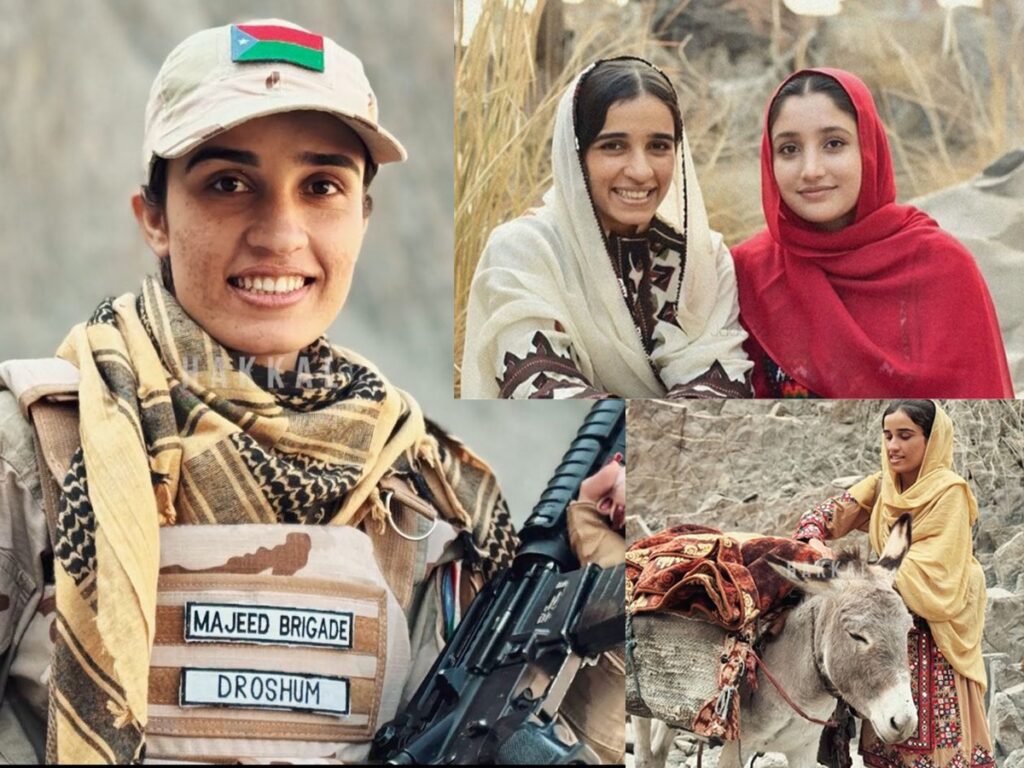
While the scale and intensity of the attack red-faced Pakistan’s intelligence and security grid, the most consequential shift was not tactical but social, with women visible on the front lines, carrying rifles, addressing cameras and, in several cases, conducting suicide attacks. Their presence signals a transformation of the Baloch insurgency from a predominantly male guerrilla movement into a broader societal revolt.
The BLA has identified three of the four suicide attackers as women. They include 24-year-old Asifa Mengal, who struck the Counter Terrorism Department (which functions as ISI’s field offices) headquarters in Noshki; 21-year-old Hawa Baloch alias Dorshum, who targeted security forces in Gwadar; and 60-year-old Hatam Naz Sumalani alias Gul Bibi. In video footage released by the group’s media wing, Hakkal, Ghazi Dur Jan Baloch, described as a commando of its Fateh Squad, is shown speaking calmly from a battlefield before being extracted after three days of fighting on the frontline. In another widely circulating video clip, 29-year-old Yasma Baloch alias Zarina is seen sitting beside her husband, a combatant in Pasni, shortly before both were killed, as per another media release by the group.
While Baloch women have participated in nationalist politics before, it was never so openly in insurgency combat roles, even though a few suicide attacks have been carried out by women in recent years. For many observers, this marks the “mainstreaming” of the insurgency, evidencing that the conflict has penetrated the intimate core of Baloch society, where mothers, daughters and grandmothers are no longer only mourners of the disappeared but are becoming fighters themselves.
It is true that armed movements across the world have often relied on women, from the Tamil Tigers in Sri Lanka to Kurdish militias in Syria. Scholars have noted that when women cross the threshold from support roles to direct violence, it usually indicates two things. Firstly, it shows the widening base of legitimacy of armed insurgency for a political cause and, secondly, and more importantly, it highlights the closure of non-violent avenues to voice grievances.
In the case of Balochistan, both of these conditions are present. Pakistan’s decades of militarised governance in the region have eroded traditional spaces of dissent, with much of its popular leadership humiliated by the country’s elite class, as was done with Akhter Mengal in 2024. The province, which was annexed by Pakistan in 1948 after a brief period of contested independence, has experienced repeated waves of insurgency in the 1950s, 1960s and 1970s, and again since the early 2000s, with the Pakistani state using heavy-handed counterinsurgency. Moreover, even as political institutions exist in Balochistan, they function largely as extensions of the security establishment, with the Quetta cantonment commander seen as more powerful than the elected chief minister of the province.
Balochistan is Pakistan’s largest province, yet its poorest. It sits atop vast reserves of gas, copper and gold, but local communities see little benefit, as most of these resources are used by the Punjab-centric politico-military elite to fuel the development of Punjab and Punjabis. Pakistan has further allowed China to undertake mega resource-extraction projects under the China-Pakistan Economic Corridor (CPEC), thereby deepening resentment and bringing further militarisation without any dividend for locals. Pakistan’s government has also auctioned provincial resources to US President Donald Trump to seek military incentives as it hedges between Washington and Beijing.
While the state narrative frames the insurgency as the work of a few extremists, the ground reality presents a far more complicated picture. The current wave of rebellion, which is the longest phase of the Baloch insurgency, began in the early 2000s after the killing of nationalist leader Nawab Akbar Bugti by the Pakistan Army. Since then, groups such as the BLA have steadily expanded recruitment, drawing not only from tribal fighters but also from urban youth and educated professionals, thereby helping it sustain and grow despite multiple campaigns by the Pakistan Army.
The latest attack by the BLA, described as Operation Hurof 2, reflects this evolution. In its earlier iteration, BLA fighters demonstrated sophisticated coordination by hijacking a train carrying off-duty soldiers in the remote Bolan region last year, an operation that lasted more than two days, during which the Pakistan Army suffered dozens of casualties. The January 30 attack went further and revealed an organisation capable of simultaneous urban warfare across half the province.
Women’s participation fits this trajectory, with their entry into the battlefield carrying more than symbolic weight. In conservative Baloch culture, where women are often viewed as custodians of honour and continuity, their willingness to leave their homes to take up arms, and their readiness to kill and die, communicates that the conflict has moved beyond factional militancy into a collective grievance. Families that once discouraged sons from joining now watch daughters volunteer. For Islamabad, this signifies that the very social contract of Pakistan has collapsed in Balochistan.
A state usually claims moral agency to present itself as the protector of its people, but in Balochistan that bond appears to have long frayed. Here, leaders are widely viewed as appointees of the security apparatus, and elections as an engineered spectacle. The closure of civic space for voicing grievances in the region is central to understanding why women now pick up guns. When the Baloch Yakjehti Committee (BYC) organised long marches seeking accountability for the Pakistan Army’s conduct and the whereabouts of over 8,000 forcibly disappeared people in the province, it was banned, with many of its prominent leaders, including Dr Mahrang Baloch, imprisoned. Therefore, the mothers and daughters who once sat outside press clubs holding photographs of their sons have concluded that the state listens only to force. In that sense, the rise of female fighters is not merely a military development but a moral indictment.
The 60-year-old Gul Bibi, before her transformation into a suicide attacker as Hatam Naz, was injured during her disappearance by the Pakistan Army for four months a decade ago, in 2016. When the state treats an entire population as suspect, insurgents find fertile ground. The presence of women in combat is thus a mirror held up to Islamabad: it reflects the failure of politics and the triumph of coercion.
The Pakistan Army insists it will defeat the insurgents through force, as the latest DG-ISPR statement declares the conclusion of clearance operations against BLA fighters, but history suggests otherwise. It seems deliberately oblivious to how each of its previous counterinsurgency campaigns has produced only a temporary lull before insurgents emerged far stronger. The current phase, with its visible female participation, may prove the most difficult to contain.For now, the images from January linger: young women in camouflage speaking into cameras; another standing shoulder to shoulder with her combatant husband; a grandmother’s photograph holding a gun; and roads echoing with gunfire. The emergence of women fighters does not romanticise the insurgency; rather, it underlines a tragedy, revealing how deeply the conflict has entered the social fabric, how despair has crossed gender and generational lines, and, above all, how Pakistan’s battle in Balochistan is no longer only about territory or security but about moral authority, which seems to be slipping away each time another daughter decides that the only language left is the language of war.
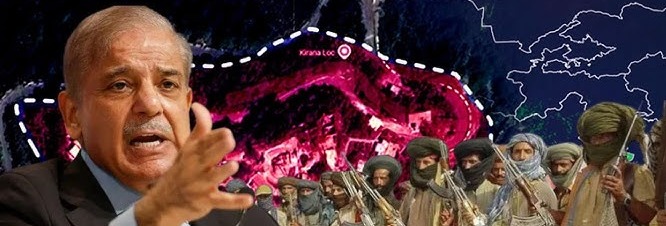
It is barely a month into 2026 and Pakistan, it appears, is already sliding toward a grim year ahead. In just the first month, there have been nearly a hundred security forces casualties, including a lieutenant colonel targeted while traveling in a private vehicle on January 28, besides dozens of civilians.
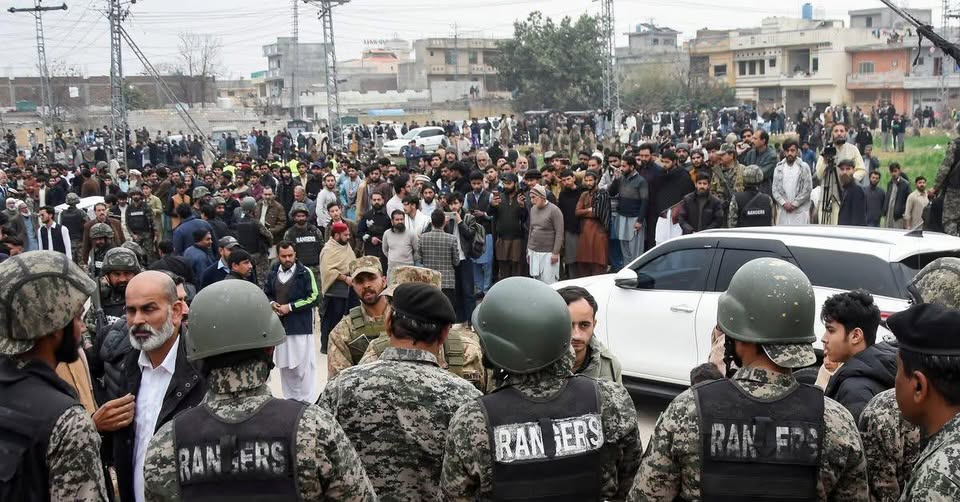
If this trend holds which look highly likely given increasing strength of ethnonationalist insurgency in Balochistan and Islamist militancy in Khyber Pakhtunkhwa, it could turn into the deadliest years for Pakistan Army led security forces in the country.
On Jan.31, Balochistan Liberation Army (BLA) launched coordinated assaults across as many as fourteen cities in Balochistan. Labelled as Operation Herof 2.0, hundreds of BLA fighters struck military and provincial government installations from provincial capital Quetta to port city Gwadar, from Turbat to Panjgur, demonstrating a level of planning and reach that Pakistan’s security planners have long insisted was impossible.
While the BLA claimed 84 security officials killed and 18 taken hostage, Pakistan Army’s DG-ISPR acknowledged the death of 17 soldiers and 31 civilians while claiming to have killed 177 BLA fighters. It has been over four days and it appear BLA seems to have entrenched its control over many areas across the cities, particularly Noshki, with Pakistan Army struggling to remove the fighters despite using indiscriminate force, including aerial attacks.
The contestation over the casualties on either side aside, this latest attack demonstrates how the insurgency in Balochistan has evolved from a peripheral “irritant” into a strategic challenge capable of overrunning state facilities and humiliating Asim Munir led Pakistan Army in real time. But this was not an isolated outburst as independent monitors have recorded as many as 87 separate insurgency incidents in January alone.
According to the Pakistan Institute of Conflict and Security Studies (PICSS), since General Asim Munir assumed command in November 2022, the army and its affiliated forces have lost 2,017 personnel, with a record 857 deaths in 2025, besides over 1100 civilian fatalities during the same period. These figures rival the darkest years of Pakistan’s counterinsurgency campaigns, yet they receive only fleeting acknowledgement in national discourse.
But what distinguishes the military casualties is not merely their number but more importantly who is dying. According to the media reports about insurgent incidents in Balochistan and militant incidents in KP, the bulk of losses are borne by the Frontier Corps (FC) and the Levies, which are paramilitary formations recruited largely from Baloch, Pashtun, Sindhi and other non-Punjabi communities. It is these units that patrol the most dangerous terrain, man remote checkpoints and therefore become the first line of responders when insurgents and militants strike.
On the other hand, the Punjabi soldiers, which dominate the officer corps and the central command structure, are far more insulated from direct combat.
Such a division of risk is not accidental but reflects the very psychology of the Pakistani state. The military remains overwhelmingly Punjabi as demonstrated by its ethnic demographics which has 70 to 75 percent Punjabis, 14–20 percent Pashtun, 5–6 per cent Sindhi, and merely 3–4 Baloch. The officer class is even more skewed in favour of Punjab with Punjabi officers commanding Frontier Corps and Levies.
While Baloch soldiers are ordered to fight Baloch insurgents and Pashtun recruits are sent to battle Pashtun militants, the arrangement guarantees local resentment. Under General Munir, this Punjabi dominated military establishment has acquired a political purpose of consolidating every lever of power of the state. Since his elevation in 2022, Pakistan has gradually transformed into military led hybrid rule through a carefully calibrated yet brazen constitutional gerrymandering which has rendered elected institutions largely irrelevant with real authority in the General Headquarters in Rawalpindi.
As such, the Punjabi dominance within the army becomes the pillar of regime stability, while non-Punjabi paramilitaries serve as expendable shock absorbers for an unpopular security project.
For decades, Pakistan’s military has portrayed itself as the sole glue holding a fractious nation together. But that has changed in the recent decades where military has transformed into a catalyst of insecurity by designing Islamabad’s imperial approach towards non-Punjabi provinces which sustains on coercion than consent. Nowhere is this more evident than in Balochistan. For decades the province has been treated through a colonial lens of resource extraction of gas and other mineral copper with little investment in its people.
While political dissent is answered with enforced disappearances and economic demands are framed as treason, such policies have further alienated people and contributing to the cause of ethnonationalist groups. The BLA’s latest offensive not only demonstrated scale and intensity but also its social breadth with men and women fighting side by side, reportedly including a grandmother and a newly-wed couple. But for Pakistan, it is the state’s policies which have ensured that the cause of Baloch nationalist groups was no longer a fringe phenomenon but entrenched within the society.
Likewise, Khyber Pakhtunkhwa tells a parallel story. Here, Pakistan’s proxy policy of terrorism as instruments of regional policy, particularly against Afghanistan and India, has unravelled as many of those groups, including many factions within Tehreek-e-Taliban Pakistan (TTP) have now turned inward. And despite repeated anti-militancy campaigns by the army, militant networks have reconstituted themselves with each case of military violence and emerging stronger.
General Munir’s response has been to double down by expanding military courts, criminalising online dissent, and relying ever more on auxiliaries like the Frontier Corps and Levies. This strategy is less about defeating insurgency than managing it at tolerable cost which is however paid overwhelmingly by non-Punjabi bodies. On the other hand, Punjabi soldiers remain guardians of regime stability in Islamabad and Lahore. The contrast is visible: armoured calm in the centre, burning peripheries at the edges.
History suggests that armies can survive defeats but what they cannot survive is a perception of injustice within their own ranks. Asim Munir led Punjabi military establishment of Pakistan Army continues outsourcing its dirtiest wars to non-Punjabi formations while reserving privilege for the Punjabi core. It is a recipe of sowing fractures that may one day reach Rawalpindi itself.
-Arun Anand
On 31 January 2026, the recent coordinated attacks claimed by the Baloch Liberation Army (BLA) marked a significant escalation in the long-running insurgency in Pakistan’s Balochistan province. For the first time, coordinated operations were carried out simultaneously across twelve cities, including Quetta, Gwadar, Mastung, Noshki, Dalbandin, Kalat, Kharan, Panjgur, Pasni, Turbat, Buleda, and Kech. Both men and women actively participated—not merely as suicide bombers, but as combatants—reflecting the depth of desperation and grievances among Baloch communities. The BLA announced the launch of “Operation Herof Phase II” at the outset of the attacks, framing the coordinated assaults as part of a planned campaign targeting Pakistani security posts and Chinese infrastructure. In its statement, the group said:
“We carried out coordinated attacks across multiple cities in Balochistan, striking military, police, intelligence, and administrative installations. We neutralised over 80 enemy personnel, took 18 hostages, and destroyed more than 30 government properties. Our fighters, including members of the Majeed Brigade, advanced across various areas with mutual coordination, temporarily restricting the movement of Pakistani forces.”
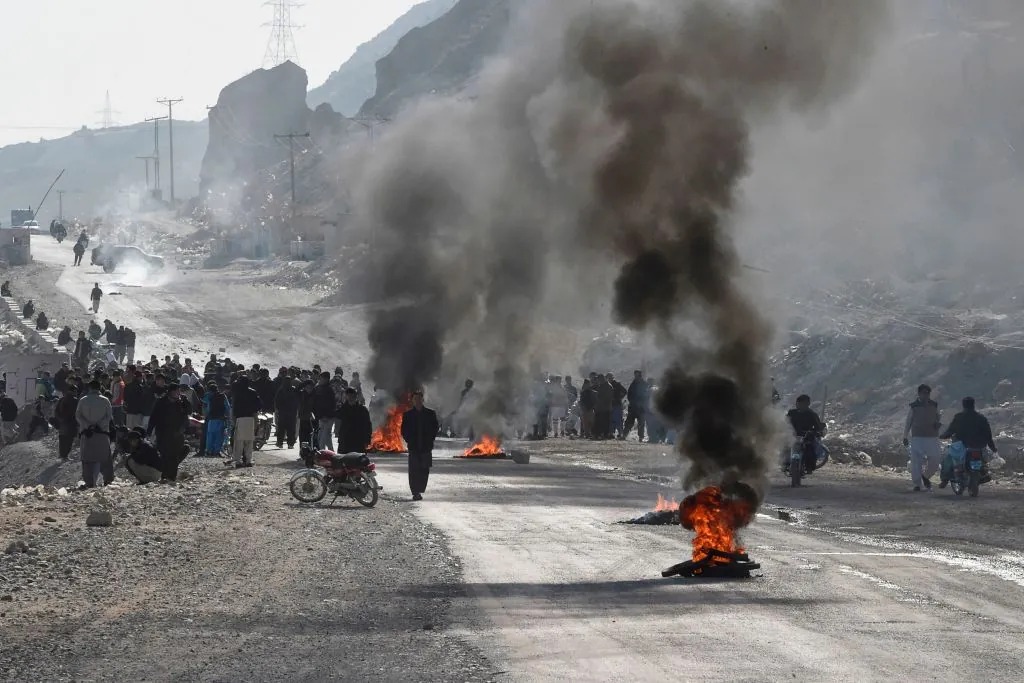
Independent reports suggest total fatalities, including militants, security personnel, and civilians, may exceed 125, highlighting the intensity of the operations. The attacks caused disruptions to roads, transport, and internet and mobile services in affected areas.
Balochistan’s long struggle and Pakistan’s narrative
Almost immediately after the attacks, Pakistan once again blamed India, claiming that the violence was orchestrated and supported by foreign actors. Officials, including the military and Interior Minister Mohsin Naqvi, alleged that the attackers were guided, funded, and strategically directed from outside Pakistan, framing the operations as part of a broader plan by India to destabilise Balochistan. Pakistan strategically even refers to the militants as “Fitna‑al‑Hindustan” in state narratives, presenting the attacks as externally driven.
India, however, categorically rejected Pakistan’s claims, calling them “baseless” and “frivolous.” A spokesperson from the Indian Ministry of External Affairs, Randhir Jaiswal, stated:
“Instead of parroting frivolous claims, Pakistan should focus on its own internal failings and address the longstanding local issues in Balochistan. Allegations against India are baseless and lack any credible evidence. The insurgency in Balochistan is rooted in Pakistan’s internal governance and human rights issues, not external involvement.”
This response underlines that Pakistan’s habitual blame-shifting does not address the real grievances at the heart of the insurgency, and merely masks the structural and historical issues within the province. Balochistan derives its name from the Baloch tribe—the largest ethnic group in the region. The Baloch insurgency has a long history, dating back to the very creation of Pakistan in 1948, and has seen successive cycles of resistance over decades. Resistance against the Pakistani state began soon after the incorporation of the princely state of Kalat, and successive cycles of insurgency have occurred in 1948, 1958–59, 1962–63, 1973–77, and from the early 2000s to the present.
To attribute a struggle with such continuity solely to external actors is to overlook the deeply local and historically entrenched grievances. The conflict has been sustained by systemic issues: political marginalisation, economic exploitation, demographic anxieties, and widespread human rights violations. Reports document enforced disappearances, extrajudicial killings, arbitrary detentions, and military operations by security forces.
Numerous human rights organisations have documented these abuses over decades, highlighting the systemic nature of oppression in Balochistan. Local and regional bodies such as the Human Rights Council of Balochistan (HRCB), Voice for Baloch Missing Persons (VBMP), the Baloch Yakjehti Committee (BYC), and activists like Gulzar Dost have recorded enforced disappearances, extrajudicial killings, and violations of basic civil liberties. National bodies like the Human Rights Commission of Pakistan (HRCP) and international organisations such as Human Rights Watch (HRW) have also reported widespread violations, drawing attention to patterns of abuse, militarisation, and lack of accountability. Additionally, UN human rights mechanisms have expressed concern over disappearances, repression, and human rights infringements, calling on Pakistan to address these longstanding issues. These abuses, combined with limited access to education, healthcare, and basic infrastructure, have fueled resentment and radicalisation.
The growing involvement of women in the insurgency is particularly telling. Traditionally, women in conflict zones rarely take up arms unless social collapse and state oppression reach extreme levels. Many Baloch women have joined militant movements not out of ideology, but in response to personal loss, including the disappearance or killing of family members. This underscores the severity of state brutality and the absence of peaceful avenues for redress.
Economic exclusion and unrest
Balochistan occupies nearly 44 per cent of Pakistan’s territory and is rich in minerals, natural gas, coal, copper, gold, and strategic ports such as Gwadar. Despite this wealth, the province remains Pakistan’s poorest, with insufficient roads, hospitals, schools, electricity, and employment opportunities. Most benefits from the region’s resources flow to Punjab and the federal centre, leaving Balochistan politically and economically marginalised. This structural imbalance lies at the heart of the insurgency. The BLA’s focus on Chinese infrastructure, particularly Gwadar port under the China–Pakistan Economic Corridor (CPEC), highlights local resentment against projects seen as extractive and non-inclusive.
For many Baloch communities, CPEC and Gwadar are symbols of dispossession rather than development. While these projects bring heavy investment and modern infrastructure, locals report that basic needs like clean water, healthcare, education, and jobs remain largely unmet, and skilled roles are frequently given to outsiders. Coastal communities, particularly fishermen in Gwadar, feel their livelihoods have been disrupted by large-scale projects, Chinese trawlers, and strict regulations, deepening the sense of exclusion. The region has also seen increased militarisation, with checkpoints, surveillance, and restrictions on movement, creating an atmosphere of control rather than empowerment. In the eyes of many Baloch, CPEC benefits outsiders and central authorities while ignoring the real needs of the local population, fueling political grievances and, in some cases, militant resistance.
Pakistan’s habitual blaming of India for every major incident is counterproductive. Even if external actors were hypothetically involved, no foreign power could sustain an insurgency for over seven decades without internal grievances. The term “Fitna-ul-Hindustan” may serve short-term political narratives, but it obscures structural and historical realities, allowing problems to fester rather than be resolved.
Balochistan does not require more troops or scapegoating. What it urgently needs is political accommodation, through meaningful autonomy and inclusive dialogue, along with economic inclusion that ensures local communities benefit from their resources. Human rights accountability, particularly regarding enforced disappearances, is critical, as is development carried out with consent rather than imposed megaprojects. Genuine dialogue and regional diplomacy prioritising stability over blame-shifting are essential. Addressing these grievances honestly is not only crucial for Pakistan’s internal cohesion, but also for regional stability. Women fighting in the insurgency, decades-long unrest, and persistent deprivation are signals of a structural crisis, not foreign subversion. Pakistan must set its house in order, because justice, inclusion, and reform are the only sustainable solutions.
– Arun Anand
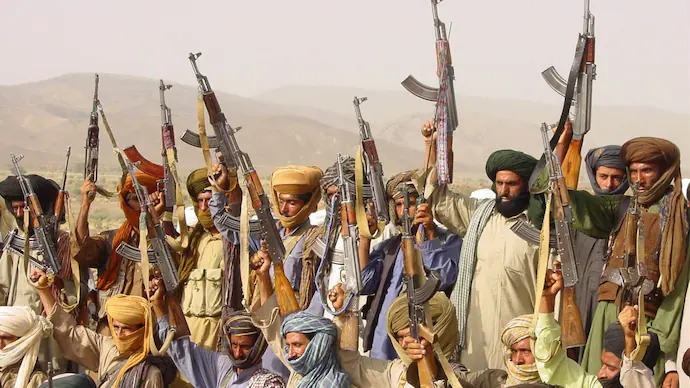
Balochistan is a land which is under the operation of Pakistan and its army, a place where militarization has shaped daily life for generations and where human rights violations have become a defining feature of the state’s presence. Communities across the province describe a reality marked by enforced disappearances, collective punishments, military checkpoints, and surveillance that affects everything from movement to livelihoods. For many Baloch, the feeling is not simply that they are governed by a distant center, but that they live under an occupying force. This sense of suffocation and exclusion has fueled a long-standing freedom struggle, one rooted in the demand for dignity, political rights, and control over the resources that come from their own land. Against this backdrop, pro-independence armed groups continue to carry out attacks that they claim are responses to decades of repression.
On Tuesday, one such group announced responsibility for several operations across the province. These incidents included an improvised explosive device blast in Mastung, the execution of an individual they accused of spying for the Pakistani military in Panjgur, and a grenade attack on a military post in Kech. While armed actions inevitably extend the cycle of violence, supporters of the Baloch cause often view them as part of a resistance movement forced into militancy by the absence of political space and the ever-present threat of military retaliation. The attacks were not isolated events but part of a broader pattern that has escalated throughout 2025.
This year has seen a rising number of armed confrontations, ambushes on military convoys, and assaults on security checkpoints. In several districts, insurgent fighters have demonstrated increased coordination, conducting operations that momentarily challenge the army’s claims of tight control. In many cases, the military responds with sweeping crackdowns, cordoning off villages, detaining males en masse, and sometimes displacing entire communities under the guise of clearing operations.
One of the most significant incidents of 2025 occurred during the hijacking of the Jaffar Express earlier in the year, an episode that shook the country and drew international attention. Dozens of passengers were killed, and the chaotic rescue operation highlighted the state’s unpreparedness despite years of counterinsurgency efforts.
In other months, attacks in Gwadar, Panjgur, Kech, and Kohlu targeted military installations, patrol units, and infrastructure associated with state-backed development projects. Each attack was followed by the familiar pattern of intensified military operations, which in turn deepened local fears and resentments. For many Baloch, the roots of the conflict lie not in the attacks themselves but in the long history of exclusion and exploitation. Balochistan is the largest province by land area and among the richest in natural resources, yet it remains the poorest in development indicators. Gas extracted from Sui fueled Pakistan’s industrialization for decades, but Baloch communities received neither adequate royalties nor basic services. The same dynamic persists today: copper, gold, and other minerals are extracted through deals viewed locally as exploitative, and the massive projects linked to the China-Pakistan Economic Corridor have heightened perceptions that outsiders profit while Baloch residents live under military patrols.
The Pakistani Army presents its presence as a stabilizing force, claiming that it is protecting development and bringing security to a volatile region. But for many families, the uniform represents fear rather than order. Activists and human rights groups have long documented reports of disappearances, where students, teachers, farmers, and political workers vanish without explanation. In some cases, bodies are later found dumped in remote areas; in others, detainees remain unaccounted for, leaving families in endless uncertainty. Villagers speak of night raids, targeted harassment, and arbitrary detentions that make ordinary life unpredictable and fragile.
The events of 2025 have intensified these concerns. After each insurgent attack, the military has expanded its operations deep into residential areas, often sealing entire towns for hours or days. Markets have been shut down, communication networks suspended, and families forced to leave their homes as security forces search door to door. Local leaders warn that the army’s heavy-handed tactics are counterproductive, pushing frustrated youth toward militancy by eliminating peaceful avenues for expressing political grievances.
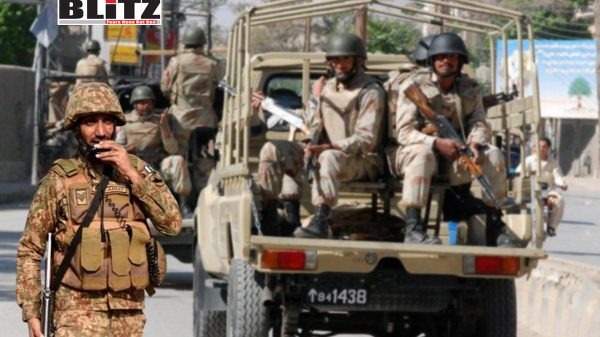
The attacks on Tuesday again underscored this cycle. In Mastung, the IED blast reportedly targeted a patrol, prompting hours of cordoned streets and aggressive searches. In Panjgur, the execution of the alleged informant sparked fears of reprisals. In Kech, the grenade attack on a military post was followed by drone surveillance and increased military movement through surrounding villages. People in these areas spoke of disrupted routines, closed schools, and the tense silence that typically accompanies large-scale army deployments.
Criticism of the Pakistani Army’s role in Balochistan does not imply support for violence, but it does demand an honest acknowledgment of how long-standing injustices have produced the current volatility. The Baloch freedom movement, in its political and militant forms, arises from a lived experience of repression—an experience of being denied the right to self-govern, the right to speak freely, and the right to benefit from one’s own homeland. The state’s insistence on treating the conflict solely as a security problem ignores the political roots of the struggle and exacerbates the very tensions it seeks to eliminate.
Those advocating for Baloch rights argue that the solution lies not in more soldiers or more checkpoints, but in recognizing the political aspirations of the people. They call for accountability for human rights abuses, an end to enforced disappearances, and genuine autonomy that allows Balochistan to govern itself and control its resources. Without these steps, the province remains trapped in a long and painful cycle in which violence breeds further militarization, and militarization fuels the grievances that sustain the insurgency. Balochistan today stands at a crossroads shaped by the tragedies and resistance of 2025. The Tuesday attacks are only one chapter in a broader narrative: a story of a people who feel occupied, marginalized, and robbed of their future. The Pakistani state continues to rely on force, believing that sheer military power can quell a movement born from historical injustices. But the more it tightens its grip, the more alienated the Baloch become, and the further the region moves from any meaningful resolution.
Until the state acknowledges that peace cannot be imposed at gunpoint and that the people of Balochistan must have the right to determine their own political destiny, the conflict will persist. The freedom struggle, whether expressed through political activism or armed resistance, will continue to draw strength from the lived realities of oppression. And each new incident—like the attacks carried out this Tuesday—will serve as a reminder that a province rich in culture, history, and resources remains locked in a conflict sustained not just by militants, but by the heavy hand of the army that claims to be restoring order while deepening the wounds of its people.
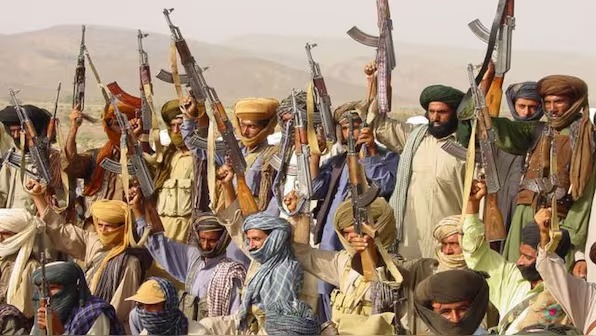
In Balochistan, Pakistan’s largest yet most marginalized province, a grim pattern has become all too familiar wherein buses are stopped, passengers segregated, and innocent civilians. The victims are often chosen based on ethnicity or government association before being executed in cold blood. On July 10, 2025, nine such passengers were killed by suspected Baloch insurgents in the Zhob and Loralai districts of Balochistan. It was initially claimed by Baloch Liberation Front (BLF), one of the oldest insurgent groups in Balochistan. It may be noted that several Baloch separatist outfits have escalated their insurgent campaign against the Pakistani state in recent years.
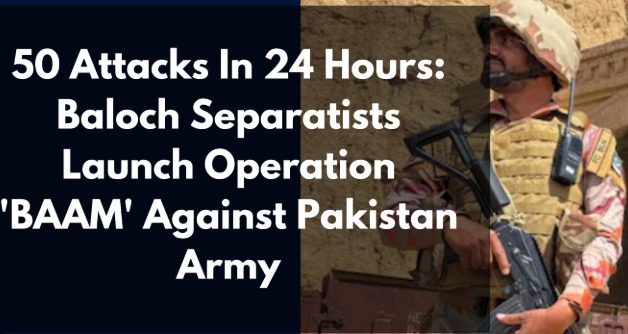
This attack is just one in a series of chilling episodes that have rocked the country’s fragile internal security landscape. It is merely three months from the hijacking of the Jaffar Express train by Baloch insurgents, which was seen as a blow to the military-led security establishment. It not only as an operational embarrassment for the Pakistani military but also as a stark reminder the state is not in control, at least not here. Because, here the Baloch insurgents struck not just at state infrastructure, but also at the very mythology of control cultivated by Pakistan’s powerful military over decades, signally Pakistan slipping back into a state of internal chaos.
These incidents point to an uncomfortable truth that the security in Pakistan is unravelling with the country’s periphery, particularly Balochistan, bearing its brunt.
According to a July 12 report by the Pakistan Institute for Conflict and Security Studies (PICSS), between July 4 and 10 alone, there were at least 27 instances of insurgent or militant violence, which led to 24 fatalities and more than three dozen injuries. It further highlighted that although the violence was widespread across the country, a disproportionately high number of violent incidents took place in Balochistan and Khyber Pakhtunkhwa (KPK), two areas that have long been neglected by the federal government and have endured Pakistan’s militarized governance for decades.
These two provinces have emerged as significant security challenges for the military establishment. Take the case of Balochistan. This resource-rich but with historical experience of continued political disenfranchisement has been simmering with resentment for decades. That resentment, once localized and fragmented, has in recent years transformed into a more coordinated and high-profile insurgency. Armed Baloch groups led by Baloch Liberation Army (BLA) have increasingly targeted not just state security installations and personnel and civilians presumed to be working for the state (collaborators)but also Chinese nationals working on infrastructure projects.
For much of its post-colonial existence, Pakistan has treated Balochistan with a mixture of indifference and coercion. Although the province constitutes nearly 44% of the country’s landmass and holds vast reserves of natural gas, coal, and minerals, it remains the least developed and most underrepresented region in national politics.
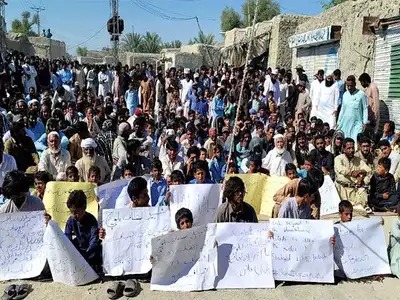
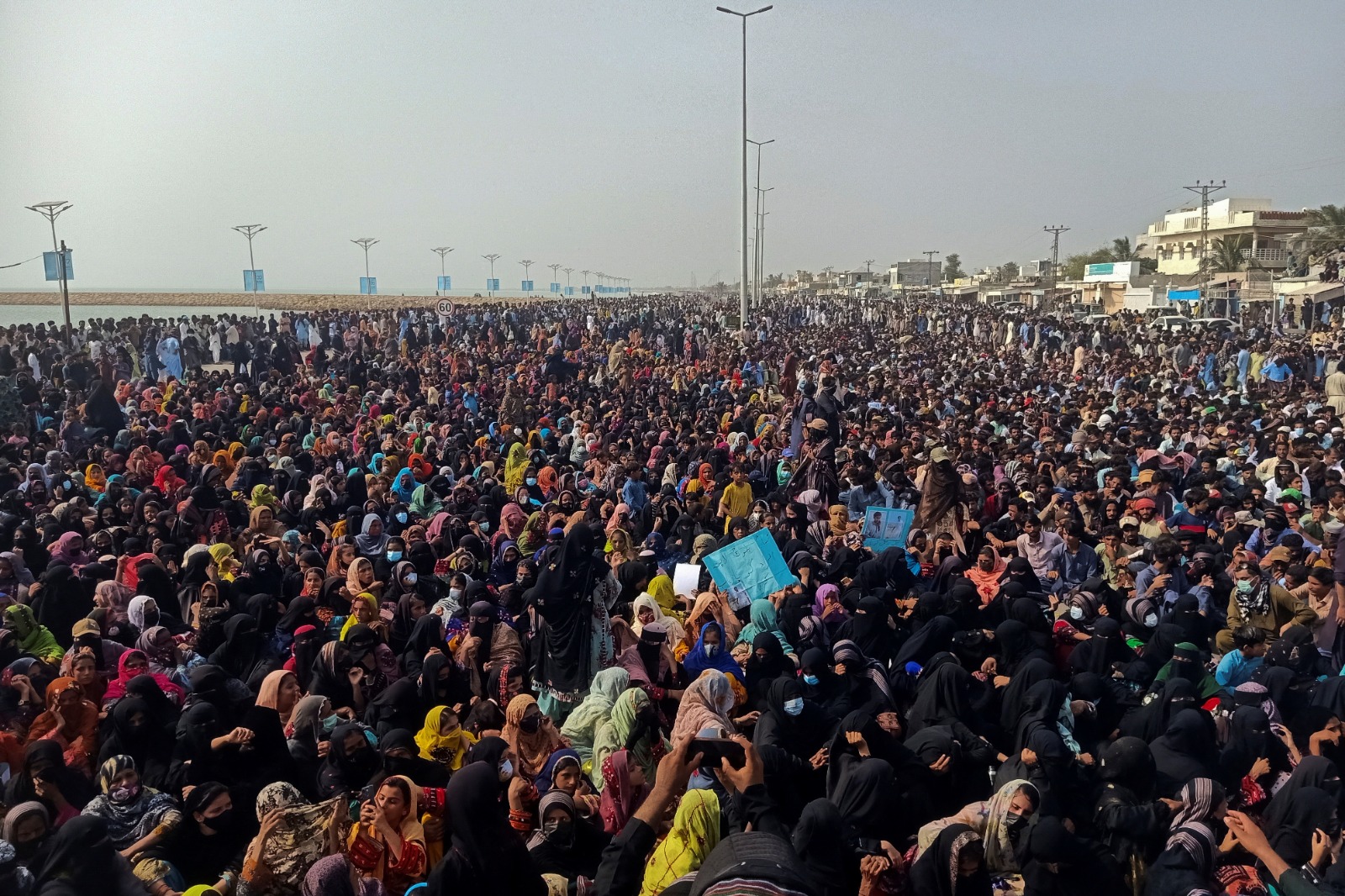
Protest in Balochistan as people demand justice amid rising terror
This neglect is not accidental but a structural. It is rooted in how Islamabad’s successive military dominated governments have viewed Balochistan through a narrow security lens. Instead of investing on integrating the local population into national political or economic frameworks, this militarized governance structure has a history of building garrisons and intelligence networks to rule the province with an Iron fist. As such, social sectors like education remain abysmal and infrastructure underdeveloped with scare avenues of employment for the locals. Such an approach has result in a deepening alienation, especially among the Baloch youth, many of whom now see insurgency not as extremism but as resistance. For many of them, the Pakistani state behaves in an imperialistic manner, interested in extracting provincial resources, while silencing local dissent.
While Balochistan remains the epicentre of anti-state violence, Khyber Pakhtunkhwa, especially its tribal hinterland, continues to be affected by heightened Islamist militancy. The reconstitution of Tehrik-i-Taliban Pakistan (TTP) and the regrouping of splinter jihadist factions have brought fresh violence to the region, including blowback militancy from groups once patronised by the military establishment. For instance, on June 28, at least 13 Pakistan army soldiers killed and a dozen others injured in a car bombing attack by TTP in North Waziristan district. While Islamabad has attempted to engage Pakistan Taliban, in what many described as mainstreaming process, it has failed to reign in the group which has upped its ante.
Pakistan’s worsening internal security is rooted in a doctrinal failure of Pakistan’s most powerful institution: the military. For decades, the Pakistan Army has acted as the ultimate arbiter of national stability. It has been the kingmaker in Islamabad, directed foreign policy, and controlled internal security operations.
But its strategic approach has often leaned heavily on tactical repression and short-term deals with militant proxies, many of whom have eventually turned rogue. Rather than pursuing an inclusive governance regime in the peripheries, the military often resorts to “shock and awe” operations, arbitrary detentions, and enforced disappearances, a feature of its (mis)conduct in Balochistan. This may have bought the military some time through temporary lulls in violence, it really has not shifted the root causes of unrest, which are political disenfranchisement, ethnic exclusion, and socioeconomic neglect.
Moreover, the Army has gotten dirtier with time and politics, and in so doing has reduced its legitimacy at least in part. Its role in propping up so-called hybrid regimes in Islamabad is one example. It is no longer seen as an independent force for good; it is considered a player on the bad side.
It is not merely a security failure that Pakistan is suffering today, rather it is a breakdown of the very social contract, if at all there existed one for the peripheries. When sections of the population feel excluded from political processes, denied economic opportunity, and in fact singled out by the very state that should protect them, insurgency begins to seem not merely possible, but inevitable.
Pakistani rulers would do better for the country by acknowledging what is happening across Balochistan and KPK cannot be vanquished through military operations. Nor can it be whitewashed by official narratives of “external sabotage” or “foreign conspiracies,” something that has become a too convenient tool lately to place all blame neighbouring countries. This unrest goes deeper and is symptomatic of a systemic failure to create an inclusive, equitable, and truly federal state.
Unfolding circumstances demand that Pakistan’s military-dominated establishment and political elite, introspect on the policy approach towards these provinces. Their persistence to govern by coercion while neglecting regional empowerment will only push the crisis deeper. If one may argue, the semblance of control is fast disappearing, and the fires of dissent will stoke ever higher.
Pakistan stands at a crossroads. The surge in violence, especially in historically restive provinces like Balochistan and KPK, is symptomatic of a far deeper institutional rot. It is alarming that the very regions of the state that the current regime is attempting to quell are slipping further into chaos, not by virtue of a lack of power or firepower, but rather the absence of any serious political vision.
Pakistani rulers would do better by grasping the fact that real security cannot be built over “fear, exclusion, or propaganda”. They cannot speak of security unless it is grounded in justice, fairness, representation, and dignity of all citizens, irrespective of ethnicity, language, religion or region. Unless and until those holding power in Islamabad and Rawalpindi understand this, the question will not be how Pakistan restores security, but whether it can prevent the complete unravelling of its internal cohesion.
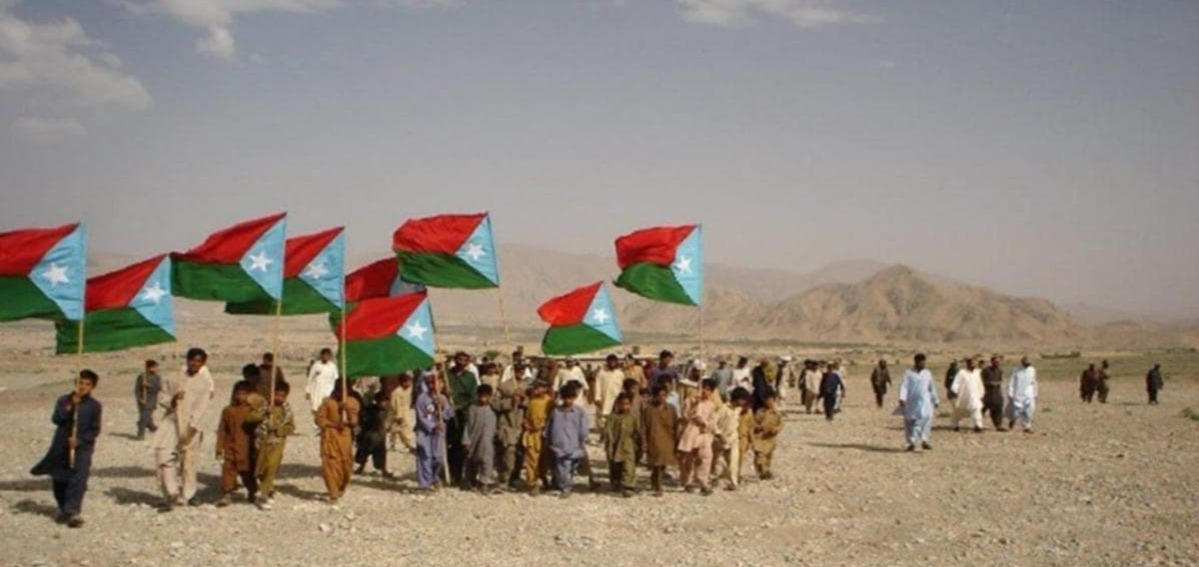
Over recent years, Pakistan has experienced numerous overlapping and escalating crises, beginning with the regime change in Afghanistan. In August 2021, Pakistan’s hybrid regime initially welcomed the developments that led to the rise of its longstanding ally—the Taliban. However, the situation rapidly deteriorated. The Taliban’s shift in allegiance inflicted not only a geopolitical setback but also spurred a surge in insurgent activity within Pakistan. Beyond the purported Taliban backing of militant organisations—particularly the Tehreek-e-Taliban Pakistan or TTP (a claim the Taliban refutes)—there are various other factors contributing to the groups’ structural and operational transformations. The Baloch Liberation Army (BLA), regarded as the most formidable and ambitious insurgent faction in Pakistan alongside the TTP, clearly exhibits signs of tactical and ideological evolution, necessitating that the Pakistani state recognise these changes in order to formulate appropriate countermeasures.
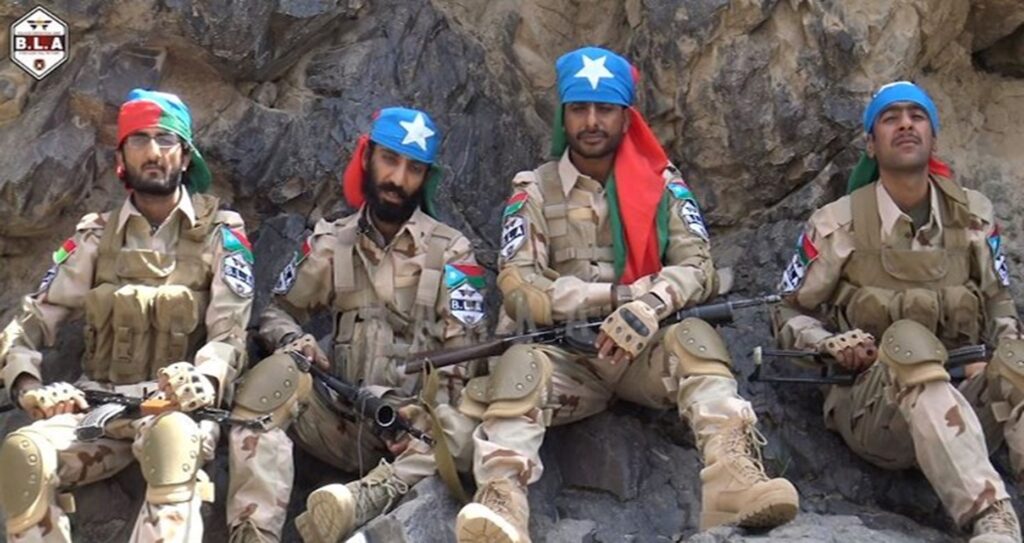
The Baloch Liberation Army (BLA) emerged during the late 1990s and early 2000s as an armed resistance against what the Baloch population perceives as systemic marginalisation and exploitation by the Pakistani state. Balochistan—the largest yet poorest province in the country—possesses significant reserves of natural resources, including coal, natural gas, gold, and copper. The demand for provincial autonomy has persisted for decades, further intensified by the prevalent belief that the region was historically incorporated into Pakistan through coercive means.
The BLA initially emerged with aims centred on greater provincial authority over governance and resource management, but it soon evolved into a movement advocating full independence. Originally led by tribal figures such as Balach Marri during its early phase, the organisation has since experienced a leadership transition, now predominantly composed of educated middle-class individuals, including women. Notable figures include Aslam Baloch—linked to the suicide attack targeting Chinese engineers in Dalbandin—along with Bashir Zaib Baloch, Hammal Rehan, Rehman Gul Baloch, among others.
This leadership has overseen a significant transformation in the BLA’s tactical approaches and strategic orientation. Once primarily associated with hit-and-run attacks in mountainous regions—typically targeting gas pipelines, mobile towers, railway lines, and similar infrastructure—the group has shifted towards more coordinated and advanced urban guerrilla assaults against state security personnel. A notable recent example occurred on 11 March, when BLA militants hijacked the Quetta-Peshawar Jaffar Express, demanding the release of Baloch political prisoners and victims of enforced disappearances. In retaliation, the Pakistani military undertook a rescue mission lasting over 24 hours, underscoring the BLA’s capacity to engage in prolonged confrontations with state forces. Furthermore, the escalation of suicide attacks—especially since the reactivation of the Majeed Brigade (the BLA’s suicide unit) in 2018—has added a new layer of lethality and strategic depth to its operations. These attacks have also included female combatants such as Shari Baloch, who killed three Chinese lecturers at the Confucius Institute at Karachi University in 2022. Such incidents, along with assaults on Chinese personnel and projects as well as Punjabi migrant workers, serve as deliberate strategic messaging by the BLA. They underscore the group’s territorial claims and its willingness to indiscriminately target civilians it perceives as symbols of colonial domination and state-led exploitation.
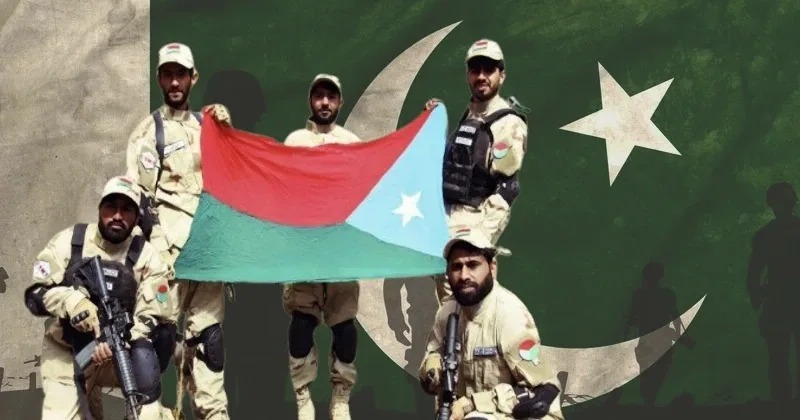
The notable expansion in the BLA’s numerical strength, operational reach, and strategic standing must be understood within a broader, multi-faceted context. Crucially, recognising the debilitating effects of factionalism, several Baloch insurgent groups opted to unite in 2018 under the collective banner of the Baloch Raji Aajoi Sangar (BRAS). This alliance even announced the formation of a joint military command—the Baloch National Army—tasked with implementing a coordinated strategy across the province. Additionally, similar to the TTP, the BLA has significantly profited from the sophisticated weaponry abandoned by US forces following their withdrawal from Afghanistan. Following the March train hijacking, Pakistani authorities disclosed the serial numbers of three American rifles used by the attackers, which were originally supplied to Afghan troops during the conflict. Furthermore, the Taliban’s return to power has created new sanctuaries for Baloch militants to regroup within Afghanistan, in addition to those already existing in Iran’s Sistan-Baluchistan province.
Beyond the aforementioned developments, the BLA has adapted to contemporary dynamics by enhancing its propaganda capabilities through strategic use of social media. Its evolution from rural hit-and-run tactics to an urban guerrilla force engaged in narrative construction is also a response to exclusionary urban development, significant rural-to-urban migration, and increasing internet accessibility. A further aspect of this rhetorical strategy was evident following the deadly terror attack in Pahalgam, India. In a statement issued on 11 May, the BLA claimed responsibility for executing 71 coordinated attacks across 51 locations in the province as part of preparations for Operation Herof 2.0, shedding light on the group’s broader strategic calculus. The BLA appealed to India and other international actors to recognise and support it as a legitimate, indigenous national liberation movement, drawing parallels with the Bangladeshi independence struggle from Pakistan. Through this, the BLA sought to assert its position as a relevant actor in South Asian geopolitics, aiming to weaken what it describes as “the terrorist state” of Pakistan.
Nevertheless, above all other factors, the primary driver behind the BLA’s expanding capabilities is the sustained repression of the Baloch population by the Pakistani state. Decades of harsh policies characterised by systemic marginalisation and collective punishment have so profoundly alienated the Baloch people that, in the absence of viable alternatives, even those opposed to violent methods often find themselves sympathetic to the BLA. It has been reiterated to the point of becoming axiomatic in political science that political challenges cannot be resolved solely through military means. The longstanding political grievances of the Baloch population have consistently been dismissed, silenced, and met with severe, indiscriminate force by the state. Unless Pakistan initiates a process grounded in accountability and sensitivity, and begins to provide the Baloch with genuine political representation and rights, the region will remain ensnared in an unending cycle of violence and repression.