
The Balochistan Liberation Army (BLA) launched what analysts describe as its most expansive operation in decades on January 30, with its fighters attacking military and government installations at nearly 48 locations across 14 cities, including the provincial capital, Quetta. For almost a week, the Pakistan Army struggled to regain control, even as it declared its “clearance operations” had concluded on February 5, while local media reports stated that BLA fighters continued to maintain control over several arterial roads.
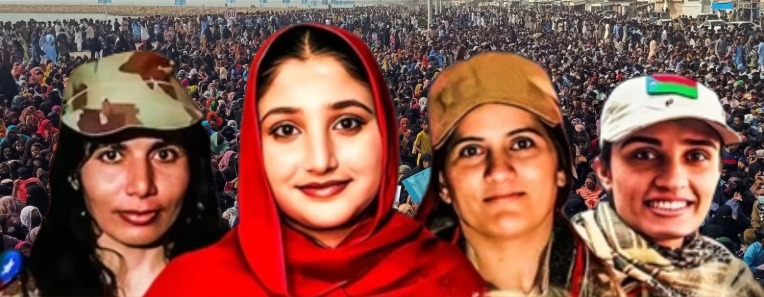
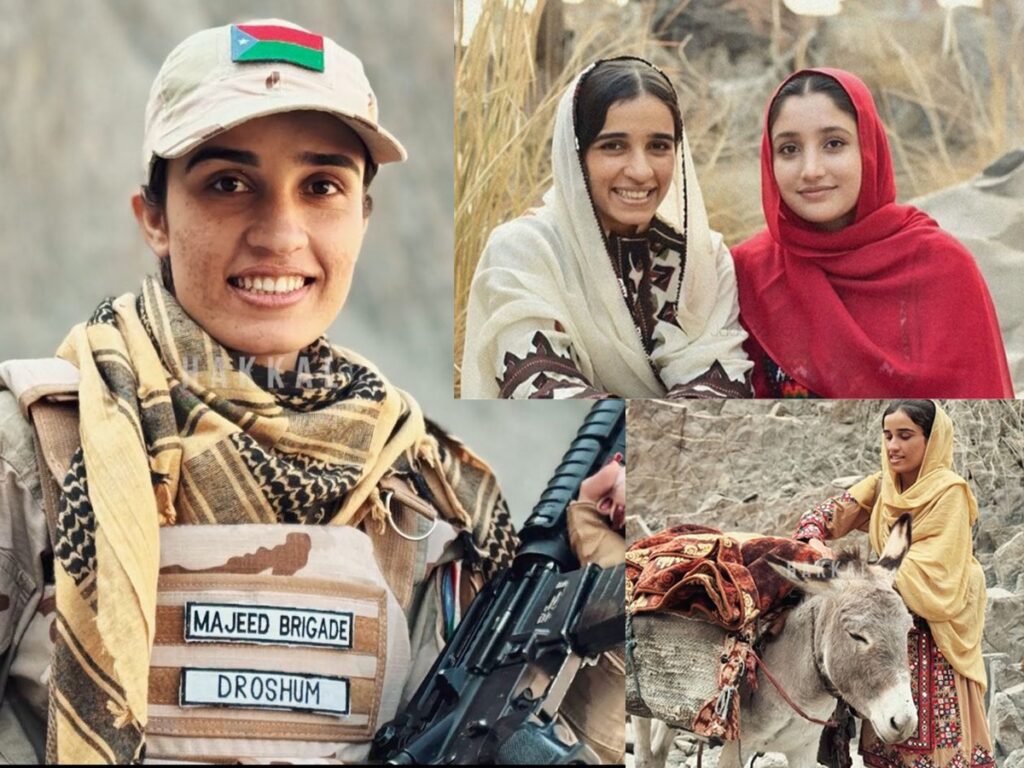
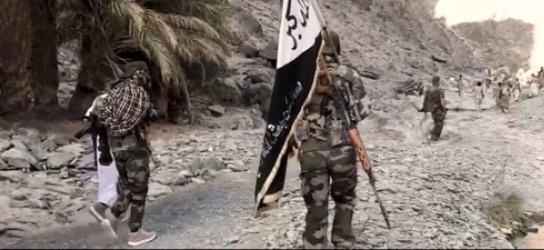
While the scale and intensity of the attack red-faced Pakistan’s intelligence and security grid, the most consequential shift was not tactical but social, with women visible on the front lines, carrying rifles, addressing cameras and, in several cases, conducting suicide attacks. Their presence signals a transformation of the Baloch insurgency from a predominantly male guerrilla movement into a broader societal revolt.
The BLA has identified three of the four suicide attackers as women. They include 24-year-old Asifa Mengal, who struck the Counter Terrorism Department (which functions as ISI’s field offices) headquarters in Noshki; 21-year-old Hawa Baloch alias Dorshum, who targeted security forces in Gwadar; and 60-year-old Hatam Naz Sumalani alias Gul Bibi. In video footage released by the group’s media wing, Hakkal, Ghazi Dur Jan Baloch, described as a commando of its Fateh Squad, is shown speaking calmly from a battlefield before being extracted after three days of fighting on the frontline. In another widely circulating video clip, 29-year-old Yasma Baloch alias Zarina is seen sitting beside her husband, a combatant in Pasni, shortly before both were killed, as per another media release by the group.
While Baloch women have participated in nationalist politics before, it was never so openly in insurgency combat roles, even though a few suicide attacks have been carried out by women in recent years. For many observers, this marks the “mainstreaming” of the insurgency, evidencing that the conflict has penetrated the intimate core of Baloch society, where mothers, daughters and grandmothers are no longer only mourners of the disappeared but are becoming fighters themselves.
It is true that armed movements across the world have often relied on women, from the Tamil Tigers in Sri Lanka to Kurdish militias in Syria. Scholars have noted that when women cross the threshold from support roles to direct violence, it usually indicates two things. Firstly, it shows the widening base of legitimacy of armed insurgency for a political cause and, secondly, and more importantly, it highlights the closure of non-violent avenues to voice grievances.
In the case of Balochistan, both of these conditions are present. Pakistan’s decades of militarised governance in the region have eroded traditional spaces of dissent, with much of its popular leadership humiliated by the country’s elite class, as was done with Akhter Mengal in 2024. The province, which was annexed by Pakistan in 1948 after a brief period of contested independence, has experienced repeated waves of insurgency in the 1950s, 1960s and 1970s, and again since the early 2000s, with the Pakistani state using heavy-handed counterinsurgency. Moreover, even as political institutions exist in Balochistan, they function largely as extensions of the security establishment, with the Quetta cantonment commander seen as more powerful than the elected chief minister of the province.
Balochistan is Pakistan’s largest province, yet its poorest. It sits atop vast reserves of gas, copper and gold, but local communities see little benefit, as most of these resources are used by the Punjab-centric politico-military elite to fuel the development of Punjab and Punjabis. Pakistan has further allowed China to undertake mega resource-extraction projects under the China-Pakistan Economic Corridor (CPEC), thereby deepening resentment and bringing further militarisation without any dividend for locals. Pakistan’s government has also auctioned provincial resources to US President Donald Trump to seek military incentives as it hedges between Washington and Beijing.
While the state narrative frames the insurgency as the work of a few extremists, the ground reality presents a far more complicated picture. The current wave of rebellion, which is the longest phase of the Baloch insurgency, began in the early 2000s after the killing of nationalist leader Nawab Akbar Bugti by the Pakistan Army. Since then, groups such as the BLA have steadily expanded recruitment, drawing not only from tribal fighters but also from urban youth and educated professionals, thereby helping it sustain and grow despite multiple campaigns by the Pakistan Army.
The latest attack by the BLA, described as Operation Hurof 2, reflects this evolution. In its earlier iteration, BLA fighters demonstrated sophisticated coordination by hijacking a train carrying off-duty soldiers in the remote Bolan region last year, an operation that lasted more than two days, during which the Pakistan Army suffered dozens of casualties. The January 30 attack went further and revealed an organisation capable of simultaneous urban warfare across half the province.
Women’s participation fits this trajectory, with their entry into the battlefield carrying more than symbolic weight. In conservative Baloch culture, where women are often viewed as custodians of honour and continuity, their willingness to leave their homes to take up arms, and their readiness to kill and die, communicates that the conflict has moved beyond factional militancy into a collective grievance. Families that once discouraged sons from joining now watch daughters volunteer. For Islamabad, this signifies that the very social contract of Pakistan has collapsed in Balochistan.
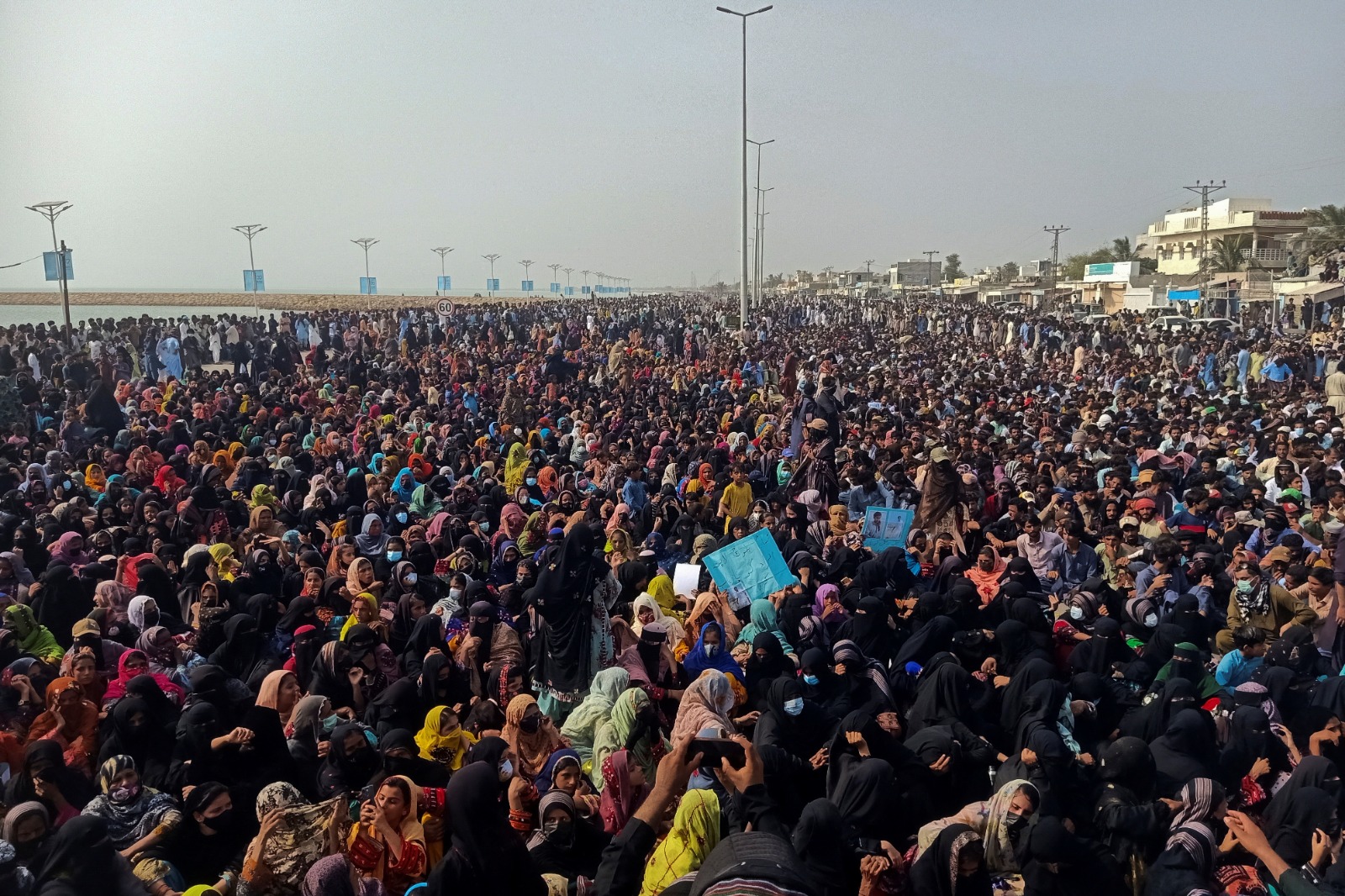
A state usually claims moral agency to present itself as the protector of its people, but in Balochistan that bond appears to have long frayed. Here, leaders are widely viewed as appointees of the security apparatus, and elections as an engineered spectacle. The closure of civic space for voicing grievances in the region is central to understanding why women now pick up guns. When the Baloch Yakjehti Committee (BYC) organised long marches seeking accountability for the Pakistan Army’s conduct and the whereabouts of over 8,000 forcibly disappeared people in the province, it was banned, with many of its prominent leaders, including Dr Mahrang Baloch, imprisoned. Therefore, the mothers and daughters who once sat outside press clubs holding photographs of their sons have concluded that the state listens only to force. In that sense, the rise of female fighters is not merely a military development but a moral indictment.
The 60-year-old Gul Bibi, before her transformation into a suicide attacker as Hatam Naz, was injured during her disappearance by the Pakistan Army for four months a decade ago, in 2016. When the state treats an entire population as suspect, insurgents find fertile ground. The presence of women in combat is thus a mirror held up to Islamabad: it reflects the failure of politics and the triumph of coercion.
The Pakistan Army insists it will defeat the insurgents through force, as the latest DG-ISPR statement declares the conclusion of clearance operations against BLA fighters, but history suggests otherwise. It seems deliberately oblivious to how each of its previous counterinsurgency campaigns has produced only a temporary lull before insurgents emerged far stronger. The current phase, with its visible female participation, may prove the most difficult to contain.For now, the images from January linger: young women in camouflage speaking into cameras; another standing shoulder to shoulder with her combatant husband; a grandmother’s photograph holding a gun; and roads echoing with gunfire. The emergence of women fighters does not romanticise the insurgency; rather, it underlines a tragedy, revealing how deeply the conflict has entered the social fabric, how despair has crossed gender and generational lines, and, above all, how Pakistan’s battle in Balochistan is no longer only about territory or security but about moral authority, which seems to be slipping away each time another daughter decides that the only language left is the language of war.
-Arun Anand
On 31 January 2026, the recent coordinated attacks claimed by the Baloch Liberation Army (BLA) marked a significant escalation in the long-running insurgency in Pakistan’s Balochistan province. For the first time, coordinated operations were carried out simultaneously across twelve cities, including Quetta, Gwadar, Mastung, Noshki, Dalbandin, Kalat, Kharan, Panjgur, Pasni, Turbat, Buleda, and Kech. Both men and women actively participated—not merely as suicide bombers, but as combatants—reflecting the depth of desperation and grievances among Baloch communities. The BLA announced the launch of “Operation Herof Phase II” at the outset of the attacks, framing the coordinated assaults as part of a planned campaign targeting Pakistani security posts and Chinese infrastructure. In its statement, the group said:
“We carried out coordinated attacks across multiple cities in Balochistan, striking military, police, intelligence, and administrative installations. We neutralised over 80 enemy personnel, took 18 hostages, and destroyed more than 30 government properties. Our fighters, including members of the Majeed Brigade, advanced across various areas with mutual coordination, temporarily restricting the movement of Pakistani forces.”
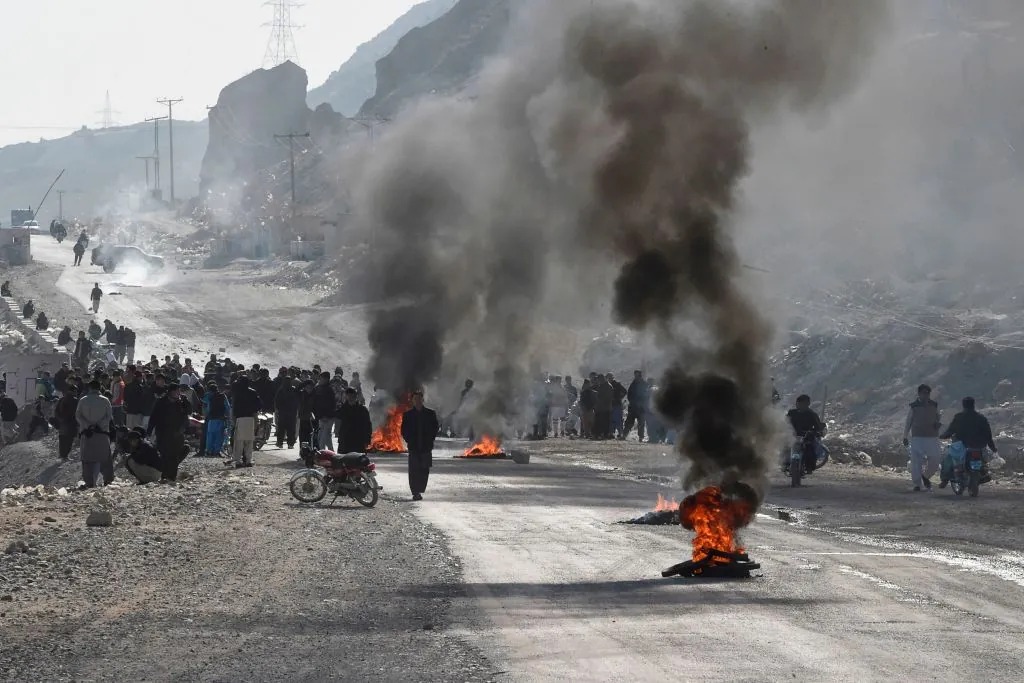
Independent reports suggest total fatalities, including militants, security personnel, and civilians, may exceed 125, highlighting the intensity of the operations. The attacks caused disruptions to roads, transport, and internet and mobile services in affected areas.
Balochistan’s long struggle and Pakistan’s narrative
Almost immediately after the attacks, Pakistan once again blamed India, claiming that the violence was orchestrated and supported by foreign actors. Officials, including the military and Interior Minister Mohsin Naqvi, alleged that the attackers were guided, funded, and strategically directed from outside Pakistan, framing the operations as part of a broader plan by India to destabilise Balochistan. Pakistan strategically even refers to the militants as “Fitna‑al‑Hindustan” in state narratives, presenting the attacks as externally driven.
India, however, categorically rejected Pakistan’s claims, calling them “baseless” and “frivolous.” A spokesperson from the Indian Ministry of External Affairs, Randhir Jaiswal, stated:
“Instead of parroting frivolous claims, Pakistan should focus on its own internal failings and address the longstanding local issues in Balochistan. Allegations against India are baseless and lack any credible evidence. The insurgency in Balochistan is rooted in Pakistan’s internal governance and human rights issues, not external involvement.”
This response underlines that Pakistan’s habitual blame-shifting does not address the real grievances at the heart of the insurgency, and merely masks the structural and historical issues within the province. Balochistan derives its name from the Baloch tribe—the largest ethnic group in the region. The Baloch insurgency has a long history, dating back to the very creation of Pakistan in 1948, and has seen successive cycles of resistance over decades. Resistance against the Pakistani state began soon after the incorporation of the princely state of Kalat, and successive cycles of insurgency have occurred in 1948, 1958–59, 1962–63, 1973–77, and from the early 2000s to the present.
To attribute a struggle with such continuity solely to external actors is to overlook the deeply local and historically entrenched grievances. The conflict has been sustained by systemic issues: political marginalisation, economic exploitation, demographic anxieties, and widespread human rights violations. Reports document enforced disappearances, extrajudicial killings, arbitrary detentions, and military operations by security forces.
Numerous human rights organisations have documented these abuses over decades, highlighting the systemic nature of oppression in Balochistan. Local and regional bodies such as the Human Rights Council of Balochistan (HRCB), Voice for Baloch Missing Persons (VBMP), the Baloch Yakjehti Committee (BYC), and activists like Gulzar Dost have recorded enforced disappearances, extrajudicial killings, and violations of basic civil liberties. National bodies like the Human Rights Commission of Pakistan (HRCP) and international organisations such as Human Rights Watch (HRW) have also reported widespread violations, drawing attention to patterns of abuse, militarisation, and lack of accountability. Additionally, UN human rights mechanisms have expressed concern over disappearances, repression, and human rights infringements, calling on Pakistan to address these longstanding issues. These abuses, combined with limited access to education, healthcare, and basic infrastructure, have fueled resentment and radicalisation.
The growing involvement of women in the insurgency is particularly telling. Traditionally, women in conflict zones rarely take up arms unless social collapse and state oppression reach extreme levels. Many Baloch women have joined militant movements not out of ideology, but in response to personal loss, including the disappearance or killing of family members. This underscores the severity of state brutality and the absence of peaceful avenues for redress.
Economic exclusion and unrest
Balochistan occupies nearly 44 per cent of Pakistan’s territory and is rich in minerals, natural gas, coal, copper, gold, and strategic ports such as Gwadar. Despite this wealth, the province remains Pakistan’s poorest, with insufficient roads, hospitals, schools, electricity, and employment opportunities. Most benefits from the region’s resources flow to Punjab and the federal centre, leaving Balochistan politically and economically marginalised. This structural imbalance lies at the heart of the insurgency. The BLA’s focus on Chinese infrastructure, particularly Gwadar port under the China–Pakistan Economic Corridor (CPEC), highlights local resentment against projects seen as extractive and non-inclusive.
For many Baloch communities, CPEC and Gwadar are symbols of dispossession rather than development. While these projects bring heavy investment and modern infrastructure, locals report that basic needs like clean water, healthcare, education, and jobs remain largely unmet, and skilled roles are frequently given to outsiders. Coastal communities, particularly fishermen in Gwadar, feel their livelihoods have been disrupted by large-scale projects, Chinese trawlers, and strict regulations, deepening the sense of exclusion. The region has also seen increased militarisation, with checkpoints, surveillance, and restrictions on movement, creating an atmosphere of control rather than empowerment. In the eyes of many Baloch, CPEC benefits outsiders and central authorities while ignoring the real needs of the local population, fueling political grievances and, in some cases, militant resistance.
Pakistan’s habitual blaming of India for every major incident is counterproductive. Even if external actors were hypothetically involved, no foreign power could sustain an insurgency for over seven decades without internal grievances. The term “Fitna-ul-Hindustan” may serve short-term political narratives, but it obscures structural and historical realities, allowing problems to fester rather than be resolved.
Balochistan does not require more troops or scapegoating. What it urgently needs is political accommodation, through meaningful autonomy and inclusive dialogue, along with economic inclusion that ensures local communities benefit from their resources. Human rights accountability, particularly regarding enforced disappearances, is critical, as is development carried out with consent rather than imposed megaprojects. Genuine dialogue and regional diplomacy prioritising stability over blame-shifting are essential. Addressing these grievances honestly is not only crucial for Pakistan’s internal cohesion, but also for regional stability. Women fighting in the insurgency, decades-long unrest, and persistent deprivation are signals of a structural crisis, not foreign subversion. Pakistan must set its house in order, because justice, inclusion, and reform are the only sustainable solutions.
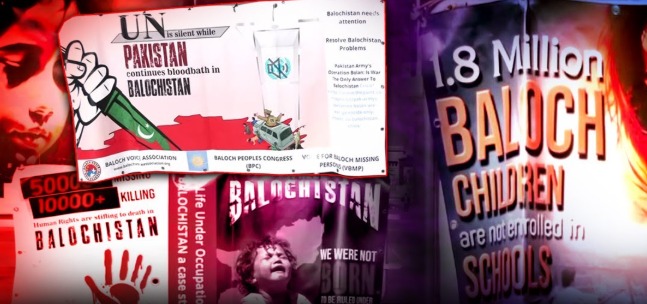
-Arun Anand
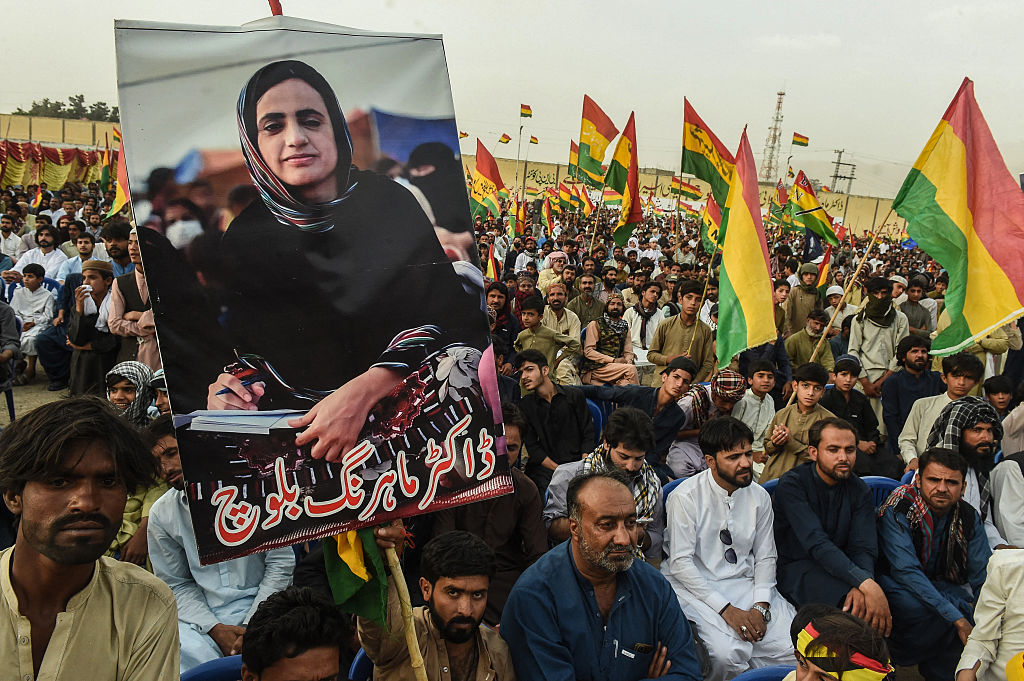
Over Eight months have passed since Dr. Mahrang Baloch, a young physician turned human rights icon, was arrested on trumped-up charges in Quetta, Balochistan. 257 days since the state threw her into jail under Pakistan’s catch-all arsenal of “anti-terrorism” and “sedition” clauses. And 37 weeks since much of Pakistan’s so-called progressive intelligentsia, which was once vocal and proud of its commitment to dissent, fell conspicuously and unforgivably silent.
The cruelty of this moment is not just in what the state has done to Dr. Mahrang and her comrades in the Baloch Yakjehti Committee (BYC). It is in how predictable the silence of non-Baloch Pakistanis has been, including among the ever-shrinking ranks of “liberals” who still claim to champion democracy. In a country descending, quite visibly, into a military authoritarianism, or so to say an Orwellian farce, even moral outrage has become selective.
This is the joke Pakistan has become: a place where everyone knows the cases against Mahrang and her associates are a sham and yet almost no one outside Balochistan dares to say it aloud.
To understand why the establishment is so determined to crush Dr. Mahrang, it is necessary to recall the arc of her rise. The Baloch Yakjehti Committee was never just another protest collective. Founded in 2018 by Dr. Mahrang along with Sammi Deen Baloch and Beebow Baloch, the BYC emerged as a rare, grassroots Baloch women-led peaceful movement. Its central goal was exactly the issue the Pakistani state has most wanted to keep hidden: the unending human rights violations by its military, especially enforced disappearances and custodial killings.
For decades, Baloch families, mostly women and children, marched in circles demanding to know where their sons, brothers, and fathers are. What the BYC did was to put names, faces, stories, and grieving families at the centre of a national conversation that Pakistan’s military dominated establishment always wanted to suppress.
Its gradually became the primary platform to voice the grievances against the militaristic policy of Pakistan towards the province. The watershed moment came in late 2023, after the custodial killing of 20-year-old Balach Marri Baloch, abducted by plain-clothes Counter Terrorism Department officials. The BYC-led march, largely comprising women carrying photos of relatives who vanished, travelled from Kech in Turbat to Islamabad, seeking accountability and an end to military excesses. It exposed the brutality of the security apparatus to a mainstream audience, and for the first time in years, the state’s narrative on Balochistan began to crack.
The state responded as expected: with repression. But the more it tried to silence the BYC, the more the movement grew. In July 2024, the BYC convened the Baloch Raji Muchi (Baloch National Grand Jirga) in Gwadar. it aimed at exposing Islamabad’s imperial policies in Balochistan from resource exploitation to demographic engineering to routine extrajudicial killings. Despite highway blockades and internet shutdowns, hundreds reached the venue. For the state, it became apparent that BYC was not merely a fringe group but one with mass appeal.
For Pakistan’s deep state, particularly an increasingly entrenched military under Army Chief Asim Munir, such defiance from the country’s most dispossessed province was intolerable.
And so, on 22 March 2025, Pakistani state finally arrested Dr. Mahrang during a peaceful sit-in demanding the release of the brother of Bebarg Zehri, one of the BYC’s central organisers, abducted two days earlier on 20 March. She was charged under anti-terrorism statutes of Maintenance of Public Order besides sedition. Others who were arrested included BYC Central Organizers Bebarg Zehri and Beebow Baloch, Shah Jee Sibghat Ullah, Gulzadi Baloch, among others. Sammi Deen Baloch, herself the daughter of a disappeared man, was detained and later released.
Human rights organizations have called the charges farcical, the arrests punitive, the crackdown an unmistakable escalation of the military’s doctrine of enforced silence. But silence is now Pakistan’s national reflex.
To be fair, a small handful of prominent voices such as London-based novelist Mohammed Hanif and academic Ayesha Siddiqa, besides Harris Khalique, of Human Rrights Commission of Pakistan (HRCP) spoke out. But beyond this, Pakistan’s progressive class, journalists, civil society networks, and ‘liberal’ commentators have largely looked away. In fact, media played aided the state in labelling Mahrang and her BYC members as secessionists.
The reason is as old as Pakistan itself: when the state targets Baloch activists, most Pakistanis convince themselves that this is someone else’s problem. That the Baloch live too far away, that the disappearances are exaggerated, that security considerations justify exceptional measures. Even the Pakistanis who rally for Palestine, who write poetic elegies for democracy, suddenly find nuance when the victims are Baloch. It is nothing but hypocrisy of the highest order.
That selective empathy has given the military a free pass to dismantle what little democratic space remains. It is no coincidence that Pakistan is undergoing its worst authoritarian slide in decades: a re-engineered judiciary, censorship of the press, mass trials of political activists, and the sidelining of dissenting voices from Baloch rights organizers to opposition politicians under the guise of national stability. Therefore, the silence is not passive but an enabling one.
Dr. Mahrang’s imprisonment is thus more than a legal case. It is a moral indictment of what Pakistan has become. Eight months and one week in jail, without due process, for leading peaceful marches asking a simple question: “Where are our loved ones?” If a state cannot tolerate even that question, is there any legitimacy whatsoever left in it?
It seems that the Pakistan’s rulers believe that imprisoning the BYC leadership will extinguish the movement. But they seem to be overlooking the fact that it emerged from the shared trauma of over seven thousand families whose sons were taken in the dead of the night and the light of the day. It grew because the state’s violence is structural, not episodic.
The cruel joke is not that Pakistan’s establishment behaves with impunity. That much has long been known. The cruel joke is that the country’s liberal progressive class, which once claimed to represent conscience, has become too timid to speak when conscience demands nothing more radical than stating facts everyone already knows.
Everyone knows the charges against Dr. Mahrang are a farce. Everyone knows why she was arrested. Everyone knows what the military fears most: not terrorism, not foreign conspiracies, but the possibility that ordinary Pakistanis might finally look at Balochistan and see citizens, not a security threat.
The tragedy is not only that Pakistan is drifting into authoritarianism. It is that so many who should know better have chosen silence as the price of comfort.
– Arun Anand
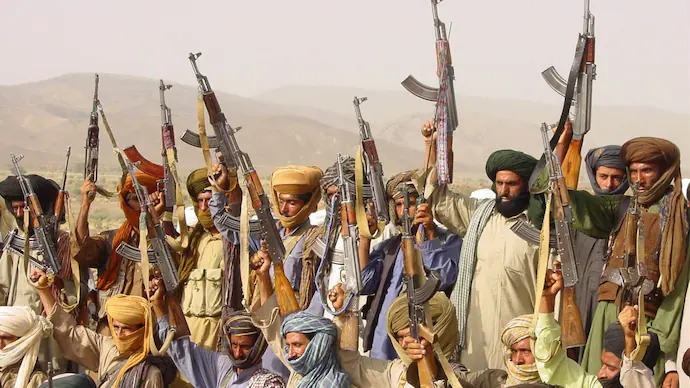
Balochistan is a land which is under the operation of Pakistan and its army, a place where militarization has shaped daily life for generations and where human rights violations have become a defining feature of the state’s presence. Communities across the province describe a reality marked by enforced disappearances, collective punishments, military checkpoints, and surveillance that affects everything from movement to livelihoods. For many Baloch, the feeling is not simply that they are governed by a distant center, but that they live under an occupying force. This sense of suffocation and exclusion has fueled a long-standing freedom struggle, one rooted in the demand for dignity, political rights, and control over the resources that come from their own land. Against this backdrop, pro-independence armed groups continue to carry out attacks that they claim are responses to decades of repression.
On Tuesday, one such group announced responsibility for several operations across the province. These incidents included an improvised explosive device blast in Mastung, the execution of an individual they accused of spying for the Pakistani military in Panjgur, and a grenade attack on a military post in Kech. While armed actions inevitably extend the cycle of violence, supporters of the Baloch cause often view them as part of a resistance movement forced into militancy by the absence of political space and the ever-present threat of military retaliation. The attacks were not isolated events but part of a broader pattern that has escalated throughout 2025.
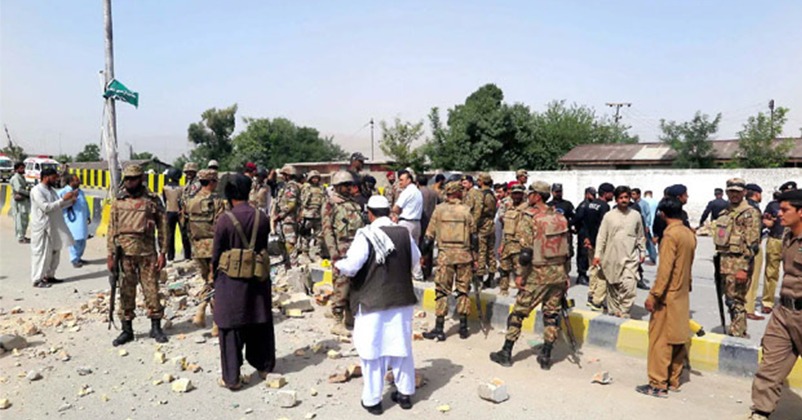
This year has seen a rising number of armed confrontations, ambushes on military convoys, and assaults on security checkpoints. In several districts, insurgent fighters have demonstrated increased coordination, conducting operations that momentarily challenge the army’s claims of tight control. In many cases, the military responds with sweeping crackdowns, cordoning off villages, detaining males en masse, and sometimes displacing entire communities under the guise of clearing operations.
One of the most significant incidents of 2025 occurred during the hijacking of the Jaffar Express earlier in the year, an episode that shook the country and drew international attention. Dozens of passengers were killed, and the chaotic rescue operation highlighted the state’s unpreparedness despite years of counterinsurgency efforts.
In other months, attacks in Gwadar, Panjgur, Kech, and Kohlu targeted military installations, patrol units, and infrastructure associated with state-backed development projects. Each attack was followed by the familiar pattern of intensified military operations, which in turn deepened local fears and resentments. For many Baloch, the roots of the conflict lie not in the attacks themselves but in the long history of exclusion and exploitation. Balochistan is the largest province by land area and among the richest in natural resources, yet it remains the poorest in development indicators. Gas extracted from Sui fueled Pakistan’s industrialization for decades, but Baloch communities received neither adequate royalties nor basic services. The same dynamic persists today: copper, gold, and other minerals are extracted through deals viewed locally as exploitative, and the massive projects linked to the China-Pakistan Economic Corridor have heightened perceptions that outsiders profit while Baloch residents live under military patrols.
The Pakistani Army presents its presence as a stabilizing force, claiming that it is protecting development and bringing security to a volatile region. But for many families, the uniform represents fear rather than order. Activists and human rights groups have long documented reports of disappearances, where students, teachers, farmers, and political workers vanish without explanation. In some cases, bodies are later found dumped in remote areas; in others, detainees remain unaccounted for, leaving families in endless uncertainty. Villagers speak of night raids, targeted harassment, and arbitrary detentions that make ordinary life unpredictable and fragile.
The events of 2025 have intensified these concerns. After each insurgent attack, the military has expanded its operations deep into residential areas, often sealing entire towns for hours or days. Markets have been shut down, communication networks suspended, and families forced to leave their homes as security forces search door to door. Local leaders warn that the army’s heavy-handed tactics are counterproductive, pushing frustrated youth toward militancy by eliminating peaceful avenues for expressing political grievances.
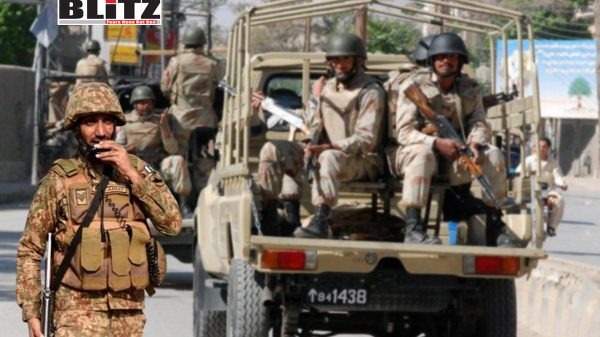
The attacks on Tuesday again underscored this cycle. In Mastung, the IED blast reportedly targeted a patrol, prompting hours of cordoned streets and aggressive searches. In Panjgur, the execution of the alleged informant sparked fears of reprisals. In Kech, the grenade attack on a military post was followed by drone surveillance and increased military movement through surrounding villages. People in these areas spoke of disrupted routines, closed schools, and the tense silence that typically accompanies large-scale army deployments.
Criticism of the Pakistani Army’s role in Balochistan does not imply support for violence, but it does demand an honest acknowledgment of how long-standing injustices have produced the current volatility. The Baloch freedom movement, in its political and militant forms, arises from a lived experience of repression—an experience of being denied the right to self-govern, the right to speak freely, and the right to benefit from one’s own homeland. The state’s insistence on treating the conflict solely as a security problem ignores the political roots of the struggle and exacerbates the very tensions it seeks to eliminate.
Those advocating for Baloch rights argue that the solution lies not in more soldiers or more checkpoints, but in recognizing the political aspirations of the people. They call for accountability for human rights abuses, an end to enforced disappearances, and genuine autonomy that allows Balochistan to govern itself and control its resources. Without these steps, the province remains trapped in a long and painful cycle in which violence breeds further militarization, and militarization fuels the grievances that sustain the insurgency. Balochistan today stands at a crossroads shaped by the tragedies and resistance of 2025. The Tuesday attacks are only one chapter in a broader narrative: a story of a people who feel occupied, marginalized, and robbed of their future. The Pakistani state continues to rely on force, believing that sheer military power can quell a movement born from historical injustices. But the more it tightens its grip, the more alienated the Baloch become, and the further the region moves from any meaningful resolution.
Until the state acknowledges that peace cannot be imposed at gunpoint and that the people of Balochistan must have the right to determine their own political destiny, the conflict will persist. The freedom struggle, whether expressed through political activism or armed resistance, will continue to draw strength from the lived realities of oppression. And each new incident—like the attacks carried out this Tuesday—will serve as a reminder that a province rich in culture, history, and resources remains locked in a conflict sustained not just by militants, but by the heavy hand of the army that claims to be restoring order while deepening the wounds of its people.
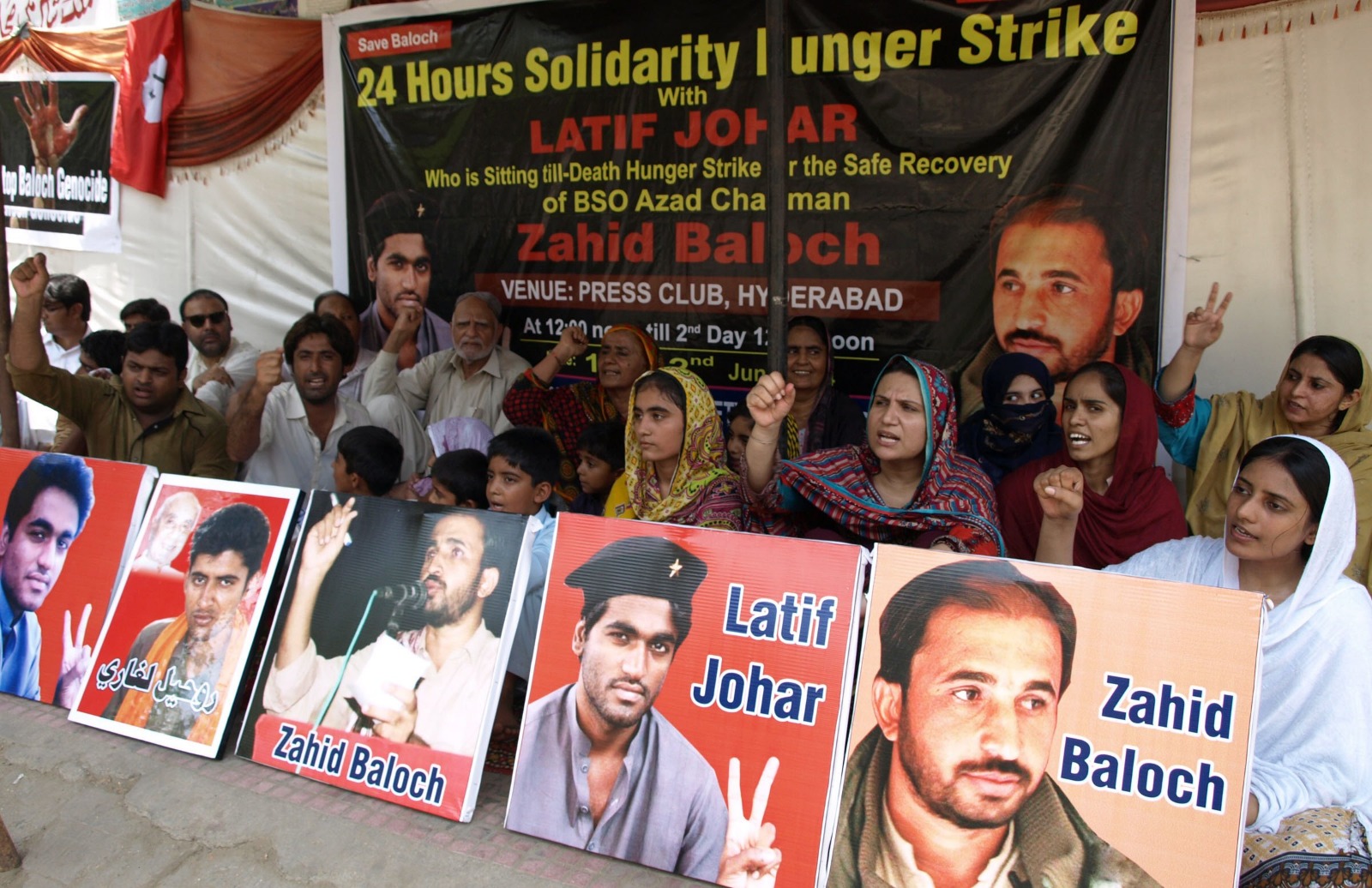
Balochistan’s struggle is not a fringe conflict, it is a human rights crisis that demands attention. The forced labour, the disappearances, the land seizures — these are crimes against people who have asked for nothing more than control over their own lives and resources. Several analysts reckon that the Pakistani military and government must be held accountable for what they have done to Balochistan.
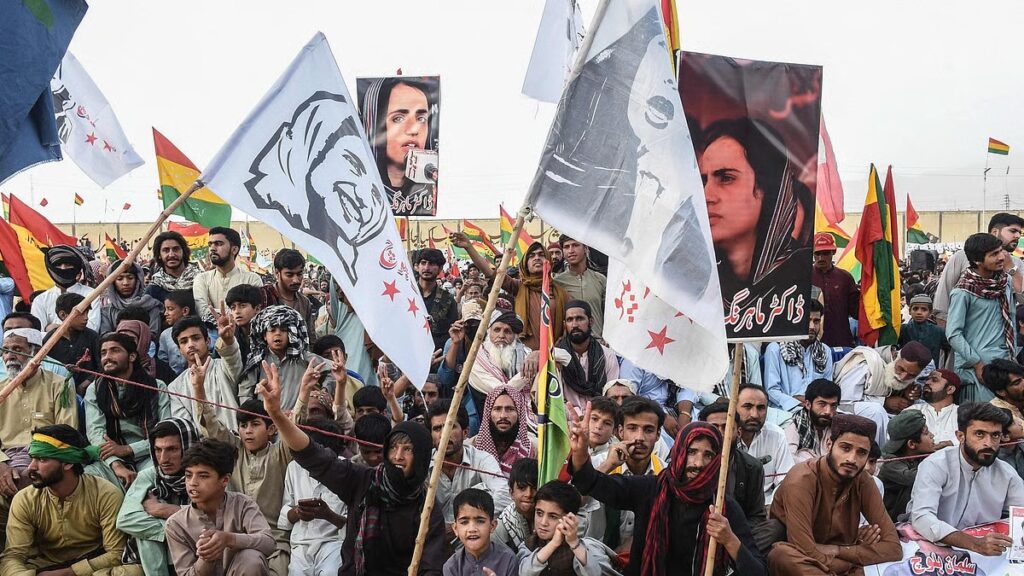
For decades, the Baloch have been told to be patient, to wait for development, to trust the State. But patience cannot grow where injustice is the only harvest. In 2025, Balochistan stands as a stark reminder of how power, when unchecked, becomes predation. The world must choose to listen — not to the Generals and politicians who speak of unity, but to the mothers, workers, and students who speak of freedom. Balochistan is not asking for privilege; it is demanding humanity, the experts highlight.
The land where mountains meet the sea deserves more than military parades and hollow promises. It deserves justice. It deserves freedom from forced labour, from land theft, from the iron hand of an army that claims to protect but only oppresses. The story of Balochistan in 2025 is the story of resilience against tyranny — people standing tall even as the State tries to break their back. One day, perhaps, Balochistan will no longer be the land where “anything is possible” for its oppressors. It will instead be the land where freedom, dignity, and justice are finally possible for its people.
Pakistan has done all kinds of oppression in Balochistan. They seize land of the people and drive people to forced labour. What began decades ago as marginalisation has transformed into a full-scale assault on the dignity and autonomy of an entire people. In 2025, the scars of Balochistan’s exploitation are deeper than ever. Behind the curtain of national security and development, the Pakistan military has entrenched its power through fear, coercion, and the systematic dismantling of Baloch society.
Across the rugged mountains and deserts of Balochistan, the story is tragically familiar. Villages emptied overnight under the shadow of military convoys. Families forced to abandon ancestral lands that generations had cultivated. Men rounded up and compelled to work without pay on projects linked to army infrastructure, roads, and bases. Women left behind, watching their homes turned into outposts and checkpoints. This is not just occupation by force of arms — it is occupation of life itself. The people of Balochistan have lived for decades under what can only be described as a slow, grinding war against their existence.
The Pakistan military, in the name of counter-insurgency and “maintaining order,” has created an environment where dissent is crushed, where journalists disappear, and where the silence of the mountains is broken only by the sounds of helicopters and gunfire. In 2025, reports from the ground reveal that entire communities in districts such as Kech, Panjgur, and Khuzdar have been subjected to forced relocations. Farmlands are fenced off, seized under the pretext of security zones, and then repurposed for military or government use. The same land that fed generations is now out of reach for those who tilled it.
The forced labour system imposed by the Pakistan military in various parts of Balochistan is a form of modern slavery dressed up in patriotic rhetoric. Local men are ordered to construct roads, carry supplies, and dig trenches for military bases. They are not paid fairly — often not paid at all — and refusal brings punishment. In areas around Gwadar, for instance, fishermen have been pushed into menial labour for military and Chinese-backed projects after being barred from their own fishing zones. Their boats are seized, their movement restricted, their livelihoods destroyed. The military calls it “development”; the Baloch call it survival under chains.
The year 2025 has seen an escalation in such practices, partly driven by the military’s increasing economic control in the province. Balochistan is rich in resources — natural gas, coal, copper, gold, and deep-sea ports — yet it remains the poorest region in Pakistan. The army’s corporate arms and allied companies have carved out concessions over mines, land, and infrastructure projects, while the indigenous people see none of the benefits. Billions flow through Balochistan, but barely a drop reaches its people.
The irony is bitter: a province that fuels Pakistan’s industries is itself left in darkness, with children walking miles for water and schools without roofs. The Pakistani government, complicit and silent, plays its part in the oppression by dressing exploitation as progress. Every promise of “integration” and “development” becomes another mechanism of control. Laws meant to regulate the province are wielded as weapons to confiscate land. Anti-terror legislation is used not to combat extremism but to silence activists, students, and intellectuals who dare to speak of freedom.
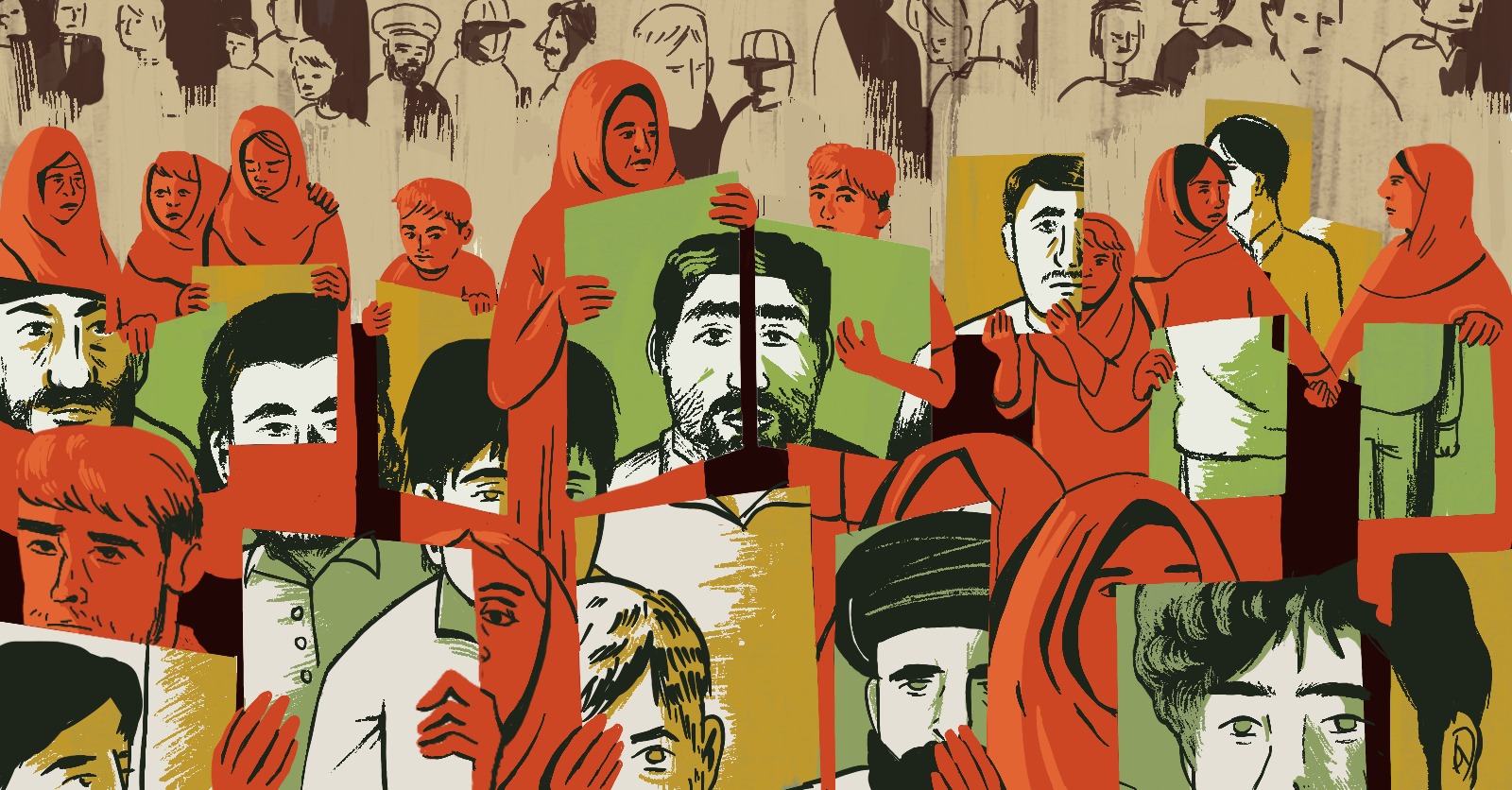
The state media paints them as traitors, the military brands them as insurgents, and their voices vanish into the black hole of enforced disappearance. Forced disappearances remain the most chilling signature of Pakistan’s rule over Balochistan. Thousands of Baloch men and boys have vanished over the years — abducted from their homes, workplaces, or checkpoints. Their families search endlessly, their photos held up at protests that the state calls “unpatriotic.” In 2025, the number of missing continues to rise despite repeated pleas for justice. Mothers march under the scorching sun carrying portraits of sons who may never return.
This culture of disappearance has become an instrument of terror — one that ensures silence, compliance, and despair. The pattern is unmistakable. The Pakistan military does not just dominate Balochistan; it extracts from it. Every mine, every port, every so-called “development” zone is secured through coercion and maintained by intimidation. People are forced to work for the very institutions that occupy their lands. The military’s projects in Gwadar, Lasbela, and Turbat rely heavily on local labour — but this labour is neither voluntary nor fairly compensated.
In many cases, families report being threatened with detention or the loss of their homes if they refuse to work. This is forced labour institutionalized under the banner of nationalism. In rural areas, especially around Khuzdar and Awaran, soldiers have been accused of forcing locals to assist in building camps and transport logistics during operations. Villages are cut off, communication networks jammed, and movement restricted. People live under constant surveillance and fear. It is the kind of oppression that erodes the human spirit — slow, methodical, and devastating.
Balochistan’s tragedy is compounded by the deliberate destruction of its culture and identity. The Pakistan state has systematically tried to erase the Baloch language and heritage from education and administration. Local teachers who insist on teaching Balochi or Brahui face harassment or dismissal. Textbooks portray Baloch resistance as rebellion, never as struggle for justice. Universities are watched; student leaders are monitored, some abducted, some found dead in remote valleys.
In 2025, student movements across Quetta and Turbat have been met with raids, arrests, and curfews. The youth who demand books instead of bullets are treated as enemies of the state. Yet, despite this suffocating repression, the Baloch spirit endures. Across the province, people continue to resist — sometimes through protests, sometimes through art, sometimes simply by refusing to be silent. Women have become the conscience of this struggle. Mothers of the disappeared march from Quetta to Karachi, holding pictures of their sons and chanting for justice.
The Pakistan government and military present Balochistan as an ungrateful province — one that must be pacified and tamed. But it is not ingratitude; it is the cry of a people who refuse to be stripped of their dignity. The Baloch do not reject progress; they reject progress built on their suffering. They do not reject Pakistan out of hatred; they reject oppression out of love for their land.
What the Pakistani State refuses to understand is that peace cannot be imposed at gunpoint, and loyalty cannot be extracted through labour camps and disappearances. The forced labour and land seizures of 2025 are not isolated incidents. They are part of a long continuum of state policy — one that began with the annexation of Balochistan in 1948 and has evolved into a military-driven colonial project. The faces change, the slogans change, but the machinery of control remains the same. Every new government promises reform; every general promises peace. Yet the boots remain on the ground, the land remains occupied, and the people remain chained. It is time for the world to look beyond Islamabad’s rhetoric.
–IANS
– Arun Anand
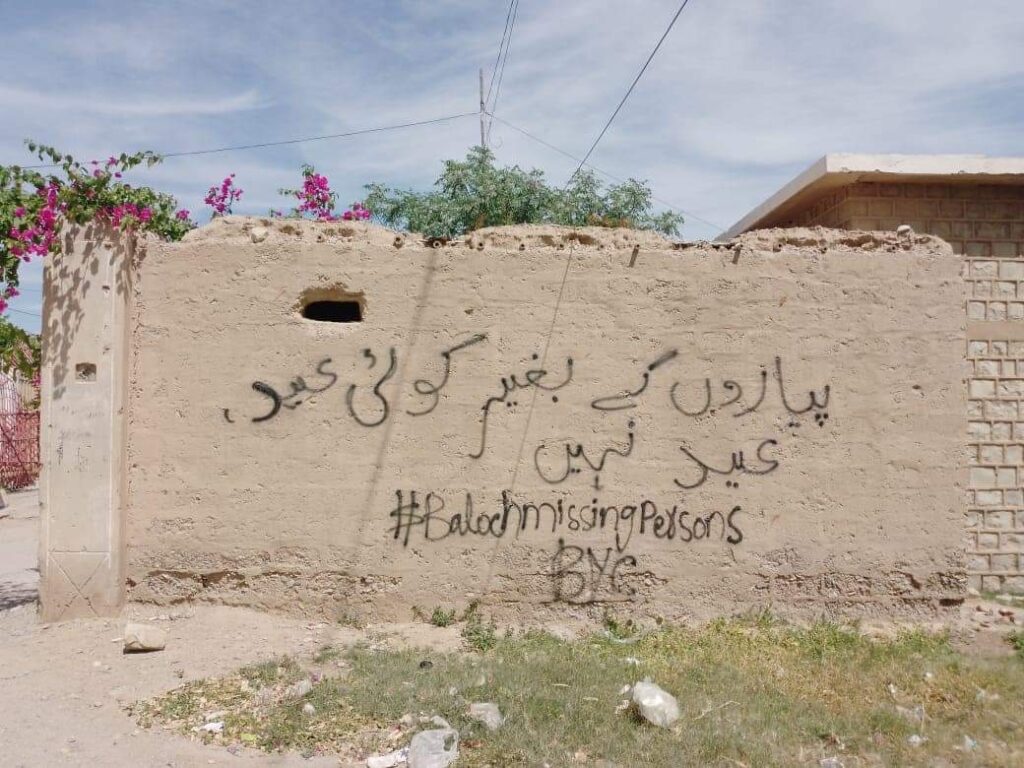
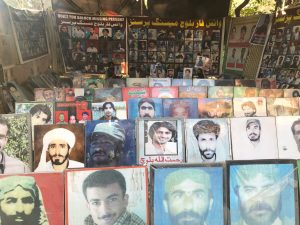
A pall of gloom has descended over Balochistan with a massive rise in ‘enforced disappearances’ in recent days. There is a stunned silence in the region that emanates not from peace, but fear. A silence that carries the weight of missing names, of mothers who stand outside district offices clutching faded photographs, of fathers who scan every passing face hoping for a glimpse of their sons.
In the last week alone, around fifteen more people have vanished in separate incidents across multiple districts in this restless province. Fifteen lives erased from the map without explanation, without record, without justice. The number may sound small to those far away, but to the families it is an unbearable universe of pain.This is not new. Enforced disappearances have long haunted Balochistan like a shadow that refuses to fade. It is a pattern that repeats itself with grim precision—someone is picked up in daylight or snatched at night, witnesses are warned into silence, and official statements claim ignorance. There are no arrests to challenge in court, no charges to defend, no bodies to bury. Only waiting. Endless waiting.
Every disappearance leaves a crater in the fabric of a family. Mothers turn into campaigners, fathers into mourners, children into strangers in their own homes. In the narrow streets of Turbat, Gwadar, Panjgur, and Quetta, walls bear posters of the disappeared, printed in black and white, their eyes forever open, staring into a justice system that never looks back. Each poster is an accusation and a prayer at once.
The people of Balochistan have learnt that memory itself can be an act of resistance. And yet the numbers keep growing. Data from the province paints a horrifying picture. In the first half of 2024 alone, 306 cases of enforced disappearances were documented. Of these, 104 individuals were released, four found dead, and at least 198 remained missing by mid-year. The majority of perpetrators were reported to be the paramilitary front of the state, the Frontier Corps, followed by the CTD and intelligence agencies.
By the end of the year, the Human Rights Council of Balochistan (HRCB) found that 830 cases had been recorded for the full year 2024 — 829 of the disappeared were male and only one female. Out of them, 257 were released, 27 were later found dead, 793 were first-time victims, 30 had previously disappeared and been re-abducted, and seven people had disappeared three times. The profession or occupation of 565 victims remained unknown; among the identified cases were 132 students, 28 labourers, 23 drivers, 10 shopkeepers, and others including teachers, doctors, farmers, journalists, and activists.
And the horrors have continued into 2025. In January, 107 enforced disappearances were documented across 14 districts; Kech alone accounted for 30 of the missing, followed by other districts like Awaran and Panjgur. Eight extrajudicial killings were also recorded that month. In March 2025, the HRCB documented 151 enforced disappearances and 80 killings; only 56 of the disappeared have resurfaced, one was transferred to jail, and 94 remained unaccounted for. The district of Kalat led with 38 disappearances, Quetta and Gwadar followed. In February 2025, 144 disappearances and 46 killings were reported; of the abducted, 41 were released, 102 remained missing, and one was killed. These monthly figures are not anomalies — they speak to a systemic campaign of fear and control.
In the last week, fifteen more families have joined this community of grief. They come from different towns and villages — students, labourers, farmers, shopkeepers—but their stories echo the same pattern. A group of men in plain clothes, sometimes accompanied by uniformed officers, arrive in unmarked vehicles. They take the person away for “questioning.” That is the last anyone sees of them. When the families go to the police stations, they are told there is no record. When they go to the courts, they are told to bring proof.
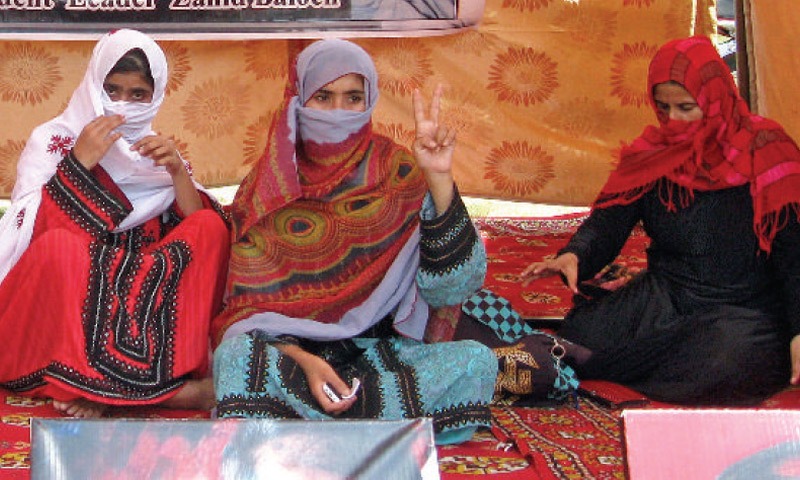
When they go to the media, they are told to be careful. What happens when an entire system becomes deaf to your pain? Yet, in the face of this silence, people keep speaking. Women have marched for days under the burning sun, holding pictures of their missing sons and brothers. Activists have documented the cases, keeping meticulous lists that grow longer each month. Students have written poems and essays, daring to speak of loss. Artists have painted the empty spaces left behind by the disappeared. Each act of remembrance is a defiance against invisibility.
Balochistan’s story is one of contradictions. It is rich in minerals, culture and courage, yet its people live under a constant cloud of suspicion. They are told to love a country that seems to forget them, to trust institutions that refuse to protect them, to remain calm when their loved ones are stolen. For decades, they have been promised development, inclusion, and peace. But what is peace when your neighbour disappears and no one dares to ask why?
The recent wave of disappearances has revived an old wound. In the bazaars of Kech and the coastal stretches of Gwadar, whispers travel faster than news: “Who will be next?” The fear is palpable, yet beneath it lies something more powerful: resolve. The families of the disappeared have refused to be silenced. Their sit-ins, hunger strikes, and protest marches have become a testament to endurance. These are not people seeking revenge. They are seeking truth. They are demanding that the disappeared be acknowledged, that justice be done, that the cycle of fear be broken.The moral question is simple: no state has the right to erase its own citizens. Enforced disappearance is not just a political act; it is an assault on humanity itself. It destroys the social contract between people and the institutions meant to protect them. It poisons the idea of belonging. It tells ordinary citizens that they are expendable. And when that message spreads, faith in the rule of law crumbles. Even those who remain untouched by personal loss feel the weight of the collective trauma.
– By Arun Anand
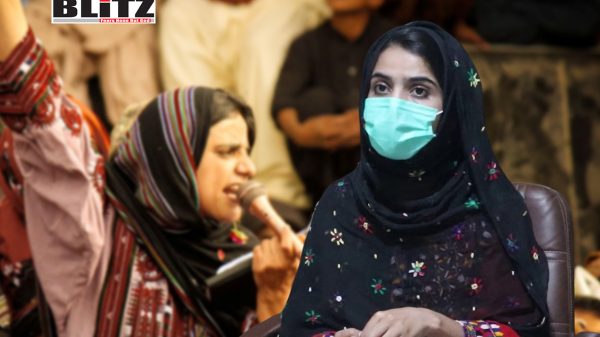
Across the rugged mountains of Balochistan, a quiet revolution has taken shape — not through the barrel of a gun, but through the voices of women who refuse to be silenced. For decades, the Pakistani state has sought to crush the Baloch struggle for rights, identity, and dignity through brute force, censorship, and fear. Yet, amidst the silence imposed by the establishment, Baloch women have risen as the conscience of their people, demanding answers about the disappeared, the tortured, and the dead. Their courage has unsettled Pakistan’s power structure more deeply than any insurgency ever could.
And so, the state has turned its full machinery against them — branding them as traitors, blacklisting them, and attempting to erase them from the nation’s conscience. Pakistan’s fear of Baloch women activists is not born out of security concerns, as its propaganda machinery would have the world believe. It stems from a far more fragile truth: the fear of moral defeat. The establishment that has long ruled through the manipulation of narratives — portraying itself as a victim of terrorism and an upholder of law — cannot bear the voices that strip away this façade. Women like Dr. Sahiba Baloch, Dr. Shalini Baloch, and Samine Deen Baloch have become living examples of the state’s hypocrisy. Their activism exposes what Islamabad has spent decades denying — that the real terror in Balochistan does not come from the mountains but from the cantonments, checkpoints, and intelligence safe houses where young men vanish without a trace.
These women have turned grief into resistance. They march with photographs of missing fathers, brothers, and sons — faces faded by time but made immortal by memory. Their placards demand not privilege but the most basic human right: to know where their loved ones are. For a state built on denial, this demand is dangerous. The Pakistani establishment thrives on invisibility — the invisibility of its crimes, of its political prisoners, of its secret wars. When Baloch women pierce that invisibility, they threaten the very foundation of control that the military has built over Balochistan. The government can bomb villages, censor media, and flood social platforms with propaganda, but it cannot suppress the raw moral clarity of a mother’s cry for her missing child. To silence them, Pakistan’s establishment resorts to the language it knows best — intimidation, smear campaigns, and the weaponization of counterterrorism laws. The inclusion of prominent Baloch women on so-called “watchlists” or “anti-terror registries” is not an act of national security; it is an act of fear. When unarmed women holding peaceful demonstrations are accused of terrorism, it reveals who truly feels threatened. The state that claims to protect its citizens is terrified of citizens who speak the truth. The irony is tragic and telling — that in a country overrun by extremist groups, the military sees danger not in those who kill in the name of ideology, but in those who demand justice in the name of humanity.
The United Nations has expressed alarm over this systematic targeting of Baloch women human-rights defenders. Yet Pakistan continues its repression with impunity, shielded by the same institutions that it manipulates domestically — a judiciary that cowers before the establishment and a media landscape sterilized by fear. The disappearance of Baloch men is not a hidden secret anymore; it is an open wound. Thousands have been abducted by shadowy agencies, tortured in secret cells, and often found dumped in deserts and riverbeds. But when women take to the streets to seek accountability, they too are branded as enemies of the state. The military, unable to confront their truth, paints them as foreign agents, Western puppets, or anti-national propagandists — a tired script repeated whenever Pakistan’s moral bankruptcy is exposed. Behind this fear lies an even deeper insecurity within Pakistan’s power structure. The state was built on a fragile foundation of identity — an identity forged not through inclusion but through suppression. It cannot tolerate voices that challenge its narrative of unity, especially from those it considers peripheral and expendable. Baloch women embody a defiance that is both political and symbolic. They refuse to be confined to the role the state assigns to women — passive, silent, obedient. Their activism is not only a challenge to the military’s control but also a challenge to the patriarchal order that underpins it. When a Baloch woman speaks, she defies both the gun and the gendered silence imposed upon her.
The Pakistan Army, bloated with privilege and arrogance, cannot comprehend this form of power. It is accustomed to silencing dissent with force, not reason. Its generals are comfortable dealing with insurgents, for insurgency justifies military budgets, operations, and the mythology of national security. But women armed only with truth unsettle them in ways bullets never could. They strip away the illusions of heroism and expose the moral rot of a state that kidnaps its own citizens and calls it patriotism. The establishment’s fear of Baloch women is, therefore, the fear of losing control over the narrative — the fear that the world might finally see Pakistan not as a victim of terrorism, but as a perpetrator of systemic violence against its own people. What makes this fear even more profound is the growing international attention to the plight of Baloch activists. For years, Pakistan managed to bury these stories under the rubble of geopolitics — using its strategic importance to silence criticism. But in recent times, the testimonies of Baloch women have begun to pierce through that global indifference. Their statements before human-rights organizations and media outlets have become the cracks through which truth leaks out. Each speech, each vigil, each name they utter chips away at the edifice of impunity the establishment has built. This is why the state is desperate to label them as extremists — because it cannot bear the possibility of being judged by the world through the lens of those it has long oppressed. The persecution of women like Dr. Sahiba Baloch, Dr. Shalini Baloch, and Samine Deen Baloch is part of a broader pattern of state paranoia. These are educated women, professionals, and humanitarians — the very citizens a functioning democracy would celebrate. Yet Pakistan treats them as enemies, because in their words lies the most dangerous weapon of all: legitimacy.
The military’s war in Balochistan depends on dehumanizing the Baloch people. It thrives on portraying them as separatists, terrorists, and outlaws. When articulate, courageous women dismantle that narrative, they expose the establishment’s crimes to both domestic and international scrutiny. This is not just about silencing individuals; it is about suppressing a truth that threatens to delegitimize the entire security state. In a sense, Pakistan’s fear of Baloch women activists is the fear of its own reflection. It is a state that cannot look into the mirror of its history without seeing blood on its hands — from Dhaka to Quetta, from Sindh to the tribal belt.
Every disappeared person, every silenced journalist, every censored voice tells a story of a nation at war with its own people. The Baloch women’s movement forces Pakistan to confront that reality, and that is what terrifies it most. The establishment would rather be feared than exposed, because exposure demands accountability — something the generals have never known. But despite the repression, the movement endures. Baloch women continue to march, to document, to speak. They carry the memory of the disappeared like sacred relics, turning mourning into resistance. Each time the state targets them, it confirms their truth. Each blacklist, each abduction, each threat only amplifies their message: that no amount of violence can erase the demand for justice.
Pakistan’s fear, then, is not of women — it is of the truth they carry. It is the fear that one day the world will listen and see beyond the propaganda, beyond the manufactured narratives of security and nationalism. It is the fear of a reckoning long overdue. The establishment may control the guns, the media, and the courts, but it cannot command the conscience of a people awakening to their own oppression. Baloch women have made sure of that. Their courage has already broken the silence. And for Pakistan’s military establishment — built on secrecy, lies, and fear — that is the beginning of its greatest defeat.
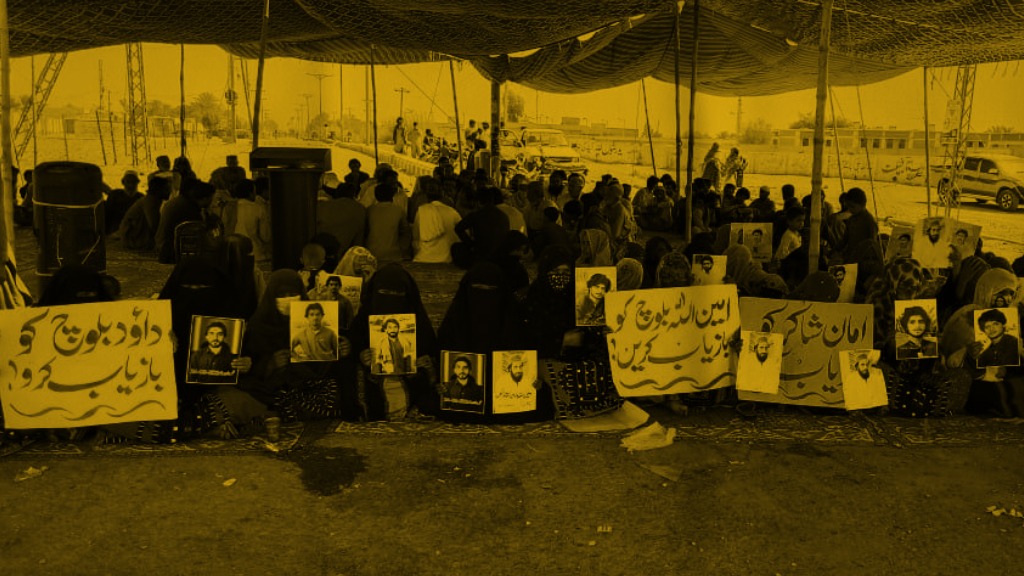
The Balochistan province of Pakistan represents a long-standing festering wound- one that the state, instead of healing, is bent on continually aggravating. The largest, resource-abundant, yet poorest province of the country, Balochistan has been reeling in the crossfire of a chronic armed insurgency and a disproportionate state response, in addition to systemic political and economic marginalization. Even as Pakistan was recently engaged in military confrontations with India- the most severe since the Kargil conflict of 1999, the Baloch insurgents kept intensifying their operations. Now, in the name of more effective counter-terrorism, the government has passed another legislation that threatens to worsen the situation by legitimizing state excesses in the province.
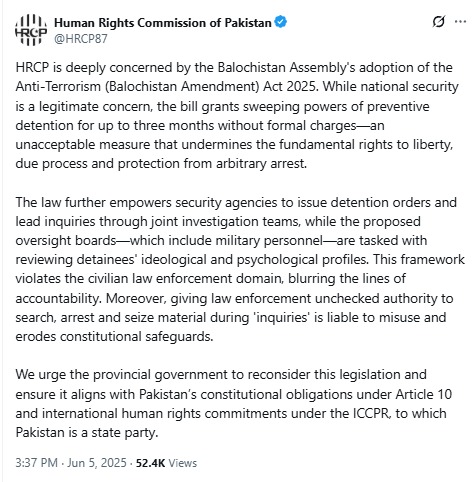
Amid vehement opposition by legal experts, human rights groups, and civil society, the Balochistan Assembly passed the Counter-terrorism (Balochistan Amendment) Act 2025 on June 4. The legislation, which makes new inclusions into the 1997 Anti-terrorism Act, authorizes armed forces, civil armed forces, and intelligence agencies to preventively detain a person for up to three months without any charges or trial. Eliminating judicial oversight, joint investigation teams can now issue detention orders, seize property or other possessions, and conduct ideological or psychological profiling of the detainees, all on their own accord. The Act has been put in place for 6 years, after which it can be extended for a period of 2 years if the provincial government thus notifies.
Collective suppression under the garb of combating insurgency and terrorism is far from new in Balochistan. Particularly since the mid-2000s, the Pakistani state has notoriously enacted a ‘kill and dump’ policy and forged an atmosphere where the threat as well as execution of enforced disappearances, custodial torture and killings, fake encounters, and arbitrary detention is part of daily life. This month itself, Pakistan based human rights organisation, the Baloch Yakjehti Committee (BYC), in its bi-annual human rights report, revealed that 752 people were forcibly disappeared from January to June 2025, out of which 181 were later released and 25 died in custody. The report also registered 117 extrajudicial killings in the same period, with most of the victims reportedly being students and young political activists.
Even when the Act was a proposed bill in the provincial assembly, human rights groups, including Amnesty International and the Human Rights Commission of Pakistan (HRCP), had staunchly opposed its passage over concerns that it would legalize state instrumentalization of enforced disappearances and arbitrary detention. After it was adopted, the HRCP condemned the “sweeping powers of preventive detention” outlined by the Act, which undermine civilian law enforcement domain by involving military personnel in the oversight boards, and contravene the country’s constitutional obligations under Article 10 (legal safeguards for those arrested or detained) as well as its commitments under the International Covenant on Civil and Political Rights. The BYC, too, released a strongly-worded statement, decrying the Act’s “grave violation of fundamental rights, including personal liberty, due process, and protection from arbitrary detention.”
Meanwhile, Pakistani government is projecting the Act as a decisive framework against terrorist forces and something that will help end the issue of missing persons. Balochistan Chief Minister Sarfaraz Bugti described it as a milestone which, according to him, will counter the “organised conspiracy” and “false allegations against state institutions” regarding enforced disappearances. Bugti also claimed that the insurgency in the province is a “foreign intelligence agency driven war” against Pakistan, a narrative that has been parroted for a long time by the Pakistani establishment. This absolute denial and deflection by the authorities point to their utter unwillingness to acknowledge, address, and resolve the plight of the Baloch people, further alienating them and fueling the militancy.
The Baloch people are already subjected to an extremely stifled environment, wherein demands of accountability from the state are constantly misconstrued as separatism, justifying excessive crackdown and harassment. The BYC-led peaceful Baloch civil resistance movement, which has emerged as a resilient force in the past couple of years, has had to face constant vilification, disruptions, harassment, and violent crackdown by the state, with its leaders, including Mahrang Baloch, incarcerated. Rather than taking advantage of a peaceful civilian platform that works towards state accountability and political reconciliation within the federal framework, the heavy-handed response of the Pakistani state creates conditions where peaceful political activism loses relevance and the people, particularly the youth, increasingly view armed insurgency as the only alternative.
Within the context of an ever-ascending insurgency, progressively alienated people, rising attacks on CPEC workers and projects as well as Punjabi migrants, the newly passed amendment act will certainly estrange the Baloch people further. The ensuing state excesses, which will now take on a robe of legal legitimacy, will exacerbate the security crisis in the province. At a point when the Pakistani state must proactively prioritize meaningful political engagement with Baloch grievances, demonstrate accountability and willingness towards politico-economic inclusion and justice for Balochistan, it is almost a suicide run to introduce a blatantly exploitative and tyrannical legislation. By legalizing repression in a province which already represents an existential landmine, Pakistan has truly set in motion its own unravelling.
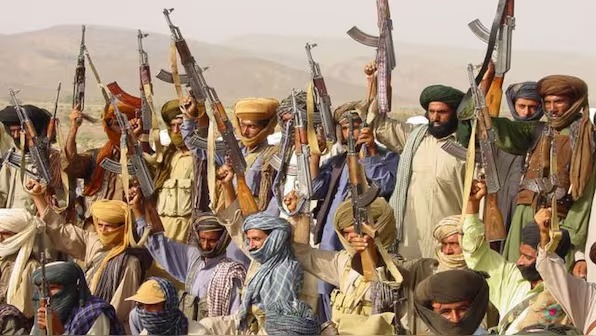
In Balochistan, Pakistan’s largest yet most marginalized province, a grim pattern has become all too familiar wherein buses are stopped, passengers segregated, and innocent civilians. The victims are often chosen based on ethnicity or government association before being executed in cold blood. On July 10, 2025, nine such passengers were killed by suspected Baloch insurgents in the Zhob and Loralai districts of Balochistan. It was initially claimed by Baloch Liberation Front (BLF), one of the oldest insurgent groups in Balochistan. It may be noted that several Baloch separatist outfits have escalated their insurgent campaign against the Pakistani state in recent years.
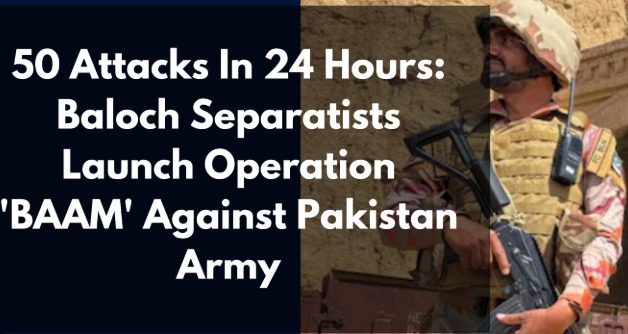
This attack is just one in a series of chilling episodes that have rocked the country’s fragile internal security landscape. It is merely three months from the hijacking of the Jaffar Express train by Baloch insurgents, which was seen as a blow to the military-led security establishment. It not only as an operational embarrassment for the Pakistani military but also as a stark reminder the state is not in control, at least not here. Because, here the Baloch insurgents struck not just at state infrastructure, but also at the very mythology of control cultivated by Pakistan’s powerful military over decades, signally Pakistan slipping back into a state of internal chaos.
These incidents point to an uncomfortable truth that the security in Pakistan is unravelling with the country’s periphery, particularly Balochistan, bearing its brunt.
According to a July 12 report by the Pakistan Institute for Conflict and Security Studies (PICSS), between July 4 and 10 alone, there were at least 27 instances of insurgent or militant violence, which led to 24 fatalities and more than three dozen injuries. It further highlighted that although the violence was widespread across the country, a disproportionately high number of violent incidents took place in Balochistan and Khyber Pakhtunkhwa (KPK), two areas that have long been neglected by the federal government and have endured Pakistan’s militarized governance for decades.
These two provinces have emerged as significant security challenges for the military establishment. Take the case of Balochistan. This resource-rich but with historical experience of continued political disenfranchisement has been simmering with resentment for decades. That resentment, once localized and fragmented, has in recent years transformed into a more coordinated and high-profile insurgency. Armed Baloch groups led by Baloch Liberation Army (BLA) have increasingly targeted not just state security installations and personnel and civilians presumed to be working for the state (collaborators)but also Chinese nationals working on infrastructure projects.
For much of its post-colonial existence, Pakistan has treated Balochistan with a mixture of indifference and coercion. Although the province constitutes nearly 44% of the country’s landmass and holds vast reserves of natural gas, coal, and minerals, it remains the least developed and most underrepresented region in national politics.
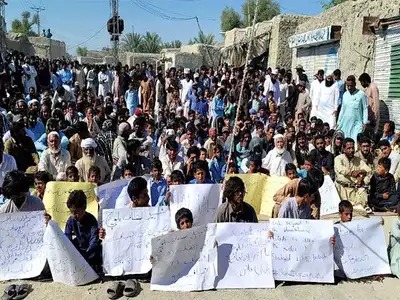
Protest in Balochistan as people demand justice amid rising terror
This neglect is not accidental but a structural. It is rooted in how Islamabad’s successive military dominated governments have viewed Balochistan through a narrow security lens. Instead of investing on integrating the local population into national political or economic frameworks, this militarized governance structure has a history of building garrisons and intelligence networks to rule the province with an Iron fist. As such, social sectors like education remain abysmal and infrastructure underdeveloped with scare avenues of employment for the locals. Such an approach has result in a deepening alienation, especially among the Baloch youth, many of whom now see insurgency not as extremism but as resistance. For many of them, the Pakistani state behaves in an imperialistic manner, interested in extracting provincial resources, while silencing local dissent.
While Balochistan remains the epicentre of anti-state violence, Khyber Pakhtunkhwa, especially its tribal hinterland, continues to be affected by heightened Islamist militancy. The reconstitution of Tehrik-i-Taliban Pakistan (TTP) and the regrouping of splinter jihadist factions have brought fresh violence to the region, including blowback militancy from groups once patronised by the military establishment. For instance, on June 28, at least 13 Pakistan army soldiers killed and a dozen others injured in a car bombing attack by TTP in North Waziristan district. While Islamabad has attempted to engage Pakistan Taliban, in what many described as mainstreaming process, it has failed to reign in the group which has upped its ante.
Pakistan’s worsening internal security is rooted in a doctrinal failure of Pakistan’s most powerful institution: the military. For decades, the Pakistan Army has acted as the ultimate arbiter of national stability. It has been the kingmaker in Islamabad, directed foreign policy, and controlled internal security operations.
But its strategic approach has often leaned heavily on tactical repression and short-term deals with militant proxies, many of whom have eventually turned rogue. Rather than pursuing an inclusive governance regime in the peripheries, the military often resorts to “shock and awe” operations, arbitrary detentions, and enforced disappearances, a feature of its (mis)conduct in Balochistan. This may have bought the military some time through temporary lulls in violence, it really has not shifted the root causes of unrest, which are political disenfranchisement, ethnic exclusion, and socioeconomic neglect.
Moreover, the Army has gotten dirtier with time and politics, and in so doing has reduced its legitimacy at least in part. Its role in propping up so-called hybrid regimes in Islamabad is one example. It is no longer seen as an independent force for good; it is considered a player on the bad side.
It is not merely a security failure that Pakistan is suffering today, rather it is a breakdown of the very social contract, if at all there existed one for the peripheries. When sections of the population feel excluded from political processes, denied economic opportunity, and in fact singled out by the very state that should protect them, insurgency begins to seem not merely possible, but inevitable.
Pakistani rulers would do better for the country by acknowledging what is happening across Balochistan and KPK cannot be vanquished through military operations. Nor can it be whitewashed by official narratives of “external sabotage” or “foreign conspiracies,” something that has become a too convenient tool lately to place all blame neighbouring countries. This unrest goes deeper and is symptomatic of a systemic failure to create an inclusive, equitable, and truly federal state.
Unfolding circumstances demand that Pakistan’s military-dominated establishment and political elite, introspect on the policy approach towards these provinces. Their persistence to govern by coercion while neglecting regional empowerment will only push the crisis deeper. If one may argue, the semblance of control is fast disappearing, and the fires of dissent will stoke ever higher.
Pakistan stands at a crossroads. The surge in violence, especially in historically restive provinces like Balochistan and KPK, is symptomatic of a far deeper institutional rot. It is alarming that the very regions of the state that the current regime is attempting to quell are slipping further into chaos, not by virtue of a lack of power or firepower, but rather the absence of any serious political vision.
Pakistani rulers would do better by grasping the fact that real security cannot be built over “fear, exclusion, or propaganda”. They cannot speak of security unless it is grounded in justice, fairness, representation, and dignity of all citizens, irrespective of ethnicity, language, religion or region. Unless and until those holding power in Islamabad and Rawalpindi understand this, the question will not be how Pakistan restores security, but whether it can prevent the complete unravelling of its internal cohesion.
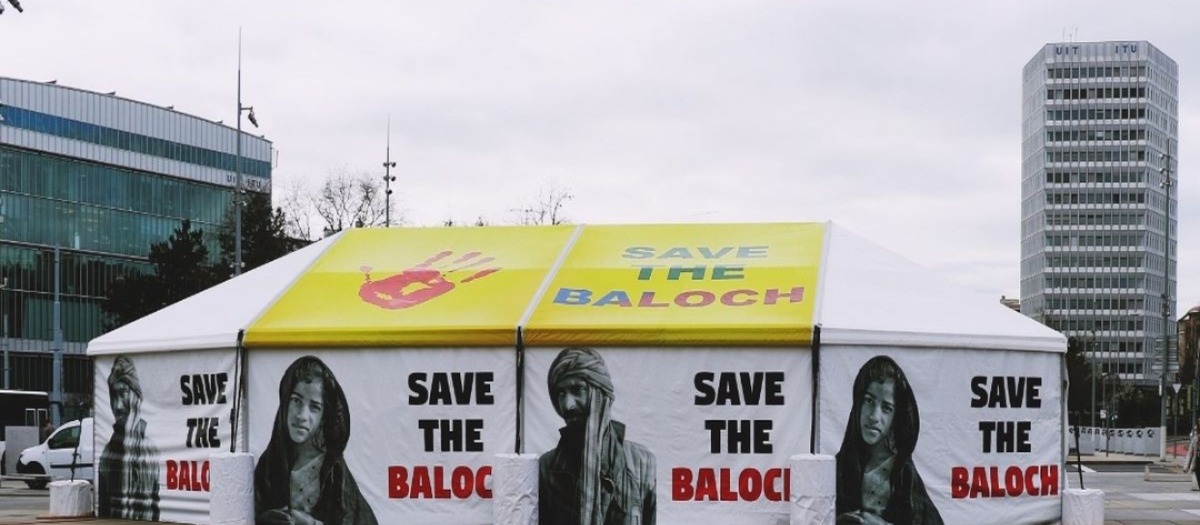
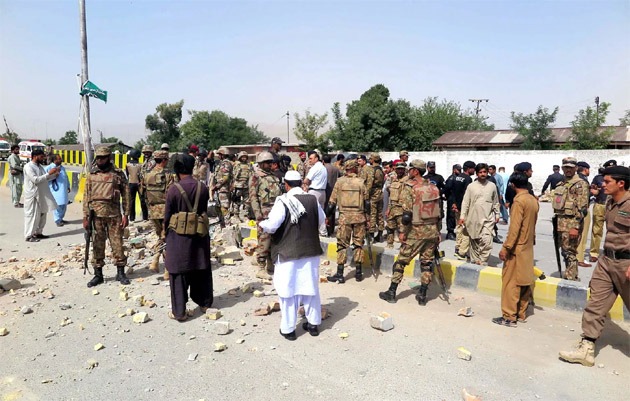
Balochistan, the largest and most resource-abundant province of Pakistan, continues to face persistent unrest—an occupied territory enduring a systematic campaign of military dominance, economic exploitation, and cultural suppression. Since its forcible annexation by Pakistan in March 1948, Balochistan has experienced repeated uprisings, each met with severe state-led repression. Despite enduring decades of marginalisation, the Baloch people’s call for self-determination remains undiminished. The origins of this enduring conflict lie in the coerced incorporation of the Baloch princely state of Kalat into Pakistan. On 15 August 1947, Kalat proclaimed its independence, and its elected parliament subsequently voted against joining Pakistan. Nevertheless, under military duress, the Khan of Kalat was compelled to sign an instrument of accession in March 1948. This act, widely viewed as illegitimate, sparked the first of five major Baloch rebellions—occurring in 1948, 1958, 1962, 1973, and the most protracted uprising, which began in 2004 and persists to this day.
Balochistan constitutes 44% of Pakistan’s total land area, yet it remains the most underdeveloped region in the country. Although the province accounts for 36% of Pakistan’s natural gas production, a mere 10% of its residents have access to piped gas. Sui, where natural gas was first discovered in 1952, ironically still lacks basic amenities such as electricity and clean drinking water. According to the Pakistan Economic Survey 2024–25, Balochistan’s literacy rate is a mere 42.01%, markedly lower than Punjab’s 66.25%. Despite its wealth in minerals, fossil fuels, and a strategically vital coastline, its inhabitants remain among the most impoverished in the nation. These disparities are not coincidental—they are structurally imposed. The China-Pakistan Economic Corridor (CPEC), a $62 billion infrastructure initiative, has exacerbated the economic subjugation of Balochistan. Gwadar Port, the flagship project of CPEC, has effectively become a Chinese-dominated zone from which the indigenous Baloch have been displaced. Traditional fishing communities have been denied access to ancestral coastal areas, while development zones enclosed by fencing, constant paramilitary presence, and checkpoints have proliferated—vastly outnumbering educational and healthcare facilities. Rather than fostering development, Gwadar has transformed into a heavily securitised zone.
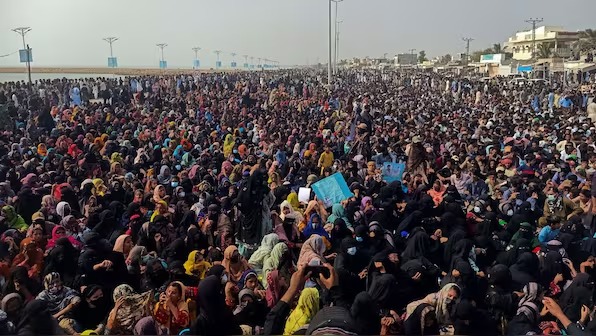
Although Pakistan presents CPEC as a transformative initiative, it has instead become a focal point of resistance. Widespread protests erupted in 2024 and continued into early 2025, driven by grievances related to displacement, joblessness, and denial of fundamental rights. The state’s response was marked by repression. In July 2024, peaceful protestors in Gwadar were subjected to violence and arbitrary detention, while internet services were suspended. Human Rights Watch and Amnesty International denounced the use of excessive force and unlawful detentions. The situation further deteriorated in 2024–2025 with a sharp rise in enforced disappearances. Pakistan’s own Commission of Inquiry on Enforced Disappearances (COIED) has acknowledged that more than 10,000 individuals have disappeared since 2011—2,752 of whom are from Balochistan. Amnesty International’s January 2024 report documented an additional 379 cases in that year alone. Abductions carried out by intelligence agencies and paramilitary forces have become a systematic means of stifling dissent.
One of the most harrowing incidents occurred in July 2024, when Hayat Sabzal Baloch was abducted in Turbat; his mutilated body was discovered in February 2025, discarded without dignity. In January 2025, a 15-year-old student, Anas Ahmed, was forcibly disappeared in Karachi. These instances reflect a broader systemic pattern in which the state metes out collective punishment by targeting children, youth, and activists. The abductions of Baloch women have also escalated. On 27 May 2025, 24-year-old Mahjabeen Baloch was taken from Quetta Civil Hospital by plainclothes security personnel. Her only offence was the organisation of peaceful student demonstrations. She now joins a growing list of women subjected to enforced disappearance—signalling a disturbing evolution in Pakistan’s counterinsurgency tactics.
Protests have persisted despite widespread repression. In March 2025, nationwide demonstrations erupted following a BLA-orchestrated hijacking of the Jaffar Express in the Bolan Pass, resulting in 64 fatalities, including 18 soldiers and 33 militants. In response, Pakistani forces launched “Operation Green Bolan.” Although the state proclaimed success, numerous civilians were either killed or forcibly disappeared. The victims’ families organised sit-ins in Quetta, demanding the return of their missing relatives. Their peaceful appeals were met with rubber bullets and mass detentions. Central to this nonviolent resistance is Mahrang Baloch, a young physician and human rights advocate. As the founder of the Baloch Yakjehti Committee (BYC), she has emerged as the voice of thousands of families of the disappeared. In March 2025, she was arrested and imprisoned in Hudda Jail—the same prison where her father was once held before his disappearance. Despite being denied a fair trial or presentation of evidence; she continues to draw international attention. TIME magazine named her among its TIME100 Next list in 2025. PEN Norway, UN Working Groups, and Malala Yousafzai have all called for her release. Her words, “To demand justice is not terrorism,” have become a defining slogan.
Nevertheless, the state continues to criminalise dissent. Peaceful demonstrators are branded as terrorists; journalists reporting on enforced disappearances face harassment; and human rights advocates are accused of advancing foreign agendas. Pakistan’s official discourse dismisses all Baloch grievances as “Indian-backed separatism,” overlooking decades of systemic violence and legitimate political aspirations. Violence in the region is not solely perpetuated by the state—militancy has also escalated. In August 2024, the Baloch Liberation Army’s Operation Herof resulted in the deaths of 14 security personnel and over 60 civilians in a coordinated assault. In November 2024, a suicide bombing at Quetta Railway Station killed 32 people. The BLA claimed responsibility, citing the attack as retaliation for state atrocities. These recurring cycles of violence and reprisal have increasingly radicalised the socio-political environment, severely narrowing the space for peaceful resolution.
Compounding the anguish, prominent figures such as national racer Tariq Baloch were assassinated in May 2025. Activists have described it as a “kill-and-dump” operation—where individuals are executed by state agents and their bodies discarded to serve as a deterrent. Domestic media frequently fall silent under state pressure, while international journalists are denied access. This sustained information blackout has rendered Balochistan one of the most poorly reported conflict zones globally. Cultural repression further deepens this siege. The Balochi language is scarcely taught in schools, while textbooks systematically omit Baloch history and identity. Cultural figures such as Professor Saba Dashtiyari, a staunch advocate for linguistic and cultural rights, have been assassinated. Today, artists and poets continue their work either in exile or in secrecy, preserving the spirit of resistance through music, literature, and oral storytelling.
Balochistan’s demographic landscape is also being intentionally reshaped. A process of settler colonialism is underway, with non-Baloch communities incentivised to settle in strategic districts. Electoral boundaries are manipulated to dilute indigenous political influence, resulting in further marginalisation and disenfranchisement. Nevertheless, the Baloch people persist in their resistance. From guerrilla fighters in the rugged mountains to student demonstrators in urban centres, and activists within the diaspora in Europe and North America, the will to defy remains resolute. Each martyr’s funeral becomes a site of protest. Every name of the disappeared is transformed into a slogan. Each expression of resistance—be it a poem, mural, or sit-in—resonates across generations with undiminished force.
Pakistan’s GDP increased by 2.5% in 2024 and is forecasted to grow by 2.6% in 2025, according to the Ministry of Finance. Yet this economic growth has failed to benefit Balochistan in any meaningful way. While Pakistan’s per capita income stands at $1,824, Balochistan’s figure remains significantly lower, with widespread unemployment and malnutrition. In the 2023–24 provincial budget, Rs 750 billion was allocated, yet sectors such as health, education, and infrastructure remain severely neglected. Funds earmarked for “security” rarely reach the public. The global community remains largely indifferent. No United Nations fact-finding mission has ever visited Balochistan. Western nations, including the United States and China, continue to prioritise strategic relations with Pakistan over addressing human rights concerns. Although international organisations publish reports, diplomatic pressure remains negligible. The conflict receives scant media coverage, surfacing only when violence reaches major cities.
Balochistan is not merely a tale of insurgency—it is the narrative of a nation resisting erasure. A people denied the right to live with dignity continue to choose defiance. The state may resort to killing, abduction, and censorship—but it cannot extinguish the resolve of a people who steadfastly remember their history, uphold their identity, and dream of freedom. The assault on Balochistan transcends military action—it is an existential struggle. Yet in the face of oppression, a young woman imprisoned, a mother clutching a photograph of her missing son, and a protestor inscribing slogans on a wall all convey a unified message: We exist. We resist. And we shall not be silenced.
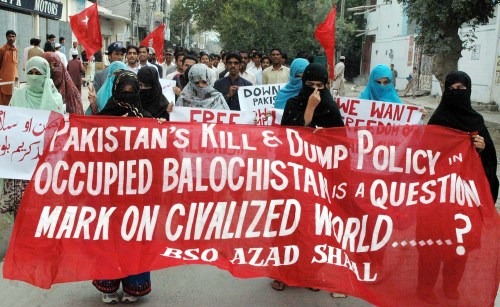
In today’s interconnected world, where the internet is vital for communication, commerce, and education, a government-imposed digital blackout represents more than a policy—it conveys a powerful message. This message continues to resonate in its third year within one of the central districts of Pakistan’s Balochistan province. Panjgur, renowned for its date palm cultivation and situated between Quetta, the provincial capital, and the strategic port city of Gwadar, has remained digitally incapacitated for several years. On 26 May, Pakistan’s Ministry of Interior prolonged the internet suspension in the area for a further six months, citing the “prevailing law and order situation” as justification.
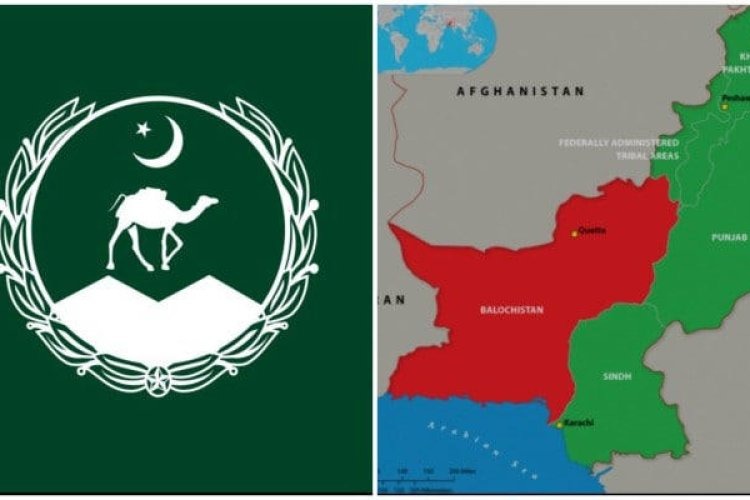
This decision might appear to be a localized matter of governance or security. However, it symbolises a far more profound dysfunction within the Pakistani state and is closely tied to the government’s militarised policy towards Balochistan. More significantly, this neo-imperialist and securitised strategy, which has kept Balochistan in turmoil and unresolved for decades, carries serious consequences not only for Pakistan’s internal cohesion but also for its foreign policy and its persistently strained relations within the region, particularly with India.
The Baloch insurgency is not a recent phenomenon. Since Pakistan’s formation in 1947, the Baloch have launched multiple uprisings in response to what they perceive as systemic political marginalisation, economic deprivation, and cultural suppression by the Pakistani state. The fifth and ongoing phase of this armed resistance, which commenced in the early 2000s, has demonstrated notable resilience, with groups such as the Balochistan Liberation Army (BLA) posing an escalating challenge to the state. As The Economist notes, the distinct feature of this current insurgency lies in its broader support base, extending beyond a few feudal elites to include an increasingly mobilised Baloch middle class. What started as a regional demand for autonomy has, under the weight of state repression, evolved into increasingly vocal calls for full independence from Pakistan.
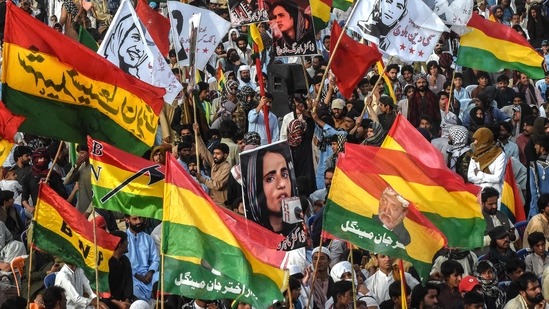
Rather than pursuing genuine dialogue or instituting reforms, the Pakistani state has consistently resorted to militarised governance in the region, characterised by grave human rights violations, including thousands of enforced disappearances, extrajudicial executions, sexual violence against Baloch women, and widespread information blackouts. The internet suspension in Panjgur—along with similar disruptions in districts such as Kech and Gwadar, notably during the Baloch Yakjehti Committee-led protests of February–March 2025—is not merely a case of administrative excess. It forms part of a broader strategic approach that views Balochistan not as an equal federating unit, but as a rebellious frontier to be subdued for its resources. This perception is further entrenched by the military’s manipulation of local politics, whereby it installs loyalists into provincial governance structures, sidelining indigenous political actors deemed unreliable.
But what does this mean for Pakistan’s foreign policy?
At its foundation, foreign policy represents an extension of a state’s internal stability and should ideally embody political maturity. In Pakistan’s case, the persistent Baloch insurgency acts as both a distraction and a strategic liability. It consumes financial and military resources that might otherwise be allocated to constructive diplomatic engagement or economic development. More pointedly, the situation in Balochistan significantly affects Pakistan’s regional dynamics. For example, having consistently failed to address the underlying Baloch grievances, the Pakistani establishment frequently resorts to deflecting criticism of its shortcomings by accusing India of covertly supporting Baloch insurgent groups.
Although there is little publicly available evidence to substantiate Pakistan’s claims of Indian involvement in Balochistan, the reality is that the protracted conflict has become not only a critical weakness and challenge within its domestic security architecture but also a growing diplomatic liability. As human rights discourse increasingly influences multilateral institutions and resonates among Western allies, the Pakistani Army’s ongoing military repression is likely to attract heightened international condemnation.
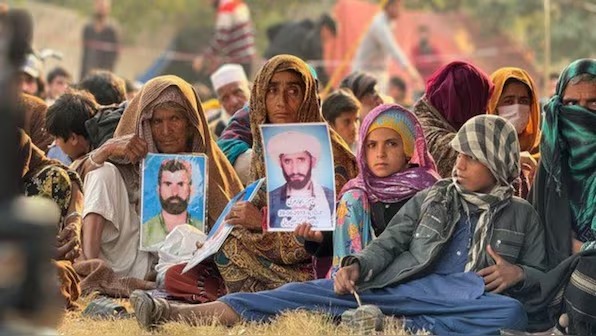
Furthermore, ongoing state repression and the resulting militancy hinder prospects for regional cooperation. The China-Pakistan Economic Corridor (CPEC), heralded as the flagship project of China’s Belt and Road Initiative (BRI) and a cornerstone of Pakistan’s economic diplomacy, has its most extensive infrastructural presence in Balochistan. Although Islamabad promotes CPEC as transformative—promising advancements in roads, energy, and infrastructure—these promises have yet to materialise meaningfully on the ground, even after a decade. Many Baloch nationalists view the project as a neo-colonial venture that marginalises local communities while enriching external stakeholders. Measures such as internet shutdowns, arbitrary arrests, and militarised checkpoints in Gwadar and surrounding areas have only deepened these concerns. Despite China’s growing alarm over Balochistan’s deteriorating security—underscored by multiple attacks on Chinese personnel and assets last year—Pakistan’s response remains firmly rooted in a security-focused paradigm.
This brings the focus back to Panjgur. In a region where students, the business community, and other segments of society are deprived of access to the digital realm, the state is effectively severing the area from the modern world. This digital disconnection does not restore stability; rather, it is intended to conceal the abuses committed by the Pakistan Army and to silence the grievances of the Baloch people. The Pakistani establishment fails to recognise that, over time, such measures generate greater alienation, radicalisation, and instability.
Accordingly, Islamabad must recognise that Balochistan represents not merely a security challenge but a failure of governance. While internet restrictions may temporarily quell dissent, they will not resolve the insurgency and instead deepen feelings of alienation among the Baloch population. As long as Panjgur and vast areas of Balochistan remain isolated—both literally and metaphorically—Pakistan’s pursuit of internal stability and regional peace, particularly with India, will remain unattainable. A state that cannot deliver justice and connectivity to its own citizens lacks the credibility to demand justice or trust from its neighbours or the wider international community.
The route to peace in Pakistan does not lie solely through Islamabad and Rawalpindi; instead, it winds through Panjgur and traverses Balochistan.
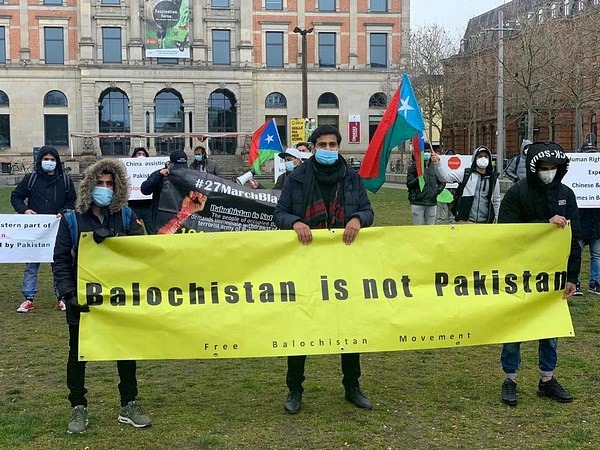
In the shadowed corridors of the Pakistani state, where power is wielded not by the parliament but by barracks and clandestine agencies, the soul of Balochistan bleeds. The month of January 2025 alone saw 107 enforced disappearances across the province, according to a chilling report by Paank, the human rights wing of the Baloch National Movement. These are not just numbers—they are human lives swallowed by a brutal machine that operates beyond accountability, with the military establishment acting as judge, jury, and often, executioner. Dr. Abdul Malik Baloch, President of the National Party and former Chief Minister of Balochistan, has emerged as one of the few political voices courageous enough to confront the state’s ongoing repression. In a recent public address, he condemned the federal government and military’s intrusion into Balochistan’s affairs—especially through the controversial Mines and Minerals Act, which he decried as a constitutional betrayal.
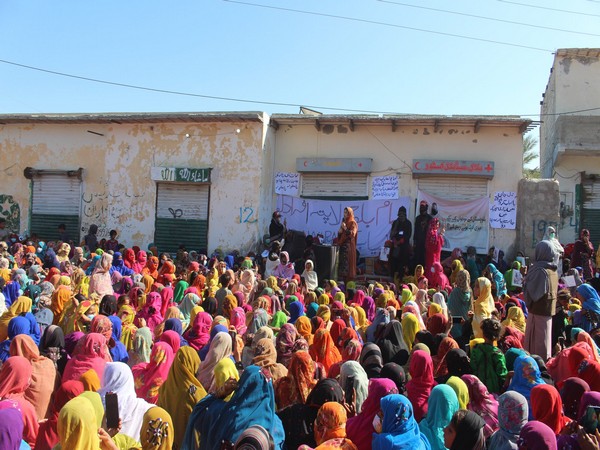
Resource Colonialism in a Federal Guise
The plunder of Balochistan’s natural wealth—Saindak, Reko Diq, Gwadar—is conducted not with development in mind, but domination. The people of Balochistan are treated not as stakeholders, but as subjects of a 21st-century colonial project. Contracts with companies like Pakistan Petroleum Limited and Saindak Metals are renewed without the consultation of legitimate public representatives, further entrenching the military’s grip over the region’s resources. John Locke, the Enlightenment philosopher who laid the foundation for liberal constitutionalism, argued that a government loses legitimacy the moment it no longer operates with the consent of the governed. The Pakistani state’s actions in Balochistan represent a grotesque inversion of this principle. Where the social contract demands mutual obligation, the state offers extraction and suppression. In Locke’s words, such a regime ceases to be civil and becomes a “state of war.”
Disappearances: The Anatomy of a State Crime
The figures from the Paank report are harrowing: enforced disappearances have become the norm rather than the exception. These are not rogue acts but systematic state policy—an organized terror campaign carried out by military and intelligence agencies to quash dissent and eradicate political opposition. The mutilated bodies of Muhammad Ismail (20) and Muhammad Abbas (17), found after being abducted from their Kalat home, represent the fate of thousands. Their youth, their innocence, their right to live—all discarded in the name of national security. Hekmatullah Baloch, another victim, was shot during a peaceful protest and succumbed to his injuries in a Karachi hospital. His crime? Demanding accountability. Michel Foucault, in his seminal work Discipline and Punish, observed that modern states have replaced the public spectacle of punishment with hidden forms of control—surveillance, incarceration, and disappearance. Pakistan, in Balochistan, has regressed to a grotesque hybrid, mixing the medieval cruelty of mutilation with the modern state’s bureaucratic efficiency. The Fourth Schedule and Maintenance of Public Order (3MPO) are not laws—they are instruments of tyranny.
The Illusion of Democracy and the Reality of Martial Law
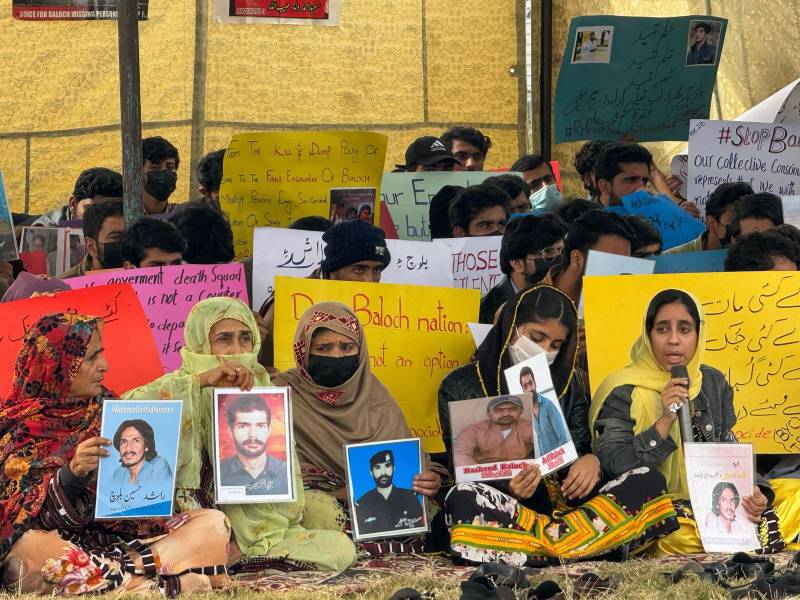
While Islamabad claims to be a constitutional democracy, Balochistan is ruled like an occupied territory. Dr. Abdul Malik denounced the frequent use of colonial-era laws to detain political activists, many of them women. He rightly equated this crackdown to civil martial law—a regime where uniforms dictate politics and silence becomes the only guarantee of safety. The philosopher Hannah Arendt warned that the collapse of the line between the legal and the illegal is the precursor to totalitarianism. In Balochistan, this line has not only been blurred; it has been erased. The people no longer know when they cross a boundary, because the boundary moves with the will of the soldier. This system does not merely suppress dissent—it criminalizes existence itself. Border trade, once a lifeline for over three million people, has been strangled by new regulations and taxes. What remains is not law and order but extortion by officials, where survival is a privilege granted to the obedient and denied to the defiant.
The Politics of Extraction and Exclusion
The resource curse is not a theory in Balochistan—it is lived reality. The province is rich in gas, gold, copper, and port infrastructure, yet its people suffer from abject poverty, rampant illiteracy, and systemic unemployment. This paradox is no accident; it is by design. Antonio Gramsci’s idea of passive revolution is illuminating here. Gramsci noted how dominant classes use state apparatuses to integrate resistance into the system without altering its exploitative foundations. In Balochistan, token development projects and cosmetic representation serve as cover for a deeper colonization. What the state offers is not empowerment but pacification. Even the façade of electoral politics is undermined. Dr. Malik lamented that extensions to mineral contracts were being signed without legitimate public oversight, deepening the alienation of the Baloch people. This political exclusion is a deliberate strategy to delegitimize regional autonomy and enforce submission to centralized authority.
Dispossession Disguised as Security

The Talaar check post, which Dr. Malik demanded be dismantled, is not merely a security installation—it is a symbol of domination. It represents the architecture of occupation: a structure that surveils, intimidates, and fragments the community it purports to protect. Similar outposts dot the Baloch landscape like scars, each a reminder that the state sees its own citizens as insurgents in need of subjugation. Frantz Fanon, in The Wretched of the Earth, described colonial regimes that deploy violence not just to suppress rebellion but to imprint inferiority onto the colonized psyche. The Pakistan Army’s presence in Balochistan functions the same way. It tells the Baloch they do not own their land, their bodies, or their future.
Dr. Malik’s demands are not radical—they are constitutional. He asks for the release of political workers, simplification of trade rules, and the withdrawal of draconian laws. Yet in the eyes of the establishment, such calls are tantamount to sedition. This reaction reveals the state’s true nature: one that cannot accommodate dissent because its foundations are built on domination, not dialogue. It views Baloch identity not as a part of the national mosaic, but as a threat to its imposed uniformity. The German philosopher Jürgen Habermas emphasized the importance of “communicative rationality”—the idea that democratic societies should resolve conflicts through open, inclusive dialogue. The Pakistani state, instead, speaks in the language of bullets, barbed wire, and black sites. It confuses coercion with cohesion and believes silence equals stability.
A Dark Mirror for the World
The world must not avert its eyes. What is happening in Balochistan is not an internal affair—it is a human rights catastrophe that demands international scrutiny. The United Nations, the European Union, and rights organizations must pressure Pakistan to end its military campaign of terror. Balochistan is the mirror in which we see the true face of the Pakistani establishment: brutal, extractive, and unapologetically authoritarian. Until the military returns to the barracks, until the disappeared are returned to their families, and until the people of Balochistan control their own destiny, there will be no peace. To paraphrase the philosopher Rousseau: A people once forced to be silent will eventually speak with fire. Balochistan is the mirror in which we see the true face of the Pakistani establishment: brutal, extractive, and unapologetically authoritarian. Until the military returns to the barracks, until the disappeared are returned to their families, and until the people of Balochistan control their own destiny, there will be no peace. Pakistan has, willy-nilly, disappeared the people of Balochistan—fathers, mothers, brothers, daughters—without remorse or accountability. This machinery of oppression has shattered countless lives and torn apart the social fabric of a proud and historic people. The silence of the disappeared echoes louder than any protest; it reverberates through every Baloch household and haunts every mother who waits at her doorstep. These disappearances, and the suffering they bring, are not merely crimes—they are the slow incineration of hope. If this trajectory of state violence and contempt continues, it will not just destabilize Balochistan but engulf any prospect of peace. A state that thrives on the pain of its peripheries cannot claim unity; it can only demand obedience, and such obedience always comes at the cost of human dignity. It is no longer a question of politics—it is a question of survival. And the world must choose: to remain complicit in silence or to stand with a people struggling to be seen, to be heard, and above all—to be free.