
-Arun Anand
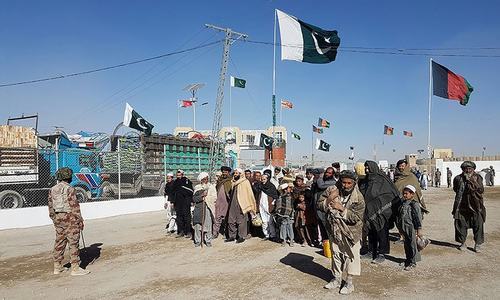
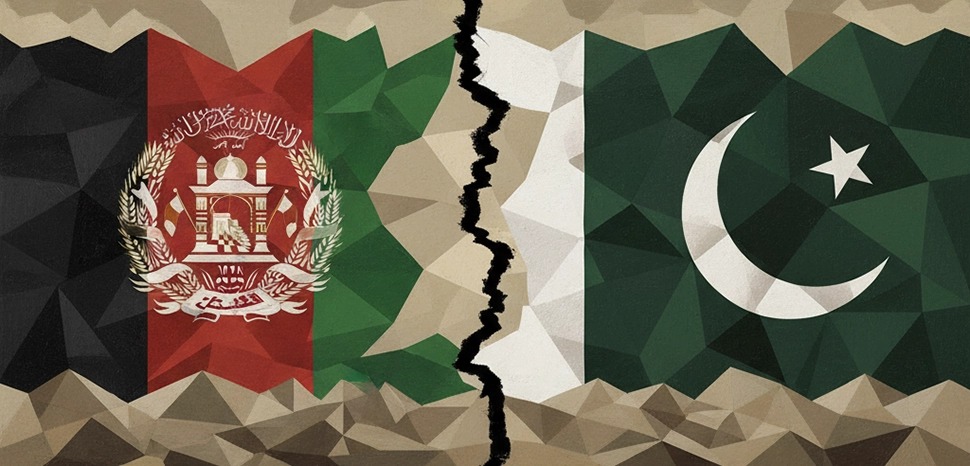
For decades, Pakistan has insisted that stability in Afghanistan is essential for its own security. Yet today, Islamabad is pursuing a policy that does exactly the opposite by strangling Afghanistan’s fragile economy. The objective is to ‘coerce’ the Afghan Taliban government into submission. The prolonged closure of key border crossings along the Durand Line, including Torkham between Khyber Pakhtunkhwa and Nangarhar and Chaman-Spin Boldak between Balochistan and Kandahar, has turned geography into a weapon. It is a classic case of Pakistan weaponising Afghanistan’s landlocked reality in order to force political compliance through economic suffocation.
Border Closures as Economic Warfare
For more than four months since October 2025 heavy military clashes, these border crossings have remained shut. The informal cross-border trade that has been a feature of Afghanistan-Pakistan relations since decades. Millions of Afghans depend on this for daily survival. With the daily movement of essentials like food, medicine, fuel, and construction materials effectively stopped, Afghans face a severe crisis as Afghanistan used to export much of its agriculture and horticulture produce besides coal to the Pakistani market.
The cross-border trade between the two countries saw a 40 per cent decline in 2025 from 2024, down from over $2.64 billion to $1.77 billion. For a landlocked country already reeling from international sanctions, frozen assets, and humanitarian crisis, the impact has been more than severe. And Pakistan knows this, which is precisely what gives its policy a coercive power.
Islamabad has justified the border closure by accusing the Afghan Taliban of sheltering terrorist groups such as Tehreek-e-Taliban Pakistan (TTP), besides enabling attacks by Baloch insurgents like the Balochistan Liberation Army (BLA). On January 20, Prime Minister Shehbaz Sharif repeated this familiar refrain, insisting that while the blockade “should not have been there”, and yet warning that Afghanistan must decide “whether it wants to live peacefully or not”.
But this rhetoric serves as a smokescreen. While the struggle with militancy is real and deeply destabilising for Pakistan, the current crisis cannot be explained solely or even primarily by security concerns.
From ‘Strategic Depth’ to Strategic Frustration
Instead, it reflects a deeper failure of Islamabad’s Afghan policy, one that has left Pakistan’s military-dominated establishment frustrated, exposed, and resorting to blunt instruments to regain leverage over Kabul.
It may be recalled that when the Taliban returned to power in August 2021, Pakistan’s political and military establishment celebrated openly. The American withdrawal and the collapse of the Western-backed Afghan government were hailed as a vindication of decades of strategic investment. Senior generals spoke of “strategic depth” finally being secured, with then Director General of Inter-Services Intelligence (ISI) famously sipping coffee in Kabul the next day. There was a kind of confidence among Pakistani experts and establishment figures that finally a pliant Kabul would align closely with Islamabad’s regional priorities.
The expectations were sweeping. A Taliban-ruled Afghanistan, it was believed, would deny India any influence in the country besides erasing New Delhi’s soft-power gains built through billions of dollars in infrastructure, education, and development projects. It would accept, or at least stop contesting, the legitimacy of the Durand Line, a colonial-era boundary that cuts through Pashtun lands and has never been formally recognised by any Afghan government, including Taliban in its previous rule from 1996 to 2001. And most importantly, the expectation from the Taliban government was to rein in anti-Pakistan terrorist groups like TTP operating along its porous frontier.
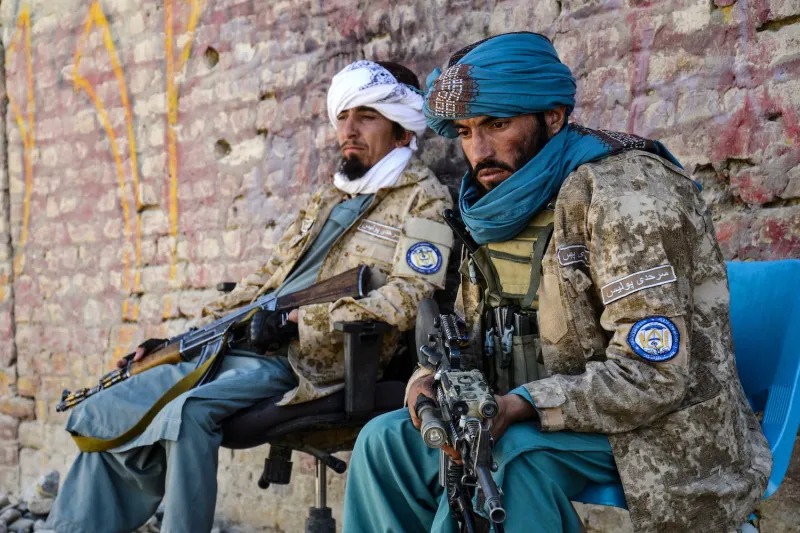
None of this has materialised. Instead, Pakistani leadership now finds itself facing an Afghan Taliban leadership that is assertive and nationalist as well as far less malleable than they had anticipated. Taliban officials speak openly of Afghan sovereignty and have pushed back the Pakistani pressure. They have raised the pitch over the legitimacy of Durand Line hence continuing a long-standing Afghan position that cuts across ideological lines. The result of Pakistani stubbornness means that their relations have grown increasingly tense as marked by border skirmishes, diplomatic barbs, and mutual accusations.
Security Rhetoric and Failing Coercive Strategy
The resurgence of the TTP has been particularly exasperating for Islamabad. Since the Taliban’s return to power in 2021, the group has grown bolder and launched multiple attacks across Pakistan’s northwest. For instance, 667 Pakistani soldiers were killed in 2025 alone as per a report by Pakistan Institute of Conflict and Security Studies (PICSS), up by 26 per cent from 2024.
Likewise, Baloch insurgent violence has also intensified, which has fed a sense of encirclement within Pakistan’s security establishment. Interestingly, rather than addressing the domestic roots of these insurgencies prevalent across KP and Balochistan, such as political exclusion, economic neglect, and heavy-handed military policies, Islamabad has chosen to externalise blame, pointing squarely at Kabul. This is where the accusation that the Afghan Taliban are “backing” the TTP and BLA becomes politically useful for Pakistan. It allows the establishment to escape any calls for accountability over the serious security debacles and present its coercive measures against Afghanistan as defensive.
The tactic of Pakistan leveraging Afghan geography to achieve what its diplomacy has failed to deliver fits a broader pattern of attempts to salvage its failed Afghan strategy. After having overestimated its influence over the Afghan Taliban, its military-dominated establishment now oscillates between coercion and complaint. The mass deportation of hundreds of thousands of Afghan refugees over the past few years is part of the same effort. Though they have framed this measure through legal and security cover, the expulsions have nonetheless added to Afghanistan’s humanitarian burden while signalling Pakistan’s willingness to use vulnerable populations as leverage.
The irony is hard to miss as Pakistan’s leaders insist that instability in Afghanistan threatens regional peace and yet their policies actively deepen that instability. They are willingly overlooking the fact that economic strangulation does not produce compliance and restore lost influence; rather, it breeds resentment and exposes the limits of such a policy.
Nevertheless, Pakistan’s attempt to weaponise Afghanistan’s landlocked status reveals less about Taliban culpability than about Islamabad’s strategic frustration as their grand vision of a compliant, controllable Afghanistan has collapsed. In its place, there is a harder reality at display with a sovereign neighbour with its own interests, grievances, and limits of tolerance.
As such, if Pakistan continues down this path of closing borders, expelling refugees, and masking strategic failures behind its security rhetoric, it may succeed only in entrenching hostility on its western flank. The establishment led by Asim Munir would do Pakistan a favour by understanding that stability cannot be coerced through economic siege but must be built through sober reassessment, regional cooperation, and an acceptance that influence earned through pressure is always fragile. But for now, however, Pakistan appears intent on tightening the noose, betting that hunger and hardship will achieve what decades of policy could not even as history suggests otherwise.
-Arun Anand
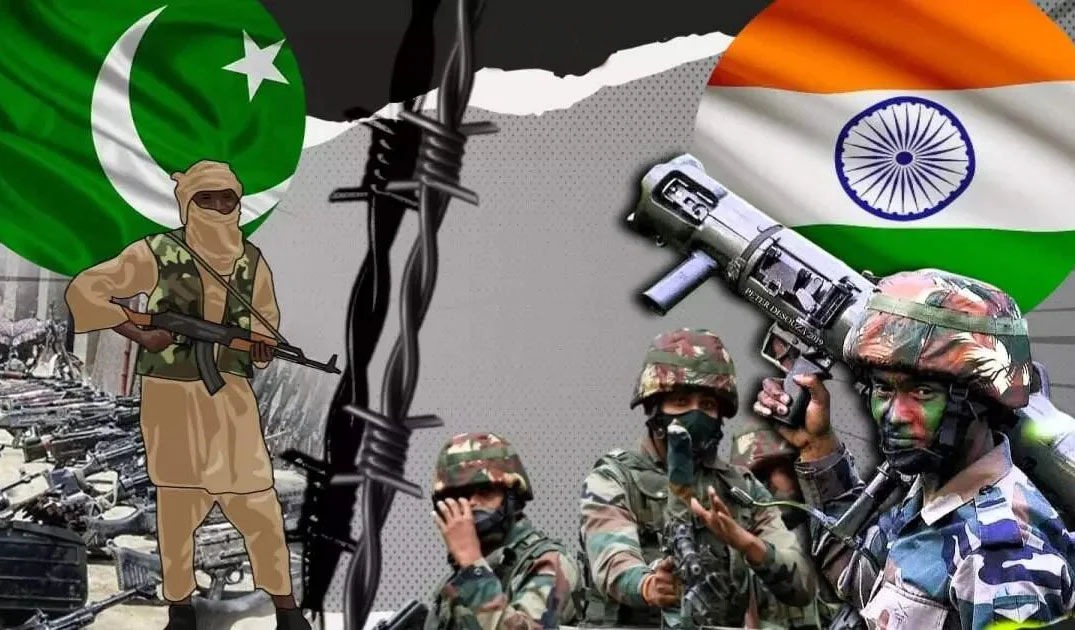
For over four decades, Pakistan bet its security strategy on one idea: that Afghanistan could be controlled and turned into a “strategic depth” against India. The military and political elite in Islamabad treated Kabul as a buffer and a playground — a state to be manipulated through compliant regimes and proxy jihadist groups.
Militant networks were nurtured as instruments of foreign policy, and Pakistan believed this would secure influence across the region and check India’s power. Instead, the very forces Islamabad once empowered have turned against it. In 2025, the grand doctrine of strategic depth lies in ruins — a self-inflicted disaster now driving Pakistan’s worst security crisis in years.
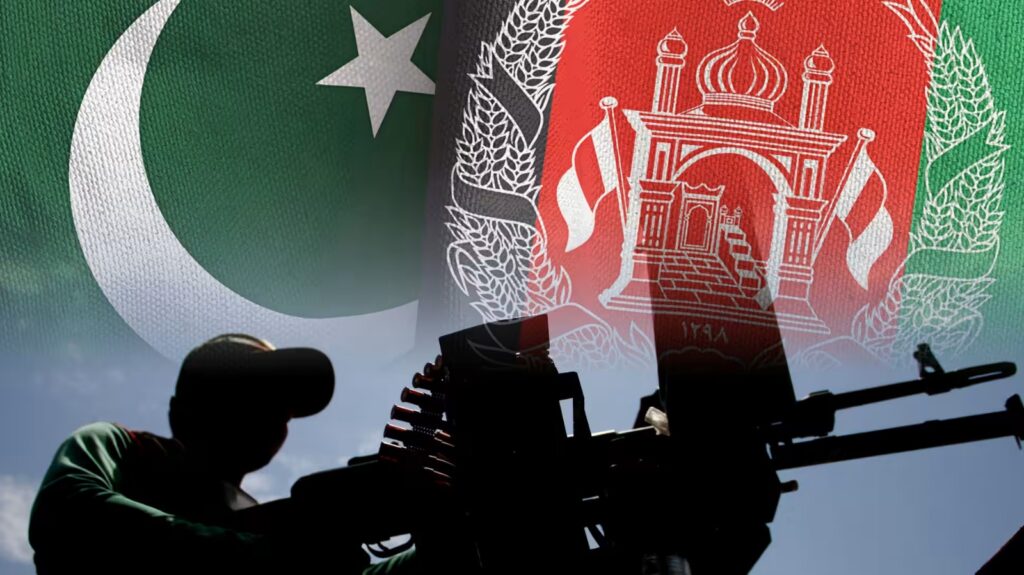
Rather than securing Pakistan, Afghanistan has become the epicentre of the very dangers Islamabad once believed it could manage or manipulate. What was once perceived as an asset has now become a trap. The transformation of Afghanistan from strategic depth to strategic liability has unfolded gradually, but the past two years have made the shift undeniable.
When the Taliban returned to power in Kabul in 2021, Pakistan was widely seen as the external actor poised to benefit the most. Many within Islamabad believed that a Taliban government, because of historical ties, would be cooperative, deferential, and dependent. But that assumption now looks dangerously misplaced.
The Taliban’s political priorities have changed, their sources of external support have diversified, and their internal legitimacy depends on projecting a strong, independent stance — especially against Pakistan, which many ordinary Afghans still view with suspicion. Instead of shaping Afghan behaviour, Pakistan now finds itself confronting a volatile neighbour whose rulers no longer feel obliged to accommodate Pakistani interests.
Militant Blowback and a Hardening Border
Nowhere is this reversal clearer than in the surge of militant activity targeting Pakistan from Afghan soil. Over the past year, Pakistan has experienced a marked increase in terrorist attacks carried out by the Tehreek-i-Taliban Pakistan (TTP) and associated networks. Security reports from 2024 and 2025 indicated that many attackers either crossed over from Afghanistan or were trained and sheltered there.
Pakistani officials have repeatedly stated that a significant percentage of suicide bombers involved in major attacks were Afghan nationals. The data, while varying between sources, consistently shows a dangerous trend that the Afghanistan-Pakistan border has become increasingly porous to extremist infiltration, and many of these groups feel emboldened by their close ideological ties to the Afghan Taliban.
This is the central irony of Pakistan’s predicament. The militant ecosystem that Islamabad once supported for regional leverage has now splintered in ways that work against Pakistan itself. The TTP, originally an offshoot of groups nurtured under earlier Afghan policies, now treats Pakistan as its primary enemy.
Pakistan’s own creation has turned against its creator. The militancy that Islamabad once believed could be contained beyond its borders has now penetrated deep inside — striking security convoys, police units, and civilian targets with growing regularity. The blowback is undeniable.
In response, Pakistan has increasingly resorted to military actions along — and across — the Afghan border. Throughout 2024 and into 2025, Pakistan conducted a series of cross-border artillery strikes and air raids targeting what it described as TTP safe havens. In several cases, those strikes hit areas inside Afghanistan, killing not only militants but also civilians, including women and children. These incidents have sharply escalated diplomatic tensions.
Kabul has issued multiple condemnations, arguing that Pakistan is violating Afghan sovereignty and inflaming anti-Pakistan sentiment among the Afghan population. What Islamabad once framed as necessary counterterror operations are now seen by many Afghans as external aggression, deepening hostility that already runs high.
Border clashes have also intensified. In late 2024 and through out 2025, firefights between Pakistani forces and Taliban border units became frequent, sometimes lasting hours. Pakistani officials reported significant casualties on their side, and Afghan authorities claimed similar losses.
The AfPak border — once envisioned as a controllable frontier from which Pakistan could extend influence — has hardened into one of the most militarized and unstable fault lines in South Asia. Instead of projecting strength, Pakistan finds itself in a defensive posture, its troops stretched and its internal security architecture under strain.
Diminishing Diplomatic Leverage and Growing Vulnerability
Diplomacy has not eased the tensions. Attempts at negotiation, including several rounds of high-level talks in 2024 and 2025, produced only limited agreements focused on border management and intelligence sharing. These arrangements have struggled to translate into real cooperation on the ground. The Taliban government maintains that it does not control the TTP, insisting that the group operates independently.
Pakistani officials reject that claim, arguing that nothing of significance can operate in Afghanistan without at least tacit Taliban approval. The resulting stalemate has left both countries locked in a cycle of accusation and retaliation.
Pakistan’s broader regional standing has also been affected. The international community has expressed growing concern about the escalating border violence, with several countries calling for restraint and renewed dialogue. Islamabad, once positioned as a key interlocutor between the Taliban and the West, now finds its diplomatic leverage diminished.
Meanwhile, the Taliban have sought new partnerships — particularly with regional powers seeking economic or strategic opportunities in Afghanistan. This reduces Pakistan’s ability to shape events in Kabul and signals a fundamental shift in the balance of influence.
The implications for Pakistan’s internal security are profound. The resurgence of terrorism within its borders has strained provincial administrations, especially in Khyber Pakhtunkhwa and Balochistan. Police forces remain under-equipped, despite repeated calls for better resources. Public frustration is rising, particularly as attacks occur with worrying frequency.
Many citizens question the effectiveness of Pakistan’s long-standing policies toward Afghanistan and ask whether the sacrifices of the past two decades — military operations, casualties, and massive financial costs — have led to greater safety or merely deeper vulnerability.
The broader economic situation compounds the crisis. Pakistan’s financial struggles, including high inflation, energy shortages, and slow GDP growth, make it increasingly difficult to sustain prolonged military readiness along a volatile border. The costs of counterinsurgency operations, refugees’ management, and security infrastructure rise steadily even as state revenues remain limited.
Meanwhile, Afghanistan shows no sign of curbing the groups hostile to Pakistan. This asymmetry — a costly security burden with no cooperative counterpart in Kabul — underscores how Pakistan’s strategic depth has morphed into a strategic trap.
A Strategic Concept in Collapse
Yet the most troubling dimension of this trap is conceptual. Pakistan’s Afghan policy relied on assumptions that no longer hold: that Kabul could be influenced through patronage that militant groups could be calibrated for strategic use, and that Afghanistan’s internal dynamics would remain subordinate to Pakistani interests. The reality of 2025 contradicts each of these assumptions.
The Taliban now make decisions independently. Militant groups have become ideological actors rather than controllable proxies. Afghan nationalism, sharpened by decades of conflict, rejects external interference from any quarter — especially from Pakistan. The strategic logic underpinning decades of policy has evaporated, but its consequences persist.
Pakistan now stands at a critical juncture. It can continue to treat Afghanistan as a battleground, striking across the border and relying on force to push back the militants. But this would deepen the cycle of violence, alienating Afghan society further, and entrenching hostile networks.
Alternatively, Pakistan could pursue a significant recalibration — acknowledging the limits of influence, dismantling the remnants of proxy structures, and treating Afghanistan as a sovereign neighbour rather than a proxy regime. Such a shift would require political courage and institutional consensus, both of which have historically been fragile when it comes to Pakistan. But without such a rethinking, Pakistan risks sinking deeper into the trap of its own making.
The strategic depth that Islamabad long prized has become an illusion. Afghanistan is no longer a pliable sphere of influence but a source of hostility capable of undermining Pakistan’s security from within. The militants once cultivated as assets have become liabilities. The border once seen as a shield has become a wound. Pakistan’s Afghan dilemma is no longer about losing influence; it is about preventing the fallout from a potent threat to its own stability.
The question facing Pakistan in 2025 is not whether Afghanistan can be controlled but whether Pakistan can escape the strategic trap created by decades of miscalculation. Whether it will recalibrate before the trap tightens further is a question that will impact the region’s future also.
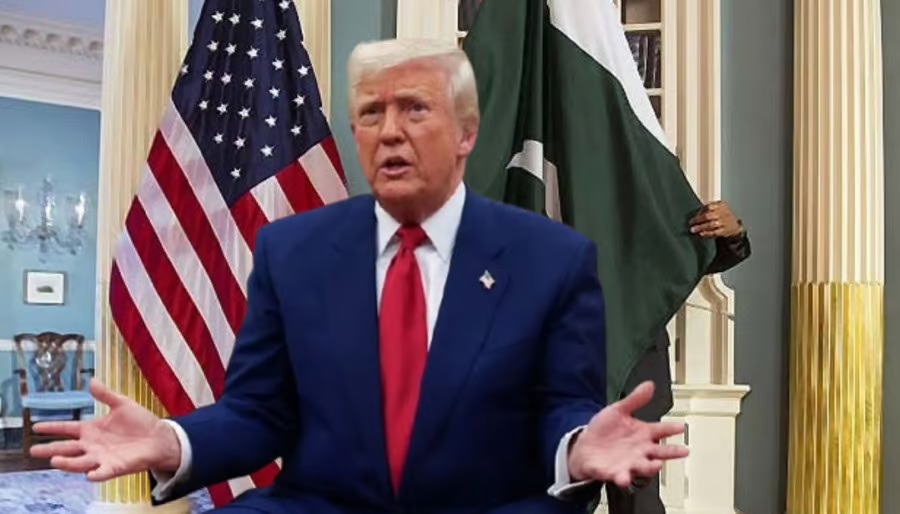
The relationship between the United States and Pakistan has long been defined by convenience rather than conviction, punctuated by moments of intense cooperation followed by spells of deep mistrust. As recent developments begin to raise eyebrows, it is becoming increasingly evident that a new chapter may be unfolding—one marked not by a sincere partnership but by calculated strategic necessity. US President Donald Trump’s reported upcoming visit to Pakistan and the high-profile visit of Pakistan’s Army Chief Field Marshal Asim Munir to Washington have sent clear signals that both sides are once again exploring a tighter embrace. But what lies beneath these gestures? Is this an authentic shift or merely a transactional dance, choreographed by geopolitical compulsions? History casts a long shadow on the US-Pakistan relationship. For decades, their engagement has followed a familiar script: Washington courts Islamabad in times of need, showering it with aid and promises, only to withdraw affection when priorities shift or Pakistan’s duplicity becomes too glaring to ignore. From the Cold War to the post-9/11 era, the partnership has rarely transcended its opportunistic core. Every time the United States found itself in a regional quandary—whether it was countering Soviet expansion or hunting terrorists in Afghanistan—Pakistan presented itself as an indispensable ally. But once the urgency faded, so did the illusion of camaraderie.
The present moment bears the unmistakable scent of déjà vu. The United States, preoccupied with China’s growing footprint and an increasingly complex Indo-Pacific matrix, sees value in reactivating its lines to Islamabad. Pakistan, battered economically and diplomatically isolated, is desperate to regain relevance and secure strategic patronage. It is a classic case of mutual convenience masquerading as renewed friendship. The question is not whether both countries need each other—clearly, they do—but whether this need is rooted in sustainable goals or another fleeting convergence of interests. Pakistan’s military establishment, the true power center of the country, has always been adept at selling its strategic geography. Wedged between Iran, Afghanistan, India, and China, Pakistan offers prime real estate on the geopolitical chessboard. But that geography comes with a price—one that Washington has paid before. Decades of American military and economic assistance have yielded little in terms of lasting reform or ideological alignment. Instead, the US often found itself underwriting a security apparatus that played both sides—hunting terrorists with one hand while harboring them with the other.
Consider the bitter legacy of Afghanistan. While publicly siding with the US in its war on terror, Pakistan simultaneously gave sanctuary to the Taliban and other extremist elements. Osama bin Laden was discovered not in a remote cave but in Abbottabad, a stone’s throw from a Pakistani military academy. Billions in aid could not buy loyalty; it merely sustained a regime skilled in hedging its bets. The withdrawal from Afghanistan in 2021, with its chaotic final days, was a stark reminder of the cost of trusting Islamabad too easily. Now, as the Biden administration recalibrates its foreign policy priorities, and with Donald Trump potentially re-entering the global stage, the temptation to revive a working relationship with Pakistan is palpable. Trump’s anticipated visit may be billed as a diplomatic outreach, but it is likely a signal to Beijing, Delhi, and even Riyadh that Washington still sees value in Islamabad. In return, Pakistan hopes to leverage this attention to escape its pariah status and secure economic lifelines.
But such maneuvering is dangerous. It rewards ambiguity and penalizes clarity. While India—America’s primary partner in the region—remains firmly in the camp of democratic values and open markets, Pakistan continues to operate in murky waters. The same military establishment now reaching out to Washington is also clamping down on democratic dissent at home. Political opponents are jailed, press freedom is strangled, and civil society remains under siege. How does the United States reconcile these facts with its professed commitment to liberal values?
Furthermore, the strategic rationale is itself questionable. If the idea is to counterbalance China’s growing influence in South Asia, relying on Pakistan is a paradox. Islamabad is deeply enmeshed in Beijing’s orbit through the China-Pakistan Economic Corridor (CPEC), a flagship component of the Belt and Road Initiative. Chinese investments have tied Pakistan’s infrastructure, telecom, and energy sectors to its northern neighbor. Any US hope of peeling Pakistan away from China is not just naïve—it borders on delusional. This is not to say that engagement with Pakistan is futile. Dialogue is necessary, especially with a nuclear-armed state teetering on the edge of political and economic collapse. But engagement must be disciplined, not desperate. The US cannot afford to repeat the mistakes of the past, offering carrots without demands for real change. If Pakistan seeks legitimacy, it must earn it—not merely by allowing high-level visits or agreeing to intelligence sharing, but by taking concrete steps to dismantle extremist networks, uphold human rights, and shift its foreign policy posture from duplicity to transparency.
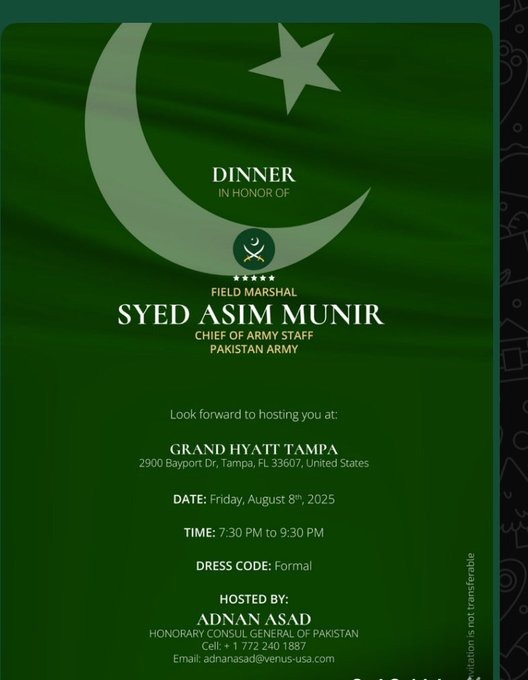
Field Marshal Asim Munir’s visit to Washington may be seen as an opening salvo, a signal of Pakistan’s willingness to reset. But it is vital to remember that such resets have occurred before—with limited results. From Musharraf to Kayani, from Raheel Sharif to Bajwa, every military leader has spoken the language of reform and cooperation, only to revert to old habits once the checks cleared. There is no evidence yet that Munir represents a meaningful break from this tradition. His public statements may emphasize development and diplomacy, but Pakistan’s internal dynamics suggest otherwise. Ultimately, what makes this moment perilous is the global context. The United States is no longer operating in a unipolar world. Russia is resurgent, China is emboldened, and the Middle East is in flux. In such an environment, the margin for error is razor-thin. A misstep in Pakistan could alienate India, embolden militants, or simply waste resources in a dead-end alliance. Realism demands cold calculations—not nostalgia for a partnership that never truly was.
The US must resist the lure of tactical engagement without strategic depth. It must demand accountability, not mere access. And it must remember that short-term alliances built on necessity are seldom sustainable. For Pakistan, the message should be equally clear: the era of exploiting geography for aid is over. If it wishes to be seen as a credible partner, it must act like one. So, are the US and Pakistan recalibrating ties for strategic convenience? Undoubtedly. But convenience is not conviction. And until both sides confront the ghosts of their past dealings, this reset risks becoming just another rerun in a long history of missed opportunities, broken promises, and dangerous illusions.