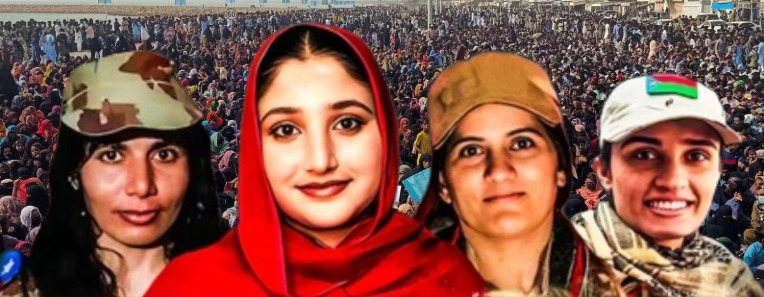
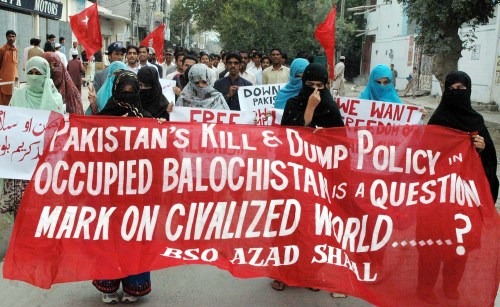
In today’s interconnected world, where the internet is vital for communication, commerce, and education, a government-imposed digital blackout represents more than a policy—it conveys a powerful message. This message continues to resonate in its third year within one of the central districts of Pakistan’s Balochistan province. Panjgur, renowned for its date palm cultivation and situated between Quetta, the provincial capital, and the strategic port city of Gwadar, has remained digitally incapacitated for several years. On 26 May, Pakistan’s Ministry of Interior prolonged the internet suspension in the area for a further six months, citing the “prevailing law and order situation” as justification.
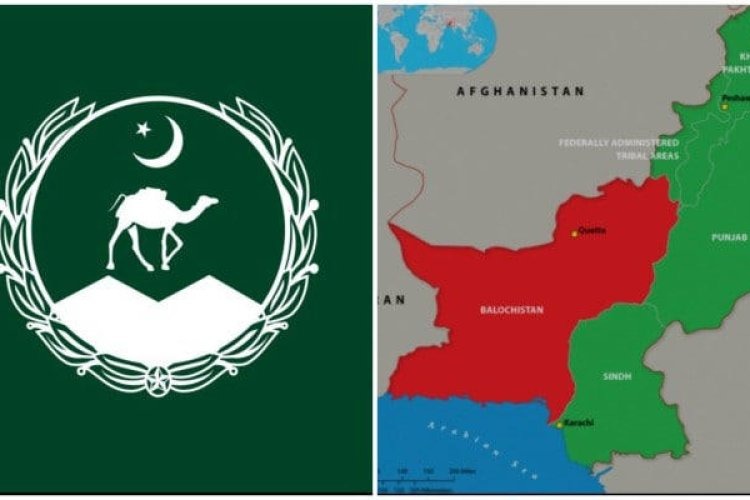
This decision might appear to be a localized matter of governance or security. However, it symbolises a far more profound dysfunction within the Pakistani state and is closely tied to the government’s militarised policy towards Balochistan. More significantly, this neo-imperialist and securitised strategy, which has kept Balochistan in turmoil and unresolved for decades, carries serious consequences not only for Pakistan’s internal cohesion but also for its foreign policy and its persistently strained relations within the region, particularly with India.
The Baloch insurgency is not a recent phenomenon. Since Pakistan’s formation in 1947, the Baloch have launched multiple uprisings in response to what they perceive as systemic political marginalisation, economic deprivation, and cultural suppression by the Pakistani state. The fifth and ongoing phase of this armed resistance, which commenced in the early 2000s, has demonstrated notable resilience, with groups such as the Balochistan Liberation Army (BLA) posing an escalating challenge to the state. As The Economist notes, the distinct feature of this current insurgency lies in its broader support base, extending beyond a few feudal elites to include an increasingly mobilised Baloch middle class. What started as a regional demand for autonomy has, under the weight of state repression, evolved into increasingly vocal calls for full independence from Pakistan.
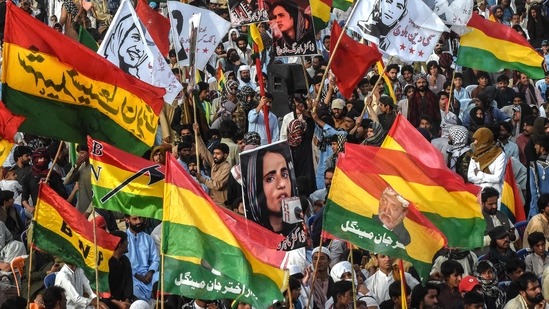
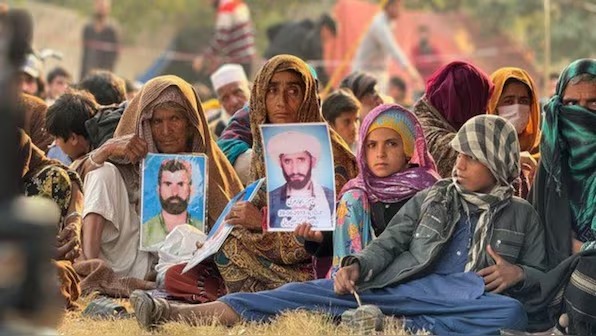
Rather than pursuing genuine dialogue or instituting reforms, the Pakistani state has consistently resorted to militarised governance in the region, characterised by grave human rights violations, including thousands of enforced disappearances, extrajudicial executions, sexual violence against Baloch women, and widespread information blackouts. The internet suspension in Panjgur—along with similar disruptions in districts such as Kech and Gwadar, notably during the Baloch Yakjehti Committee-led protests of February–March 2025—is not merely a case of administrative excess. It forms part of a broader strategic approach that views Balochistan not as an equal federating unit, but as a rebellious frontier to be subdued for its resources. This perception is further entrenched by the military’s manipulation of local politics, whereby it installs loyalists into provincial governance structures, sidelining indigenous political actors deemed unreliable.
But what does this mean for Pakistan’s foreign policy?
At its foundation, foreign policy represents an extension of a state’s internal stability and should ideally embody political maturity. In Pakistan’s case, the persistent Baloch insurgency acts as both a distraction and a strategic liability. It consumes financial and military resources that might otherwise be allocated to constructive diplomatic engagement or economic development. More pointedly, the situation in Balochistan significantly affects Pakistan’s regional dynamics. For example, having consistently failed to address the underlying Baloch grievances, the Pakistani establishment frequently resorts to deflecting criticism of its shortcomings by accusing India of covertly supporting Baloch insurgent groups.
Although there is little publicly available evidence to substantiate Pakistan’s claims of Indian involvement in Balochistan, the reality is that the protracted conflict has become not only a critical weakness and challenge within its domestic security architecture but also a growing diplomatic liability. As human rights discourse increasingly influences multilateral institutions and resonates among Western allies, the Pakistani Army’s ongoing military repression is likely to attract heightened international condemnation.
Furthermore, ongoing state repression and the resulting militancy hinder prospects for regional cooperation. The China-Pakistan Economic Corridor (CPEC), heralded as the flagship project of China’s Belt and Road Initiative (BRI) and a cornerstone of Pakistan’s economic diplomacy, has its most extensive infrastructural presence in Balochistan. Although Islamabad promotes CPEC as transformative—promising advancements in roads, energy, and infrastructure—these promises have yet to materialise meaningfully on the ground, even after a decade. Many Baloch nationalists view the project as a neo-colonial venture that marginalises local communities while enriching external stakeholders. Measures such as internet shutdowns, arbitrary arrests, and militarised checkpoints in Gwadar and surrounding areas have only deepened these concerns. Despite China’s growing alarm over Balochistan’s deteriorating security—underscored by multiple attacks on Chinese personnel and assets last year—Pakistan’s response remains firmly rooted in a security-focused paradigm.
This brings the focus back to Panjgur. In a region where students, the business community, and other segments of society are deprived of access to the digital realm, the state is effectively severing the area from the modern world. This digital disconnection does not restore stability; rather, it is intended to conceal the abuses committed by the Pakistan Army and to silence the grievances of the Baloch people. The Pakistani establishment fails to recognise that, over time, such measures generate greater alienation, radicalisation, and instability.
Accordingly, Islamabad must recognise that Balochistan represents not merely a security challenge but a failure of governance. While internet restrictions may temporarily quell dissent, they will not resolve the insurgency and instead deepen feelings of alienation among the Baloch population. As long as Panjgur and vast areas of Balochistan remain isolated—both literally and metaphorically—Pakistan’s pursuit of internal stability and regional peace, particularly with India, will remain unattainable. A state that cannot deliver justice and connectivity to its own citizens lacks the credibility to demand justice or trust from its neighbours or the wider international community.
The route to peace in Pakistan does not lie solely through Islamabad and Rawalpindi; instead, it winds through Panjgur and traverses Balochistan.